
If you can shoot a pistol accurately, you can shoot just about anything well. Compared to rifles and shotguns, they’re the most challenging system to master, by far.
That’s a bummer, because pistols are what most people reach for as a defensive platform. Good thing you have us to make the learning process a little easier.
While there’s no substitute for professional instruction, this quick tutorial will give you a better understanding of what to do, how to do it, and why it matters.
Let the learning begin!
Table of Contents
Loading…
What You Need Before You Start
Must-Have Tools
- Pistol or revolver
- Ammunition
- Targets
- Access to a shooting range
Nice-to-Have Tools
- Professional instruction
- Mantis TitanX laser pistol
- Dummy ammo
- Shot timer
Step-by-Step Instructions
There are some differences in technique depending on which handgun you’re using. For the sake of simplicity and the broadest applicability, I’m going to focus on a semi-automatic pistol like the Glock 19 for this article.
Step 1: Shooting Stance
Your shooting stance matters when shooting a pistol, but you don’t need to overthink it right now.
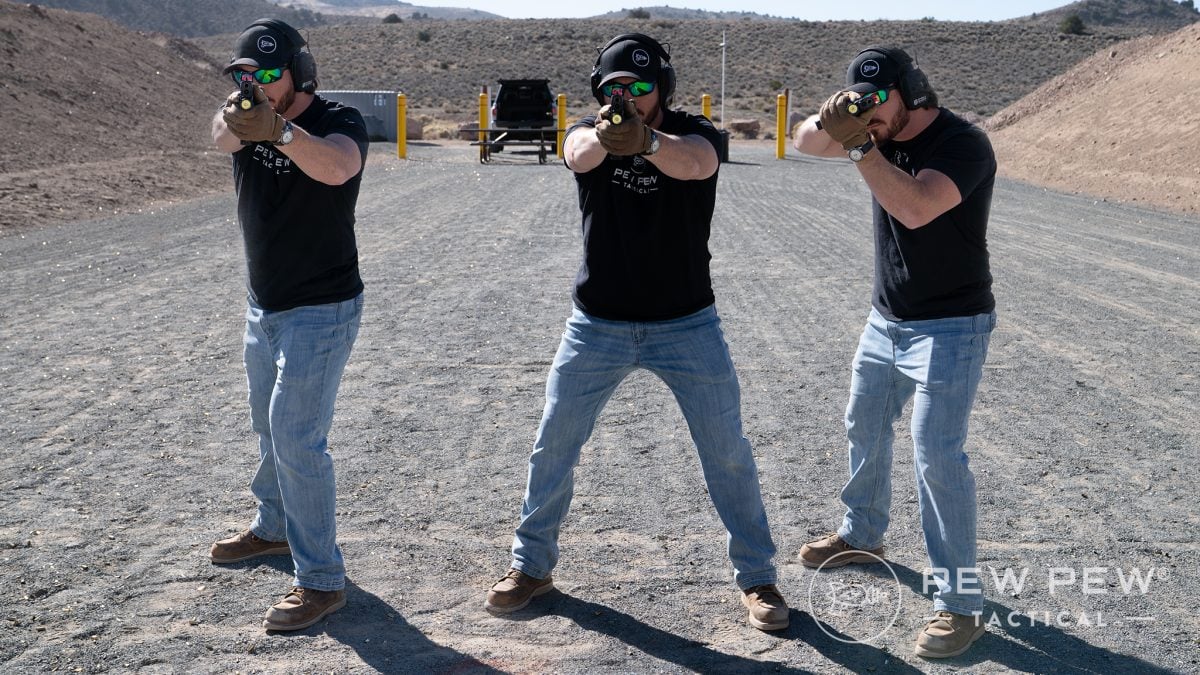
The three most common shooting stances are the Weaver, Chapman, and Isosclenes (we love you, too, center-axis relock). What do they all have in common? Your knees should be bent, your shoulders should be in front of your hips, and you should feel like you’re in a naturally athletic posture.
The goal is to use your body mass to create a stable platform while you’re aiming, and absorb recoil energy when the gun goes off.
Watch this video to see what I’m talking about in action.
Step 2: Handgun Grip
Building a good grip is always important – don’t be the beginner who lets a handgun jump out of their hands!
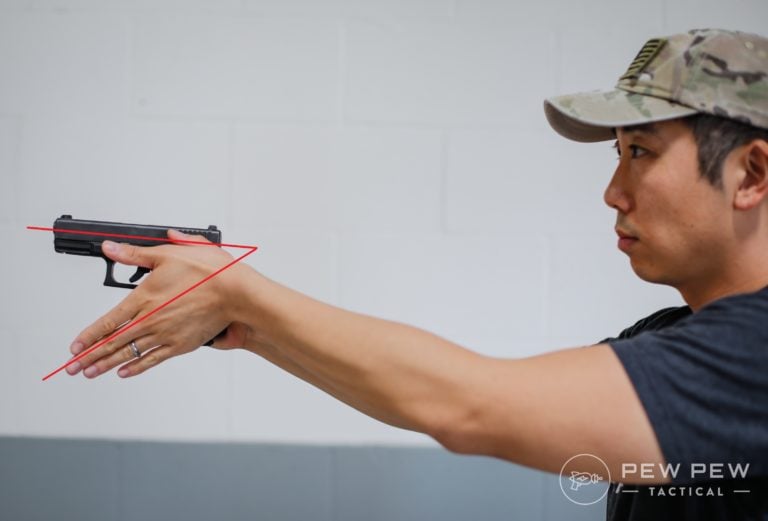
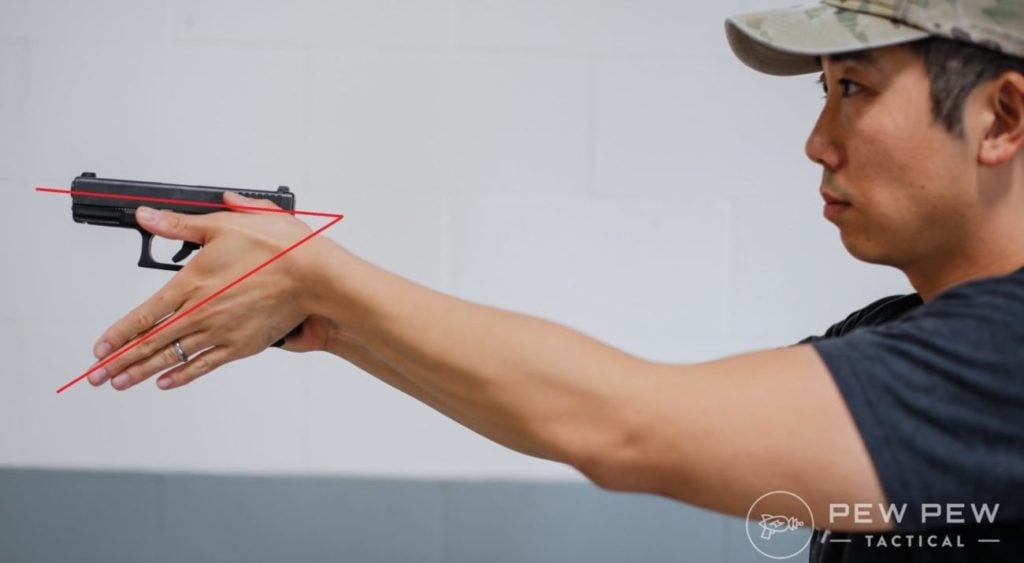
Start with your shooting hand. For now, keep your index finger straight and off the trigger. Rest it on the frame of the pistol, right under the slide.
Place the web of your hand (the skin between your thumb and index finger) as high as it will possibly go under the beavertail. No, higher! Get rid of any gap so the pistol has less room to flick back toward you.
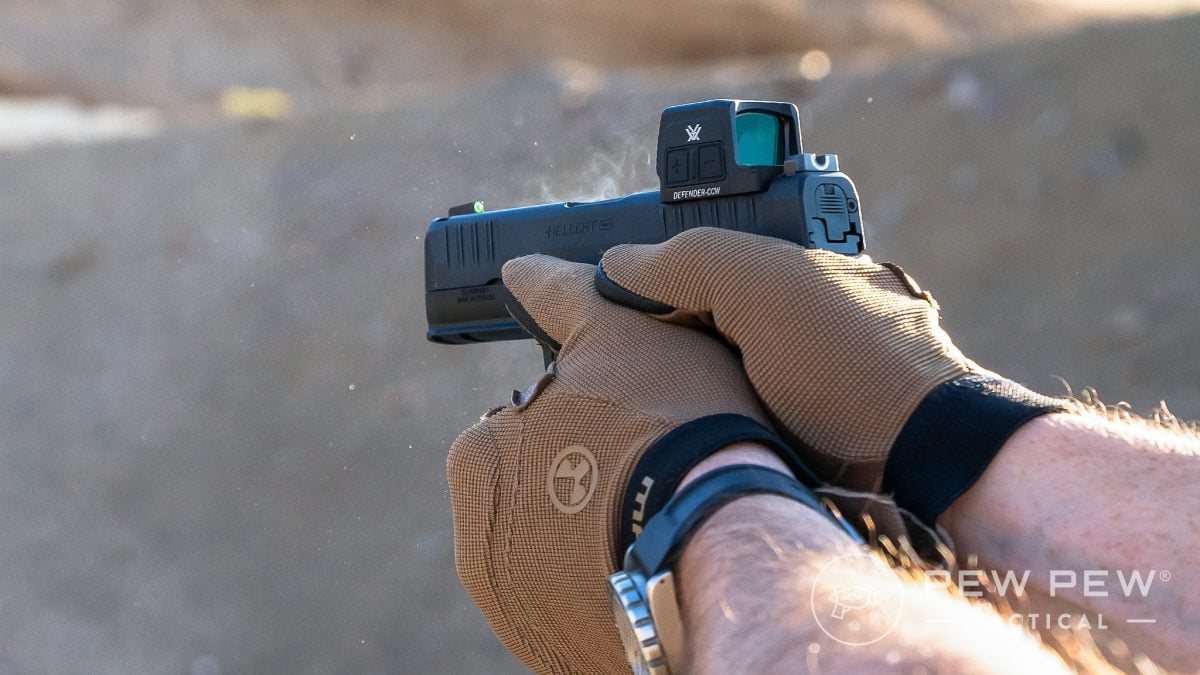
Likewise, press the knuckle of your middle finger up into the bottom of the trigger guard. Don’t worry about your shooting-hand thumb just yet, just keep it high and out of the way.
Now, take your support hand and rotate your wrist forward, so your thumb is pointing at the target. Fit your palm into the gap on the frame left by your shooting hand and cover up as much of that material as you can.
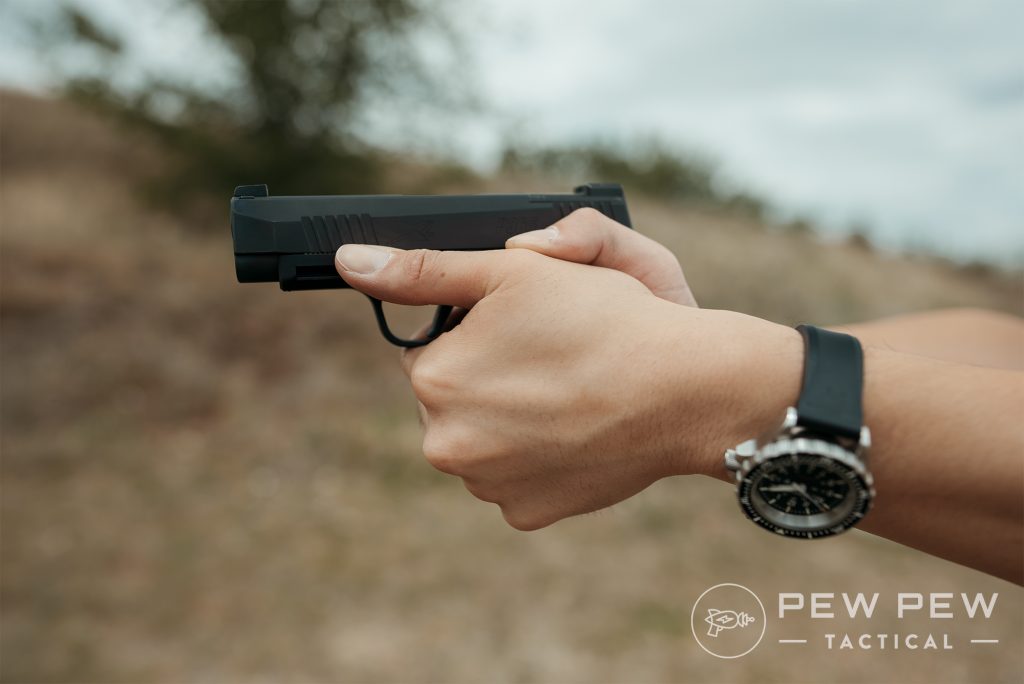
Place your support-hand thumb on the slide, your support-hand index finger under the trigger guard, and apply pressure by pinching them toward each other.
Finish building your grip by resting your shooting-hand thumb on top of your support hand just behind the thumb.
Squeeze like you’re wringing out a wet washcloth with everything except your trigger finger – it needs to move freely and independently. Use enough force that you can manage recoil, but not so much that you induce muscle shake.
Think of it this way: anywhere the frame is exposed is an opportunity for movement. By wrapping that grip up tight, you can minimize lateral movement and encourage a predictable back-and-forth rocking motion that settles right back on target.
The better your grip, the less your pistol will move around, and the faster you can get the next accurate shot off.
Step 3: Sight Alignment & Sight Picture
Sight alignment and sight picture may sound like the same thing, but they’re two separate concepts.
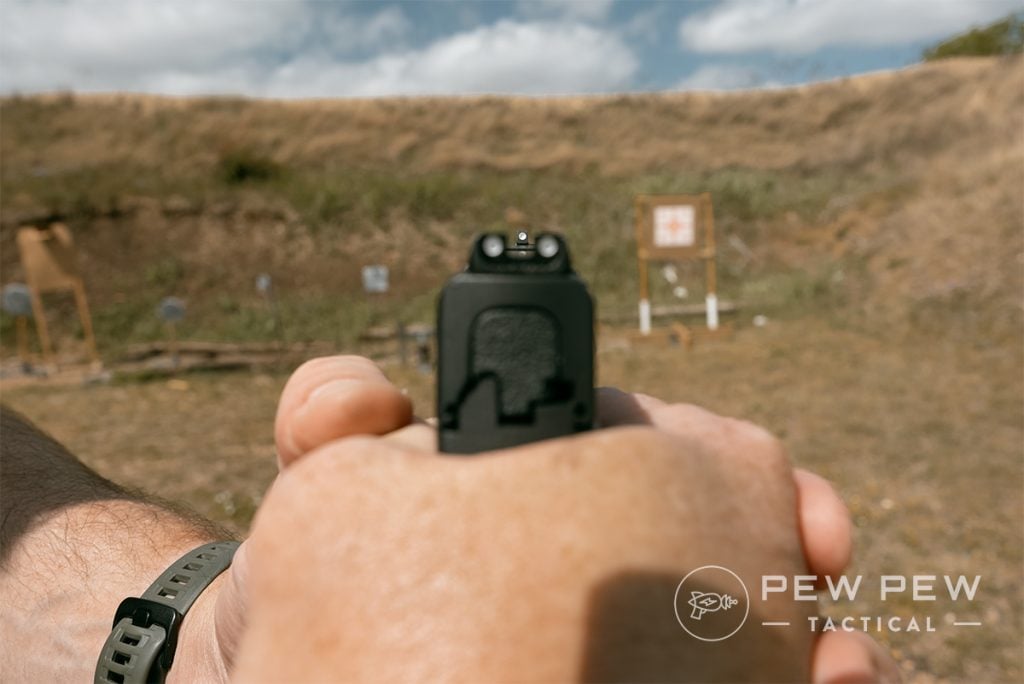
Sight alignment applies to iron sights, which use two references to tell you where the firearm is pointing. In the case of pistol iron sights, this basically looks like building a castle wall.
Close your non-dominant eye, and position the front sight post in the middle of the rear sight notch. You should see even spacing on either side and a flat line across the top.
If you’re using a red dot, ignore your irons and keep both eyes open.
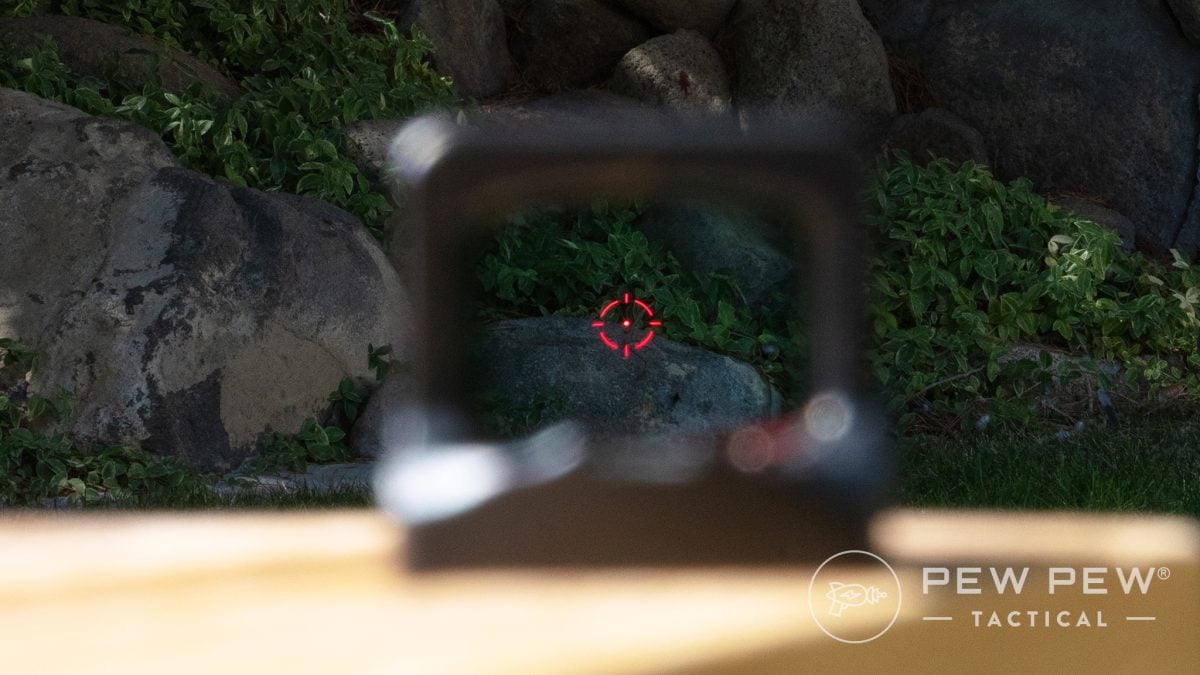
Once you have proper sight alignment, sight picture refers to placing the front sight post or red dot on your target. The top of the front sight post or middle of the dot is where you intend to shoot.
If you’re using irons, focus on the front sight and let the rear sight and target be a little bit fuzzy. If you’re using a red dot, focus on the target.
Step 4: Breathing
There are times when it’s necessary to bear down and rattle off shots in a hurry, but breathing technique can help you shoot a pistol accurately when you have time to be more deliberate. Start by breathing normally.

In between breaths, you’ll notice a natural pause. During this time, you’ve already exhaled, there’s still a little bit of air in your lungs, and you haven’t started inhaling yet. That calm period is when we want to shoot.
If the pistol doesn’t go off before you naturally start inhaling, don’t try to hold your breath. Keep breathing normally, hold the existing tension on the trigger, and resume the process during the next respiratory pause.
Step 5: Trigger Pull & Reset
Now that the foundation is built, it’s time to actually shoot!
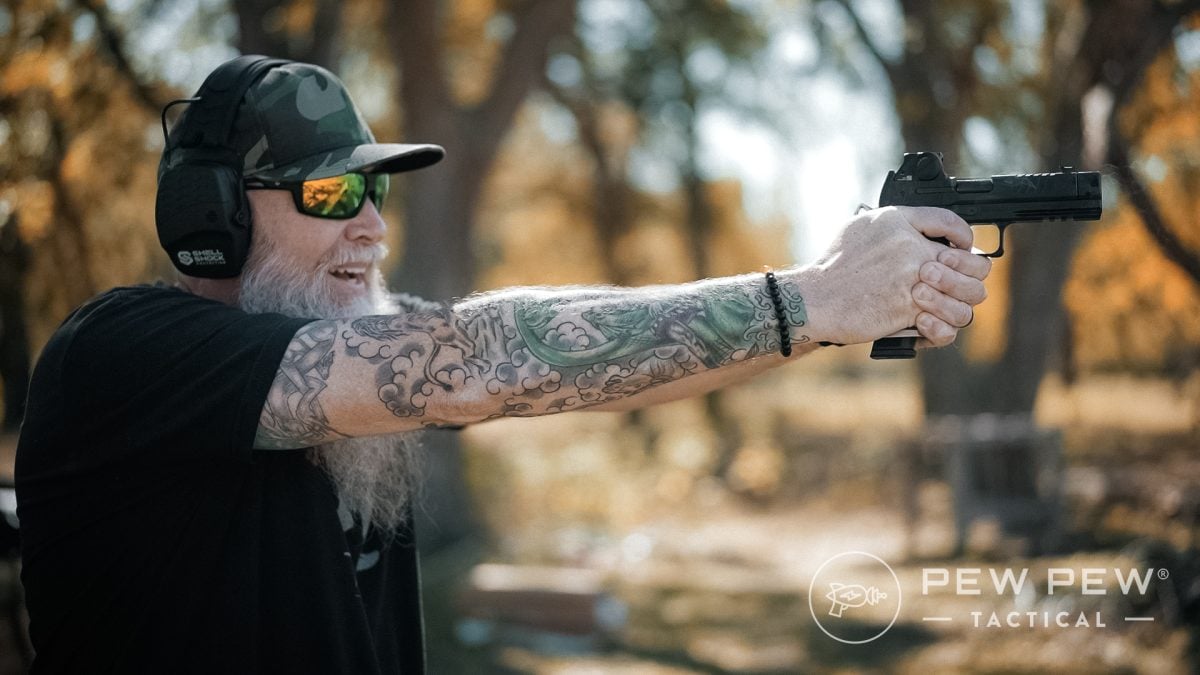
Start by placing the pad of your trigger finger on the trigger shoe (that’s the external part of the trigger you can see). In time, you might find that placing the trigger closer to your fingertip or even inside the first joint works better for you; that’s fine tuning that can happen later.
Some people call what comes next a pull, others call it a press. Every once in a while you’ll hear it called a squeeze, but that might lead you to apply pressure in the wrong place. The point is that you should apply pressure to the trigger with your trigger finger without increasing pressure with the other fingers and thumbs.
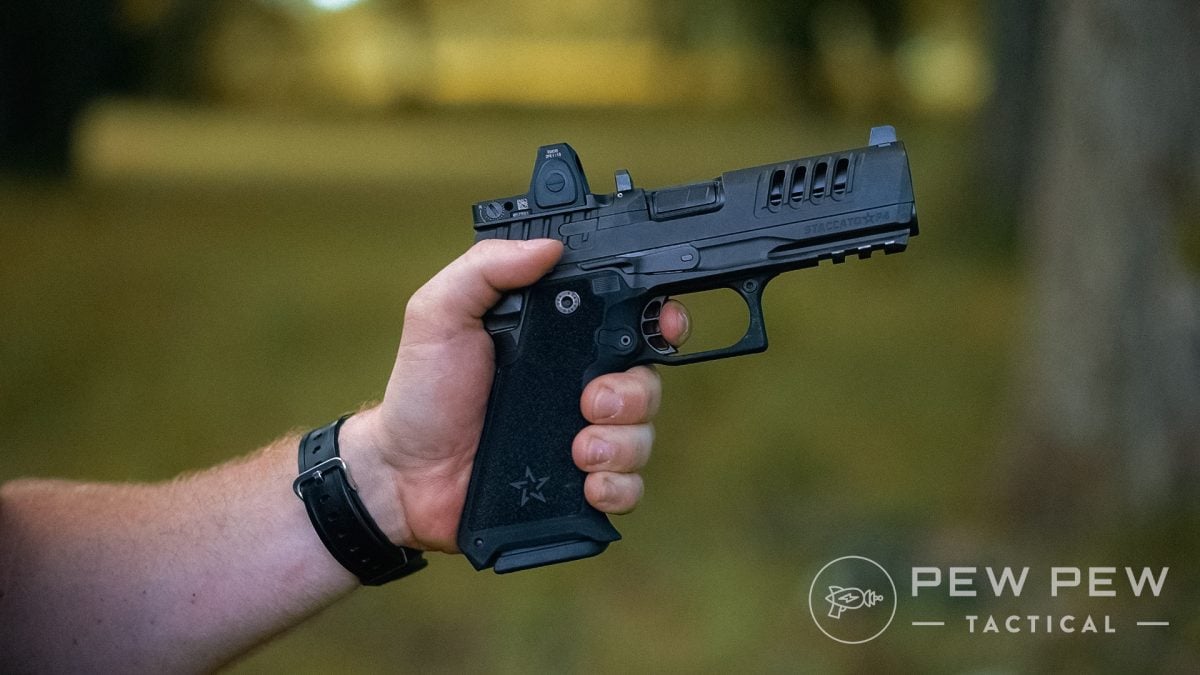
Focus on moving the trigger straight back. There should be no lateral or vertical movement of the pistol.
If you keep the trigger pinned to the rear after the pistol goes off, you’ll be able to feel the reset when you let it back out. You can experience this in dry fire by racking the slide like this.
Some instructors teach students to ride the reset; in other words, maintain pressure on the trigger and only let it out enough to reset so you can skip the take-up portion of travel on the next shot. Others teach students to get off the trigger as soon as possible, allow it to reset without interference, and start the process over again.
I believe there are times in a training environment when both of these techniques have teaching value. Practicing both will give you a more thorough understanding of how your pistol works and what you can do to shoot better.
Common Mistakes to Avoid

- Safety violations: This one should go without saying, but I’ll say it anyway. Always follow the four firearm safety rules. You can’t be too careful.
- Rushing the process: At first, you may need to consciously run through these steps before each shot. That’s ok! Build good habits now so you don’t have to fix bad ones later.
- Anticipating recoil: There are a lot of techniques we can use to manage recoil, but shoving the pistol forward and down as you jerk the trigger isn’t one of them. Practice good grip technique, and accept that some movement is going to occur.
- Timing your shots: If your point of aim looks like it’s drifting on and off the target, improve your technique until that wobble zone stays entirely on the target. Don’t try to break a shot as your sights drift over the target – that’s a recipe for missing, and a bad habit you’ll have to break later.
- Chasing the bullseye: When you first start learning to shoot, your shots are going to be all over the target – that’s normal. If you see one land to the left of the bullseye, for example, don’t compensate by aiming the same distance to the right of the bullseye next time. Just work on your technique until the group of shots tightens up.
- Not dry-firing enough: Dry-fire training, or practicing without ammunition, is the quickest way to get better at shooting. Most of us don’t have enough time or money to shoot every day, but dry firing is free! I probably dry fire 100 times for every live round I fire.
- Trying to do it all on your own: Professional shooting instructors exist for a reason – they’re worth it. Enrolling in a pistol course and getting personal coaching is a worthwhile investment, and there’s always something you can learn. In the meantime, check out our very own online course!
Resources
We’ve covered the basic steps of making an accurate shot with a pistol, but you still have a long way to go.
Dry-fire training for as little as five minutes a day will make a world of difference in between trips to the range for live-fire training. Certain pieces of equipment can help you shoot accurately, too.
Here are some of the best resources we have to offer for new pistol shooters. Dig in and soak up all this free knowledge!
Safety Resources
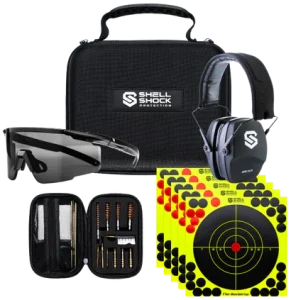
Prices accurate at time of writing
Prices accurate at time of writing
-
25% off all OAKLEY products - OAKLEY25
Copied! Visit Merchant
Dry-Fire Training Resources

Prices accurate at time of writing
Prices accurate at time of writing
-
25% off all OAKLEY products - OAKLEY25
Copied! Visit Merchant
Live-Fire Training Resources
- Best Shooting Range Gear
- Pro Shooter Drills
- Best 9mm Ammo, Best .45 ACP Ammo, and Best .22 LR Ammo
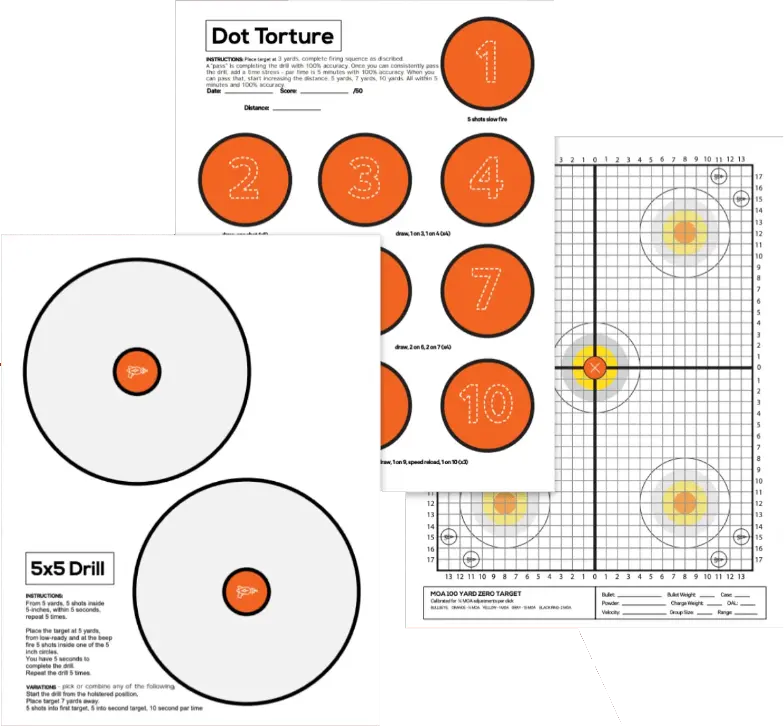
- Best Shooting Targets & Stands and free, printable Pew Pew Tactical targets

Prices accurate at time of writing
Prices accurate at time of writing
-
25% off all OAKLEY products - OAKLEY25
Copied! Visit Merchant
Final Thoughts & Next Steps
This is a lot to remember, but it will become second nature with enough practice. Becoming a good pistol shooter will make you a better shooter all around.
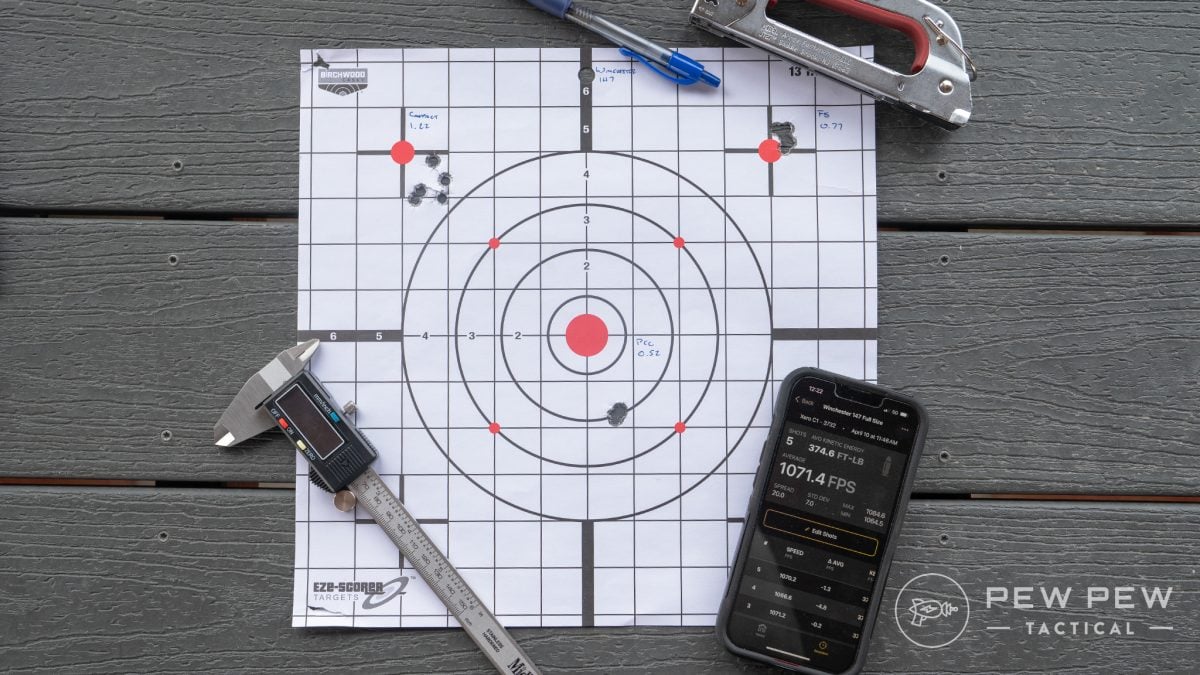
In a way, it all boils down to the sights and trigger (in the Marine Corps, we used to recite, “Trigger, trigger, sights, sights,” during dry fire). If your sight alignment is correct, your sight picture is on target, and you have a clean trigger press, you’re going to hit the target.
Master that, and everything else gets a lot easier.
What’s the best advice you’ve gotten for shooting a pistol accurately? Share what you’ve learned in the comments! Need help picking your first pistol? Check out our guide to the Best Budget Handguns to get started without breaking the bank!
Latest Updates
- March 2026: Complete overhaul with new instructions, photos, and supporting content.




124 Leave a Reply
I tried these stances. but I broke my shoulder about 7 yrs ago. It was a real bad break. so I have a all metal shoulder. I can not raise my right shoulder past my shoulder. is there a stance or postion that would be good for me. my ar is weak and so is my grip.
Hi, Rebecca! If I understand correctly, and you're unable to bring sights or an red dot up to eye level, a laser sight might work for you. They mount to the pistol's frame, and produce a dot that appears on the target rather than inside an optic. That would allow you to present the pistol in whichever way is most comfortable and effective for you, while still establishing a usable point of aim. Just remember that lasers have to be zeroed just like an optic before they're accurate.
You are spot on with your outline of where good shooting skills should begin. When I walk up to the line to shoot, I set my stance (nose over toes), set my vice like grip, fixate on the target, find my front sight, align my rear sight and squeeze the trigger. Proper trigger control allows me to quickly get back on target for the next round. All of these things must be repeatable in order to consistantly land rounds.
Once established these fundamentals apply to all calibers. I rotate all my guns from 22 to 45ACP and believe there should be consistant results regardless. When I can not get to the range, I practice in my backyard at 35' with my Crossman C02 powered 22 caliber target pellet gun, shooting at 8" 2x4's to simulate the pin competition I compete in at my local range.
Finally; I am goal directed and purpose driven. Make every shot count and, as stated, practice, practice, practice!
Excellent information and glad I joined you guys.
W/ Jeff Radin. Eric I sure would like to see an article on various pistol and bb pellet guns. I feel they would really help on accuracy, and one could use them in their basement or back yard at any time they wish. I know it's not a substitute for range time. However many shooters live in the city and just getting to a range is a time commitment.
Hey Jim, thanks for the comment! We have a couple articles on the books regarding air pistol and bb guns but they are old. https://www.pewpewtactical.com/best-bb-guns/ and https://www.pewpewtactical.com/airgun-bb-gun-training/ But thanks to your comment, I will get these put in the To Update ASAP pile!
everyone (almost) harps on stance. except adam pianchaud of sig academy and i. stance can help with followup shots but it is miniscule compared to sight picture and trigger control. i practice shooting on 1 foot. i practice sitting, walking and laying down to prepare for a bad reality situations. i can always do a 2"-3" group at 3, 5 and usually also7 yards ( the realistic self defense distances). stance is just not that important!
Eric, thanks for the tips. I am brand new to the shooting sport family, using a weapon. I have been shooting a camera for over 50 years and some of the same skills are required, breath control, gentle at the shutter release/trigger pull, and composition/target acquisition. I have just purchased a Sig P320 9mm, I pick it up in a week, California rules. I have two P320 M17 pellet guns, one with red dot, one without, which I can practice with at home on a path alongside our house, up to 15 meters long. I use Shoot' N' C targets. I find starting close to the target and using my camera tripod as a support is helpful, particularly when trying to "zero" the red dot sight. Thanks for the detailed guidance.
Jeff
Reflectors are awesome laser targets! When you hit one you know it. Also a laser travels in a straight line....bullets do not. So don't rely on it for more than trigger training.
Thank you for your training information and videos. I’m 73 with childhood memories of my father teaching us gun safety. I had a 20 gauge to start at 10, moved up to 16 and began shooting my mothers 22 rifle soon after, but never had handgun/pistol training. I’m excited to purchase my first pistol in the future and go back over this material as I dry fire (never heard this before) and start to get into target practice. Thanks so much
Is there a rail light that would help me see my hits at the range?
It's been over 55 years since I fired a real weapon. Started with the M 14 16 60 then 50 cal. Training with the 45 was relatively short. Couldn't remember much but after reading your article it really helped. My grandsons have been shooting pump and breakdown rifles for a very long time. My training with rifles were extensive so teaching them safety and techniques were easy. Bought a Co 2 pistol for them to target practice and drew a blank about how to teach them anything. Your article was spot on. Downloaded some targets offered and can't wait to watch them shoot. The Chapman shooting stance worked great for me. Thanks
Old Ray Chapman, he lived up the hill from me and we became pool shooting drinking buddies, what a calm modest pleasant gentleman, sadly he died of a minor surgery mishap, i miss him
You have a pretty good program for teaching fundamentals. I agree with most od what is taught. I am right handed left eyed. I shoot isosceles but face the target and align the sights with my line of sight. I don't adjust my stance to accommodate. I also advocate a straight wrist for the support hand. A straight grip enhances strength and a bent wrist decreases grip strength. Overall, you present a good program. I have been an instructor for 50 years as well as a PPC competition shooter. Take care.
what i see people doing wrong is having there arms strait out locked, the problem with that is your upper body is taking the recoil, lots of movement, bend your elbows slightly and use them as a shock absorber, your arms will take the recoil making your 2nd shot easier
Hi. I read an article a while back by Kyle Lamb that mentioned putting pressure between your thumb and middle finger to free up your trigger finger. This definitely works to keep you from pulling your shots. After I did this I reset my sights to center on my pistols as I had been pulling my shots and didn't realize it.
All I can say is WOW, great info. Thank you for putting this out there. I know there are lots of sites that offer stuff like this and everyone has their own opinions of how to do things, but for me you can never have too much info or training tips. All it takes is one new tip or trick and the read was worth the time. Thanks again
Great important information. Love that instructions are clear to understand. Much appreciated.
Good info. My instuctor is very advanced and doesn't realize some of the details people new to guns need.
Thanks so much!
Lots of good nuggets in this mine of munitions!
I have recently gotten back into shooting. Something I never did, even when qualifying in the USMC, was to release the trigger only to its reset. I always, and always have, fully reset the trigger.
Next range session will include practice on releasing the trigger only to the reset point.
Thanks for this!
Doesn't makes much sense. Looking at slow-mo videos of the pros, they are just releasing the finger naturally. Controlling precise release puts too much tension and focus on what is unnecessary, excessive. Here is an example: facebook_._com/watch/?v=1065852504084065
Amazing! I consider myself an experienced shooter with 50+ years of exposure. Having competed in many national and international events, acquired bronze medal 1980 muzzle loading worldchampionship and numerous first places in Europe.
Still learned to refresh and improve old worn-out habits here!! Also appreciate very much the clear, concise and organised approach as to "how to be a better shot" as presented here by PewPew
Thank you. I'm new at handguns and am reading alot and now shooting alot. Your advice it great.
ive been going to the range for awhile now ive shot 9mm,.44 magnum,Desert Eagle .50 cal Action Express and recently ive been shooting the Heckler and Koch USP .45 today i was shooting i think my problem is shooting too fast all my shots go off to the right i can not hit the center bullseye to save my life.i come close to the bullseye and have some nice groupings i do need to have more practice .could you tell me what i need to do to remedy this problem.
Never too old to learn!
Trying not to get complacent and sloppy!
ty
buy canik at rowe ammo nation . com
Excellent article for me!! Thank you.
Beginning "retraining" in June with a professional trainer on a local range, since I haven't practiced in years, and this helped rekindle a lot of pointers that vanished over time. Had no idea there was such a thing as Snap Caps, etc., to help. Your advice and info was valuable. Thanks.
Placing a coin on top of the rear sight accomplishes the same goal as putting the coin on the front sight with the added bonus of helping with sight alignment.
Thank you very much for your time. To share your knowledge, thank you. I haven't fired a pistol in twenty years. I just bought a Beretta px4 9mm. Compact. I haven't shot it yet ; l am on a fixed income. Year from now, l want a 45. Thank you .
You made a good point when you shared that it is great to develop muscle memory in order to consistently produce excellent trigger pulls. My uncle just mentioned the other day that he is planning to get himself a concealed carry as he wants to protect himself, as well as his family. I will suggest to him getting the permit from a reliable service before he can purchase one.
Eric
Thank you for your article and referencing the Mantis X. I will review and possibly pick one up. It seems to be an excellent tool.
They are a great tool and allow you to practice many fundamentals inexpensively.
Very good information! I’m a recent “range goer” and found I have developed a few of the above mentioned bad habits that I need to break. The dry firing (I was told you shouldn’t shoot without ammo) is going to be a lifesaver! Thank you!
I just saw a suggestion for you to move to Rumble. I hope you do.
Excellent especially for newer pistol shooters. Love the graphics....very helpful
Great stuff Eric. Looking forward to more
Thank you Eric this was very helpful.
Thank you!
Thanks Eric! Great stuff.
Hi Eric
Thanks for your awesome articles.
I was wondering if you would consider posting your videos on Rumble.com as well as youtube, not everyone is staying on youtube.
Many people are switching to Rumble and we'd love to follow you on Rumble.
Thanks.
Hi Eric, excellent info. I can’t thank you enough. Keep up the good work.
Sigs sight differently:
https://www.realgunreviews.com/sig-sauer-sight-heights-sight-numbers/
Great article and good guide for beginners!
One comment on this line:
"The top and middle of the front post is where your rounds should end up…not the actual front dot."
While that's true for sights configured for center hold, many pistols (combat/duty Sigs come to mind) have sights factory set for a different sight picture. For example, my fn fnx45 came from the factory with fixed sights set for combat hold (front dot = point of impact) @ 20 yards.
Anyways, my point is that one should check their manual/research what the factory sights are set for so they are not surprised if they end up shooting a bit low using a center hold.
Otherwise, great guide. Thank you!
Eric, thank you, for this very helpful article. My body had naturally defaulted to the Chapman stance to compensate for my being left-eye dominant yet right-handed. You've confirmed the correct stance to suit my needs so I can be more confident when I practice that I'm doing things properly. Bonus, now I know what to call the stance! God bless you, Sir.
Here's what I did to cure a flinch when shooting full power Glock etc. Buy a .22LR revolver for practice. Dry fire practicing with the long, heavy trigger pull makes semi-auto trigger easy by comparison. Be sure to use snap caps to avoid damage to the gun. Snap caps are expensive, so use 4-6-8x7/8" drywall anchors, which are the same size as .22. At the range, replace half the snap caps with live ammo so you can tell if you're flinching on empty cylinders. Buy bigger snap caps, eg 9mm, to use this same technique in glocks etc.
My .22 revolver is an S&W 63-5, which is steel, but an alloy one might be even better since the lighter weight would be even harder to control.
Great advise! I have a .22LR Ruger Revolver and will try the drywall anchors!
When you did your dry fire review was the G-Sight system considered? If so, what was your analysis?
Nice basic article. I add some things:
1. Don't get too frustrated with your inability to shoot as they do in videos that show rapid fire double tap shooting, remember the pistols they are shooting are NOT stock! They have, at the least, had trigger and spring jobs done on them, which greatly improves their ability to do accurate double taps. Having more tweaking done makes it even easier.
2. Even after a trigger/spring job on my pistol, I continued to struggle with rapid fire accuracy using the isosceles stance. When I signed up with Front Sight, they sent a video to review prior to attendance. They recommend the weaver stance which that change alone immediately improved my accuracy. The grip uses isometric tension; the support hand/arm applies rearward pressure to the firing hand's forward push which helps with recoil control and back on target faster.
3. Another helpful program is the 21 Day Alpha Shooter course - a lot of great tips in there.
4. I would also one other thing I have not seen anywhere but developed on my own: while Dry Firing with your pistol empty or on a snap cap, take a few minutes before practice to just cock the pistol and press the trigger with your eyes CLOSED! Do this several times, it will really help to get you in tune with your trigger.
Good stuff, but one correction - Springfield, at least on certain models, do not recommend dry firing without a snap cap as there is a small roll pin that can break from repeated dry firing. Tikka also recommends a snap cap. Be sure to check your owners manual before repeated dry firing.
I was stupendously fortunate to have a retired Delta Operator teach me how to shoot a pistol. Place the front sight on the target and squeeze the trigger. It is that simple and that difficult.
Sorry sir....you don't wait to hear the trigger reset.
That makes you let the gun dictate when you shoot. Also leads to lesser accuracy
Better to just avoid that.
Better to practice when you are live shooting and take your trigger finger off it let it reset and back to the wall while the gun is cycling.
yes sir
Thank you as a beginner I haven't been able to hit the broad side of a barn I picked up several errors I was committing from your directions
Glad we could help!
Your article on fundamentals of shooting is excellent and a worthy read for new and advanced shooters alike. Thanks for sharing.
Kevin
Glad to help!
Shooting both eyes open... OK, I'm right handed person, I have astigmatism on my right eye, found out that I'm actually a left eye dominant. Still recommend both eyes open?
Yes. I am in the exact same boat! I have a pair of Rudy Project NOYZ with corrective inserts to cover the sight part.
As for the cross eye dominance issue, it simply finding the best solution for you. Personally I spent some time working on retraining my right eye for dominance. Let’s just say I chose to look at alternative options. I started out using the Weaver stance with a almost locked out right arm and turned my head so that I had solid cheek weld on my shoulder. It can work, however you will have to deal with some inherent issues. Movement, sight picture, recoil control.... Now though I have started shooting competition and have move on to a more isosceles stance and combat grip. With the pistol being straight in front of me I only have to tilt/twist my head slightly in order to line up my left eye with the sights. Sometimes I still do a quick wink of my right eye to confirm my sight picture, no big deal. I have found this to be the best answer for me,
Like anything else it takes some practice but it’s worth it.
Im also cross eye dominate, right handed, left eye dominate. I can shoot with either hand although im better right handed. had someone tell me something that helped. try as your sighting, winking your non dominate eye, partially closing it and opening it back up as your aiming, before you squeeze the trigger. it helped me get used to keeping both eyes open. May or may not help you, takes time and pratice. Try it dry fireing first
Great breakdown, and love your sense of humor in the article. Pew Pew has the best staff. Thanks for giving us enthusiests a place to learn more.
Glad you enjoyed it! Thanks for the support.
Your statement on shooting with both eyes open are so true. That’s how I’ve been shooting forever. I finally went to a class to get my carry permit and the instructor specifically said to close one eye. I questioned her because I thought I misunderstood but she said yes. She gave some explanation as to why but I was so surprised an NRA licensed instructor, would give that advice but I started listening closer to see if she gave more erroneous advice...and she did, but I passed the written test despite the wrong advice and scored 100% on the range test...with BOTH EYES OPEN.
I find it much easier for target acquisition and peripheral vision. Thanks for the knowledge you share.
Thank God I have never had to draw my weapon. i've been told by people that would know that when your in the situation with the adrenaline flowing that it may not be possible to close one of your eyes. Also like he said in the article situational awareness is not nearly as good with half of your field of vision cut off
in my younger days I could shoot a rile dead center at 100yards. I could shoo a s&w model 686 357 pretty good to. but in 1995 I was hit from the rear by and oil company truck. now my nerves aren't as good as they used to be. I have ruger vaquero. s&w model 60. I love to shoot still. I am getting older now and things are a bit different than it used to be. I love handguns. you have some great advice. I guess I developed my way of shooting years ago. I was county boy who hunted or food. love to hear more about shooting. johnny joyner
Found this sight just looking for answers on gun terms in articles I was reading and signed up for emails and have learned so much in two days. Appreciate the knowledge and openess to share with others. Buying a 9mm tomorrow and so looking forward to learning how to handle it correctly. Thanks, Mike
Real glad we could help out! Have fun and stay safe with your new pistol!
Hello Eric ...
New shooter here. Interesting/good article above. Do you have anything similar for shotgun shooting ... Mossberg, 00 buckshot?
Hi Mitchell, thanks! We don't have one as in-depth for shotguns...but it's something we're going to add to our editorial calendar.
The other day, a raccoon came after my dog, then me. I fired an DX .40 three times, and all three times the shots went center, low, about 6 o clock. I went to the loods and repeated what happened, and I got exactly the same result. All 3 shots in less than a second, and all 3 pieces of brass landed in a bout a foot circle. Two hits were about 14" apart, and I was running while shooting.. Any suggestions?
Don’t run and shoot silly you’re not a SEAL and raccoons aren’t the taliban lol.
Re: Dominant Eye. The easiest way to determine dominant eye is to point at something, both eyes open, with your finger. Then close one eye. If you're still pointing at the target, that's your dominant eye; if not, it's the other one.
It’s better to use a two-hand pointing method to rule out hand dominance interference and muscle memory bias.
I learned by making a triangle with my two hands and encapsulating a target. Same thing, close one eye at a time and the one that has clear view is the dominant
Training with frank Garcia, 3 time world champ at universal shooting academy. Have shot 50,000 rounds in five months. That’s how you learn to become an elite shooter. Learn right from the best in the beginning.
The bonus target signup link above ain’t working. Thanks
This is a very interesting article. Sometimes you forget to do everything right. Good stance grip trigger pull. My
Problems are some vision issues. I love to shoot don't have enough range time.
Thank you
Another thing I would like to add about the grip is that your off hand is more important than your strong hand. I know it seems counter intuitive but it makes sense when you look at it scientifically. When you grip a gun, you are holding it exclusively with friction. When you tighten your strong hand you are increasing the friction of your strong hand on your gun. When you tighten your weak hand, you are increasing the friction of your weak hand on your strong hand, but also pressing your strong hand against the gun more increasing that too. So tightening your weak hand is actually twice as effective!
As for letting the gun surprise you, that 100% the best advice you can give someone as its the #1 way I see new people screw up pistol shooting. The best metric to learn that, however, is to watch for a muzzle flash. If you see one, then the gun went off without you ready, so no flinch. If you dont see one, then you knew it was coming and reacted by closing your eyes and flinching.
Love your articles. Being new with guns since February I have been doing a lot of dry practicing between live fire and it has made me a much better shooter. I also use the MantisX and have seen my average go from 87% to consistently shooting in the high 94% to low 95%. I'm known as rcjohns322 and my wife who shoots better than I do is shooter361. What are you known by? Keep up the great articles and thank you for taking the time to do it .
BTW Eric, we shoot with ASPDryfire and Glock shooters
Awesome articles Eric! A guy at the range I go to recommended you to me , so glad he did !! I look forward to reading your info
Been carrying for two years, S&W 45 3.3" barrel. Shooting 1.5" groups of 6 from 5 yards out to 10 yards what can I do to tighten my groups? Self trained,, round is 230 grain FMJ... modified gun with a Apex flat trigger and tactical trigger enhancement.
If you can shoot 1.5" groups at center mass when under pressure, do not worry, they are plenty tight.
I’m a beginner and I’m learning so much from your articles. Thank you for caring enough to take the time
Thanks eric!! I always learn or recall things when I read your articles. A few gun magazines need to hire you and give us all a fresh perspective as opposed to the same writers giving us the same deal i read in their mags back in the 70s.
You're so welcome Mike...and you're too kind!
Great job as always! I recommend your site in each class now. You’re really doing a good service with your programs.
Thanks so much, Monte!
Thank you Eric! I discovered you a couple of months ago. Unfortunately like many I spend more time on the internet reading about shooting, watching videos fondling and cleaning my firearms etc. than actually shooting guns, There is a lot of material out there some great but some ridiculously bad. Your articles are always on topics that interest me and knowledgeable and well written. I’m 64 and have been shooting since I earned my marksmanship merit badge in Boy Scouts, Remington .22 nylon 66 I believe. Thanks again; I enjoy your work.
So glad I could help, Jack!
Thank you for this great refresher. It has been many, many, years since I last shot a weapon. But the times are ripe for gearing up.
Great job. Excellent reading. Not the usual boring articles about guns.
I just shot my xds 9mm for the first time today, I put 100 rounds down range in about an hour or so at 50 yards and I got the paper about 20 times and hit the target about 3 or 4 times. I tried really hard to focus but I tended to land on the paper the first few shots, but the more I focused on trying to hit I didn't even know where my bullet was landing. I could hear it hitting the back plate which is good, but I'm clueless where to start. The first shot was nuts so much adrenaline lol, I knew it would be loud but I didn't expect the concussion wave. I learned quickly to not keep my head in the both. Thanks for the tips I'm studying hard to understand and get better.
Alex D you need a spotter. How can you get better if you have no idea where you are shooting? Buy a cheap spotting scope or binoculars, and have a friend spot for you. Also, as this great article says take your time. 100 rounds down range in 1 hour does not sound like a lot, but if your adrenaline was kicking in, and maybe some frustration then I am not surprised the first shots were the best. Anything that gets you worked up and your "blood pumping" is going to make it hard to be accurate. Have you ever hunted before? If so, think about a big 10 pointer walking out of the woods 75 yards off and your in the stand. The it is right after sundown (before the 30 minute mark), and you have very little light. If that does not get your adrenaline kicking in nothing will. In that scieno and at the range it best to try and calm yourself before taking another shot. Remember adrenaline is not your friend when it comes to shooting. Plus were you shooting quick burst or spacing out the shots pretty evenly? As the temperature of the barrel raises it will start to expand once p which results in lose of accuracy. That is why many refiles and and some pistols have a bull barrel. Lastly, you stated the more you try to focus the worse you got. This is one of my greatest weakness. I tend to over think things. Believe it or not you can overthink shooting just like so many other things. Next time you shot think about how you will take the shot. before taking it. This will put your mind at ease before taking the shot The more you practice the more the shot becomes second nature.. Lastly, I have been known to hold the gun pointed down range with the safety on to see if I am puling the trigger. This allows me to see if the gun is pulling left, right, up, or down. This is a great article and I hope I helped some Alex D
Alex, DO NOT put so much into holding on the bull without moving. Anytime your sight moves close the bull squeeze your trigger. You have that split second from the time your brain says squeeze, till you squeeze, and the bullet leaves the barrel you may just be dead on. If you squeeze when on the bull, till you finish and the bullet leaves the barrel you are no longer on the bull.
Nicely done.
Thank You!
Did someone say, ‘If your handgun/pistol shoots centerfire rounds (9mm, .40 S&W, .45 ACP, etc) instead of rimfire rounds (such as .22 LR), then you can dry fire all you want since the firing pin is not actually hitting anything.’
Ahh, ... no you cannot!
In fact Glock, Inc./GmbH is now telling customers not to dry-fire their Glocks without using snap caps. As for the particular comment about ‘not actually hitting anything’? Every time a Glock is dry-fired the front of the striker slams into the back of the breech face. (Which, probably, explains the reason for all of those lovely pictures showing Glock slides with punched-out breech faces that have been circulating around the internet for many years, now.)
I’ll, also, offer two personal observations about proper grip and stance: (Yes, for the past 25 years I’ve been a multi-certified Firearms Instructor; so I think it’s safe for me to speak up on this topic.) Yes, the isosceles stance tends to be highly intuitive; and it does aid many shooters to hit COM at fairly close range (say at and inside 8 to 10 yards); but, at the same time, the shooter should be wearing a vest because, in particular, an isosceles stance demands a shooter to use frontal protection.
Because a pistol shooter can’t really ‘roll (and lock) his wrists’, or take the (accuracy destroying) tension off the tendons in the upper part of his forearms by relaxing his elbows, the isosceles is not an ideal stance to use on farther targets (say at and beyond 12 to 15 yards).
It’s, probably, gone unnoticed by the world-at-large; but, the last time I checked neither: Leatham, Enos, or Middlebrooks were using any of the aforementioned (and admittedly) popular: Isosceles, Weaver, and Modified Weaver (or Chapman) stances. All three of these stances are, now widely considered to be, ‘yesterday’s news’; and, quite frankly, I have to agree.
The best (repetitive) pistol shooting I have ever done in my entire life occurred while I was using the ‘Reverse Chapman’ grip and stance. It’s more natural for the body to assume; there’s less stress on the body’s skeletal structure—especially in the forearms and wrists— and, with a proper ‘rolled over’ grip controllability over the pistol and accuracy go way up! I’ve watched videos of Leatham teaching this stance/grip; and D.R. Middlebrooks markets these techniques as part of his ‘Fist-Fire’ pistol combat course. (Which I happen to think is one of the best combat pistol courses available to both government agencies, and everyday law-abiding civilians to be found anywhere in the world, today.)
One huge advantage to using the ‘Reverse Chapman/Fist-Fire’ grip and stance is that pistol shots will quickly stop impacting the target at the dreaded 6 to 9 o’clock position. (3 to 6 o’clock for a left-handed shooter).
Neither is it necessary for an active competitor who's firing many hundreds of rounds during a course-of-fire to exhaust himself by having to maintain a crushing ‘death grip’ on his pistol. Years ago, now, I remember D.R. Middlebrooks commenting about how he would have had to end his national and worldwide championship shooting career years earlier than he did, if he had not discovered the practical value and virtues of using a ‘Reverse Chapman’ stance and grip. (Which he, of course, modified to suit himself and continue his award winning career.)
As for myself? The ‘Fist-Fire’ stance and grip is all I use, today; and, even at my present (considerable) age, by doing this I’ve managed to attract a lot of favorable comments and attention from other pistoleros who have to know how to ‘run’ a pistol for a living. Anyone who’s interested can get a couple of videos on this technique from the Tactical Shooting Academy in Surry, VA.
NOTE: I've always found Hogue HandAll 'Tactical Grip Sleeves' to be way superior to Talon grips—Which I've often worn out in less than 4 or 5 weeks; but not the Hogue HandAll sleeve. The Hogue grip sleeves can last through a good 8 to 10 months of heavy daily use!
Outstanding article. Very well written and to great depth!
Great web site excellent self help tips! Thanks for the great targets.
Thanks for this great info. I shoot a variety of handguns so will try these tips out to improve my shooting
Great tips! I’m going to work on them.
Thank you.
I,m L-Handed and have had a S@W Shield 9mm for awhile, now I traded the 9mm Shield for the S@W Shield 45ACP. .Here,s my basic proBlem.
95% of the time, I usually hit off to the R-side of the target. Got any idea,s what the basic cause is I,m doing wrong ??
Please send me a few pointers to my E-mail.
No matter what 45 load grain I shoot the problem still exist. I just purchased and mounted the new style ESSIGHT with the larger white dot on front bead. Tks. guy,s.
Hey Alan, you might want to try one of the laser trainers in the article, or have a more accurate buddy shoot to make sure it's not you. Otherwise it could be the sights.
I am a south paw also, with a Shield 9mm. Try this grip modification: imagine a two-foot stick in each hand, held vertical and parallel. Now tilt the top of both sticks towards each other about an inch. Replicate this force in your grip. It helped me pull my shots from the right back to center.
Thanks Eric. I appreciate the tips. I shot expert in the army with several firearms ... 35 years ago. Now I am trying to get back some gunsense and help my wife. This is a good article to share with us newbies.
You're so welcome Steve!
Thanks for something free that is really worthwhile. I am sure that I have read every one of these tips, but not in such a concise and all together format. Thank you very much for taking the time. I will print a hard copy and put it in my range bag for reference. Also thanks for the free targets. My range gets $1.50 each and I am a member.
TDR
Hi TDR, glad we could help out with this article and the targets!
Love your articles. Thanks for the clear, concise and practical information. It helps a newbie like me immensely.
You're so welcome!
Great article. I've been shooting for 50 years and never hurts to read through a good article that helps to reinforce good shooting habits. You're never to old to learn and yes old dogs can learn new tricks.
good stuff the only opposed is the shooter placement wheel to diagnose grip check sob tactical with jhon shriek McVeigh he has a video on YouTube about this
Great article, thank you! I've now read it thru 3 times practicing as I go. So very helpful, but as a newbie I got a bit confused at handgun grip as my new gun is a revolver. I need a lot more practice but love your help in learning more about guns. Thanks again! I'm hooked!
Great article. As an accomplished shooter I am always open to refresher articles and training--just what I needed.
Great article! Im a new shooter and have learned a lot through some practice, articles and videos. on the Shooting Placement Diagnosis image i saw a section that there is no follow-through. can you illustrate/explain is "follow-through' and how to correcty do it?... thanks and god bless
Appreciate very much, i've learned more.
Thank you.
BTW, I prefer articles about glock, glock 19 gen 4 in particular or accessories, or more tips on how to become better.
sweet
Very good informative article for me as a beginner shooter at age 82. Where can I get a hard copy of this?
Hey Stan, awesome to hear! You can probably copy paste and print it out.
Great article, Eric! Lots of very good information.