
Best AR-15 Lower Receivers: Budget to Baller [2026]
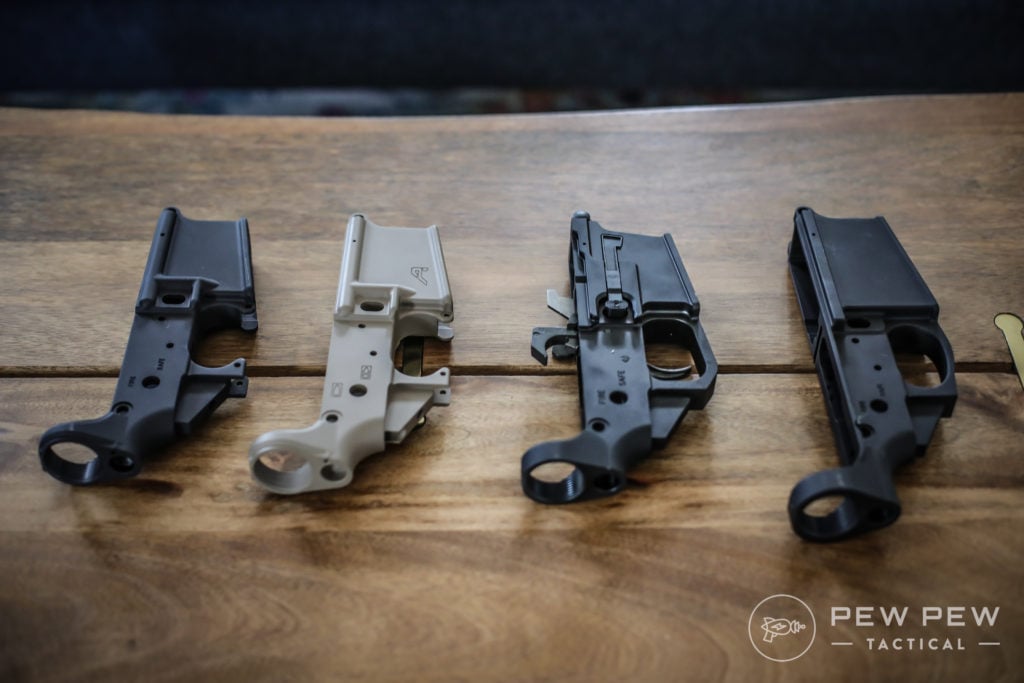
So many AR-15 lower receivers out there...We cover our top picks of the best lowers across budgets, materials, & end-use.
We review products independently. When you buy through links on our site, we may earn a commission to help support our testing. Learn more.
Picking the best AR-15 lower receiver can be a bit daunting.
Sure, your AR-15 lower is a foundational piece, but why are some $30 and others over $300? And how do you know which AR lower is best for you?
We've tried tons of different AR-15 lowers here at Pew Pew Tactical, and we promise it's not as complicated or intimidating as it looks.
Whether you are looking for a solid mil-spec lower for your next budget build, or you want to go all out with an ultra-nice feature-packed one, we've got you covered.
We gathered and tested some of the best AR-15 lower receivers on the market to help you find the right one for you.
The Quick List
- Editor's Pick: Griffin Armament MK2 Ambi LowerJump to Details ↓
- Best Budget Lower: Palmetto State Armory Stripped LowerJump to Details ↓
- Best High-End Ambi Lower: Lewis Machine & Tool MARS-L Ambi LowerJump to Details ↓
- Best Retro Lower: H&R Lower ReceiversJump to Details ↓
- Best Billet Lower: American Defense UIC Ambi LowerJump to Details ↓
- Best 9mm Lower: PSA PX-9 Lower ReceiversJump to Details ↓
Table of Contents
Trending: Best AR-15s & ATF Drops NFA for Suppressors & SBRs
Best AR-15 Lower Receivers Comparison Chart
| Price | Best For | Material | Finish | Weight | Ambidextrous | |
|---|---|---|---|---|---|---|
| Griffin Armament MK2 | $209 | Affordable ambi builds | 7075-T6 Aluminum | Type 3 Hardcoat Anodized | 8.9 oz. (stripped) | Fully |
| PSA PA-15 | $59 | Budget builds | 7075-T6 Aluminum | Type 3 Hardcoat Anodized | 8.25 oz. (stripped) | No |
| LMT MARS-L | $352 | High-end shoppers | 7075-T6 Aluminum | Type 3 Hardcoat Anodized | 8.5 oz. (stripped) | Fully |
| H&R Lowers | $139 | Retro builds | 7075-T6 Aluminum | Type 3 Hardcoat Anodized | 7.2 oz. - 8.5 oz. (stripped) | No |
| ADM UIC | $379 | Form meets function | 7075-T6 Aluminum | Teflon-Impregnated Type 3 Hardcoat Anodized or Cerakote | 11 oz. (stripped) | Fully |
| PSA PX-9 | $129 | 9mm builds | 7075-T6 Aluminum | Type 3 Hardcoat Anodized | 8.3 oz. - 9 oz. (stripped) | No |
How We Tested the Best AR-15 Lower Receivers
For this article, we gathered a bunch of lowers we’ve personally built, shot, reviewed, and trained with at Pew Pew Tactical. All lower receivers that made this list had to have a few things in common to earn a spot in our recommendations:
- Lowers must function properly when paired with an AR-15 upper.
- Ergonomics need to work for a range of different shooters.
- Lowers must also be able to function reliably with a wide range of magazines and allow magazines to drop free.
- Most lowers should be reasonably priced relative to the amount of features they offer.
Reliability & Compatibility
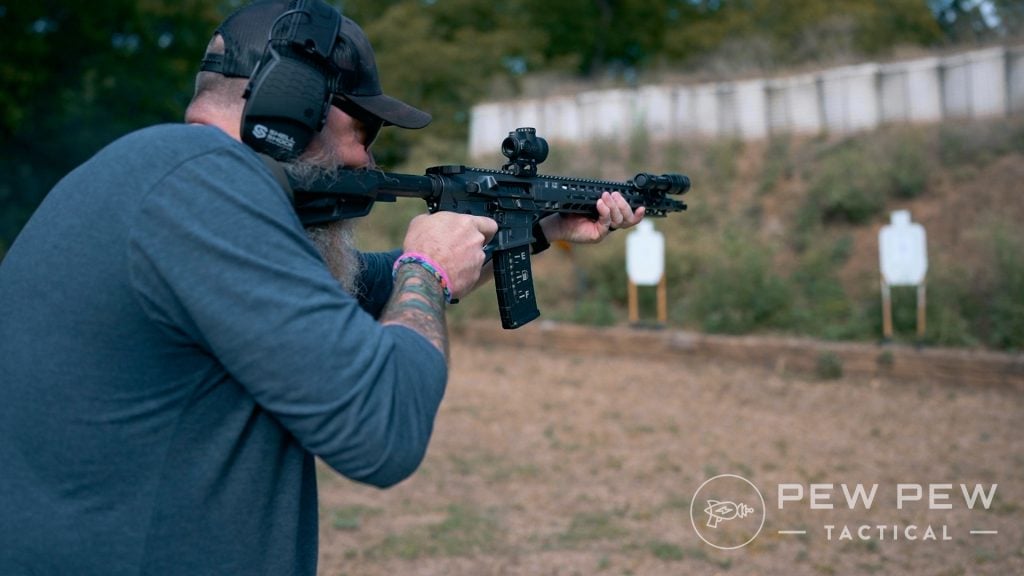
Every lower receiver underwent a strict testing protocol that required a minimum of 500 rounds of practice ammo and heavier match-grade ammo at 50 and 100 yards with a 5-25x scope (unless otherwise noted).
Notably, most of the lowers in this article have well over 1,000 rounds through them and have been used for several years. We also require all lowers to be tested with at least three different magazine types to assess compatibility.
Ergonomics
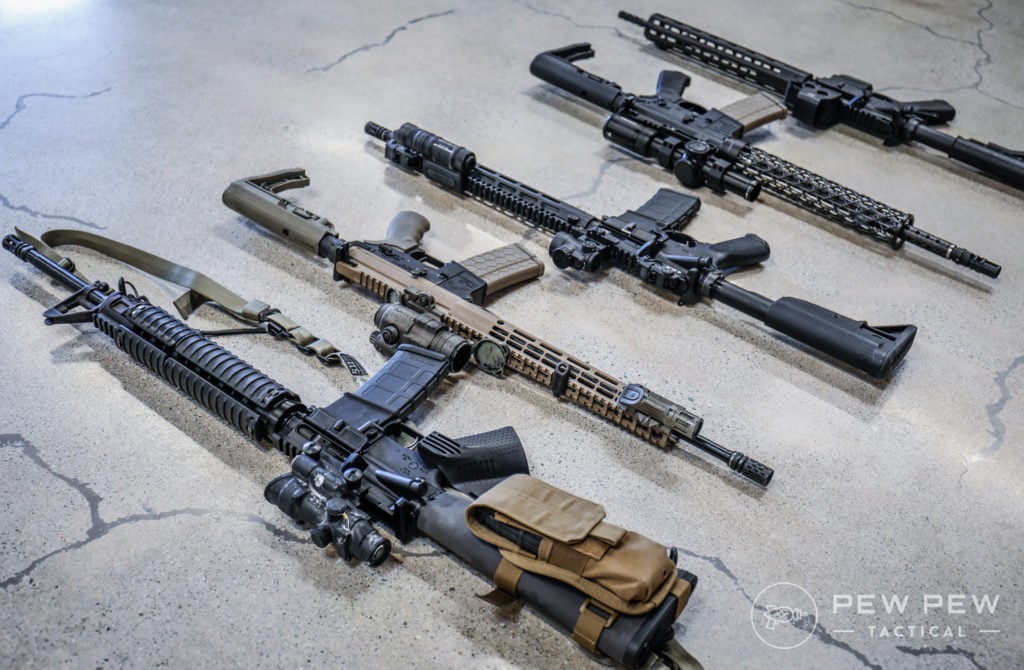
Whether staff or freelance, the entire team at Pew Pew Tactical pitched in their expertise for this piece, contributing perspectives from a range of hand sizes and experience levels.
During testing, we pay close attention to how easy the controls are to reach and actuate, room inside the trigger guard, the overall shape and comfort of the pistol grip (if applicable), and how well the magwell facilitates reloads.
Value
Building an AR-15 can be anything from a budget affair to an all-out money pit to get the best of the best.
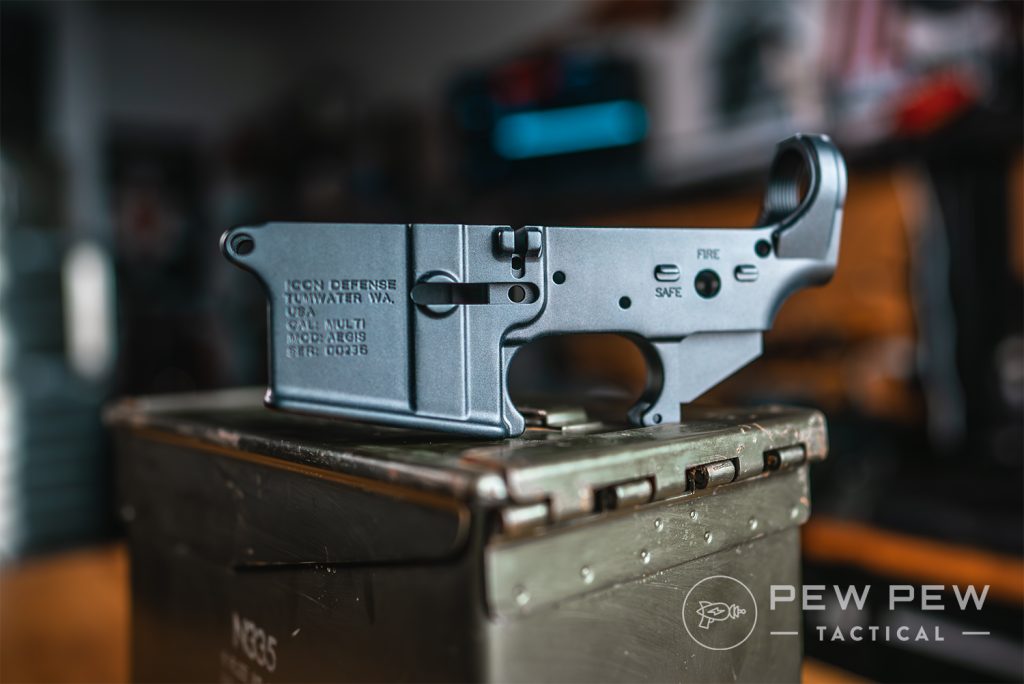
I included picks across a variety of budgets, and more importantly, made sure that the price of each lower reflected the quality and features it offers. We aren't here to pay big money just for a fancy rollmark.
How to Choose an AR-15 Lower Receiver
AR-15 builds can vary so wildly, so it is only natural that different people have different needs when looking for a lower receiver for their next build. Here are a few things to consider before you make a purchase.
Lower Material
Different manufacturers will sometimes use different materials to make AR-15 lowers. That being said, 99% of lowers on the market are made from one of two types of aluminum alloys: 6061-T6 and 7075-T6.
So, what’s the difference? Simply put, strength and corrosion resistance.
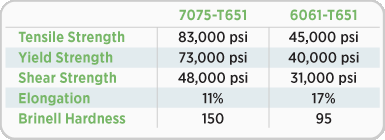
As you can see from the chart above, 7075-T6 is nearly twice as strong as 6061-T6. Most lowers nowadays are made from 7075, although you will occasionally see budget 6061 options.
Both alloys are more than capable of withstanding the rigors of the AR-15 platform, but we prefer 7075 for enhanced durability, extended service life, and peace of mind.
Manufacturing Process
Not every AR-15 lower is made using the same process. Here are the two most common ways that lowers are made, and why it matters.
Forged Aluminum
Forged lowers are the most common type of AR-15 lowers you will encounter. In a nutshell, forging is a process in which metal is heated to extremely high temperatures and then hammered into shape using large machinery.
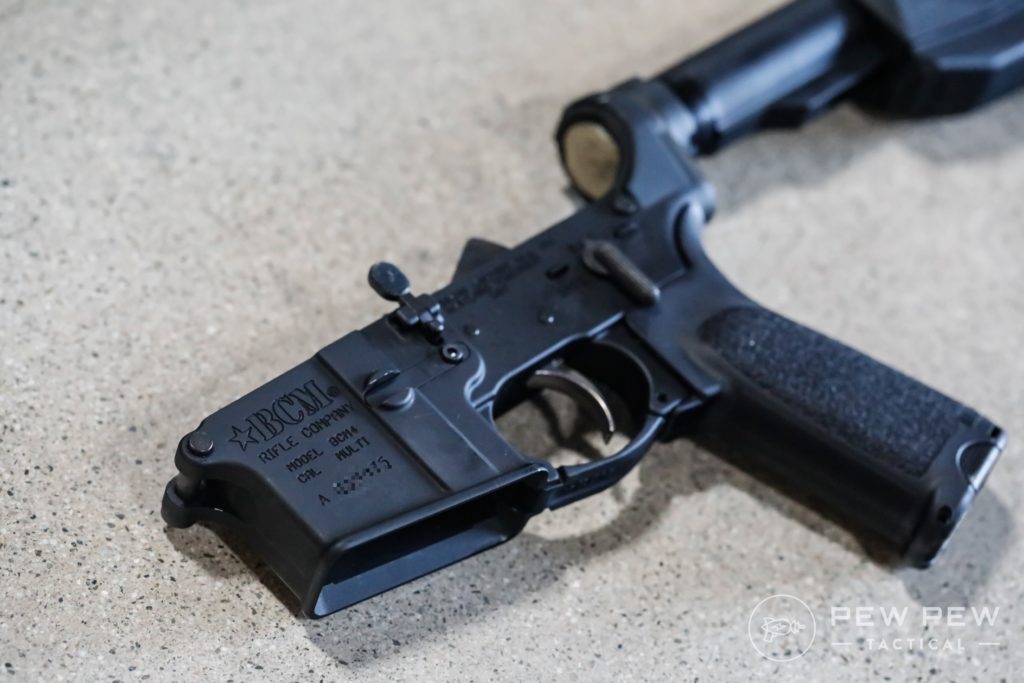
Compressing the aluminum this way increases its strength, making forged lowers the strongest lowers out there.
Billet Aluminum
Billet lowers first start off as a solid block of pure aluminum, called a billet, and are then cut and machined into a finished shape.
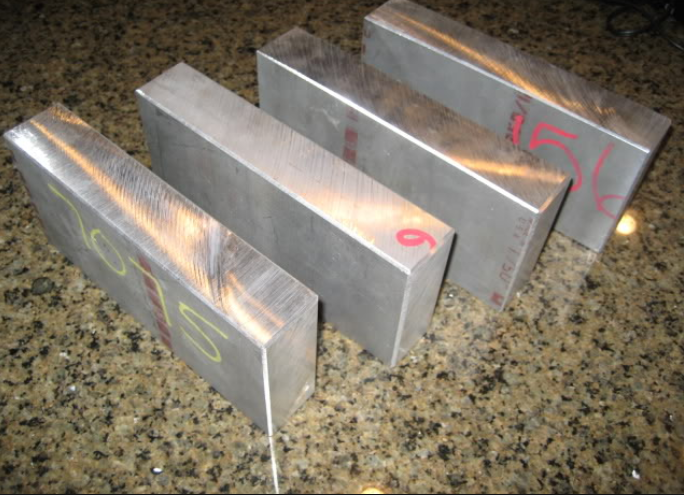
This process allows for more creative and complex designs. Features like built-in trigger guards, weight-saving cuts, and aesthetic designs such as skull-shaped magazine wells are easier to achieve with a billet.
While forged aluminum is technically stronger, 7075-T6 billet lowers are still extremely strong when properly made and will withstand anything you can throw at them.
Polymer Lowers
Plastic is cheaper than aluminum, easier to work with, and lighter. So on paper, it makes sense for a non-load-bearing part like an AR-15 lower receiver.
But are they strong?
This is where we run into some issues. If you take the specs for a standard AR-15 lower and try to just make it out of polymer, you might end up having a bad time.
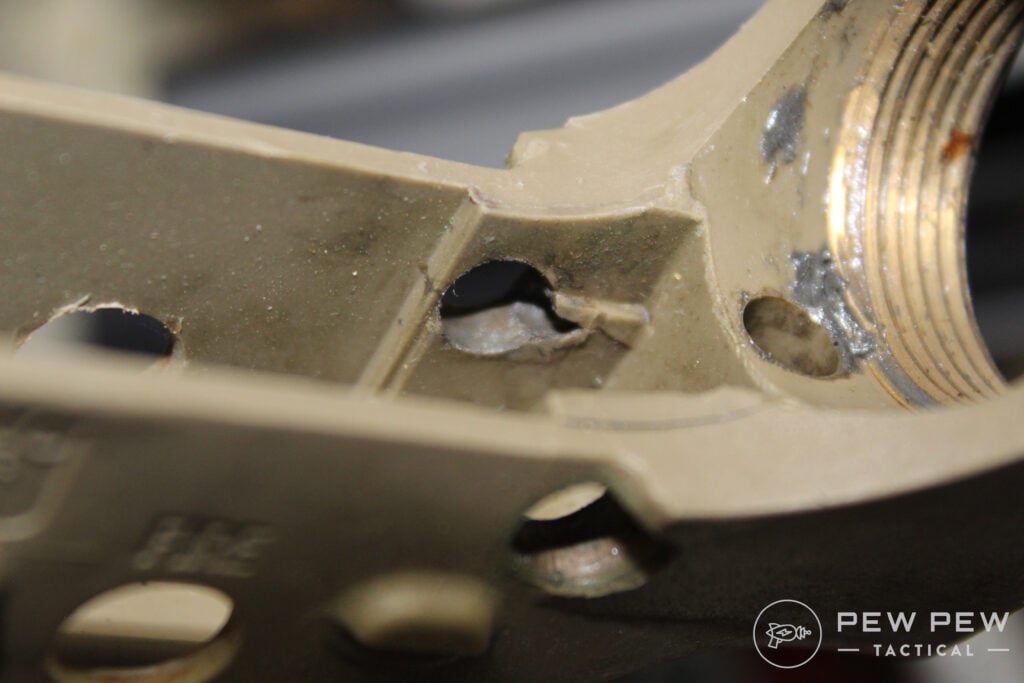
Failure points like the walls around where the safety detent goes are very thin and prone to breaking.
While there are some quality polymer lowers out there, they will never be as strong or wear-resistant as a standard aluminum lower. For me, it just isn't worth the trade-off.
Ambidextrous Lowers
The last thing we want to cover in this section is ambidextrous lowers. You will sometimes hear the term ambi lower thrown around, usually in regard to higher-end lowers.
Most standard AR-15 lowers are set up for right-handed users. This means they have the magazine release on the right-hand side, with the safety and bolt release being located on the left-hand side.
As the name implies, ambi lowers have some or all of these controls available on both sides.
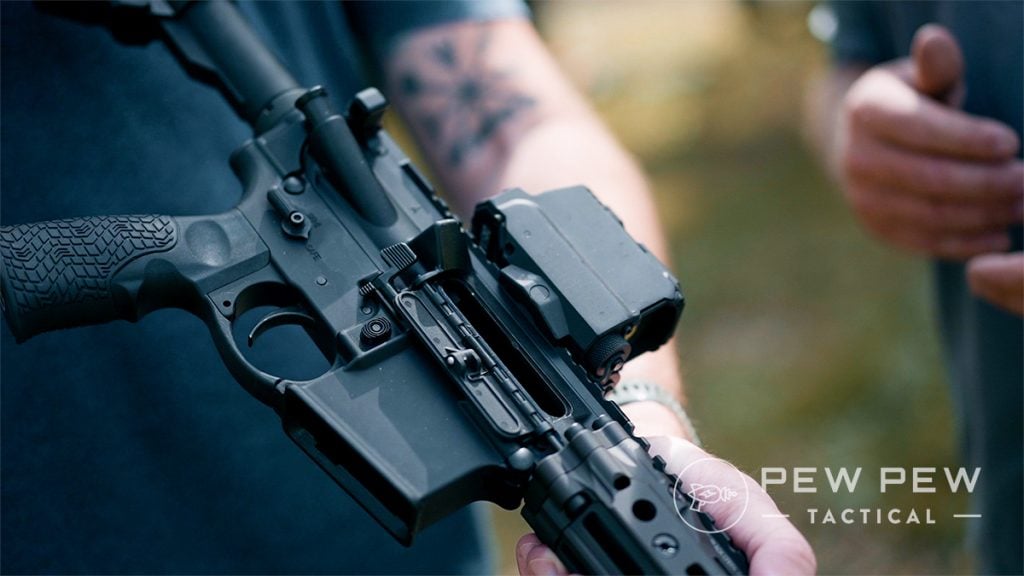
Ambidextrous controls aren't just to help left-handed shooters. They are useful if you have to transition the gun to your opposite shoulder to shoot around barriers, and some people simply find actuating the controls with their dominant hand faster.
Fully ambidextrous lowers aren't a must-have, but rather a nice quality-of-life feature for those who like the control layout.
Do all those terms sound like a lot? Don't worry, I have you covered with our favorite lower recommendations below!
Best AR-15 Lower Receivers
1. Griffin Armament MK2 Ambi - Editor's Pick
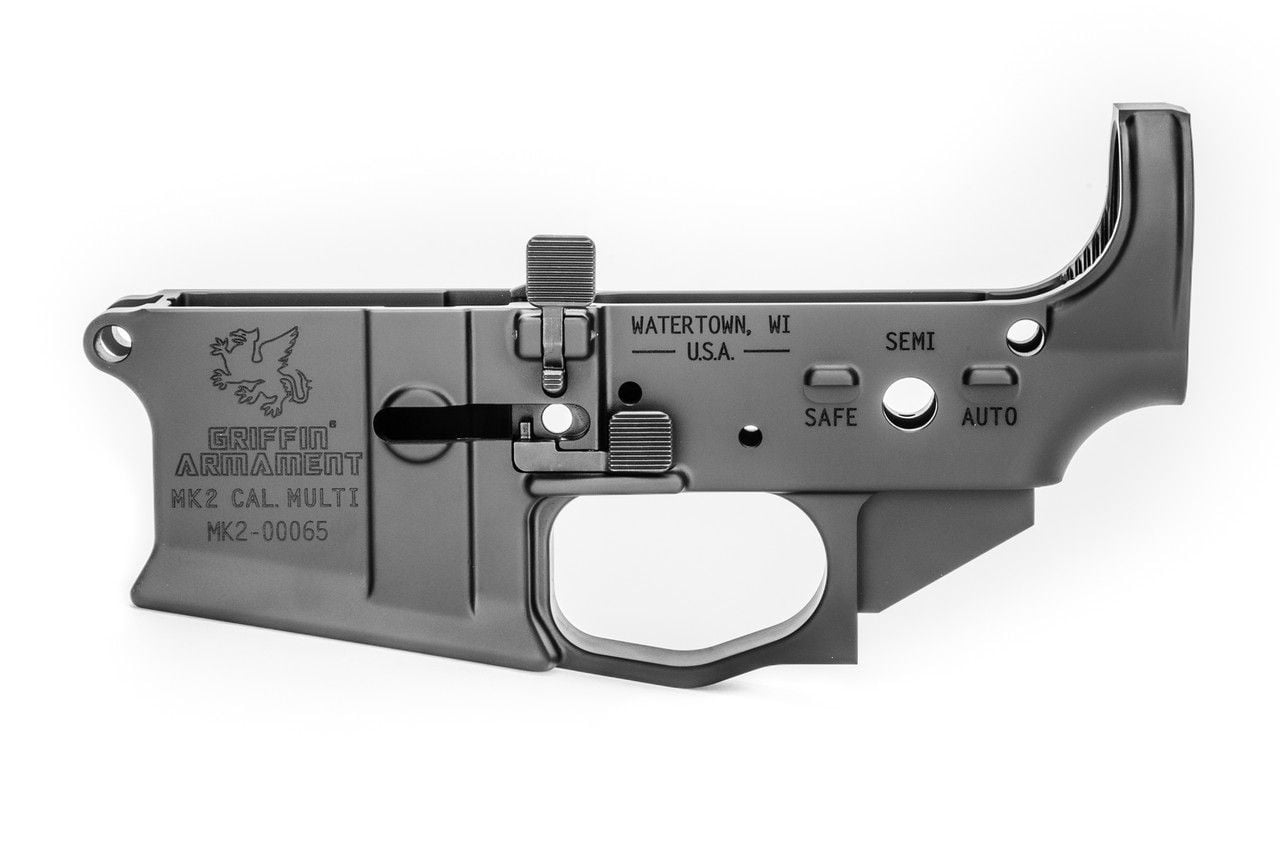
Quick Verdict: The Griffin Armament MK2 is a forged, fully ambidextrous lower with impeccable fit and finish and a great control scheme. It is a true premium lower, but one that comes without the premium price tag.
Pros
- Fully ambidextrous
- Nicely flared magwell helps with fast reloads
- Integrated rear QD sling attachment point
- Fantastic fit and finish
Cons
- Extra space at the rear of the trigger pocket can cause minor fitment issues with certain FRTs
- Included safety on their complete lowers can rub against your knuckle
Specs
- Material: Forged 7075-T6 Aluminum
- Finish: Type 3 Hardcoat Anodized
- Weight: 8.9 oz. (stripped)
- Ambidextrous: Fully
Why We Love It
Premium features are great, but paying a ton of money for them really isn't. That is why we love the Griffin Armament MK2 Ambi lower so much.
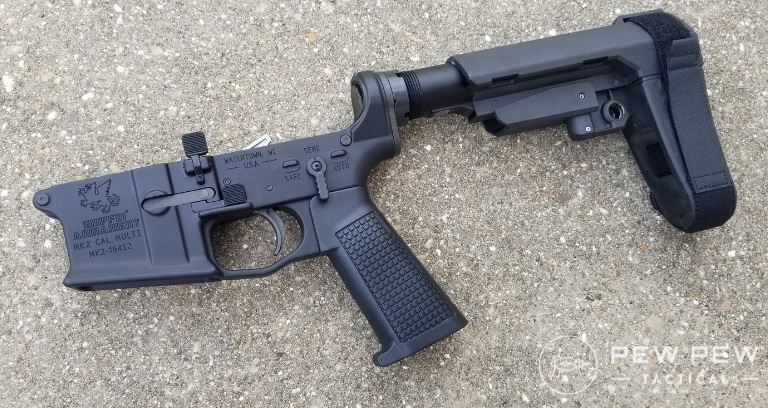
First off, I really like the layout and design of the ambidextrous controls.
The right-side bolt release is simple and low-profile, but extremely easy to actuate with my trigger finger. I can easily depress the left-side magazine release with my thumb while grabbing my magazine to strip it out of the gun. Everything is easy to reach with medium-sized hands — absolutely superb.
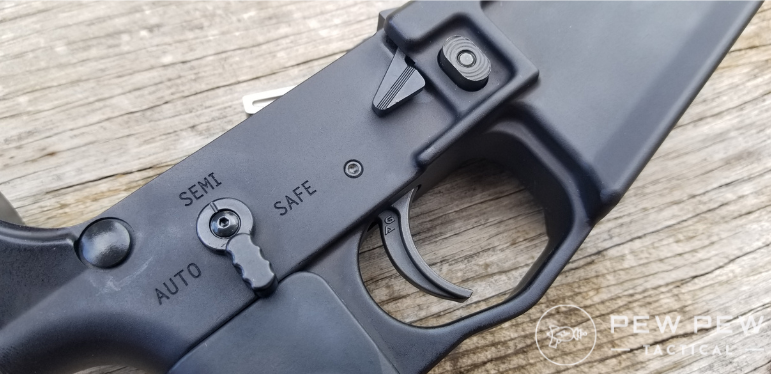
A 60-degree flared magazine well makes reloading a breeze, even if you aren't quite lined up. The integrated trigger guard is a nice touch, and it leaves plenty of room for gloved fingers.
I also love the addition of a QD sling attachment point at the rear of the receiver. Nothing is more annoying than having to buy a QD endplate on top of already buying a lower.
Griffin advertises "premium in-machine de-burring and de-flashing," and I can say they indeed deliver on that. All of the machining is clean, whether it is inside the magwell, the trigger pocket, or the exterior.
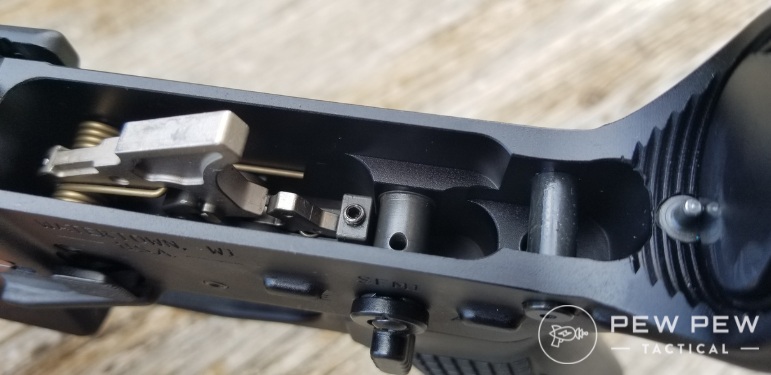
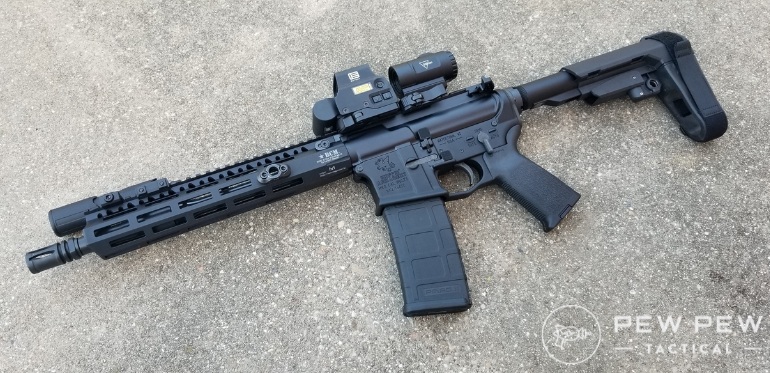
The MK2 Ambi lower offers the same features as lowers that cost over $100 more, and nothing is sacrificed when it comes to quality.
All you need to do is snag a Bravo Company Manufacturing (BCM) upper, slap it on the Griffin lower, and you now have a fully ambidextrous, go-to-war, hard-use duty gun for around $1,300-$1,500. This is one of the best value build combos on the market today.
The Best Gun Deals, Coupons and Finds
Subscribe to Pew Pew Tactical's sales and deals email.
2. Palmetto State Armory PA-15 - Best Budget AR Lower
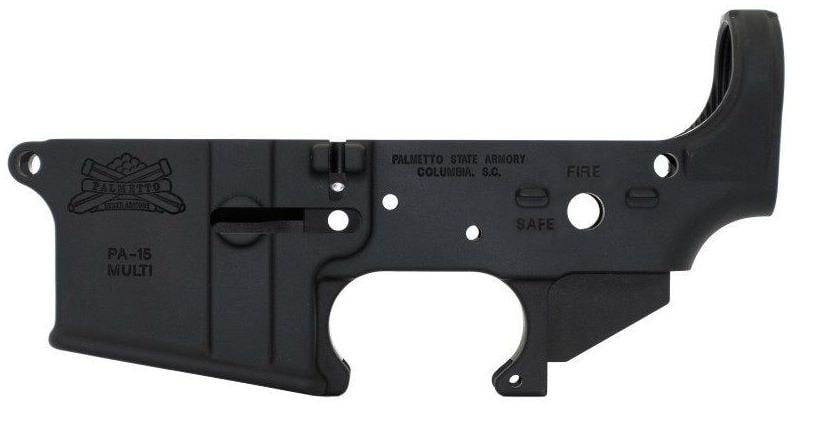
Quick Verdict: PSA is the clear go-to for budget AR-15 lowers. They are no-frills, mil-spec forged lowers that will get the job done without breaking the bank.
Pros
- Ton of different rollmarks available
- Quality mil-spec, forged build
- Very affordable
Cons
- Can sometimes have minor finish inconsistencies
- Some rollmarks cost more than others for no real reason
Specs
- Material: Forged 7075-T6 Aluminum
- Finish: Type 3 Hardcoat Anodized
- Weight: 8.25 oz. (stripped)
- Ambidextrous: No
Why We Love It
If you want a quality lower from a large, reputable company for a good price, Palmetto State Armory is the de facto choice.
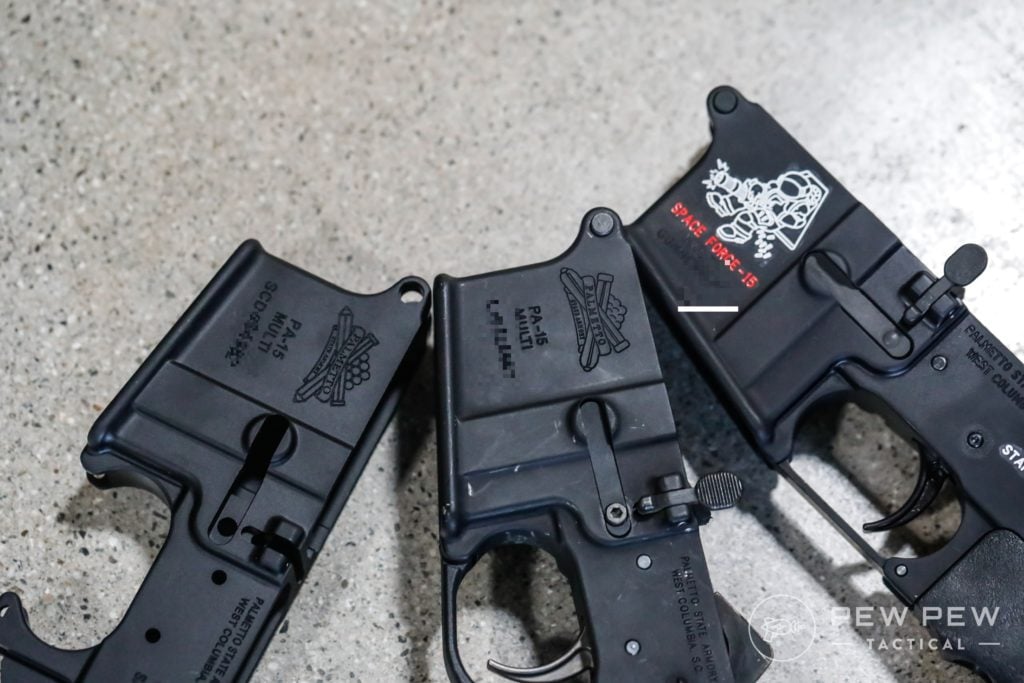
Between everyone here at Pew Pew Tactical, we've used and reviewed just about every AR-15 and AR-10 rifle that PSA makes. We haven't had a hint of any issues over tens of thousands of rounds.
Their most popular lowers are their basic PA-15 lowers. These are standard 7075-T6 forged lowers that have everything you need and nothing you don't.
While you shouldn't expect any fancy features, you can expect affordability. These lowers typically retail for around $50 to $90 depending on the rollmark and finish.
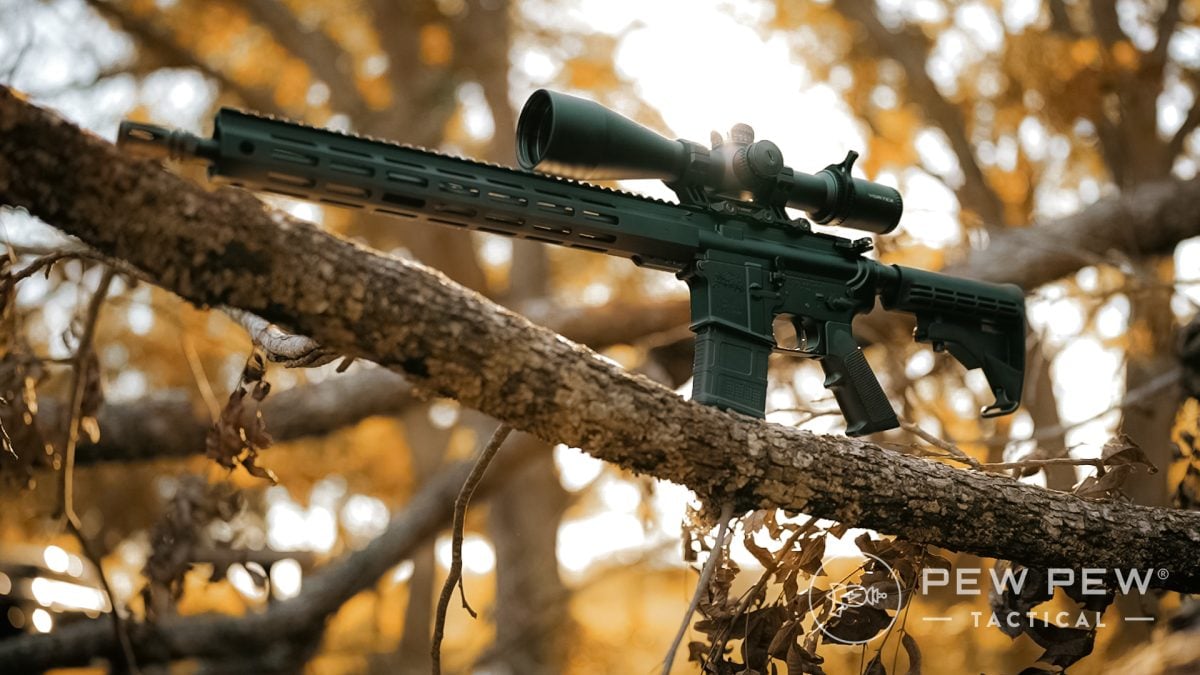
And speaking of rollmarks, PSA has all sorts of designs from limited edition lowers to M4/M16 clone markings, and even meme lowers.
My favorite of their lowers are their "stealth lowers," which have no logo and only the minimal required markings. These are awesome for sleek, low-profile builds, or just when you want to hide the fact you are using a budget lower.
And if you don't feel like building out a stripped lower, PSA sells a metric ton of different complete lowers.
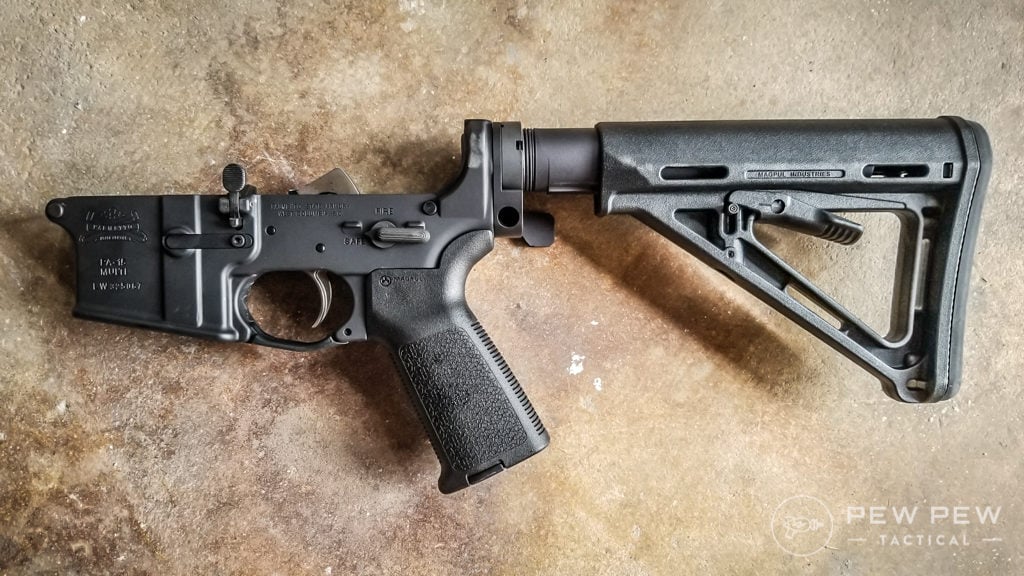
These are also "low-shelf" receivers, meaning they can take drop-in auto sears if you happen to be lucky enough to have a transferable, legal one. PPT founder Eric Hung has even run his auto sear in various PSA lowers to great effect.
What's your take on PSA lowers? Rate them below!
Readers’ Ratings
4.96/5 (2724 Votes)
Your Rating
3. Lewis Machine & Tool (LMT) MARS-L - Best High-End Ambi Lower
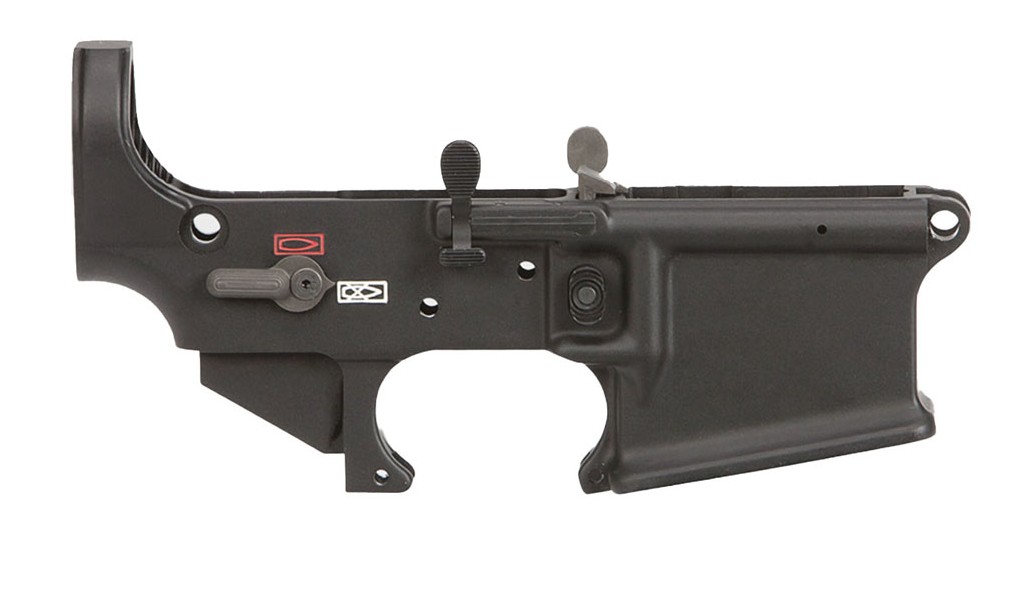
Quick Verdict: The LMT MARS-L has long been considered the Cadillac of ambidextrous lowers. The controls are extremely intuitive, and there are some unique design features not found on other ambi lowers. If you are going for a spare-no-expense build, this is the lower you want.
Pros
- True ambidextrous lower
- Right side bolt catch is extremely easy and intuitive to use
- Flared magwell helps with fast reloads
Cons
- Can be difficult to find in stock
- Expensive
- QC has taken a bit of a dip as of 2026
Specs
- Material: Forged 7075-T6 Aluminum
- Finish: Type 3 Hardcoat Anodized
- Weight: 8.5 oz. (stripped)
- Ambidextrous: Fully
Why We Love It
The Lewis Machine & Tool MARS-L is regarded by many AR-15 enthusiasts as the absolute best lower on the market.
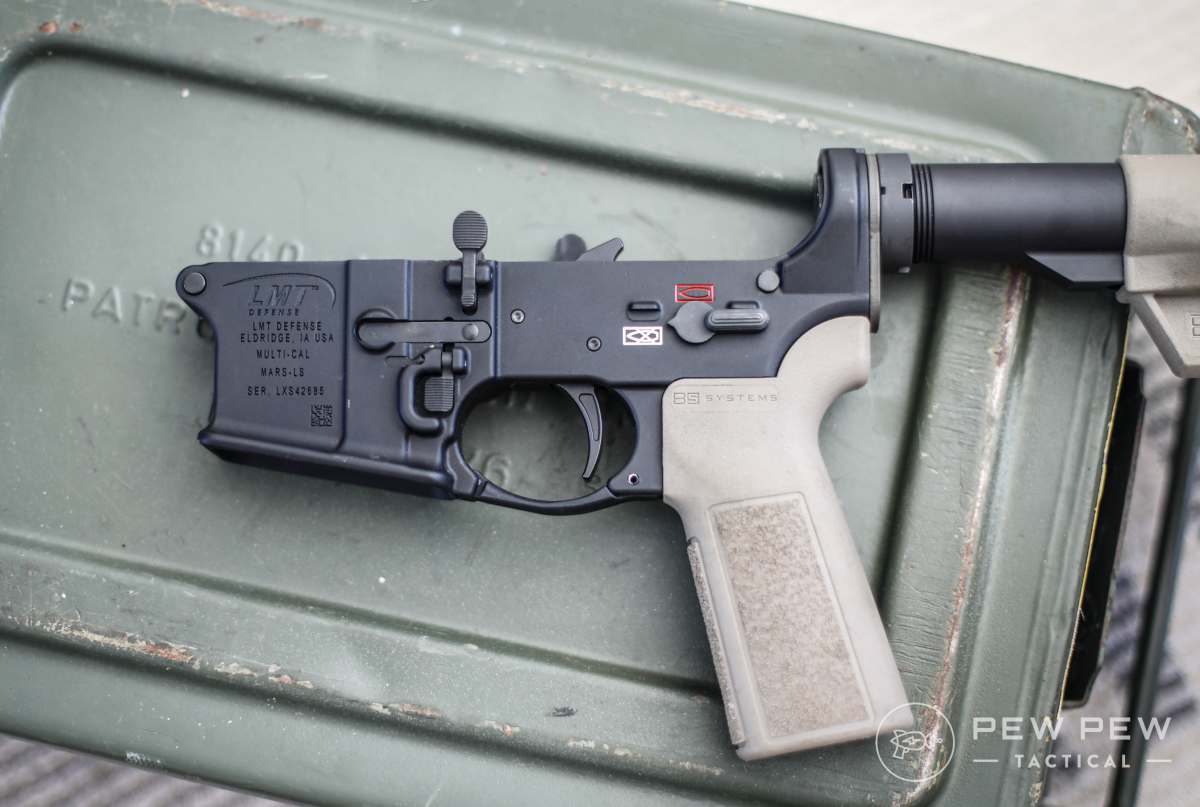
First and foremost, this is truly completely ambidextrous. Every control can be used from both sides, including the bolt catch.
The bolt catch on the right side is a ping-pong-style catch that is almost identical to the one on the left side. It is easier for me to drop the bolt and lock it open using the right-side catch than it is on any other ambi receiver.
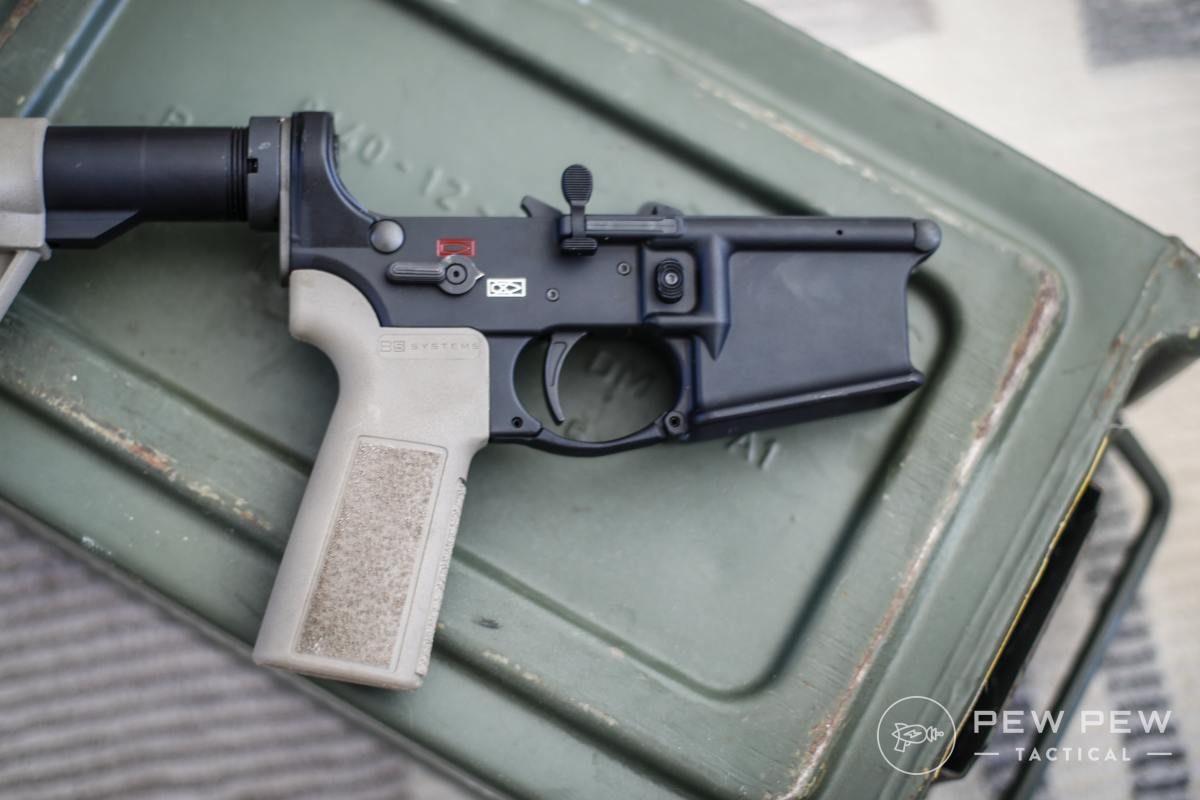
I also like that the left-side magazine release button is well-shielded. This helps prevent you from inadvertently hitting the ambi mag release when the rifle is slung against your body or plate carrier — a nice touch.
While the MARS-L has historically been well received, LMT has experienced a slight dip in quality control as of late. Most of what they put out is still excellent, but I have encountered a few MARS lowers with some flashing, machine marks, and suboptimal trigger pin holes.
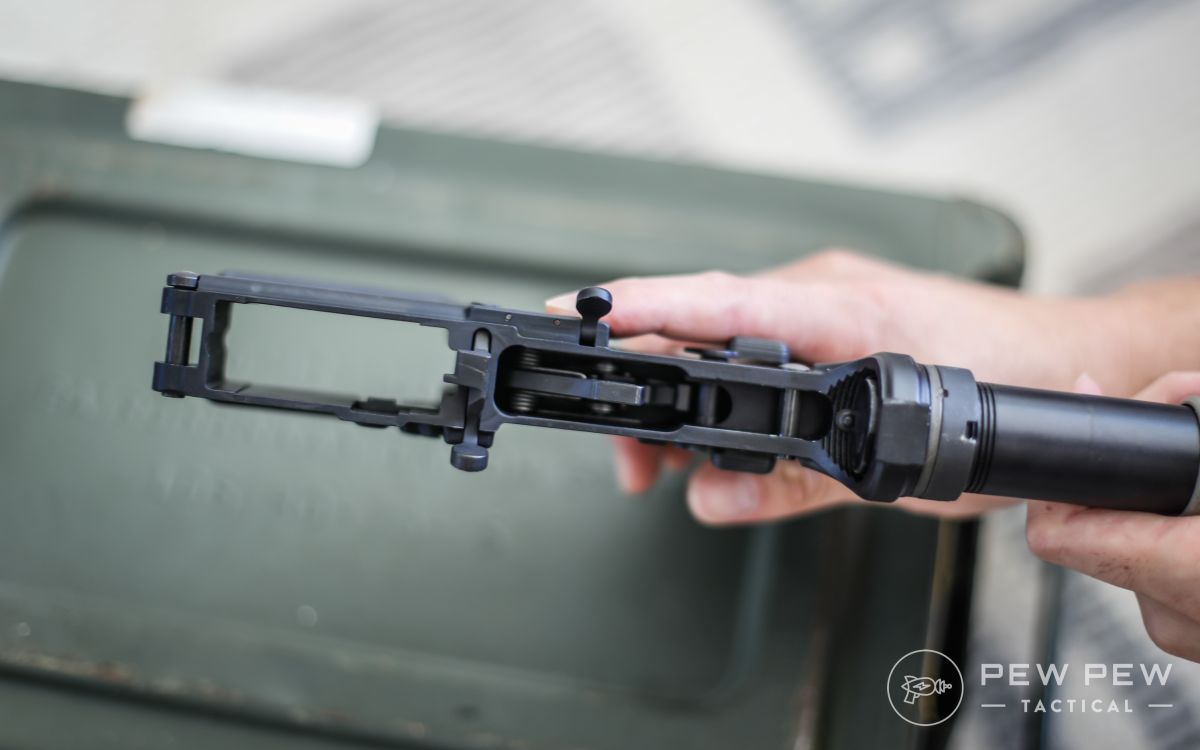
However, in the rare event you do encounter a problem, LMT has great customer service and will make it right.
The only other thing to note is that these lowers sell out fairly frequently and sometimes take a while to come back in stock. So if you want one and you see it in stock, buy it!
4. H&R Retro Lowers - Best Retro AR Lower
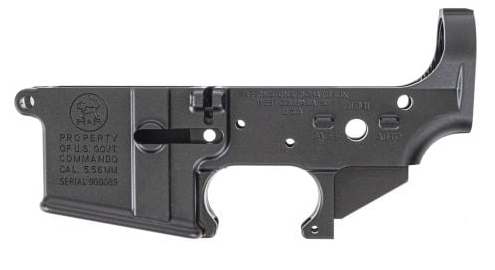
Quick Verdict: If you are into cloning specific older AR-15 rifles, H&R is your best friend. These are great lowers if you are looking for proper roll marks, specific forgings with specific design features, and era-correct finishes.
Pros
- Various clone-correct forging profiles
- Affordable as far as clone lowers go
- Consistent mil-spec tolerances
Cons
- H&R rollmark is clone-correct in some cases but may turn some people off
- Black anodizing is great, but the gray anoziding can vary in shade
Specs
- Material: Forged 7075-T6 Aluminum
- Finish: Type 3 Hardcoat Anodized
- Weight: ~7.2 oz. - 8.5 oz. (stripped)
- Ambidextrous: No
Why We Love It
The AR-15 lower has changed in small ways over the years, but the people have spoken, and retro rifles are in right now.
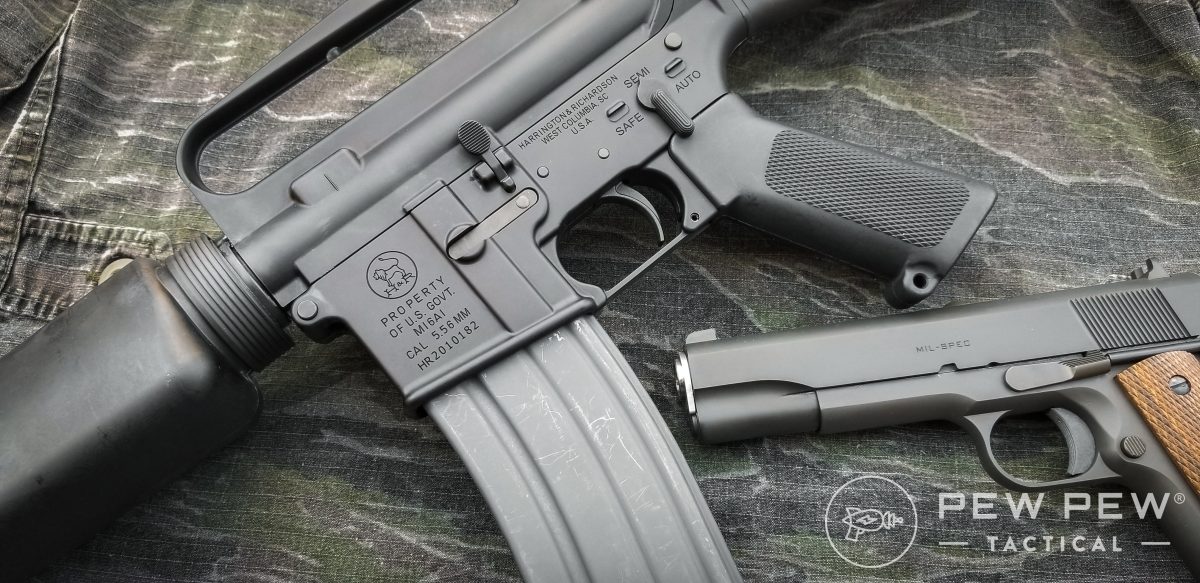
Harrington & Richardson is serving up throwback lowers that feature bygone designs.
These lowers are awesome for those who are looking to make a clone build like an old-school M16A1, XM177, XM16E1, 635 builds, or other older AR variants.
We are talking specifics here. Want a slick side lower for your 601 build? They make it. Partial fence lower for a 607 build? Yup. Period-correct gray anodizing? You got it.

While testing the H&R M16A1, I found that having something so close to clone-correct really offers a more authentic and immersive shooting experience. When I pick the gun up, I feel like I am holding a relic of the Vietnam War. It is just too cool.
They look good, they’re well made, and they’re fun, but they are also very reasonably priced. It is definitely a lot cheaper than trying to source an original lower.
While H&R is owned by PSA, they run on a separate production line that is overseen by H&R CEO and president Mike Wetteland, who is well-known for his attention to detail and dedication to classic rifles.
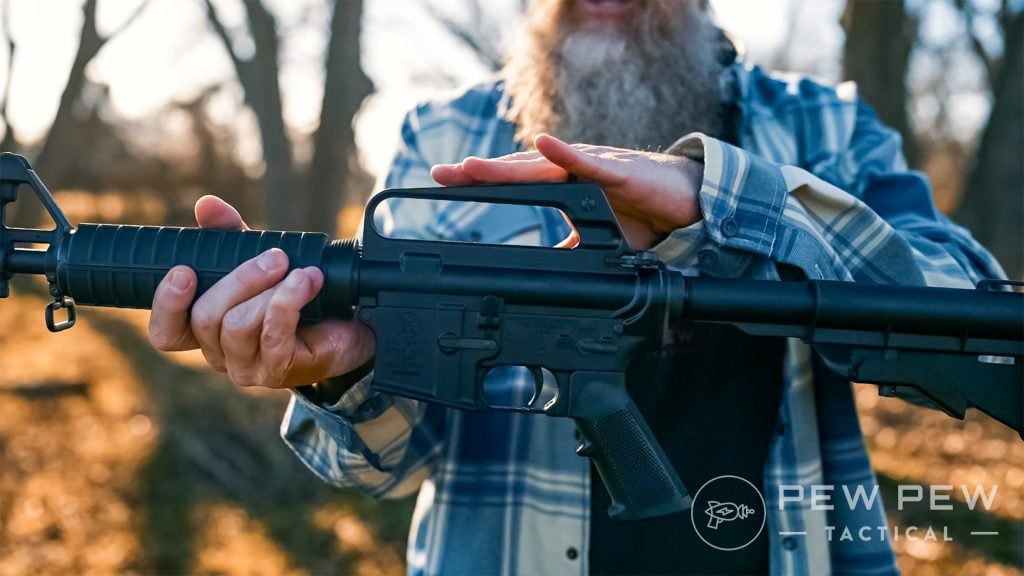
You can see how these lowers perform in our hands-on reviews of the H&R 723, H&R M61A1, and the H&R DOE Carbine!
Our Most Popular Posts

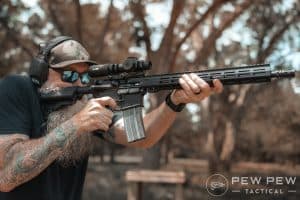
5. American Defense MFG (ADM) UIC - Best Billet Lower
Quick Verdict: The ADM UIC lower has an excellent set of fully ambidextrous controls. What sets it apart from its peers is its billet construction and unique design aesthetic. These are great lowers if you want something that looks as good as it performs.
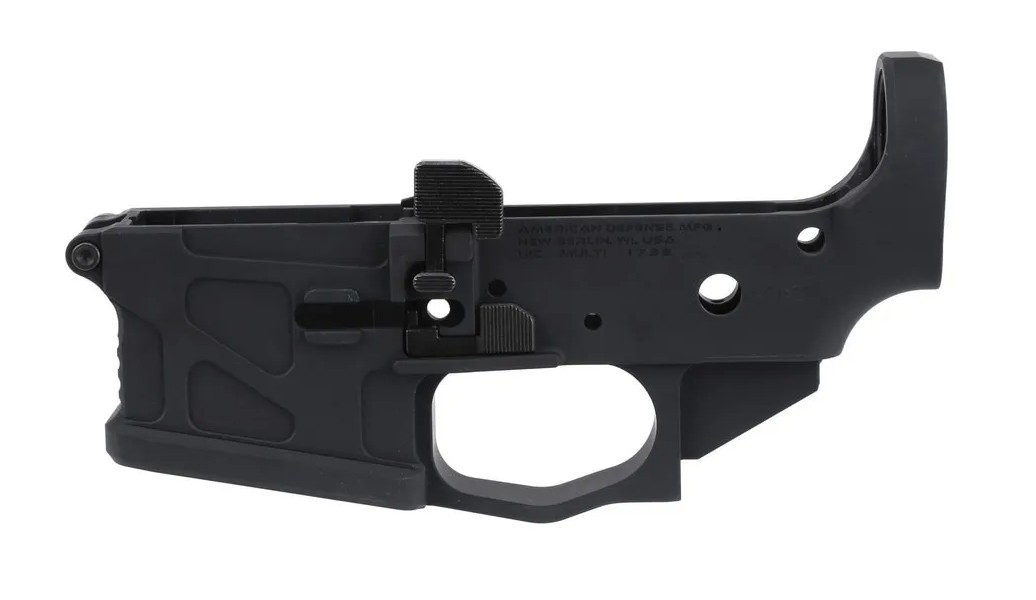
Pros
- Unique look that sets it apart from mil-spec-style forgings
- Great ambidextrous control layout
- Reinforced mag well is 40% stronger
Cons
- Angular style may not be a great aesthetic match for basic forged upper
- Similar controls to the Griffin MK2, but costs over $100 more
Specs
- Material: Billet Machined 7075-T6 Aluminum
- Finish: Teflon-Impregnated Type 3 Hardcoat Anodized or Cerakote
- Weight: 11 oz. (stripped)
- Ambidextrous: Fully
Why We Love It
While they may not be a household name, American Defense Manufacturing (ADM) has garnered a strong following by producing outstanding upper-tier AR-15s.
Their UIC lowers are no exception to their reputation. These are fully ambidextrous, billet-machined lowers that are right at home on anything from a show-off piece to a duty rifle.
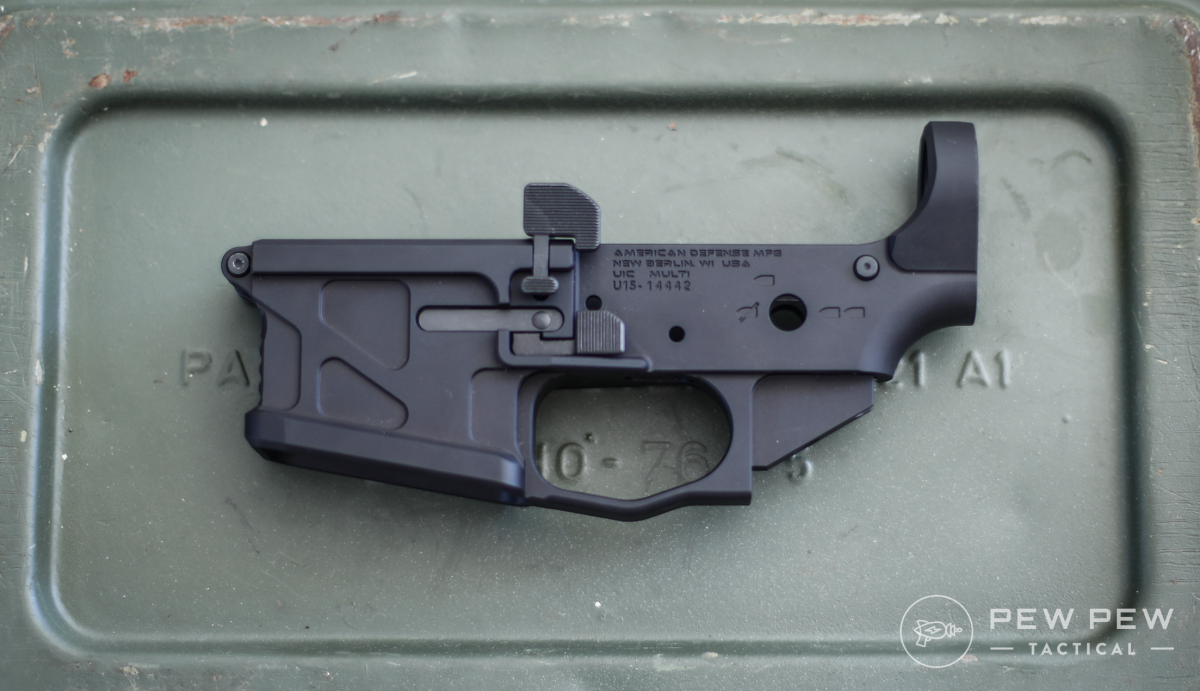
I absolutely love the way these lowers look; they have a perfect mix of aggressive styling punctuated by subtle design cues. The result is a slightly beefier-looking lower with thick lines.
If the controls look familiar, it is because they are nearly identical to the Griffin MK2 lower from earlier in the article. That means you are getting an easy-to-reach right-side bolt catch that functions as both a release and a hold-open, and a great left-side mag release.
From what I understand, Griffin and ADM jointly designed some of these parts, but each company produced their own version due to some disagreements.
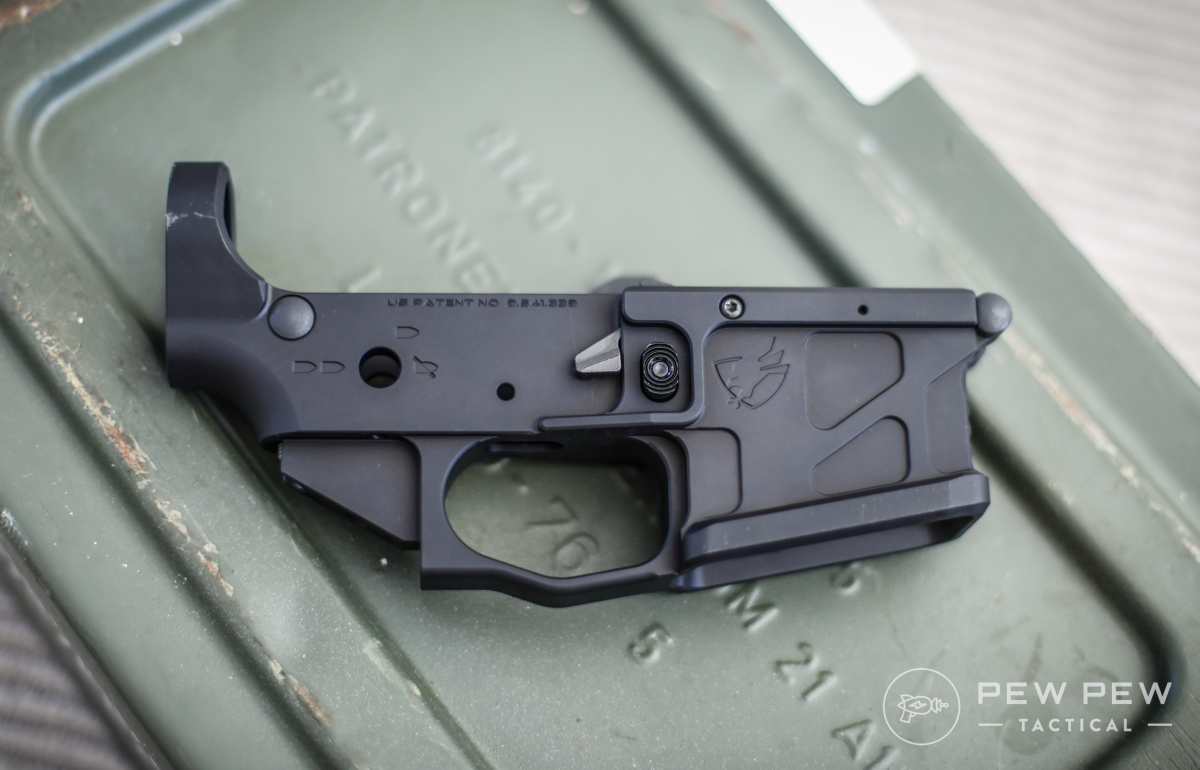
Controls and good looks aside, the UIC lower also offers a few extra niceties.
The ribs on the mag well aren't just for show; they reinforce the body of the lower, which results in a mag well that is 40% stronger than a standard forged lower. You also get dimpled takedown and pivot pins, which I love because they make it much easier to reinstall without marring the finish on the lower.
While the 20-degree competition mag well of the UIC isn't quite as open as the Griffin's, I still find it very easy to conduct reloads at speed. The integrated trigger guard also offers plenty of room for use with gloves.
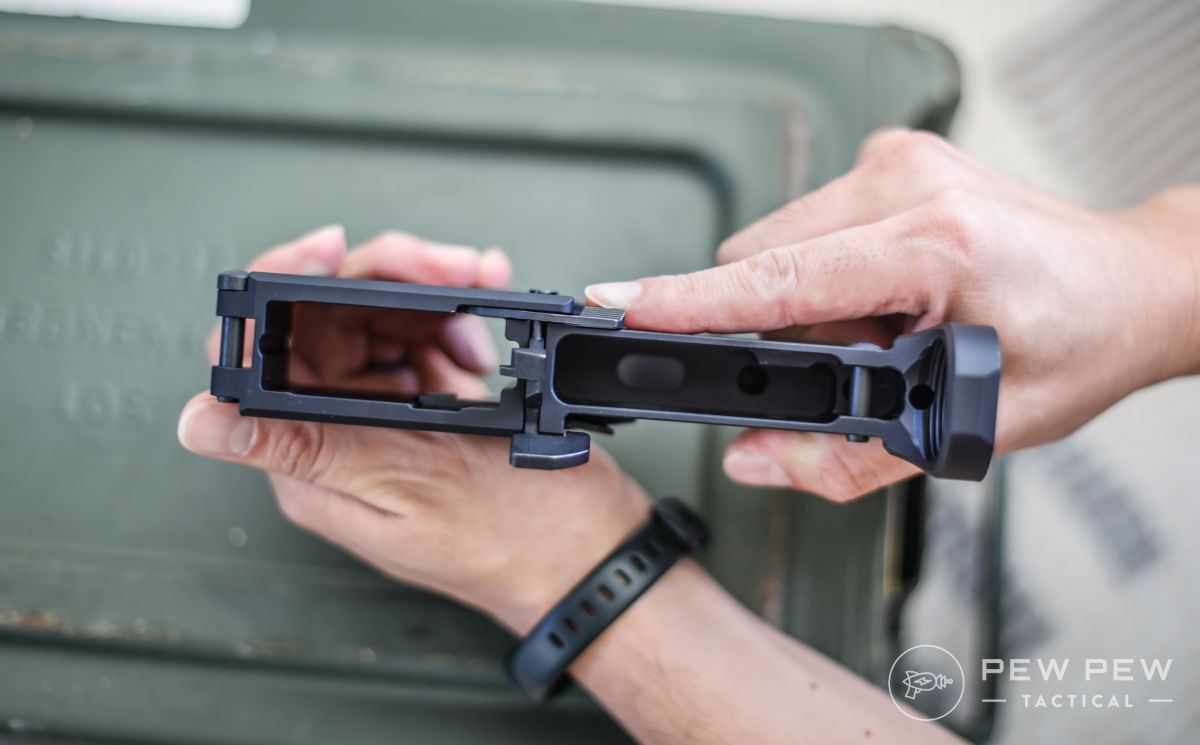
All in all, the ADM UIC packs a ton of great features in what is my favorite-looking lower on this list. If I wanted a rifle with killer looks, this would be my top pick.
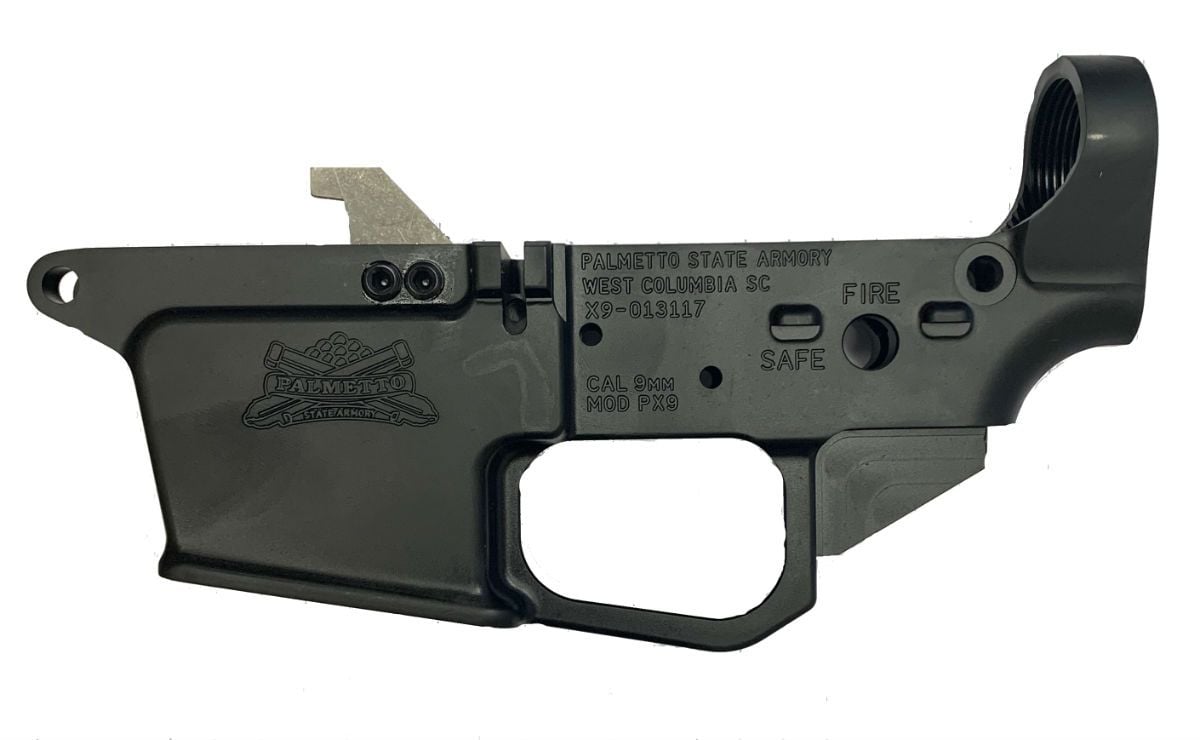
6. PSA PX-9 Stripped Lower - Best 9mm Lower
Pros
- Standard Glock mags keeps things affordable
- Consistently available for purchase in some format
- Can accept standard AR-15 triggers
Cons
- No last round bolt hold open
- Non-PSA uppers may experience some tolerance stacking have
Specs
- Material: Forged 7075-T6 Aluminum
- Finish: Type 3 Hardcoat Anodized
- Weight: ~8.3 oz. - 9 oz. (stripped)
- Ambidextrous: No
Why We Love It
Despite how popular pistol caliber carbines are right now, 9mm AR lowers are in a rough spot.
Many popular options, such as the Aero EPC-9, Angstadt 0940, and the Spike's Tactical Spider 9mm lowers, have been perpetually out of stock for months to years.
But luckily, Palmetto State Armory comes to the rescue once again with their PX-9 lower receiver.
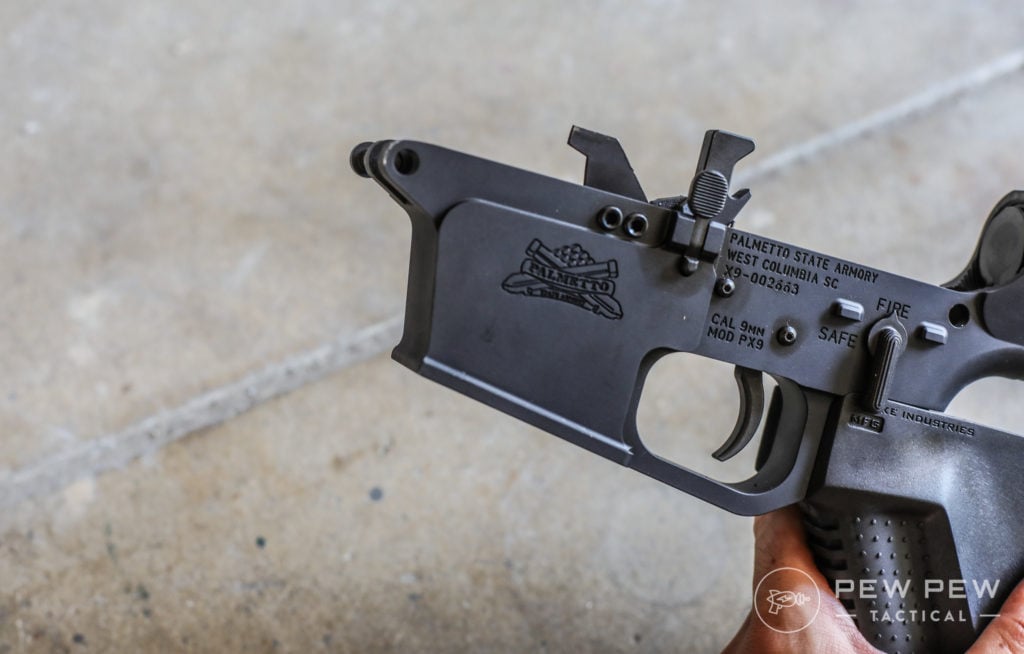
This lower uses standard Glock magazines and is designed to pair with most 9mm uppers at PSA. However, it is compatible with most standard AR-9 uppers, including ones from Aero Precision, Daniel Defense, Foxtrot Mike, Bear Creek Arsenal, and more.
All PX-9 lowers come partially pre-assembled with a proprietary magazine catch and ejector. They utilize standard AR-15 lower parts for everything else, including the fire control group.
Unfortunately, these lowers don't have last-round bolt-hold-open capability, so a dry mag won't automatically lock the bolt open.
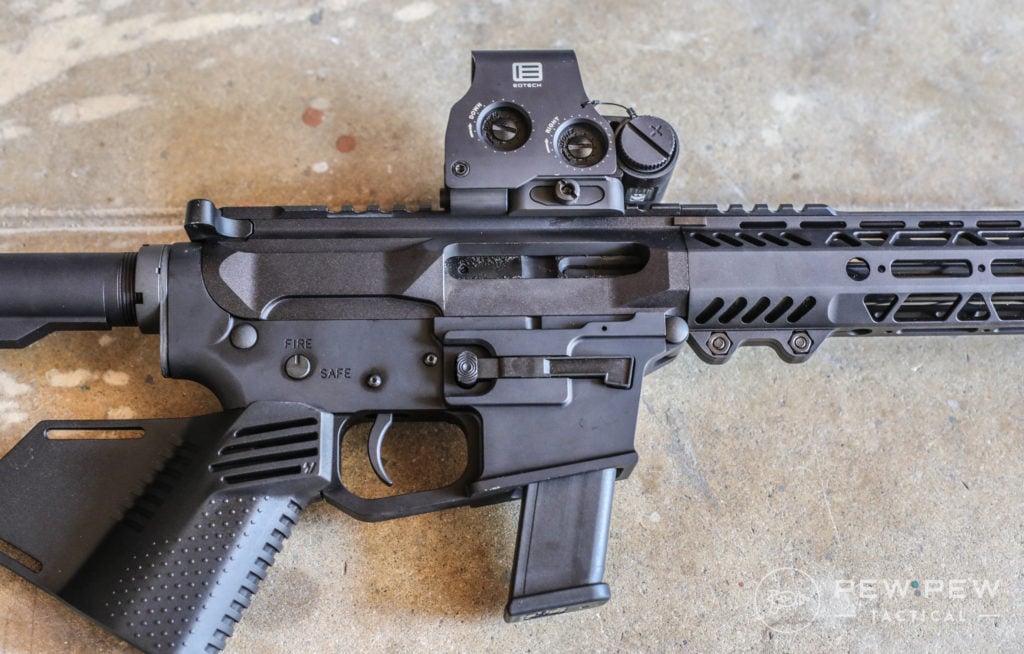
The lack of an LRBHO can be annoying, but it does keep costs down. And speaking of costs, you can get a completed lower for a little under $250. Not bad!
While the PSA PX-9 isn't the most premium 9mm AR lower on the market, it is the most available, and sometimes availability is king.
Want more info? Check out our hands-on review of the PSA PX-9!
FAQs
Final Thoughts
AR-15s can be anything from utilitarian mil-spec tools to deeply personal customized builds that are someone's absolute pride and joy.
As such, there are a wide variety of lowers out there to fit a wide variety of wants and needs.
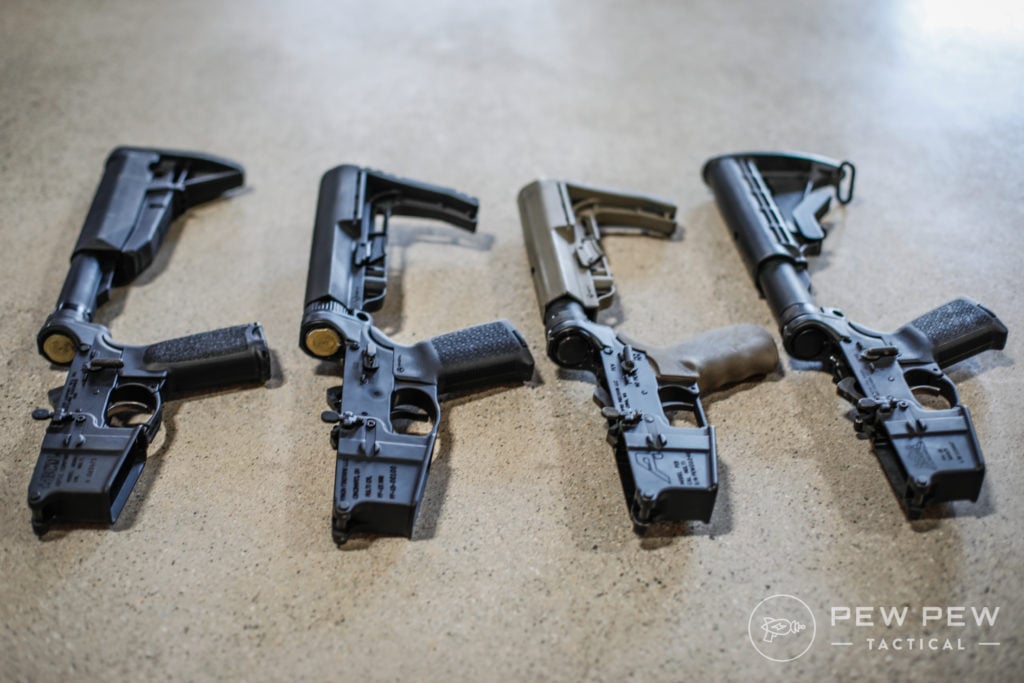
But now that you’re armed with enough knowledge to help you sort through the haystack, hopefully you can narrow your search and find the right AR-15 lower receiver for you.
Do you have any experience with any of these lowers? Are there any that you feel like we missed? Let us know in the comments below! Got a lower in mind but need the next part of the puzzle? Head on over to our article on the Best AR-15 Complete Upper Receivers!
Meet the Experts
This article was originally written by Pew Pew Tactical founder and CEO Eric Hung. Eric is an NRA-certified pistol instructor and a USPSA, 3-Gun, and NRL22 competitor. He has also researched and written more than 250 articles on firearms and gear. Eric owns dozens upon dozens of different AR-15s that he uses for everything from hunting to competition.

Editing and adding to this article is editor Wyatt Sloan. Wyatt is an NRA-certified instructor with previous experience as a competitive shooter. Wyatt personally owns over 250 firearms and has 10 years of home-based FFL firearm sales. He also owns over a dozen AR-15s for personal use and has countless rounds and hours behind other AR-15s he has used and tested for work.
Latest Updates
- August 2026: Removed Aero Precision M4E1 and Anderson AM-15. Added Griffin MK2 Ambi and ADM UIC MOD-2. Restructured entire article and added FAQs section.
- December 2024: Added PX-9 and more details on how we tested the lowers
- May 2024: Added How to Choose an AR-15 Lower section.
- October 2023: Added Icon Defense and updated pricing throughout.