
Best AR-15 Rifles (2026): Every Use Case Tested
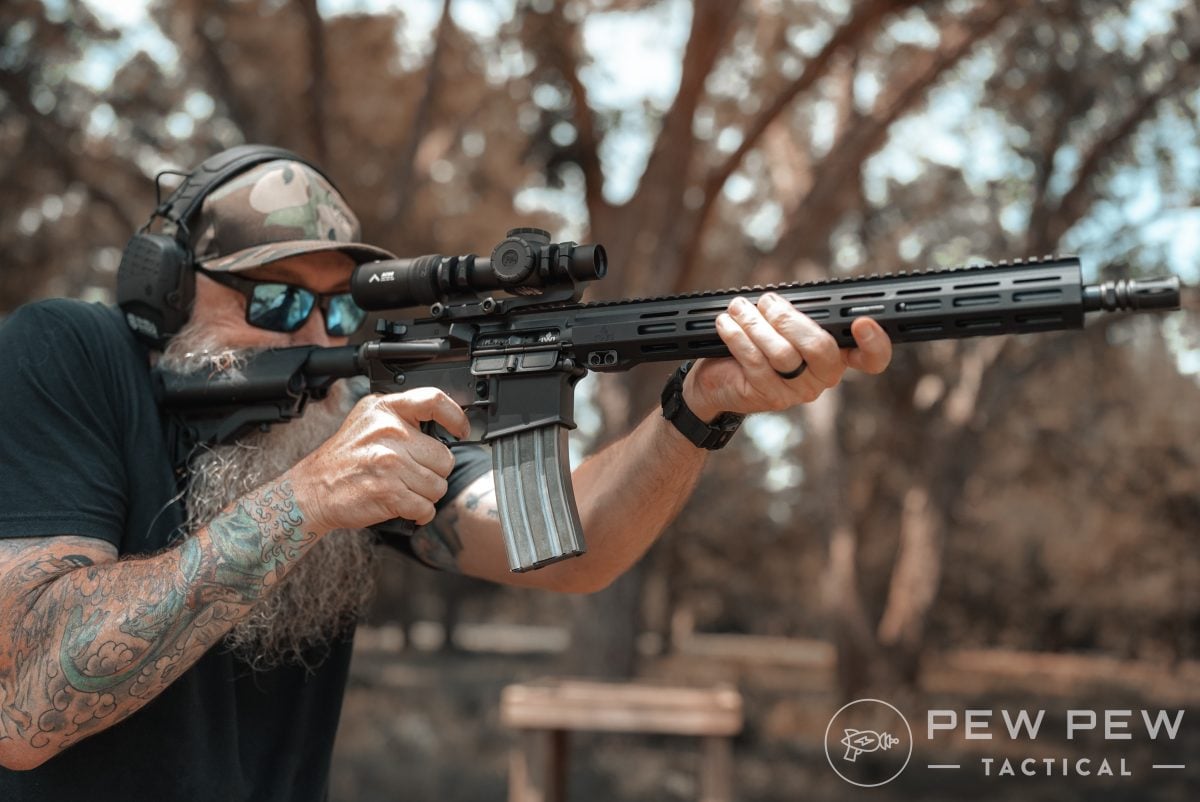
Want to find the perfect AR-15 for you? We cover the best brands/models for all budgets and end-uses. All choices have full hands-on reviews.
We review products independently. When you buy through links on our site, we may earn a commission to help support our testing. Learn more.
My verdict after 100,000+ rounds: The Geissele Super Duty Mod1 ($2,125) is the best AR-15 you can buy out of the box. If you only ever buy one rifle, get the Daniel Defense DDM4 V7 ($1,749) which hasn't failed at 10,000+ rounds. On a budget, the PSA PA-15 ($469) is the beginner rifle that has never let us down, and the IWI Zion-15 ($849) is the best AR-15 under $1,000.
Every rifle below has 1,000+ rounds through it and its own standalone review
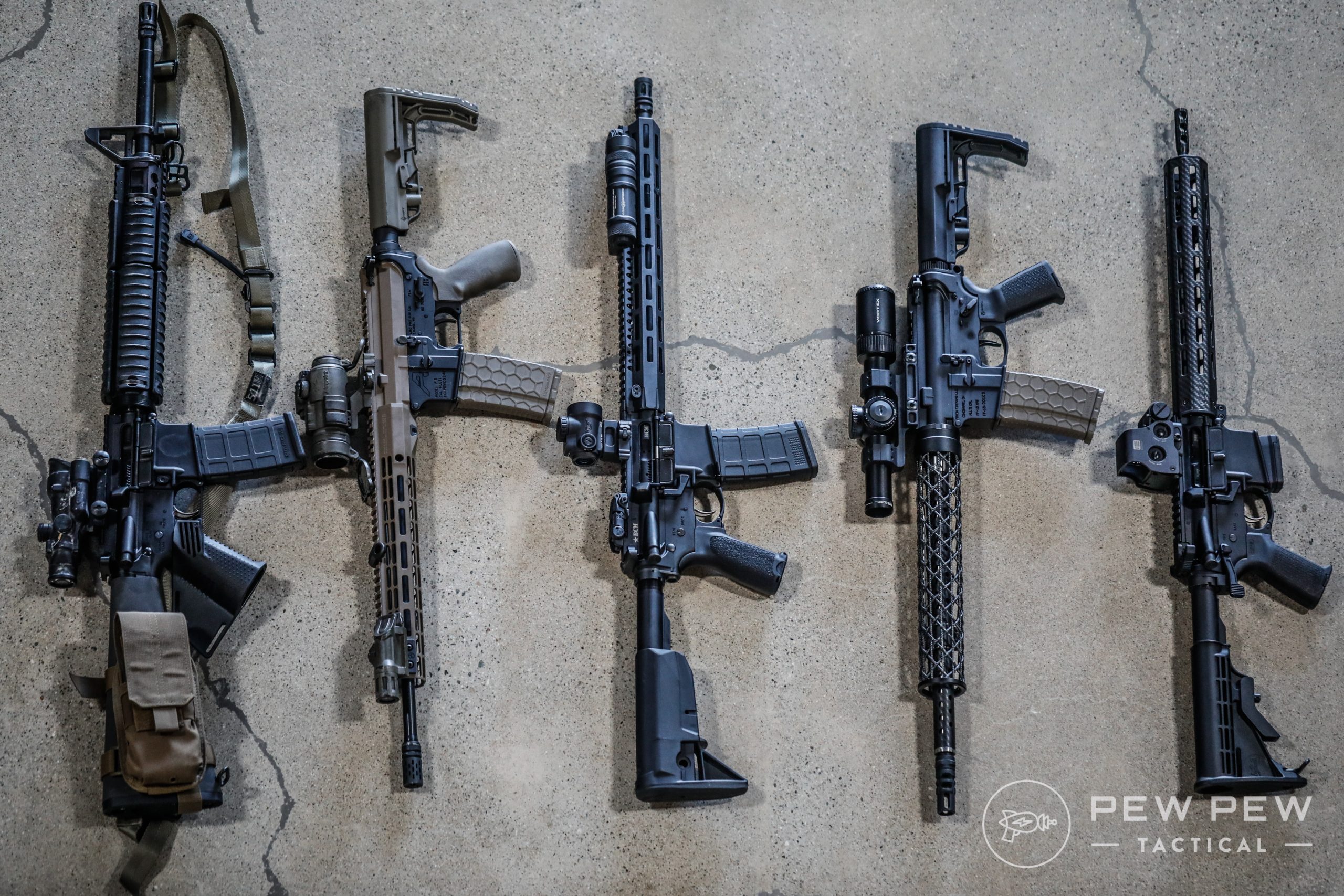
And we shot them all again Summer 2026 for our latest update.
The Quick List
- Editor's Pick: Geissele Super Duty Mod1Jump to Details ↓
- Best Rifle for Home Defense: Daniel Defense DDM4 V7Jump to Details ↓
- Best AR-15 For Beginners: Palmetto State Armory PA-15Jump to Details ↓
- Best Duty-Rated AR-15: BCM Recce-16 MCMRJump to Details ↓
- Best AR-15 for $399: Andro Corp Industries ACI-15 Bravo 16Jump to Details ↓
- Best Goldilocks AR-15: Palmetto State Armory Sabre-15Jump to Details ↓
- Best Pinned AR-15: Springfield Armory Saint Victor V2Jump to Details ↓
- Best AR-15 Pistol: Daniel Defense MK18 PistolJump to Details ↓
- Best $1000 AR-15: IWI Zion-15Jump to Details ↓
- Best Piston AR-15: PWS MK116 MOD 2-MJump to Details ↓
Table of Contents
Trending: Best AR-15s, Best Pistol Red Dots, & Ammo in Stock
AR-15 Comparison Chart
| Rifle Review | Price | Best For | Overall PPT Score | Barrel Specs | Weight | Gas System |
|---|---|---|---|---|---|---|
| Under $500 | ||||||
| Andro Corp ACI-15 Bravo | $399 | Shoestring budgets | 8.8/10 | 16”, Nitride | 6.4 lbs | DI, mid-length |
| PSA PA-15 | $469 | Best for beginners | 8.4/10 | 16", Nitride | Varies | DI, Varies |
| $500-$1000 | ||||||
| IWI Zion-15 | $849 | If you have $1000 to spend | 8.8/10 | 16”, Nitride | 6.9 lbs | DI, mid-length |
| PSA Sabre | $921 | Upgraded out of the box | 8.4/10 | Varies, Chrome Lined | Varies | Varies |
| $1000 to $1700 | ||||||
| Springfield Saint Victor V2 | $1129 | Shortest rifle configuration | 9.0/10 | 14", Pinned 16", Nitride | 6.75 lbs | DI, Mid-Length |
| BCM RECCE-16 | $1660 | Duty use | 8.8/10 | 16", Chrome Lined | 6.1 lbs | DI, mid-length |
| $1700 & Up | ||||||
| Daniel Defense DDM4 V7 | $1749 | If you want to buy only one AR-15 for life | 8.6/10 | 16", Chrome Lined | 6.2 lbs | DI, mid-length |
| PWS MK116 MOD 2-M | $2059 | Best piston AR | 8.8/10 | 16.1”, Nitride | 6.8 lbs | Long-Stroke Gas Piston, Mid-Length |
| Geissele Super Duty | $2125 | Editor's Pick | 9.6/10 | 16”, Chrome Lined | 6.9 lbs | DI, proprietary-length |
| Daniel Defense MK18 Pistol | $2311 | Battle-proven configuration | 9.2/10 | 10.3", Chrome Lined | 5.85 lbs | DI, carbine-length |
How We Tested the Best AR-15s
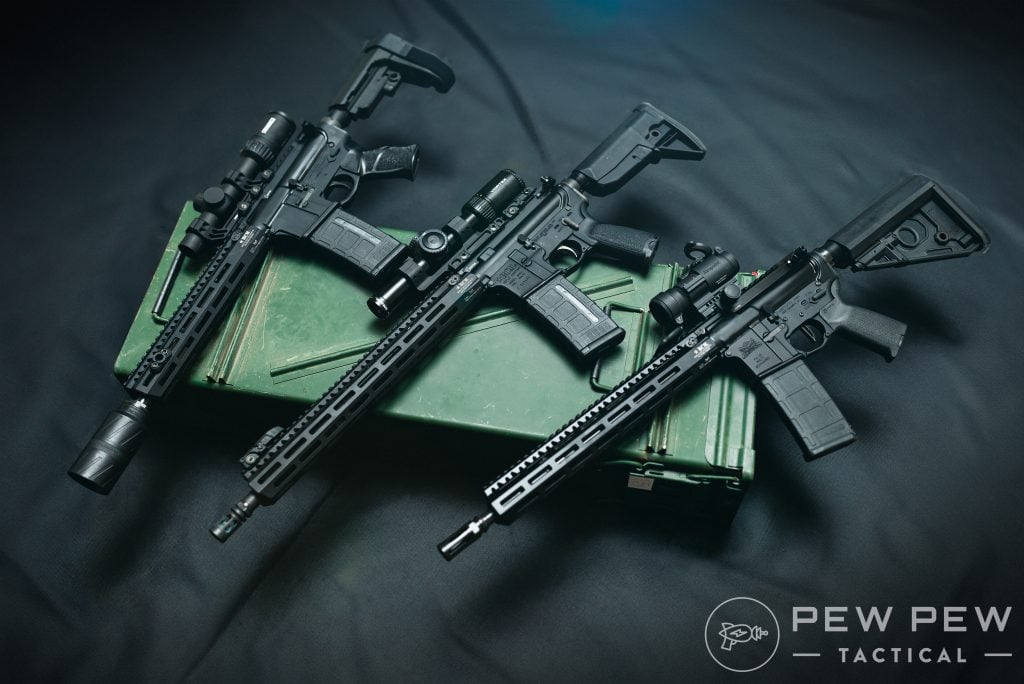
Every rifle here comes from the 100+ AR-15s the Pew Pew Tactical Team has shot, reviewed, and owned. We shot all 10 again in Summer 2026.
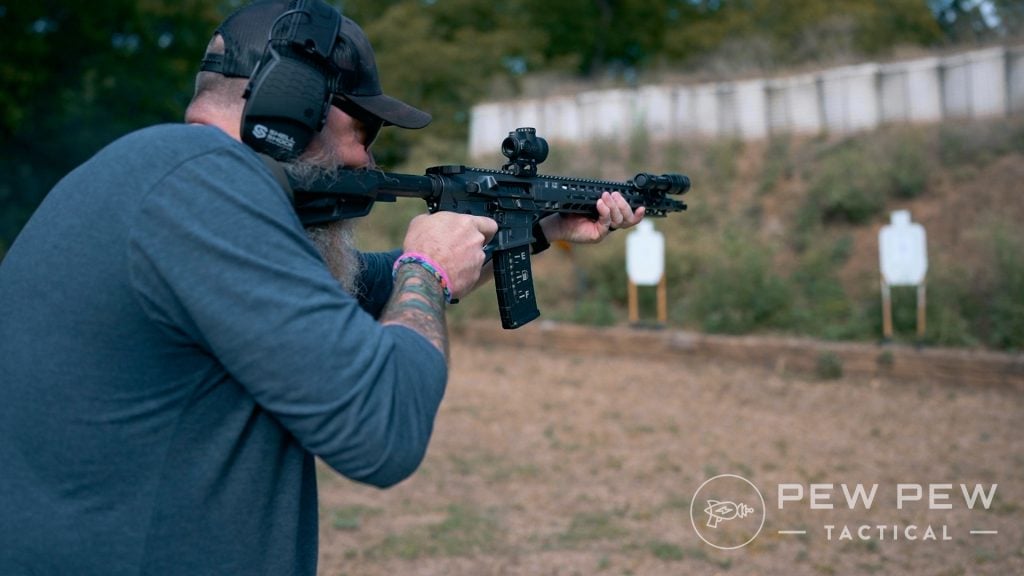
To make the list, an AR-15 must:
- Run 1,000+ rounds of 5.56 and .223 with no more than one malfunction. Most have 2,500+ rounds.
- Shoot ten five-round groups at 50 and 100 yards, measured with a digital caliper, through at least three magazine types.
- Fit at least two shooters of different body sizes, with every control reachable from the firing grip.
- Earn its price. We average street price across a few retailers and weigh it against features and competitors.
Each rifle gets a score out of 10 for reliability, accuracy, ergonomics, customization, and value. Full details are in our testing methodology at the end of the article.
Best AR-15 Rifles
1. Geissele Super Duty Mod1 - Editor's Pick
Tested: 2000+ rounds, 1 MOA at 50 yards, 3-4lb trigger, and no spring sound

Pros
- Premium quality
- Accurate
- Extremely reliable
- Great trigger
Cons
- Expensive
- Doesn't come with mag
Specs
- Caliber: 5.56 NATO
- Barrel Length: 16”
- Overall Length: 33.75” – 37”
- Weight: 6.9 lbs
- Gas System: Direct-impingement, proprietary-length
Why We Love It
Geissele has become a force to be reckoned with in the wide world of AR-15s.
Their premium-grade, duty-ready products have secured them contracts with the US Special Operations Command (SOCOM) and various other law enforcement agencies.
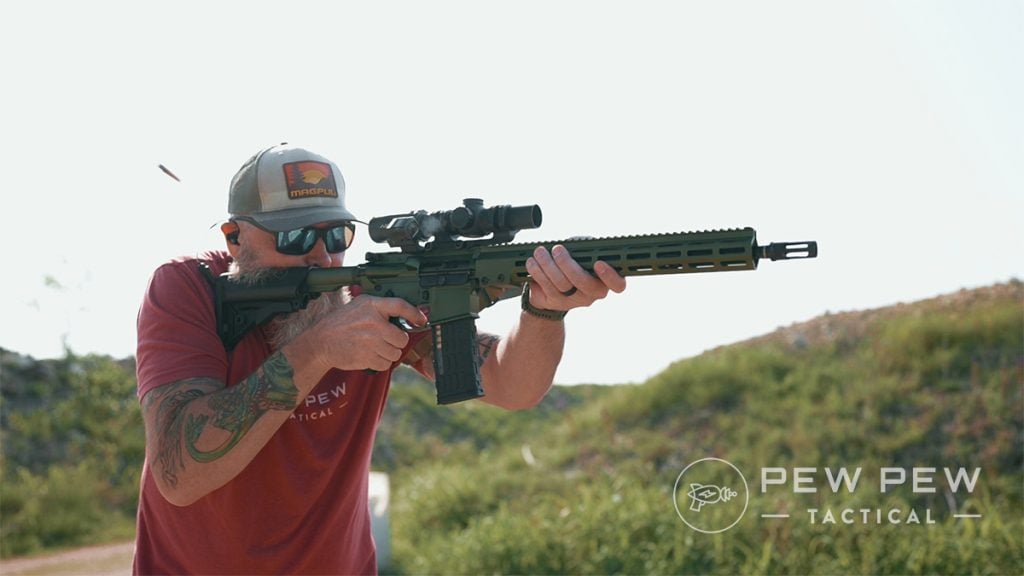
At the core of the Super Duty rifles lies Geissele's Reliability Enhanced Bolt Carrier Group and Stressproof Bolt.
These upgraded bolt carrier groups (BCGs) feature advanced tool steel cam pins and are finished with a proprietary coating, which provides extreme corrosion and wear resistance.
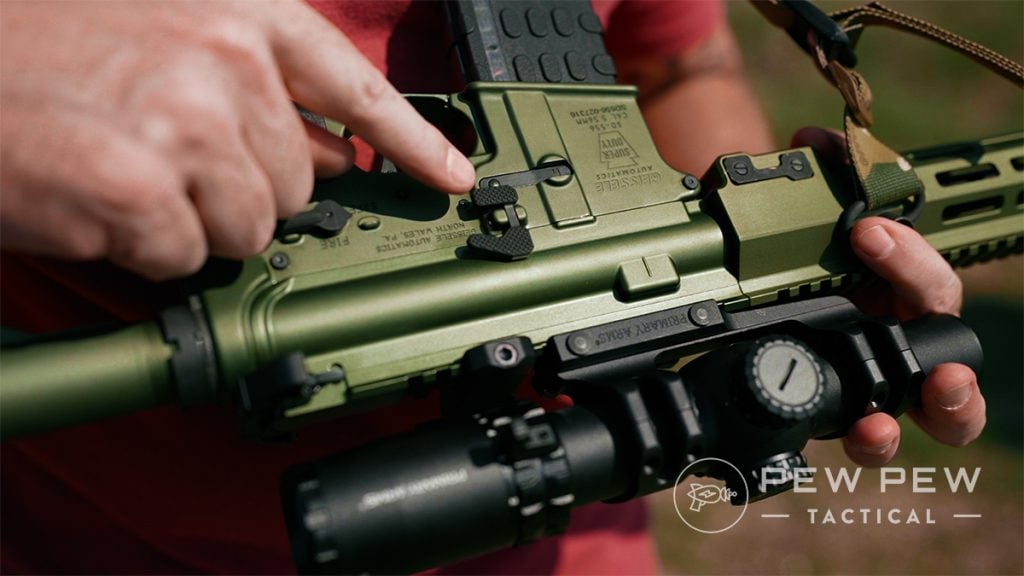
The cold hammer-forged, chrome-lined barrel has a 1:7 twist and provides outstanding accuracy with various types of ammunition.
During accuracy work, we could take up the first stage of the trigger, settle the crosshairs, and break the shot cleanly. The rifle printed 1-inch groups at 50 yards with bulk 55-grain FMJ.
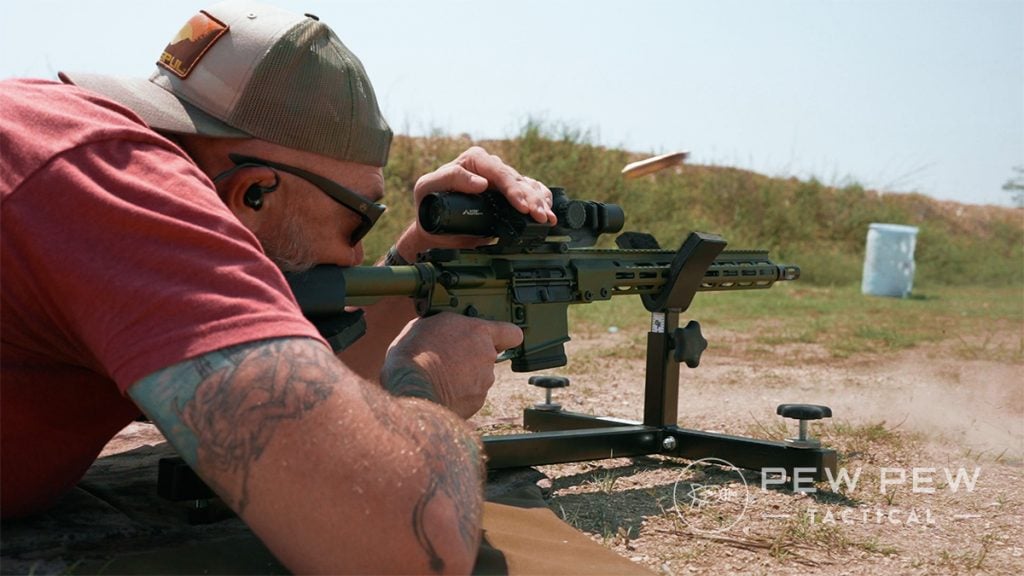
A previous Super Duty tested averaged 0.85-inch groups shot prone off asphalt, supported only by the magazine.
You also get an excellent SSA-E X two-stage trigger that breaks super clean between 3-4 lbs. This is one of the nicer AR triggers on the market that we've ever tested.
Other features include a HUXWRX flash hider, an extended Geissele Airborne charging handle, and a B5 Systems Enhanced SOPMOD stock that gives a solid cheekweld.
Recoil is noticeably soft, thanks to Geissele's in-between gas length (longer than mid-length, shorter than rifle) paired with a Super 42 spring and H2 buffer. Plus no *sproing* spring noise like a regular AR.
These are some of the best out-of-the-box rifles you can buy, period.
| Geissele Super Duty Mod1 | Score | Note |
|---|---|---|
| Reliability | 10/10 | No hiccups; 2000 rounds as of Summer 2026 |
| Accuracy | 10/10 | 1 MOA at 50 yards |
| Ergonomics | 10/10 | B5 SOPMOD Stock, 45° grip, & SSA-E X Trigger |
| Customization | 10/10 | Picatinny full top & M-MLOK handguard |
| Value | 8/10 | About $2000 depending on model |
| Overall | 9.6/10 | Editor's Pick |
Check out our full review and video below to see why the Geissele Super Duty scored so well!
2. Daniel Defense DDM4 V7 - Best Rifle for Home Defense
Tested: 10,000+ rounds, no malfunctions, 1 MOA with heavier rounds.
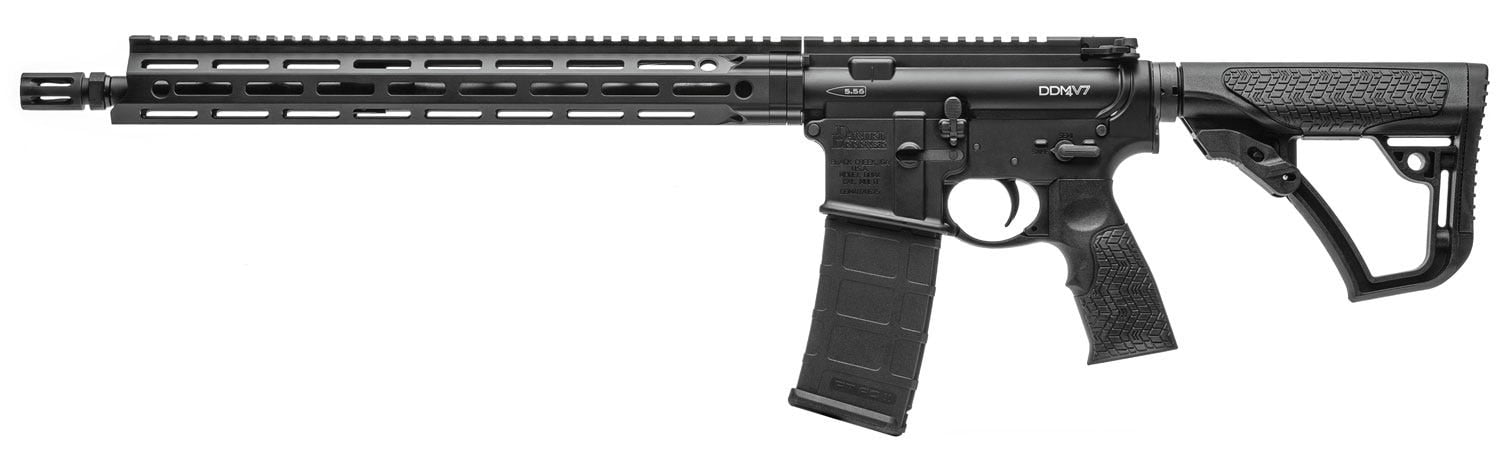
Pros
- High-quality parts made in-house
- Lightweight
- Reliable
- Accurate
Cons
- Expensive
- Trigger could be better
Specs
- Caliber: 5.56 NATO
- Barrel Length: 16”
- Overall Length: 32.25” – 35.87”
- Weight: 6.2 lbs
- Gas System: Direct-Impingement, mid-length
Why We Love It
It might be just because my first AR-15 10+ years ago was a Daniel Defense (DD), but I love their rifles.
Mine has never failed me, even after 10,000+ rounds.
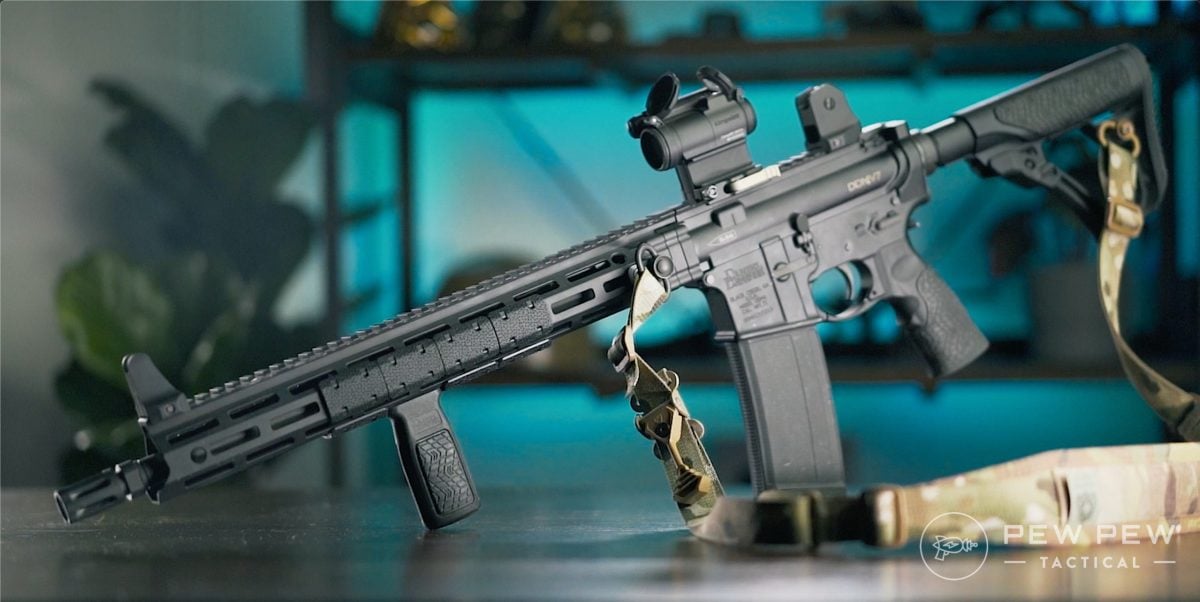
One of my go-to recommendations for those who want a high-end AR-15 for home defense is the DDM4 V7.
These rifles sport a 16-inch barrel, free-float handguard, and a softer-shooting mid-length gas system. We've extensively tested this particular model, and its quality is evident even in a sea of AR-15s.
Daniel Defense manufactures almost all of their own parts in-house, including the bolt carrier groups, barrels, rails, and furniture. This allows for complete control over the quality control process.
They are well-known for their high-quality parts, having secured US military contracts for their RIS II rails and barrels for the URG-I rifle.
To put it simply, they make outstanding stuff.
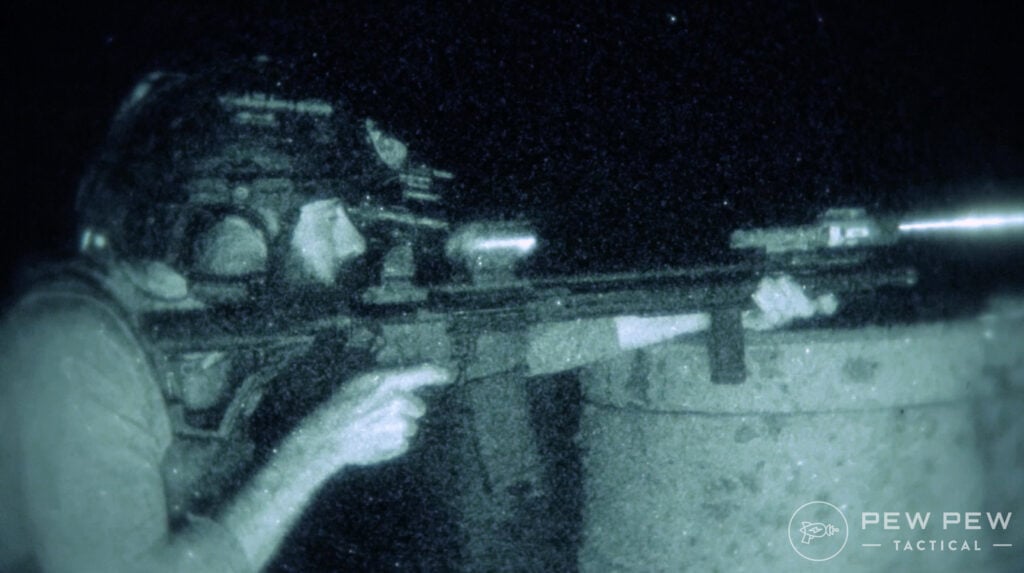
If you snag a DDM4 V7, you are getting a gun that is going to be accurate, rugged, and guaranteed to run for a long time.
Their brand is top-notch and used versions retain decent value compared to other competitors.
We just didn't love the angle of the grip it came with as it led to some wrist pain after a couple hours on the range. However, personal preference and very easy to swap out.
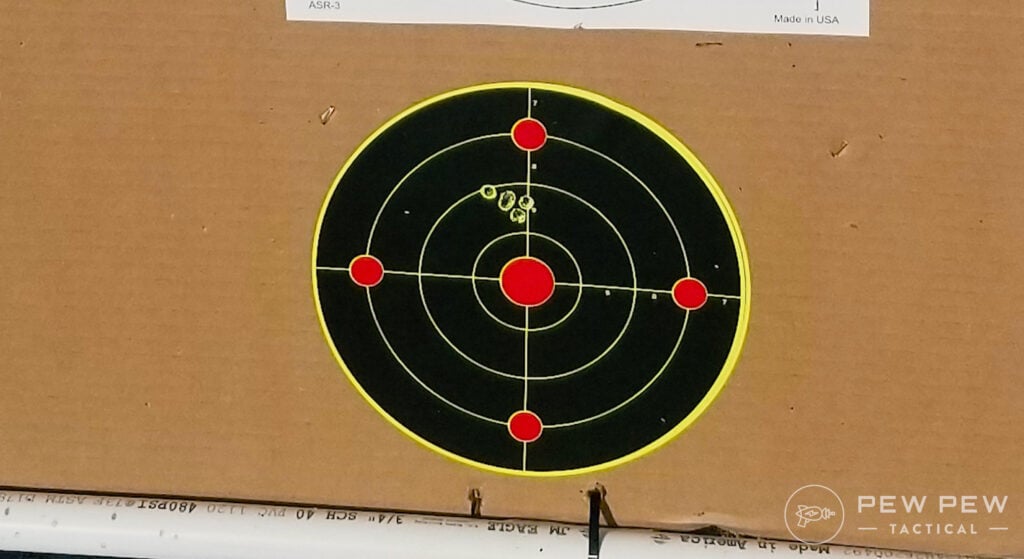
The stock trigger is ok but we got some great 1 MOA groups with heavier 69gr ammo. 55gr range ammo opened up to around 2-3 MOA.
And if you don't want a standard 16-inch AR, you can check out all their other rifles, which include lightweight barrels and different lengths. And if you're from California, they have compliant versions, too!
Check out our full video below and our hands-on review of the DDM4 V7 here.
If you want more from Daniel Defense, you can also check out our list of all their guns we've tested!
| Daniel Defense DDM4 V7 | Score | Note |
|---|---|---|
| Reliability | 10/10 | Over 10,000 rounds as of Summer 2026 |
| Accuracy | 9/10 | Liked heavier 69gr rounds |
| Ergonomics | 7/10 | Great but personally didn't love the grip angle |
| Customization | 10/10 | Picatinny on receiver & M-MLOK handguard |
| Value | 7/10 | About $1900 depending on model and sales |
| Overall | 8.6/10 | Best for home defense |
3. Palmetto State Armory (PSA) PA-15 - Best AR-15 for Beginners
Tested: 10,000+ across various rifles, 3-4 MOA, and great build quality for the price.
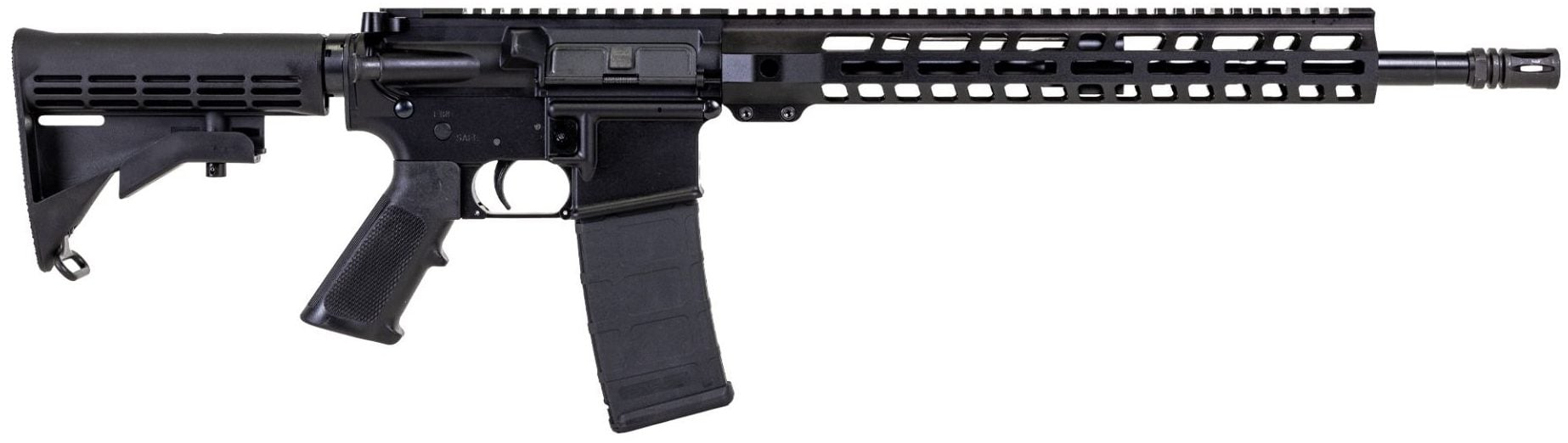
Pros
- Affordable and wallet-friendly for budget buyers
- Lots of options (barrel sizes, gas lengths, calibers, etc.)
- Entry-level friendly — perfect for newbies
Cons
- Budget means some imperfections on the finish
- Some caliber offerings can be a little picky on ammo, but the standard 5.56 eats just about everything
Specs
- Caliber: Varies, but 5.56 recommended
- Barrel Length: Varies, but 16" recommended
- Overall Length: Varies
- Weight: Varies
- Gas System: Varies, but mid-length is softer shooting
Why We Love It
Balling on a budget? Looking for your first AR-15?
Then check out Palmetto State Armory's offerings. They did very well in our Best Budget AR-15s article.
PSA has a reputation for putting out solid guns at very affordable price points. Occasionally, you'll see some complaints about shipping times when PSA is handling a large number of orders (they move a ton of guns).
Palmetto makes almost everything in-house in the US, turning raw materials into the finished AR-15 of your dreams.
You can often find complete rifles with good furniture for around $500 or a bit less.
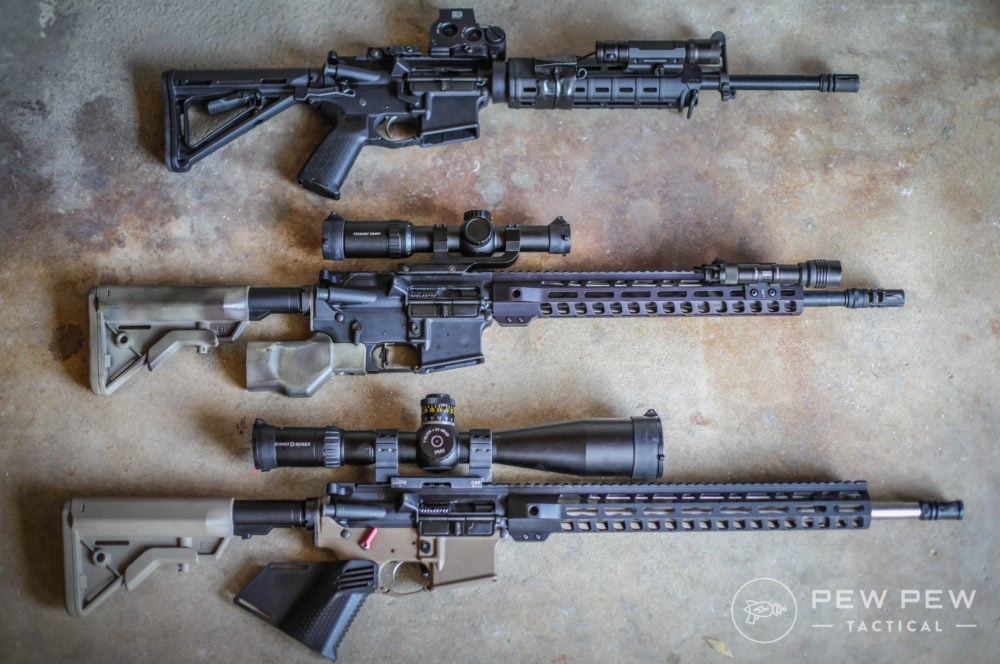
I'm not just choosing one rifle for PSA, since they offer a ton of different complete rifles in an amazing number of different configurations.
I rotate through several PSA AR-15s and I'm in the 10,000+ round count total. With one being a mostly full-auto configuration.
If the one you are interested in is out of stock, don't fret. They tend to sell out quickly due to the high volume of orders they receive, but they restock very frequently.
But if you still need a recommendation, we suggest the Classic Carbine with FSB (front sight block, looks like a triangle) for the truly budget-conscious.
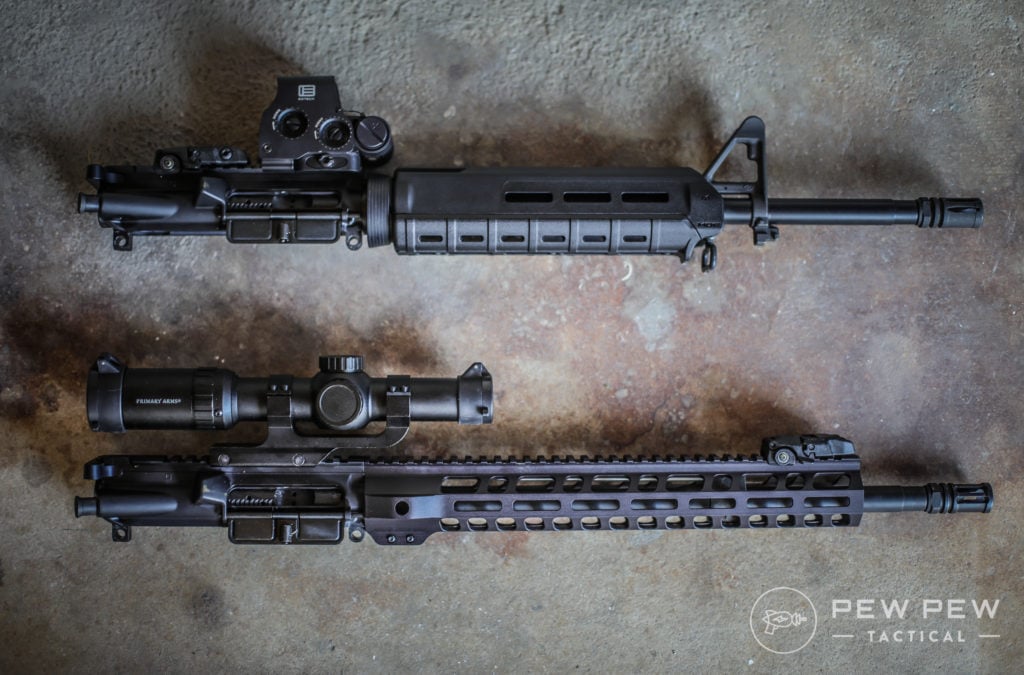
If you have a little extra cash, we strongly recommend any of their M-LOK rail 16-inch barreled AR-15s with a mid-length gas system that excelled in our Budget AR-15 article.
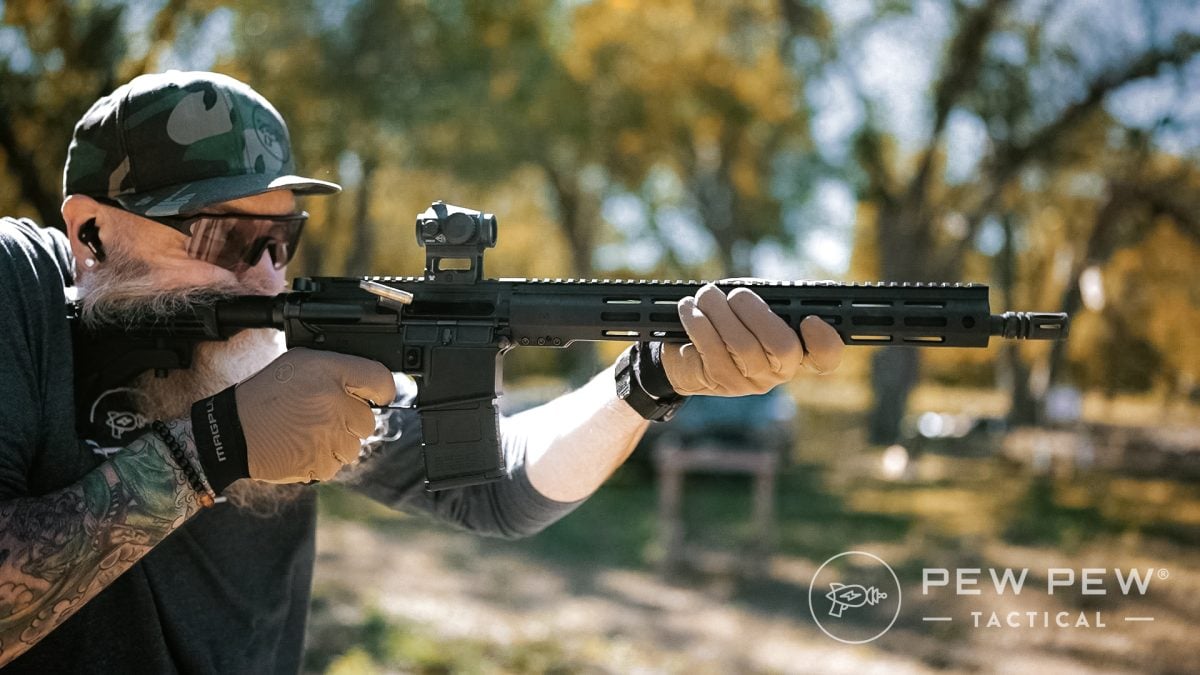
See one in action here:
Depending on the market, you might be better off ordering a complete upper and a complete lower separately. As with just about every manufacturer, it is about 10% or so more expensive to get a complete long gun. If you buy the upper and lower separately, all you'll have to do is connect them together with two pins.
Easy peasy.
If you decide to go this route, you'll be able to have a bigger selection of furniture and rails (and the ability to get a sub-$500 rifle). Check out Best AR-15 Uppers for my personal picks.
Just make sure to get one with a bolt carrier group (BCG) and charging handle (CH).

And for lowers, you can choose whatever style you like. I prefer the lowers with the improved Magpul furniture.
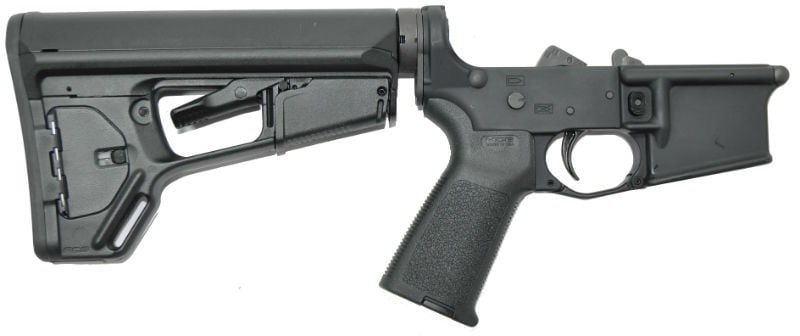
PSA is always going to be a good entry point for people wanting to get into the AR game at a reasonable price. Their selection is massive, and we have had pretty good experiences with multiple guns from them.
| Palmetto State Armory PA-15 | Score | Note |
|---|---|---|
| Reliability | 8/10 | Required some break-in, now at 10,000 reliable rounds |
| Accuracy | 6/10 | Within mil-spec 3-4 MOA |
| Ergonomics | 8/10 | Mil-spec, but Magpul versions are way better |
| Customization | 10/10 | Able to change just about anything |
| Value | 10/10 | Great for the price |
| Overall | 8.4/10 | Best Beginner AR-15 |
You can check out our review of three PSA uppers right here, as well as a full video review of one of their rifles below!
4. Bravo Company Manufacturing (BCM) Recce-16 - Best Duty Rated AR-15
Tested: 6,000 rounds with zero malfunctions, 2 MOA accuracy, and upgraded furniture.
Pros
- Excellent quality control
- Outstanding reliability
- Lightweight
Cons
- Supply is limited and it’s frequently out of stock
- Tiny bit of muzzle climb while shooting
Specs
- Caliber: 5.56 NATO
- Barrel Length: 16"
- Overall Length: 32.5" - 35.5"
- Weight: 6.1 lbs
- Gas System: Direct-impingement, mid-length
The Best Gun Deals, Coupons and Finds
Subscribe to Pew Pew Tactical's sales and deals email.
Why We Love It
Guns like the Daniel Defense DDM4 V7 are definitely high quality, but what if you want to save a few hundred while still getting a tried-and-true duty gun?
Something you can take on patrol and not worry?
That is where Bravo Company Manufacturing (BCM) comes in.
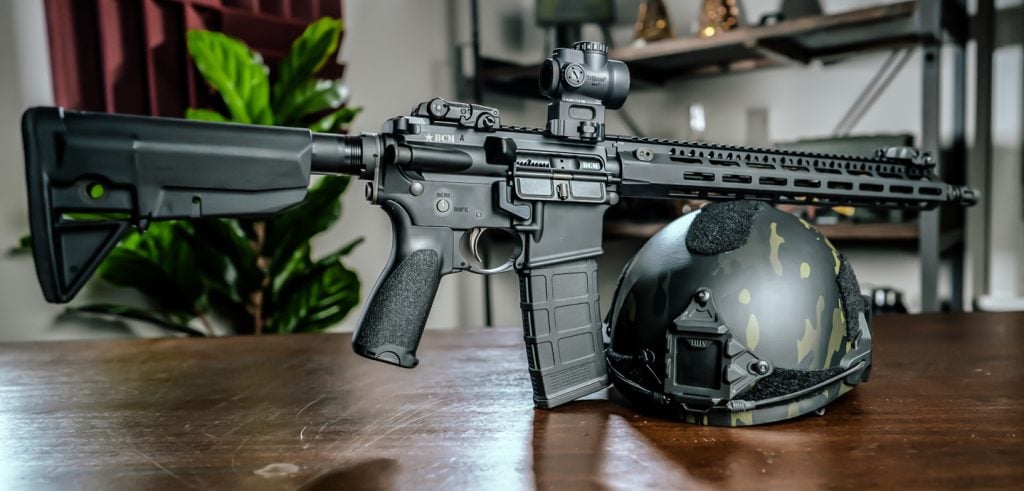
BCM, in my mind, has some of the best bang-for-the-buck for top-tier stuff.
I have come to this conclusion after extensively shooting multiple BCM rifles and seeing several of my friends put theirs through heavy use.
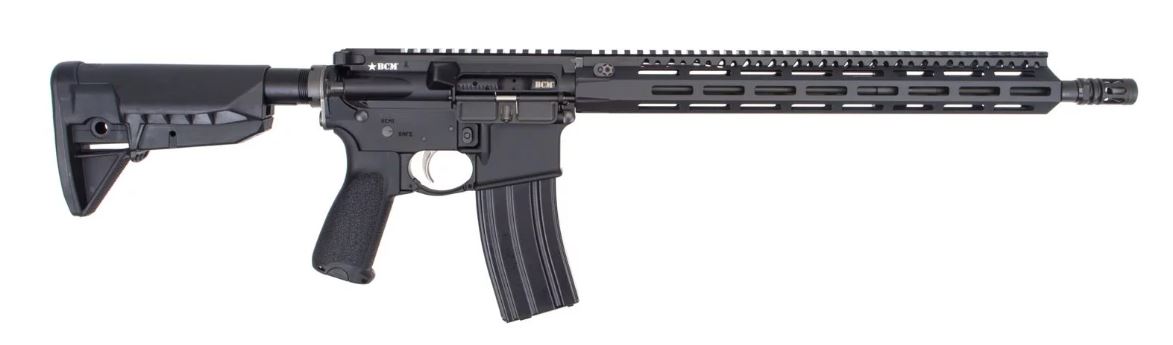
My recommendation for a do-all duty rifle would be the BCM RECCE-16.
Mid-length gas, a chrome-lined bore and chamber, extended charging handle, and BCM furniture get you just about everything you need out of the gate. The MCMR handguard is lightweight, rigid, and pretty slim...we love it.
Unfortunately, the price of complete BCM rifles (and just about every other competitor) has increased over the years but BCM value still stands.
These rifles are true workhorse duty guns, with a high priority on exacting quality control and parts focused on reliability over high round counts rather than ultra-fancy features.
Now that they include their gold-standard BCGs and charging handles for free with their uppers when you purchase direct, and you can save some cash by buying a BCM upper and lower separately.
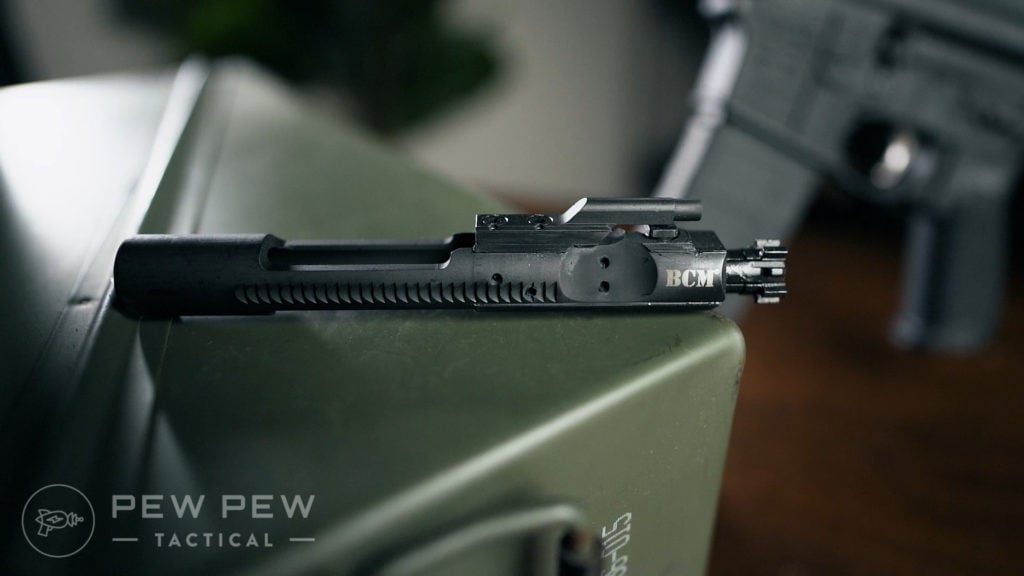
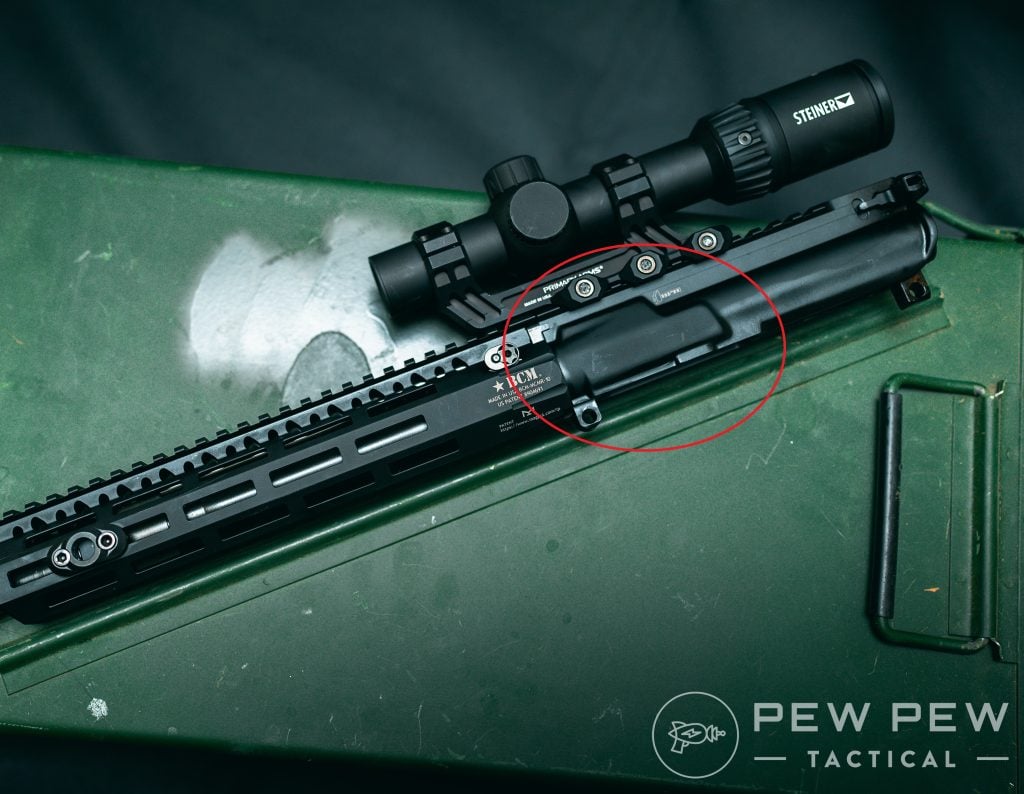
This way you can choose their beefed-up MK2 upper receiver and choose between lightweight or standard barrel weights...and even muzzle devices. And end up saving around $200.

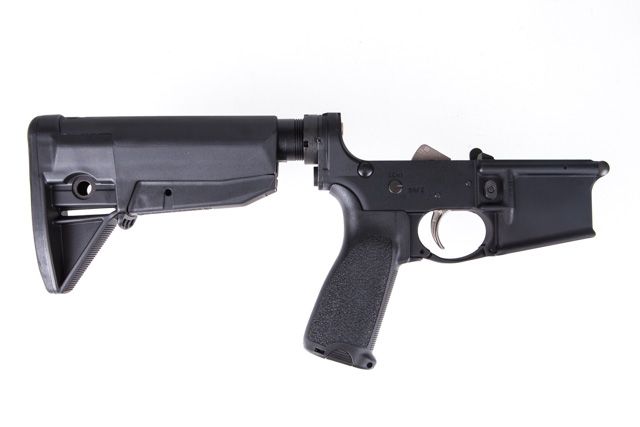
BCM doesn't directly sell lowers but you can see them here:
But even if you spring for the whole gun, you can't go wrong.
| BCM Recce-16 | Score | Note |
|---|---|---|
| Reliability | 10/10 | No problems; 6,000 rounds as of Summer 2026 |
| Accuracy | 8/10 | Tighter than mil-spec at 2 MOA |
| Ergonomics | 8/10 | Great, especially the charging handle |
| Customization | 10/10 | Picatinny full top & M-MLOK handguard |
| Value | 8/10 | About $1700; save with just the upper |
| Overall | 8.8/10 | Best Duty Gun |
We have spent a considerable amount of time with these guns and have a comprehensive review available here, along with a video review below.
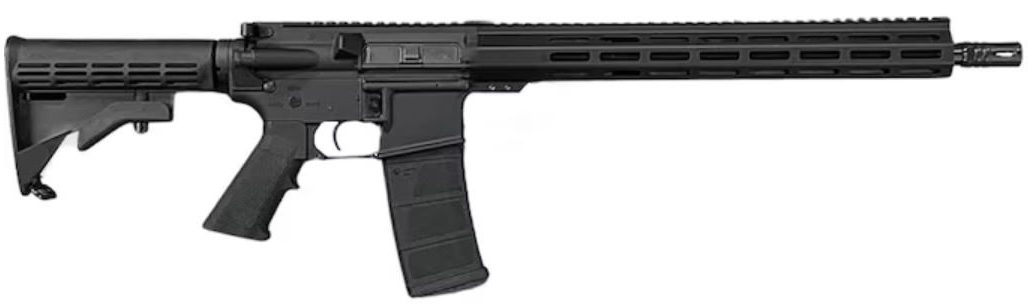
5. Andro Corp ACI-15 - Best AR-15 for $399
Tested: 1,500 rounds with no failures, 1.5 MOA with range ammo.
Pros
- Extremely affordable
- Mid-length gas
- Full-length M-LOK rail
Cons
- Very basic furniture
- Mil-spec trigger
Specs
- Caliber: 5.56 NATO
- Barrel Length: 16”
- Overall Length: 32.4" - 35.7"
- Weight: 6.4 lbs
- Gas System: Direct-Impingement, mid-length
Why We Love It
We get it...budgets can be tight. Sometimes, even $600 can be a bit much when reaching for your wallet or purse. Fortunately, there is a solid option available for around $400.
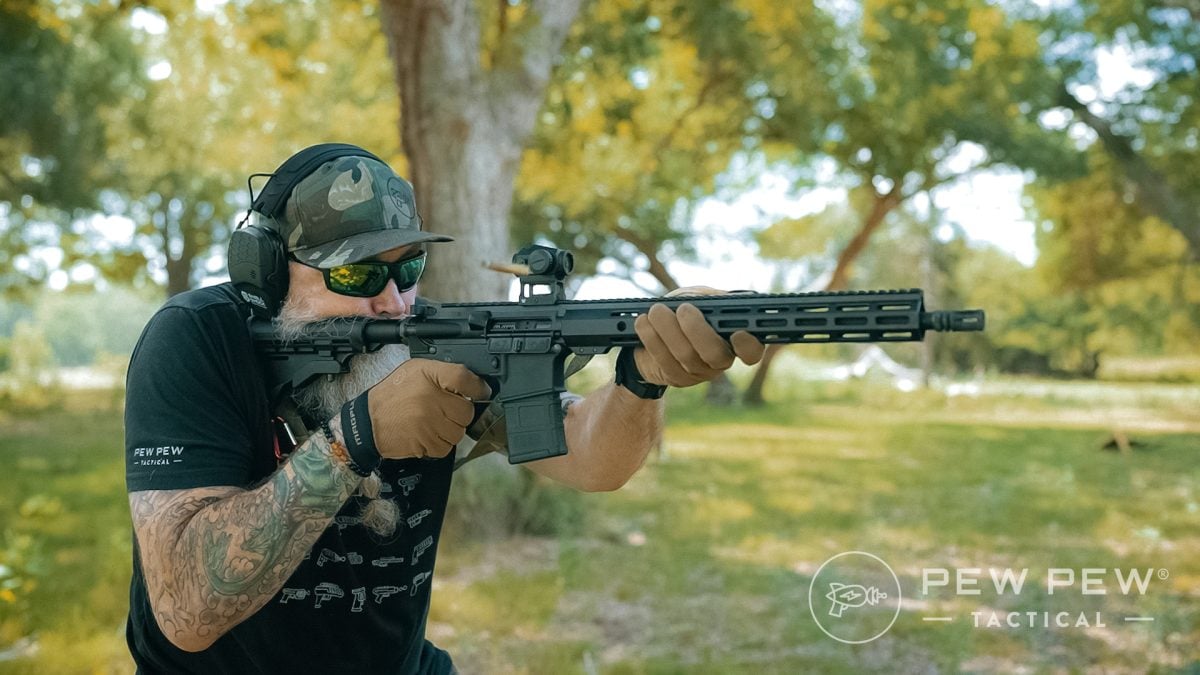
Enter the Andro Corp ACI-15. These have everything you need to get started and serve as excellent bases for you to upgrade your AR-15 as you go.
And the current price winner in our Best Budget AR-15s standalone article.
You get a mil-spec 7075 forged upper and lower, a 1:7 twist 4150 Chrome Moly melonited barrel, and a mid-length gas system. The 15" M-LOK gives you plenty of real estate to mount all of your desired accessories.
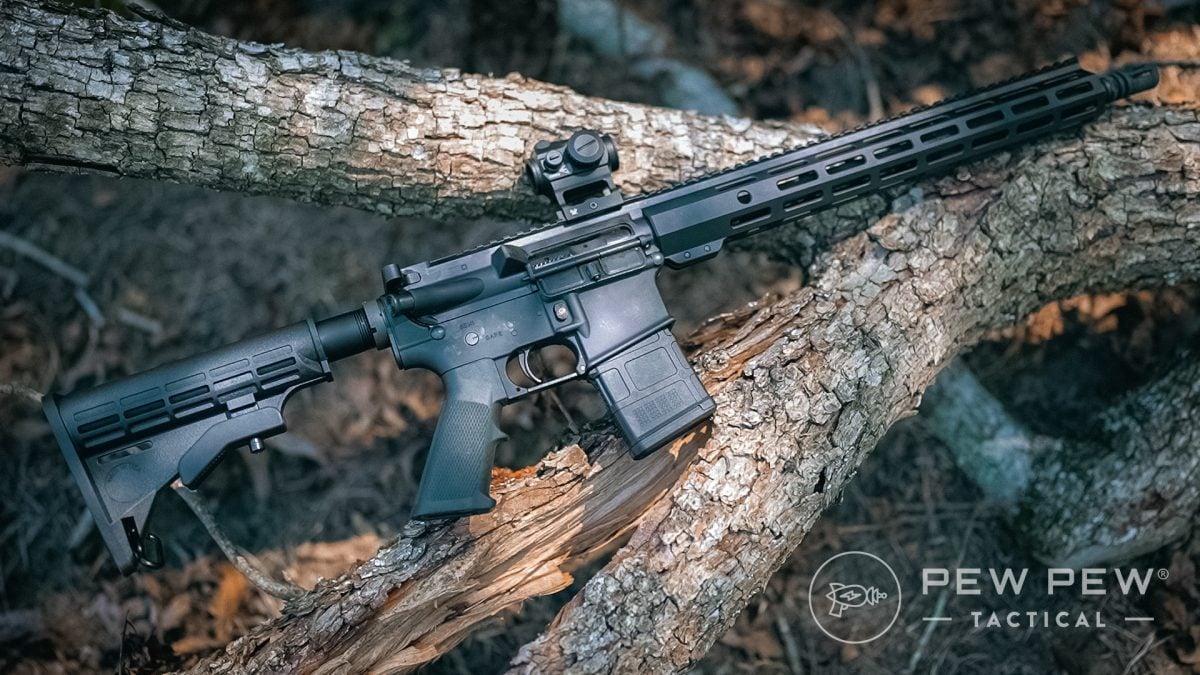
Outside of that, everything is pretty standard. They come with a mil-spec charging handle, mil-spec trigger, standard A2 flash hider, and standard M4 furniture. These parts, while basic, are very easy to swap out with drop-in parts as you see fit.
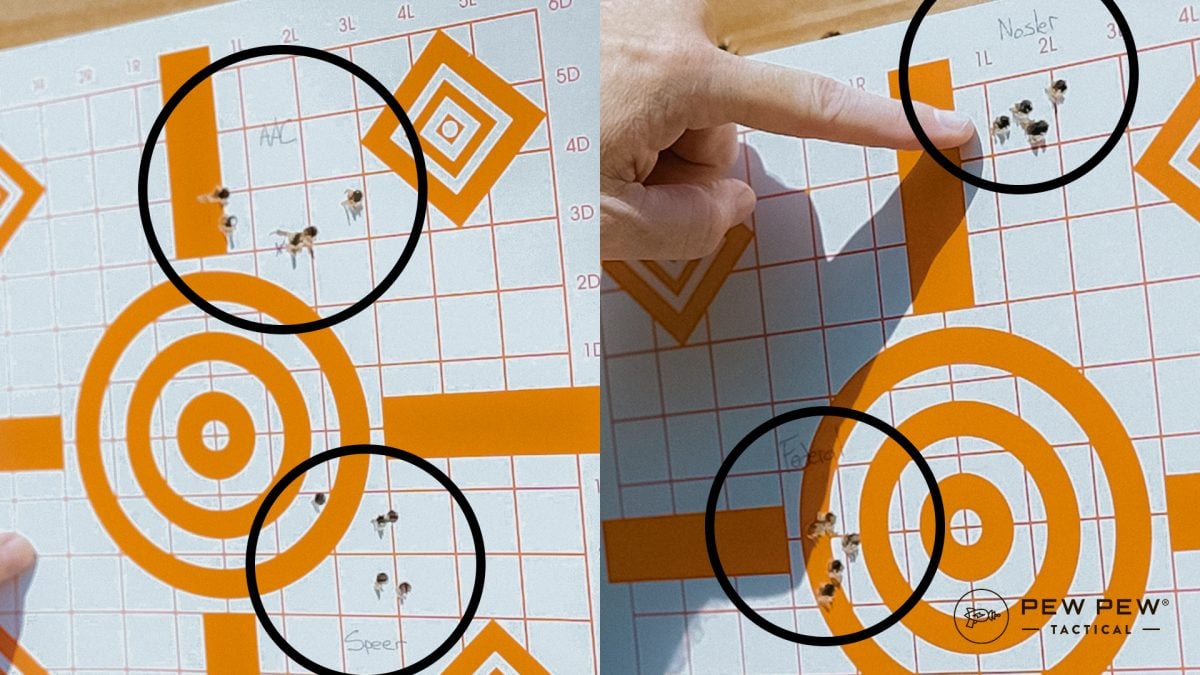
While the trigger was mil-spec, the accuracy results were quite decent. 2.5 MOA using range AAC 55gr 5.56 ammo but we brought it down to 1 MOA with 69gr Federal Gold Medal Sierra Matchking.
While Andro Corp hasn't been around as long as the other manufacturers on this list, they have earned a reputation for offering the most affordable and reliable AR-15 on the market.
| Andro Corp ACI-15 | Score | Note |
|---|---|---|
| Reliability | 10/10 | No failures with 1500 rounds as of Summer 2026 |
| Accuracy | 8/10 | 2.5 MOA with range ammo; 1 MOA with match |
| Ergonomics | 6/10 | Outdated furniture but easy to change |
| Customization | 10/10 | It's adult Legos |
| Value | 10/10 | About ~$399 depending on sales |
| Overall | 8.8/10 | Best AR for $399 |
Check out our full review where ours shot sub 1 MOA with the right ammo and didn't have a hiccup the entire time.
6. PSA Sabre - Best Goldilocks AR-15
Tested: 1,100 rounds as of Summer 2026 and 2 MOA accuracy.
Pros
- Premium features but at a decent price point
- Great accuracy with practice ammo
Cons
- 20″ Sabre we tested struggled with steel cases
- Slightly heavier than other AR-15s
Specs
- Caliber: 5.56 NATO, .300 BLK, .223 Wylde
- Barrel Length: Varies based on configuration
- Overall Length: Varies based on configuration
- Weight: Varies based on configuration
- Gas System: Varies based on configuration
Why We Love It
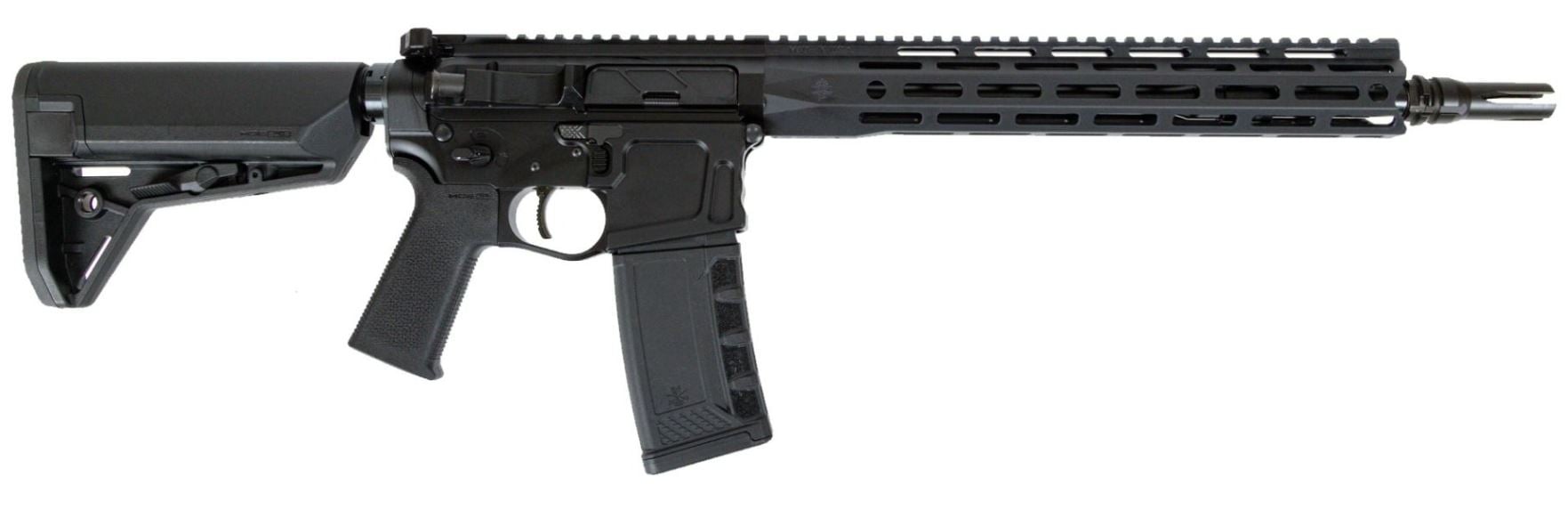
We circle back around to PSA to talk about their more recent "premium" line of AR-15s called the Sabre.
If you're looking at the math for the true best bang-for-the-buck pre-built AR-15 when it comes to parts, the Sabre might be what you're looking for.
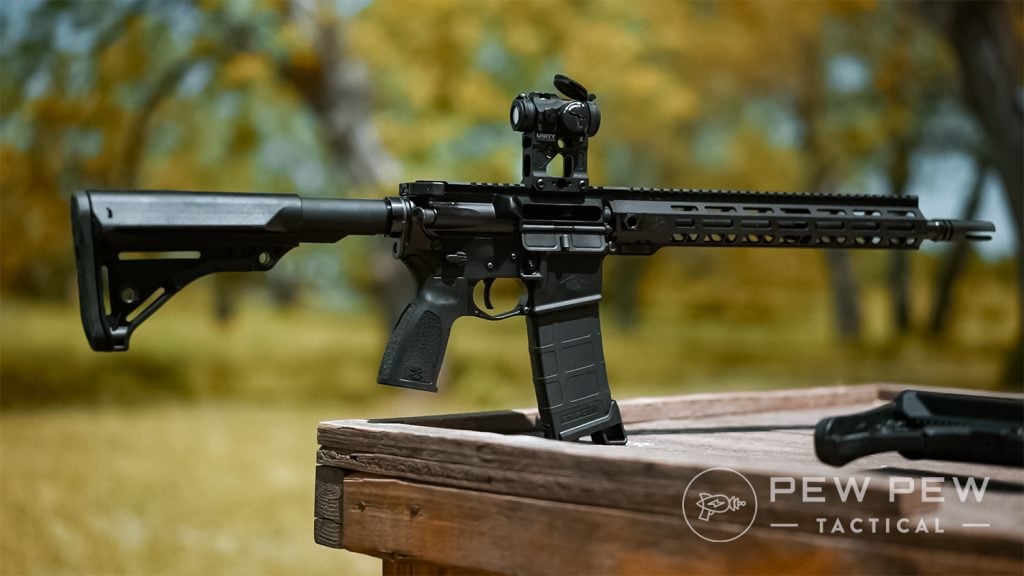
Compared to their normal line, the Sabre packs these upgrades:
- Hammer-forged FN barrel
- Microbest BCG with Sprinco extractor spring
- Hiperfire RBT trigger & JP reduced power springs
- Sabre compensator (pinned and welded if you get the 13.7" version)
- Ambidextrous safety selector
- Improved furniture (varies by model)
These definitely feel much nicer overall in hand when shooting compared to the PSA's base PA-15 line of rifles.
Not too cheap feeling...but not super expensive...juuuuuust right. Hence, our Goldilocks pick.
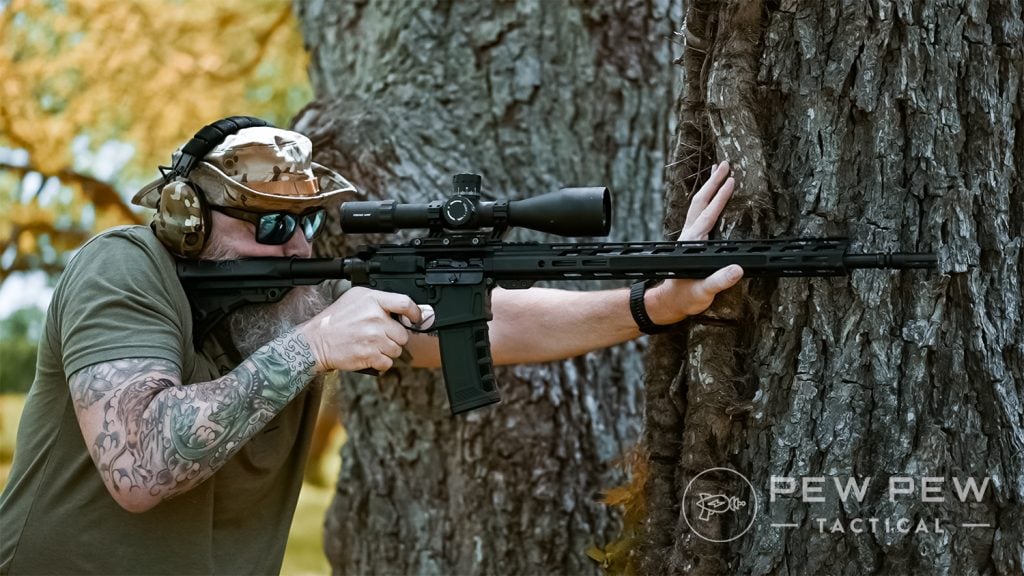
I'm a big fan of the 13.7" barrel pin-and-welded version because it gets you the shortest overall length without any SBR headaches.
The only knock I have on this version is that it still has the high-pitched *tingggg* of effective flash hiders, though we hear these are fixed.
And if you happen to use steel-cased ammo to save money...you might need to rethink that or clean up the feed ramps.
Trigger was awesome since it sported a Hiperfire RBT at 2.6lbs which lead to 1 MOA groups.
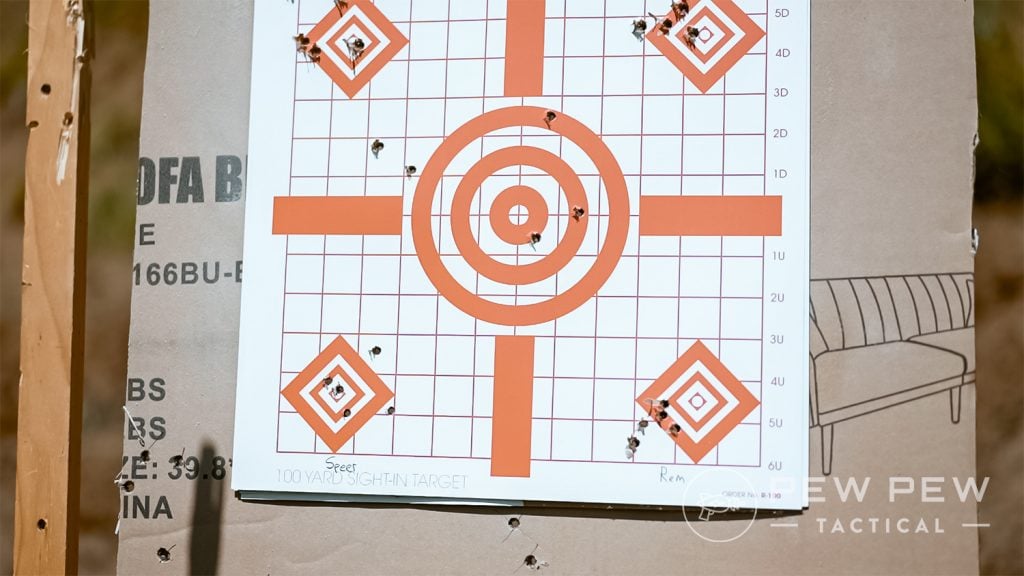
PSA also offers 14.5-, 16-, and 20-inch versions in different configurations as well, including some ultra-neat Block II and MK12-style semi-clones.
| Palmetto State Armory Sabre | Score | Note |
|---|---|---|
| Reliability | 8/10 | 20" doesn't love steel cased ammo; Summer 2026 total 1,100 rounds |
| Accuracy | 8/10 | 2 MOA |
| Ergonomics | 8/10 | Felt good; only 20" gun was ambidextrous |
| Customization | 10/10 | Picatinny and M-LOK |
| Value | 8/10 | Around $1000 depending on model |
| Overall | 8.4/10 | Best Goldilocks AR-15 |
You can see (and hear) everything in our complete review of the PSA Sabre line and video.
7. Springfield Armory Saint Victor V2 - Best Pinned AR-15
Tested: 1,000 rounds, zero malfunctions, 1.25 MOA, and crisp 4lb trigger.
Pros
- Shortened barrel and overall length
- Love that updated handguard
- Great B5 Systems furniture
Cons
- Slight velocity disadvantage compared to 16” barrels
- Changing muzzle devices will be a hassle
Specs
- Caliber: 5.56 NATO
- Barrel Length: 14” (pinned and welded to 16”)
- Overall Length: 32” - 35.25”
- Weight: 6.75 lbs
- Gas System: Mid-length
Why We Love It
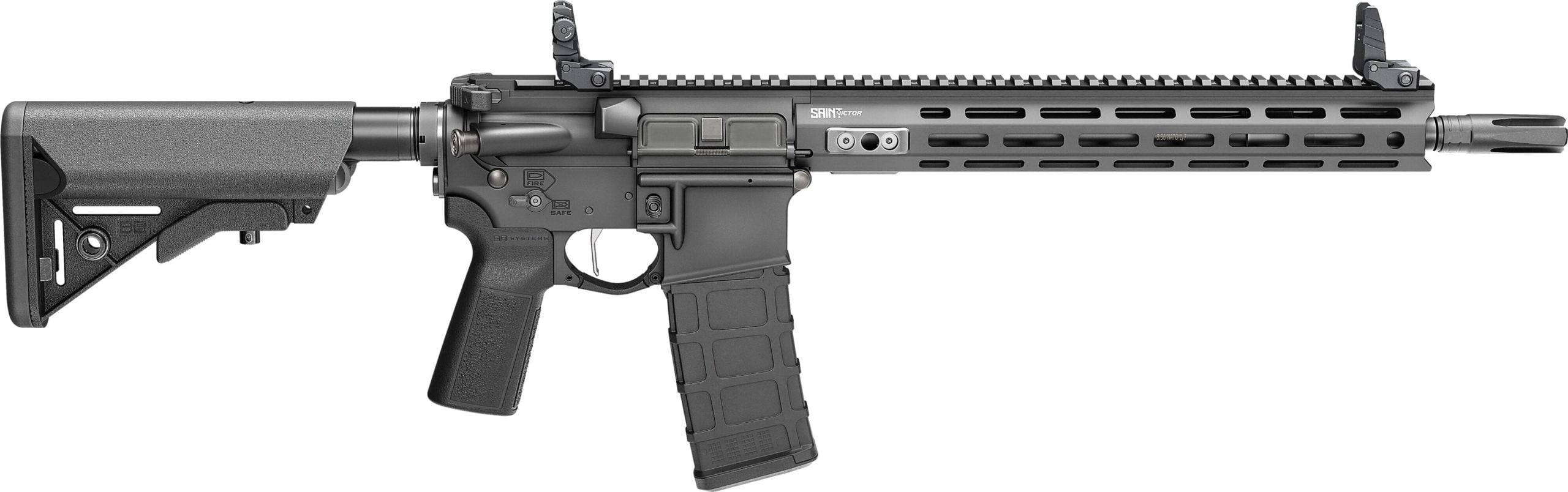
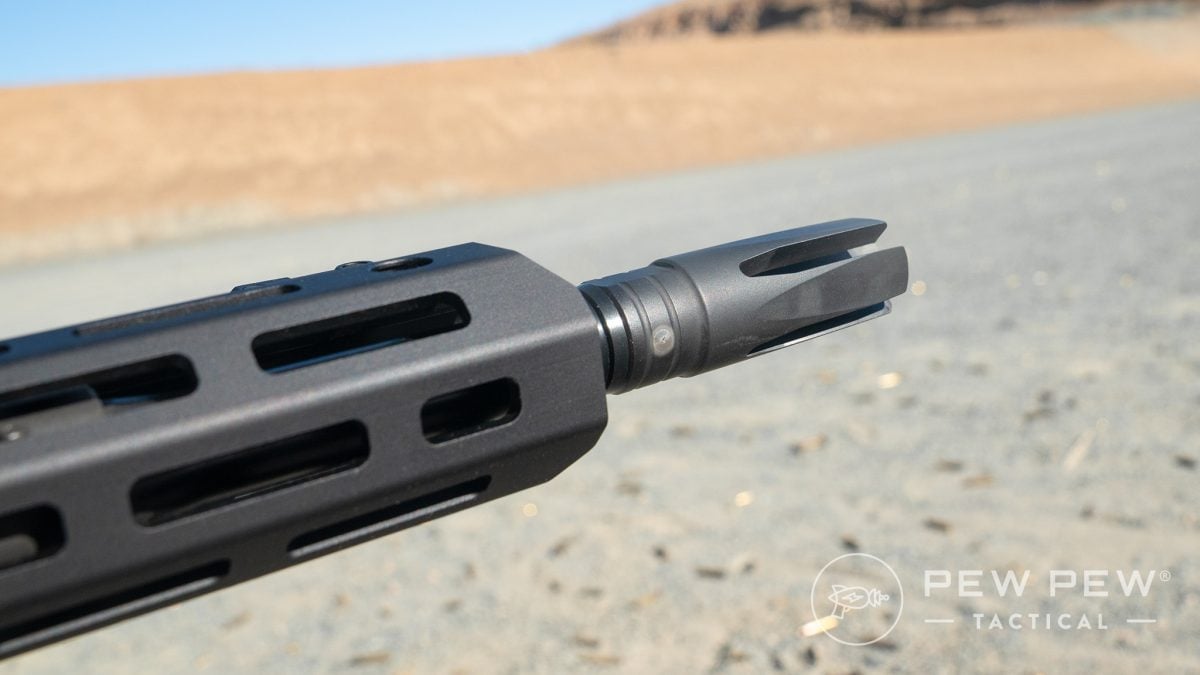
The Springfield Armory Saint Victor V2 is a refined take on the classic AR-15, featuring a pinned 14" barrel with flash-hider that meets legal 16-inch "rifle" requirements without compromising maneuverability.
That means the shortest you can get without dealing with extra SBR (short-barreled rifle) paperwork.
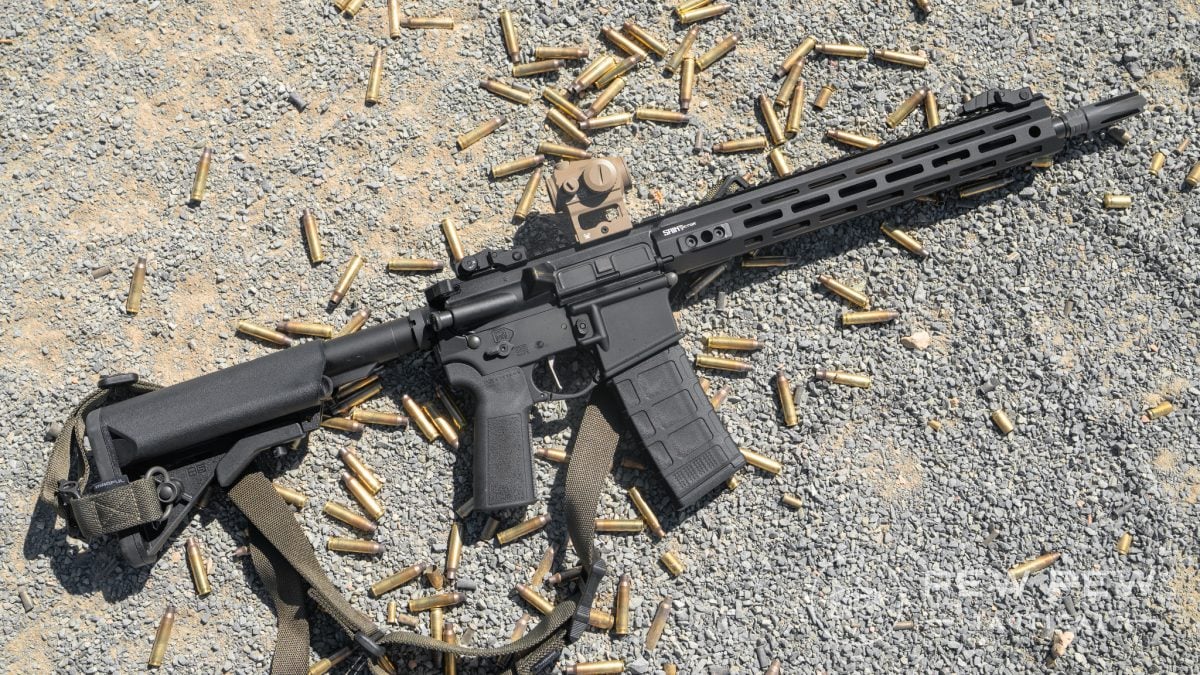
It's built for versatility and is ideal for home defense, range sessions, or building skills.
And comes with thoughtful upgrades like enhanced ergonomics with B5 furniture and a modern M-LOK handguard.
The single-stage flat-faced trigger breaks cleanly at around 4 pounds with no creep and a firm reset, contributing to its smooth operation.
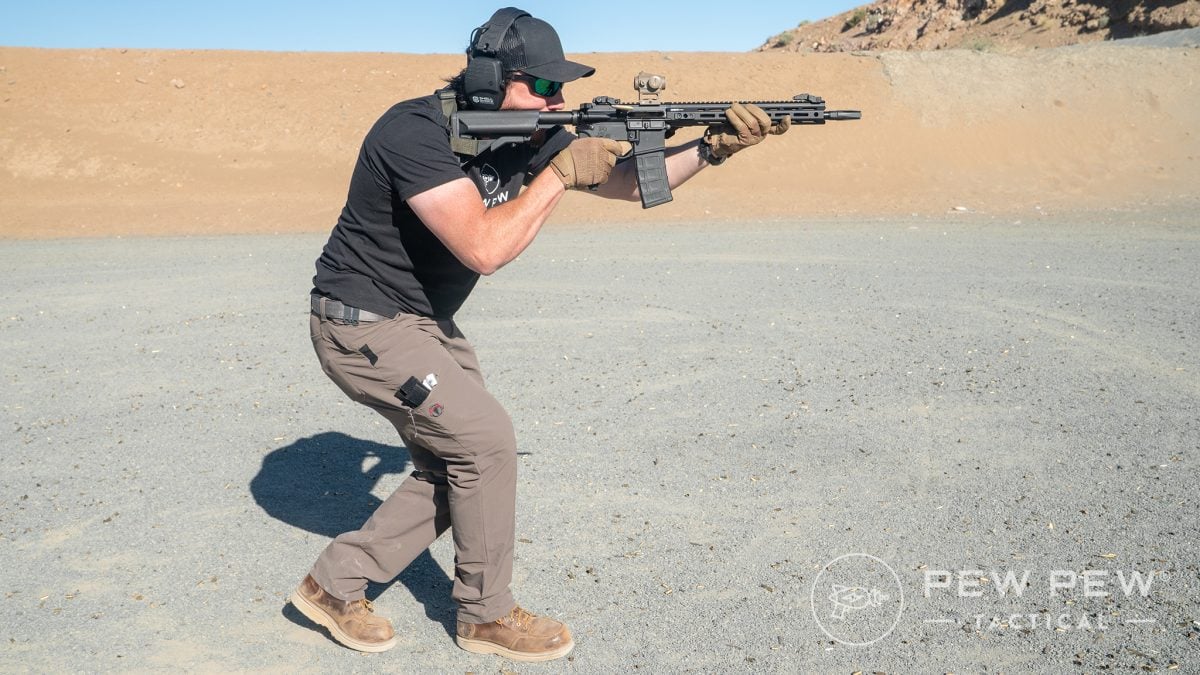
This rifle has a clear ammo preference.
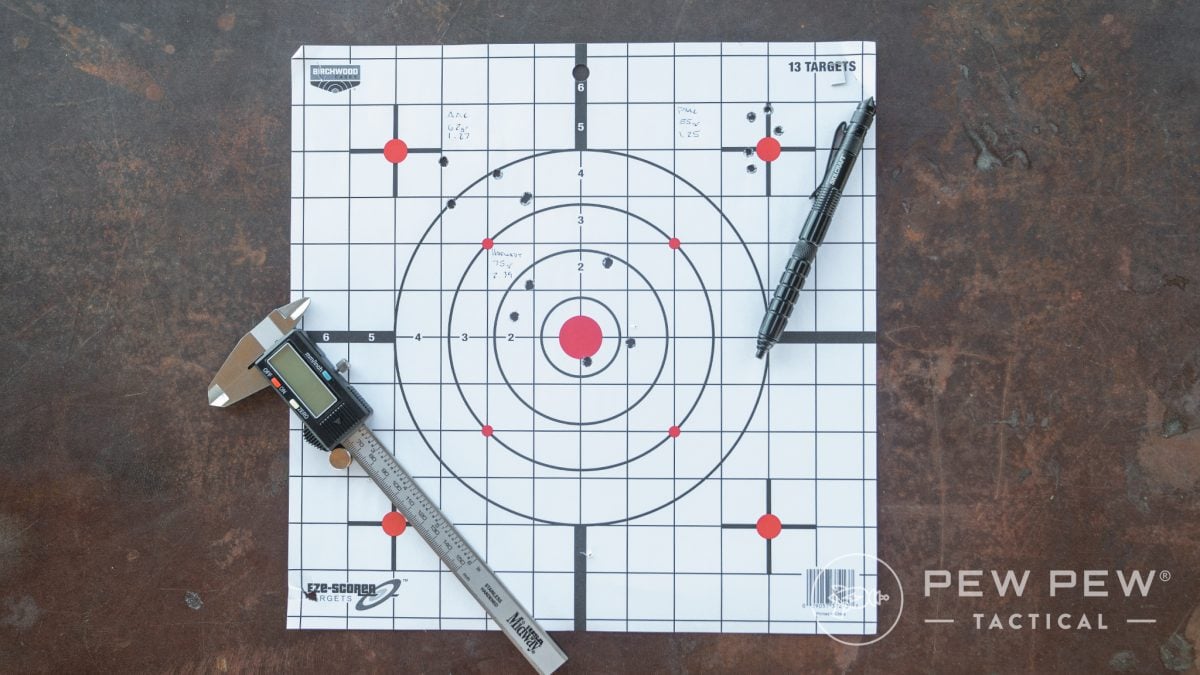
PMC X-TAC 55-grain printed a 1.25-inch group at 100 yards, AAC 62-grain opened to 1.87 inches, and Hornady 75-grain match surprised us at 2.39 inches, consistent across two boxes.
However, since the muzzle device is pinned you're not going to easily change it for something else or a suppressor.
If you're after a no-fuss AR that punches above its price, this is a top pick for those wanting a compact powerhouse straight out of the box.
We're currently at 1000+ rounds with no reliability issues.
| Springfield Saint Victor V2 | Score | Note |
|---|---|---|
| Reliability | 10/10 | No malfunctions in 1000+ rounds as of Summer 2026 |
| Accuracy | 7/10 | 1.25 MOA |
| Ergonomics | 8/10 | B5 Systems furniture rocks |
| Customization | 10/10 | Sky is the limit with Picatinny & M-LOK |
| Value | 10/10 | Around $1100 depending on model |
| Overall | 9.0/10 | Best Pinned AR-15 |
Check out our full review.
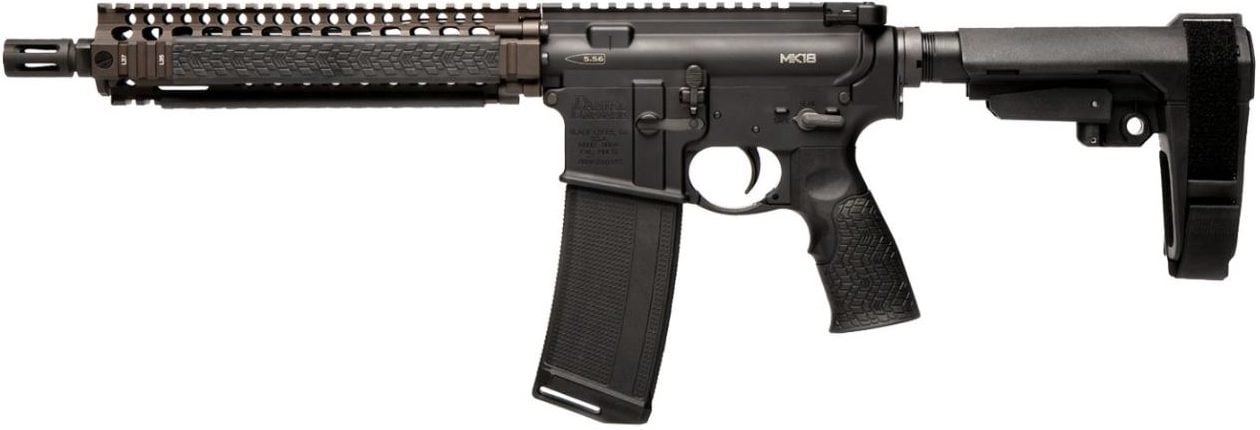
8. Daniel Defense MK18 - Best AR-15 Pistol
Tested: 8,000+ rounds, mostly suppressed and full-auto. No malfunctions.
Pros
- Shorter length is great for home defense
- Super accurate with no issues hitting our targets
- Very nice build and construction
Cons
- Expensive
- We had to download the magazine and not slam the mag into the magwell, otherwise we had feeding issues
Specs
- Caliber: 5.56 NATO
- Barrel Length: 10.3”
- Overall Length: 28.63"
- Weight: 5.85 lbs
- Gas System: Direct-impingement, carbine-length
Our Most Popular Posts
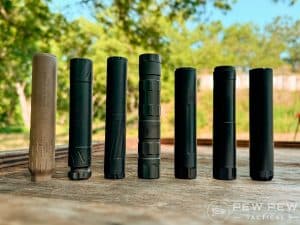
Why We Love It
We might be a little biased by nostalgia and pure cool factor, but our absolute favorite AR-15 pistol is the Daniel Defense MK18.
The MK18 has been tested and fielded by SOCOM for years, and the commercial pistol version is probably the closest you'll get without paying a tax stamp and diving deep into a clone build.
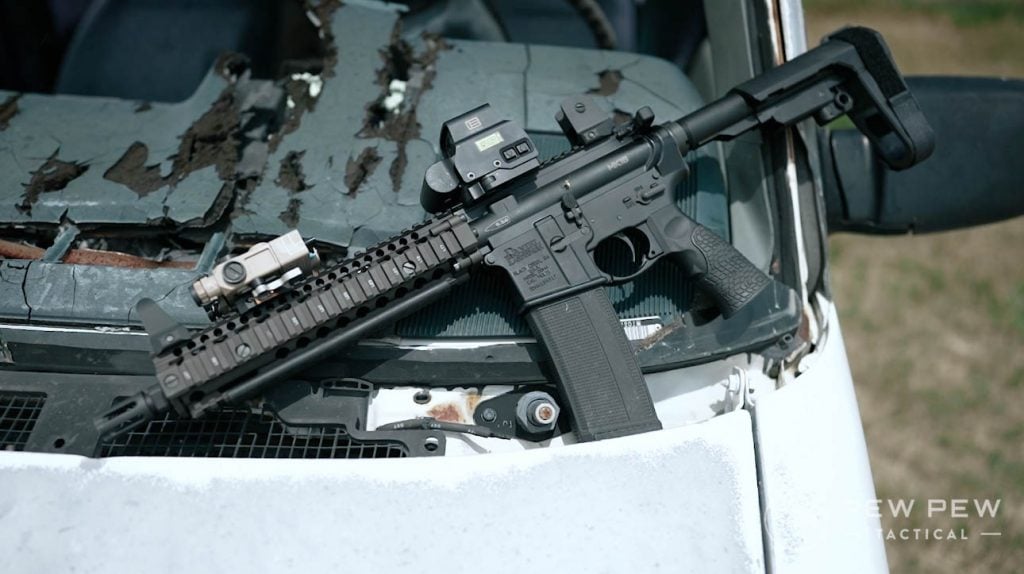
It's a little heavy for its size due to the overbuilt quad rail, but it's nearly indestructible and has a perfect 10.3-inch barrel that helps the gun excel in CQB situations while still providing enough accuracy to engage targets out to 300 yards with ease.
As we mentioned earlier, Daniel Defense is known for their excellent quality control and premium parts made in-house. The MK18 is no exception, and remains one of, if not the most popular, AR pistol upper on the market.
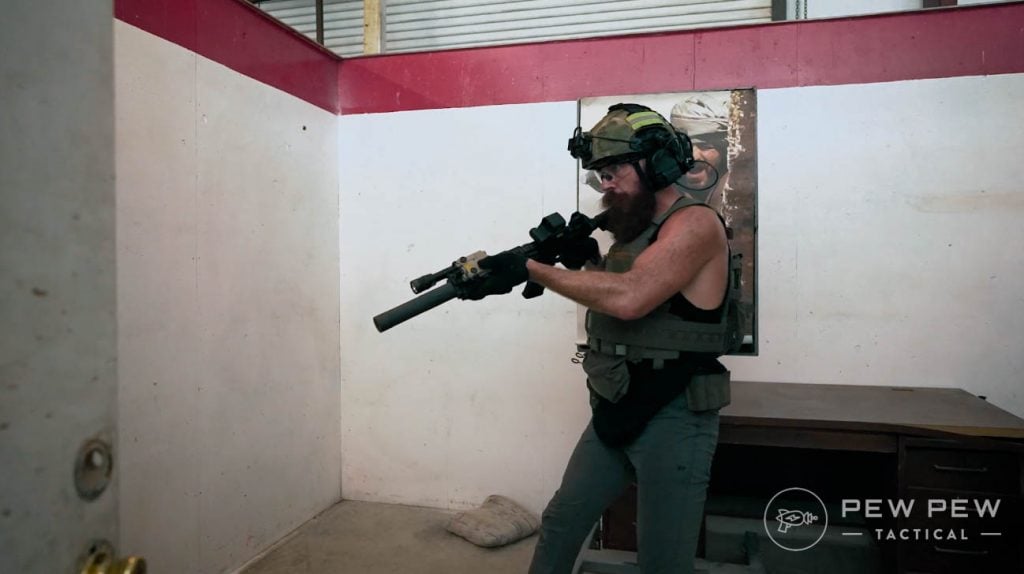
We've SBR-ed ours and shot thousands of rounds full-auto and suppressed...the ultimate test of an AR. And our MK18 passed with flying colors.
Just plan on wearing some gloves because the quad rail gets hot fast.
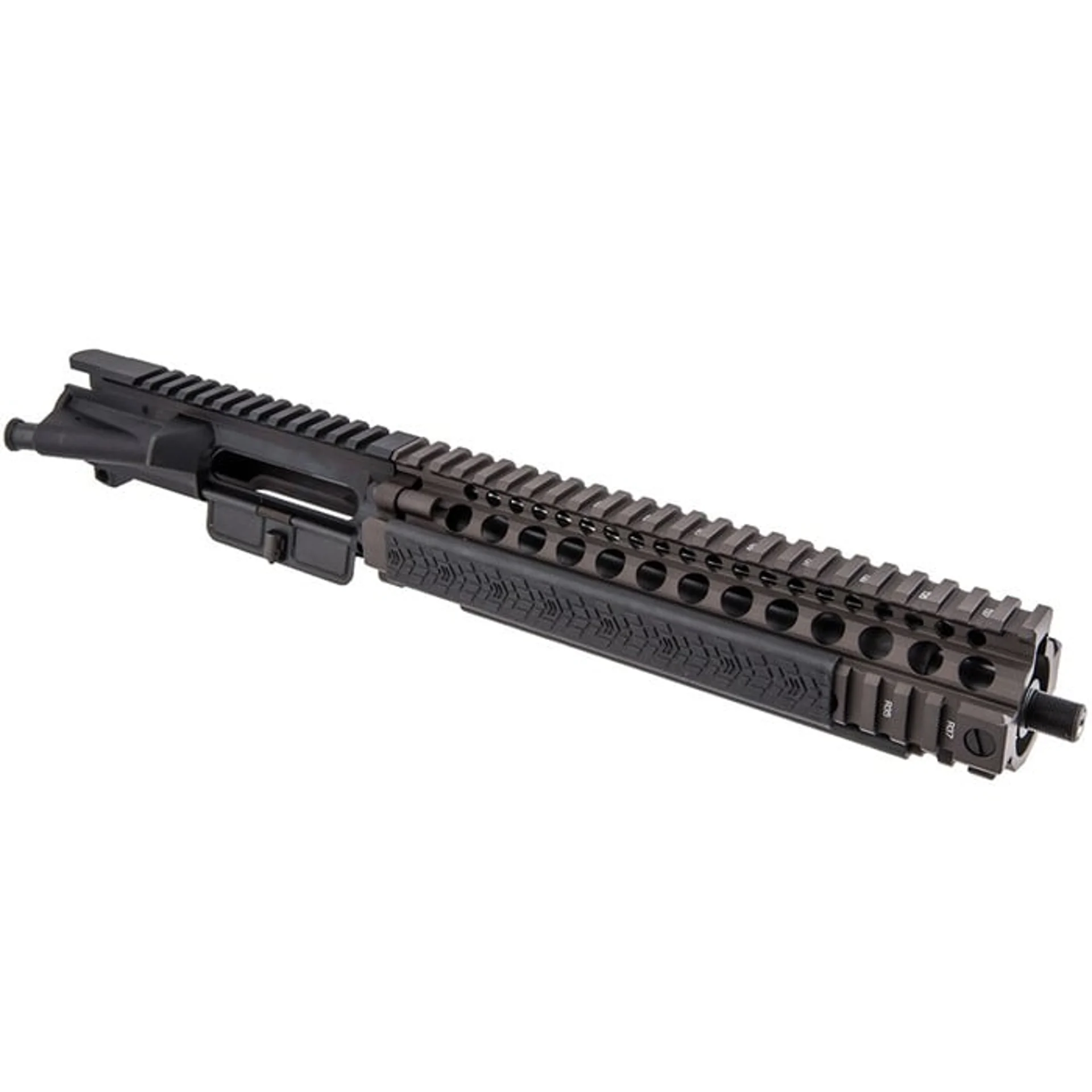
And if you want to save a bit of dough or you already have an AR pistol lower lying around, DD sells the MK18 upper on its own.

Or save some (a lot of) money and get it without the BCG and charging handle.
| Daniel Defense MK18 | Score | Note |
|---|---|---|
| Reliability | 9/10 | 8,000+ rounds reliable, mostly full-auto suppressed |
| Accuracy | 7/10 | No problems hitting steel and torso targets |
| Ergonomics | 8/10 | DD grip works great for close quarters |
| Customization | 10/10 | Picatinny all-around |
| Value | 8/10 | Now around $2300 |
| Overall | 9.2/10 | Best AR-15 Pistol |
Check out our MK18 full review where we run it suppressed on a full-auto receiver!
Looking for more on shorter barreled ARs? Check out our Best AR-15 Pistols standalone article.
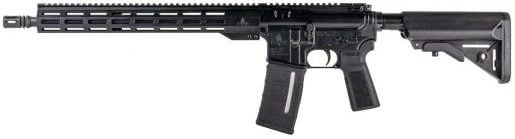
9. IWI Zion 15 - Best $1000 AR-15
Tested: 1,200 rounds with only one stoppage at the beginning. 1 MOA with match ammo.
Pros
- Reasonably priced
- Great QC
- Quality parts
- Good furniture
Cons
- Mil-spec trigger
- Mil-spec charging handle
- Hard to keep in stock
Specs
- Caliber: 5.56 NATO
- Barrel Length: 16”
- Overall Length: 33” – 36.25”
- Weight: 6.9 lbs
- Gas System: Direct-impingement, mid-length
Why We Love It
Israel Weapons Industries (IWI) was a slightly unexpected late entrant into the world of AR-15s.
These are no-frills rifles that are built with quality parts, and equally important, good quality control. While there isn't anything extra special about these, we feel like they picked the right set of features to go with.
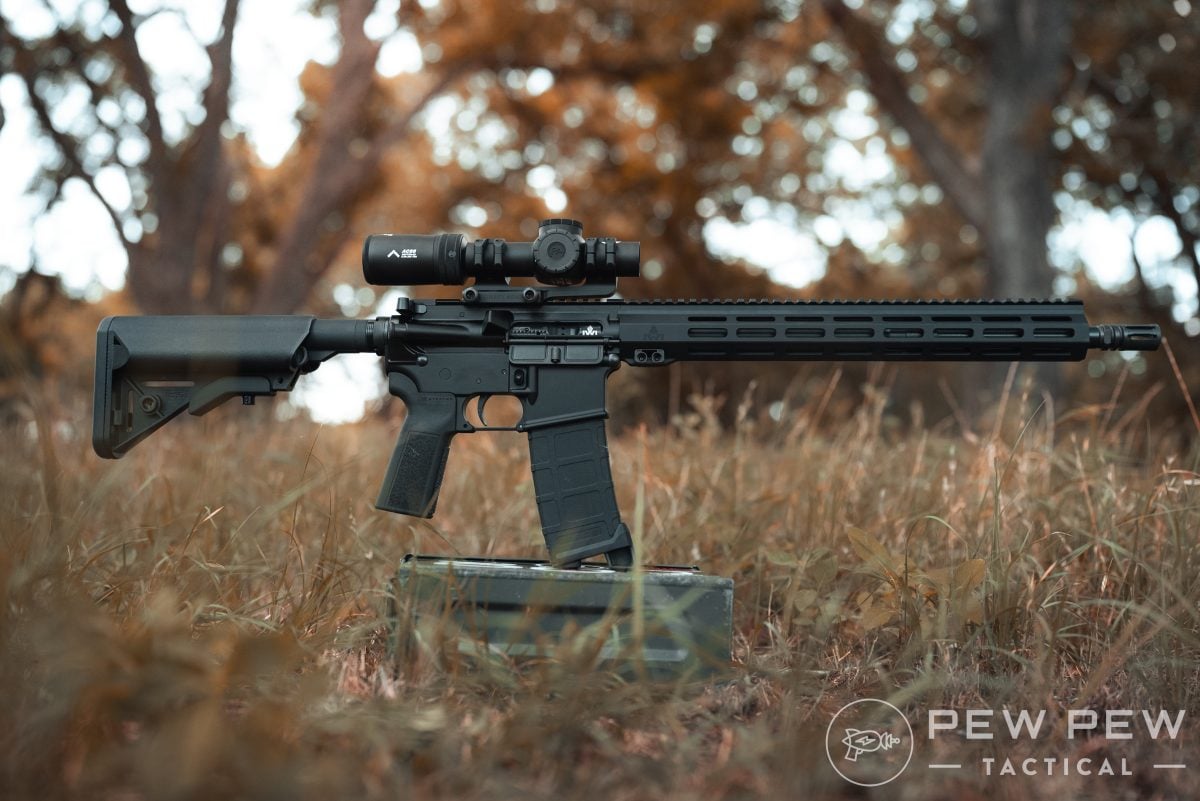
A 1:8 twist chrome-moly nitride-treated barrel ensures you can use pretty much all grains of 5.56 ammo with no stability issues. The mid-length gas system gives you a soft recoil impulse while maintaining a high degree of reliability.
Furniture-wise, you are all set with an excellent B5 Systems stock and grip, as well as a nice free-floated full-length M-LOK rail.
They do save some money by only running the standard mil-spec trigger and charging handle, but these parts are easily upgradeable if desired.
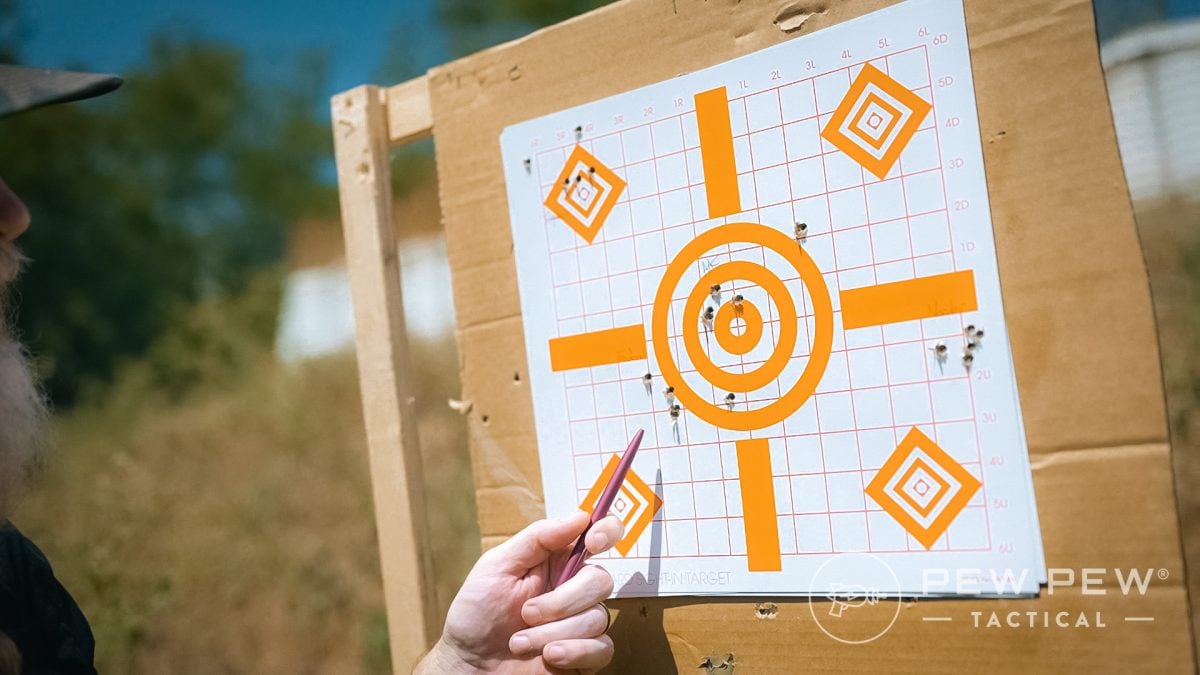
Shooting a mix of 55gr range ammo and 69/77gr match grade ammo, we saw groups from just under 1 MOA up to 2 MOA.
Very respectable for this price range.
We had one 10-round PMAG that wouldn't lock back at the beginning of testing. But the Zion has been flawless since across different mags and ammo.
For a price of around $1000, you are getting a legitimate duty rifle with good furniture and excellent reliability.
Many people consider these to be the best pre-built AR-15s under $1000, and we tend to agree.
| IWI Zion 15 | Score | Note |
|---|---|---|
| Reliability | 9/10 | One issue at the beginning of 1,200 rounds; flawless since |
| Accuracy | 8/10 | 1-2 MOA depending on ammo |
| Ergonomics | 8/10 | B5 furniture makes it great |
| Customization | 10/10 | Picatinny & M-LOK |
| Value | 9/10 | Around $1000 |
| Overall | 8.8/10 | Best $1000 AR-15 |
Check out our full review here as well as our video:
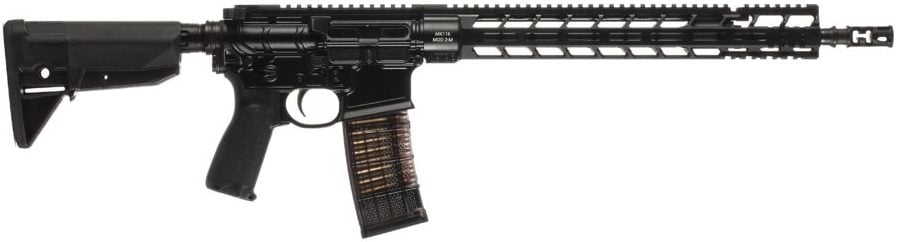
10. Primary Weapons Systems (PWS) MK116 MOD 2-M - Best Piston AR-15
Tested: 1,500 rounds with no stoppages and shot around 1 MOA with range ammo.
Pros
- Sub-MOA accuracy guarantee
- Adjustable gas block
- Excellent suppressor host
- Ambidextrous lower
Cons
- Expensive
- Mediocre trigger
- Hard to keep in stock
Specs
- Caliber: .223 Wylde (5.56 NATO/.223 Rem)
- Barrel Length: 16.1”
- Overall Length: 32.75” – 36.25”
- Weight: 6.8 lbs
- Gas System: Long-Stroke Piston
Why We Love It
Let's switch it up a little here...
Primary Weapons System (PWS) differs from other manufacturers in that they don't use the traditional direct-impingement operating system found in most standard AR-15s.
Instead, they use a gas piston system.
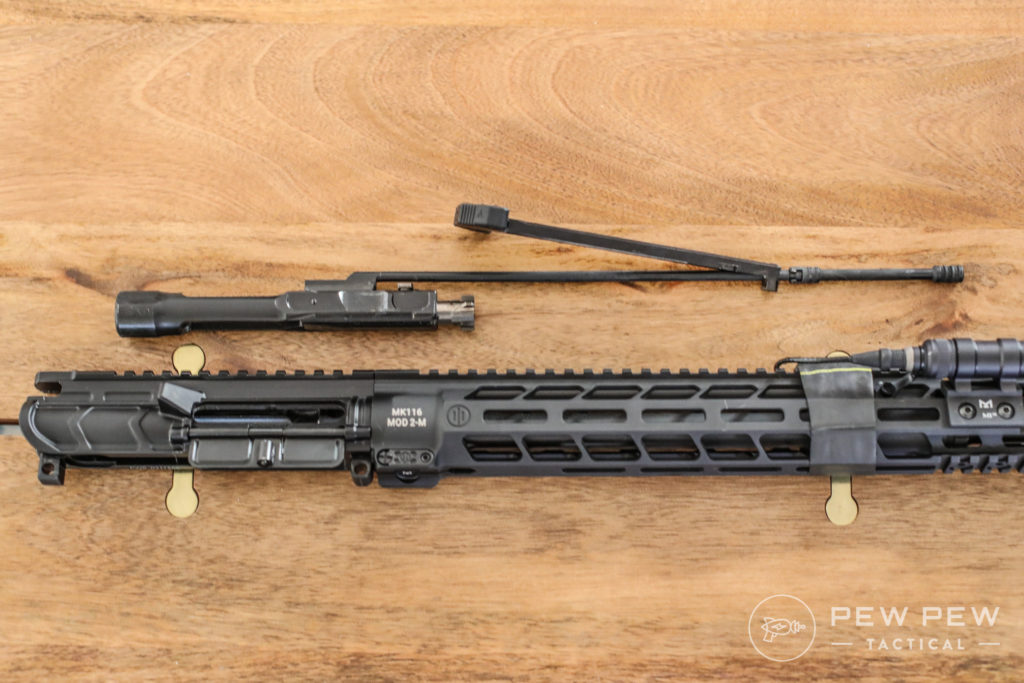
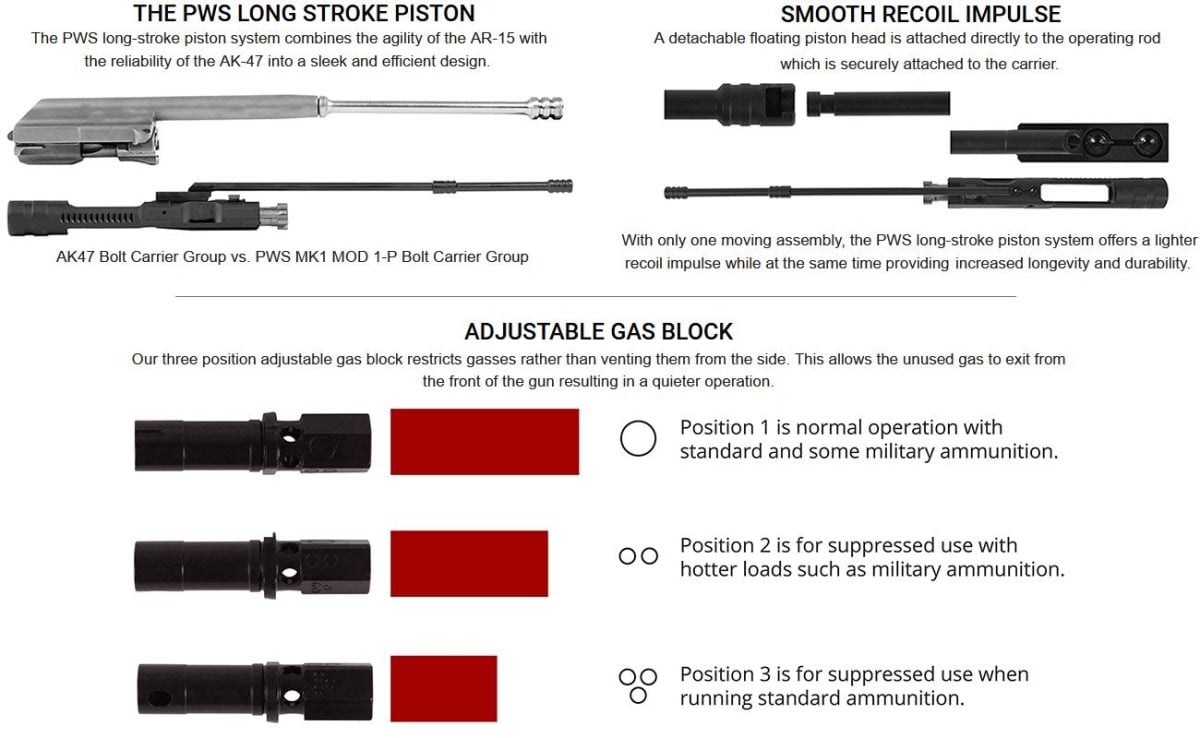
Not only that, they are one of the only AR manufacturers to use a long-stroke gas piston (think AK-47), whereas most piston ARs use short stroke systems.
Long-stroke piston systems are generally more reliable and more robust, usually at the cost of a slightly increased recoil impulse. However, the 5.56 NATO round doesn't recoil all that much, and PWS finely tunes their guns to have a smooth and soft recoil impulse.
We found this to be very true through our 1500 round count.
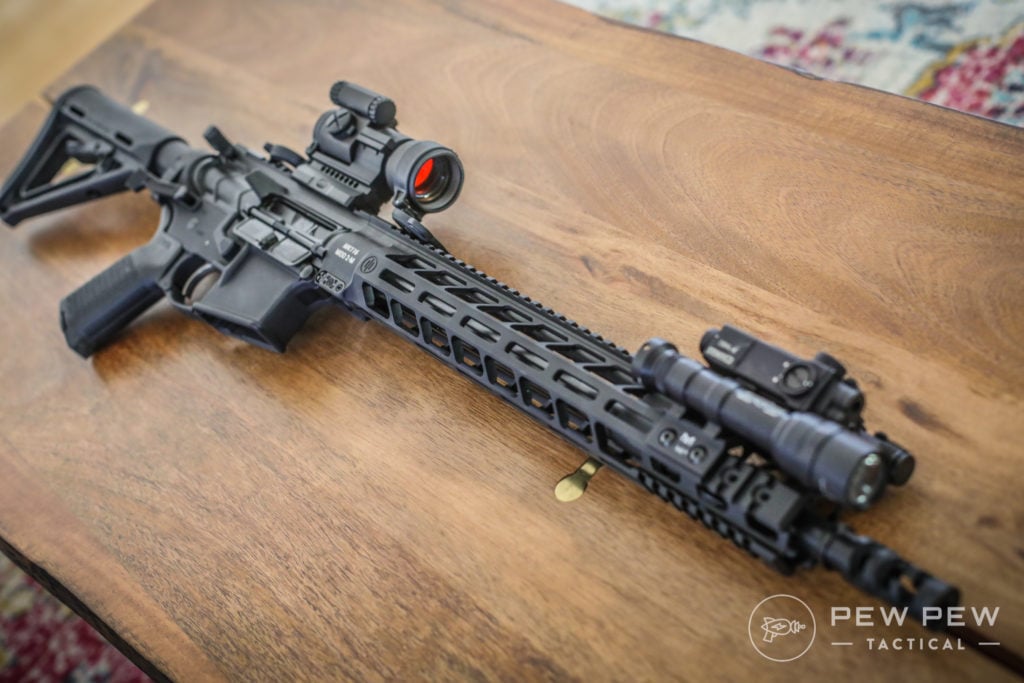
The PWS MK116 MOD 2-M is packed full of awesome features that make it one of our favorite rifles.
First off is the excellent 16.1" 1:8 twist barrel made in-house. PWS is one of the few AR manufacturers that guarantees sub-MOA accuracy out of their rifles. These things shoot lights out.
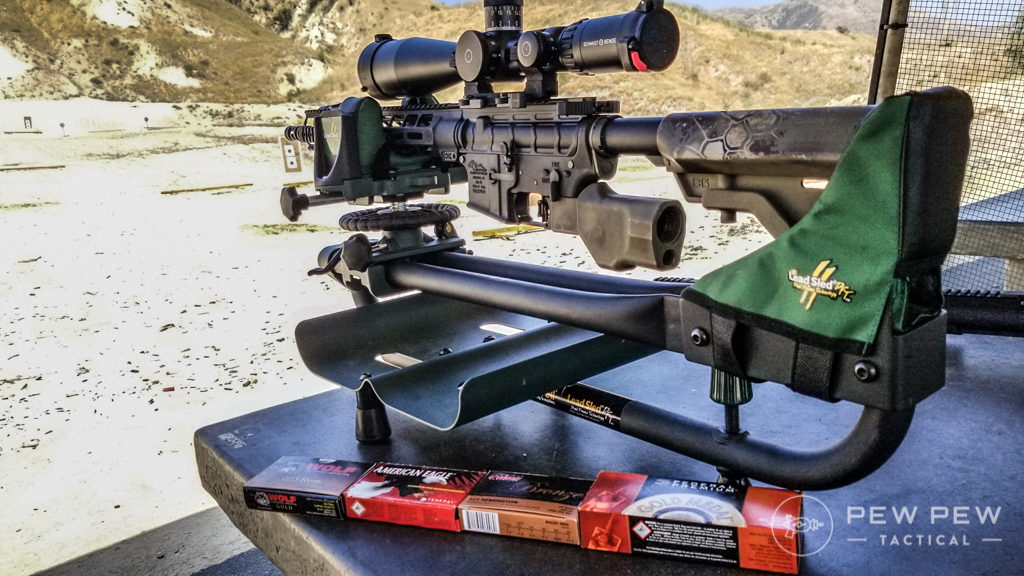
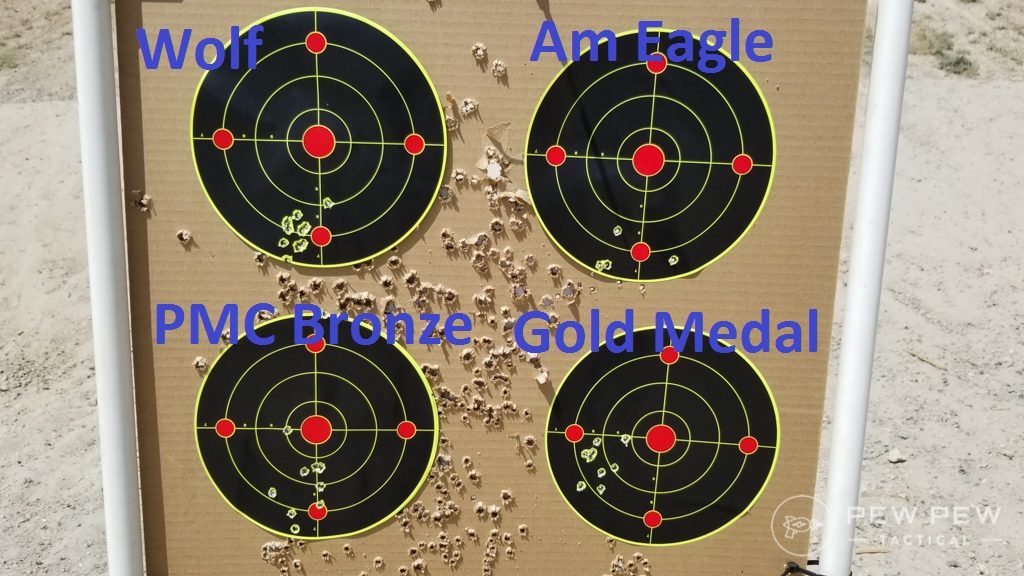
We shot ours on a lead sled and accuracy was a mixed-bag...the match ammo didn't shine but cheap Wolf Gold actually shot the best at just over 1 MOA.
The upper and lower are forged 7075 aluminum, with the lower having complete ambidextrous controls. Their unique PicLok handguard seamlessly combines both M-LOK and Picatinny mounting surfaces while maintaining a uniform width.
Other goodies include a sweet ratchet-locking buffer tube (no staking needed), Magpul furniture, FRC 2-port compensator, and a Radian Raptor extended charging handle.
If you are looking to run suppressed, these may very well be the best guns on the market for that. The piston system runs cool, clean, and keeps much of the gas away from your face.
An easily-accessible three-position adjustable gas block ensures that you can tune your rifle to run reliably with or without a suppressor.
Enough rambling from us, though. These guns are awesome, and they are amazing when suppressed. If you have the cash, buy one; you won't be disappointed.
| PWS MK116 MOD2-M | Score | Note |
|---|---|---|
| Reliability | 10/10 | As of Summer 2026, 1500 flawless rounds |
| Accuracy | 8/10 | Not sub-moa but shot best with cheap ammo |
| Ergonomics | 9/10 | Feels great even though slightly front heavy |
| Customization | 10/10 | Picatinny on the upper; PicLok on the handguard |
| Value | 7/10 | Around $2000 for complete; $1500 upper |
| Overall | 8.8/10 | Best Piston AR-15 |
Peep our full review of the PWS MK116 MOD-2M.
Full Testing Methodology
Reliability & Accuracy
Every review rifle undergoes a strict testing protocol that requires a minimum of 1,000 rounds of practice ammo and heavier match-grade and defensive ammo at 50 and 100 yards with a 5-25x scope unless otherwise noted. Most are 2,500+ rounds.
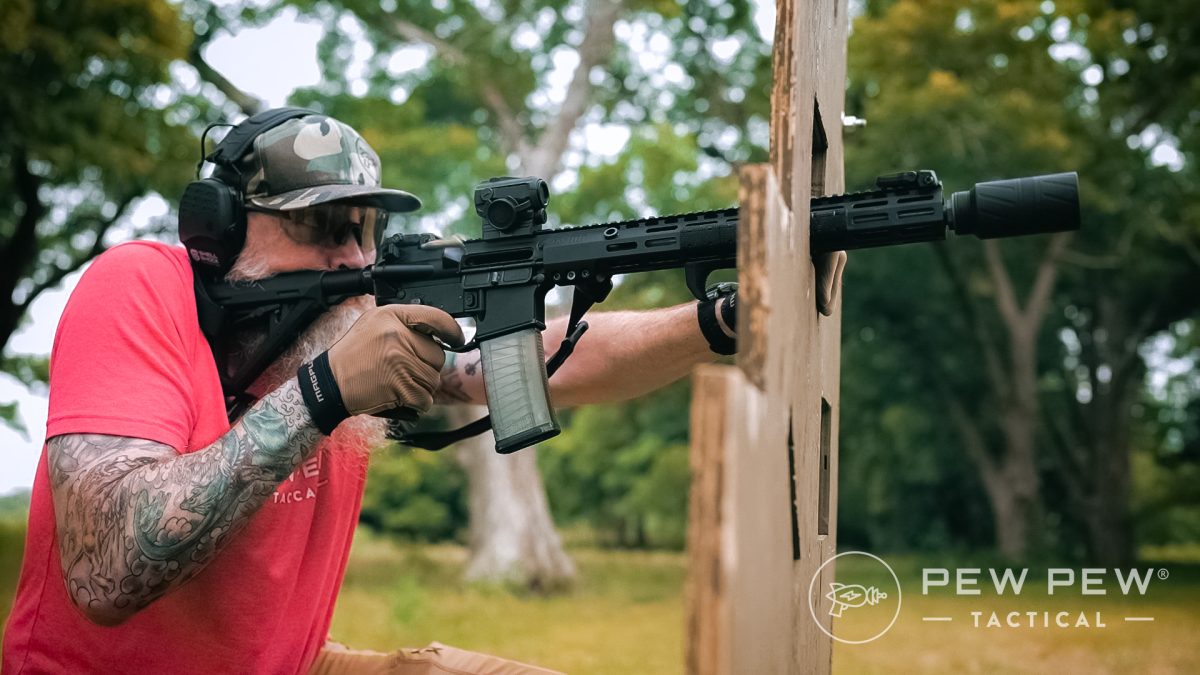
Scopes are zeroed and confirmed prior to testing. For testing, we fire 10 total five-round groups from 50 to 100 yards and record groups with a digital caliper.
All AR-15s were tested with at least three different magazine types to assess compatibility, and we use a digital trigger gauge to measure average trigger pull.
Ergonomics
We prefer to have at least 2 team members or friends/family of different body types assess ergonomics to make sure that it works comfortably for most people.
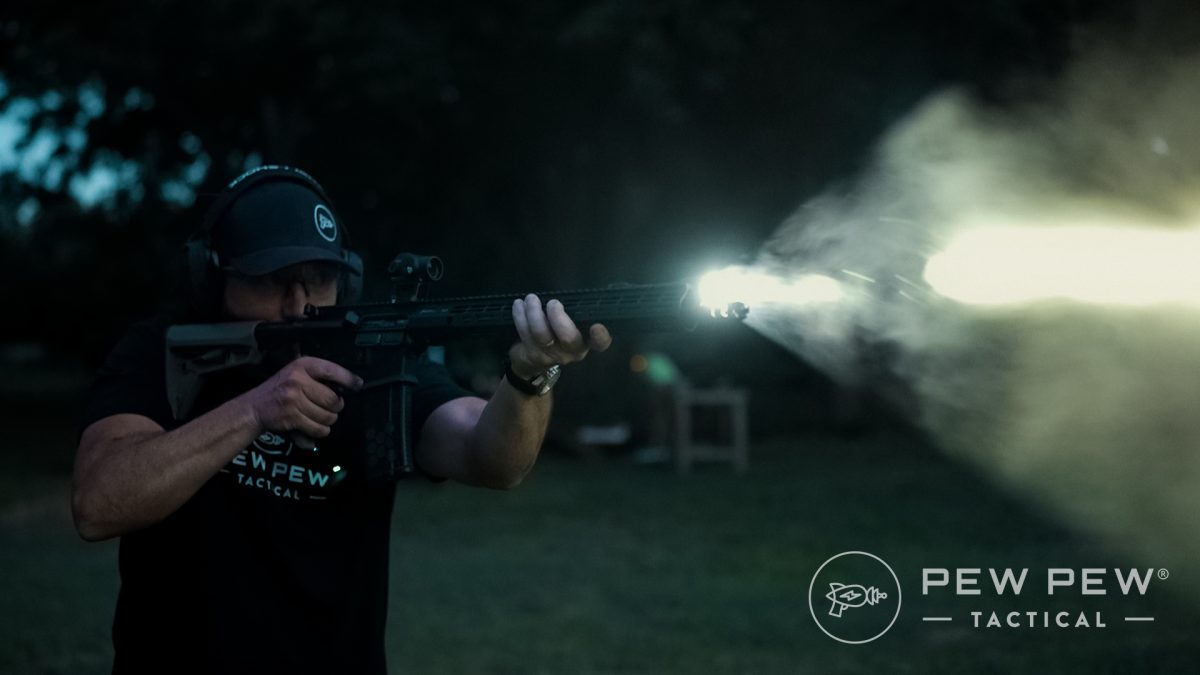
Ergonomics testing includes looking at the stock's fit and overall comfort. We also activate all controls and assess how easy they are to reach and engage. Finally, we note any other features that might impact the comfort or usability of the AR-15. We also look for any discomfort or hot spots while shooting.
In addition to comfort, we also evaluate recoil impulse, trigger feel and weight, and reloading ease.
Value

We balance specs and features against the cost of the rifle to determine whether we feel it's a good value or not. When determining cost, we average the street price at a few retailers, then weigh that against the features and performance.
We also look at competitors to see how the specific AR-15 stacks up when it comes to cost vs. features.
Meet the Experts
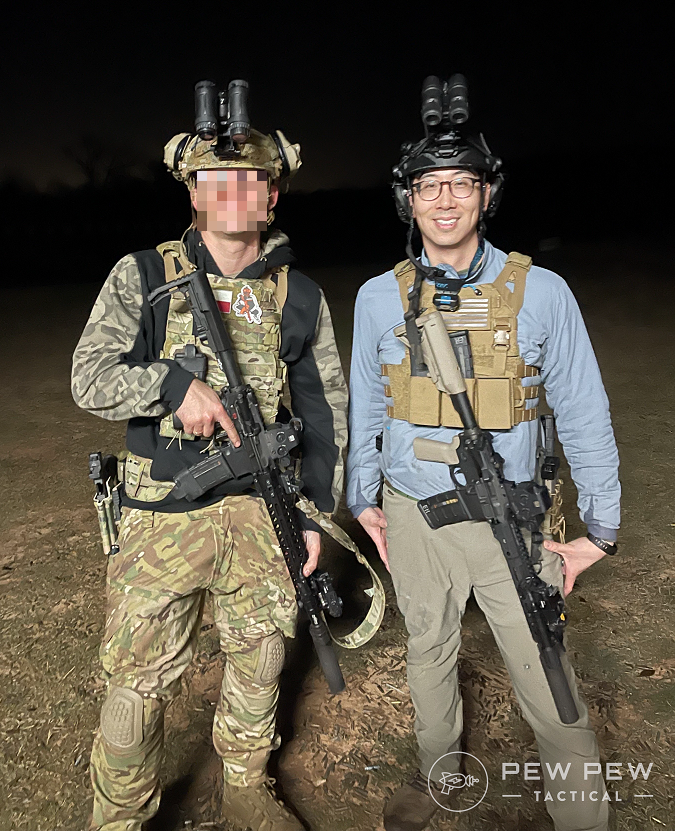
Pew Pew Tactical Founder & CEO, Eric Hung, wrote the majority of this article with input from the PPT staff. Eric owns dozens of AR-15s in my personal collection, has built dozens more for himself and friends, and fired 100,000+ rounds through almost every single variety of AR-15 over the past decade.
Eric is a USCCA-certified AR-15 instructor, NRA-certified pistol instructor, and a USPSA/3-Gun/NRL22 competitor.
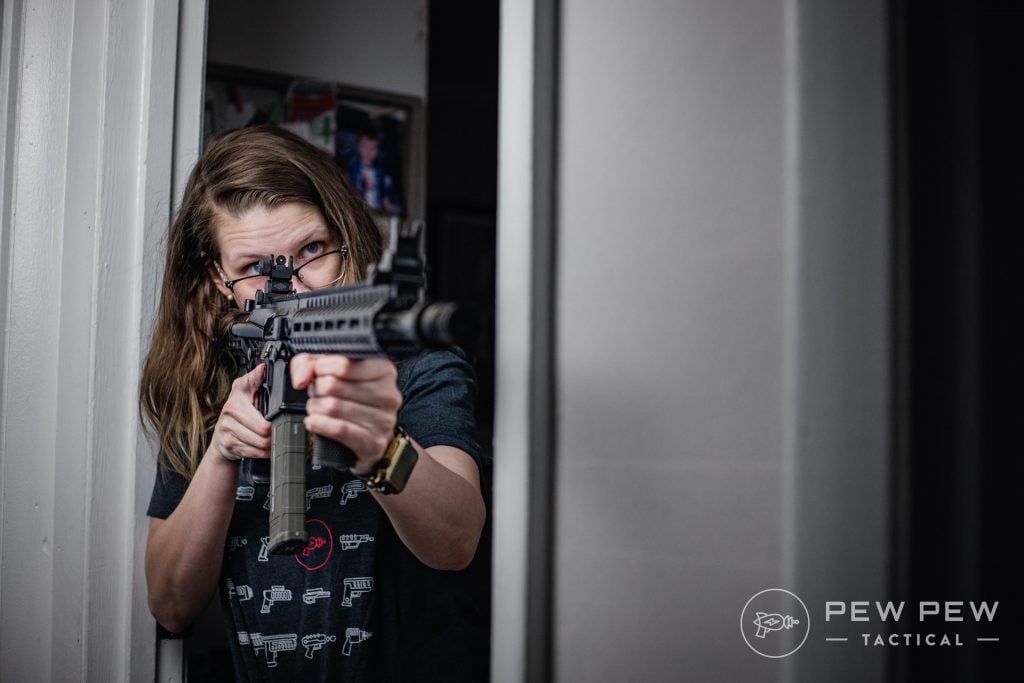
Editor-in-Chief Jacki Billings runs our experienced team of writers and edited this article. She is an NRA-certified Basic Pistol Instructor as well as a member of the Society of Professional Journalists, ACES: Society for Editing, and the Professional Outdoor Media Association. Jacki has a bachelor’s degree in journalism and has worked as a media professional for close to 20 years, specializing in gun media for almost 10 years. With 2,000+ articles to her name, she uses her professional journalism and editing experience to set testing protocols and editorial standards for Pew Pew Tactical.
Final Thoughts
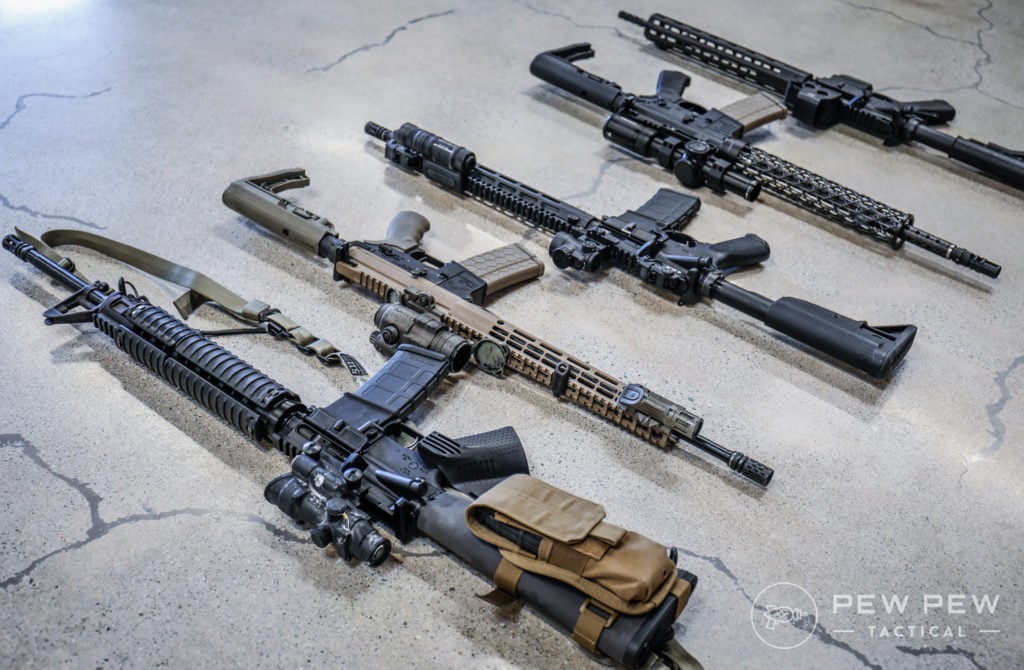
I know we've gone over a lot, and your journey to getting an AR-15 has just begun. So think of all the criteria you want (including price point) and start looking.
A great place to read next is our AR-15 Parts Explained which guides you through the different parts and how they work together.
And once you do get one, let me know how it runs, and then check out the rest of the AR-15 Definitive Guides. For more rifle goodness, head to our round-up of the Best Rifles!
FAQ
Latest Updates
- October 2026: Moved AR-15 parts explanation to its own post. General cleanup.
- September 2026: Added new Editor's Pick, added more data after Summer 2026 testing.
- April 2026: Moved sections around and updated information.
- January 2026: Updated testing round count, order, pricing, and new experiences.
- September 2025: Added Springfield Saint Victor V2. Updated various sections, rankings, & categories.
- June 2025: Removed Colt LE6920, Lead Star Arms Grunt 16, Faxon Ion, Smith & Wesson Sport III, Aero EPC-9, Aero M4E1 builds, Stag Arms 15-L. Added Geissele Super Duty, PWS MK116 MOD 2-M, IWI Zion-15, & Andro Corp ACI-15. Removed and updated various sections.
- November 2024: Removed FN 15 Patrol Carbine (discontinued) and Smith & Wesson Sport II. Added Smith & Wesson Sport III.