
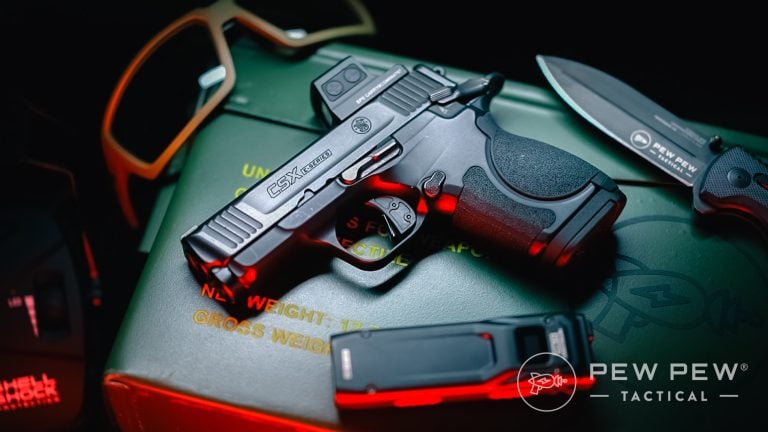
Smith and Wesson CSX E-Series
Pros
- Flexible grip size
- Multiple capacity magazines included
- Low deck height optic mount
- Crisp trigger
Cons
- Loses rear sight with optic installation
- Slide bite on my thumb with proper grip
- Trigger press somewhat heavy compared to other 1911 handguns
The Bottom Line
Smith & Wesson's CSX E-Series is a strong contender for the best micro-1911 pistol ever made.
The 1911 is a beloved platform, but it’s always kinda lacked in the size + capacity department.
Smith & Wesson looks to challenge that, though, with the introduction of the CSX E series. This micro platform pistol boasts the 1911 vibe but with a larger capacity, making it an appealing option for those who don’t want to sacrifice size for more rounds.

But does the Smith and Wesson CSX E have what it takes to solidify itself as the King of Micro-Sized 1911 Pistols?
I took the CSX E for a test drive at the range to see how it stacks up against other micro compacts. In this review, I will cover its specs, features, range performance, and overall worthiness of your concealed carry holster.

So keep reading!
Table of Contents
Loading…

Prices accurate at time of writing
Prices accurate at time of writing
-
25% off all OAKLEY products - OAKLEY25
Copied! Visit Merchant
Specs & Features
Specs
- Caliber: 9mm Luger
- Action: Single Action
- Barrel Length: 3.1″
- Overall Length: 6.1″
- Weight: 19.7 oz
- Capacity: 12,15,17
- Safety: Thumb
Features
- Modular grip adapter
- Optics Ready – Modified RMS-C/507K optic footprint
- 12, 15, 17-round mags and adapters included
Background
Ever since the original 1911 was released, companies have attempted ad nauseam to make a smaller, more easily concealed version.
Starting with offerings of the original 1911 in Commander and officer sizes, companies like Sig Sauer took things to the next level with the P238 and P938 — the first true baby 1911s.
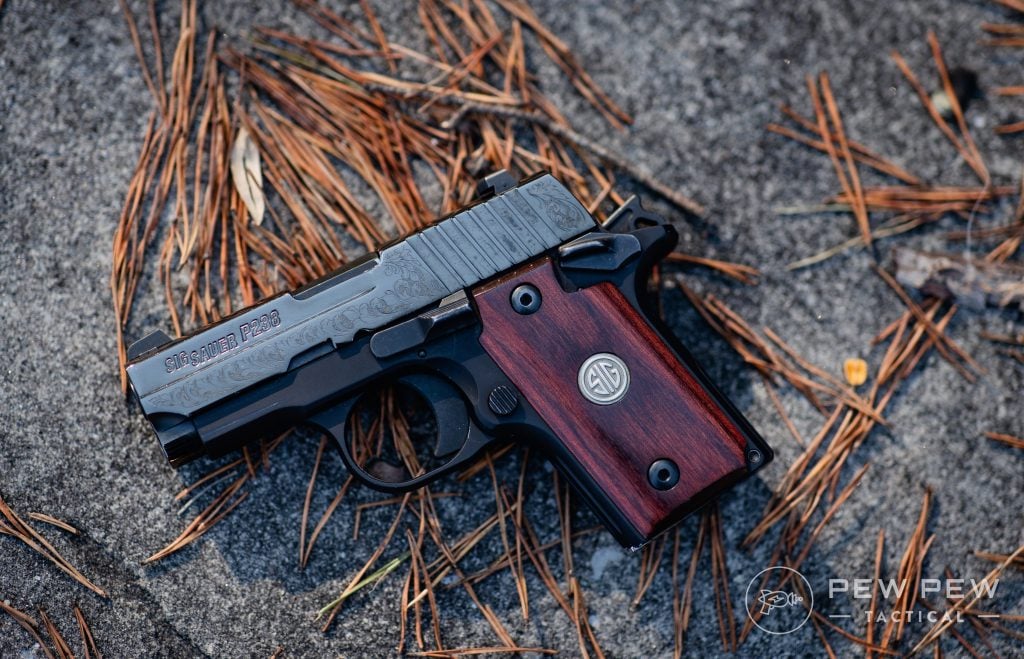
While relatively popular in their time, the low capacity of these guns in the age of high-capacity micro 9mms began to render them obsolete.
Smith and Wesson saw the gap in the market for a micro, high-capacity 1911-style handgun and released the original CSX in 2022. As with any new design, there were hiccups with the pistol, and it was not received incredibly well by the 1911 and concealed carry communities.

Instead of scrapping the project, S&W went back to the drawing board to address many of the concerns with the original CSX, releasing the CSX E series.
Featuring both the micro 3.1-inch barrel and 3.7-inch barrel versions, the CSX went from a swing and miss to a popular, concealed carry size 1911 handgun.

Shooting the Smith & Wesson CSX E Series
Over the course of multiple range sessions, I fired roughly 500 rounds through the gun.
To get a holistic understanding of its performance, I ran drills from concealment with two hands, strong hand only, and weak hand only.

Like any other non-compensated micro compact 9mm, the CSX has a somewhat sharp recoil impulse. That said, due to the excellent ergonomics and grip texturing, I was able to hang onto the gun during rapid strings of fire like the bill drill and modified MXAD drill on steel.
From a distance of 25 yards, I had no issue whatsoever running the CSX at an acceptable level of performance for a carry gun.
When I began testing the gun, I was somewhat apprehensive about the manual safety. Bring a carry gun safety, it sits very flush to the slide to prevent snagging and discomfort against the body.
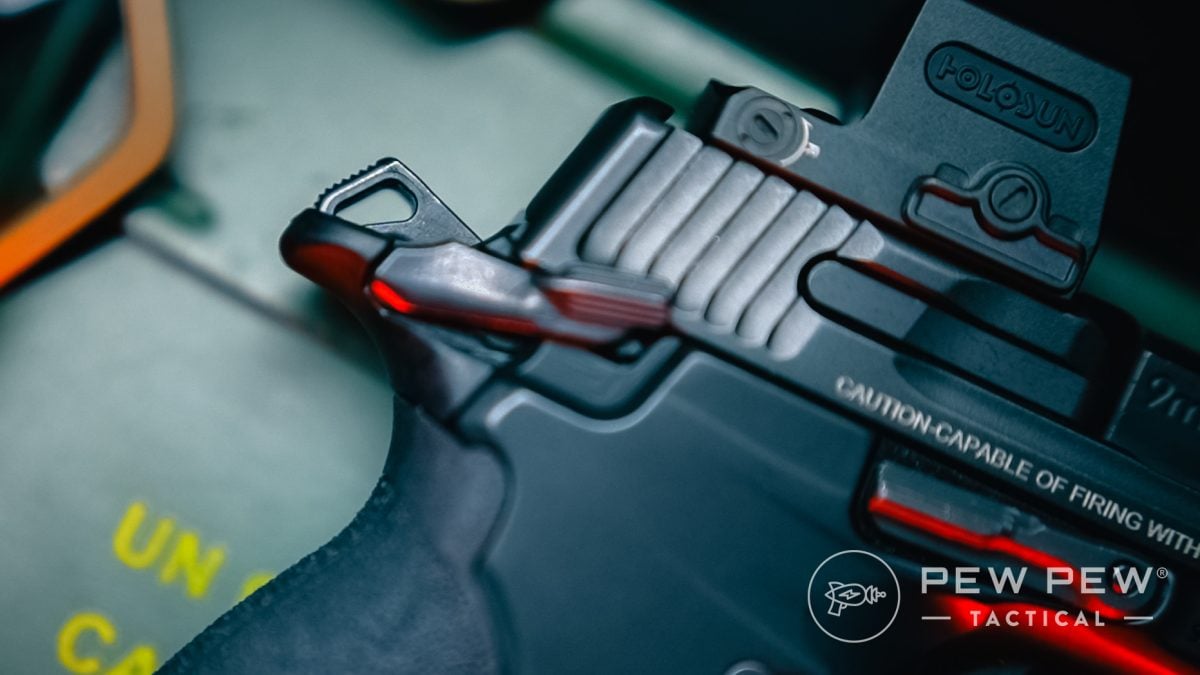
Over the multiple range seasons and copious dryfire reps, I noticed the safety naturally was swept off with the building of my firing grip from concealment. Seeing as I’m used to mainly striker-fired guns, the transition to a hammer-fired single-action setup requires a fair amount of dry reps to become ingrained.
As mentioned above, the CSX E ran well and consistently for me out to 25 yards. I began to attempt to shoot the gun at farther distances and struggled to make consistent first-round impacts at 40+ yards.
I typically hold myself to a guaranteed single round impact at 40-50y on a C-Zone steel in under 3 seconds from concealment as a benchmark for my distance shooting performance. I was unable to meet this standard with the CSX.
While not wholly the fault of the gun, the stiff and heavy trigger made it more difficult for me, even when compared to my stock Glock 43X.
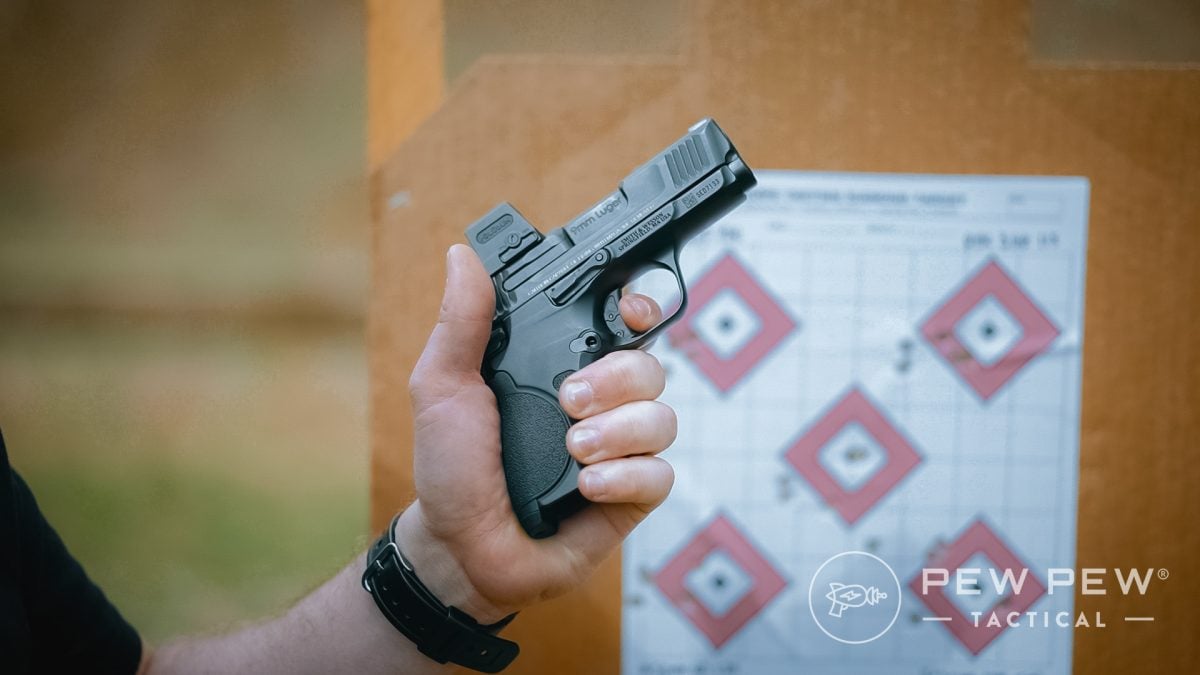
I was hoping the single-action trigger would be advantageous at distance, but unfortunately was not the case for me.
While this certainly will not affect everyone, I also experienced a significant amount of thumb slide bite while shooting this gun.
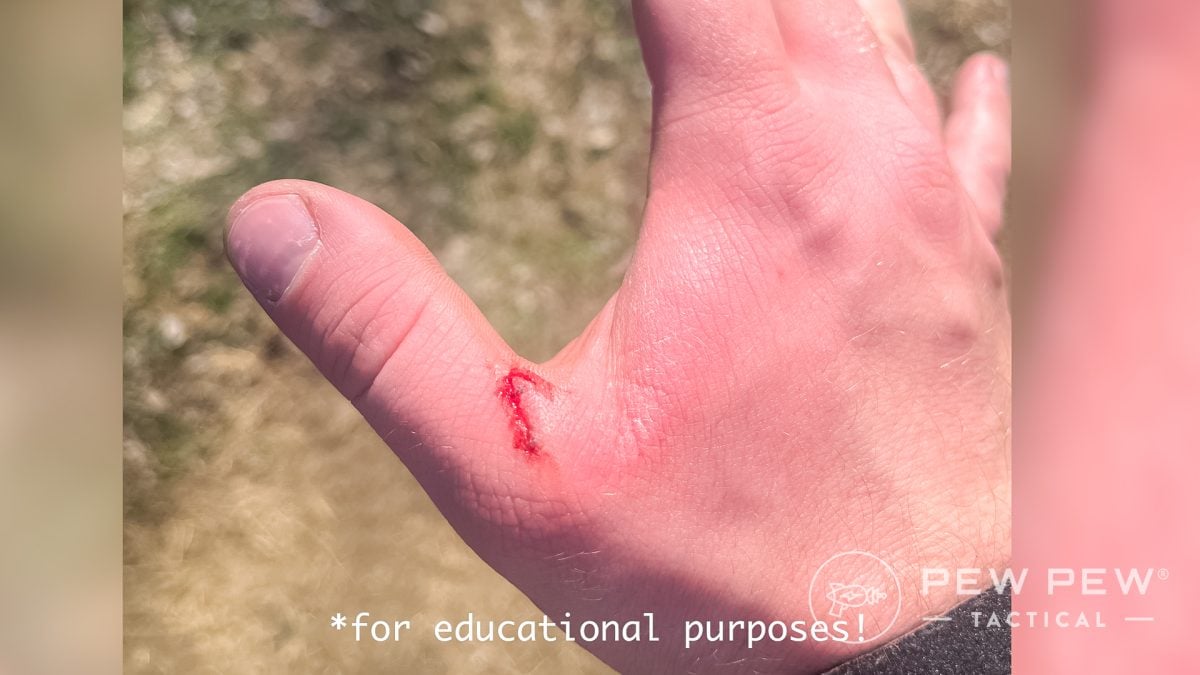
In order to complete this review, I had to cover my thumbs with multiple layers of tape and replace them frequently to give the gun the best shooting performance in my hands possible.
In complete transparency, the pain and some apprehension from the consistent slide bite probably affected my performance at distance, so your results may vary.
Accuracy
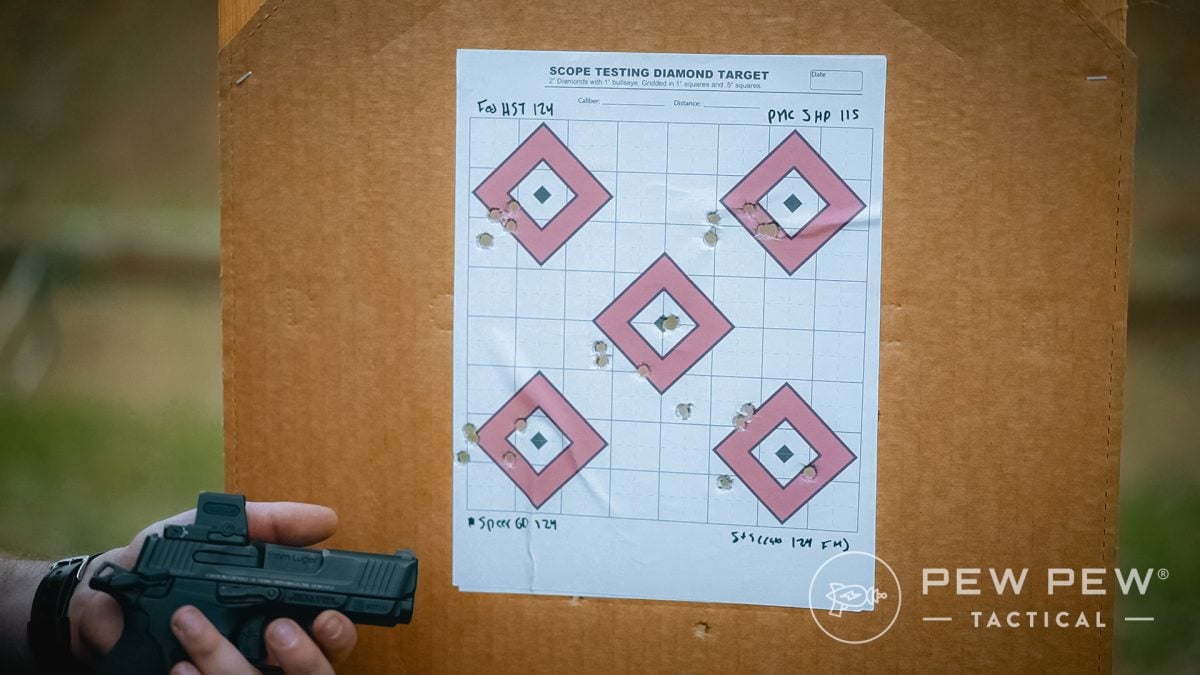
To test and to remove as much of the shooter error as possible, a Ransom Rest with a tripod was set up at a distance of 7 yards.
Ammunition included Federal HST 124g, PMC JHP 115g, Speer Gold Dot 124g, and Staccato FMJ 124g. For each ammunition type, I fired a total of five rounds.
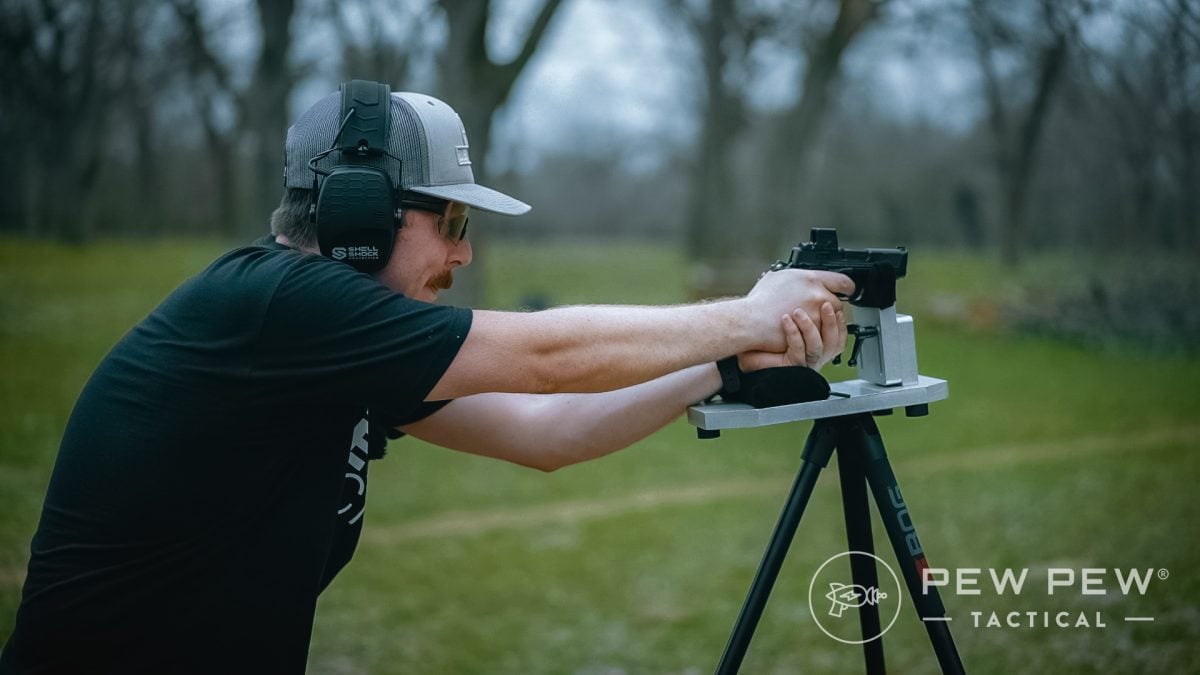
Accuracy results were mediocre with all types listed, with each producing greater than a 1-inch group. That is substandard for the majority of 9mm handguns I’ve fired.
The somewhat worrisome mechanical accuracy of the gun, combined with the heavy trigger, probably contributed to the difficulty I had shooting the gun past 40 yards.
That said, for a realistic defensive context for most people, the accuracy on the CSX E will be just fine.
9mm Ammo in Stock
Reliability
Over the 500+ rounds fired through the CSX E, I experienced 0 malfunctions.
To ensure reliability in a defensive context, I ran popular hollow point options, which all fed and worked flawlessly with the gun.

Smith and Wesson includes sleeves for the extended length magazines included, which aids in a better grip and doubles to prevent magazine over insertion
Ergonomics: Fit & Feel
It’s worth mentioning again that I experienced a significant amount of thumb slide bite.

This is not a new problem for me — my two most carried guns, the Glock 43x and Bodyguard 2.0 Carry Comp, both slice my thumb to bits the same way the CSX does in their stock configuration. I have to run aftermarket beavertails to make them shootable without injuring me.
Texture

Texture is a very subjective and personal decision for the concealed carrier. The CSX E features removable and varying-sized backstraps that include an excellent sandpaper-type texture.

As I say in most of my handgun reviews, I wish the texturing were included higher up on the frame of the pistol to allow for more traction in the support hand thumb, but we take what we can get.
Slide

Moving up from the grip, the CSX E comes optics-ready from the factory.
In order to install an optic, you have to remove the rear sight, which will be a negative for certain users. I actually appreciate this feature, as it allows the optic to ride farther back on the slide and doesn’t get in the way of the belt with concealed carry.

Many optics, such as the Holosun EPS Carry, have an integrated mini rear sight built into them, so if the battery dies or loses connection, you still have a backup iron sight set for use at close-moderate distances.
Room for Improvement
The trigger on the CSX E is somewhat of a letdown for me. I was really hoping for a true 1911 weight trigger between 3.5-4.5 pounds with a crisp break.

While the CSX certainly offers a crisp trigger break, it is heavier than I would like.
Maybe aftermarket options will allow for the reduction of the trigger weight, which would significantly increase the usability of the handgun at distance and precision, but in its current form adds too much resistance for my tastes.
Certain users may appreciate a heavy, crisp trigger, and if so, you will be thoroughly content with the CSX E trigger.

Who Is the CSX E For?
I know there is a certain demographic of concealed carriers that the CSX E scratches a desperate itch for. Specifically, those wanting to carry a 1911-style gun but not wanting to sacrifice capacity & concealability.

Boasting the 12+1 base capacity, optics-ready slice, and SAO trigger, those who like a 1911-style gun but want high capacity in a small package are going to love the CSX E.
This gun is the perfect solution for a niche of concealed carriers that simply did not exist in the last 10 years.

By the Numbers
Ergonomics: 5/5
Though I endured a little slide bite, overall, the CSX E felt good in the hand.
Accuracy: 3/5
The CSX E’s groups were disappointing, and this is not a gun you can shoot long distances accurately.
Reliability: 5/5
No malfunctions or issues while shooting.
Customization: 4/5
Between holsters and red dots, you should be set.
Value: 4/5
The price point will be appealing for those who want a small gun + larger capacity.
Overall: 4.5/5
Prices accurate at time of writing
Prices accurate at time of writing
-
25% off all OAKLEY products - OAKLEY25
Copied! Visit Merchant
Upgrades & Accessories
I used a Holosun EPS Carry for this review, and it paired well with CSX E.

Prices accurate at time of writing
Prices accurate at time of writing
-
25% off all OAKLEY products - OAKLEY25
Copied! Visit Merchant
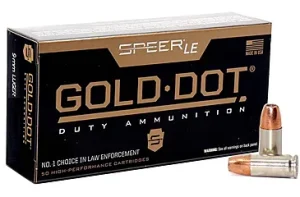
Don’t forget to grab some ammo while you’re shopping.
Prices accurate at time of writing
Prices accurate at time of writing
-
25% off all OAKLEY products - OAKLEY25
Copied! Visit Merchant
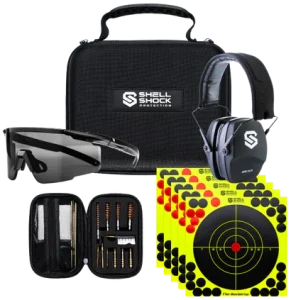
Our very own ShellShock Protection has a great starter kit with everything you need for the range.
Prices accurate at time of writing
Prices accurate at time of writing
-
25% off all OAKLEY products - OAKLEY25
Copied! Visit Merchant
Final Verdict
Though the trigger leaves a lot on the table and the slide bite left me bleeding, the CSX E series fills a niche void in the concealed carry market.

Those who want a small gun that offers great capacity backed by a large, well-renowned manufacturer will be pleased with the Smith & Wesson CSX E.
What do you think of the CSX E? Let us know in the comments below. For more small concealed carry options, check out our guide to the Best Micro Compact 9mm Handguns.
How We Tested the Smith & Wesson CSX E-Series
To evaluate the Smith & Wesson CSX E-Series, we fired roughly 500 rounds through it from 7 yards out to 40-50 yards.

A Ransom Rest was used to remove shooter error during accuracy assessment. We tested the gun with different ammunition varieties at 7 yards, including:
- Federal HST 124gr
- PMC JHP 115gr
- Speer Gold Dot 124gr
- Staccato FMJ 124gr
We kept groups to five rounds for accurate group measurement. For distance, we pushed out to 40-50 yards, drawing from concealment within 3 seconds — our benchmark for concealed carry guns.

We ran drills from concealment using two hands, strong-hand-only, and weak-hand-only grips to assess recoil and realistic defensive scenarios. Additionally, we ran the Bill and modified MXAD drill to evaluate the gun’s performance during rapid fire.
Meet the Experts

Behind the testing is freelance author Preston Hughes, a former emergency room and trauma RN with plenty of shooting experience. He attended the North Texas Police Academy before having to leave due to a shoulder injury. Preston is a competition shooter and the owner of the Citizen Response channel on YouTube. His expertise lies in pistols, concealed carry, and competition shooting. He has extensive experience with compact and concealed carry style pistols and brings that knowledge to this review.
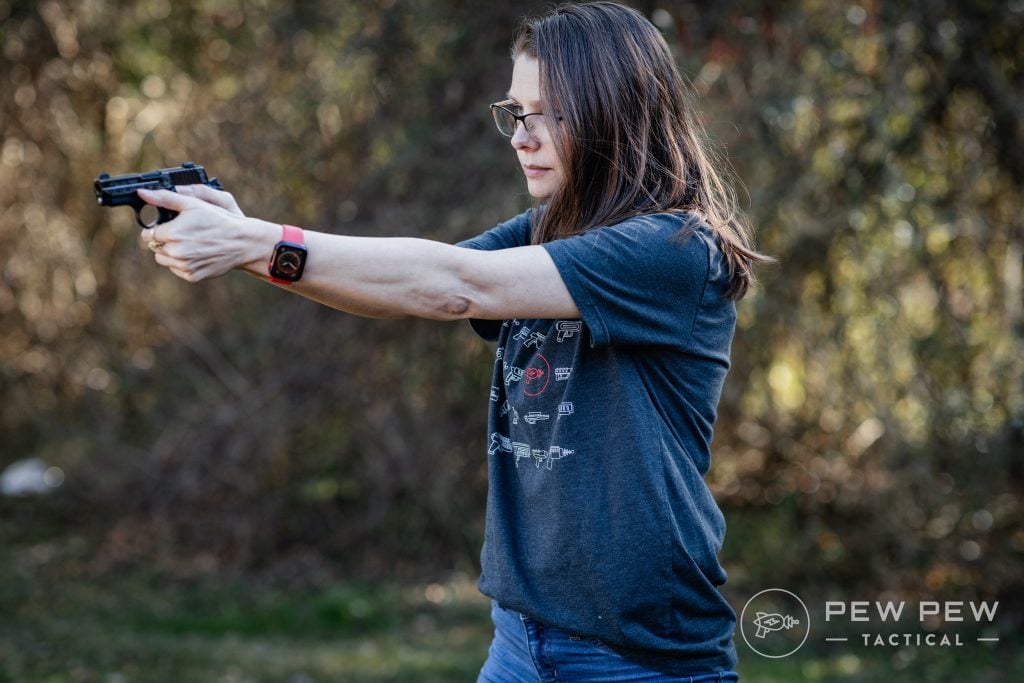
Editor-in-Chief Jacki Billings runs our experienced team of reviewers and edited this review. She is an NRA-certified Basic Pistol Instructor as well as a member of the Society of Professional Journalists, ACES: Society for Editing, and the Professional Outdoor Media Association. Jacki has a bachelor’s degree in journalism and has worked as a media professional for close to 20 years, using her professional journalism and editing experience to set testing protocols and editorial standards for Pew Pew Tactical. Jacki has extensive experience with micro compacts, owning several, such as the Sig Sauer P238.











7 Leave a Reply
Hardly a 1911 and not even .45 ACP. RIA BBR 3.10 would have fit the title much more.
Seem to remember that the Star PD back in the 80's was awfully close in spec to this S&W. While considered somewhat lower entry than other brands of the day, mine was extremely reliable, but same problem, pretty snappy recoil and blow back.
I own one, and I initially hated not being able to shoot it well. I realized it was bringing out my flaws and it forced me to work on my grip and trigger finger position. It's a snappy gun and bad form will lead to bad shot placement. Now that can shoot it well, it helped me with shooting everything else I have. Love the hammer fired micro concept, and the ability to configure the grips. I've put over 1500 rounds through it, working on shooting it better, with zero issues. I have the 3.1" but I'd recommend the 3.6" especially if you have a slight, or large gut. The grip will push out and print more against the expanded waist line.with it being so compact. 3.6" is slightly better for recoil control IMO.
Thanks for the honest review. Slide bite, heavy trigger, and mediocre accuracy are deal breakers for me. If a professional like you experiences these results, how well will an average Joe & Jill do? Not to promote any particular brand, but the Sig P365 Micro holds 12 rounds, has a narrow width, 1", no slide bite, great trigger, and is exceptionally accurate. You get extra credit for the bites with the S&W!
I have a CSX-E with the 3.1-inch barrel and have put about 250 rounds of ball ammo through it with no malfunctions. I love this gun. I carry it with the 12-round mag for maximum concealability. It is as accurate as I am at 25 feet (a range I consider reasonable for self-defense, as any action I am involved in will most likely be at this range or less). I have a Kimber Micro-9 STG, and the trigger on the CSX-E is much better than the one on the Kimber. I like both guns, but the CSX-E has twice the capacity and a better trigger. Still, I keep both in my EDC rotation. Both these guns feel good in the hand. I have smallish hands and have had absolutely no problem with slide bite with either gun. The CSX-E’s weight and stippling make it feel perfect in my hand. If I had to choose between the Kimber and the CSX-E, the CSX-E's higher capacity would win out. I am a big fan of the 1911 style gun (I have a number of 1911’s in 45 caliber and 9 mm) and am very comfortable carrying cocked and locked. And while I think the 12+ round capacity of the CSX-E is a real “pro”, I carried a Colt Detective Special (a 6-round snub-nose revolver) for years and was comfortable with 6 rounds and speed loaders for refills. So, while I love the CSX-E (great gun for sure), I still keep my lower capacity revolvers and single-stack autos in my EDC rotation.
What was the trigger weight out of the box and then what was it after break in? Most of the things I’ve read said 4.5-5 after break in. Thinking about purchasing the csx e and this review has been a great help. Thanks for the info and any other you can give on actual trigger weight.
I have the CSX E-Series with the 3.6 inch barrel and it's currently my EDC. I would first like to note that it is not a 1911, though it is 1911-like. Second, I do not get any slide bite. My hands are medium (men's L glove size). From what I've heard so far, it's generally folks with larger hands that sometimes get slide bite with this gun. It's definitely something to be aware of, but it's not something that affects everyone. Also, the trigger pull weight on mine got lighter with use/break-in.