
Best Shooting Chronographs [Hand-On Tested]
Want to level up your long range shooting? We go over how a shooting chronograph can help and our best picks from $150 to $600.
We review products independently. When you buy through links on our site, we may earn a commission to help support our testing. Learn more.
Precision science equipment isn’t the hottest of topics, but if you want the very best out of your ammo and out of your firearms -- you’ll need some fancy science.
But with chronographs ranging from $50 to $600 it can be a real gamble on what is worth the time and money just to measure the speed of bullets.
From the ultra-cheap to the ultra-expensive and the weird tips and tricks I’ve learned in-between, I’ll help demystify some of the dullest and most important pieces of shooting equipment you can have in your inventory.
Let’s get to it!
The Quick List
- Editor's Pick: Garmin Xero C1 Pro ChronographJump to Details ↓
- Best Upgraded Option: Caldwell G2 Ballistic Precision ChronographJump to Details ↓
- Best Mid-Grade: MagnetoSpeed V3Jump to Details ↓
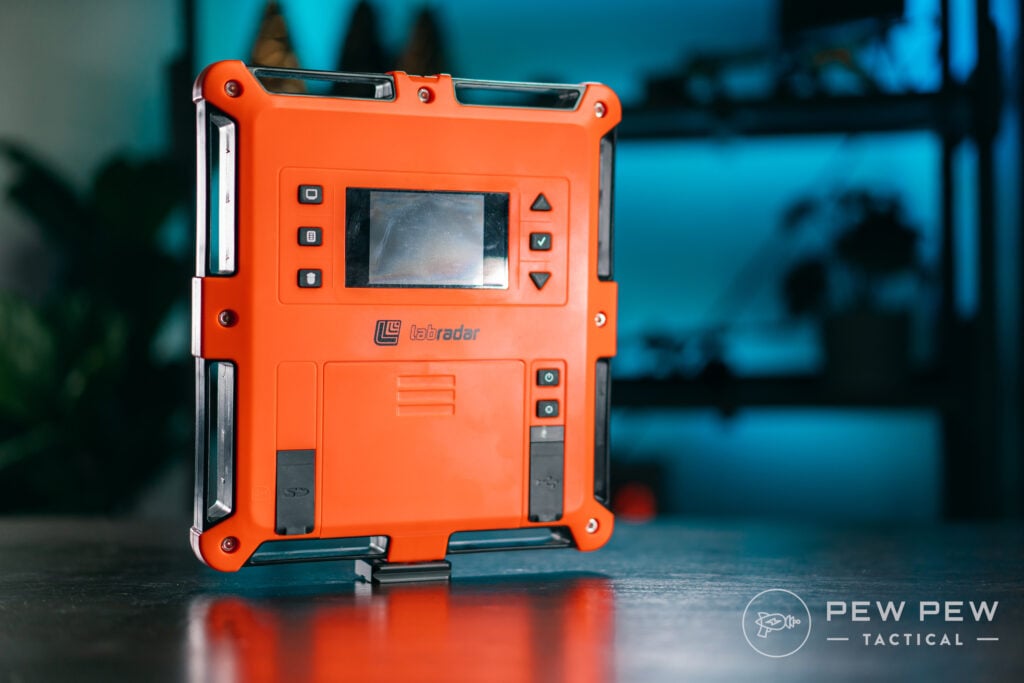
- Advanced Users Only: Labradar Doppler ChronographJump to Details ↓
- Best Portable Chrono: Labradar LXJump to Details ↓
Table of Contents
Trending: Best AR-15s & ATF Drops NFA for Suppressors & SBRs
Shooting Chronographs Comparison Chart
| Dimensions | Weight | Battery Type | Price | |
|---|---|---|---|---|
| Garmin Xero C1 Pro | 5.1" x 4.5" x 5.5" | 161 grams | Rechargeable Lithium | $599 |
| MagnetoSpeed V3 Ballistic Chronograph | 11" x 14" x 3.5" | 2.4 pounds | 1 9V or 2 CR123 | $299 |
| Caldwell G2 | 15" x 10" x 15" | 6 pounds | Rechargeable Lithium | $193 |
| LabRadar Doppler Chronograph | 11" x 8" x 2" | 3 pounds | 6 AAA | $399 |
| LabRadar LX | 2.5" X 2.75" X 2.75" | 1.3 pounds | Rechargeable | $599 |
How We Tested the Best Chronographs
Input for this article came from the editorial staff and freelance writers at Pew Pew Tactical. Every chronograph listed below has been thoroughly tested by someone here at Pew Pew Tactical. Not to mention, these are ones we regularly use for testing guns in our reviews.
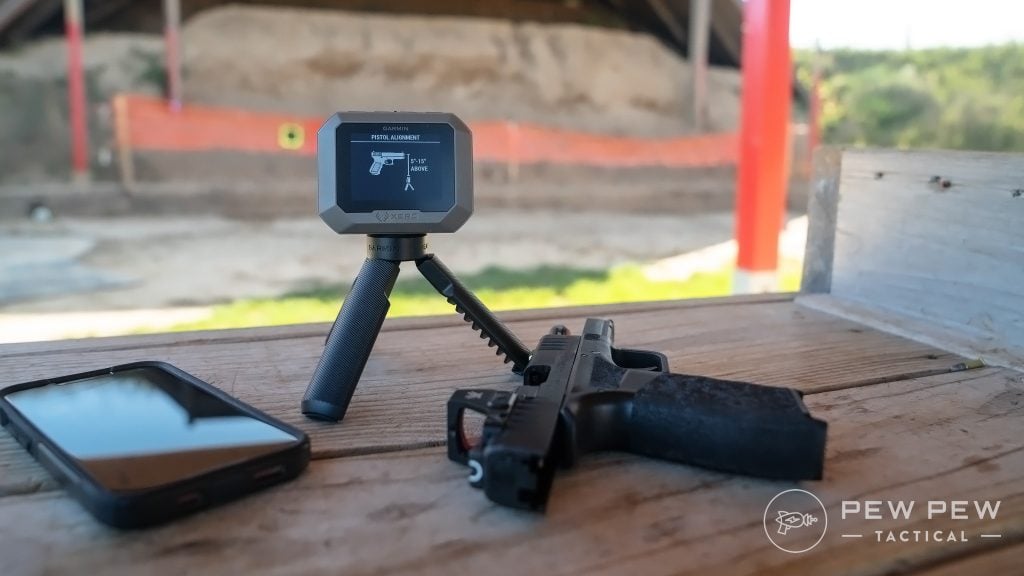
These chronographs have recorded thousands of rounds for us over the years and represent the best when it comes to features, reliability, durability, and value.
Best Shooting Chronographs
1. Garmin Xero C1 Pro Chronograph - Editor's Pick
Pros
- Compact
- Bluetooth capable
- Easiest to use
- USB-C Rechargeable
Cons
- Most expensive
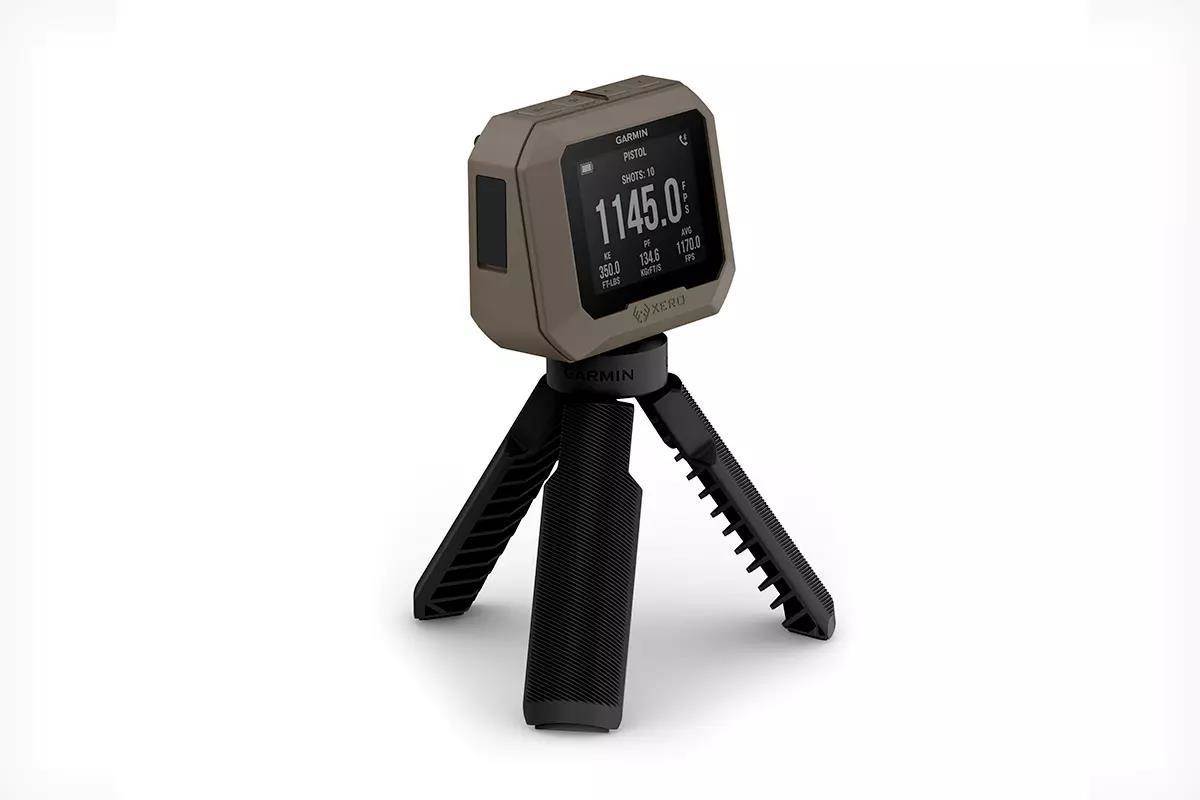
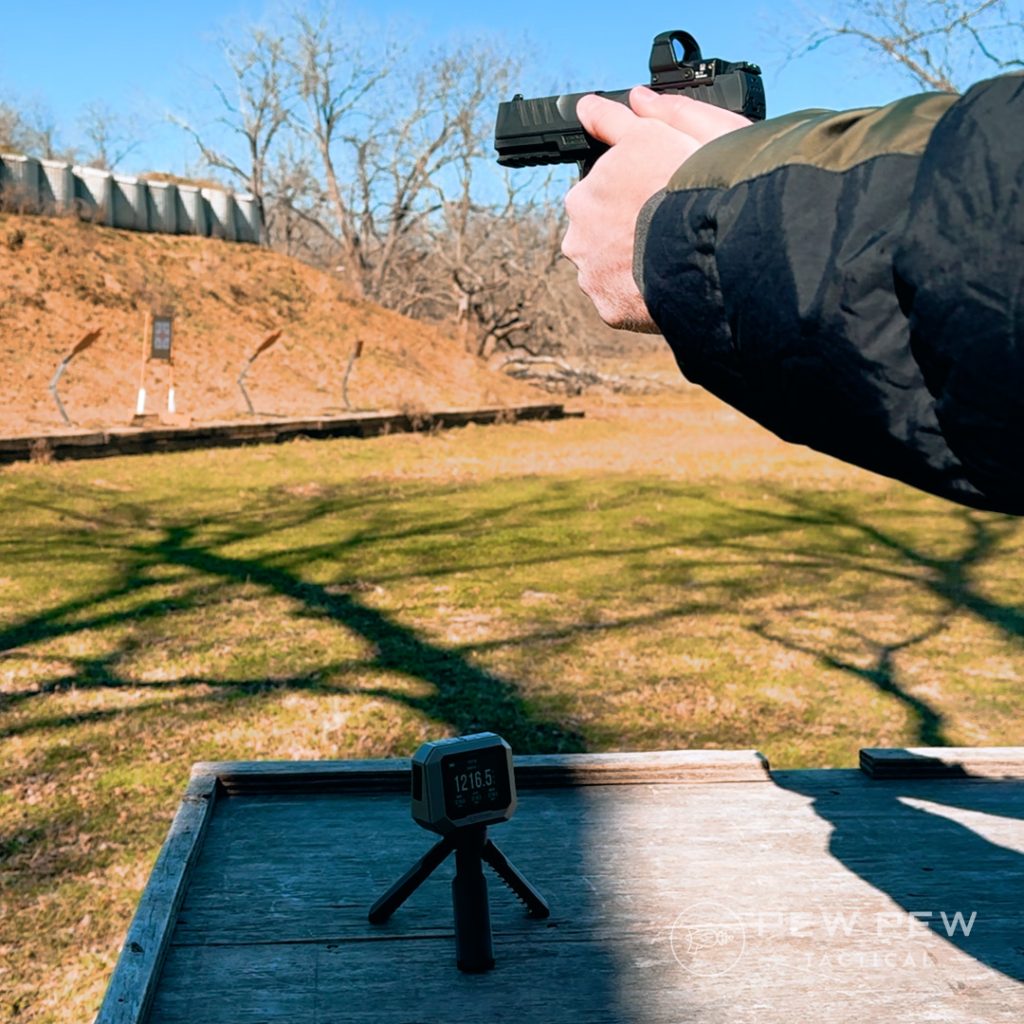
The Garmin is arguably the best on this list because its operation is clean and simple. It doesn't require the deployment of apparatus, and you don't have to attach anything to a gun or shoot through anything!
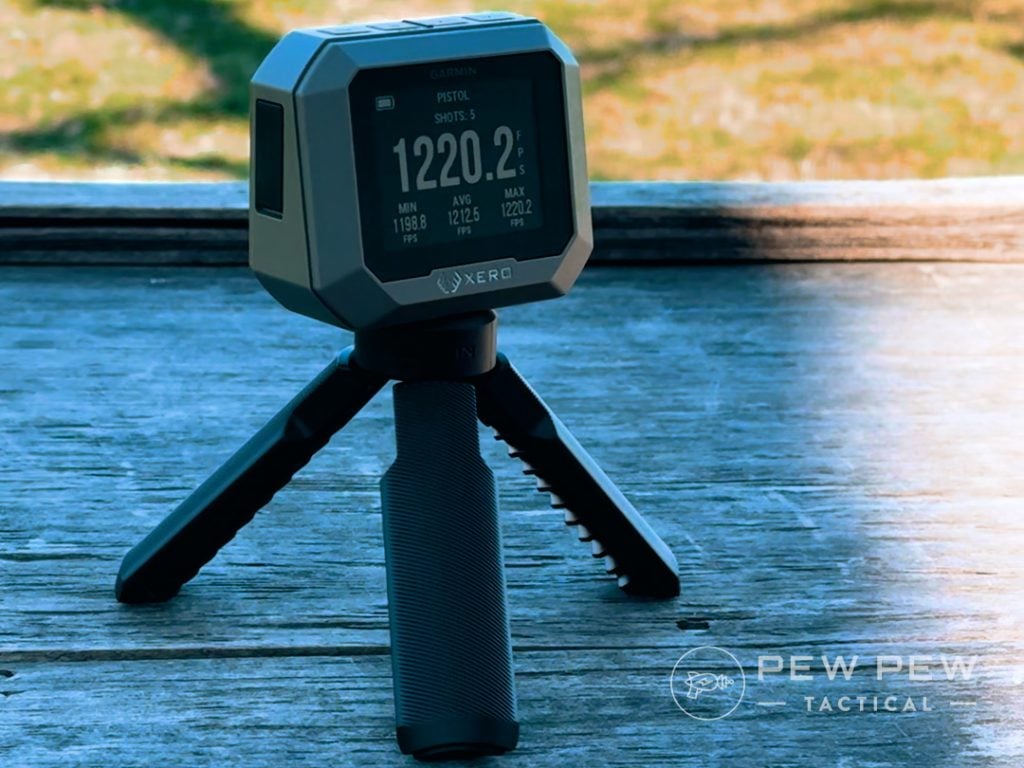
During testing, I found it to be rather forgiving, measuring anything between 100 FPS and 5,000 FPS with ease. After setting it up and turning it on, I simply shot 5-15 inches above the unit.
Plus, its compact size makes it easy to pack up and carry anywhere. Some shooters have even been mounting them to the sides of their rifles for immediate confirmation of velocities.
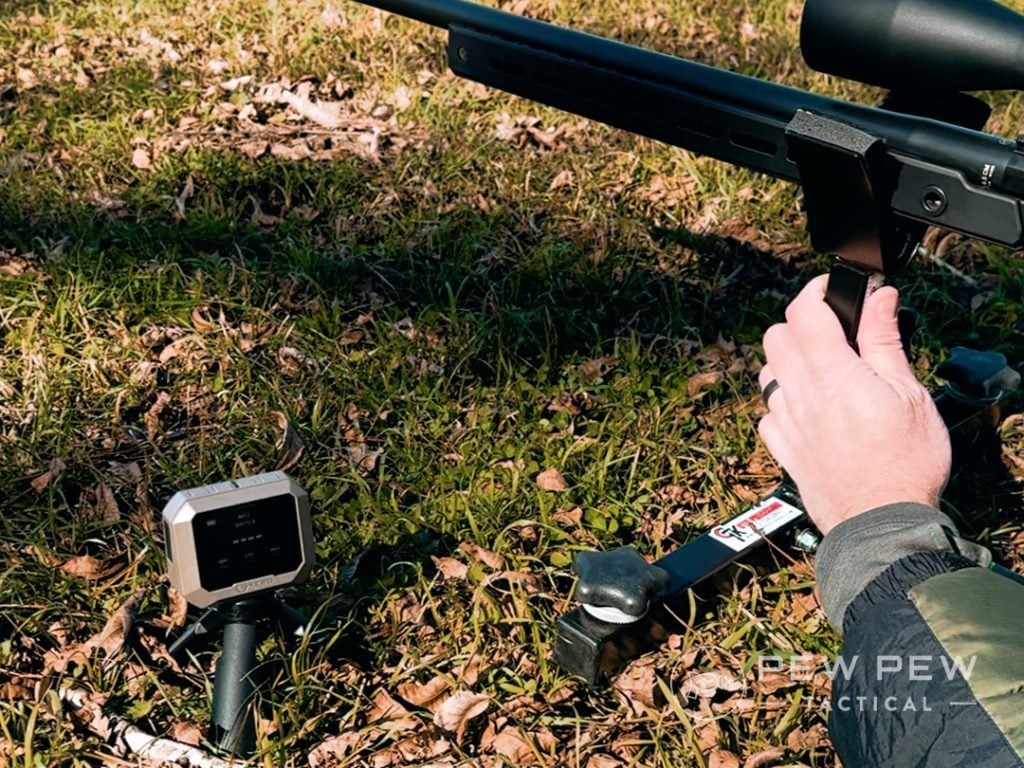
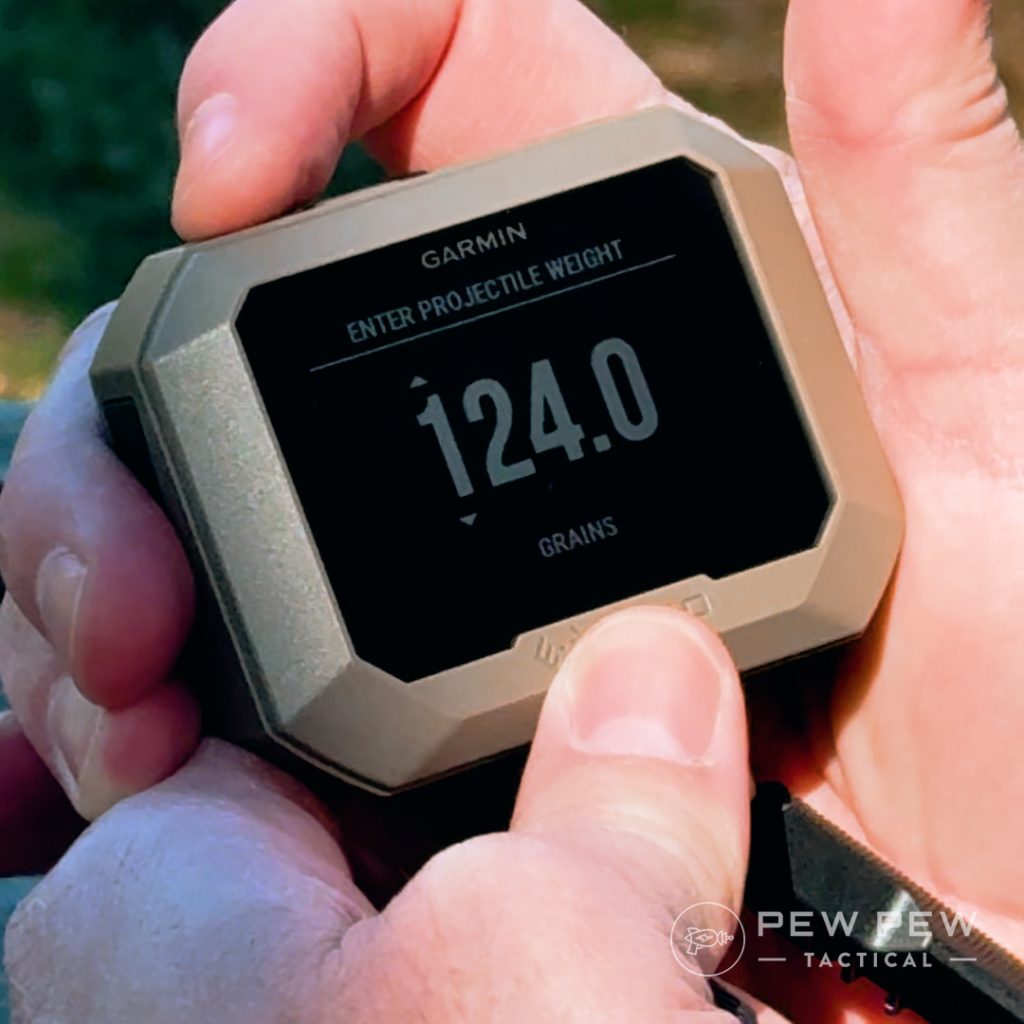
The Bluetooth capability allows you to pair the unit with your phone and use the ShotView mobile app to easily keep track of all your shot data. Also, the USB-C chargeable battery lasts up to six hours.
While the price is a little tough to swallow, the unit is IPX7 rated, doesn't appear to be finicky with varying conditions, and offers peace of mind that you won't shoot something you didn't mean to.
We have more details in our full review of the Garmin Xero C1 Pro!
2. Caldwell G2 - Best Upgraded Option
Pros
- Bluetooth capable
- Rechargeable battery
- Accessories included
Cons
- Must shoot through
- Light sensitive
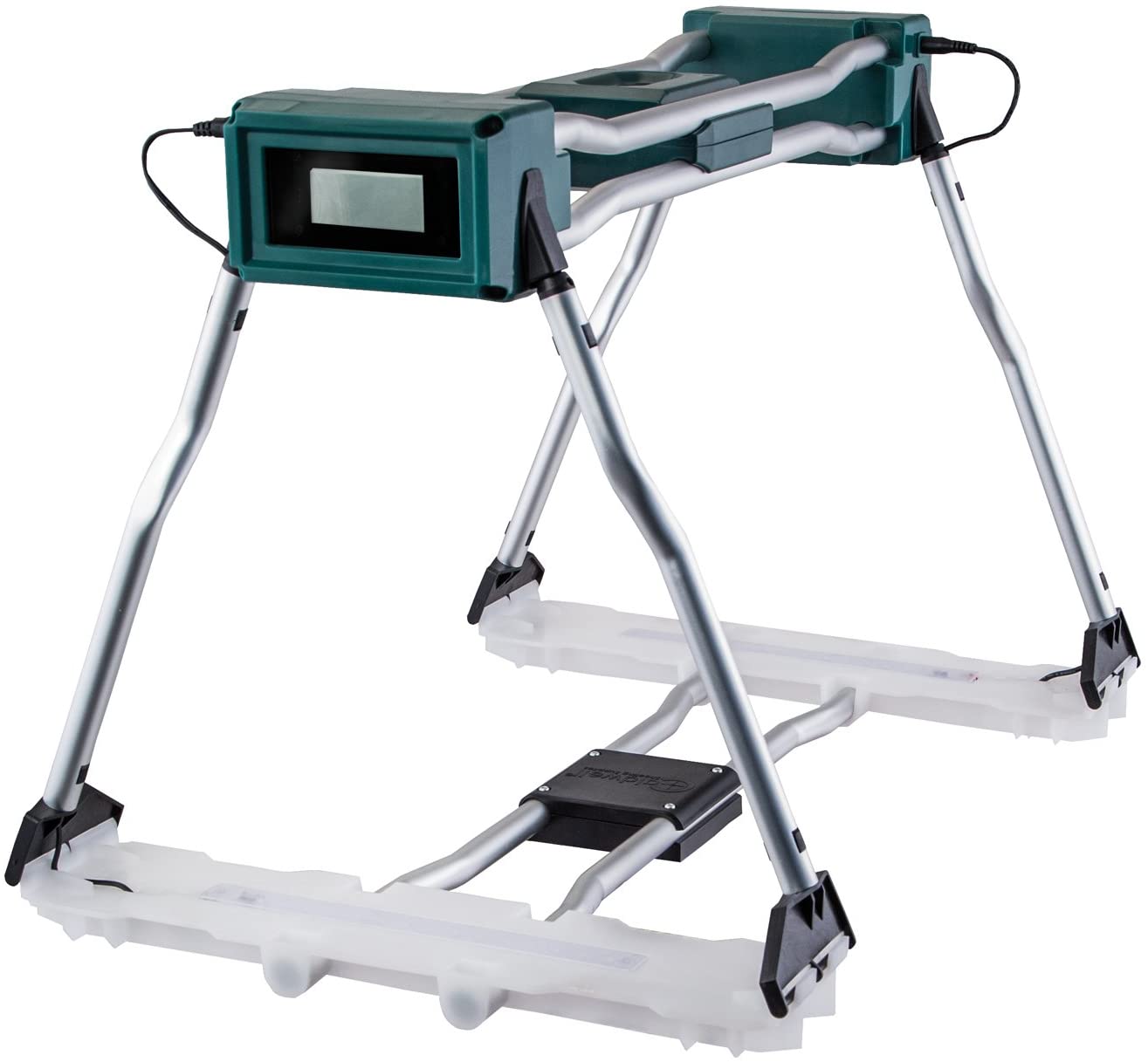
This is the bigger and meaner older brother of the first Caldwell and comes with some nice upgrades out of the box.
First off, Bluetooth! No more aux cable, having to write down your data like a caveman or voice-to-text talking to yourself out in the desert like a crazy man.
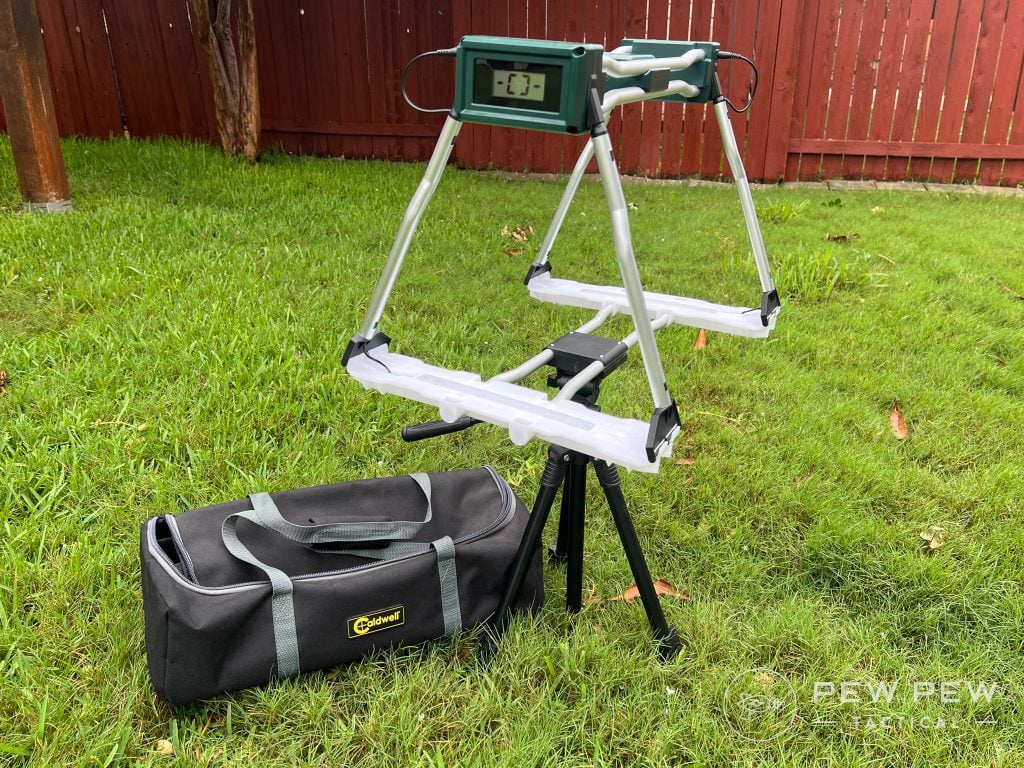
The second huge change is the rechargeable lithium-ion battery instead of those stupid 9volts.
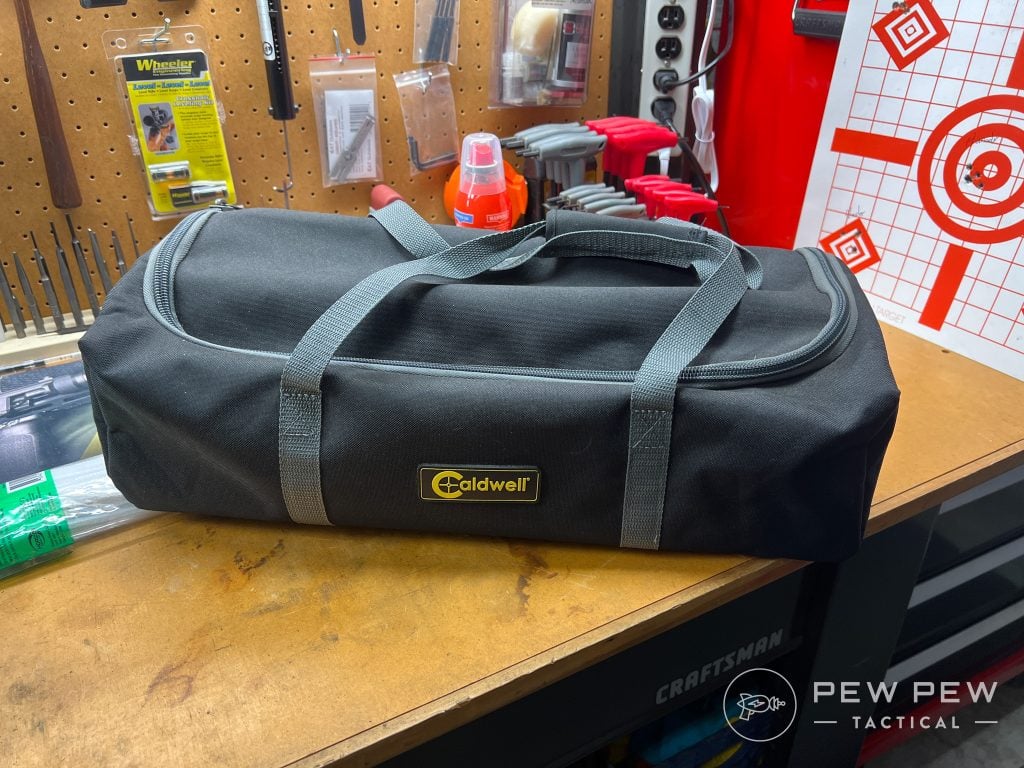
Other than that, it’s just bigger, stronger, and better in every way to the little bro. And since it comes standard with a soft case and tripod, the extra $50 over the Premium Kit seems well worth it.
If you want to treat yourself without breaking into a piggy bank, get the G2. You’re worth it.
What do you think of this Caldwell? Rate it below!
Readers’ Ratings
5.00/5 (1964 Votes)
Your Rating
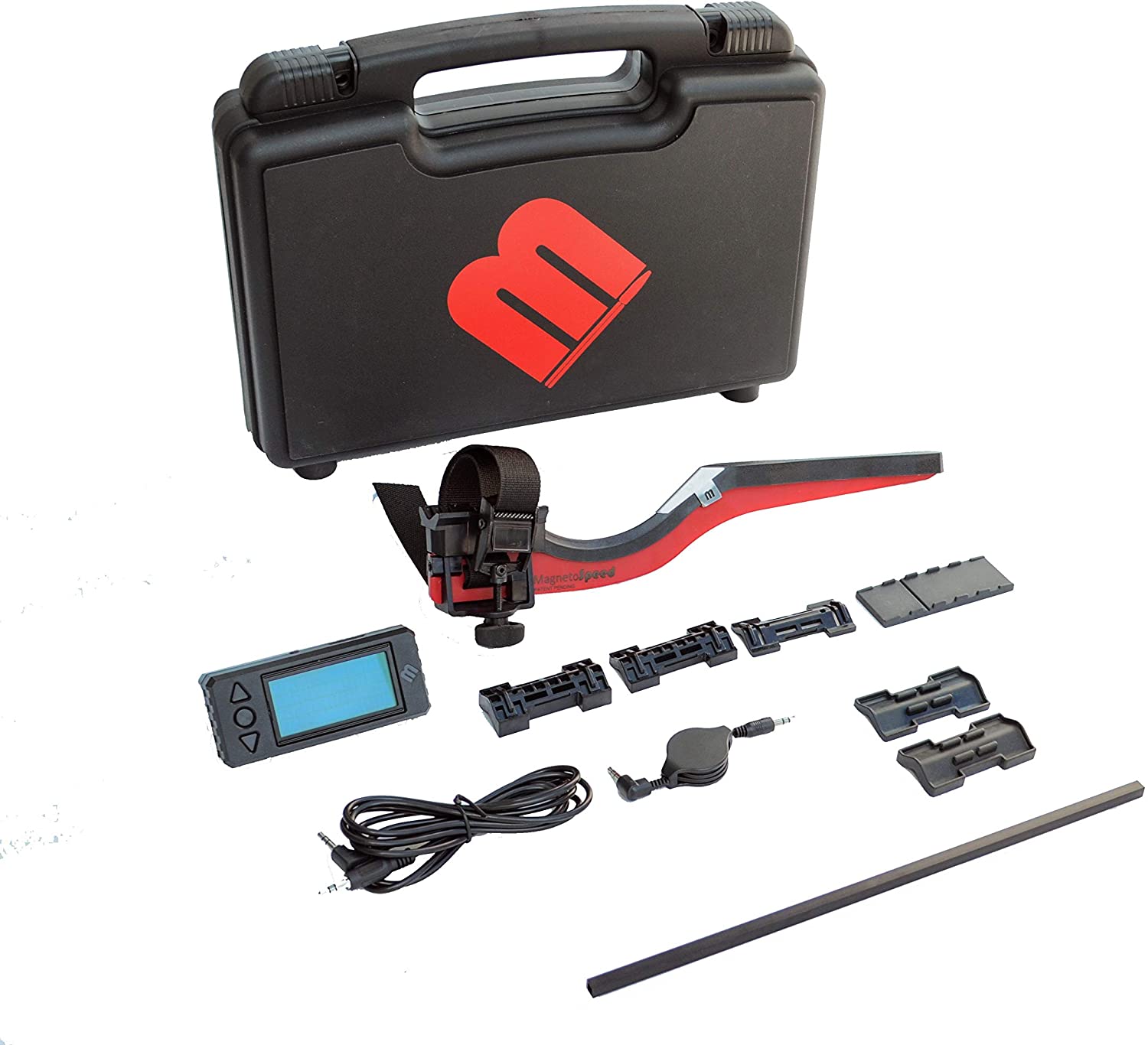
3. Magnetospeed V3 - Best Mid-Grade
Pros
- No shoot through
- Good display
- Instant feedback
Cons
- Point of impact shift
- Doesn't fit all applications
As the name might lead you to think, the Magnetospeed uses those cool electromagnetic fields to track the bullet's speed.
This has a couple of major gains. First, you don’t have to shoot through points A and B to get it to work.
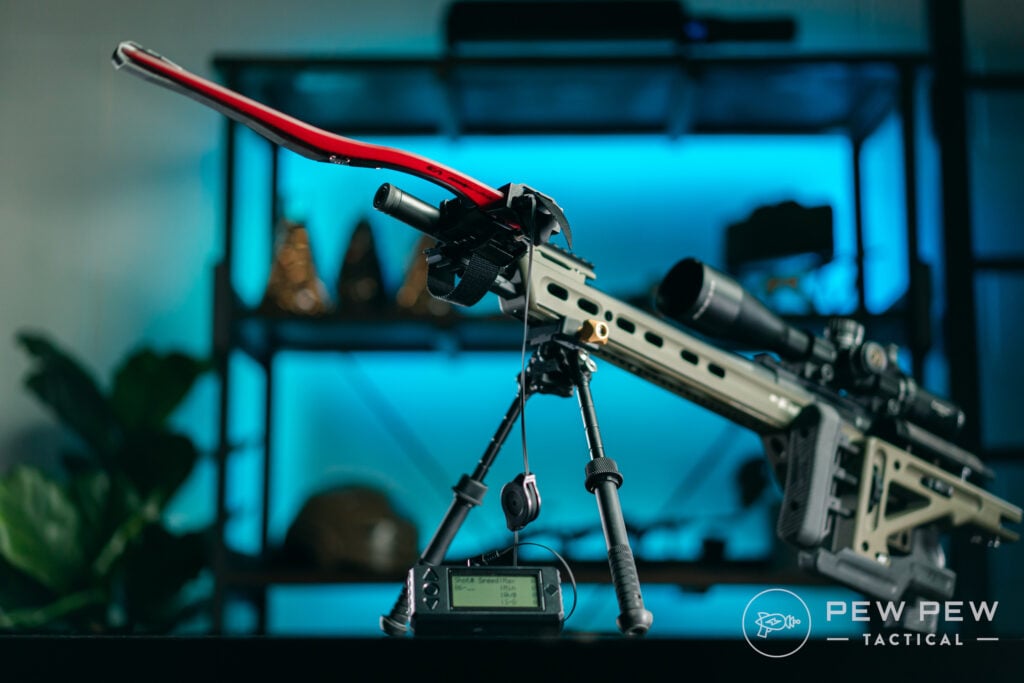
Strap on the bayonet and get shooting!
Great for rapid shooting, shooting groups while you track data, or getting instant feedback while you are shooting something important, the Magnetospeed gives you a lot of flexibility in your chronographing.
But…it does have some tradeoffs.
Because it is a large bayonet that straps onto your barrel -- this can shift your point of impact while it is attached. It can also mess with your rifle harmonics and open or close your groups oddly.
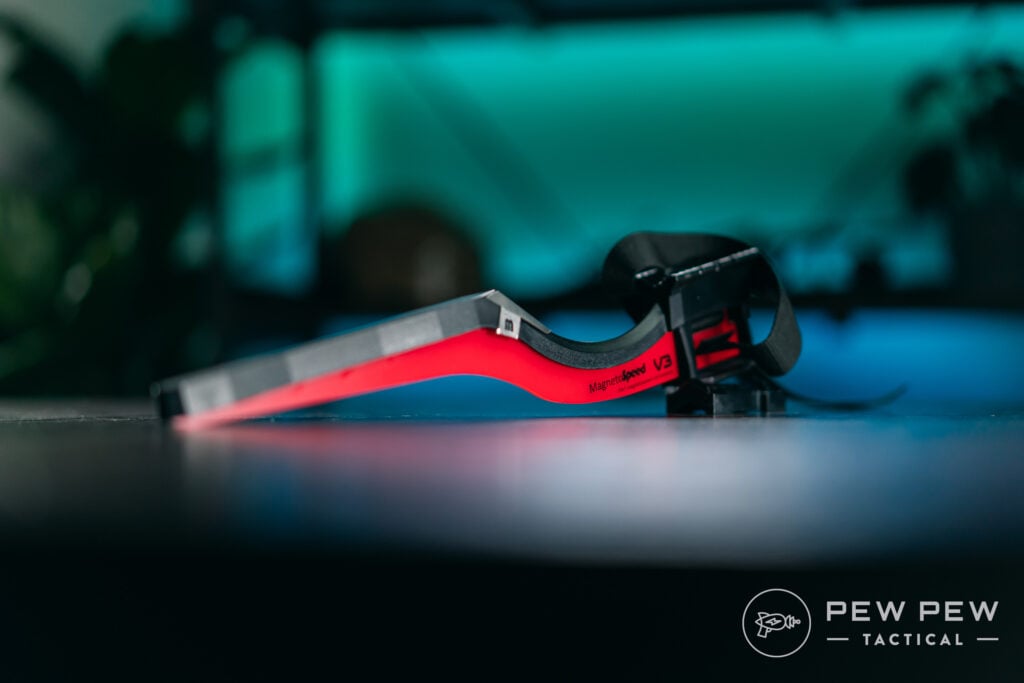
These can be worked around depending on the firearm you’re using. Many high-end precision rifle chassis have rod attachments you can use to mount the Magnetospeed to them to keep it off your barrel. Also, if your barrel is thick enough to start with -- you might not notice any problems.
Able to work with airguns, rimfire, pistols, and rifles -- plus can fit barrels or suppressors up to 2 inches in diameter, the V3 is simply bigger and better in every way.
Critically, it also comes with a more advanced display unit with more options and better tracking.
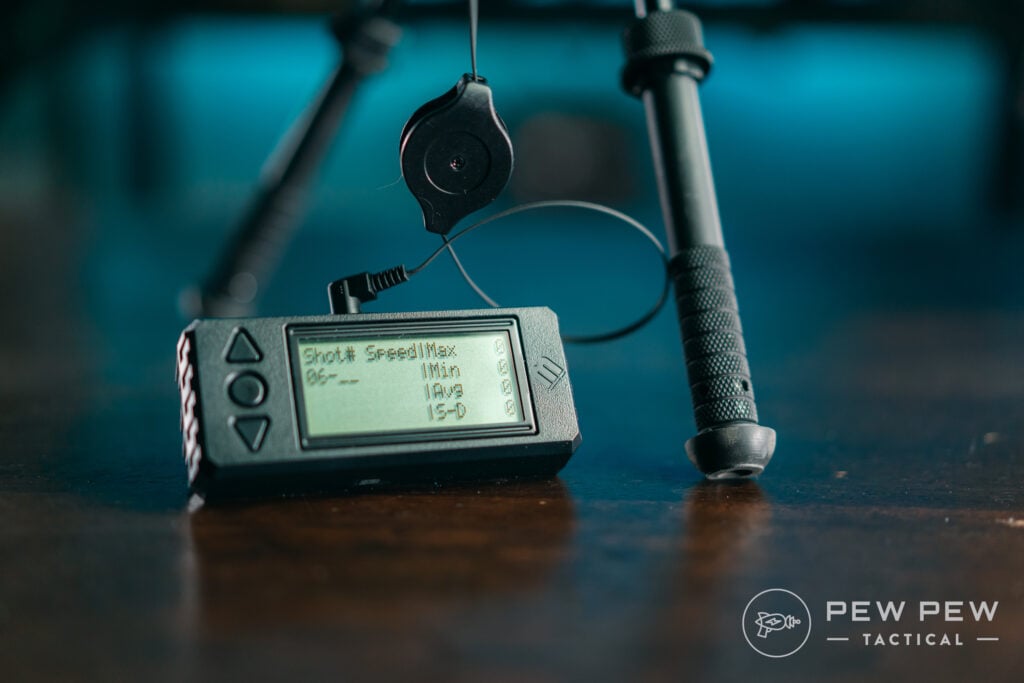
If you’re into precision long-range shooting, this is the model for you -- it's easy to use and straightforward. Just make sure to use the included offset rod to make sure that the bayonet is far enough away from your bore.
The Best Gun Deals, Coupons and Finds
Subscribe to Pew Pew Tactical's sales and deals email.
4. Labradar - Best for Advanced Users
Pros
- Versatile
- Accurate in all conditions
- Can store data
Cons
- Finicky
- Expensive
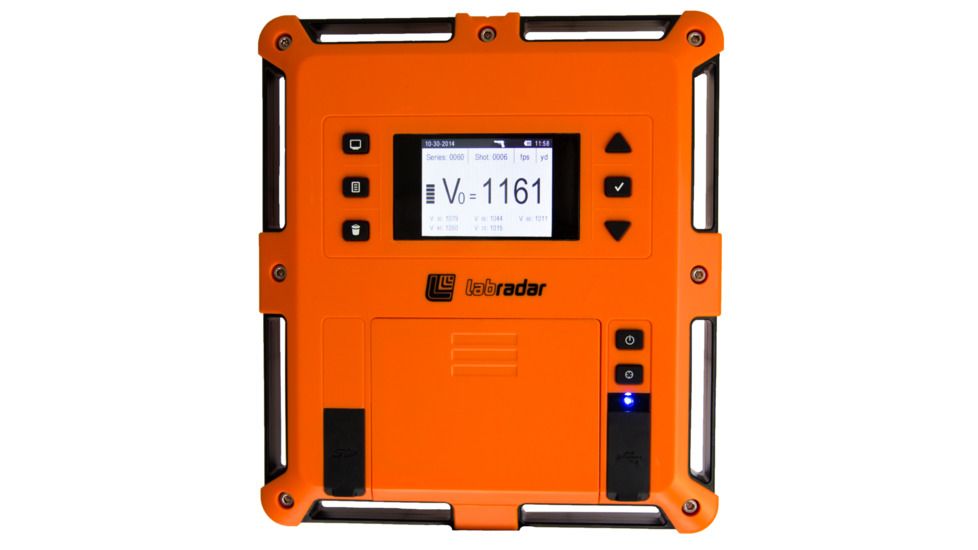
Oh man… where to start? Labradar uses Doppler radar to do its magic, and it really is magic. It’s also very expensive, coming in at around $550-$600. And that is just for the base unit.
From arrows to rimfire to big bore rifles, it can work with just about anything… kind of. While the Labradar is considered to be the cream of the crop in chronographs, I really didn’t have a good experience with it.
To use the radar, you need to aim it very precisely at your target. They give you the most useless of V notches to do this with.
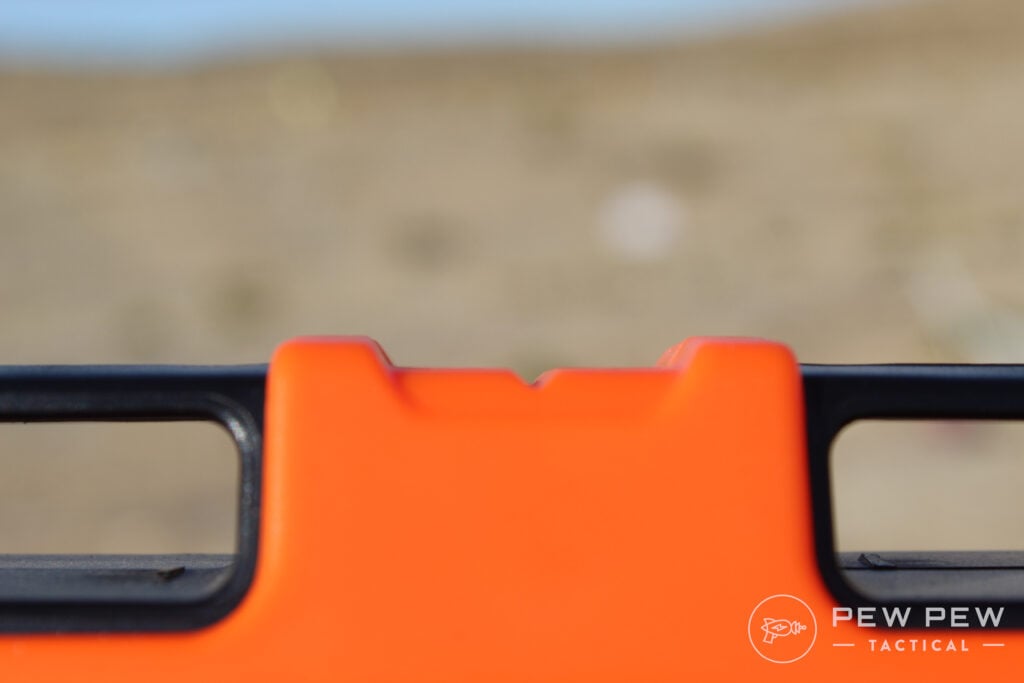
If you Google around, you can find a dozen or more DIY or 3D printed “aiming” devices to help you aim the Labradar.
The second major issue we had was actually triggering the unit. While it claims that it can work with rimfire and airguns, I found it nearly impossible to work with my NRL22 rifles without buying some of the extras that Labradar offers.
The best settings I was able to use got it to track 8 out of 20 rounds of rimfire. If you want a more sure way of triggering it, you’ll need an external mic. And the only one that works is the one Labradar sells. How convenient.

That said… if you can get it set up and working, it is a magical tool. The accuracy of the information is dead on in all weather conditions. The unit is robust and can take a beating. Storing the information on an SD card and pulling it off later is super easy and can pack a ton of information.
Best of all, it tells you the velocity not only at the muzzle but also at any range you set downrange. It will track and calculate the velocity at up to five different points downrange.
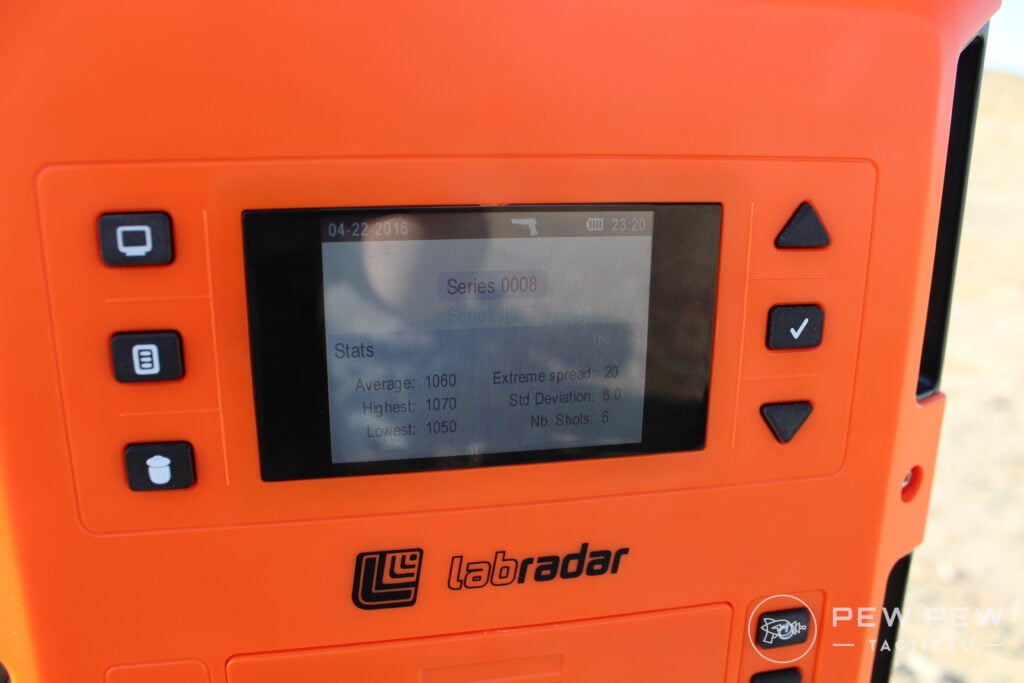
For centerfire cartridges, the Labradar never failed to track. But getting it to work with rimfire was a beast. I would only recommend the Labradar to users who really want the very best information and are willing to spend the time and effort in setting up and learning the system.
Plus, be prepared to DIY or buy some extras to help you make the most of the Labradar. It really eats us that a $600 tool needs *extras* to get the most out of it. For the supermajority of users, I think the Labradar is a bit much.
5. Labradar LX - Best Portable Chrono
Pros
- Easily portable
- Works in all lighting
- No apparatus to shoot through
Cons
- Expensive
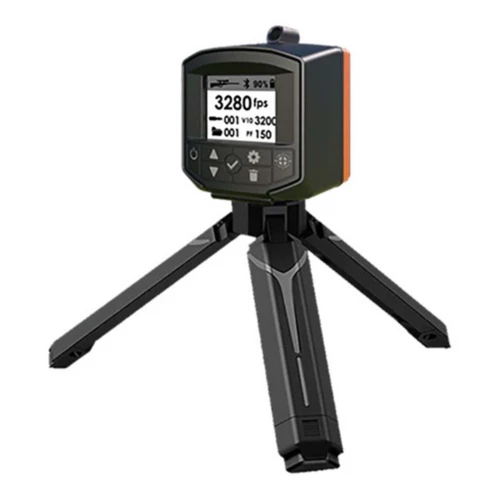
Without a doubt, all the deficiencies of the original Labradar have been improved upon in the LX model. In short, the size shrunk, it’s easy to point, and seems less finicky.
Talk about a dramatic change! The new LX is only approximately 2.5 inches square, though it feels hefty for its size, coming in at 21.06 ounces.
Our Most Popular Posts
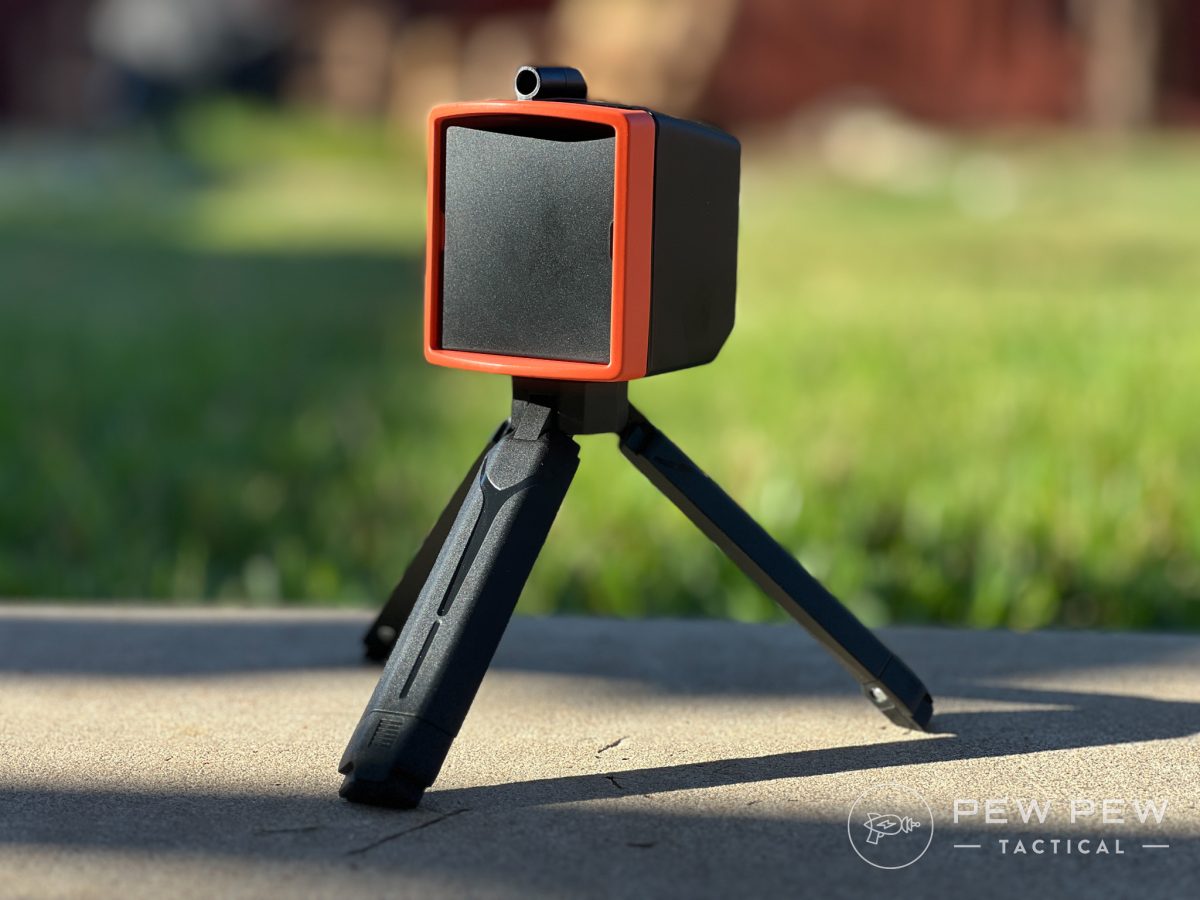
Despite this size, the front face is comprised of a 1.5-inch x 1.25-inch color LCD screen. The display is easy to read and the controls are fairly intuitive.
Underneath the screen, a suite of seven weather-protected buttons with easy-to-understand symbols awaits your commands. The buttons function well and are not challenging to navigate.
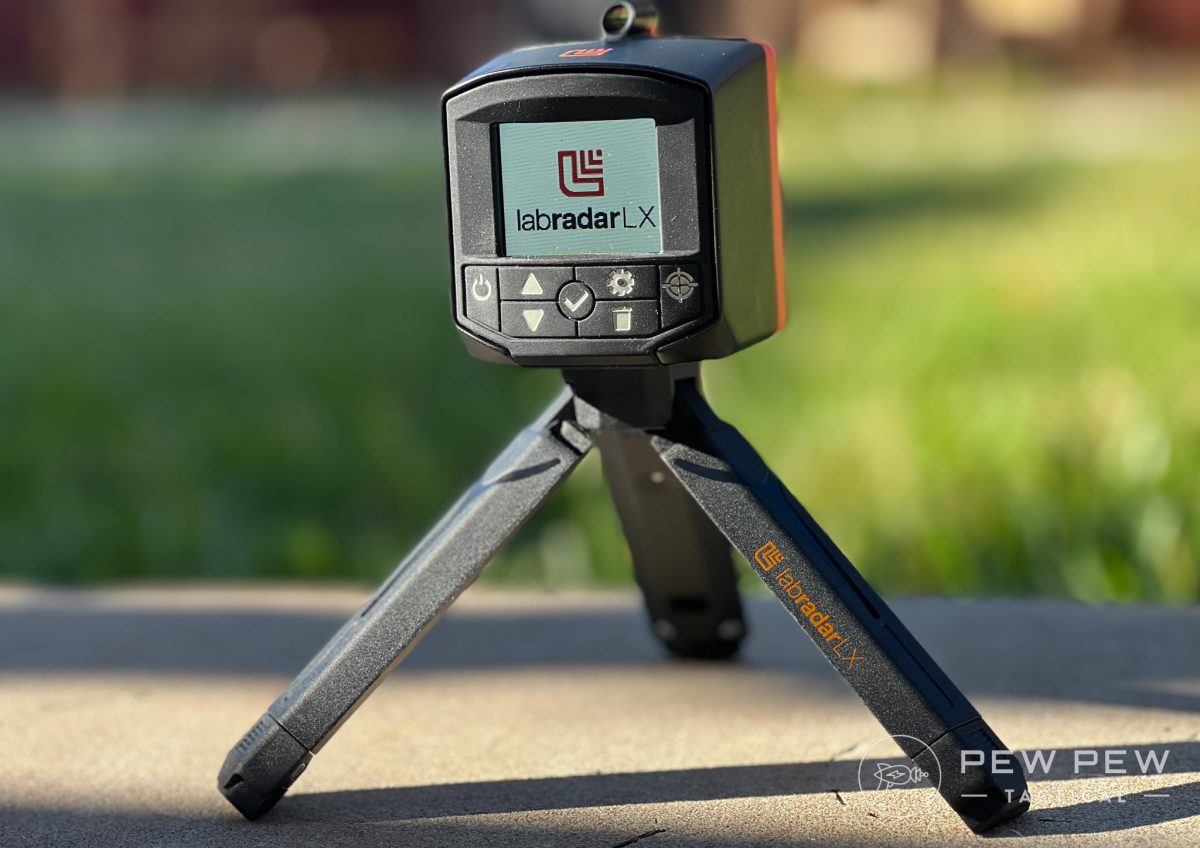
The unit runs on a rechargeable battery that uses a USB-C cable to charge. As an added bonus, you can also update firmware on the LX via the same cable.
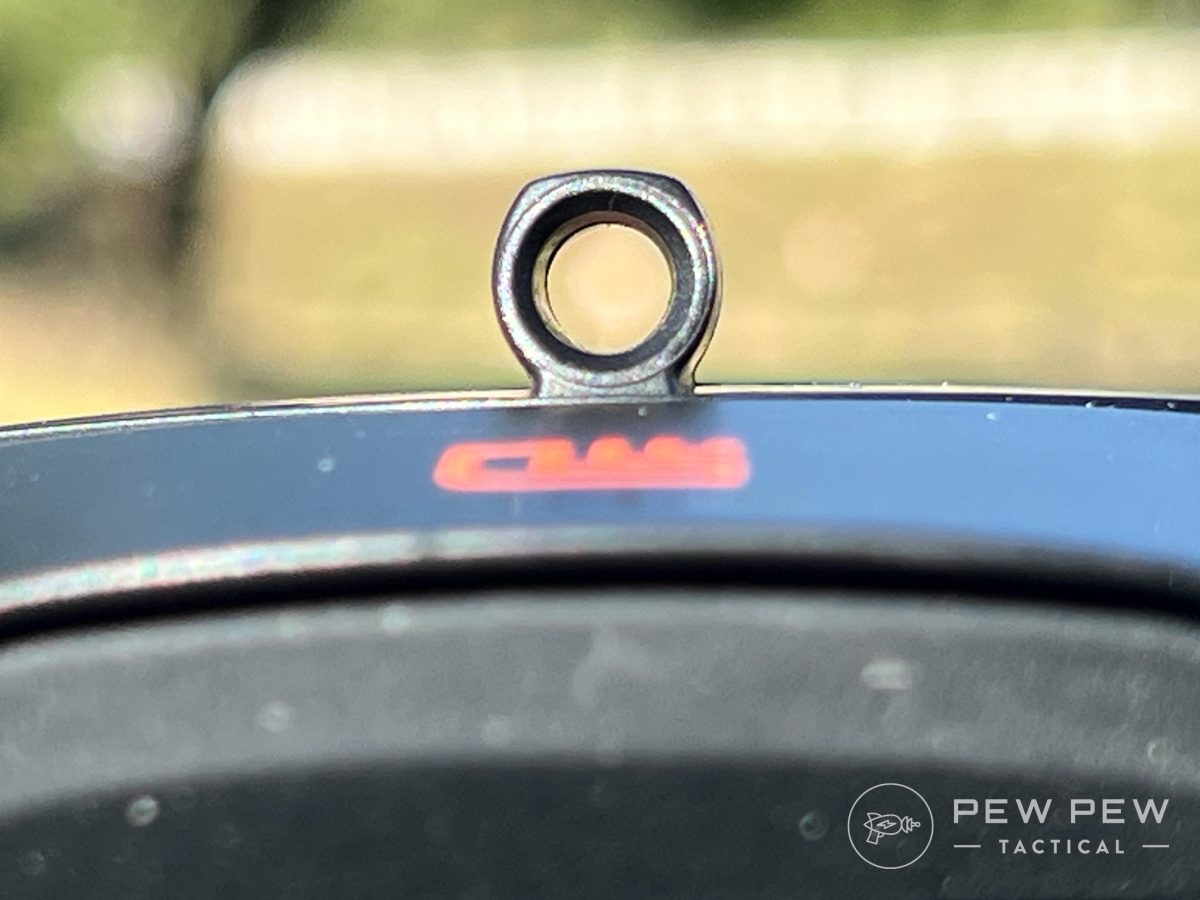
As indicated, pointing the LX is pretty straightforward as it has a ringed peep sight it’s top. Simply find your target through the ring, activate the LX, and you're off to the races.
Almost. While the LX does seem to be less finicky, you still need to select between three different modes: Archery (66 to 600 FPS), Handgun (600 to 1600 FPS), and Rifle (1,600 to 4,500 FPS).
The LX uses a higher frequency range-Doppler (60 GHz) than its competitors for greater accuracy. But it won’t detect 9mm rounds in rifle mode and vice versa.
Similar to the Garmin Xero C1 Pro, the LX comes with a small tripod. This can be adjusted and lengthened for a wide array of terrain.
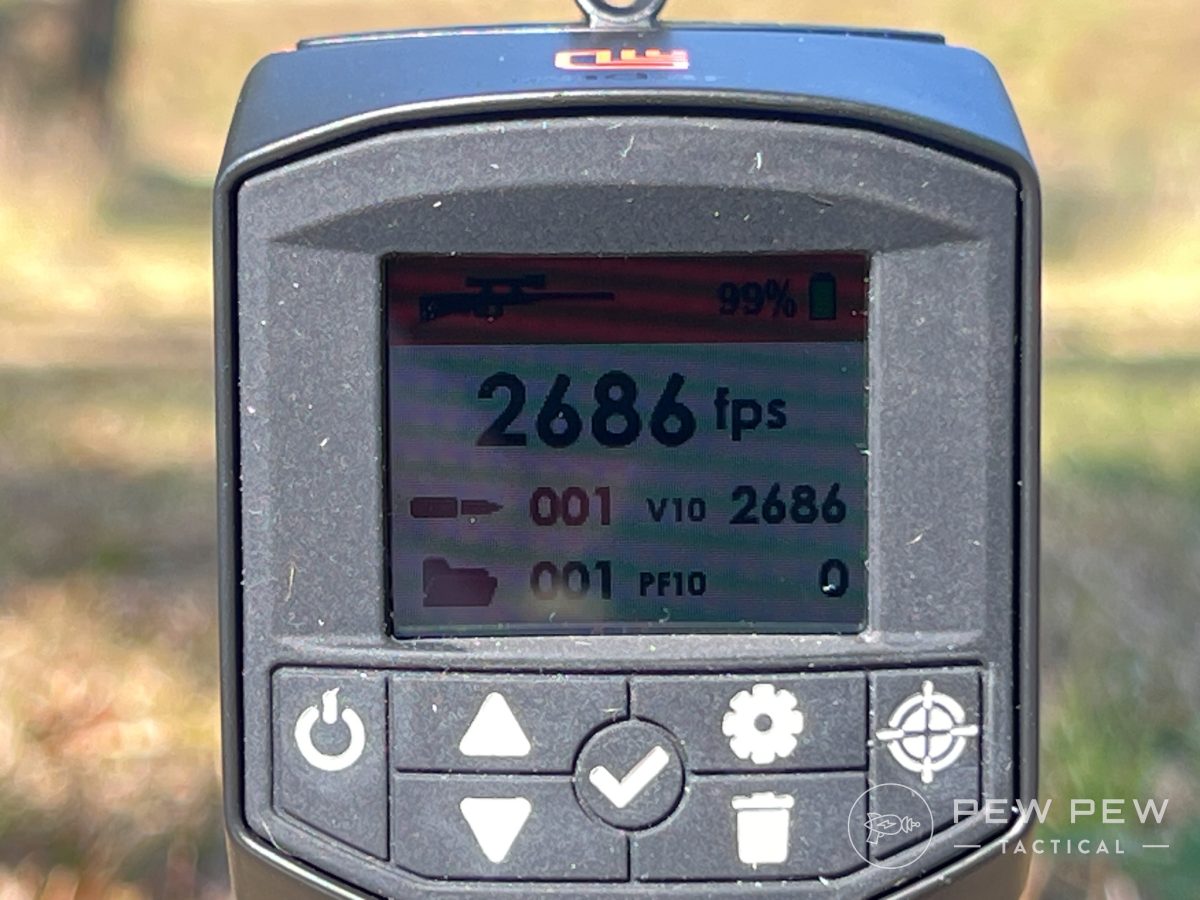
Another great benefit owed to the modern era is the LX’s ability to interface with an app. Through this, I was able to adjust settings, control the unit, and view the measurements as I made them.
Although it’s still expensive, the Labradar LX is super portable, easy to use, and seems extremely accurate. You can read the full review here.
What Exactly Is a Chronograph?
Basically, it’s a science thing that lets you measure the speed of projectiles. These can be bullets, arrows, bb pellets, shotgun pellets, and more, depending on the kind of chrono you pick up.
There are several ways to do this. The most common and “basic” way is with light.
The chrono looks at the light above or below two sensors set apart by about a foot and waits for the light to be disturbed. The light on the first sensor is disturbed, and then X milliseconds later, the light of the second sensor is disturbed. Math happens, and a speed is given.
Others work on a similar method, but a different form. Instead of light, small electromagnetic sensors are set along a line.
A projectile disturbs the electromagnetic fields, and math happens, and a speed is given.
Finally, the fanciest type is through Doppler radar.
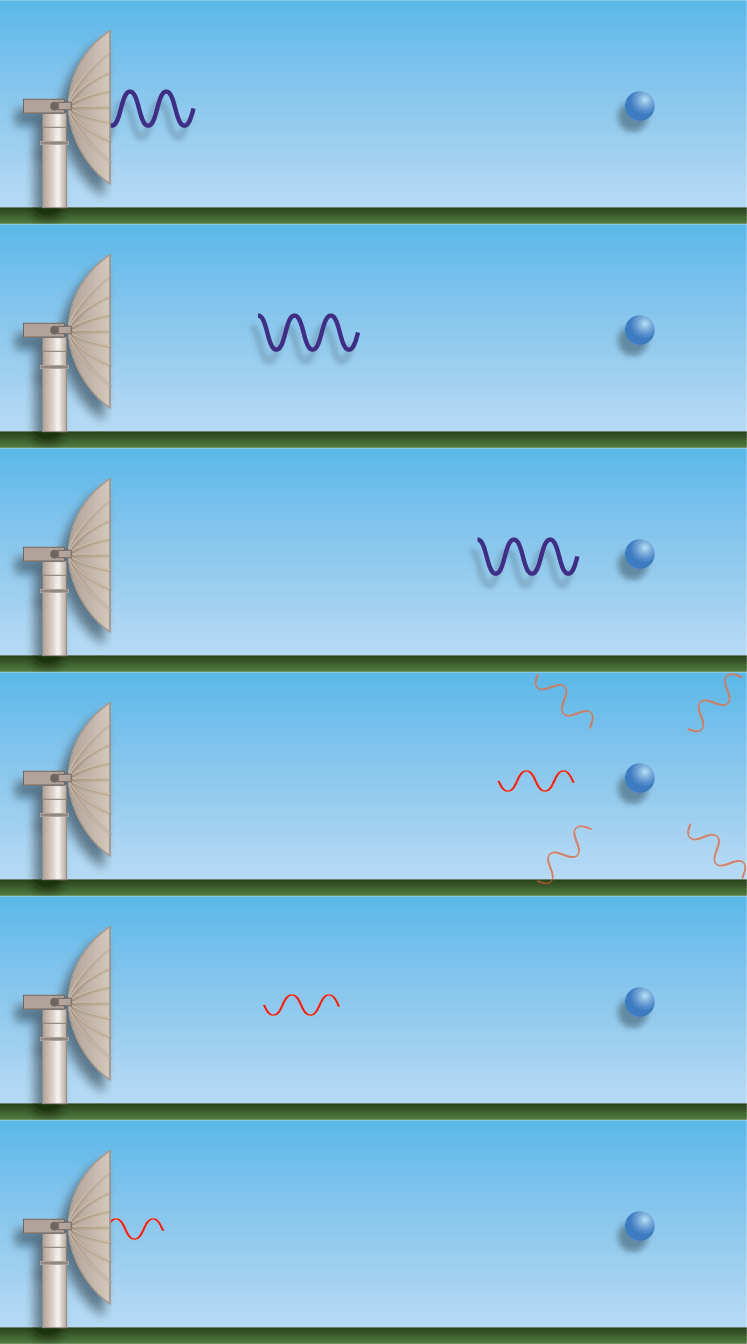
The same thing that weather stations use, Doppler radar shoots a microwave signal and uses the signal bouncing back to measure the distance and velocity of whatever it is aiming at.
Why Do I Need One?
For the average shooter, a chronograph is probably useless.
I mean really, it’s a fairly niche case that you need hard data on the exact speed of your bullets. But if you reload, want to shoot precision long-range, or shoot competitively -- a chronograph can be critical.
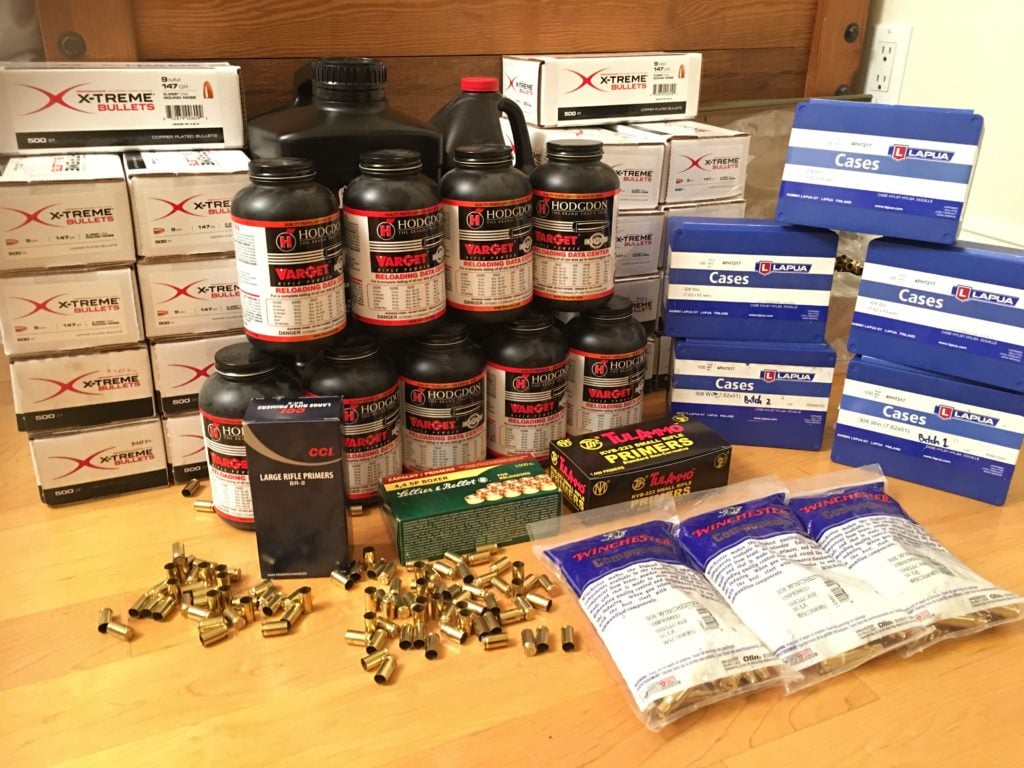
For reloaders, you want to be able to find velocity nodes, check the speed you’re getting from different loading methods, and check for safety.
Precision long range is very velocity dependent. Having accurate data on your ammo is a must-have for proper DOPE. All of the ballistic calculators in the world won’t help if your velocity is off to start with.
Not sure if you have enough energy on target to take your next hunt? Checking the actual speed of your cartridge through your rifle and a little math will solve that problem.
The list goes on. But basically, it’s an advanced user kind of thing. But don’t let that scare you -- they’re actually easier to get into than you might think.
Why Trust Pew Pew Tactical
This article builds on original work written by former Pew Pew Tactical freelance editor David Lane.
Pew Pew Tactical Content Producer Sean Curtis edited and added to the original article. Sean has been shooting since childhood but began to delve into guns more during his law enforcement career. He spent over two decades in law enforcement, where he became a POST-certified handgun instructor and NLEFIA Red Dot Instructor and received CLEFIA Advanced Firearms Instructor Training and AR-15 armorer training. He has since attended a variety of training, including Tactical Performance Center Handgun Mastery & Carbine Mastery, and earned USCCA rifle instructor certification. Aside from training and prior to joining the Pew Pew Tactical team full-time, Sean wrote for several gun publications evaluating and testing guns and gear and has written hundreds of articles. Sean added the Labradar LX and Garmin Xero C1 to the list.
Editor-in-Chief Jacki Billings runs our experienced team of reviewers and fact-checks every article, including this one. She is a National Rifle Association Basic Pistol Instructor as well as a member of the Society of Professional Journalists, ACES: Society for Editing, and the Professional Outdoor Media Association. Jacki has a bachelor’s degree in journalism and has worked as a media professional for close to 20 years, specializing in gun media for almost 10 years. With 2,000+ articles to her name, she uses her professional journalism and editing experience to set testing protocols and editorial standards for Pew Pew Tactical.
Final Thoughts
So, after all of that, do you need a chrono? It all depends on you. If you do need one, you cannot do without it. Even the cheapest option is better than nothing.
Even if you don't need one, chronographs are handy pieces of equipment to keep around for when you do. Stick around in shooting sports long enough, and eventually, you'll find that you wish you had one.
What is your go-to chronograph? Let us know in the comments! If you're looking to get into long-range shooting, take a look at the Best 1000 Yard Guns and the Best Long Range Rifle Scopes!
Latest Updates
- January 2025: Added Labradar LX, Removed discontinued Caldwell Precision Chrono.
- June 2024: Added the Garmin Xero C1 Pro