
Staccato HD C3.6 [Review]: Better Than the Glock 19?
Staccato is giving Glock a run for their money, but is their latest 2011 pistol -- the HD C3.6 -- a concealed carry champion? We test it to find out.
We review products independently. When you buy through links on our site, we may earn a commission to help support our testing. Learn more.
- Pros & Cons
- Specs & Features
- Staccato HD C3.6 Backstory
- Shooting the Staccato HD C3.6: Accuracy & Reliability Analysis
- Ergonomics: Fit & Feel
- Improvements We’d Like To See
- Who Is the Staccato HD C3.6 For?
- By the Numbers
- Upgrades & Accessories for the Staccato HD C3.6
- How We Tested Staccato HD C3.6
- Final Verdict on the Staccato HD C3.6
Staccato HD C3.6 Pros & Cons
Pros
- Concealable yet shootable
- Accurate and reliable
- Excellent co-witness
Cons
- Top-shelf pricing
- Challenging takedown
The Bottom Line
The Staccato HD C3.6 is a reliable and accurate compact 2011 that runs on Glock magazines.
The mark of true innovation is something noteworthy in the firearms industry. We frequently track emerging trends to see if they fizzle out or actually hold up.
While the double-stack 1911 or 2011 has certainly come into its own over the last few years, Staccato is taking it to another level by implementing functions from the reigning champ in the law enforcement market — Glock.
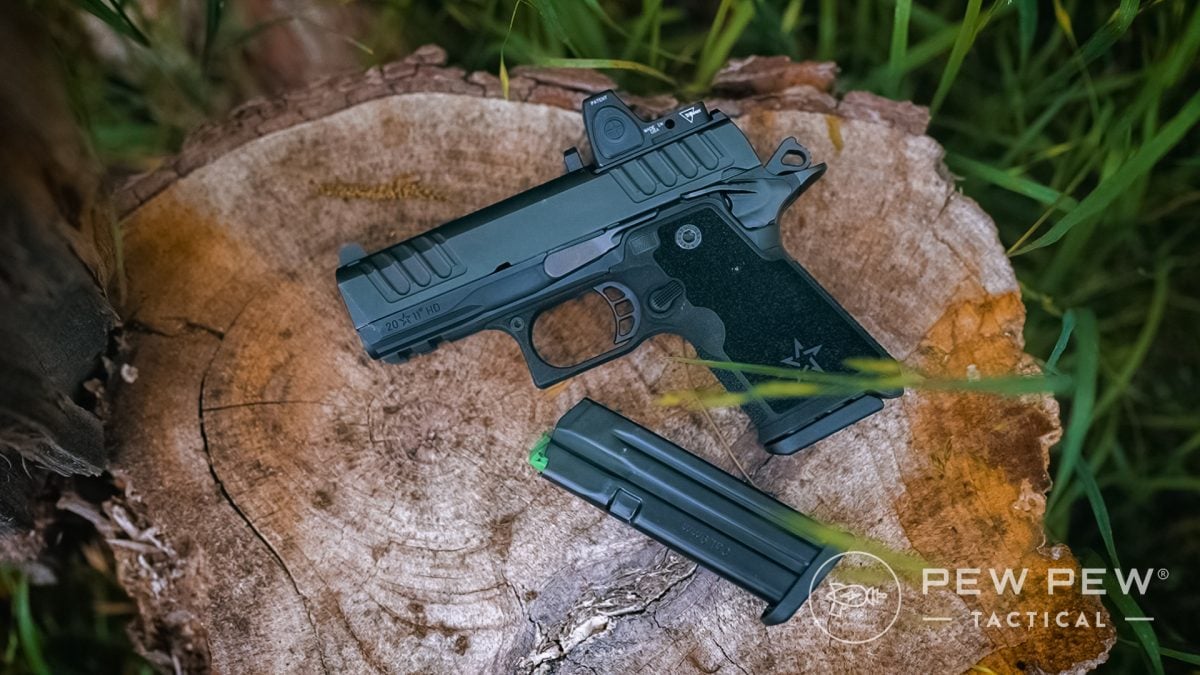
Does borrowing features from the Austrian juggernaut actually make a 2011 better?
After checking out a C 3.6 from their HD line at SHOT, we were anxious to get our hands on one and see how it performed.
We’ll share all the results with you below. So read on!
Table of Contents
- Pros & Cons
- Specs & Features
- Staccato HD C3.6 Backstory
- Shooting the Staccato HD C3.6: Accuracy & Reliability Analysis
- Ergonomics: Fit & Feel
- Improvements We’d Like To See
- Who Is the Staccato HD C3.6 For?
- By the Numbers
- Upgrades & Accessories for the Staccato HD C3.6
- How We Tested Staccato HD C3.6
- Final Verdict on the Staccato HD C3.6
Trending: Best AR-15s, Best Pistol Lights (Re-Test), & Ammo in Stock
Staccato HD C3.6 Specs & Features
Specs
- Caliber: 9mm
- Capacity: 15+1
- Overall Length: 7.1”
- Barrel Length: 3.6”
- Height: 4.8”
- Width: 1.6”
- Weight: 24 oz.
- Comes with: Multi-pocket nylon case with handles, 2 15-round Glock pattern magazines, gun lock, owner’s manual, warranty, and safety cards
Features
- Runs on Glock-pattern magazines
- Co-witness iron sights
- Optics ready
Staccato HD C3.6 Backstory
It’s no secret that Staccato has gone after the law enforcement market in a big way since its evolution from STI. In many ways, this automatically puts Glock in the 2011 maker’s sights because Glock has a lion’s share of that segment.
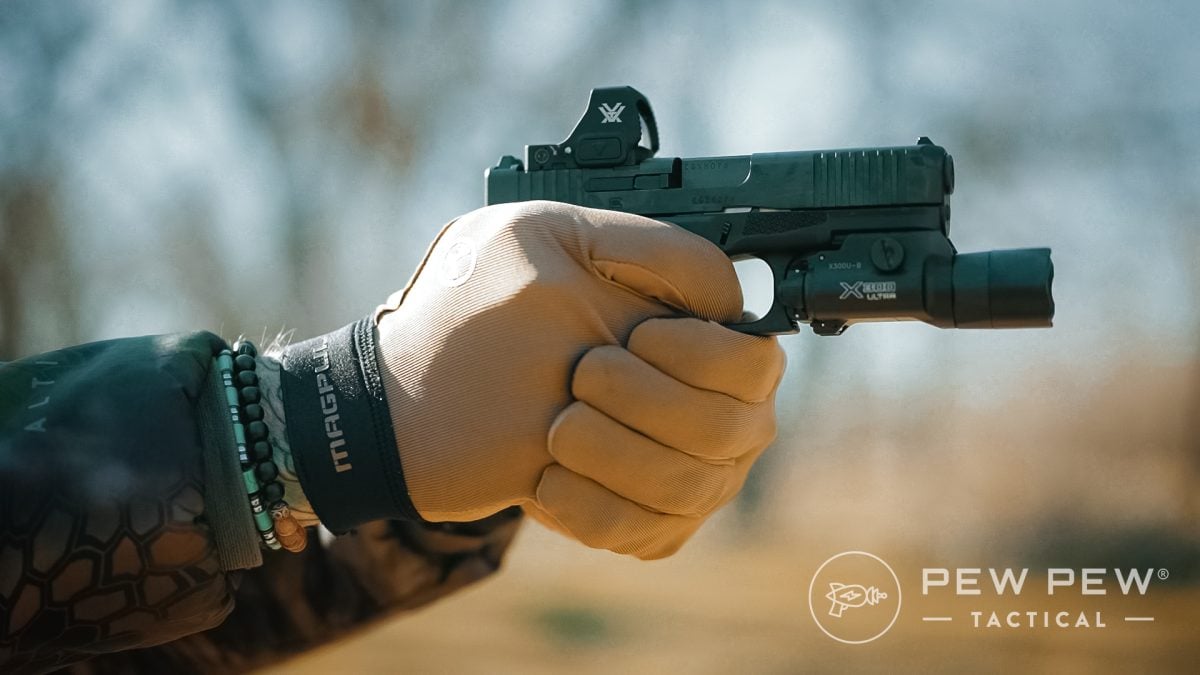
Given the disparity between the benefits of a striker-fired pistol like Glock and the benefits of a hammer-fired 2011, what’s the best way to cross that bridge and create something appealing? Borrow some features!
Staccato indicates they worked with a “leading covert law enforcement unit” to develop the HD line. In short, the theme of this series is full-size performance from smaller pistols.
There are currently four models in the HD lineup:
- HD C3.6 is a compact carry
- HD P4 is an all-purpose gun that’s slightly larger
- HD C4X is a compensated version
- HD P4.5 is designed for duty use
Shooting the Staccato HD C3.6: Accuracy & Reliability Analysis
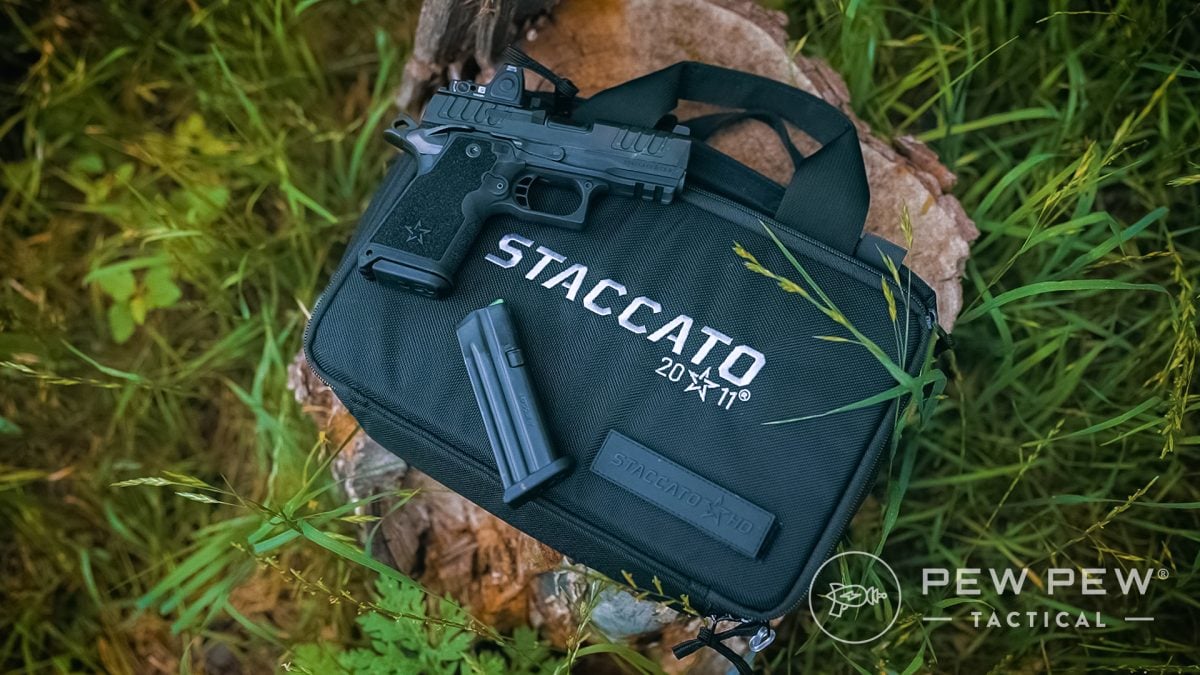
This pistol is very comparable in size to the Staccato CS I carry on a daily basis. In fact, they’re almost identical, but it’s clear Staccato learned from their previous efforts and changed a few things with the C3.6
I’ll cover these changes in greater detail below, but I’m sure you’re anxious to hear how the C3.6 ran. I’ll tell you up front, I haven’t had a bad experience with a Staccato yet, and this pistol was no different.
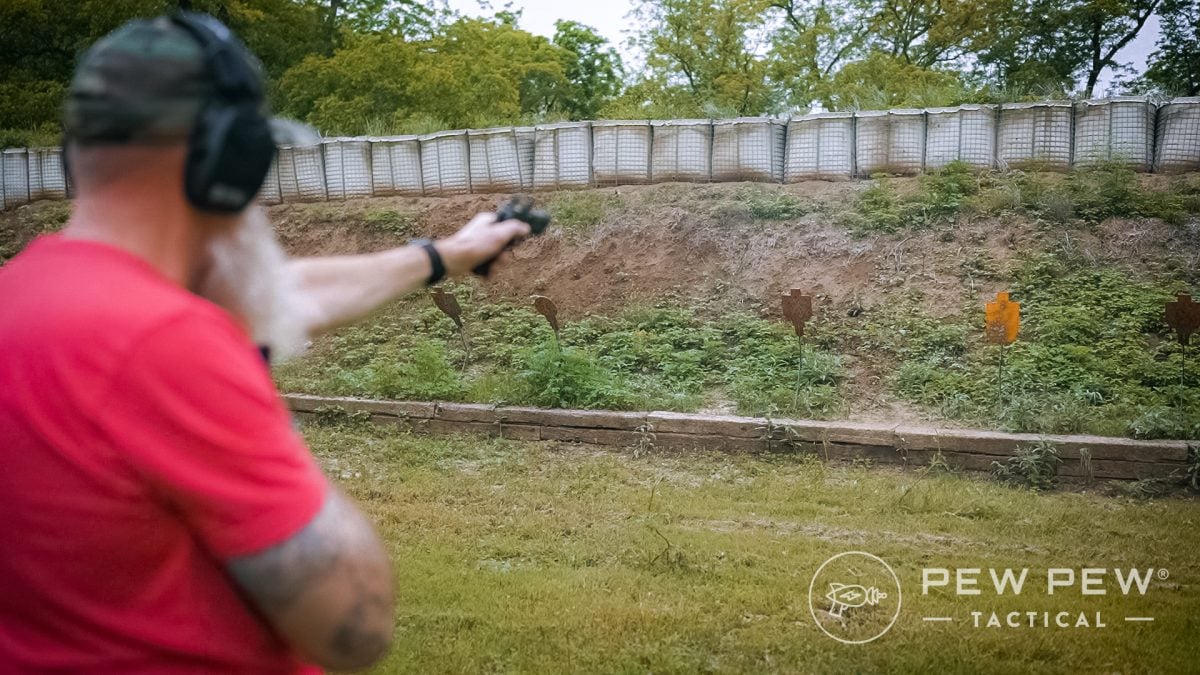
When I first started shooting, I noticed the C3.6 was a little snappy as far as recoil. I had just completed my LEOSA annual qualification with a Staccato P, a full-sized 2011.
Naturally, the differences were going to be evident. But, Staccato’s whole approach to the HD line is providing big gun performance in small packages, so how did they do?
Once I felt the relatively snappy recoil that I almost always felt in a smaller pistol, I simply applied a bit more grip pressure to contain it. The grip is just big enough to completely fill my right hand.
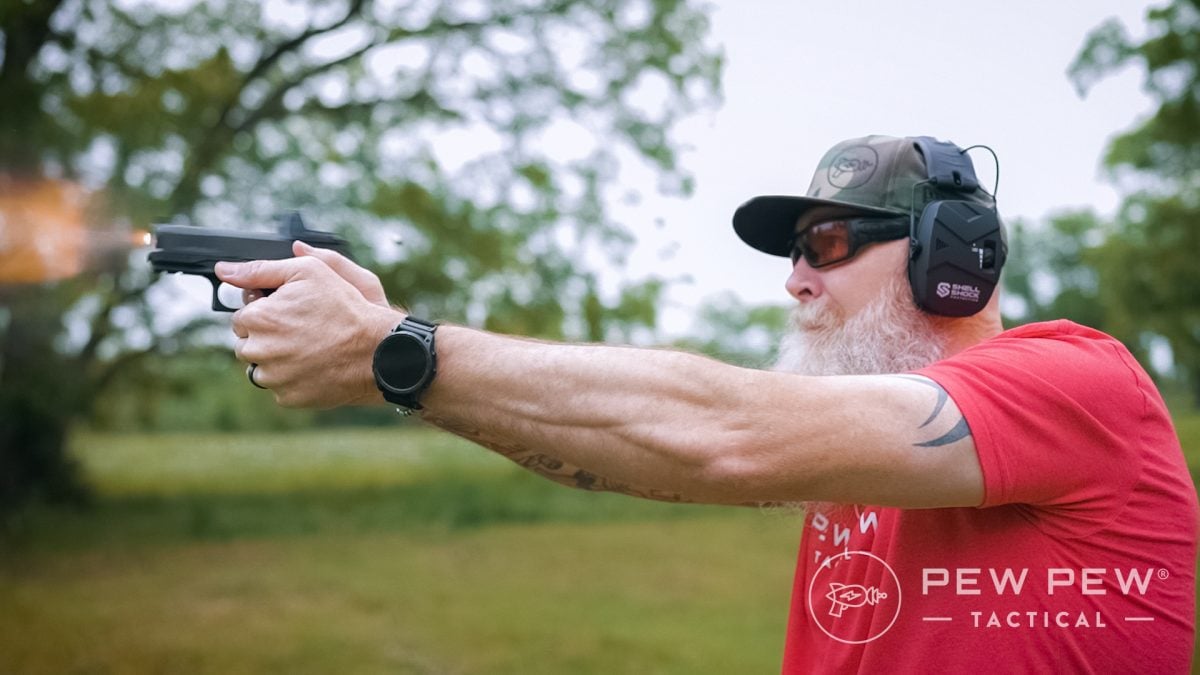
Grip texture on the C3.6 feels similar to grip tape on a skateboard, or like a medium grit sandpaper. It’s aggressive enough to allow for a good grip without tearing up your skin or clothing during concealed carry.
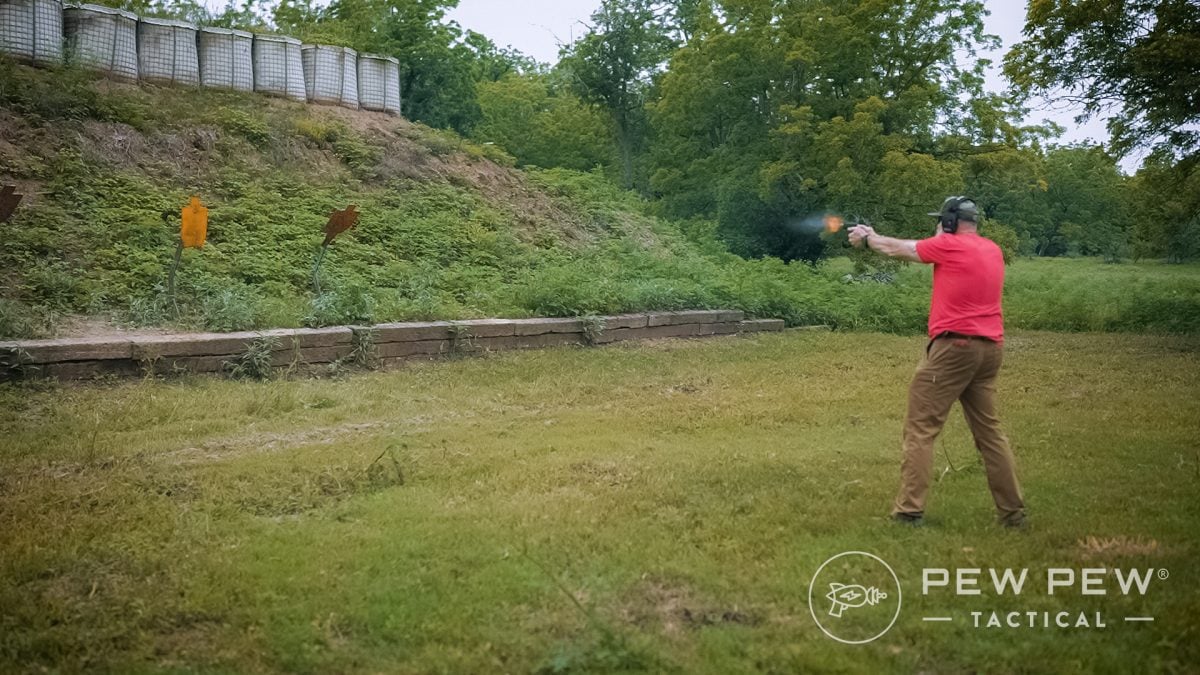
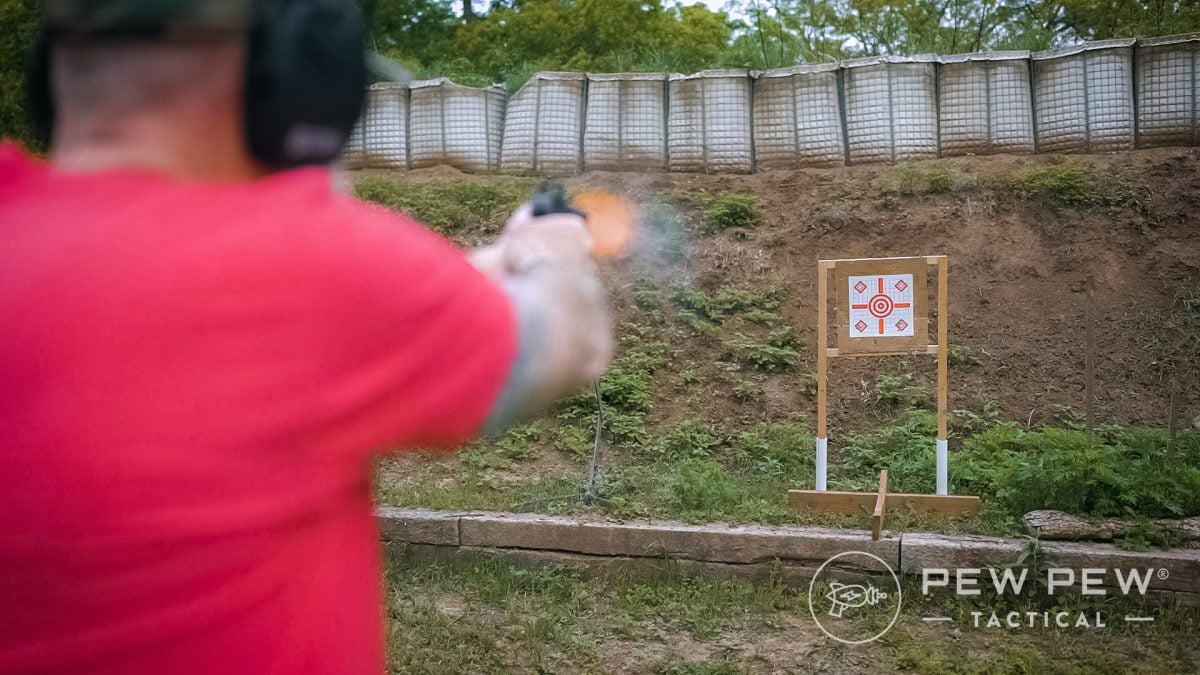
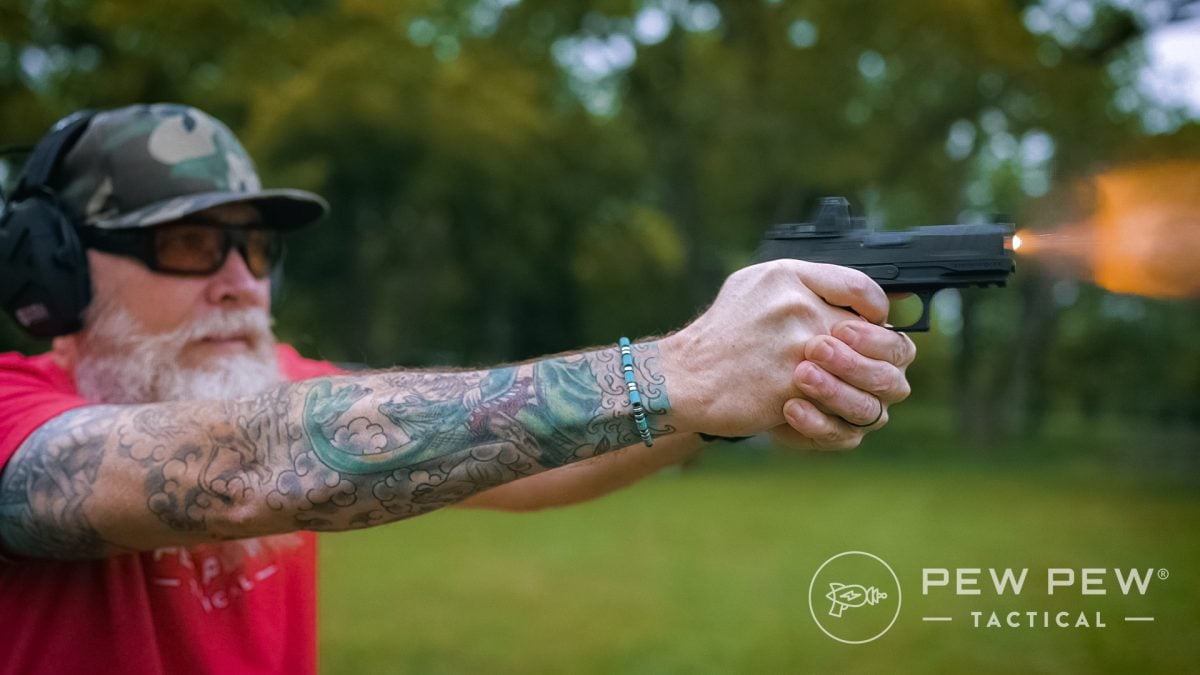
By adding a bit of grip pressure, the C3.6 settled down and could be fired quickly without losing accuracy at closer distances of 12 yards and in. In short, the smaller gun was delivering big-gun performance.
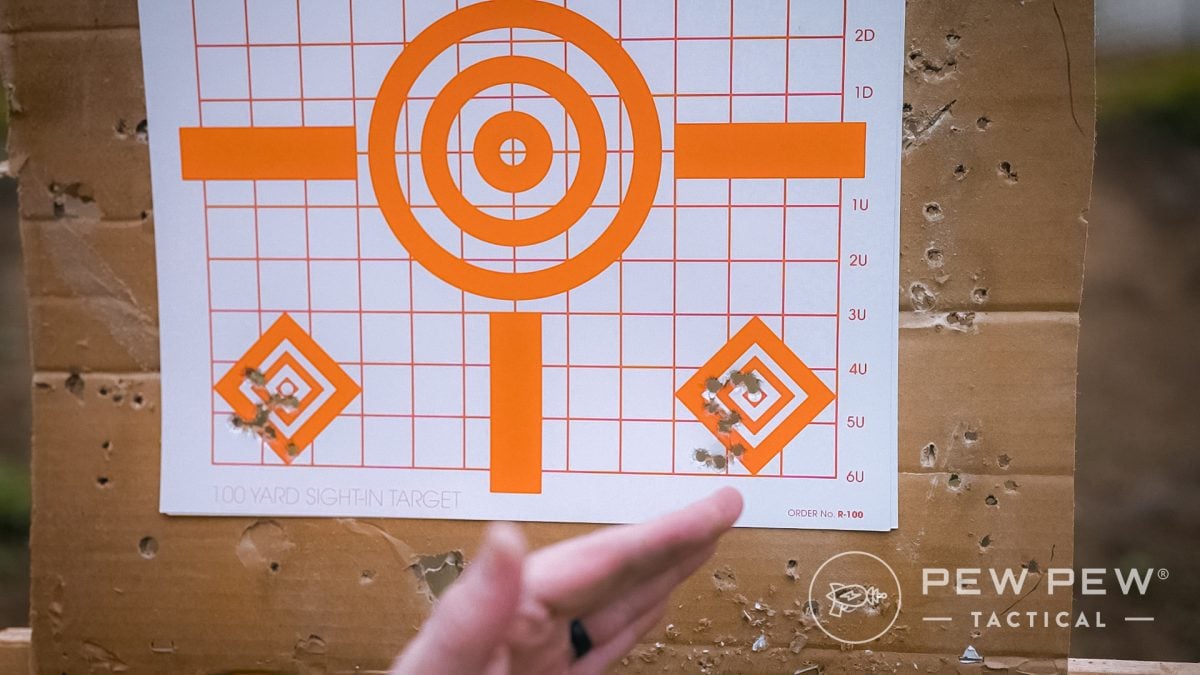
Moving on to accuracy, I started with Nosler ASP 124 gr. defensive ammunition. Firing 10 rounds at 7 yards, I was able to pull a group at 2 inches.
Some vertical stringing was evident, and this told me I was learning exactly where the trigger broke. In my second grouping, I determined to try to focus a bit more on a clean break.
Shooting ten rounds of AAC 115 gr. FMJ, I was able to create a slightly smaller group. This performance was good, but it still came in at just under 2 inches in size.
I pushed back to the 50-yard line and was able to hit fairly easily. However, the 100-yard line proved more challenging, and after a few misses, I questioned the merits of shooting a small gun at a great distance.
With recoil handled and accuracy proven, I spent the rest of the test period firing different ammo and drills to check for reliability. 2011s generally have tighter tolerances, and this held true with the C3.6.
When I was experimenting with grip pressure, I noticed a couple of times that my thumbs caused the slide to drag a bit. This was because I was applying too much lateral grip to the gun.
The solution was parking my thumb on the safety (once deactivated) and applying downward pressure. Not pushing in on the slide helped it run merrily along.
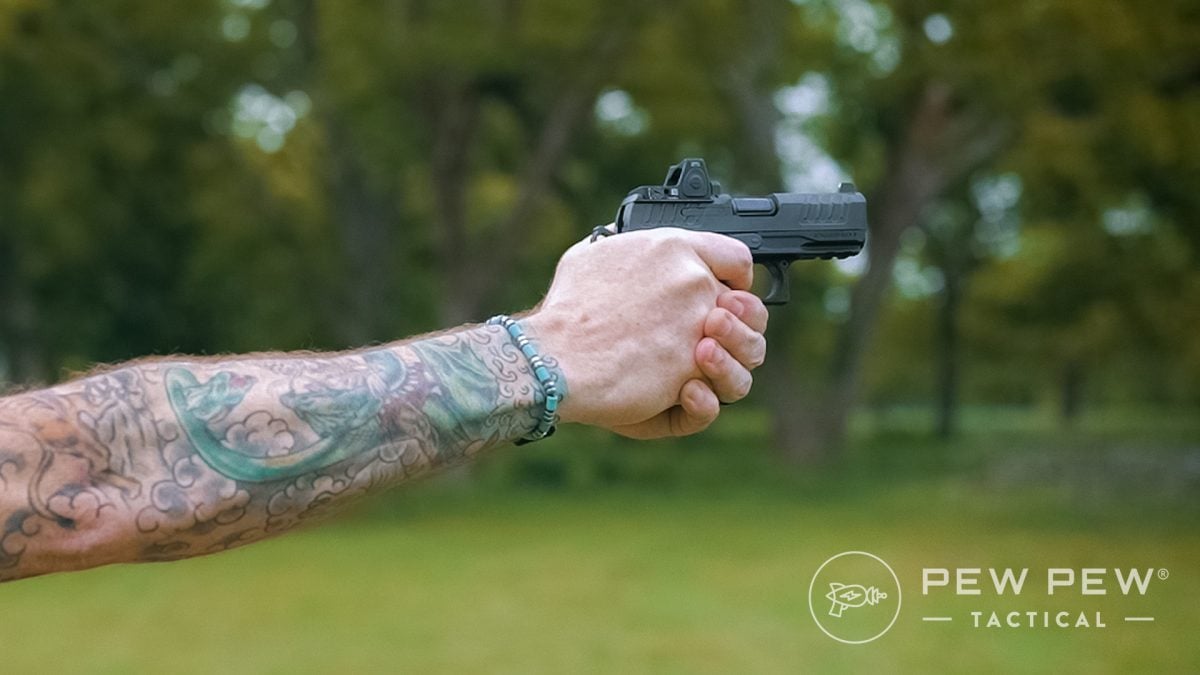
While I had a couple of situations where the C3.6 didn’t go back into battery after firing, I learned this was caused by my own thumb dragging the slide. In short, reliability through 500 rounds was perfect as long as I did my part.

The Best Gun Deals, Coupons and Finds
Subscribe to Pew Pew Tactical's sales and deals email.
Ergonomics: Fit & Feel
The aluminum-framed HD C3.6 is in that Goldilocks size for my hands. It isn’t too big to conceal, and it’s just big enough to fit my 2x hands without flesh hanging over, interfering with reloads.
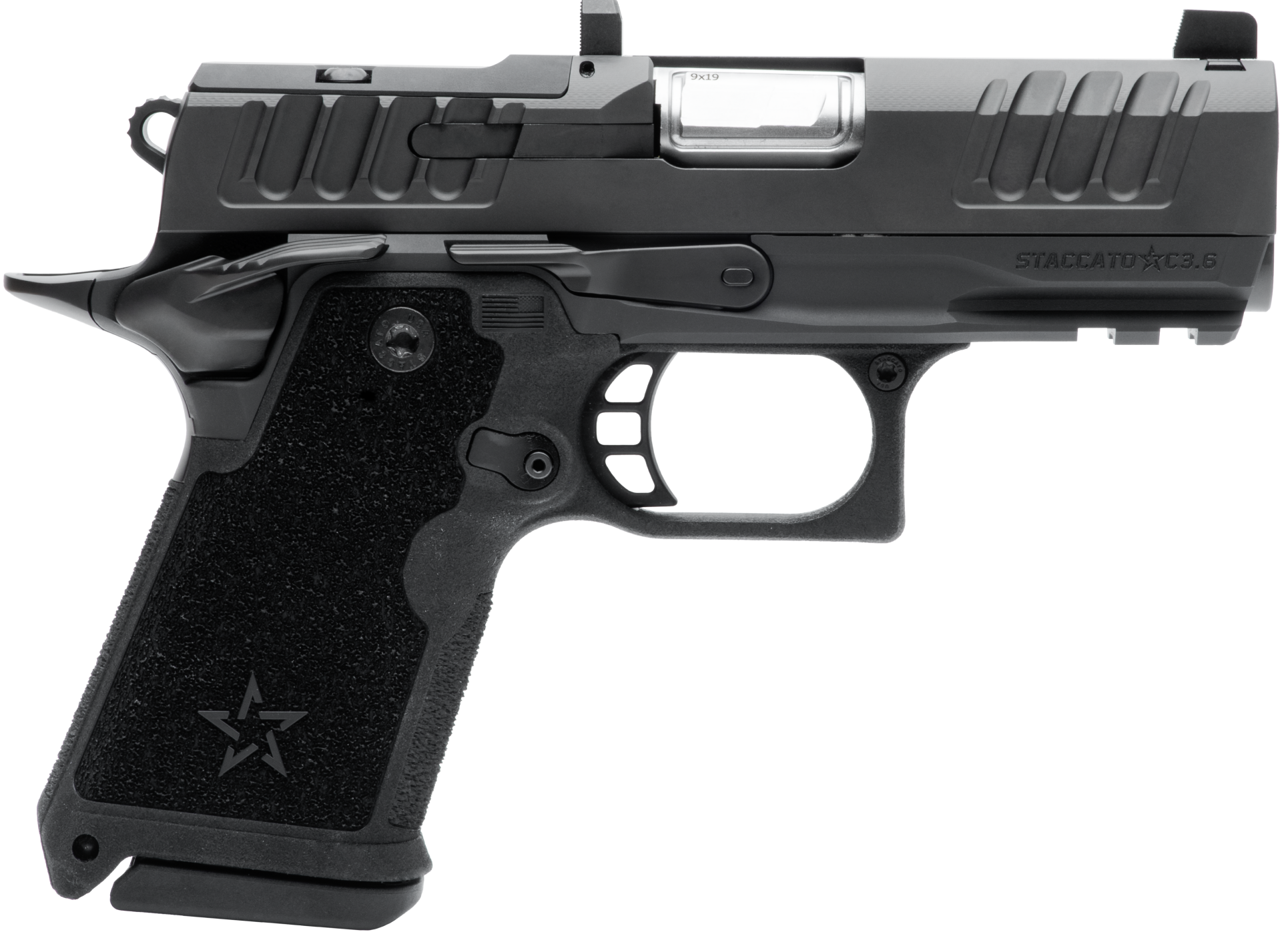
It would also be hard to ignore the apparent blending of the two types of guns. Staccato’s small 2011 got some Glock-worthy upgrades.
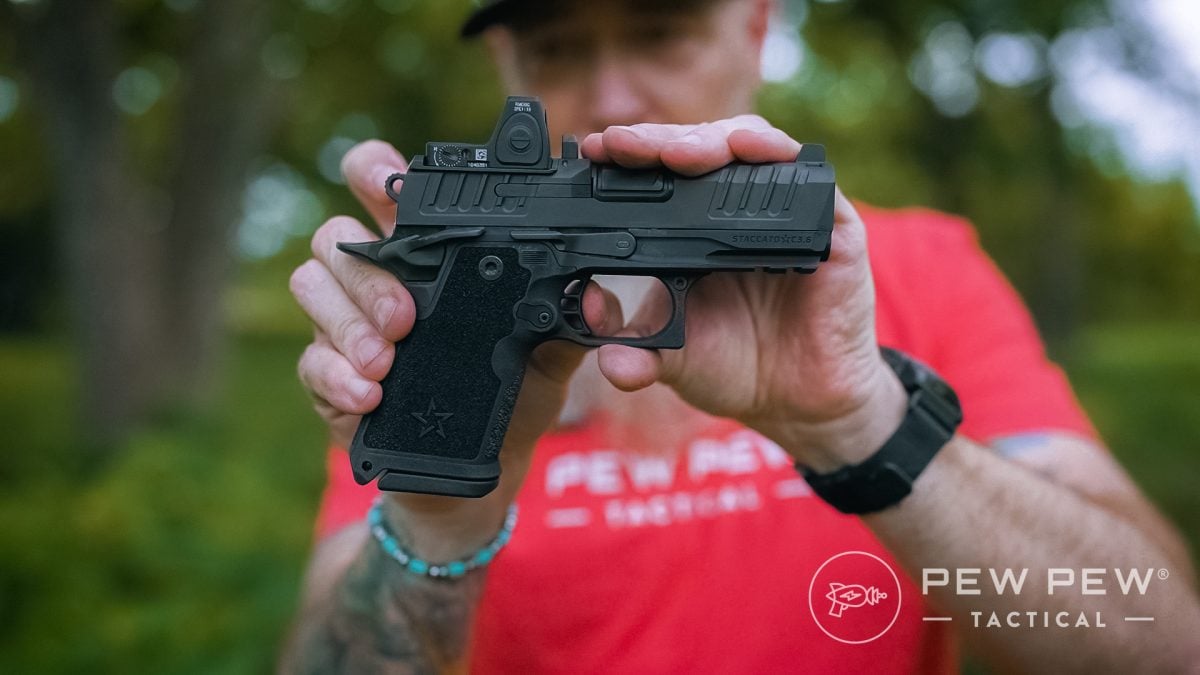
Some of the biggest differences are the lack of a grip safety and the fact that the C3.6 can run from Glock magazines. Staccato also added their new iron sights to the C3.6.
These irons sit in front of the optic, and although their radius is only roughly 3.75 inches, they are fully functional. There was a time when shooters strove to keep irons as a backup, but that faded as optics became more reliable.
With Staccato pursuing the law enforcement market, they’ve used a belt-and-suspenders approach for redundancy. You can absolutely co-witness your dot and irons with the C3.6’s setup.
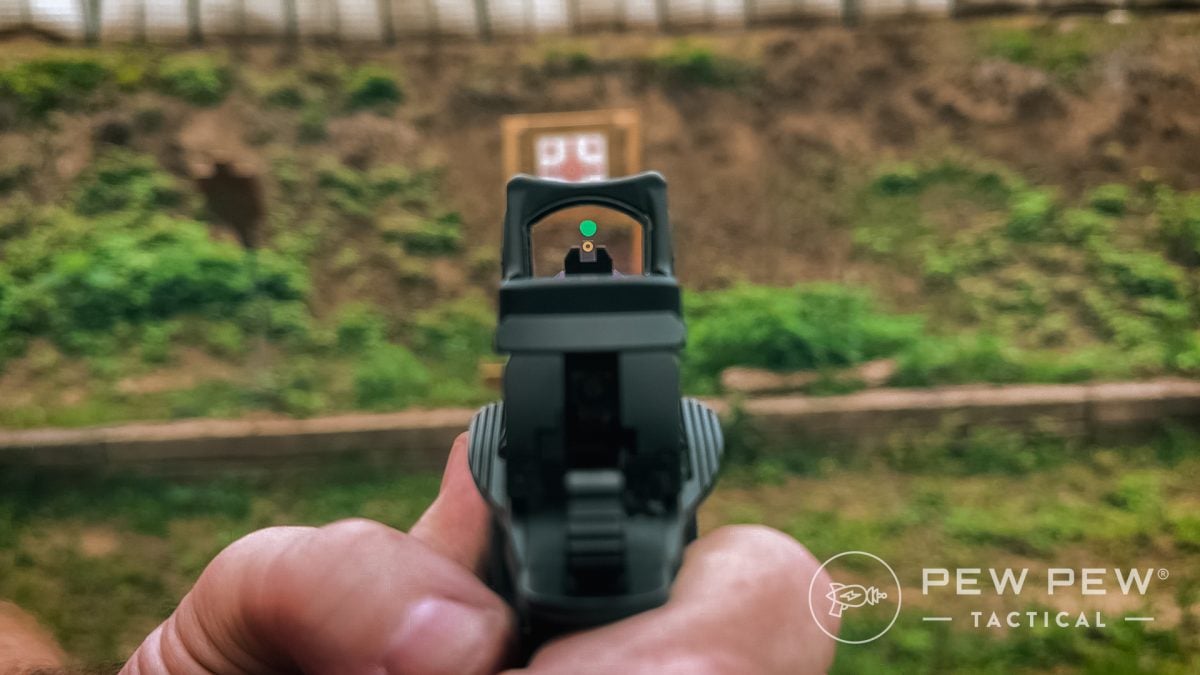
I was able to switch back and forth at will, but had a graphic reminder of the skills involved in lining up sights and switching back to front sight focus. I’ve gotten a bit rusty with using irons, so this was a good brush-up for me.
As mentioned above, Staccato deleted the grip safety on the C3.6. This may seem like a small thing, but it’s actually pretty huge.
Grip safeties demand a certain amount of pressure on the rear of the backstrap. There have been times in the past when I quickly drew a 2011, deactivated the manual safety, then wondered why the trigger wouldn’t break.
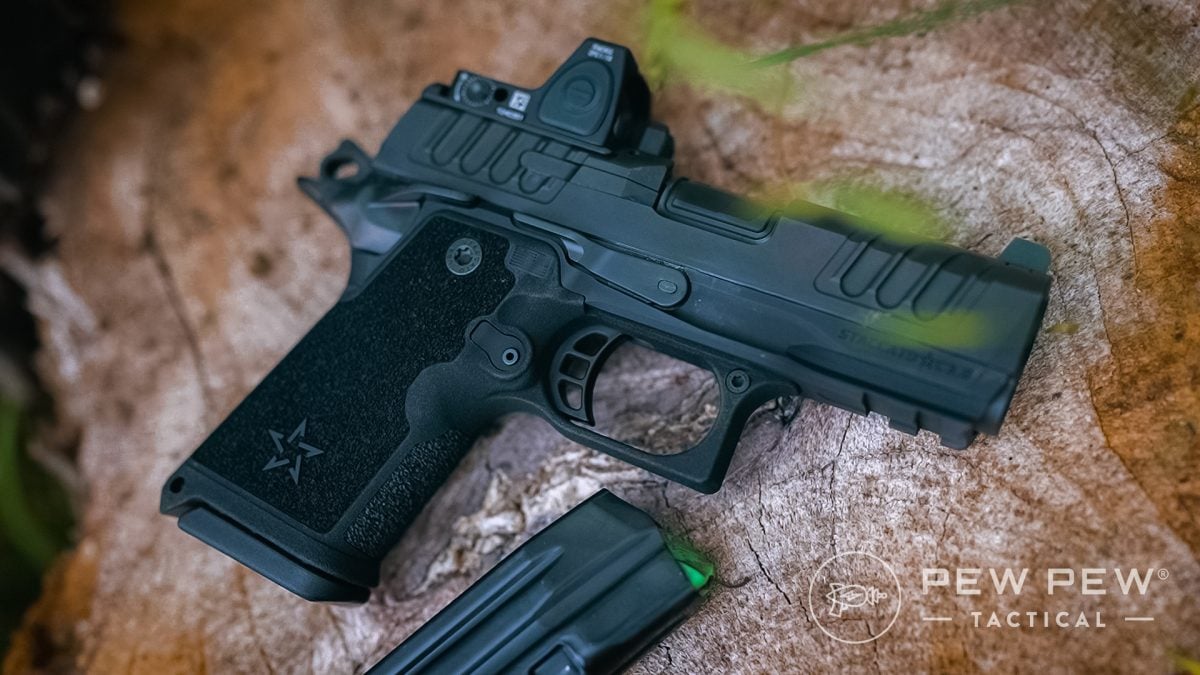
It’s the grip safety. Because of their location, you have to hit them just right to depress them. When your grip involves more lateral force than fore and aft, this can leave you not shooting.
So, unlike most striker-fired guns where you simply grip and rip, you need to think about pressing that extra safety. The C3.6 clears out the grip safety and lets you get down to business, and I love it.
Another noteworthy change is the ability to use Glock-pattern magazines. The C3.6 we tested came with two 15-round steel magazines with bright green followers that absolutely work in my Gen 5 Glock 19.
They both inserted, locked in, fed, and dropped clear when called upon to do so. I had to break my master grip to hit the reversible magazine release, but that’s nothing new.
Ergonomically, controls are well placed and easy to operate on the C 3.6. The safety is ambidextrous and long enough that most thumbs should be able to manipulate it.
The slide stop/release is present on both sides of the frame and works well, though I typically manipulate the slide during reloads. Overall, the grip is ergonomically appealing with rounded corners.
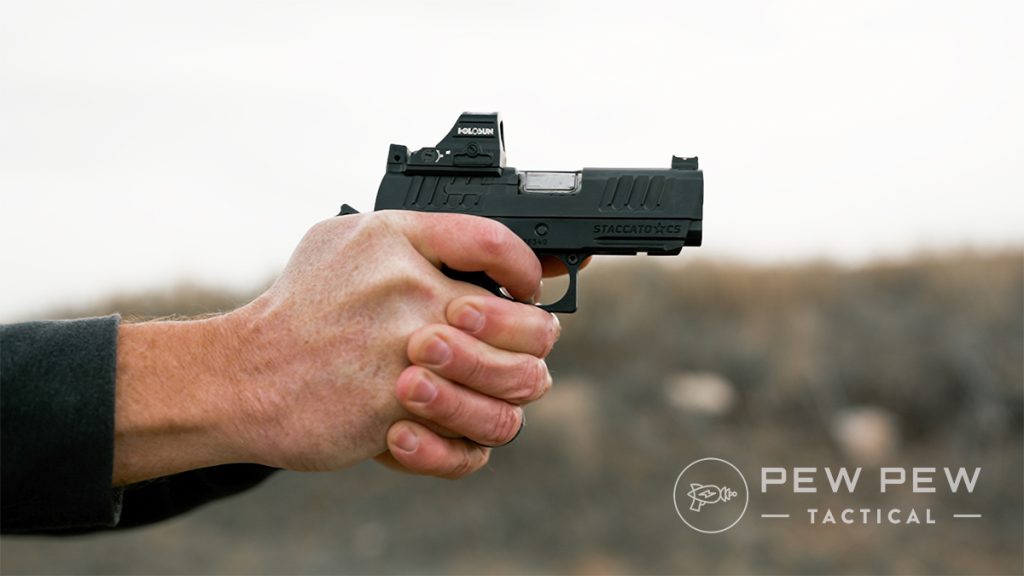
It’s slightly wider than the Staccato CS, but about the same in length (front to rear). It should fit most hands easily and is nowhere near as big as the Staccato P.
While we compare and contrast a hammer-fired 2011 with the striker-fired Glock Staccato it's borrowing from, it’s worth taking a moment to discuss triggers. One of my least favorite things about Glock can’t hold a candle to Staccato, but this should be no surprise.
Starting at the bow, it’s skeletonized and curved in a gentle fashion. Pressing back, it moves roughly a millimeter before reaching a wall.
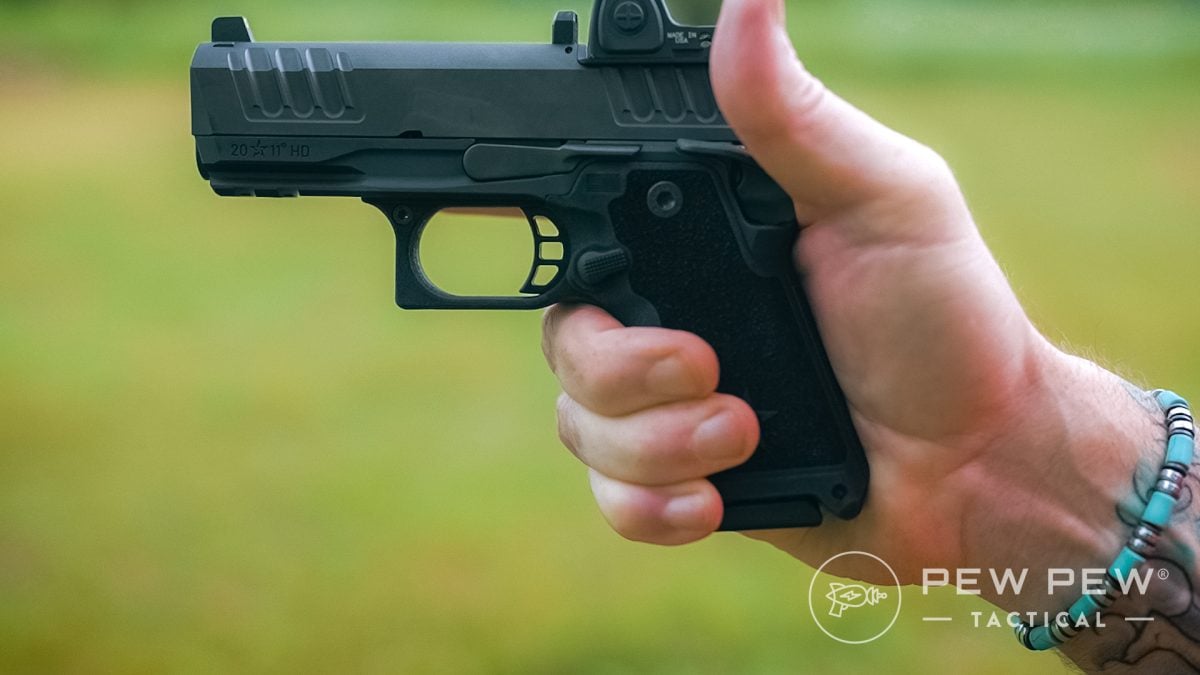
Once here, the trigger breaks with approximately 3 pounds 5.5 ounces of pressure as measured on a Lyman Digital gauge. Reset happens almost immediately upon release, and although it is tactile, its reset click is pretty soft.
In short, the trigger breaks cleanly after you hit the wall. I can get into Glock triggers with practice and learning, but they often feel squishy, even after you find the wall.
Improvements We’d Like To See
I have no complaints about the HD C3.6 as far as its ergonomics, controls, reliability, and accuracy. It’s simple enough to point out that there is a premium price for this type of performance, and Staccato is rightfully proud of its products.
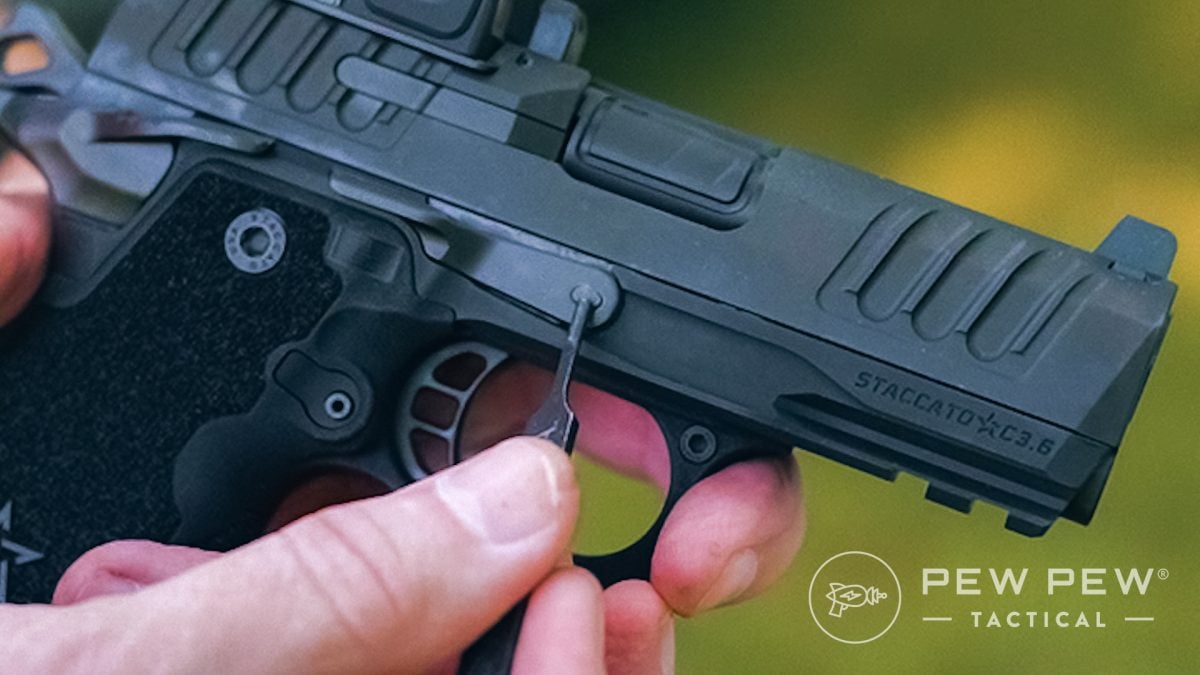
Over the last three decades, I ran a number of 1911s, even carrying one on duty when I was a Patrol Commander. I’ve seen their takedown operations continually get easier for shooters to complete.
That said, I’m not a big fan of the C3.6’s takedown. You have to line up a narrow tool (a punch) and apply pressure while pulling the slide back.
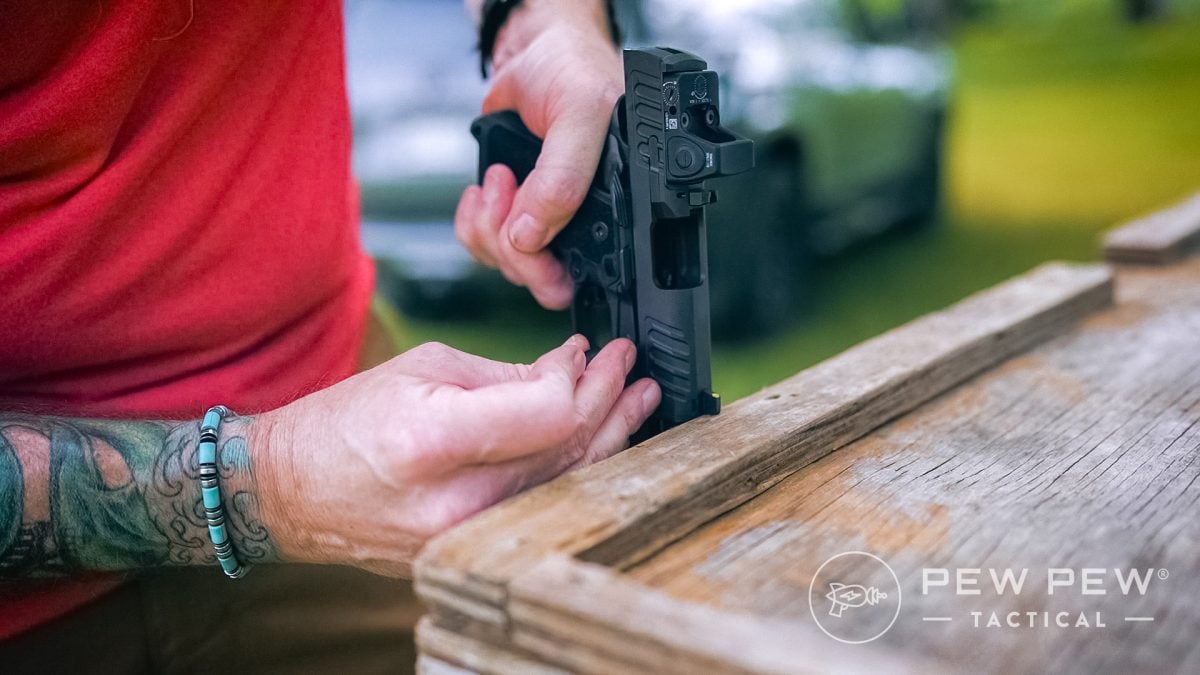
The possibility of scratching up at least a part of your gun looms as a result. It’s not terrible, and gets better with practice, but I’d prefer the toolless methods of recent years.
Who Is the Staccato HD C3.6 For?
The C3.6 is designed for just about anyone who wants to carry concealed. It’s small enough to tuck away pretty easily but still delivers big-gun performance.
While this is arguably one of the most crowded segments in the gun community, Staccato’s offering provides a trigger that is above striker-fired experiences, arguably improving accuracy.
Notably, I shot slightly better groups with the Gen 6 G19 we recently tested. However, the G19 is a slightly larger gun with much improved ergonomics (for Glock).
This type of performance comes at a premium Staccato price, so consumers should be aware that this pistol costs as much as four Glock 19 pistols.
Other potential customers would include law enforcement. While I wouldn’t carry the C3.6 as a uniformed duty weapon, it would be a great choice for command staff or detectives.
Our Most Popular Posts
By the Numbers
Reliability: 5/5
The C3.6 ran extremely well, though it must be kept lubricated and clear of restricting thumbs.
Ergonomics: 4/5
Fully ambidextrous controls are a nice touch, but the grip is abbreviated. Huge hands (3X) may struggle, but the C3.6 will fit a wide variety of shooters.
Accuracy: 3/5
The bull barrel and excellent trigger combine to give the C3.6 good accuracy for its size.
Customization: 3/5
Staccato gives shoppers three different trim packages for the C3.6. Standard is plain Jane, while Preferred has Trijicon night sights. Premium comes with all this and extra magazines.
Value: 3/5
The C3.6 provides impressive shooting, but the premium price may hold it out of reach for many.
Overall: 4/5
Upgrades & Accessories for the Staccato HD C3.6
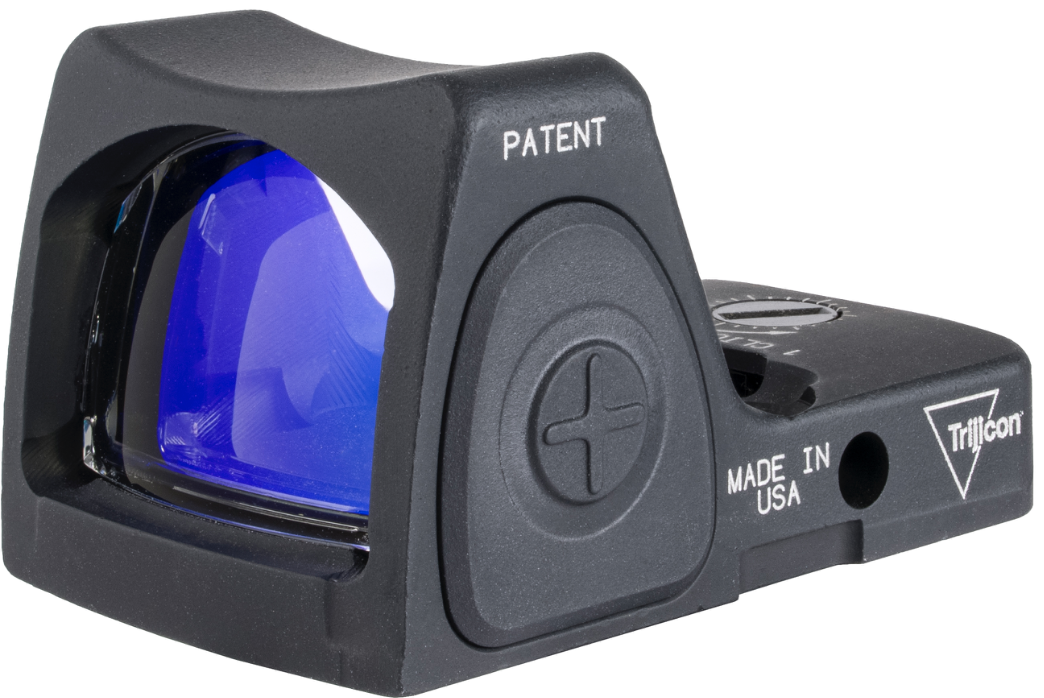
There are too many benefits to using optics on pistols these days, but the primary one is switching back to target focus. The Trijicon RMR is pricey, but dependable, and a great addition to any concealed carry.
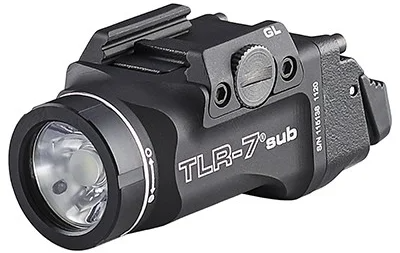
It's a good idea to have a light on a defensive firearm for positive identification in the dark. The TLR-7 from Streamlight is a great unit that is small in form, but still provides good illumination.
If you're going to the range, you need quality ear pro. We use Shell Shock because we had input in how it was designed! It's comfortable to wear all day and does a great job.

How We Tested Staccato HD C3.6
I tested the Staccato HD C3.6 with a total of 500 rounds. The bulk of this was AAC FMJ at 115 gr, while the rest consisted of Nosler ASP 124 gr and Federal HST 147 gr to make sure defensive ammo cycled.
The C3.6 was fired from 50- and 100-yards during accuracy. While I had several hits at 50, the 100 eluded me. All other accuracy testing was completed at 7 yards using 10-shot groups.
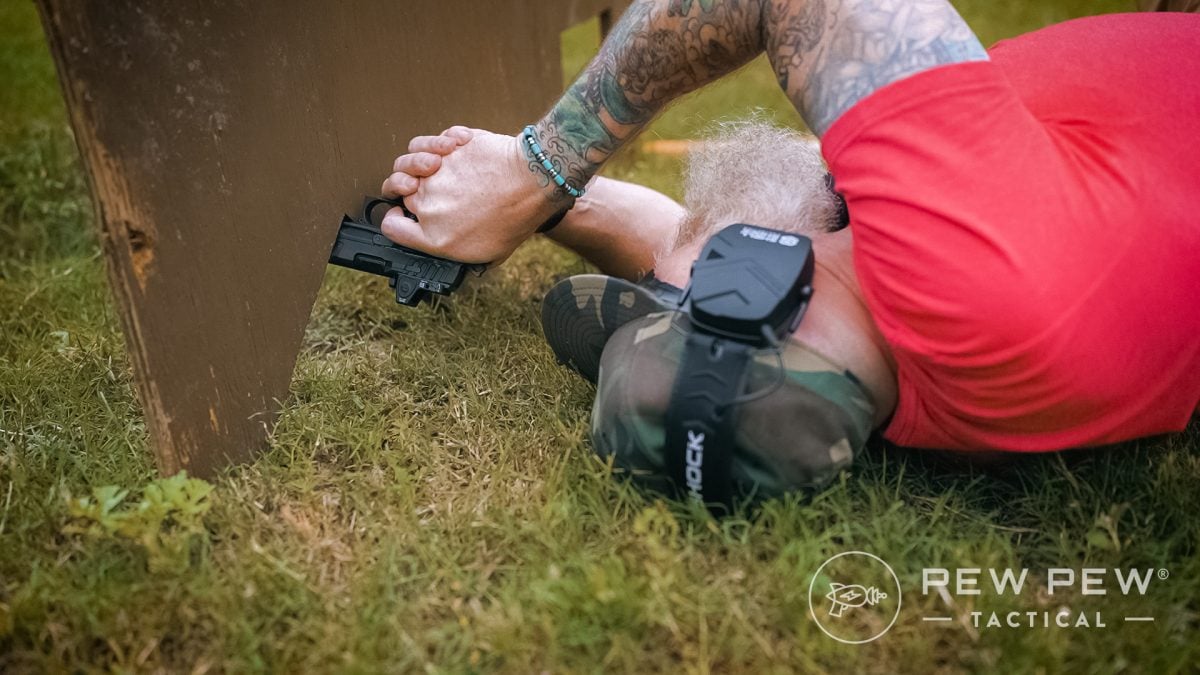
I fired the C3.6 from several different positions on a VTAC barricade (even upside down) and used both hands. Reloads were tested as they occurred naturally during shooting.
Reliability was assessed by the total overall performance of the pistol during the 500-round count.
Meet the Experts
This review was written by Sean Curtis, Content Producer and Lead Review Analyst for Pew Pew Tactical. Sean spent 22 years in law enforcement in Colorado, where he served as a Patrol Commander, SWAT Team Leader, and firearms instructor for his agency.
Sean holds multiple certifications relevant to this review, including 44-Hour POST Certified Handgun Instructor, 40-Hour POST Train-the-Trainer, 40-Hour Handgun Instructor Course (FCPD), CLEFIA Advanced Firearms Instructor Training, 40-Hour NLEFIA Red Dot Instructor, 40-Hour Principles of SWAT, High-Risk Warrant Service Workshop, and Basic 40-Hour Tactical Response Course.
Outside of law enforcement, Sean has continued his handgun training, completing Gunsite 250 and Gunsite Team Tactics.
This review was edited by Editor-in-Chief Jacki Billings, who runs Pew Pew Tactical’s experienced team of reviewers. Jacki has worked as a media professional for close to 20 years, specializing in gun media for almost 10 years. She uses her extensive professional journalism and editing experience to set testing protocols and editorial standards. Jacki’s second carry pistol was a Glock 19, and her home defense pistol of choice has always been and still is the Glock 17. She has more than a decade’s worth of experience with the platform and owns both the Gen 4 and Gen 5 Glock 19s.
Final Verdict on the Staccato HD C3.6
The Staccato HD C3.6 is an accurate, dependable, and ergonomic pistol that tucks away easily while providing big gun energy. If you can swing the price tag, you won’t be disappointed with the performance.
This new lineup from Staccato is interesting for a few reasons. Getting rid of the grip safety was a great step, but you might be curious why the company would make them feed from Glock magazines, which are reliable, but otherwise unremarkable.

Essentially, it removes a pain point for someone looking to trade up. If you’ve already got Glock magazines, you’re well-equipped and don’t have to shell out tons of money on what are normally very expensive 2011 magazines.
This is smart for consumers, but even smarter for police agencies that already have a lot of Glock magazines in their inventory.
Will you be purchasing a Staccato HD C3.6? Let us know in the comments below. For even more hammer-fired action, check out 5 Best Hammer-Fired Pistols [Hands-On Tested].