
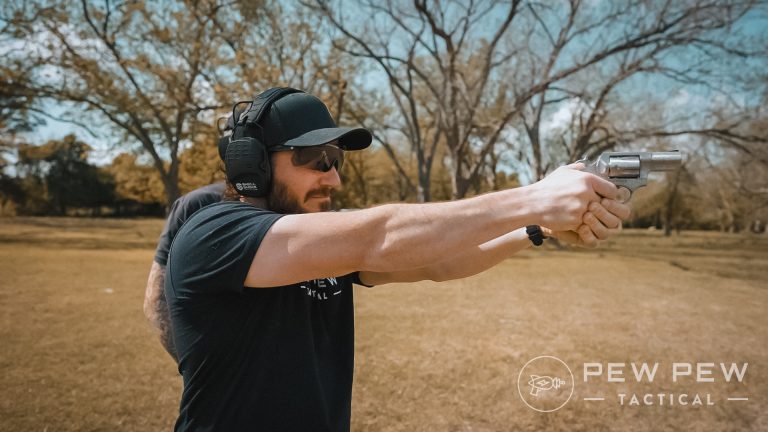
Perhaps you have decided to add a revolver to your life. That’s great! Revolvers are awesome, fun, and generally very reliable.
But revolvers operate differently from the way standard semi-automatic pistols do. So, how the heck do you use one of these things?
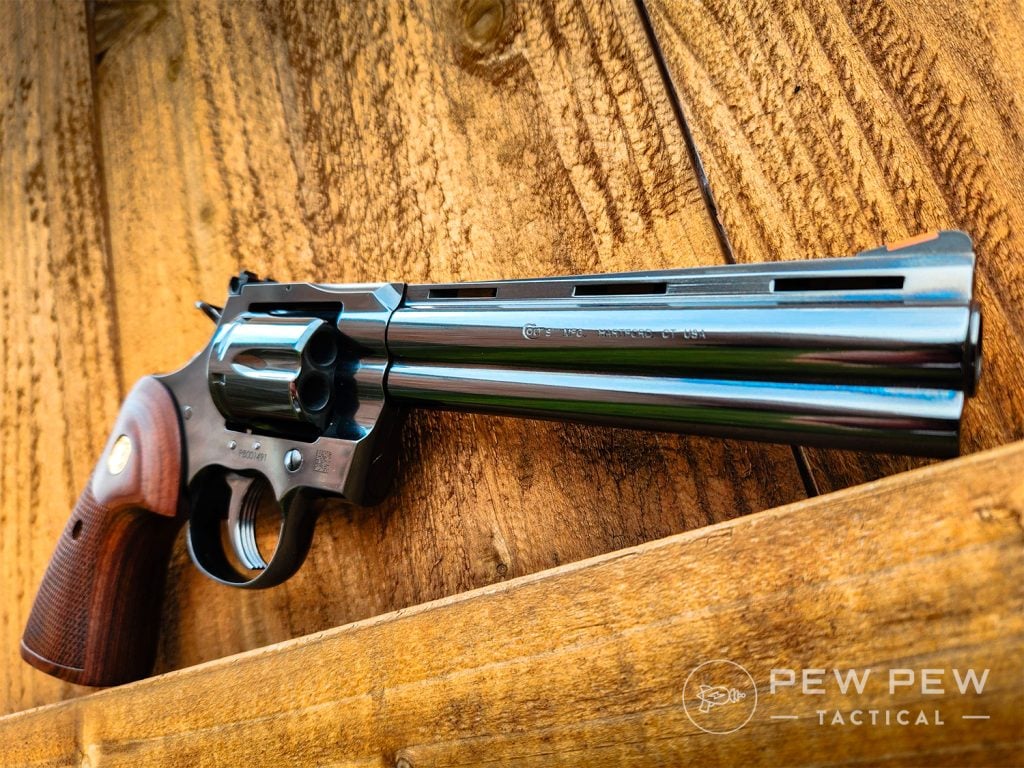
We have answers!
Today, we’ll show you how to safely unload your revolver, how to properly grip and shoot a revolver, and cover the operation for both single-action and double-action revolvers.
Saddle up, because it’s time to get smart about revolvers!
Table of Contents
Loading…
What You Need Before You Start
Must-Have Tools
- Revolver
- Ammunition
- Ear Pro & Eye Pro
- Targets
Nice to Have Tools
- Speedloaders
- Optic (if your revolver has a mount)
Single-Action vs. Double-Action Revolvers
Depending on the type of revolvers you have, the loading and unloading operations can differ. You can learn more in detail about the core differences between these action types in our article – [Comparison] Single Action vs Double Action vs Striker.
How to Load a Single-Action Revolver
Revolvers have been in production for a long time, so there are exceptions to every rule. To be safe, always read and follow your owner’s manual.
Step 1: Open the Loading Gate
Single-action revolvers typically have a loading gate on the right side of the frame. To load the gun, the loading gate must be swung outward to expose the charge holes/chamber.
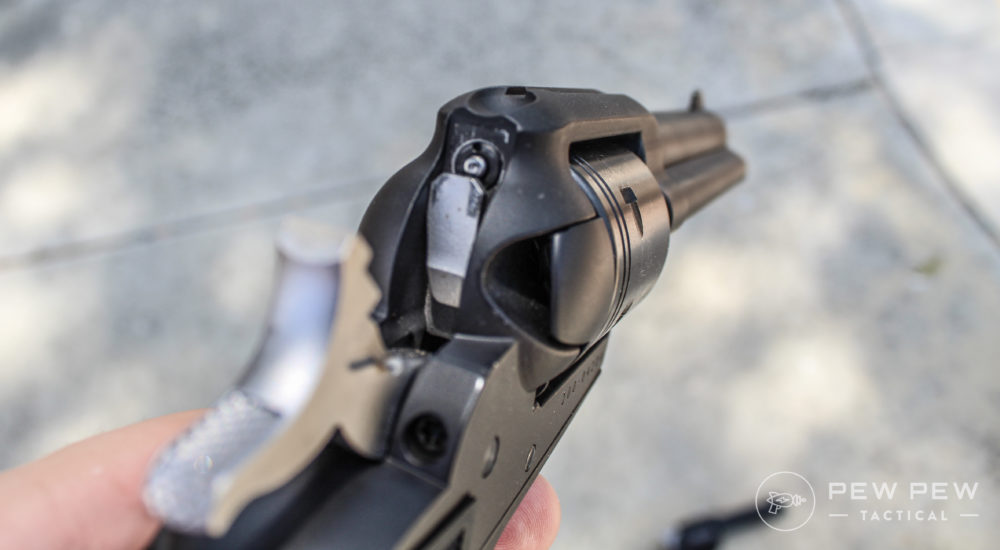
Step 2: Insert rounds
Next, you want to place the rounds in the revolver. Single-action revolvers only allow for one round to be inserted at a time. This means you must rotate the cylinder manually as you go to expose the next chamber.
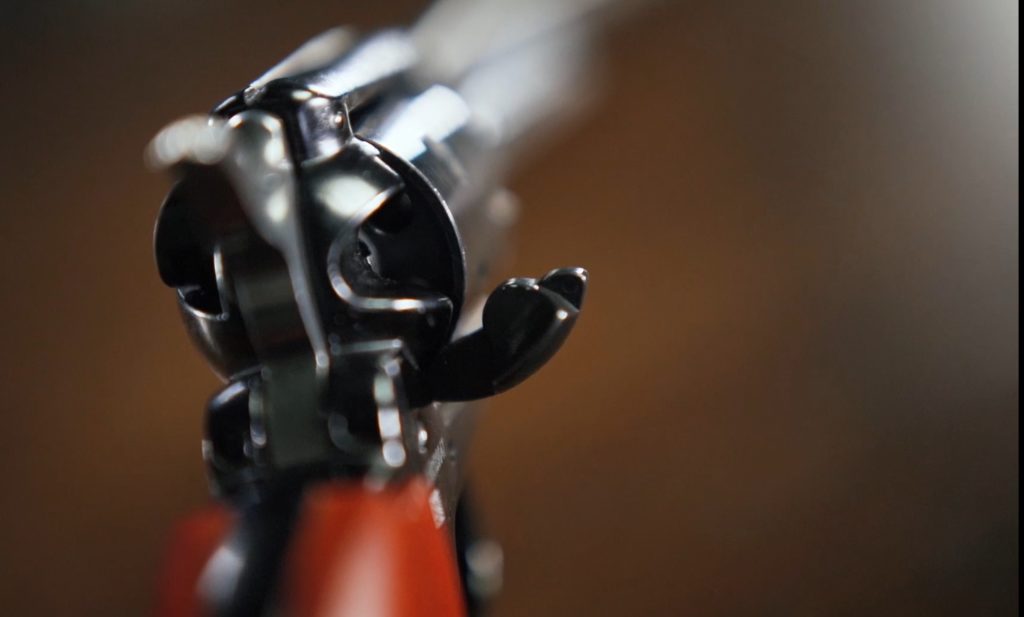
NOTE: Some single-action revolvers allow you to open the loading gate and freely spin the cylinder, no matter the position of the hammer. However, many single-action revolvers require the hammer to be partially cocked in order to unlock the cylinder and allow it to rotate. Depending on your exact revolver, you may have to click the hammer back slowly into either the first or second position.
Step 3: Close the loading gate
Once you’ve finished placing your rounds, close the loading gate. I like to then gently try to rotate the cylinder after the gate is closed, just to make sure it is properly locked in place.
How to Unload a Single-Action Revolver
Whether you’ve shot your revolver dry and want to confirm it is empty, or you simply want to unload your single-action revolver at the end of the day, the process is the same.
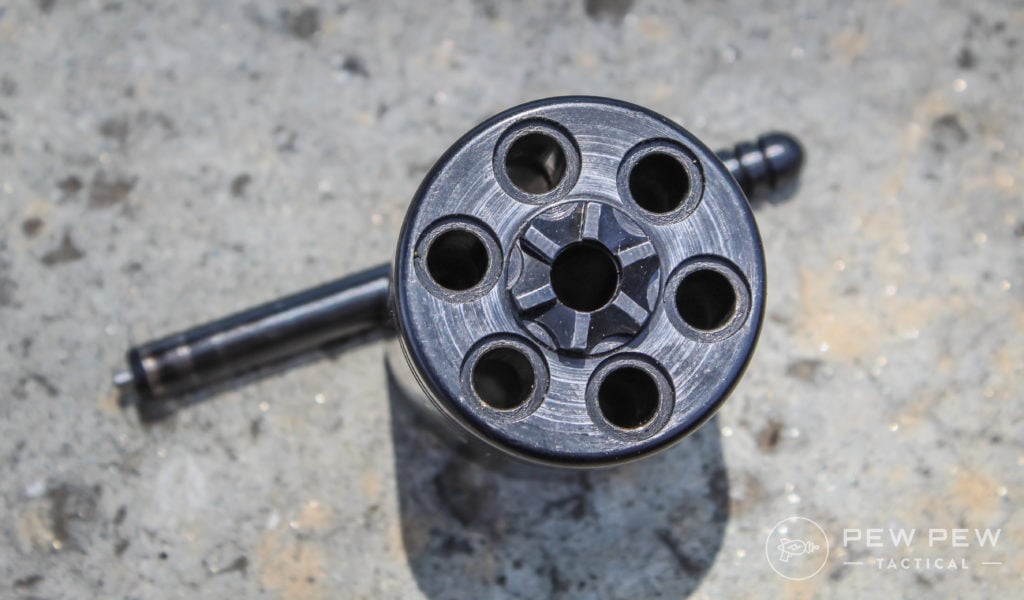
Step 1: Open the Loading Gate
You first want to start by opening the loading gate, just as you would when loading the firearm.
Depending on your single-action revolver, you may either be able to open the gate regardless of the hammer position, or you mayneed to move the hammer to the half-cock position.
Step 2: Eject the rounds
Next, you will rotate the cylinder by hand and punch out each spent case or unfired round using the ejector rod that is located underneath the barrel of the revolver.
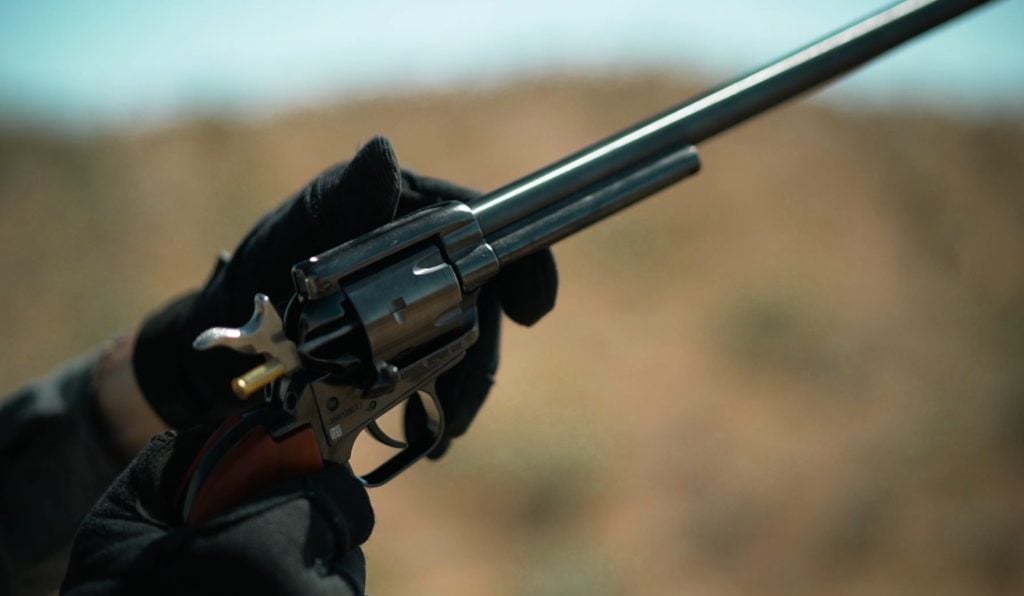
Some revolvers may allow you to remove the entire cylinder and dump it out, but using the ejector rod is the most common method of unloading.
Step 3: Close it up
When you’re done, verify that there is no ammunition in the revolver, close the loading gate, and safely lower the hammer if you’ve half-cocked it.
How to Load a Double-Action Revolver
Step 1: Swing out the cylinder
The cylinder on a double-action revolver almost always swings out to the left to allow for loading.
To open the cylinder, actuate the cylinder latch (typically a button located just behind the cylinder on the left side of the frame) and gently push the cylinder to the left, freeing it from the frame.
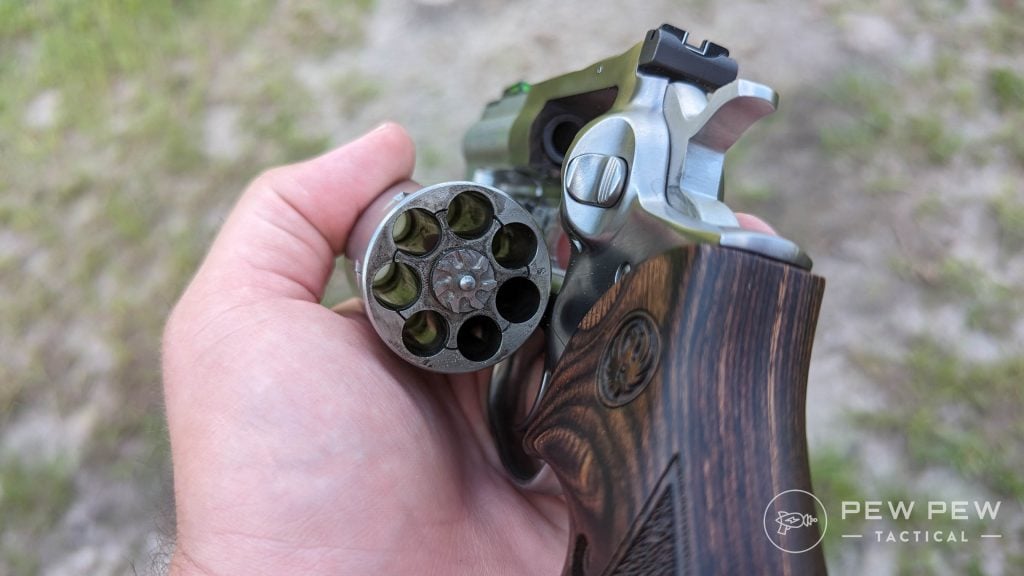
Smith & Wesson revolvers typically require you to push the latch forward. Colt revolvers typically require you to pull the latch backward. Ruger revolvers typically have you push the latch down to actuate.
Step 2: Load the rounds
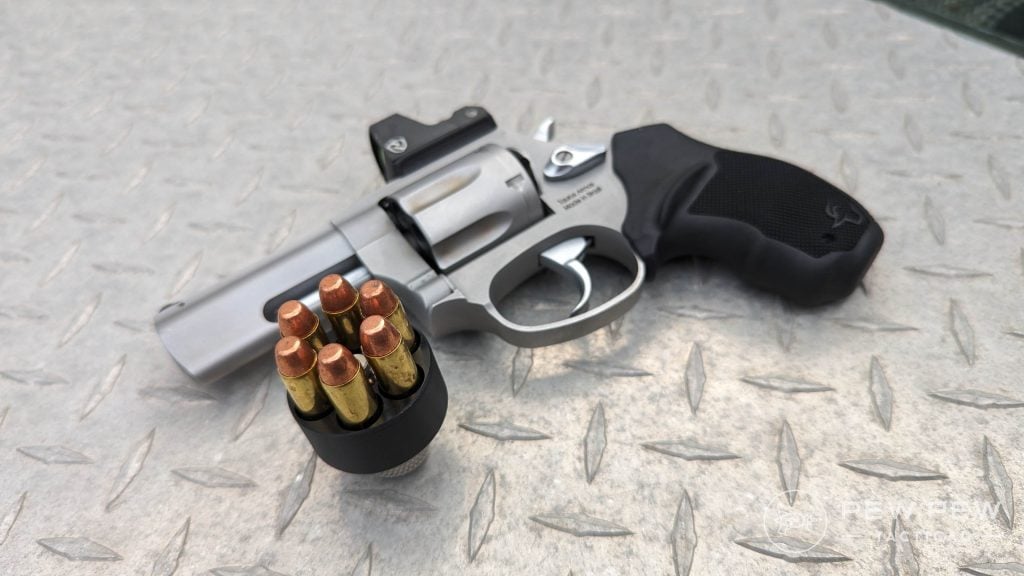
Unlike the single-action, the entire chamber will be visible instead of just one chamber. You can load each chamber individually or use a speed loader to load them all at once for a quicker reload time.
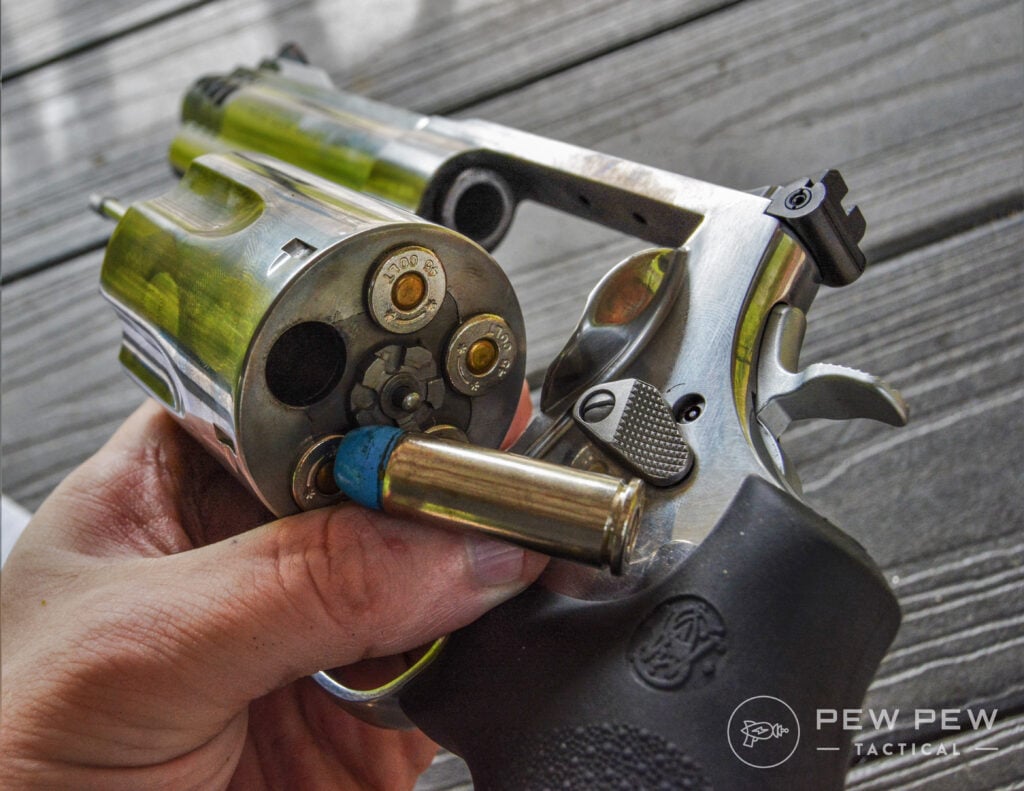
Step 3: Close the cylinder
Once you’ve loaded your rounds, simply push the cylinder back into the frame until it seats (usually with an audible or tactile click).
How to Unload a Double-Action Revolver
Step 1: Open the cylinder
To unload a double-action revolver, depress the cylinder latch and gently push the cylinder out of the frame to the left.
Step 2: Press the ejection rod
There should be an ejector rod that sticks out of the front of the cylinder. Gently press the ejector rod rearward. All the spent brass or live rounds will rise from the cylinder, allowing you to remove them one by one.
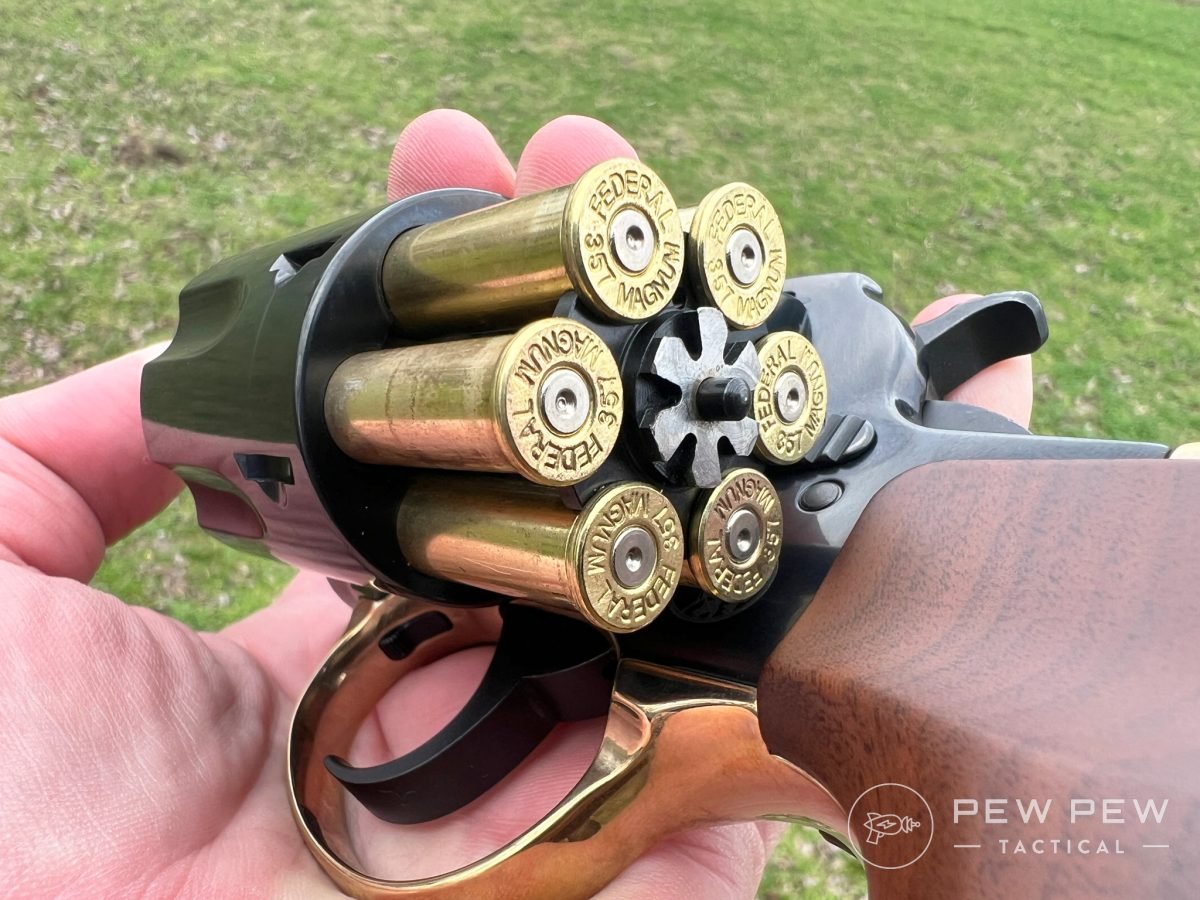
You can also point the muzzle upward and actuate the ejector rod. This will let gravity do most of the work, and most of the brass should fall freely to the ground. You can pick out any rounds that don’t slide out by hand if necessary.
Step 3: Close the cylinder
When you’re done, make sure there’s no ammunition left in the cylinder and return it to the locked position inside the frame.
How to Shoot Single-Action Revolvers
Step 1: Get a Proper Grip Angle & Wrist Alignment
We cover the best way to grip and hold a revolver in our article on How to Grip Pistols.
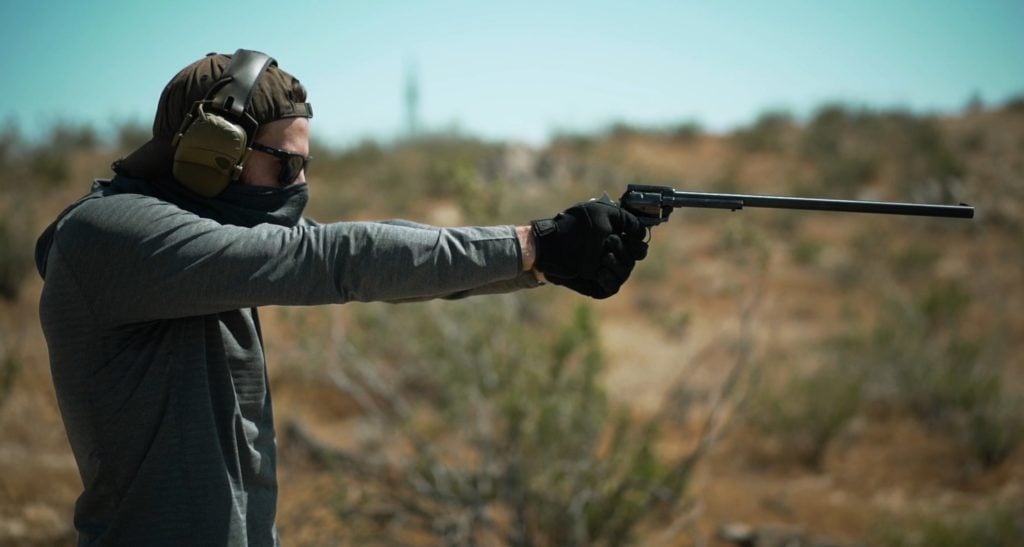
This step is critical because putting your hands near where the cylinder meets the barrel can result in injury from side flash. Also, any contact with the cylinder during firing can potentially cause malfunctions
Step 2: Cock the hammer
As the name suggests, the trigger on a single-action revolver only does one job: drop the hammer.
To cock the hammer, use your thumb to pull the hammer to its fully rearward position.
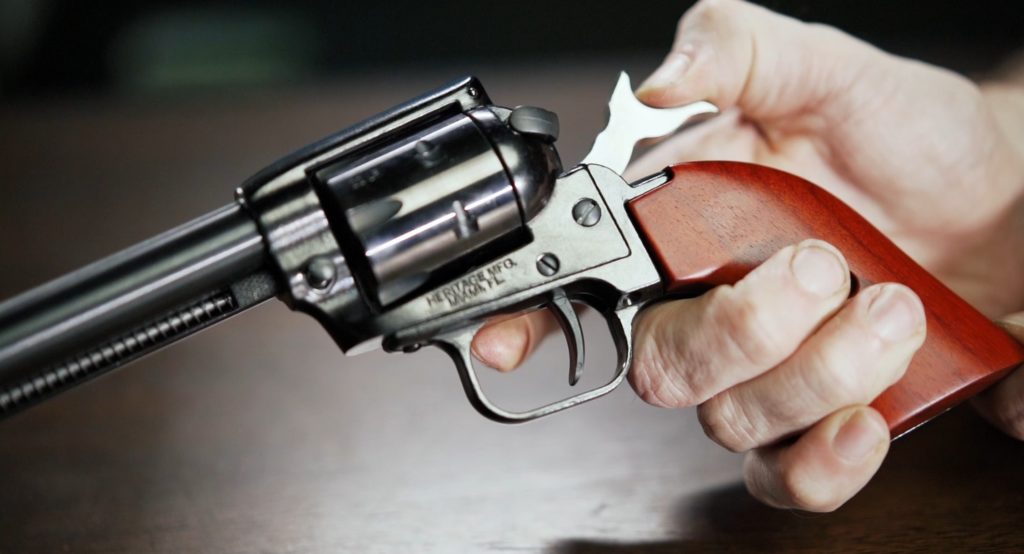
The hallmark of single-action revolvers is that you have to manually cock the hammer each time before firing. This will also cycle the cylinder to line up the next chamber between the hammer and the barrel.
Step 3: Pull the trigger
This step is as simple as it sounds: once the gun is pointed at the proper target, pull the trigger.
Since the trigger is simply releasing tension, single-action triggers are famously short, light, and crisp. These are some of the best triggers you’ll ever feel.
How to Shoot Double-Action Revolvers
Step 1: Get the Proper Grip
Just like with single-action revolvers, you need a proper grip to ensure good recoil management, sight alignment, and safety. Our article on How to Grip Pistols includes a step-by-step guide for gripping revolvers.
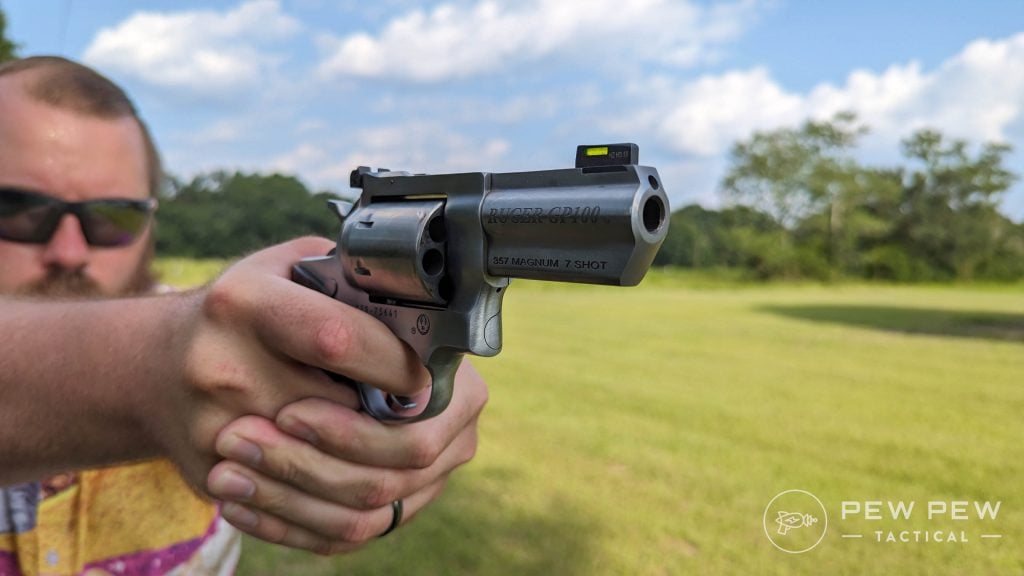
Step 2: Pull the trigger
The trigger on a double-action revolver has two jobs — hence the double part of the name.
First, it cocks the hammer, meaning you don’t have to do it manually with your thumb. As this happens, a mechanism inside the frame also rotates the cylinder to tee up the next round.
This time, the trigger needs to cock the hammer back as well as drop the hammer. Again, the cylinder will rotate as the hammer retracts.
There’s a lot going on inside the revolver when this happens, and you’ll definitely feel a difference in the form of a longer, heavier trigger pull.
NOTE: Many double-action revolvers still allow you to manually cock the hammer for a shorter, lighter single-action trigger pull if you prefer.
Common Mistakes to Avoid
When shooting a revolver, there are a few mistakes you want to avoid…
- Teacupping: Popular in TV shows and movies, but tea cupping (placing your non-dominant hand underneath the grip) doesn’t help with recoil at all.
- Putting fingers too close to the cylinder gap: The cylinder gap is the space between the cylinder and the barrel that releases hot gases and debris when firing. Keep your fingers behind the cylinder gap to avoid range boo-boos.
- Skipping reload practice: Practice is boring; we get it; revolvers take time to reload. If you’re carrying one for self-defense, you want to practice your reloads because they are extremely easy to fumble.
- Riding the trigger: Some double-action shooters don’t let the trigger fully reset between shots, which can impact accuracy. Make sure to practice complete, smooth trigger pulls for the best success!
Meet the Experts
This article comes to you from Pew Pew Tactical Founder and CEO Eric Hung. Eric is an NRA-certified pistol instructor and a USPSA, 3-Gun, and NRL22 competitor. He has also researched and written over 250 articles on firearms and gear. He brings this expertise to this article, offering his perspective on how to shoot a revolver.

Editing this article is Scott Murdock. Scott is a Marine Corps veteran who competed and qualified as a rifle and pistol expert while in service. In addition to shooting, Scott has written for a variety of publications, testing, researching, and evaluating guns and gear. He brings that knowledge and skillset to this article, editing and fact-checking for accuracy.
Editor-in-Chief Jacki Billings runs our experienced team of reviewers. She is a National Rifle Association Basic Pistol Instructor as well as a member of the Society of Professional Journalists, ACES: Society for Editing, and the Professional Outdoor Media Association. Jacki has a bachelor’s degree in journalism and has worked as a media professional for close to 20 years, specializing in gun media for almost 10 years. With 2,000+ articles to her name, she uses her professional journalism and editing experience to set testing protocols and editorial standards for Pew Pew Tactical.
Final Thoughts
As usual, my advice is the same: find a reputable course near you to learn more and practice regularly to learn how to shoot a revolver well.
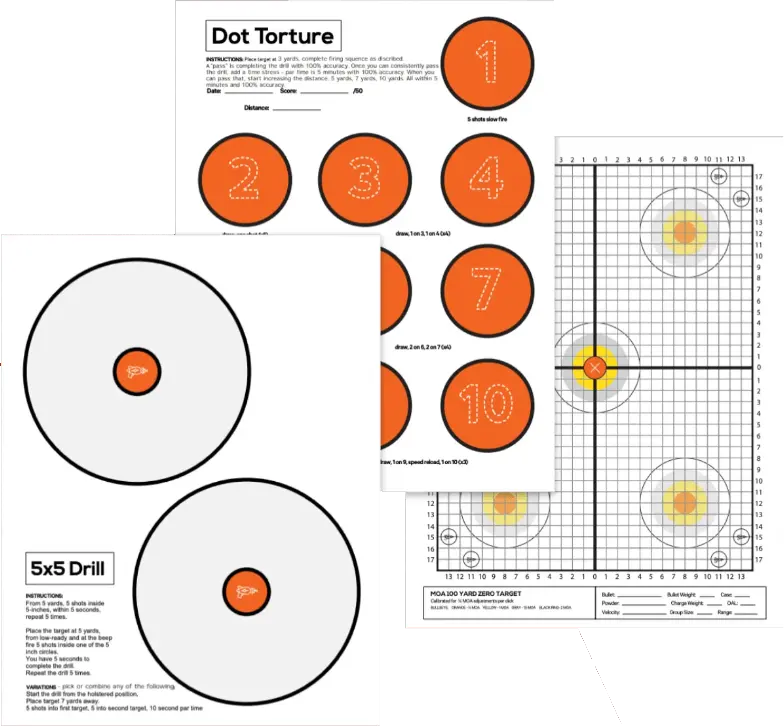
In the meantime, we have an online resource for you! Check out our Beginner Handgun Course that goes through all the basics with none of the attitude. When you hit the range for the first time, you’ll have a solid foundation to build on.
What are you planning on buying as your first revolver? Let us know in the comments. Need some help deciding? Check out our guide to Revolver Calibers, or to get your very own, check out our guide to the Best Beginner Revolvers!
Latest Updates
- March 2026: Updated instructional content and added supporting media.
- April 2025: Updated instructional content and added supporting media.







1 Leave a Reply
Simple, no index finger forward; not all cylinder/forcing cone gaps are created equal. This bark bites.