
Where It Began: History of the Ruger Mark Series
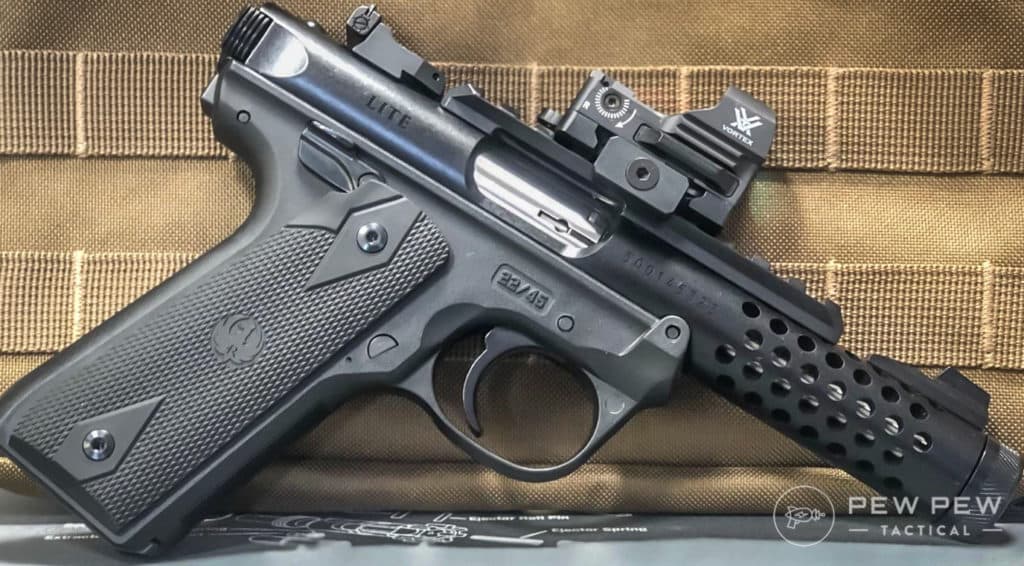
Ever wonder how Ruger's Mark pistol series became so popular? Well, we run you through how this handgun made its mark and why it's still sought after.
We review products independently. When you buy through links on our site, we may earn a commission to help support our testing. Learn more.
If you've been in the gun space for any length of time, you've probably heard of Ruger.
Makers of rifles, revolvers, and pistols this company has churned out guns since 1949 with notable models like the LCP, LCR, Mini-14, 10/22, and more.
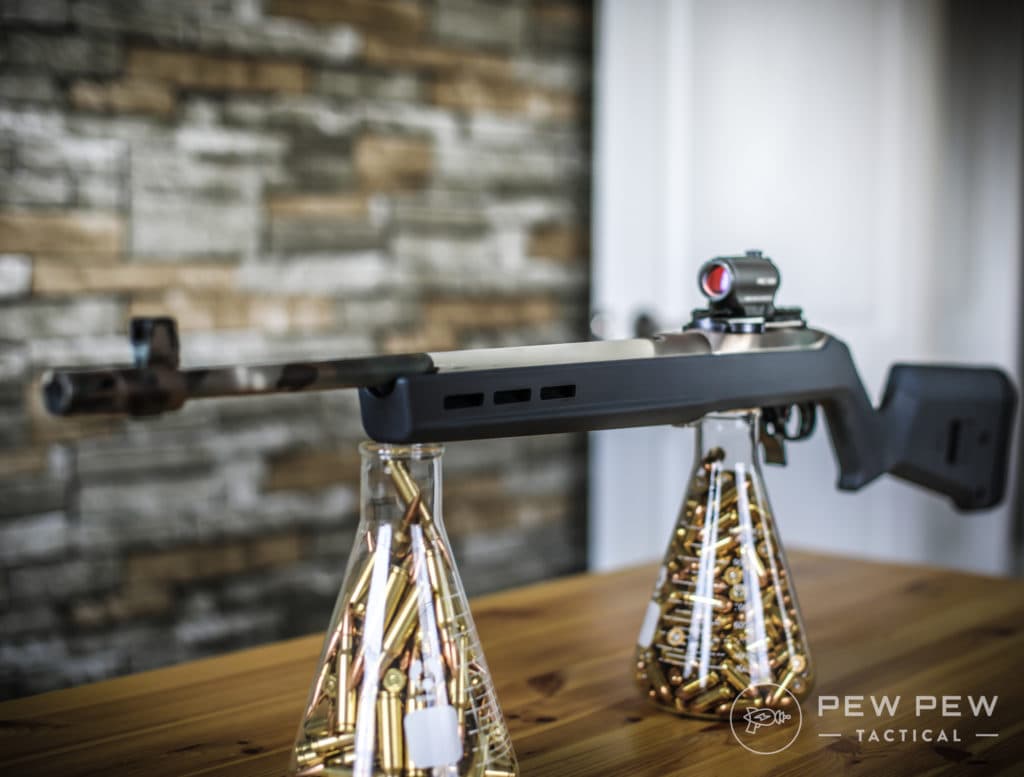
But today, we're diving into the history of one of Ruger's most successful handguns -- the Mark series.
From plinking to competition, this pistol series has long been a staple in many households. But where did it evolve from and how did it reach prominence?
Let's talk about that and more...
Table of Contents
Trending: Best AR-15s, Best Pistol Red Dots, & Best Shooting Hearing Protection
Where It All Began
World War II was finally drawing to a close and for one small-time hand tool manufacturer, things weren’t going well.
William Ruger was having a difficult time bringing in orders. After falling $40,000 in debt, he was about to close up his shop for good.

It was around this time, though, a U.S. Marine who’d fought in the Pacific Theater offered to sell his prized Japanese Baby Nambu pistol to Ruger.
Little did the Marine know he was about to change the firearm world forever...
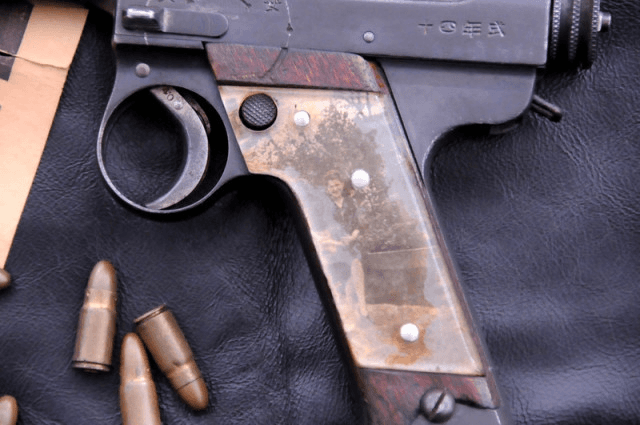
Ruger almost immediately made copies of the Baby Nambu in his garage.
His successful rendition attracted the attention of investor Alexander Sturm. The two men went into business together with the intention of making high-quality yet affordable pistols.
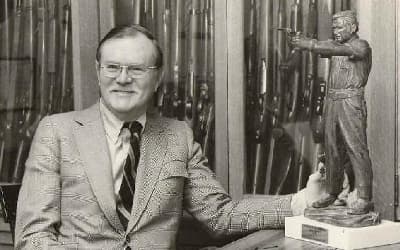
After Sturm made a $50,000 investment, Sturm, Ruger & and Company was born in Southport, Connecticut in 1949.
Sturm and Ruger started manufacturing in what they referred to as “the red barn” across the street from a nearby railroad depot.
Within a short time the Sturm, Ruger & Company produced its first gun, a .22 LR pistol that drew inspiration from the German Luger, the American Colt Woodsman, and the Baby Nambu.
They called it the Ruger Pistol.

Ruger Pistol
The Ruger Pistol (also referred to as the Standard) was groundbreaking and an instant hit -- thanks to it being the first commercially produced .22 LR pistol of its kind.
Not to mention, its resemblance to the esteemed German Luger and price point of $37.50 — a significantly lower price than competitors -- quickly made it popular.
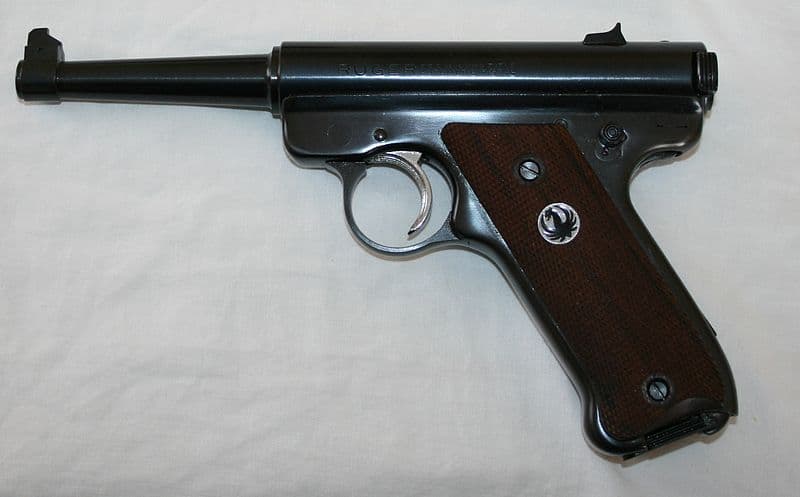
However, before it was put on the market, eight test pistols were created first.
Ruger was having trouble with the magazine design for the Ruger Standard so they turned to John “Jack” Boudreau.
Boudreau was a competitive shooter and purchased Serial No. 3 from Ruger for testing.
As he lived further away from Southport at the time, he had to have the pistol shipped to him. That meany Serial No. 3 was the first Ruger gun shipped in history.
Throughout the rest of the year, Boudreau utilized his Standard in a number of pistol matches, many of which he won medals in.
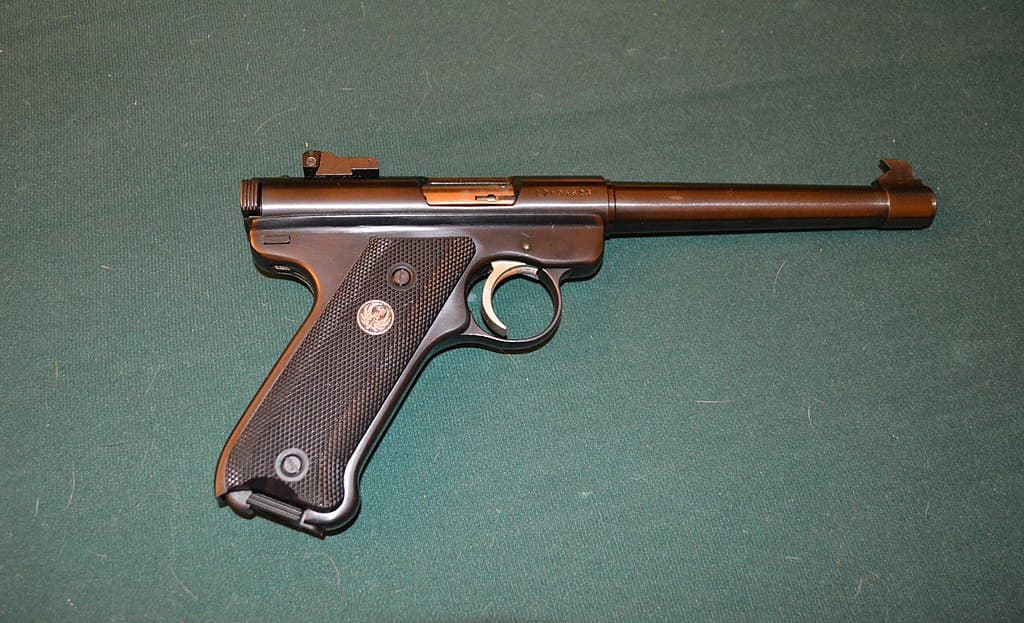
By the end of the year, Boudreau had completed his analysis of the pistol.
He'd thoroughly enjoyed the Ruger Standard. But he believed that it could very easily be modified to appeal to competitive shooters as well.

Together, Boudreau and Ruger created the Ruger Mark I Target Pistol.

The Best Gun Deals, Coupons and Finds
Subscribe to Pew Pew Tactical's sales and deals email.
The OG: Mark I
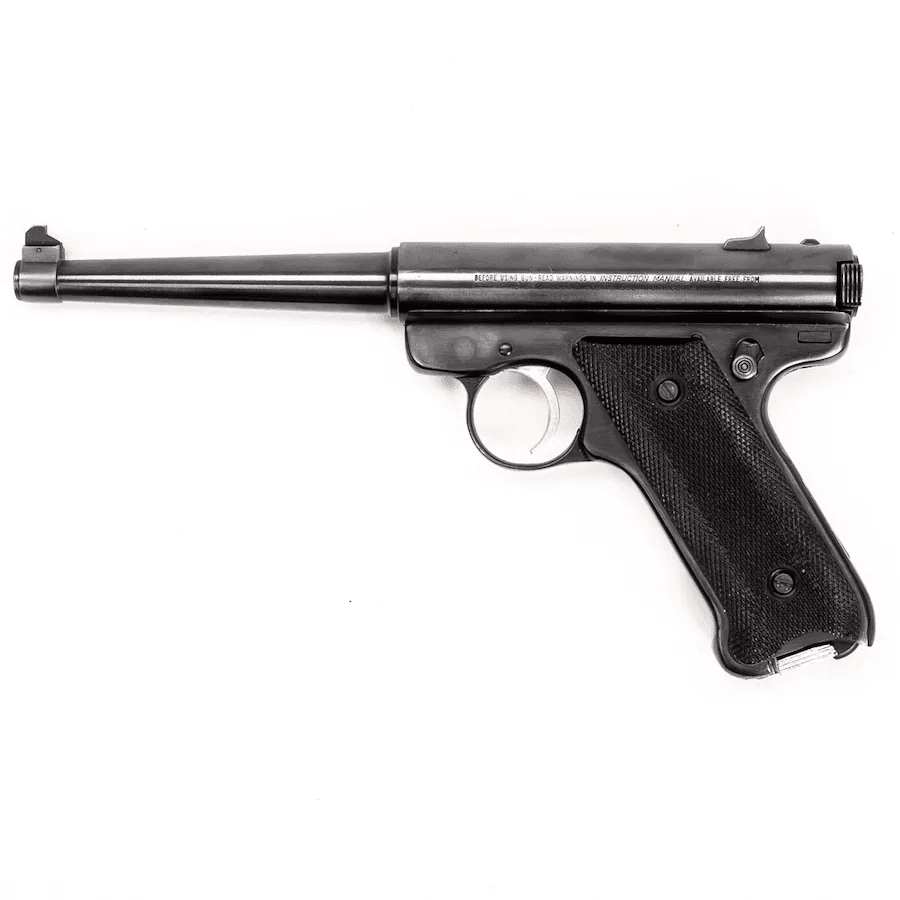
Shipments of the Ruger Mark I Target Pistol began in 1951 at the price of $57.50.
Its fixed 6-inch barrel, ergonomic design, and adjustable sights made the Mark I Target incredibly accurate.
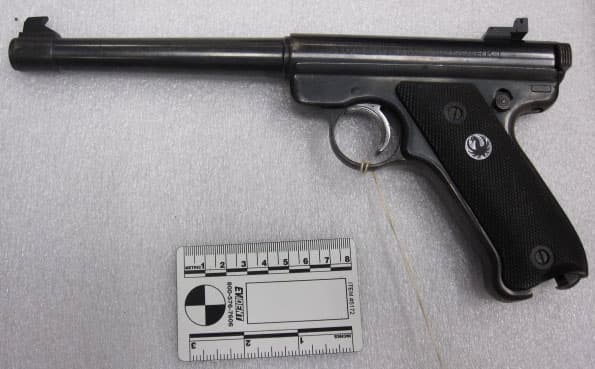
As this reputation for accuracy grew, sales skyrocketed for the company. Shooters across the U.S. wanted this Americanized version of the Luger.
Unfortunately, Sturm didn’t get the chance to live long enough to see the success of the pistol, dying at the age of 28 from viral Hepatitis in November 1951.

To memorialize Sturm’s death, the company changed their iconic eagle logo — which Sturm designed — from red to black.
It wouldn’t be until Ruger’s 50th anniversary in 1999 that the company would change the logo back to red.
Competitive Shooters Hit the Mark II
By 1981, production of the Mark I ended.
Appealing to competitive shooters, a new updated version of the Mark I came to market --known as the Mark II.
Ruger created two variants, the Mark II Standard and Mark II Target.
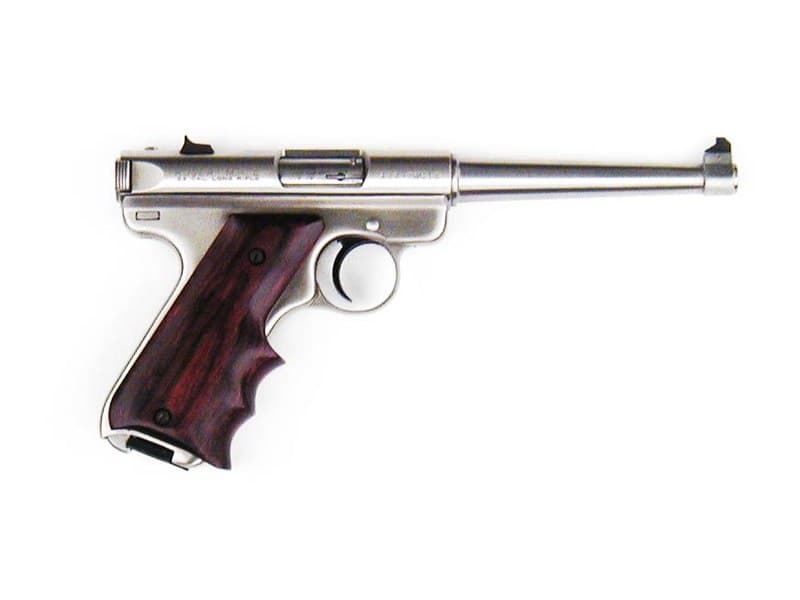
The Mark II made a few notable improvements to the original.
It improved the Mark I’s safety and included a magazine disconnect. A new loaded-chamber indicator also told users whether a round was in the chamber.
Finally, a bolt hold-open lock was added to this new version.
Third Time’s the Charm: Mark III
While the success and popularity of the Mark series continued, there were still improvements to be made.
And so, the Mark III was released in 2004.
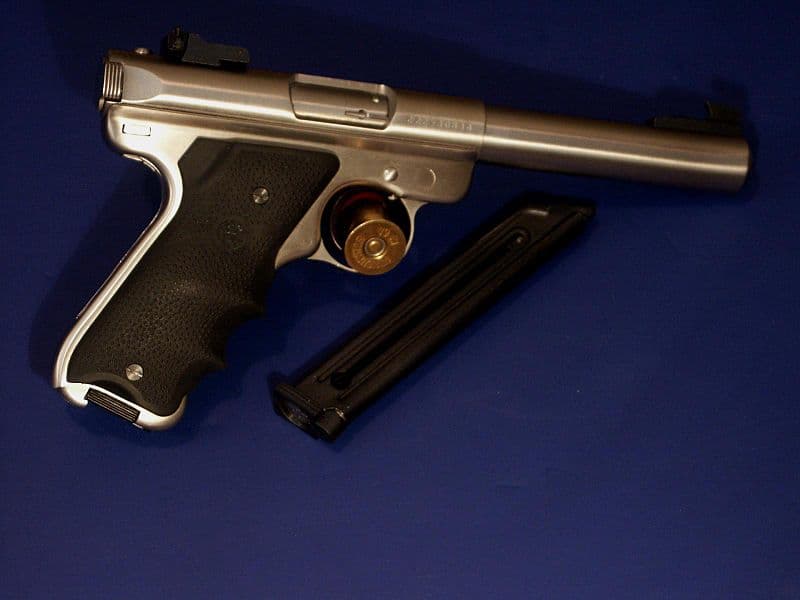
The main alteration with this variant was the addition of a magazine release button on the left side of the frame.
Prior to this, all Mark versions utilized a heel clip, meaning you pulled the empty magazine out by hand.
Due to increasing demand for more tactical designs, the Mark III came drilled and tapped to permit the mounting of optical sights.
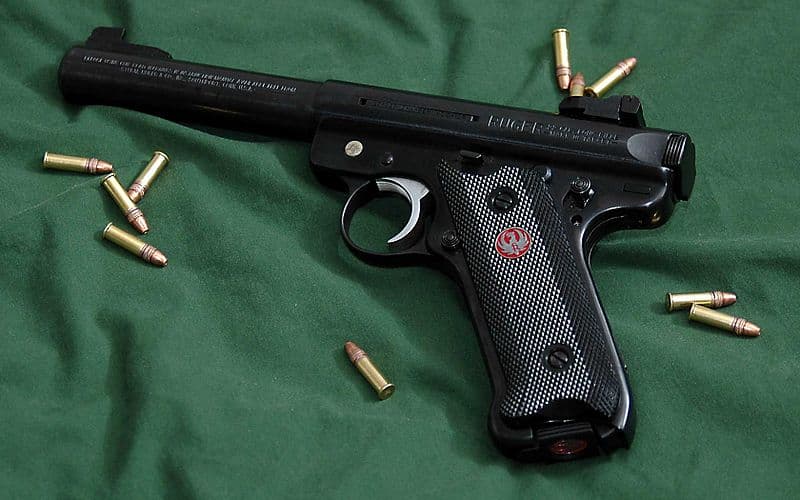
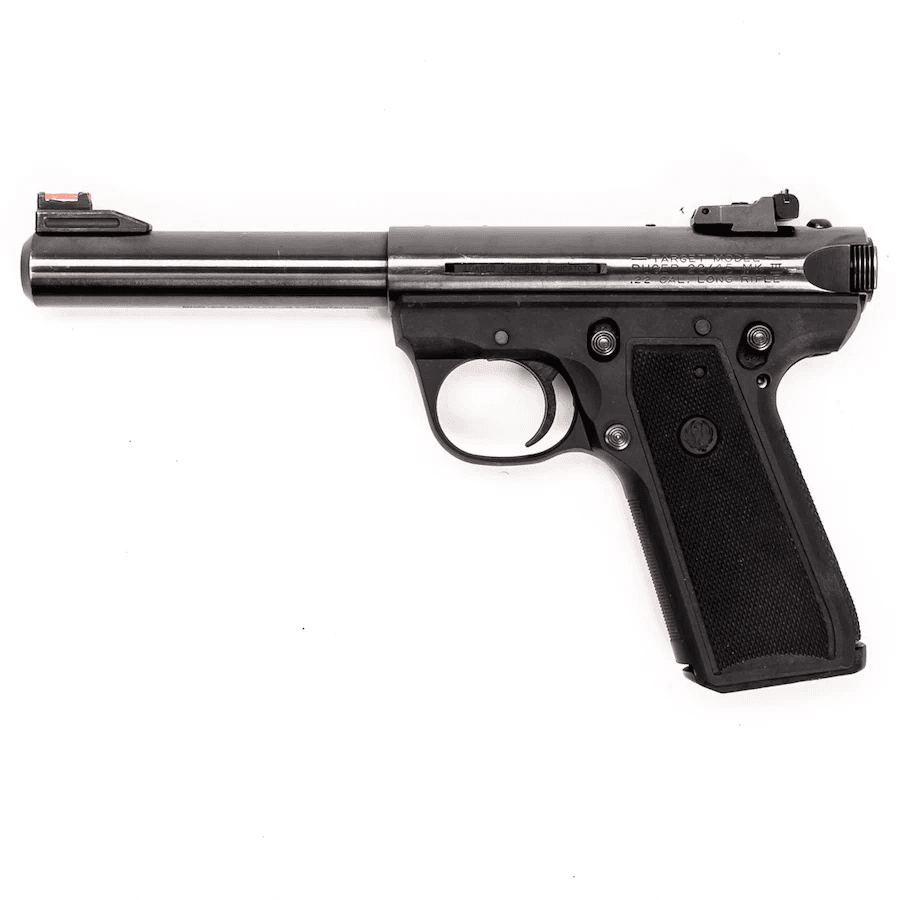
As usual, several variants of the Mark III were produced.
A stainless-steel Hunter model came to consumers with an adjustable rear sight, fluted bull barrel, and a fiber-optic front sight for low light conditions.
Additionally, a stainless-steel Competition model offered a slab-sided bull barrel.
The lateral sides of the barrel were flat to reduce the front weight of the pistol, making for an easier-to-control, easier-to-aim weapon.
Our Most Popular Posts


Final Product...for Now: Mark IV
All Mark series guns, while solid pistols, featured one major downside -- disassembly and reassembly.
While shooting the Ruger Mark series was a true pleasure, attempting to clean the weapon proved a nightmare.
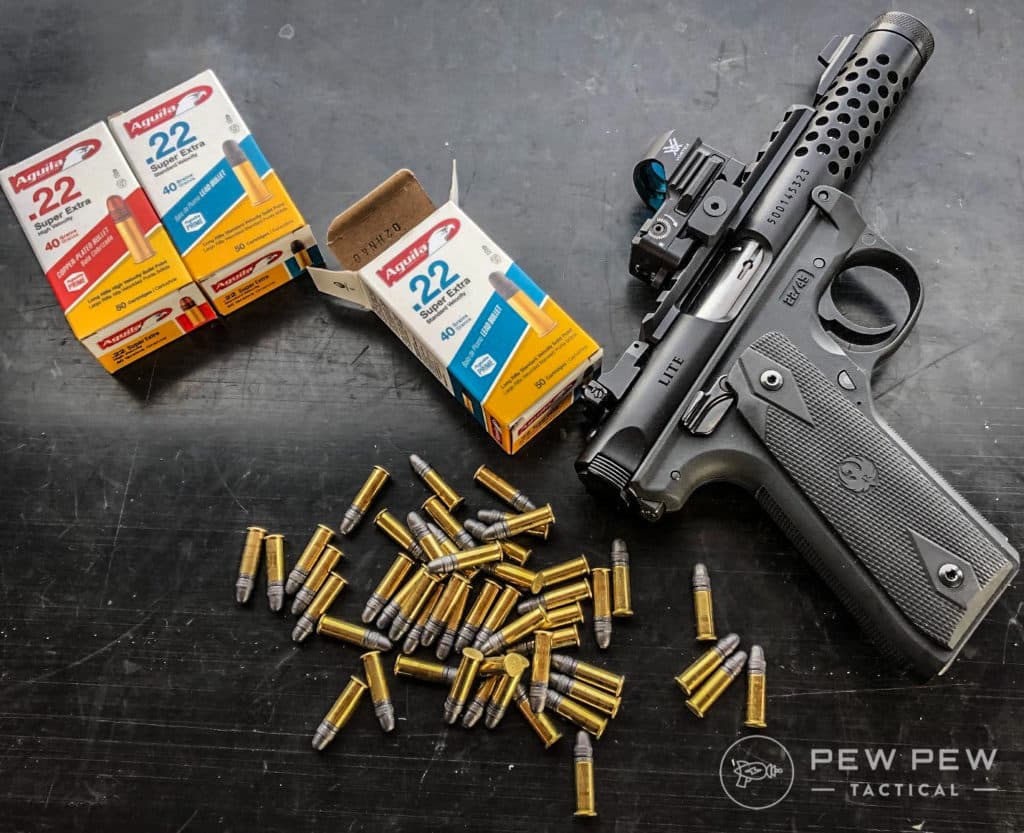
To disassemble the weapon, a latch within the mainspring housing had to be pulled down. This made for a very awkward and clumsy takedown process.
Once this step was completed and the weapon cleaned, the shooter now had to be very precise in getting the hammer strut aligned with the mainspring plunger within the mainspring housing.
Failure to do this would result in a gun that made a better paperweight.

More than one shooter ended up with a scratched Ruger Mark due to difficulties with getting that hammer strut to nestle back into its very “cozy” home.
But in 2016, Ruger fixed all of this with the release of the Mark IV.
The Mark IV featured a takedown button that would allow the barrel/receiver assembly to have the bolt stop pin cleared.
Gun owners could lift the barrel/receiver assembly away from the grip frame, and then remove and clean the bolt.
This greatly improved the ease of reassembly for the Mark series.
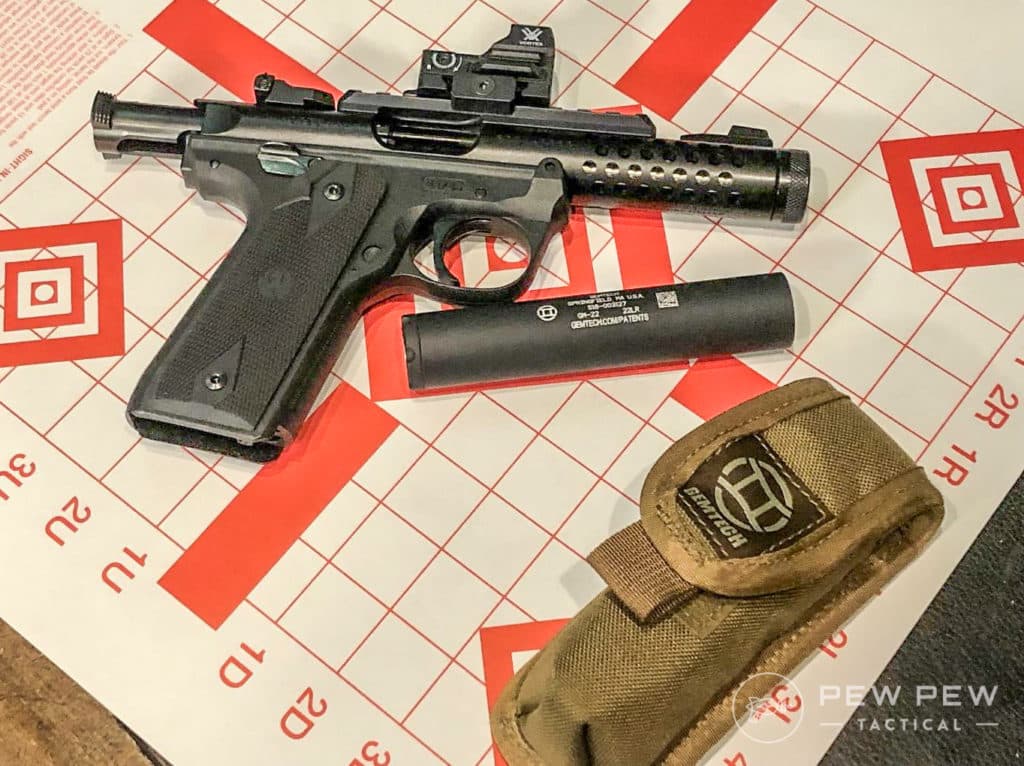
Further improvements to the Mark IV included an ambidextrous safety, a bolt catch that would activate after the last round was fired, and a (controversial) magazine disconnector. A magazine disconnector prevents the gun from firing without a magazine.
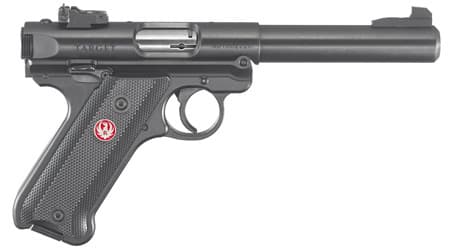
Three versions were eventually released -- the stainless-steel Hunter, blued Target, and the Competition model.
Recall
In June of 2017, Ruger recalled Mark IV models manufactured prior to June 1, 2017. Those models allegedly had the potential to unintentionally fire if the safety lever was not engaged properly.
Ultimately, Ruger fixed the piece in question for consumers who sent in their guns and ensured future Mark IV models did not suffer the same issue.
Conclusion
Iconic and reliable weapons like the Mark series propelled Ruger to where they are today.
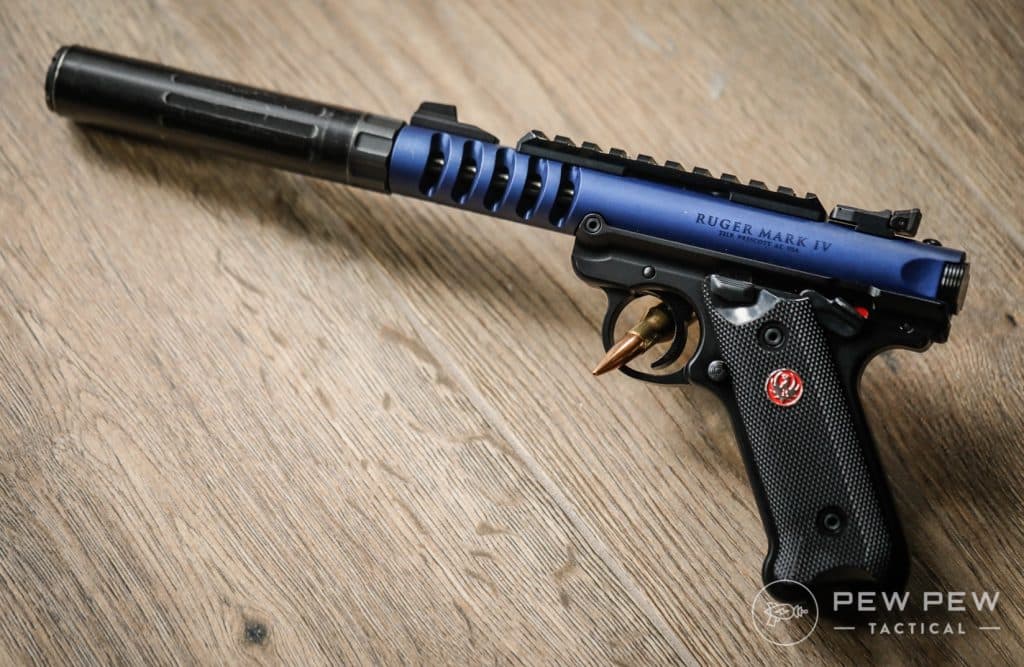
The Mark series have proven their worth over the past 70 years and continue to perform well during competition and on the range.
Are there other facts about the Mark series we didn’t cover? Have you shot one of these guns? Let us know in the comments below! Want more Ruger? Check out our list of the Best Ruger Models!