
6 Common Handgun Malfunctions & How To Fix Them
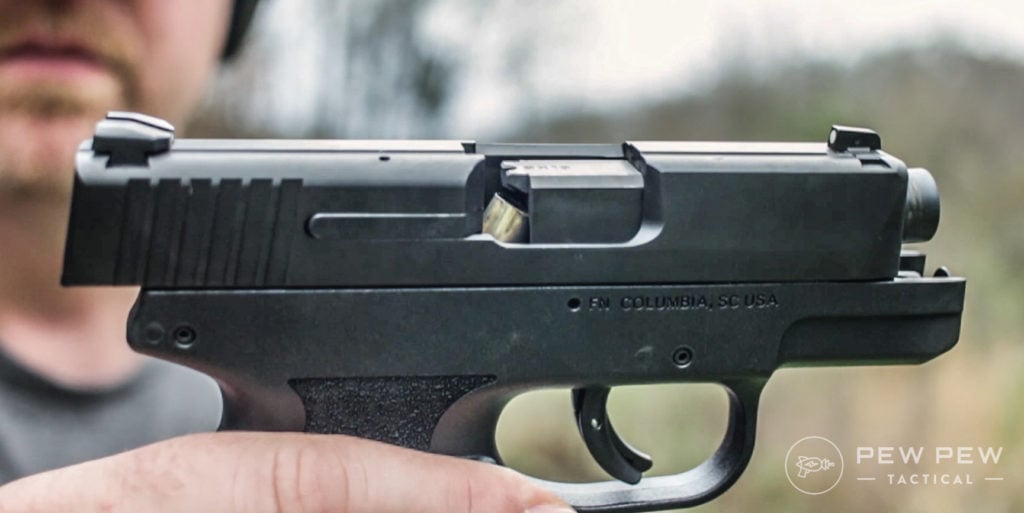
We walk you through the most common handgun malfunctions you'll see on the range and, more importantly, what to do about them!
We review products independently. When you buy through links on our site, we may earn a commission to help support our testing. Learn more.
As you begin your journey with guns, or if you’ve been on this road a while, at some point, you’ll pull the trigger and…
Click. Nothing happens.
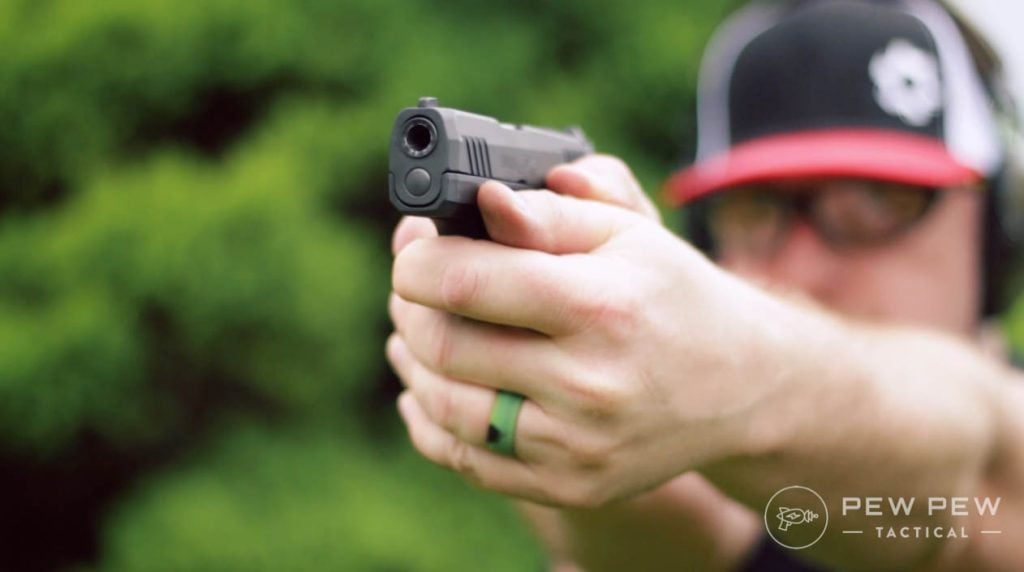
It’s inevitable that eventually, your pistol will encounter a malfunction. Whether that’s an issue with ammo, the gun, or the owner’s handling that induces a failure, we’ve all been there.
But what do you do when the gun goes click instead of bang?

Well, let’s talk about that. We’ll discuss common pistol failures, how to recognize them, and, most importantly, what to do when your gun doesn’t go boom.
By the end of this article, you should have a pretty good understanding of how to diagnose malfunctions and fix them.
So let’s dive in!
Trending: Best AR-15s & ATF Drops NFA for Suppressors & SBRs
Safety First
Before we dive into the types of failures and malfunctions you’ll encounter on the range, let’s take a moment and review our safety rules.

As always, the four firearm safety rules apply ALWAYS.
- Treat every firearm as if it is loaded.
- Never point a gun at anything you don't want to destroy.
- Keep your finger off the trigger until you're ready to fire.
- Know your target and what's behind it.
If a malfunction occurs, these still apply. Always keep that gun pointed in a safe direction, most likely downrange at the target.
Never, never, never, turn the gun around to look down the barrel or examine. That’s just asking for trouble.

Now, with that out of the way, let’s walk through the most common failures you’ll find on the range.
6 Most Common Pistol Malfunctions
1. Failure to Feed
One of the most common malfunctions, a Failure to Feed, occurs when a round does not load into the chamber of your pistol from the magazine.
To fix a FTF, we use Tap, Rack, Ready.
First, tap the bottom of the magazine to ensure it’s seated properly in the magazine well.
Then, rack the slide by pulling it back (either slingshot or overhand method) and letting it slam forward.
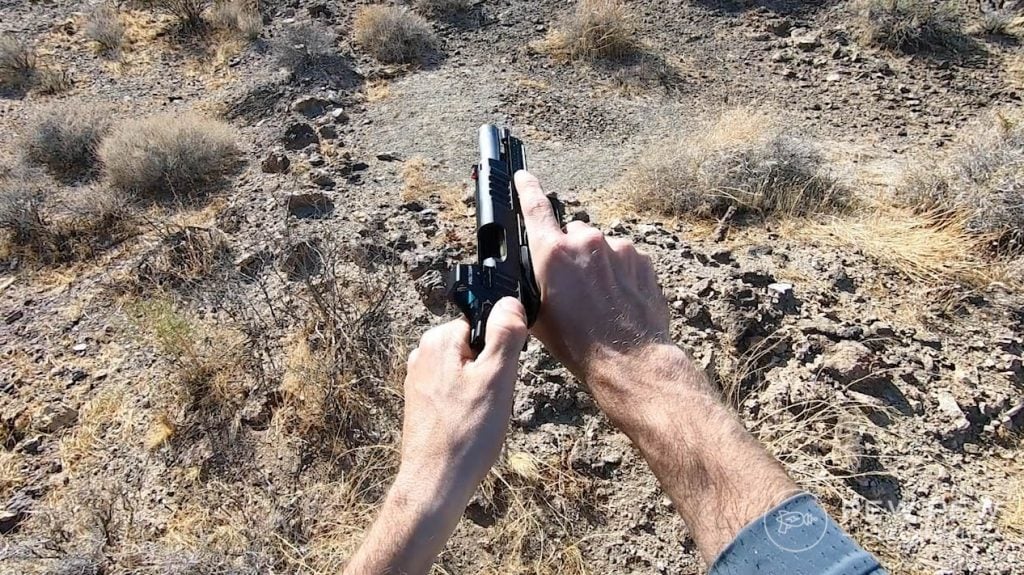
Then present the gun in the ready position and reassess whether it is safe to continue firing.
This type of failure can occur at any time and is most often the result of either an improperly seated magazine or an issue with the magazine itself.
If it’s bad seating, Tap, Rack, Ready will take care of it.
If you want to see Tap, Rack, Ready in action, check out the video below from our Beginner Handgun Course.
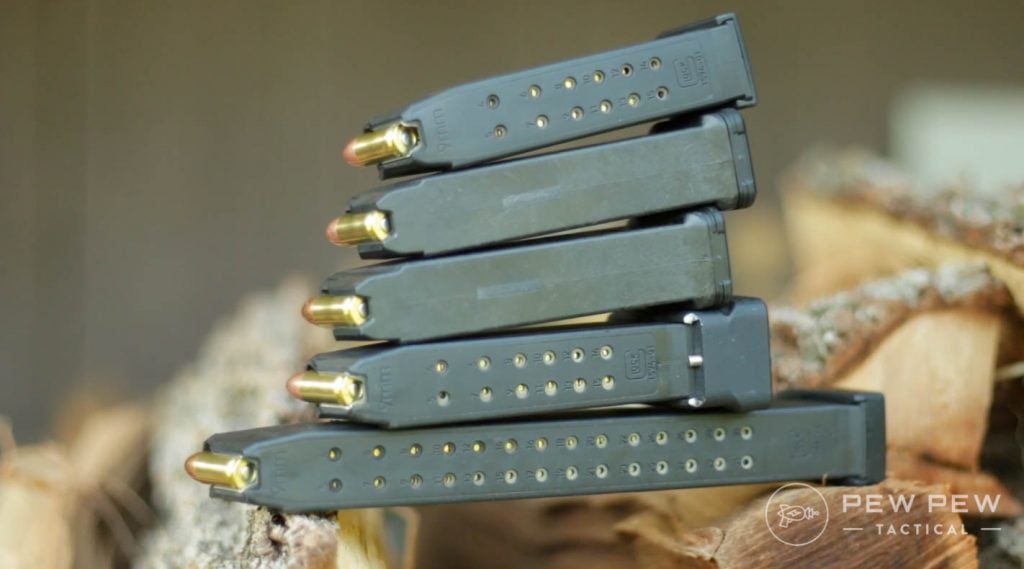
However, if it continues to occur, the next step is to examine the magazine. Look for damaged feed lips or other wear and tear to the magazine.
Also, count how many rounds you have.
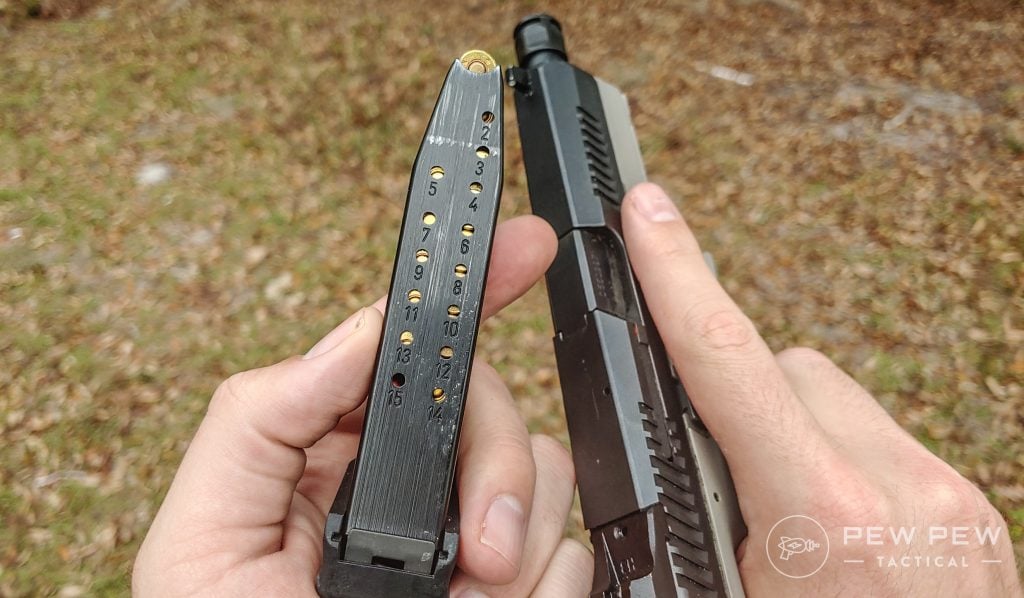
Yes, the mag might say it takes 15 rounds, but maybe it’s an older mag that just can’t handle that many. Alternatively, it could be a quirk of the platform.
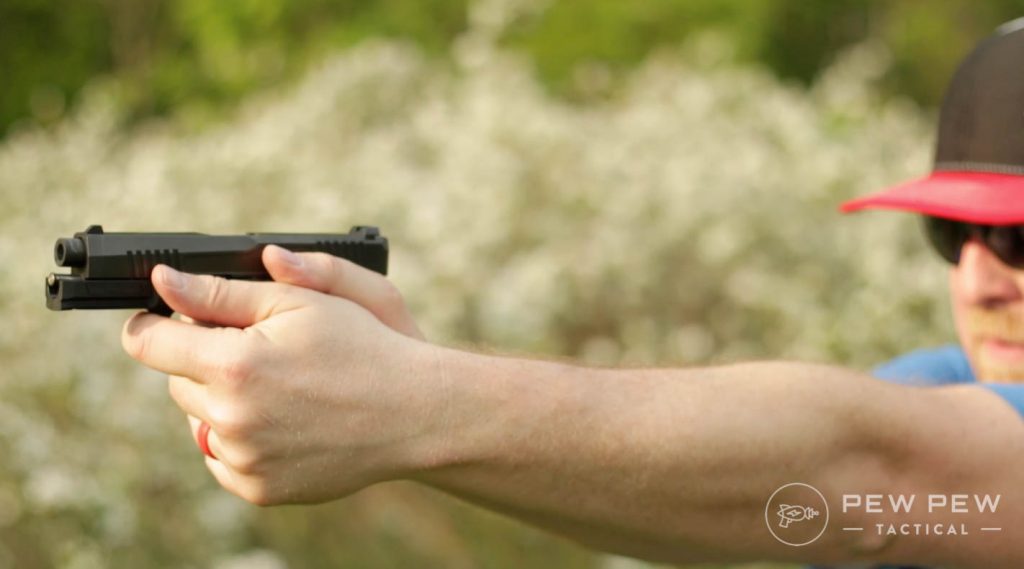
For instance, the PSA Dagger encounters an FTF if loaded to capacity, but simply dropping a round out fixes that issue.
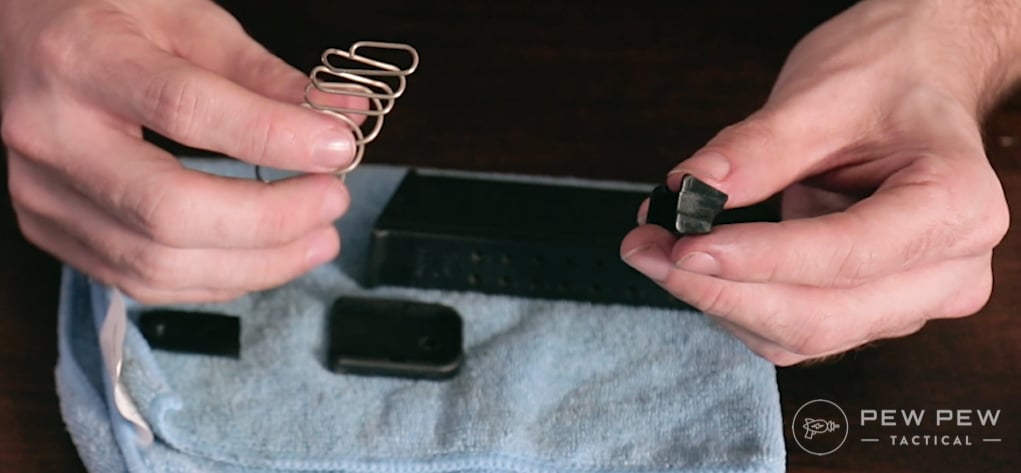
It’s also a good idea to check out the spring in the magazine. Sometimes these are overly stiff, which can cause issues.
Finally, ensure the ammo is loaded into the magazine properly. If it’s crooked, it can catch on the magazine and fail to load into the chamber properly.
2. Failure to Eject/Extract
Also known as a Stovepipe, a Failure to Eject means the empty casing is partially extracted from the chamber but not entirely removed. Therefore, it gets stuck in the pistol.
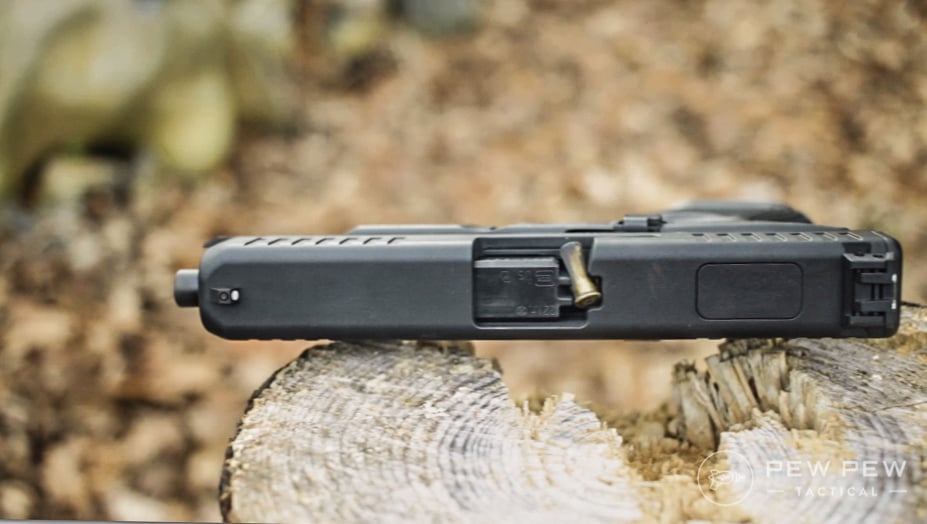
Usually, it gets stuck halfway out of the action, creating what looks like a pipe...hence the moniker stovepipe.
Like a failure to eject, a Failure to Extract means the empty casing remains in the chamber after the gun fires.
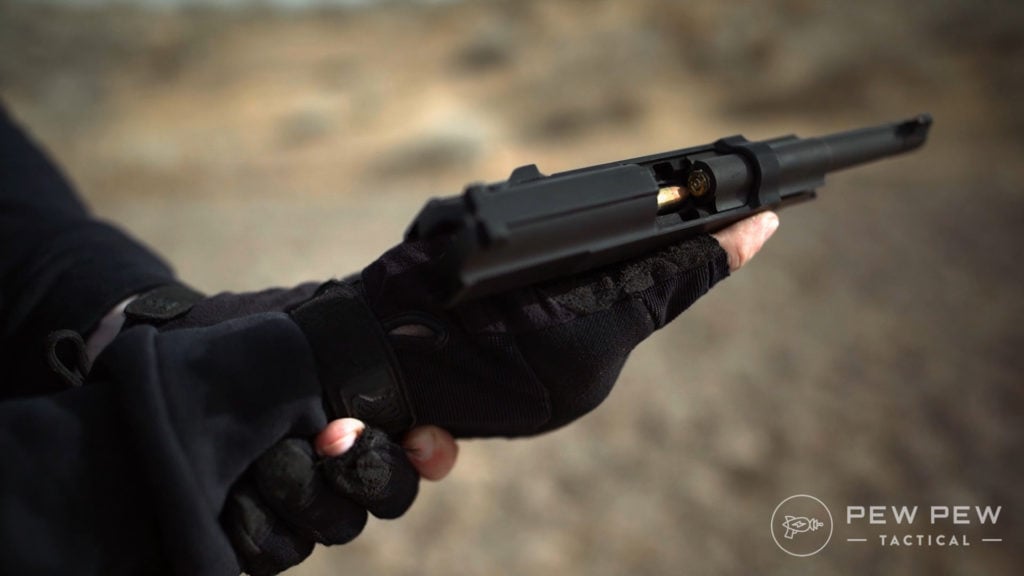
Either way, the next round fails to feed properly.
To remedy this, again, we use Tap, Rack, Ready.
First, tap the bottom of the magazine to seat it in the magazine well.
Then, rack the slide. This should cause the empty casing to eject from the handgun.
(If you need help learning how to rack the slide, check out our handy guide here!)
Then present the gun in the ready position and continue to fire after ensuring you can safely do so.

The Best Gun Deals, Coupons and Finds
Subscribe to Pew Pew Tactical's sales and deals email.
3. Double Feed
A Double Feed occurs when two rounds try to make their way into the chamber at the same time.
Sometimes, this is the result of a failed extraction, where the spent casing remains in the chamber as the new round tries to slide its way.
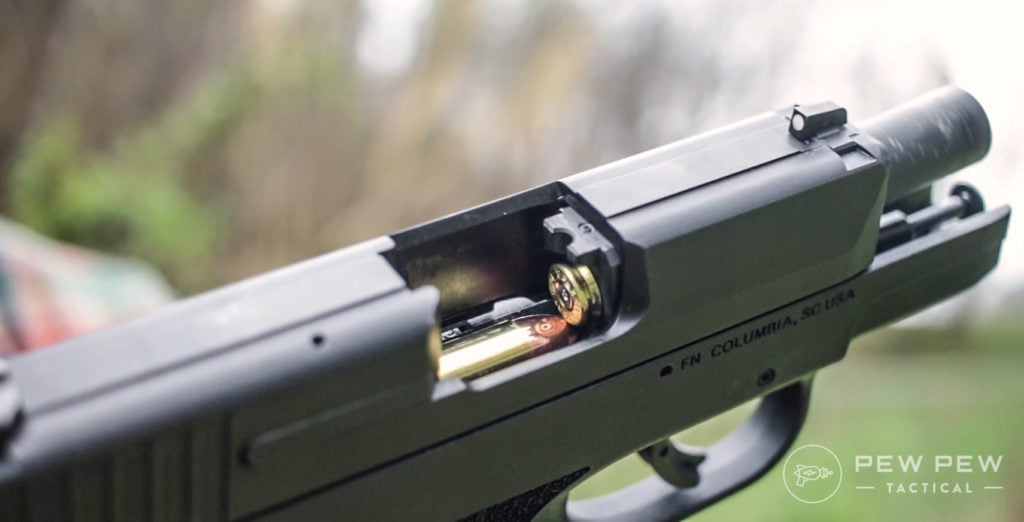
Other times, it’s due to an overly full magazine causing too much tension.
Either way, to clear a Double Feed, drop that mag.
Lock your slide back then depress your magazine release button or lever.
If the magazine drops, cool! If it doesn’t, you might have to give it a little wiggle to work it out.
At this point, the round should drop out. But, if not, give it a little shake.
Once it’s free, you can reload the handgun and continue with target practice if you’re good to do so.
4. Failure to Fire: Hangfire
You press that trigger, and get a click...not a bang. You've probably got a Hangfire on your hands.
It’s rare, but a Hangfire occurs when there is a delay between when you pull the trigger, and the propellant ignites, causing the projectile to exit the gun.
If this happens to you, take your finger off the trigger and keep the gun pointed downrange. Wait for 1 minute.
Keeping the gun pointed downrange for an additional minute, gives the propellant enough time to ignite and launch the round downrange.
If, after 1 minute, nothing happens, rack the slide to manually eject the round. Do not use the discarded round.
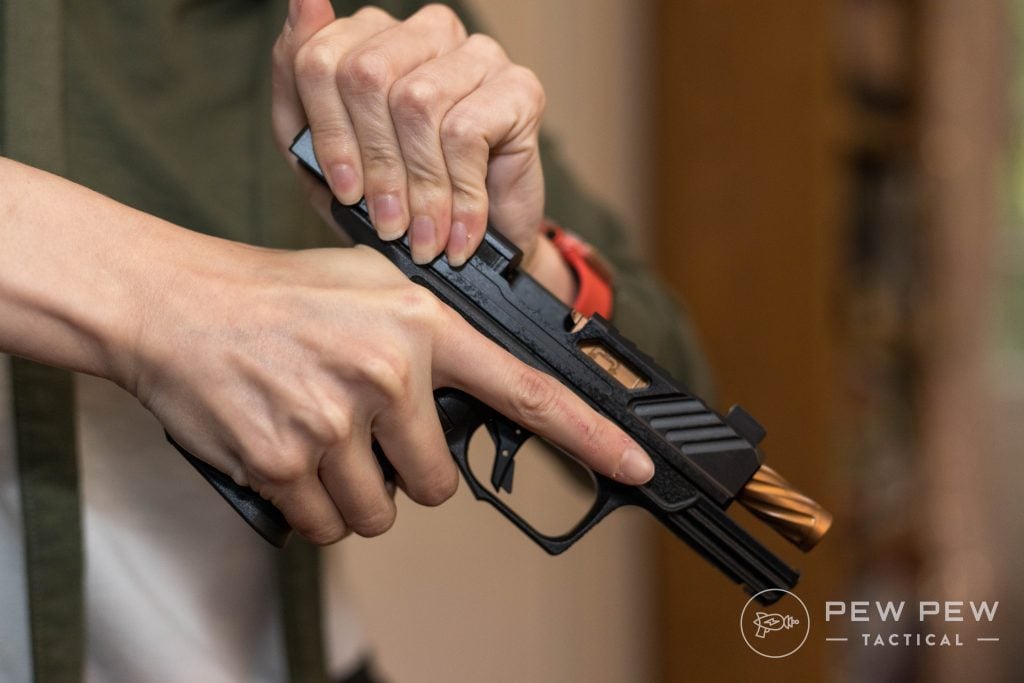
If this happens again, it’s time to retire that box of ammo.
5. Failure to Fire: Light Strike
Another click and no bang scenario is what’s called a Light Strike. In this situation, the firing pin hits the round’s primer but does not do so hard enough to cause ignition.
Again, the procedure is the same.
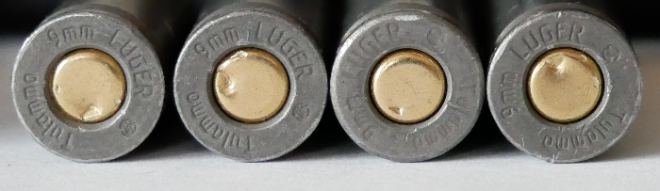
Keep the gun pointed downrange for 1 minute, then rack the slide to eject the round.
After it ejects, you will notice a small dent on the back of the round, indicating a Light Strike.
Again, if it continues to happen, ditch that ammo entirely and load a fresh mag.
6. Failure to Fire: Squib Load
A Squib Load is the dread of many gun owners because it’s one of the more complicated malfunctions to fix. Not to mention, it can be dangerous.
In a squib load situation, the projectile does not leave the barrel. Instead, it becomes stuck in the barrel.
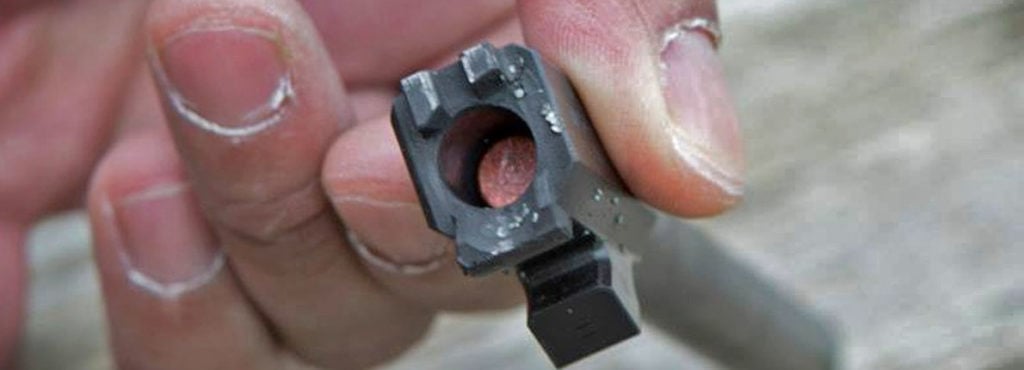
This is often the result of an underpowered cartridge. So, the bullet just doesn’t get enough oomph to make it out of the barrel.
Why is this bad?
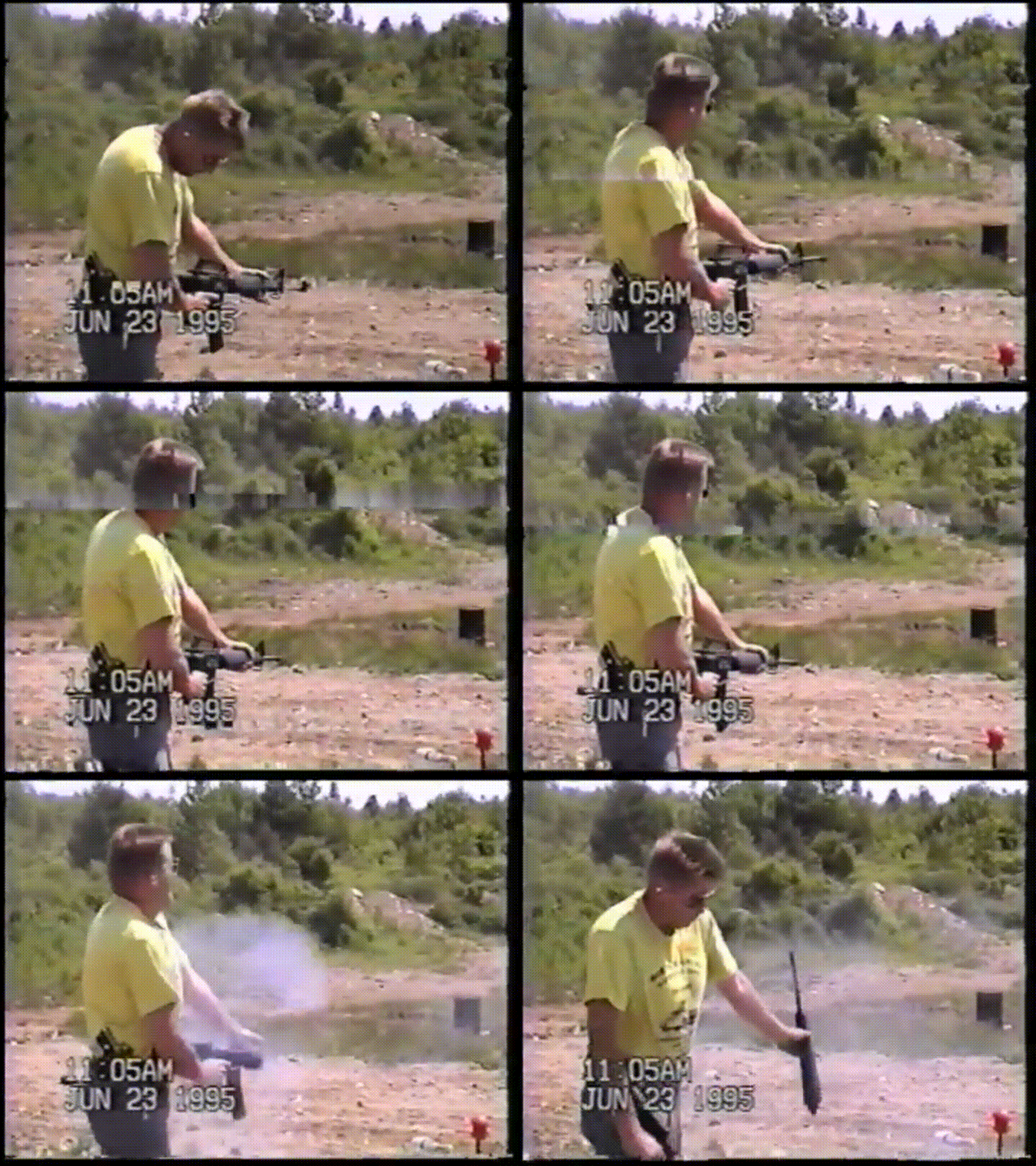
If you don’t notice it’s happened and press the trigger again, the following round will impact the stuck projectile and cause a catastrophic failure.
Our Most Popular Posts




When we say catastrophic, we mean it. Not only can it ruin your gun, but it can also harm you and other bystanders.
The tale-tale sign of a Squib is no bullet leaving the gun. But other signs include weak recoil, change in noise, or a change in the gun’s behavior.
If you experience this, immediately unload the pistol. Drop that mag and rack the slide to eject any round that might be in the chamber.
Next, we need to dislodge the projectile from the barrel. To do this, field strip your firearm and carefully remove the barrel.
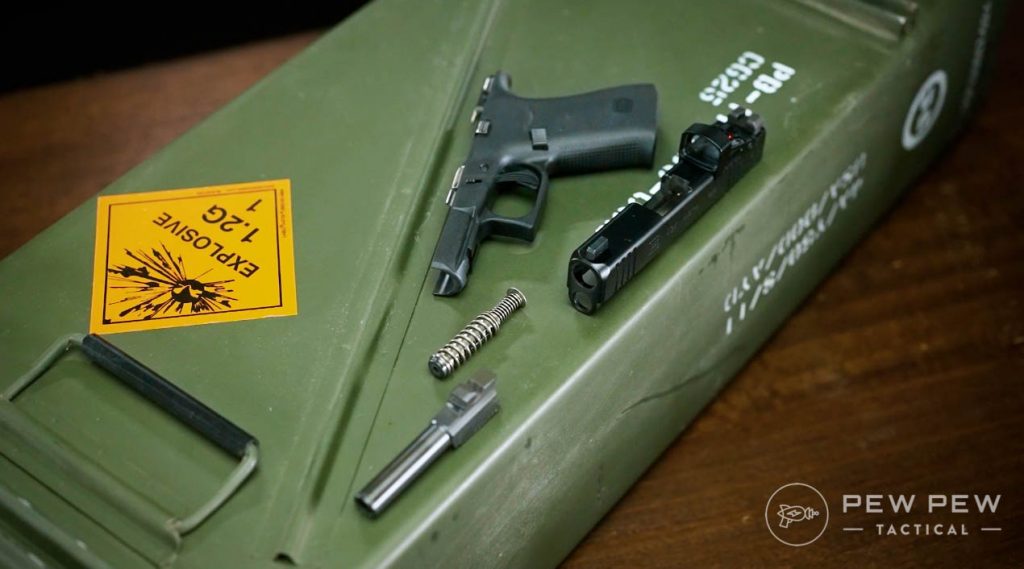
Look through the breach, not the muzzle. You should see the projectile lodged in there, confirming the squib situation.
Take a wooden dowel or brass cleaning rod through the barrel end furthest from the squib. (Make sure it’s sized appropriately for your barrel.)
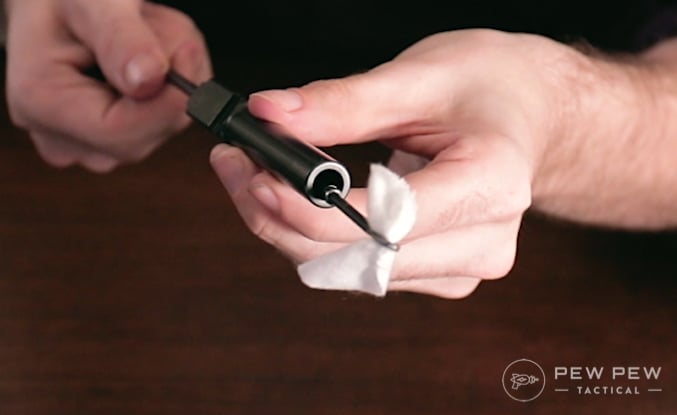
Lightly tap the stuck round out.
Then inspect your barrel for damage.
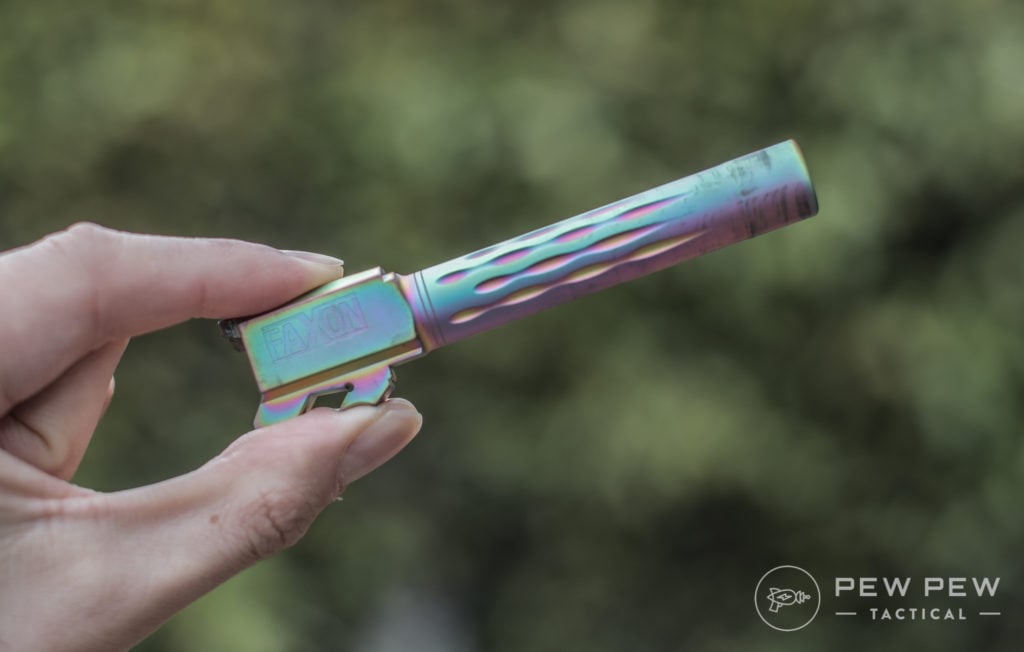
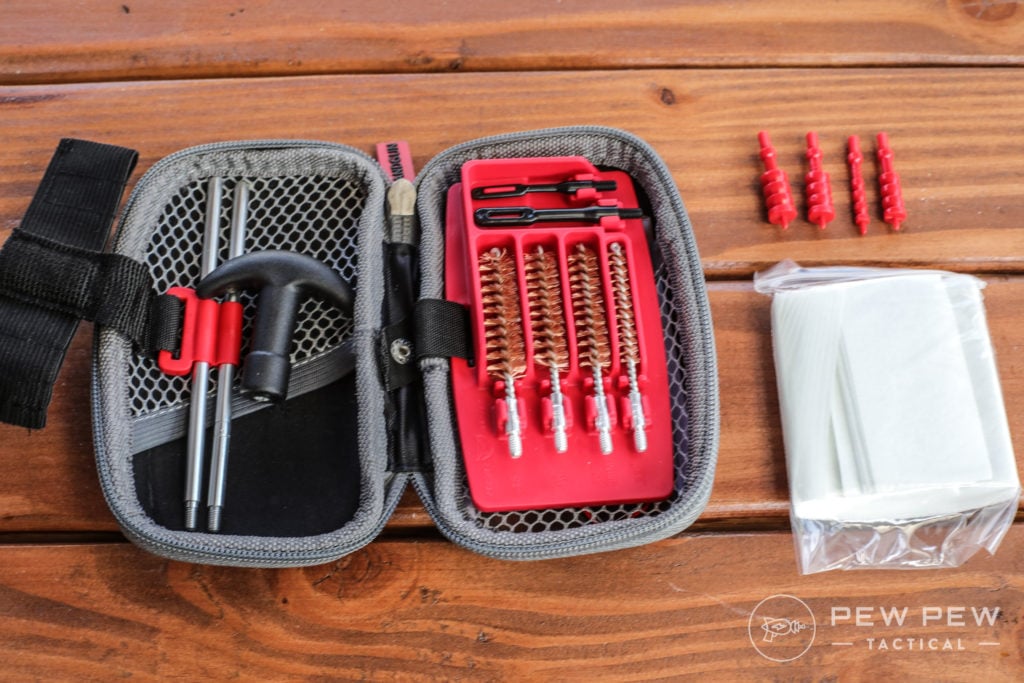
I am a huge fan of carrying a small cleaning kit or cleaning tools to the range for situations like this. That cleaning rod comes in mighty useful!
Plus, you might need a little CLP to loosen things up. So having this on hand makes life easier.
All that said, if the thought of this makes you uneasy, call in a trained gunsmith. They can definitely help you out!
The best prevention here is to pay attention while firing. If something feels, sounds, or appears off...stop what you are doing and check it out.

For more info, check out our in-depth article on Squib Loads.
How to Prevent Malfunctions
So, you want to stop an issue before it happens?
The best way to ensure the gun functions properly is to…maintain your gun.
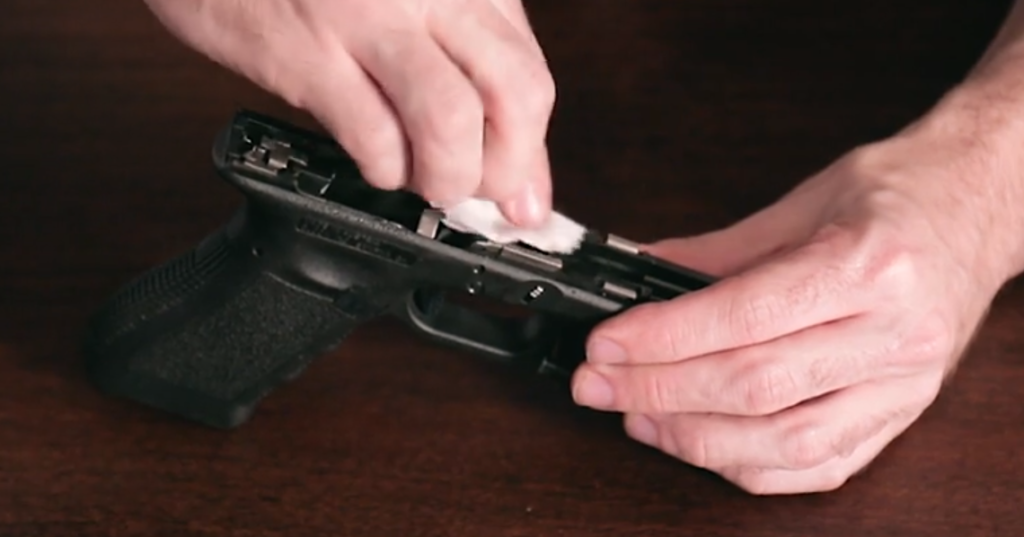
It’s that simple.
Regularly cleaning and examining for wear and tear will ensure you catch most issues before they happen.
If you need a little help on the cleaning and lubing front, check out our Guide on How To Clean & Lubricate a Gun.
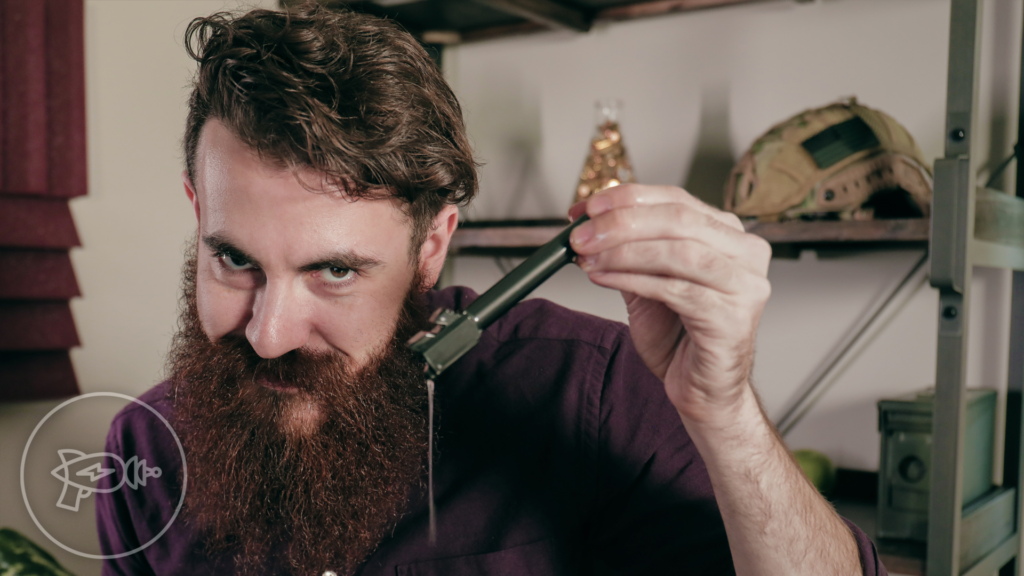
After cleaning, properly inspect the parts of your gun. Look for odd bulges, cracks, or anything that looks outside the norm.
If something looks questionable, have it examined by a gunsmith before taking it to the range.
Conclusion
Unfortunately, malfunctions are a part of any pistol owner’s life, but knowing how to competently and confidently handle them is an essential part of gun ownership.
Hopefully, we’ve given you a good idea of what you might see while pistol shooting and, more importantly, how to handle malfunctions that pop up.
What kind of issues have you encountered on the range? Let us know in the comments below. Curious about rifles? Check out our guide to the Most Common AR-15 Malfunctions.