
[Complete Guide] Cosmoline Removal: SKS Example

Want the best cosmoline removal methods for cleaning up your milsurp gun? We walk-through an SKS example with plenty of pics and video.
We review products independently. When you buy through links on our site, we may earn a commission to help support our testing. Learn more.
Those of you with any amount of experience dealing with milsurp guns have probably also encountered the enigma of cosmoline.
The gooy, gross, petroleum preservative that is seemingly locked within every porous surface and crevice possible.

Usually requiring a full detail stripping and cleaning of the rifle before its remotely capable of being operated safely.
If you want to check this out in a video, take a look! Like this kind of content? Don't forget to subscribe to the Pew Pew Tactical YouTube Channel!
Trending: Best AR-15s, Best Pistol Red Dots, & Ammo in Stock
Okay, What Is Cosmoline?
For the unfamiliar, cosmoline is sort of the genericized term for a family of petroleum-based greases with remarkably high viscosity with inherent rust and corrosion protective properties, a signature waxy brown visage, and unmistakable industrial smell.
Originally developed in the late 1800s and marketed as a home disinfectant and veterinary anti-swelling agent, presumably by the same turn of the century physicians inclined to prescribe you cocaine for a staph infection or whatever.

Cosmoline was quickly adopted by militaries the world over as a way to chemically embalm small arms, artillery pieces, armored vehicles, and so on for either long term storage or trips across the Atlantic.
Sealing them in a greasy tomb of cosmo guards against the corrosive nature of maritime environments.

And that brings us to where we are today...
What You'll Need:
There are lots of options and choices you can make, but what we used were:
Time To Clean
Specifically, we’ve got 3 surplus Type 56 carbines that we picked up from Palmetto State Armory -- which are essentially Chinese domestic clones of the Soviet SKS with a few minor tweaks here and there.
Again, if you’ve ever dealt with military surplus guns before, you might have some experience with the somewhat laborious process of removing the infamous goop from them.

But it’s worth noting that every cosmolined gun is going to be a little bit different in terms of uh… grease severity.
Cosmoline hardens over time when exposed to oxygen and not sealed properly, so some might be very gooy while others are hardened balls of crud.
In our case, the two Type-56’s we received directly were definitely in the latter category of goo-boundedness, with lots of solvent-resistant hardened grease nuggets tucked away throughout the entire firearm.

Be that as it may, your general overall approach to de-gunking your gun is going to be pretty similar no matter how much shit is built up within it.
First off, you’re going to want to disassemble the gun down to a level that you’re comfortable with.
While really bad cosmoline build-up might require a few steps further than a field stripping for whatever rifle you’re working on.
With the Type 56, we broke the guns down into their main field-strippable components: rifle stock, barreled action, bolt carrier, assembly, trigger assembly, magazine, op rod, etc.
If you’ve lucked out and scored a surplus rifle with some relatively light cosmo packing, you can probably jump ahead to cleaning the individual components, but for us, step 1 was wiping away what external grease was easily accessible with some basic shop rags.

Don’t worry too much if you can’t actually get to most of the grease yet, just consider this an initial pass that’ll make later cleaning a little bit easier.
From there if you’re working on a rifle with wooden components, now’s the time to separate them and toss them in a trash bag.
Because of the general porous nature of wood, chances are pretty decent that a good amount of grease has managed to penetrate the wood fiber itself, even if it retained its original finish.
Luckily, cosmoline melts at anywhere between 115-125 degrees Fahrenheit.

The Best Gun Deals, Coupons and Finds
Subscribe to Pew Pew Tactical's sales and deals email.
Which makes it susceptible to environments that also kill small children and pets when they get locked inside minivans -- which we’ll simulate by stuffing it in that trash bag and letting the angry heat orb outside do its thing.

From there, we like to take all of the small components and run them through a nice sonic cleaner bath to free up some of the hardened gunk that’s worked its way into small spaces.
This give us a headstart on polishing those bad boys up or if left long enough, cleans them totally with almost no extra work on your end.
We personally used a Lyman sonic cleaner and Lyman solvent, which worked pretty well and got us most of the way there, with only a tiny bit of extraneous scrubbing required afterwords.
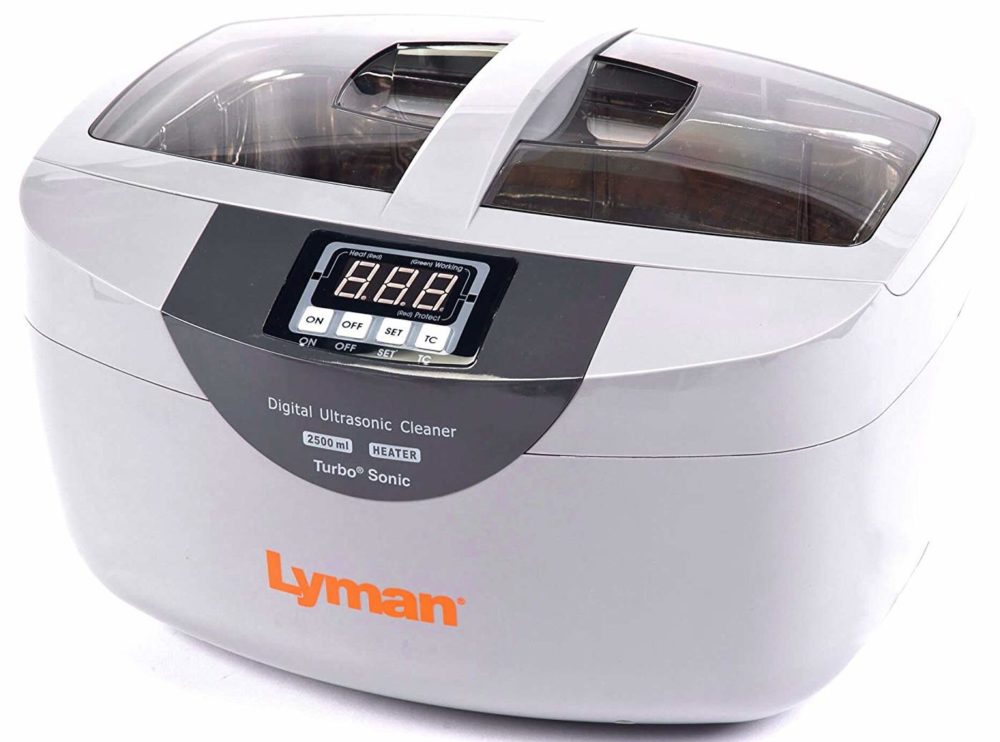
While our small parts soak, we took the barrelled action and receiver outside to just absolutely douse in brake cleaner.
Common internet gun wisdom is that you’re going to want non-chlorinated brake cleaner, as a byproduct of chlorinated brake cleaner heating up is phosgene gas.
Please -- avoid producing WW1-era invisible poisons in your shed.

Brake cleaner is pretty nasty even it’s not in chlorinated form though, so make sure you’ve got gloves and a well-ventilated area to work in.
Depending on how much hardened build-up you’ve got, it’ll probably take you a few cans of brake cleaner to get everything loosened up.
We wound up using about ~3 cans of cleaner total per rifle, using a general “spray vigorously and begin wiping down” method.

Once you’ve got all of the surface cosmoline more or less handled, you’ll want to really start tackling the goo in all of the nooks and crannies of the receiver.
We personally found Q-tips to be useful if a bit tedious. Throw on a podcast or something -- you’re likely going to be here for a bit. If you need suggestions, try one of our favorite YouTube channels.
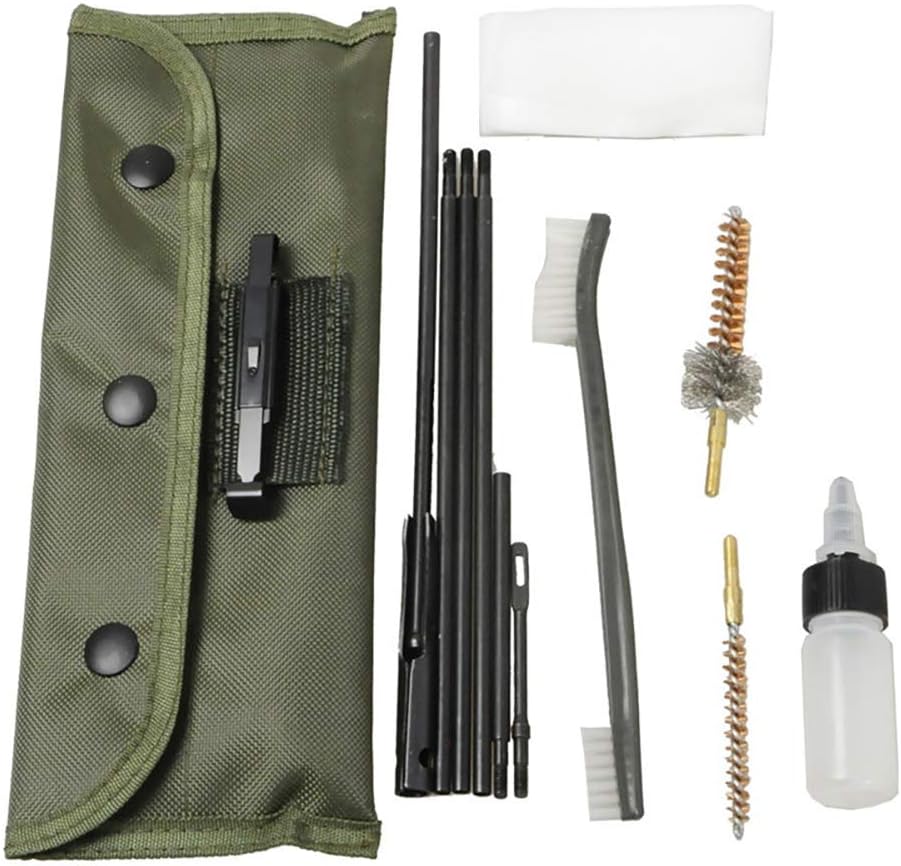
With that out of the way, spray a shitton of brake cleaner into the barrel and gas ports as well, then use a bore cleaning brush to ram all of that nasty ass gunk out.
This is obviously going to be one of the more critical parts of your cosmoline cleaning voyage, as any residue buildup you don’t address is going to negatively affect the accuracy of the rifle once you get it out to the range.

We used our same bore brush to ram out the gas tube as well -- and while it’s not as critical to get this part as sparkling clean as the barrel, you obviously don’t want any obstructions in the cavity that your piston sits within.
Our Most Popular Posts


At this point you can check up on your sonic cleaner parts and see how they’re doing.
In our case, you might need to run the gadget a few times to really penetrate the crud.
You can empty your disgusting cosmoline soup as you go along or just leave it, cosmo floats in water so you might need to skim that off at least before taking the parts out.

But it’s a background process that you can mostly leave alone outside of hitting the timer again once it’s finished a round of cleaning.
Once you’ve got your barrel and receiver assembly cleaned up, you can check on your sweaty wood bois and see where they’re at.
A couple of hours in the hot seat predictably allowed a ton of cosmoline that had been locked inside of the wood fibers the opportunity to seep out to the surface.
Wipe it off with a combination of shop rags for the surface grease, as well as goof-off to grab any of the sticky residues that are going to be left behind.

Once you’ve uh… unslimed your wood, return to your sonic cleaner components and use brake cleaner as needed to grab any chunks that might be left with your Q-tips.
Something to pay final attention to when doing the last pass on all of your small internal parts is the firing pin channel.
Depending on the gun you’re working on, this may or may not be a concern. For rifles like the SKS with a free-floating firing pin, it’s a critical place to make sure you got REALLY clean.
Free-floating firing pins, like the one found in AR-15s and the SKS, need to… freely float. Cosmoline can cause the pin to get stuck in the forward position and lead to slam fires and a runaway rifle.

Avoid that by making sure it’s very clean!
Reassemble the gun, perform a functions test to make sure that everything feels right and is operating correctly, and you’re basically done!
Parting Shots
It’s worth noting that we didn’t go SUPER deep with our cleanup job on the two in-house Type 56s as they’re already pretty thoroughly trashed.
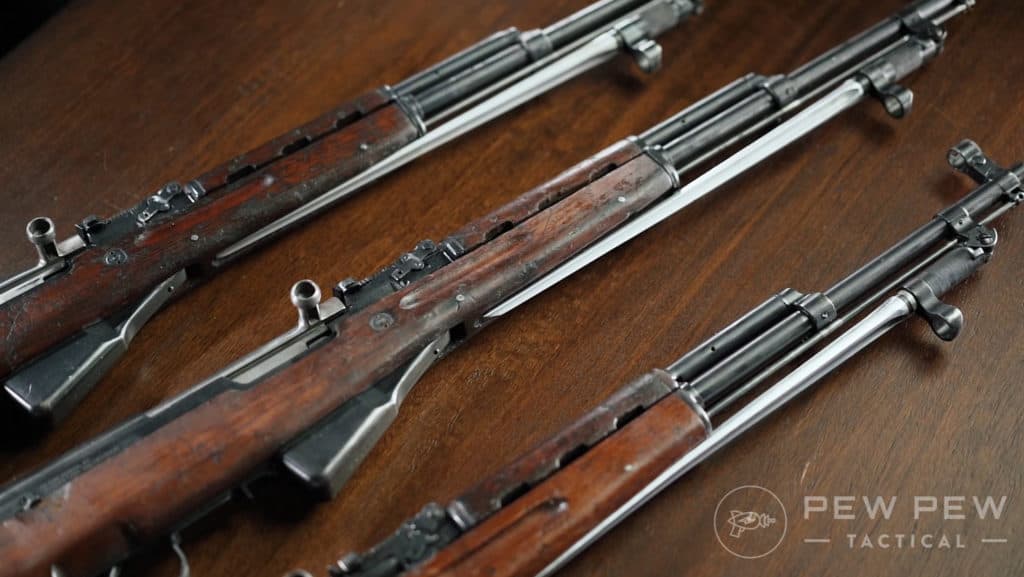
Whatever their history was with the PLA prior to being locked in the goo grave for an indeterminate amount of time, they certainly weren’t babied.
So we essentially got just enough cosmoline out of them to make them safe to fire and left it at that.
As expected, once we actually got them out to the desert, they had just a tiny bit more grease to leak out from weird places as the process of shooting warms up places not easily accessed by brush or rag, but so it goes!
Consider this just a primer on how you might tackle a cosmoline cleanup job, but there are tons of ways to go about it.
If you’ve got some super-secret method that you swear by, go ahead and yell about it in the comment section below. For some more cool old guns, take a look at our Walther P1 -- a much cleaner and easier milsurp.