
[Tested] Best Budget Bolt-Action Rifles of 2026
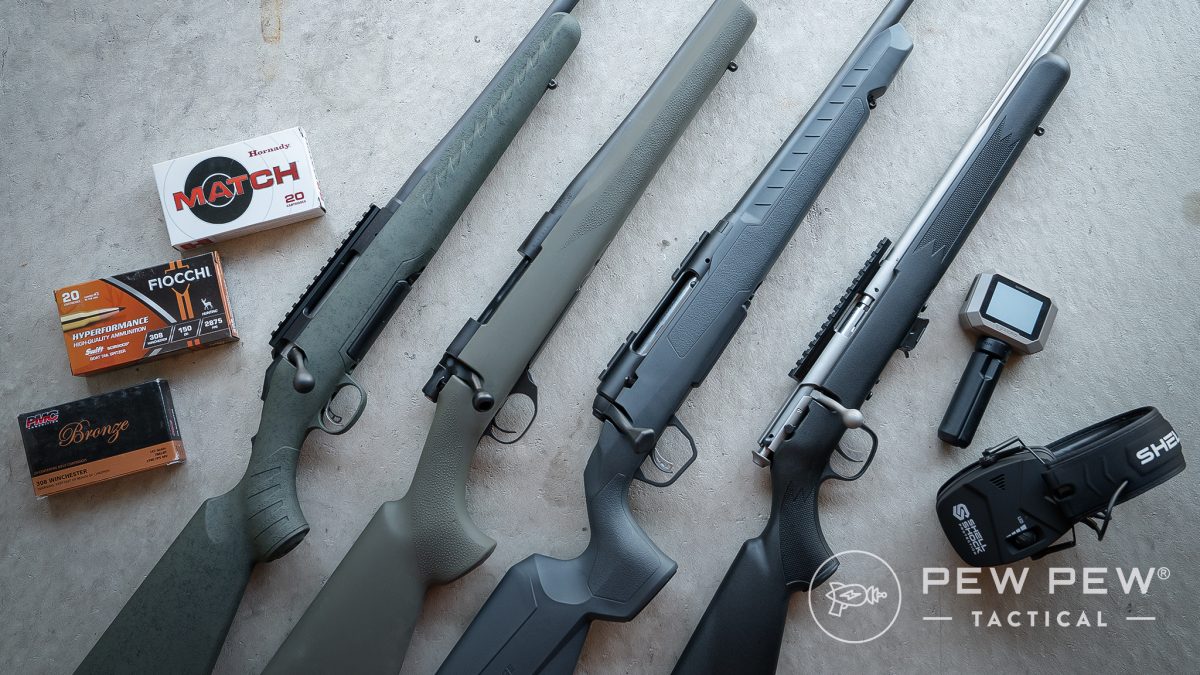
Ever wondered which bolt-action rifles get the most attention? Well, we made a list of the best bolt-actions Americans love.
We review products independently. When you buy through links on our site, we may earn a commission to help support our testing. Learn more.
Every year, we take a look at the current crop of bolt-action rifles to see which ones rise to the top. This time, we’re paying special attention to the affordable end of the market.
You might be surprised to hear this, but there are some genuinely good rifles available for $500 – and sometimes a lot less!
These are our picks for the best budget bolt-action rifles you can buy, based on real testing and range data.
Let’s dig in!
The Quick List
- Best Overall: Glenfield Model AJump to Details ↓
- Best Value: Savage Axis 2Jump to Details ↓
- Best Stock: Howa 1500 HogueJump to Details ↓
- Best Rimfire: Savage MkIIJump to Details ↓
Table of Contents
Trending: Best AR-15s, Best Pistol Lights (Re-Test), & Ammo in Stock
Budget Bolt-Action Rifle Comparison Chart
| Price | Cartridge (Tested) | Capacity (Tested) | Safety | BarrelLength (Tested) | OverallLength (Tested) | Weight (Tested) | |
|---|---|---|---|---|---|---|---|
| Glenfield Model A | $372 | .308 Win | 4+1 | Two-position | 20" | 40" | 6.3 lbs |
| Savage Axis 2 | $319 | .308 Win | 4+1 | Two-position | 22" | 42.5" | 6.4 lbs |
| Howa 1500 Hogue | $508 | .308 Win | 5+1 | Three-position | 22" | 42.25" | 8.4 lbs |
| Savage MkII | $246 | .22 LR | 5+1 | Two-position | 16.5" | 35" | 5.5 lbs |
How We Tested the Best Budget Bolt-Action Rifles
For this article, several of the Pew Pew Tactical staff put our heads together and brainstormed our favorite bolt-action rifles that don’t cost an arm and a leg. I rounded up one of each for hands-on, head-to-head testing.
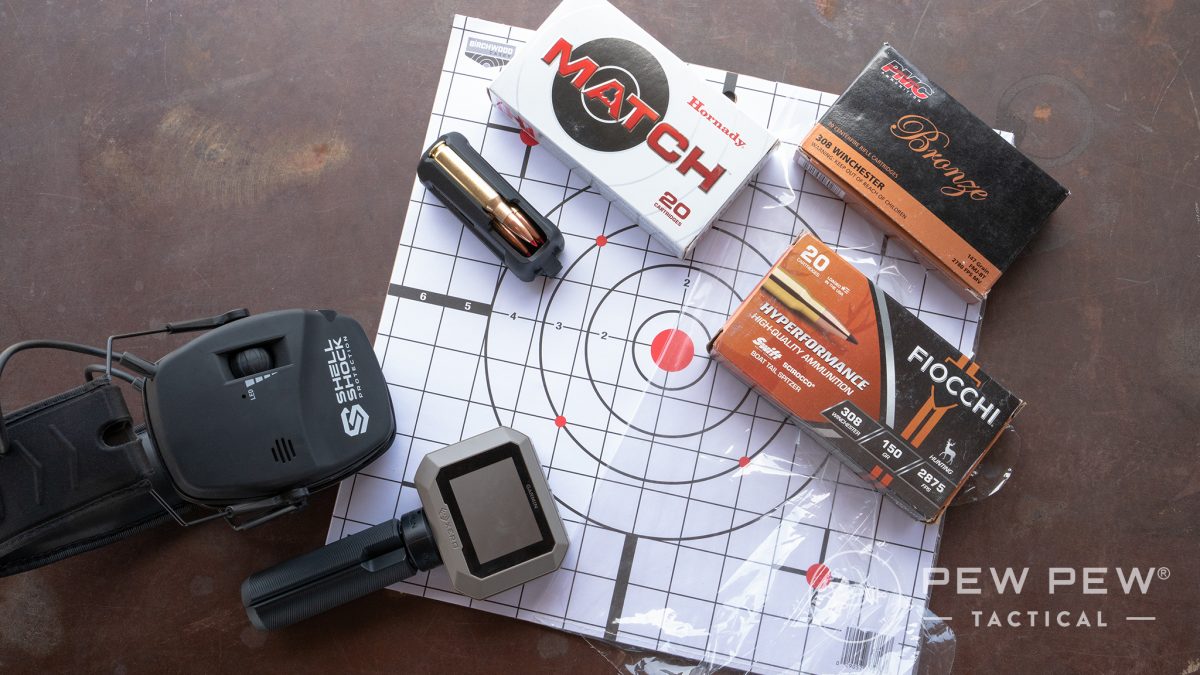
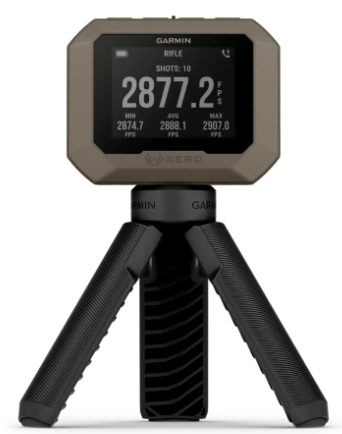
This included shooting a series of five-shot groups from 100 yards for centerfire rifles (50 yards for rimfire) to evaluate accuracy. I also used a Garmin Xero C1 Pro chronograph to measure each rifle’s muzzle velocity, standard deviation, and extreme spread using the same ammunition.
To make an apples-to-apples comparison, all centerfire rifles came chambered for .308 Win, and I fed them a mixed diet of PMC Bronze and Fiocchi Hyperformance. For optimal accuracy testing, I switched to 168-grain Hornady ELD Match.
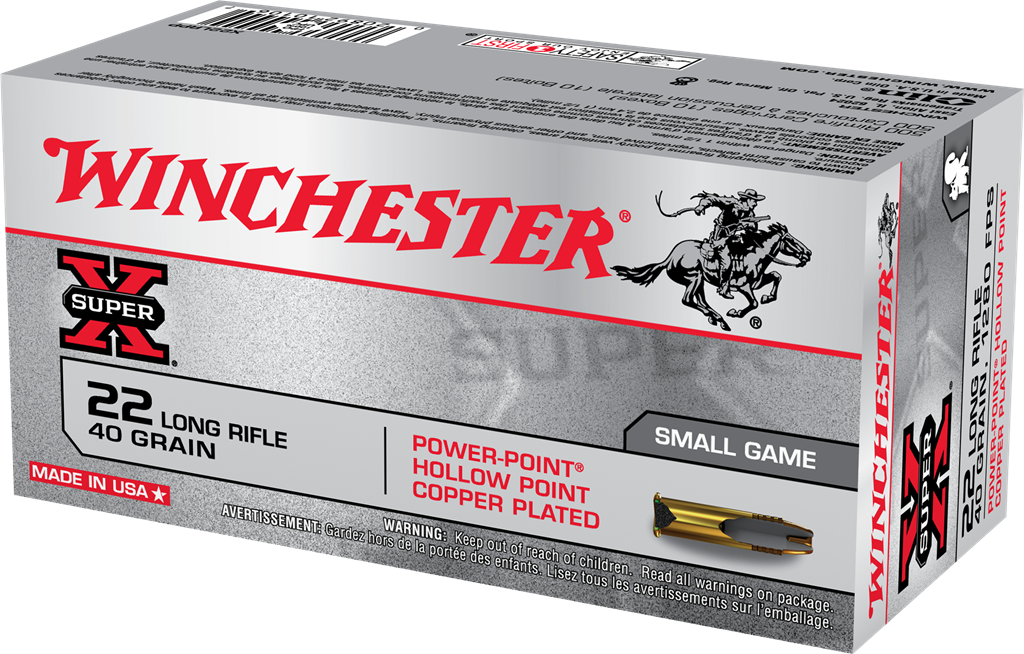
I did most of my rimfire shooting with Winchester Super-X. To squeeze out every last bit of potential, I turned to Eley Tenex and Lapua Polar Biathlon subsonic match ammo.
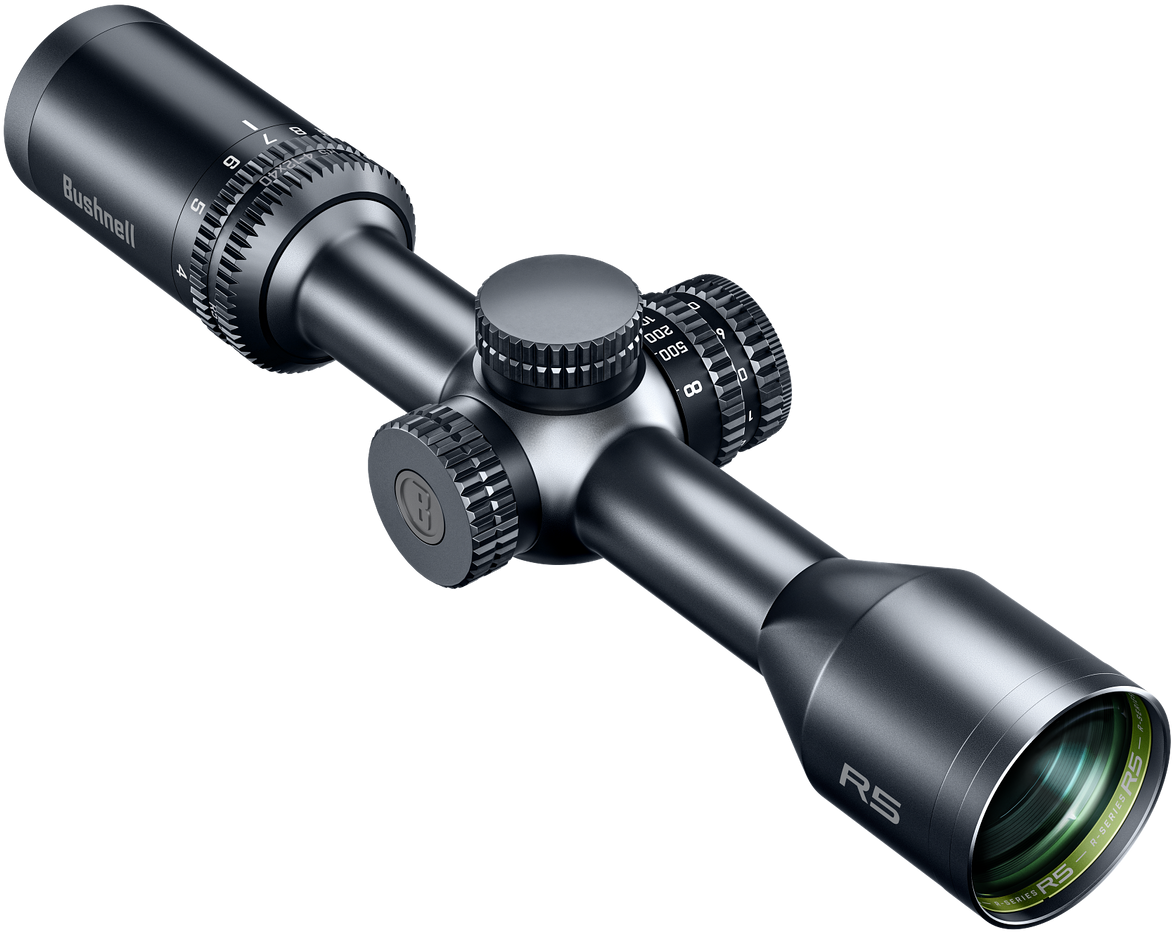
My primary scope for this test was a Bushnell R5 4-12x40 with an illuminated DOA-LRH800 reticle.
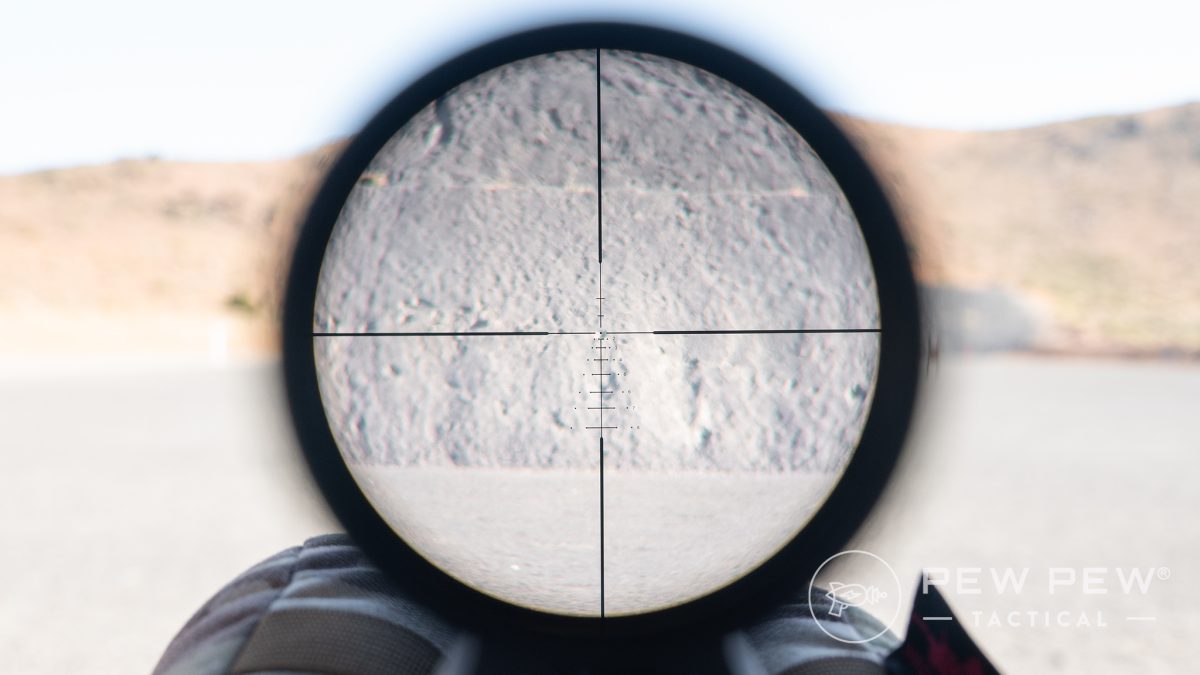
I chose it for two reasons. First, it fits the price range of these rifles nicely and has the ability to tackle most American big-game hunting scenarios. Second, I got some quality time with it at a Bushnell event that involved shots on steel out to 1,100 yards. That’s certainly not this optic’s intended purpose, but it gave me confidence.
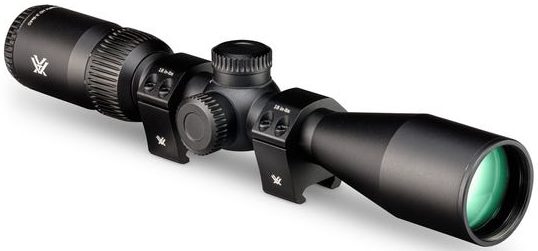
For rimfire testing, I used a Vortex Triumph HD 3-9x40. It perfectly suits this article’s budget-friendly theme, and you get quite a bit for what you spend. The BDC reticle translates to 50, 70, 90, and 100 yards with .22 LR ammo.
Meet the Experts
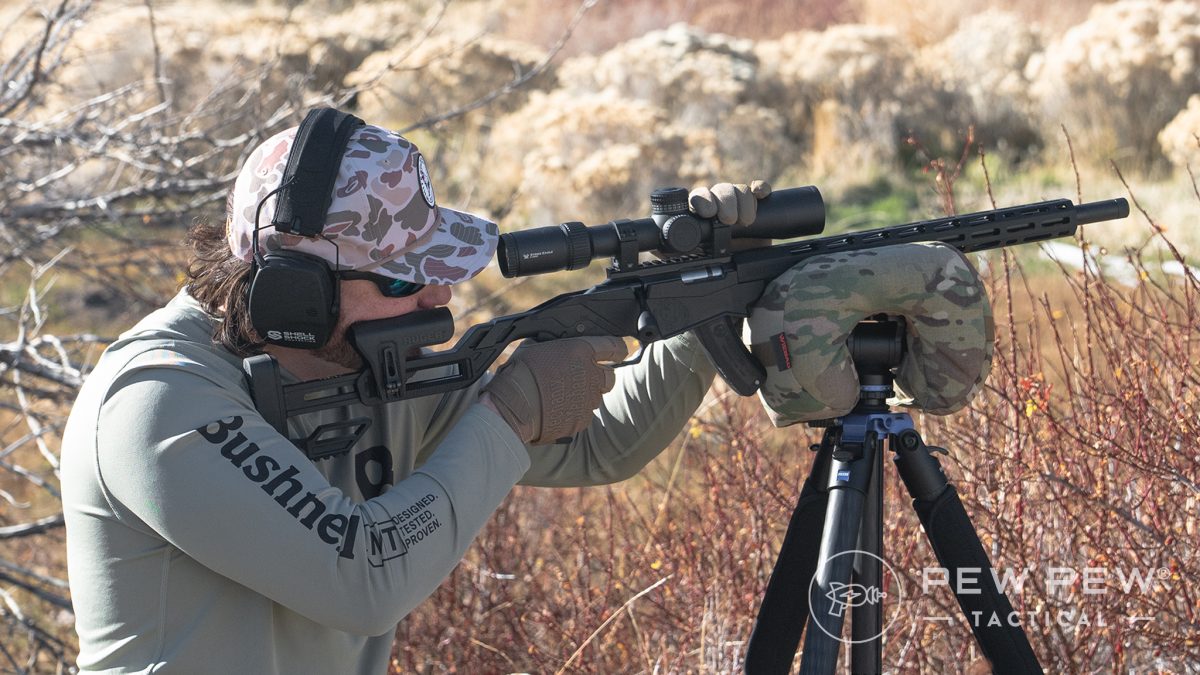
Editing this article is Scott Murdock. In addition to years of reviewing firearms, Scott’s experience with bolt-action rifles includes long-range precision shooting, hunting, and recreational target shooting. He brings that expertise to this article, along with data from live-fire testing and ballistic software.
Editor-in-Chief Jacki Billings runs our experienced team of reviewers. She is a National Rifle Association Basic Pistol Instructor as well as a member of the Society of Professional Journalists, ACES: Society for Editing, and the Professional Outdoor Media Association. Jacki has a bachelor’s degree in journalism and has worked as a media professional for close to 20 years, specializing in gun media for almost 10 years. With 2,000+ articles to her name, she uses her professional journalism and editing experience to set testing protocols and editorial standards for Pew Pew Tactical.
Best Budget Bolt-Action Rifles
1. Glenfield Model A - Best Overall

Pros
- Great accuracy potential
- Threaded barrel and a Picatinny rail
- Basically a Ruger American (but less expensive)
Cons
- Hollow, basic stock
- Comb feels low for a scope
The Bottom Line
The first-gen Ruger American Rifle is back as the Glenfield Model A. It's a tack driver (as long as you keep the barrel cool), the Picatinny rail makes mounting a scope easy, and the barrel is threaded for a suppressor. I give it a slight edge over the runner up based on fit and finish.
Specs
- Caliber: .243 Win, .270 Win, 6.5 Creedmoor, .308 Win, .30-06 Sprg, .350 Legend, .450 Bushmaster
- Action: Bolt action
- Capacity: 3+1 (.450 Bushmaster), 4+1 (243 Win, .270 Win, 6.5 Creedmoor, .308 Win, .30-06 Sprg), 5+1 (.350 Legend)
- Barrel Length: 20”
- Overall Length: 40”
- Weight: 6.3 lbs
- Country of Origin: USA
The Glenfield Model A signaled the brand’s rebirth in the fall of 2025, but this rifle is no newcomer. It’s essentially a first-generation Ruger American (courtesy of Glenfield’s parent company), except it costs $100 less than the Ruger-branded rifle did, and $200 less than the current Ruger American Gen II.
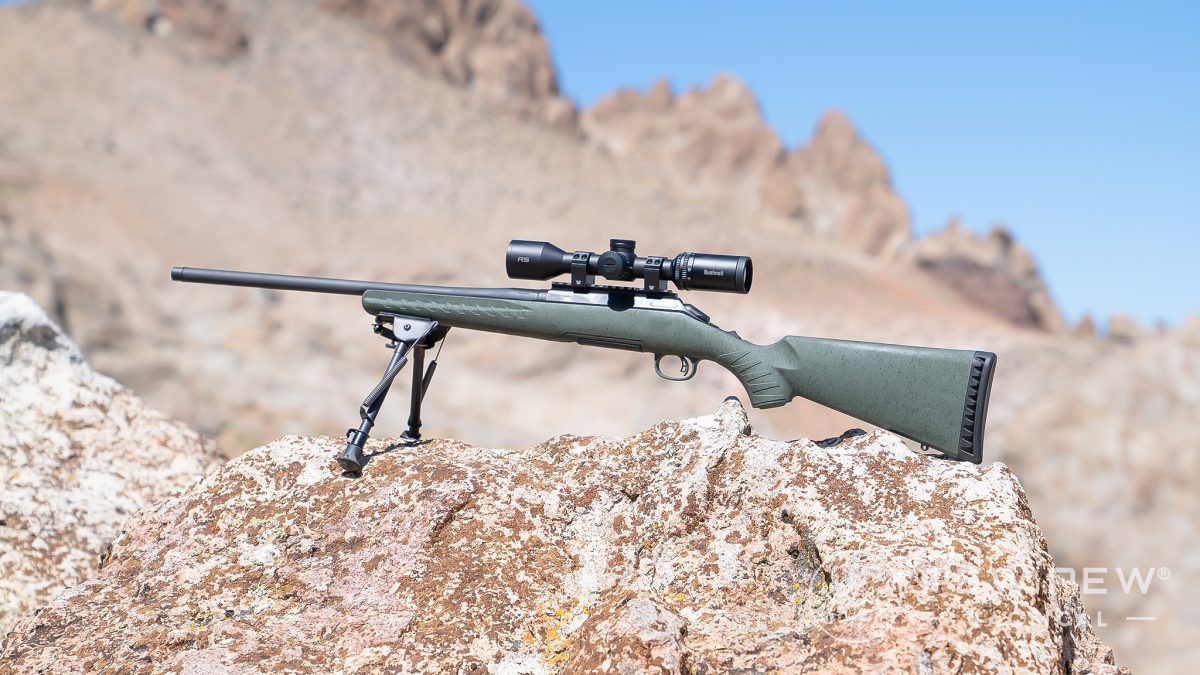
The tried and true Ruger American action is just as simple and effective as it ever was.
Glenfield uses a two-position tang safety for the Model A, and you can cycle the bolt while the safety is engaged.
Ammunition comes from a detachable box magazine that sits flush with the stock for a smooth, streamlined profile. In the case of my .308 Win test rifle, the magazine held four rounds.
I’ll give Glenfield extra points for equipping the Model A with a Picatinny rail at the factory. This simplifies the scope-mounting process and gives customers the biggest selection of rings. Bolting up the Bushnell R5 couldn’t have been easier.
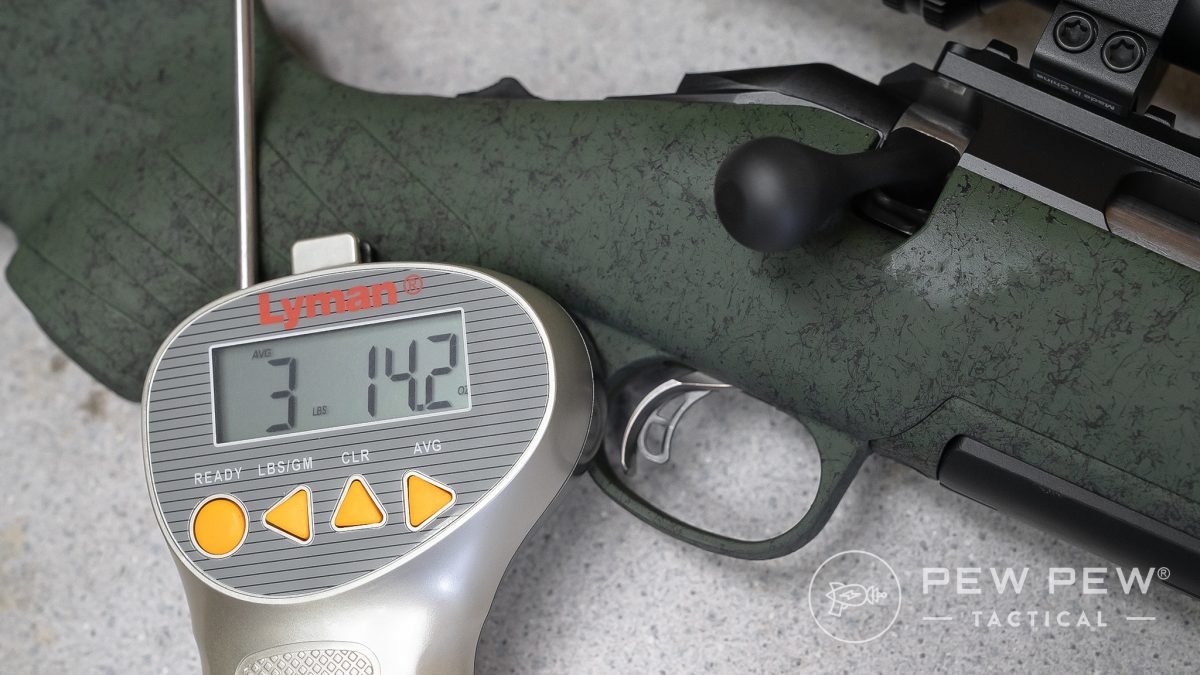
Glenfield kept costs down by using a very simple, non-adjustable stock. By removing the barreled action from the stock, it is possible to adjust the trigger pull weight from 3 to 5 pounds with a hex key. Mine checked in with a five-pull average of 3.9 pounds out of the box, with just a little bit of creep before breaking.
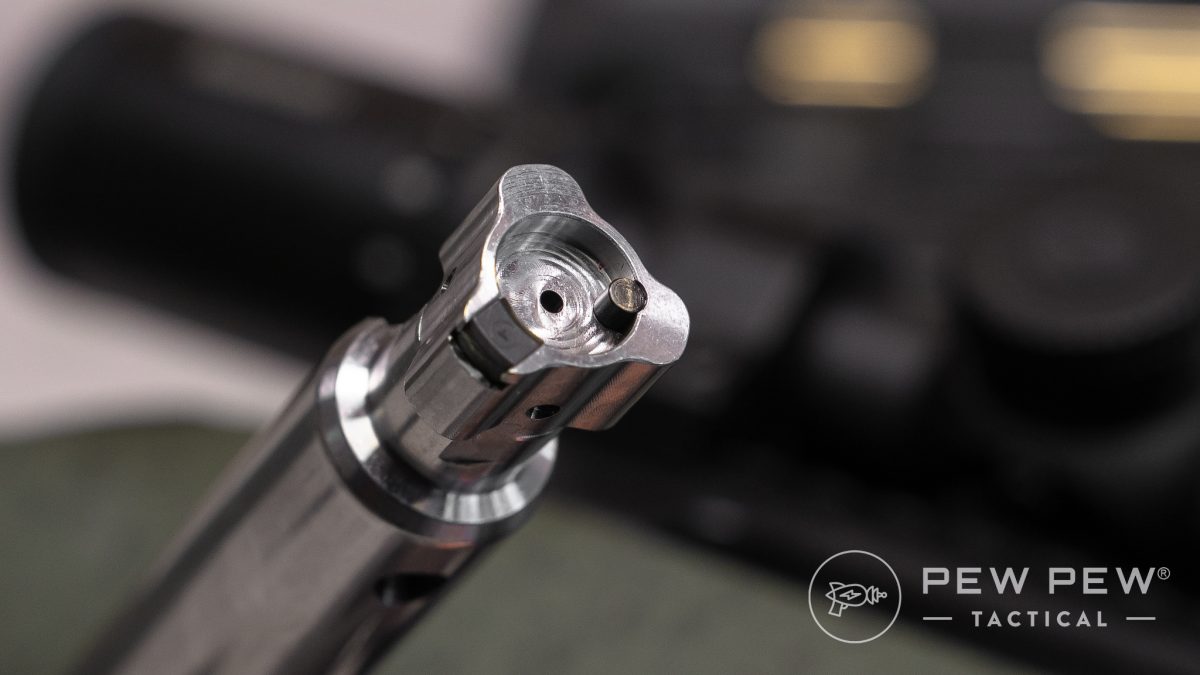
Funny enough, the Model A’s three-lug action is one of its biggest standout features in this crowd. Compared to the two-lug competition, bolt throw was noticeably shorter, and I had more room between my fingers and the scope. It’s a small difference that makes the rifle feel more refined.
I also appreciate the threaded barrel. If you think you might want to buy a suppressor someday, this is a key feature.
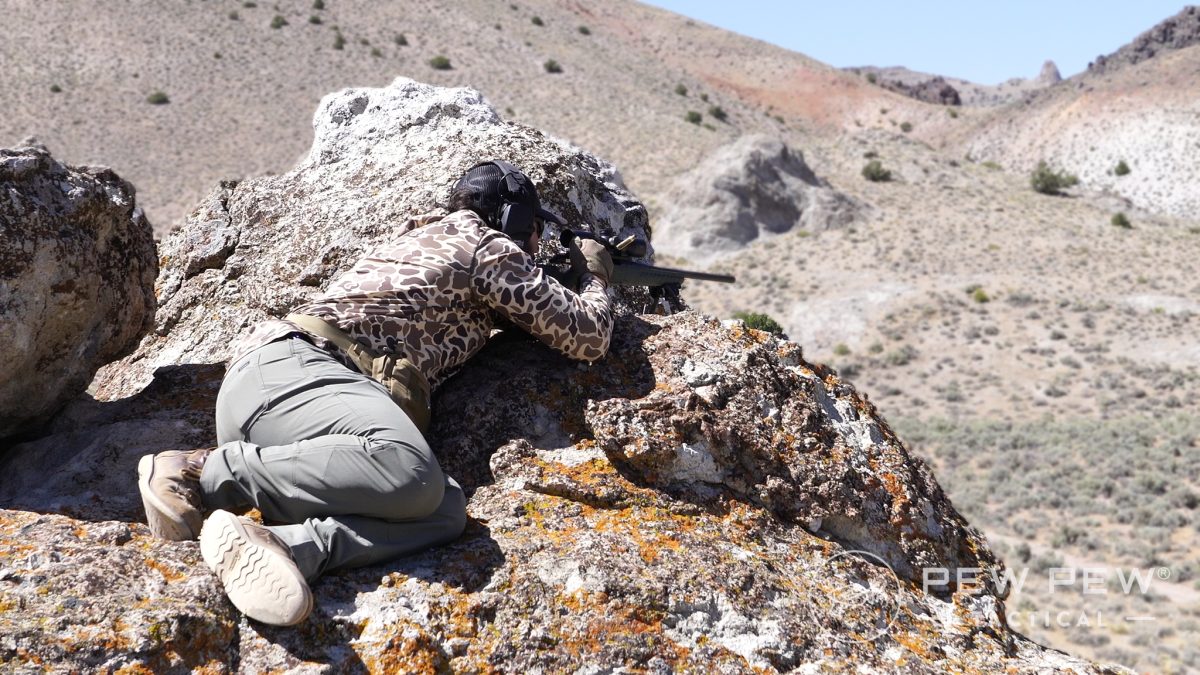
The Model A performed respectably with a variety of ammunition during testing. It definitely preferred the more expensive hunting and match loads, which is to be expected.
| Average Muzzle Velocity | Standard Deviation | Extreme Spread | |
|---|---|---|---|
| Fiocchi Hyperformance | 1,681 fps | 20 fps | 51 fps |
| Hornady ELD Match | 2,580 fps | 20 fps | 54 fps |
| PMC Bronze | 2,683 | 13 fps | 34 fps |
PMC Bronze had a habit of flinging strays, while Fiocchi Hyperformance kept things more in check with tidy groups. I always recommend testing and selecting your own hunting ammo, but this is a good place to start, based on what I experienced.
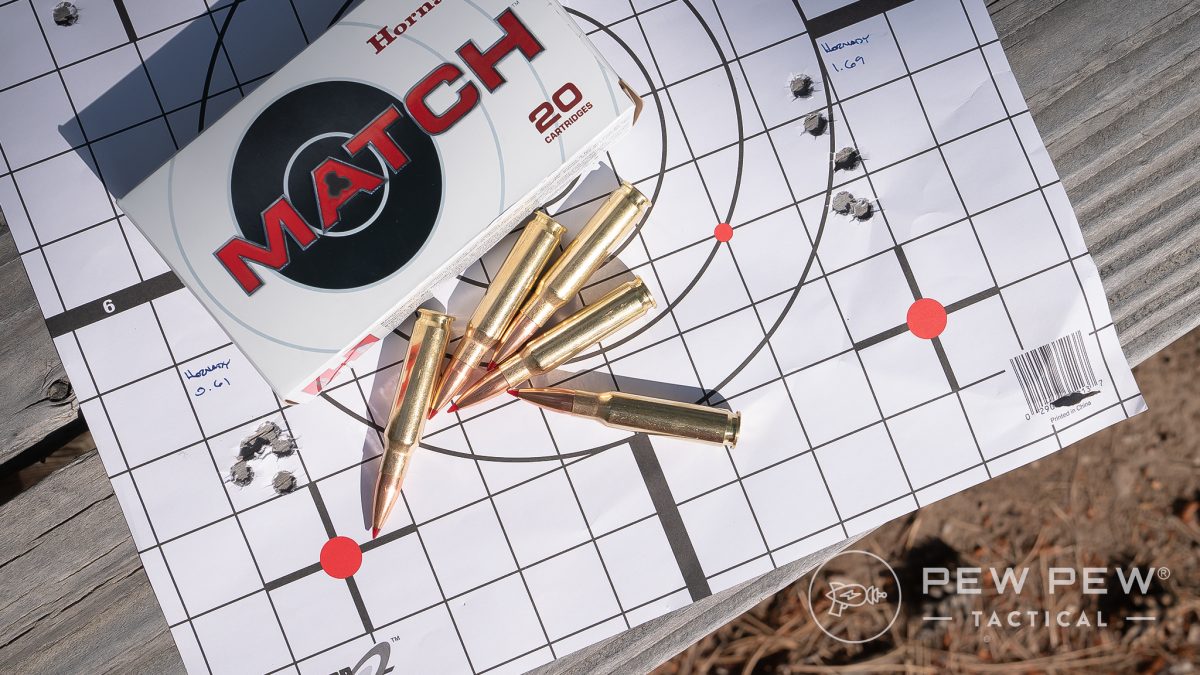
Unsurprisingly, my best results came from Hornady ELD Match ammo. When I gave the Model A plenty of time to cool between shots, it managed to produce a 0.61-inch group of five shots at 100 yards.
Here, you can see how that compares to the vertical stringing that occurred when I let the barrel get increasingly hotter with each shot.
The Model A’s only real drawback is the cheap-feeling stock. That’s also part of the charm though; it keeps the price down and makes room in the production budget for things like a Picatinny rail and threaded barrel. I’ll make that trade this time.
Ruger bringing back the American Rifle and Glenfield brand in one swing might be the most exciting development in years for hunters on a budget. Whether you’re setting up a youngster or adding a knockaround woods gun to your collection, this is a genuinely good rifle at a genuinely good price.
What do you think of the Glenfield? Rate it below!
Readers’ Ratings
5.00/5 (1844 Votes)
Your Rating
The Best Gun Deals, Coupons and Finds
Subscribe to Pew Pew Tactical's sales and deals email.
2. Savage Axis 2 - Best Value

Pros
- Great ergonomics for this price range
- Tied for best accuracy
- Plush recoil pad
Cons
- All this, and no threaded barrel?
- Hitchy trigger on my test rifle
The Bottom Line
Of the rifles here, the Savage Axis 2 is the most comfortable to shoot. A vertical pistol grip and elevated comb contribute to superior ergonomics, and that thick recoil pad does wonders. If you prefer modern rifles, this is the budget bolt gun for you.
Specs
- Caliber: .223 Rem, .22-250 rem, .243 Win, .25-06 Legend, .270 Win, 6.5 Creedmoor, .300 Blk, 7mm-08 Rem, .308 Win, .30-06 Sprg, .350 Legend, 400 Legend
- Action: Bolt action
- Capacity: 4+1
- Barrel Length: 16.1”- 22”
- Overall Length: 42.5”
- Weight: 6.4 lbs
- Country of Origin: USA
Savage recently updated the Axis platform to the Axis 2 with some nice improvements, but I’m glad to say that they kept the price in the realm of the attainable.
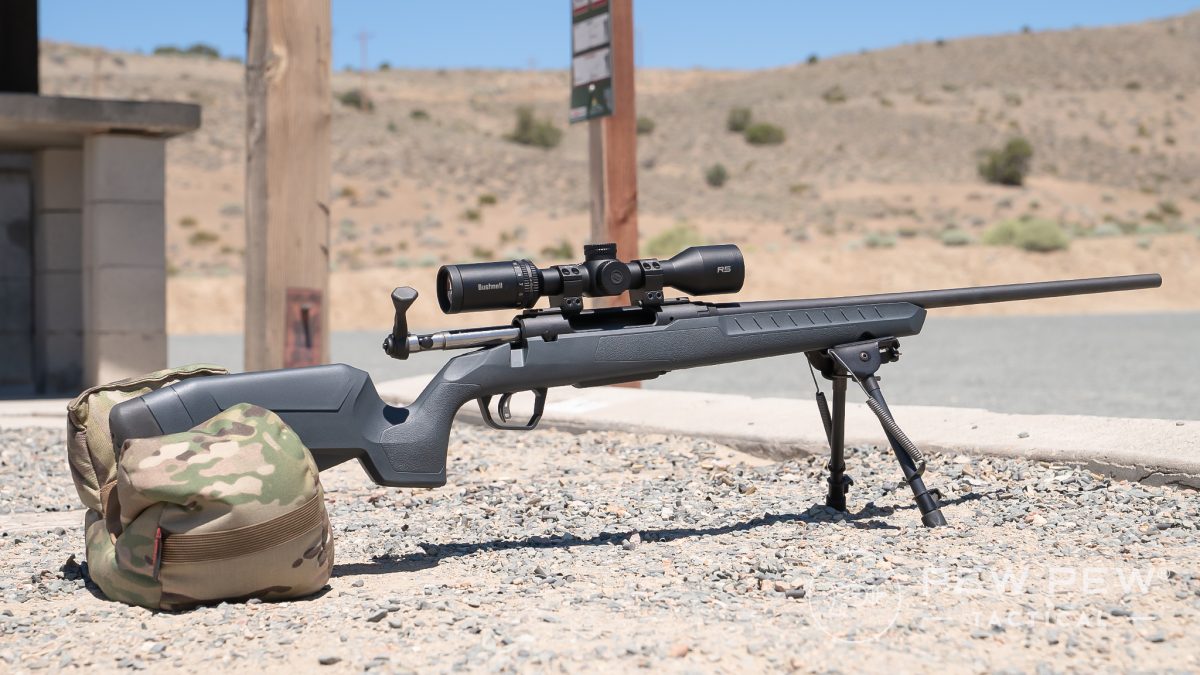
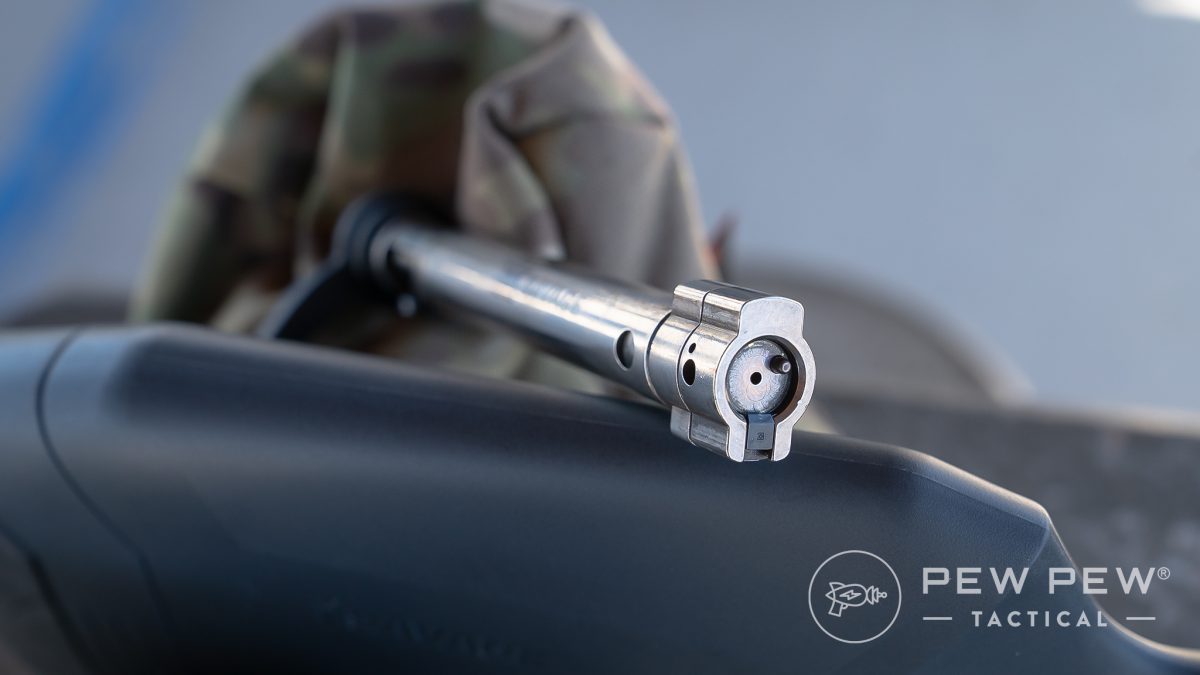
Cycling the Savage’s two-lug bolt felt slick and smooth right out of the box. I noticed a fairly firm sticking point right before it unlocks, but that’s easy to overcome if you run the bolt like you mean it.
Five pulls of the AccuTrigger showed an average pull weight of 2.7 pounds. That’s nice and light, but a little hitch just before the break caught me off guard a few times. It almost felt like dry firing.
I haven’t experienced that with my 110 Precision. Maybe it’s an isolated incident, or maybe it’ll smooth out over time.
Tang safeties are great because they’re easy to reach without breaking my grip, but the two-position sliding plastic pad on the Axis 2 felt cheap. I wish it were as solid as the Model A’s metal safety.
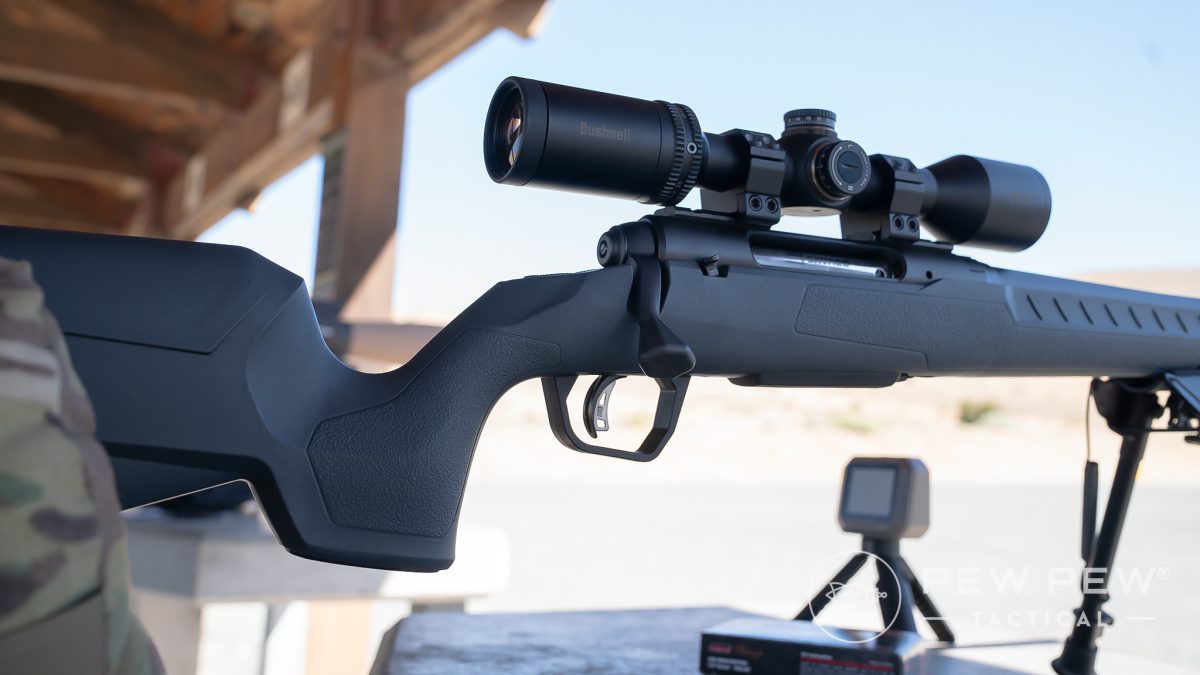
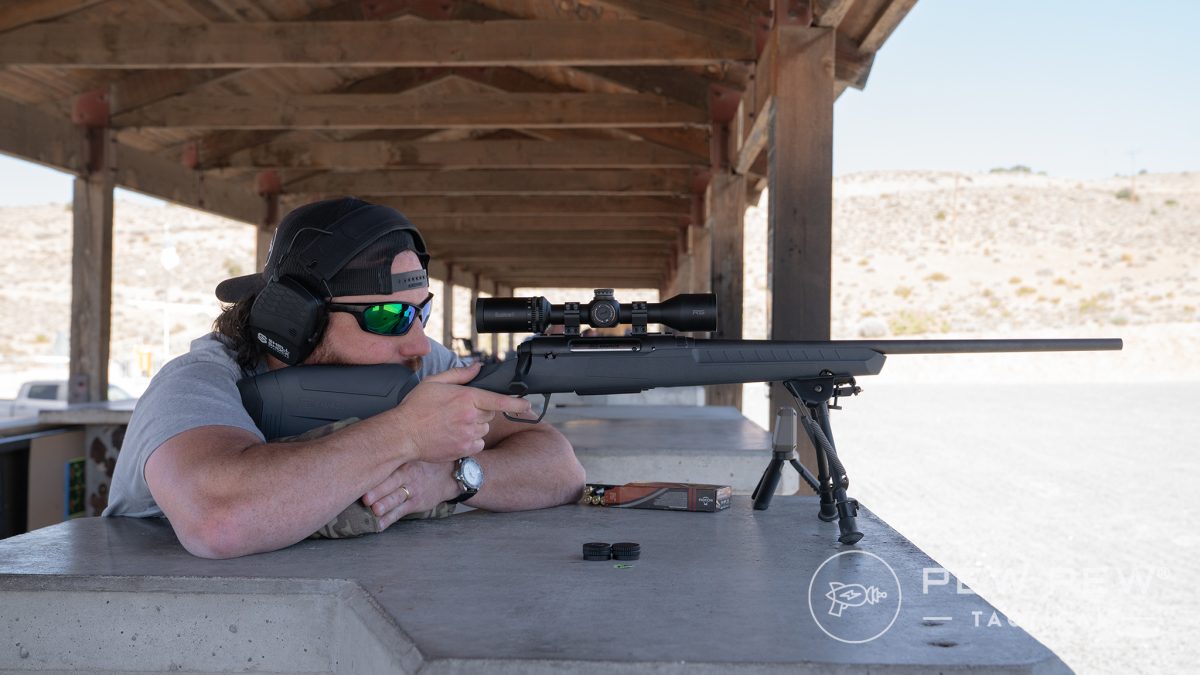
This rifle has the most modern stock of the bunch, thanks to the vertical grip and raised comb. It looks like the buttstock can be adjusted for length of pull, but that’s actually not the case. It was still comfortable in a range of shooting positions, though, and it has the thickest recoil pad here.
That helped make it the most comfortable to shoot. The vertical grip felt much more natural in my hand than the other rifles here, but your preferences may differ.
Even though these are all competitive rifles, the Axis 2 ran away in terms of ergonomics.
Fiocchi Hyperformance posted a phenomenal standard deviation of 5 feet per second, and an extreme spread of 12 feet per second; Hornady ELD Match had the worst showing with a standard deviation of 19 feet per second and an extreme spread of 55 feet per second.
As you’ll see in a second, that didn’t translate to paper.
| Average Muzzle Velocity | Standard Deviation | Extreme Spread | |
|---|---|---|---|
| Fiocchi Hyperformance | 2,927 fps | 5 fps | 12 fps |
| Hornady ELD Match | 2,698 fps | 19 fps | 55 fps |
| PMC Bronze | 2,787 fps | 12 fps | 32 fps |
Fiocchi groups stayed right around 3 inches. PMC Bronze, a basic target load, reliably shot 2.5-inch groups.
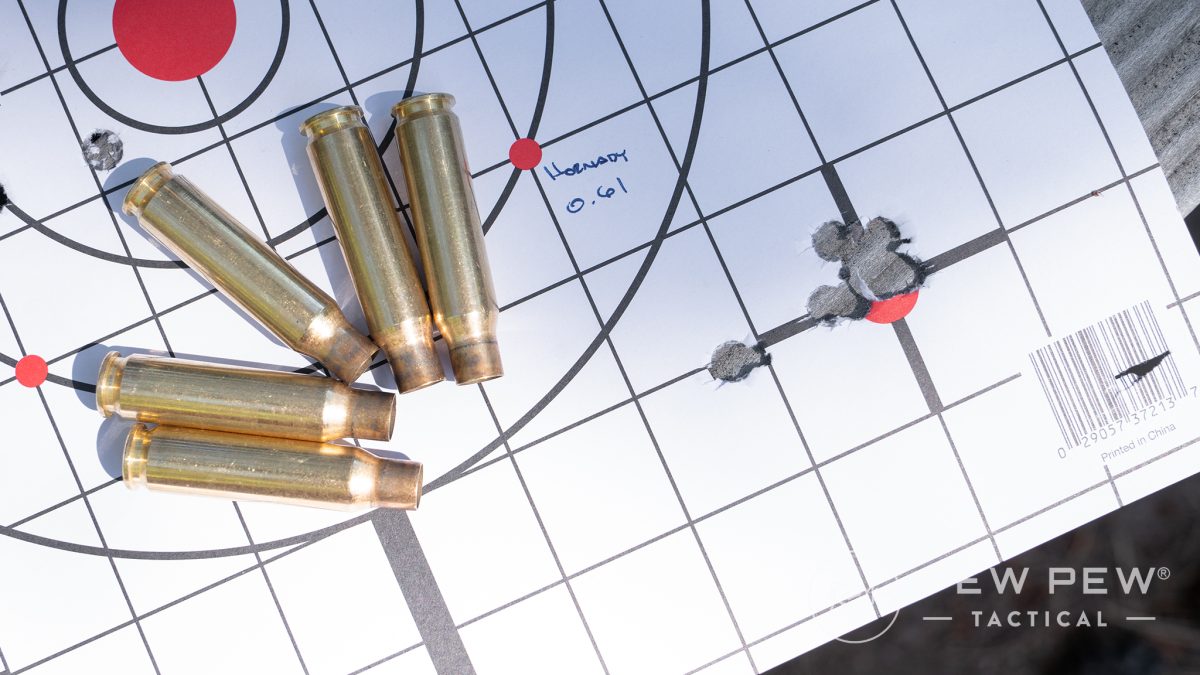
During steady strings of fire, Hornady ELD Match produced 2-inch groups. When I waited five minutes between shots to prevent overheating, I got a 0.61-inch group that tied the Model A for the top spot. (Disregard the stray on the left; that was caused by shooter-induced parallax error.)
It’s interesting to me that Savage updated the Axis without making a threaded barrel a standard feature. That’s my biggest knock against this rifle because more and more hunters are using a suppressor these days.
Any of these rifles will make solid hunting companions, but this is the best pick for people who want a modern stock. The vertical grip is conducive to a more relaxed, controlled trigger press, and the raised comb will do a better job of lining your eye up with a scope.
3. Howa 1500 Hogue Rifle - Best Stock

Pros
- Rock-solid stock
- Test-leading capacity
- Handled all ammunition reasonably well
Cons
- No pic rail, no torque specs
- Safety felt rough at first
The Bottom Line
The Howa 1500 Hogue is the most expensive rifle here by a significant margin. In some ways, it feels like it. I loved the heavy, rubberized Hogue stock. Running the action felt nice and slick. I wish it came with a Picatinny rail, though.
Specs
- Caliber: .223 Rem, .22-250 Rem, .243 Win, .270 Win, 6.5 Creedmoor, 6.5 PRC, .308 Win, .30-06 Sprg, 7mm PRC 7mm Rem Mag, .300 PRC, .300 Win Mag
- Action: Bolt action
- Capacity: 5+1
- Barrel Length: 20” - 24”
- Overall Length: 42.25” - 44.75”
- Weight: 8.4 lbs - 8.75 lbs
- Country of Origin: Japan
Searches for the best budget bolt-action rifles often point to the Howa 1500; specifically, the Hogue version. It’s a rifle that keeps things simple, takes cues from proven designs like the Remington 700, and strives to give shooters more than they paid for.
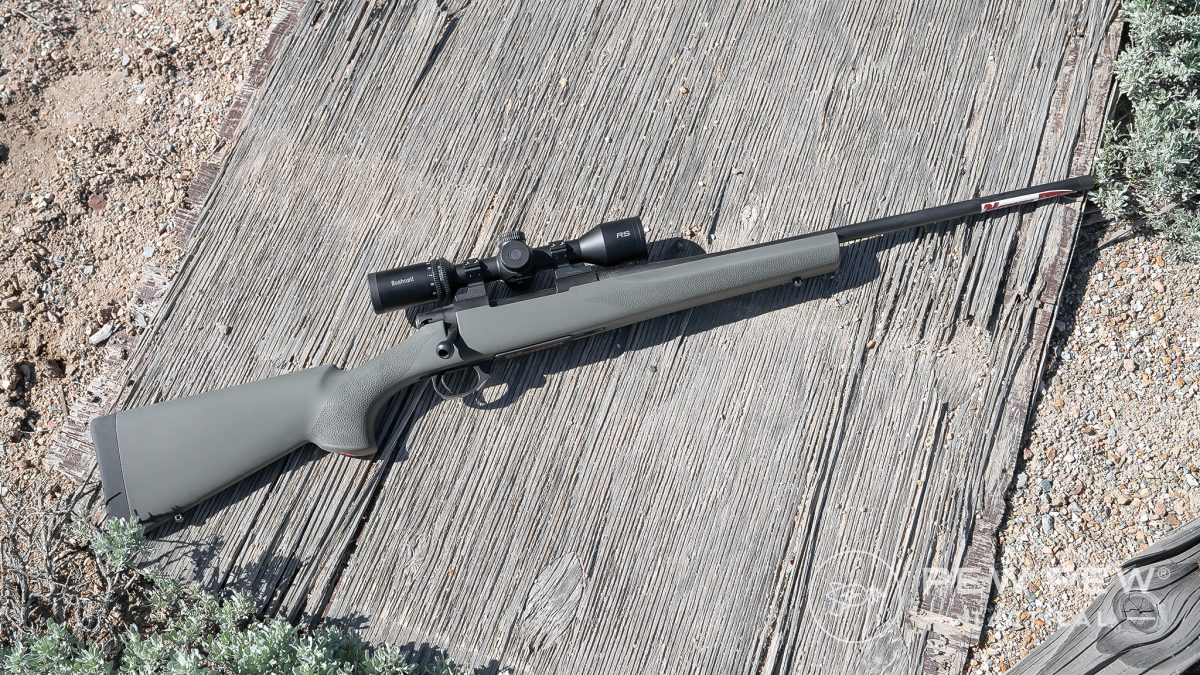
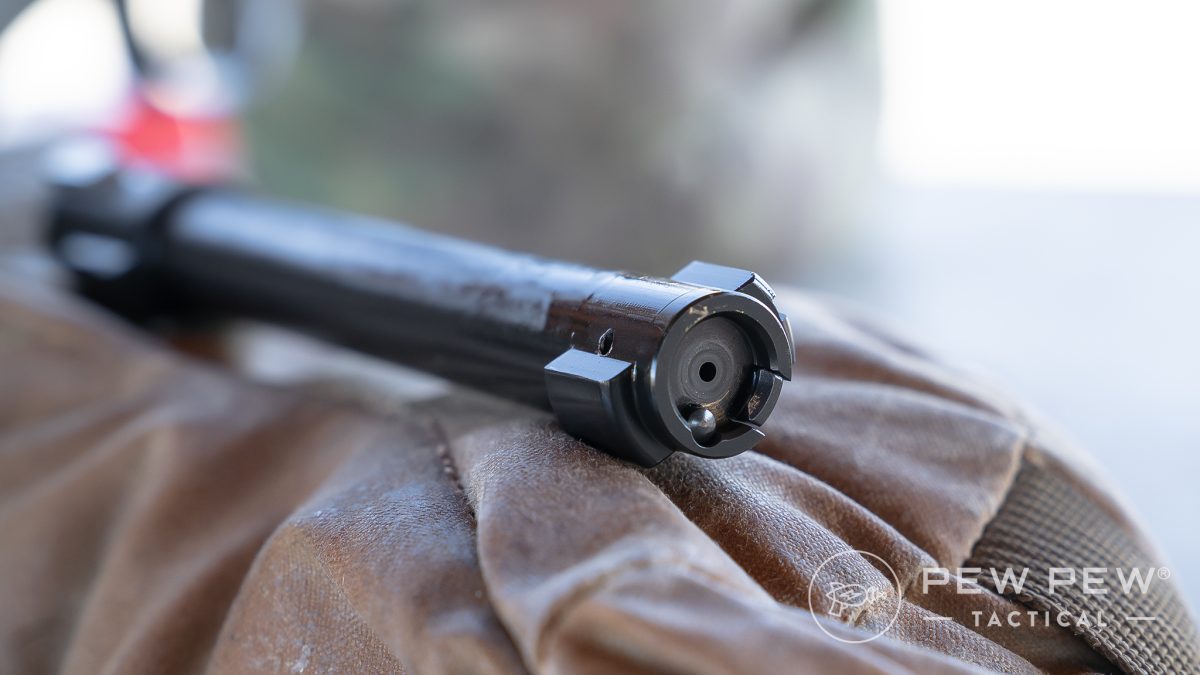
Howa opted to keep things simple with a cylindrical action, two-lug bolt, and M16-style extractor and ejector.
Push feed and a 90-degree bolt throw might not be fancy, but they work very well without inflating the price.
The 1500 has a three-position safety. The rear position locks the trigger and the bolt, the middle locks the trigger but allows the bolt to cycle, and the forward position allows the rifle to fire and cycle. The safety isn’t particularly smooth out of the box, but that may work itself out with more use.
Howa opted for an internal magazine instead of a detachable one. That slows down reload times (which isn’t an issue for hunting), but it also bumps up capacity to 5+1. The baseplate pops free to empty the rifle without cycling rounds through the chamber.
The action is drilled and tapped for scope rings or a base of your choosing. I used a set of medium-height Nikko Sterling Zero Lok rings, and installation was very simple.
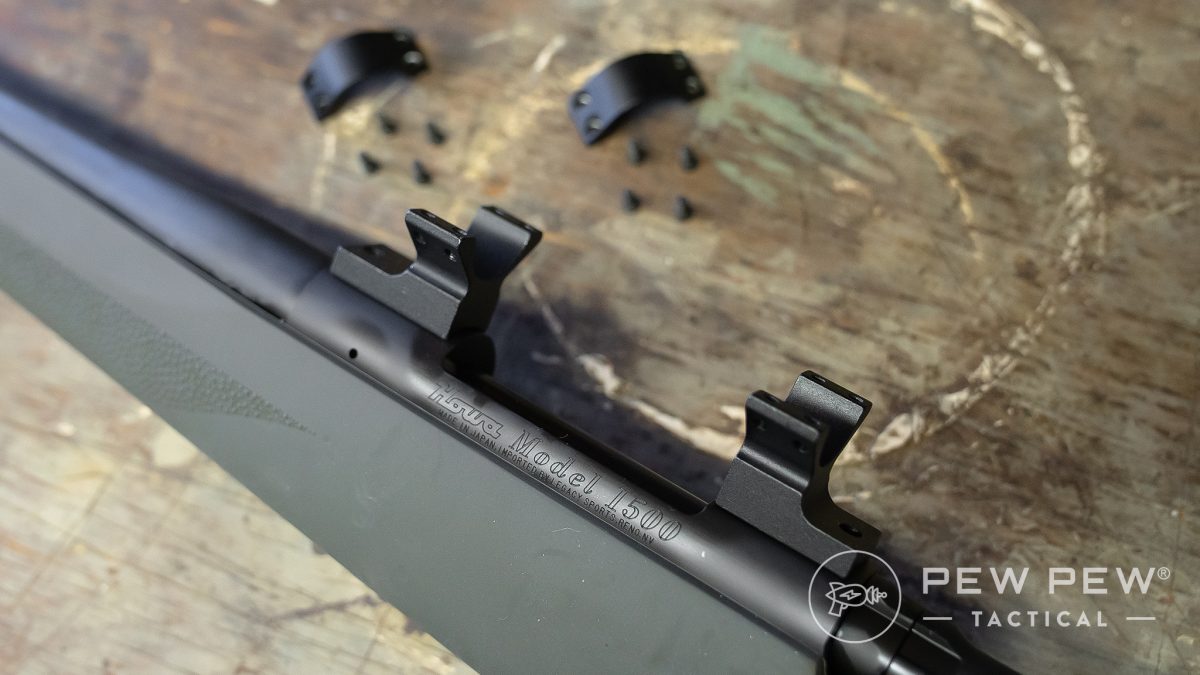
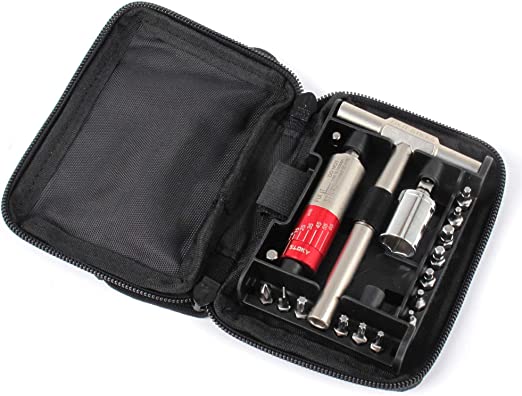
While I’m never thrilled when a manufacturer doesn’t provide torque specs, I used a common setting of 25 inch-pounds to mount the rings to the action, and 18 inch-pounds for the caps. That seemed to do the trick.
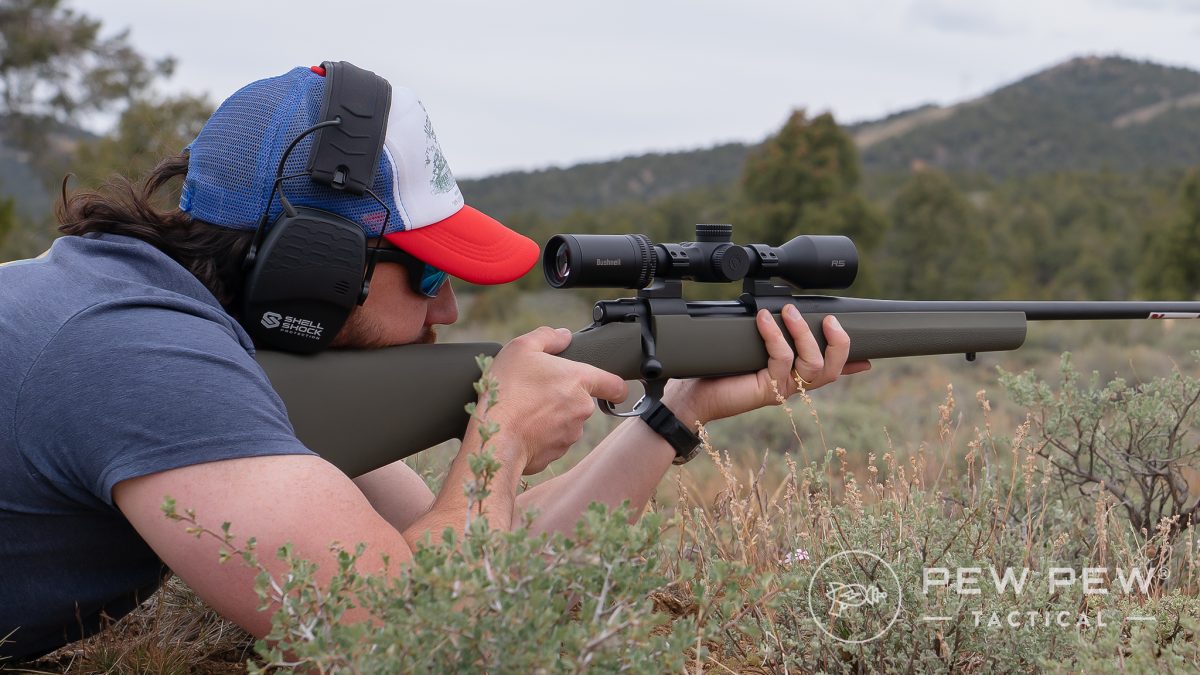
Ergonomics are very traditional with the Howa 1500. Older-style buttstock profiles are actually designed to line your eye up with iron sights, so low scope rings might help you achieve an optimal fit.
The 22-inch barrel provides standard cartridges with plenty of running room (magnums get a 14-inch barrel), but the thin profile keeps the rifle balanced and swingable.
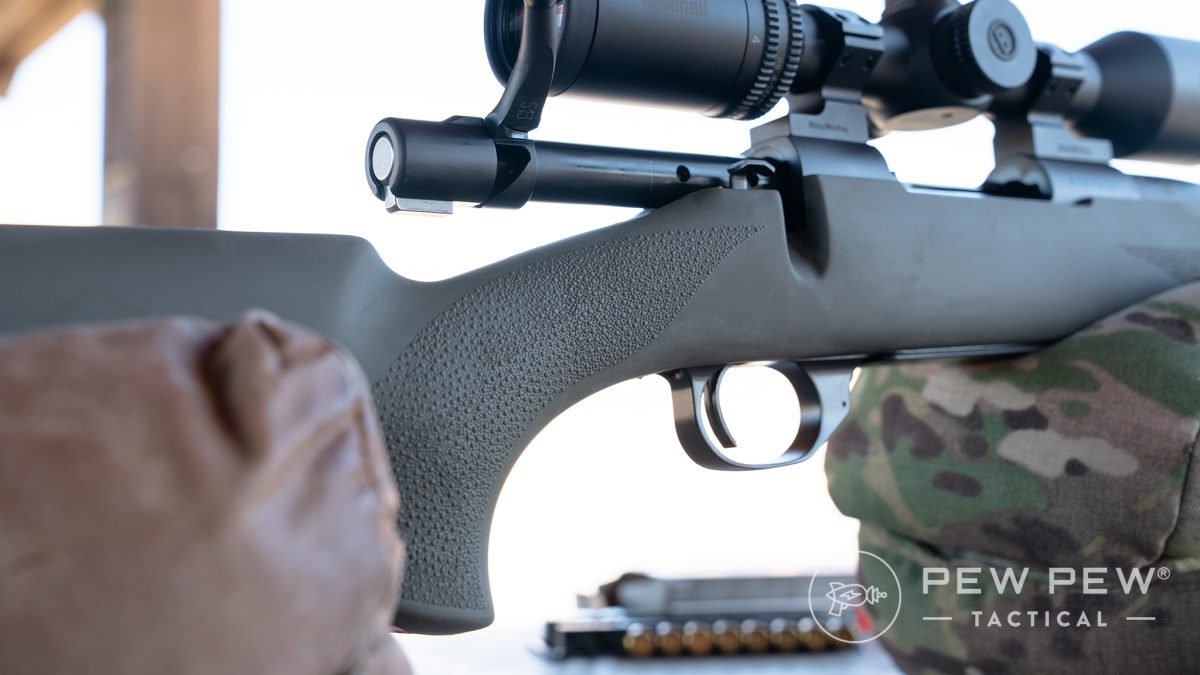
As with many budget bolt-action rifles, what you see is what you get in terms of customization. The stock isn’t adjustable, and – even though some DIY tinkering is possible – I recommend swapping in an aftermarket trigger if you want to modify the trigger. Five pulls yielded an average of 2.9 pounds for my test rifle, with light takeup and a clean break. I wouldn’t bother changing it.
On the bench and in the field, the Howa 1500 felt very solid and stable. The Hogue overmolding gave me excellent grip, and it seemed to stick to any rest I used, whether that was a WieBad bag on a tripod or the trunk of a fallen pinion pine. I also felt like the rubbery surface soaked up some that .308 Win recoil.
The 1500’s thin barrel heated up almost instantly, getting hot to the touch after just two or three shots. This is a hunting rifle, though, so you aren’t likely to fire that many.
Federal Hyperformance hunting ammunition recorded the lowest standard deviation from the Howa 1500 at just 9 feet per second.
The Howa’s barrel seemed to handle all three loads respectably, indicating that you should be able to source training and hunting ammunition fairly easily.
| Average Muzzle Velocity | Standard Deviation | Extreme Spread | |
|---|---|---|---|
| Fiocchi Hyperformance | 2,969 fps | 9 fps | 25 fps |
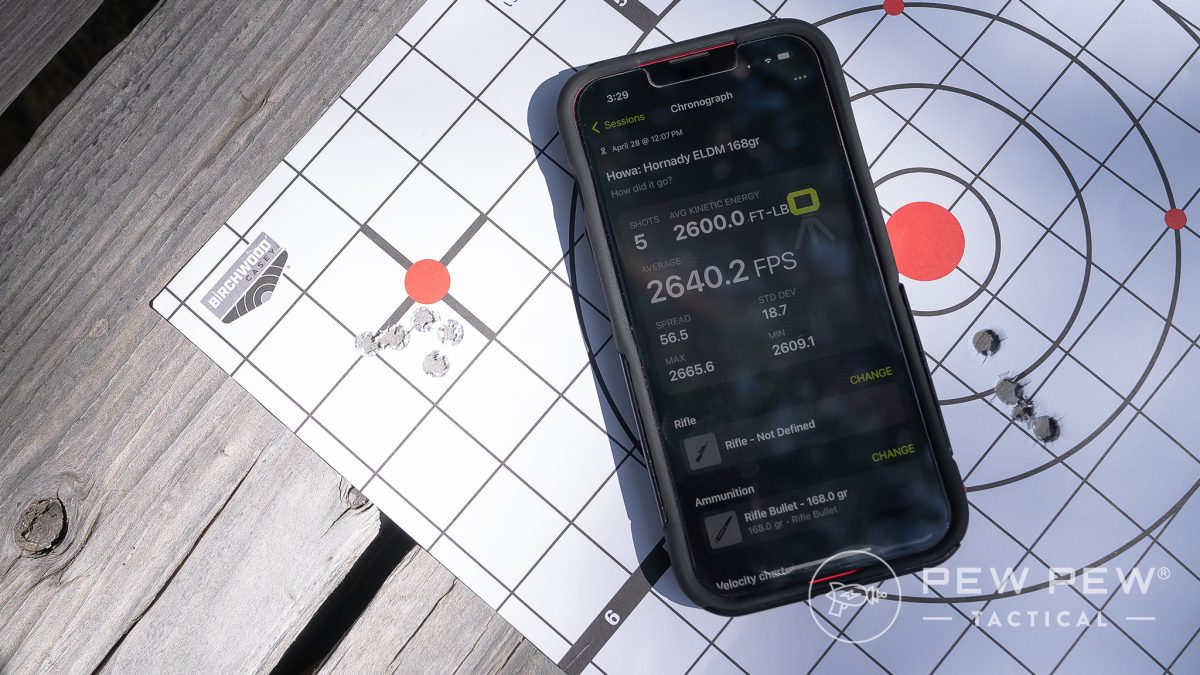
| Hornady ELD Match | 2,600 fps | 19 fps | 57 fps |
| PMC Bronze | 2,670 fps | 15 fps | 15 fps |
But chronograph data tells only part of the story.
Accuracy testing revealed another unsurprising preference for Hornady match ammo. While the other loads consistently shot 2-inch groups at 100 yards, I was able to achieve a 0.87-inch group with five rounds of Hornady ELD Match.
Many of the Howa’s minor drawbacks improved over time. Out of the box, the safety selector felt stiff, and the action wasn’t particularly smooth. Within the first two or three boxes of ammo, these improved a little with use, and left me with very little to complain about. I basically just want torque specs included in the manual.
I don’t mean to take away anything away from the other parts of the 1500 because they’re quite good, but the Hogue stock is the star of the show in this comparison. It feels so much nicer than hollow, scratchy plastic. If you find yourself hunting a cold autumn rain, I bet you’ll appreciate it even more.
Our Most Popular Posts
4. Savage MkII - Best Rimfire

Pros
- Available in several configurations
- Hilariously good accuracy for the price
- Super beginner-friendly
Cons
- Unrefined action
- Basic stock
The Bottom Line
I love shooting .22 LR, and the Savage MkII lets you enjoy the fun for a very low price. It did great in accuracy testing. The threaded barrel and Picatinny rail on my test rifle were much appreciated. Time for you to save up for a suppressor, I guess.
Specs
- Caliber: .22 LR
- Action: Bolt action
- Capacity: 5+1
- Barrel Length: 16.5”
- Overall Length: 35”
- Weight: 5.5 lbs
- Country of Origin: Canada
This one was a tough call. There are lots of great .22 LR rifles out there, and many of them don’t cost very much. Today is all about budget guns, though, and no rifle does affordable plinking better than the Savage MkII.
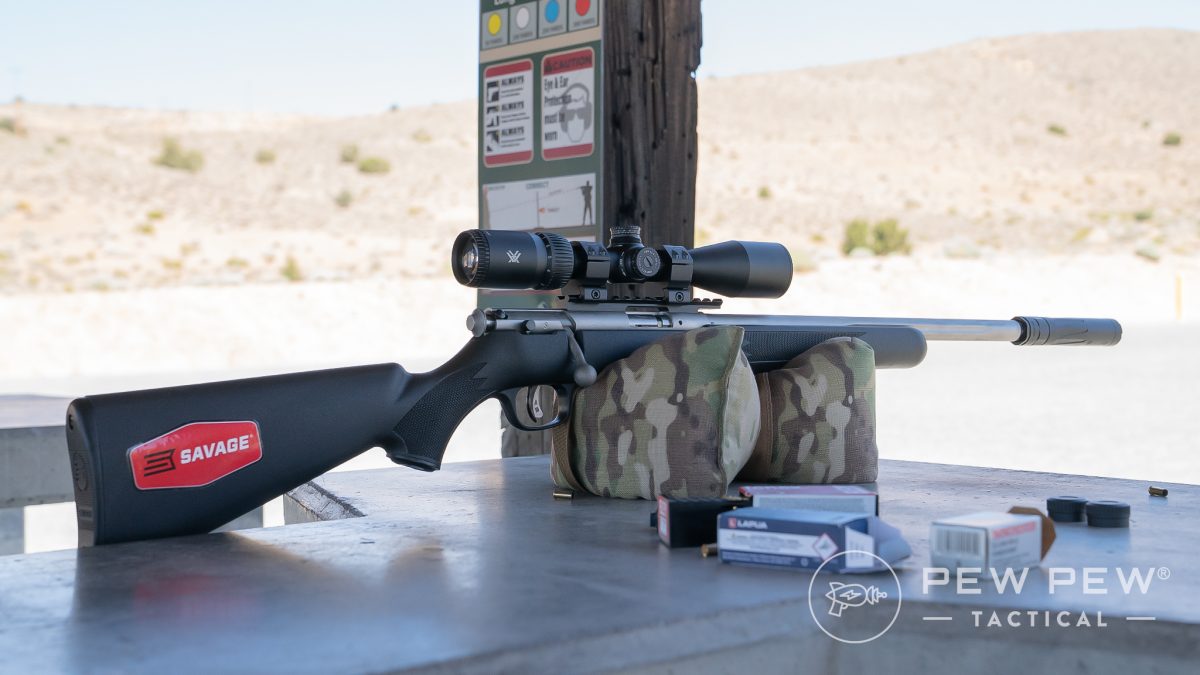
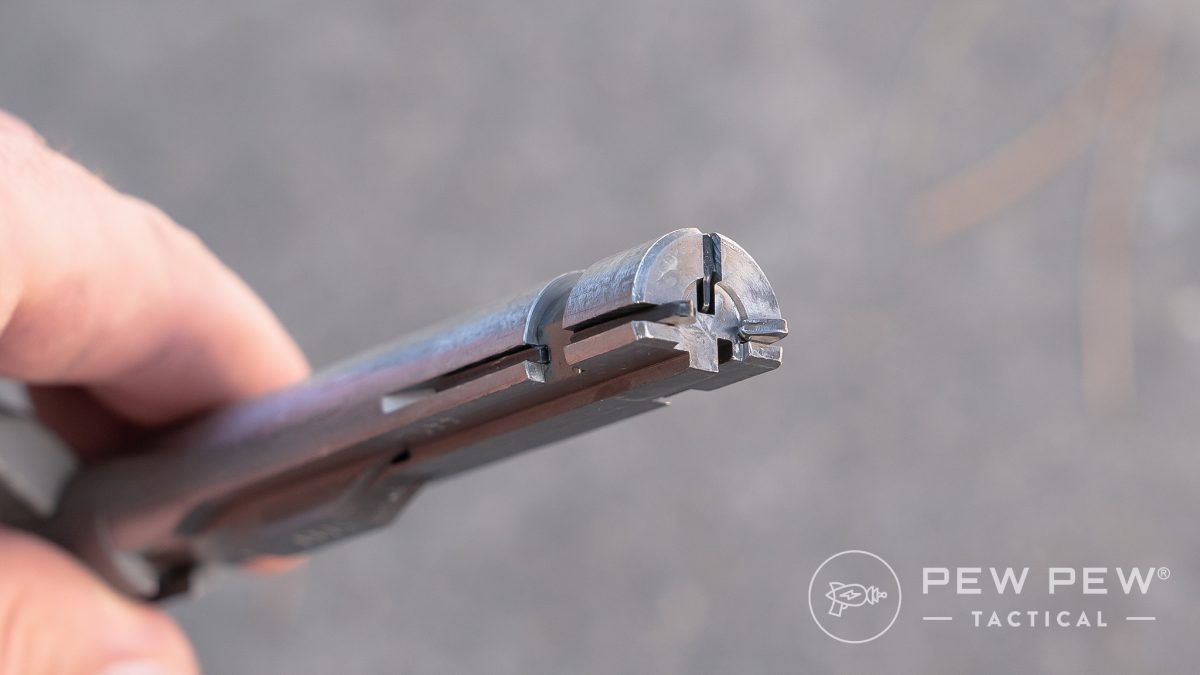
Out of the box, the cylindrical action looked very basic, and cycling the bolt felt noticeably gritty. It smoothed out with a few boxes of ammo, but never got particularly slick. I do appreciate dual extractors.
Likewise, the trigger felt a little unrefined, but not to the point of being notchy. Five pulls with a trigger gauge showed a pleasantly light average pull weight of 2.5 pounds.
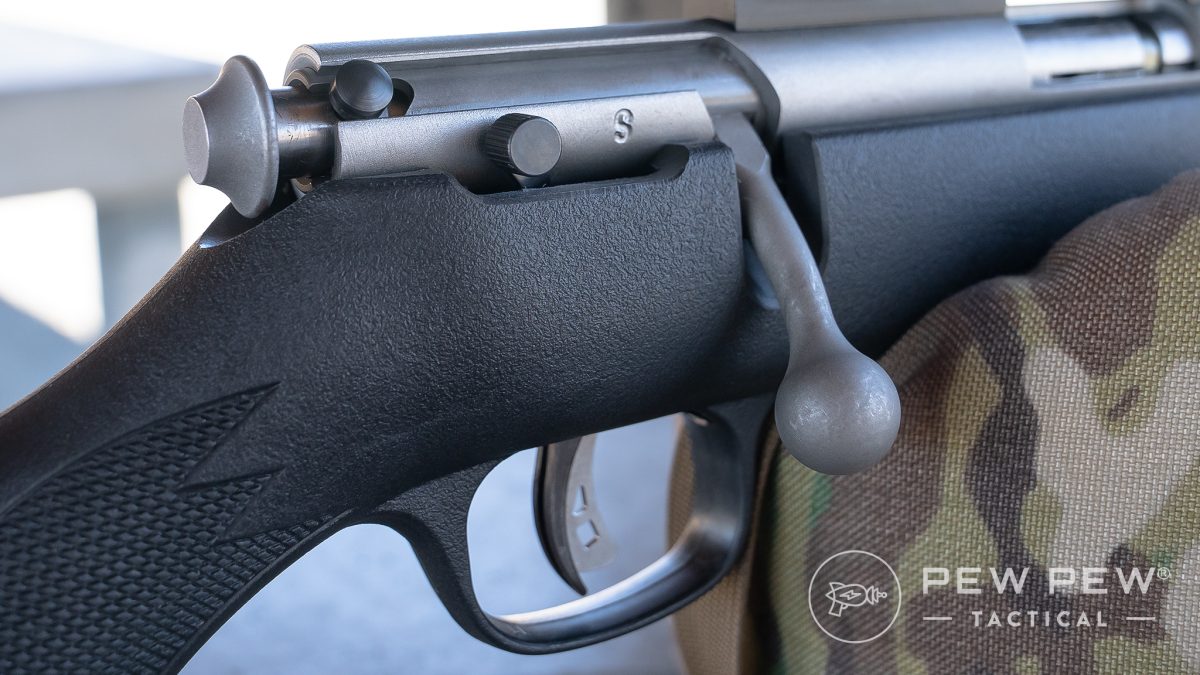
The stock is obviously one of the ways Savage kept costs down on the MkII. There are no frills; just sling studs, some checkering, and enough room for the barrel to float freely.
It’s also sized for children. That’s great for smaller shooters or people looking for a rifle for their kids. Since .22 LR has almost no recoil, I didn’t mind getting up close and personal with this rifle, either.
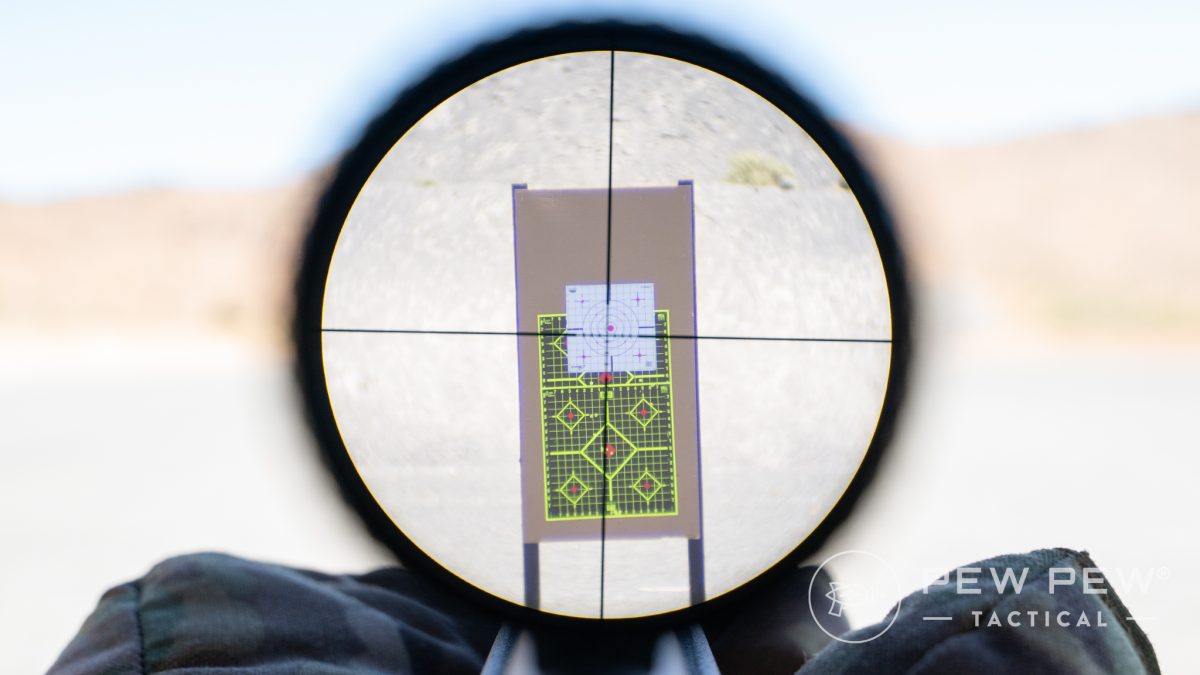
On the range, the MkII embodied everything that’s great about rimfire shooting. It was light, maneuverable, and each trigger pull only cost a few pennies. Sometimes I felt a little cramped by the small stock, but nothing to whine about.
This would make a perfect truck gun for impromptu tin-can wars, if you’re into such things.
Of course, I threaded on a Dead Air RXD22Ti suppressor. Unsuppressed rimfire shooting is impossible to go back to once you’ve seen the light.
The chronograph had good things to say, as well.
Plinking ammo performed perfectly respectably, and both match loads posted numbers that should satisfy anyone shopping in this price range. Anytime I can get a single-digit standard deviation out of a rifle, I’m happy.
| Average Muzzle Velocity | Standard Deviation | Extreme Spread | |
|---|---|---|---|
| Eley Tenex | 1,057 fps | 18 fps | 47 fps |
| Lapua Polar Biathlon | 1,077 fps | 9 fps | 20 fps |
| Winchester Super-X | 1,240 fps | 23 fps | 69 fps |
The humble MkII didn’t have the same pizzazz as a .22 LR precision rifle, but I was very pleased with its accuracy.
Keep in mind that I test .22 LR rifles at 50 yards instead of 100 yards. That’s a common benchmark among rimfire shooters, partly because it minimizes the effect of wind on light, slow, round-nosed bullets.
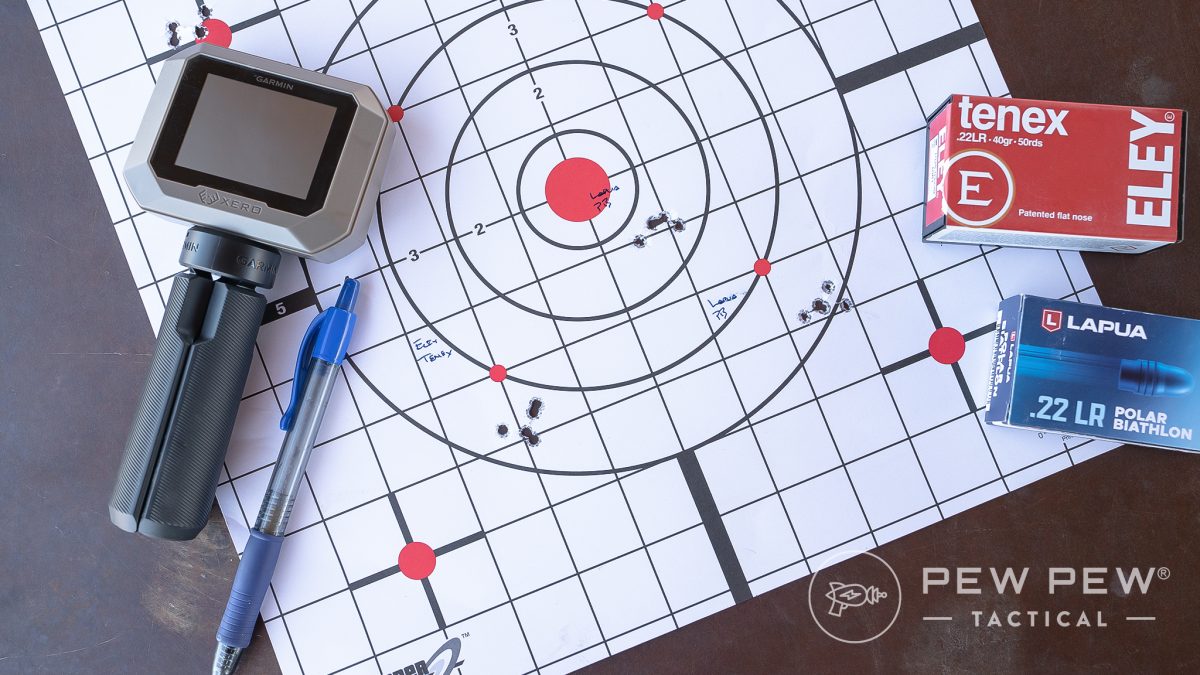
Winchester Super-X plotted a five-shot group inside 0.79 inches with a flyer. Eley Tenex followed with an impressive 0.54-inch group. Lapua Polar Biathlon tied itself for the lead with a pair of 0.51-inch groups.
For plinking and varmint hunting, I’d stick with Winchester Super-X. It’s more affordable, and handles wind a little better, and delivers more energy thanks to the extra velocity.
Knowing what’s possible with match ammo is nice, though.
All of this rifle’s drawbacks stem from its price. The action feels a little rough, the safety is stiff, and the undersized stock is extremely basic. You can buy rifles that fix all those things, but you’ll spend a lot more to get them.
The Savage MkII is fun for anyone, and it’s perfect for new shooters. You can get into target shooting for an extremely low price, and have a quality rifle that you can grow into. With this kind of proven accuracy, you’ll be able to hone your skills without second-guessing whether a botched shot was caused by you or the rifle.
How to Pick the Best Budget Bolt-Action Rifles
If you’ve already set a budget for your next bolt-action rifle, you’re off to a good start. Here are some other factors to consider.
Cartridge Selection
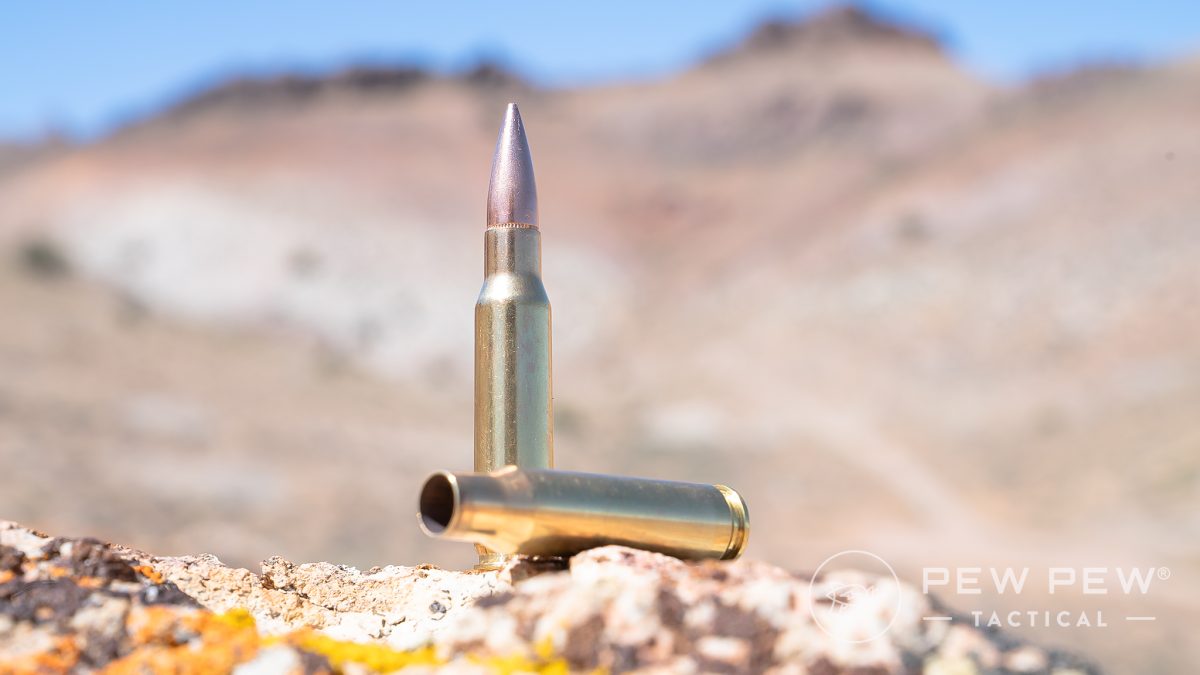
I picked rifles chambered for .308 Win for this article. It’s a very popular round that many of you are probably considering, and it makes for a more fair comparison across the board than if I got rifles chambered for different cartridges.
Your criteria are obviously going to be different. Consider ballistic performance and accuracy, sure, but also think about terminal effects if you’re looking for a hunting rifle. Your state may even have specific rules about which cartridges you can hunt with, so check with the appropriate agency to be sure.
Once you have a few contenders in mind, do a little research on how easy it is to buy ammo online. Pay attention to the price per round, variety of ammunition, and how many times you see it listed as out of stock.
Specific Features
Beyond cartridge selection, seemingly small details that can make a rifle easier or more difficult to live with.
One that I notice right away on every rifle is the scope-mounting system. A Picatinny rail makes life incredibly easy, but many rifles come with two-piece Weaver rails or just drilled and tapped holes. They all work, but some require a little more searching to find the right rings.
While all of these picks come with synthetic stocks, they’re all shaped a little differently. The Glenfield and Howa use a very traditional profile that’s sleek and streamlined. The Savage Axis 2 takes cues from the precision world, with a more vertical pistol grip and elevated comb. Pick whichever works best for you.
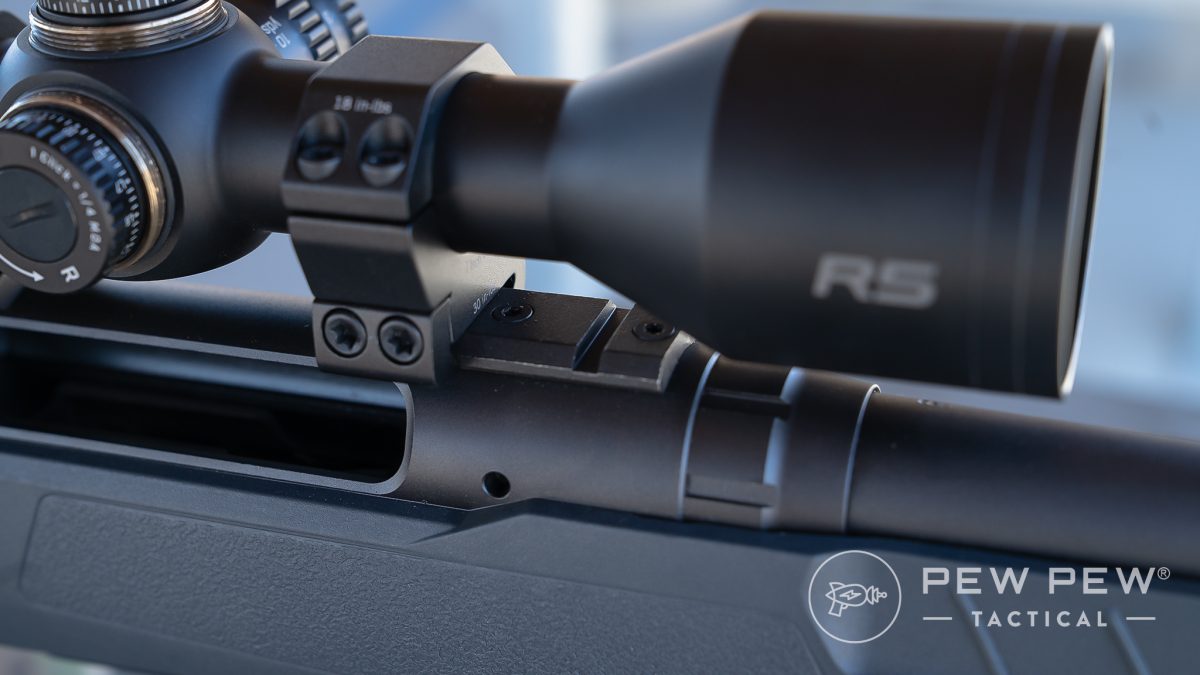
Finally, some rifles have a little bit of room for customization out of the box. Adjustable stocks can make a rifle feel more natural in certain shooting positions. Adjustable triggers (OEM or aftermarket) are great if you want to dial in the perfect feel.
Performance
If you’ve done some reading online, you can be forgiven for thinking that everyone else is forever shooting sub-MOA groups regardless of rifle or ammunition selection, and never a bullet shall stray. That’s not a realistic expectation – especially for a budget-friendly rifle – and the Backfire YouTube channel has an excellent explanation.
But that’s ok! I suspect that most hunters will probably end up firing one shot from a cold bore at 10-inch vitals from 200 yards or less. Any of the centerfire rifles on this list are capable of doing that when properly zeroed and chambered for an appropriate cartridge.
This is when I’ll throw in my obligatory reminder that training is key. You’re better off mastering an affordable rifle and recording hundreds of datapoints with the same ammunition than you are trotting out something you can only afford to shoot once a year and hoping for the best.
Final Thoughts
So, can you still get a reliable, accurate hunting rifle on a budget? You bet! Not only that, you can be proud to show it off every time you take it out of the case.
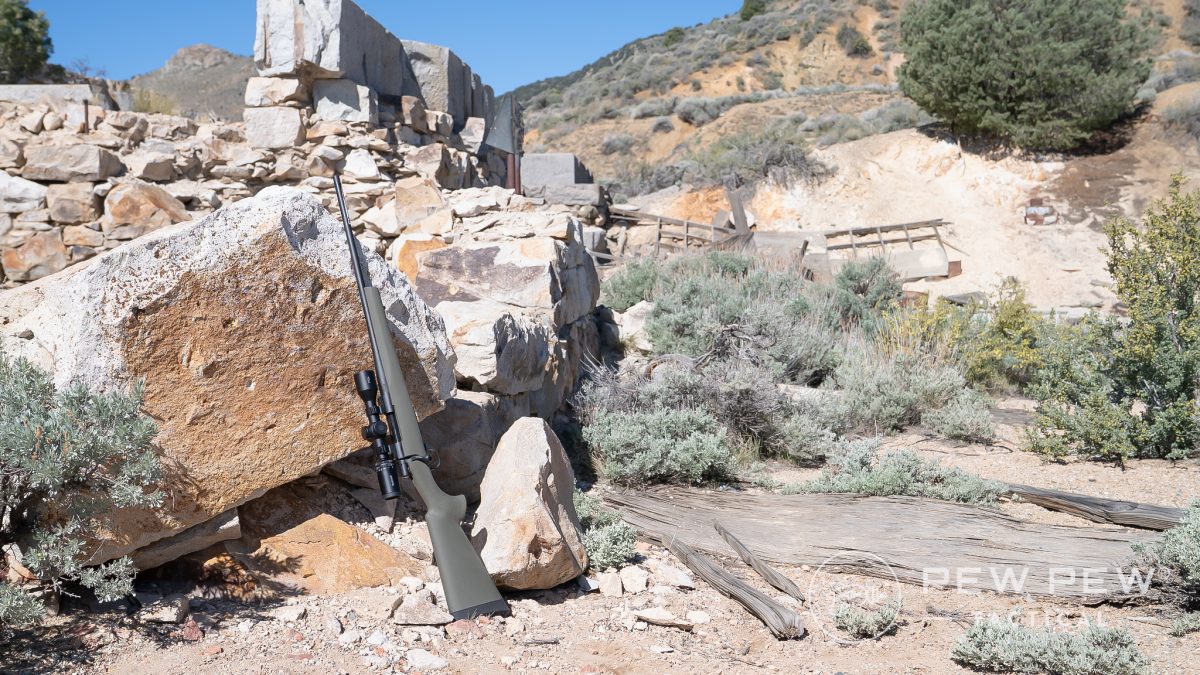
Even though these rifles don’t have the same razzle dazzle as more expensive hunting rifles, they’ll put meat in the freezer just the same. Do your homework on the range, buy good ammo, and you have nothing to worry about.
If you were going to buy a bolt-action rifle today, how much would you spend? Drop a comment to let us know. Need some glass to go with one of these picks? Check out our guide to the Best Deer-Hunting Rifle Scopes!
Latest Updates
July 2026: Complete overhaul with new products, testing, and supporting content.