
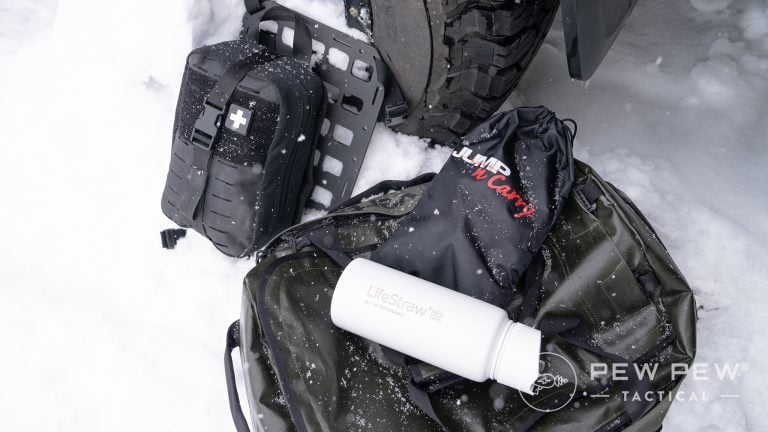
As I write this article, countless people are trapped in the frigid parking lot known as Donner Pass on I-80. Hopefully, for the sake of their mental well-being, none of them know where the name came from.
They could have avoided a very uncomfortable night if they had just stayed home. Staying out of trouble isn’t always that easy, but a little forethought and preparation can make life a lot easier – and potentially save your life.
Let’s take a few minutes to think about must-have gear for your car survival kit. We can’t cover every possible danger or buy endless crates of tools, but we can pick up a few key items that will prepare us for the most common problems encountered on the road.

THE QUICK LIST
-
Best First Aid Kit
-
Best Battery Jumper
-
Best Water Bottle
-
Best Flashlight
-
Best Multitool
-
Best Blanket
Table of Contents
Loading…
How We Chose the Best Car Survival Gear
The Pew Pew Tactical team includes people with experience in law enforcement, search and rescue, first aid education, combat lifesaving training, and countless hours in remote backcountry activities.
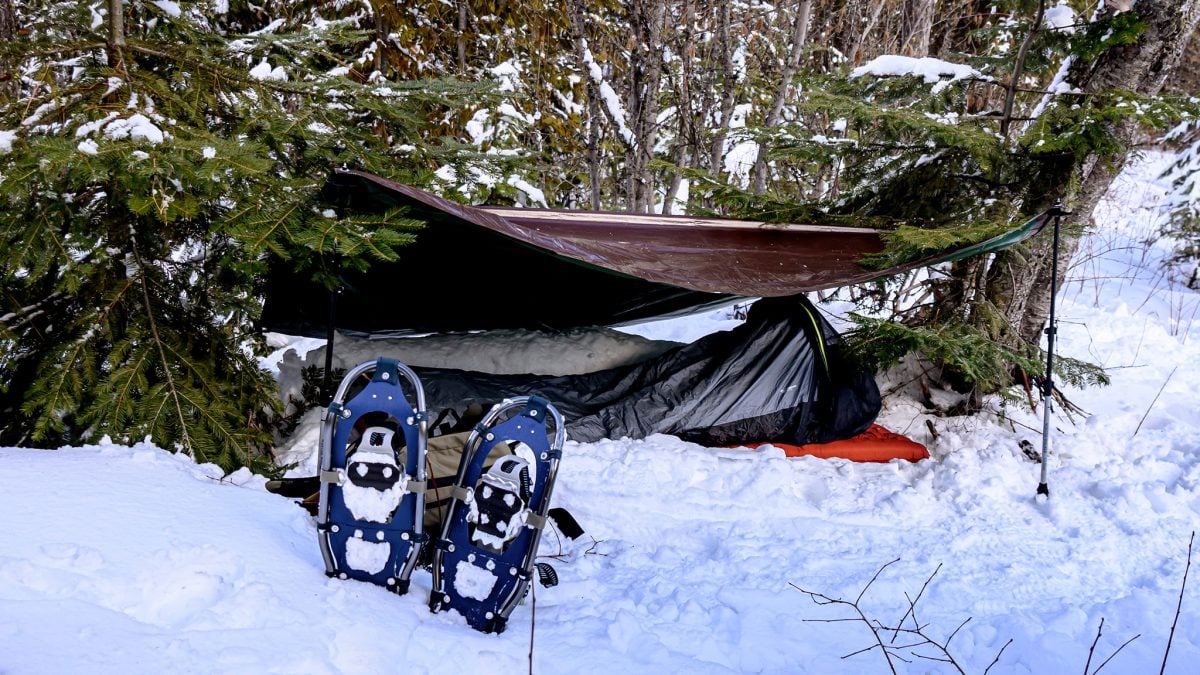
For this article, I tapped into that collective experience and picked some of the gear we personally trust and actually carry.
This is not meant to replace roadside assistance services, your local mechanic, or medical treatment. I chose gear that’s effective, reliable, easy to use with average skill, and affordable enough that the average reader can stock up without breaking the bank. If you want to keep your car running amid societal collapse, we have another article on emergency garage preparedness, too!
Meet the Experts
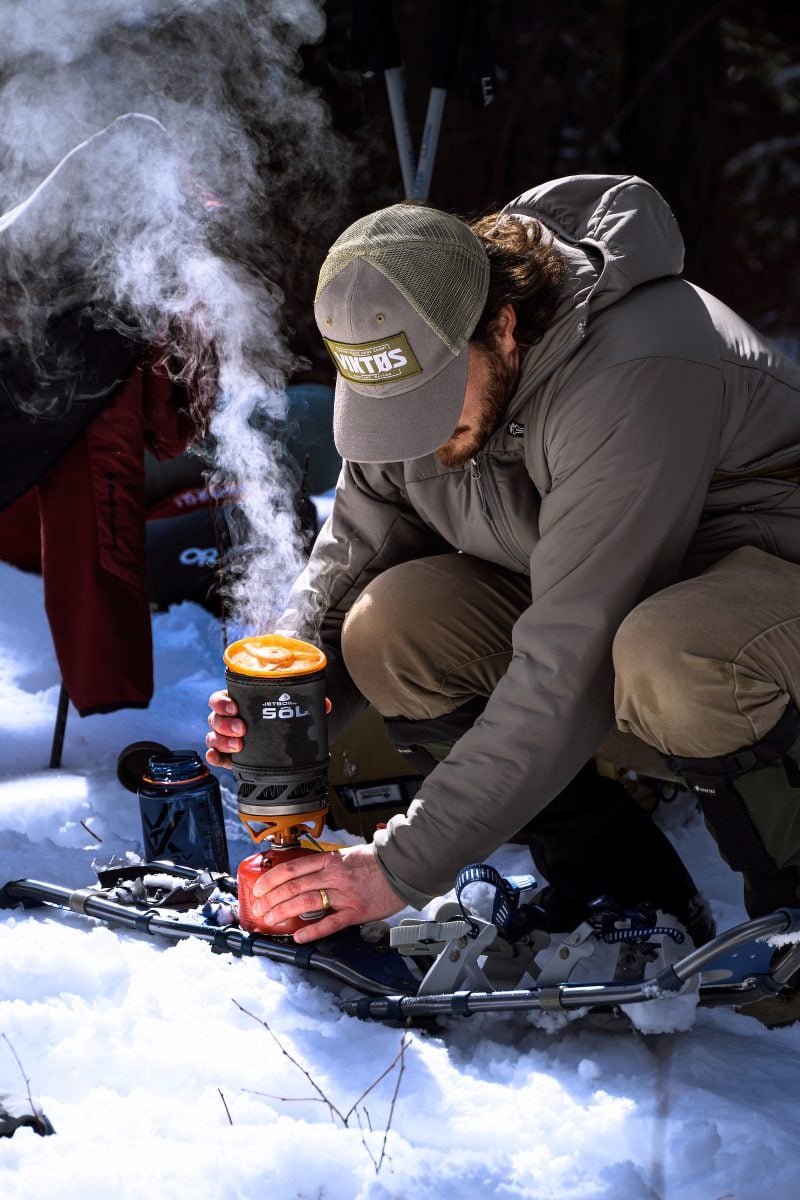
This article comes to you from Pew Pew Tactical Editor & Senior Review Analyst Scott Murdock. In addition to combat lifesaving training in the Marine Corps and CPR training in the civilian workforce, Scott has extensive experience working on cars and motorcycles. Skiing, snowshoeing, backpacking, hunting, and fishing keep Scott far from the beaten path in rural Nevada. He’s used some of the gear you see in this article to help multiple people he found lost and dehydrated, or stranded with a flat tire.
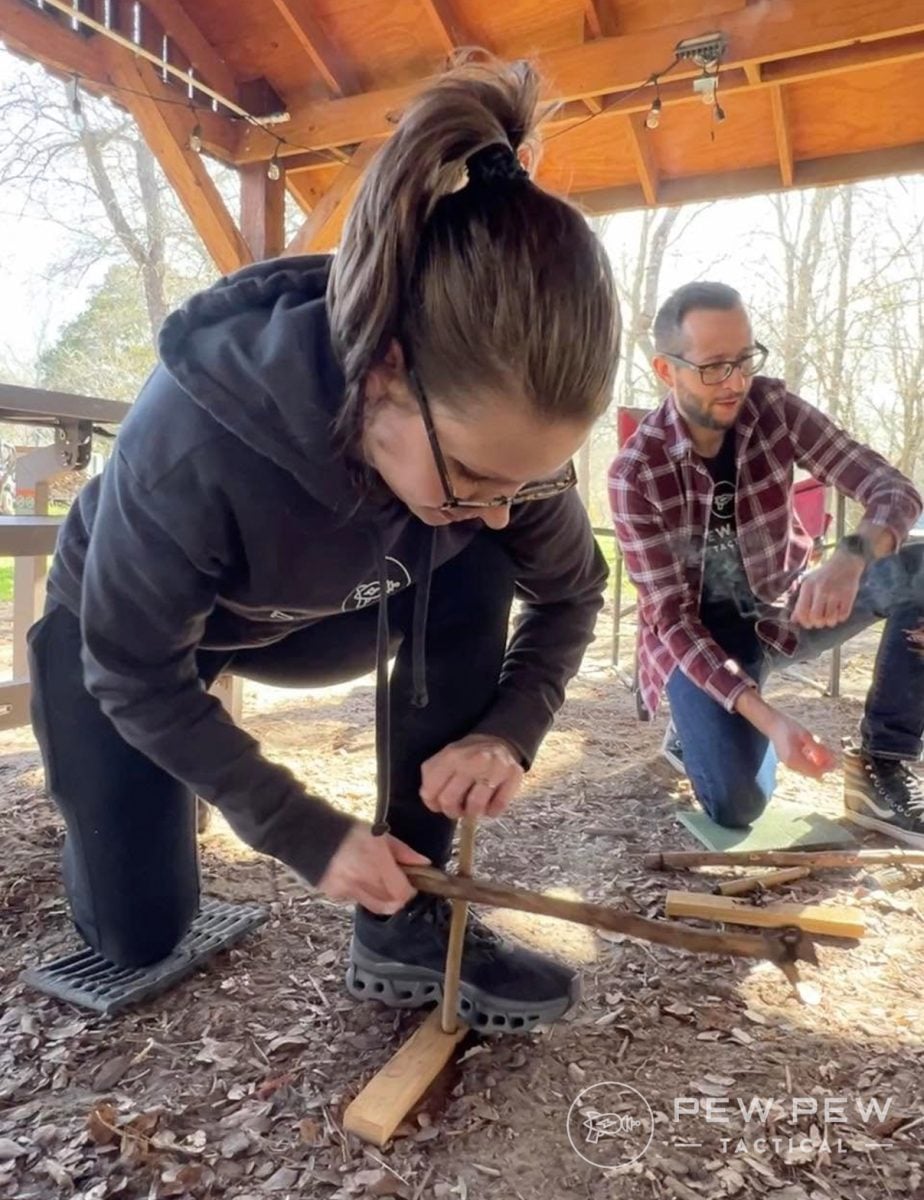
Editor-in-Chief Jacki Billings runs our experienced team of reviewers and edited this article. Aside from being an NRA-certified instructor, she is also an American Heart Association Basic Life Support instructor, teaching CPR and first aid to civilians. She has extensive experience with building first aid kits, including those to take on the go in the car. She and a few other staff members at PPT have also taken a survival class where they learned the basics of building fires, navigation, and using the land to live.
Must-Have Gear for Your Car Survival Kit
1. My Medic MyFAK – Best First Aid Kit
Prices accurate at time of writing
Prices accurate at time of writing
-
25% off all OAKLEY products - OAKLEY25
Copied! Visit Merchant
Pros
- Contains everything you're likely to need
- Very well organized and clearly labeled
- Excellent use of space
Cons
- You can build a kit for less money
- The more comprehensive Pro version costs extra
The Bottom Line
There are a few first aid brands I keep coming back to, and My Medic is one of my favorites. Sure, the MyFAK is expensive, but this is a very complete kit that doesn't need a bunch of add-ons to be useful. There's a lot to learn, so take a class and get your bearings while it's still hypothetical.
Specs
- Contents: Kits for bleeding, burns, fractures, and topical irritation; basic medicine; tools and a handbook
- Skill Required: Moderate
- Dimensions: 8” x 11” x 6”
- Country of Origin: Canada, China, Germany, Israel, Mexico, South Africa, U.S., U.K.
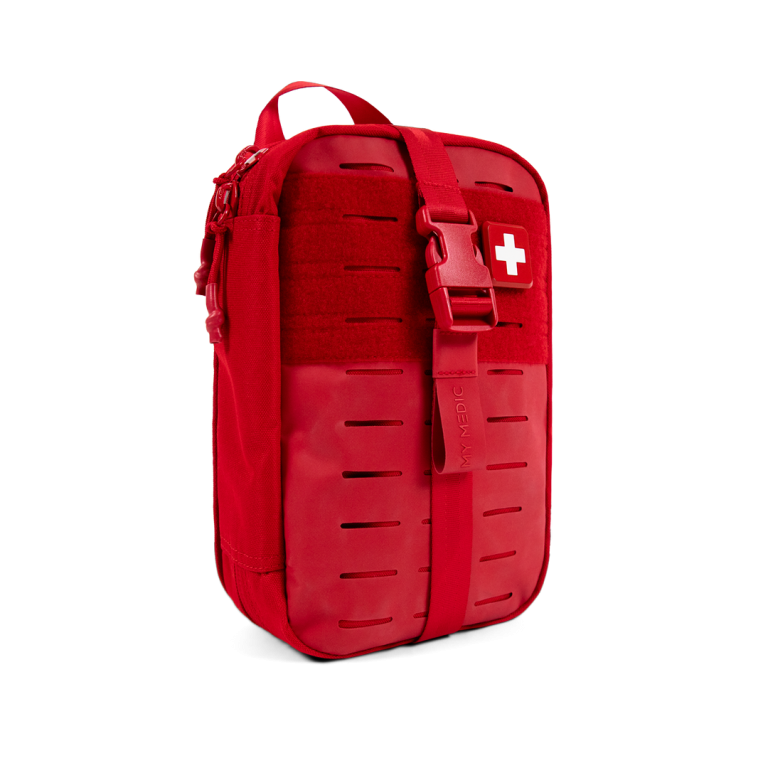
The first piece of car survival gear you need to get is a first aid kit that can handle everything from skinned elbows and sunburns to a life-threatening car crash. I’ve acquired a few through the years, but the My Medic MyFAK is the most comprehensive out of the box.
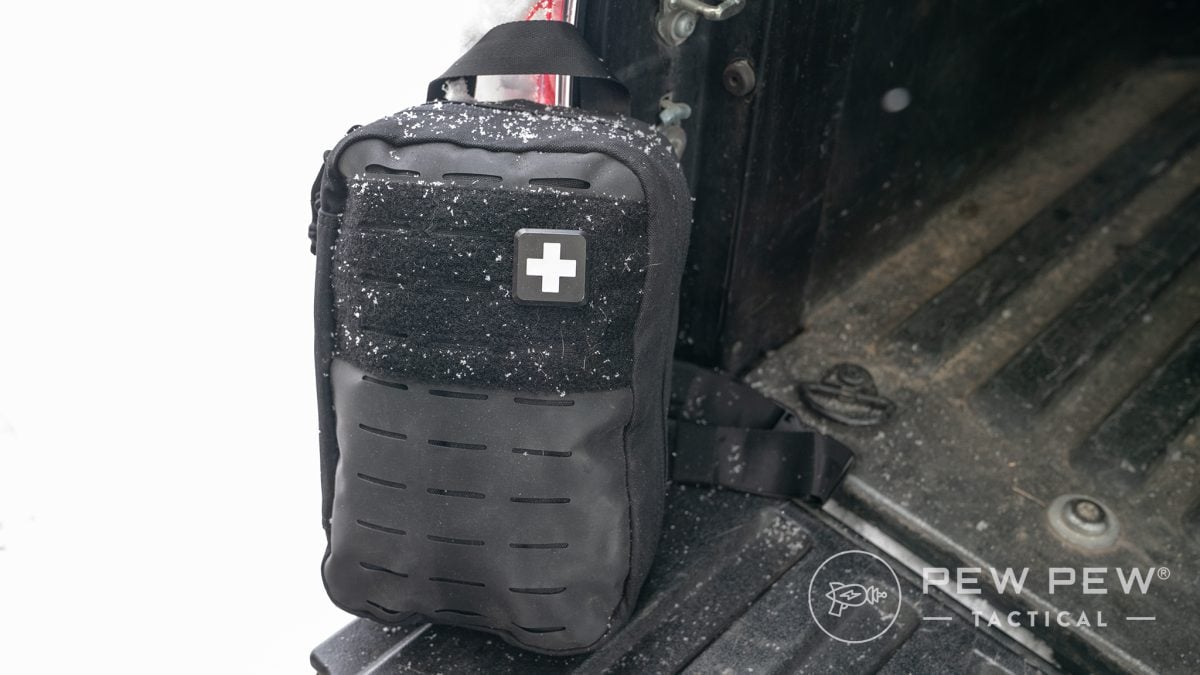
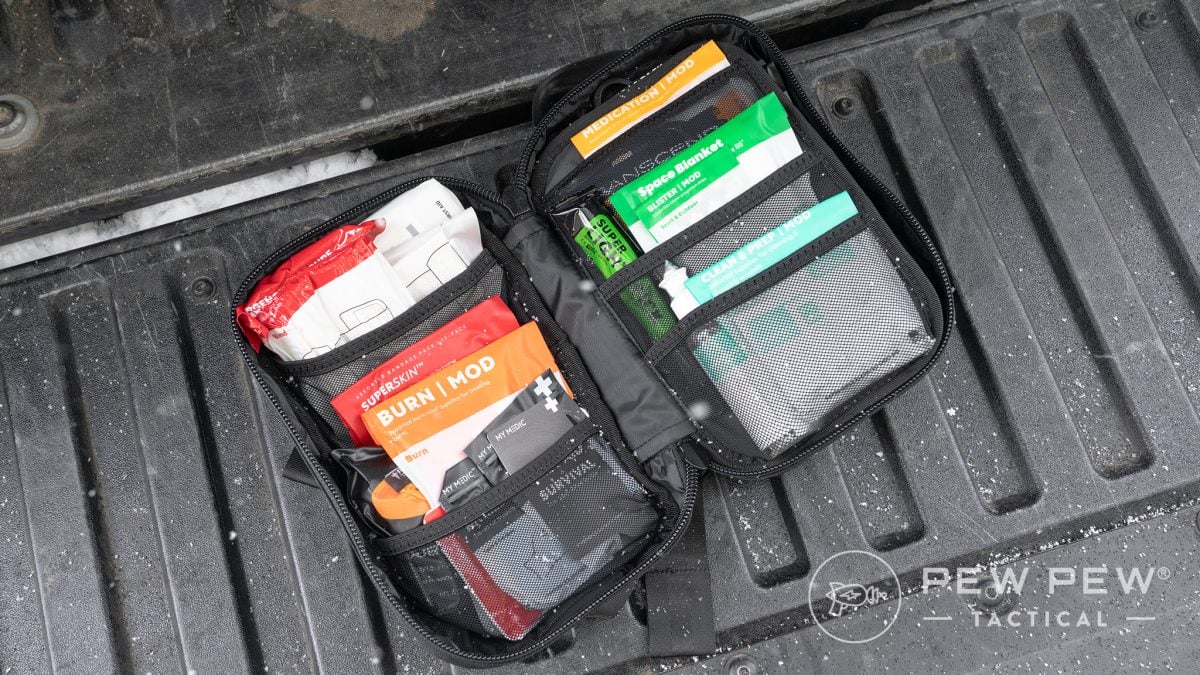
The MyFAK has more than 115 components organized into the following categories: bleeding, burns, medication, sport and outdoor, topical, airway, hydration, sprain and fracture, and tools. Everything is color-coded and easy to find, but it’s still important to familiarize yourself with the kit before it’s game time.
Investing in professional first aid training is always worthwhile. We have a guide to first aid classes if you need some recommendations.
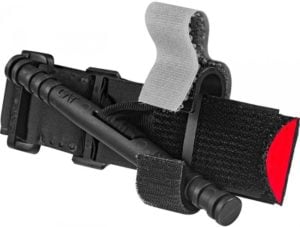
A tourniquet is included with the Pro version, but not the standard MyFAK. I recommend picking up one (or more) either way. Tourniquets are inexpensive and can easily mean the difference between life and death when seconds count. I keep a few staged in different places so there’s always one nearby.
Prices accurate at time of writing
Prices accurate at time of writing
-
25% off all OAKLEY products - OAKLEY25
Copied! Visit Merchant
The MyFAK Pro also includes other trauma-specific items like chest seals, QuikClot, and pressure bandage.
If you carry a gun and need a do-it-all first aid kit, the MyFAK Pro is worth the upcharge. If you already have a blowout kit, the standard MyFAK is probably adequate.
I’ll acknowledge that the MyFAK is expensive, and some people have pointed out that you can build something similar for less money (I have homemade IFAKs, too). That’s great – if you know what to buy, where to find it, and how to stage your kit. For everyone else, it’s nice to get a comprehensive kit with the click of a button.
2. Clore Automotive JNC325 – Best Battery Jumper
-
25% off all OAKLEY products - OAKLEY25
Copied! Visit Merchant
Pros
- Simple, intuitive operation
- No rescue vehicle required
- Doubles as a power bank and flashlight
Cons
- Modern car batteries don't require these as often as they used to
- Larger engines require a more powerful JNC unit
The Bottom Line
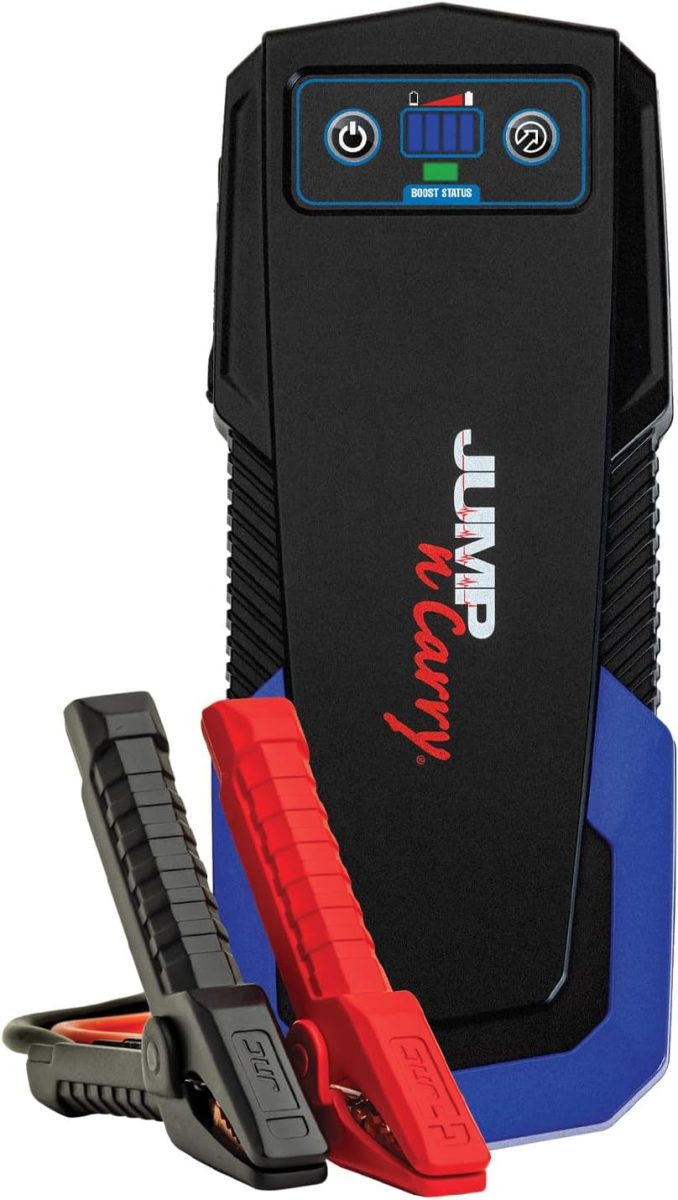
A dead car battery is an easy fix, but you're really up a creek if you don't have a tool like the Clore Automotive JNC325. This little battery jumper will work even if your car's battery is completely dead. It's easy to use, features automatic safeguards, and fits in the glovebox. Say goodbye to tangled jumper cables and bumming power off strangers.
Specs
- Power: 450 start-assist amps
- Battery: Rechargeable lithium-ion
- Cable Length: 24”
- Country of Origin: Vietnam
I suspect that the most common automotive mishaps are flat tires and dead batteries. Manufacturers take care of the former with standard equipment like jacks, spare tires, and canned fix-a-flat. For the latter, I recommend a Clore Automotive Jump-N-Carry over a set of jumper cables or calling roadside assistance.
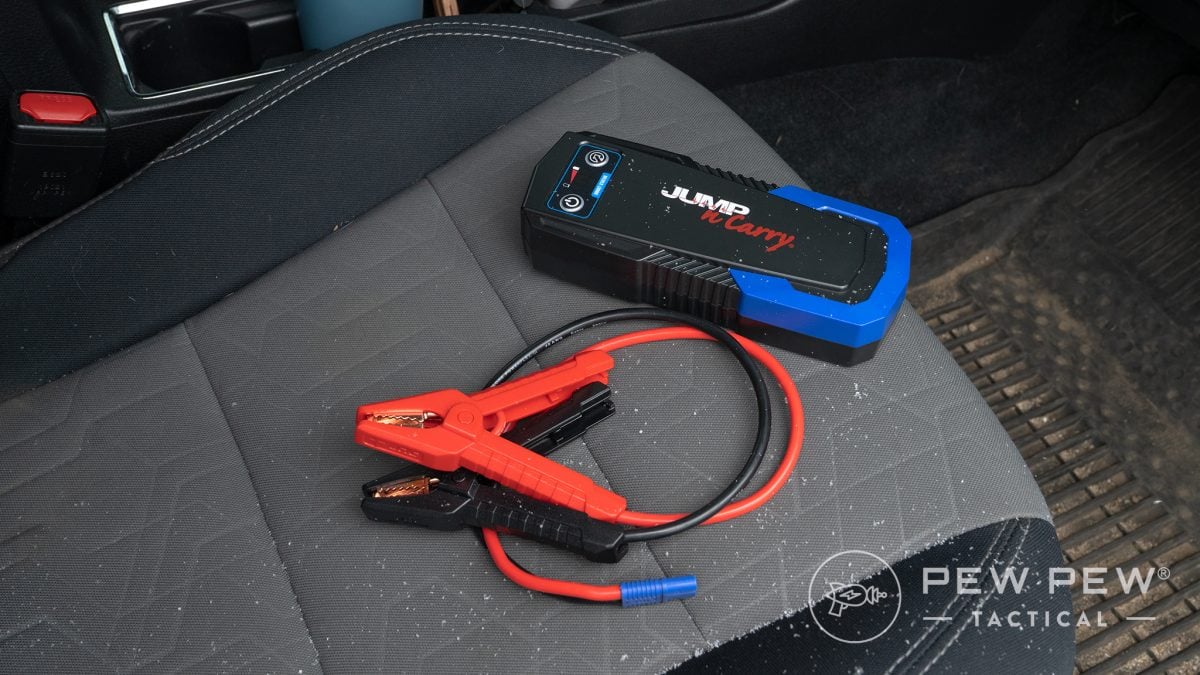
This tool works like jumper cables, except you aren’t reliant on having another vehicle nearby to bail you out. Just pop the hood, clip the leads to the terminals identified in your owner’s manual (not all cars jump from the battery), and let the battery pack bring your car back to life – even if the battery is completely dead.
I’ve seen JNC products revive project cars that have been sitting for years, so these battery jumpers have my confidence.
Using this one is easy. The power pack has built-in protection against reverse polarity, backfeed, over-voltage, over-current, and short circuiting. Basically, it’s almost impossible to screw up.

Mine is lightweight, easy to use, and fits in the glove box. It’s one of the best pieces of equipment I own. It even has a built-in flashlight and ports to charge other devices like a power bank.
Clore Automotive offers a few different sizes, and they each have a maximum engine displacement rating for gas and diesel vehicles. The JNC325 works for most people, but you’ll need to size up if you have a diesel pickup or big-block gasser.
While we’re on the topic of trucks, I should remind you that your factory jack probably isn’t tall enough if you’ve upgraded to larger tires or lifted your vehicle. If that’s the case, you can buy a larger jack or pack a sturdy piece of wood to lift the one you have; short sections of 6×6 or railroad tie work great, and save lots of time.
3. LifeStraw Go Series – Best Water Bottle
Prices accurate at time of writing
Prices accurate at time of writing
-
25% off all OAKLEY products - OAKLEY25
Copied! Visit Merchant
Pros
- Filters water as you drink
- Removes parasites, bacteria, microplastics, and chlorine
- Each filter lasts up to 4,000 liters
Cons
- Feels like drinking a milkshake
- Vacuum insulation prevents using this bottle for boiling
The Bottom Line
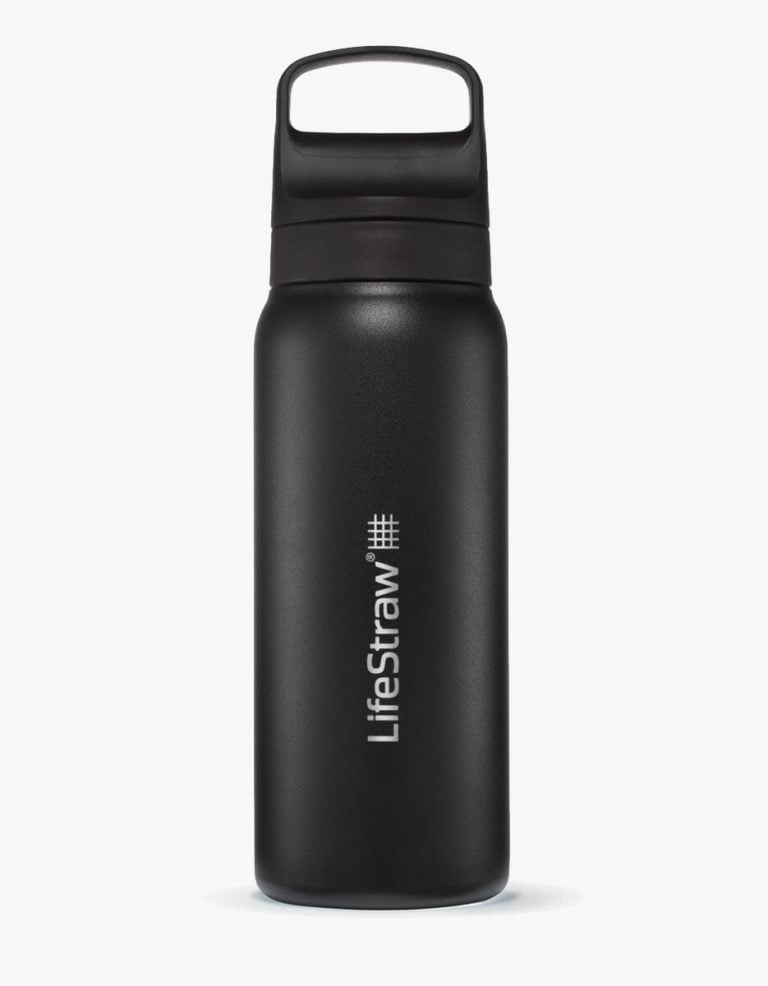
Even if I have a tumbler riding in the cup holder, and a Nalgene rattling around on the floorboard, there's a LifeStraw Go on standby. You can scoop water out of a stream or lake with this bottle and let the filter purify it as it flows up to the spout. As far as I'm concerned, it's a must-have for backcountry adventures.
Specs
- Volume: 18 oz, 22 oz, 24 oz, 1 L
- Material: BPA-free
- Filter Size: 0.2 microns
- Country of Origin: Mexico, South Korea, USA
It’s not a bad idea to carry a few bottles of water in your car, but there’s only so much you can pack. I’m a big fan of LieStraw Go Series water bottles that filter water as you drink it. This way, any water source you encounter can become a safe water source.
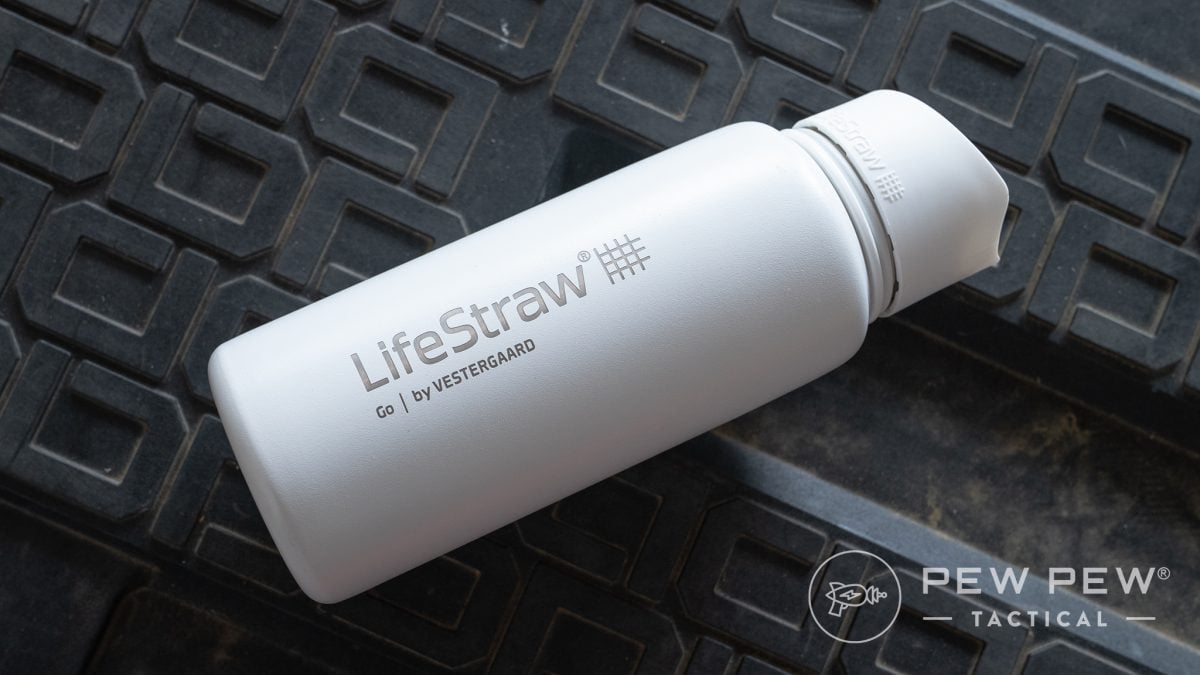
I pack one of these in addition to a regular water bottle. If I end up away from civilization longer than anticipated, I can drink from natural springs or lakes without working about making my situation a whole lot worse.
This isn’t a gravity-fed system, so it’s up to you to suck the water up through the filter as you drink. It kind of feels like drinking a milkshake that’s still partially frozen. While that’s not as convenient as a normal water bottle, it’s a small price to pay for safe, clean drinking water.
The 0.2-micron filter removes parasites, bacteria, and microplastics. The activated carbon filter reduced chlorine, organic matter, and asbestos (and it reduces funky flavors and smells).
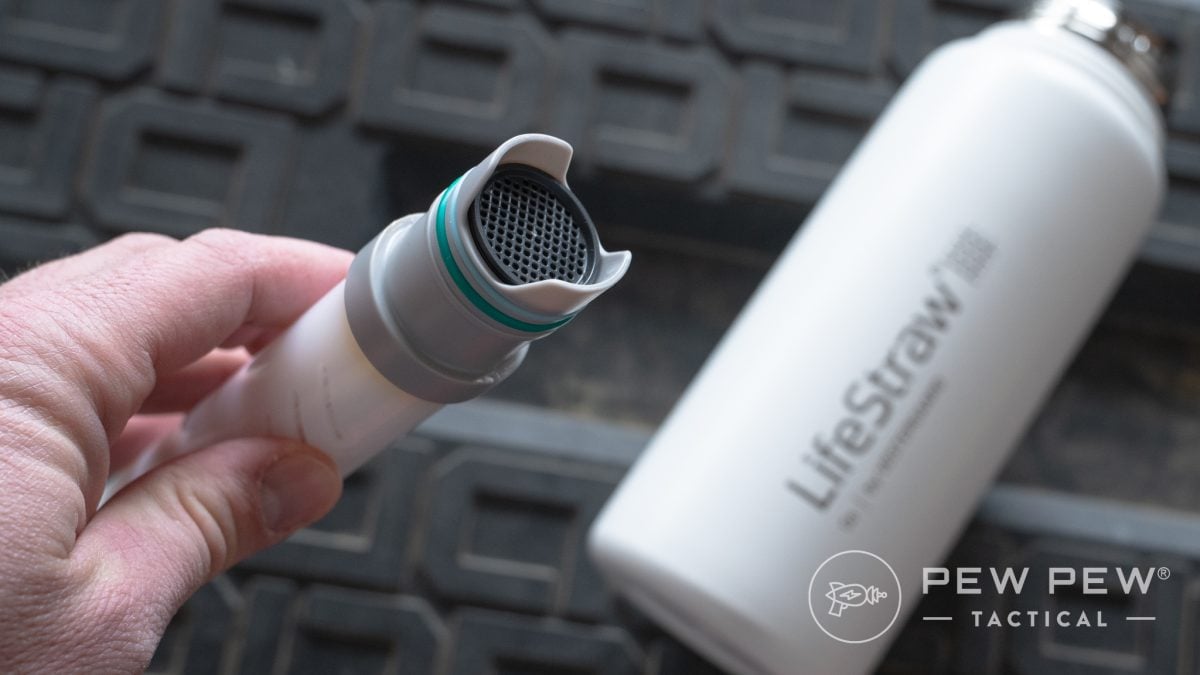
Each filter is good for 4,000 liters, and you can buy a replacement filter for about $30. The carbon filter is significantly shorter-lived, and varies by model. Replacements cost somewhere in the $17 to $23 range.
The current bottles have a screw-on lid instead of the flip-up straw on mine, which I think is a smart update. If you’re concerned about contaminants, leaving the drinking straw exposed isn’t ideal.
There are some extra steps you’ll need to take to keep your filter in optimal (read: clean) condition, so give this video a watch before tossing it in your car after you use it.
LifeStraw did a great job of making these bottles discreet. If you travel a lot and want to avoid stomach illness without looking like a paranoid tourist, this is a great tool to have.
4. SureFire Stiletto Pro – Best Flashlight
Prices accurate at time of writing
Prices accurate at time of writing
-
25% off all OAKLEY products - OAKLEY25
Copied! Visit Merchant
Pros
- Three selectable power modes
- Momentary-on and strobe modes with the dedicated tailcap
- Clips to a hat brim for hands-free operation
Cons
- More expensive than a lot of very capable flashlights
- Some people don't like rechargeable battery packs
The Bottom Line
The SureFire Stiletto Pro is one of the best EDC flashlights I've ever used. A beacon mode and hat clip make it ideal for roadside emergencies, too. It's more expensive than the polymer base-model Stiletto, but the extra performance is with every penny. If it doesn't become your favorite flashlight, I'll be surprised.
Specs
- Maximum Power: 1,000 lumens
- Maximum Intensity: 5,100 candela
- Battery: Lithium-Polymer rechargeable
- Dimensions: 4.5” x 1.63” x 1”
- Country of Origin: USA
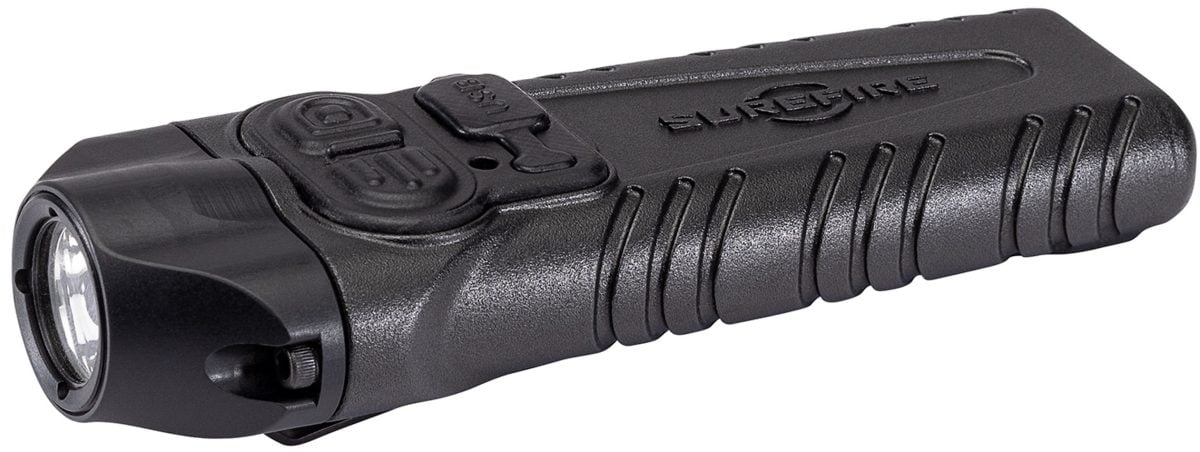
Everyone needs a flashlight in the car, but I had a tough time picking just one. In the end, I came back to the SureFire Stiletto Pro, which is one of the best and most versatile all-around lights you can buy. Let’s get into it and talk about a few honorable mentions.
As with all SureFire flashlights, this one is built to an incredibly demanding standard right here in the U.S. The pro model is made from aluminum, and has an IPX7 waterproof rating. I’ve beaten one up with all kinds of testing and daily use, and it still works as well as the day I got it.
The main power switch cycles through low, medium, and high output modes. The tailcap activates momentary-on with maximum output; triple-tap it for the tactical strobe function. If you need to set up a rescue beacon, hold the programming button for five seconds to activate the medium-power, medium-speed strobe.
| Lumens | Candela | Run Time | |
| White Light (Low) | 25 | N/A | 1 hr |
| White Light (Medium) | 300 | N/A | 1 hr 30 min |
| White Light (High) | 1,000 | 5,100 | 23 hrs 30 min |
| Strobe | 1,000 | 5,100 | N/A |
The Stiletto Pro is more capable than the less powerful and polymer-bodied Stiletto, but it’s more affordable than the flagship Stiletto Pro II. For me, it hits a sweet spot for everyday carry, tactical, and emergency purposes.
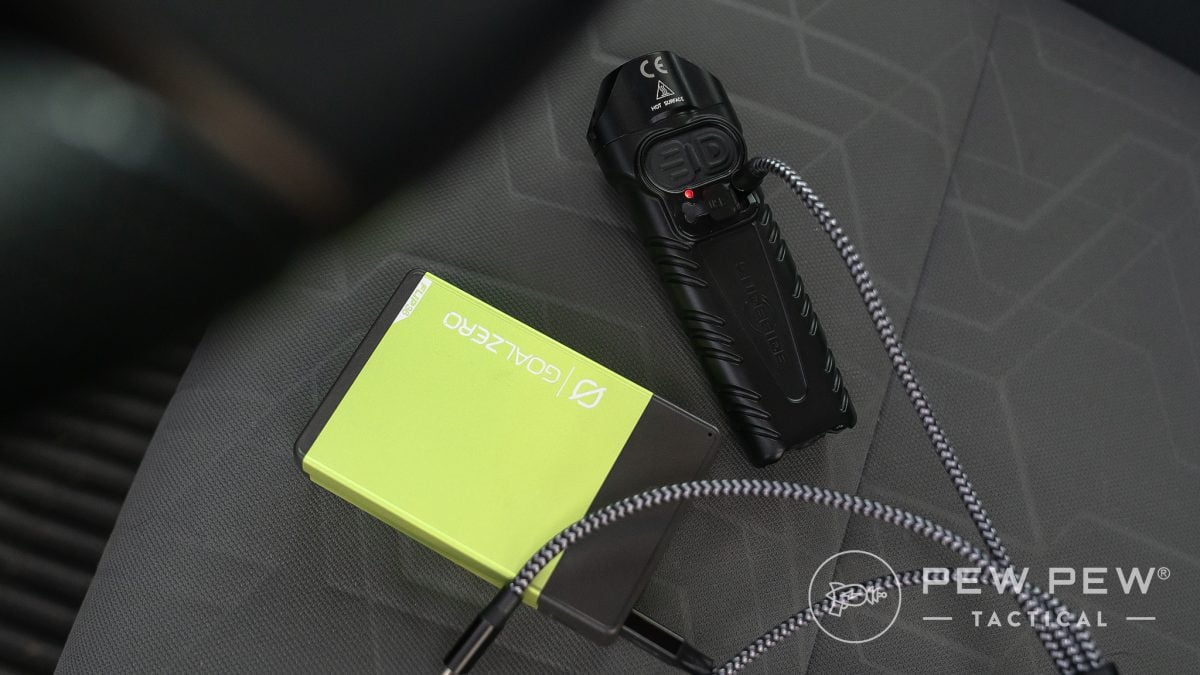
Some people prefer disposable batteries they can hot-swap rather than a lengthy recharging process, but remember that we’re talking about a flashlight for your car. Plug it in once in a while as you drive and you’ll always start with a full charge.
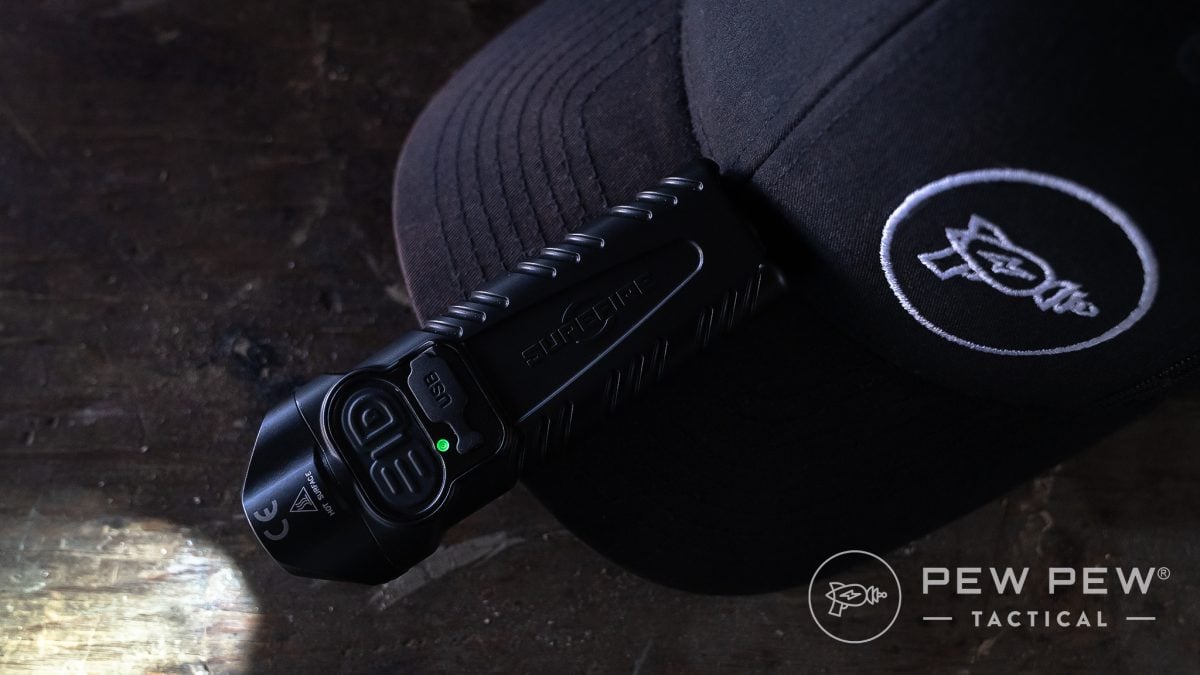
One often overlooked feature is the reversible pocket clip. This isn’t just so you can carry it light-up or light-down in your pocket, it lets you clip it to a hat brim to go hands-free – a critical capability if you need to make a roadside repair or administer first aid.
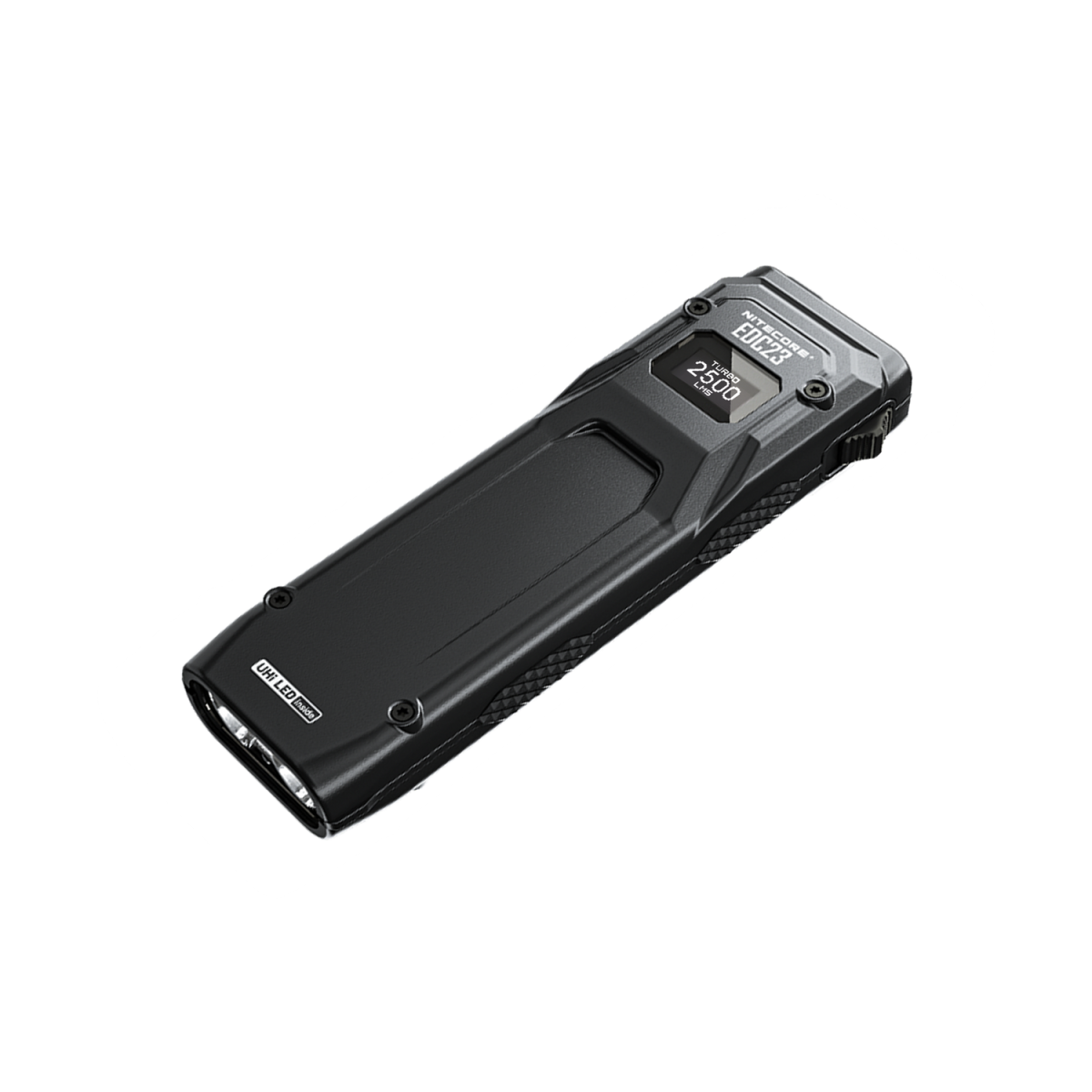
I would have tried to save you some money by recommending the Nitecore EDC23 (another one of my favorites) if it had the same hands-free capability. Aside from that, it’s a very strong contender.
Prices accurate at time of writing
Prices accurate at time of writing
-
25% off all OAKLEY products - OAKLEY25
Copied! Visit Merchant
One super-affordable alternative is the Streamlight ProTac 1L-1AA. I, along with a few readers, keep coming back to this little flashlight because it’s compact, runs off a single AA battery, and comes at a very attractive price. Modes include constant-on, momentary-on, and strobe.

Prices accurate at time of writing
Prices accurate at time of writing
-
25% off all OAKLEY products - OAKLEY25
Copied! Visit Merchant
5. Leatherman Surge – Best Multitool
Prices accurate at time of writing
Prices accurate at time of writing
-
25% off all OAKLEY products - OAKLEY25
Copied! Visit Merchant
Pros
- 21 tools included
- All-stainless-steel construction
- Leatherman's largest pliers
Cons
- Feels heavy and bulky in a pocket
- A little too stiff for one-handed-flick opening
The Bottom Line
After using my Leatherman Surge for more than a decade, I'll say this: believe the hype. This multitool has survived everything I've thrown at it, and it still feels good as new. It's a little heavy for everyday carry, but it's a perfect automotive companion when you don't want to break out the full tool set.
Specs
- Number of Tools: 21
- Material: Stainless steel (black oxide finish optional)
- Dimensions: 4.5” x 1.7” x 0.8” (closed)
- Country of Origin: USA
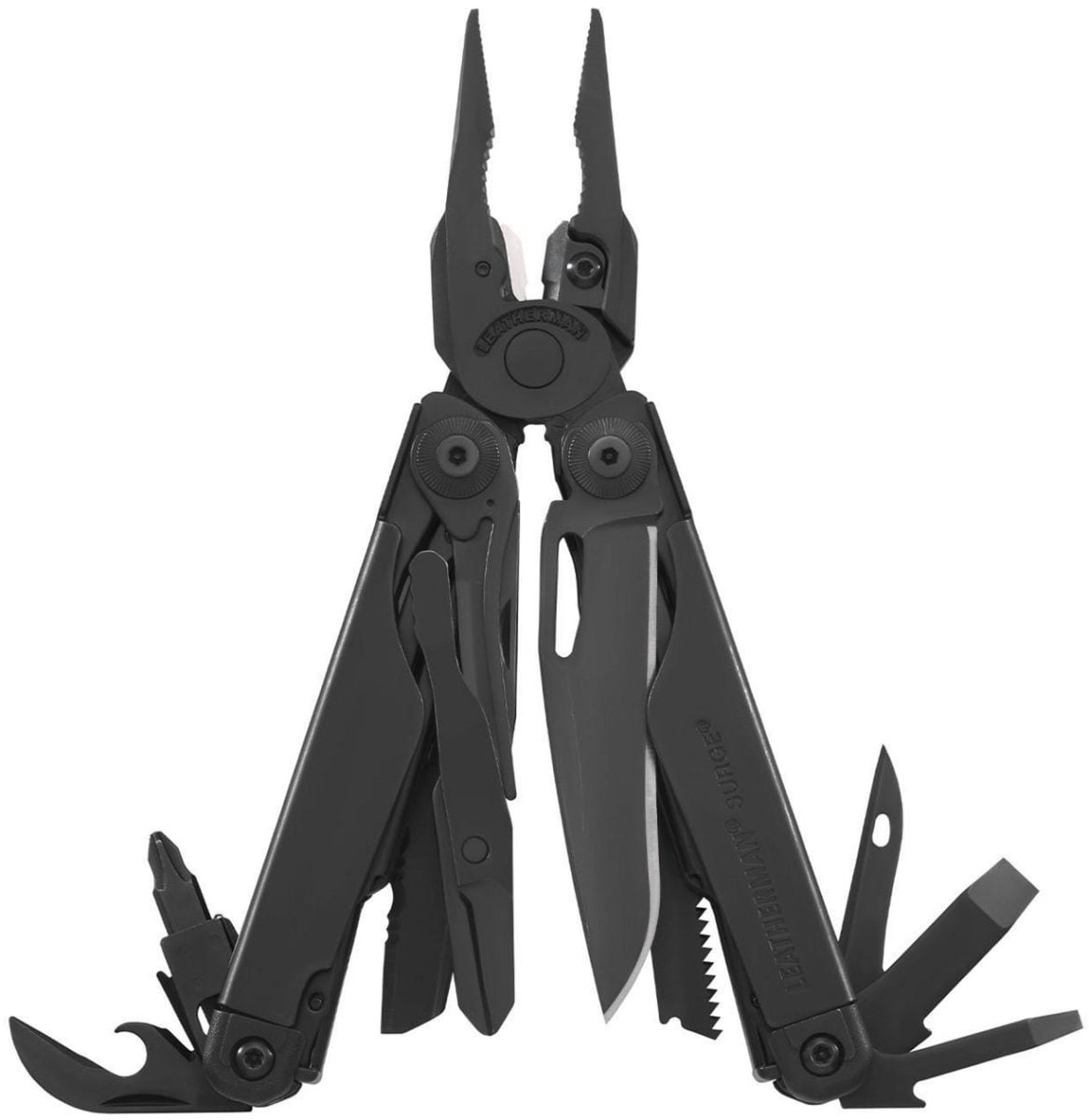
One topic that’s always sure to fire up the EDC crowd is the great multitool debate. I know there are a lot of great options out there, but the Leatherman Surge has earned its place among the best multitools out there over decades of reliable performance.
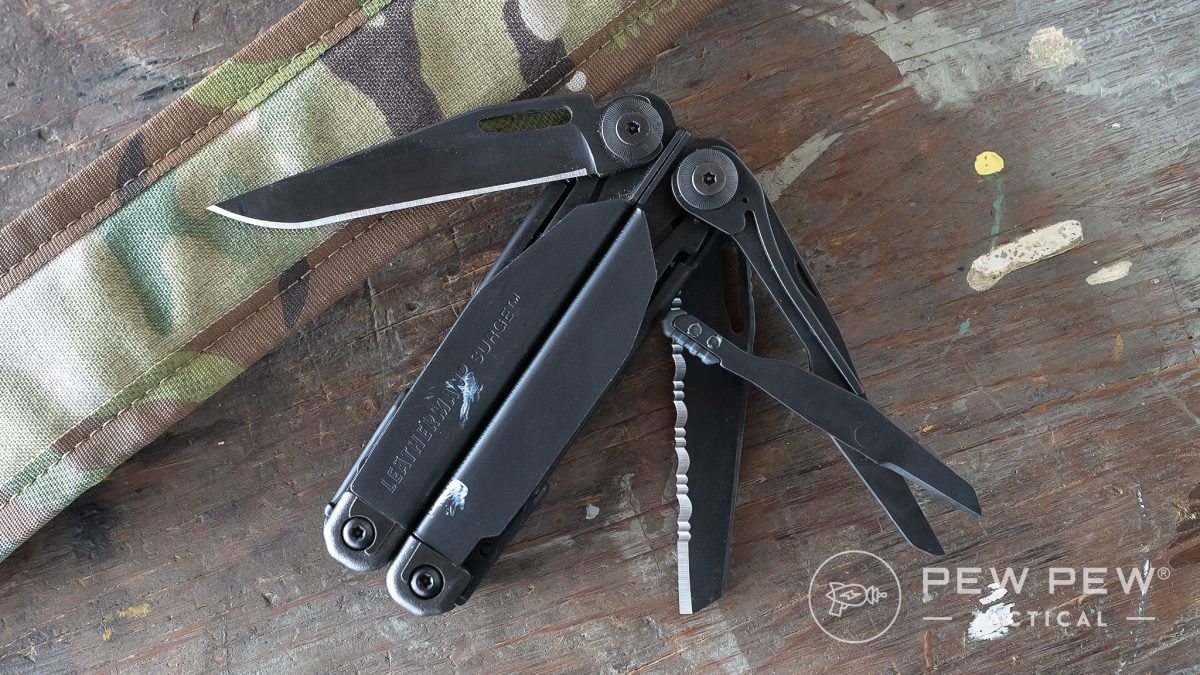
The Surge features 21 different tools, ranging from screwdrivers and pliers to blades and wirecutters. There’s even the all-important bottle opener.
This multitool is big enough that I wouldn’t want it riding in my pocket all day, but it’ll fit for short periods of time. We’re talking about gear for your car survival kit, so I’m not too concerned with size and weight. The tradeoff is more than enough leverage for jobs that require a little extra force.
After owning one for more than a decade, I can attest to Leatherman’s build quality and durability. My Surge rode on my plate carrier in Afghanistan, had my back on multiple cross-country road trips, and still bails me out whenever I need a quick fix on the range.
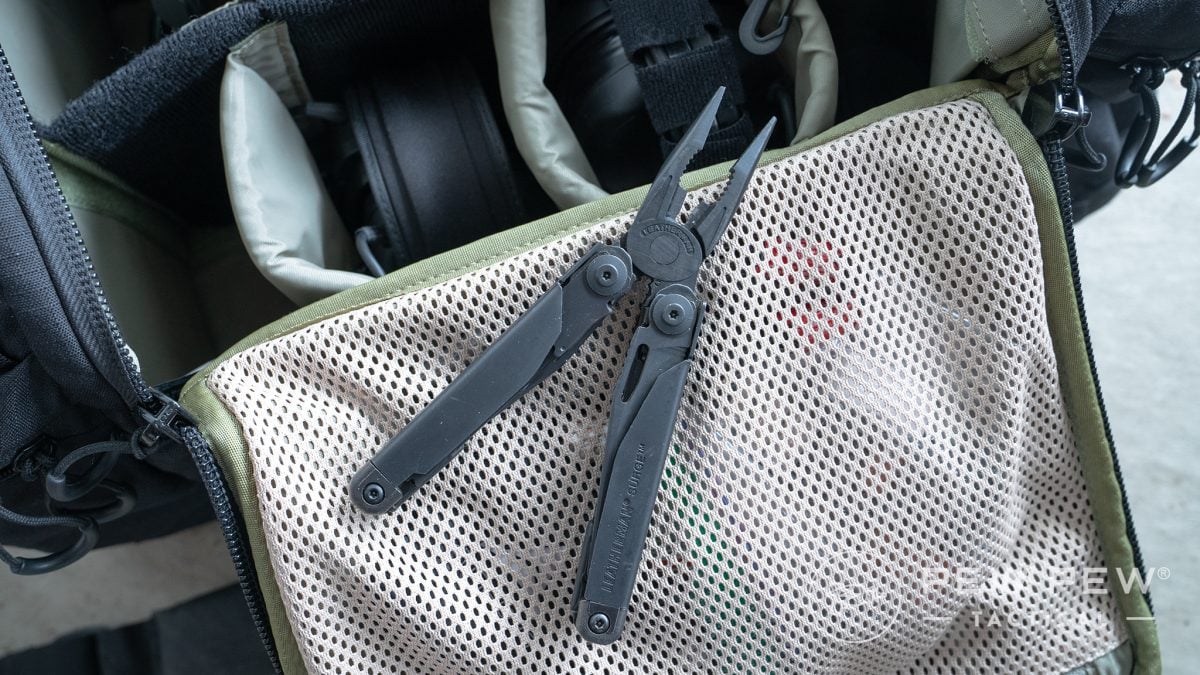
There have definitely been times when I’ve needed to bust out the socket set or OBD-II scanner, but multitools have come in handy a lot more frequently. Aside from automotive repairs, they’re great for getting extra grip on stuck backpack zippers, prying open stubborn containers, and filing down broken bits of metal to avoid getting cut bad enough to need that first aid kit we talked about.
There are lots of cheaper multitools out there, but this is one case where I think the “buy once, cry once” motto holds true.
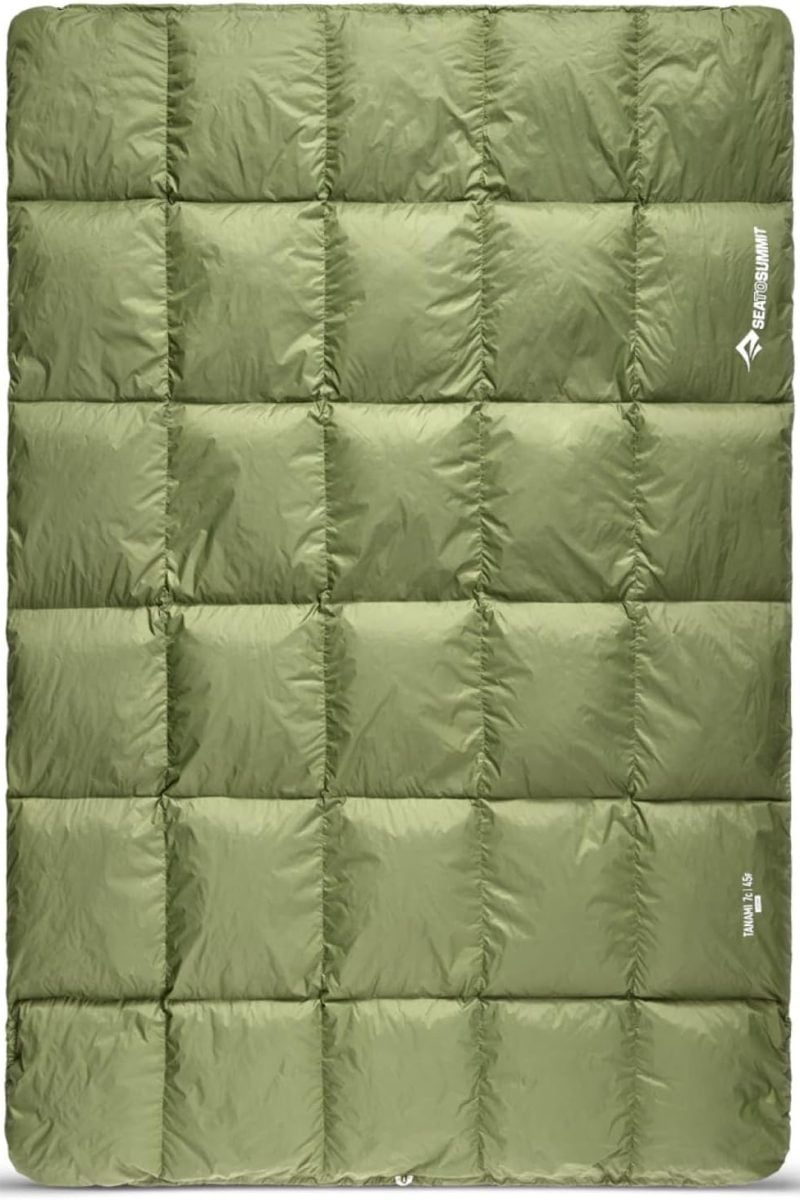
6. Sea to Summit Tanami – Best Blanket
-
25% off all OAKLEY products - OAKLEY25
Copied! Visit Merchant
Pros
- Water-resistant exterior and insulation
- Warm 650-fill down
- Folds up into a handy soft case
Cons
- Suitable for chilly nights, but not frigid ones
- Queen size is more expensive (but worth it)
The Bottom Line
Carrying a sleeping bag in your car might be excessive, but the Sea to Summit Tanami blanket is just right. With a durable nylon exterior and warm duck down inside, it can make unintended overnight stops a lot more comfortable. I bet you'll find reasons to use it more often than you think.
Specs
- Material: 30D nylon shell, 45D nylon liner
- Fill: 650+ loft duck down
- Dimensions: 83” x 72” (queen)
- Country of Origin:
Maybe this is the New Englander in me, but I can’t pull out of the driveway without a blanket in the car. I’ve seen too many news stories about people freezing to death in their cars to change now. My grown-up security blanket is the Sea to Summit Tanami camping comforter.
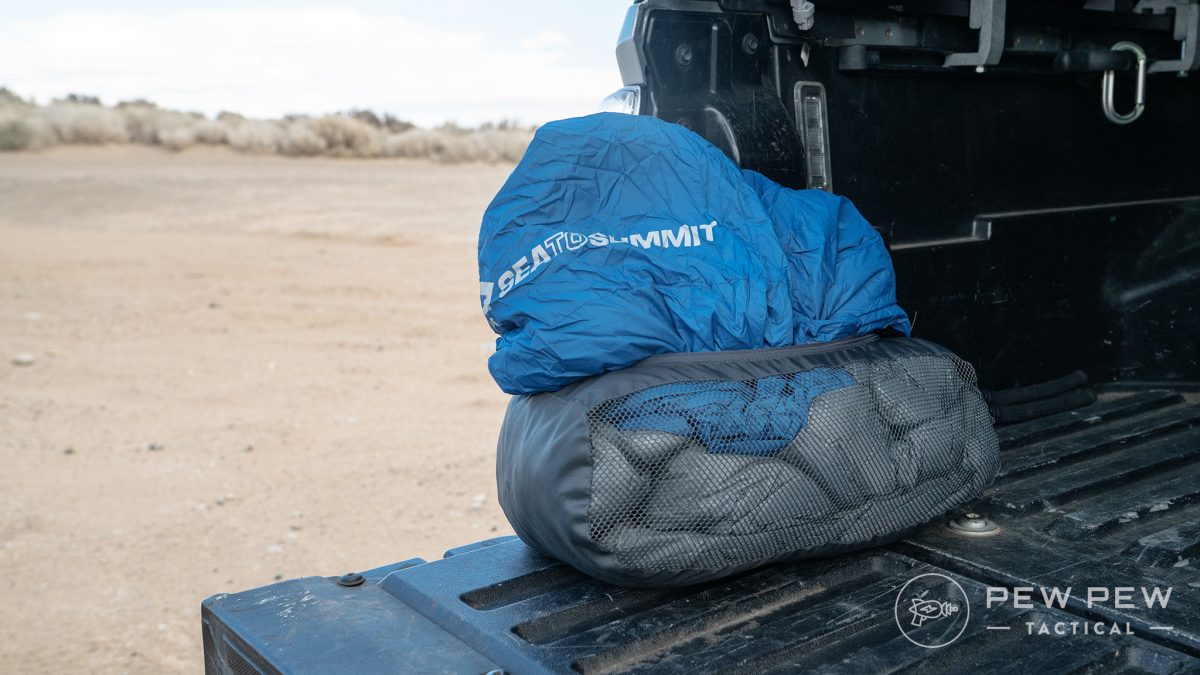
The Tanami is built for car camping (which is kind of like a roadside mishap you planned), so it’s extra durable and water-resistant. My dog has trampled all over this thing without tearing it, and I’ve been impressed with its water resistance.
That applies to the 650-fill down insulation, too. It’s treated to wick moisture away better than natural down. Feathers are the best insulation out there, but getting wet is their downfall.

If you have a Sea to Summit sleeping bag, the Tanami also has snaps and a drawstring to fasten it for extra insulation that won’t fall off in the night.
I still recommend dressing for the weather. If it’s snowing, I have winter clothes. If it’s raining, I have waterproof layers. My footwear is always appropriate for a long walk home. But if you do end up getting stranded overnight, a little extra comfort is never a bad thing.
Other Items for Your Car Survival Kit
Want a few more recommendations? These aren’t essential, but I keep them handy because they make life easier.
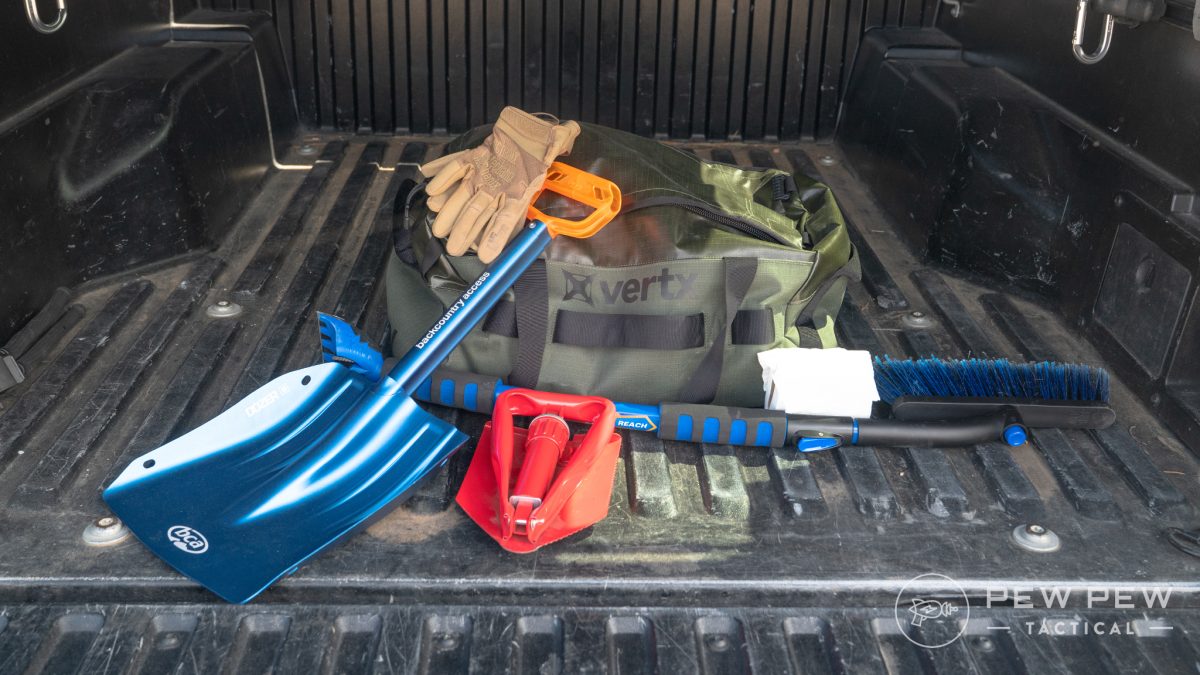
- Mechanix work gloves: don’t make a bad situation worse with cut-up hands and smashed knuckles. These add a layer of protection and provide extra grip when things get grimy.
- Craftsman breaker bar: Your car came with a lug wrench, but it’s probably tiny and doesn’t provide enough leverage to overpower the last overzealous tire tech who used an impact driver to put your wheels on.
- 5.11 Tactical Vlad: This pen has a glass-breaking tip on one end. It’s an expensive writing implement, but it could save the day if I get trapped in a burning or sinking vehicle.
- Goal Zero Flip 36: If my car goes out of commission, my phone isn’t far behind. This little power bank has a few charges on tap, just in case.
- Snacks: A few granola bars won’t save you from starvation, but they can make an unplanned breakdown a lot more tolerable. Bonus points if they’re astronaut ice cream.
- Medications: If you or a family member take medications regularly, keep some handy in case you get stranded. Basic pain pills and diarrhea-stopper never hurt, either.
- Toilet paper: You laugh…until you need it because you ignored my last tip.
- Recovery equipment: If you spend a lot of time off road, a few basics like traction boards, kinetic ropes, a tire repair kit (if you have an air compressor), and a shovel are worth their weight in gold. I even carry blocks of wood to elevate my jack or chock wheels.
- Sunscreen: It’s boring, but I use this more than anything else on this list.
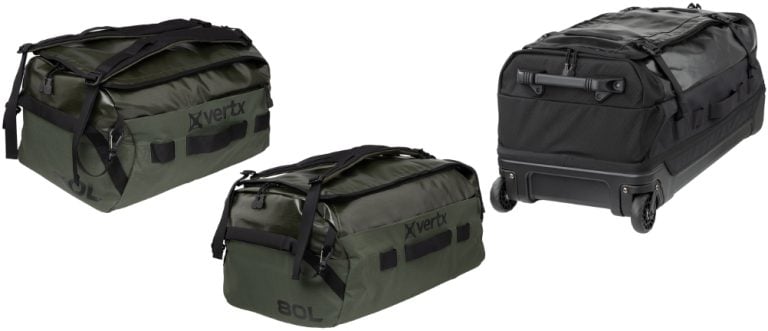
Of course, it helps if you can keep all this stuff organized. I like Vertx RLT duffels because they’re dang near indestructible, and you can add or remove organizational pouches as needed.
Prices accurate at time of writing
Prices accurate at time of writing
-
25% off all OAKLEY products - OAKLEY25
Copied! Visit Merchant
How to Pick the Best Gear for Your Car Survival Kit
As with any type of preparedness, picking survival gear to keep in your car starts with a risk assessment.
Threats
First, jot down a list of threats you’re likely to face on the road. These might include a flat tire, a dead battery from parking your car with the lights on, injuries from a recreational activity, or getting stranded in bad weather.

Consider how likely each threat is to occur, and how severe the consequences could be. I’m not likely to encounter an avalanche that strands my vehicle in the mountains, but I still carry a backcountry avalanche shovel just in case.
Keep in mind that your threat assessment will change throughout the year. That avalanche shovel sits in my garage all summer, but I carry a lot more water when the temperature is in triple digits all afternoon and there isn’t a drop of water to be found.
For each threat, come up with a realistic, workable solution, and add the necessary gear to your shopping list.
Time
Once you identify things that could go wrong while you’re out and about, try to determine how long you could be on your own.

If you get a flat tire in a major city, you might get towed to a tire store, have it repaired or replaced, and be back on the road in an hour. If your car breaks down miles outside of cell service on a rarely traveled trail, you could be in a world of hurt.
Be mindful of how long your car survival kit can sustain you, and try not to put yourself in a situation that exceeds that window.
Skill Level
Buying gear is one thing; knowing how to effectively use it is another. Every car sold in the U.S. comes with a spare tire or tire repair kit, but I still see an awful lot of people scratching their head on the side of the road because “the black part of the wheel is broken.”
Don’t buy gear that requires advanced training if you aren’t prepared to use it. There’s a reason you don’t see me recommending welding equipment, diagnostic scanners, and surgical tools in this article.
On the other hand, there’s no time like the present to familiarize yourself with basic emergency and survival tools.
Learn to build a fire in a safe, controlled environment before you need it to prevent hypothermia. Change a tire on level pavement with time to spare before you attempt it on the shoulder of an interstate in the rain. Using survival gear is a lot less scary if you’ve done it before.
Final Thoughts
This is all great gear, but it can only help you if you know how to use it. A quick first aid class or a few hours practicing with your equipment can mean the difference between success and failure in a crisis.
There are also lots of alternatives out there, and this list is far from exclusive. Got a different first aid kit you prefer? Want to add something to the list? Share the wealth in the comments!
Do you have a car survival kit? Let us know which item you use the most. Looking for this kind of preparedness at home? Check out all our Survival & Prepping Guides!
Latest Updates
February 2026: Complete overhaul with new products and supporting content.






14 Leave a Reply
This is nothing but a shameless article plug for overpriced crap. In my MN days, we kept a wool blanket or two, a shovel, a basic tool kit, 80 lbs. of sand to help weigh down the back axle for additional traction, flares, a chunk of carpet, a change of clothes, sometimes a spare pair of winter boots, 8-16 inches of a 2x4 to ensure we had a platform for the jack when changing a tire, a first aid kit with nothing that could freeze, and a bottle jack in case things got really bad. In our backpacks we kept water, beef jerky, dental floss, spare pair of socks, and a spare pair of gloves. We had no cell phones and we survived just fine. Don't buy this exorbitantly priced stuff, you'll just get worse fuel economy and never need any of it.
That kind of sounds like the same list, except you get better fuel economy by trading your cell phone for dental floss and 80 pounds of sand.
GLOVES! A pair each of Silicone dipped mesh gloves, a pair or leather work gloves, and a pair of warm gloves (insulated or neoprene) will make you happy, happy, happy.
I really like headlamps vs a handheld or ballcap-mounted light. I appreciate that they "look" where you are. The FL75 model from Coast is my favorite (the FL75R is the rechargeable only version). It's very water-resistant, has three light intensity levels, a zoom / fan, plus red and green light options.
Dig on this! One item I like to carry is a short poly scoop shovel. Short enough to fit most trunks, tough enough to dig in snow, cobble, sand, mud, and soft dirt. It does not like hard clay, or rocky soil. Orange so you won't leave it once you finish digging out!
Uline brand Heavy-Duty-Shovel-Polypropylene-Orange
Water and toilet paper is never a bad idea.
Glad I'm not the only one driving around with a four-season glove collection in the car! Thanks for weighing in, those are great recommendations.
Bottle jacks work great on trucks, good luck getting one under my wife's BMW even with fully inflated tires.
Bottle jack is from China.
Ratchet straps or at least bungee cords. Spare fuses. Tools (screwdriver, small socket set, adjustable wrench, needle nose pliers.) HeatMax Survival Heat, hand/foot warmers. Survival blanket/tent. Hat, sunglasses, suntan lotion or beanie, scarf depending on weather.
CASH, small bills.
Why are you constantly sending us to Amazon? How about we bypass Amazon and go direct to the product supplier? Amazon is not worth the convenience and hate people like us anyway.
My thoughts exactly. This is a good opportunity to promote smaller businesses, especially if they're American.
I try to avoid Amazon when I can. But if affiliate links help keep the lights on at PPT and allow us to enjoy free articles, I can deal with that. PPT is still one of my favorite blogs.
Ugh. Now my trunk is full.
A couple things you may want to add to your article.
1) Take the cheapest, crappiest, set of jumper cables. Clean oxidation and solder the wire strands to the actual clamps where they are crimped on. Do this on all four clamps and your cheap jumper cables will ALWAYS work BETTER than an expensive set of cables that was sitting in your trunk, oxidation and resistance building up for a year or two...
2) Fix-A-Flat sounds like a great idea, but if you use it then you need to have your tire taken off the rim and have that liquid glue washed out. otherwise the liquid inside will throw your tire balance off and your balance and alignment will all go to hell... And I don't have to mention that most places will just stuff a rubber plug in your tire without taking it off the rim when you go to get the permanent fix after you use the can of goop...
1) Auto wiring standards are NO SOLDER, as it heats the copper wires making them brittle, causing them to break as they are handled. Properly crimping the wire means getting up to 1000# of pull out strength - and nobody makes the clamp connection do that. An electrical fitting is necessary, plus the tool to properly do it, then attach it to the clamp. For the most part it's not that necessary.
Fix a Flat is a mess, and tire shops charge extra to clean it out when fixing a flat. On the other hand, gelled antifreeze has been used for decades, to BALANCE TIRES on OTR trucks. No it does NOT cause out of balance, and more than the new ceramic beads I've used to balance my truck tires. They dynamically balance a tire while spinning and will adjust to tread wear rebalancing them.
If you do use Fix a Flat, fix the tire with the tarred string inserts, which work to seal the hole. Make sure to cut off all excess outside the tread, they will stick to the pavement and pull out, which is aggravating when you have to go three miles down the road to do it all over again while your wife is tapping her toe on the side of the road. Always trim the excess.
Top Secret? You may want to mention the name of your "Superior Product" so that the readers can take advantage of your "Superior Experience" ....