
[Guide] Cross-Dominant Shooting: Adapt & Overcome
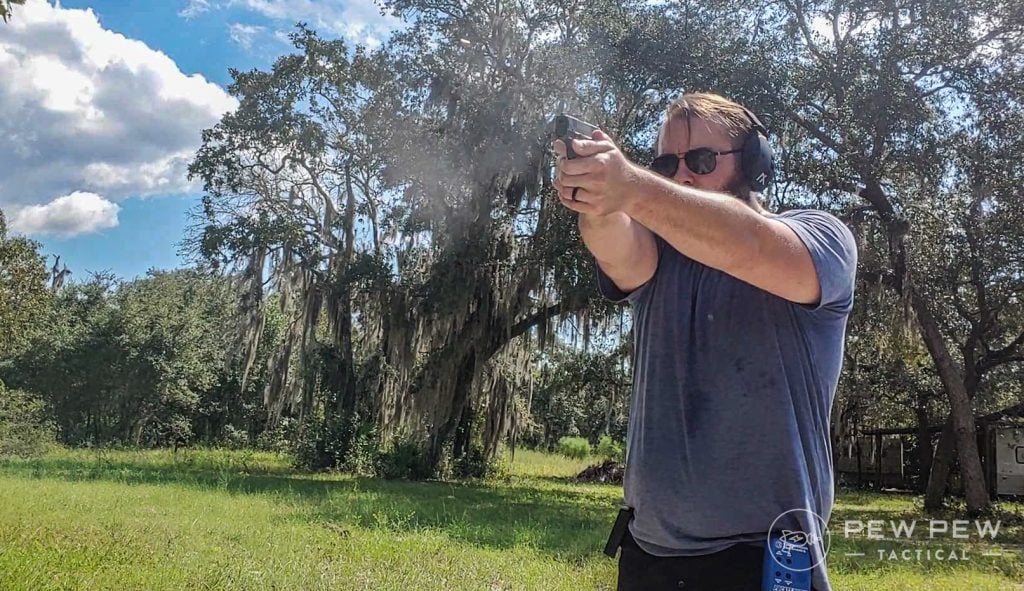
How do you diagnose cross-dominant shooting and how do you overcome it? Special emphasis on right-handed, left-eye dominance.
We review products independently. When you buy through links on our site, we may earn a commission to help support our testing. Learn more.
The conflict between right and left is a big sticking point for some shooters, and I’m not talking about politics. I’m talking about hand dominance versus eye dominance.
Your dominant hand has a huge impact on how you shoot. But what many people overlook is something even more important: which eye is dominant.
Why is this important?
Well, if you’re cross-dominant (right-eye dominant, but left-hand dominant, or vice versa) you can have some trouble with shooting if you don’t learn how to correct for it.
Roughly a third of the population is thought to be cross-dominant, but thankfully, there are several ways for cross-dominant shooters to shoot just as well as anyone else. The difference comes down to practice and training.
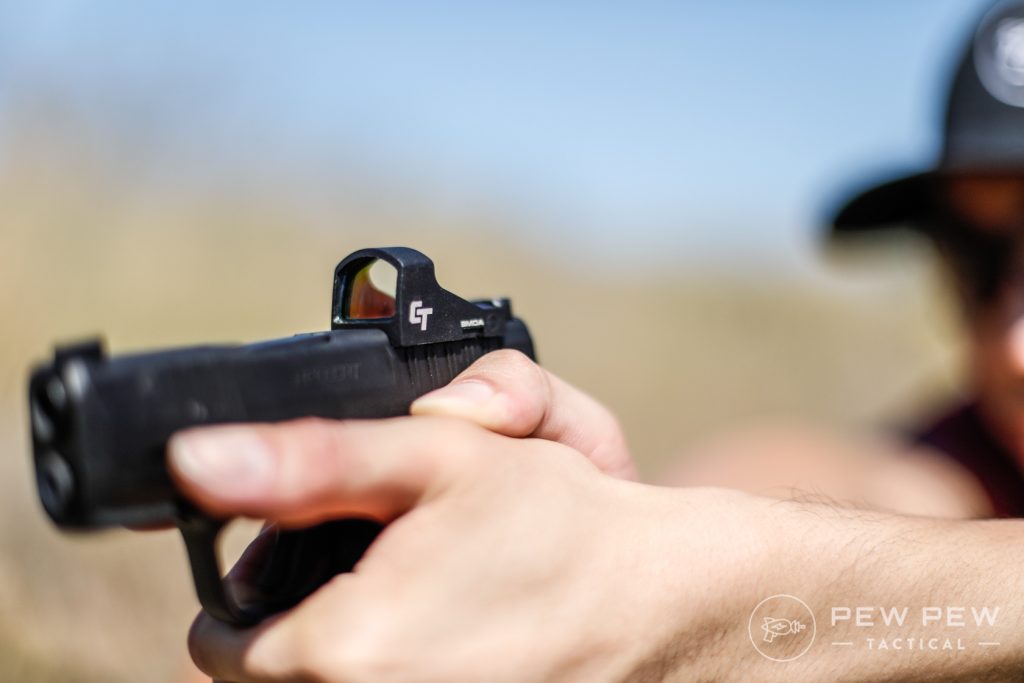
If you think you might be cross-dominant or want to learn how to train someone to overcome cross-dominance, you’re in the right place.
Keep reading!
Table of Contents
Trending: Best AR-15s & ATF Drops NFA for Suppressors & SBRs
Meet the Experts
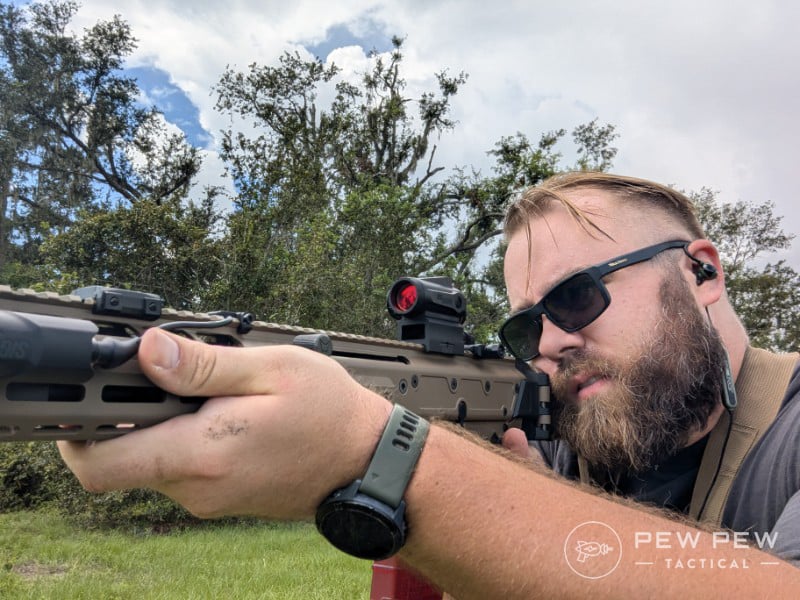
Pew Pew Tactical author Travis Pike authored this article. Travis spent a lifetime shooting as a kid and later joined the United States Marine Corps, where he spent five years as an infantryman. His experience as a machine gunner, recreational and competitive shooter, hunter, and concealed carry instructor has given him unique insight into various shooting styles across numerous platforms.
Diagnosing Cross-Dominance
There are a few common signs that people with cross-dominance will display. The two most common are:
- Misses that land high and to one side
- Tilting the head to one side or moving or tilting the gun to the non-dominant side
Signs aside, there's also a very easy way to quickly and easily diagnose cross-dominance. Even better, you can try it right now wherever you’re reading this.
Check out our video below to do it in less than one minute, or reference the picture below.
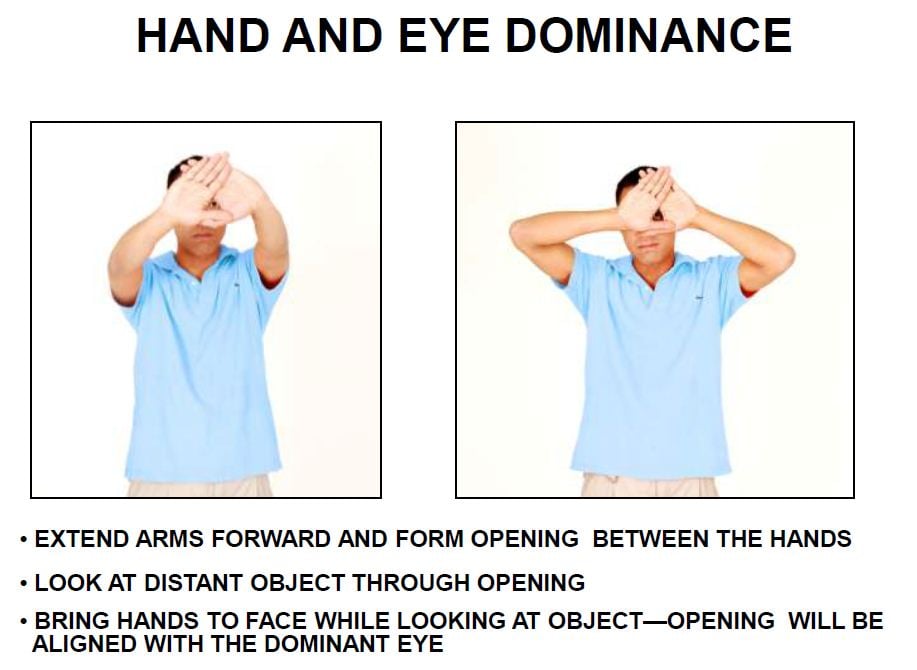
If it looks like you are indeed cross-dominant, keep reading to find out how to work with it!
Cross-Dominance and Pistol Shooting
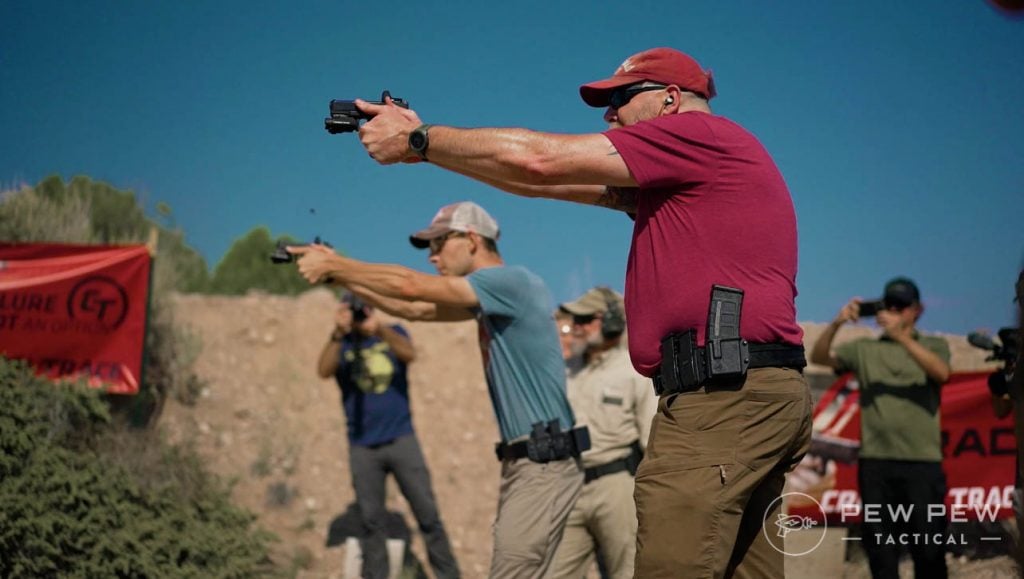
If you are cross-dominant and have already practiced shooting handguns using your dominant hand, there are a few things you can do.
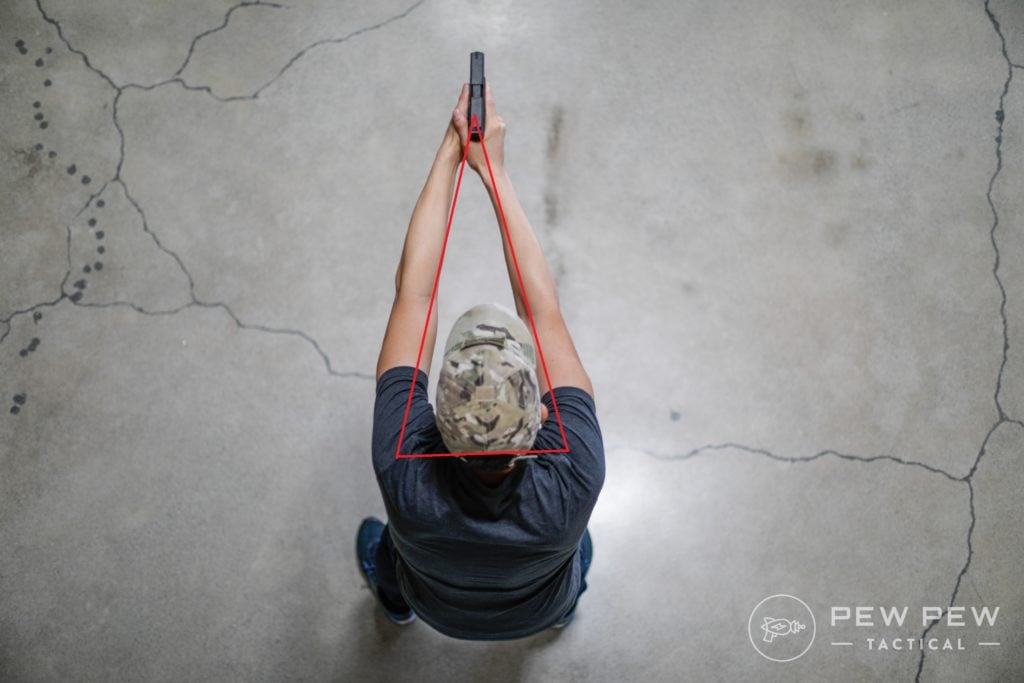
1. Calibrate your grip and stance
The Best Gun Deals, Coupons and Finds
Subscribe to Pew Pew Tactical's sales and deals email.
2. Learn to Shoot with Your Non-Dominant Hand
When it comes to pistol shooting, especially when working with a newbie or if you have limited experience, I strongly recommend shooting with the hand that matches the dominant eye, rather than using the non-dominant eye and the dominant hand.
This is a worthwhile skill for anyone to learn, but it is especially important for cross-dominant shooters.
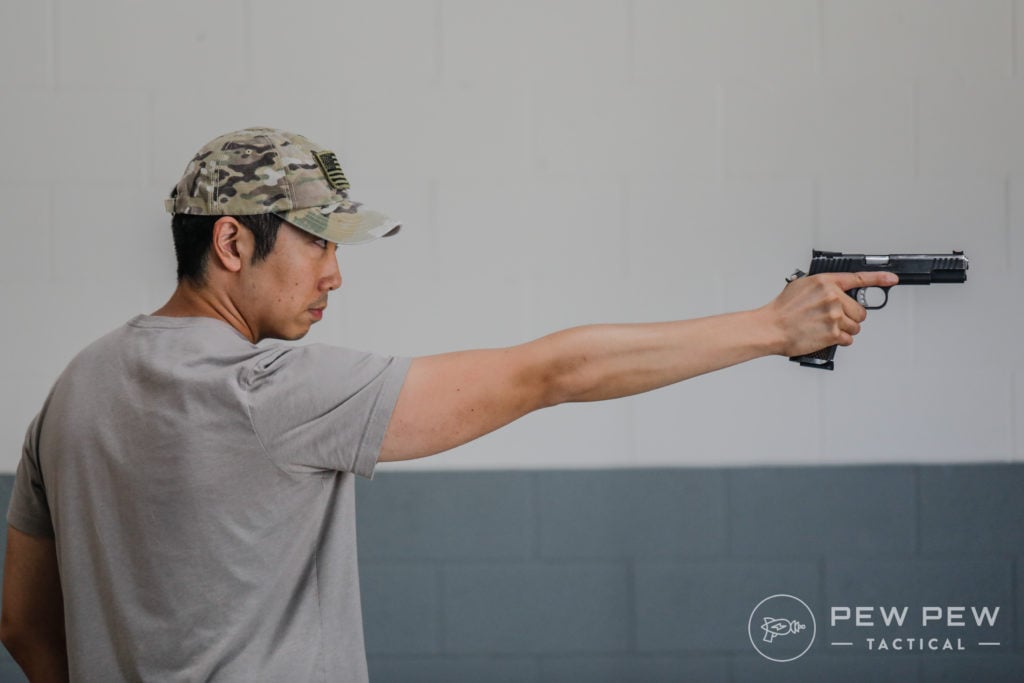
This is one of the simplest ways to overcome cross-dominance issues, particularly early in your shooting career.
Of course, there are problems with this approach.
First, you may struggle to shoot with your non-dominant hand. I’ve known many people who were strongly right or left-handed and thus didn’t feel comfortable using their weak hand to manipulate a handgun. This is completely understandable.
The other issue is that most handguns are set up to be shot right-handed only. So, shooting left-handed can cause a host of problems, particularly with guns that don’t have ambidextrous or swappable controls.
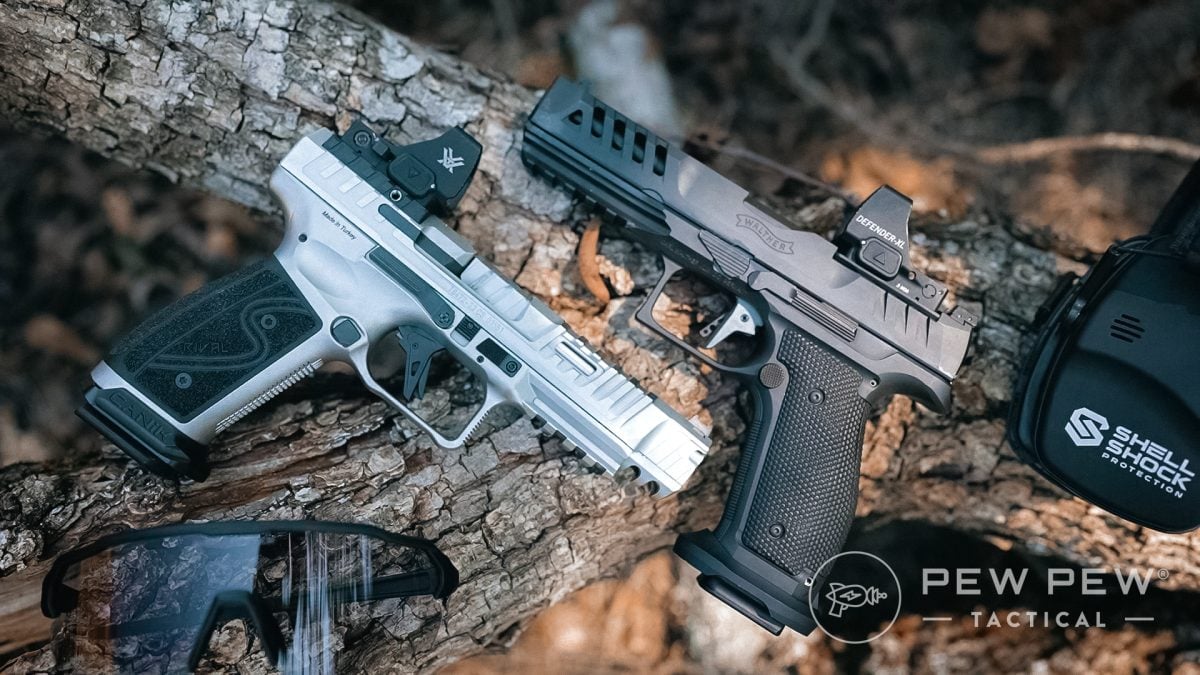
In general, I’d say it’s way easier to overcome right-eye dominance when you’re left-handed than the other way around.
If you’re left-handed, you’re probably already used to conforming to a mostly right-handed world, and you may find it’s easier to do.
3. Retrain Your Eyes
Some shooters can train their eyes to switch dominance. The eye itself can compensate and switch dominance if forced to.
For example, Mike Pannone lost his eye in the line of duty and can still outshoot most people.
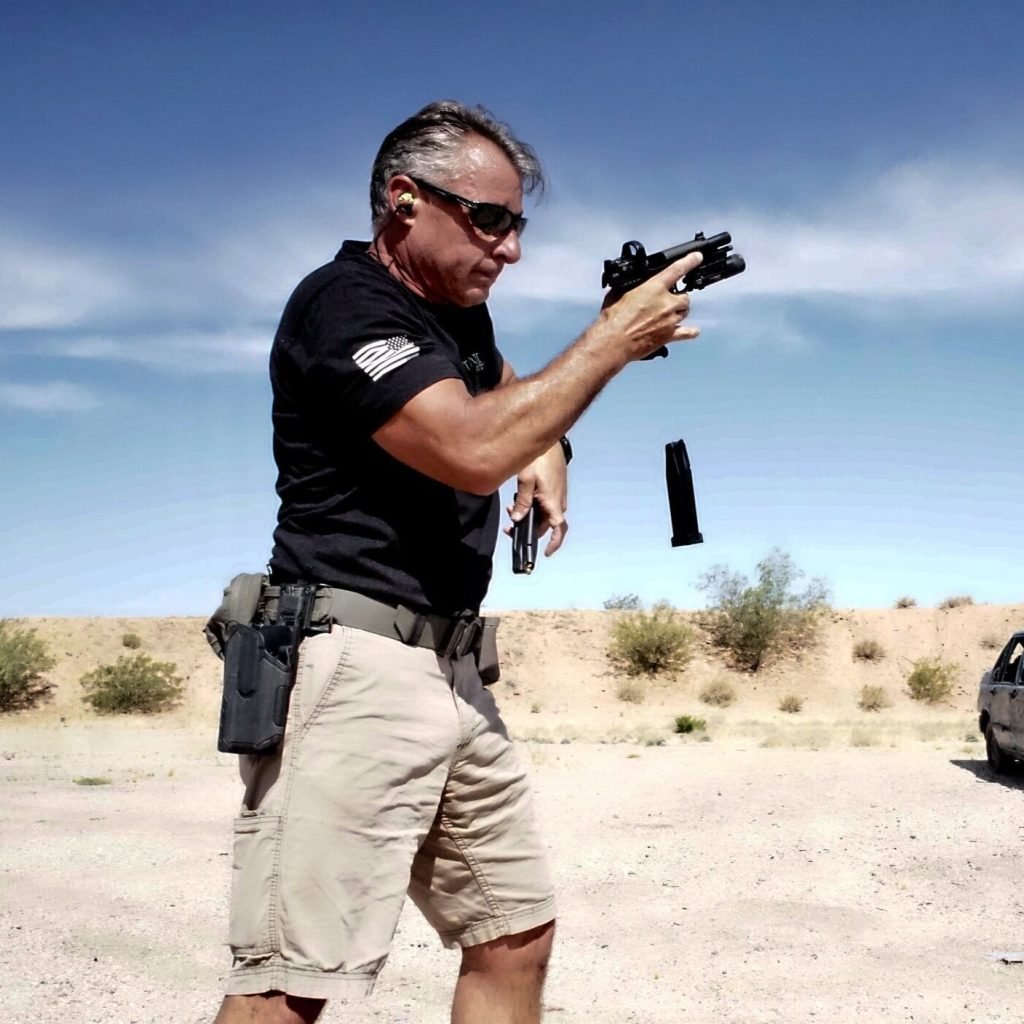
But training your eyes to switch dominance might be tougher than switching your dominant hand.
Some people might find it impossible, but it's not as tough as it seems.
First, you must obscure your dominant eye and aim with your non-dominant eye. You can do this by taping over one side of your shooting glasses or wearing an eye patch.
Next is practice — a ton of it. To actually switch eye dominance, it will take hours and hours of dry-fire practice followed by hours and hours of live-fire practice.
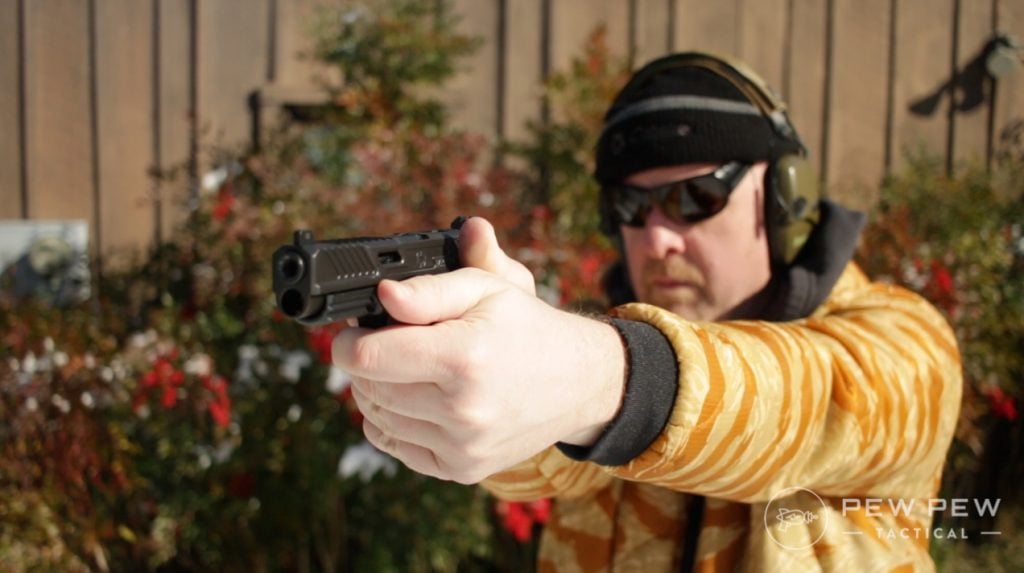
As you gain confidence, you can start to trim the tape obscuring your shooting glass smaller and smaller. This will allow the other eye to see what’s going on.
Eventually, your brain and body will get to the point where you can comfortably use your traditionally non-dominant eye as your dominant eye when shooting.
It bears mentioning that this method doesn’t work for everyone, though.
What About Long Guns?
Overcoming cross-dominance with pistols is usually much easier than with rifles or shotguns.
When shooting rifles and shotguns, you don't use the isosceles stance. This means the easiest self-calibration method we mentioned above isn't usable for long guns.
Rifles & Cross-Dominance
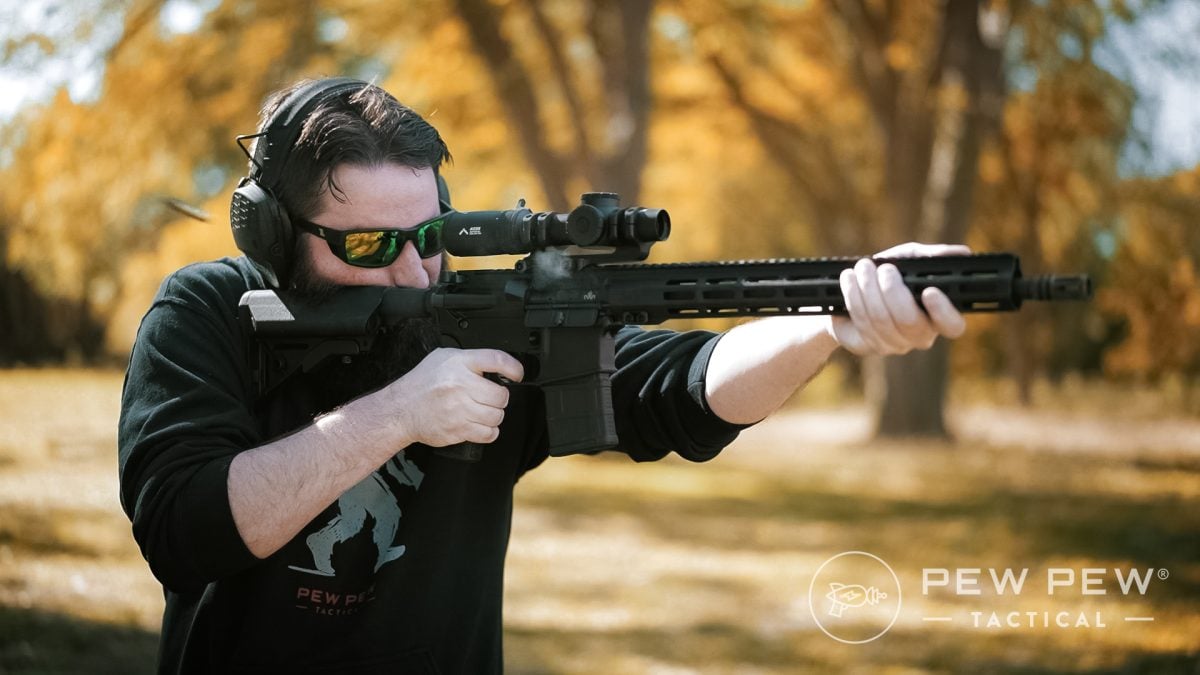
With rifles, you will need to rely on one of the other two methods we mentioned earlier --- learning to shoot with your non-dominant hand, or training your non-dominant eye.
The first option is to learn to shoot with your non-dominant hand. Fortunately, rifles have more points of contact, which makes handling them and managing recoil much easier than with handguns.
Like with handguns, this will take time and practice getting used to. It is worth noting that if you are transitioning to shooting left-handed, many rifles are much less friendly to lefties than handguns.
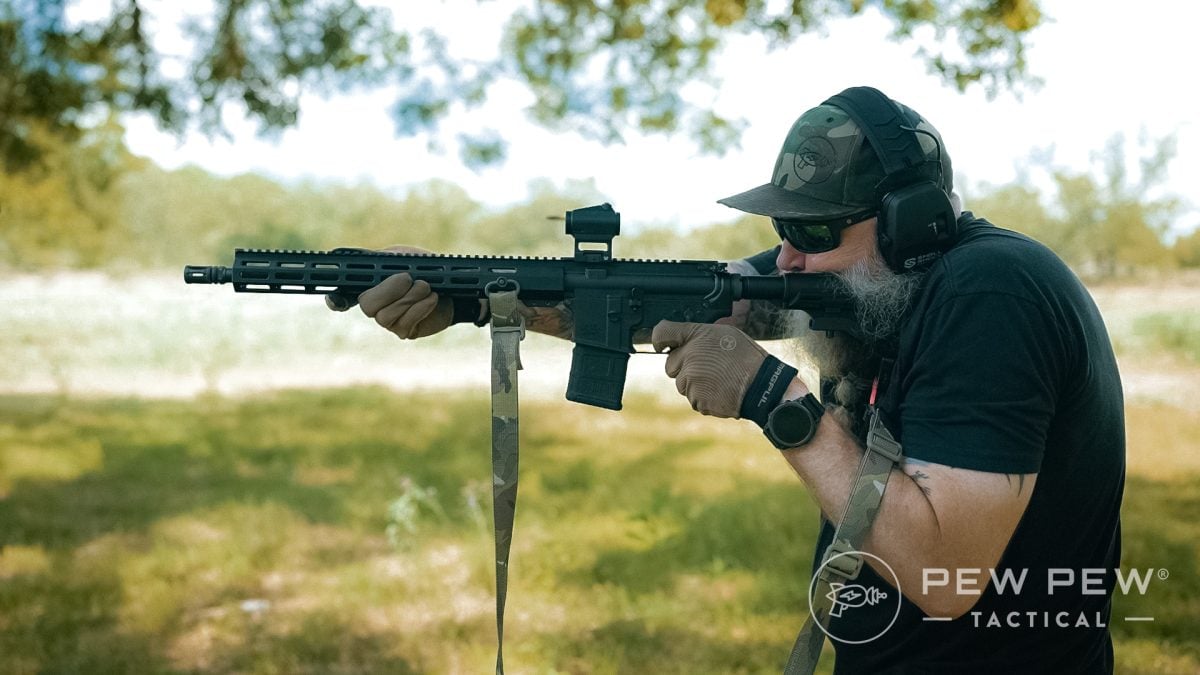
Your second option is to train your non-dominant eye.
The easiest way to start training your eye is to get behind your rifle, get a sight picture, and acquire the target with both eyes open.
You will then want to slowly squint or close your dominant eye. Taping over the dominant eye side of your shooting glasses is also a viable alternative.
Our Most Popular Posts


Shotguns & Cross-Dominance
Things can get a bit trickier when it comes to shotguns.
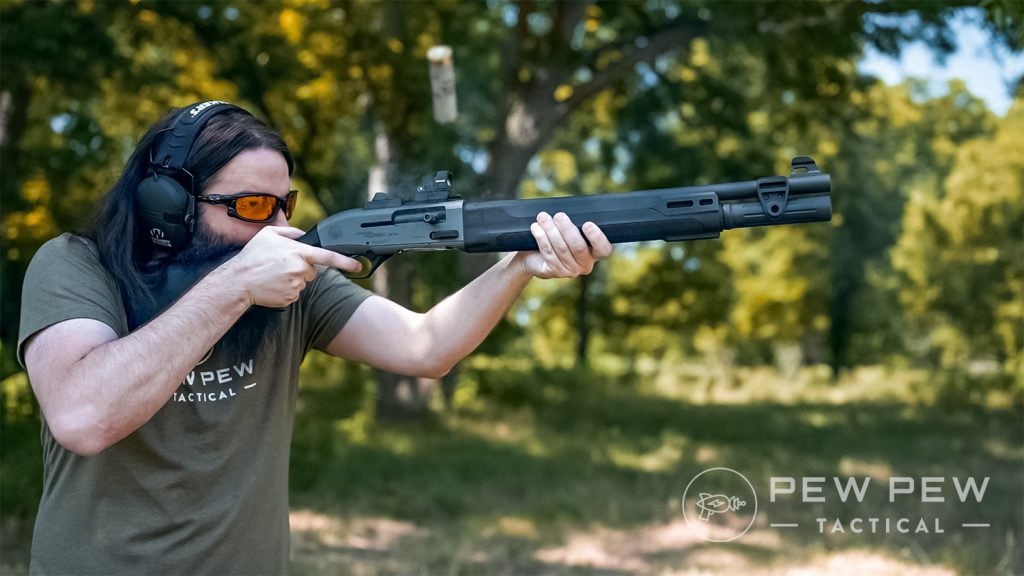
While you can shoot shotguns with one eye closed or occluded to train your non-dominant eye, that technique has a major drawback with shotguns.
If you are shooting sporting clays or birds, having both eyes open is massively beneficial. If you have your left eye closed, for example, and a clay pigeon or bird is coming from your left side, you are going to see it much later than if you had that eye open. This gives you less time to react.
Additionally, your eyes are meant to work together when it comes to judging depth, distance, and speed of moving objects, all of which are essential for clay or bird shooting.
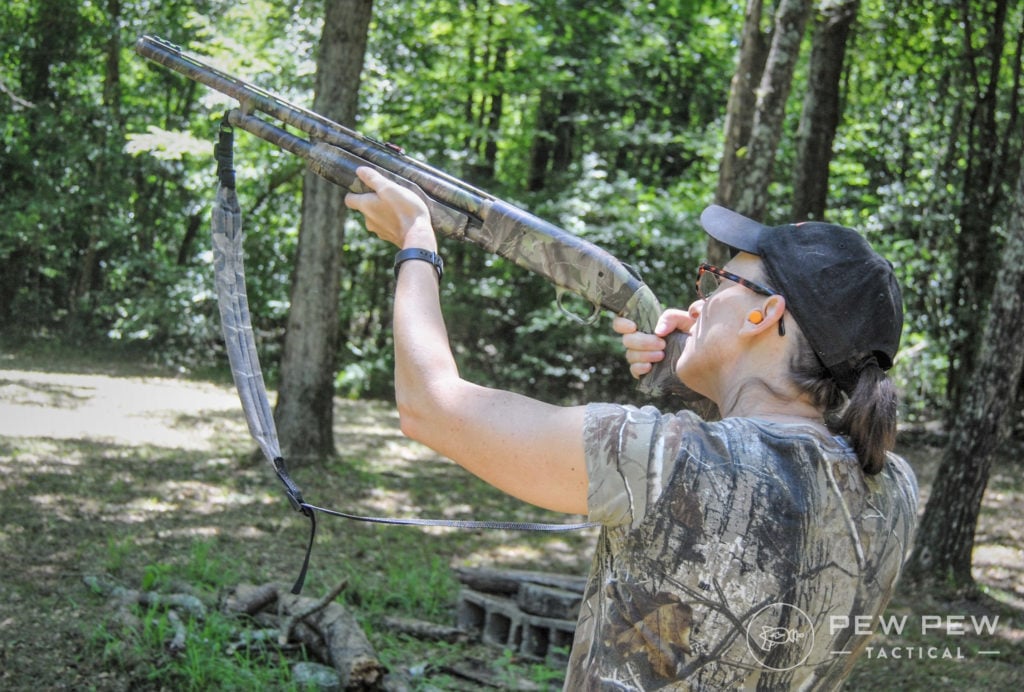
For that reason, it is recommended that you try to learn to shoot with your non-dominant hand. This lets your dominant eye be in line with the barrel of the shotgun, and allows you to shoot with both eyes open.
You can get a more in-depth look at shotgun and eye dominance in the excellent video below from Target Focused Life.
Visible Lasers
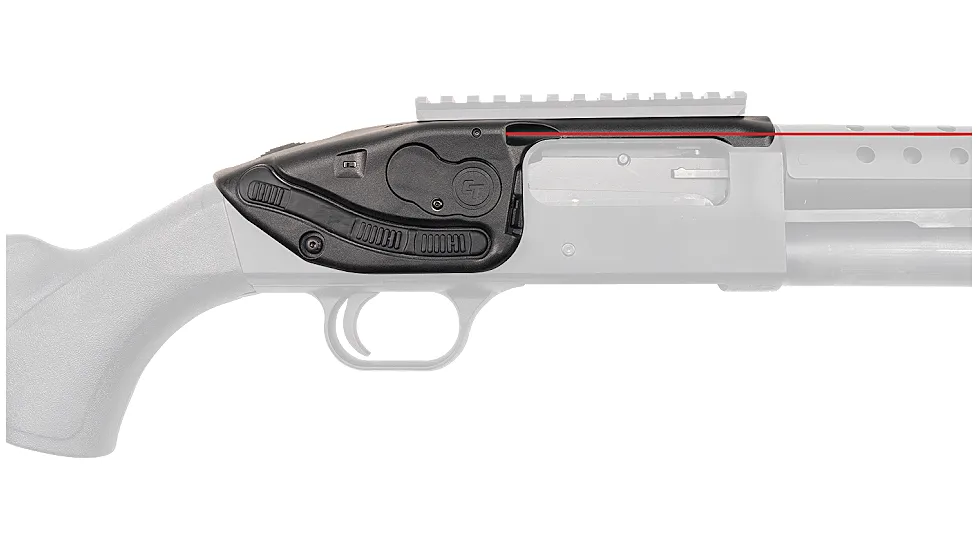
A visible laser is another solution for close-range shooting or home defense with shotguns. There are plenty of laser options for shotguns, including side-saddle and Picatinny-mounted lasers.
Lasers need to be zeroed, and are only truly "right on" at the exact distance you sight them in at.
But if you zero your laser at 25 yards, you will have an adequate point of aim for most home defense or indoor CQB situations.
Final Thoughts
All of these solutions can work. So, experiment with them all and find what’s best for you.
Just be sure to understand all the potential downsides before you commit to one method. Once you pick something that works, train, train, and train some more.
Are you cross-dominant? What do you think of these techniques? Let me know in the comments below. For more on eye dominance and sight picture, check out our guide here!
Latest Updates
June 2026: Restructured article and added supplementary video and photo content.