
Best Prism Scopes: Robust & Better for Astigmatism
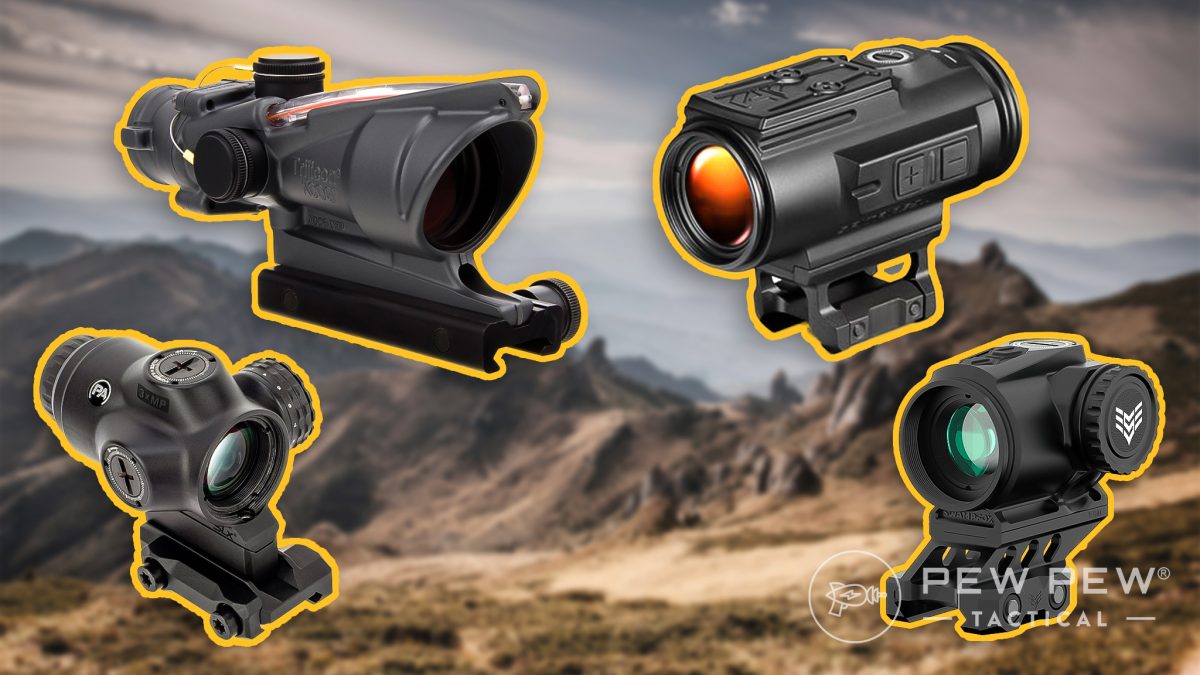
Prism scopes right for you? We cover the Pros & Cons, plus hands-on pictures of a few of the most popular models out right now.
We review products independently. When you buy through links on our site, we may earn a commission to help support our testing. Learn more.
Prism scopes often get overlooked when people set up a rifle or carbine, but there are times when these niche optics are the best option out there.
The selections you see here are based on hands-on experience and testing by the Pew Pew Tactical staff. We've even bought some of these optics for ourselves! In some cases, we haven't tested a specific model or variant, but we have reviewed a comparable product in a brand's lineup.
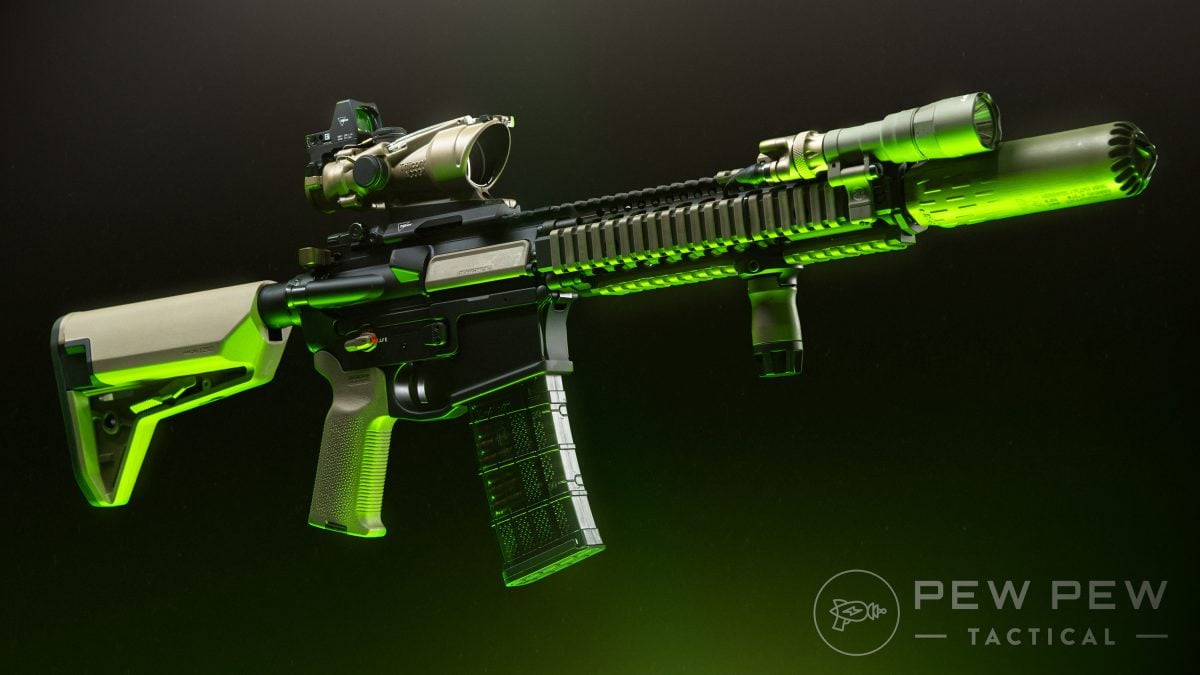
Since prism scopes work a little differently than a conventional scope or a red dot, I'll also explain the pros and cons compared to red dots and conventional rifle scopes. My goal is to give you confidence that you're buying the right optic for you.
Sure, the Trijicon ACOG is legendary; it's still regarded as the best for a reason. But there are some way more affordable prism scopes out there, like the Primary Arms SLx 3x MicroPrism. Read on, because you might be able to save a bundle!
The Quick List
- Best Overall: Trijicon ACOG TA31 4×32Jump to Details ↓
- Best Value: Primary Arms SLx 3x MicroPrismJump to Details ↓
- Most Powerful: Vortex Spitfire HD Gen II 5xJump to Details ↓
- Best Unmagnified: Swampfox RaiderJump to Details ↓
Table of Contents
Trending: Best AR-15s, Best AR-15 FRTs, & Daily Deals
Prism Scope Comparison Chart
| Price | Best For | Reticle | Shooting Performance | Overall | |
|---|---|---|---|---|---|
| Trijicon ACOG TA31 | $1,168 | Duty | Chevron | 9/10 | 9.0/10 |
| Primary Arms SLx 3x MicroPrism | $349 | Personal use | ACSS Raptor | 8/10 | 8.1/10 |
| Vortex Spitfire HD Gen 2 3x | $449 | Personal use | AR-BDC4 | 8/10 | 7.8/10 |
| Swampfox Raider | $234 | Personal use | BRC | 8/10 | 7.5/10 |
How We Tested the Best Prism Scopes
For this article, we focused on prism optics that balance glass quality, size and weight, field of view, durability, reticle options, and price.
Travis Pike took the lead on this article with input from Pew Pew Tactical's editorial team. Together, we have decades of shooting experience, including military, law enforcement, instruction, and competitive capacities.
Optical Quality
We evaluate optical quality with a distortion grid that exposes any shortcomings in clarity, color realism, or distortion. View-through photos will always have some influence from the camera used to capture them, but they can help visualize how different optics compare to one another.

When relevant, I also make note of how differences in optical quality translate to real-world performance on the range.
Shooting Performance
Ultimately, live-fire experience determines our final assessment of any optic.

Here, we'll discuss factors like how user-friendly and intuitive an optic's reticle is, how effective the illumination is, and how the eye box affected our ability to get hits with various shooting positions.
Value
As always, we realize that you're going to spend a considerable amount of money on your optic, and you want it to meet your expectations.
If it's worth spending a little extra, we'll cut to the chase. When it's possible to save some money and still get a great prism scope, we'll let you know so you can keep more money for ammo and range fees.
How to Choose a Prism Scope
Before we dive in, let's cover a few important considerations that will affect your buying decision.
Magnification
Prism scopes typically fall within one- and five-power magnification, with a few higher-powered exceptions typically reserved for specific military applications.

If your goal is to replace your red dot with something more astigmatism-friendly, stick to an unmagnified prism scope to keep your close-quarters speed. The Swampfox Raider is a great way to replace a blurry red dot with a sharp etched reticle.
For intermediate shots (think 200 to 500 yards), something with three-power magnification or more will help you see your target, use your reticle's elevation holds, and spot impacts. The Primary Arms SLx 3x MicroPrism, Trijicon AGOC, and Vortex Spitfire HD Gen II are all great options.
Reticle
Almost all prism scopes come with a bullet-drop-compensating, or BDC, reticle. These feature multiple aiming references for predetermined distances, usually in 100-yard increments.
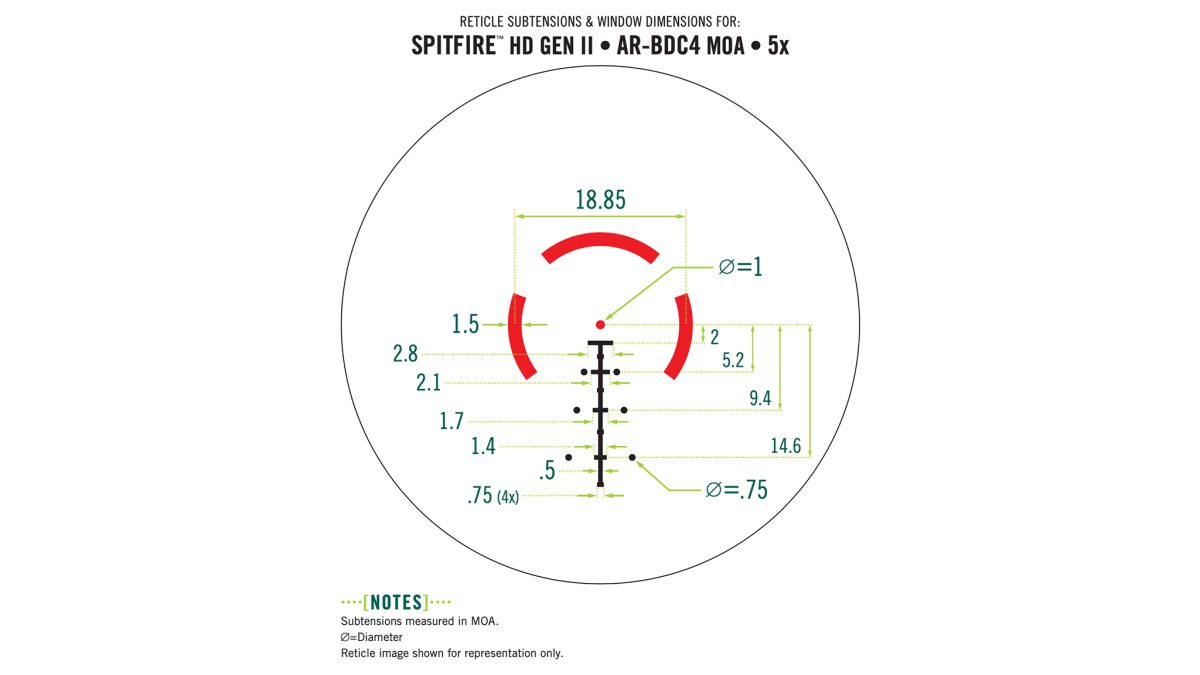
There are some important differences in priorities, though. Some reticles, like the Vortex AR-BDC4, feature a prominent center aiming point and large rings for speed at close range. Others, like the Trijicon Chevron reticle, are finer to allow for more precision at longer distances.
Remember that BDC reticles are not truly universal; they're kind of like an educated guess. Test your rifle at known distances to see where those holds actually line up for you.
Illumination & Batteries
Like red dots and LPVOs, prism scopes typically rely on batteries for illumination. One exception is the Trijicon ACOG, which is available in either battery-powered or fiber-optic configurations. The fiber optic variants harness ambient light for automatic brightness and battery-free operation.

If you plan on running night vision with your prism scope, make sure the one you choose features night vision-compatible brightness settings. These will likely be invisible to the naked eye.
Best Prism Scopes
1. Trijicon ACOG TA31 - Best Overall
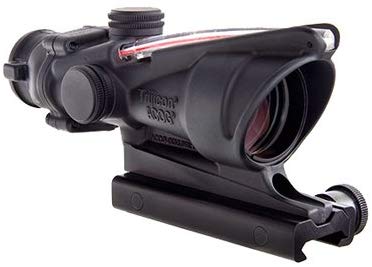
Quick Verdict: The Trijicon ACOG has been the king of prism scopes for decades, and that isn't changing now. The official GWOT optic is legendarily tough, has premium glass, and doesn't rely on a battery for illumination. Yes, it's incredibly expensive; but this is the prism optic to have if you want the best of the best.
Pros
- Combat-proven toughness and reliability
- Battery-free illumination
- Outstanding optical quality
Cons
- May cost more than your AR-15
- Tiny eye box
Specs
- Magnification: 4x
- Objective Lens Diameter: 32 mm
- Reticle: Chevron (as tested)
- Illumination: Variable (as tested)
- Weight: 15 oz
- Country of Origin: USA
Why We Love It
The Trijicon ACOG's main selling point is almost indestructible build quality, but let's go beyond that to see what else this prism scope has to offer.

First, I don't think Trijicon gets enough credit for the ACOG's glass quality. The view through this optic is incredibly bright, vivid, and sharp.
The clever Chevron reticle combines rapid visual acquisition with a super-fine aiming point at 100 yards; it's much more precise than a 2-MOA red dot. As distance increases, there are holds out to 800 yards (that's a little optimistic, but not as much as you might think). Each stadia's width correlates to the width of a standard silhouette at the corresponding distance, making this reticle a built-in range-estimation tool.
The top half of the reticle is illuminated, but there are no batteries. Instead, this version of the ACOG uses a fiber optic wire along the top of the tube to gather ambient light and illuminate the reticle accordingly.

Now for the bad news: you can buy three or four consumer-grade prism scopes for what you'd spend on an ACOG. That's the price of top-shelf gear, though, and there's a reason people keep buying these instead of newer, more powerful optics.
By the Numbers
| Shooting Performance | Clarity | Durability | Ease of Use | Value | Overall |
|---|---|---|---|---|---|
| 9/10 | 9/10 | 10/10 | 8/10 | 5/10 | 9.0/10 |
There are lots of models to choose from, including a new PCC ACOG. Check out our guide to the Best ACOGs to see our favorites!
Level up your gun knowledge
New reviews, guides and daily deals in your inbox.
2. Primary Arms SLx 3x MicroPrism - Best Value
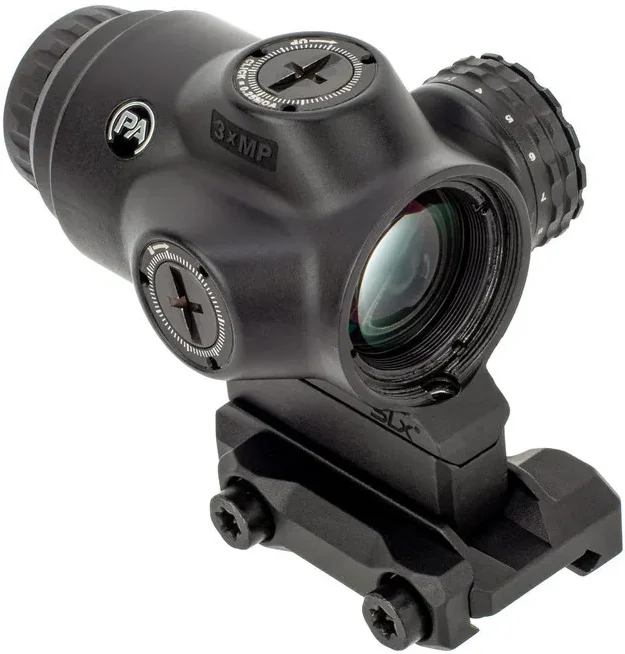
Quick Verdict: The Primary Arms SLx 3x MicroPrism is a great example of why we keep coming back to the brand for budget-friendly optics. The BDC reticle is great for intermediate engagement distances, and I love the illumination dial for fast, tactile adjustments. Factor in a sub-$350 price and a physical size that's more like a red dot than a magnified prism scope, and this is a perfect option for budget builds, AR pistols, and SBRs.
Pros
- Ultra lightweight and compact
- Super sharp etched reticle
- Flexible riser configurations
Cons
- Vague turret feel
- Small reticle can make longer shots challenging
Specs
- Magnification: 3x
- Objective Lens Diameter: 23 mm
- Reticle: ACSS Raptor
- Illumination: 10 daylight, 3 night vision
- Battery: CR2032
- Weight: 8 oz
- Country of Origin: China
Why We Love It
The Primary Arms SLx 3x MicroPrism has single-handedly made prisms a lot more relevant to the current conversation. This lightweight prism is the size of a compact red dot. It completely upsets the red dot vs. LPVO debate.

This tiny optic comes with a reticle for either 5.56 NATO and .308 Win, or .300 Blk and 7.62x39.
No optic makes it easier to tweak your riser height. Primary Arms includes components and hardware you can mix and match to create eight different risers. Price some aftermarket risers to see how much money that feature will save you.

It's Primary Arms, so you know the ACSS Raptor reticle will be nice and sharp. The combination of a chevron, speed ring, and elevation holds out to 600 yards is super versatile. There are 5- and 10-mile-per-hour wind/mover holds for 400, 500, and 600 yards.
On top of that, the image is super clear, and the reticle is daylight bright with battery-powered illumination. It's an impressive offering made extra exciting by the affordable price.

Personally, if I wanted a prism optic, this might be my top choice based solely on bang for the buck.
By the Numbers
| Shooting Performance | Clarity | Durability | Ease of Use | Value | Overall |
|---|---|---|---|---|---|
| 8/10 | 8/10 | 8/10 | 9/10 | 9/10 | 8.1/10 |
Have you used the Primary Arms SLx 3x MicroPrism? Give it a rating it below!
Readers’ Ratings
4.99/5 (2078 Votes)
Your Rating
Deals of the Day:
Hand-Picked Ammo & Firearm Discounts
3. Vortex Spitfire HD Gen II 5x - Most Powerful
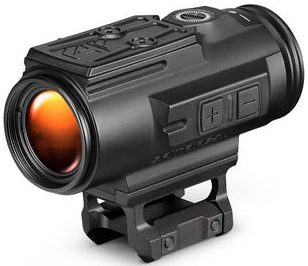
Quick Verdict: Five-power magnification makes the Vortex Spitfire HD Gen II 5x a great alternative for people who want a viable alternative to an LPVO. It's legitimately capable out to 500 yards or more. If you want to make it more versatile, there's a red dot mount built into the top of the tube. It's not for everyone, but shooters who like to go long will appreciate the extra power (25% more than an ACOG 4x32, for perspective).
Pros
- More magnification than most prism scopes
- Built-in red dot platform
- Unbeatable VIP Warranty
Cons
- Most red dots will require an adapter plate
- Takes more skill to use at close distances
Specs
- Magnification: 5x
- Objective Lens Diameter: 25 mm
- Reticle: AR-BDC4
- Illumination: 10 daylight, 2 night vision
- Battery: CR2032
- Weight: 11 oz
- Country of Origin: China
Why We Love It
This wouldn't be an optics discussion if we didn't throw Vortex into the mix, and my pick is the Vortex Spitfire HD Gen II 5x.

This prism scope offers a little more magnification than most, making it a great alternative for shooters in open terrain who want to extend their effective range.
One side effect of greater magnification is reduced field of view; in this case, it's 23.3 feet at 100 yards. That also means it's not ideal for close-quarters work. If you're setting up a home-defense gun, this isn't the optic for you (be patient, your optic is next).
Longer shots, on the other hand, are fair game.
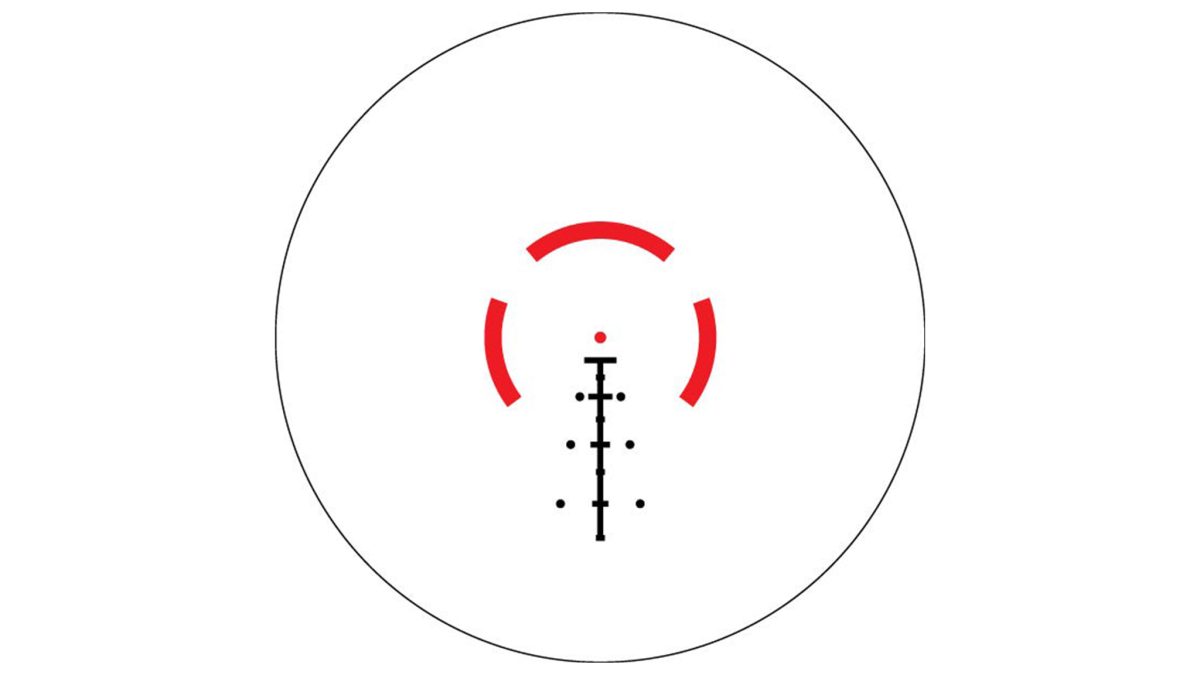
The AR-BDC4 reticle provides a segmented illuminated circle around a 1-MOA center dot. This provides a big visual reference for your eyes during fast, close-quarters shooting.
Below that, BDC subtensions provide elevation and 5-mile-per-hour wind/mover holds for 300, 400, 500, and 600 yards.
Large brightness buttons cycle through 10 daylight and two night vision illumination settings.

Like all Vortex optics, the Spitfire comes with the unbeatable, no-questions-asked, lifetime VIP Warranty.
If you’re looking for a mid-priced optic with a little extra magnification, the Vortex Spitfire HD Gen II 5x definitely delivers.
By the Numbers
| Shooting Performance | Clarity | Durability | Ease of Use | Value | Overall |
|---|---|---|---|---|---|
| 8/10 | 8/10 | 7/10 | 7/10 | 8/10 | 7.8/10 |
Want to know more? Read the full test rundown in our Vortex Spitfire HD Gen II 3x and 5x review!
Our Most Popular Posts


4. Swampfox Raider - Best Unmagnified
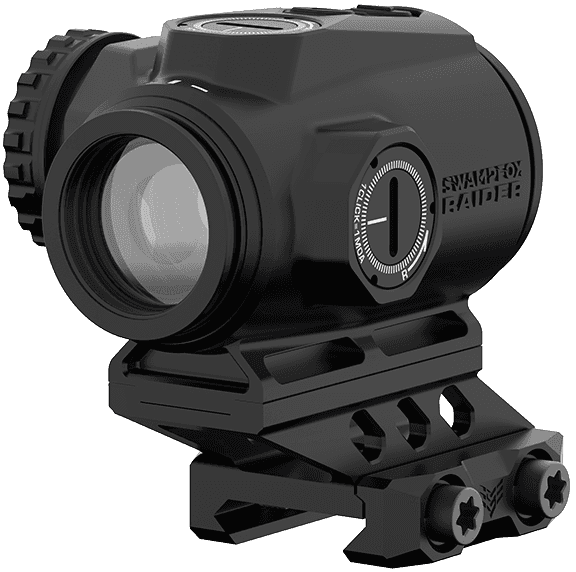
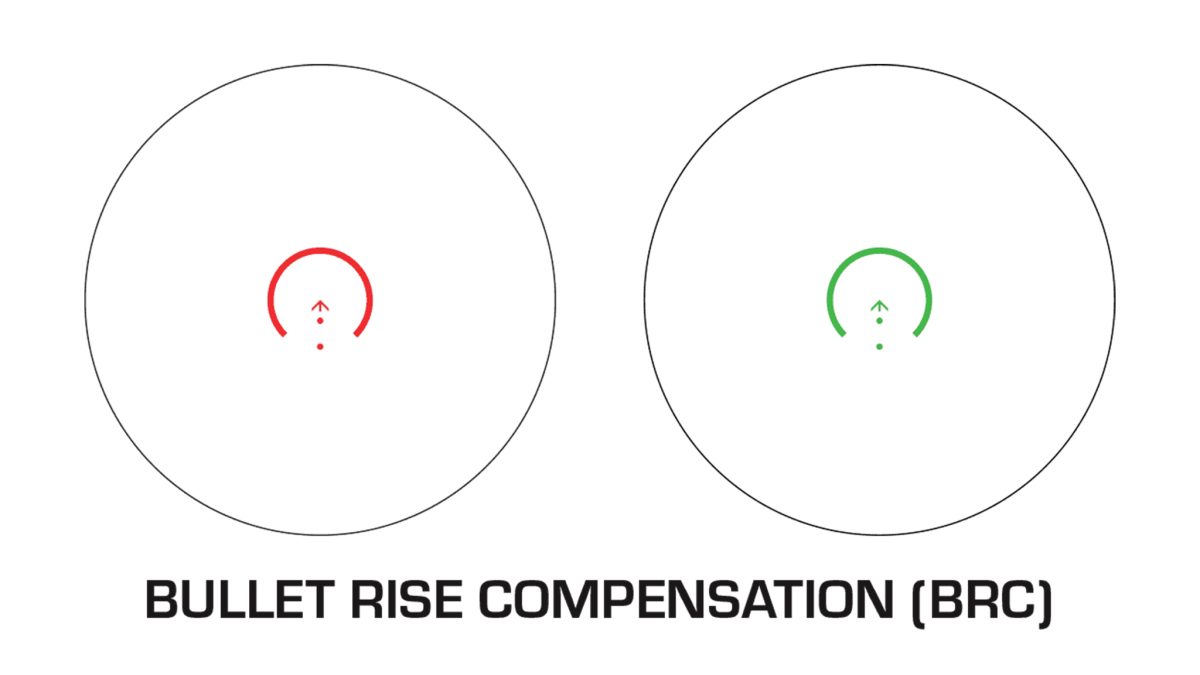
Quick Verdict: The Primary Arms SLx Cyclops Gen 2 is gone, but the Swampfox Raider is picking up where it left off. This unmagnified prism is the ideal optic for shooters with astigmatism, because it does everything you need a red dot to do, minus the blurry reticle. You can get it with a simple 6-MOA dot, but I love this CQB Bullet Rise Compensation reticle with a speed ring and multiple holds for manual offset at close range.
Pros
- Like a red dot, but better
- Illumination dial instead of buttons
- Advanced CQB reticle
Cons
- More expensive than a red dot
- Lack of magnification limits effective range
Specs
- Magnification: 1x
- Objective Lens Diameter: 20 mm
- Reticle: Bullet Rise Compensation
- Illumination: 8 daylight, 2 night vision
- Battery: CR2032
- Weight: 8 oz
- Country of Origin: China
Why We Love It
We've used enough Swampfox optics to convince us that the Swampfox Raider is one of the best affordable unmagnified options out there.
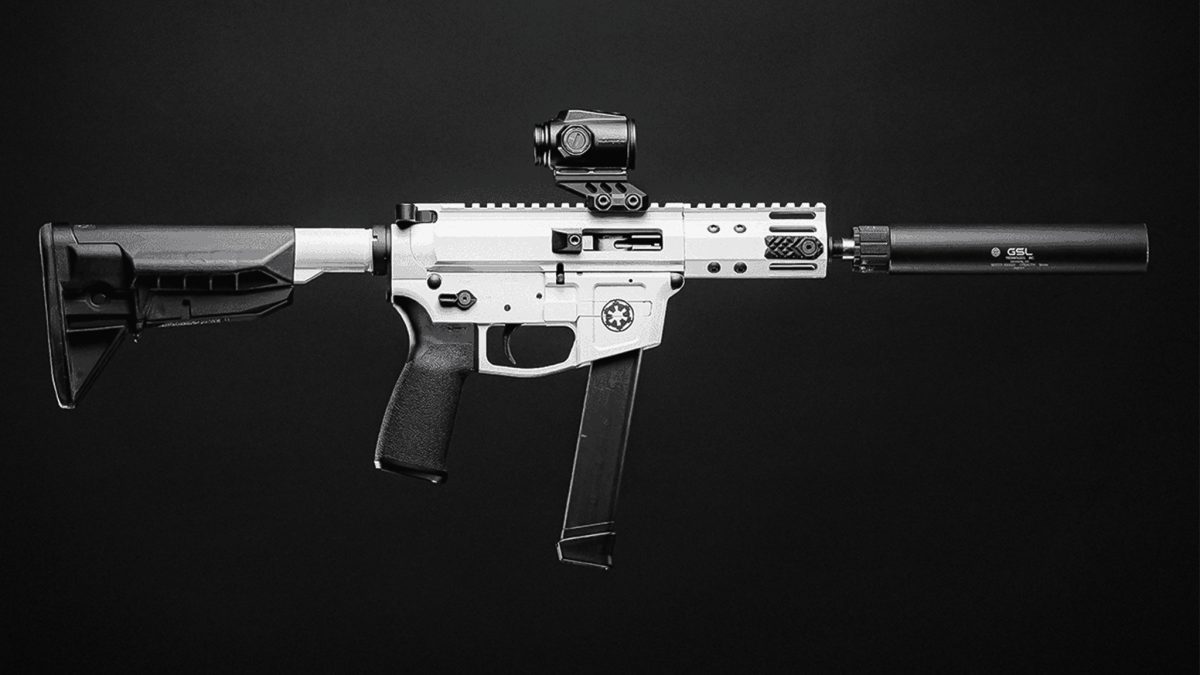
The lack of magnification means the Raider competes more directly with red dots than magnified prism scopes. It's the same size or smaller that a lot of red dots, which is a good start.
Unlike reflected light from an LED, the etched reticle in the raider won't wash out like ink on wet paper if you have astigmatism.
The CQB Bullet Rise Compensation reticles available in red or green. It provides a fine chevron aiming point for precision with a bold speed ring for rapid visual acquisition. When zeroed at 50 yards, the two additional dots correlate to 5- and 10-yard holds.
Other notable features include three included riser heights and shake-awake.
This is a fantastic option for any type of close-quarters shooting, and it's a perfect option for home-defense guns.
While it's more expensive than a lot of AR-15 red dots, the Raider is also more advanced. I think the etched reticle and additional holds are well worth the jump in price.
By the Numbers
| Shooting Performance | Clarity | Durability | Ease of Use | Value | Overall |
|---|---|---|---|---|---|
| 8/10 | 7/10 | 7/10 | 8/10 | 8/10 | 7.5/10 |
Who Should Buy a Prism Scope
Like any optic, prism scopes have drawbacks. They offer limited magnification, have tiny eye boxes that require a nose-to-charging-handle shooting position, and are often more expensive than a comparable red dot and a magnifier.
But they also have some important strengths. Here's why you should consider a prism scope if you value rock-solid dependability and rapid engagements at mixed distances.
Intermediate Magnification
Prism scopes are versatile optics; they're better for all-purpose carbines than something like a designated marksman-style build.

While 3- or 4-power magnification might rarely be ideal, it's usable in a wide range of settings.
If you train with both eyes open and master the Bindon aiming concept, a magnified prism scope can be very effective at CQB distances.
Likewise, understanding wind and elevation holds will allow you to be effective at further distanced than you might expect. Remember, Marines used to qualify with the four-power ACOG and a BDC reticle at 500 yards.
Astigmatism
If you have astigmatism, you know that shooting with a red dot can be frustrating. Instead of a clean dot, you see a vague bloom of light.

Prism scopes work great for people with astigmatism by design. Unlike a red dot, which creates a reticle by projecting light onto a piece of glass with an LED, prism scopes use an etched reticle that traps illumination into a crisp shape no matter how good your eyes are.
Another great trait is that an etched reticle is always visible. If you want to turn off illumination or your battery dies, you can still use the reticle; that's not possible with red dots.
Durability
Last but not least, prism scopes are famous for being almost indestructible.

Compared to something like an LPVO, prism scopes are incredibly simple with very few moving parts. We shot an ACOG with a shotgun and it survived. During the Global War on Terror, service members reported ACOGs surviving roadside bombs.
If you're looking for a real SHTF optic, nothing beats a prism scope.
FAQs
Final Thoughts
The bottom line is that, depending on your individual needs and ability to spend cash on glass, we’re positive you’ll find something here that works for you.

Prism scopes are fantastic optics for people with astigmatism and anyone who wants to build a rugged, do-it-all carbine.
What are your thoughts on prism scopes? Let us know in the comments. Want to cover all your bases before you buy? Check out our guide to the Best AR-15 Optics!
Meet the Experts

This article comes to you from Pew Pew Tactical contributor Travis Pike. Travis spent a lifetime shooting as a kid and later joined the United States Marine Corps, where he spent five years as an infantryman. His experience as a machinegunner, recreational and competitive shooter, hunter, and concealed carry instructor has given him unique insight into various weapon platforms. Additionally, Travis has thousands of articles to his name with a variety of publications, and has tested countless guns and firearm accessories.
Editing this article is Pew Pew Tactical Editor & Senior Review Analyst Scott Murdock. Like Travis, Scott served in the Marine Corps and has extensive experience with the ACOG, both stateside and overseas. As a gear tester, Scott has used objective data collection and personal expertise to evaluate prism scopes, red dots, rifle scopes, spotting scopes, binoculars, and rangefinders. He works closely with manufacturers to understand the technical aspects of optic production and the factors that affect performance and price.
Latest Updates
- November 2026: Removed the Primary Arms SLx Cyclops Gen 2, Swampfox Sabre, and Swampfox Trihawk. Added the Swampfox Raider and Trijicon ACOG. Updated supporting content.
- August 2025: Added comparison table.
- August 2024: Removed the Monstrum 2x Tactical and Primary Arms GLx 2x ACSS Gemini.