
Best AR-15 Ammo (5.56/.223): Range & Defense
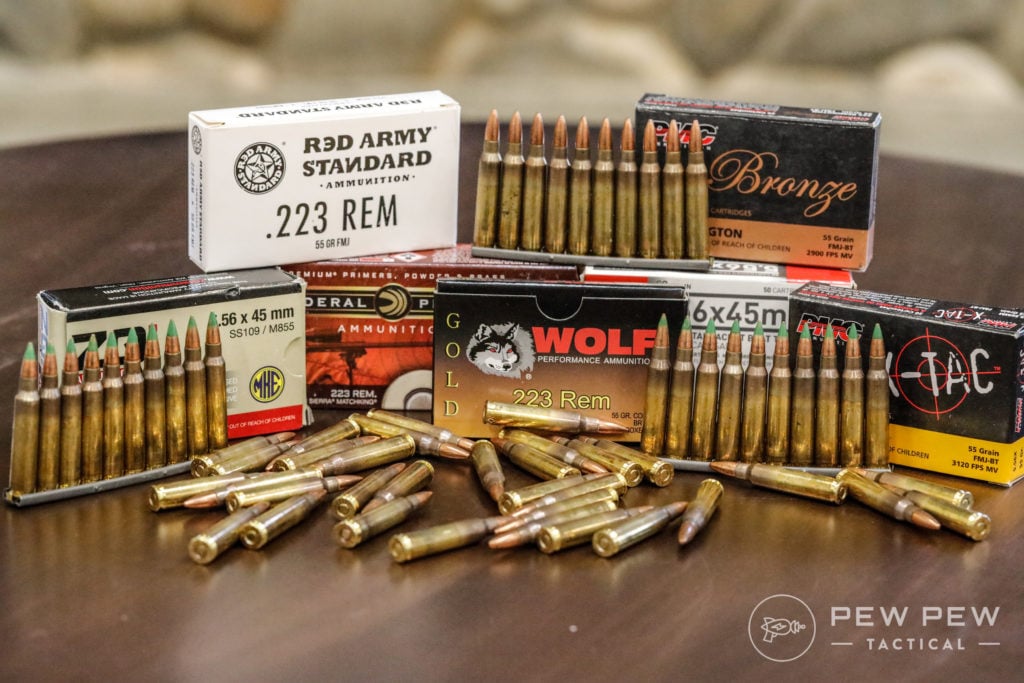
Find out the best ammo for your AR-15 for range plinking or home defense. We'll cover cheap FMJ rounds, Green Tip, and even hollow points for self-defense.
We review products independently. When you buy through links on our site, we may earn a commission to help support our testing. Learn more.
Whether you're burning through cheap FMJ at the range or loading up hollow points for home defense or hunting, picking the right 5.56/.223 AR-15 ammo matters.
We cover our top picks for best 5.56 ammo and best .223 ammo based on use case, price, availability, and even your barrel length and twist rate.
So without further ado, let's jump right in!
The Quick List
- Editor's Overall 5.56 Pick: AAC 5.56 NATO 55grJump to Details ↓
- M193 5.56 Pick: PMC X-TAC 55grJump to Details ↓
- Runner-Up M193 5.56: American Eagle XM193 55grJump to Details ↓
- Best Green Tip 5.56: Winchester M855 5.56 NATO 62grJump to Details ↓
- Runner-Up Green Tip: PMC X-TAC LAPJump to Details ↓
- Editor's Overall .223 Ammo: PMC Bronze .223 55 grJump to Details ↓
- Most Affordable .223: Tula .223 55grJump to Details ↓
- Precision .223: Federal Gold Match 69gr .223Jump to Details ↓
- Editor's Self-Defense Pick: Speer Gold Dot Duty .223 55 grJump to Details ↓
- Also Great Self-Defense: Hornady 55gr V-Max Varmint ExpressJump to Details ↓
5.56 and .223 Ammo in Stock
Table of Contents
Trending: Best AR-15s & ATF Drops NFA for Suppressors & SBRs
How We Chose
The Pew Pew Tactical team and writers have been shooting AR-15s for collective decades and have used almost every ammo available under the sun.
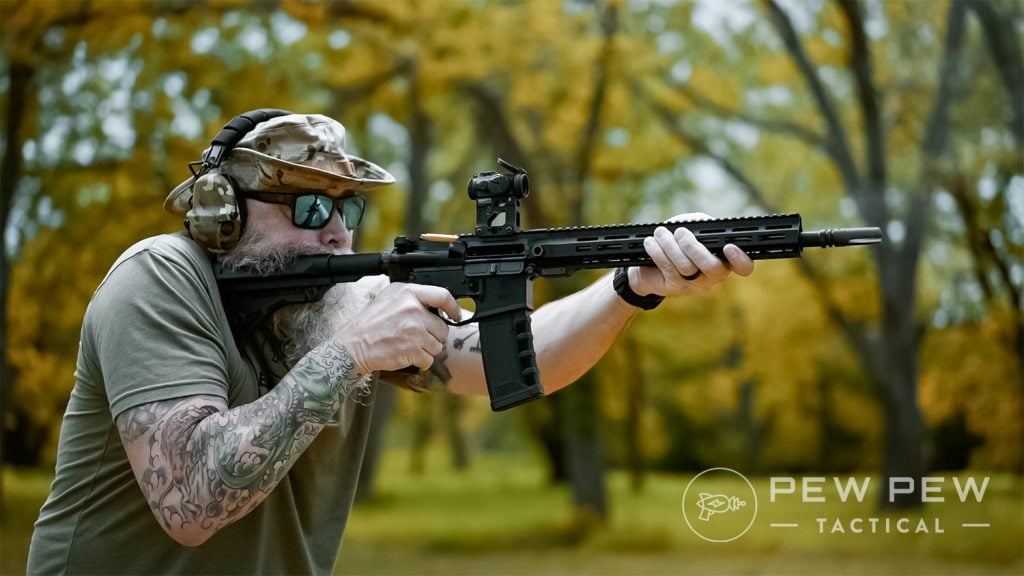
Our experience spans competition, law enforcement, military, and fun range plinking.
These are our favorite 5.56 and .223 ammo that we chose based on availability, cost, performance, and reliability.
Plus some choices for self-defense loads.
Best 5.56 Ammo
We're sticking to 55/62 grain bullets that are close to military specifications.
These are the rounds that we've shot tons of and never had a problem.
Editor's Overall 5.56 Pick - AAC

Pros
- Decent accuracy
- Clean burning
- Very reliable
- Several different bullet weights
Cons
- Stock still goes in and out
Specs
- Bullet Type: Full-Metal Jacket, Boat Tail
- Case: Brass
- Bullet Weight: 55gr
- Muzzle Velocity: 3175 fps
What we've been shooting the most at the Pew Pew Tactical ranch this year.
AAC has been stepping it up with production although it still seems to go in and out of stock on the site when demand is high.
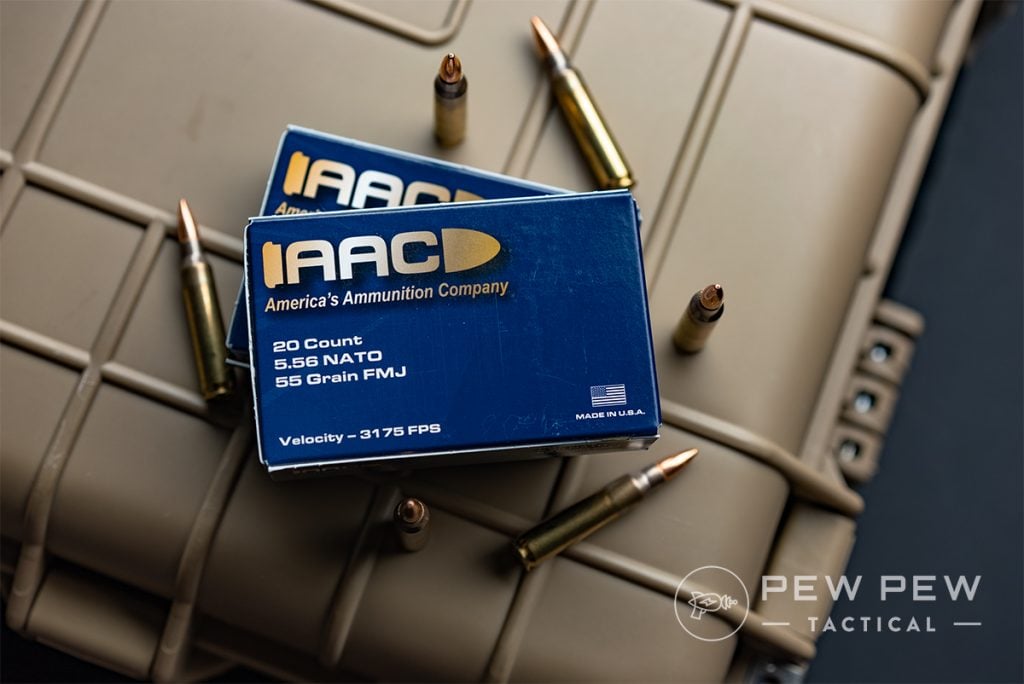
It shoots reliably with decent accuracy and doesn't leave our guns filthy. Plus it's usually the most affordable of all our picks.
There's also different bullet weight loads for AAC 5.56...check them out here.
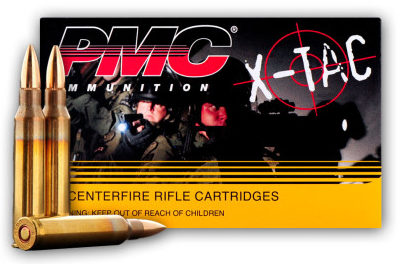
M193 5.56 Pick - PMC X-TAC 55gr
Pros
- Meets M193 velocity standards
- More affordable option
- Always went bang
Cons
- Sometimes out of stock
Specs
- Bullet Type: Full-Metal Jacket, Boat Tail
- Case: Brass
- Bullet Weight: 55gr
- Muzzle Velocity: 3270 fps
Our first choice for 5.56 ammo is PMC's X-TAC XM193 55gr because it's likely in stock, usually the more affordable option, and has always gone bang for us.
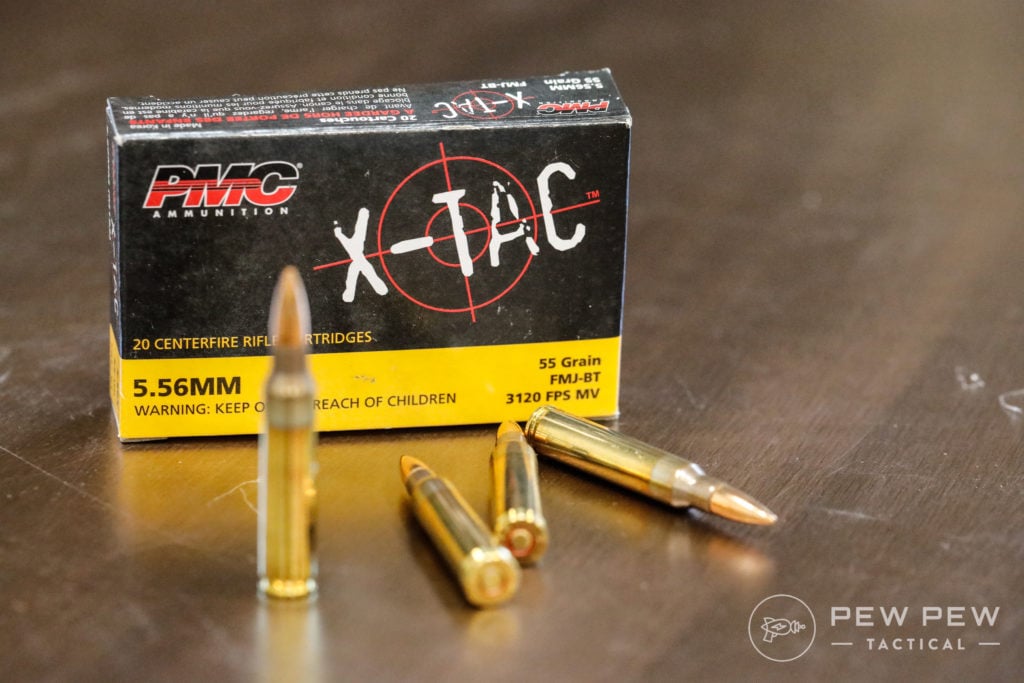
It's internal designation is 5.56X and it closely mimics the US military's M193 ammo specs without the price hike.
A great overall round for your AR-15 or other firearm.
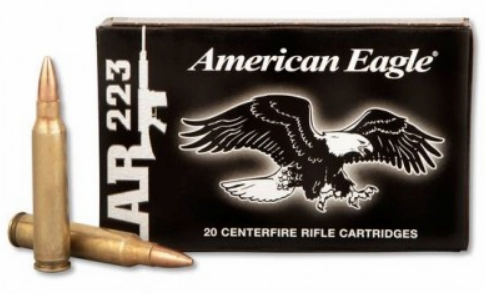
Runner-Up M193 5.56 - American Eagle XM193
Pros
- Another affordable option
- Very reliable
Cons
- Slightly slower at 3165 fps
Specs
- Bullet Type: Full-Metal Jacket, Boat Tail
- Case: Brass
- Bullet Weight: 55gr
- Muzzle Velocity: 3165 fps
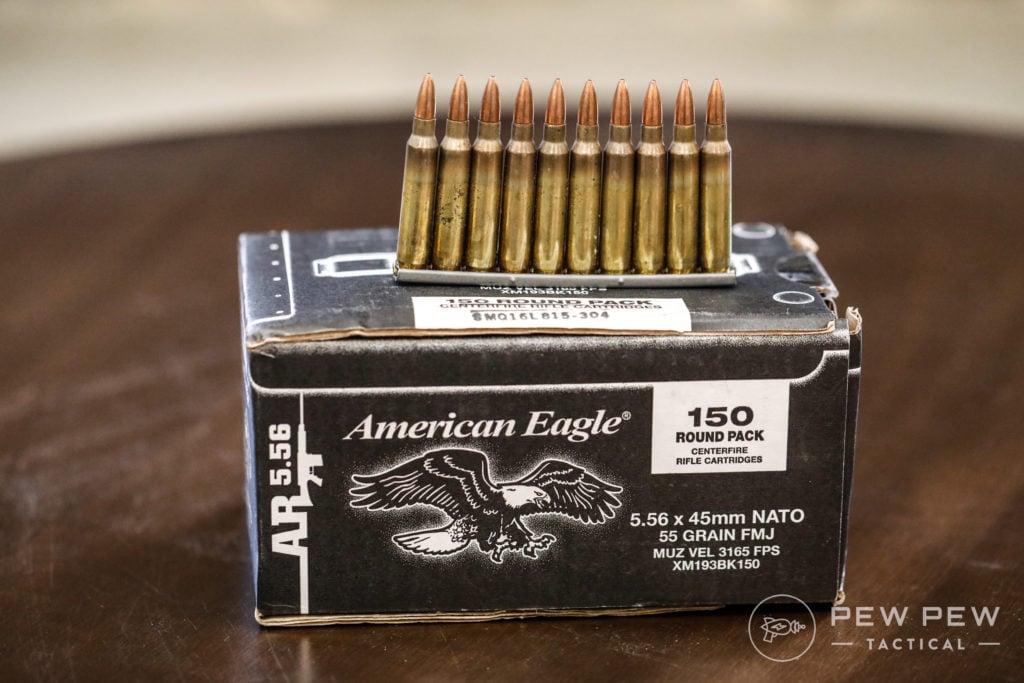
Our other favorite M193 pick is American Eagle's XM193 since it's never failed to go *boom.*
Some boxes will come in convenient 10-round stripper clips.
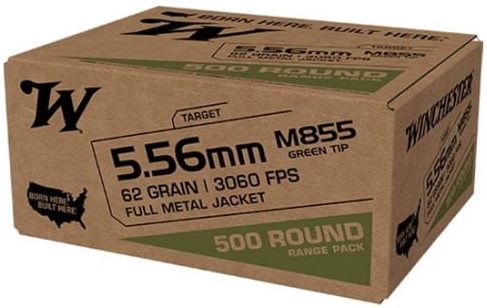
Best Green Tip 5.56 - Winchester 5.56 XM855
Pros
- Adheres to NATO M855 specs
- SS109 steel penetrator
- Very reliable
Cons
- Will destroy range steel targets
Specs
- Bullet Type: Steel Penetrator with Full-Metal Jacket
- Case: Brass
- Bullet Weight: 62gr
- Muzzle Velocity: 3100 fps
The M855 round designation has a steel penetrator tip (SS109) for better barrier penetration and has been a mainstay ammo of US troops.
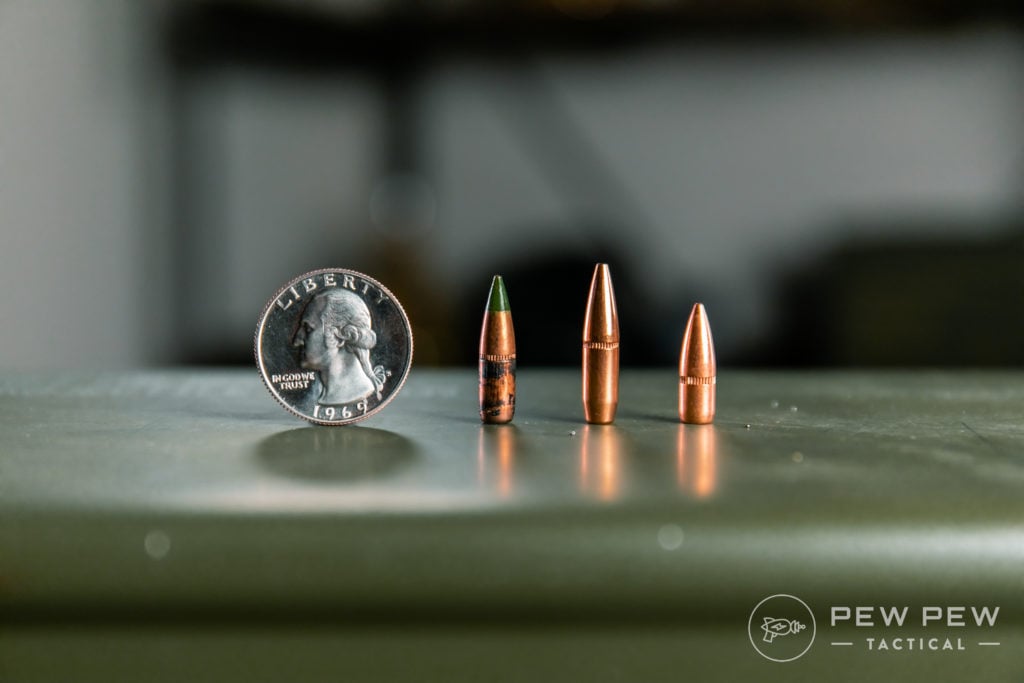
It's manufactured for civilians but strictly adheres to NATO specs.
And it's easily discernible with its "green tip."
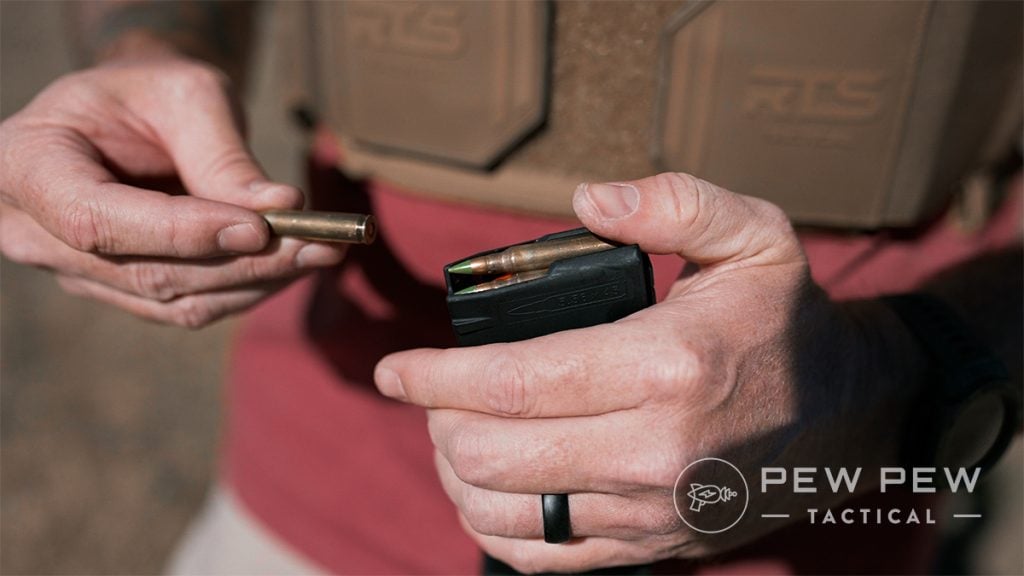
Note that many ranges will not allow M855 because the steel penetrators will destroy their metal targets or over-penetrate their barricades...so make sure before you load up!
What do you rate Winchester's M855?
Readers’ Ratings
4.99/5 (2908 Votes)
Your Rating
The Best Gun Deals, Coupons and Finds
Subscribe to Pew Pew Tactical's sales and deals email.
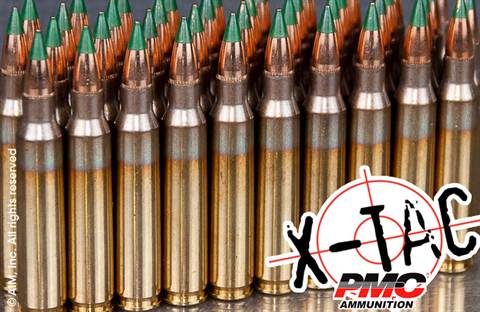
Runner-Up Green Tip - PMC X-TAC LAP
Pros
- More affordable M855 variant
- SS109 steel penetrator
- Good brass for reloading
Cons
- Will destroy range steel targets
Specs
- Bullet Type: Steel Penetrator with Full-Metal Jacket
- Case: Brass
- Bullet Weight: 62gr
- Muzzle Velocity: 3100 fps
PMC's X-TAC M855 variant LAP is our go-to for more affordable green tip that still always goes bang.
The brass is also quite good for reloading if that's your thing.
Best .223 Remington Ammo
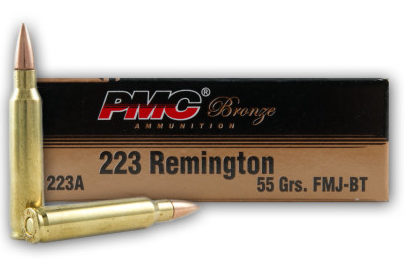
Editor's Overall .223 Ammo - PMC Bronze
Pros
- Great for range shooting
- Softer shooting load
- Brass is great for reloading
Cons
Specs
- Bullet Type: Full-Metal Jacket
- Case: Brass
- Bullet Weight: 55gr
- Muzzle Velocity: 3200 fps
If your barrel is .223 or if you want to shoot some slightly lighter loads in your 5.56 barrel.
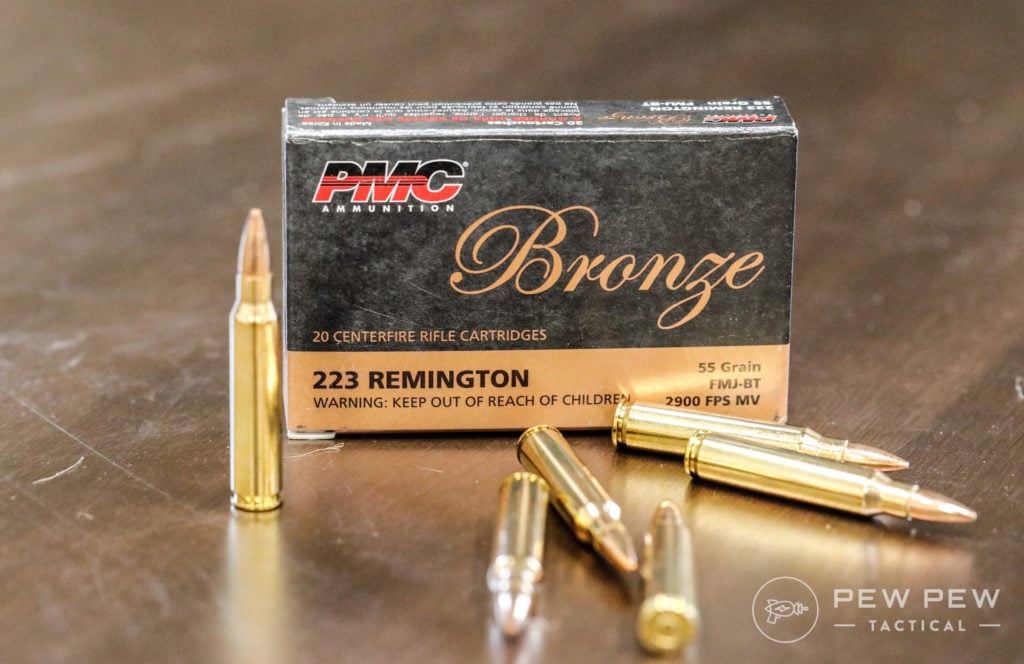
My personal favorite is PMC Bronze since it's affordable, and the brass is great for reloading.
Plus...it's on the low end of felt recoil so I love it for competition.
Most Affordable .223 - Tula Steel Case
Pros
- Usually the most affordable
Cons
- Steel case
- Bimetal bullets
Specs
- Bullet Type: Bi-metal
- Case: Steel
- Bullet Weight: 55gr
- Muzzle Velocity: 2953 fps
We don't readily use these next suggestions in our ARs, but if you're really trying to save money, you can opt for Russian steel or coated steel cartridges.
Start off with a small batch first since some AR-15s don't like steel-cased ammo. They can offer pretty good savings sometimes but are dirtier shooting and less accurate...but probably great only for the range.
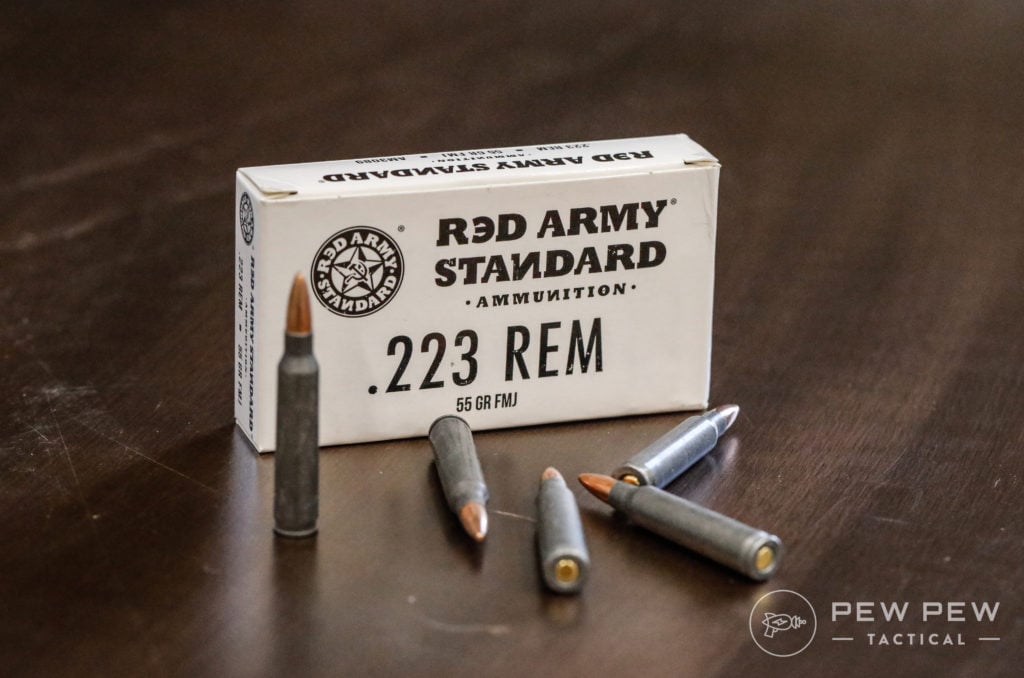
Since the sanctions against Russia and future ammo imports from there, the cost of steel-cased ammo is fluctuating and is generally rising. If you can find brass-case ammo for the same price, we always recommend taking that route.
Also, keep in mind that you can't save these to reload later, and you need to shoot at a range that allows both steel casings and bi-metal bullets.
Precision .223 - Federal Gold Match 69gr
Pros
- Most accurate load
Cons
- Expensive
Specs
- Bullet Type: Sierra MatchKing Hollow-Point Boat Tail
- Case: Brass
- Bullet Weight: 69 gr
- Muzzle Velocity: 2950 fps
Our favorite when we do our accuracy testing.
And the "gold" standard for accurate factory match ammo.
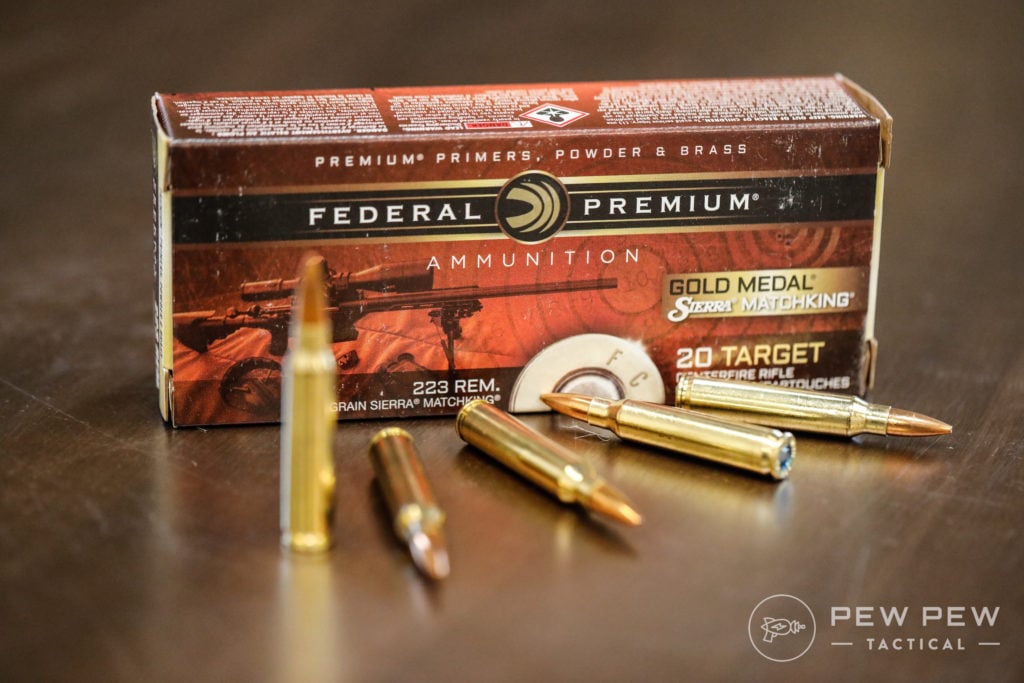
If you want to find out the accuracy of your rifle/barrel or really stretch out your rig...try out Federal's Gold Medal.
Best Self-Defense Ammo
For self-defense, you want the bullet to put all its energy into the bad guy by breaking apart.
That means FMJ and the penetrator rounds are usually not the best choices.
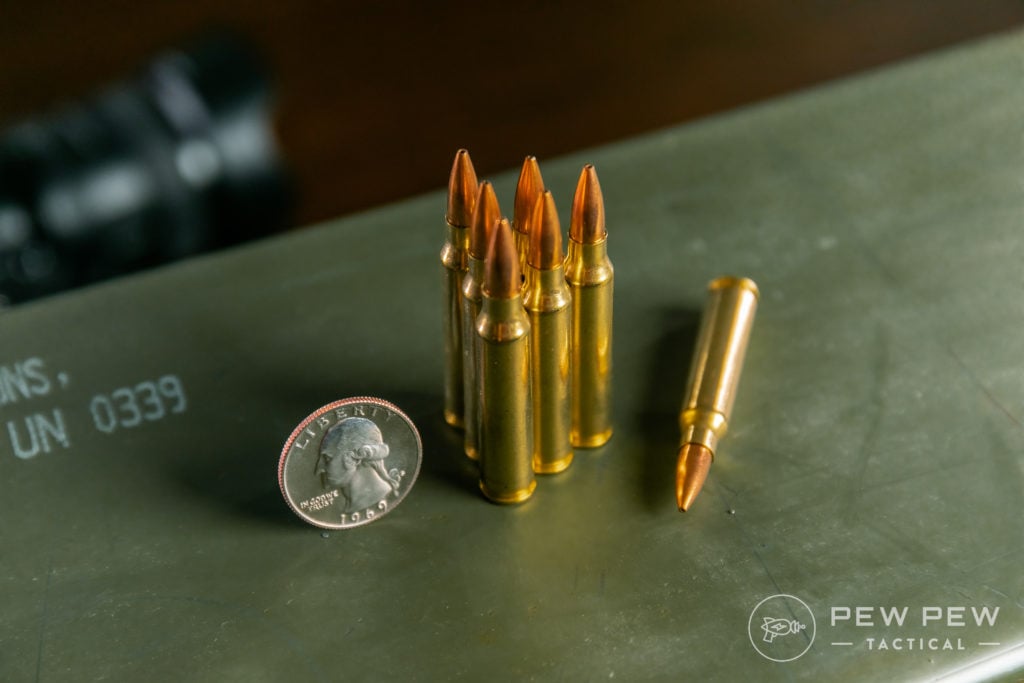
I recommend going with specific use self-defense ammo that is hollow/soft point and used by law enforcement.
Our Most Popular Posts


Editor's Self-Defense Pick - Speer Gold Dot Duty 55 gr
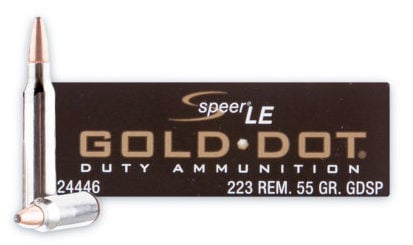
Pros
- Used by lots of law enforcement
- Nickel plated to resist corrosion
- Soft point
Cons
- Expensive
Specs
- Bullet Type: Soft Point
- Case: Nickel Plated Brass
- Bullet Weight: 55 gr
- Muzzle Velocity: 3220 fps
My go-to brand for rifle self-defense rounds...Gold Dot.
Used by tons of law enforcement agencies and what I load into my home defense AR-15s.
The nickel plated brass casing doesn't tarnish from finger oils and feeds slightly better in magazines.
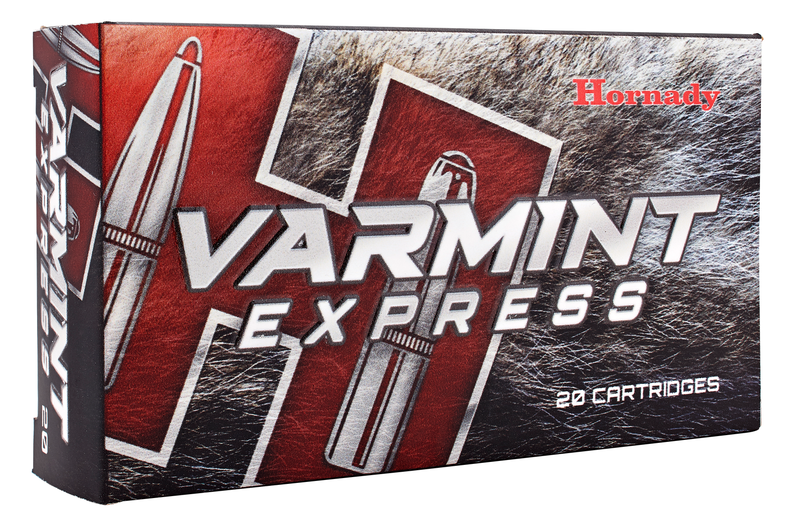
Also Great Self-Defense - Hornady 55gr V-Max Varmint Express
Pros
- More affordable defensive load
Cons
Specs
- Bullet Type: Polymer V-MAX
- Case: Brass
- Bullet Weight: 55 gr
- Muzzle Velocity: 3240 fps
Typically people will lean toward Hornady's Critical Defense lineup with the 55gr FTX bullet, but these can be very difficult to find in stock.
However, the ultra-popular V-Max round uses the same bullet construction, just with a pointed ballistic polymer tip instead of a flat one.
Both rounds deliver extremely similar (and effective) results.
AR-15 Calibers: 5.56 vs .223
Your average AR-15 comes in two popular calibers, the 5.56x45mm NATO and the .223 Remington.
You can double-check what it is by looking at your model specs or physically on your barrel, which should be stamped with the caliber and barrel twist rate.
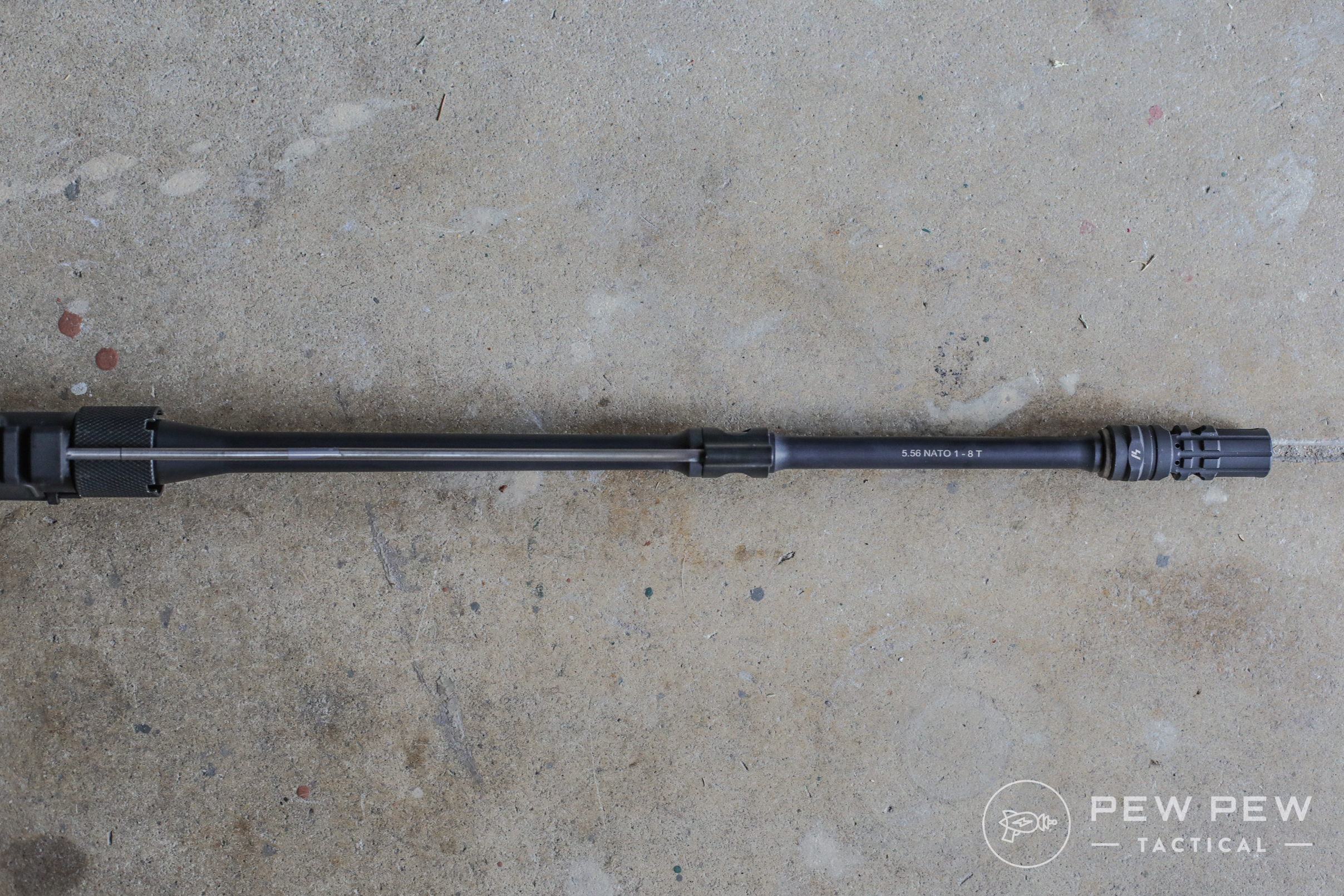
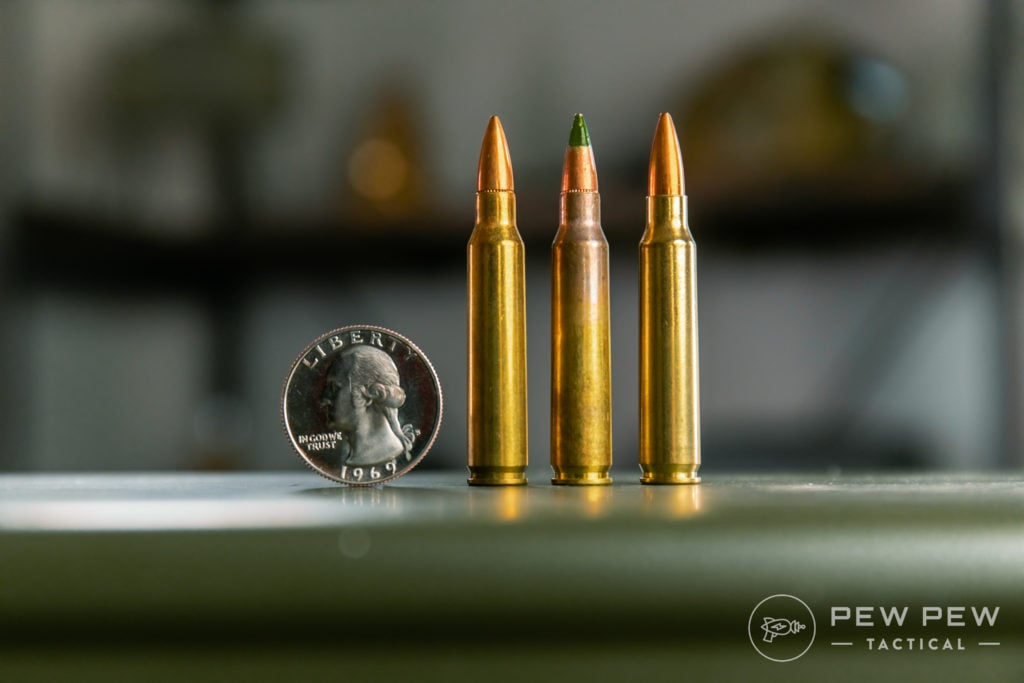
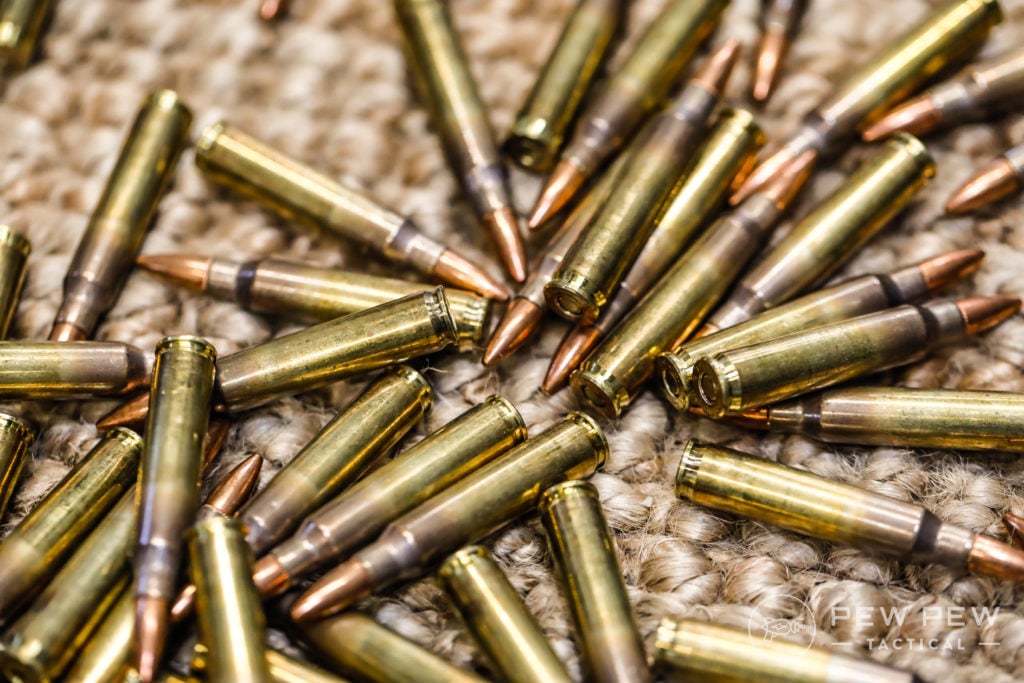
The two cartridges are physically identical but the 5.56 may be loaded to higher pressures than .223 ammunition.
The .223 is a civilian round and has SAAMI specs (an organization that sets standards for pressure and dimensions) while the 5.56 is a military round that has its own specifications that might require higher pressure for higher velocity.
Therefore, it's best to follow the advice:
- 5.56 chamber: OK to fire both 5.56 and .223
- .223 Wylde chamber: OK to fire both 5.56 and .223
- .223 Rem chamber: OK to fire only .223
Please note that .223 Rem and .223 Wylde are not the same things. One (Wylde) is perfectly safe to fire either 5.56 or .223; however, a .223 Rem chamber is not safe to fire 5.56 NATO.
Your barrel or rifle probably won't instantly blow up from shooting a 5.56 in a .223, but why risk it?
Combined with the variance in the machining of the barrel and ammo production standards, it's best to use the proper ammunition.
AR-15 Barrel Twist
Your barrel stamp should indicate the barrel twist after the caliber.
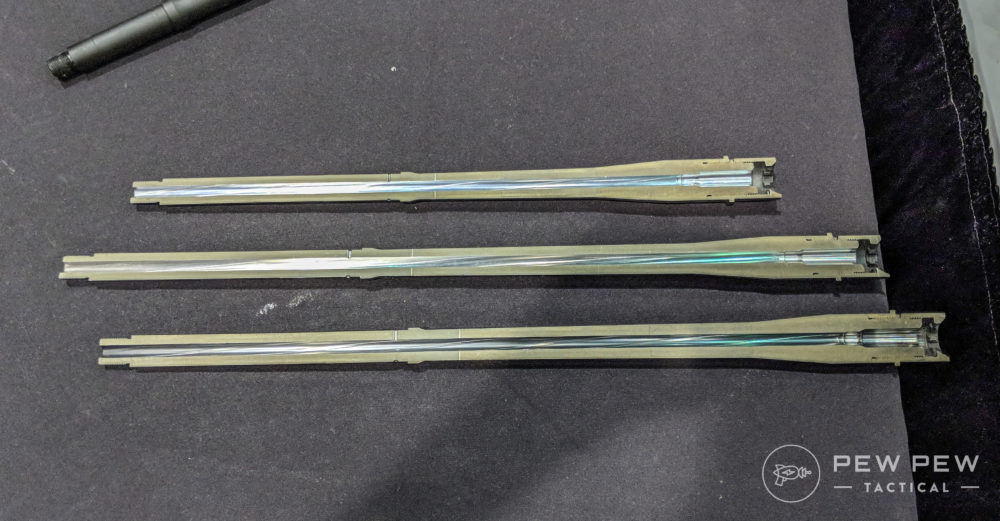
You should see a ratio of 1:7 all the way up to 1:12, it means that the barrel will spin the bullet one revolution every X inches. Most barrels will be from 1:7 to 1:9 twist, with the most popular being 1:9.
Take a look at the chart below to see the ideal twist rate for your barrel.
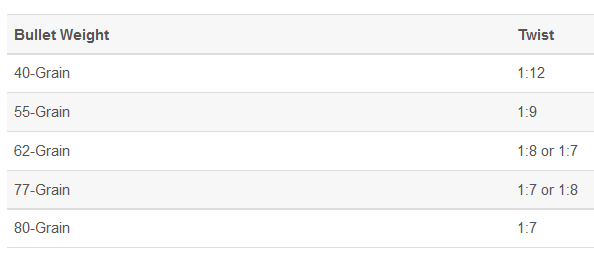
The heavier grain bullets are usually reserved for the military and their tracer rounds.
With normal cartridges, you're most likely to see 55-grain and 62-grain bullets. These are fine to shoot in 1:7 to 1:9 barrels, and you probably won't even notice a difference up to 300 yards.
Bullet Types
You'll see two big families of bullet types, the full metal jackets (FMJ) and the hollowpoint/soft-points (HP/SP).
The FMJs are great for plinking, while HP/SP are more for home defense or long-range applications. FMJ is also sometimes called Ball ammo.
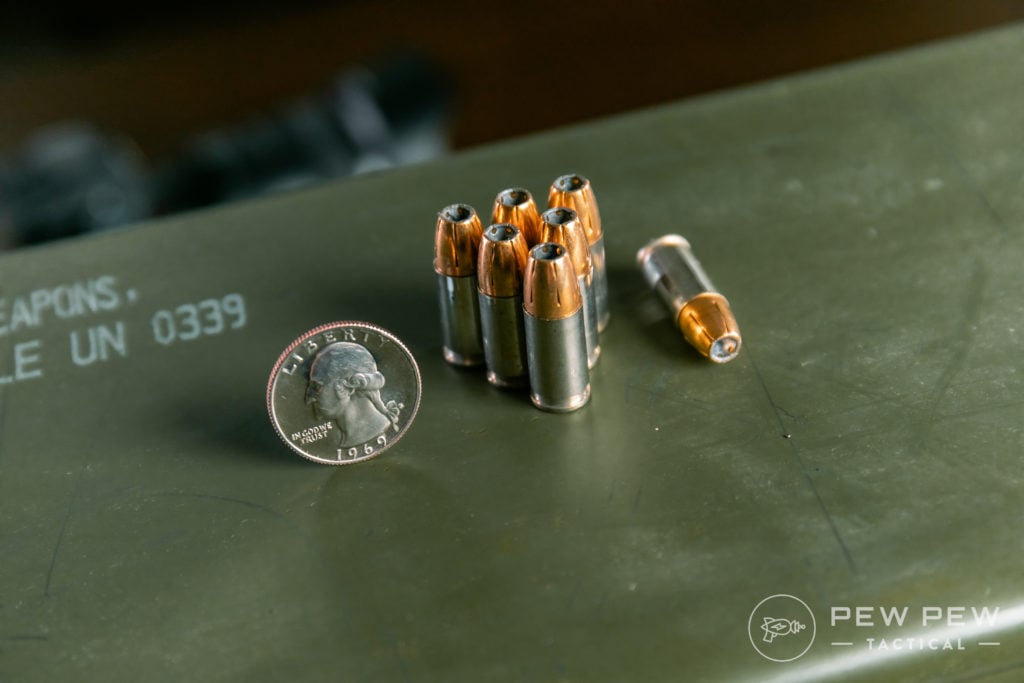
Don't you love multiple names for things...
Other confusing acronyms you might see include (BT), which means boat-tail and indicate the back of the bullet has a more aerodynamic shape than simply cutting off straight.
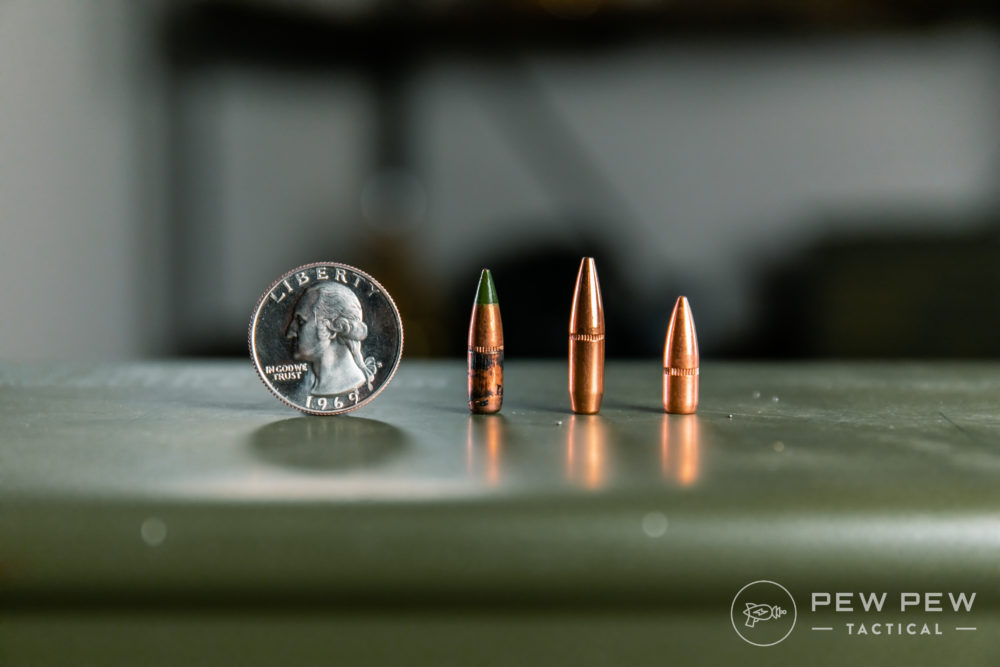
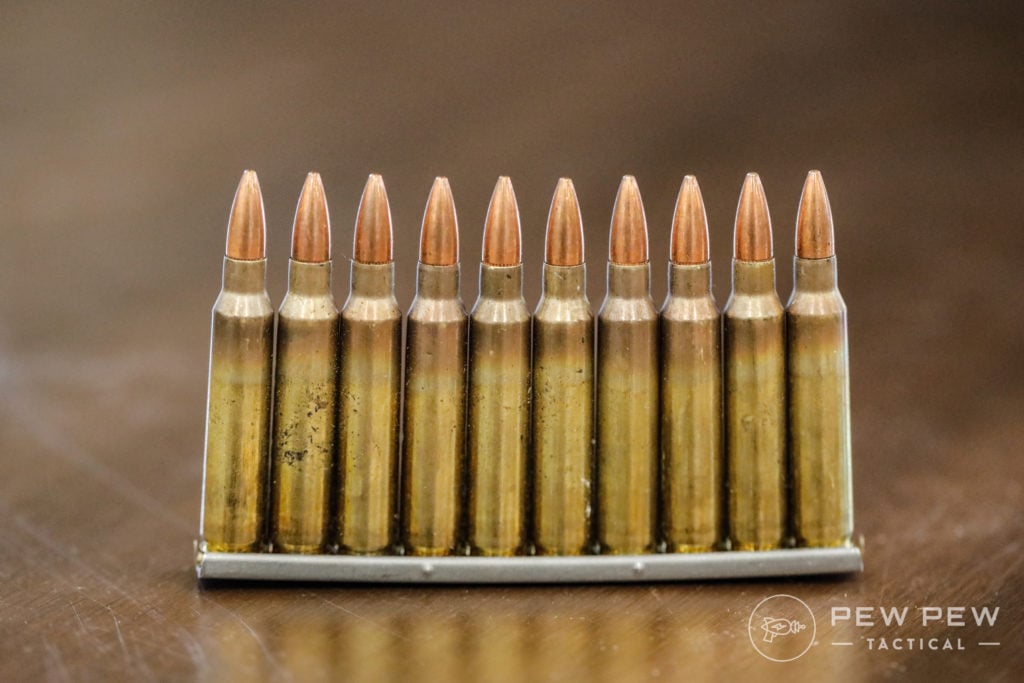
Lastly, if you're looking at military 5.56 rounds, you'll see M193 and M855. The 55-grain M193 is the standard FMJ of the military, while the 62-grain M855 is the "green tip" penetrator round that has a steel rod inside.
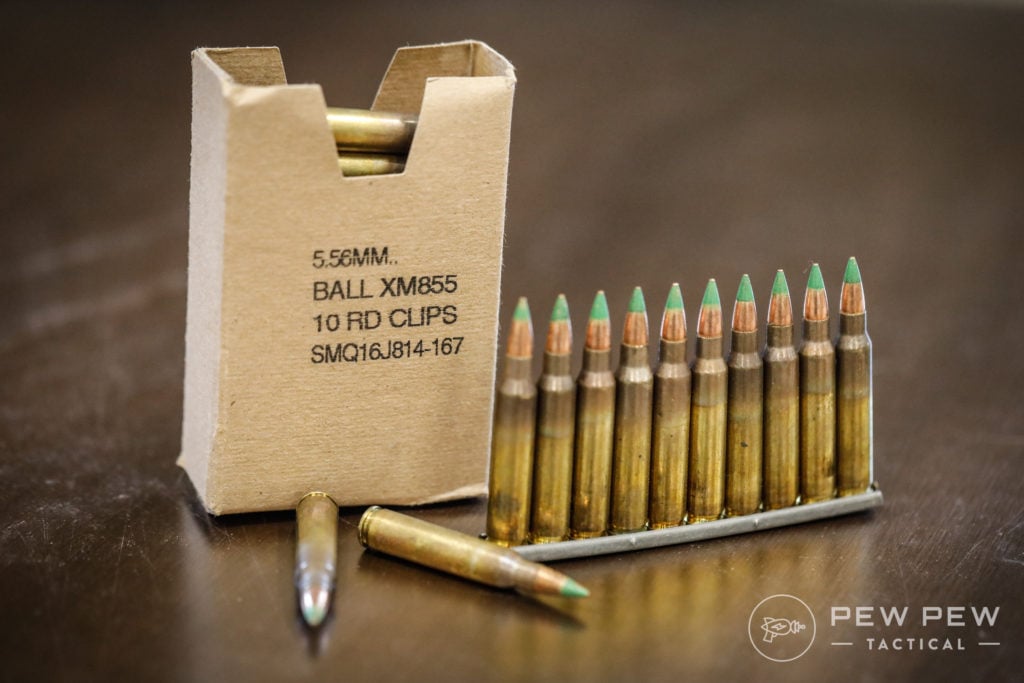
Things to keep in mind for M193 vs M855:
- Pricing is similar
- M855 is better at penetration (duh?)
- Some ranges do not allow steel core ammo like the M855
- M193 is better at soft targets under 100 yards
- More info about the differences
- Most of the time, you'll see XM instead of just M... which means it didn't quite meet military specifications but still meets commercial specs. Learn more here.
Final Thoughts
So there you have it, our recommendations for the best AR-15 ammo in both .223 and 5.56.
Let us know what you went with and how it runs in your AR.
Want more AR-15 guides...check them all out here. Looking for a new AR? Check out our huge Best AR-15s Guide.
Latest Updates
October 2023: Cleaned up list, added additional experience/data, and updated latest ammo situation due to the Israeli war situation.