

Osight SE RMSc Pros & Cons
Pros
- Enclosed emitter helps keep debris out of the emitter
- Ability to cycle between multiple reticles is nice
- Removable side-loaded battery instead of a rechargeable one
- Common footprint
- Priced below just about every other enclosed emitter optic
Cons
- Did not hold up to submerged water testing
- Did not hold up to extreme heat testing
The Bottom Line
The Osight SE RMSc boasts numerous great features, a low price point, and the capability to be a budget-friendly optic, but it's not yet ready for prime time. However, if you're looking for a light-use optic for competition, plinking, or recreational shooting, then the Osight SE RMSc is up to the task.
When the Olight Osight optics initially hit the market, I wasn’t interested simply due to the silly charging hood. I just want a sight where I can swap out a standard battery like everything else.
So when Olight released Osight SE RMSc, it caught my attention.
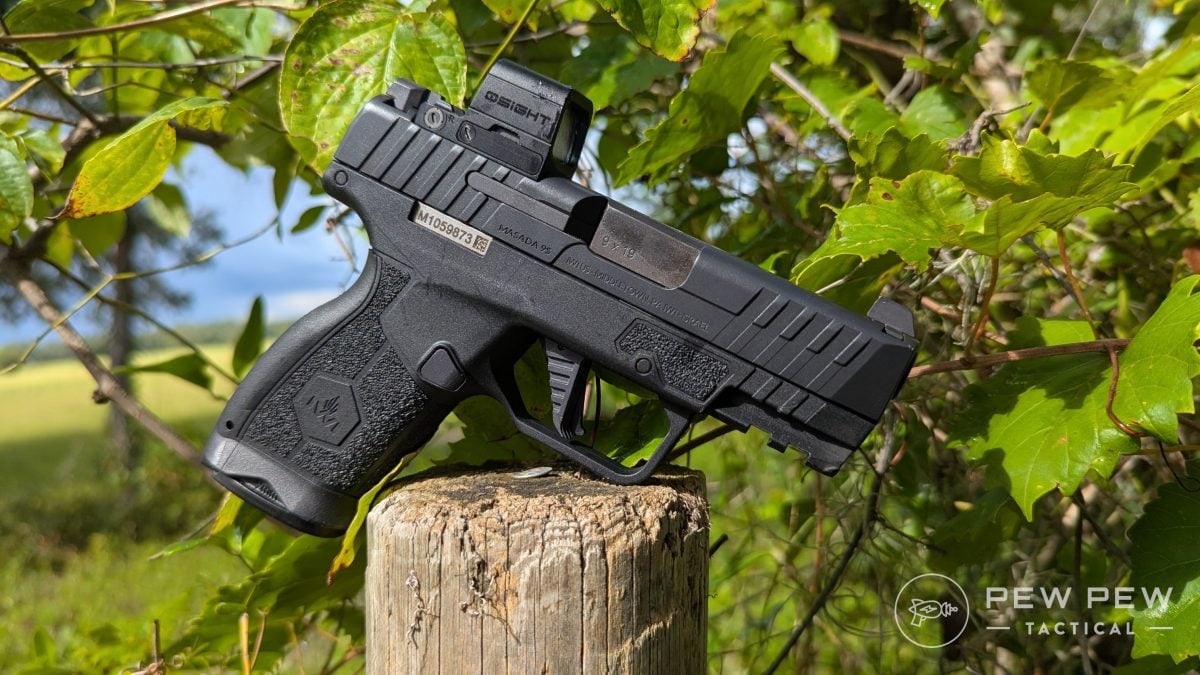
Instead of their old open-back, rechargeable design, the SE RMSc is an enclosed emitter optic that fits an RMSc footprint and uses a removable battery. Now you’ve got an optic to compete with the Holosun EPS, but at a much lower price point.
But features aside, I had to approach the Osight SE RMSc with caution. I want to give it a fair review, but in the back of my mind, I know that’s a tough task.
Personally, I don’t like Olights; so when it was time to review the Osigh SE, I had a bit of bias.
On top of that, the gun community has this need to shill hunt. If you give something a good review, everyone says you might be a shill, and the company is paying you to say positive things.
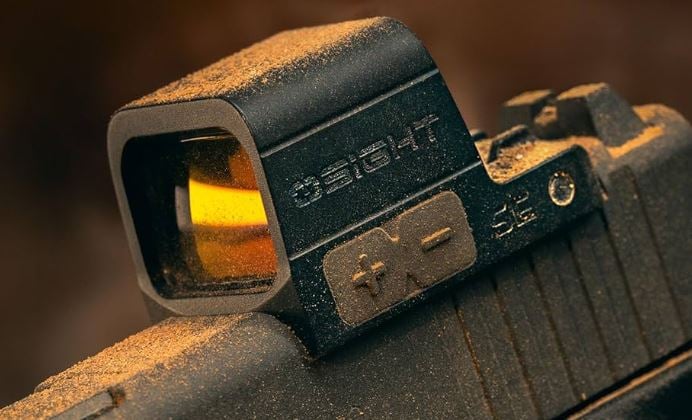
So, to combat these claims. I took the Osight SE RMSc to its limits to figure out just how much abuse the optic can take.
No corners were cut, and no mishaps were covered up here; just real-world hard testing. So keep reading to see how it held up!
Table of Contents
Loading…

Prices accurate at time of writing
Prices accurate at time of writing
-
25% off all OAKLEY products - OAKLEY25
Copied! Visit Merchant
Specs and Features
Specs
- Reticle: 2 MOA dot & 32 MOA circle
- Length: 1.59″
- Width: 0.97″
- Height: 0.98″
- Weight: 0.97 oz.
- Battery Life: 75,000 hours (brightness 3, dot only)
- Battery Type: CR1620
- Brightness Settings: 8 daylight, 2 night vision
- Footprint: Shield RMSc
Features
- Fully enclosed emitter
- Aspherical lens
- Side-loading battery
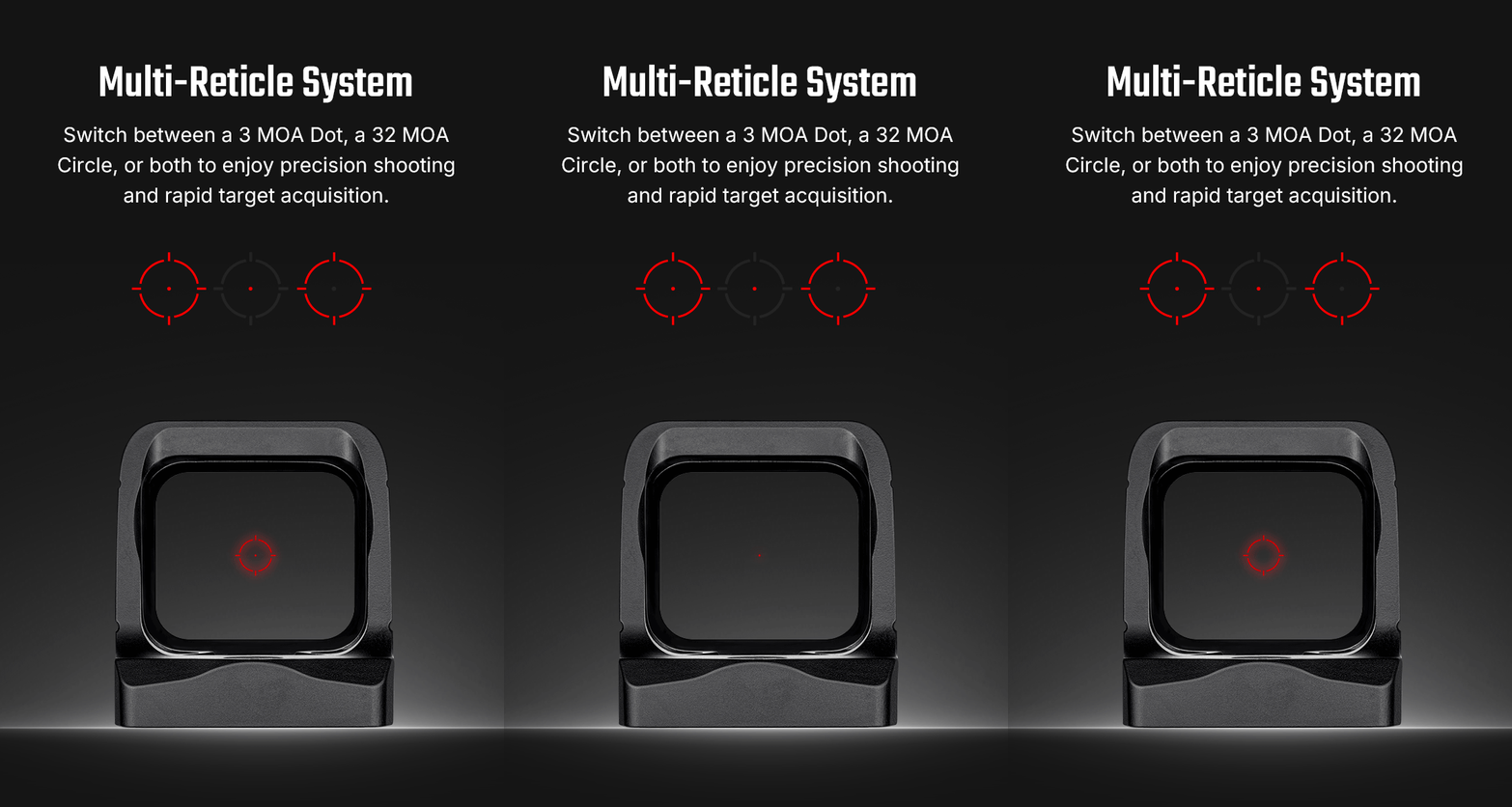
- User selectable between three different reticles (circle dot, dot-only, circle only)
- Shake-awake with 3-minute auto-shutoff
- Fully transferable lifetime warranty
Background
Olight originally rose to prominence by offering affordable weapon-mounted lights. In early 2024, they announced their foray into the world of pistol optics.
Their first model Osight features a non-replaceable internal battery that recharges via a special charging hood that sits over the sight when not in use.
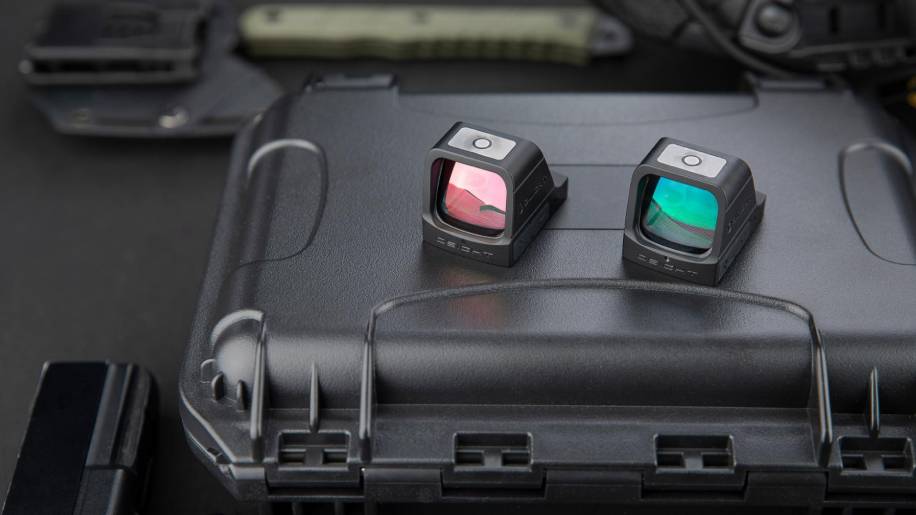
Naturally, people want to be able to replace the battery in their sights at any time, and Olight responded with the release of the Olight SE in June of 2025.
The Osight SE retains all the main features of the original Osight, but uses a standard layout with a removable battery. MSRP for the Osight SE is $199, but the street price hovers anywhere from $125 to full price.
Fit & Feel
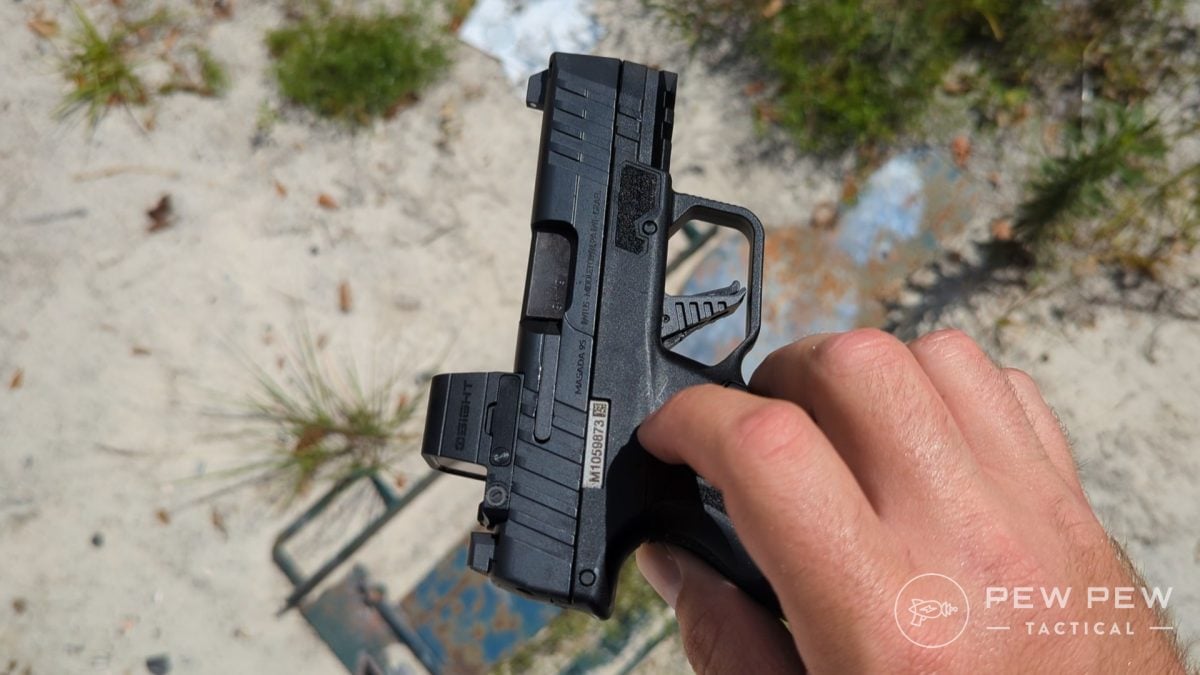
Externally, the Osight looks solid. It’s all black with rubberized buttons. Mounting was simple, and the torque specs were provided.
The Osight has an aspherical lens that’s set at an angle in the optic. This helps prevent the lens from breaking.

You get a nice, clear sight picture, and the glass looks good. The notch filter isn’t heavy, which means there won’t be any massive blue tint over everything.
Surprisingly, the reticle is fairly crisp. The 2 MOA dot is a little starbursty, but fine overall. The 32 MOA circle is very clean with no starbursting or pixellation.
The buttons are tactile but require a purposeful press. It is highly unlikely you will accidentally press the buttons without meaning to, even when holstered.
The battery compartment is secured via a screw, and battery swaps are quick and simple. From the outside looking in, the Osight SE looks fantastic.
Shooting with the Osight SE: Accuracy & Reliability Analysis
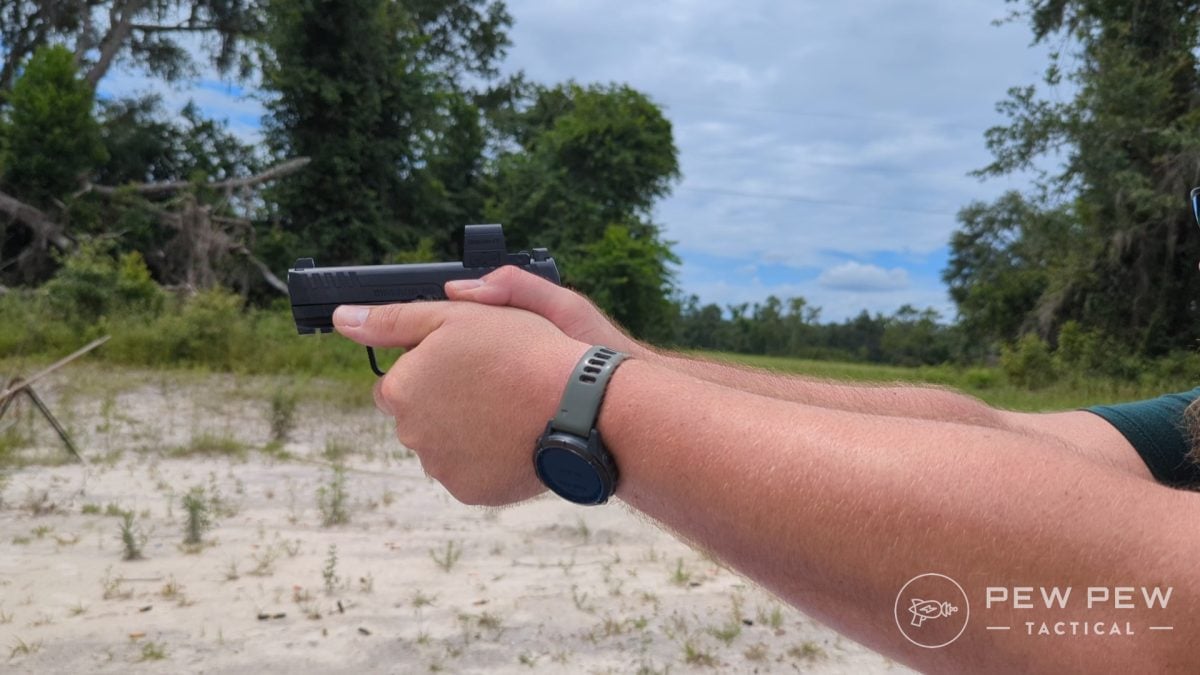
I mounted the Osight SE on an IWI Masada Slim, which has become one of my favorite guns and is a great candidate for an optic like this.
It took no time to mount the optic and zeroed very quickly. I zeroed at 15 yards and took it out to 25 and then 50 yards to confirm the zero. No problems noted.

The optic made hitting an IPSC-sized piece of steel at 50 yards fairly easy.
The clear view through the lens, the lack of an aggressive notch filter, and the crisp little dot all made hitting accurate shots pretty easy.
After confirming zero at these longer ranges, I moved up to do some close-range, rapid-fire shooting.
I fired several Bill Drills, which is six rounds at 7 yards into an IPSC-sized A-zone. My goal was to watch the dot and note its movement. I want to see a blur, which would indicate a decent refresh rate without any real lag.
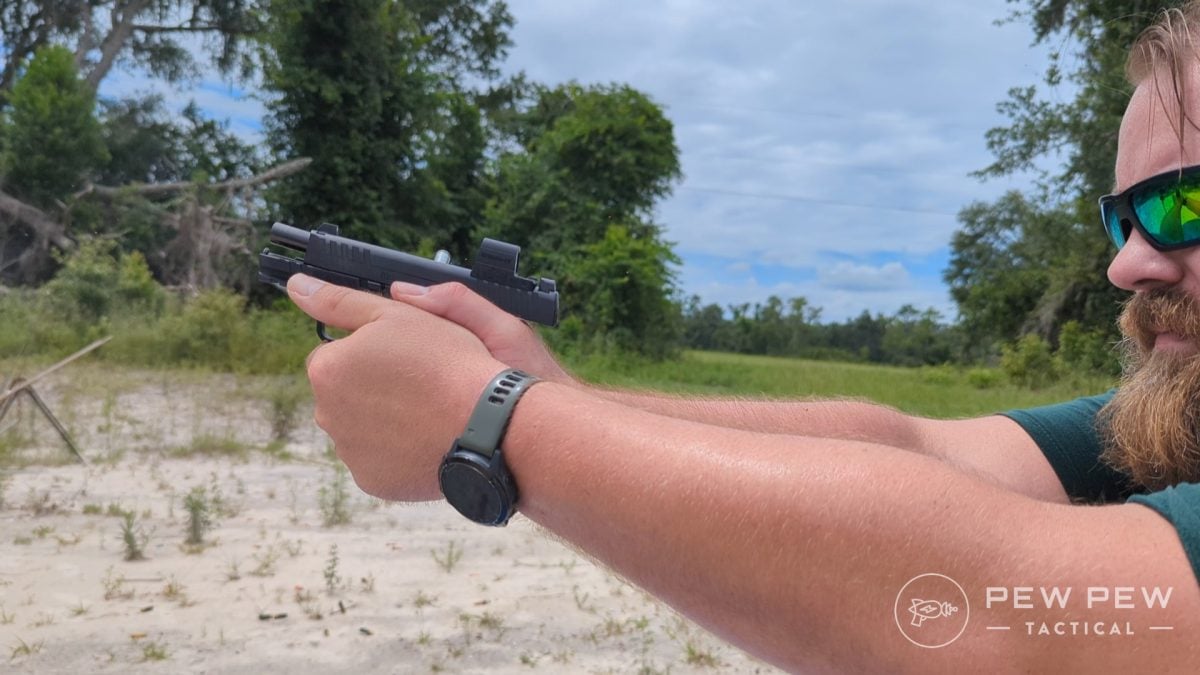
Annnd bingo! The dot was a bright red blur, going up and slightly to the right. After every shot, it returned right back to the original point of aim. I kept shooting and looking for any noticeable problems, but none were evident.
Drop Testing
Range session two is where I began some drop testing of the optic. From chest height, I dropped the gun and optic at different angles on soft range ground. After a few drops, I shot a group at 15 yards, with absolutely no zero shift.
I repeated the drop test, but this time dropping the gun and optic on an AR500 steel target from chest height at multiple angles. After several more drops, I shot a few groups at 15 yards, and again, there was no loss of zero.
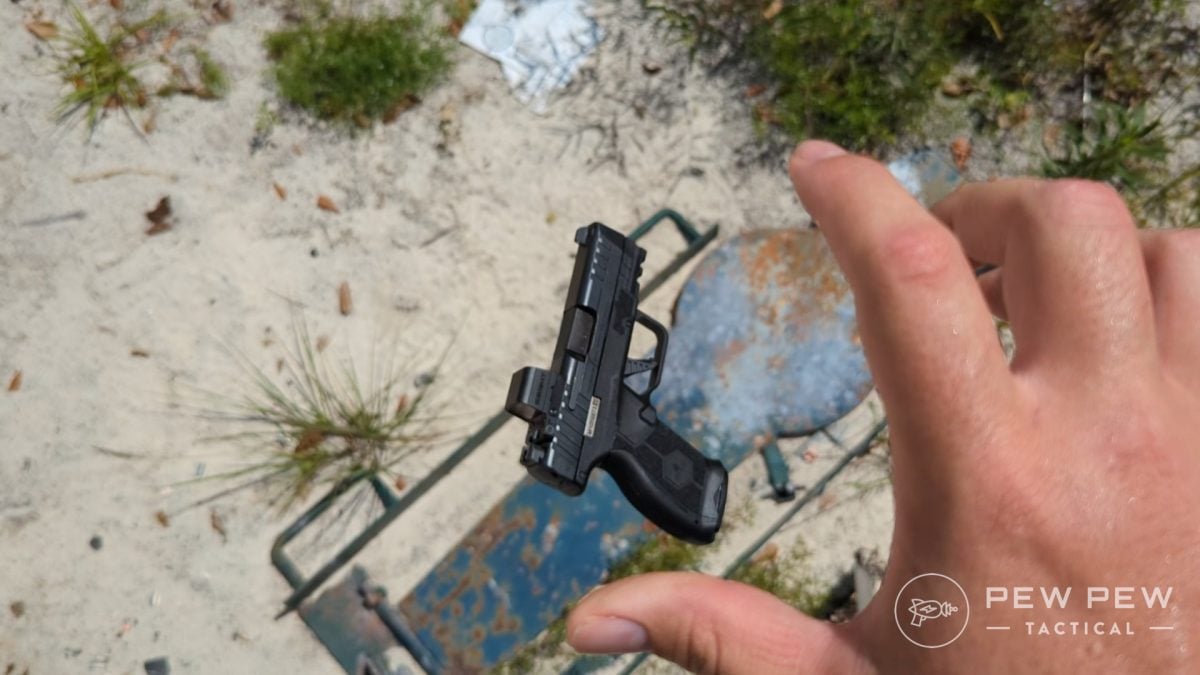
I was fairly impressed by the optic and its ability to hold zero after some reasonable real-world drop testing.
Elements Testing
Next was a water test. The Osight promises to be IPX7 rated, which means it can be submerged to 1 meter for 30 minutes. I started the test by simply spraying it with water from a faucet.
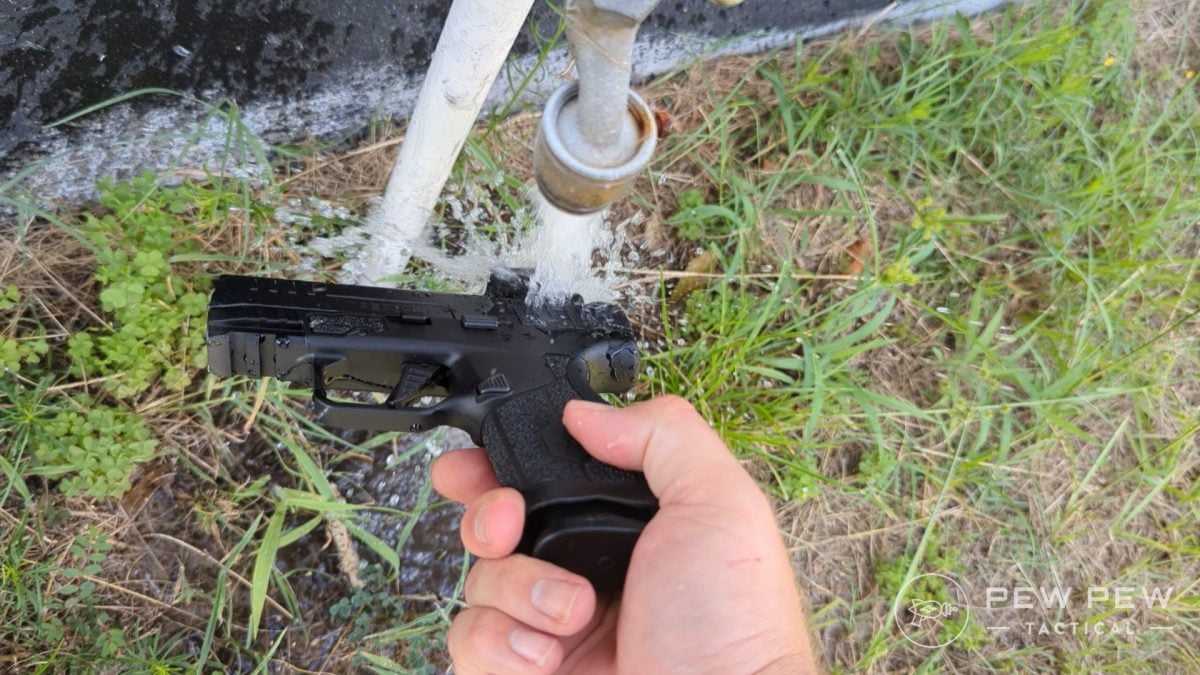
I sprayed it from the front, back, and sides, and there were no problems. Next, I submerged the optic in water, but not at a meter, just barely in a Tupperware-type container. It remained submerged for 30 minutes.
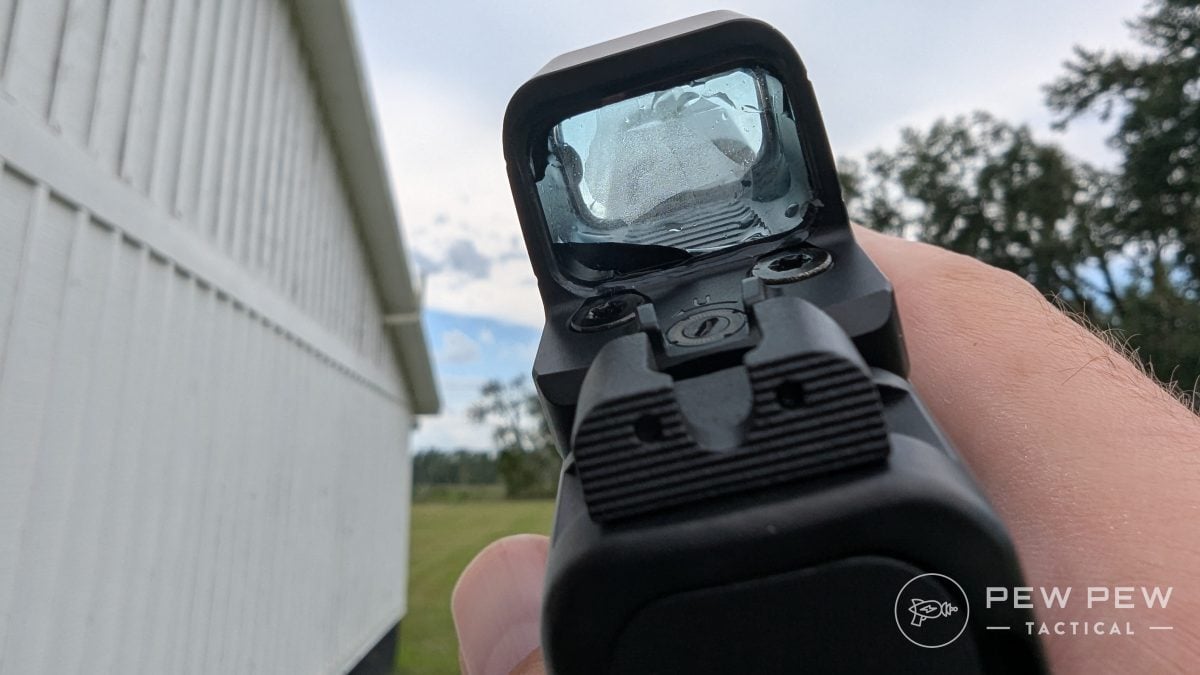
Here’s where our problems started. Water entered the optic. A good bit of water resided in the enclosed emitter optic. Enough that it disrupted the emitter’s ability to project a reticle onto the lens.
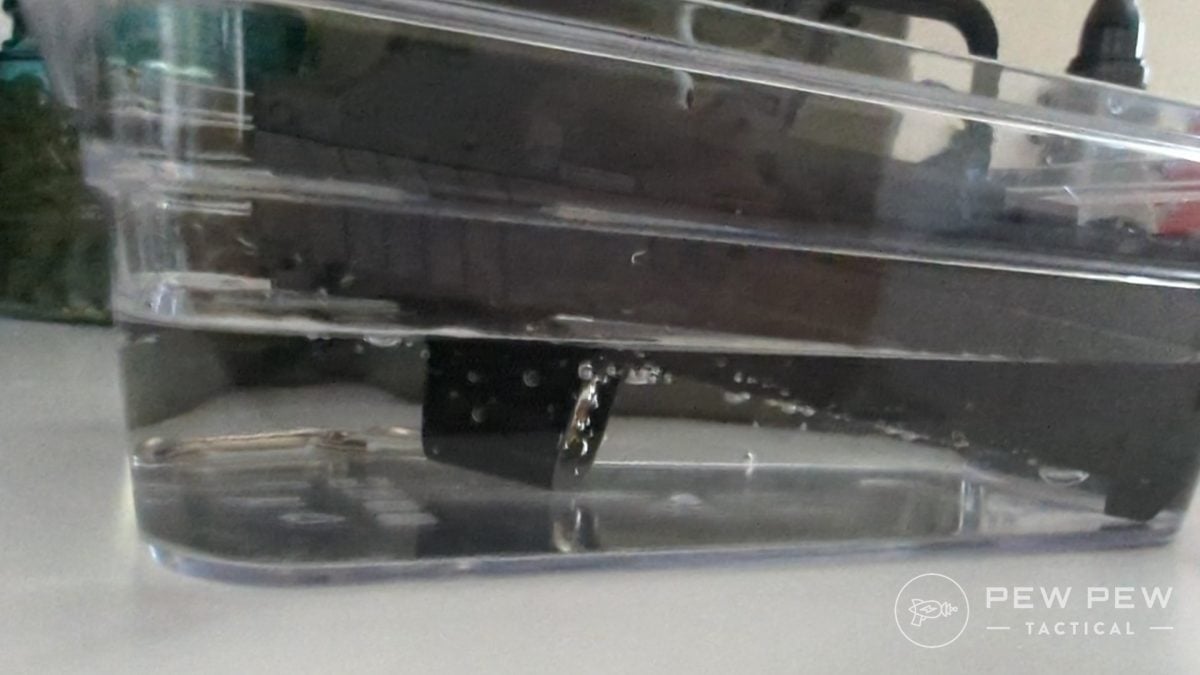
I found the leak came from the front lens. This could have possibly been caused by shock from the drop testing, but regardless, water made entry. I was able to drain most of it out via angles, but there will likely always be a bit of moisture in the optic. Enough was out for me to use an occluded shooting method to print a decent group.
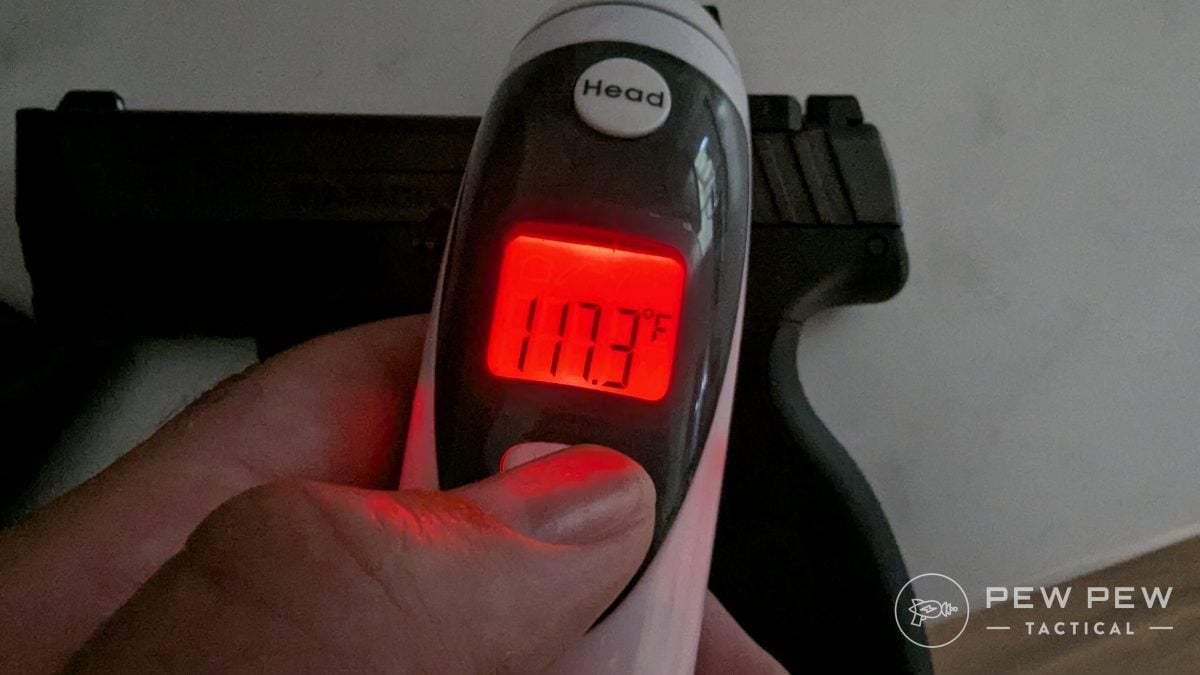
Finally, my last test was the heat test. The operating temperature is listed as up to 140 degrees. I don’t have a good heat gun or good thermometer, so I used a hair dryer to bring it to 120-ish degrees.
After getting the optic nice and hot, I looked through it, and the reticle was gone. It died. The Osight SE had tapped out.
Who Is The Osight SE For?
The Osight SE is clearly aimed at the concealed carry market. It utilizes the RMSc footprint, which is the most common footprint for micro compact pistols, such as the Sig P365.
The enclosed emitter design is meant to improve durability while also keeping dust and water out. While these types of optics are typically more expensive, the Osight keeps things affordable for people who really want an enclosed emitter.
However, after my testing, I think the Osight SE is better suited for a plinker or competition pistol rather than a serious defensive firearm.
By The Numbers
Reliability: 2/5
It can take some drops and the recoil generated by a slide, but it did not play well with water or heat.
Ergonomics: 4/5
The Osight SE sits low enough to use standard height sights. It has solid tactile buttons and mounts easily. My only complaint is that it hangs off the side of the slide.
Accuracy: 5/5
I had no problems hitting targets from seven to 50 yards. The clear view, the sharp reticle, and the easy zeroing feature made it easy to shoot accurately.
Value: 2.5/5
It’s budget-friendly, but it didn’t deliver the expected durability you’d want from an enclosed emitter optic. For a .22LR handgun, a Steel Challenge pistol, and similar roles, it’s fine, but it’s not quite ready for hard use.
Overall: 4/5
Prices accurate at time of writing
Prices accurate at time of writing
-
25% off all OAKLEY products - OAKLEY25
Copied! Visit Merchant
How We Tested the Osight SE
Our Osight SE was mounted to an IWI Masada Slim using the manufacturer’s recommended torque specs and factory hardware.
The sight was zeroed at 15 yards, with additional accuracy testing being conducted at 25 and 50 yards. Several sets of Bill Drills were done to test the refresh rate of the optic.
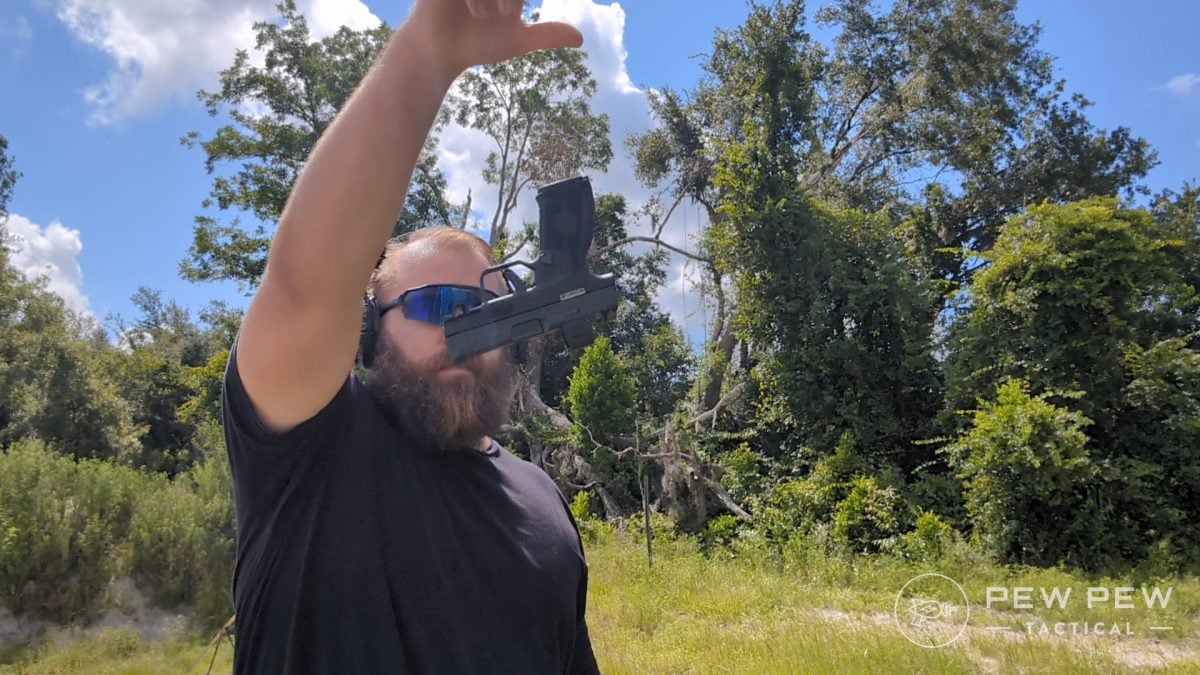
Drop testing was done, first from shoulder height onto the ground, and then again from shoulder height onto an AR500 steel target. The gun was fired again to confirm that it held zero after the drop testing.
Finally, the optic was doused in water and tested. Then, it was fully submerged for 30 minutes to test the IPX7 rating. After waterproof testing was conducted, the optic was heated up to roughly 120 degrees with hot air to see if it was able to operate at the higher end of its heat rating.
Final Verdict
The Osight SE has good potential. A clear lens, good dot, and it does hold zero at a great price, but it doesn’t resist water or take heat well.
But if you are just looking for a light-duty or recreational optic, the Osight SE is an affordable way to get into the enclosed emitter optic game.
Are the durability concerns big enough problems for you to completely avoid the optic? Let us know in the comments below! Looking for other options? Check out our article on the Best Enclosed Emitter Pistol Optics!
Meet the Experts

Pew Pew Tactical author Travis Pike authored this article. Travis spent a lifetime shooting as a kid and later joined the United States Marine Corps, where he spent five years as an infantryman. His experience as a machinegunner, recreational and competitive shooter, hunter, and concealed carry instructor has given him unique insight into various weapon platforms. Additionally, Travis has thousands of articles to his name with a variety of publications, and has tested countless guns and other firearm accessories.

Editing and adding to this article is Pew Pew Tactical Editor, Wyatt Sloan. Wyatt is an NRA-certified instructor and also has experience with competition shooting and hunting. Wyatt personally owns over 200 firearms, and has 10 years of home-based FFL firearm sales.

Editor-in-Chief Jacki Billings runs our experienced team of reviewers. She is a National Rifle Association Basic Pistol Instructor as well as a member of the Society of Professional Journalists, ACES: Society for Editing, and the Professional Outdoor Media Association. Jacki has a bachelor’s degree in journalism and has worked as a media professional for close to 20 years, specializing in gun media for almost 10 years. With 2,000+ articles to her name, she uses her professional journalism and editing experience to set testing protocols and editorial standards for Pew Pew Tactical.







Leave a Reply