
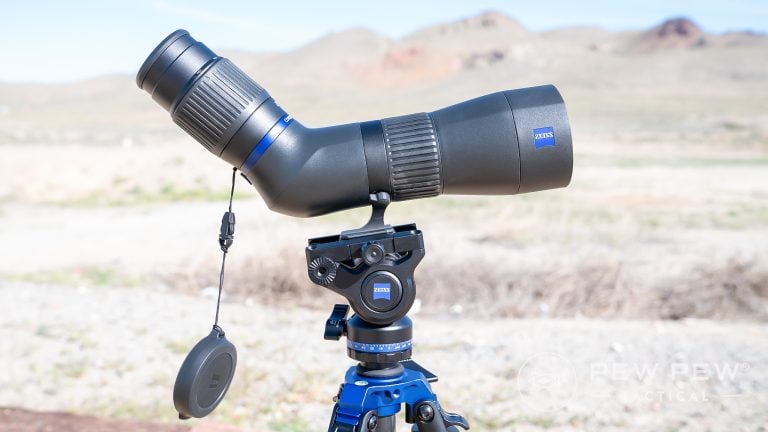
Typically, shooters take a more-is-better approach to picking a spotting scope. But with great power comes great weight in your pack.
During the last few years, manufacturers have started challenging that thinking by putting high-quality optical systems into more portable spotting scopes.
The latest entry into the midsize market is the Zeiss Conquest Apia 65. I got my hands on one early, and now I can finally share my experience and some very illuminating view-through photos.
Let’s dig in!
Zeiss Conquest Apia 65 Specs & Features
Specs
- Magnification: 20-50x
- Objective Lens: 65 mm
- Field of View: 144’ – 81’ at 1,000 yds
- Base: ARCA, 1/4-20
- Eyepiece: Zoom
- Length: 11.7”
- Weight: 48 oz
- Country of Origin: China
- MSRP: $1,499.99
Features
- ED Glass and aspherical lenses for minimal chromatic aberration
- FieldFlattener technology for flat, realistic image edge to edge
- LotuTec protective lens coating for adverse conditions

Prices accurate at time of writing
Prices accurate at time of writing
-
25% off all OAKLEY products - OAKLEY25
Copied! Visit Merchant
This spotting scope isn’t about achieving maximum power – Zeiss has the eye-dazzling (and very expensive) Victory Harpia 85 for that. Instead, the engineers scaled things down to create a more versatile system that’s equally adept at scanning the edge on an ag field for a whitetail as it is glassing a distant ridge for muleys.
Magnification is variable from 20 to 50x using a ring on the eyepiece that’s smooth-moving, with just the right amount of resistance. The focus ring and eyecup twist with a similar feel, fixing my only nitpick about the Harpia 85.
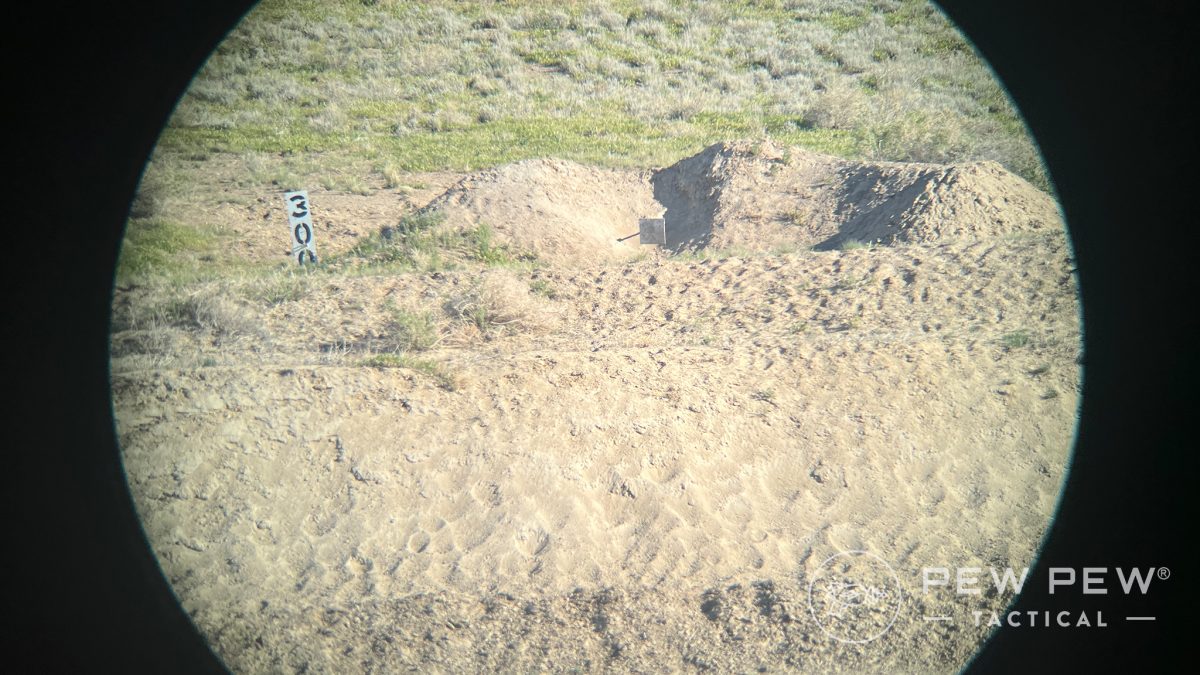
Colors through the Apia 65 are bright, rich and well-defined with no perceptible aberration to my eye in the field. I consider the image very flat, meaning there’s no meaningful fisheye or pinching unless you’re using a distortion grid.
At 300 yards, I was able to see individual rocks in the sandy berm at my local long-distance shooting facility. At 1,000 yards, I could pick up the glint of the morning sun on the edge of the yardage sign.
Keep in mind that I took these photos with an iPhone; the image is noticeably better in real life.
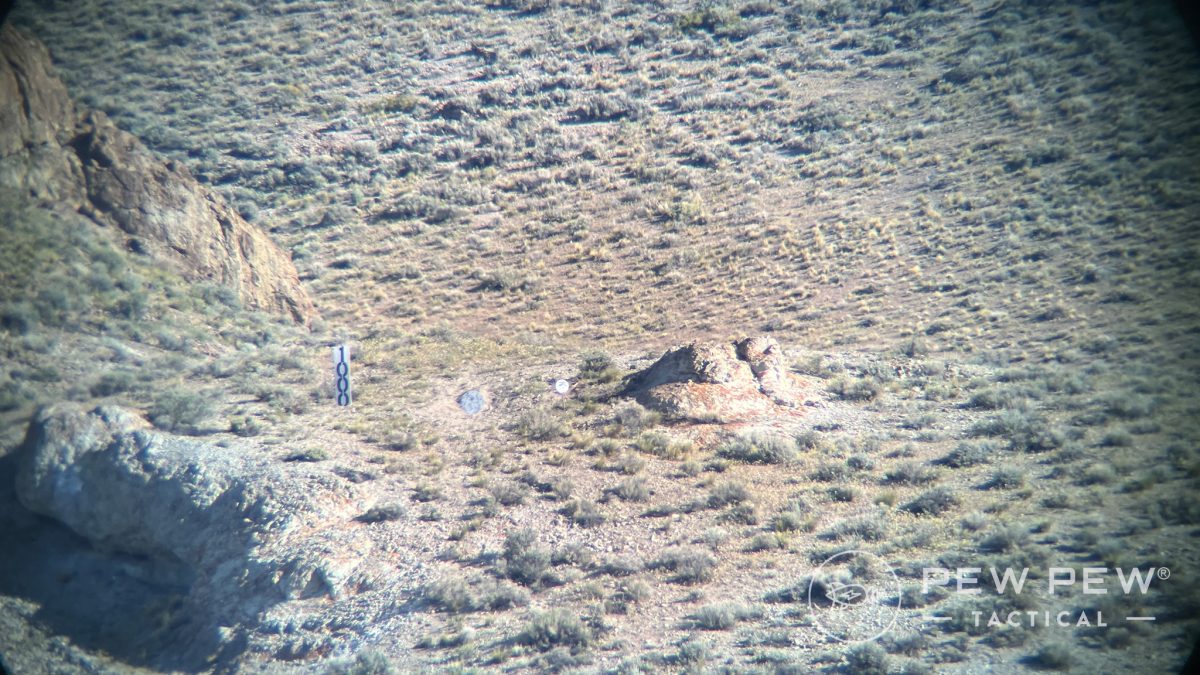
I typically recommend spending your money on optical quality rather than maximum magnification, and this is a great example of my reasoning. While you can get more powerful spotting scopes for a fraction of the Apia 65’s price, you’re not likely to get this kind of visual information out of them.
Zeiss built the Apia 65 for hunters, so it’s a hardened system with ruggedized coatings all around. On the body, that takes the form of rubberized protection against slips, scrapes, and bumps. Exterior-facing glass surfaces get a LotuTec coating that protects them from precipitation.
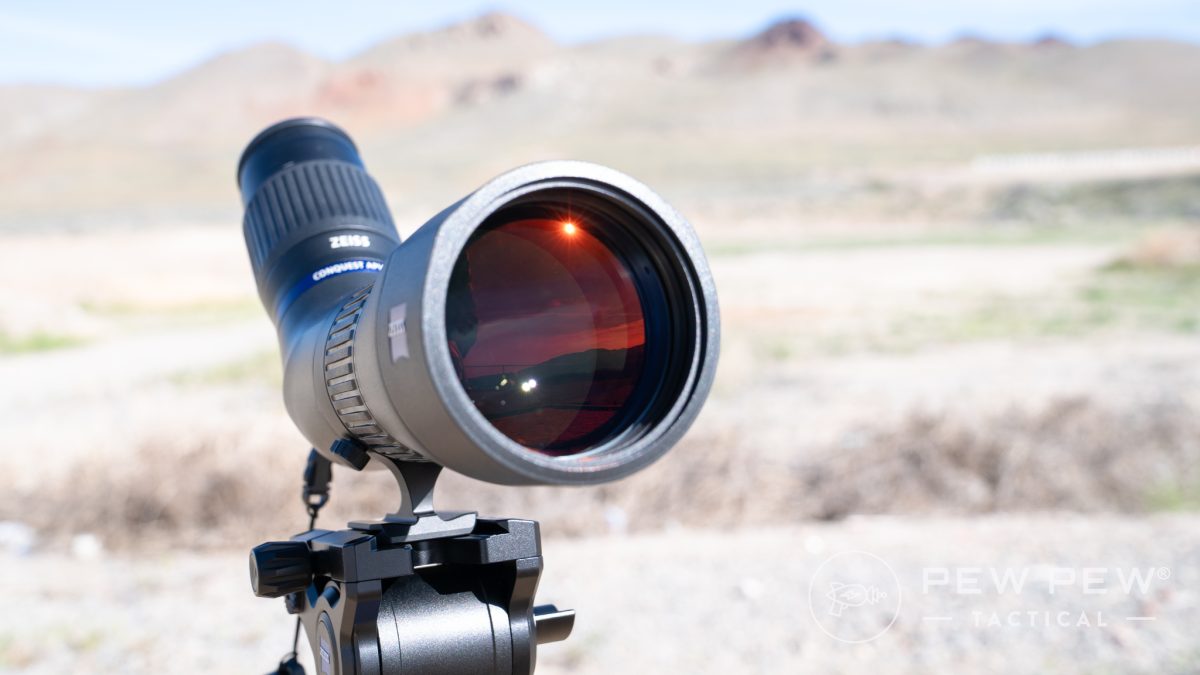
Zeiss is also offering accessories like digiscoping adapters for smartphones, a soft case, and two tripods. I used the Pro-Series Lightweight tripod kit, which suits the Apia 65’s backcountry aspirations. If you plan on shooting off the same tripod you use for glassing, I might stepping up to the beefier Pro-Series Universal tripod kit.

Prices accurate at time of writing
Prices accurate at time of writing
-
25% off all OAKLEY products - OAKLEY25
Copied! Visit Merchant
Think of the Apia 65 as a hybrid optic. Physically, it’s nearly as small as the ultra-compact Vortex Razor HD 13-39×56, affectionately known as the Baby Razor. The optical system is more similar to the one in the much larger Maven S1.2.
Zeiss lists an MSRP of $1,499.99 for the Conquest Apia 65.

While some of you may be disappointed to see that it’s made in Shanghai rather than Oberkochen or Wetzlar, I might remind you that the last German-made spotting scope I tested cost $4,099 without an eyepiece.
As long as Zeiss is offering more affordable optics in addition to the premium ones rather than in place of them, I’ll call that a win for consumers.
What do you think of the new Zeiss Conquest Apia 65? Let us know below. For more of our favorite picks, check out our guide to the Best Spotting Scopes!





2 Leave a Reply
Scott, what's your favorite brand for scopes?
We're spoiled for choice these days so I can't really say I have one. It depends on a person's budget and personal goals.