
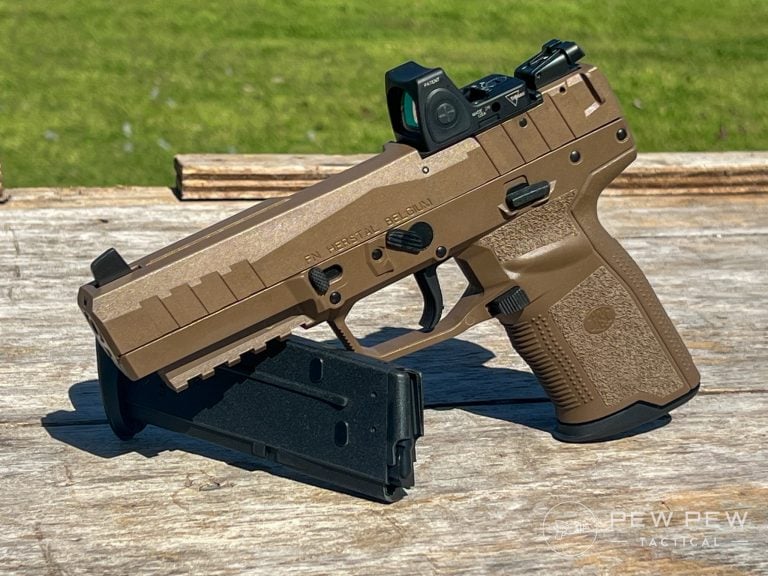
FN Five-Seven MRD Pros & Cons
Pros
- High capacity
- Lightweight
- Low recoil
Cons
- On the pricey side
- Expensive ammo
The Bottom Line
FN's Five-Seven is the original 5.7mm handgun. The MRD version is a modern take that adds red dot capability to a high-capacity pistol with low recoil.
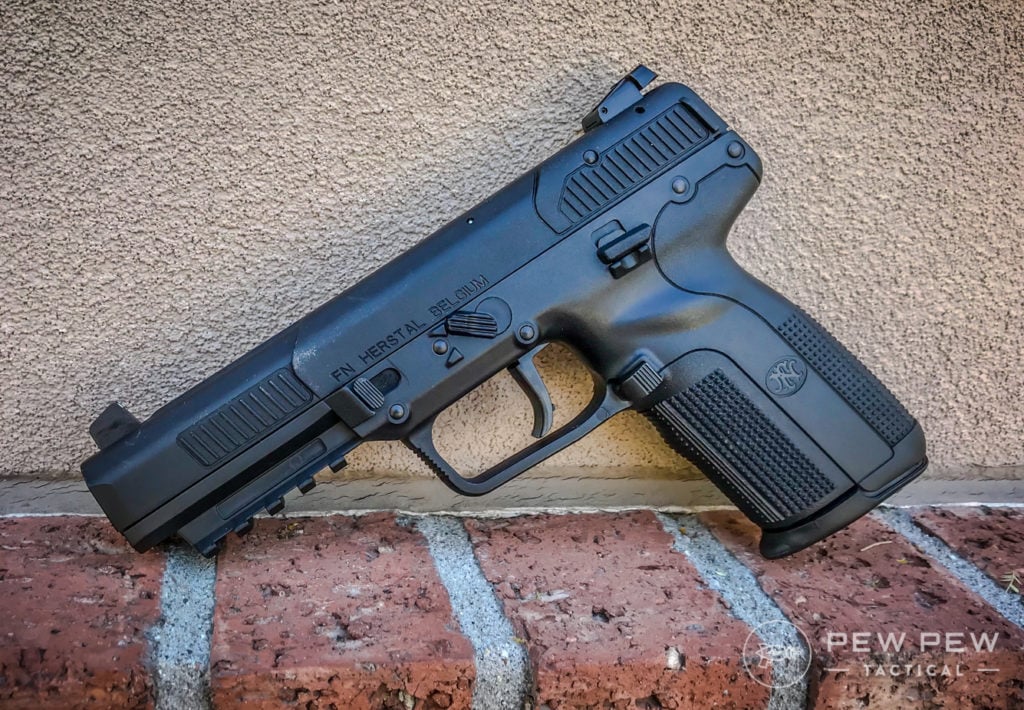
FN’s Five-Seven has been available to the shooting public since 2004. That makes the handgun officially a classic in automobile terms.
Over the years, the gun has received a few updates, reflecting trends and advances based on customer demand. The most recent version finally implements the use of a red dot.
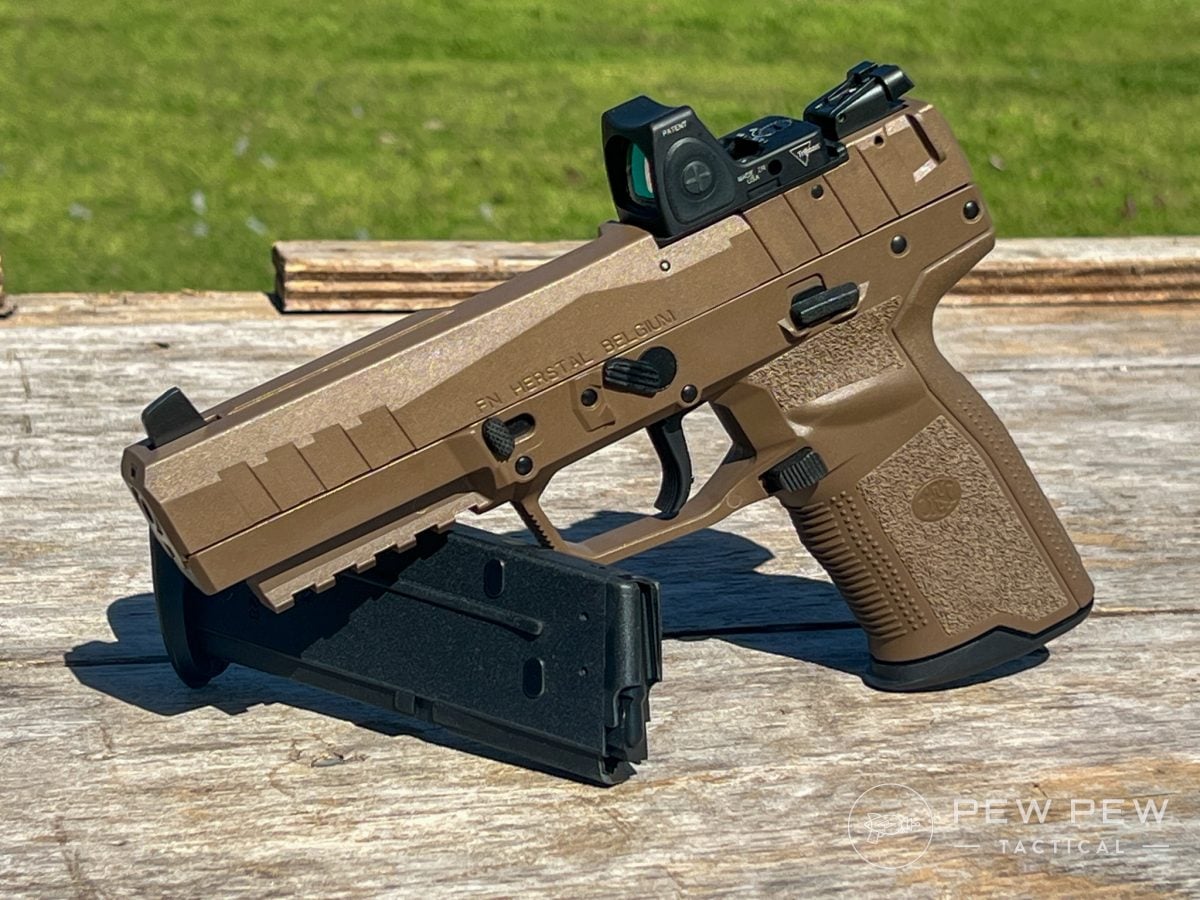
It’s nice when companies implement new tech in older firearms, but updates on paper don’t always translate well to the range. Is FN’s newest version of the Five-Seven worth a look, or is it too little too late?
We took one out to the range and tested it to learn the answer. We’ll share the results with you below, so read on!
Table of Contents
Loading…

Prices accurate at time of writing
Prices accurate at time of writing
-
25% off all OAKLEY products - OAKLEY25
Copied! Visit Merchant
FN Five-Seven MRD Specs & Features
Specs
- Caliber: 5.7x28mm
- Action: Semi-auto
- Capacity: 20+1
- Length: 8.2”
- Barrel Length: 4.8”
- Width: 1.35”
- Height: 6”
- Weight: 25.2 oz. (without mag)
- Country of origin: Belgium
- Comes with: Cardboard box, zippered nylon bag, two 20-round magazines, gun lock, three optic plates & hardware, owner’s manual
Features
- Optics ready
- Enhanced stippling
- Adjustable irons/co-witness
- Cold hammer-forged barrel
FN Five-Seven MRD Background
In 1989, NATO issued a request seeking a replacement for the 9mm round. Their specs required the round to outperform the 9mm in accuracy, range, and terminal performance.
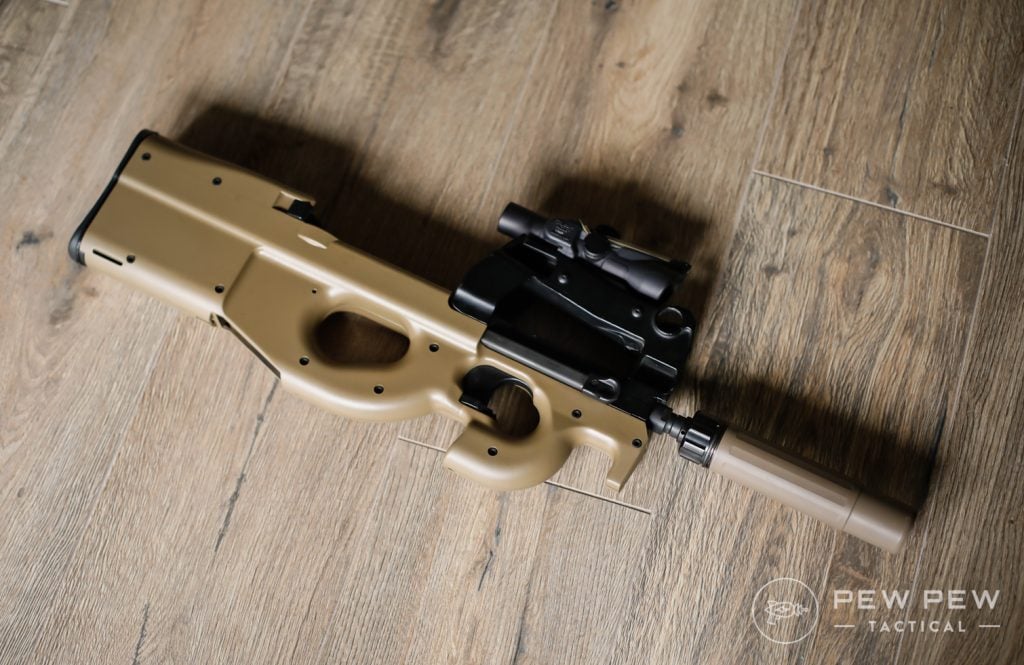
In response, FN Herstal developed the 5.7x28mm, and the P90 (a personal defense weapon) that chambered their new round. This new caliber met or exceeded the NATO mandate.
FN Herstal then began developing a pistol for the new round as a companion arm for the P90. Called the Five-Seven, this handgun finally reached civilian customers in the early 2000s.
Three versions of the pistol followed over the ensuing years, each offering minor improvements. Notably, the Five-Seven did not adopt red dot capability until the most recent version (MRD) was released in 2022.
Some Five-Seven ammo was (and still is) restricted to law enforcement and the military because of its potential to penetrate body armor.
Shooting the FN Five-Seven MRD
Loading up the Five-Seven’s magazines is more akin to loading an AR-15 magazine than that of a pistol. There’s no real need to push the round down, then slide it back.
You simply insert the round between the feed lips and push it straight down. Overall, this process was pretty easy, even as I neared the 20th round.
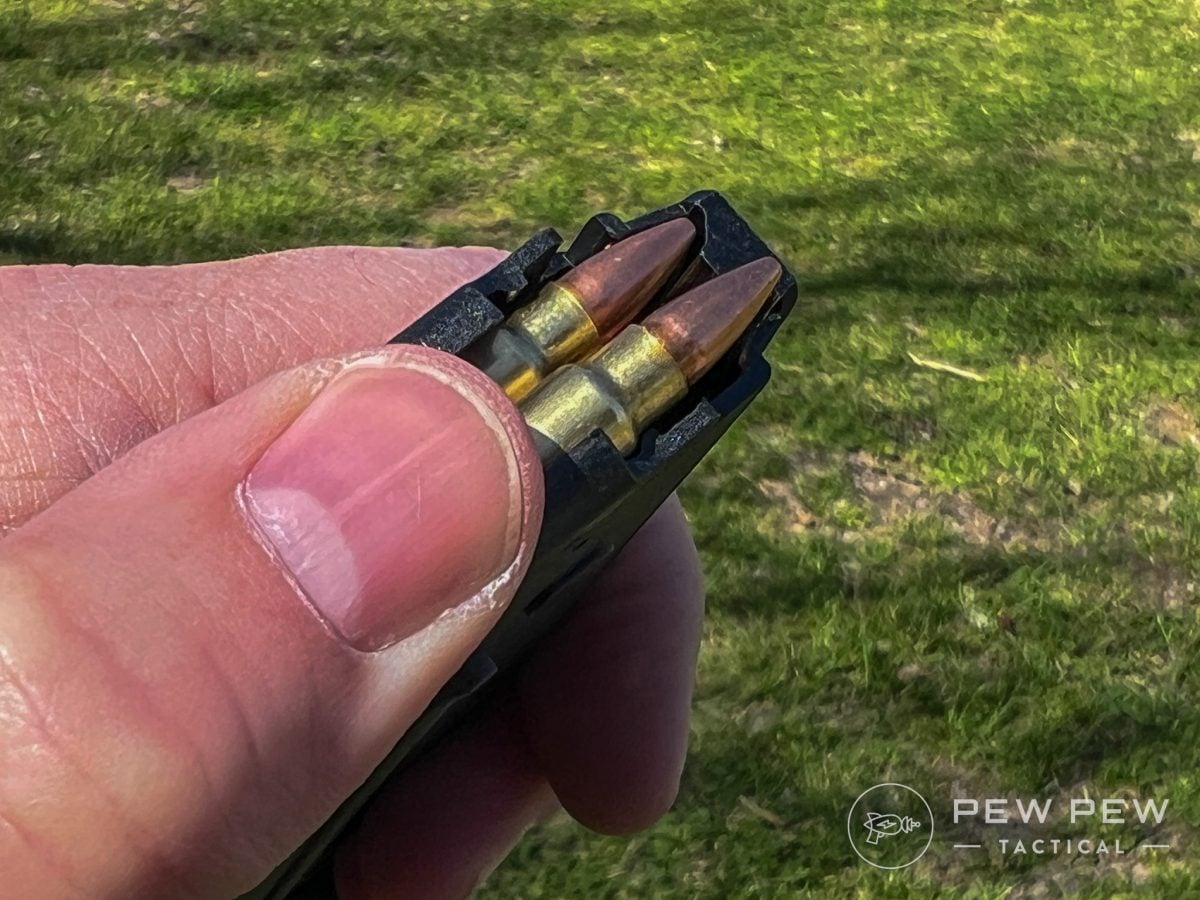
With the magazine loaded, I stepped up to the 7-yard line and inserted it into the Five-Seven. Even fully loaded, the gun still feels pretty light.
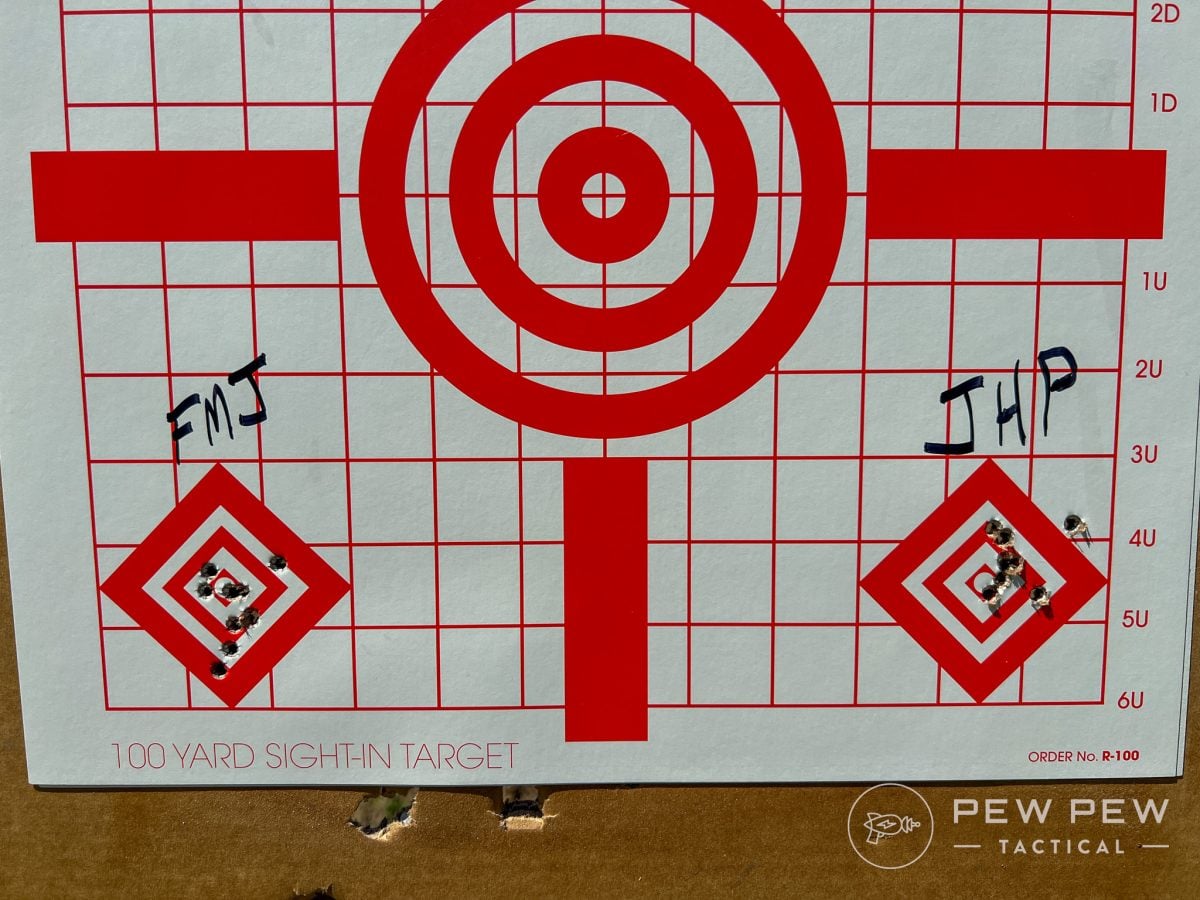
I first fired ten rounds of FN’s 40-gr FMJ ammo to see how it would group. The results were decent, a little under two inches in total, with a bit of a vertical string showing.
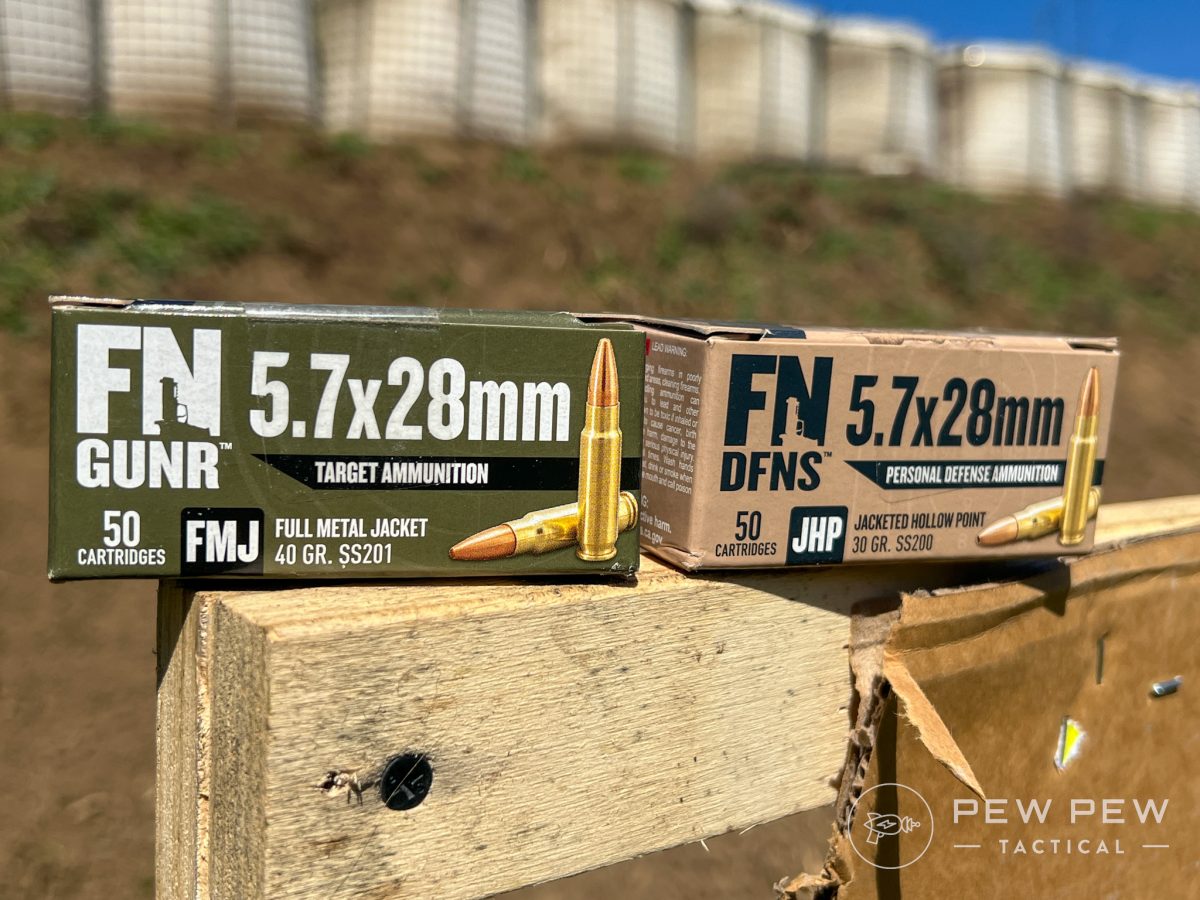
Next, I used the 40-gr JHP defensive ammo and focused more. The results were a tighter group, roughly one and a half inches in diameter.
With accuracy established, I worked on simple drills, ringing steel from various distances and focusing on reloads and general function.
I worked from VTAC barricades, shooting steel targets from cover, and marveled at the lack of recoil. It’s actually surprising that such a lightweight gun is so tame, but that’s part of the magic of the 5.7mm round.
Shooting at speed, it was easy to keep my red dot in sight because of the tame muzzle flip. The lack of recoil, in conjunction with the good ergonomics and grip texture, created an enjoyable shooting experience.

That said, the 5.7mm round is loud. I’m not sure it’s much (if any) louder than a 9mm, but it’s worth noting if you decide to keep the Five-Seven as a home defender.
I appreciated the 20-round capacity of the magazines and, despite the extra rounds, found myself reloading frequently. Analyzing that, I realized the absolute lack of punishment when pulling the trigger made me run through magazines pretty quickly.
Plinking away at steel, I shot repeatedly until I emptied a magazine and the slide locked back. When I pressed the mag release, the empty magazine shot out of the magwell.
I was impressed with this because most magazines tend to simply fall out. Out of curiosity, I turned the Five-Seven upside down and hit the release on an empty magazine.
It actually sprang up from the magwell about two inches. It’s pretty clear FN designed this as a feature because it is not the norm across most handguns.
Along the same topic, the slide release was easy enough to reach due to its placement. However, it was extremely stiff, and I found it easier to manipulate the slide during reloads.
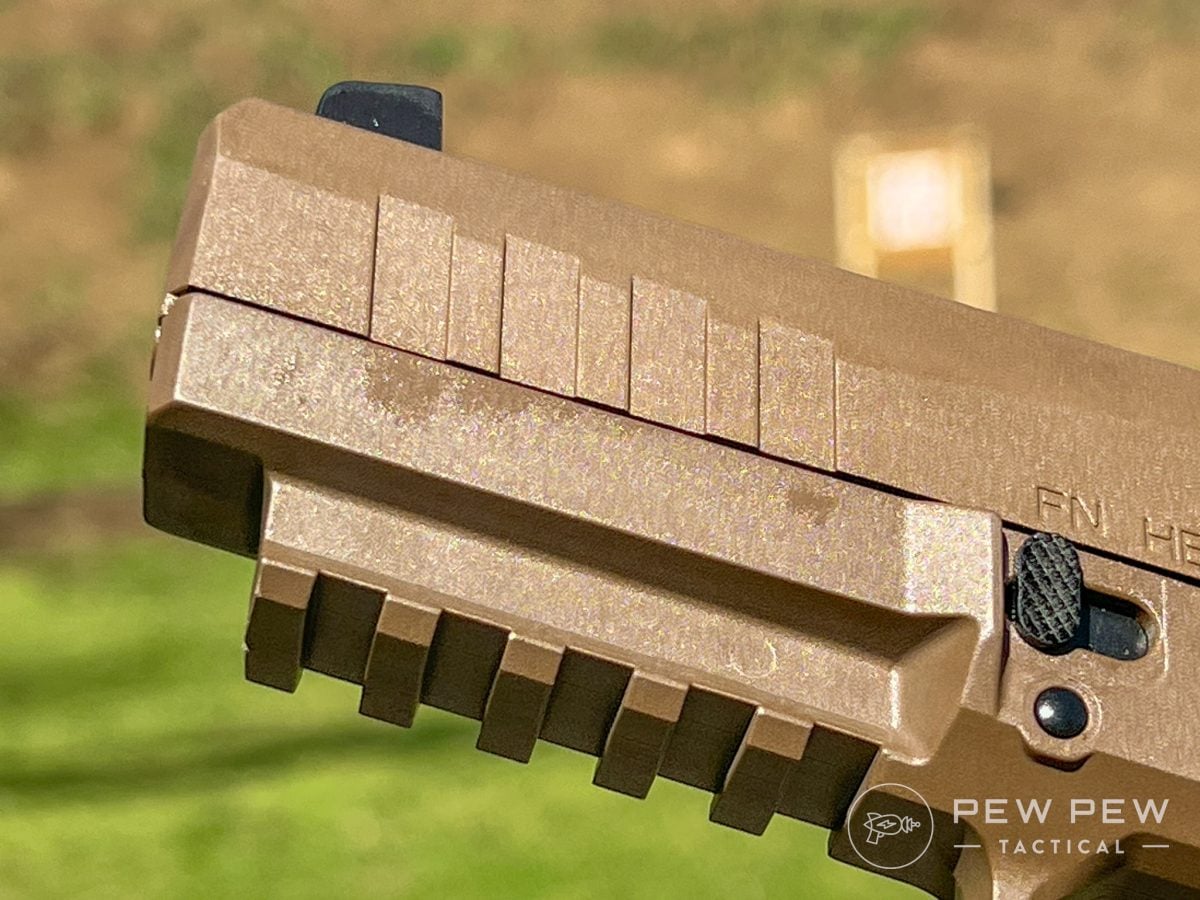
The ample slide serrations worked well to facilitate this, but when I found the small bumpers on the back of the slide, I delighted in using a slingshot technique to drop the slide on a fresh magazine.
The manual of arms was very different when it came to deactivating and activating the safety. I found using my support hand thumb was the best method. It was also easier to deactivate than activate, but with practice, it became easier.
As far as targeting, I appreciated the fact that the iron sights were high enough to view through the Trijicon RMR I had installed. It’s nice to retain redundancy without needing to purchase taller irons.
Reliability started off great, though, as I neared the end of the test, a few issues popped up. Around the 300-round mark, I switched back to the defensive ammunition.
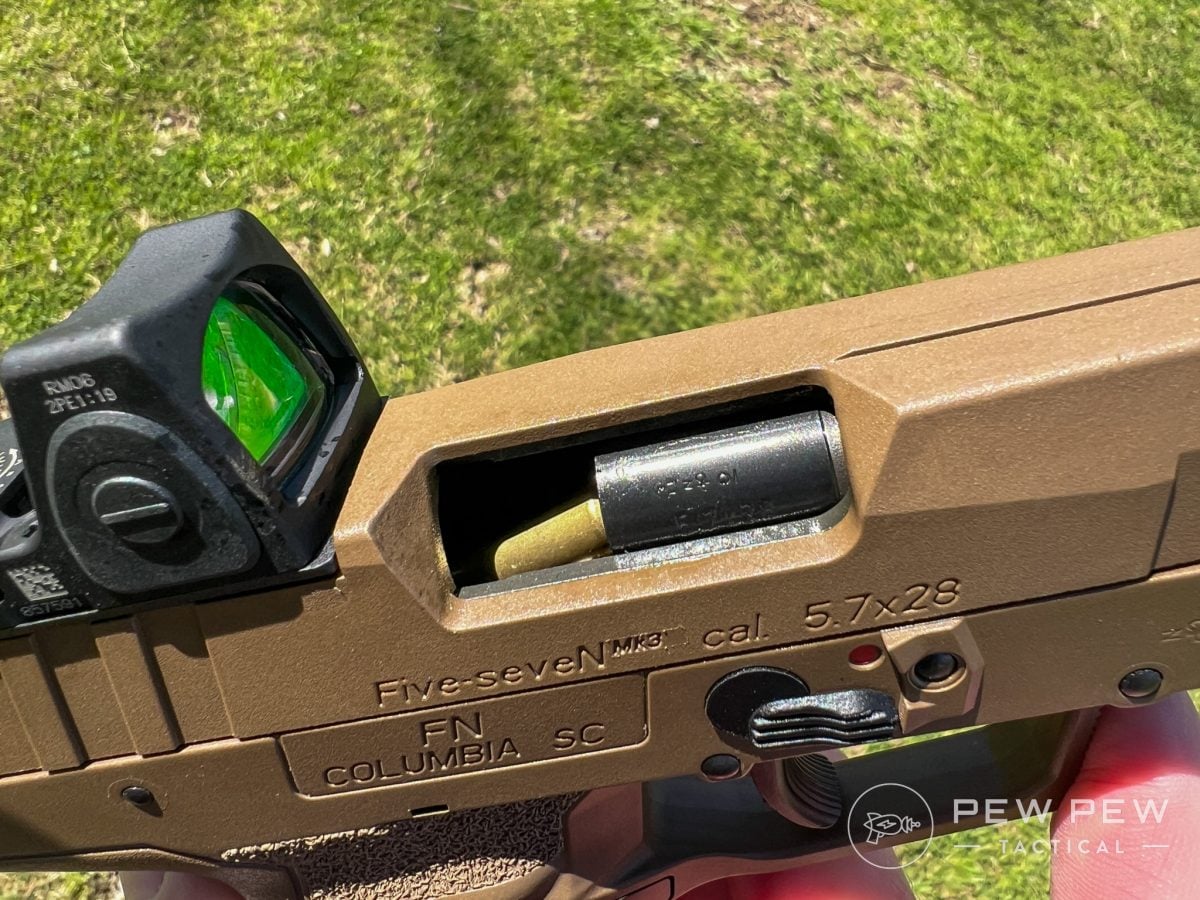
I had two failures to feed and isolated the one magazine in case that was the culprit. Using the other magazine, I then had a failure to lock back.
My best guess is that the defensive ammo was lighter in powder because it caused the slide problems with seating rounds. Occasionally, it prevented the slide from locking back on the last round.
Switching back to the FMJ ammunition, these problems vanished in both magazines. Ammunition, particularly defensive ammunition, will need to be tested before you select the Five-Seven as a carry option.
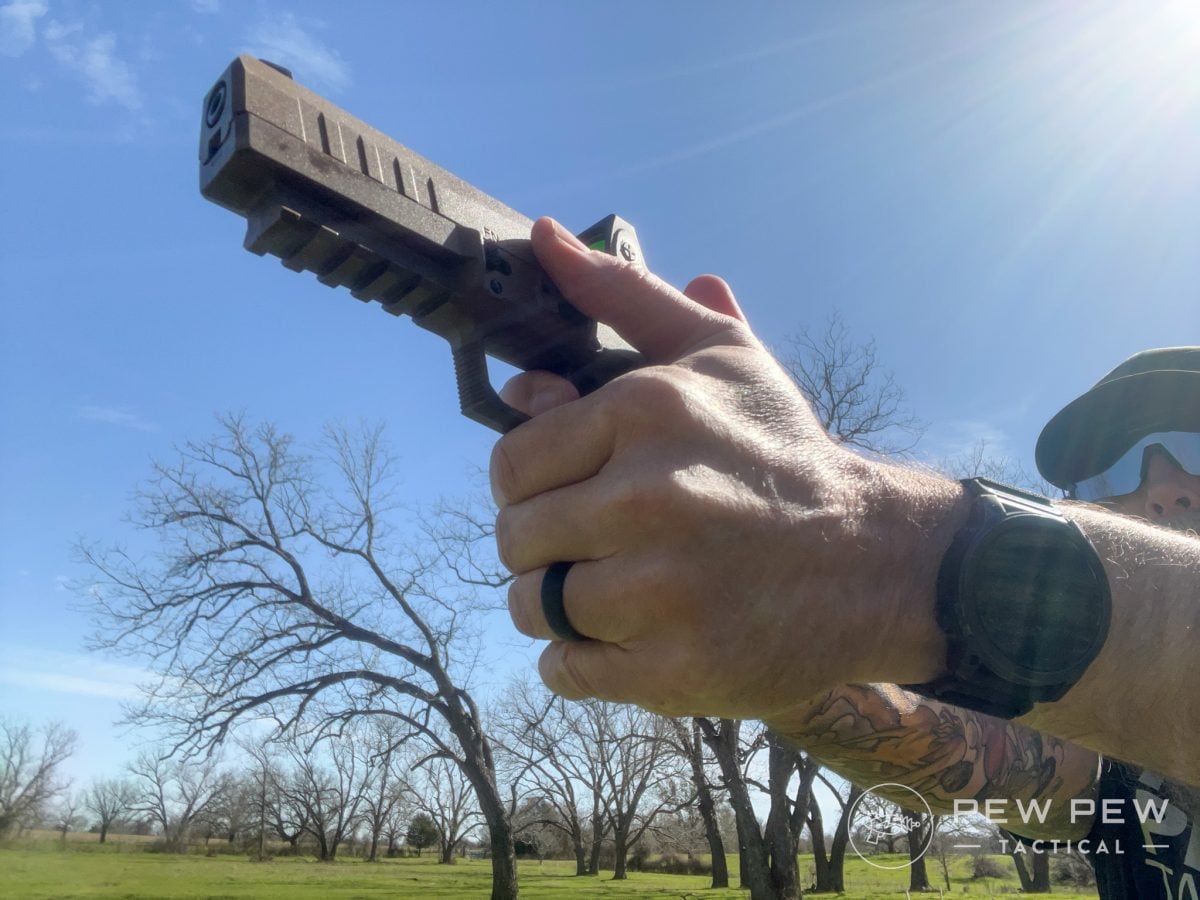
One last noteworthy observation is that the Five-Seven utilizes a magazine disconnect. This means that the gun will not fire without a magazine inserted. Believe me, I tried hard.
Ergonomics: Fit & Feel
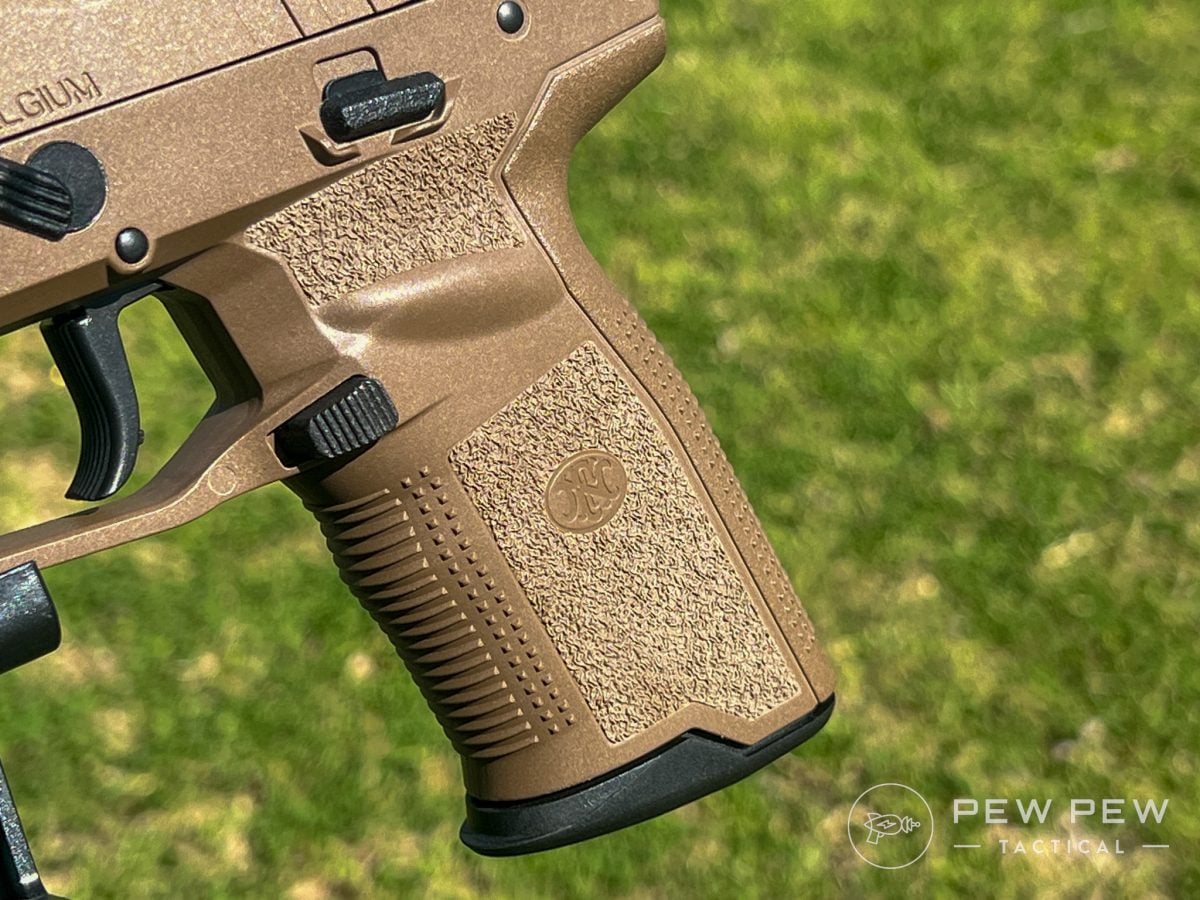
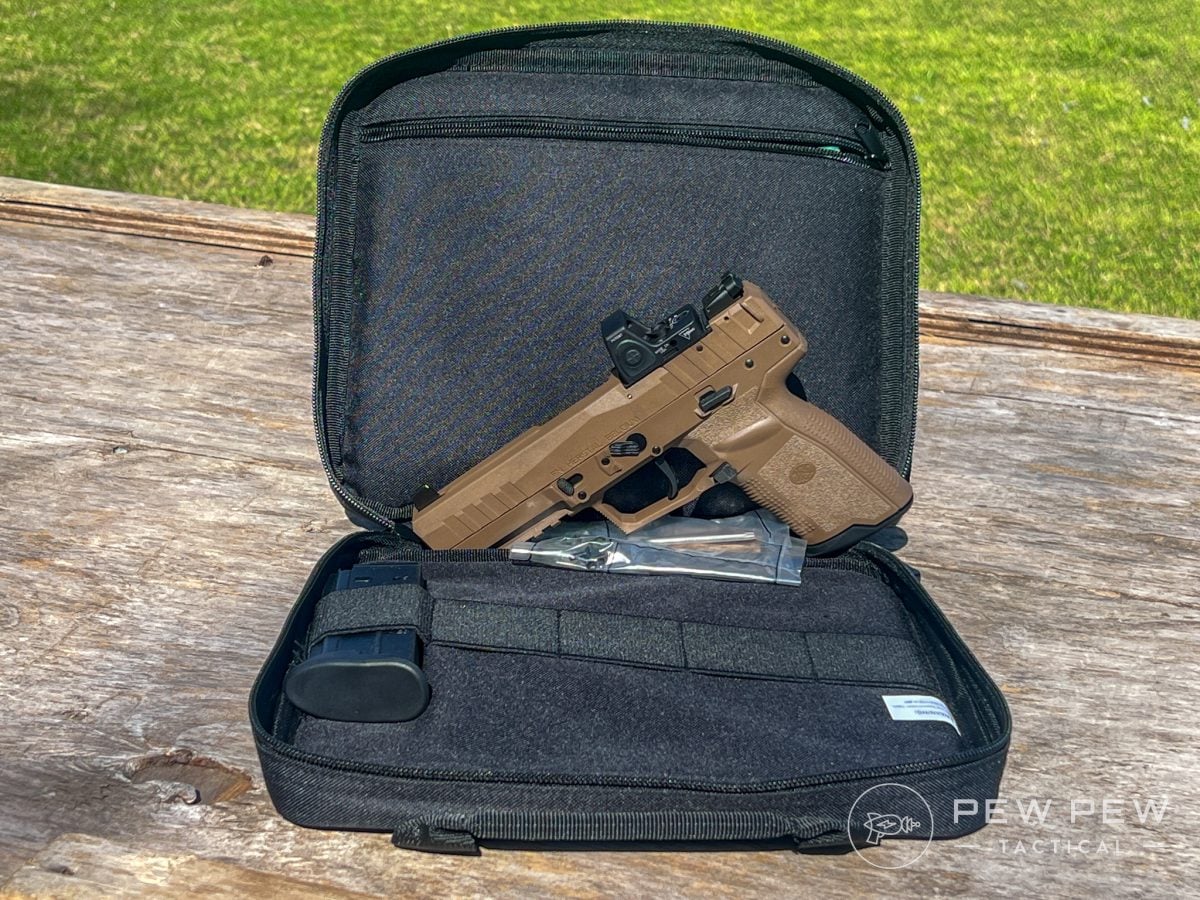
Overall fit and finish on the Five-Seven are good. The version we tested came in a very peanut butter FDE, accentuated by black controls and accessories.
As mentioned above, the Five-Seven is a pretty good-sized handgun. It’s slightly longer than a Glock G17 and also has a wider grip, but is much lighter in comparison.
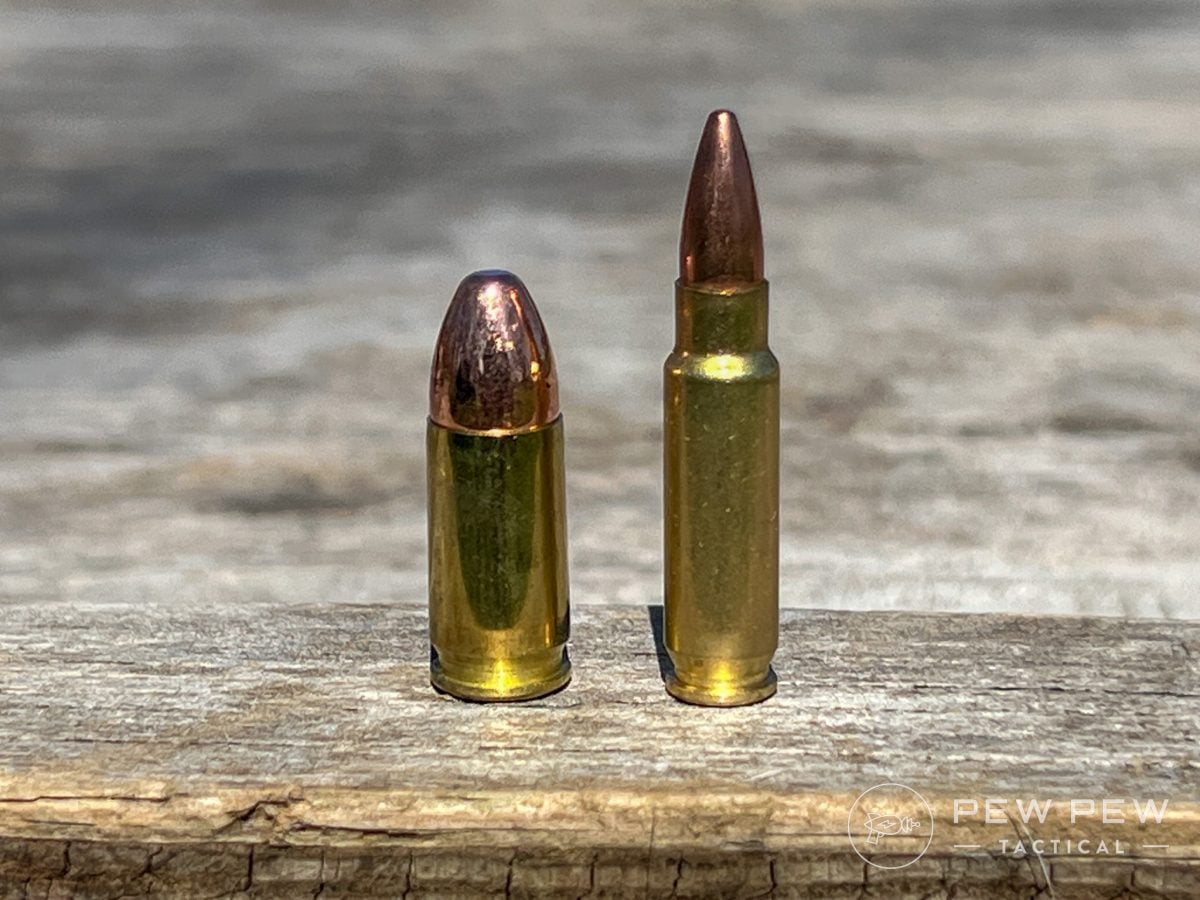
For the grip at least, this is a direct result of the size of the 5.7mm. Shaped like a small rifle round, the overall package is longer and makes the magazine and grip bigger to accommodate.
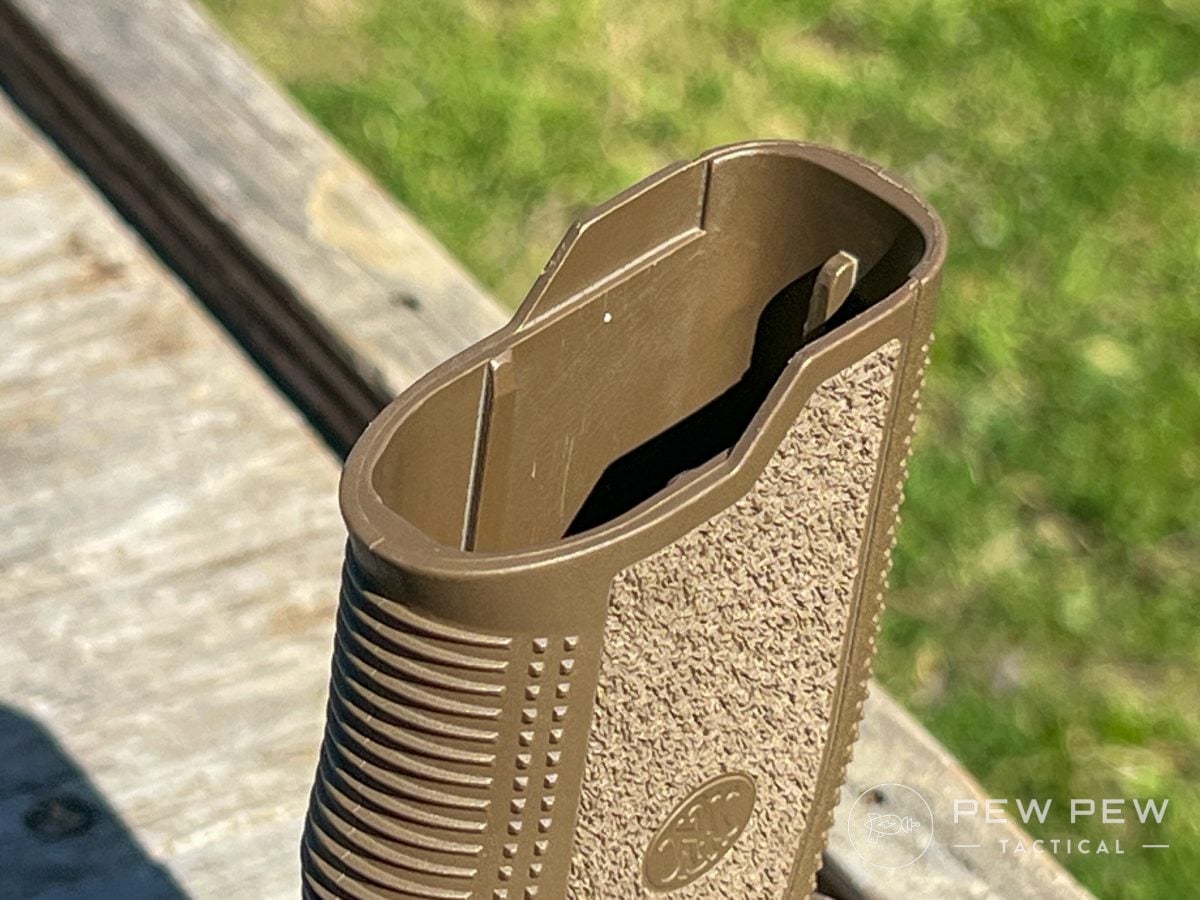
The grip is comfortable for my 2X-sized hands, but isn’t too big for any but the smallest of hand sizes. Raised ribs cover the front strap and backstrap, plus there’s a stippled, medium-rough texture on the sides of the grip.
Toward the rear, FN kept the extended beavertail that was present on all previous versions. It’s deep enough to prevent slide bite on the biggest hands.
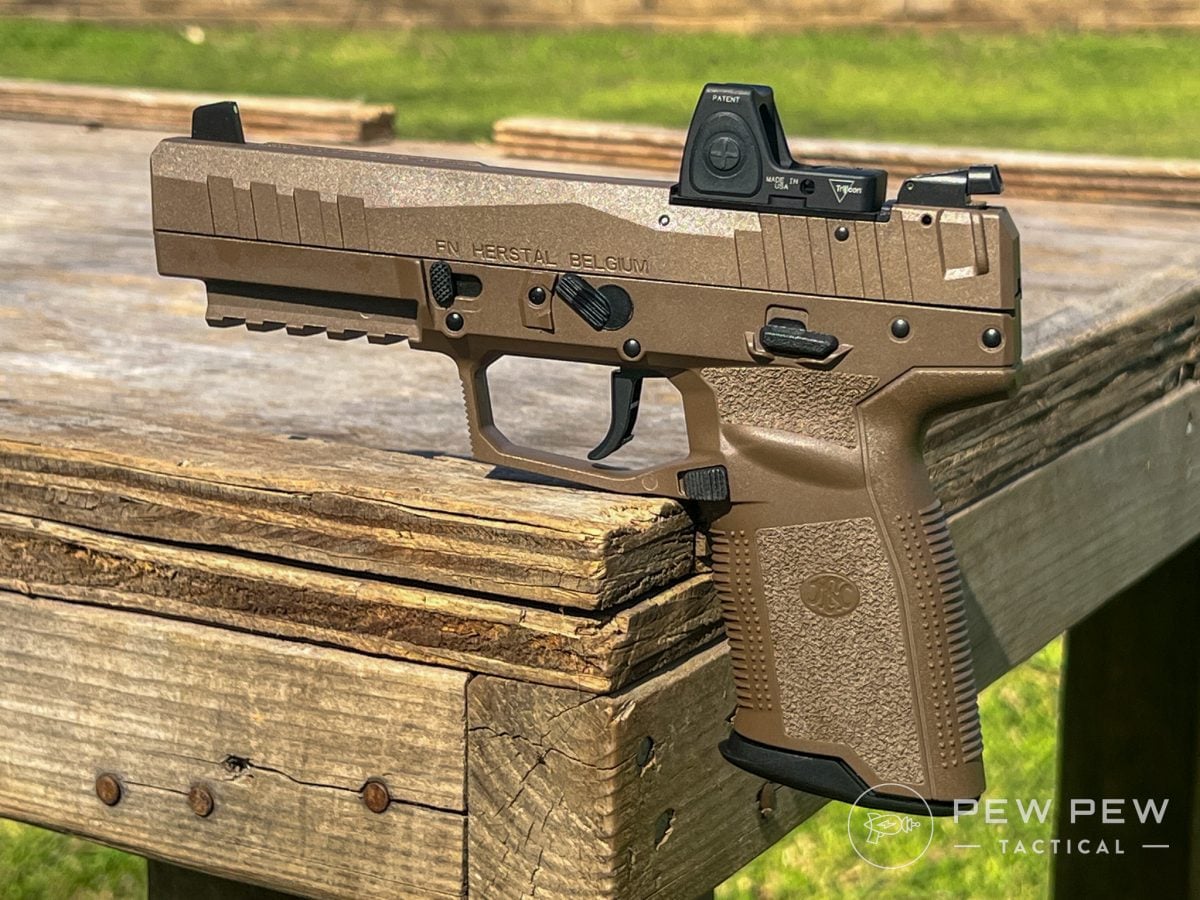
Moving up to the slide, we find some well-cut slide serrations present front and rear. In addition, two bumpers are added to the sides of the slide at the rear, which provide extra purchase when you sling-shot the slide.
FN updated the Five-Seven to be optics-ready in 2022, accomplishing this with a shallow cut on the slide. They also provide three plastic plates to fit the most common red dots and mounting hardware.
Some people don’t care for plastic optic plates, preferring the peace of mind afforded by metal ones. I lean toward this camp too, but have had good success with similar plates found on the M&P Metal 2.0 from Smith & Wesson.
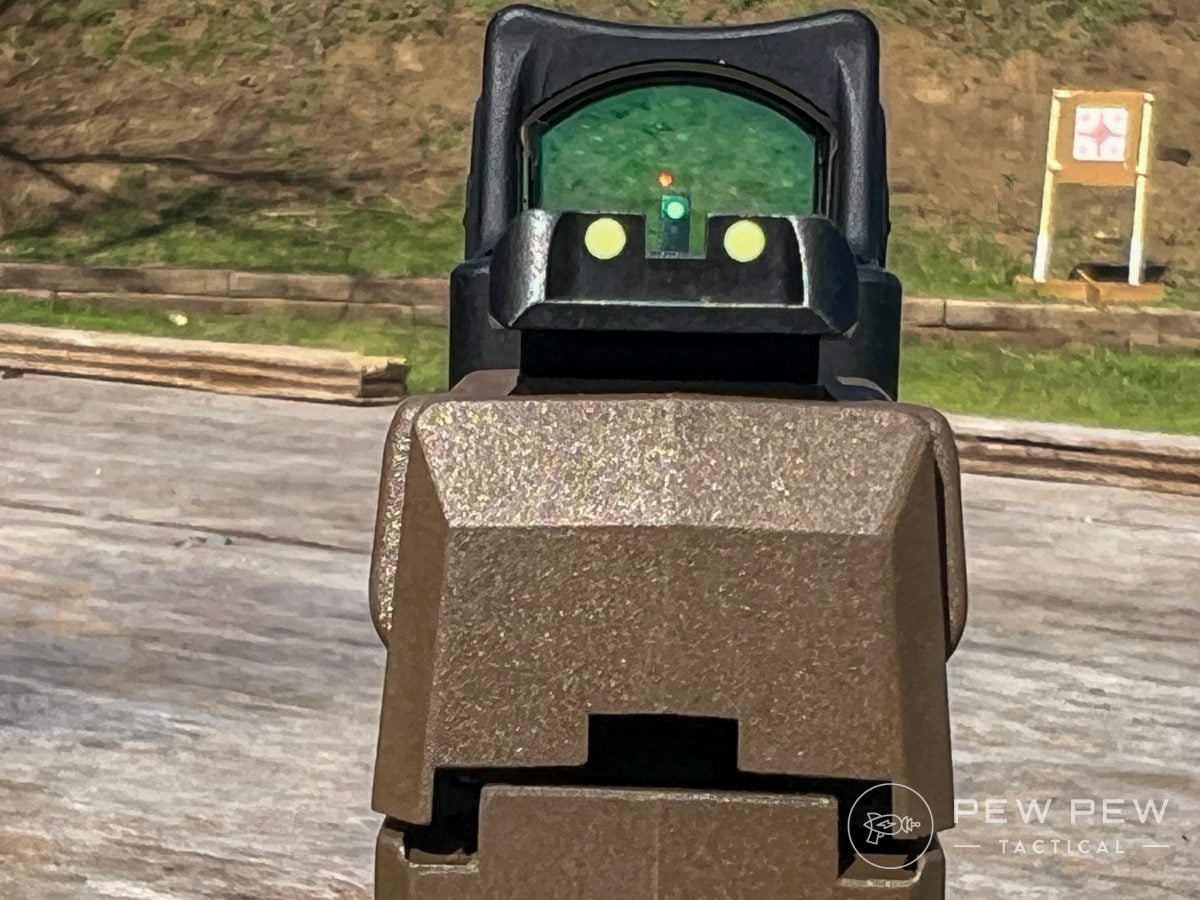
After mounting a Trijicon RMR, I looked through the optic to see how it paired with the steel sights. Thankfully, the height was designed to be co-witnessed.
Sights are set up in a three-white-dot configuration with photoluminescence on all three dots. The front is pretty tall, and the rear is adjustable for elevation.
The light from these dots doesn’t last a very long time, but if you walk from the sun into a dark environment, you should be able to see your sights for a bit.
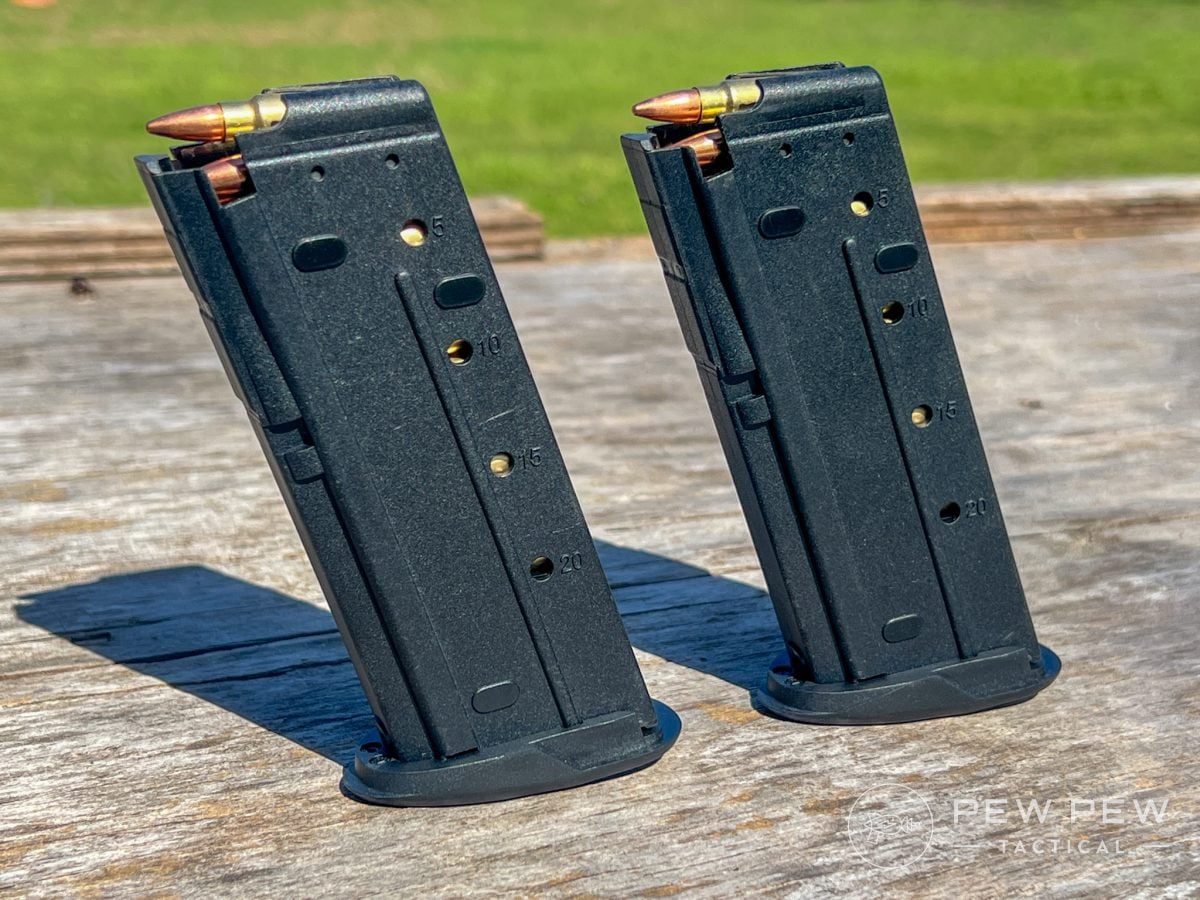
Magazines are black plastic and include round count windows on the left side only. These all locked in place when inserted, and actually fired out of the gun forcefully when I pressed the magazine release.
Their overall shape is flatter and wider than that of a Glock magazine, which is square. Base plates provide ample purchase, and a lip up front serves as a ledge for pulling if a magazine becomes stuck.
Controls
The trigger shoe is flat at the top, then curves sharply forward at the bottom as an index. It is ribbed vertically for a non-slip texture.
During press, it travels to the rear a few millimeters before reaching a well-defined wall. Continuing back, the trigger breaks crisply, and the reset is very tactile and audible. Measuring the trigger on a Lyman Digital gauge, we found the weight to be an average of 4 pounds 10 ounces.
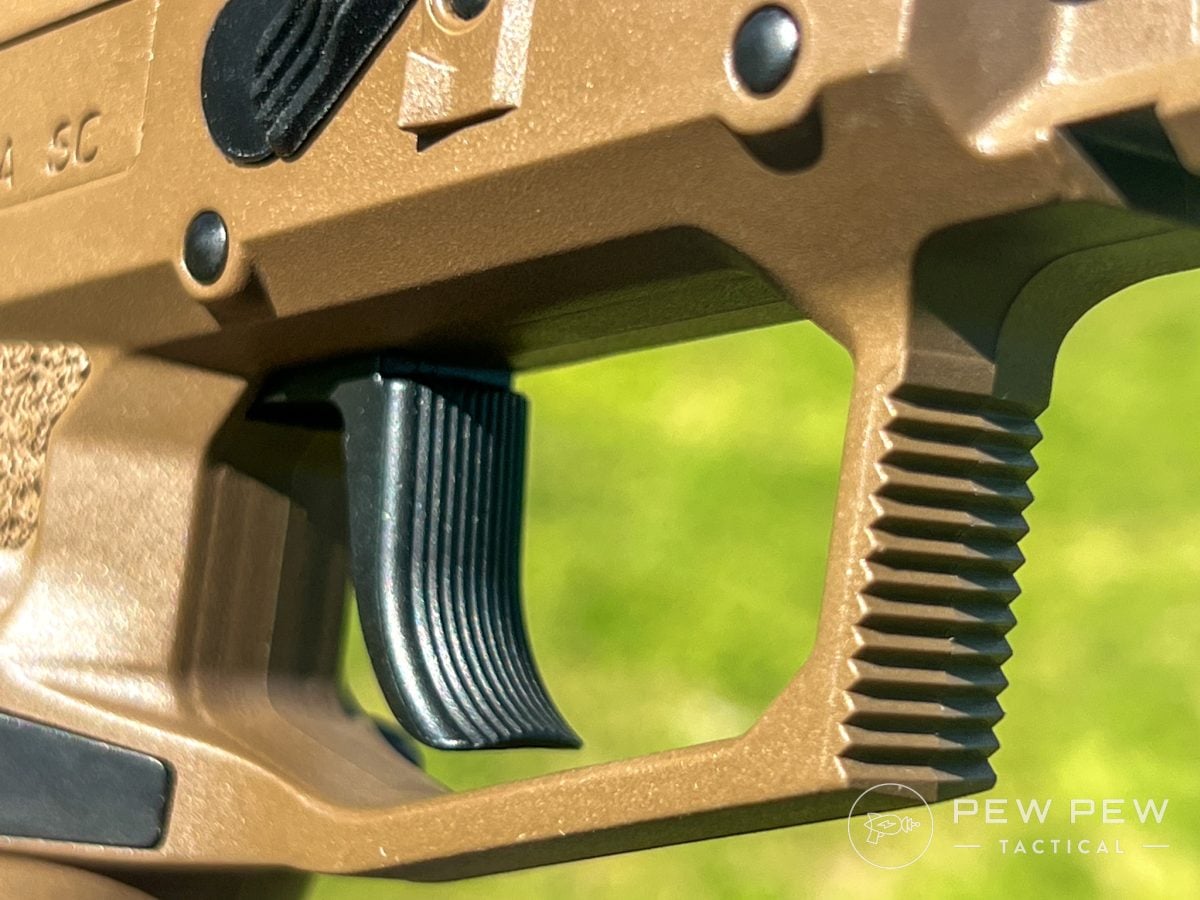
The safety reveals the Five-Seven’s European origin. Located directly above the trigger, this toggle can only be reached with the support hand thumb.
This creates a different manual of arms compared with most American-market guns, but can be gotten used to with training. The safety is located on both sides of the gun, so it is ambidextrous.
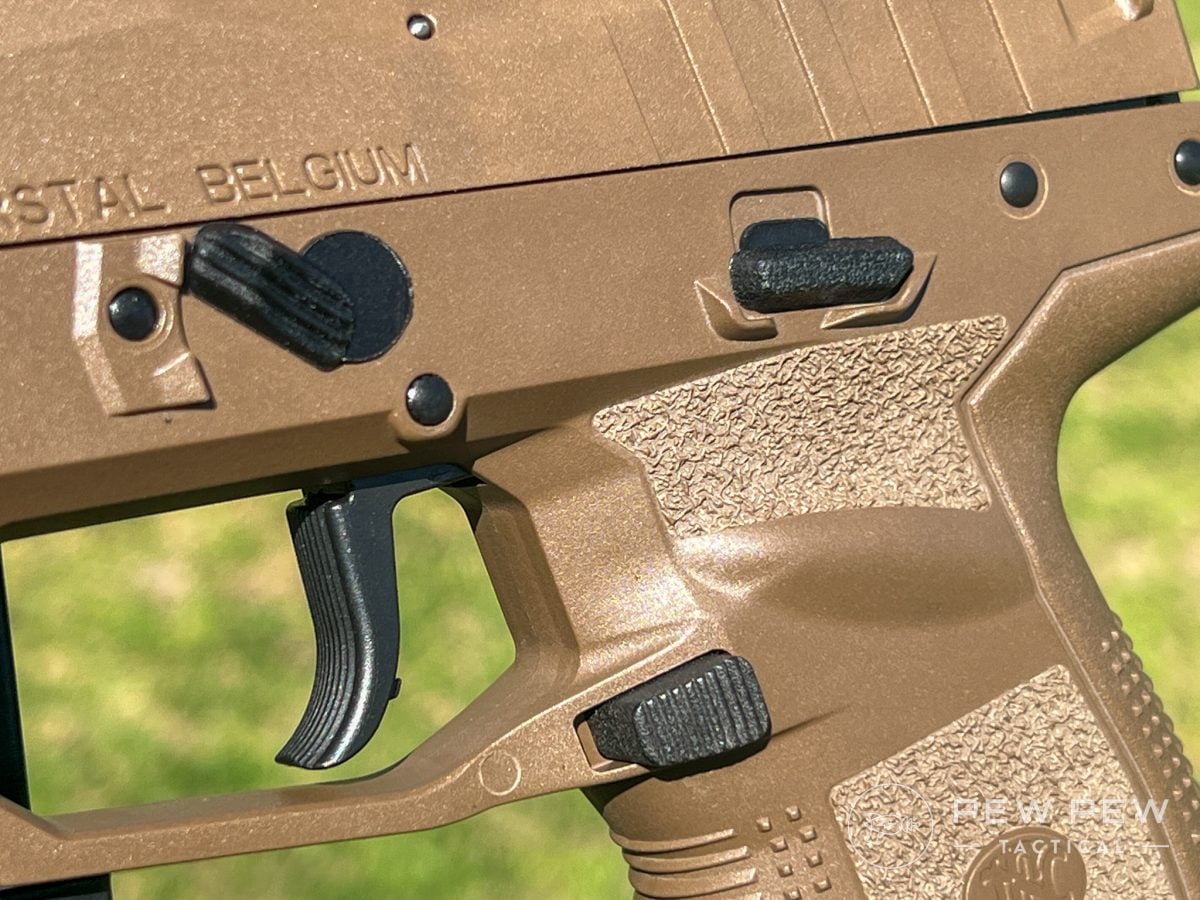
Following that theme, lefties will also appreciate the reversible magazine release. However, the slide catch/release is only located on the left side.
Controls are fairly ergonomically placed, though I suspect smaller-handed shooters would struggle to reach the magazine release. The more I shot the Five-Seven, the more accustomed I became to the minor differences
Who Is the FN Five-Seven MRD For?
The FN Five-Seven is a large handgun that would be challenging to conceal, but its design has benefits that may attract a certain type of shooter. First and foremost, it has an impressive capacity of 20+1, and this alone might win some people over.
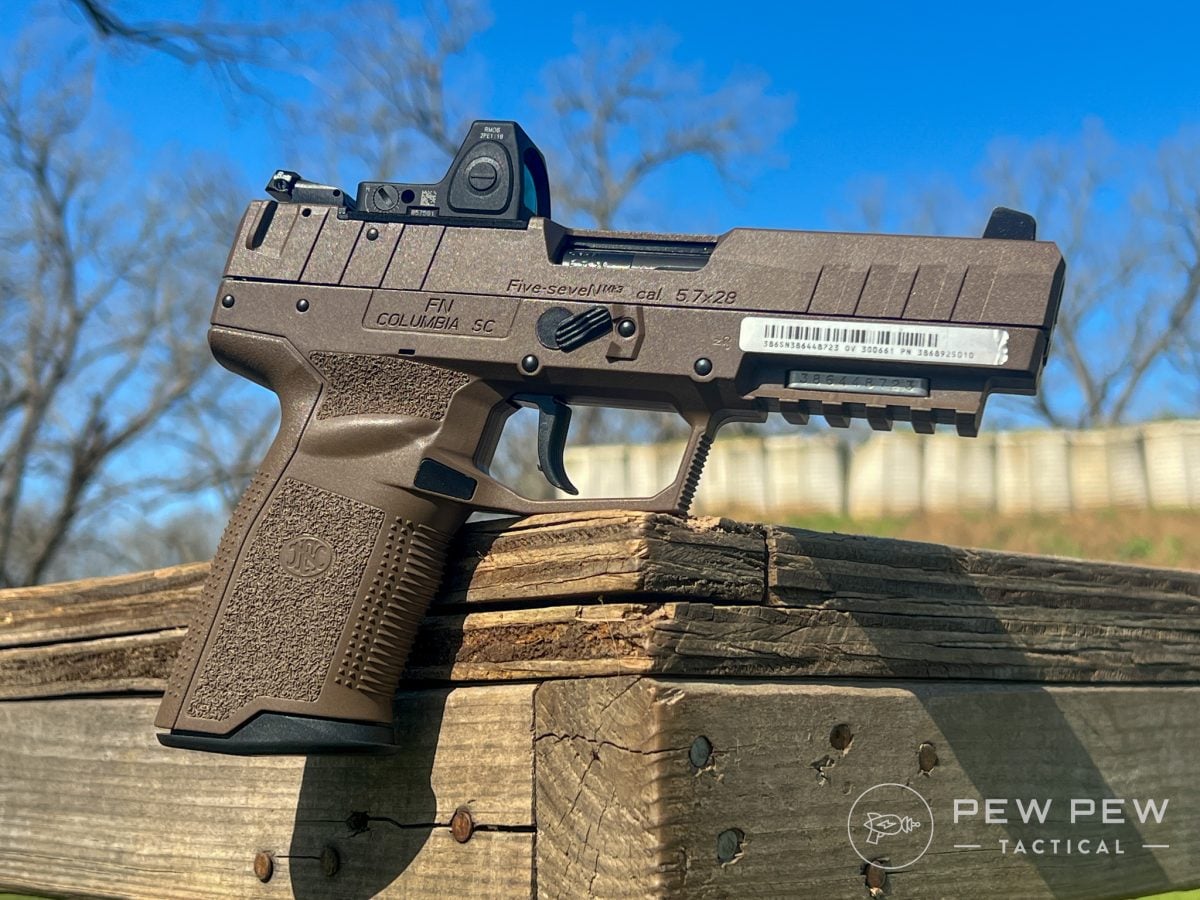
Second, the Five-Seven’s recoil is on par with a hot .22 round. It’s extremely manageable, so recoil-sensitive people could easily find the Five-Seven a great pistol for their needs.
While its size lends itself more to open or duty carry, the Five-Seven would also serve well as a home or vehicle defender. The newest version now allows you to mount lights and red dots to maximum benefit.
By The Numbers
Reliability: 3/5
The Five-Seven demonstrated decent reliability, though I found this to be somewhat ammo-dependent. The defensive ammo definitely caused cycling issues and failures to lock back toward the end of testing.
Ergonomics: 4/5
While the grip is a little wide front to back, the overall ergonomics are good. Ample slide serrations and well-placed controls are easy to manipulate once you get used to them.
Accuracy: 3/5
With two groups between 1.5 and 2 inches, the Five-Seven provides decent accuracy.
Customization: 3/5
While there isn’t a huge aftermarket, there are quite a few accessories you can pick up for the Five-Seven, like threaded barrels, suppressors, mag extensions, optics mounts, and even a 55-round drum magazine! Plus, the Picatinny rail up front allows you to mount lights of your choice.
Value: 3/5
The Five-Seven is in the upper mid-range of pricing, averaging around $1,000 on most retailers.
Overall: 3/5
Prices accurate at time of writing
Prices accurate at time of writing
-
25% off all OAKLEY products - OAKLEY25
Copied! Visit Merchant
Upgrades & Accessories for the FN Five Seven MRD
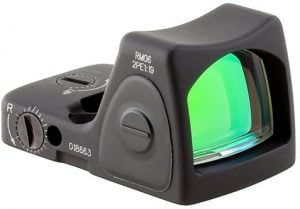
The Trijicon RMR is on the pricier side as far as red dots go, but it is a benchmark for a reason. The dot is rugged, reliable, and keeps working through austere conditions.
Prices accurate at time of writing
Prices accurate at time of writing
-
25% off all OAKLEY products - OAKLEY25
Copied! Visit Merchant
Because the MRD also includes a forward rail, a weapon-mounted light is a good idea for positively identifying targets in dark scenarios. The Streamlight TLR- HL is a great value, providing excellent lighting in a durable package, at an affordable price.

Prices accurate at time of writing
Prices accurate at time of writing
-
25% off all OAKLEY products - OAKLEY25
Copied! Visit Merchant
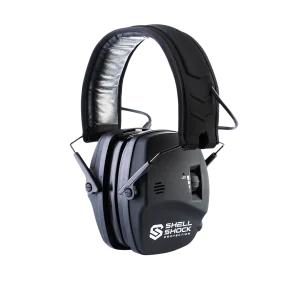
You’ll need some solid ear pro when you take the MRD out to the range. We recommend Shell Shock because they provide ample protection at a reasonable price, and they are comfortable enough to wear all day.
Prices accurate at time of writing
Prices accurate at time of writing
-
25% off all OAKLEY products - OAKLEY25
Copied! Visit Merchant
How We Tested the FN Five Seven MRD
For this review, we tested the FN Five-Seven MRD with iron sights and a Trijicon RMR Red Dot, shooting 10-round groups at 7 yards. We used 300 rounds of ammunition, both practice ammo FN GUNR 40gr FMJ and defensive ammo FN DFNS 30gr JHP.

We also tested the trigger on the Five-Seven with a Lyman Digital Trigger gauge to get an accurate assessment of the actual trigger pull weight.
Meet the Experts
At the helm of this review was Pew Pew Tactical Content Producer Sean Curtis. Sean has been shooting since childhood but really began to delve into guns more during his law enforcement career. He spent over two decades in law enforcement, where he became a POST-certified handgun instructor and NLEFIA Red Dot Instructor and received CLEFIA Advanced Firearms Instructor Training and AR-15 armorer training. He has since attended a variety of training, including Tactical Performance Center Handgun Mastery & Carbine Mastery, and earned USCCA rifle instructor certification. Aside from training and prior to joining the Pew Pew Tactical team full-time, Sean wrote for several gun publications evaluating and testing guns and gear and has written hundreds of articles.
Final Verdict
The latest version of the FN Five-Seven finally adds a red dot, bringing the platform into modern times. While it is a bit more expensive, there are definitely some benefits to choosing this firearm as a defensive option.
Chief among them is the capacity and stellar recoil impulse. Ammunition is still a bit expensive and should be tested for reliability before carry, but the Five-Seven is a solid choice with much to offer.
Will you be picking up a Five-Seven MRD? Let us know in the comments below. For even more 5.7 goodness, check out Best 5.7x28mm Guns & Ammo [Range-Tested]!














10 Leave a Reply
Thank You for sharing your Expertise and information,
Truly Appreciated, Sincerely from David O.
Thank you David! We appreciate the read and your comment.
Very nice review! However, referring to the paragraph in your article 'The safety reveals the Five-Seven’s European origin. Located directly above the trigger, this toggle can only be reached with the support hand thumb', I should point out that the only correct drill to disengage the safety (i.e. downwards) is to use your shooting hand trigger finger as soon as you bring up the pistol from its holster. And I do admit that the safety is located in a rather unique (European???) spot, but it works extremely well after some training.
Reversely, use your trigger finger again to engage the safety (up) before holstering, moving around etc. The simple reason is that you might not have your support hand available to flick on/off the safety.
To finish my comment, you will find that no other automatic pistol will shoot more accurately and as far as the Five seveN (try steel plates at 100 yards or more and you'll be amazed, even without red dot). Hardly any stoppages in my experience as a former Belgian soldier, so I suspect the JHP defensive ammo was indeed the culprit.
Cheerio and keep up the good work!
Peter, thank you for the read and sharing your experience!
Outstanding article! Well done! Well written review.
I’ve been a fan of the FN IOM Five Seven since it was released, but over the two decades that my wife and I have owned them, I was disappointed to learn that they weren’t suited to mounting an optic like one of Holosun’s red (or green) dot sights. The updated version has a lot of promise, A threaded barrel? Very cool.
As expensive as it is, I’ve appreciated the FNH ammunition.. never have had a problem with either the pistol or ammunition, and we’ve logged approximately 3,700 rounds through both of them. Their magazines have held up very well in the past two decades of use.
Thank you Chris, I appreciate it! With that much shooting, I'm surprised you haven't started your own blog.
Excellent article. Thank you for the review. I have the MRD and the P90. Both a joy to shoot. Easy to go through boxes of ammo at the range because of the limited recoil. I use them just as you described in the article for home defense. Controls easy to find in the dark. Couldn't ask for a better combination for that purpose. Surprisingly easy to get out to 100 yards if you need to. Accuracy can be better with certain types of ammo. I use a Trijicon SRO on the MRD and sight in at 15 yards.
Thank you Winslow! You make a great point. It is so easy to shoot, it's reminiscent of a .22, but the price of each shot is significantly higher!
Outstanding article sir
Thank you Bill! I sincerely appreciate the read and your comment.