
[Beginner’s Guide]: Buckshot for Home Defense
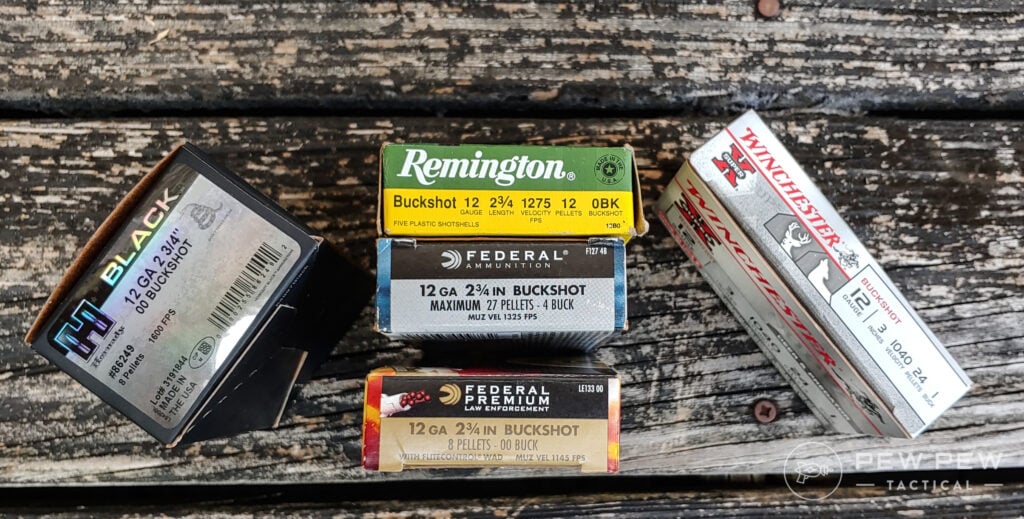
New to shotguns and on the hunt for the best ammo for home defense? Come read up on buckshot and why you should have some in your safe.
We review products independently. When you buy through links on our site, we may earn a commission to help support our testing. Learn more.
Shotguns have experienced a huge resurgence in popularity over the past few years.
Without a doubt, shotguns are more versatile than any other type of firearm. Much of that versatility comes from the wide variety of ammunition available for these guns.
But when it comes to self-defense, buckshot still reigns supreme. But with so many different brands and loads available, it can be confusing if you're just starting out.
In this article, we're going to cover what buckshot is, why you should use it, and what loads are most effective. Ultimately, we're here to help you save time and money!
So, read on!
Table of Contents
Trending: Best AR-15s, Best Pistol Red Dots, & Ammo in Stock
The 12-Gauge Standard
While many shotgun calibers (gauges) exist, only one has the market support to warrant discussion --- 12-gauge.
We're not dismissing other calibers; they can be great options for certain people or situations.
But, word of warning, you may find yourself frustrated by the lack of loads designed for defensive and tactical applications if you opt for a 20-gauge or .410 bore.
With that said, we are approaching this from a 12-gauge perspective, as it's the most common caliber for defensive/tactical use.
Why Buckshot?
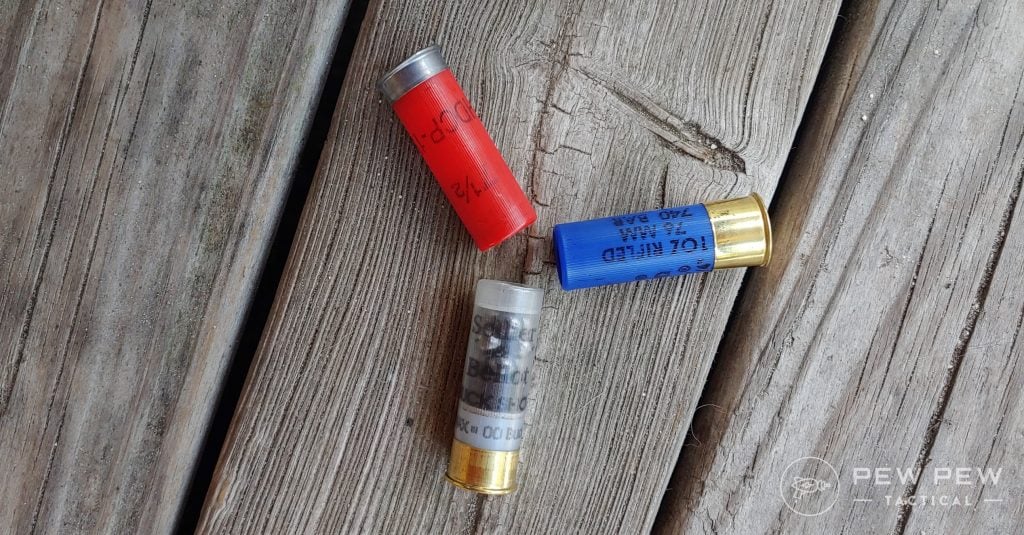
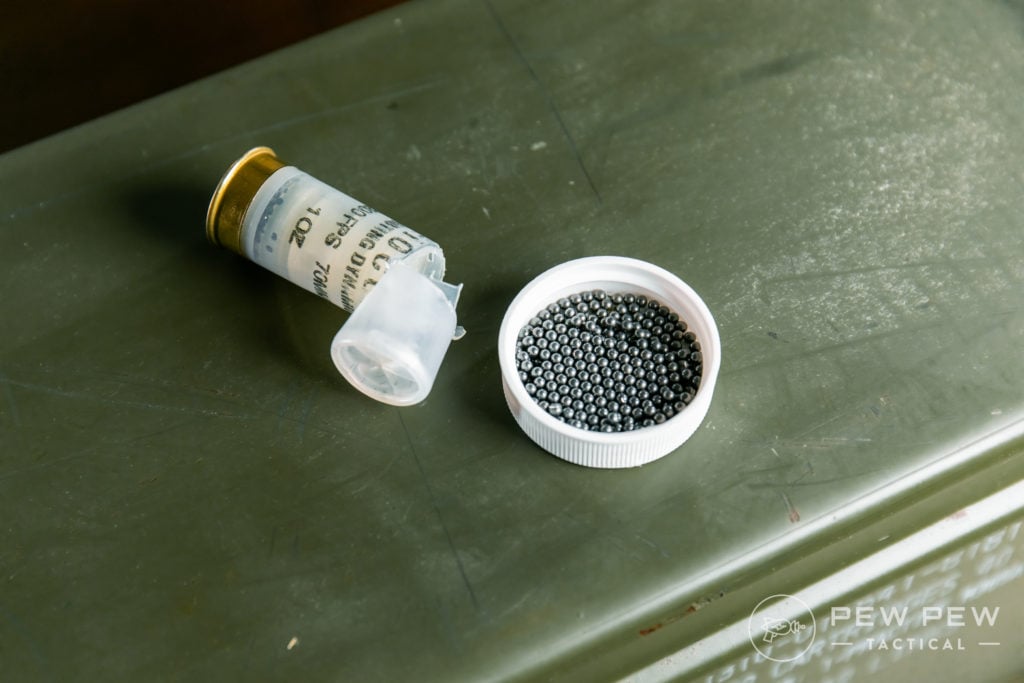
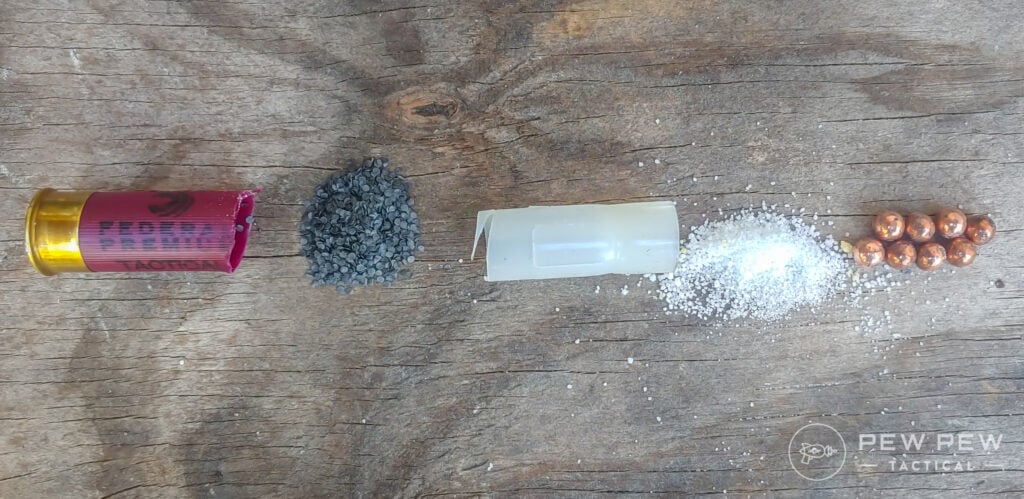
Buckshot is a type of shotgun round that uses several large pellets as opposed to the numerous tiny pellets of birdshot.
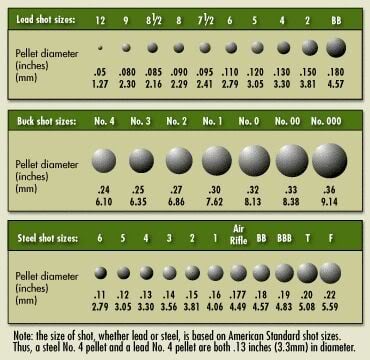
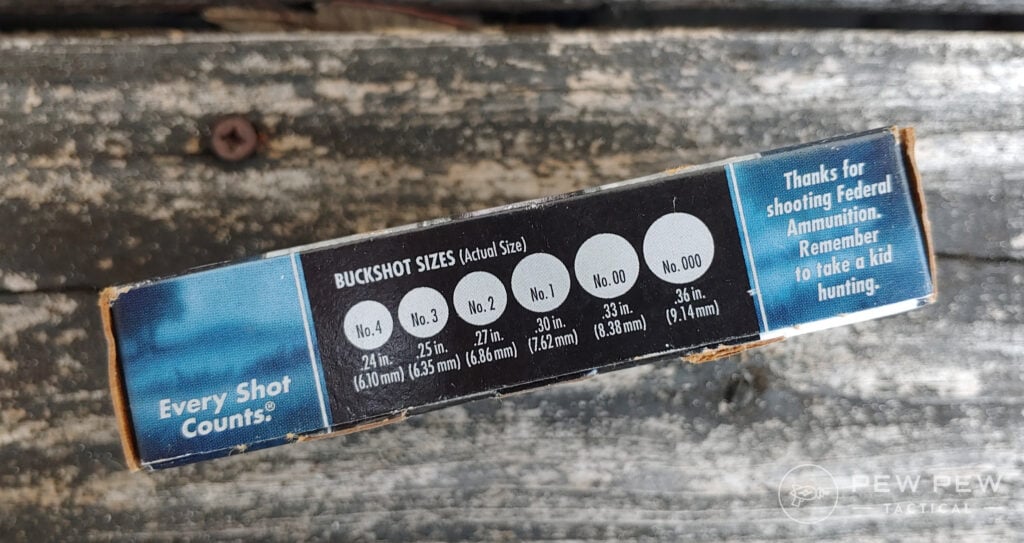
These larger pellets typically range from .24 caliber to .36 caliber and are primarily intended for hunting medium- to large-sized game, as well as for self-defense.
For defensive purposes, the most effective way to stop a threat is proper shot placement.
Most buckshot contains anywhere from 8 to 54 pellets, depending on the size of the buckshot and shell being used.
Not only do the pellets themselves spread out in a pattern when fired, but when a load of buckshot hits a threat, the pellets themselves begin to spread even further.
These pellets cause tons of damage, and each additional pellet increases your chances of striking a vital portion of the body. Even if every pellet misses a vital organ, the resulting damage causes massive blood loss, which is the second most effective means to stop a threat.
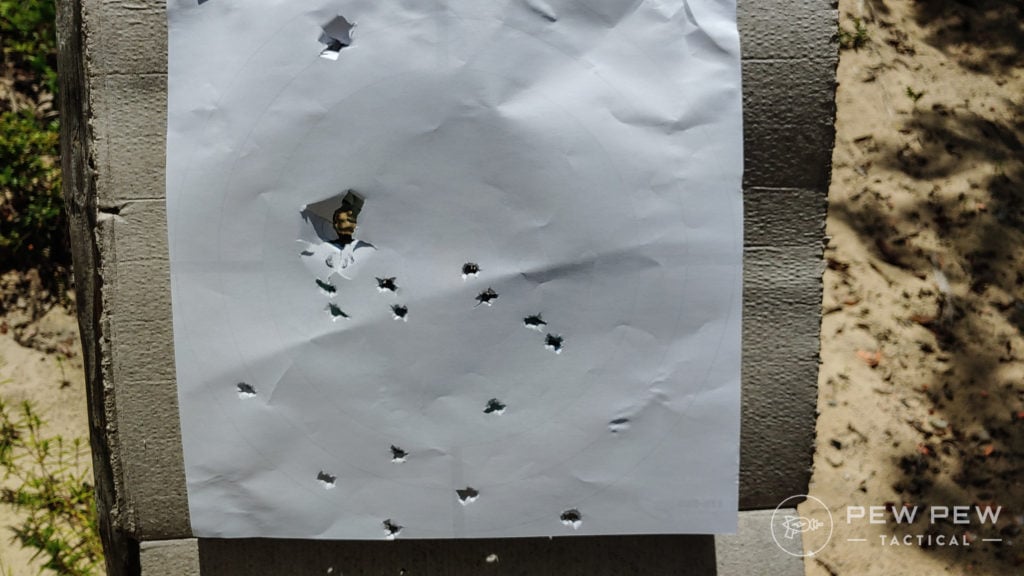
According to Greg “GorillaFritz” Ellifritz’s research, buckshot to the torso generates the highest percentage of one-shot stops at close range.
While you still have to aim, contrary to some myths, buckshot offers a very high hit probability when used correctly.
Why Not Slugs or Birdshot?
Slugs are single, large projectiles that are highly effective and can deliver a significant amount of energy to a target.
While the power of slugs can be alluring, you only get one projectile. If you miss, you now have a very heavy and powerful round that is going to sail through walls, doors, and just about anything else.
Even if you do hit the target, the risk of overpenetration with slugs in a defensive situation is very real.
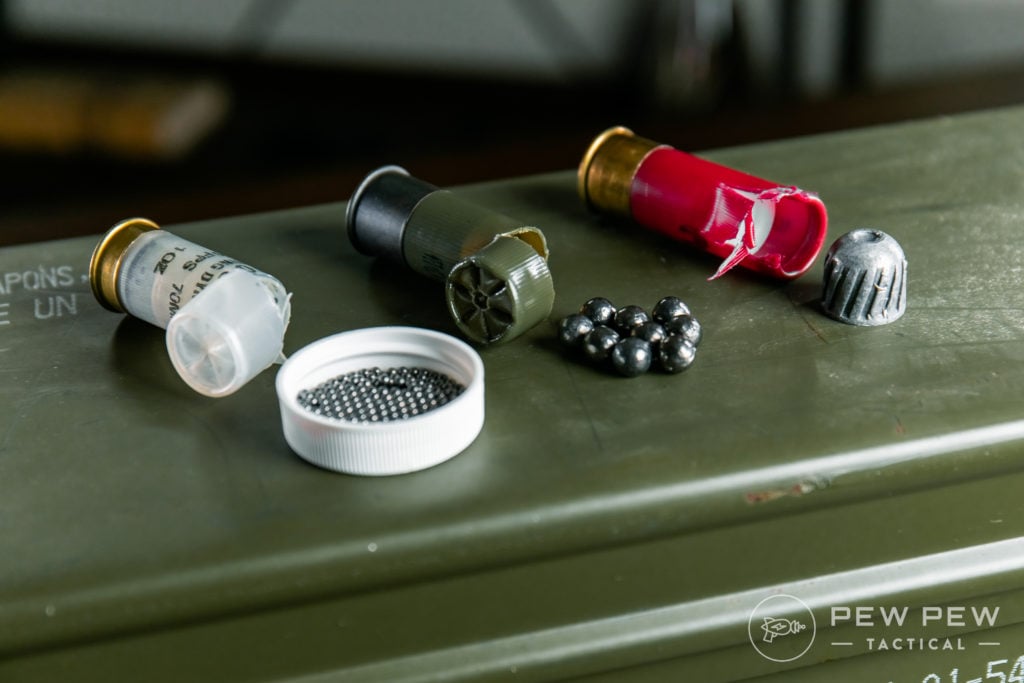
Slugs are better suited for longer range applications, or when you are hunting large game like bear or moose, where penetration is paramount. For home defense, they offer limited advantages.
So what about birdshot? Simply put, it just doesn't have enough penetration.
I’m not saying birdshot can't be lethal at point-blank range, but most birdshot lacks the mass and energy to be lethal even at standard home defense ranges.
If overpenetration is a major safety concern for you, we highly recommend looking into an AR-15 instead of using birdshot.
Types of Buckshot
As mentioned earlier, buckshot is available in various sizes.
Here are some of the most common buckshot sizes you will most likely encounter.
- Number 4: .24 caliber pellets
- Number 3: .25 caliber pellets
- Number 2: .27 caliber pellets
- Number 1: .30 caliber pellets
- Number 0: .32 caliber pellets
- Number 00: .33 caliber pellets
- Number 000: .36 caliber pellets
Some of these are more common than others, while some you may only encounter in specific calibers.
For example, finding No. 3 buckshot is easy…if you have a 20-gauge. If you have another caliber, you might find it difficult to find that load.
Some rounds, like No. 2, are uncommon, and you are unlikely to find a modern tactical load in that pellet size.
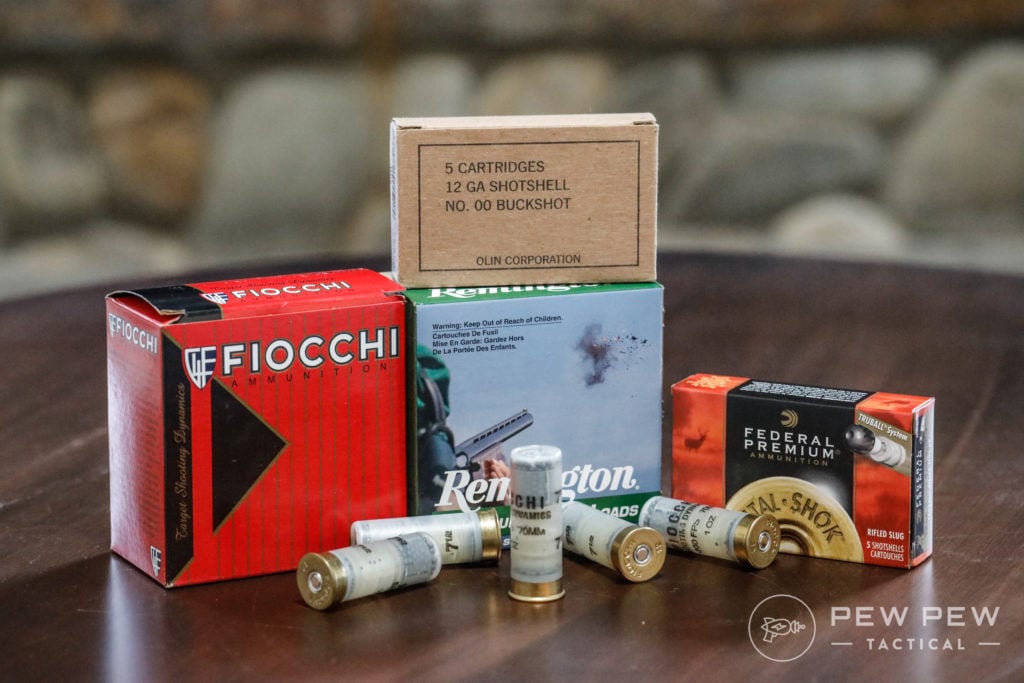
From a defensive perspective, there are three popular loads used for self-defense and tactical use.
These are No. 4, No. 1, and 00 buckshot.
00 Buck
Double 0, 00, or double-aught, however you decide to write it, is the most common buckshot on the planet.
It’s used by the military, police forces, hunters, and countless home defenders for its balance of stopping power and barrier penetration.
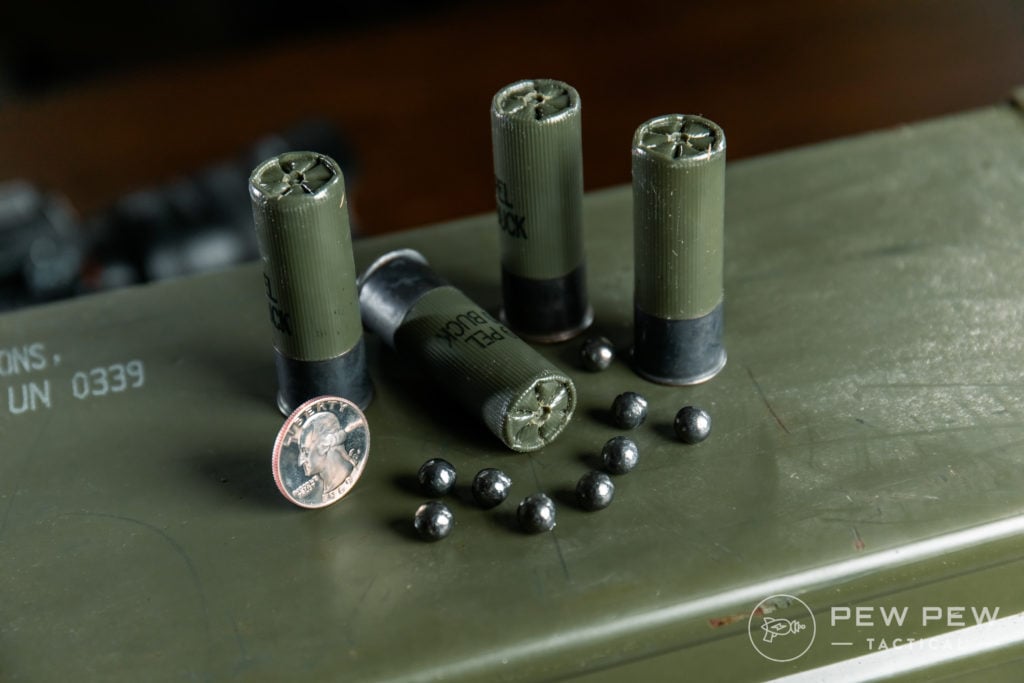
The popularity of 00 buckshot ensures there are many different loads produced for it, and that it is readily available almost anywhere ammunition is sold.
Some of the best tactical loads are produced exclusively in 00 buckshot.
No. 4 Buck
The second most popular defensive buckshot choice is No. 4, also known as 4 buck.
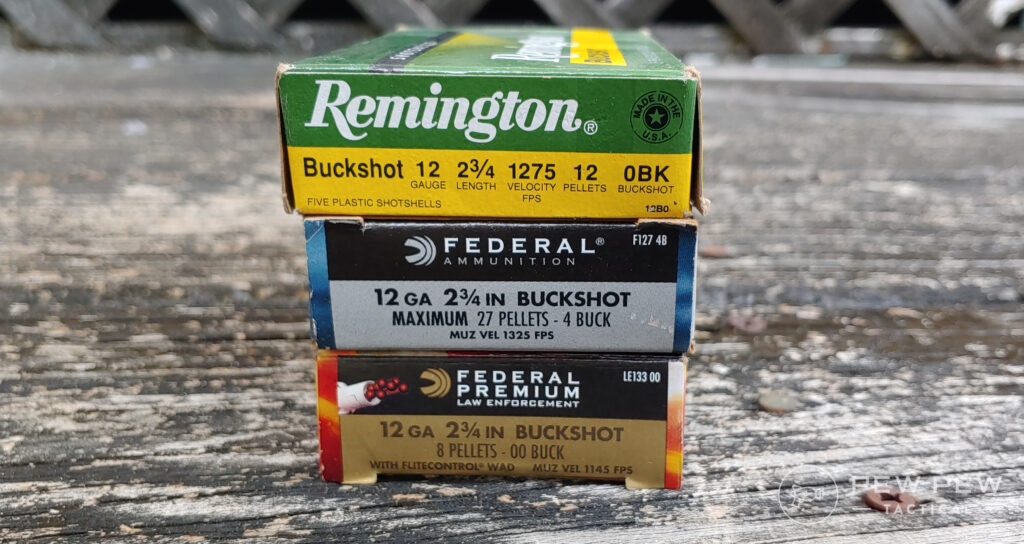
Although much less popular than 00 buck, 4 buck is lauded for the sheer amount of pellets it packs. A standard 2.75-inch No. 4 buckshot load contains 27 pellets, and that’s a hearty load.
No. 4 is my favorite coyote load because I can hit a moving target a bit easier. However, it’s not my favorite home-defense load.
Why's that?
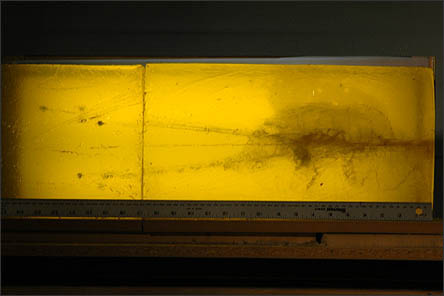
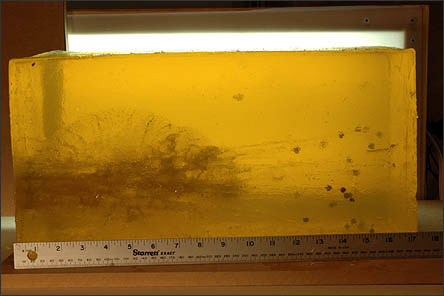
Mainly because tests have shown that No. 4 buckshot does not always consistently meet FBI standards for lethal penetration.
And while No. 4 loads penetrate less than 00 through drywall, the myth that they are completely safe for overpenetration has been disproven. According to the Box o’ Truth, No. 4 can penetrate up to six interior walls.
No.1 Buck
It's worth mentioning that No. 1 buckshot is the smallest buckshot that consistently performs up to FBI ballistic gel test standards, which incorporate layers of clothing. (No. 1, Single 0, Double 0, and Triple 0 all consistently meet the FBI standards.)
An average load of No. 1 buckshot holds 15 to 16 pellets, placing it between 00 and 4 buck in pellet capacity.

The problem with No. 1 is that it’s not very popular. Only a few No. 1 buckshot loads are available on the market, none of which are dedicated tactical loads.
However, some of the hunting-oriented No. 1 loads are perfectly adequate for home-defense use.
Shell Length
In addition to caliber/gauge and shot size, shotgun shells also come in different lengths.
Different shells have different use cases, and not every shotgun can accept every type of shell length. But typically, the longer the shell, the more pellets and powder it can hold.
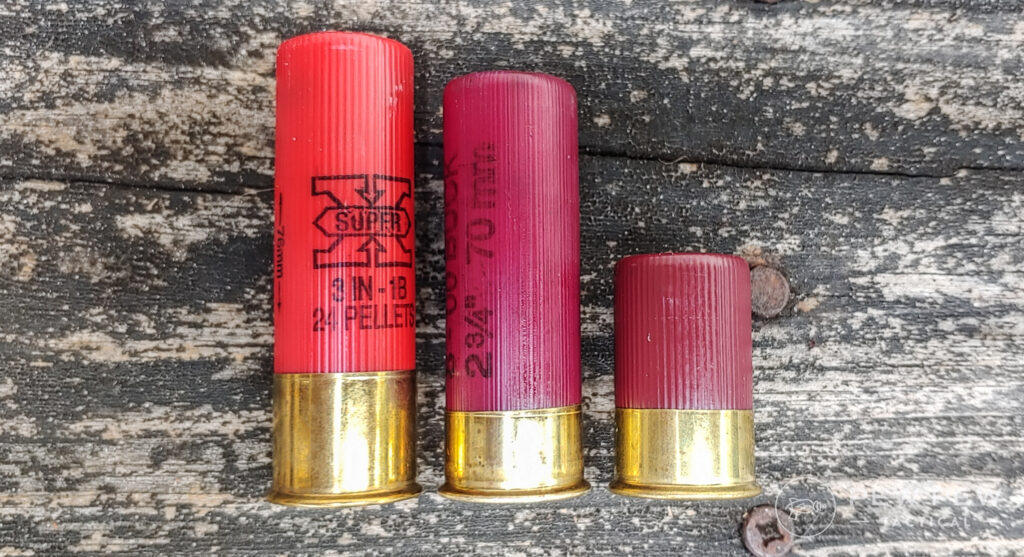
Here are the most common 12-gauge shell lengths:
The Best Gun Deals, Coupons and Finds
Subscribe to Pew Pew Tactical's sales and deals email.
2.75-inch
Also known as 2 3/4 shells, these are the most popular length of shells, as they offer a good balance between payload and recoil. The vast majority of 12-gauge ammo, whether it be tactical, hunting, or home-defense, is going to be 2.75" shells. Every modern shotgun can accept these shells.
3-inch
Most modern shotguns (but not all) typically have a 3-inch chamber that allows them to safely use larger 3-inch shells. These 3-inch shells are considered "magnum" and are most popular among hunters seeking extra pellets. There are far fewer tactical loads in 3-inch shells due to the larger amount of recoil they generate and the reduced magazine capacity you get (longer shells take up more magazine space).
3.5-inch
Also known as "super magnums," 3.5-inch shells are traditionally used exclusively for hunting larger game, including big birds such as turkeys and geese. To safely fire these, a shotgun with a 3.5-inch chamber is required. Most shotguns in this chambering are sporting models, not tactical models. The few buckshot loads available for 3.5-inch shells have extremely stout recoil and are not well-suited to home-defense roles.
Mini Shells
The aptly named Mini Shells are speciality small shells, typically 1.75 inches in length. They have lower payloads and lower recoil while allowing you to fit many more of them in a standard magazine tube. While they are a ton of fun, with some usefulness for hunting small game, they tend to work poorly in shotguns because most guns aren't designed to run them natively.
Plated or Unplated Shot
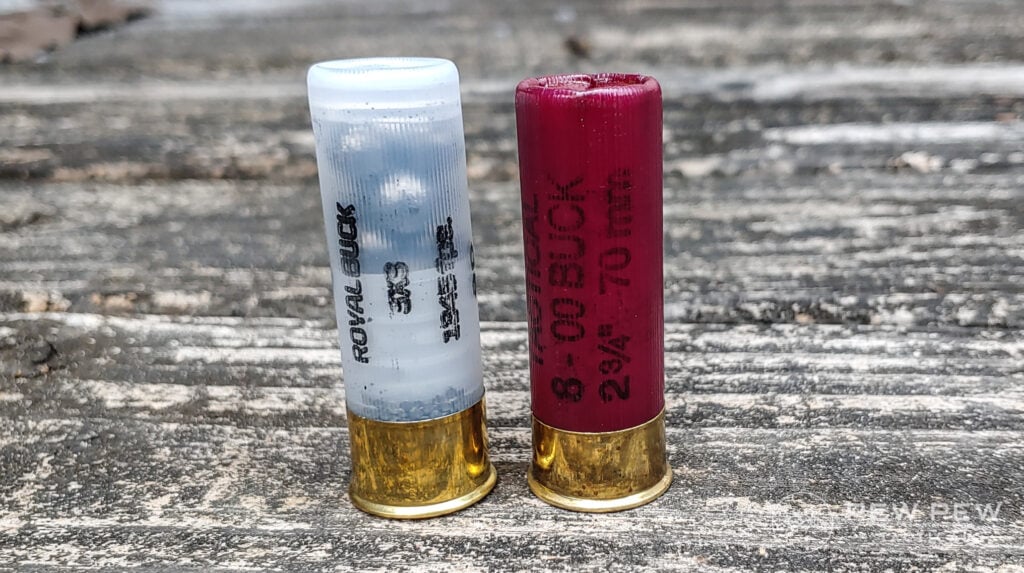
Buckshot can come from the factory either unplated or plated.
Unplated shot is simply just lead balls. These are typically bare-bones, basic pellets that work.
Plated shot is when the manufacturer elects to cover the exposed lead pellets, typically with either a copper or nickel plating solution.
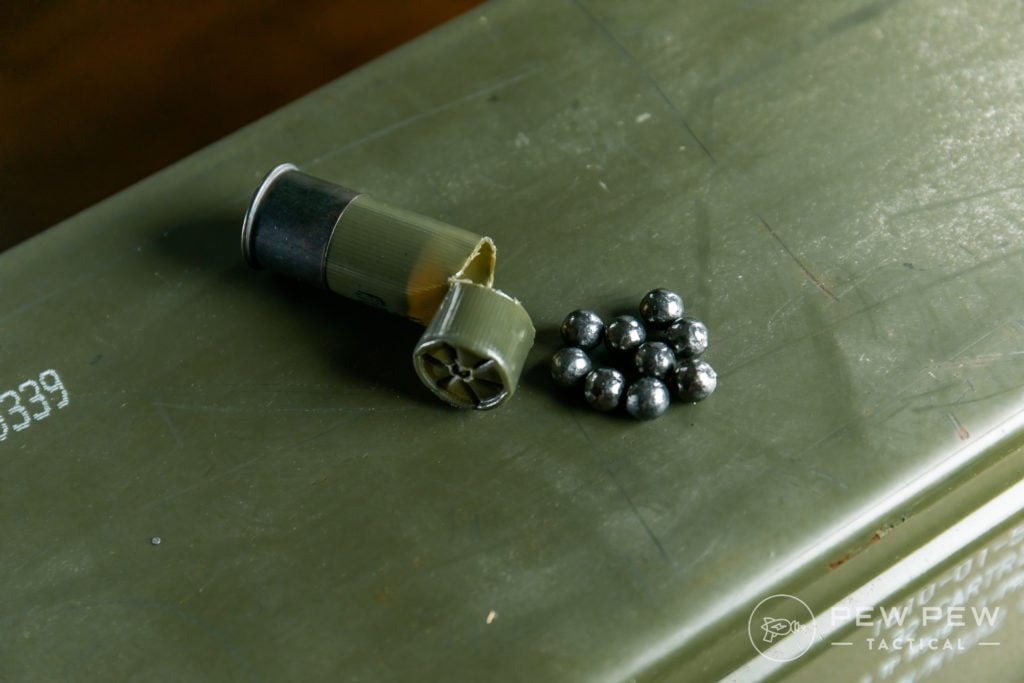
Plating creates a harder surface than bare lead, which in turn helps the rounds deform less when traveling together down the barrel.
This is important because deformed rounds often turn into flyers. These flyers are pellets that depart from the rest of the shot group and can travel erratically.
Fewer flyers means tighter groups, and tighter groups mean better shot accountability.
While buckshot plating alone does not guarantee a tight shotgun pattern, it can be an important factor when selecting a load that patterns well.
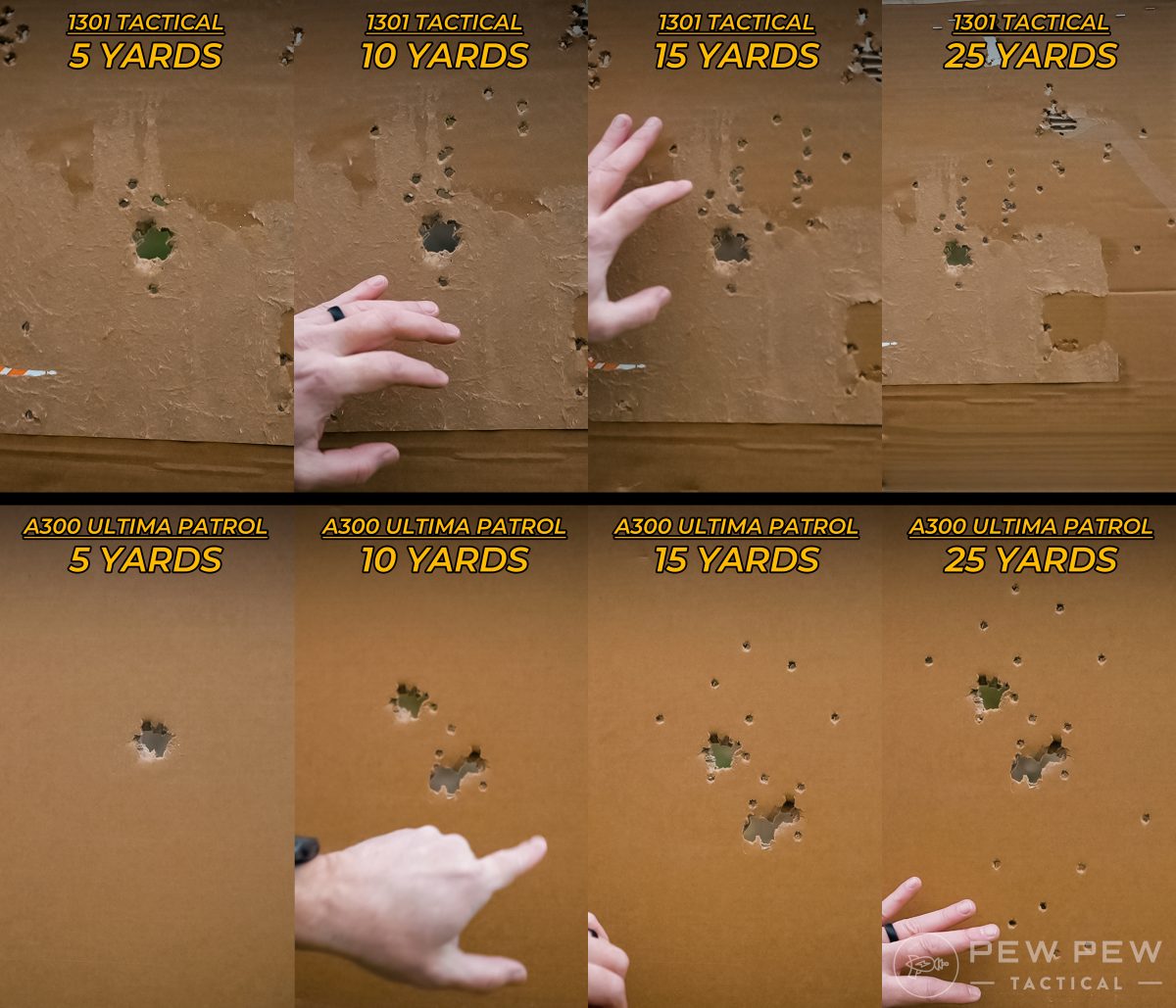
There are also some who say plating makes the pellets harder and gives better penetration. However, this is disputed by tests that show the hardness of the lead shot is a more important factor than plating.
Patterning is one of the most important steps when setting up a home-defense shotgun. But don't worry, we have you covered with our article on Shotgun Patterning 101!
Low-Recoil or Managed-Recoil Rounds
When shopping for purpose-built tactical shotgun loads, you’ll see the phrase "low recoil" or "managed-recoil" fairly often.
These are exactly what they sound like --- rounds built with the express purpose of producing less recoil for the shooter.
Most low-recoil 00 loads have a velocity of 1,150 to 1,200 feet per second, whereas standard buckshot loads can vary from 1,300 to 1,600 feet-per-second.
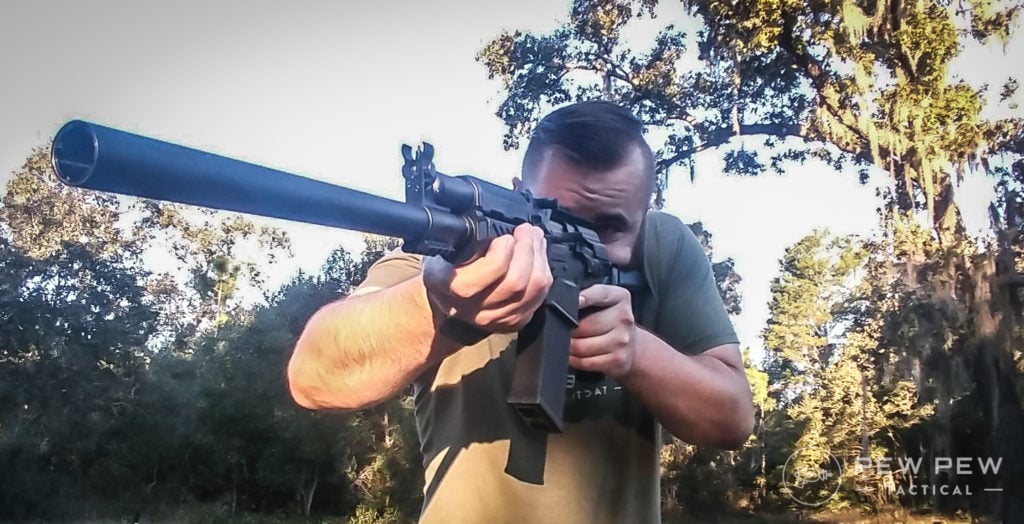
Most low-recoil buckshot loads still produce more than enough force to remain lethal, while being easier to handle and softer on the shoulder.
Softer recoil makes follow-up shots quicker and easier, which is paramount in a defensive situation.
There are numerous tactical and defensive loads marketed as low-recoil, and I typically recommend low-recoil rounds for self-defense, with one big caveat.
If you are using a semi-auto shotgun, you need to ensure those rounds will cycle in your weapon without issue. That means load ‘em up, hit the range, and ensure they cycle.
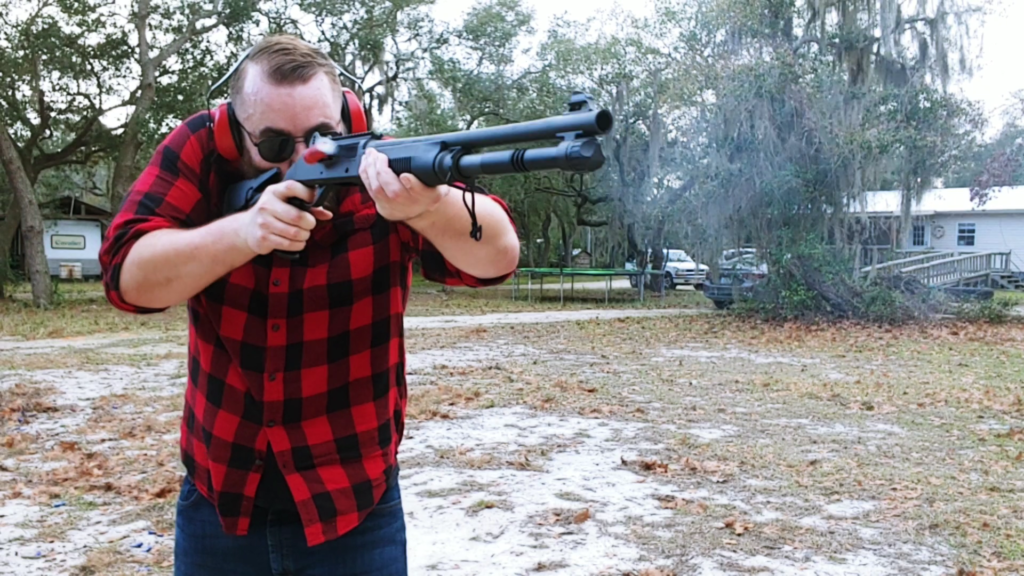
Shotguns like the Benelli M4 and Mossberg 930 SPX seem to have no issues with low recoil loads, but I can’t speak for every shotgun. Test it out, and if it doesn’t run, choose a different load.
If you are using pump-action shotguns, you are absolutely golden.

Best Defensive Buckshot Loads
If you just want a simple answer on which buckshot to choose, then I have some suggestions for you. The following are best when paired with a defensive shotgun.
1. Federal FliteControl 00 Buckshot, 8 Pellet
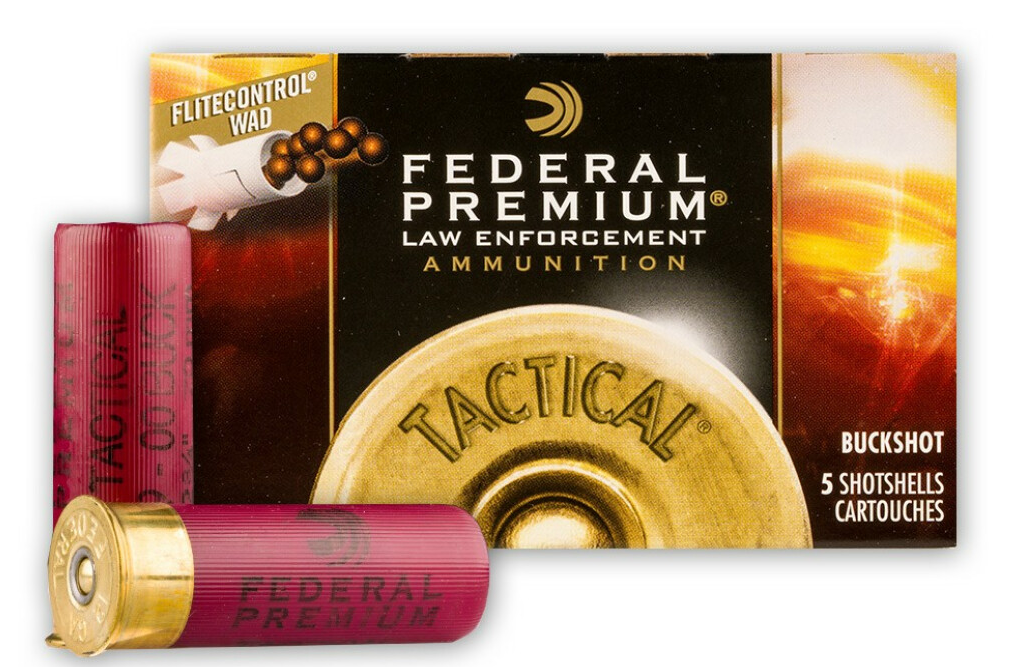
Federal FliteControl 8 Pellet is my favorite buckshot load. These rounds cycle in my semi-auto shotguns and keep the tightest pattern I’ve ever seen.
At 15-yards, the pellets are in a group the size of my hand. This is thanks to the FliteControl Shot cup. This is the gold standard for defensive loadings and is popular with law enforcement agencies due to its effectiveness.
Simply put, this is the best defensive 00 buckshot out there. (Psst, I prefer the 8 pellet load to reduce the chance of flyers!)
Our Most Popular Posts
2. Hornady Critical Defense / Hornady Black 00 Buckshot
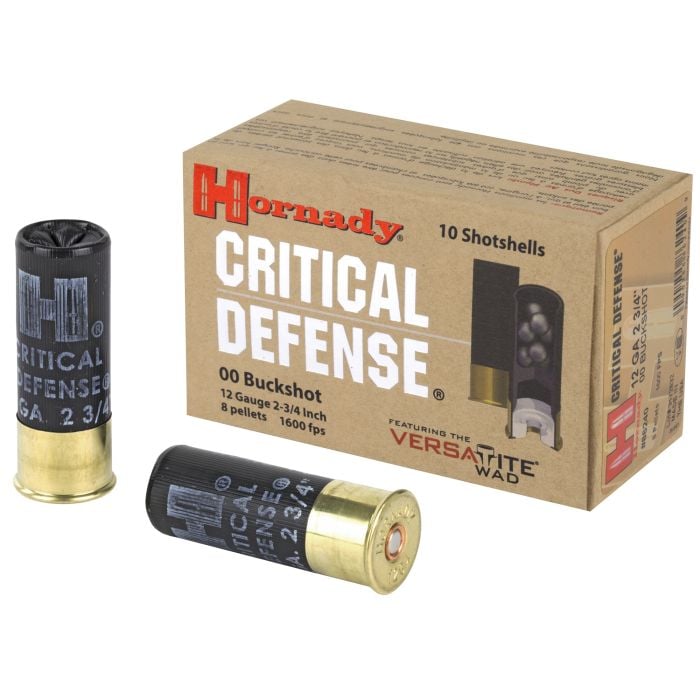
Hornady Black and Hornady Critical Defense are identical 00 buckshot loads that are great choices for self-defense.
These loads are particularly well-suited for semi-automatic guns because they are full-power loads. They launch 00 projectiles at 1,600 FPS, which is enough to make any quality shotgun cycle reliably.
Hornady uses a Versatite shot cup that is identical to Federal's FliteControl. I’d hazard a guess that both companies buy the shot cups from the same company. Needless to say, it patterns very tight.
If you can't find Federal FliteControl, this is the next best thing. These come in packages of ten shells instead of five.
3. Remington Managed-Recoil 00 Buckshot
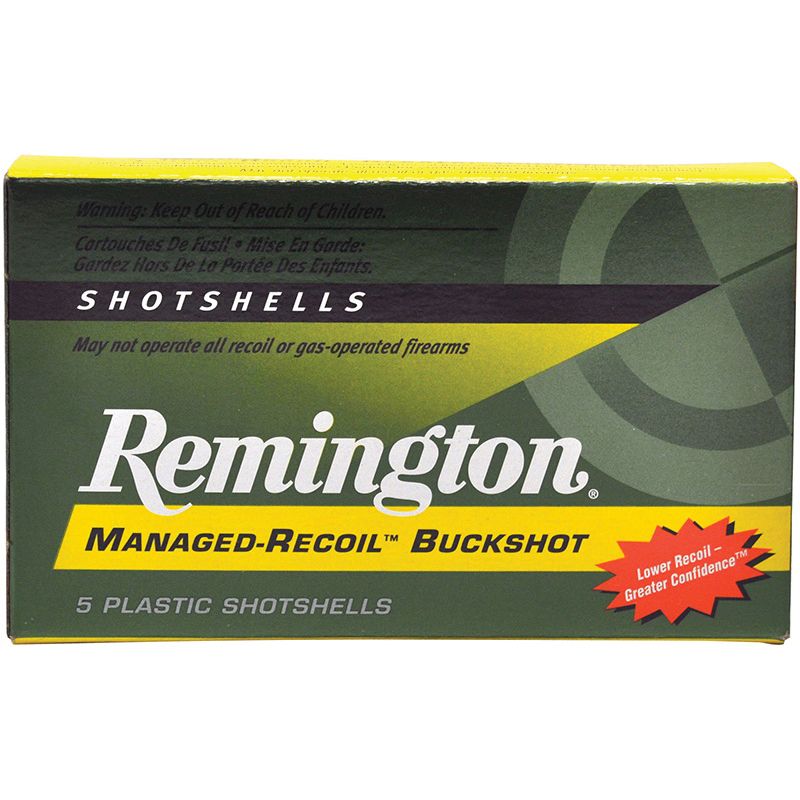
A simple, reasonably affordable buckshot option is Remington Managed-Recoil buckshot.
These 8-pellet loads are often marked "law enforcement" but are very reliable, easy to handle, and pattern well with budget-friendly ammo.
They don’t feature a fancy shot cup, but at home defense distances, they are perfectly suitable. They pattern tight enough and will deliver an effective firing solution that won't beat up your shoulder.
4. Winchester Super-X Buffered No.1 Buckshot
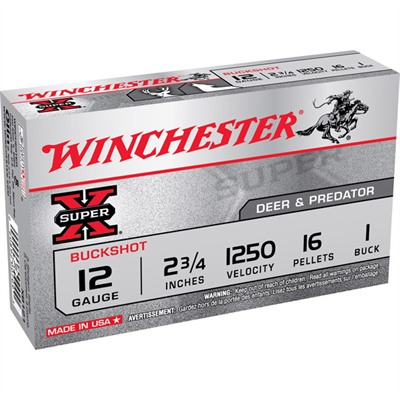
No. 1 buckshot is sometimes hard to find, but a common load I see is Winchester Super-X.
This buckshot throws out 16 pellets at a respectable 1,250 FPS. It’s not quite reduced-recoil, but it's still very controllable.
This stuff cycles well in semi-autos in my experience, including some cheaper models. It delivers a lot of lead and will most certainly stop a target.
It’s perfect if you are a tactical hipster who really wants to deliver the most lead per shell possible.
Other Considerations
Before I leave you, I have three pieces of sage advice regarding buckshot.

8 pellets are better than 9
I strongly recommend 8-pellet 00 buckshot over 9-pellet 00 buckshot. The reason? Flyers. The way the pellets are oriented to fit one extra round in there often causes that last pellet to fly off in a random direction. This is a well-documented phenomenon known as the "9th pellet flyer." It can sometimes be difficult to find an 8-pellet buck over 9-pellet, but if you can find it, spring for it.
Chokes Aren’t Always Great
Shotgun choke tubes and inserts at the end of a shotgun barrel that restrict the pellets as they pass through. Chokes are meant to help control the size of the shot pattern at a given distance.
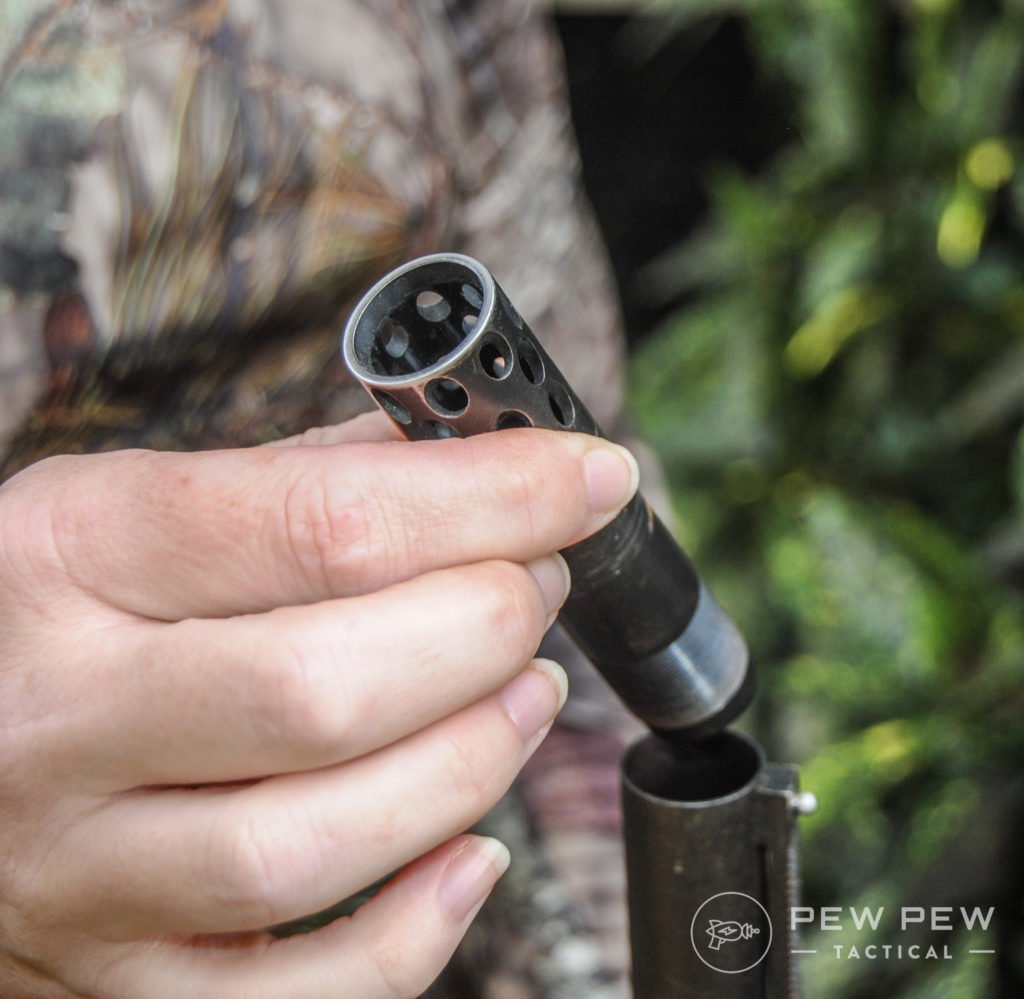
However, when using buckshot specifically, chokes can often cause the shot to pattern wider, or worse, pattern unpredictably. Most buckshot is meant to be fired out of a standard cylinder bore (no choke or fixed choke) shotgun. Be sure to check your choke if you are having issues patterning your buckshot.
Shell Lengths Are Weird
Shells are measured prior to being crimped and closed. Different manufacturers use different crimping processes, which can sometimes create shells that are longer than others when crimped.
This can sometimes result in reduced magazine capacity if the shells you are using are running a bit long. For example, I have some cheap Rio buckshot that only allows me to fit four rounds in a 5-round magazine tube. If you run into any issues loading your shotgun to the advertised capacity, be sure to measure the load’s crimped shell length; it may be the ammo and not your gun.
Meet the Experts
This article was written by Pew Pew Tactical author Travis Pike. Travis spent a lifetime shooting as a kid and later joined the United States Marine Corps, where he spent five years as an infantryman.
His experience as a machine gunner, recreational and competitive shooter, hunter, and concealed carry instructor has given him unique insight into various weapon platforms. But shotguns are his true passion. Travis has countless articles to his name with a variety of publications on shotguns, shotgun accessories, and shotgun ammo. It is safe to say that he knows his way around scatterguns.
Final Thoughts
Understanding buckshot and choosing the right loads for your shotgun will undoubtedly improve your shooting experience. Hopefully, you learned a thing or two that can help you save time and money!
Do you have some buckshot tips or tricks? Share your buckshot wisdom in the comments below! Don’t forget to also check out our article on the Best Home-Defense Tactical Shotguns.