
16 Best AR-15 Triggers [Hands-On with Video – 2026]
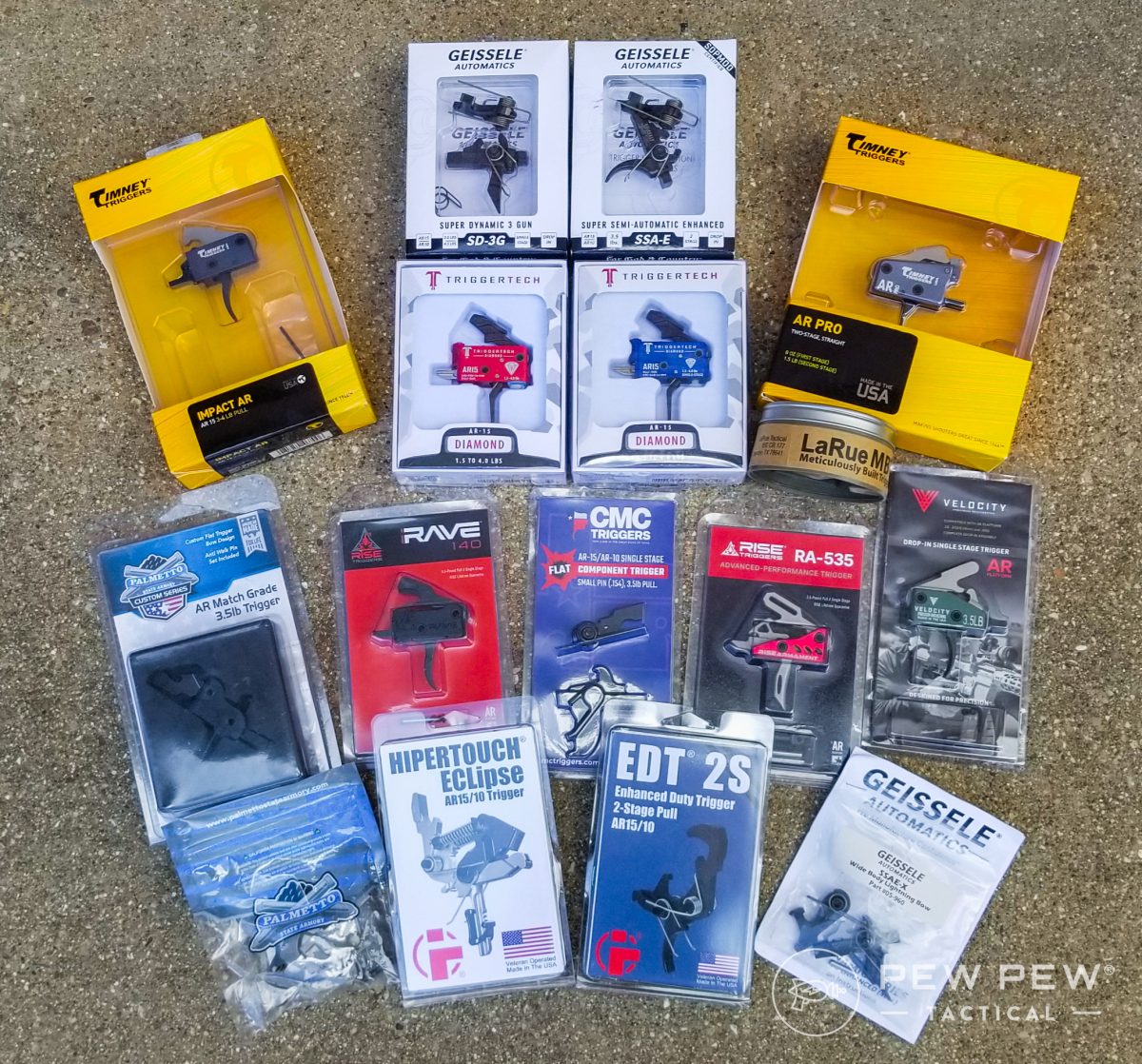
Looking for the perfect AR-15 trigger? We cover the most popular from drop-in to upgraded mil-spec. Plus video of each trigger pull and fastest split times.
We review products independently. When you buy through links on our site, we may earn a commission to help support our testing. Learn more.
- The Quick List
- Our Favorite AR-15 Triggers in Under a Minute
- AR-15 Trigger Comparison Chart
- How We Tested the AR-15 Triggers
- Best Drop-In AR-15 Triggers
- Best Standard AR-15 Triggers
- Drop-In vs. Standard Triggers
- Single-Stage vs. Two-Stage Triggers
- Understanding the TriggerScan Graphs & Key Terms
- Final Thoughts
- Latest Updates
Looking for the best AR-15 triggers on the market? While the AR-15 is widely regarded as one of the best rifles ever made, the stock mil-spec triggers many of them ship with leave a lot to be desired.
Swapping out triggers is pretty easy thanks to the AR-15's modularity, but that still leaves one question...which trigger is the best?
With the help of the Dvorak TriggerScan, we have brought you physical graphs and real readouts of what is actually going on during the trigger pull, so you can compare graphs and see who the real winners are.
We tested over a dozen aftermarket AR-15 triggers to get the most comprehensive data possible to help you find out which trigger is right for you.
Be warned, this is a long and technical article by nature, but if you aren't interested in the technical jargon, you can check out our fast-and-easy cheat sheets just below!
The Quick List
- Best For Competition: Timney AR PRO Two-Stage AR-15 TriggerJump to Details ↓
- Best Value Trigger: Rise Armament Rave 140 AR-15 TriggerJump to Details ↓
- Best Adjustable Weight Trigger: TriggerTech Diamond Two-Stage AR-15 TriggerJump to Details ↓
- Best Single-Stage Trigger: TriggerTech Diamond Single-Stage AR-15 TriggerJump to Details ↓
- Best All-Purpose Trigger: Geissele SSA-E X Lightning Bow AR-15 TriggerJump to Details ↓
- Most Adjustable Standard Trigger: Hiperfire Hipertouch ECLipse AR-15 TriggerJump to Details ↓
Table of Contents
- The Quick List
- Our Favorite AR-15 Triggers in Under a Minute
- AR-15 Trigger Comparison Chart
- How We Tested the AR-15 Triggers
- Best Drop-In AR-15 Triggers
- Best Standard AR-15 Triggers
- Drop-In vs. Standard Triggers
- Single-Stage vs. Two-Stage Triggers
- Understanding the TriggerScan Graphs & Key Terms
- Final Thoughts
- Latest Updates
Trending: Best AR-15s, Best Pistol Red Dots, & Ammo in Stock
Our Favorite AR-15 Triggers in Under a Minute
Want to know which triggers I liked the best without reading a novel? I got you covered!
Best Drop-In AR-15 Triggers
- Timney AR PRO: This is an ultra-light two-stage trigger with a super crisp break and a lightning-fast reset. This would be an amazing trigger for a competition or range gun.
- TriggerTech Diamond Two-Stage: This two-stage trigger features a short first stage, a glass-rod-type break, and a very fast reset. What sets this guy apart is that it is easily adjustable from 1.5 to 4 lbs without disassembly.
- Rise Rave 140: If you want a quality and easy-to-install trigger that is also affordable, this is your guy. The single-stage Rave 140 has a nice trigger shoe shape, a clean break, and a nice reset. This trigger is an outstanding value proposition.
Best Standard AR-15 Triggers
- Geissele SSA-E X: A crisp, clean, and consistent two-stage trigger. The Lightning Bow trigger shape is just amazing on this thing, and the overall weight and feel strikes that perfect balance between a high-speed duty trigger and a competition trigger.
- LaRue MBT-2S: This may be the best true "combat" trigger I tested. It feels great on the finger, breaks cleanly, has a strong reset, and comes in at a weight that is appropriate for service rifles.
AR-15 Trigger Comparison Chart
If you don't want to get bogged down with graphs, here is a quick cheat sheet with the basic data and prices.
AR-15 Trigger Cheat Sheet
| Price | Trigger Type | # of Stages | Average Pull Weight | Travel Distance | |
|---|---|---|---|---|---|
| Timney AR PRO | $262 | Drop-in | Two-stage | 1.91 lbs | 0.063" |
| Rise Armament Rave 140 | $139 | Drop-in | Single-stage | 2.79 lbs | 0.026" |
| TriggerTech Diamond two-stage | $314 | Drop-in | Two-stage | 2.46 lbs as configured (Adjustable) | 0.051" |
| TriggerTech Diamond single-stage | $239 | Drop-in | Single-stage | 2.79 lbs as configured (Adjustable) | 0.023" |
| Timney Impact AR | $102 | Drop-in | Single-stage | 3.25 lbs | 0.037" |
| Velocity Precision Classic 3.5 LB | $164 | Drop-in | Single-stage | 3.29 lbs | 0.045" |
| Rise Armament RA-535 | $157 | Drop-in | Single-stage | 3.17 lbs | 0.038" |
| PSA Custom Drop-In Match Grade Trigger | $89 | Drop-in | Single-stage | 2.82 lbs | 0.071" |
| Geissele SSA-E X | $303 | Standard | Two-stage | 3.34 lbs | 0.100" |
| LaRue MBT-2S | $100 | Standard | Two-stage | 4.17 lbs (light spring) 4.97 lbs (heavy spring) | 0.099" |
| Geissele SSA-E | $219 | Standard | Two-stage | 2.89 lbs | 0.110" |
| Hiperfire Hipertouch ECLipse | $261 | Standard | Single-stage | 1.89 lbs (Green Spring) 2.89 lbs (Red Spring) | 0.042" |
| PSA EPT | $49 | Standard | Single-stage | 6.02 lbs | 0.079" |
| Geissele SD-3G | $239 | Standard | Hybrid | 2.71 lbs (Black Spring) 4.71 lbs (Gold Spring) | 0.070" |
| Hiperfire EDT two-stage | $94 | Standard | Two-stage | 4.77 lbs (Blue Spring) 5.56 lbs (Green Spring) | 0.074" |
| CMC 3.5 LB Component Trigger | $126 | Standard | Single-stage | 3.18 lbs | 0.073" |
How We Tested the AR-15 Triggers
To properly test AR-15 triggers head-to-head, we used the TriggerScan device developed by Dvorak.
In the words of the company themselves, “TriggerScan is a computer-controlled, motorized instrument specifically designed to test trigger mechanisms of firearms. This patented technology sets the standard in trigger quality evaluation. The system provides precise and repeatable graphical evidence of trigger quality.”
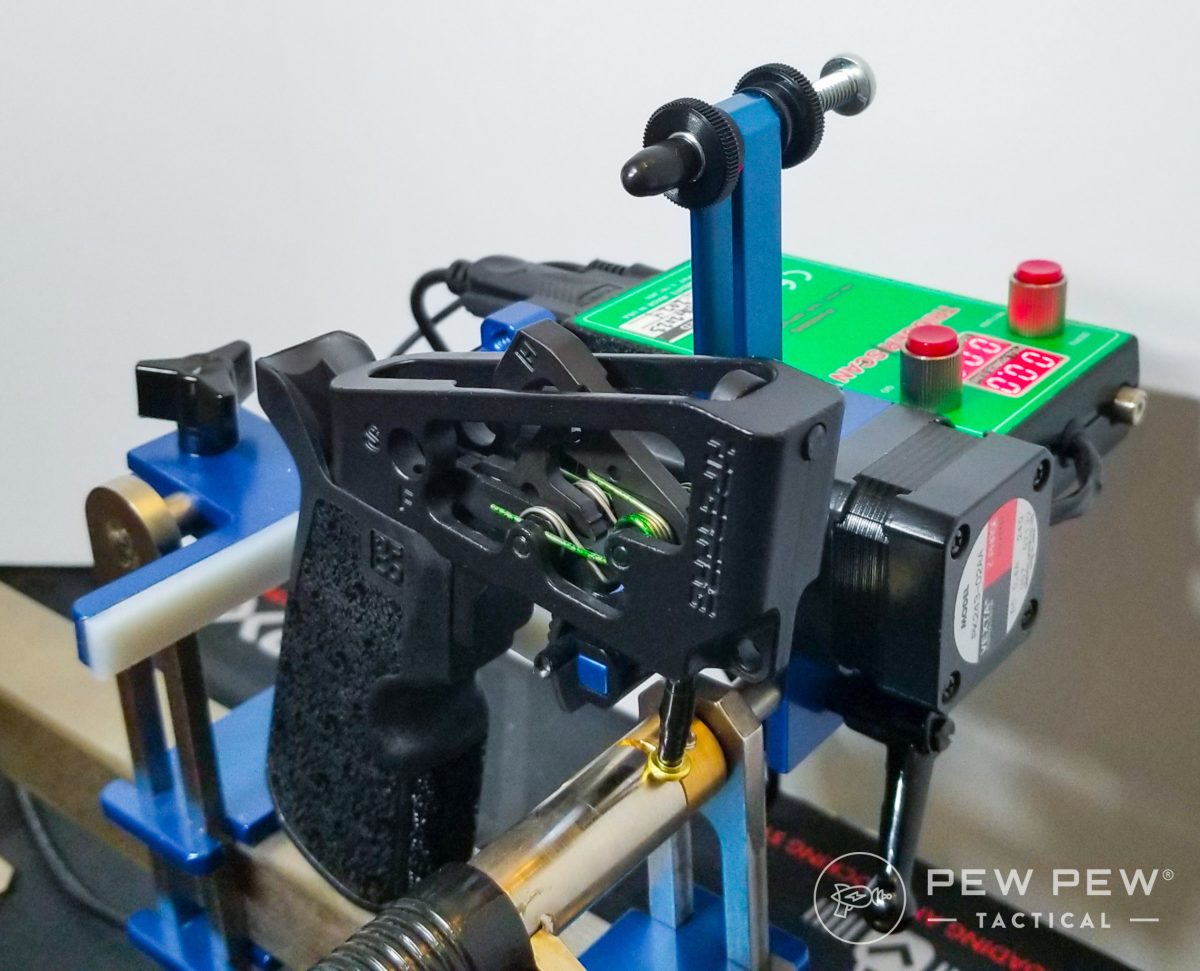
In layman's terms, the TriggerScan is a machine where you lock the gun in place, a machine pulls the trigger, and sensors help generate a graph that shows you precisely what is happening during the trigger pull.
Each trigger was lightly lubed, installed into a skeletonized Hiperfire lower receiver jig, tested on the graph, and then a close-up video was filmed to show the trigger break and reset.
Note: In the videos, there is a machine screw sticking out of the jig in front of the trigger. This screw was used to mimic a trigger guard and index part of the TriggerScan machine to get accurate readings. It has no effect on the function of the triggers.
Testing Procedure - Dry Fire
I used the TriggerScan readout from three separate trigger pulls to calculate an average weight, then rounded it up to the nearest hundredth.
To get an accurate baseline test, I first installed a brand new standard NBS Mil-Spec trigger assembly and scanned it.
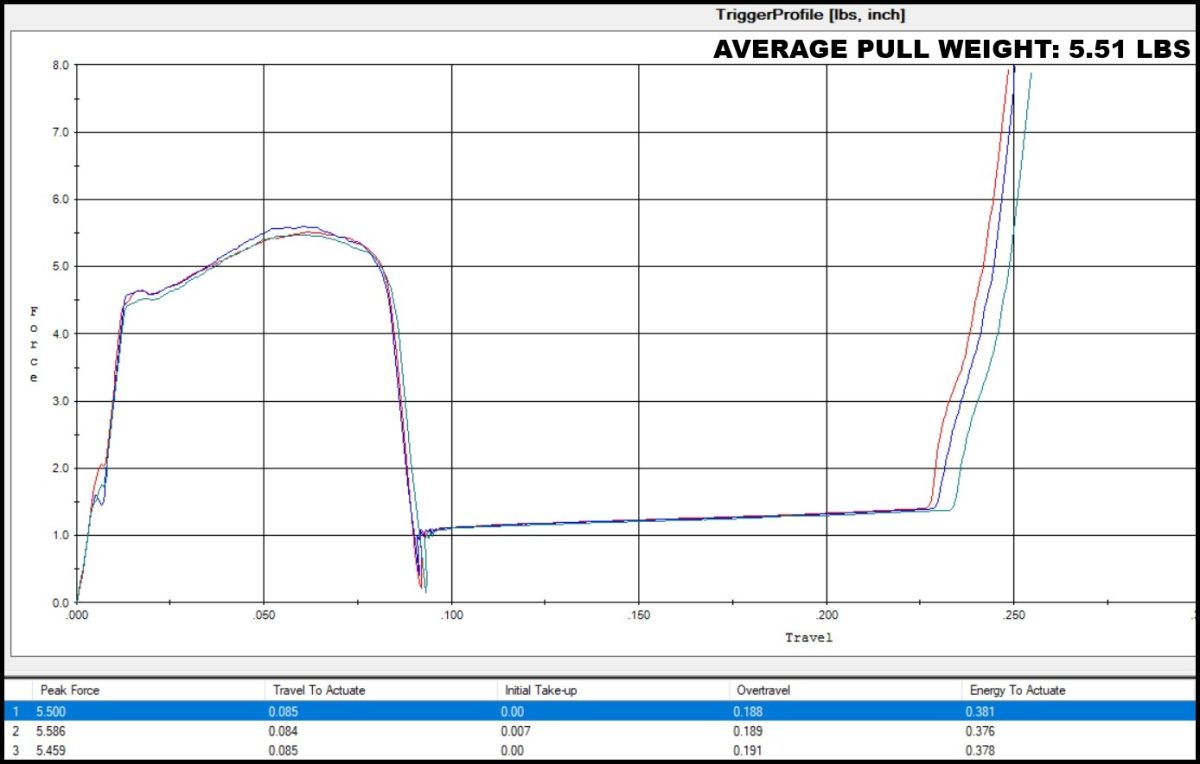
The graph above is a clean, but heavy, mil-spec trigger that you might expect from a standard off-the-shelf AR-15. Many mil-spec triggers are characterized by a mildly unpleasant feel, often due to a gritty trigger with a somewhat heavier pull, typically around 5 to 7 pounds.
- Average Pull Weight: 5.51 lbs
- Average Travel Distance: 0.085"
To further understand how to read this graph, please reference the "Understanding the TriggerScan Graphs & Key Terms" at the bottom of the article.
DISCLAIMER: There are many hotly contested debates about the reliability, safety, and longevity of different types of triggers. While we have many rounds downrange with quite a few of these triggers, this article is intended solely as an empirical head-to-head comparison, not a long-term durability test.
Meet the Experts
Leading the research, testing, and evaluations is Pew Pew Tactical Editor & Senior Review Analyst Wyatt Sloan. Wyatt is an NRA Instructor and USCCA AR-15 Defensive instructor with thousands of hours behind AR-15s with various triggers. In addition to being certified to teach, Wyatt has also previously competed in multi-gun matches and target matches, which require speed and precision trigger work, respectively. He owns over a dozen AR-15s and is intimately familiar with the operation of their triggers.
Wyatt and his father, engineer Bert Sloan, developed this testing protocol specifically to compare AR-15 triggers head-to-head using objective data through the TriggerScan.
Best Drop-In AR-15 Triggers
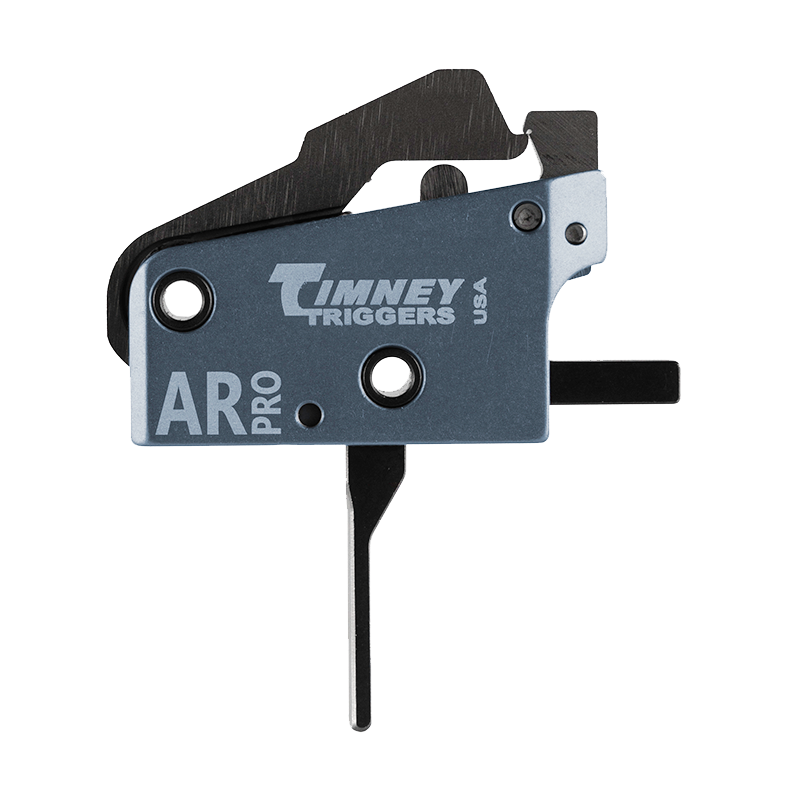
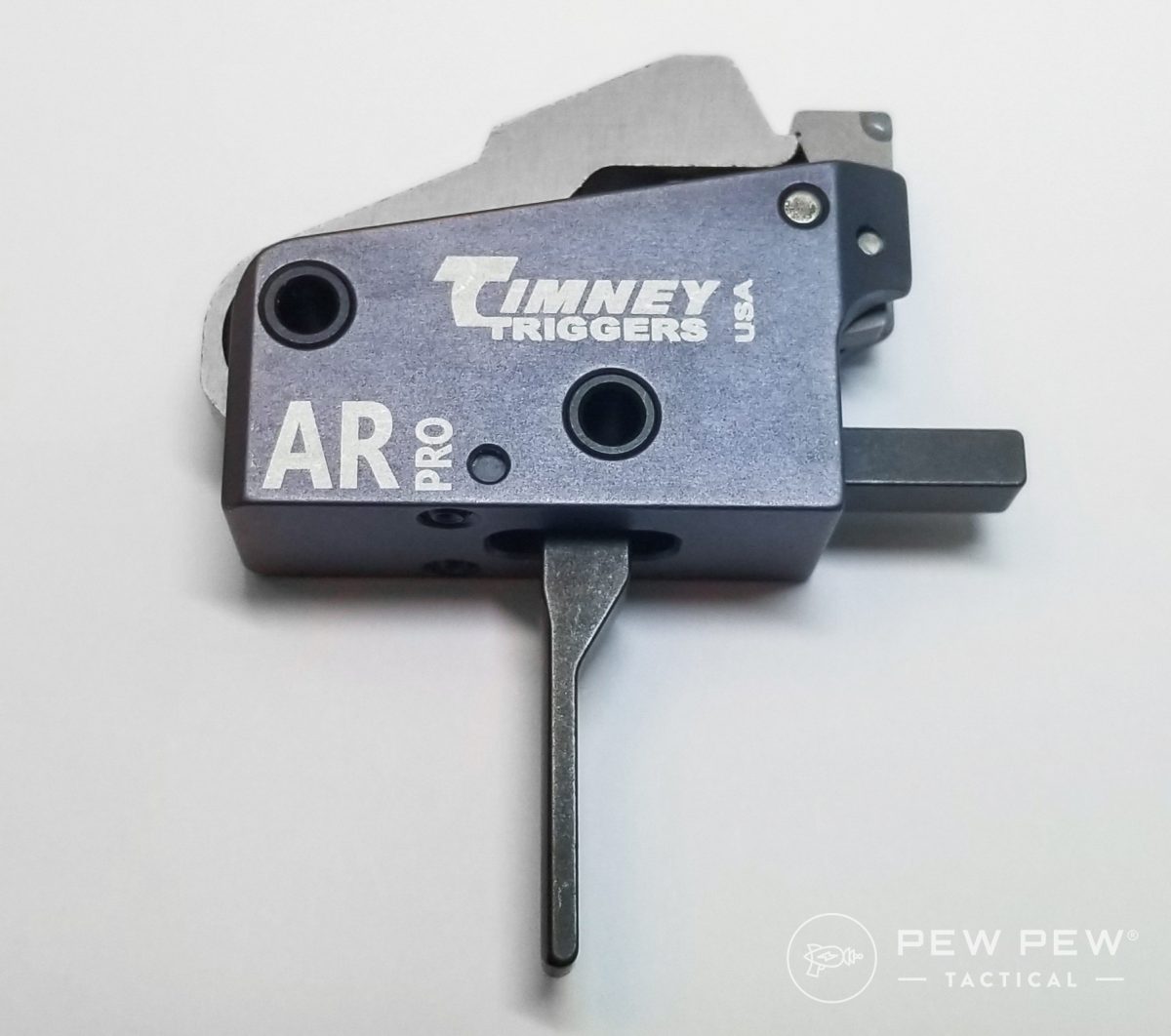
1. Timney AR PRO - Best For Competition
What's included:
- Drop-in trigger assembly
- Allen key
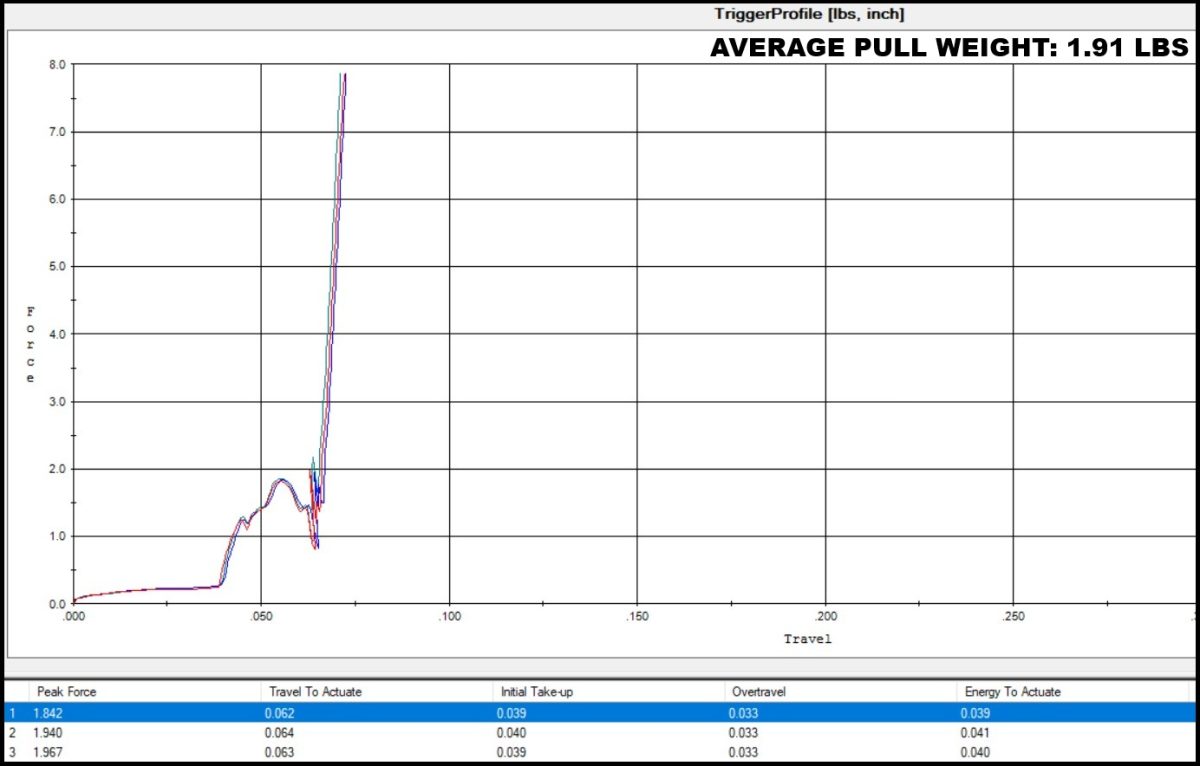
- Average Pull Weight: 1.91 lbs
- Travel Distance: 0.063"
- Style: Two-stage
- Price: $262
I was blown away by the Timney AR PRO trigger.
This is a two-stage trigger with a super short first stage that comes up to a definitive wall, followed by a super crisp break.
Timney claims this is a 2 lb trigger with an 8 oz first stage and a 1.5 lb second stage. They weren't lying. Our machine clocked this thing in at a feathery 1.91 lb average pull.
The reset is audible, but barely tactile. This is because the reset is extremely short. Two internal set screws secure the trigger pins in place. No anti-walk pins are required.
This would make for a great competition trigger regardless of whether you are doing speed or precision shooting.
What do you think of the Timney? Rate it below!
Readers’ Ratings
4.99/5 (3111 Votes)
Your Rating
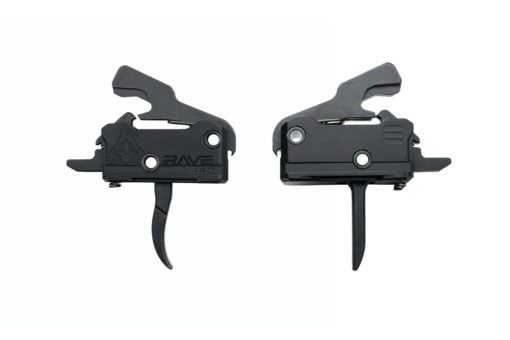
2. Rise Armament Rave 140 - Best Value Trigger
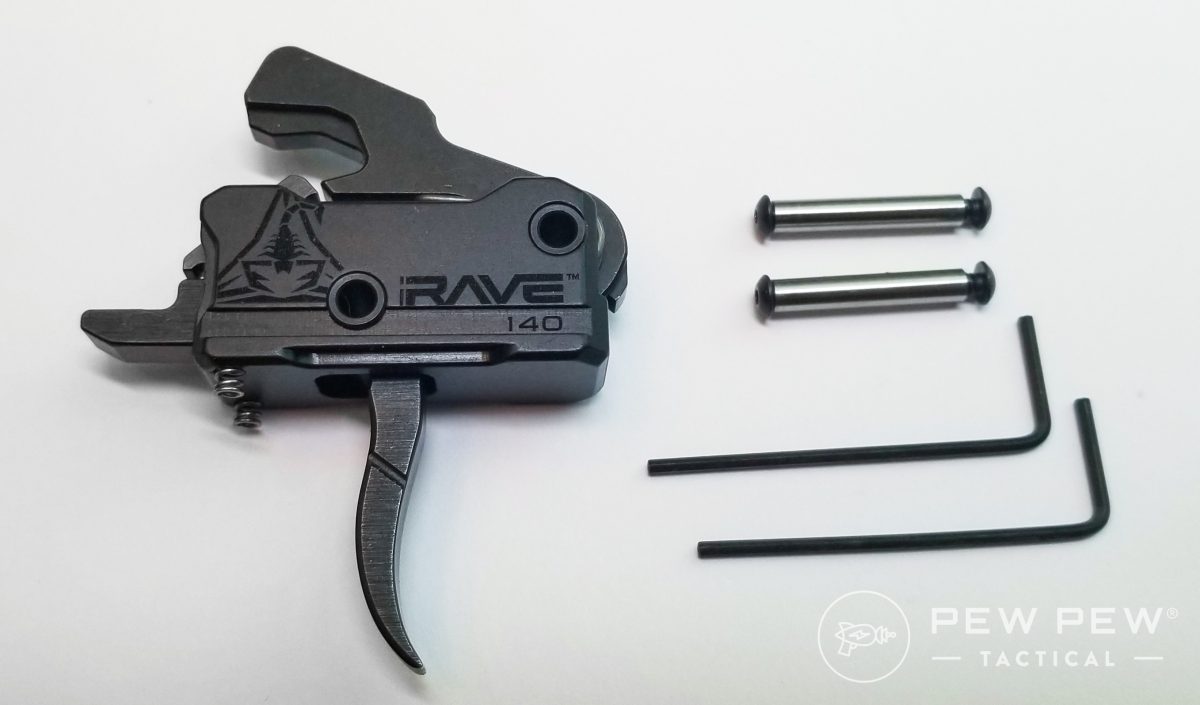
What's included:
- Drop-in trigger assembly
- Anti-walk pins
- Two Allen keys
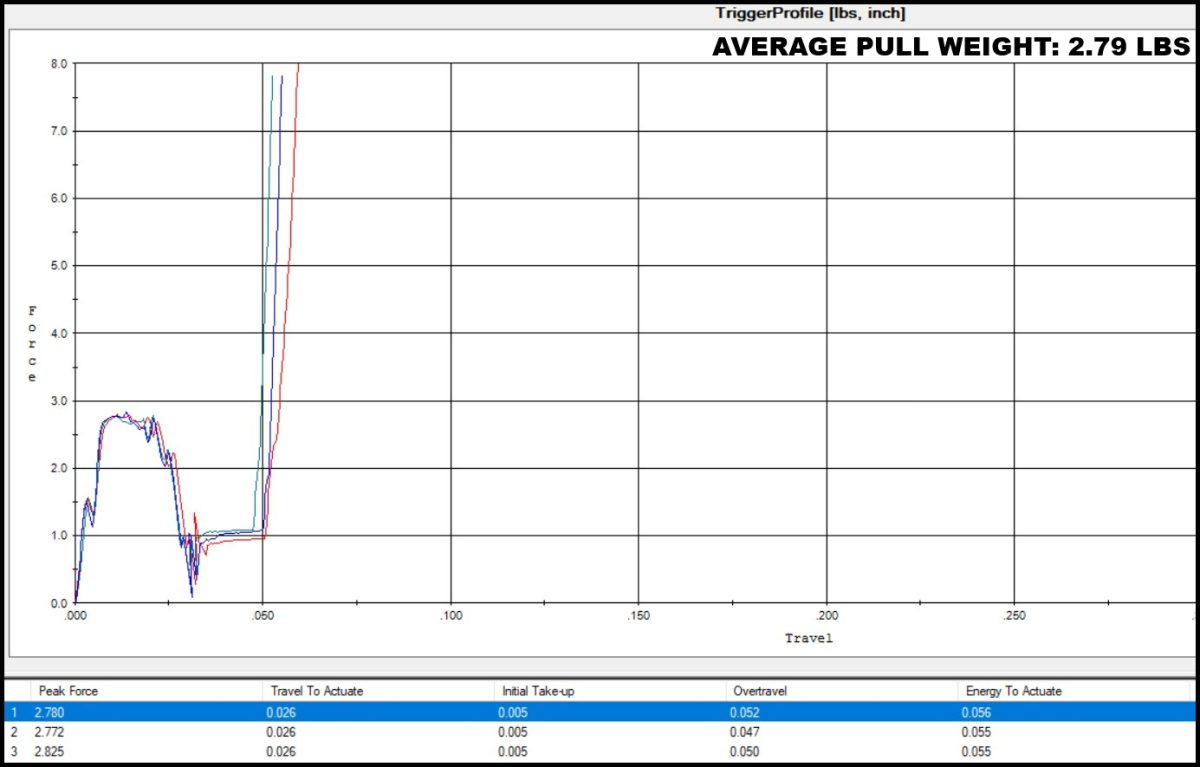
- Average Pull Weight: 2.79 lbs
- Travel Distance: 0.026"
- Style: Single-stage
- Price: $139
If value is your number one concern, the Rise Armament Rave 140 is the ticket.
The first thing I noticed is that the trigger shoe itself has a nice width and a good profile; it is very comfy on the finger.
There is zero take-up, and a little under 3 lbs of pressure gives you a pretty clean break. While the graph does show some creep spikes just before the break, the overall travel is so short that it is completely imperceptible when actually pulling the trigger.
Reset is audible, somewhat tactile, and the trigger bounces back with a little bit of force. The trigger pins are secured using internal set screws.
Overall, this is an excellent trigger for the money.
3. TriggerTech Diamond Two-Stage - Best Adjustable Weight Trigger
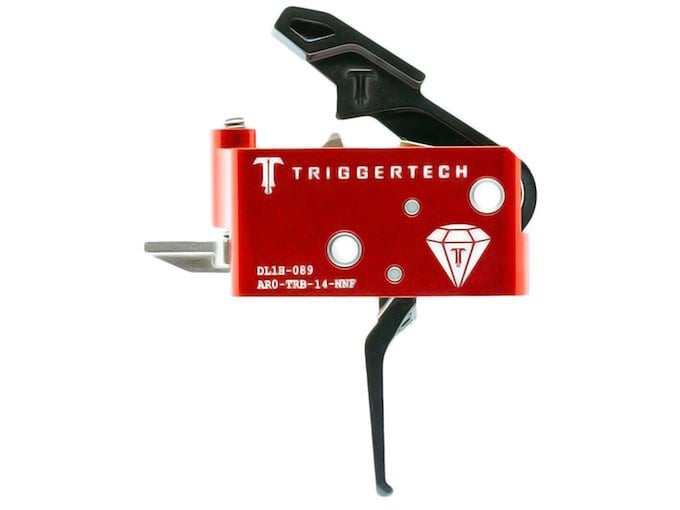
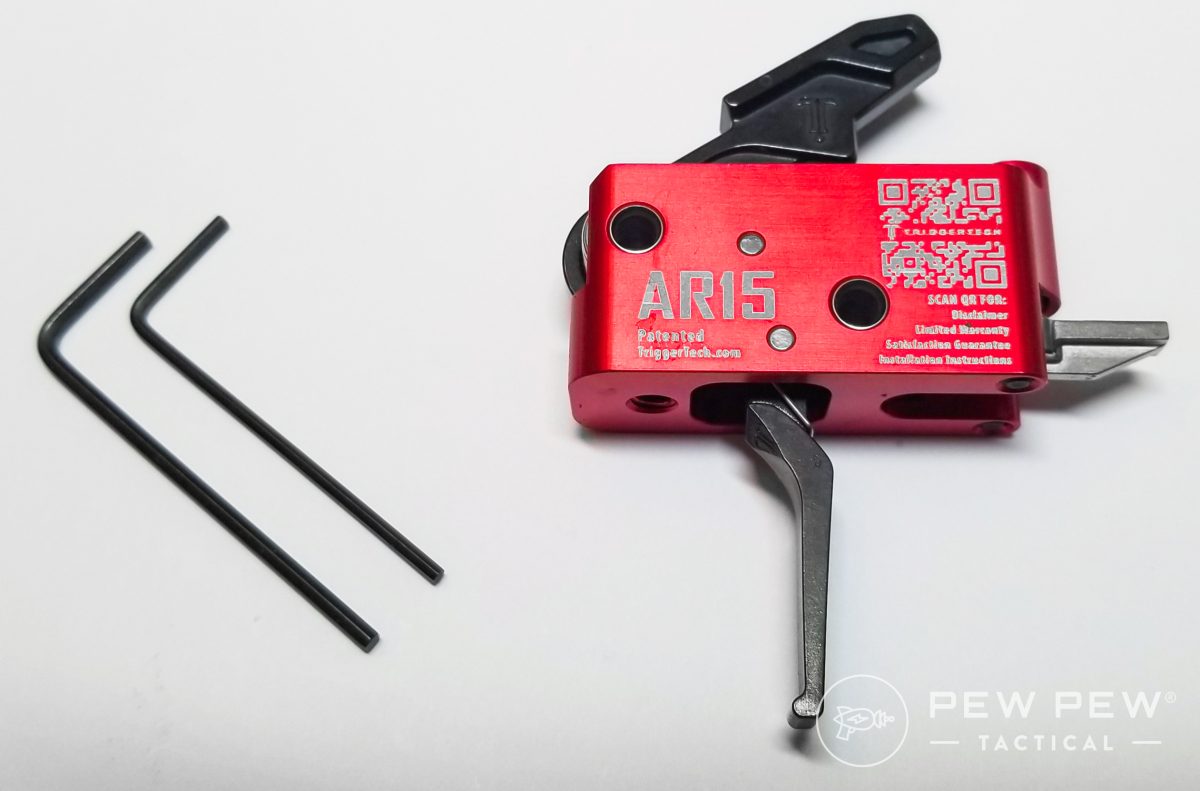
What's included:
- Drop-in trigger assembly
- Two Allen keys
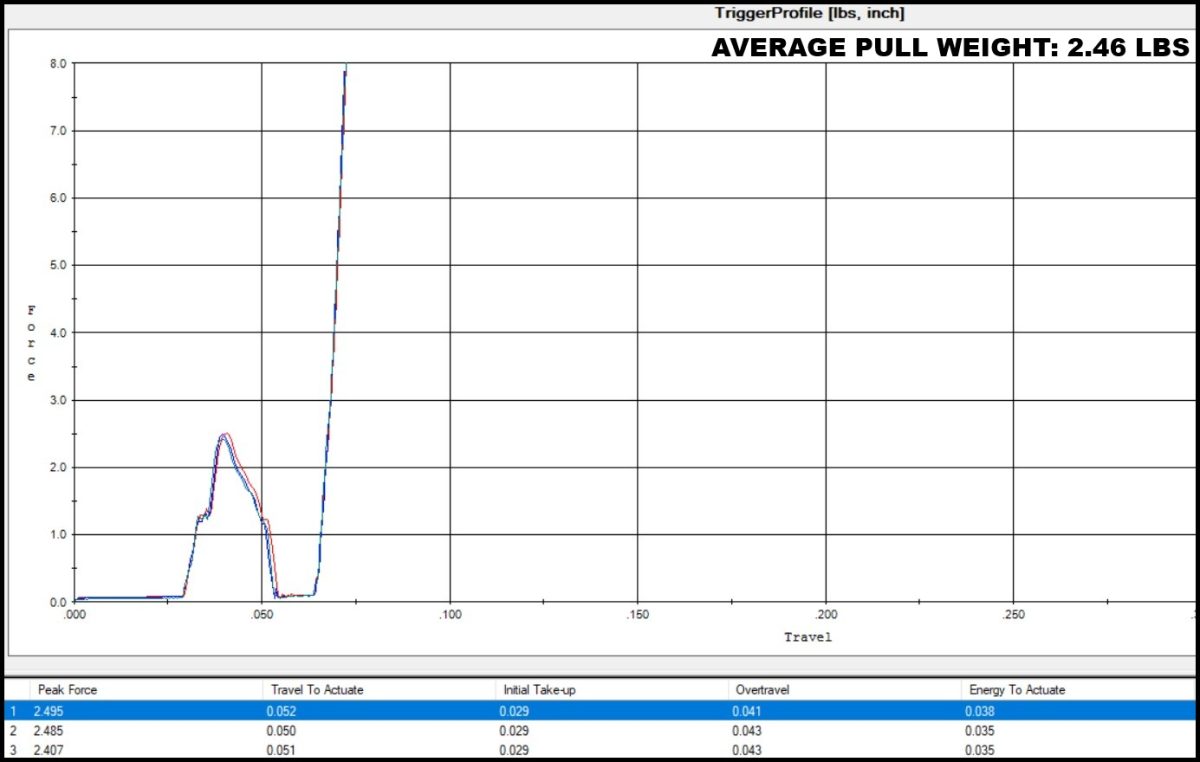
- Average Pull Weight: 2.46 lbs as configured (Adjustable)
- Travel Distance: 0.051"
- Style: Two-stage
- Price: $314
The TriggerTech Diamond two-stage was very nearly my pick as the best trigger out of the bunch.
There is a light pull through an ultra-short first stage up to a very definitive wall. Apply a little more pressure, and you get an absolute glass rod-style break. It has the cleanest break of any trigger on this list.
Reset is very short, audible, and only slightly tactile. I feel like the Timney AR PRO has a slightly better reset, while the TriggerTech has a shorter, slightly cleaner break.
Where this trigger really shines is the adjustability and ease of installation. The screw holes to snug the trigger down are very easy to get to, and no anti-walk pins are necessary.
There is an Allen screw that allows you to adjust the trigger pull weight from 1.5 - 4 lbs without having to remove the trigger.
Below is a graph where I scanned the trigger at a lower end weight and a higher end weight to showcase the adjustability
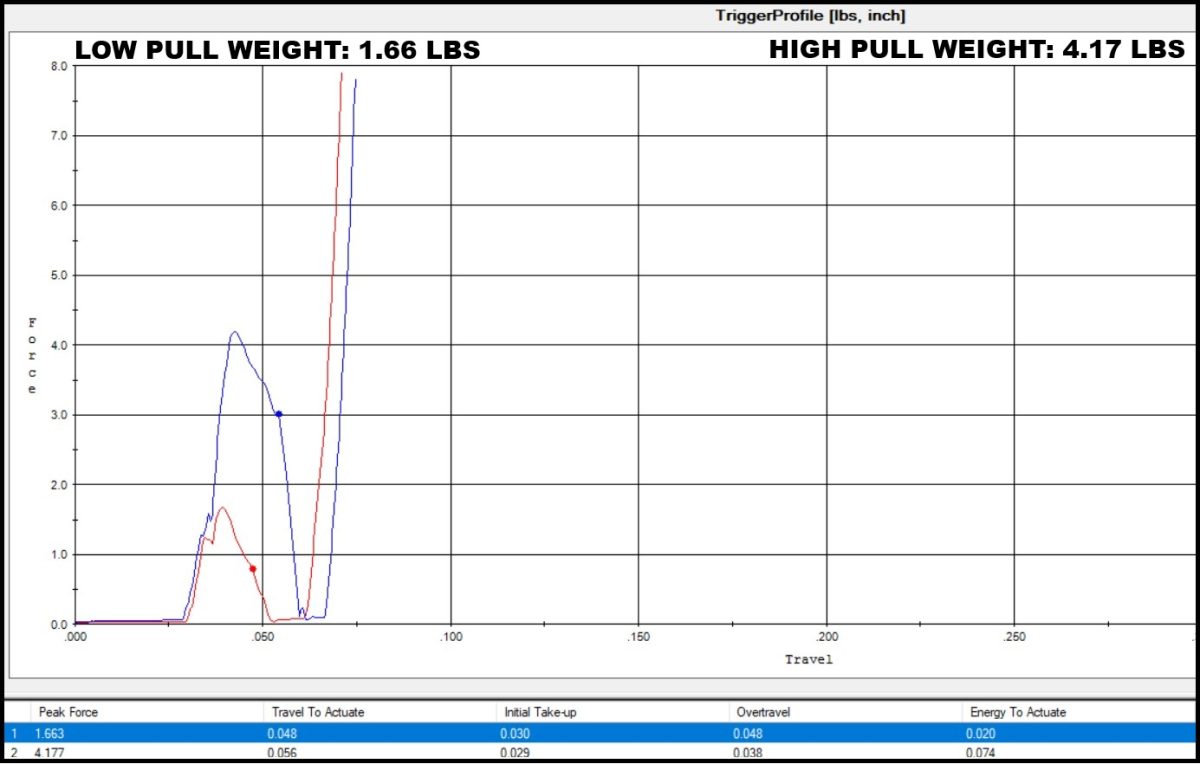
This is an absolutely awesome trigger, but it is one of the most expensive ones on the list.
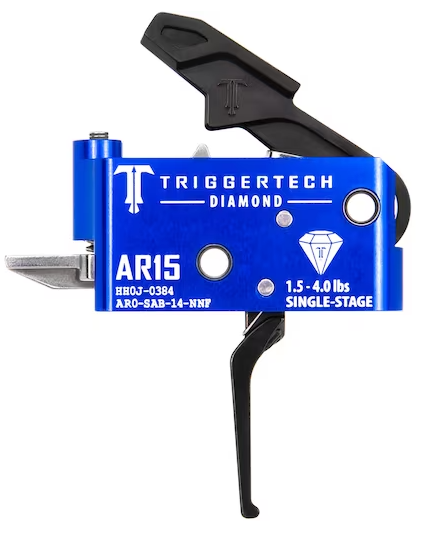
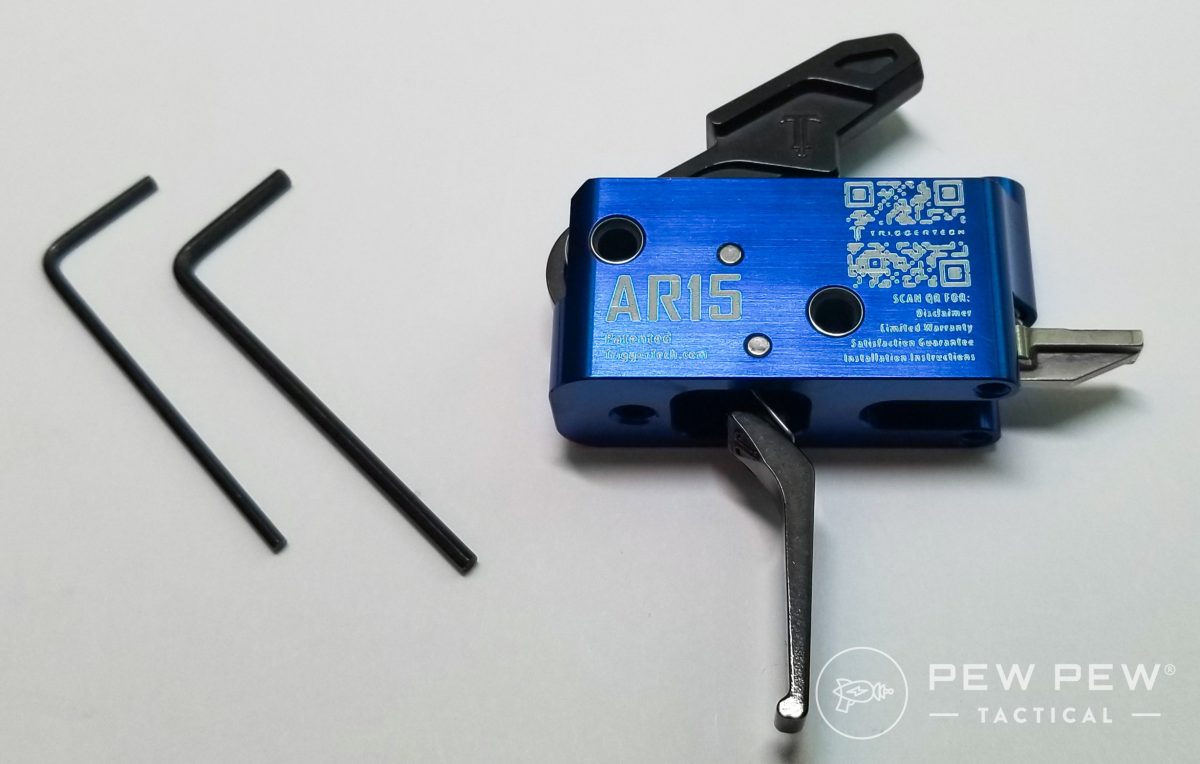
4. TriggerTech Diamond Single-Stage - Best Single-Stage Trigger
What's included:
- Drop-in trigger assembly
- Two Allen keys
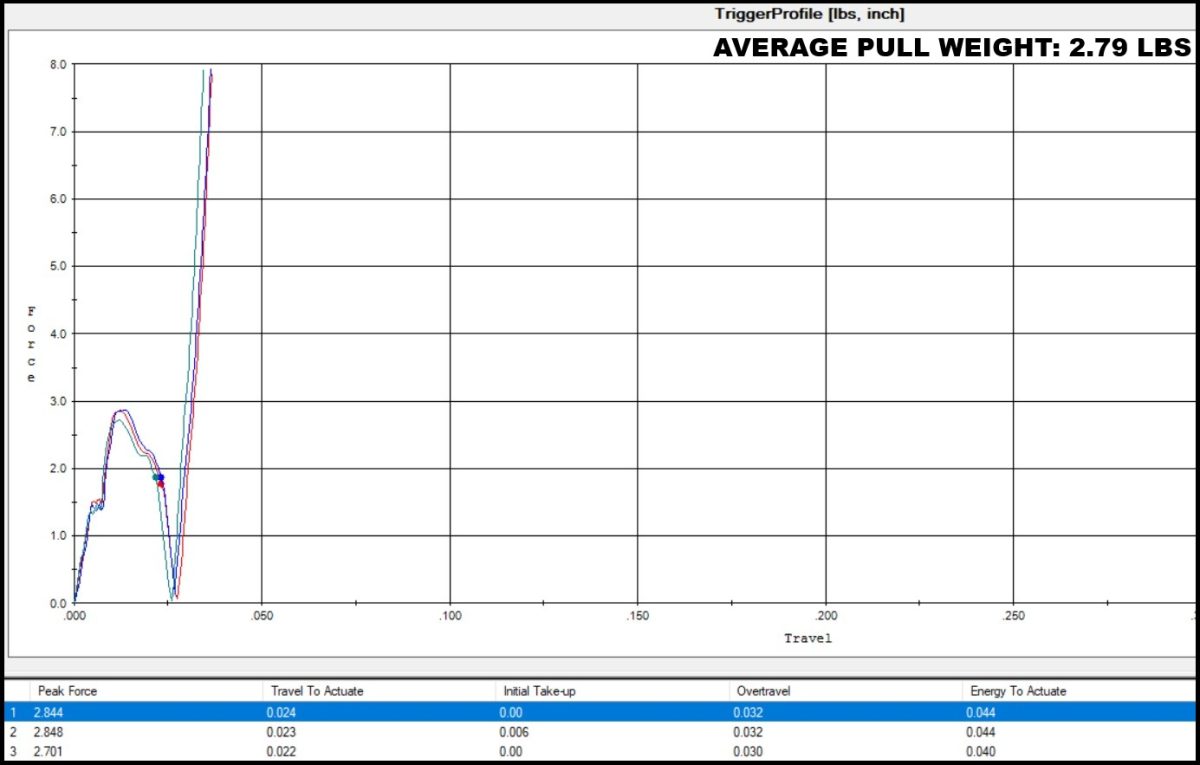
- Average Pull Weight: 2.79 lbs as configured (Adjustable)
- Travel Distance: 0.023"
- Style: Single-stage
- Price: $239
TriggerTech once again has a winner with their single-stage Diamond trigger.
It has absolutely zero take-up and zero creep. You start right against a definitive wall, and then a bit of pressure gets a crisp, glass rod break. This has the cleanest break of all the triggers on this list.
However, the reset isn't my favorite. It is super short and audible, but barely tactile with no force at all behind it. It almost feels like there is a pause, and it isn't going to reset, but it does.
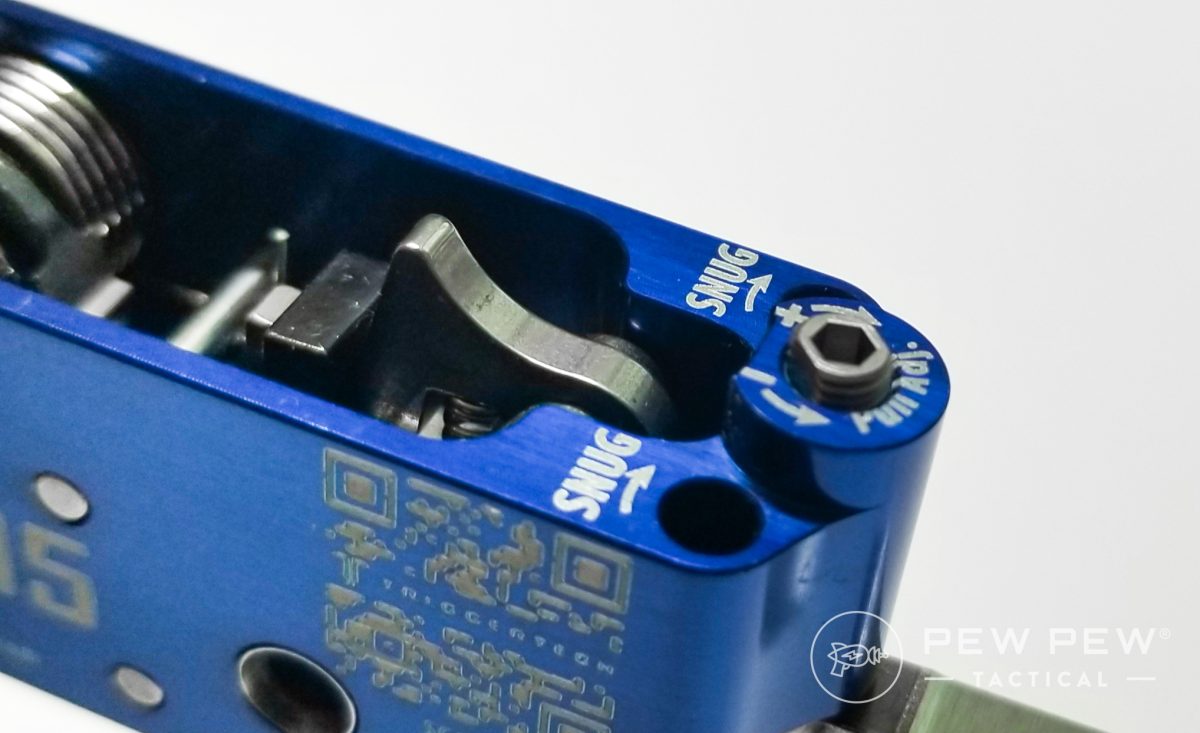
Like its two-stage brethren, this trigger is very easy to install and features the same easy-access Allen screw that allows you to adjust the trigger weight
5. Timney Impact AR
What's included:
- Drop-in trigger assembly
- Allen key
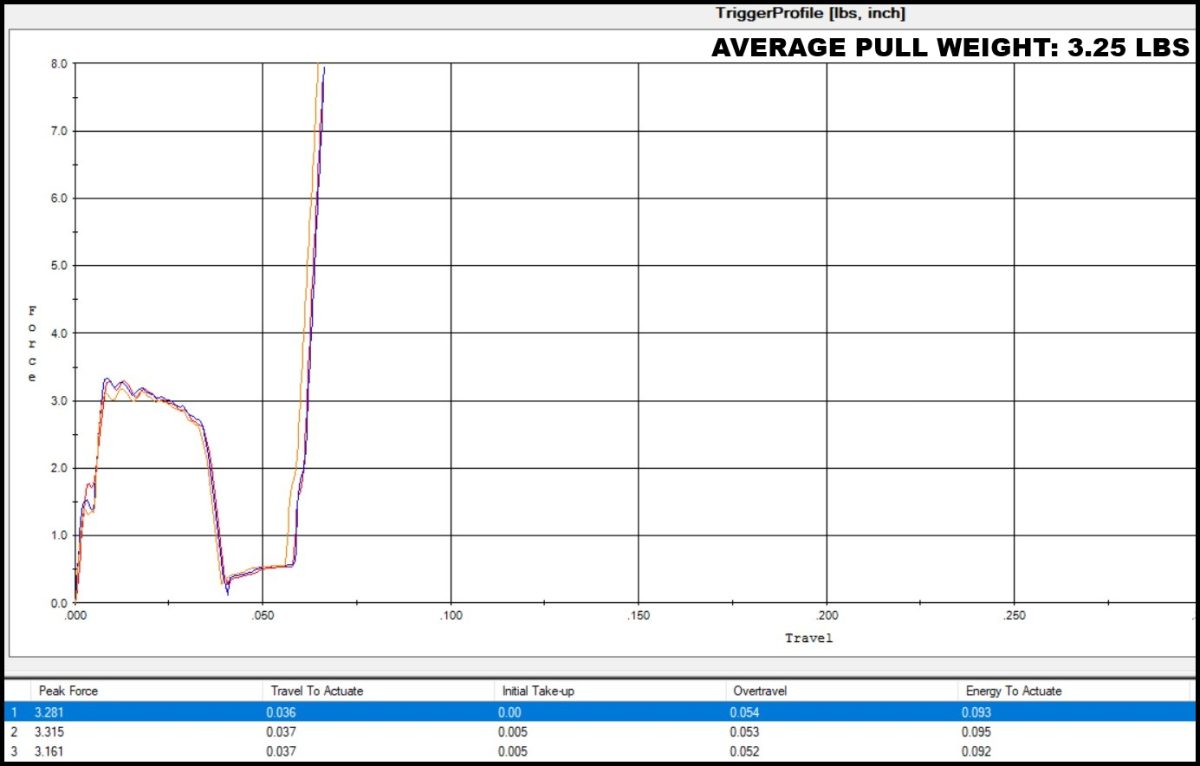
- Average Pull Weight: 3.25 lbs
- Travel Distance: 0.037"
- Style: Single-stage
- Price: $102
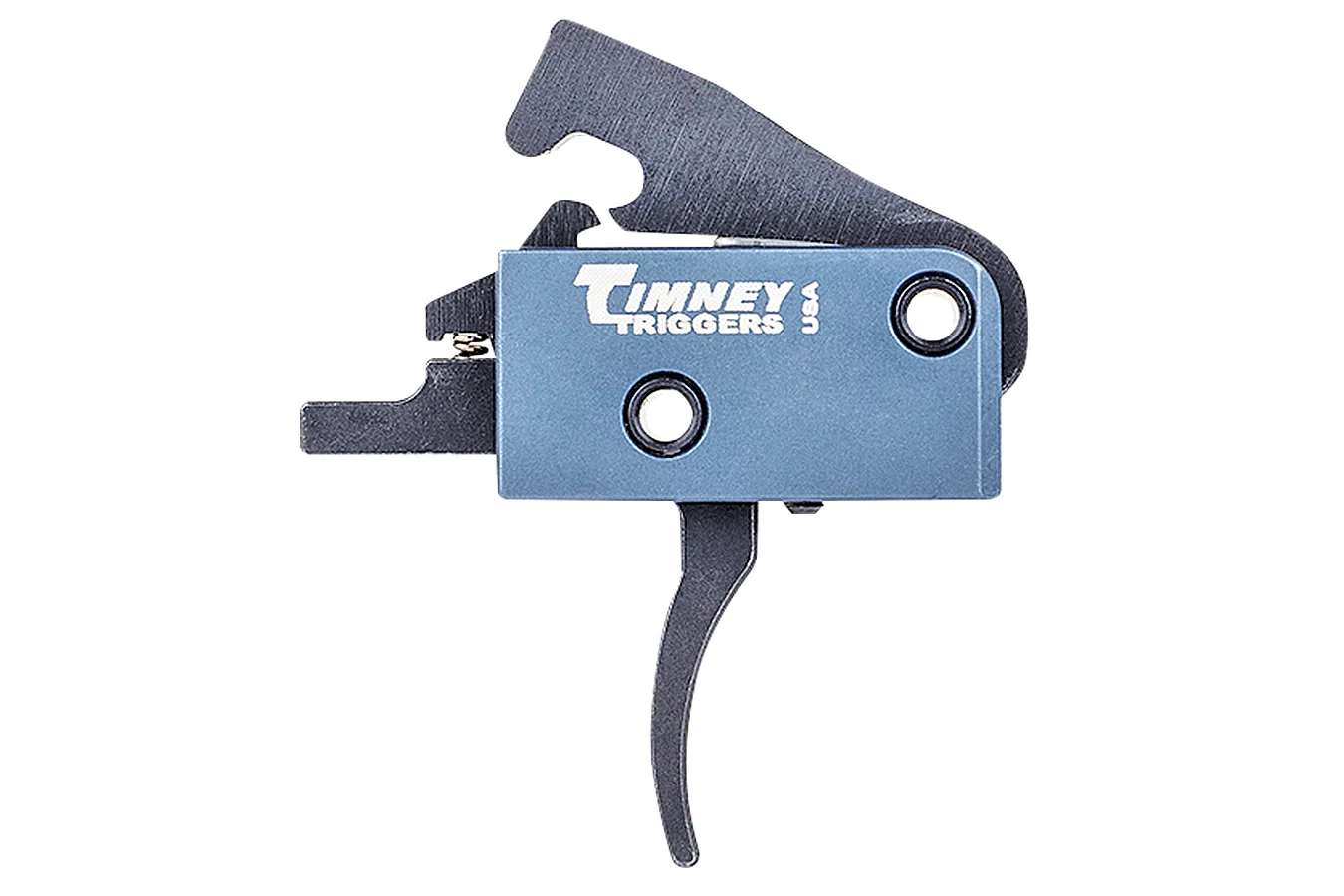
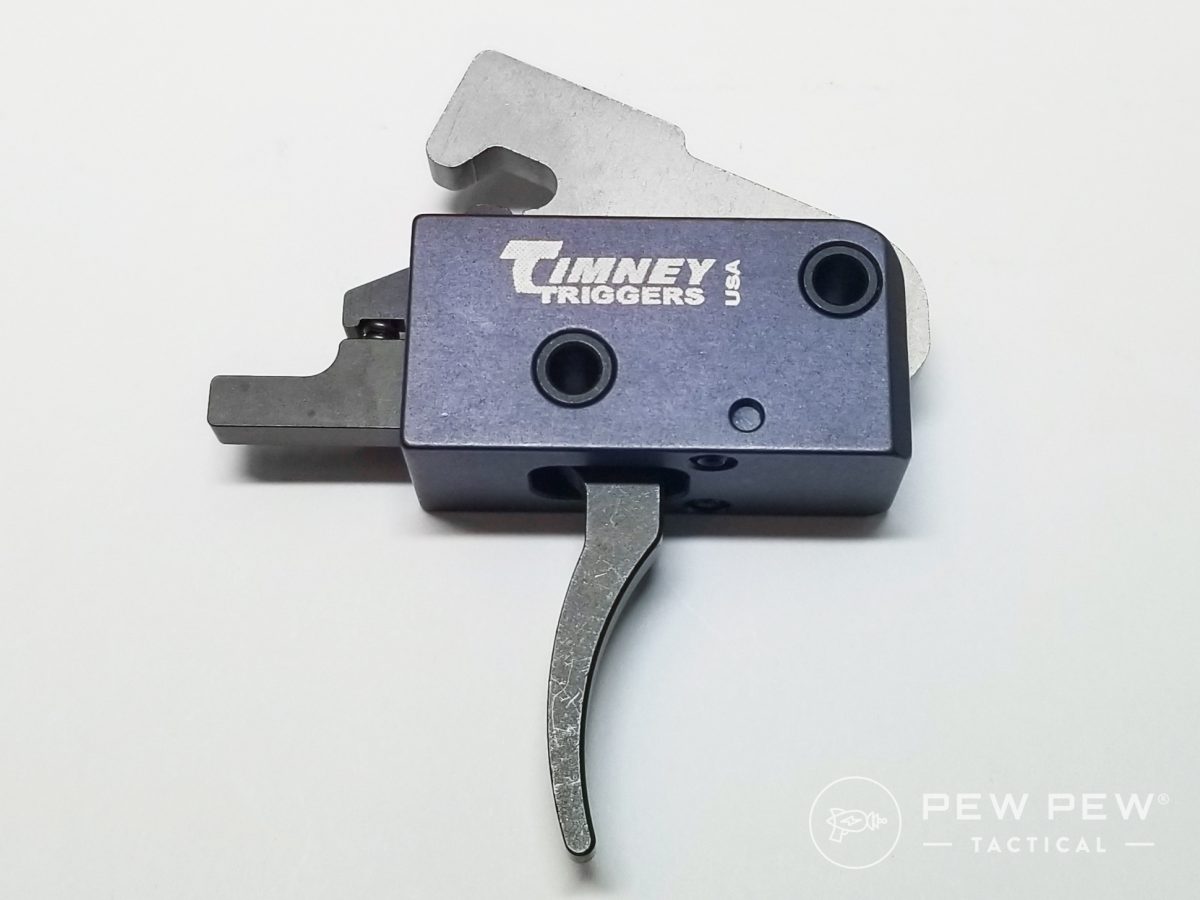
The Timney Impact AR is your standard, run-of-the-mill entry-level drop-in trigger.
It has zero take-up. Although the graph shows some squigglies at the beginning of the pull, there is barely any discernible creep when pulling the trigger. There is a definitive wall that leads to a pretty clean break.
Reset is short, tactile, and audible, but not forceful. It does feel slightly gritty when you ride the reset out very slowly, but this would not be noticeable at speed.
My biggest complaint is a personal one. The trigger shoe is very thin and is canted a bit rearward. It isn't a bad design, just not my favorite.
This is a good drop-in combat trigger at an attractive price, although I prefer the Rise Rave 140 due to the superior trigger shape.
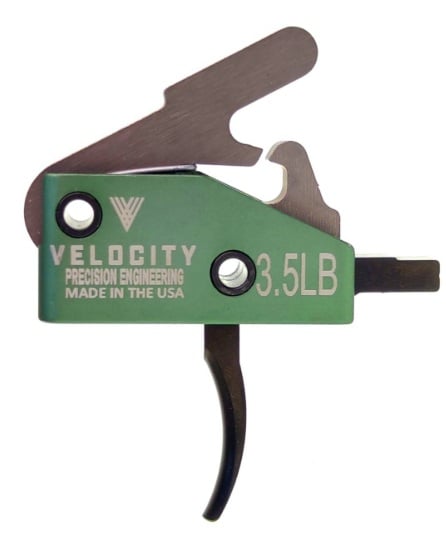
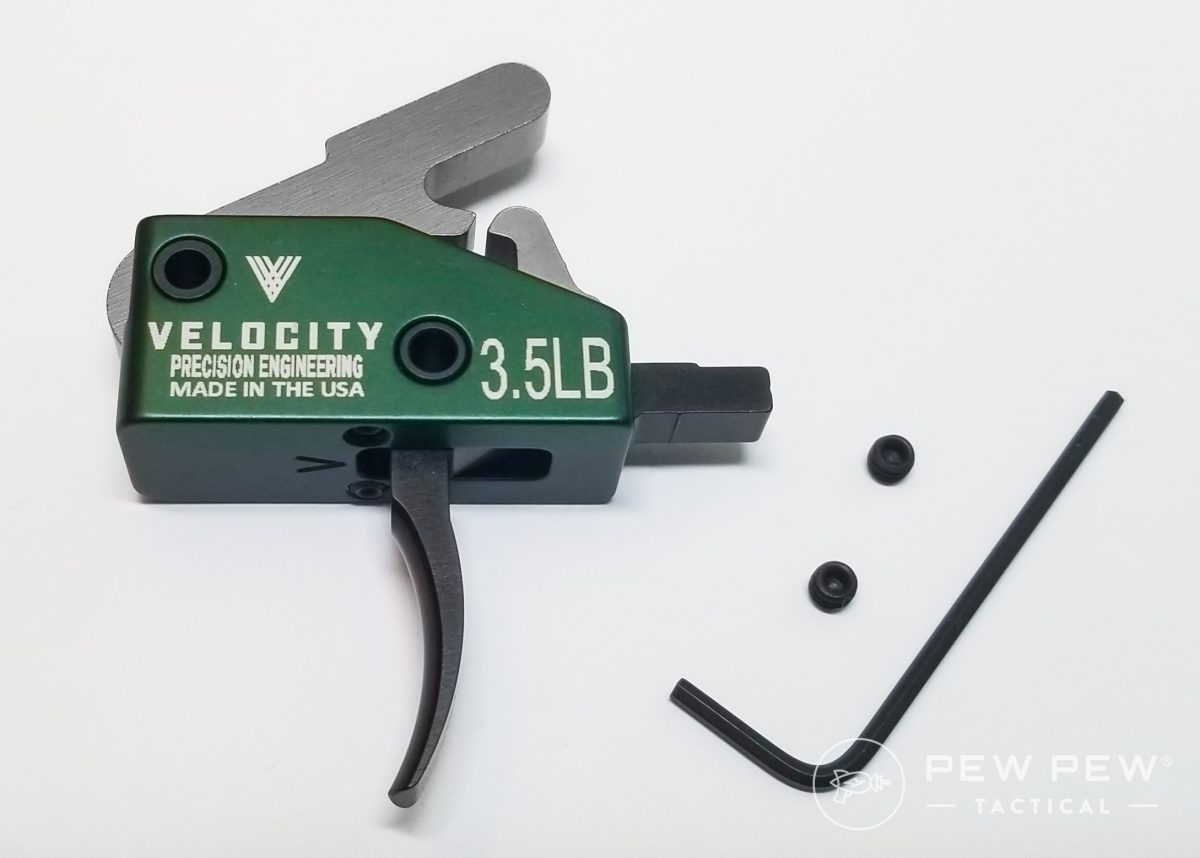
6. Velocity Precision Classic Curved 3.5 LB Drop-In
What's included:
- Drop-in trigger assembly
- Two pin-securing set screws
- Allen key
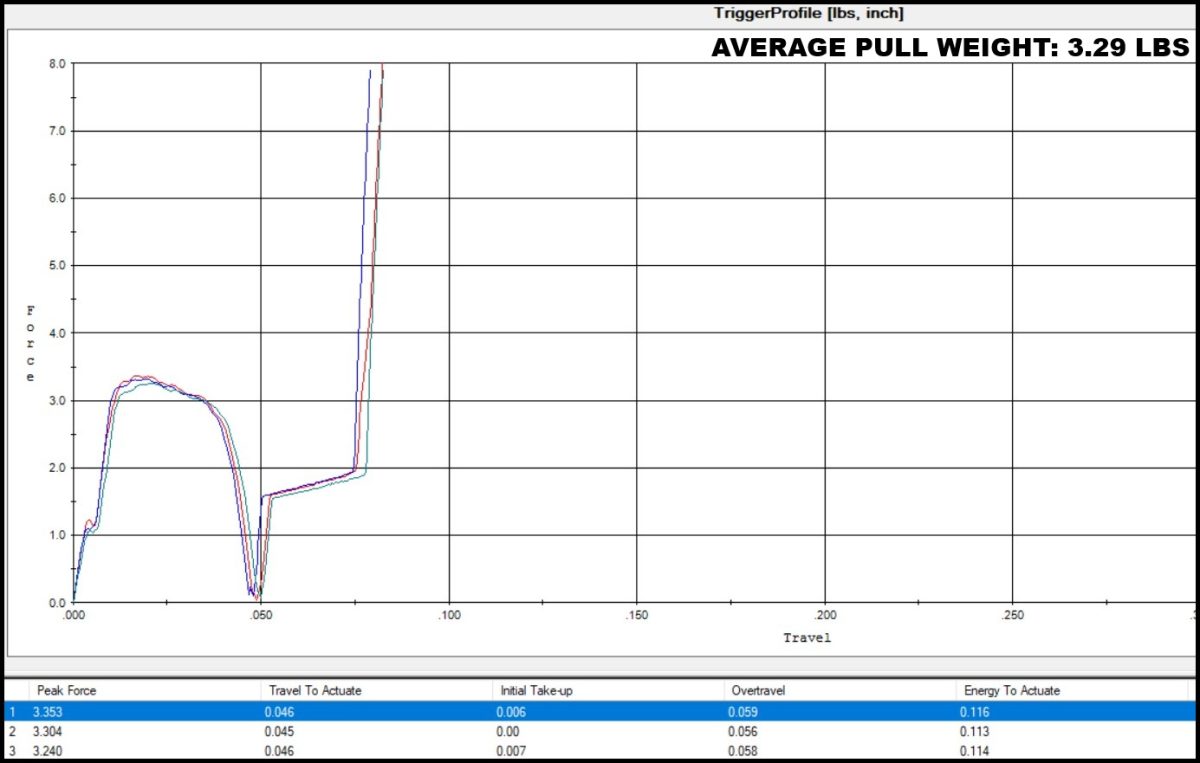
- Average Pull Weight: 3.29 lbs
- Travel Distance: 0.045"
- Style: Single-stage
- Price: $164
A good friend of mine who is an upper-tier competitive shooter and match director recommended this trigger to me. In his words, "consistency is king."
And this trigger is consistent. You can see how closely the lines overlap in the graph.
As for the pull, I can feel a tiny amount of creep up to a solid wall, but only if I go very slowly. You get a clean, very deliberate break. It isn't quite glass-rod, but it is nice.
Reset is audible and tactile, with a tiny amount of grit on the way back out, but nothing objectionable.
The classic curved trigger shape is executed better than it is on the Timney Impact AR. It feels nice overall.
Like the previous triggers, the trigger pins are secured by set screws. An additional set of small set screws is provided. These screw into the top of the existing internal set screws to prevent them from ever backing out.
The Best Gun Deals, Coupons and Finds
Subscribe to Pew Pew Tactical's sales and deals email.
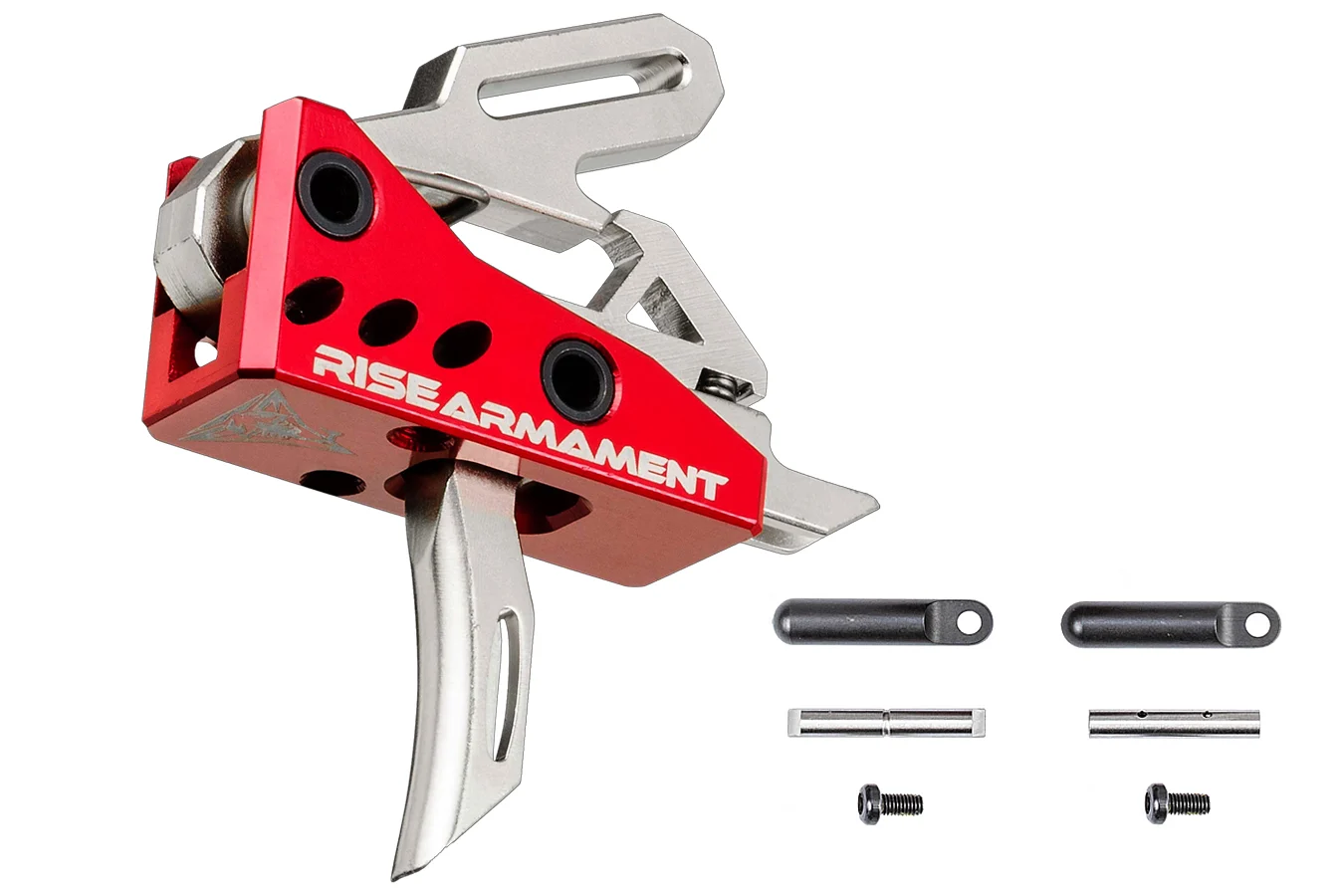
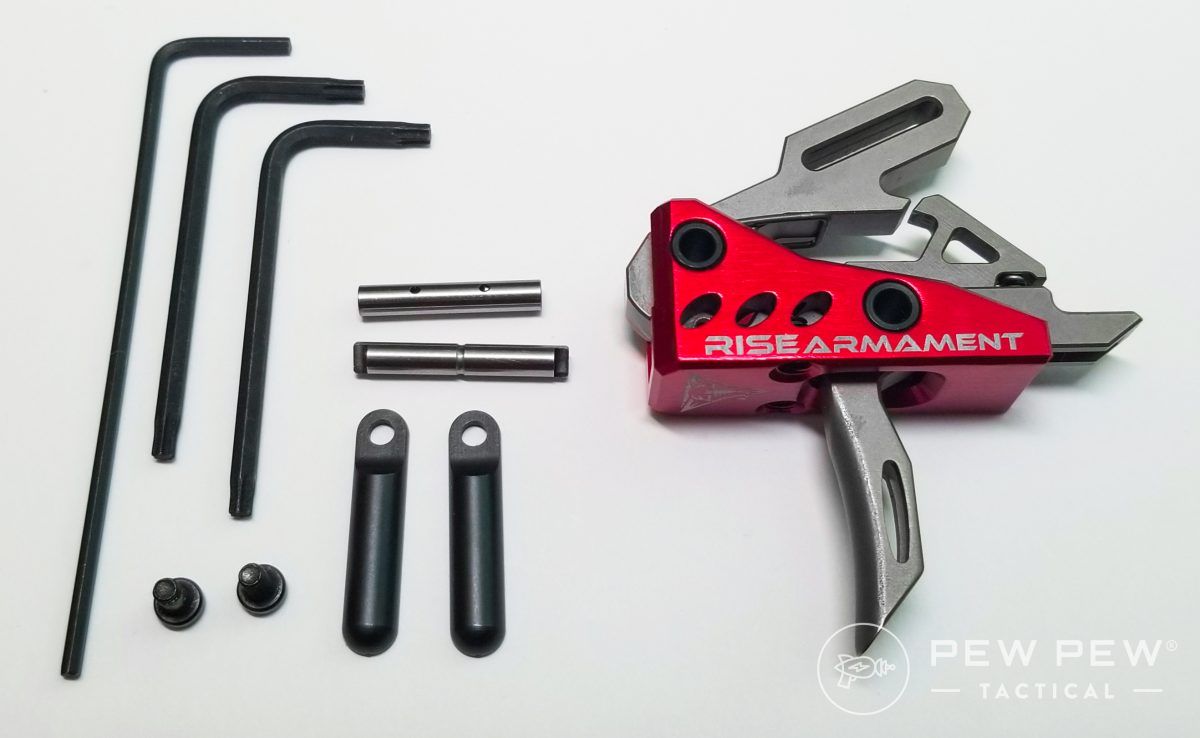
7. Rise Armament RA-535 Advanced Performance Trigger
What's included:
- Drop-in trigger assembly
- Anti-rotation pins
- Three Allen keys
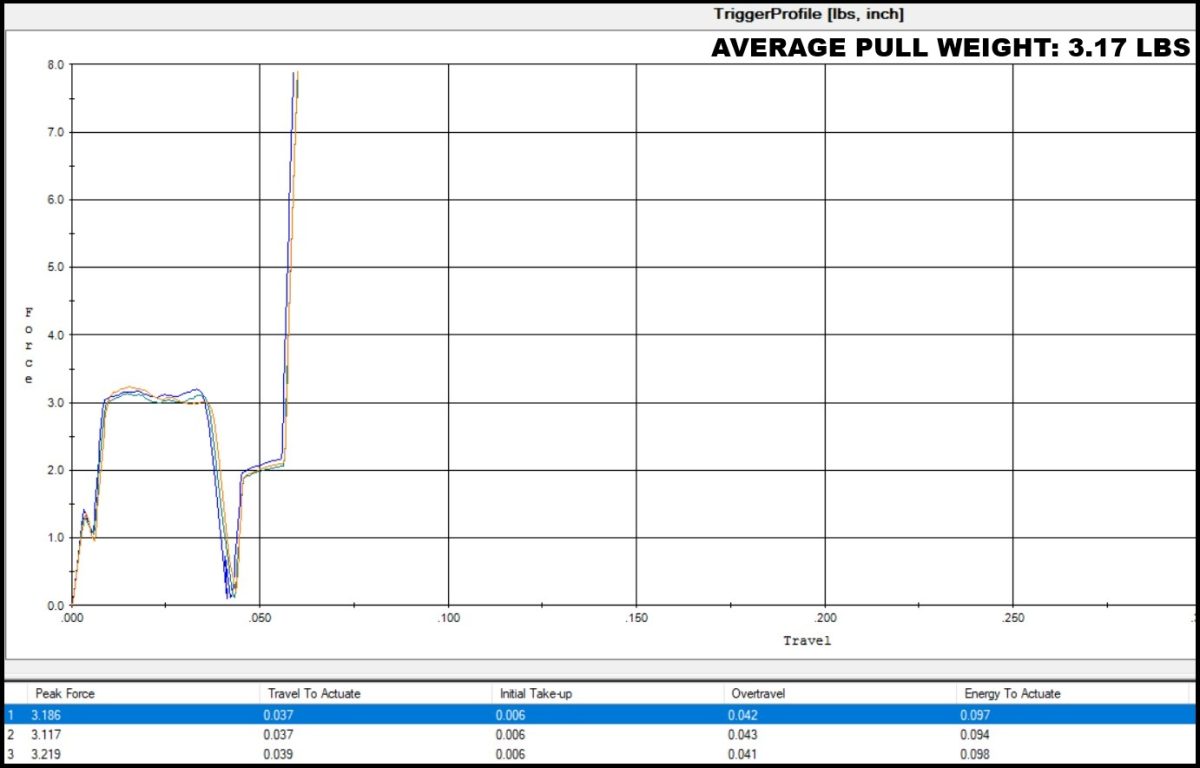
- Average Pull Weight: 3.17 lbs
- Travel Distance: 0.038"
- Style: Single-stage
- Price: $157
Rise Armament describes the RA-535 as the "Ferrari of triggers." It certainly looks like a Ferrari, but I'd say it is more like a Mustang GT.
Right off the bat, the trigger shoe itself is very smooth and very rounded. It doesn't feel bad, but the chamfered edges and shape might feel odd to some folks.
Pull-wise, there is no take-up. You immediately hit a wall, but then there is a bit of creep past the wall before hitting a very predictable and crisp break. The creep is present, but it is "clean" creep; there is no grit or dragging.
Reset is extremely short, tactile, audible, and has a bit of force behind it. They designed this trigger to be fast, and they succeeded.
The RA-535 makes use of external anti-rotation pins to keep the trigger pins from moving in any direction. I did experience some minor frustration trying to get the Allen key seated into one of the interior screws, but I eventually got everything put together. Installation is a bit more involved than other drop-ins, but it is still fairly simple.
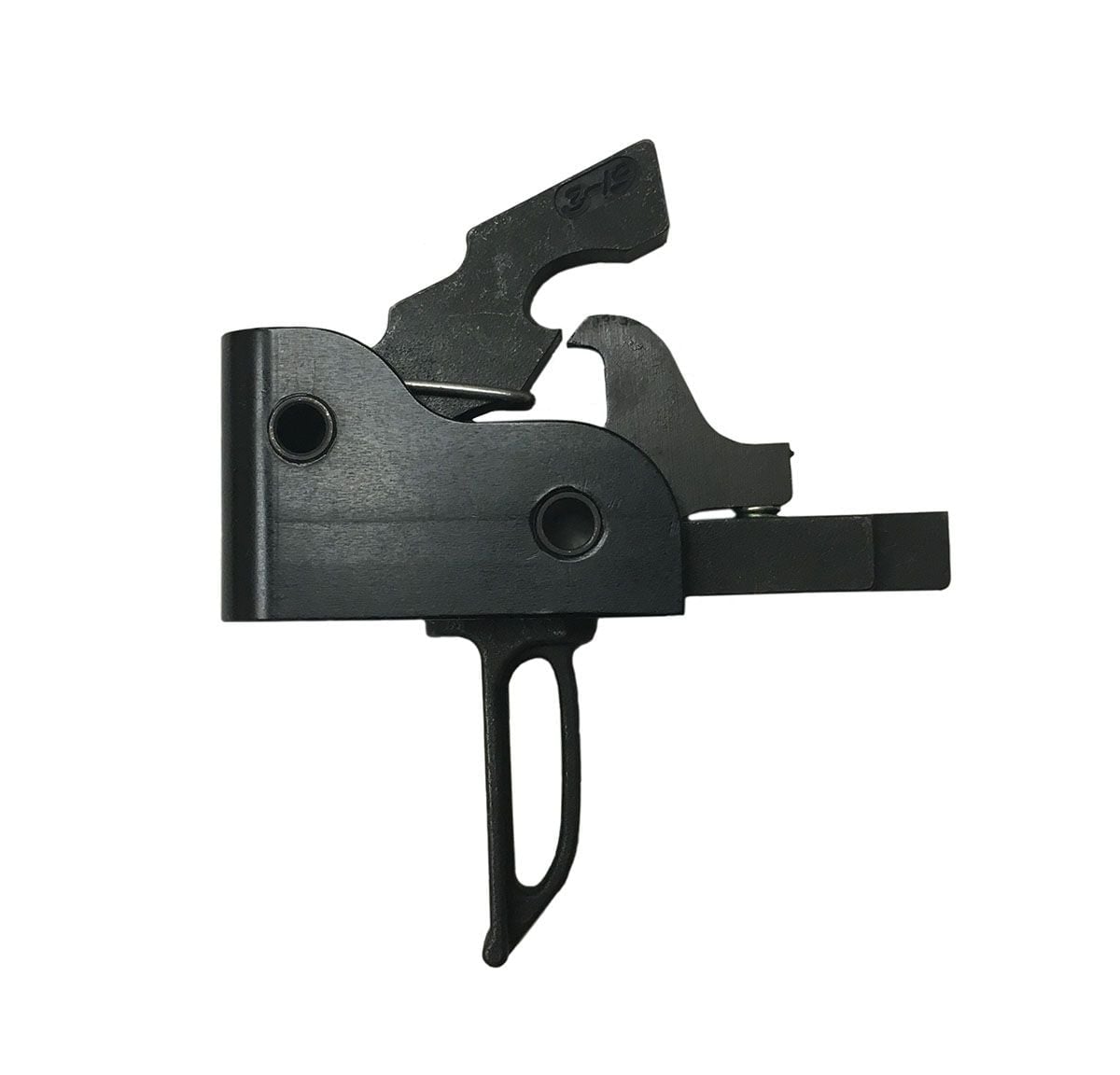
8. PSA Custom Drop-In Match Grade Trigger
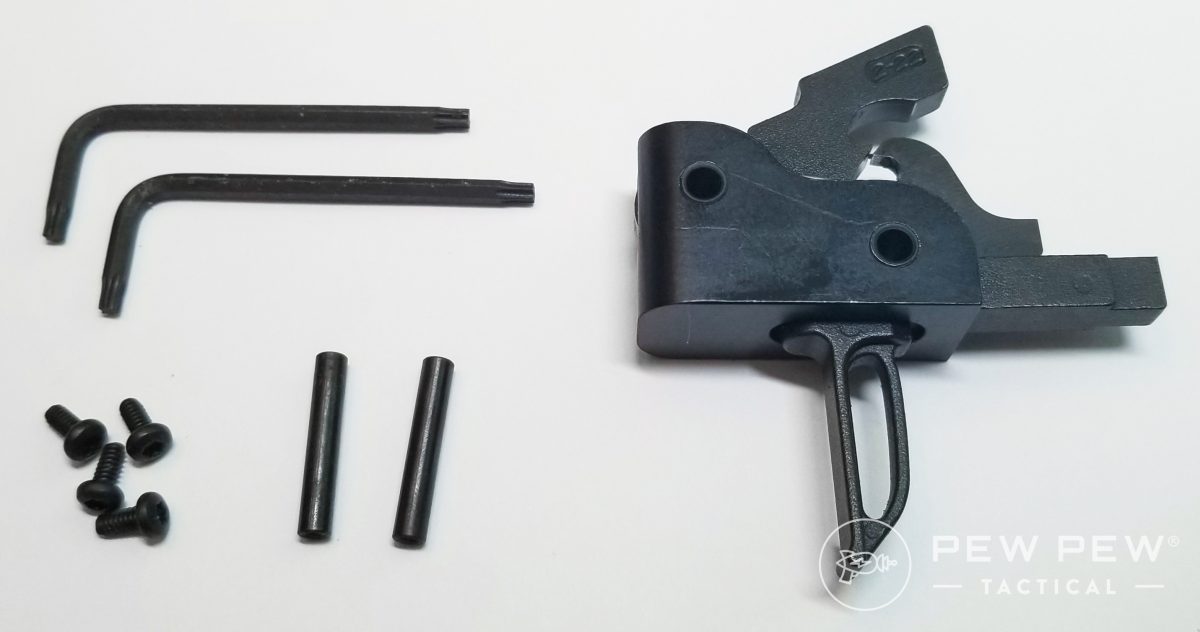
What's included:
- Drop-in trigger assembly
- Anti-walk pins
- Two Allen keys
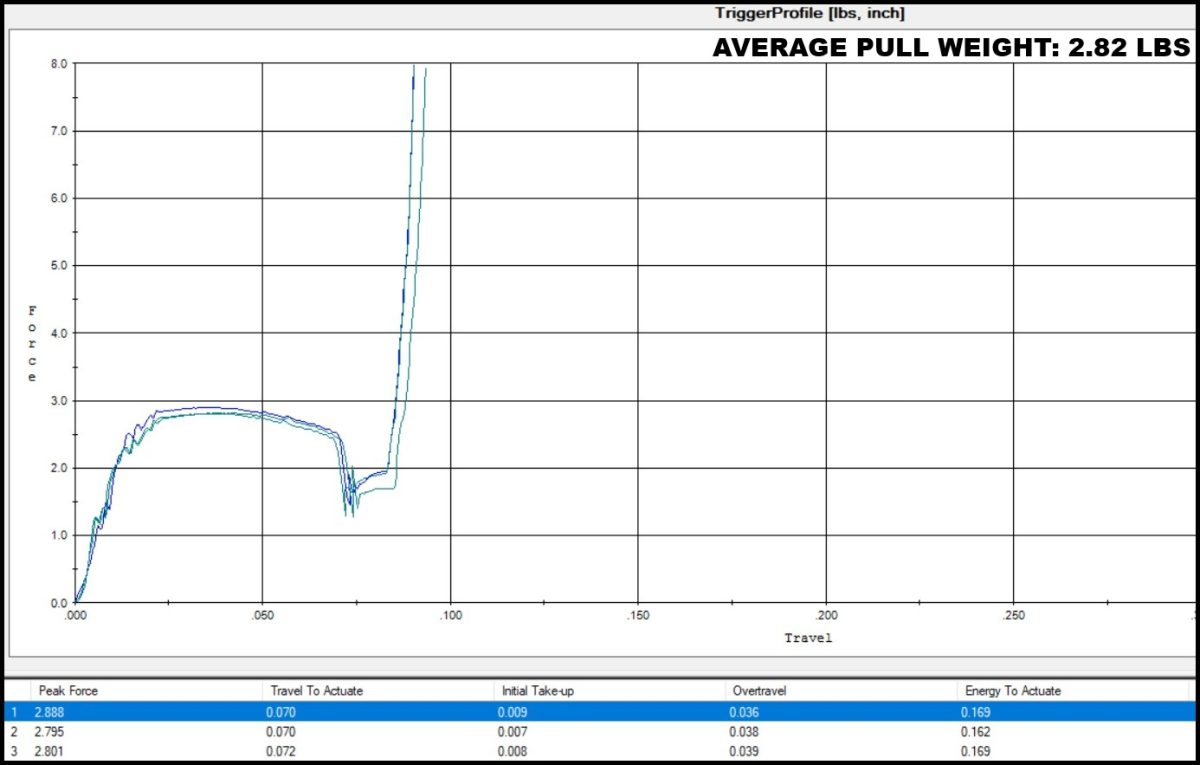
- Average Pull Weight: 2.82 lbs
- Travel Distance: 0.071"
- Style: Single-stage
- Price: $89
Palmetto State Armory is known for bringing affordable products to market, and this trigger is no exception.
First off, this trigger sits very far forward in the trigger pocket. This makes the reach to the trigger from the grip noticeably longer.
As a single-stage trigger, you start right against the wall. A bit of pressure reveals a noticeable amount of creep and grit, then the trigger kind of breaks in space. The graph shows that this has the longest trigger travel of any single-stage trigger I tested.
Reset is short, audible, and tactile with a bit of force behind it, but also some sponge on the way back out.
Oddly, if you pull the trigger partway through the creep but let go before it breaks, the trigger stays in a partially rearward position. I went over the trigger with a fine-tooth comb and could not figure out what was causing this. I included a video below showing me manually pushing the trigger back forward during this process.
Honestly, this trigger is a pass for me. The Rave 140 and Timney Impact AR are only slightly more expensive, but perform much better.
Best Standard AR-15 Triggers
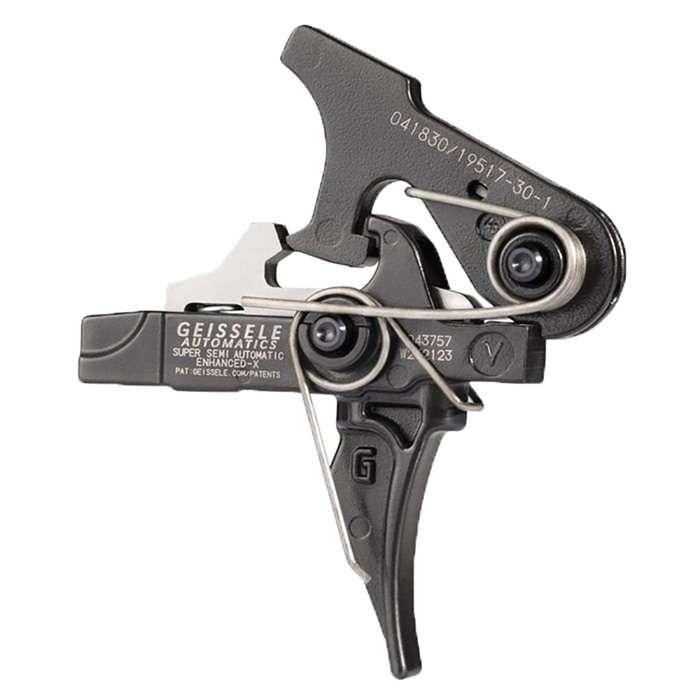
9. Geissele SSA-E X - Best All-Purpose Trigger
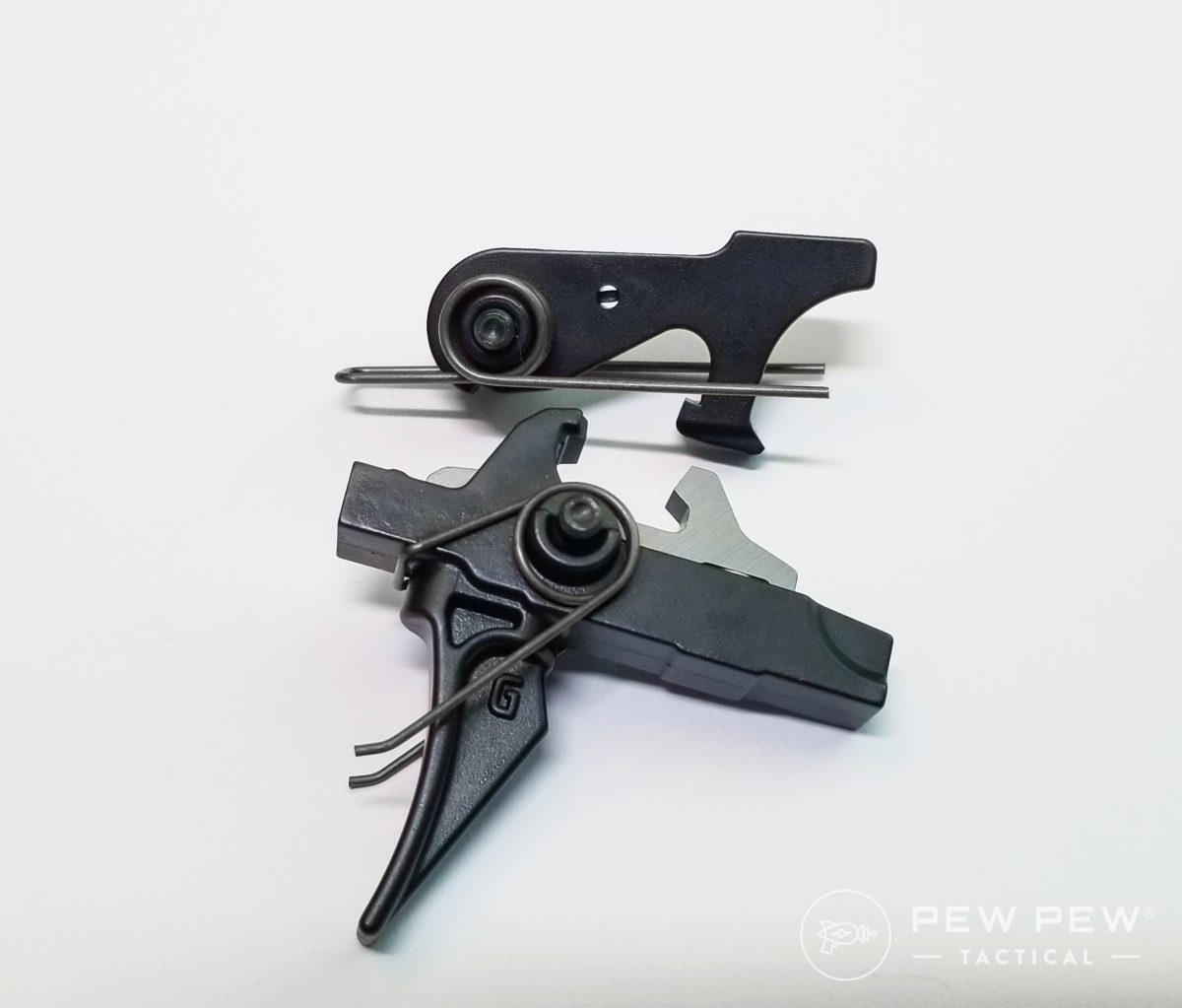
What's included:
- Trigger assembly
- Trigger pins
- Pilot pin
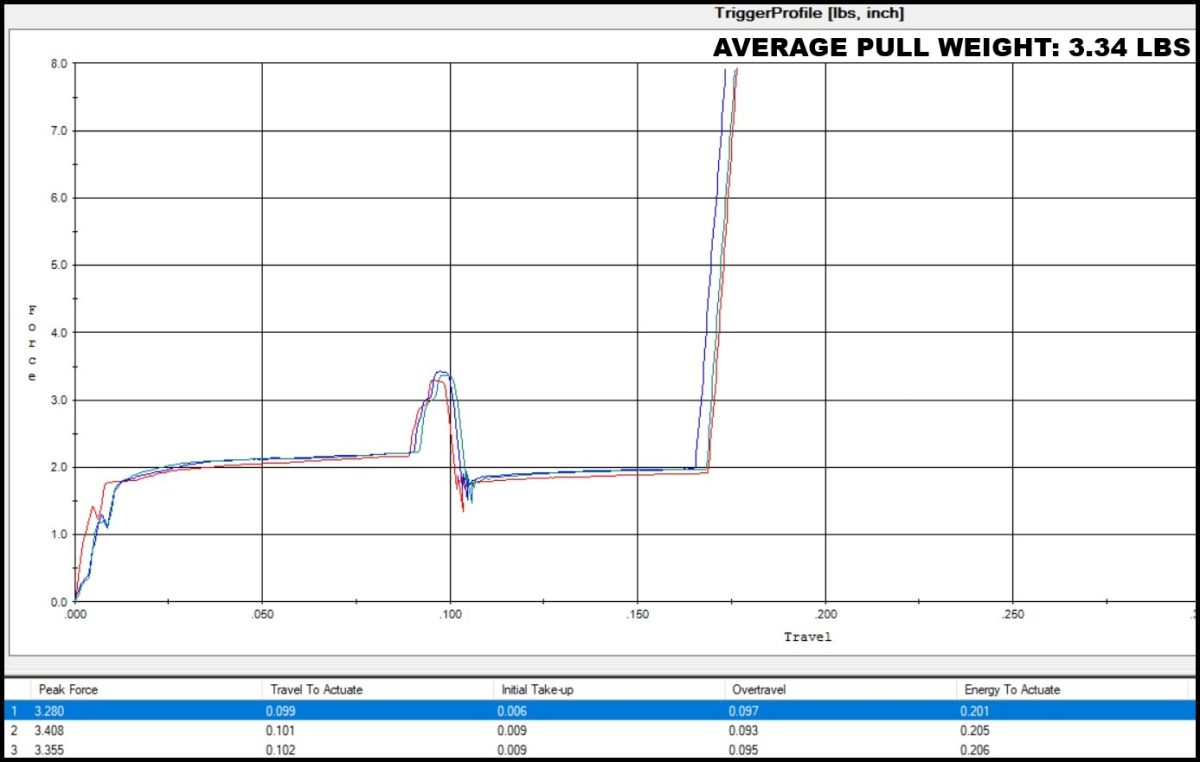
- Average Pull Weight: 3.34 lbs
- Travel Distance: 0.100"
- Style: Two-stage
- Price: $303
The Geissele SSA-E X is my favorite standard AR-15 trigger and the one I run in my primary duty rifle.
I absolutely love the Lightning Bow trigger shoe. It has a gentle curve with a nice, wide face. This is the best feeling trigger shoe on the market, in my opinion.
This two-stage trigger has a long, but very clean first stage that brings you right to a definitive wall. The break is very clean and predictable.
Reset is audible and tactile, with a decent amount of force behind.
While the break on the SSA-E X isn't quite as light or as crisp as the standard SSA-E, it is still very good, and the reset feels better than the standard SSA-E.
This weight and feel are suitable for both precision and duty applications. It's a true do-all trigger.
10. LaRue MBT-2S - Best Duty Trigger
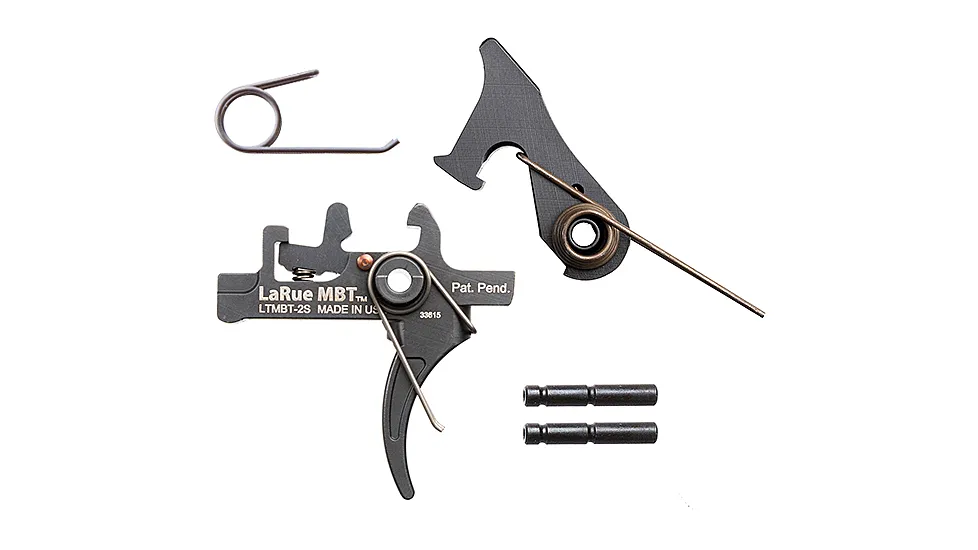
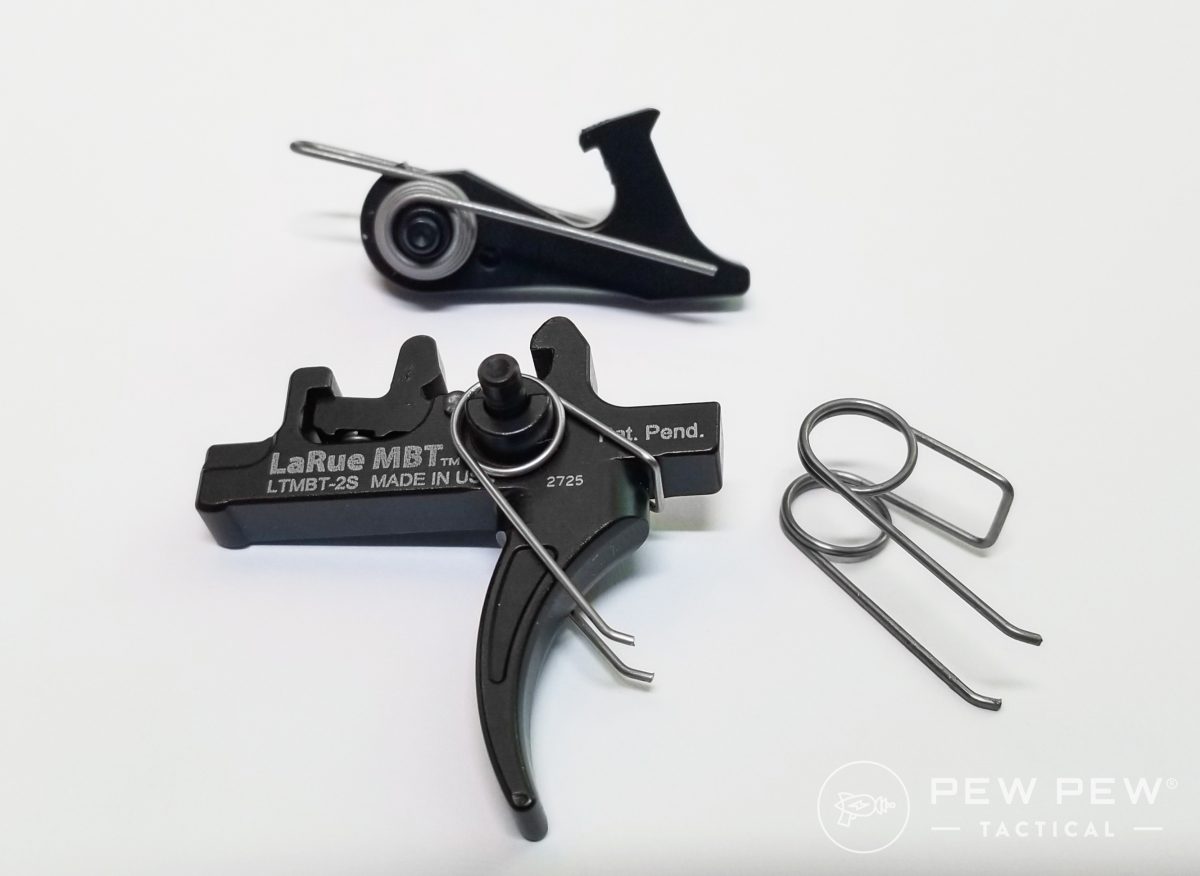
What's included:
- Trigger assembly
- Trigger pins
- Light trigger spring (pre-installed)
- Heavy trigger spring
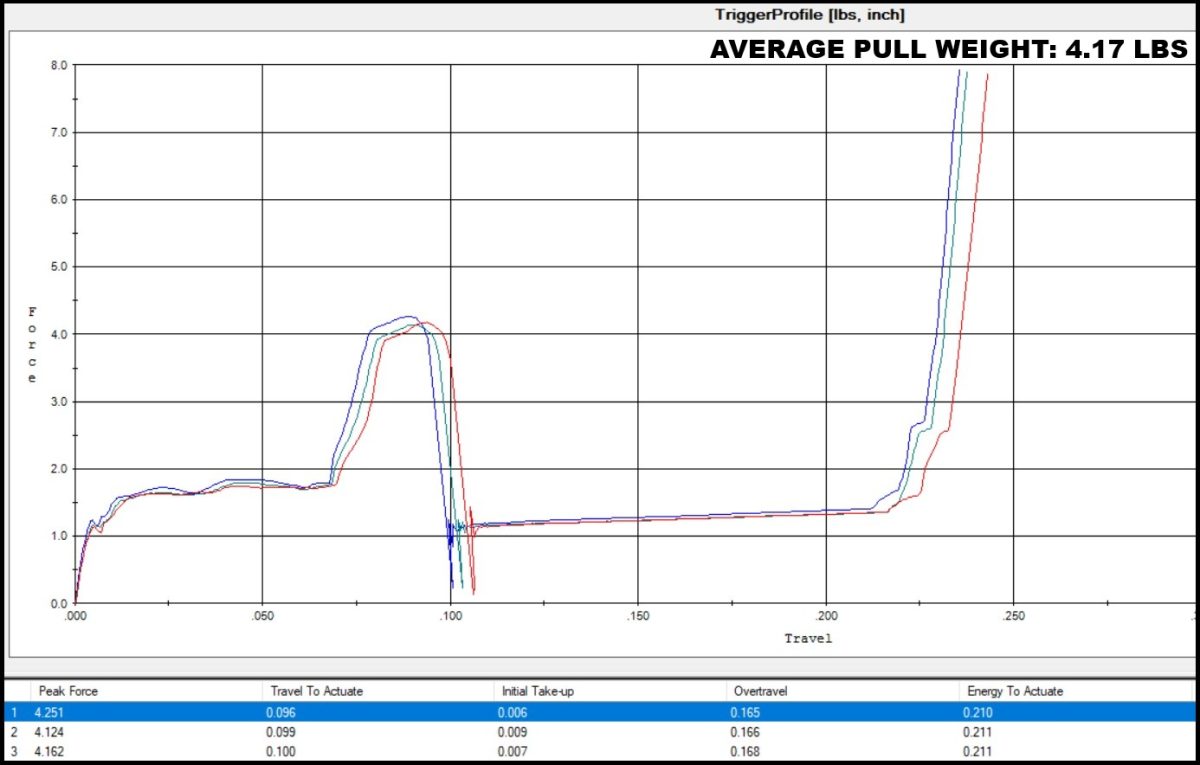
- Average Pull Weight: 4.17 lbs (light spring), 4.97 lbs (heavy spring)
- Travel Distance: 0.099"
- Style: Two-stage
- Price: $100
The LaRue MBT-2S uses an extremely similar trigger design to Geissele SSA triggers, but at half the price. Unlike Geissele, LaRue machines their triggers from tool steel rather than casting them.
I like the trigger shoe. It is nice and wide with nicely chamfered edges. A great profile overall.
You get a very clean first stage up to one of the most well-defined walls of any trigger out there. It is followed by a very crisp break just over 4 lbs.
Reset is very audible, tactile, and has a good push forward on your trigger finger.
LaRue includes both a light and heavy trigger spring. The heavier spring increases the pull weight to just under 5 lbs while providing an even punchier reset. This is ideal for anyone running ammo with hard primers, as it maximizes cartridge ignition reliability. Below is a graph of the MBT-2S with the heavy spring.
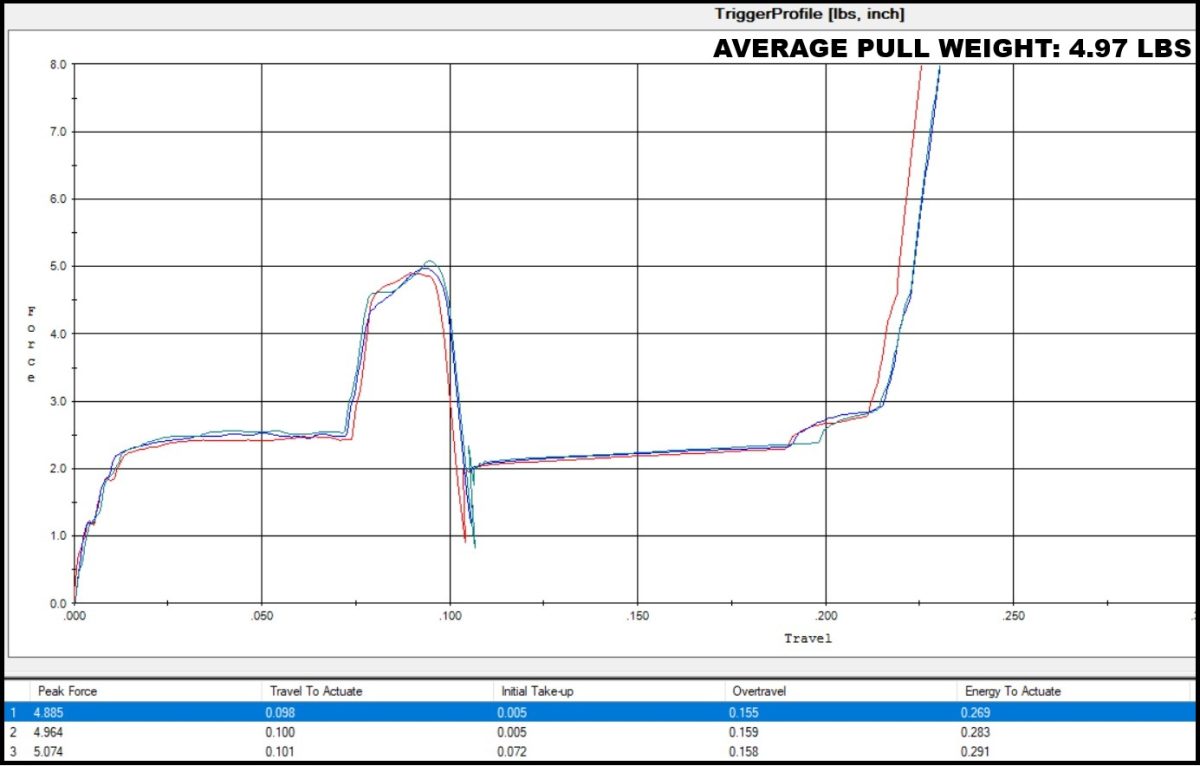
With the shorter first stage, slightly higher overall weight, and solid construction, I feel like the MBT-2S is the best true-duty AR-15 trigger on the market — provided you can find one in stock.
11. Geissele SSA-E - Editor's Pick
What's included:
- Trigger assembly
- Trigger pins
- Pilot pin
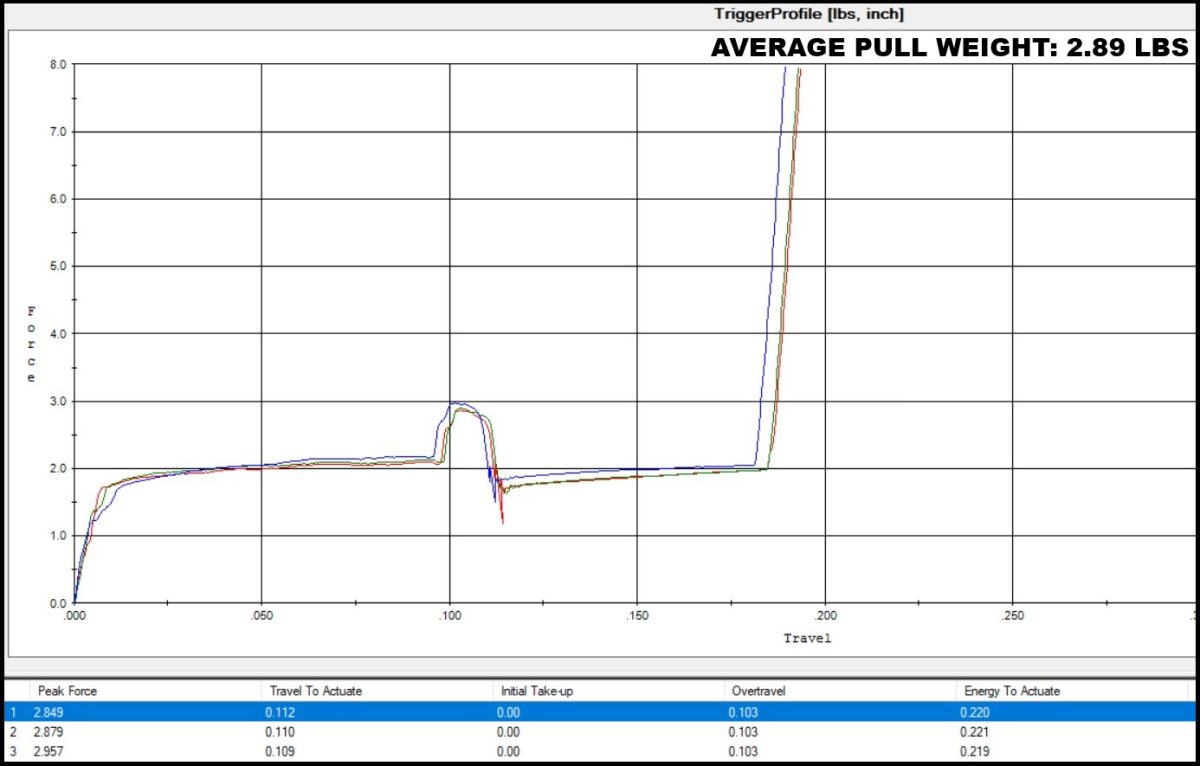
- Average Pull Weight: 2.89 lbs
- Travel Distance: 0.110"
- Style: Two-stage
- Price: $219
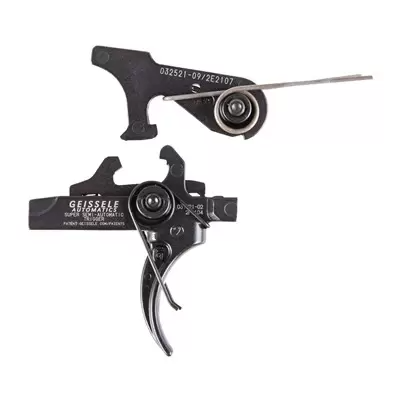
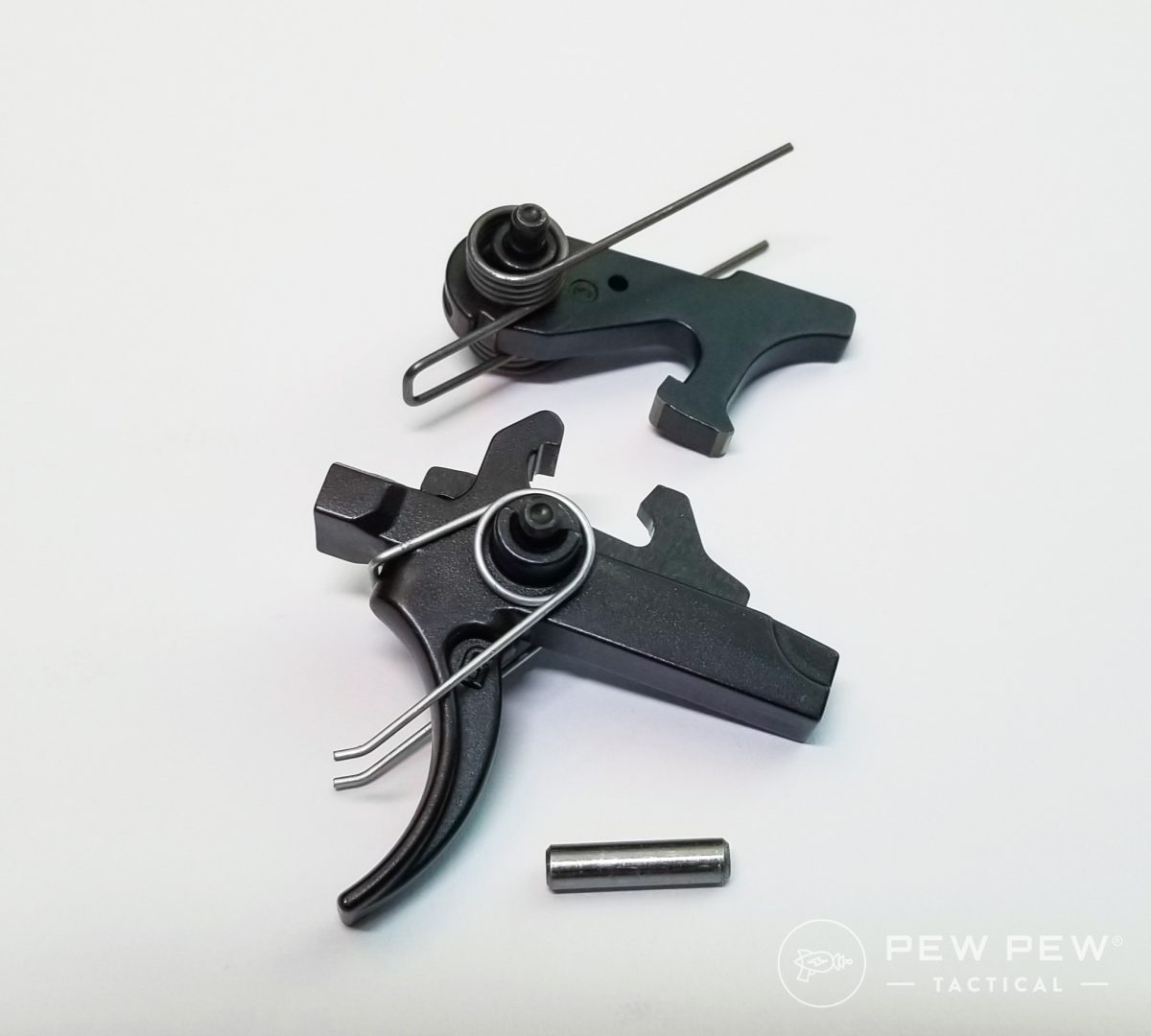
Without a doubt, the most popular aftermarket AR-15 is the Geissele SSA-E. It has become the gold standard for AR enthusiasts nationwide.
These two-stage triggers use a standard mil-spec style curved trigger shoe and break right around 3 lbs.
There is a slightly lengthy, but clean, first stage, followed by a solid wall. The break is nice and crisp.
Reset is audible, tactile, but not particularly punchy. It pretty much grades A in every category. While it is still fairly spendy, it is cheaper than the SSA-E X by a decent margin. The SSA-E is an outstanding trigger across the board.
12. Hiperfire Hipertouch ECLipse - Most Adjustable Standard Trigger
What's included:
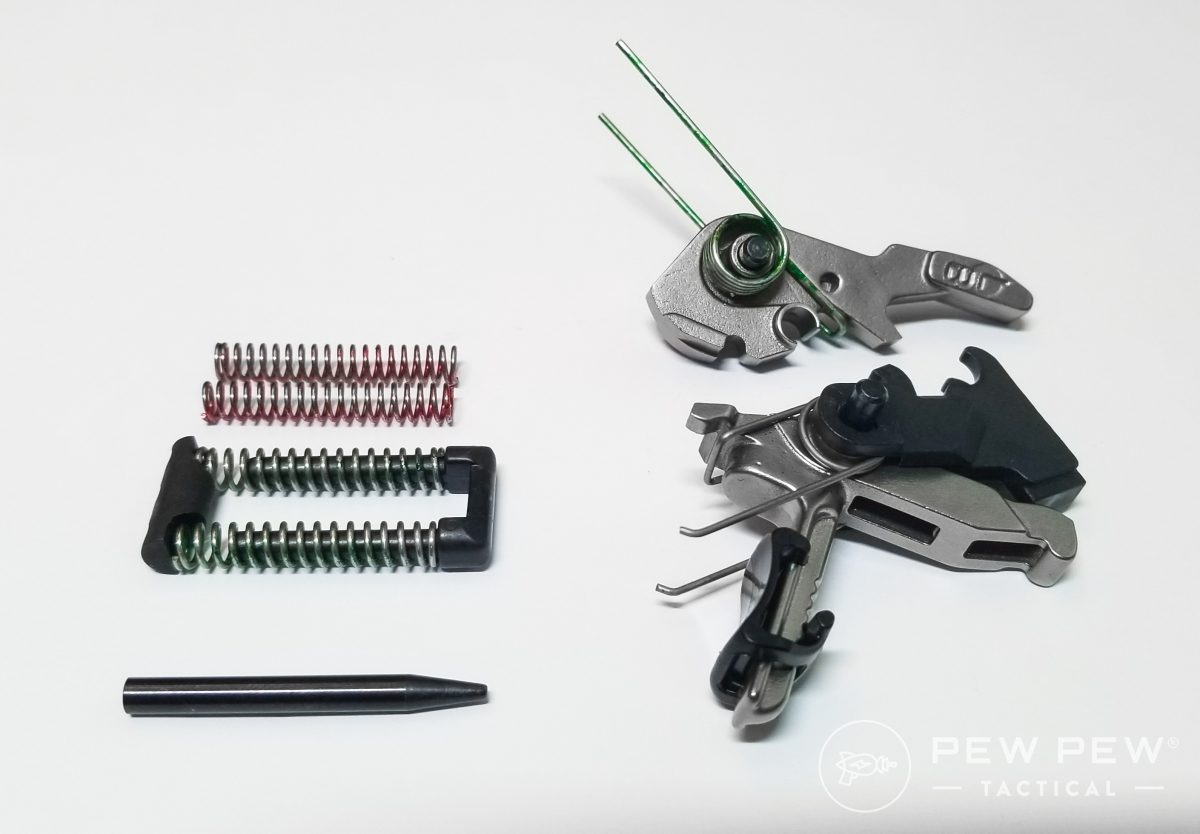
- Trigger assembly
- Toggle yoke
- Light and heavy toggle springs
- Adjustable trigger shoe
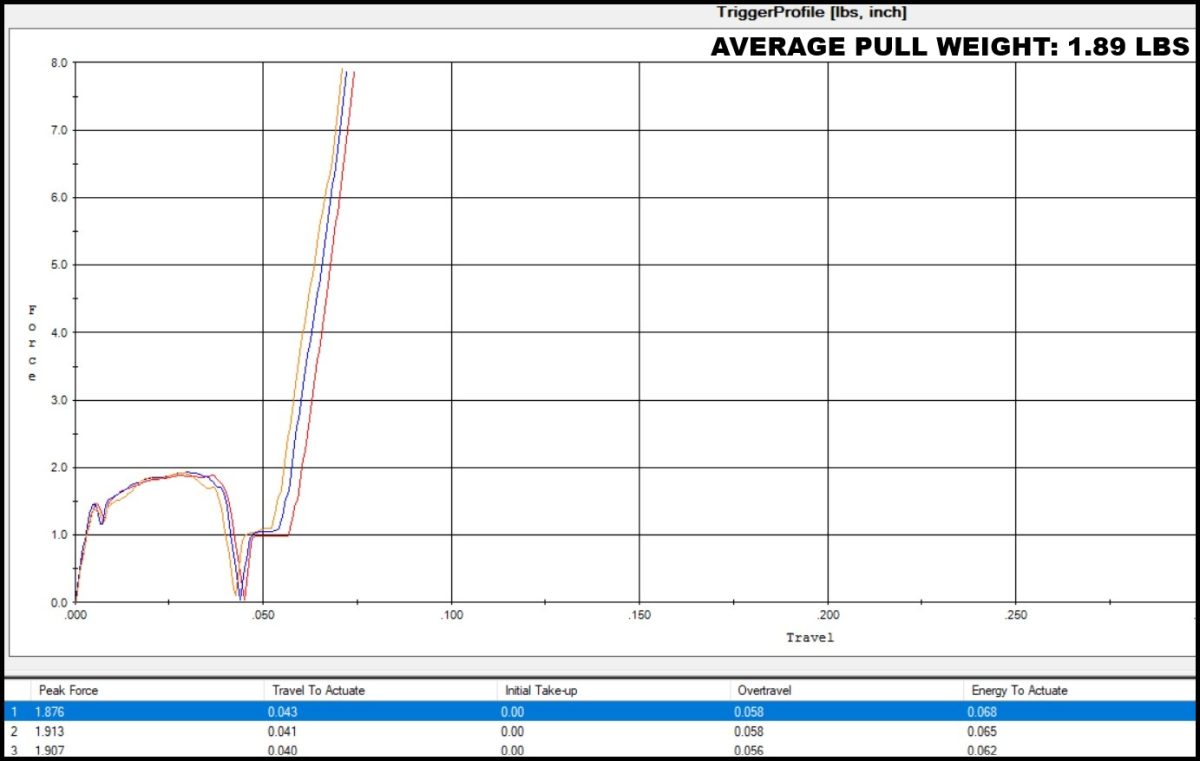
- Average Pull Weight: 1.89 lbs (Green Spring), 2.89 lbs (Red Spring)
- Travel Distance: 0.042"
- Style: Single-stage
- Price: $261
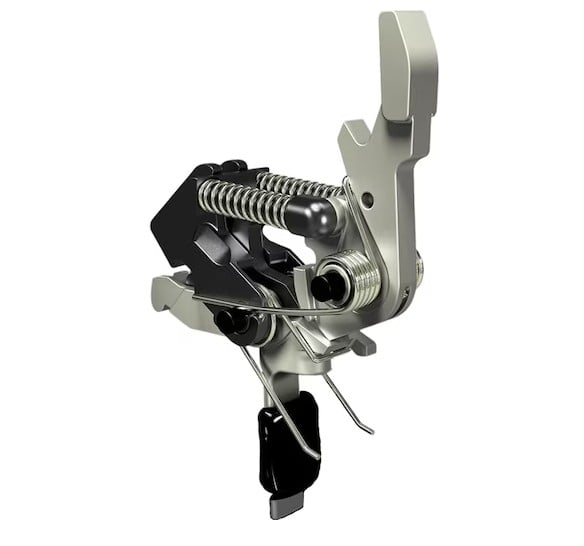
Hiperfire's top-of-the-line trigger is the Electroless Nickel Boron (NiB) plated Hipertouch ECLipse.
It features a unique Cam-Over toggle action that lets you have a light trigger pull, but a very hard-hitting hammer to ensure reliable ignition.
The straight trigger bow also features an easily adjustable trigger shoe that you can easily slide up and down to your preference. It stays locked into place via teeth on the back of the trigger.
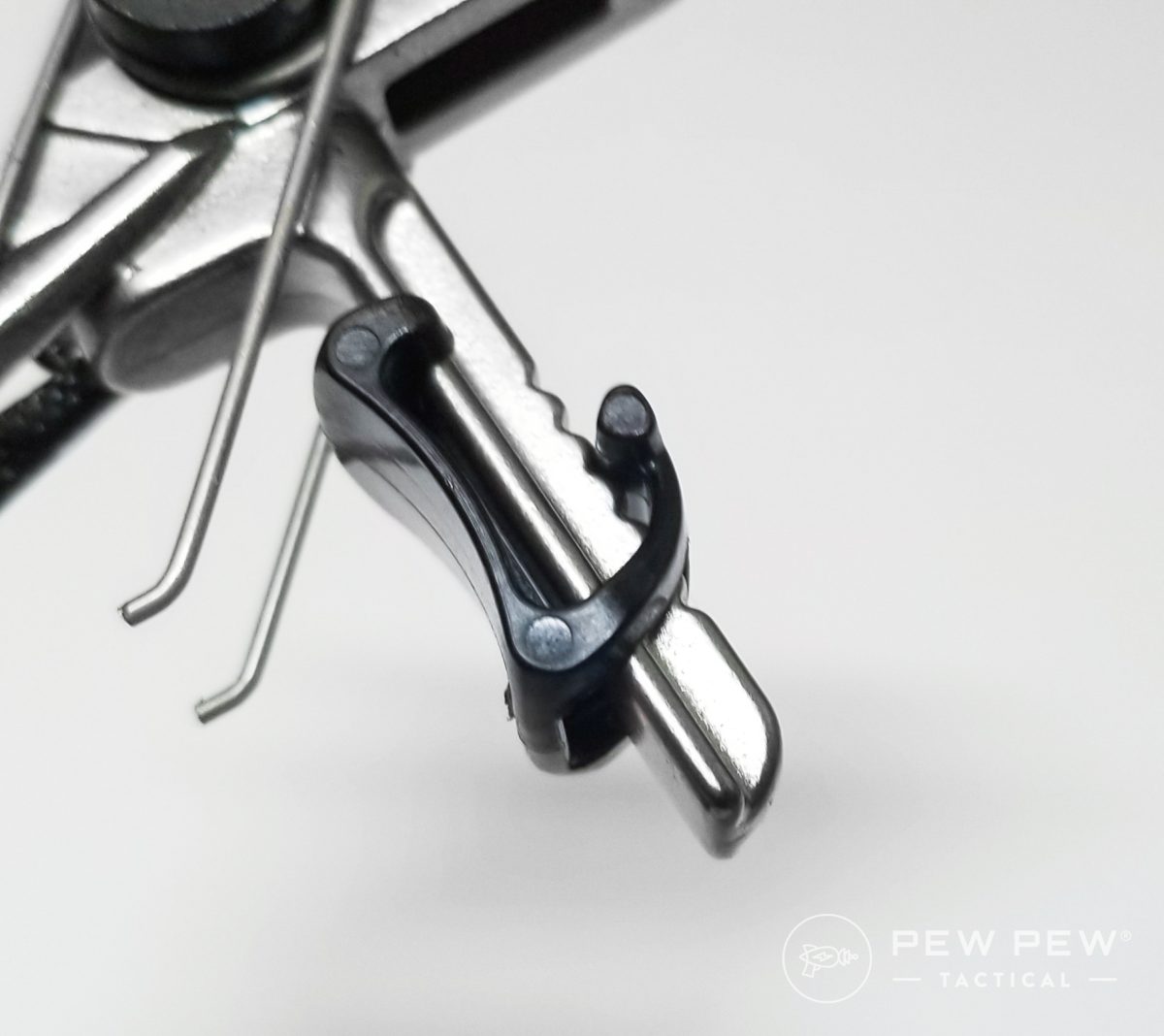
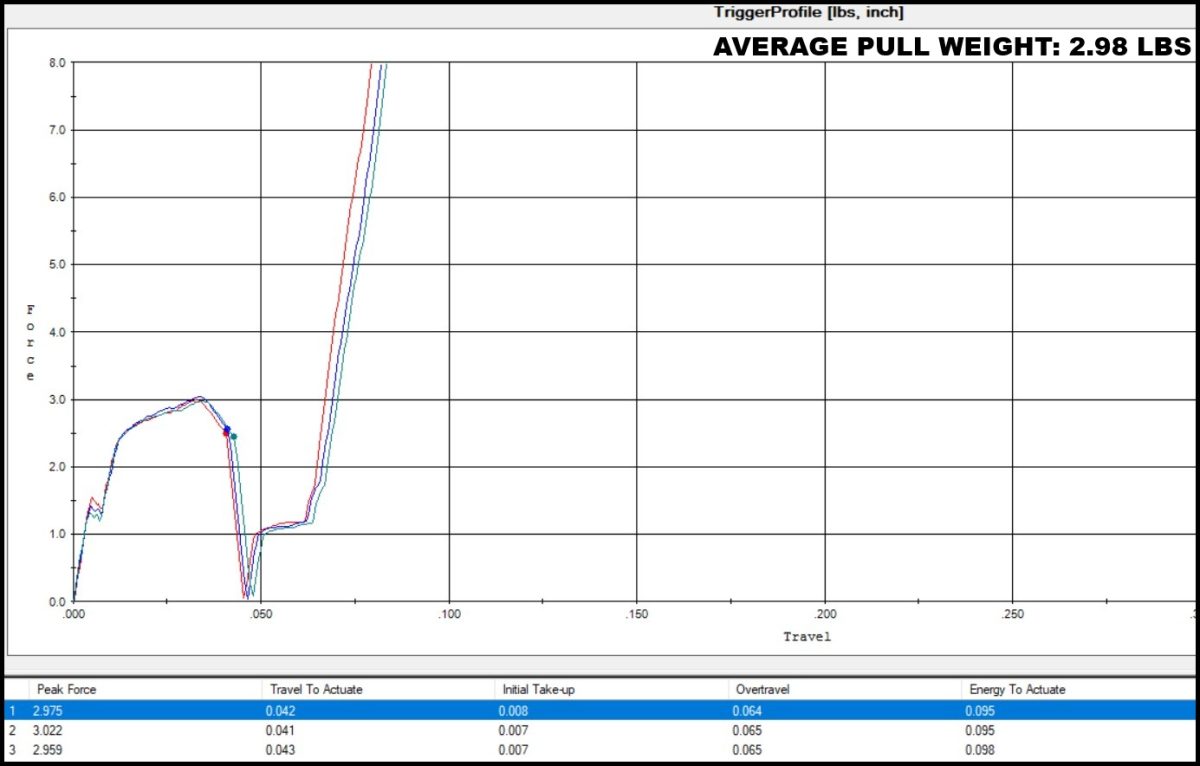
Pull-wise, there is the most minute amount of take-up to a wall, followed by an ultra-light and clean break right under 2 Lbs.
Reset is extremely short and audible, but not super tactile.
The Hipertouch ECLipse also comes with two sets of toggle springs that allow you to adjust the trigger pull weight without completely removing the trigger. It does require you to use a tool to remove the toggle yoke that the springs ride on, but it isn't too difficult once you've done it once. Below is a TriggerScan of the ECLipse with the heavier red springs.
This would be a top choice for precision shooting applications since you can adjust both the pull weight and placement of the trigger shoe itself.
Our Most Popular Posts
13. PSA Enhanced Polish Trigger
What's included:
- Trigger assembly
- Trigger pins
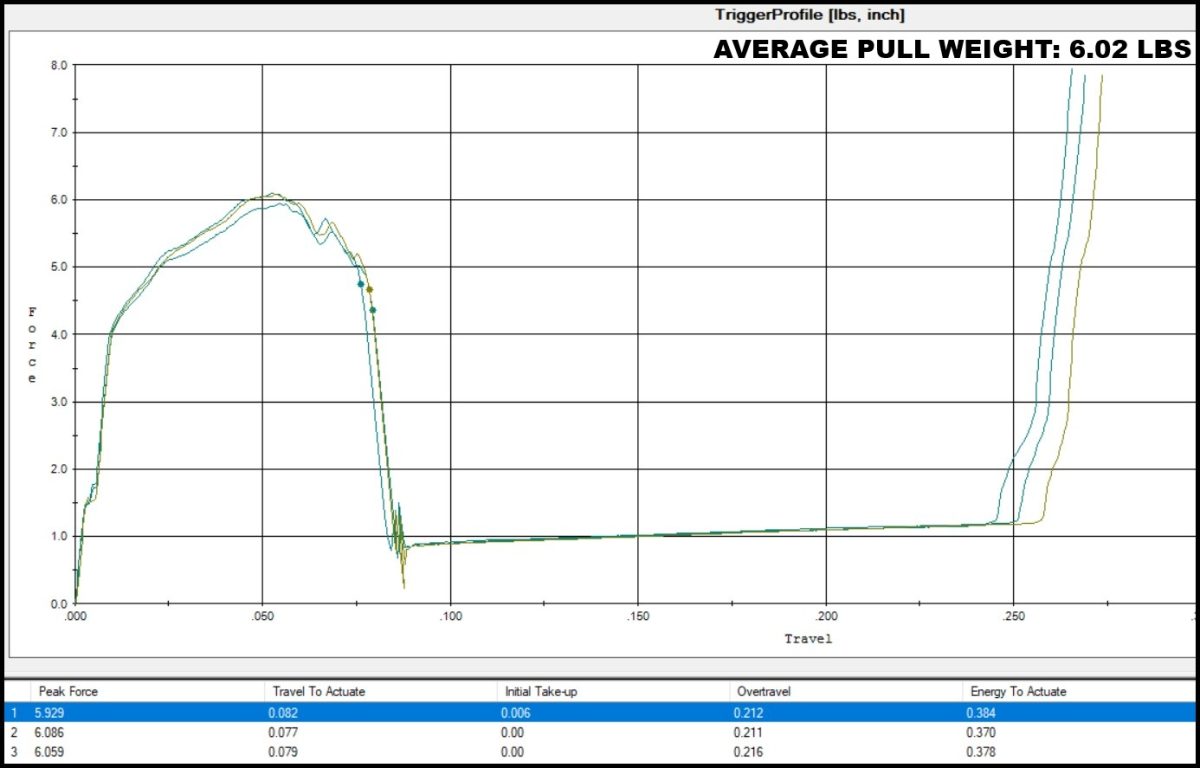
- Average Pull Weight: 6.02 lbs
- Travel Distance: 0.079"
- Style: Single-stage
- Price: $49
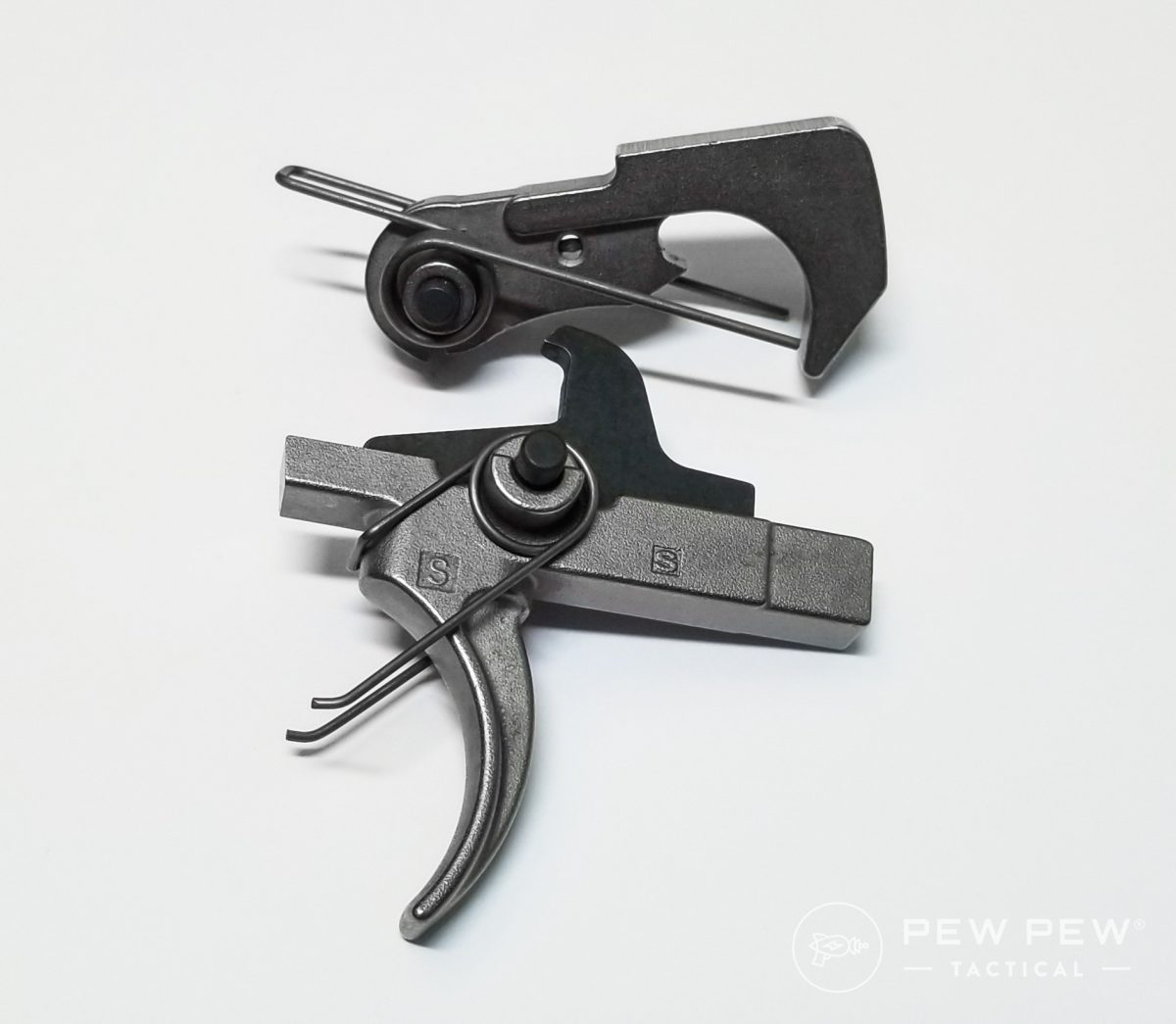
The PSA Enhanced Polish Trigger is merely a pre-polished version of a standard mil-spec trigger.
As a result, it feels very close to the stock mil-spec trigger I used as a baseline test, meaning it is long, a bit spongy, and not particularly pleasant.
The semi-polished surface does help remove some of the grit, but I did notice it felt a bit heavier than the standard mil-spec trigger, clocking in right around 6 lbs.
These are cheap and provide a small upgrade over a basic mil-spec trigger for only a little more money. Nothing special here.
14. Geissele Super Dynamic 3 Gun (SD-3G)
What's included:
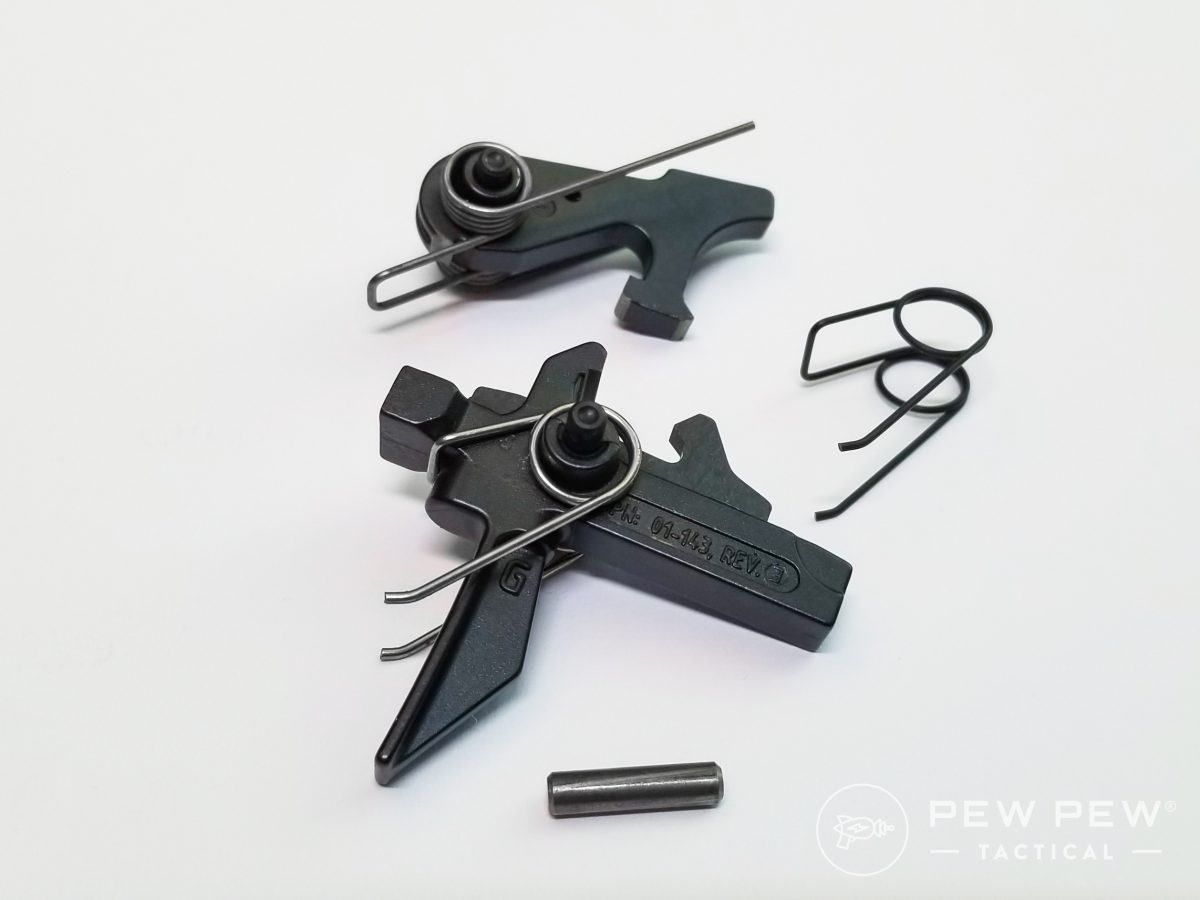
- Trigger assembly
- Trigger pins
- Pilot pin
- Light and heavy trigger springs
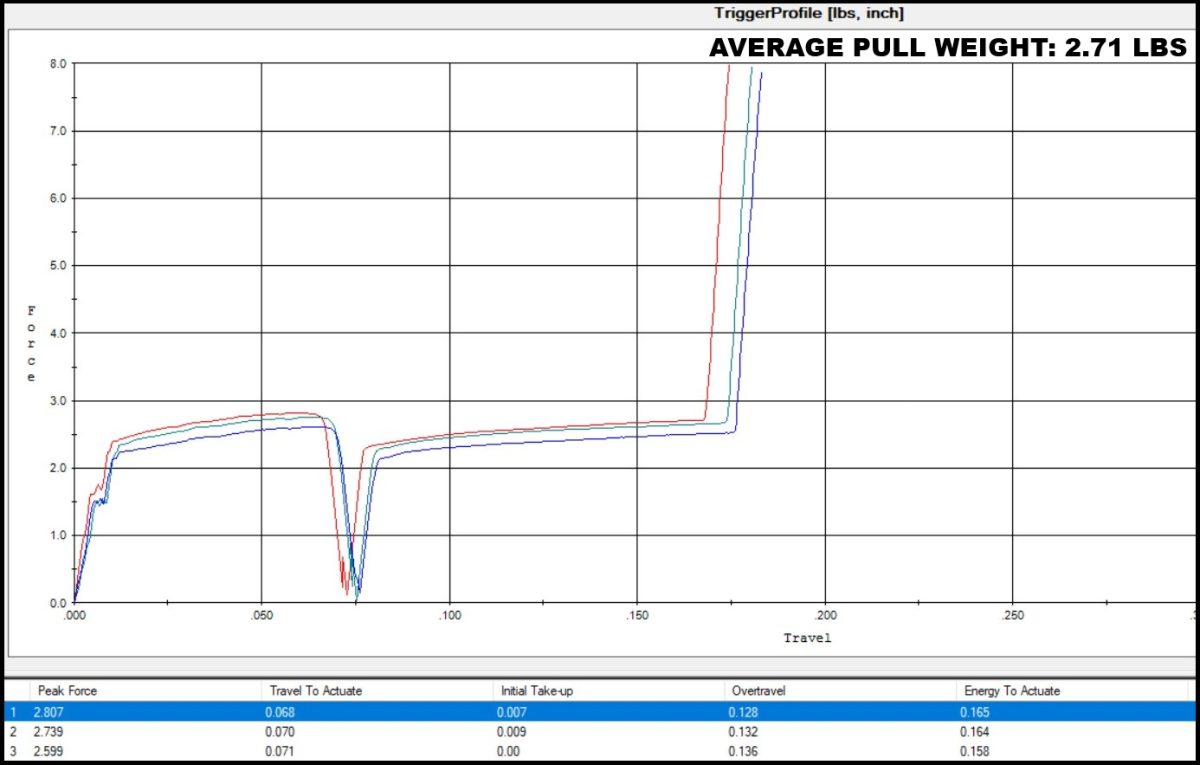
- Average Pull Weight: 2.71 lbs (Black Spring), 4.71 lbs (Gold Spring)
- Travel Distance: 0.070"
- Style: Hybrid
- Price: $239
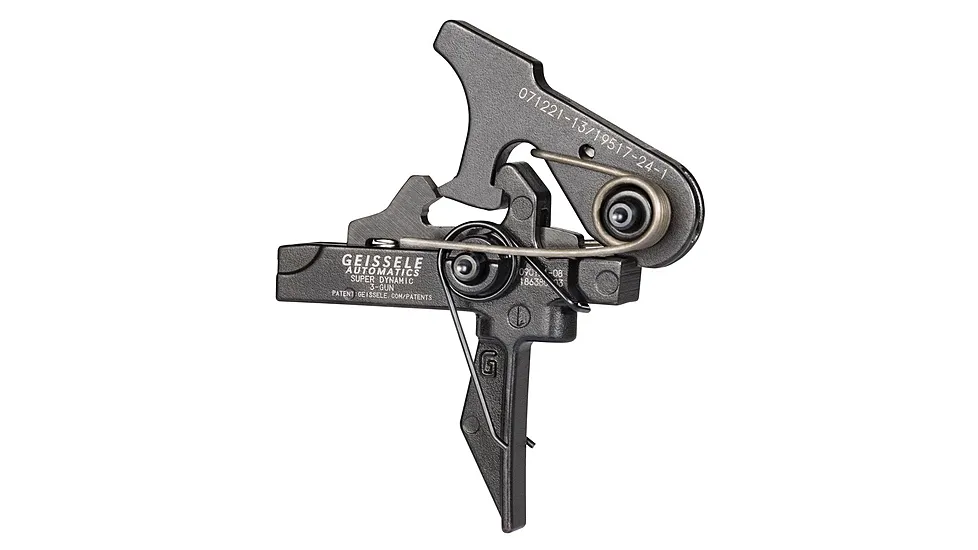
Geissele's Super Dynamic 3-Gun trigger is built for speed and fast-moving competitions.
It has a shortened pull length over the standard SSA-E, along with a faster reset. In the words of Geissele, "this gives it a unique, hybrid trigger pull that is a cross between a traditional two-stage and single-stage trigger."
It comes with a black (light) trigger spring and a gold (heavy) trigger spring.
With the black spring, there is almost no perceptible creep before coming into a slightly rolling break right around 2.7 lbs.
Using the gold spring added the tiniest amount of creep on the front end and made the break slightly less clean, although it is still very good.
This also raises the weight by a full two pounds for a total of 4.7 lbs. Below is a scan of the trigger with the gold spring installed.
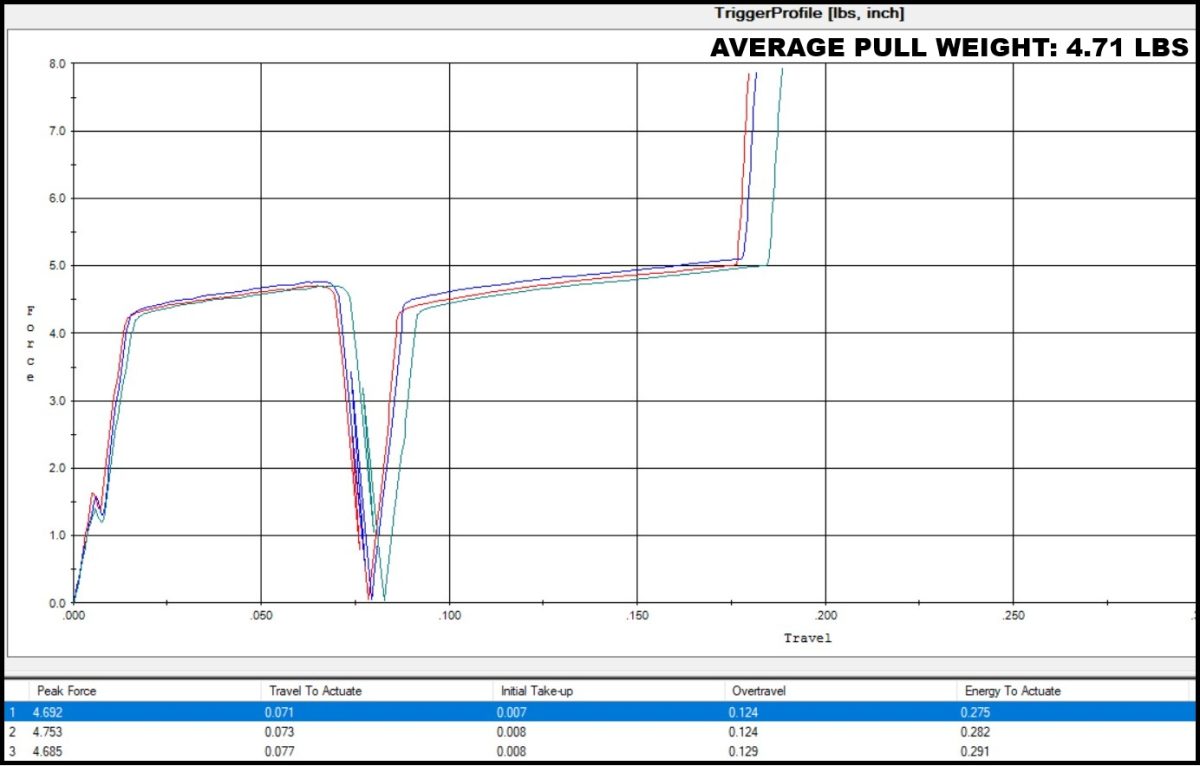
While the reset is lightning-fast on with both springs, it is even faster and more forceful with the gold spring.
To be honest, the hybrid break really isn't my thing, but I see the appeal. As the name implies, this would make for an excellent multi-gun match trigger.
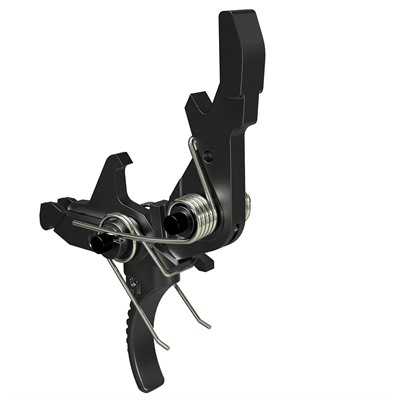
15. Hiperfire EDT Two-Stage
What's included:
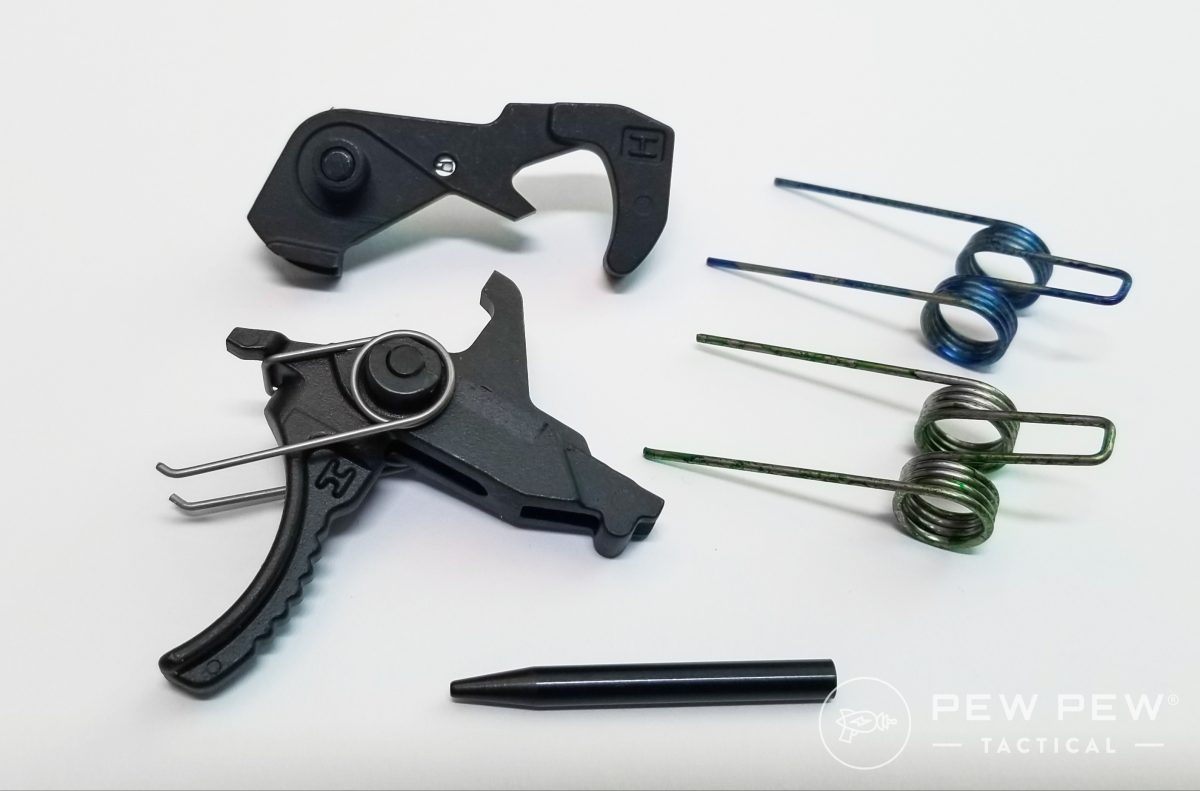
- Trigger assembly
- Trigger pins
- Pilot pin
- Light and heavy hammer springs
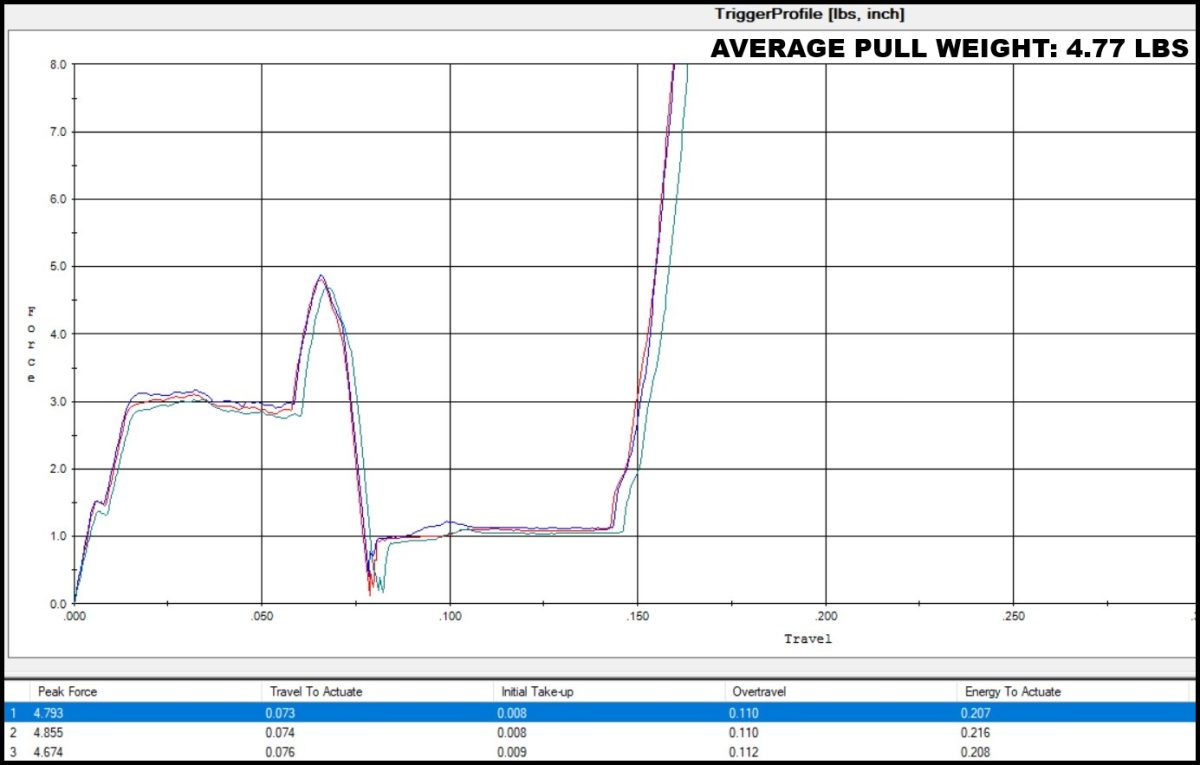
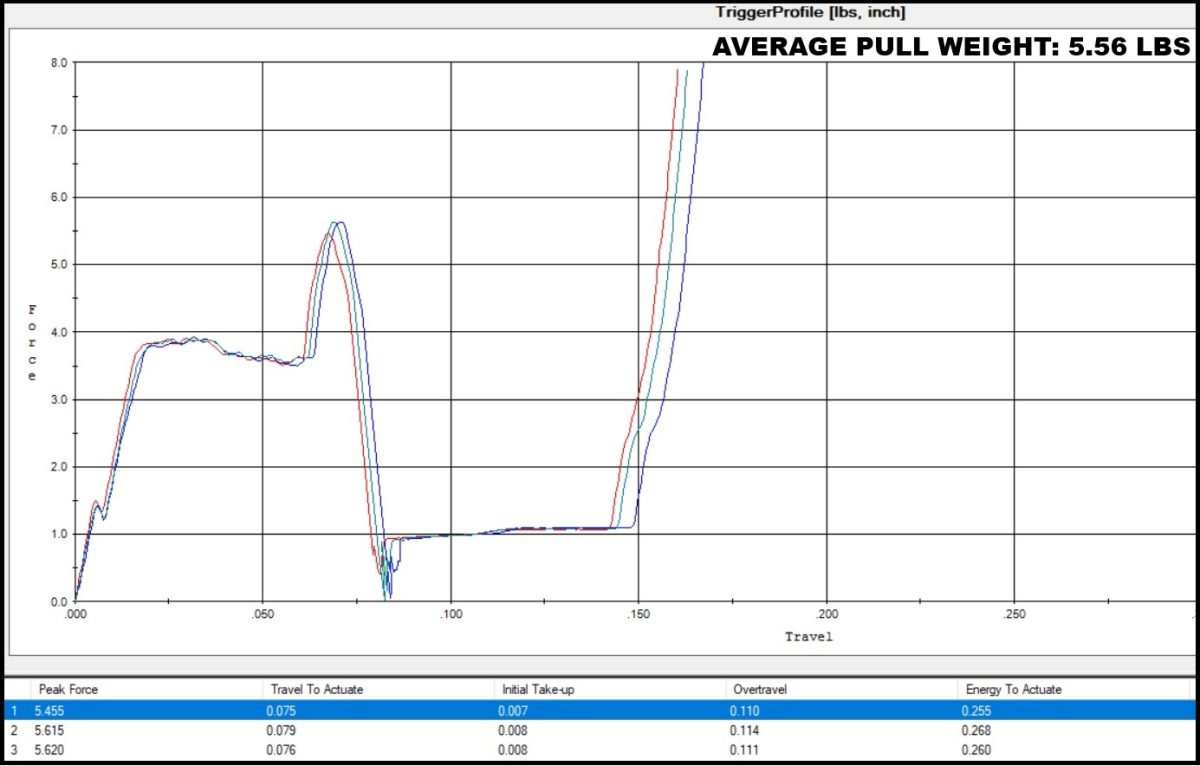
- Average Pull Weight: 4.77 lbs (Blue Spring), 5.56 lbs (Green Spring)
- Travel Distance: 0.074"
- Style: Two-stage
- Price: $94
The Hiperfire EDT two-stage trigger is an affordable entry into the typically more expensive world of two-stage triggers.
It comes with two different hammer springs to alter the pull weight.
Using the lighter blue spring, there is a short pull through the first stage to a definitive wall. It breaks cleanly right around 4.8 lbs, but feels "chunky" for lack of a better word. I don't feel much in the way of creep or grit, just a bit of steady resistance throughout.
I can, however, feel some grit during the reset process, but it isn't terrible. Reset is audible, tactile, and mildly forceful.
With the heavier green spring installed, the trigger weight bumped up to 5.5 lbs. It also resulted in a slightly worse break, but a punchier reset. The green spring makes the trigger a bit heavy for my liking. Below is a scan with the green spring installed.
I would best describe this trigger as feeling blocky and deliberate, but not necessarily in a bad way. This trigger sits pretty far back in the trigger pocket, so if reach to the trigger is a concern, this might be a good option.
16. CMC 3.5 LB Component Trigger
What's included:
- Trigger assembly
- Trigger pins
- Pilot pin
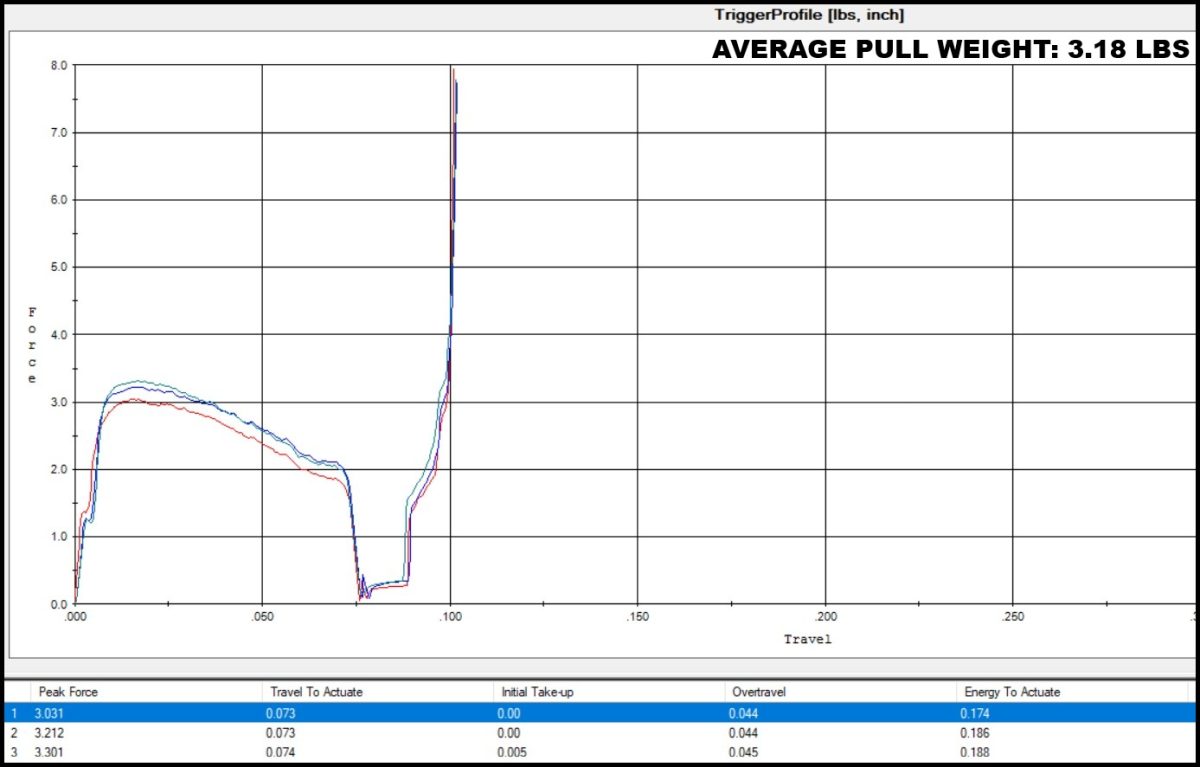
- Average Pull Weight: 3.18 lbs
- Travel Distance: 0.073"
- Style: Single-stage
- Price: $126
CMC has been in the trigger game for a while now and was one of the first manufacturers to manufacture affordable drop-in triggers.
But this time, I decided to check out a standard single-stage component trigger from them.
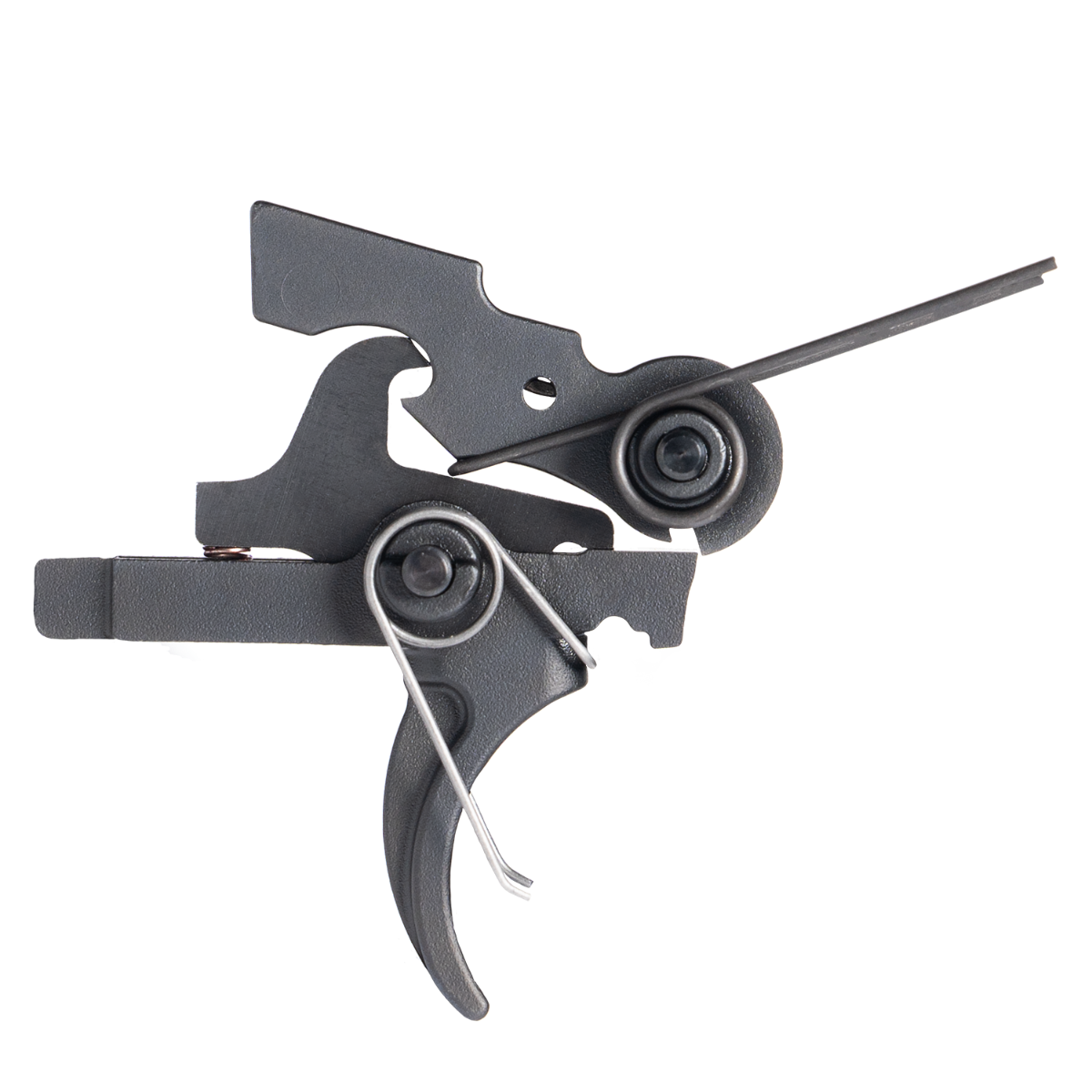
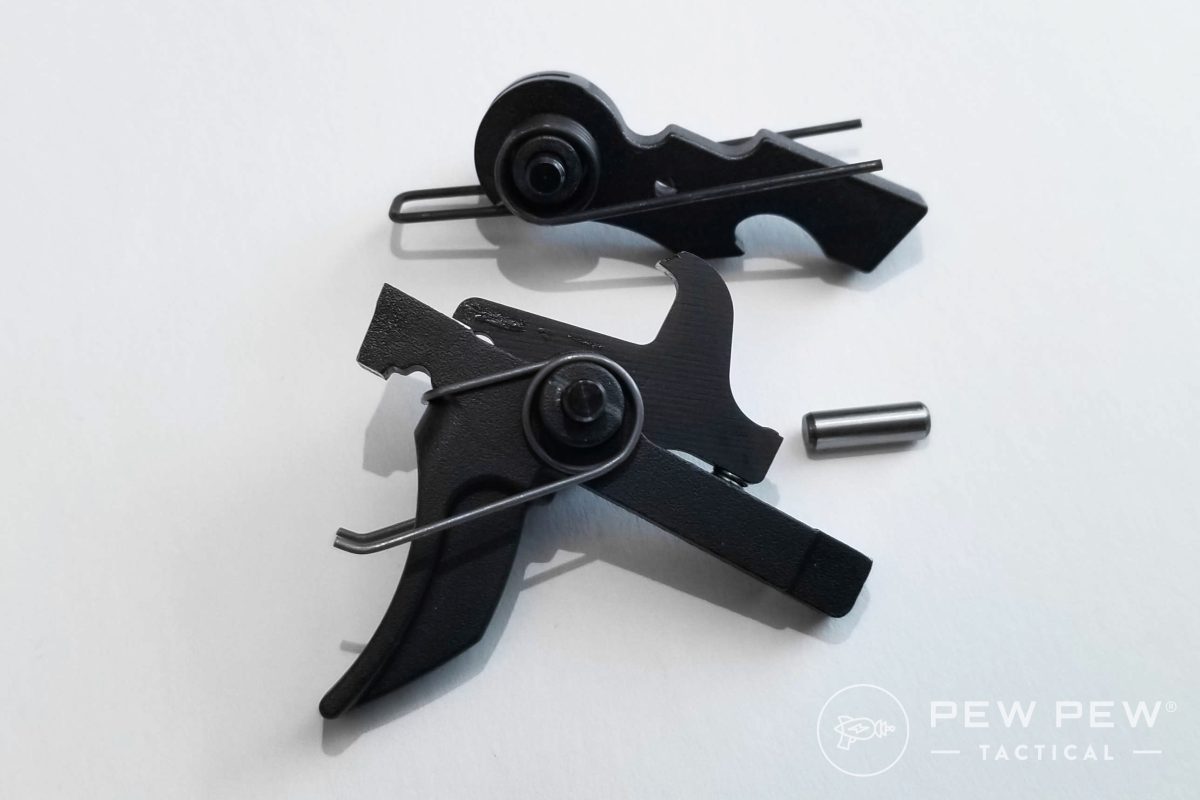
This trigger has a nice, "combat" curved shoe reminiscent of the Geissele SSA-E X Lightning Bow. It does sit fairly far forward in the trigger guard. CMC also offers standard curve and straight bow triggers as well.
There is absolutely zero take-up to a definitive wall and virtually no creep en route to a very clean break. Reset is short, reasonably forceful, and definitely audible.
These triggers have a very clean feel, and the price is appealing.
I must note that the first component trigger I received would not fully reset due to what appeared to be a weak or defective trigger return spring. I reached out to CMC, and they sent me a replacement trigger (the one in the video above), which has given me zero issues so far.
Drop-In vs. Standard Triggers
A drop-in trigger comes with all of the trigger components pre-installed inside an external metal housing. As a result, these triggers are typically easier to install than standard triggers. They often yield a lighter and crisper trigger pull.
The main downside of drop-in triggers is that dirt and debris can accumulate between the housing and trigger components over time, requiring a bit more cleaning than a standard trigger.
Drop-in triggers also typically need some sort of mechanism to keep the trigger pins from walking out under recoil. Most current-day drop-in triggers address this issue with either internal set screws or external anti-walk pins.
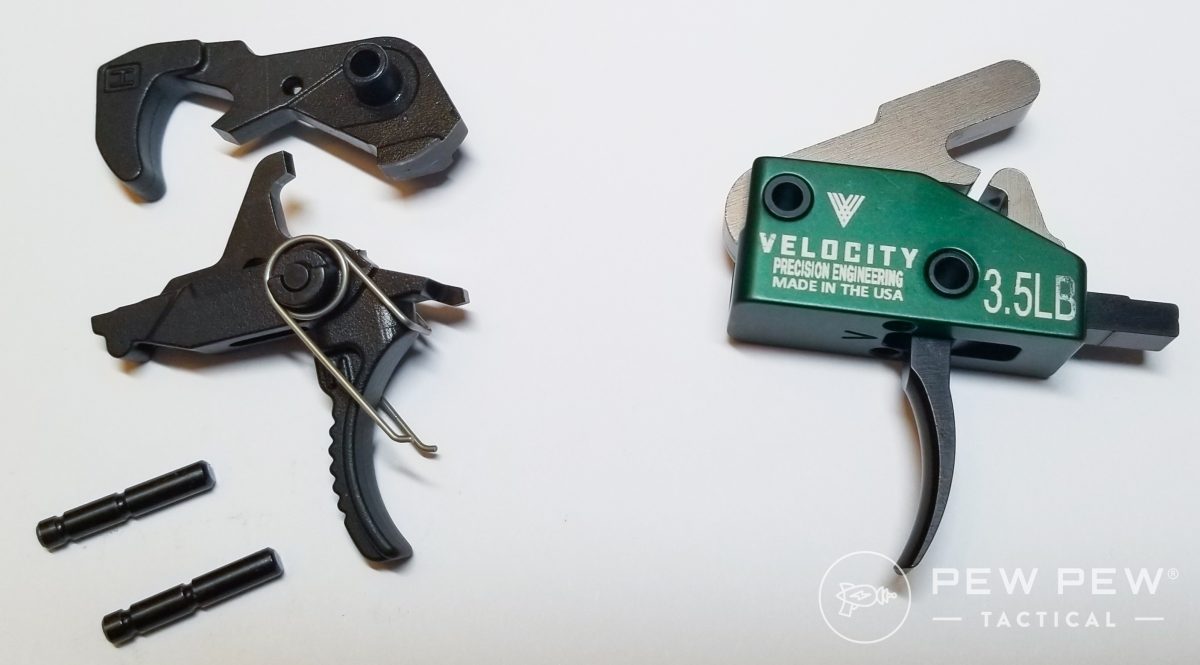
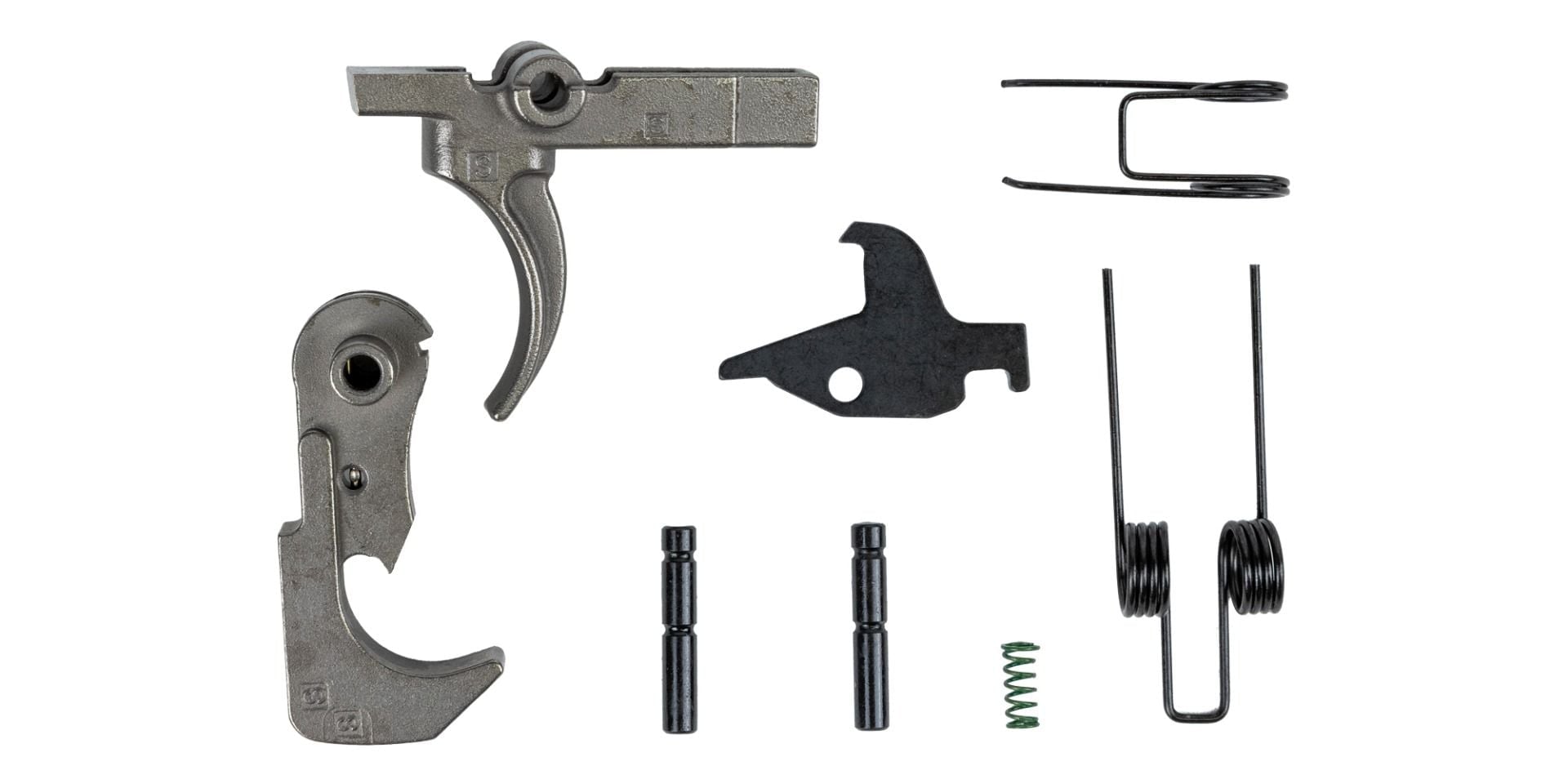
Standard triggers (sometimes also called mil-spec triggers) have all of the individual trigger components separate. These require lining up all the pieces under tension to install, which is more difficult.
The upside to standard triggers is that they don't accumulate as much debris since there is no housing to keep all the gunk inside. You can also easily replace individual parts without having to replace the entire trigger mechanism. This makes them ideal for hard-duty use and extreme longevity.
Single-Stage vs. Two-Stage Triggers
Single-stage triggers operate with a single pull, where you encounter resistance from the moment you start pulling until it goes off. These triggers have no "take-up."
Since there is no take-up, these triggers are best suited toward applications that require speed, such as run-and-gun competitions or close-quarters combat.
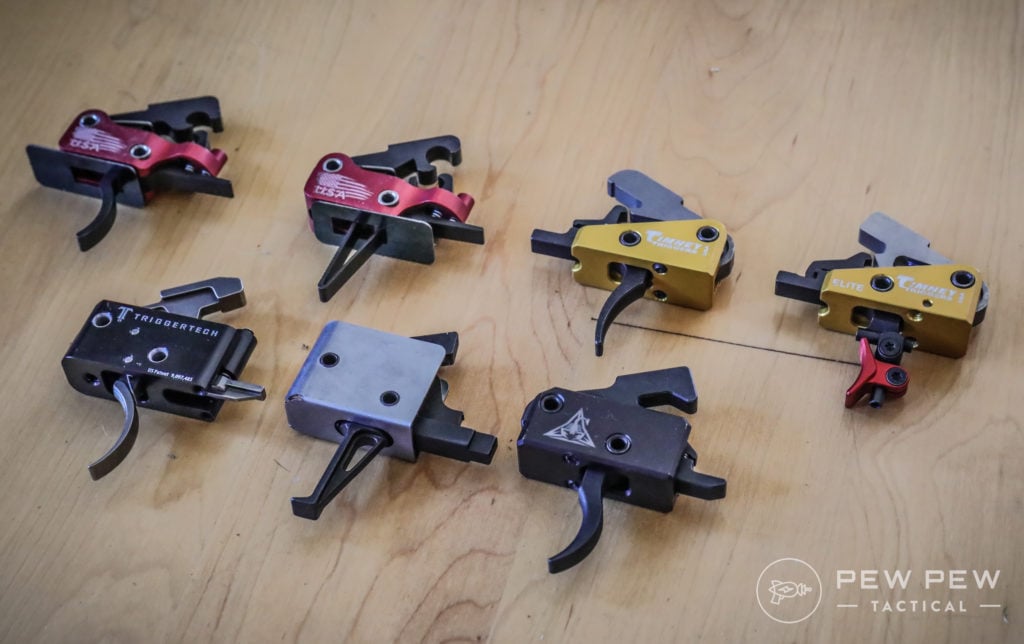
Two-stage triggers have two distinct phases during the trigger pull. During the first phase, you move through a light amount of built-in take-up (or slack) until you hit a definitive wall. Once you hit the wall, you will apply more pressure until the shot breaks.
That first stage allows your finger to get set right where it needs to be before the trigger breaks. This is ideal for situations that require precision, such as target shooting, long-range applications, or hunting.
However, many people simply prefer one style of trigger over the other, regardless of application. Choosing whether you want a single- or two-stage trigger is purely a matter of personal preference.
Understanding the TriggerScan Graphs & Key Terms
Below are two sample readouts from the TriggerScan with some key terms to help you interpret the graphs in this article. I have also included definitions for those terms below.
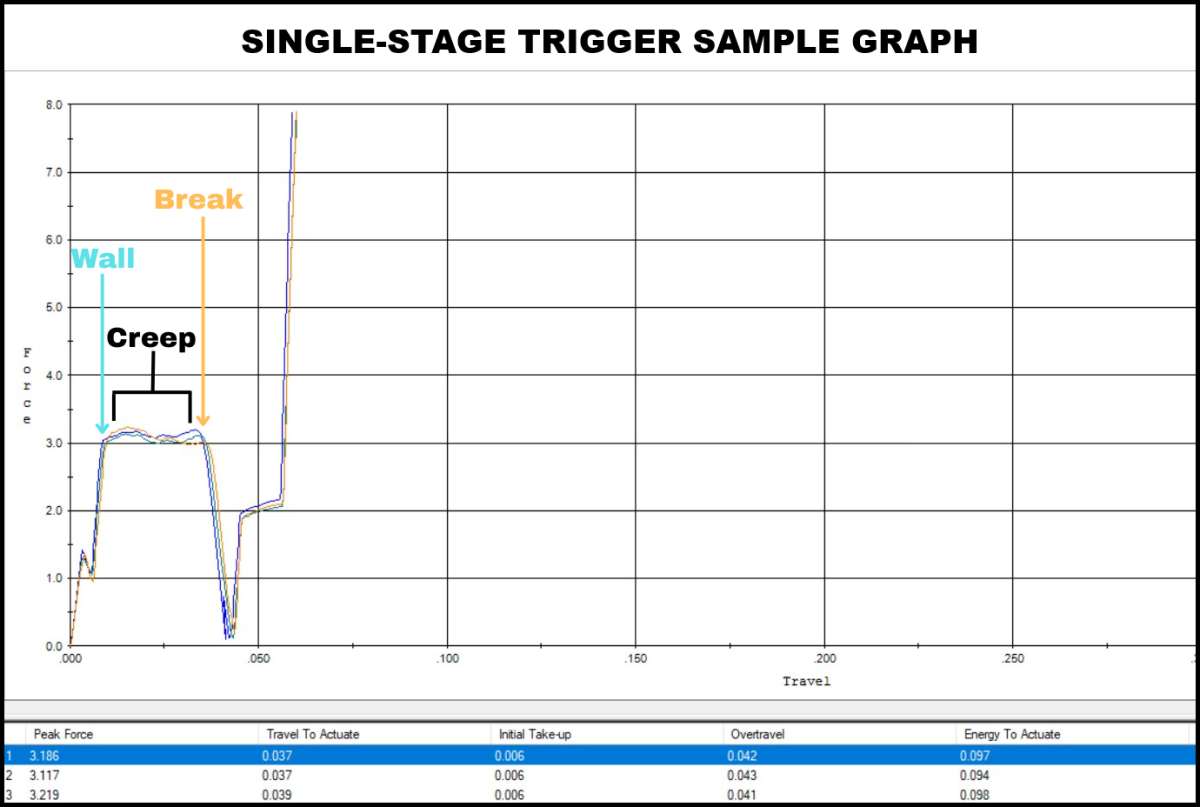
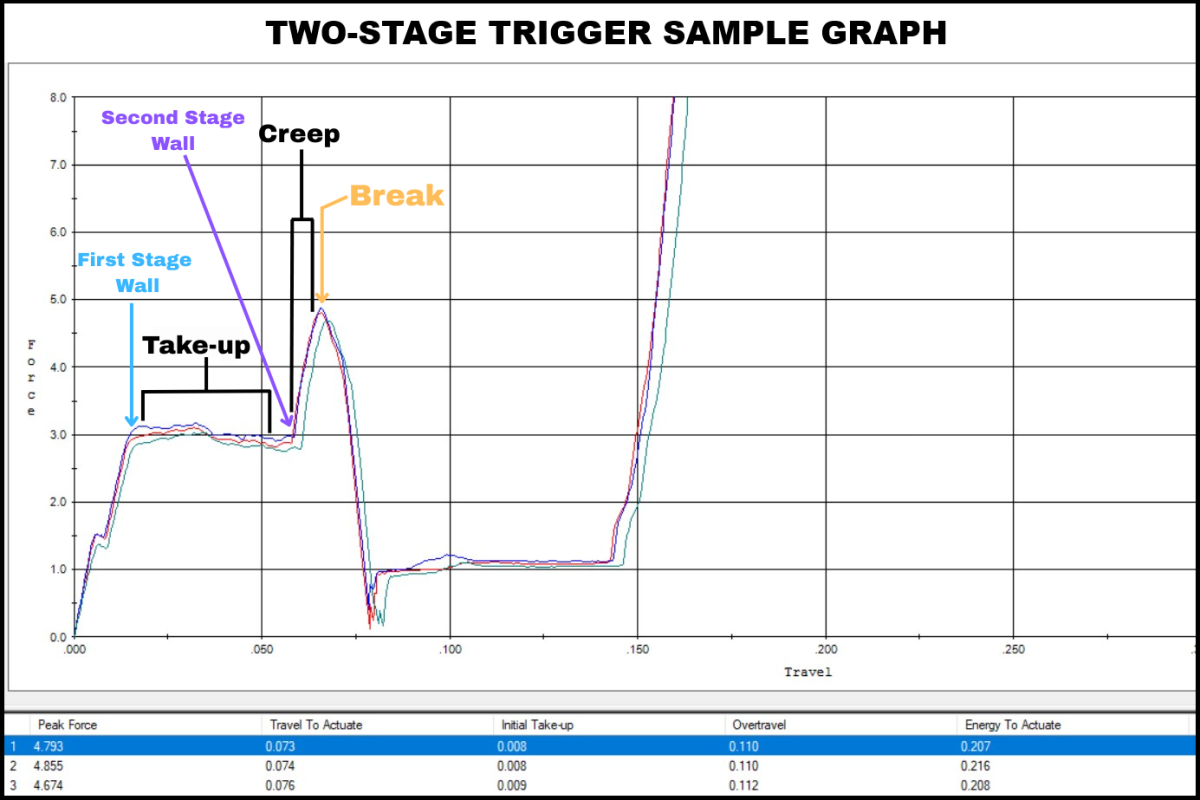
The vertical axis of the chart measures the peak force, in pounds, that is required for the trigger to actuate. The horizontal axis measures the distance, in inches, that it takes for the trigger to reach its full travel.
Each trigger was tested 3 times in a row, resulting in 3 separate lines on each graph. The more these lines overlap, the more it indicates repeatable movement during the trigger pull.
The large spike at the very end of the graph is the result of the TriggerScan pinning the trigger to the rear of its travel and continuing to pull to infinity. You can ignore this final spike.
Key Trigger Definitions
Keep in mind that definitions do vary from person to person. However, I find these to be the most intuitive way of describing trigger mechanics in a real-world sense.
- Take-up: Take-up is the amount of initial travel the trigger has where there is no resistance. This is the little bit where the trigger moves back and forth before you start feeling resistance. Take-up is sometimes used interchangeably with the terms slack and pre-travel.
- Travel: This is the distance that the trigger has to travel from its initial resting point all the way until the trigger “breaks” and the sear is released.
- Wall: The “wall” is the sharp increase in resistance toward the end of the trigger travel that signifies that the trigger is at or near the peak force required to actuate the sear. Depending on the trigger and how slowly or quickly resistance builds to peak force, there may or may not be a well-defined wall.
- Creep: Creep is any movement that happens right before or just after the peak force of the trigger is reached but before the sear is completely actuated. This typically has a negative connotation, meaning there is unclean movement right before the trigger breaks. Terms like “sponge” and “mush” are used to describe specific types of creep.
- Grit: Some triggers have a very “rough” feeling during parts of the pull, which is called grit. It can almost feel like there is sand or dirt in the trigger. This can happen when contact surfaces are uneven or due to poor trigger design. Grit would be characterized by small spikes on the graph showing that the pressure needed is rising and falling quickly due to unevenness.
- Break: The trigger break is the point at which the sear releases the striker, hammer, or bolt. This is when the trigger “goes off.”
- Overtravel: Once the trigger breaks and the sear is completely actuated, the trigger may still continue to travel rearward until it is stopped. This distance after the trigger breaks to when it can no longer move rearward is called overtravel. Most AR-15 triggers have little to no overtravel.
Final Thoughts
This was a lengthy article, and if you made it all the way through, hats off to you!
Even if you just skimmed through, I still hope you found enough information to help you find the right AR-15 trigger for you.
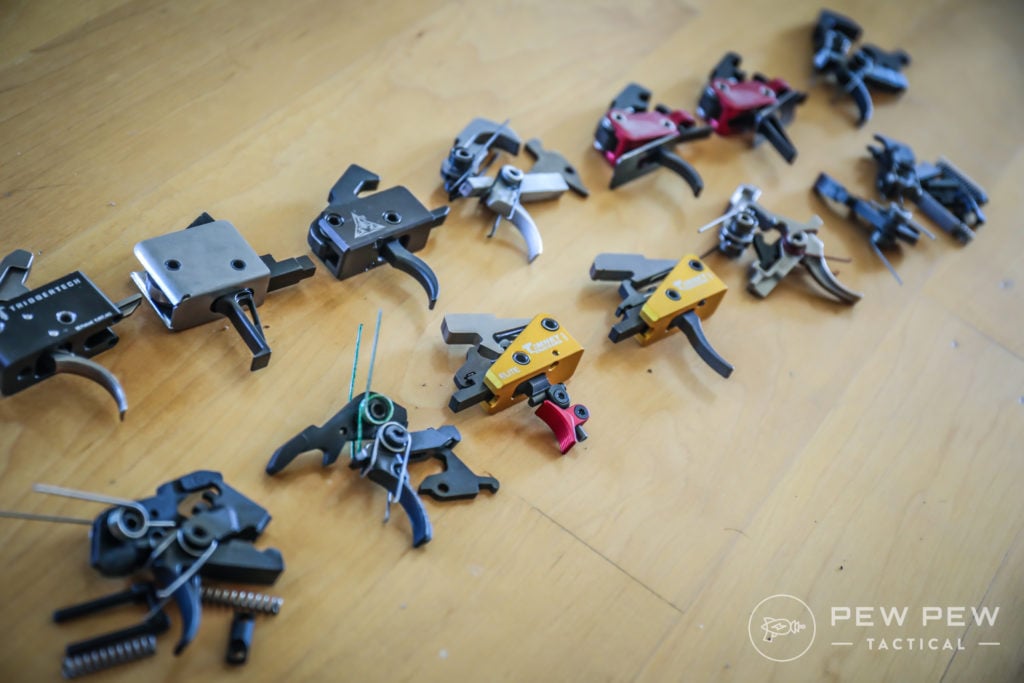
Did you find this article helpful? Are there any triggers we missed? Let us know in the comments below! Don't have an AR-15 yet? Be sure to check out our article on the Best AR-15s!
Latest Updates
- June 2026: Total rewrite based on new triggers tested and data from Dvorak TriggerScan.