
Getting Into PCC Competition: Guns, Optics & More
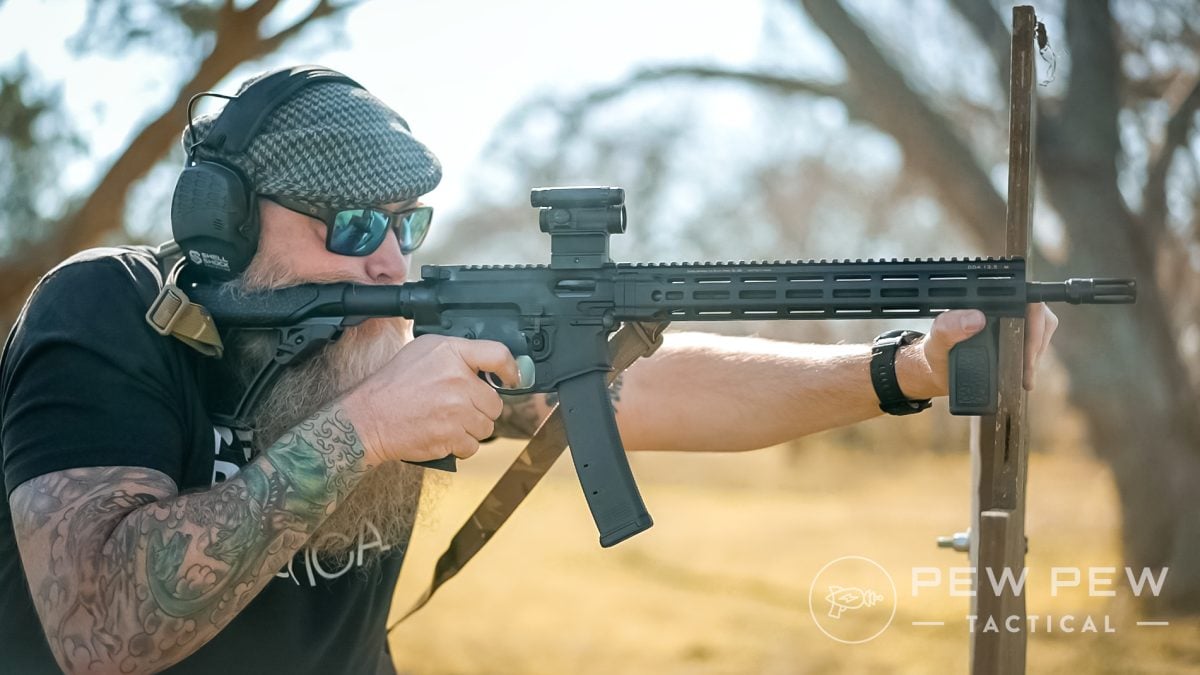
In this guide, we take a look at some of the guns, gear, and accessories you should consider if you are looking to get into PCC competition.
We review products independently. When you buy through links on our site, we may earn a commission to help support our testing. Learn more.
Diving into pistol-caliber carbine (PCC) competition can seem a little intimidating to start -- there are plenty of PCCs, optics, and ammo to choose from.
After competing in PCC competitions, I've come to learn a lot about the sport, including the best way to get into it.
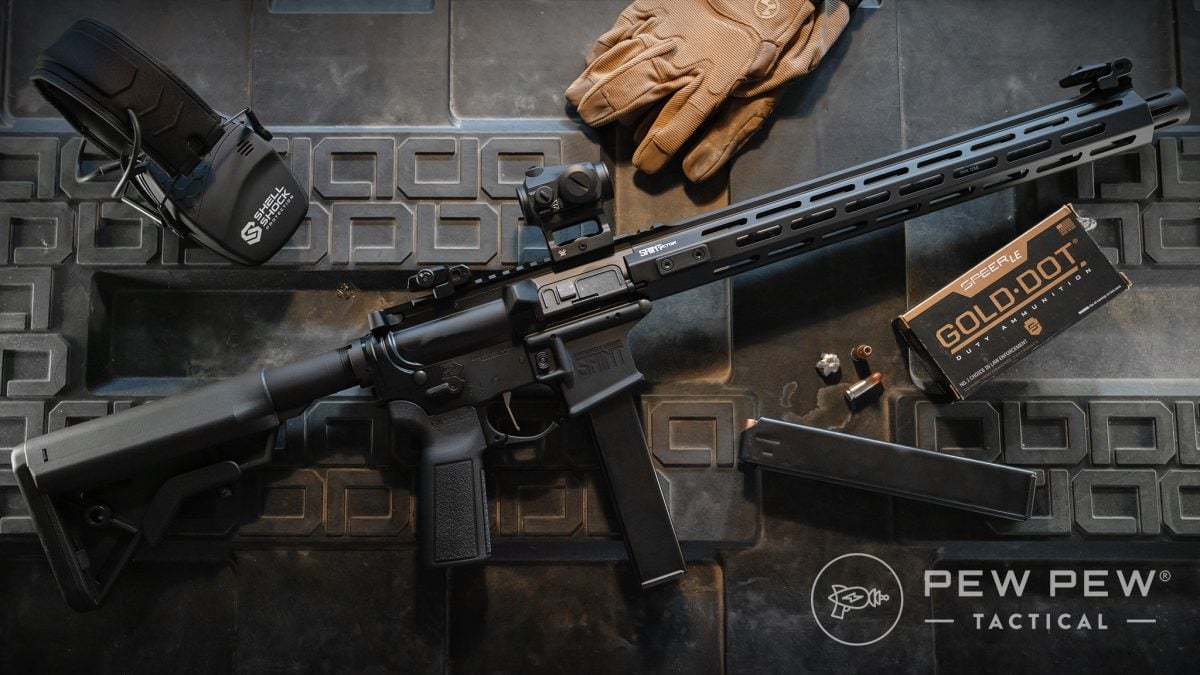
Today, I am providing a beginner's guide to PCC competition, including gun recommendations, required gear, and what to expect.
Table of Contents
Trending: Best AR-15s, Best Pistol Red Dots, & Ammo in Stock
Why Get Into PCC Competition?
Shooting handguns is hard, and who wants to do something hard? I joke, but Pistol Caliber Carbines are much easier to shoot than handguns.
Sometimes it's okay to just have fun. Getting hits is satisfying, and if shooting is your fun hobby, then fun needs to be the operative word.
You can typically shoot both pistol and PCC at the same match if you're willing to pay the 'second' gun fee. Oftentimes, PCCs can use the same magazines and ammo as their handguns.
Matches may vary, but the logistics behind PCC contests make them easier to host and, therefore, more common.
Also, have you seen the price of 5.56 these days? It's around 50 cents a round! Cartridges like 9mm are much cheaper to shoot and compete with.
Choosing Your PCC
First things first, you need to choose which pistol-caliber carbine you want to run.
It's important to know that most clubs and most organizations do not allow the use of braced pistols in competition. While that might seem a little fuddy, it's because it's a carbine competition, not a pistol competition. You can use SBRs or the standard 16-inch rifles.
With that out of the way, you need to decide what caliber you want to shoot. Most PCC competitions allow for 9mm, 40 S&W, 45 ACP, .357 SIG, and 10mm.
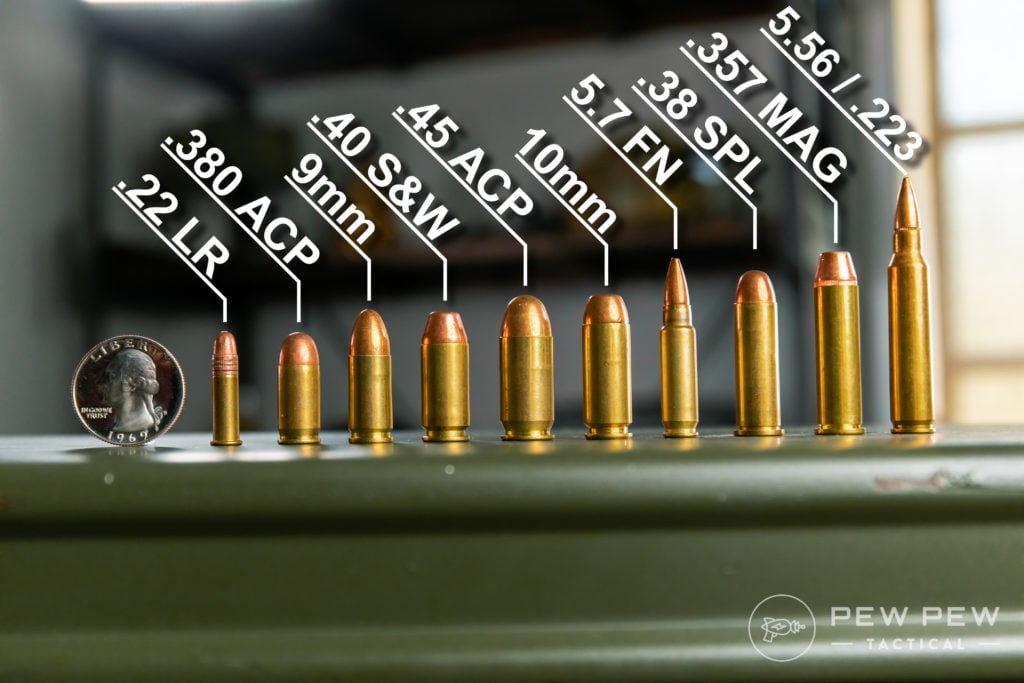
To be frank, PCC competitions are dominated by 9mm. It is cheaper, easy to find, has lower recoil, and you can fit more rounds in each magazine. You also have the most gun options if you choose 9mm. So buy 9mm unless you want to shoot more expensive ammo for zero competitive advantage.
With caliber in mind, which magazine platform should you pick, and why is it Glock mags? Yep, it sounds boring, but Glocks are boring.
I tend to prefer double-feed and double-stack magazines, but for competition, Glock mags just make sense. It's not a win-or-lose choice by any means, but Glock mags offer numerous advantages.
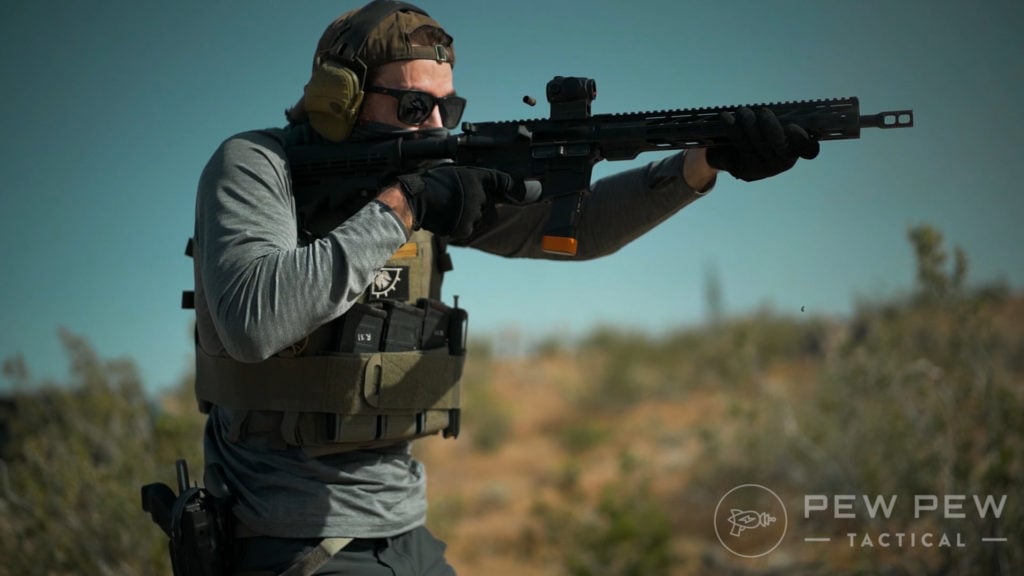
First, we know they are reliable and easy to find. They are available in a variety of different capacities and can easily accept aftermarket magazine extensions.
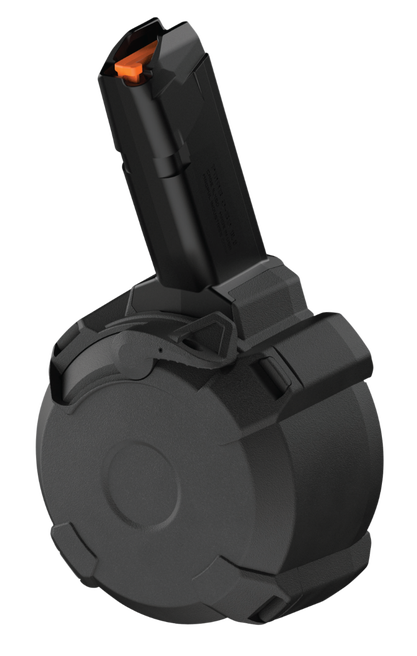
Glock OEM 33-round magazines won't break the bank, and if they do, alternatives from Magpul, ETS, and more can significantly cut the cost.
In one Action Steel match, there were no rules regarding magazine capacity, so I tossed in a Magpul D50 and shot the longest stage without needing to reload.
Best Competition PCCs
To recap, you want to look for a proper 9mm rifle that takes Glock magazines. With that in mind, I have three suggestions at three price points.
Yep, they are all AR-based. AR ergonomics, the manual of arms, and the ease of accessorization of AR-style guns make them the current meta for pistol-caliber carbine competition.
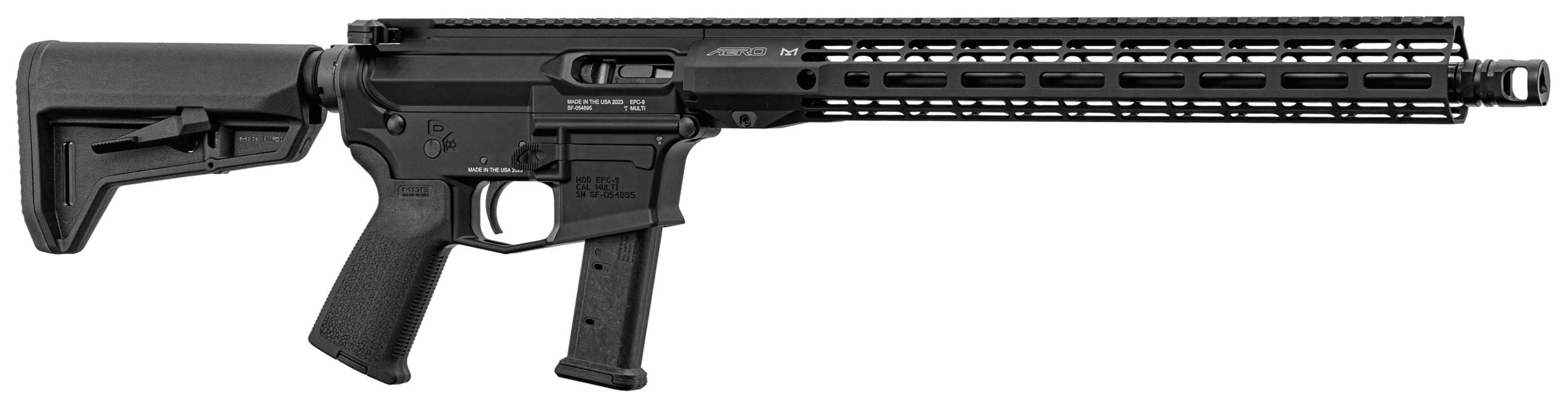
Aero Precision EPC - Best Budget PCC
Pros
- Relatively affordable
- You can build it out to fit your customs wants and needs
- Last round bolt hold open
Cons
- Frequently out of stock or on backorder
- Direct-blowback produces more recoil than other higher-end PCCs
- Not sold as complete guns
The Bottom Line
The Aero Precision EP9 is a reliable, customizable PCC that doesn't break the bank. But given Aero's current status, finding enough parts in stock to put one together can be tough.
The Aero Precision Enhanced Pistol Caliber was a bit late to the show, but came packing. Aero Precision doesn’t sell complete guns, but rather lets shooters build their EPC to the exact specs they want.
Aero designed the EPC from the ground up for pistol cartridges and Glock magazines.
The EPC uses a direct blowback design, which is more or less the standard for PCCs. Direct blowback guns do produce more recoil, but they are very reliable, and their simple design keeps the price low. A competition gun should use a properly weighted BCG and buffer to really tame some of that recoil and help make the gun softer to shoot.
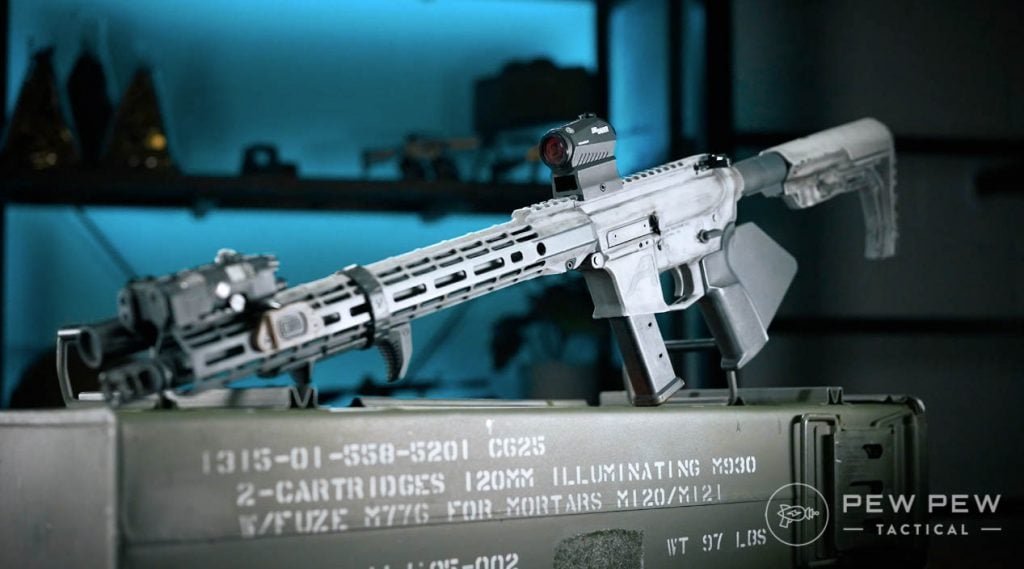
You also get a last-round bolt-hold-open device built into the receivers, which is ingenious and one of the first budget options to allow Glock mags to lock the bolt open. The magazine well is funneled for quick reloads, and the magazine release is massive and easy to find.
If you want to tailor the gun to your own specs, the EPC can be built from the ground up into a great competition PCC.
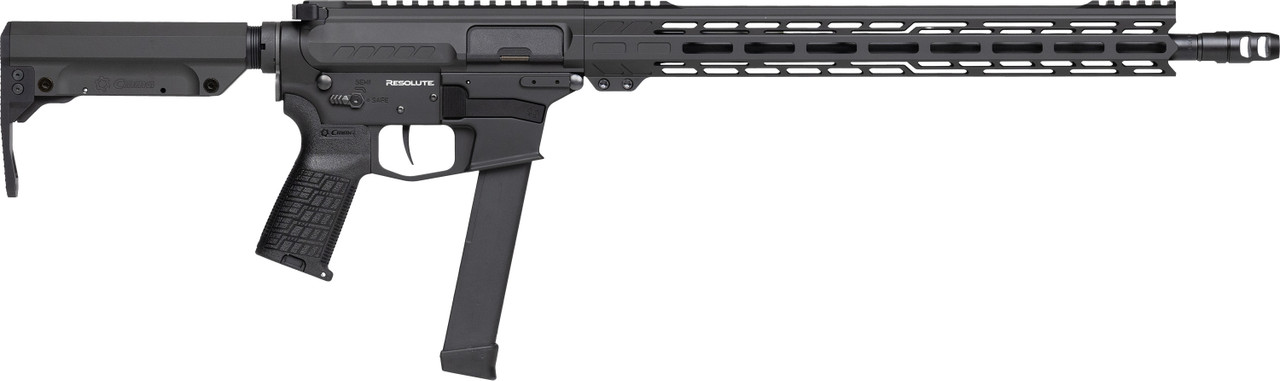
CMMG Resolute MkGs - Best Mid-Tier PCC
Pros
- Radial-delayed blowback helps reduce recoil
- Already comes with a muzzle brake installed
- Included ZEROED furniture and rail are nice
Cons
- Hard to find in stock
- Included RipStock doesn't have good sling attachment points built in
The Bottom Line
If you want to step out of the world of direct-blowback PCCs and into a softer-shooting gun, the CMMG Resolute MkGs is just that. The radial-delayed blowback system is extremely soft shooting and these guns come well-equipped right out of the box.
If you're not afraid to spend a little extra, the CMMG Resolute MkGs is an amazing rifle for PCC matches. I might be a little biased because this is the rifle I compete with.
The CMMG Resolute MkGs is a full-sized PCC with a 16-inch barrel. It takes Glock mags and, best of all, uses CMMG's patented radial delayed blowback system.
In simple terms, the radial delayed blowback system reduces recoil significantly when compared to straight blowback systems. The recoil is nearly nil, and you can get away with a lighter bolt and buffer, which makes for a lighter rifle overall.
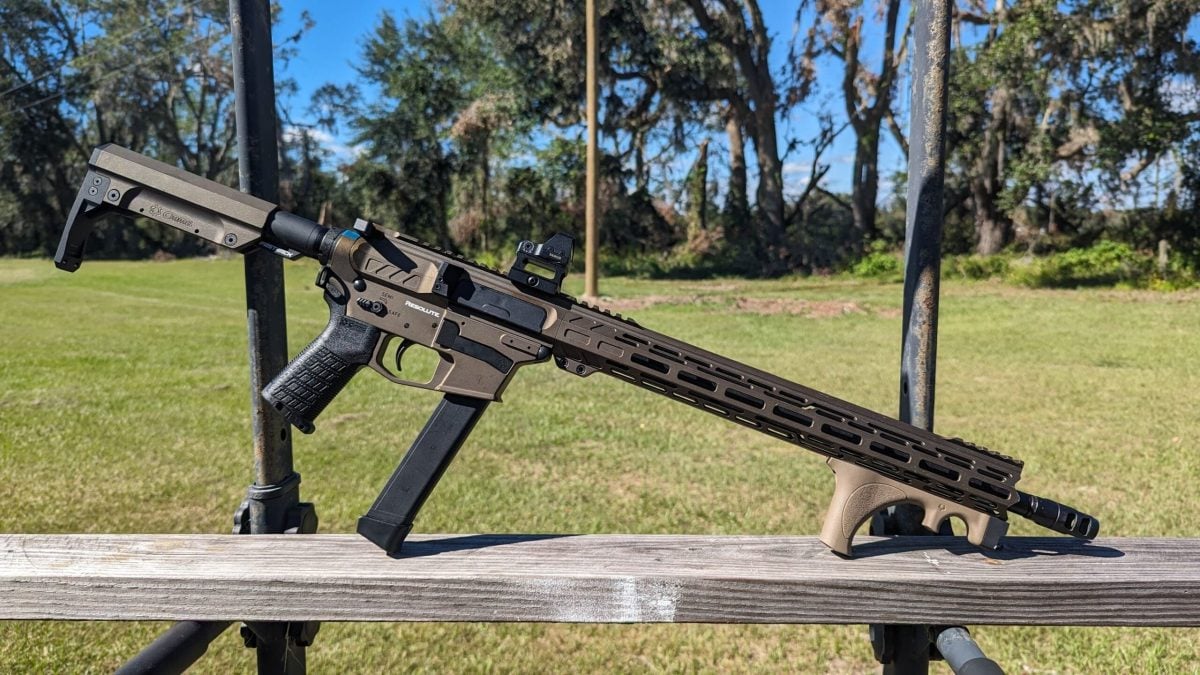
The Resolute MkGs comes ready with an uber-lightweight rail system, the CMMG RipStock, an ambi safety, and massive, easy-to-reach controls. They include a muzzle brake to reduce recoil further.
While the RipStock is fine, it lacks good sling points and tends to be on the minimalist side. I do recommend swapping it out for a better stock.
The MkGs delivers a ton of performance for the price point. It's not cheap, but the difference in recoil between the radial-delayed system and the direct blowback is night and day.
The Best Gun Deals, Coupons and Finds
Subscribe to Pew Pew Tactical's sales and deals email.
JP Enterprises JP-5 – Best High-End PCC
Pros
- Roller-delayed blowback systems drastically reduces recoil
- Generously-sized muzzle brake kills any remaining recoil
- Extremely reliable and accurate
Cons
- Costs over $3,000
The Bottom Line
If you are looking for the absolute best competition PCC on the market, the undisputed king is the JP Enterprises JP-5. The roller-delayed system combined with AR ergonomics is a winning combination. But beware, they don't come cheap.
If money is no object, the JP Enterprises JP-5 is the best competition PCC you can buy.
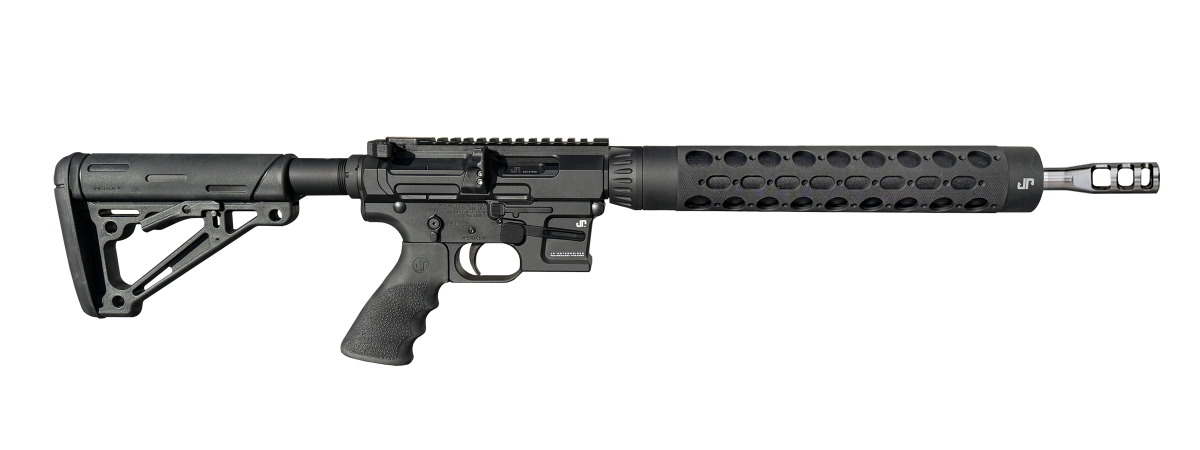
JP Enterprises made their name with competition-grade PCCs like the famed GMR series. The JP-5 series takes things to an entirely new level with its roller-delayed blowback system.
When you say 9mm and roller delayed, most people will think of the MP5. The JP5 takes the same system and translates it into a 9mm AR-style platform.
The JP-5’s roller-delayed system has proven to be extremely reliable and produces very little recoil. You also get an absolute unit of a compensator/brake that kills what little recoil is left.
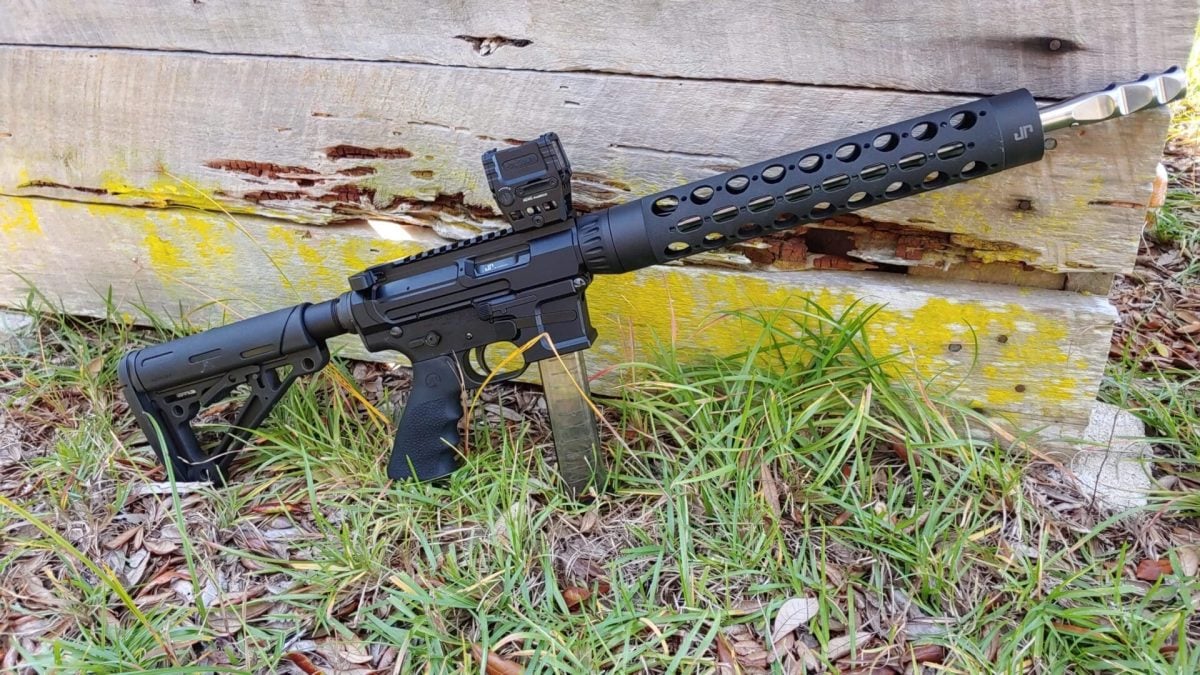
When you shoot a JP-5, watch the red dot. It barely moves as you shoot. There is that little recoil. It's a cheat code for PCC competition.
JP Rifles makes competition-specific guns. This means you get a lightweight handguard, a nice Hogue stock and grip, and a massive charging handle. There is an overall emphasis on good ergonomics and fast handling.
At over $3,000, the JP5 will empty your wallet, but you are truly getting the best of the best. If you are serious about rising through the competitive shooting ranks or you just really hate losing local matches, the JP-5 won’t hold you back.
Best PCC Optics
It's almost expected that any PCC should have an optic mounted on it. Competitions are driven by speed, and non-magnified optics are simply faster than using iron sights.
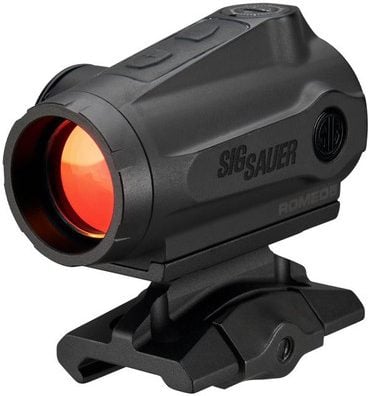
Sig Sauer ROMEO5 Gen II – Best Budget Red Dot
Pros
- Extremely affordable
- Motion-activated on/off technology
- New and improved mount
Cons
- 2 MOA reticle may not be to everyone's liking
The Bottom Line
The Sig ROMEO5 Gen II is the de-facto go-to budget red dot for rifles and PCCs. The optical clarity, features, and build quality are unbeatable for the current price they go for.
The undisputed king of budget red dots is the Sig ROMEO5 Gen II. It's one of the cheapest but still reliable red dots out there.
For right around $110 to $130, you get a daylight-bright 2 MOA dot reticle, a rifle-height riser that works well on PCCs, and MOTAC capability.
MOTAC stands for Motion-Activated Illumination System. If you leave the gun stationary, the dot will shut off after a few minutes, but will turn right back on as soon as the optic detects movement. This is instantaneous, and even the slightest vibration will turn the optic on. It's great for saving batteries and for people like me who completely forget to shut off their optics.
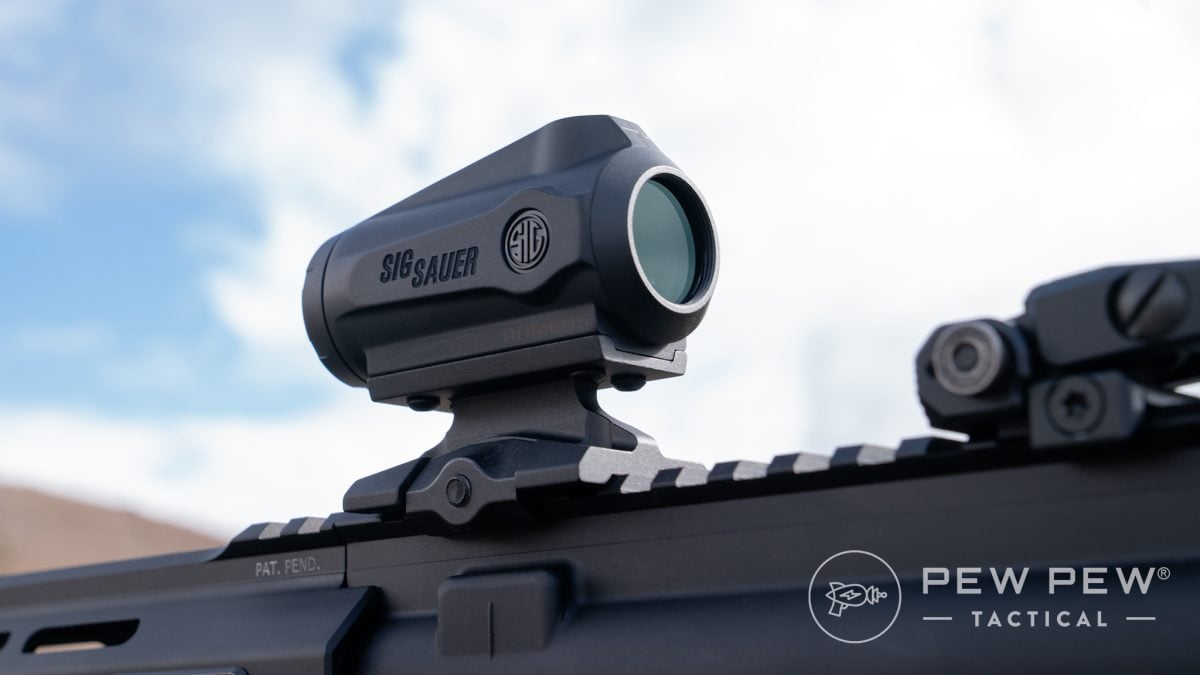
The ROMEO5 might not be fancy, but it works great for pistol-caliber carbine competitions and can take whatever reasonable abuse you throw at it.
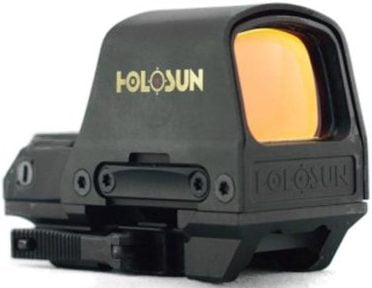
Holosun 510C – Best Overall PCC Optic
Pros
- Big viewing window
- User-selectable multi-reticle system
- Shake-awake on/off technology
- Solar panel backup
- Integrated QD mount
Cons
- Glass has a slight blue tint from the notch filter
The Bottom Line
The Holosun HS510C offers shooters a generously-sized viewing window, a crisp, user-selectable reticle, an excellent integrated QD mount. Combined with a great battery life, solar panel backup, and shake-awake tech, it is hard to beat for the money.
One of the most popular PCC optics I see around matches is the Holosun 510C. I've seen everyone from newbies like me to champions using the 510C.
The 510C is an open-emitter rifle optic with a squared window-like design. While it may look a bit EOTech-ish, it's still just a red dot and not a holographic sight.
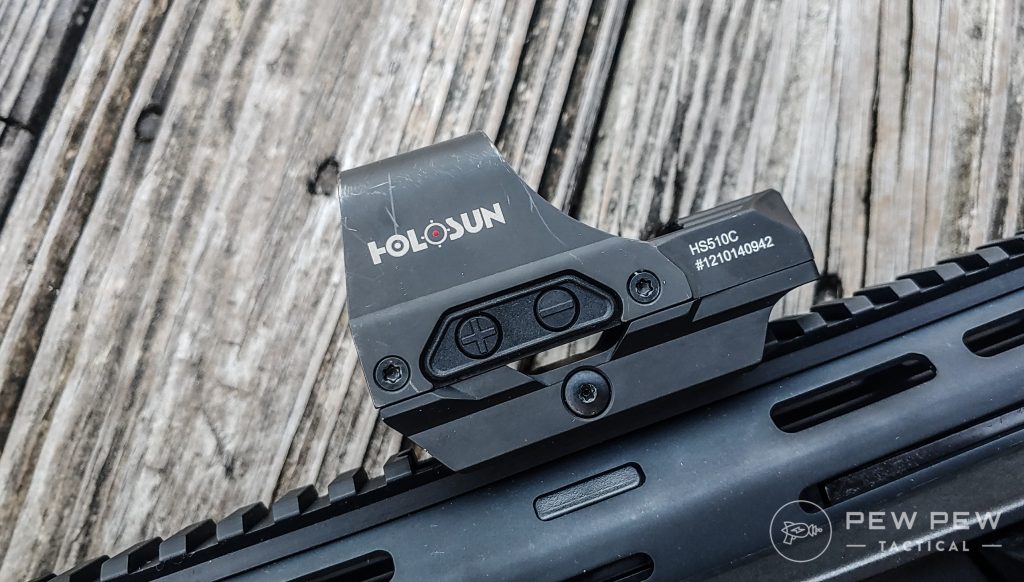
Features include a built-in mount with an absolute co-witness height, a multi-reticle system with a 2 MOA dot and 65 MOA circle, motion-activated shake-awake, and a solar-panel backup.
The dot-and-circle reticle is extremely popular amongst PCC shooters. It is big and bright, and the eye-catching circle is great for quick, easy target engagement. On something like USPSA targets, the big 65 MOA circle fits right over the A-Zone at 25 yards.
In the middle, the 2 MOA dot allows for precise shooting and allows you to clean up a plate rack by basically bracketing the target.
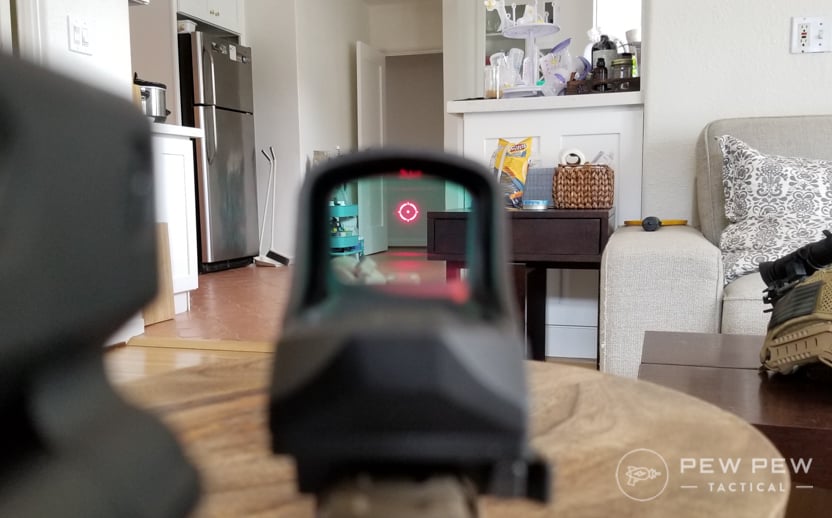
As a bonus, you can swap between reticles. You can select the dot-and-circle combo, dot-only, or circle-only.
The Holosun 510C is affordable, has a great viewing window, and has a bunch of great features. It is tough to beat for the money.
Our Most Popular Posts
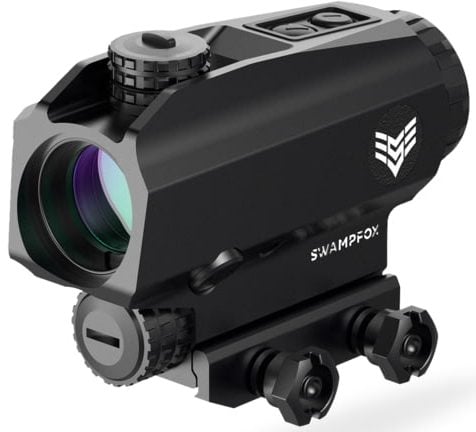
Swampfox Blade – Best Prism Scope
Pros
- Great for people with astigmatism
- Bullet Rise Compensating reticle is uniquely suited to PCC competition
- Affordable
Cons
- Tighter eyebox requires more precise head positioning
- Shorter eye relief
The Bottom Line
If you struggle with red dots due to astigmatism, the Swampfox Blade 1x prism scope may be for you. It features an etched Bullet Rise Compensating reticle that is perfectly for anyone using PCCs at close range targets.
If you suffer from astigmatism, then a prism scope might be a better option than a traditional red dot.
Prism sights use an etched reticle rather than a projected dot. This prevents starbursting and other optical illusions typically associated with red dots and astigmatism.
For prism sights, I recommend the Swampfox Blade.
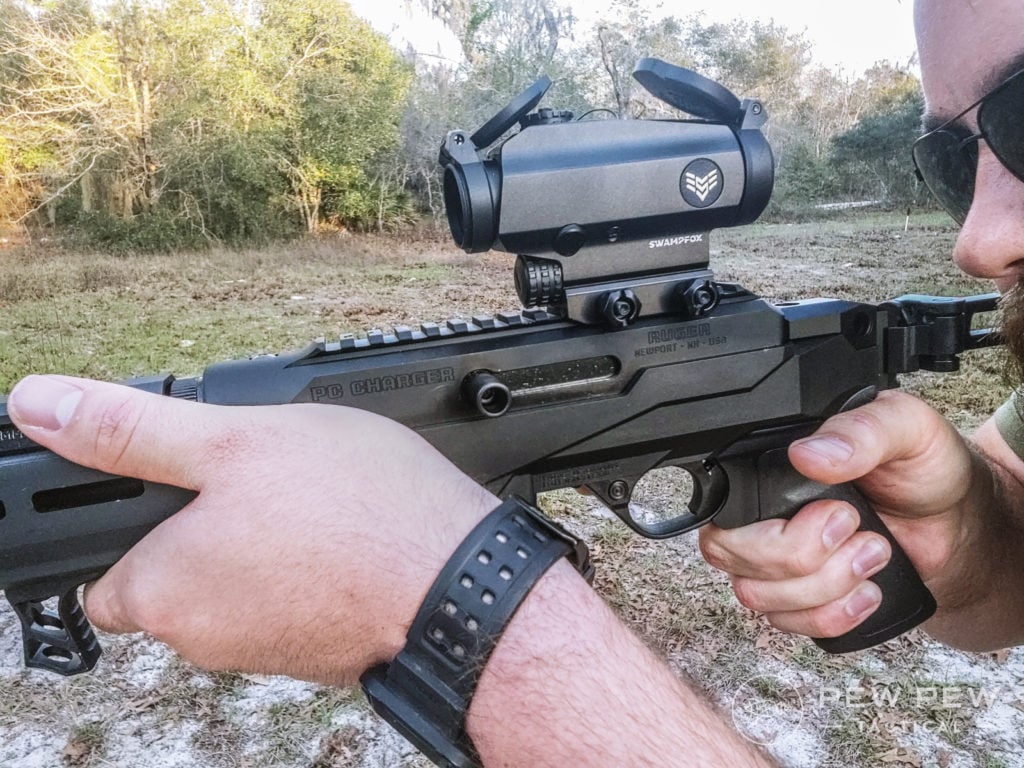
Height over bore can be a real issue in PCC competitions, where targets are anywhere from 5 yards to 25 yards away. The Blade helps combat this with a unique Bullet Rise Compensating reticle with dedicated holds for 5, 10, and 15 yards.
However, there are a few downsides. Prism optics do have a tighter eyebox, a more limited field of view, and much shorter eye relief. But if red dots don’t play well with your eyes, then the Swampfox Blade might be for you.
Running Multiple Dots
It's worth noting that many high-level competitors will run more than one dot on their rifles. They typically have a normal red dot and then a second offset red dot on a low mount.
This offset dot isn't a backup; it is there for specific scenarios. Namely, it comes into play when your feet are restricted by a box, and you have to conduct a hard lean to shoot a specific target.
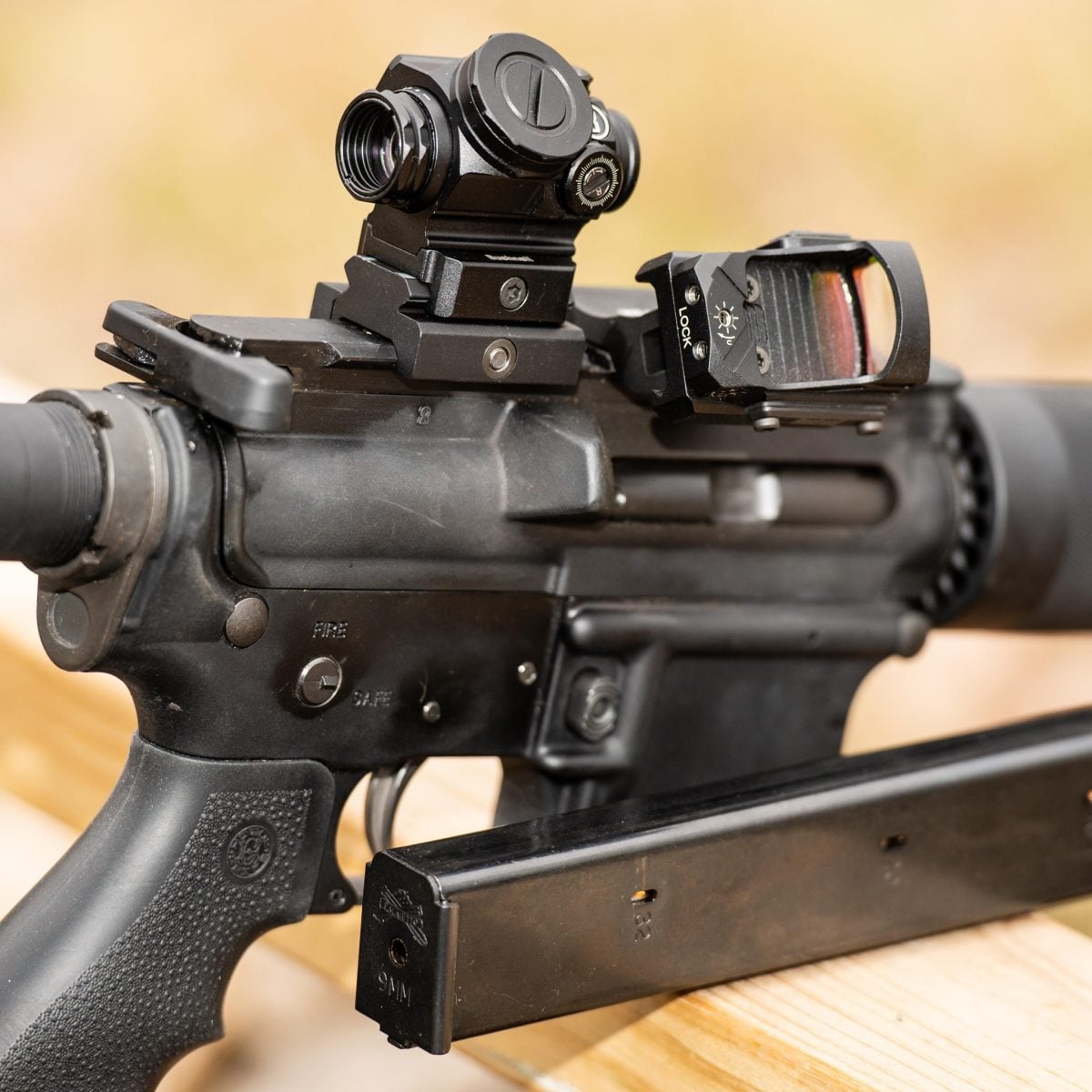
Another use is shooting over high barriers where you may not be tall enough to get a good shoulder and cheek weld to use your primary optic.
Running two dots is not necessary for most people, but it is something you may consider doing at higher levels of competition.
Miscellaneous Accessories
Before we leave, let's cover a few nonessential but nice-to-have accessories. When I say “nonessential,” I am primarily talking to people new to PCC competition. Don't feel held back if you don't have the following.
Compensators & Brakes
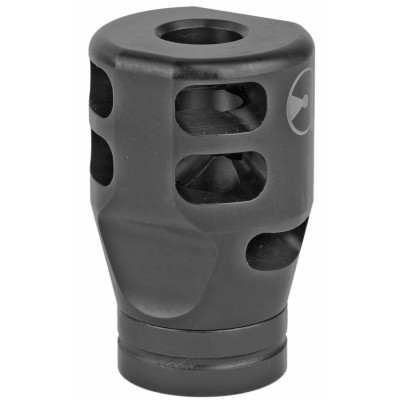
Reducing recoil and muzzle rise makes it easier to shoot straight faster.
My top pick is the Ultradyne Lithium compensator. It's a big, beefy combination muzzle brake and compensator that absolutely saps up recoil and keeps your gun shooting flat.
Lasers
Believe it or not, lasers can occasionally find their way to PCC competitions.
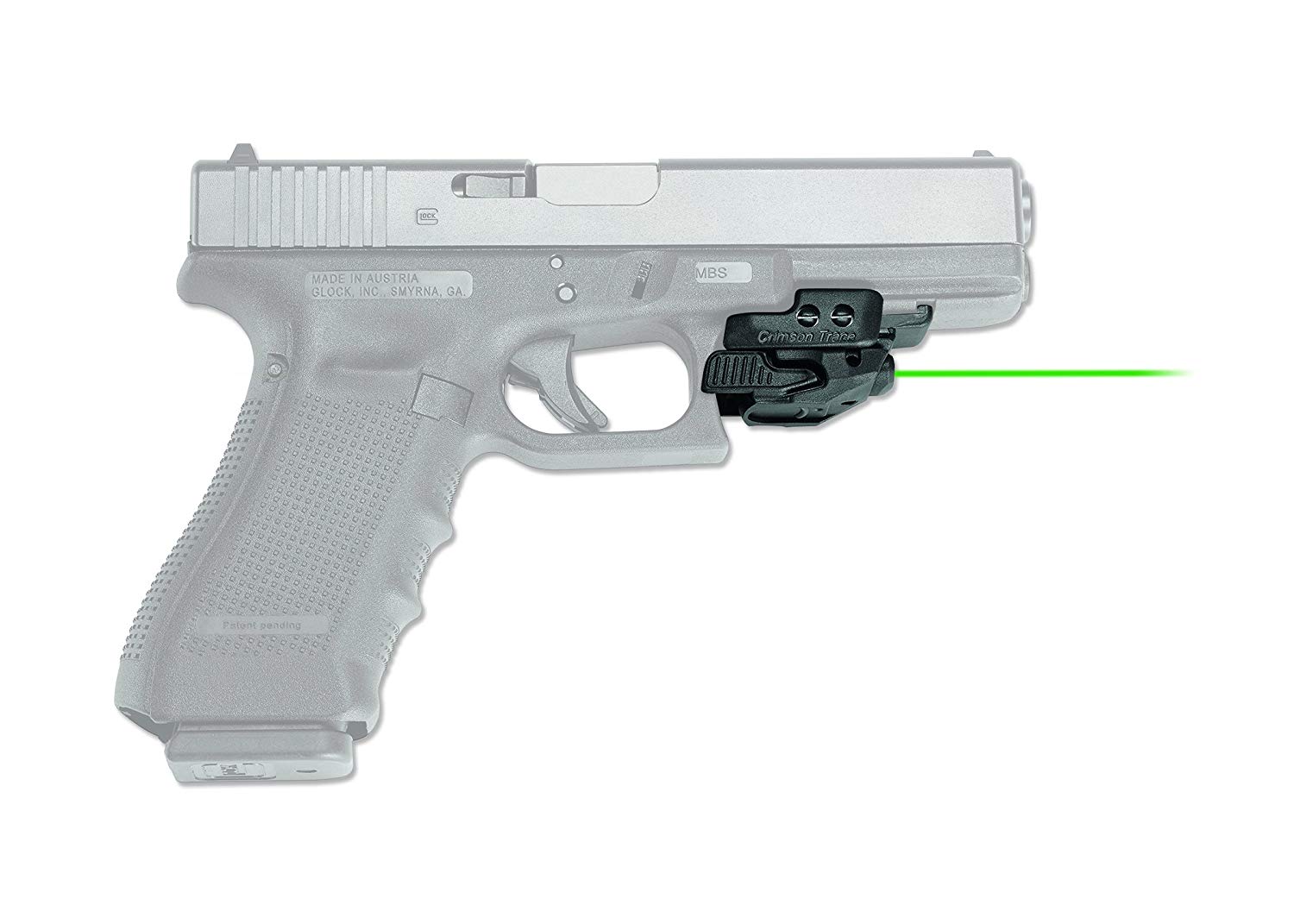
Like offset second red dots, visible lasers are primarily used by upper-echelon competitors for niche situations. For the most part, you will only see lasers used to make quick shots at the start of certain stages where you start in the hip-fire position.
The most common laser I see is the ultra-compact Crimson Trace 206. It's tiny, lightweight, and doesn’t take up much space on your rifle, which is ideal for something that is only used for a few shots here and there.
Magazine Extensions
Watch a high-level PCC competitor and look at how ridiculously long their magazines are. I honestly wish this practice would end, and I think reloads would spice matches up, but the current meta is to hell with reloading.
Two of the more popular options I see are Taylor Freelance Goliath extensions and MBX Extreme ones. These extensions can add anywhere from 20 to 30 rounds to your magazine’s overall capacity.
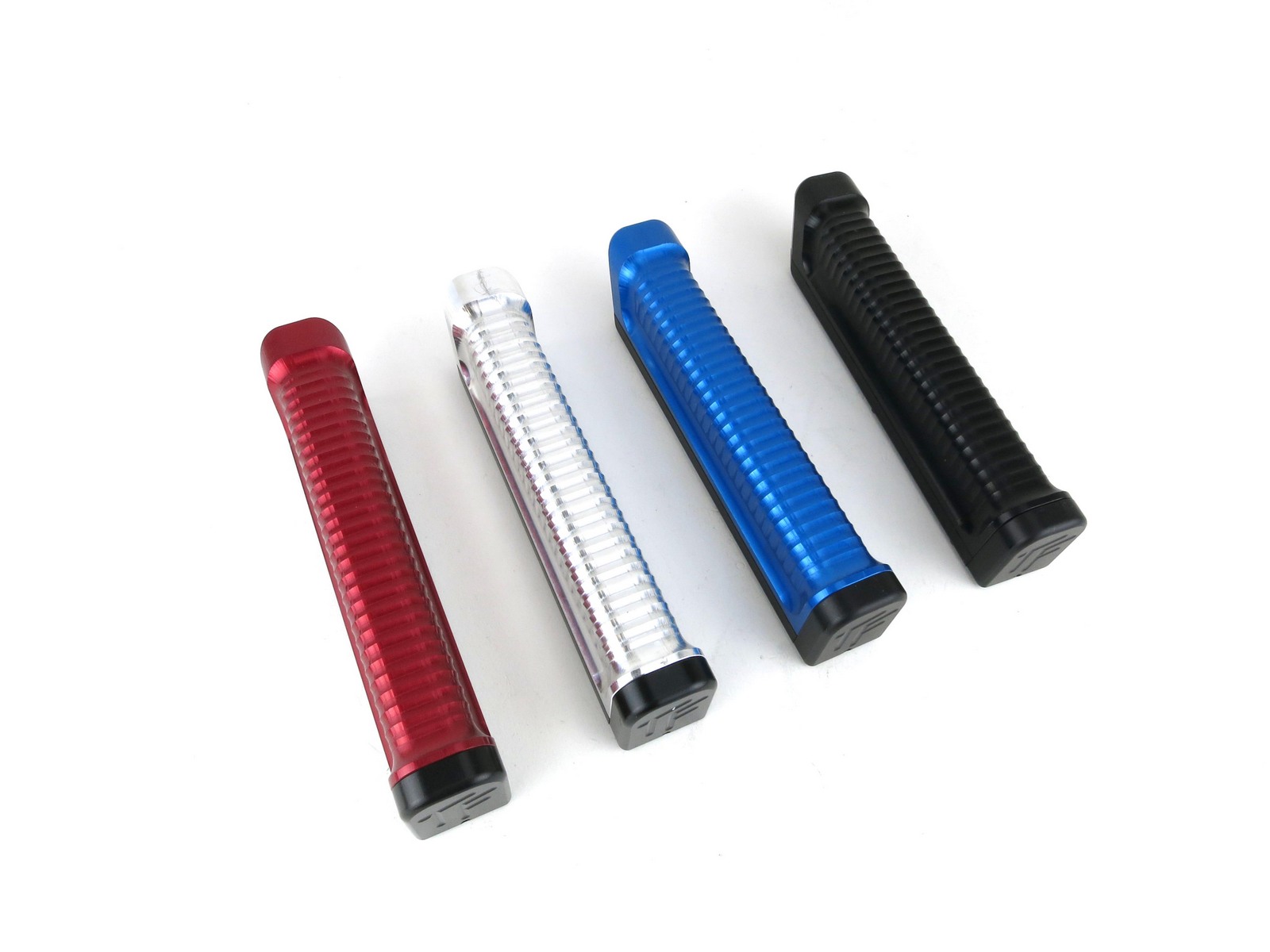
Yes, some of them get stupid long, but if you add a +30 extension to an OEM 31-round Glock mag, you are looking at a total capacity of 60+1. You can kiss those reloads goodbye.
Final Thoughts
If you have even the slightest interest in shooting competitively, then I can't help but suggest trying your hand at a PCC and a Steel Challenge match.
PCCs are cheaper to shoot than rifles and are easier to shoot than handguns. They typically provide a more satisfying experience because you’re getting more hits, and you aren’t going broke doing it — it’s just fun!
What do you think about shooting PCCs in competition? Do you have any experience with it? Share your thoughts and experiences below! Not sold on exclusively running Glock mag carbines? We cover some other great options in our article on the Best Competition-Ready Pistol Caliber Carbines!