
From Icon to Legacy: The Rise and Fall of the AK
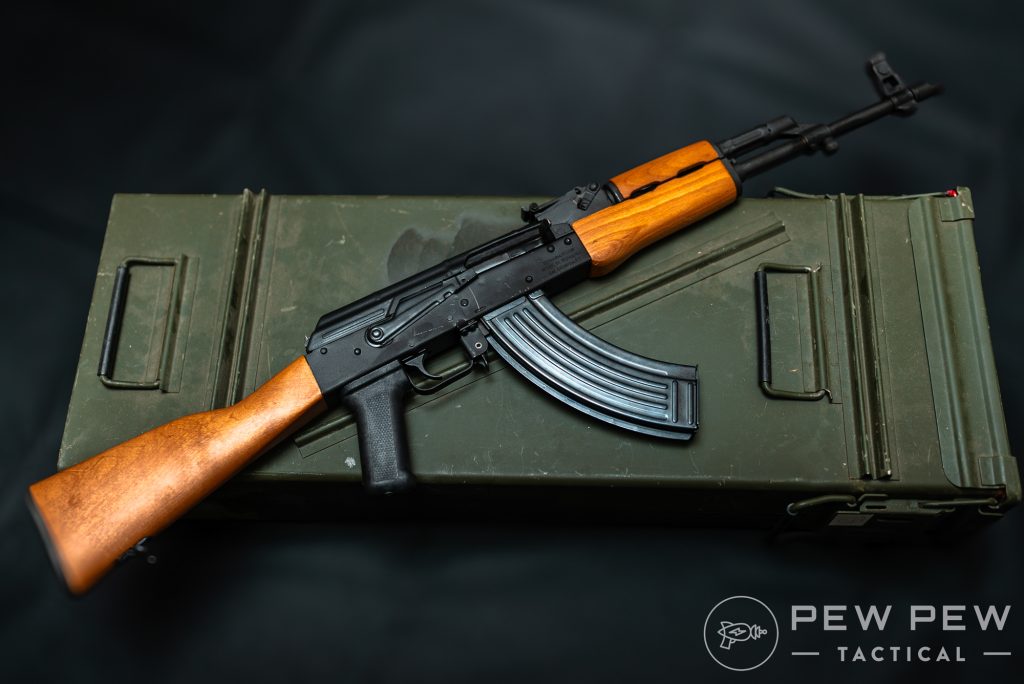
We take a look at the meteoric rise of the AK-47 and what subsequently led to its diminished popularity in the past 20 years.
We review products independently. When you buy through links on our site, we may earn a commission to help support our testing. Learn more.
Mikhail Kalashnikov’s AK series of rifles has the distinction of being the most-produced gun of all time. After Russia introduced it, it spread like a virus across Eastern Europe, Asia, Central America, Africa, and eventually the rest of the world.
The AK rose to prominence quickly, being adopted by military forces, freedom fighters, terrorists, and anyone else who needed a capable, simple, robust, and reliable rifle.
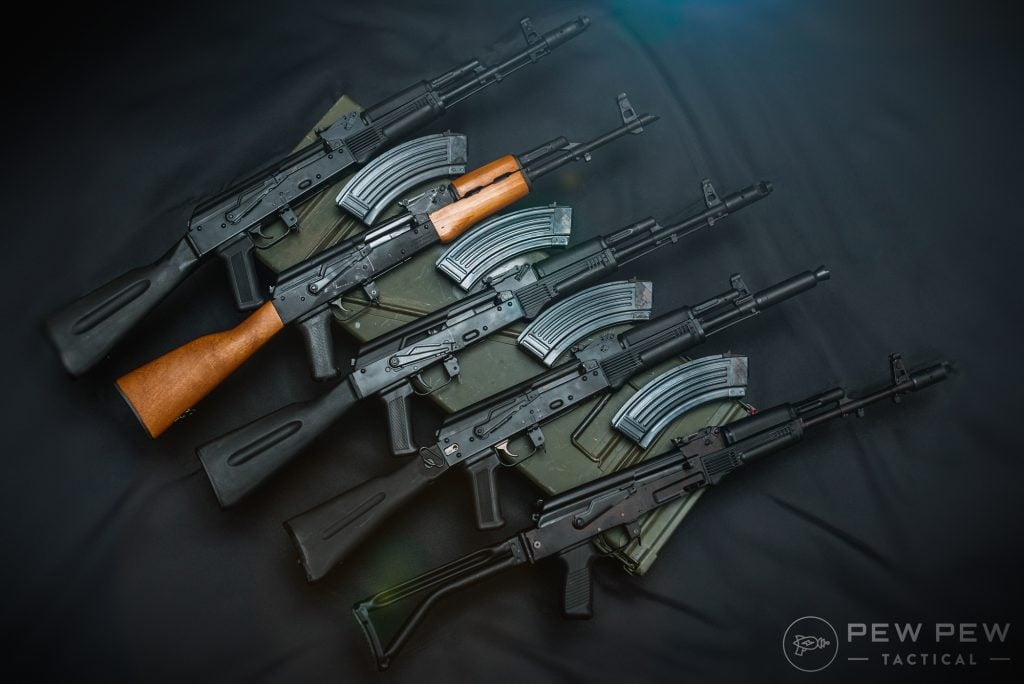
However, in recent years, the AK has begun to diminish in popularity. More and more countries have ditched it in favor of other modern rifle systems. So why is the AK dying?
To truly understand why the AK is no longer a dominant choice for new military rifle procurements, we have to look at why it was so successful in the first place.
Table of Contents
Trending: Best AR-15s, Best Pistol Lights (Re-Test), & Ammo in Stock
The Rise of a Legend
After World War 2, two major countries filled the power vacuum left by the conflict: the United States and the Soviet Union.
Following the War, both the Soviet Union and the United States tried to exert more global influence, each aiming to recruit countries to their side.
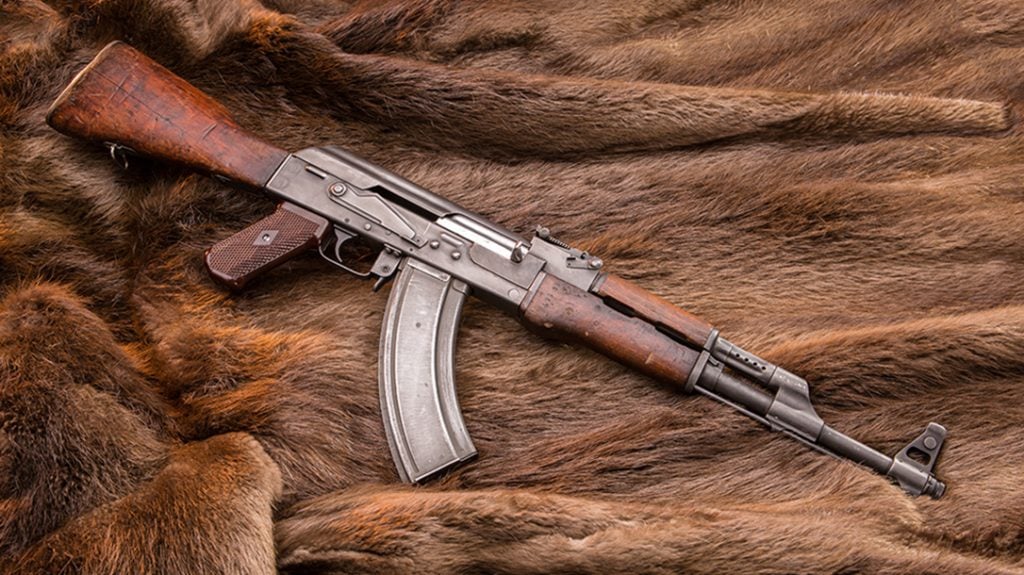
The US helped form NATO, while the Soviet Union created the Warsaw Pact with seven other Eastern Bloc countries. One requirement of the pact was standardizing military forces, including small arms.
With all Warsaw Pact countries using the same small arms, the AK exploded in popularity. Additionally, as the Soviet Union sought other alliances around the world, it sold the AK as part of the deal.

They weren’t just selling guns, but also the ability for these allied countries to produce AKs domestically. The ease with which the AK could be mass-produced made it an appealing platform for smaller countries seeking to upgrade their small arms after World War 2. Russia effectively used a franchise model based on Geopolitics to spread its rifle around the world.
Performance
Of course, the AK wouldn’t have gone very far if the rifle weren’t a solid performer. The design proved reliable, easy to maintain, and capable.
Gone were the heavy bolt-action battle rifles supplemented by submachine guns. Military forces wanted one rifle that could do almost anything, and the AK did just that — it was the premier assault rifle of the era.
Environments also rarely affected the reliability of the AK series. They worked in deserts, in blizzards, in jungles, and as long as you didn’t dump shovels of mud into the action, they just kept working.
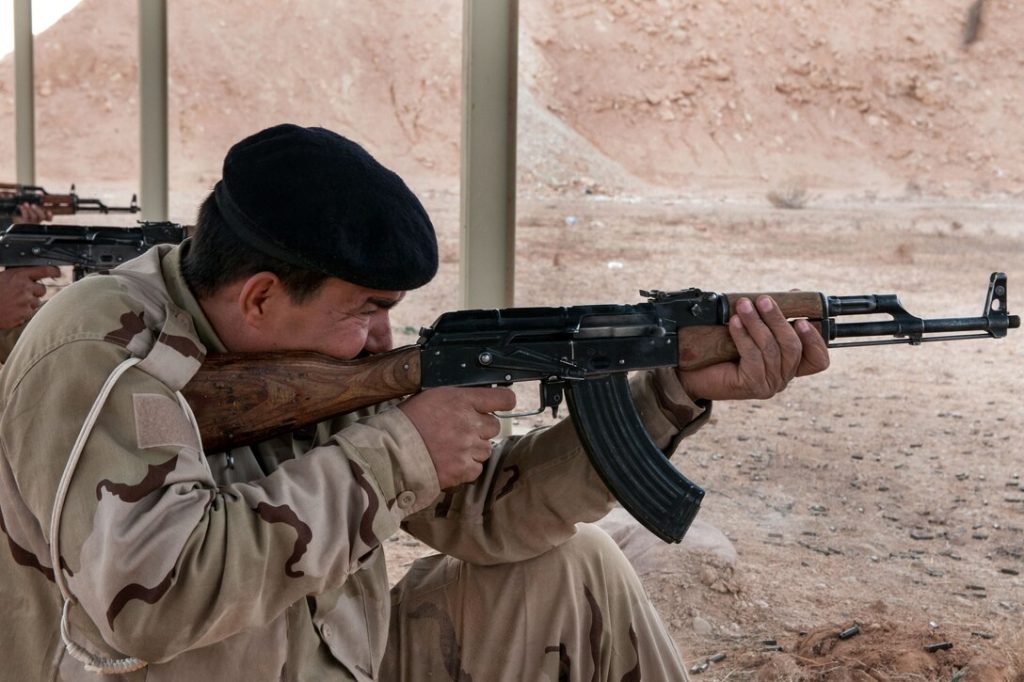
The simplified design was easy for conscripted military forces to understand. The operating principles were simple, maintenance requirements were low, and even the sights were easy to understand. Its relatively compact size also made it usable in and around vehicles.
Manufacturing
The AK was initially made by milling out the receivers from a block of solid steel. Milling is effective but time-consuming and costly.
But everything changed in 1959, when the AK went from being a milled-receiver gun to a stamped-steel-receiver gun.
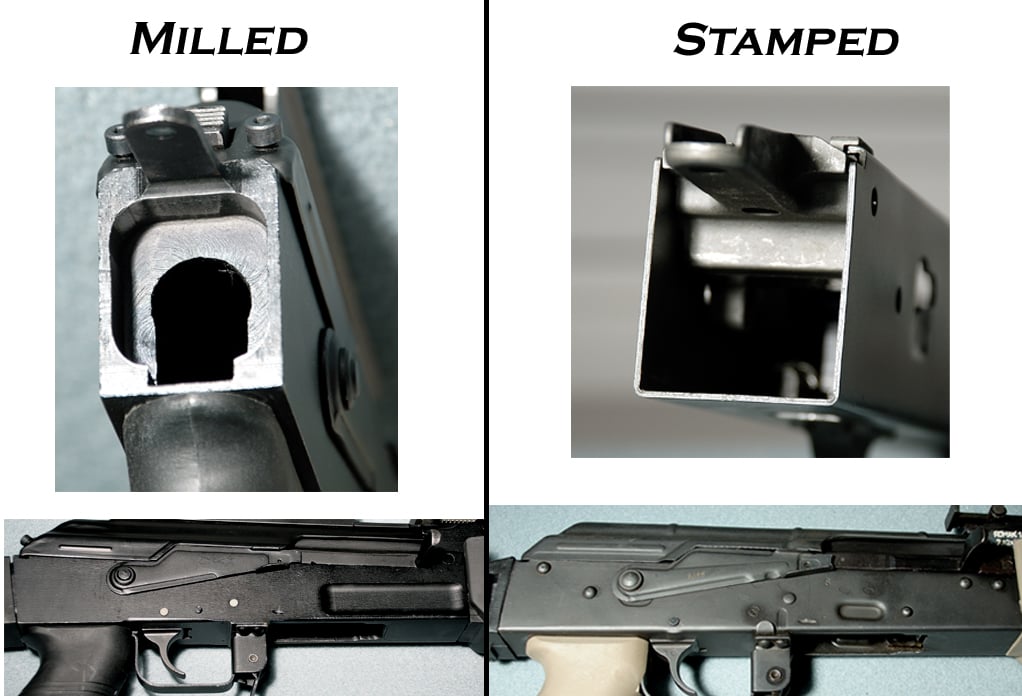
Using stamped sheet metal instead of machined receivers drastically cut production time and reduced the need for skilled labor.
With the backing of a superpower like the Soviet Union and their blueprints on how to produce the guns, it became easy for less-developed countries to set up manufacturing to produce AKs.

The Best Gun Deals, Coupons and Finds
Subscribe to Pew Pew Tactical's sales and deals email.
An Aging Design
Some countries began seeking more modern designs by the 1980s, while others only recently started adopting new standard infantry rifles.
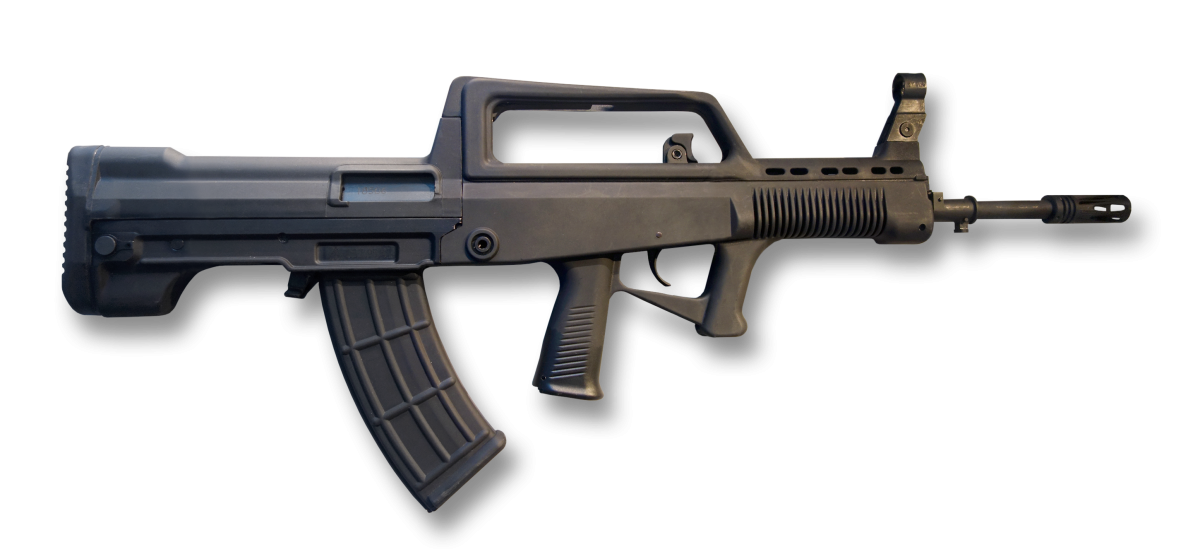
China began phasing out the Type 56 (their domestically produced AK) in the 80s in favor of the similar but distinctly different Type 81 rifle. By the late 1990s, they had completely shed AK-style rifles in favor of the more modern bullpup QBZ-95.
When Finland joined NATO in 2023 in light of Russian aggression, they began looking at replacing their domestically produced Valmet series, which was often considered the pinnacle of AK rifles. They are now adopting domestic 5.56x45mm AR-15 and 7.62x51mm AR-10-based designs.
In 2017, Poland began swapping out its 5.56 Beryl AKs for a homegrown design known as the MSBS GROT, a modern short-stroke gas-piston rifle reminiscent of the ACR.
Countries like Ukraine are currently using any rifle that works reliably, but were already moving away from the AK prior to the Ukraine-Russia war. They were experimenting with rifles like the IWI Tavor chambered in 5.45x39mm. They have also started producing domestic variants of the AR series, such as the UAR-15.
India has used AK derivatives for years, alongside their own domestically produced INSAS rifle. They are licensed to produce the AK-203, but recent purchases of the Sig 716i have shown a willingness to adopt Western designs.

Speaking of Sig, Romania was among the last to fall. They recently announced the adoption of the Sig 516 G3 rifle —a short-stroke gas piston rifle largely based on the AR design.
It’s important to note that these transitions have all been gradual. No one dropped the use of AK rifles overnight, with many countries taking years to fully switch over. These transitions illustrate a global trend rather than an immediate change.
Why Is the AK Fading Away?
The factors that contributed to the AK's meteoric rise are also contributing to its downfall 80 years later.
Geopolitics
With the Soviet Union and the Warsaw Pact gone, Russia's influence has weakened.
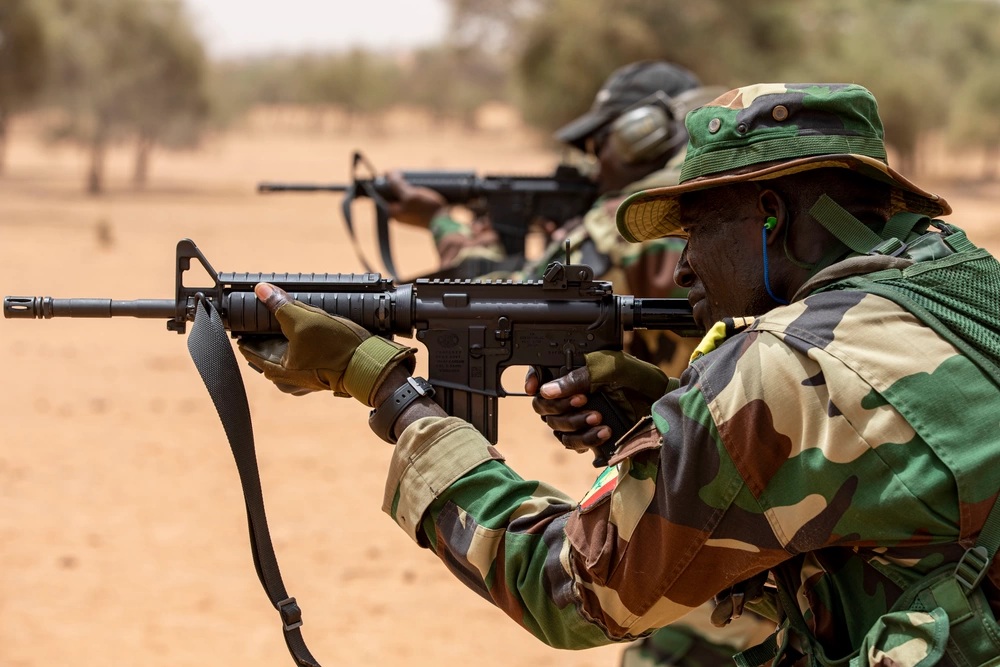
Countries like Romania and Finland joined NATO and are standardizing on NATO cartridges and magazine design. The United States has also begun supplying other allies throughout the world with M4 and M16 rifles and the training required to use them.
Our Most Popular Posts



New Technologies
Times have changed. Stamped steel used to be the fastest, easiest route, but building AKs is now more labor-intensive than using newer manufacturing processes.
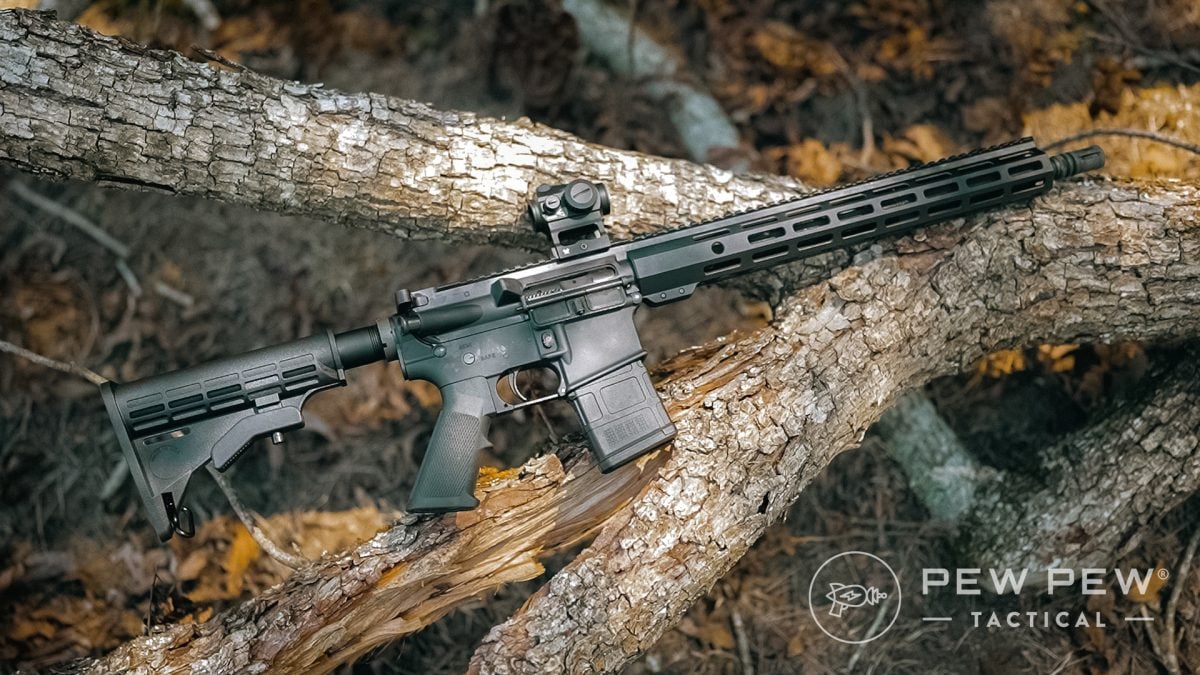
Modern manufacturing favors CNC-machined lowers, polymer moldings, and aluminum extrusions. Machine automation has severely narrowed the advantage gap the AK once held. Newer technologies and manufacturing processes allow newer, different rifle designs to compete on cost and production efficiency.
Modern Warfare Requires Modern Solutions
The AK’s ergonomics reflect 1940s military doctrine, which, to put it plainly, is dated. Ergonomics have changed to match more modern shooting techniques.
Things like the AK’s reciprocating charging handle, the lack of a last-round bolt hold-open, fixed stock, and short handguard don’t always cut it these days.

Rifles in the immediate post-World War II era were still mostly fitted with iron sights and standard wood or early polymer furniture. But warfare has changed, and the need for lights, lasers, optics, and things like thermal and night vision has expanded rapidly.
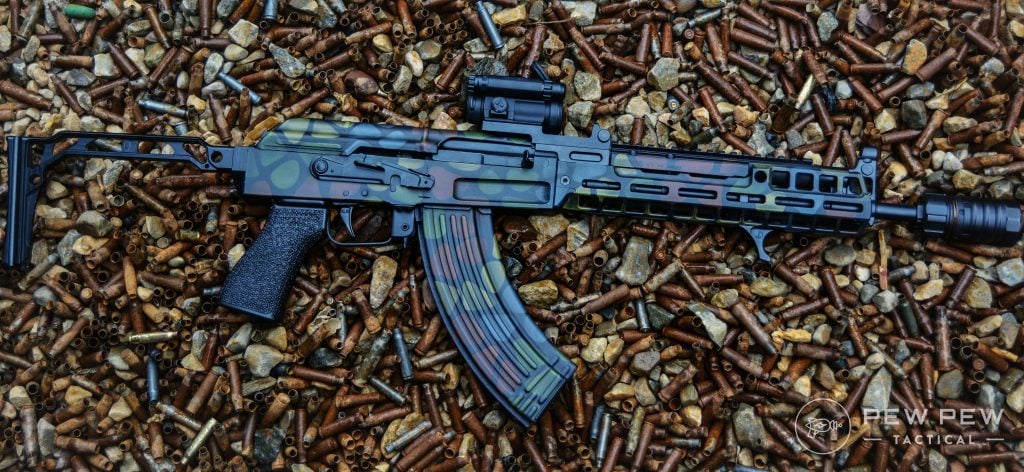
Ultimately, the AK was never designed with modularity in mind. Even the most modern designs, like the AK-12, don’t offer the same ease of modularity as modern rifles. In fact, the AK-12 has serious structural flaws tied to modularity, namely that the handguard can't hold zero for lasers.
While the AK series can be fitted with modern accessories, it’s often more complicated or cumbersome than on newer and more modular guns like the AR-15. The AK may have been miles ahead of the rifles they originally replaced, but it's aged poorly.
Is It Really the End of the AK?
The factors that made the AK such a dominant rifle during the Cold War are less decisive these days. NATO standardization, accessory integration, and modern manufacturing have made other rifles more appealing and effective.
But will the sun ever truly set on the AK design? Sure, likely about the same time plasma weapons and rail guns become handheld. The AK will still be around for a very long time, but its slow decline has definitely begun.
What do you think of the AK design? Do you love it? Hate it? Let us know in the comments below! Still interested in the platform? Be sure to check out our article on the Best AK Rifles of 2026!