
What You Need to Know About Reloading Dies [Guide]
We walk you through what you need to know when it comes to reloading dies: what they are, how to use them, and the different types.
We review products independently. When you buy through links on our site, we may earn a commission to help support our testing. Learn more.
Reloading your own ammo allows you to shoot more for less money and opens up the door for making custom ammo matched to your gun.
What does that mean for you? It means better ammo and more training, which leads to becoming a better shooter.
Who doesn’t want that?
The latest stats I could find show, as of 2018, only about 12% of shooters reloaded their own ammo. This is partially due to the startup costs associated with reloading, but for many, it is simply not knowing where to get started.

Here we will talk about the most important piece of the reloading puzzle, the dies.
Table of Contents
Trending: Best AR-15s, Best Pistol Red Dots, & Ammo in Stock
What Do Dies Do and How Do They Work?
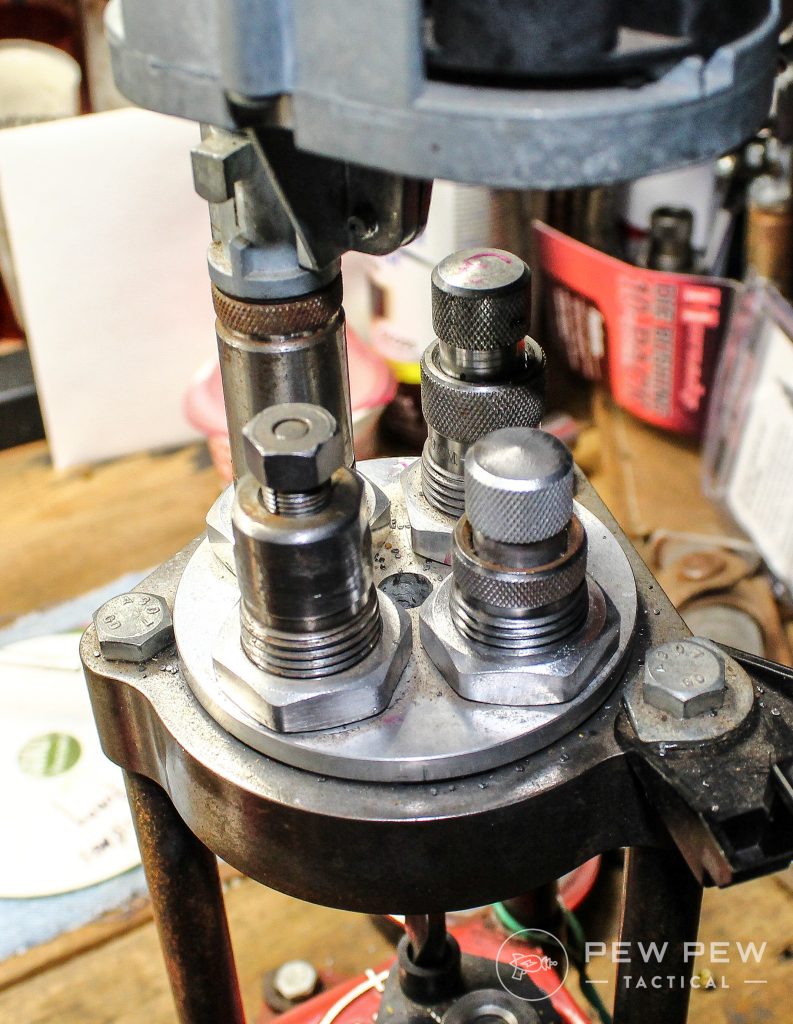
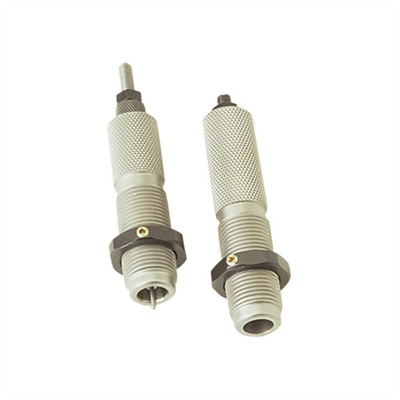
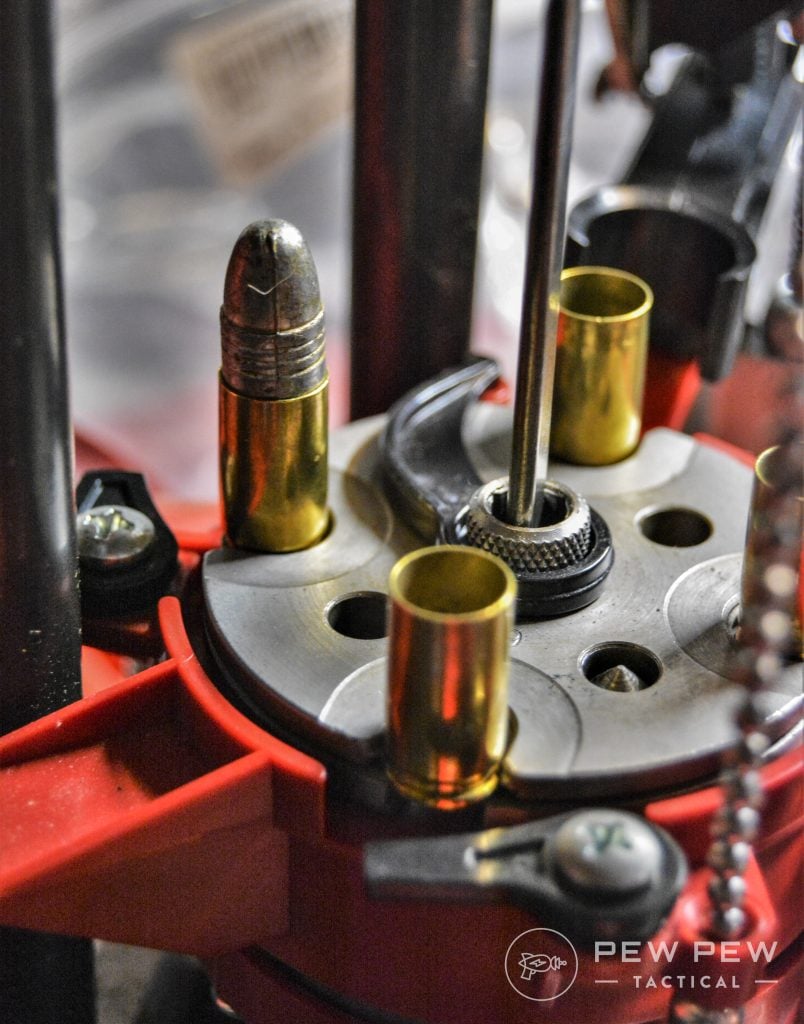
In short, reloading dies are the pieces-parts that you mount into your loading press in order to make ammo. These threaded pieces of metal perform the crucial processes of resizing and flaring the case, seating the bullet in the case, and then crimping the case over the bullet.
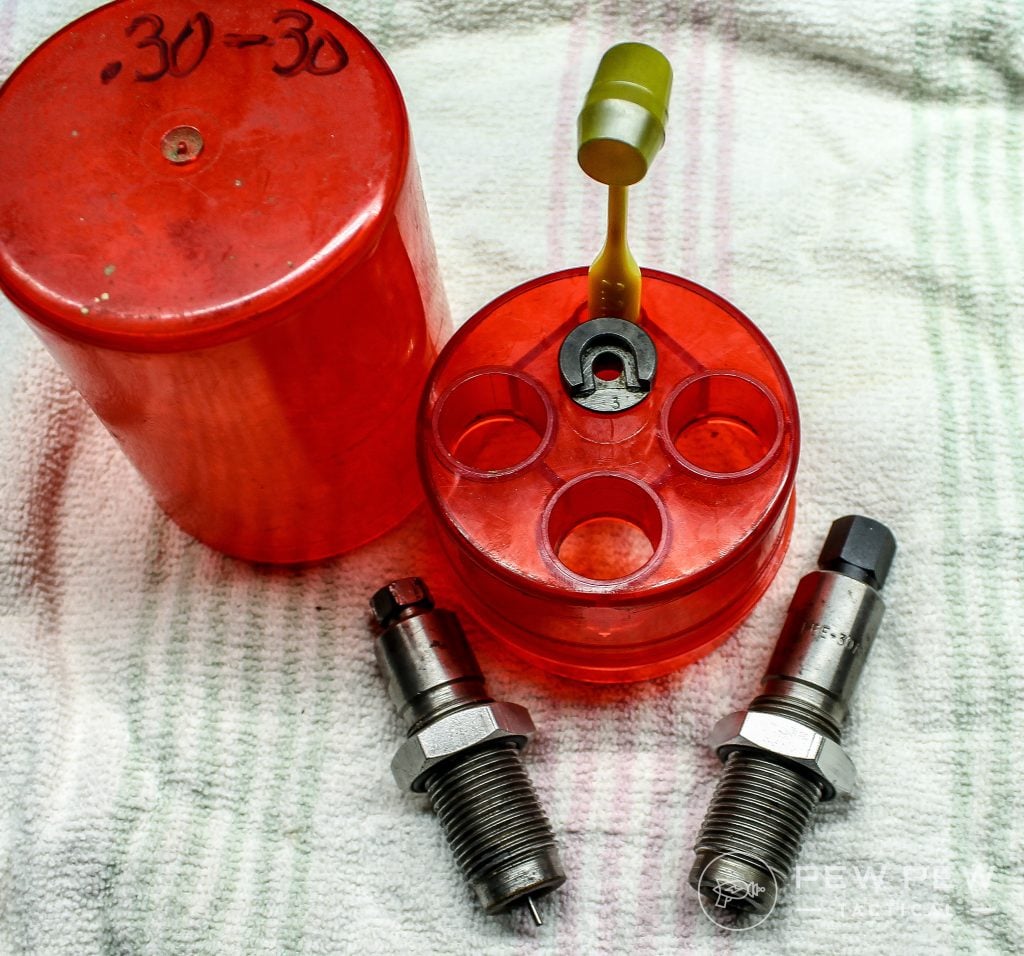
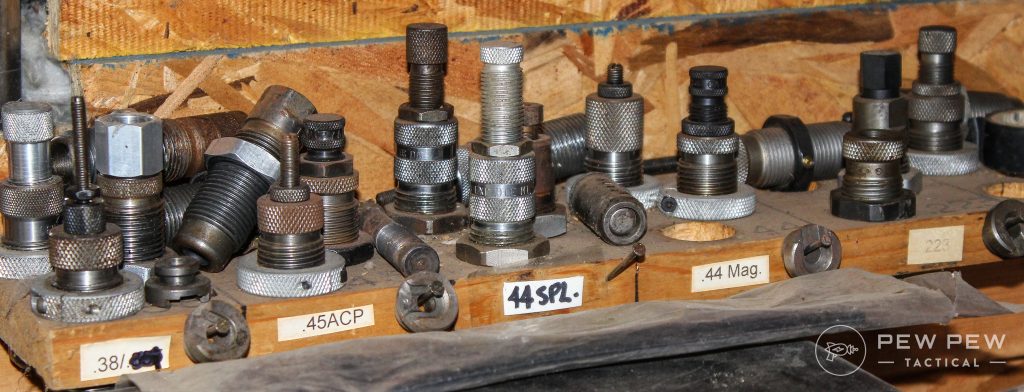
Dies are typically specific to each cartridge, and when properly set, they ensure that all of your ammo is being made to the exact size and dimensions needed to function safely and correctly in your firearm.
The Reloading Process
Let’s take a quick look at what we need to do in order to take a fired, empty brass case and turn it into a loaded cartridge. Keep in mind that die sets usually come with either 2, 3, or 4 dies to perform the functions needed for that particular cartridge — more on that later.
Here are the general reloading steps
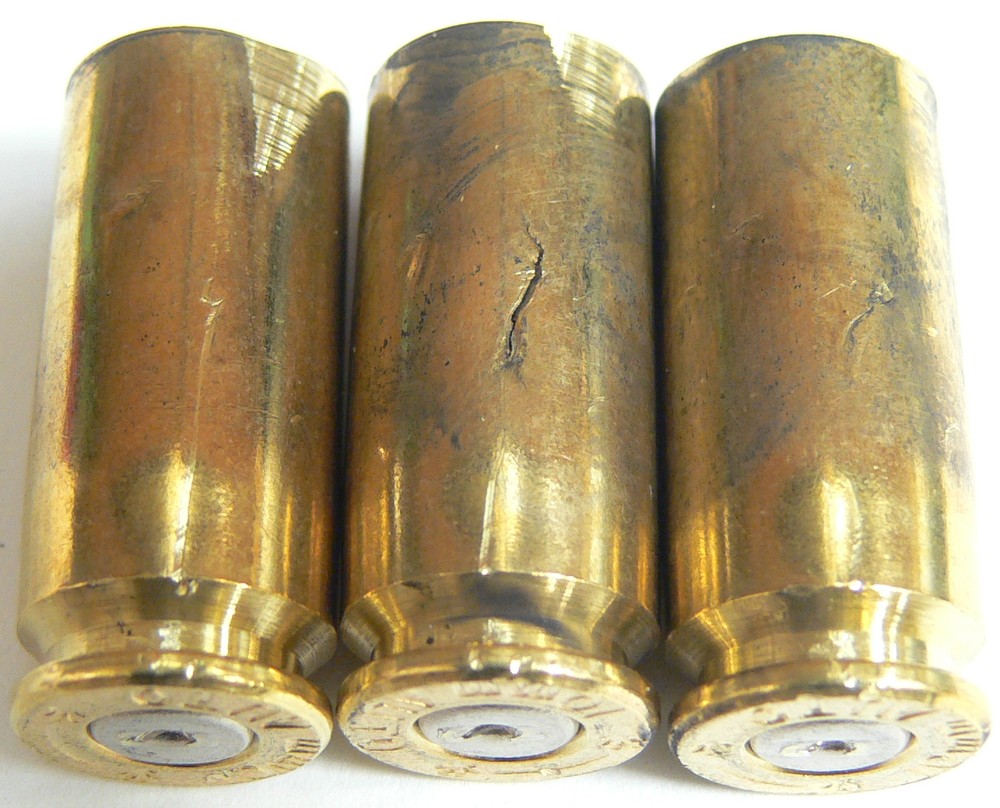
- Inspect and clean the case. You don’t need a die for this — a tumbler works well. Throw out the damaged or cracked cases.
- Resize the case. You will use your resizing die to do this. The case must be lubed, or you need to have a carbide sizing die. If not, you will most likely stick the case hard in the die or tear off the rim. Carbide dies are common for handgun calibers but not so much for rifles.
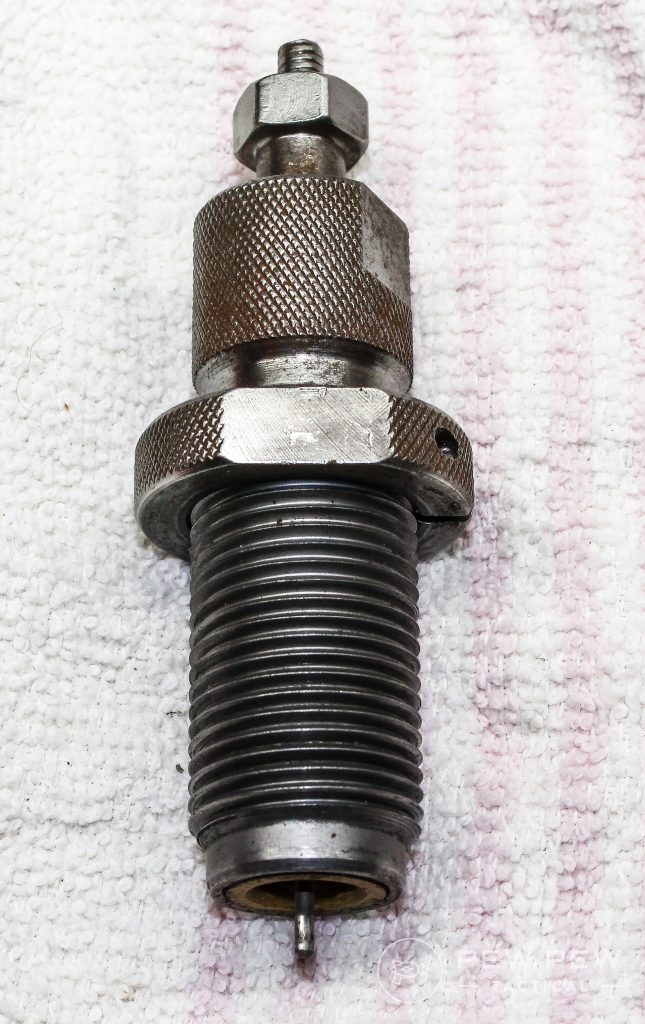
- Decap the case. The “cap” is the primer. You have to knock the old primer out of the case’s primer pocket and seat a fresh one. Most sizer dies have a long pin that pushes the primer out when you run the case up into it. You can then insert the new primer on the reverse stroke on most presses. You can use a hand primer tool for presses that don’t have priming abilities.
- Expand The Case Mouth. This is for straight-wall handgun cases only. In order to seat the bullet without crumpling the case or pulling lead off the base of a cast bullet, you need to flare the case mouth a bit using an expander die. After you expand the case mouth, you then add the powder.
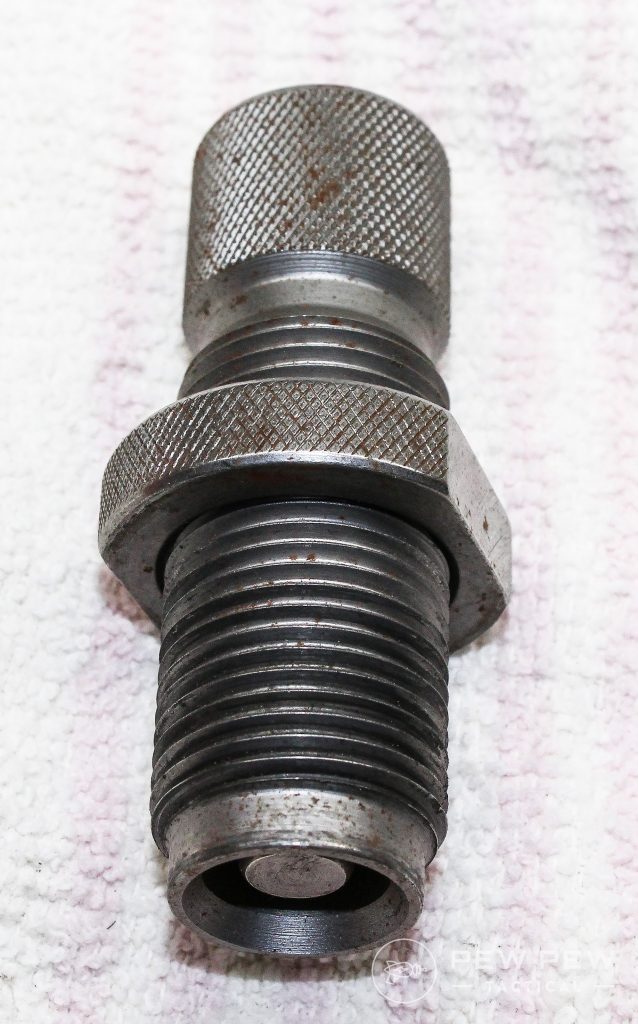
- Seat The Bullet. Here is when you place a bullet in the case mouth or hold it in position as you raise the press’s ram and seat the bullet into the case. This is done with the seating die. Most seating dies adjust by simply screwing the seating stem up or down, but some have an actual micrometer stem that allows depth repeatability to a remarkable degree. Seating depth is critical in maintaining safe pressures, accuracy, and reliability.
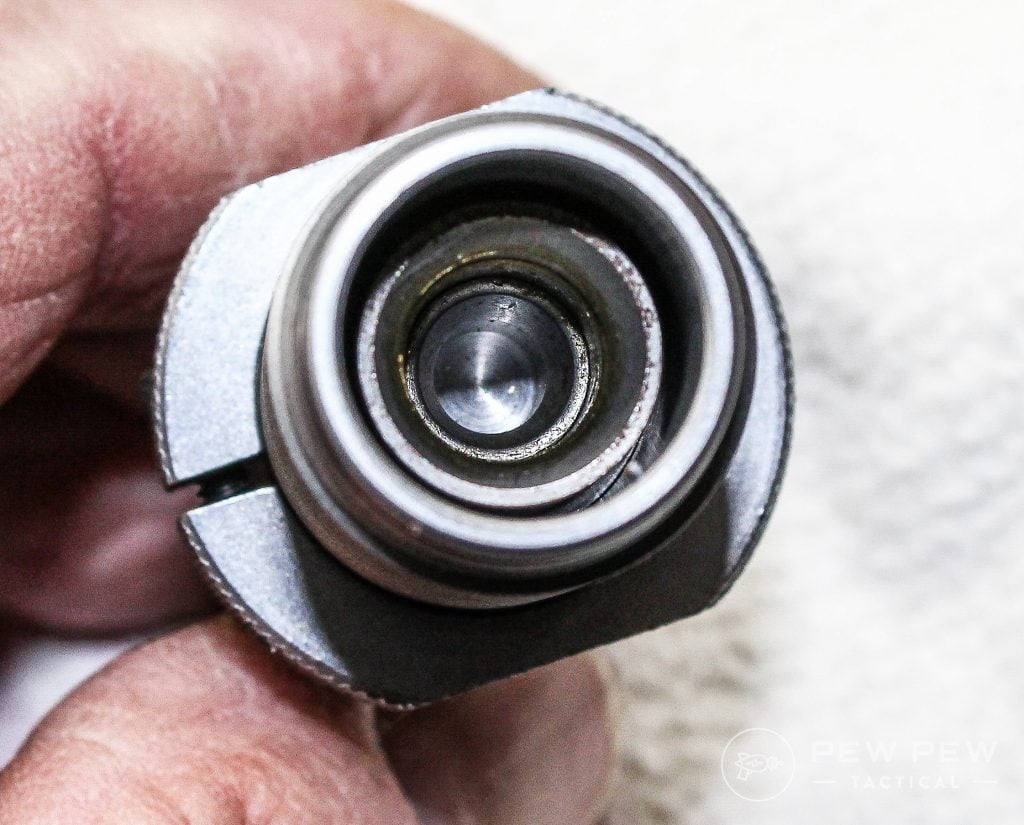
- Crimp The Bullet. Crimping can be done with a combo seater/crimper die or with a separate die, such Why crimp the bullet? This process keeps the bullet from falling out freely and creates the necessary pressure for the powder to expand before pushing the projectile out.
Types of Die Sets
2-Die Set:
First die: Resizing/Decapping die
Second die: Bullet seating/crimping die
(Jacketed rifle bullets are not crimped or only crimped lightly, but the function is built into the die nonetheless.)
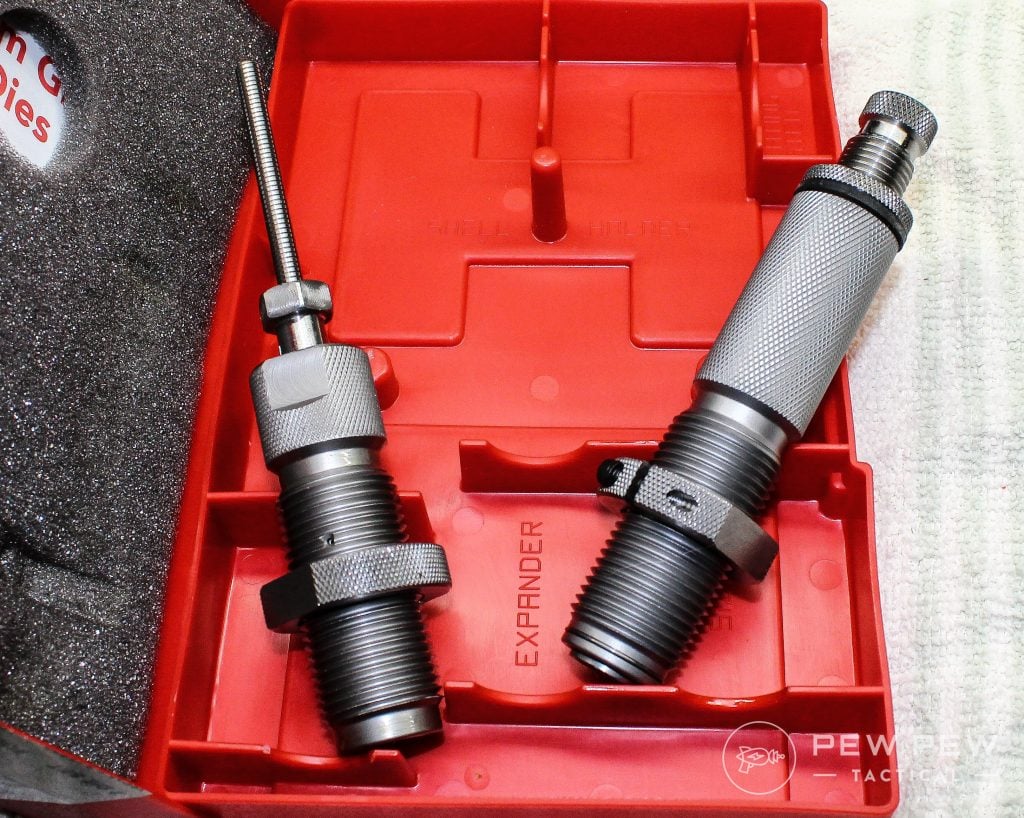
3-Die Set:
First die: Resizing/Decapping die
Second die: Case mouth expanding die
Third die: Bullet seating/crimping die
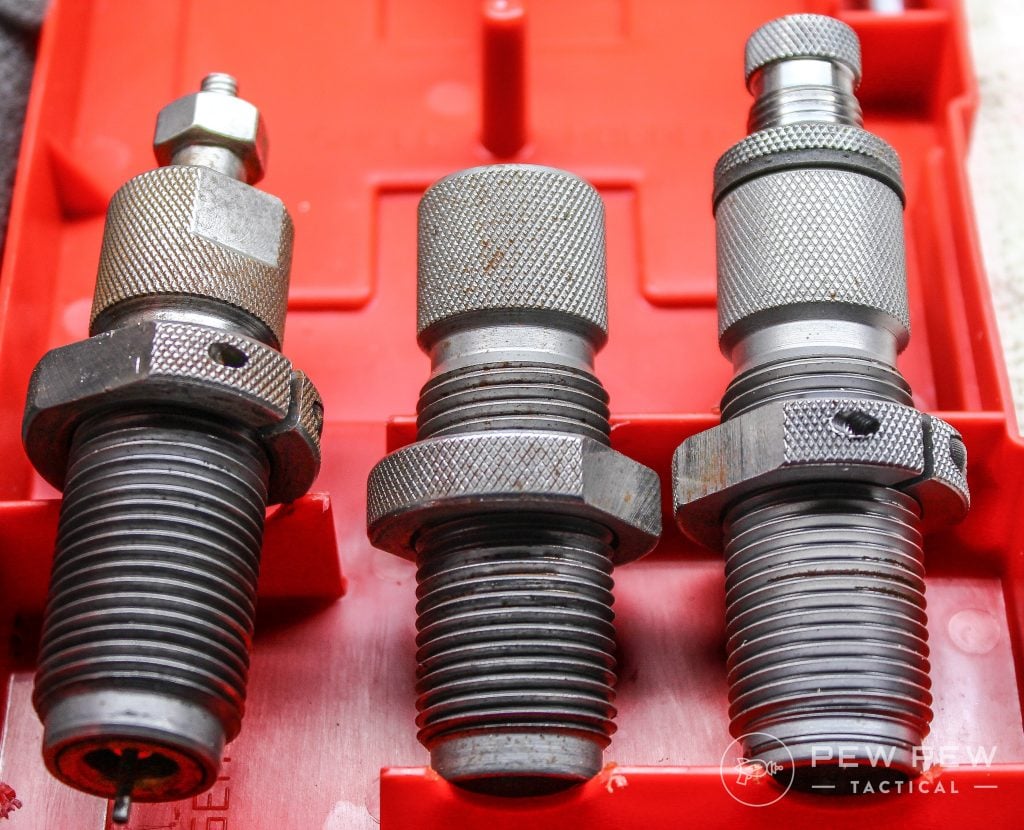
4-Die Set:
First die: Resizing/Decapping die;
Second die: Case mouth expanding die
Third die: Bullet seating/crimping die
Fourth die: Dedicated taper crimp die
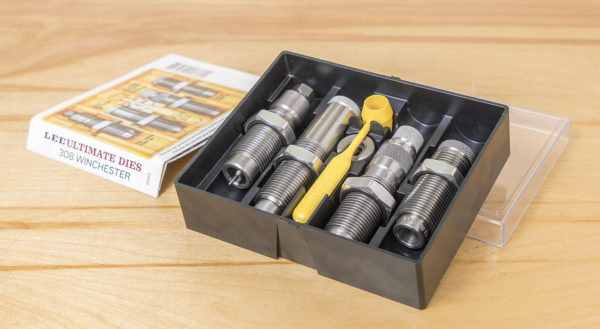
You still have the crimping function in this set’s third die, but most who use four dies will unscrew the die out of the press a few turns so as not to crimp the case when the bullet is seated.
They then will use the fourth die to apply a factory-style taper crimp to the cartridge.

The Best Gun Deals, Coupons and Finds
Subscribe to Pew Pew Tactical's sales and deals email.
What Brand Do I Buy?
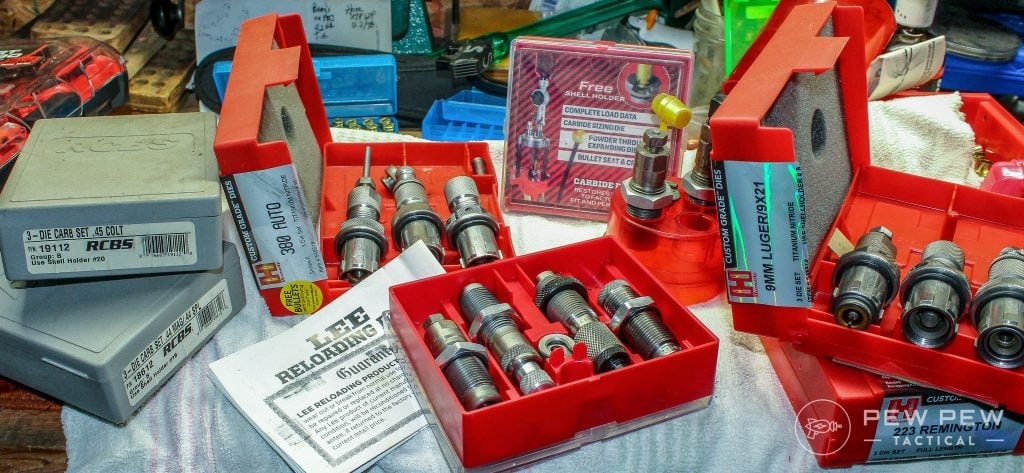
I tend to use three different brands of dies — Lee Precision, RCBS, and Hornady.
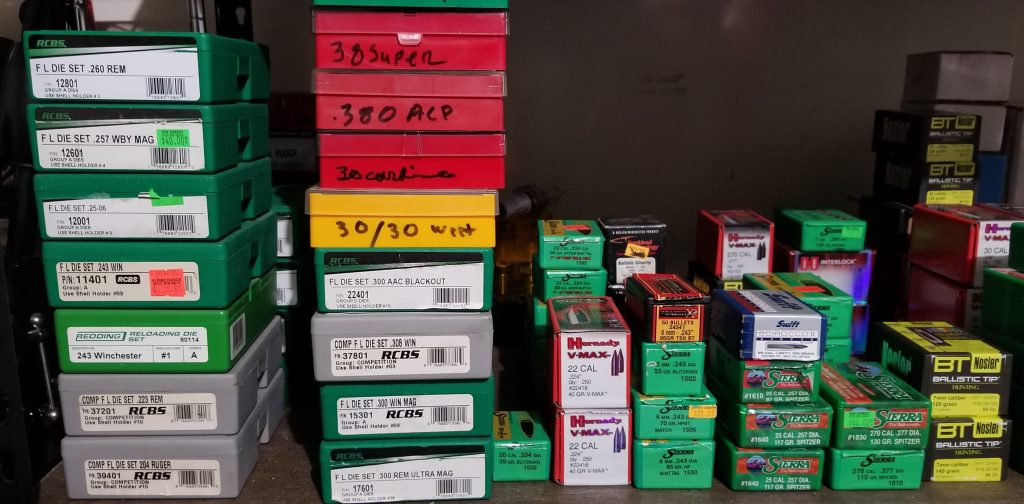
These are three mainstream reloading equipment manufacturers who make functional and affordable products. I chose these manufacturers because they are well-known, are typically available in most areas, and represent great value.
You can’t go wrong with any of them. The majority of dies are universal, which means that any dies can be used on any press, regardless of who makes it.

The only major difference is that you do not have locking set screws with Lee dies. They have a rubber O-ring meant to keep the die in place, but sometimes it slips.
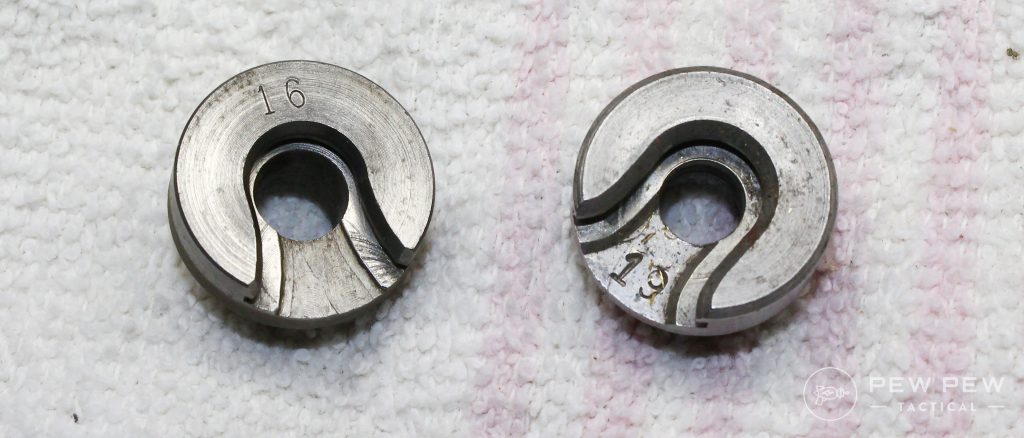
This drawback is offset by the fact that you get a free shell holder with Lee dies, which can help cut costs a little further.
I compared the run-of-the-mill, least-expensive die sets above. All three companies make more expensive precision dies for those who require them — at a higher cost, naturally.
It should be noted that any of these dies can rust if not protected by a thin coat of oil. You can see some rust on some of my dies from the occasional forgetfulness of maintenance over the decades.
What Do I Do Now? I'm New To This!
So you want to get into reloading — that’s great! Here’s what I recommend.
Buy a reloading press kit
You will need a full-blown kit if you’ve never reloaded before. A kit will include a reloading press, powder scale, powder measure, and related accessories.
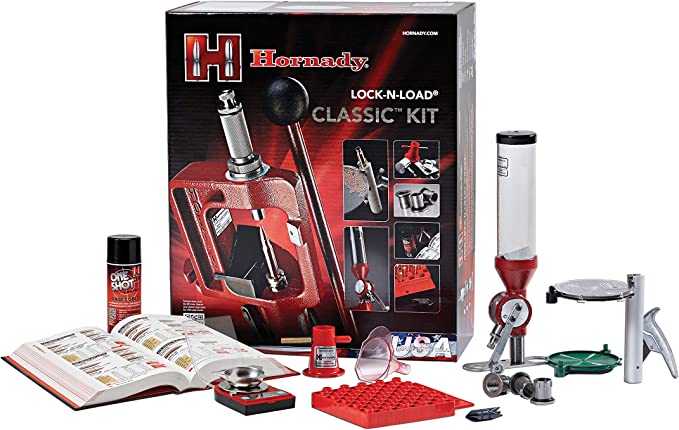
For beginner reloaders, an inexpensive single-stage press from any maker will work. I recommend avoiding turret style or full-progressive presses until you learn the reloading basics.
We have an entire article dedicated to reloading presses. Check it out here!
Our Most Popular Posts


Buy a good set of dies
It doesn’t matter what brand you buy; they’re all excellent.
If you are going to be loading .223 for your AR, a decent 2-die set will work.
Need to feed your Glock 19? Make sure you get a set that includes a taper-crimp die of some sort.
How about that old-faithful .357 Mag that your uncle gave you for graduation? Roll crimp those cases with an appropriate die.
Seek Instruction
Reloading is not overly complex, but you do need to pay attention to what you’re doing. There are plenty of reloading videos on manufacturers’ websites and YouTube — and never be afraid to ask a veteran reloader.
Make sure that you use only data published by a reputable manufacturer. Some places, like the powder manufacturer Hodgdon, publish lots of free data.
Be Organized
I can’t tell you how often I loaded a box of something or other and then put it away, not to find it until I tripped over it.

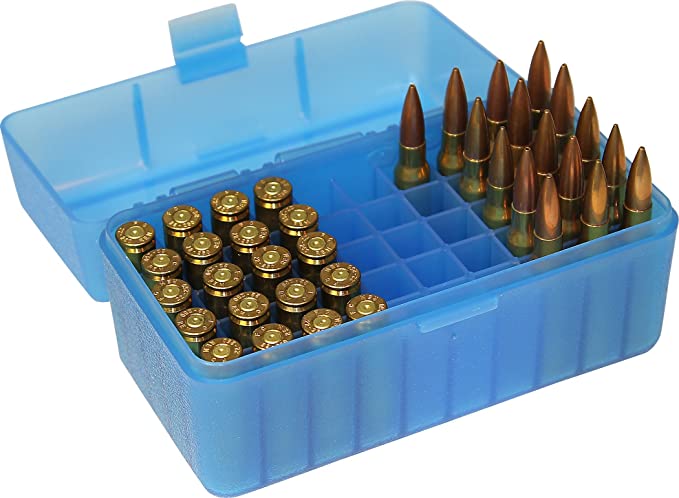
Keep your components secure and labeled, including your reloading ammo. Don’t forget to write down your load data so you always know what is inside your ammo at all times.
Store your powder and primers in a cool, dry place.
Repeatability is the Key
Making each round exactly the same as before will make accurate and dependable ammo.
Final Thoughts
Dies are just one part of the reloading equation, but they are probably the most important. Getting the right dies for your needs will ensure you get the best results from putting in all the time and effort it takes to make your own ammo.
I know I can shoot a lot more with my own ammo for the same amount of money I would’ve spent on factory ammo.
Not to mention, I can squeeze the most performance and accuracy out of my firearms by making the ammo that is exactly right for them. If all that sounds good, maybe it is time for you to consider making the leap.
What are your thoughts on reloading? Let us know in the comments below! Have your setup already picked out and need to know where to get started? Check out our Ultimate Beginners Guide to Reloading!