
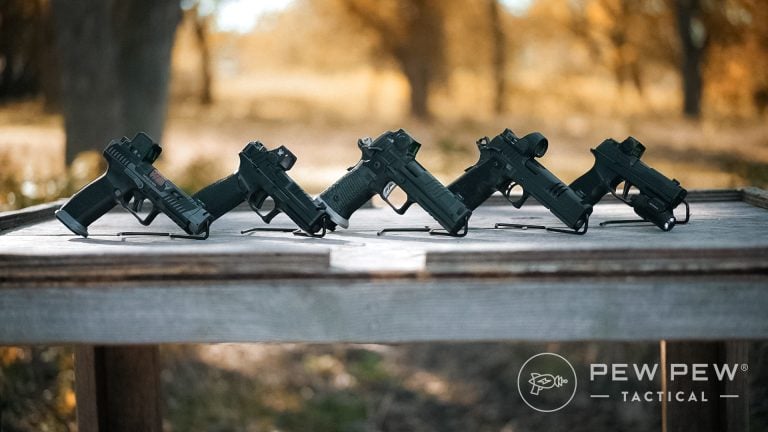
These days, it seems like every manufacturer is rolling out compensated versions of its pistols.
Are these new pistols actually better than the ones we know and trust? Or are they, well, compensating for something?
It’s time to get some answers…

We grabbed six comped pistols so we could shoot them side by side, compare our impressions, and decide if they’re really better than the original versions of their respective models.
Let’s get to the bottom of this!
THE QUICK LIST
-
Best Value
-
Best Premium
-
Best Competition
Table of Contents
Loading…
Comped Pistol Comparison Chart
| Best Use | Caliber | Action | Capacity | Price | |
| Sig Sauer P365-AXG Legion | Concealed carry/home defense | 9mm | Semi-automatic, striker | 17+1 | $829 |
| Springfield Echelon 4.5F Comp | Duty/home defense | 9mm | Semi-automatic, striker | 17+1, 20+1 | $662 |
| Canik TTI Combat | Competition | 9mm | Semi-automatic, striker | 18+1, 21+1 | $949 |
| Staccato XC | Competition | 9mm | Semi-automatic, single action | 17+1 | $4,299 |
| Sig Sauer P211-GTO | Competition | 9mm | Semi-automatic, single action | 21+1, 23+1 | $2,399 |
| Radian Ramjet + Afterburner | DIY upgrade | 9mm | N/A | N/A | $389 |
How We Tested the Best Comped Pistols
To bring you the very best comped pistols you can buy, the Pew Pew Tactical team tapped into our collective experience with a wide range of compensated models we’ve shot, reviewed, and owned.
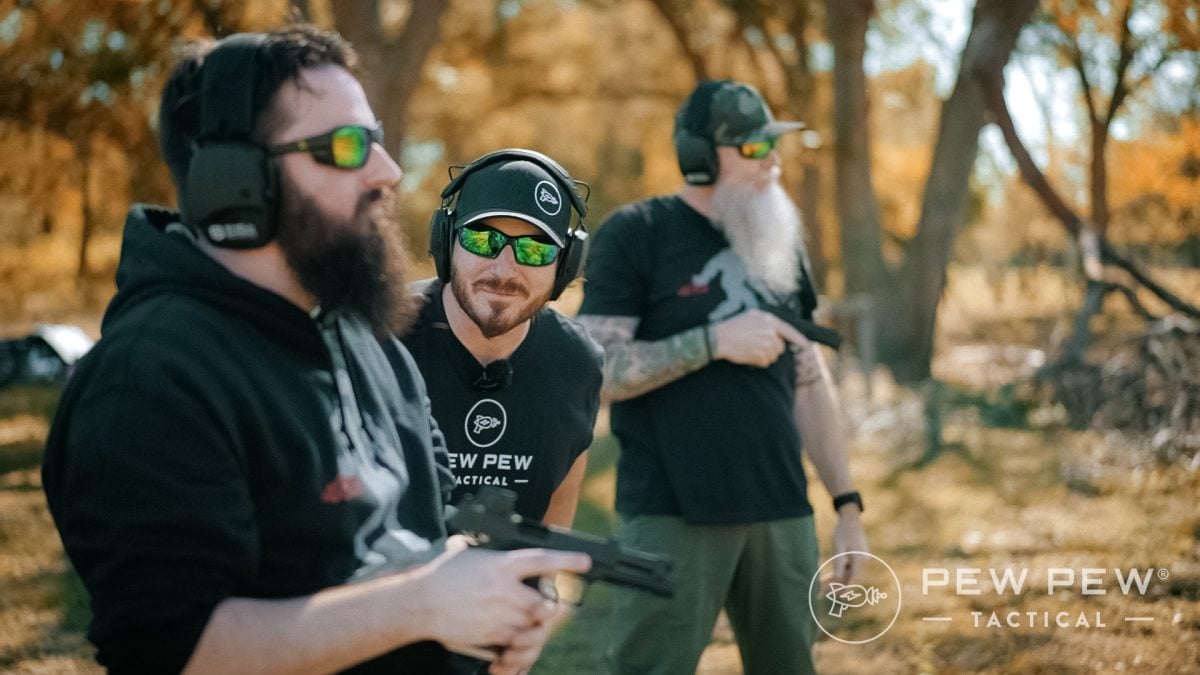
With the exception of the brand-new Sig Sauer P211-GTO, these pistols have undergone accuracy testing, practical shooting on the range, and high round counts.
While this wasn’t a burndown test, we put more than 500 rounds through each of these pistols in a very short period of time with no cleaning or time to cool down. They earned all the praise we gave them.
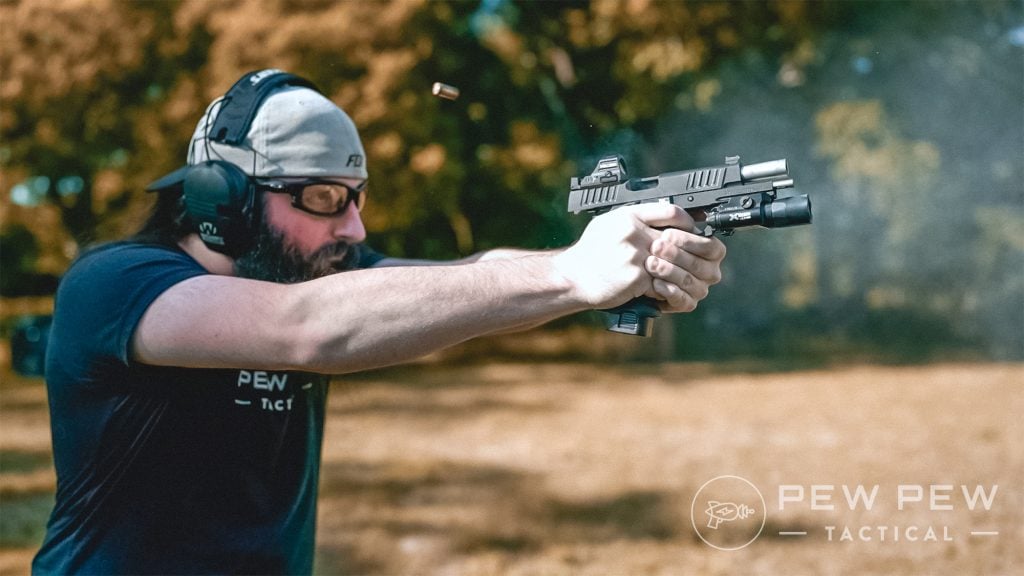
During this comparison, we lined these pistols up against each other to see how well each compensator tamed recoil and made us want to spend a few more dollars over the base model.
As always, we have to keep price in mind. We’re balancing budgets and deciding what to buy, too!
In some cases, the answers might surprise you.
Meet the Experts
This comparison was a team effort brought to you by Content Producer & Lead Review Analyst Sean Curtis and Editors & Senior Review Analysts Scott Murdock and Wyatt Sloan.
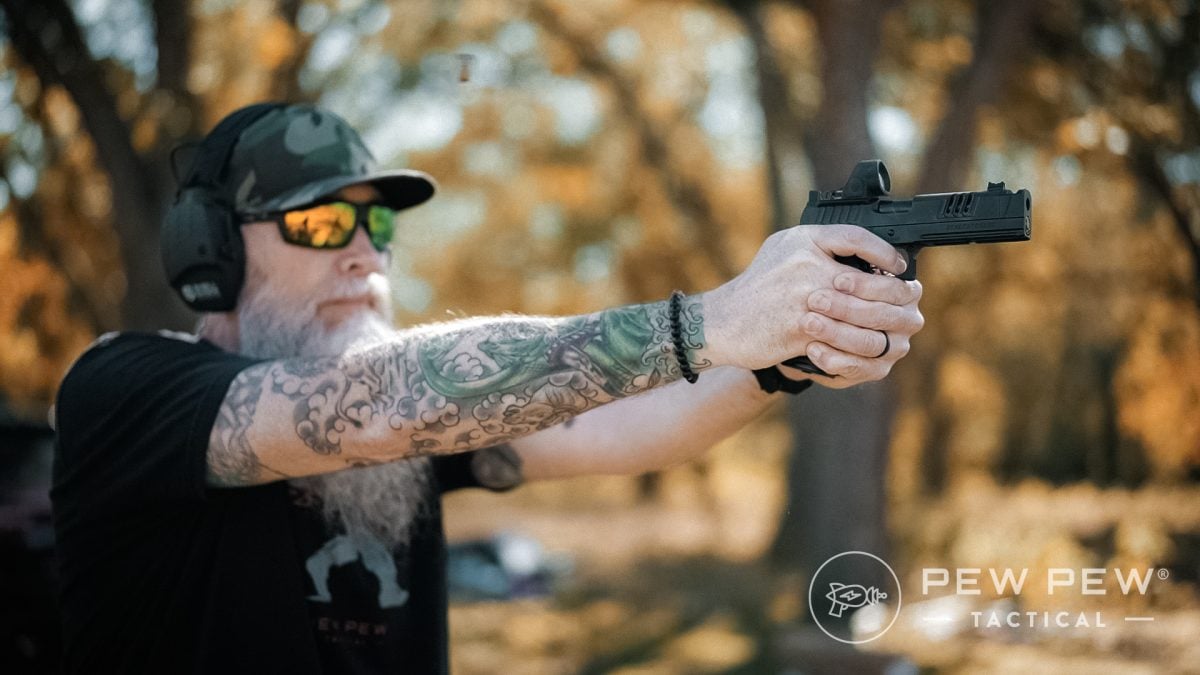
Sean has experience in both tactical shooting and instruction. During more than two decades in law enforcement, he served as a POST-certified handgun instructor and NLEFIA Red Dot Instructor, and received CLEFIA Advanced Firearms Instructor Training and AR-15 armorer training. He has since attended a variety of training events, including Tactical Performance Center Handgun Mastery & Carbine Mastery, and earned USCCA rifle instructor certification.
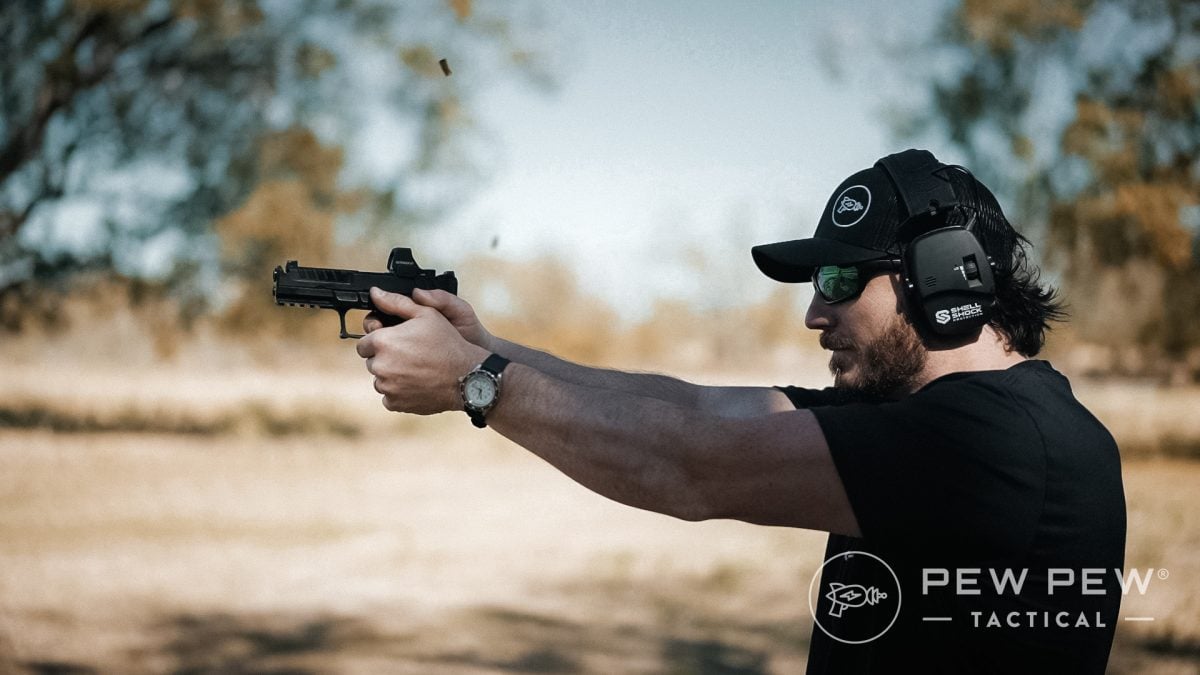
Scott has shot compensated and uncompensated versions of many of the pistols you see here, and you can find reviews of them right here at Pew Pew Tactical. His pistol experience includes military training and intra-service competition with the M9. As a civilian, he’s continued to develop skill with professional pistol instruction including time at AMTAC Shooting, Full Spectrum Warrior, Vortex Edge, and CCW courses in multiple states.
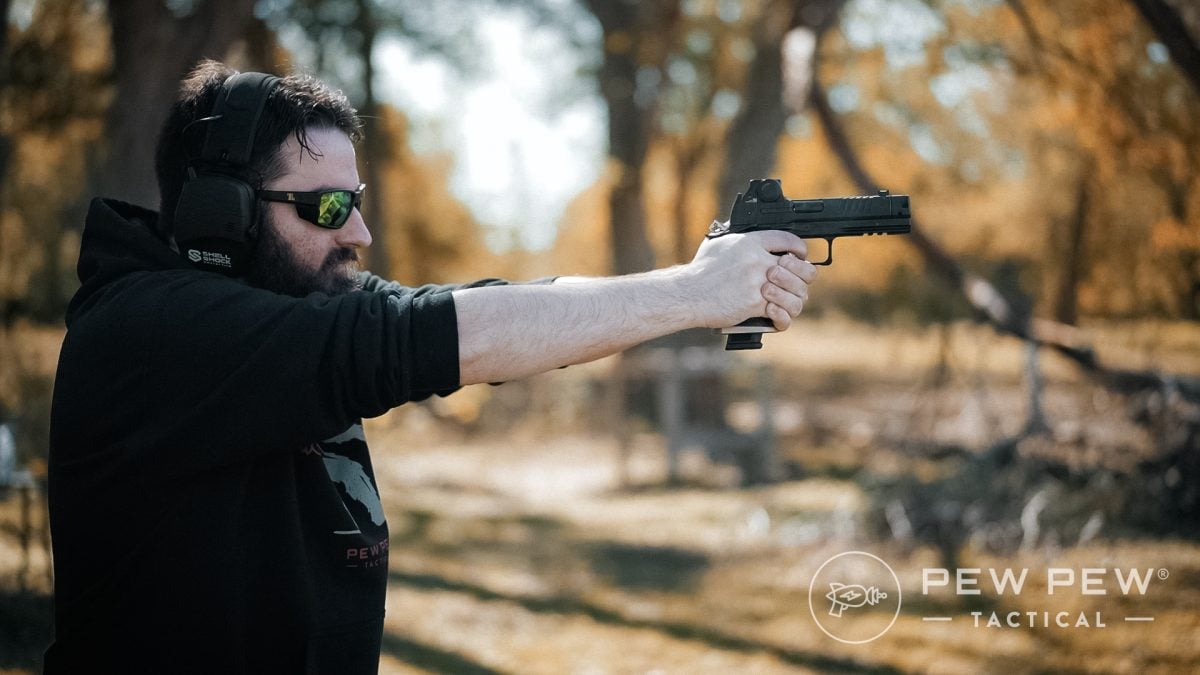
Wyatt is an avid recreational shooter and big-time gun collector. He owns well over 100 handguns and has shot every pistol on this list, along with most of their variants. In addition to his general knowledge of handguns, he has over 10 years of home-based FFL sales experience and also holds NRA handgun instructor and USCCA rifle instructor certifications.
Best Comped Pistols
1. Sig Sauer P365 X-Macro Comp – Best CCW

Prices accurate at time of writing
Prices accurate at time of writing
-
25% off all OAKLEY products - OAKLEY25
Copied! Visit Merchant
Pros
- Very mild recoil for a compact pistol
- Full-size capacity
- Massive aftermarket support
Cons
- Slightly mushy trigger feel
- About $100 more than the non-comp version
The Bottom Line
A ported slide and great ergonomics make the Sig Sauer P365 X-Macro Comp one of the smoothest compact pistols we've shot. It shoots and feels full-size, thanks to that reduced muzzle rise, and 17-round magazines are a huge advantage for any concealed concealed carry pistol. And the price? It's actually pretty reasonable.
Specs
- Caliber: 9mm
- Action: Semi-automatic, striker
- Capacity: 17+1
- Optic Footprint: RMSc
- Barrel Length: 3.1”
- Overall Length: 6.6”
- Weight: 21 oz
- Country of Origin: USA
While there are a ton of versions of the ultra-popular Sig P365, I consider the Sig Sauer P365 X-Macro to be one of the best — especially when you consider price.
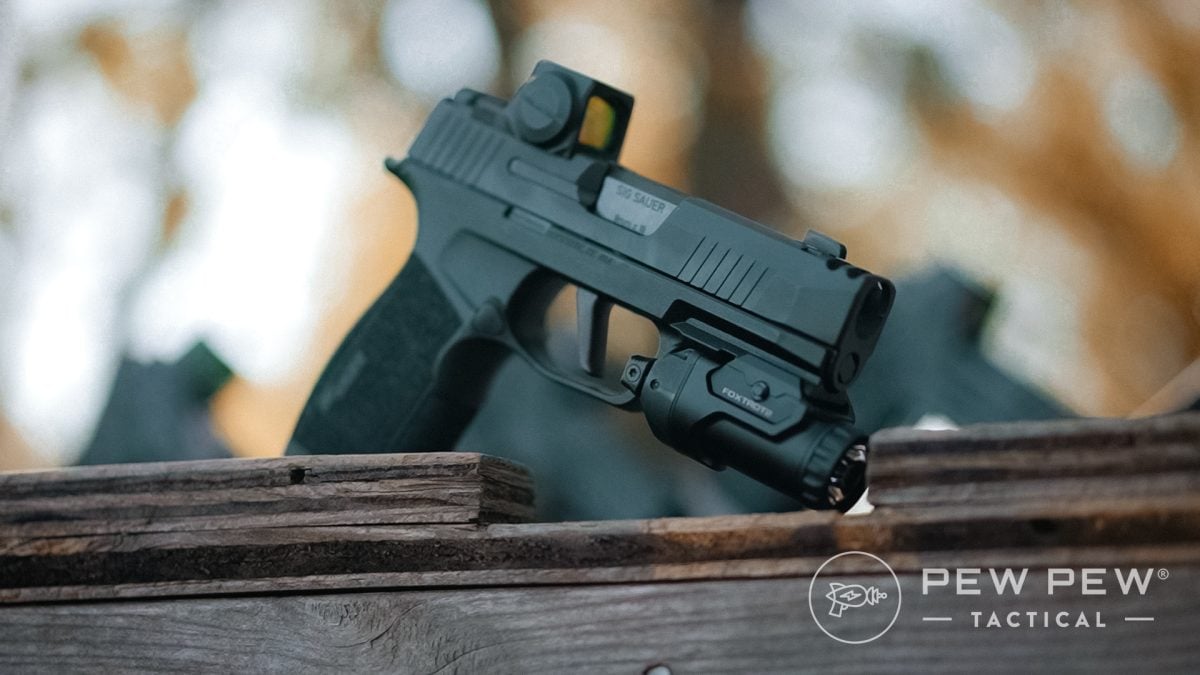
These guns are extremely thin and easy to carry, but you don’t have to compromise between comfort and capacity thanks to the 17-round magazines.
The X-Macro does well in the ergonomics department, too. The undercut trigger guard is comfortable and facilitates a nice, high grip. Two of us have size medium hands, and the P365 X-Macro fits like a glove.
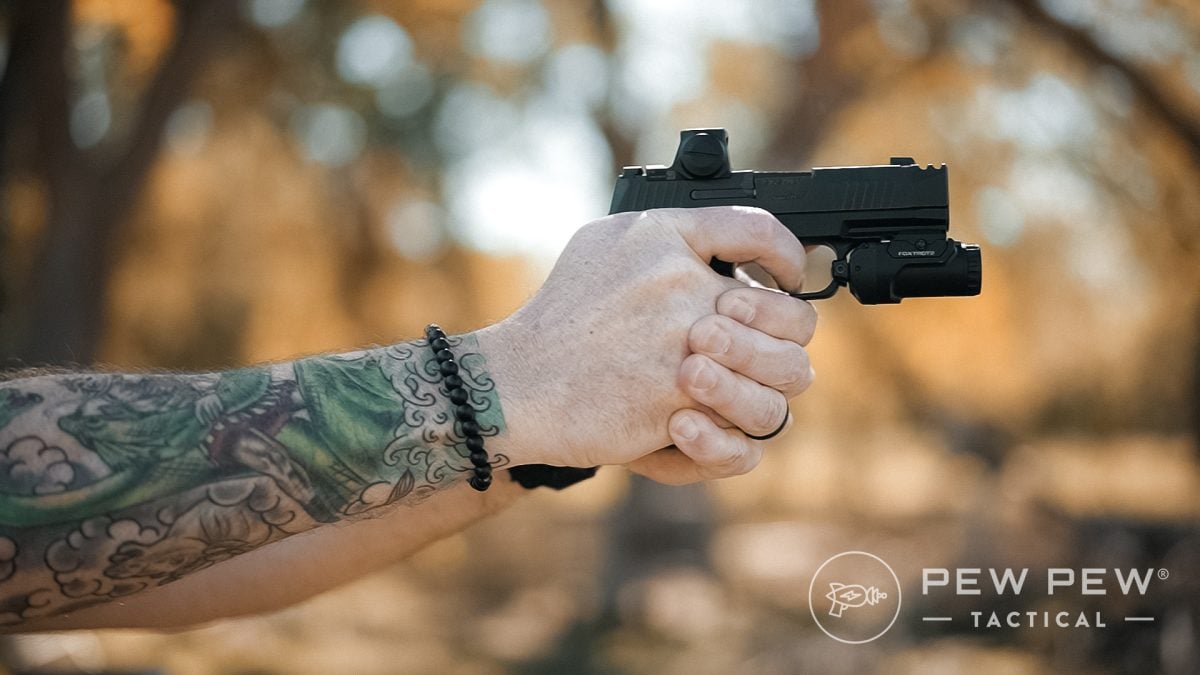
Some shooters are wary of compensators on carry guns for reliability reasons. Wyatt is one of them, but the P365 AXG-Legion won him over.
Instead of hanging anything off the end of the barrel or cutting into the barrel itself, Sig Sauer built the compensator into the slide. During testing, this setup has been extremely reliable and not ammo-picky at all.
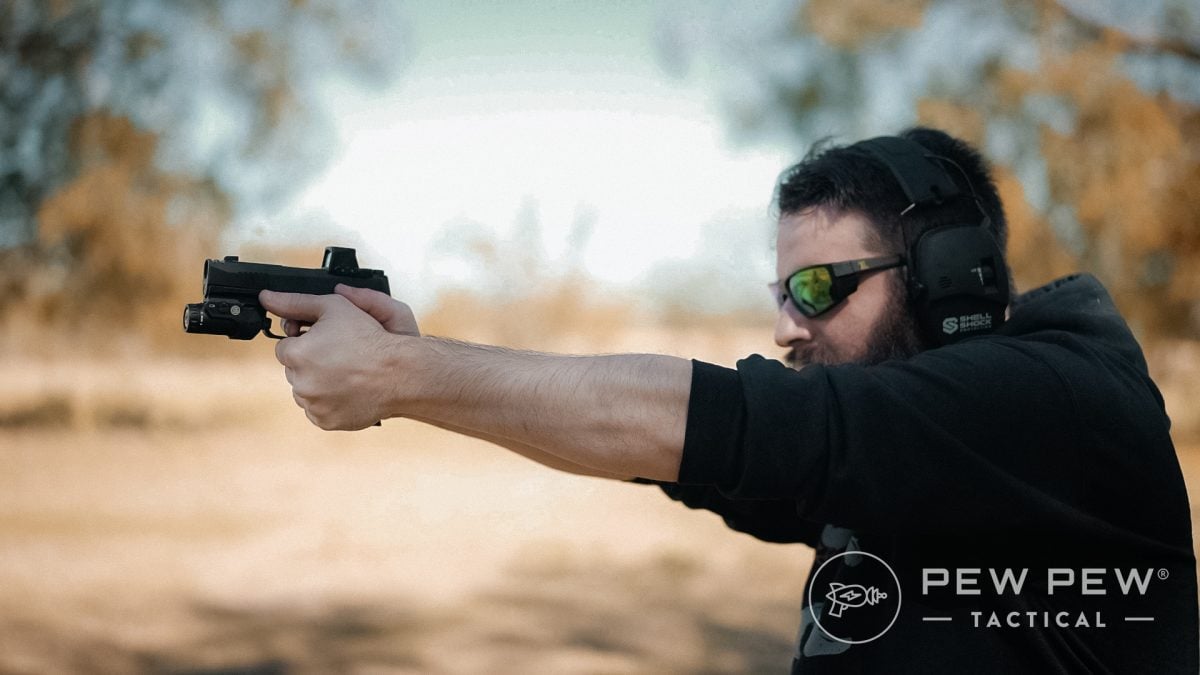
A thin, lightweight slide means there is not a ton of reciprocating mass, and the compensator does a great job cutting down on felt recoil. The result is a gun that cycles super quickly and snaps right back to zero.
The P365 X-Macro is cut for the RMSc footprint and comes with XRAY3 night sights, a flared magazine well, and three 17-round magazines.
While the three of us agree that the trigger is a bit mushy and leaves room to be desired, we can also shoot this gun nearly as fast as some of the full-sized pistols on this list.
What do you think of the P365 X-Macro? Rate it below!
2. Springfield Echelon 4.5F Comp – Best Duty
Prices accurate at time of writing
Prices accurate at time of writing
-
25% off all OAKLEY products - OAKLEY25
Copied! Visit Merchant
Pros
- User-friendly Variable Interface System for mounting optics
- Great ergonomics
- Available in full-size and compact models
Cons
- Trigger feel is good, not great
- Grip texture may be too aggressive for some
The Bottom Line
The Springfield Echelon reaches new heights with this comped model. Reduced recoil, fantastic ergonomics and a low bore axis add up to a very enjoyable shooting experience. The Variable Interface System makes mounting optics a breeze. With full-size and compact versions available, there isn't much it can't do.
Specs
- Caliber: 9mm
- Action: Semi-automatic, striker
- Capacity: 17+1, 20+1
- Optic Footprint: Variable Interface System
- Barrel Length: 4.5”
- Overall Length: 8”
- Weight: 24 oz
- Country of Origin: Croatia
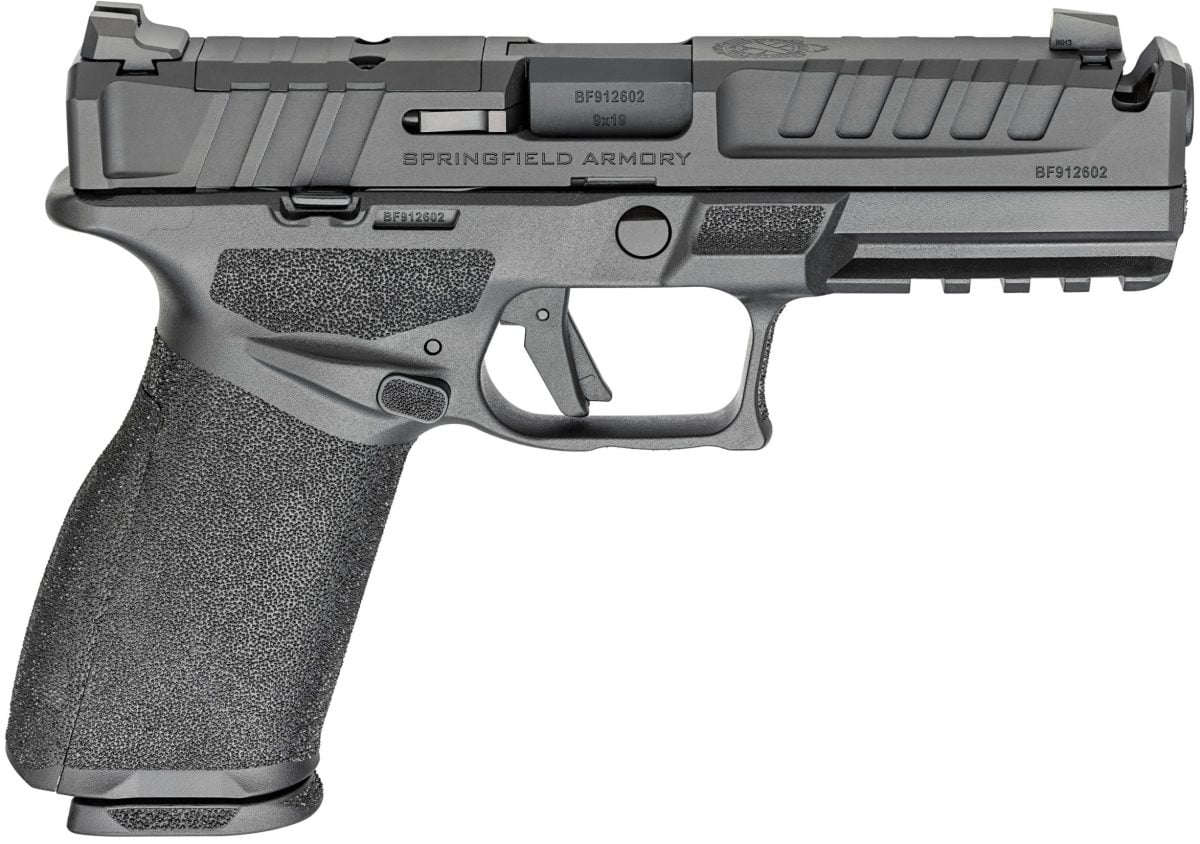
The Springfield Echelon 4.5F Comp joined a growing family of duty pistols with a spec sheet that reads like a shooter’s wishlist. This pistol is packed with features that make it one of the most well-rounded pistols on the market.
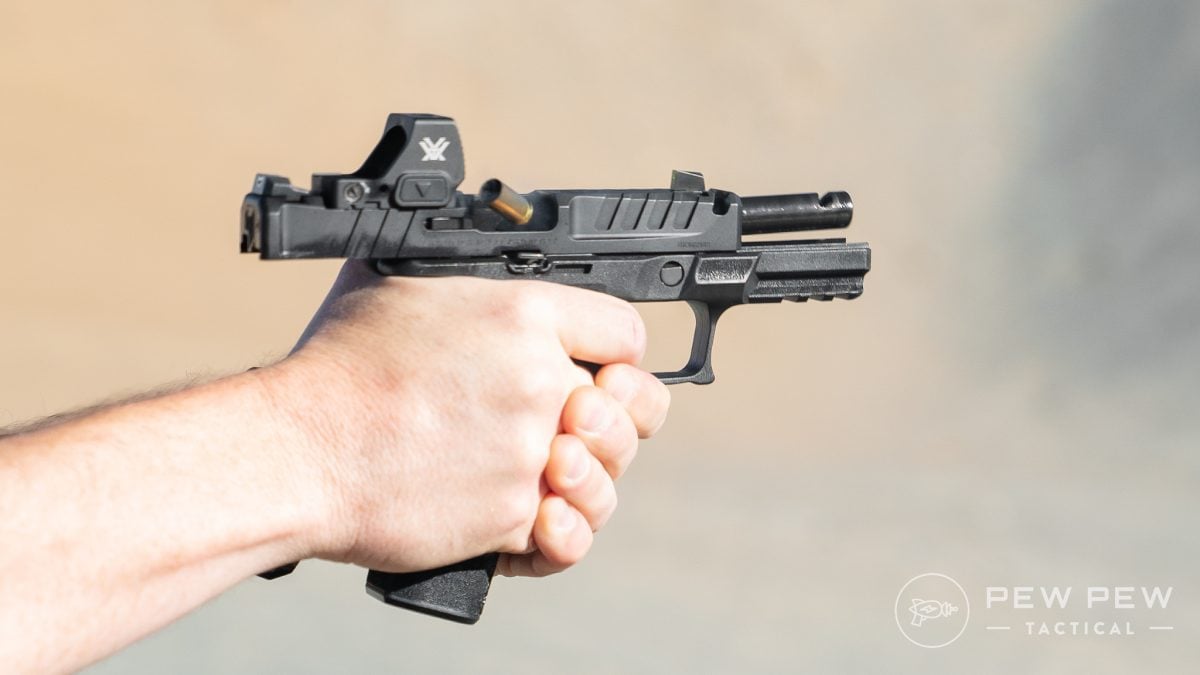
First up is the Variable Interface System that you’ve probably seen me wax poetically about before. There’s no better way to mount a red dot.
The pin-based system kicks adapter plates to the curb, so you can mount an optic with one of many popular mounting footprints directly to the slide. That saves time and money, makes installation easier, and keeps whichever optic you choose low enough that you can probably co-witness with the factory iron sights instead of upgrading to suppressor-height sights.
Ergonomics have been a bright spot since we first reviewed the Echelon. The grip fits all of our hands well, especially since the pistol ships with three sizes of backstrap inserts. The adaptive texture bites more the harder you squeeze, and Springfield put it everywhere you touch the pistol.
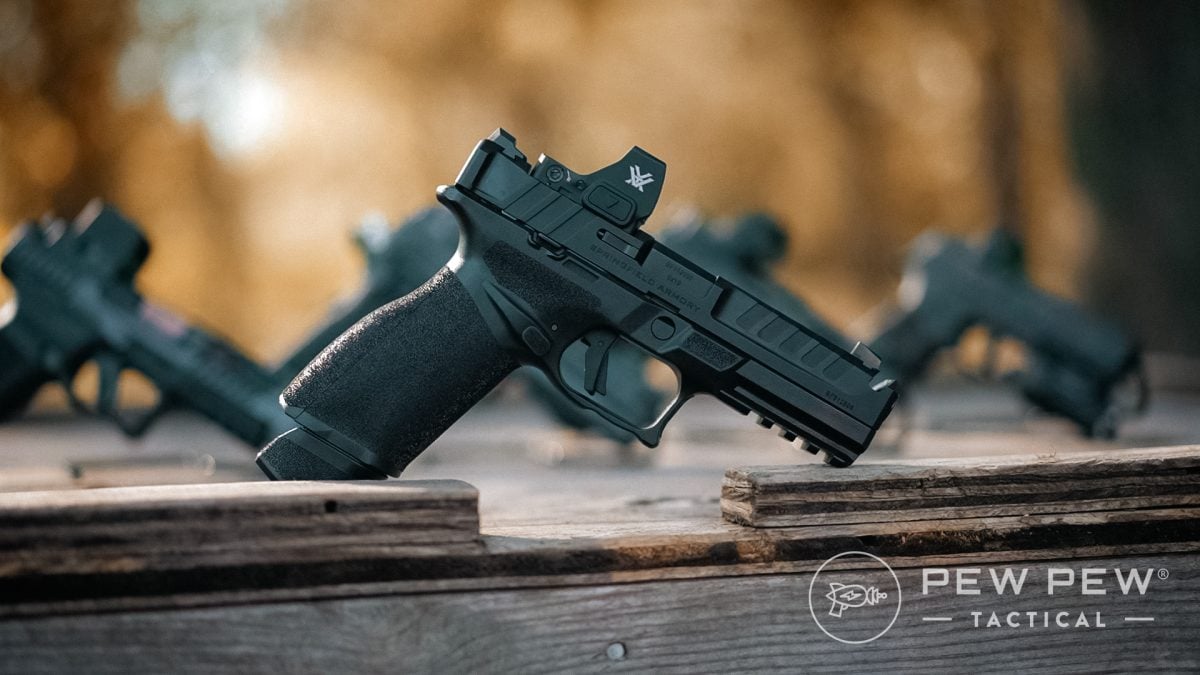
I really like that the takedown lever doubles as a gas pedal for my support-hand thumb. The only caveat is that it only works for right-handed shooters.
Forward and rear slide serrations are aggressive, and there’s a miniature T-handle built into the rear of the slide. The bottom line is that I always get a good grip when I’m racking the slide or press-checking.
And that compensator? It works very nicely.
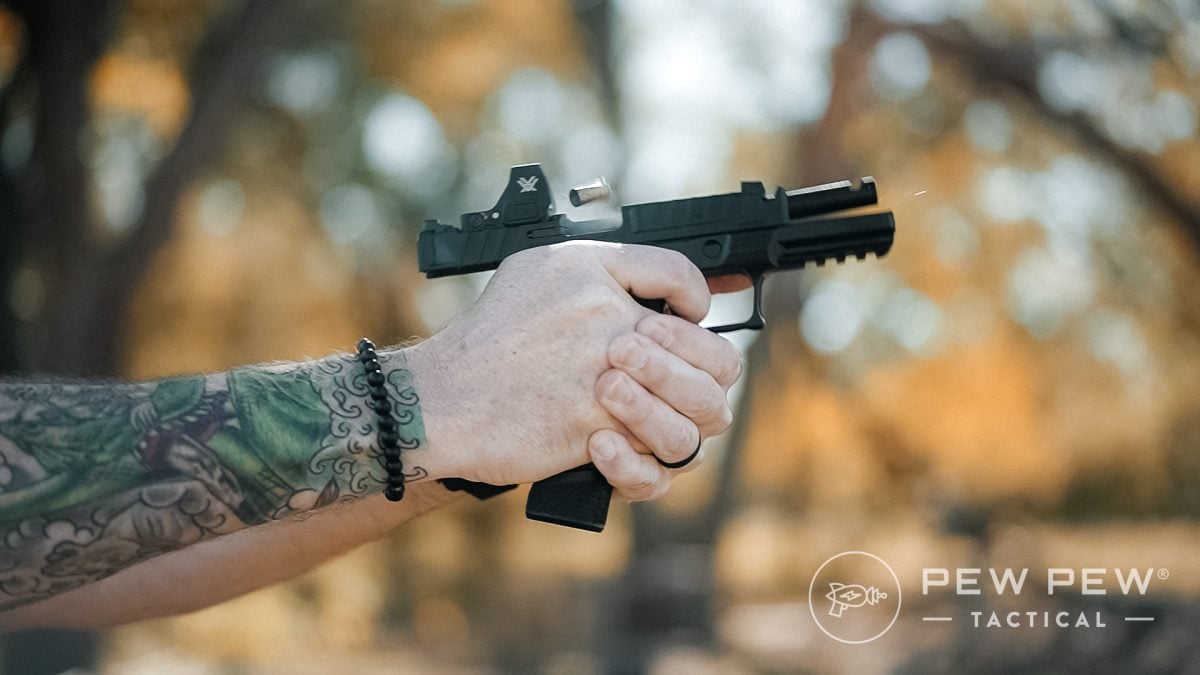
The generously ported barrel and slide vent a large amount of gas upward to reduce muzzle rise.
That, combined with great ergonomics and a low bore axis, makes this a very soft shooter compared to other pistols in the duty or CCW segments. It’s a combined effect that’s better than the sum of its parts.
It even won over Wyatt, and he was a bit of an Echelon skeptic not that long ago.
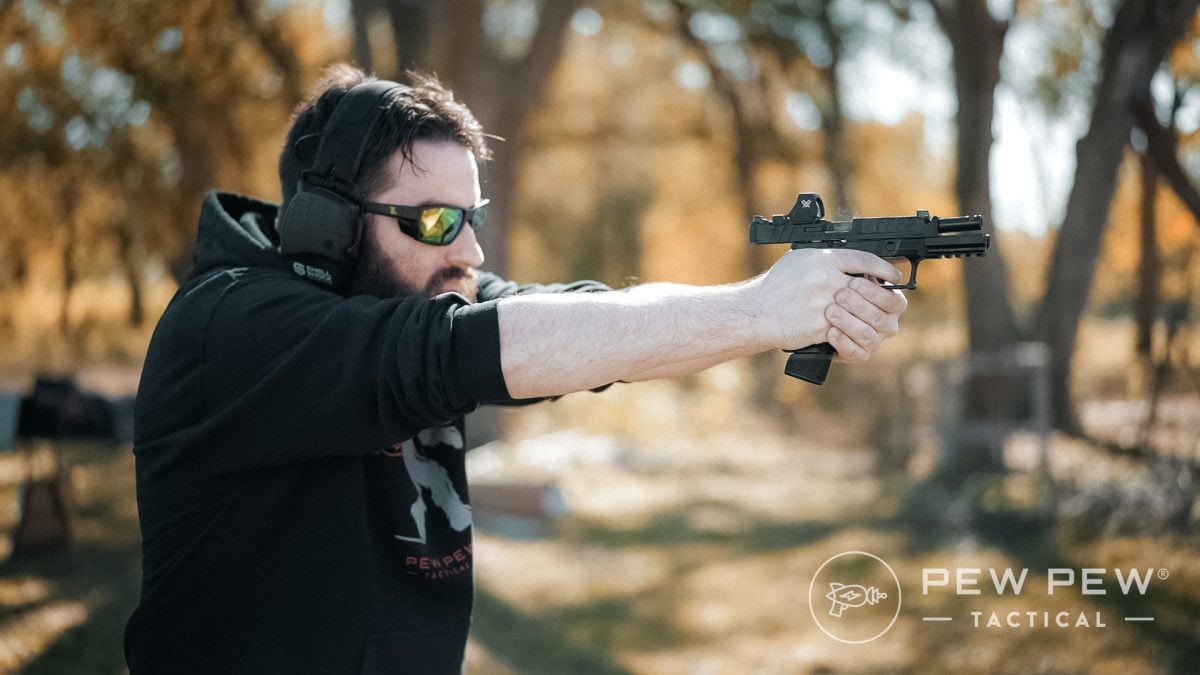
Everyone’s experience is different, but I shot the Echelon 4.5F Comp better than many of the more expensive guns in this roundup. That’s not a knock on the competition, and it’s not to say everyone will agree; it’s just to point out that this $650 to $700 duty gun is a serious contender regardless of price.
Springfield also offers a compact version of this pistol. It’s sized like a Glock 19, but with all the goodies and compensated performance we love about the full-size Echelon Comp.
Want to know more? Check out our Springfield Echelon 4.0C Comp review!
3. Canik TTI Combat – Best Value
Prices accurate at time of writing
Prices accurate at time of writing
-
25% off all OAKLEY products - OAKLEY25
Copied! Visit Merchant
Pros
- Comes with a full array of parts and accessories
- One of the best striker triggers out there
- Multiple optic plates included
Cons
- High bore axis
- Lightweight for a competition pistol
The Bottom Line
The Canik TTI Combat is possibly the best platform for getting into competitive shooting. It's a soft-shooting, reliable, accurate pistol with just about everything you need to start shooting right there in the box. It's a huge win for shooters who don't have sponsor logos all over their shooting jerseys.
Specs
- Caliber: 9mm
- Action: Semi-automatic, striker
- Capacity: 18+1, 21+1
- Optic Footprint: DeltaPoint Pro, RMR, RMSc
- Barrel Length: 4.6”
- Overall Length: 7.85”
- Weight: 30 oz
- Country of Origin: Turkey
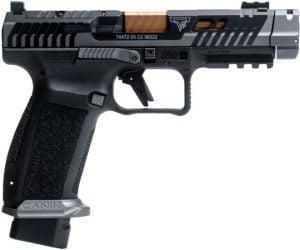
Canik always gives customers more than they pay for, and that’s true in a big way for the Canik TTI Combat. Dollar for dollar, there might not be a better way to get into the world of serious competition pistols.
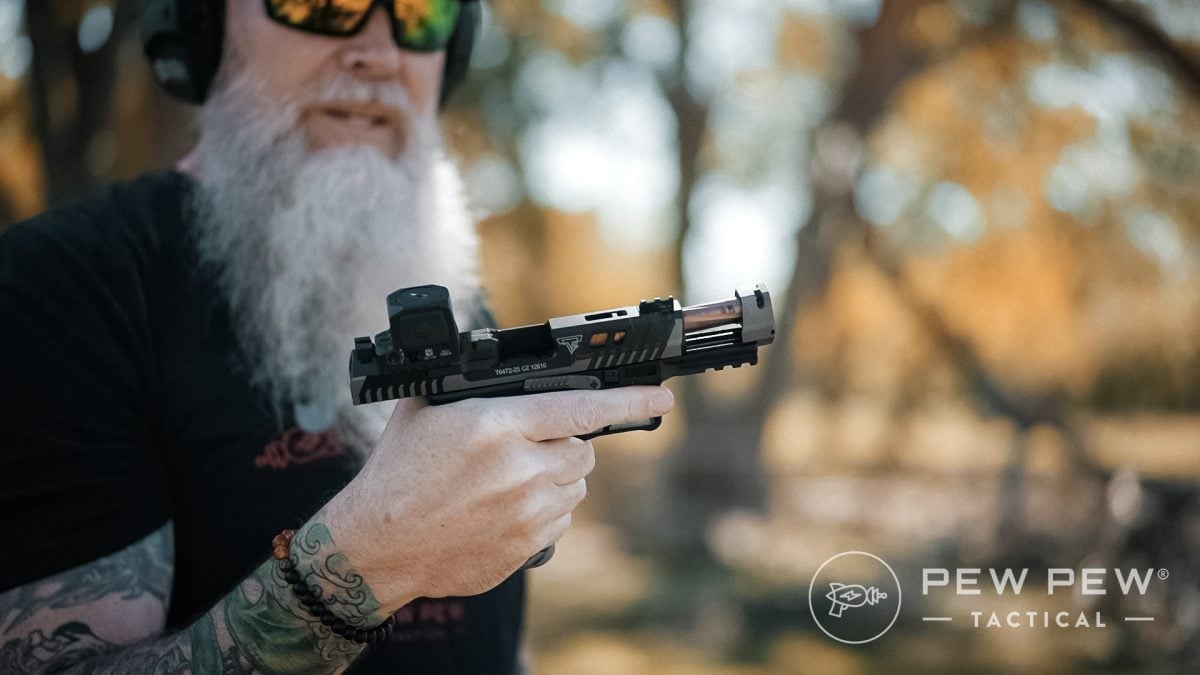
In the hand, the TTI Combat feels like a Walther PDP (suspiciously similar, actually), which is a good thing. Aggressive grip texture is everywhere you touch, including little indexing points on the forward portion of the frame. The trigger guard features an aggressive undercut that helped me get my hand just a little closer to the bore axis.
The slide cuts are extremely aggressive, so racking it on the go in a competition won’t be a problem.
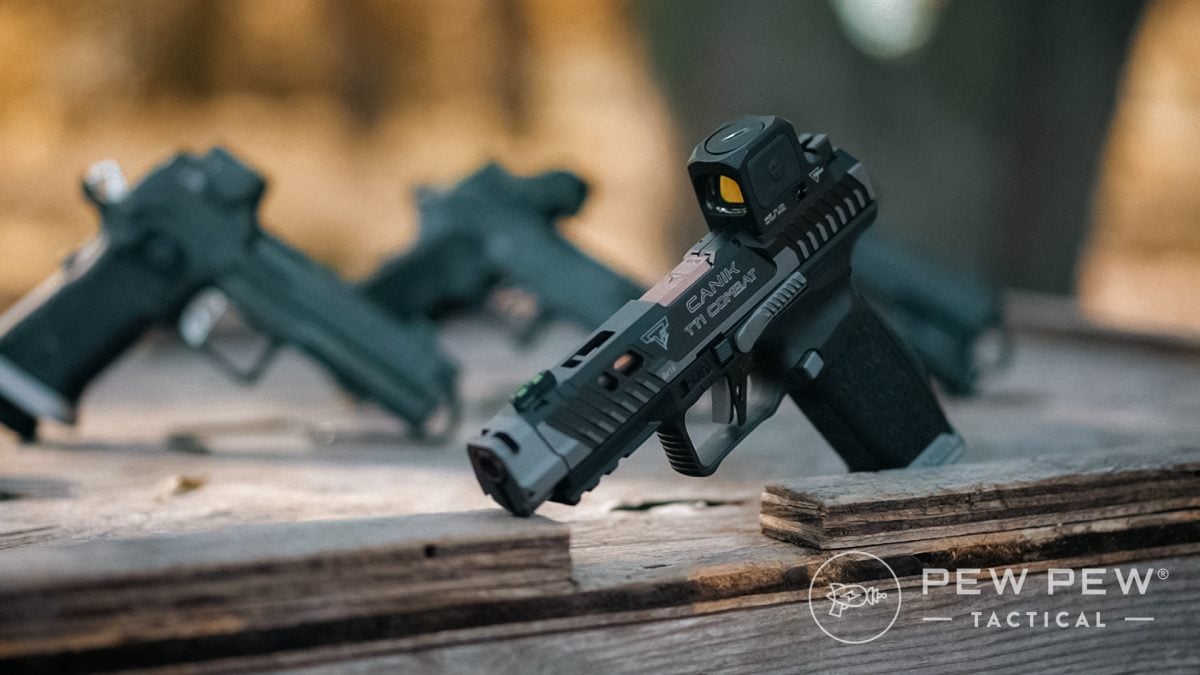
The TTI Combat is a competition pistol, but it’s very light compared to most race guns (especially the metal-framed ones on this list). Low weight and high bore axis is a recipe for snappy recoil, so we all had to dial up a little more grip strength for this one.
Competition pistols deserve great triggers, and this is one of the best ever fitted to a striker-fired pistol. Pulling the flat-faced trigger is smooth and light, with minimal takeup, a crisp break at the 90-degree point, and an affirmative reset.
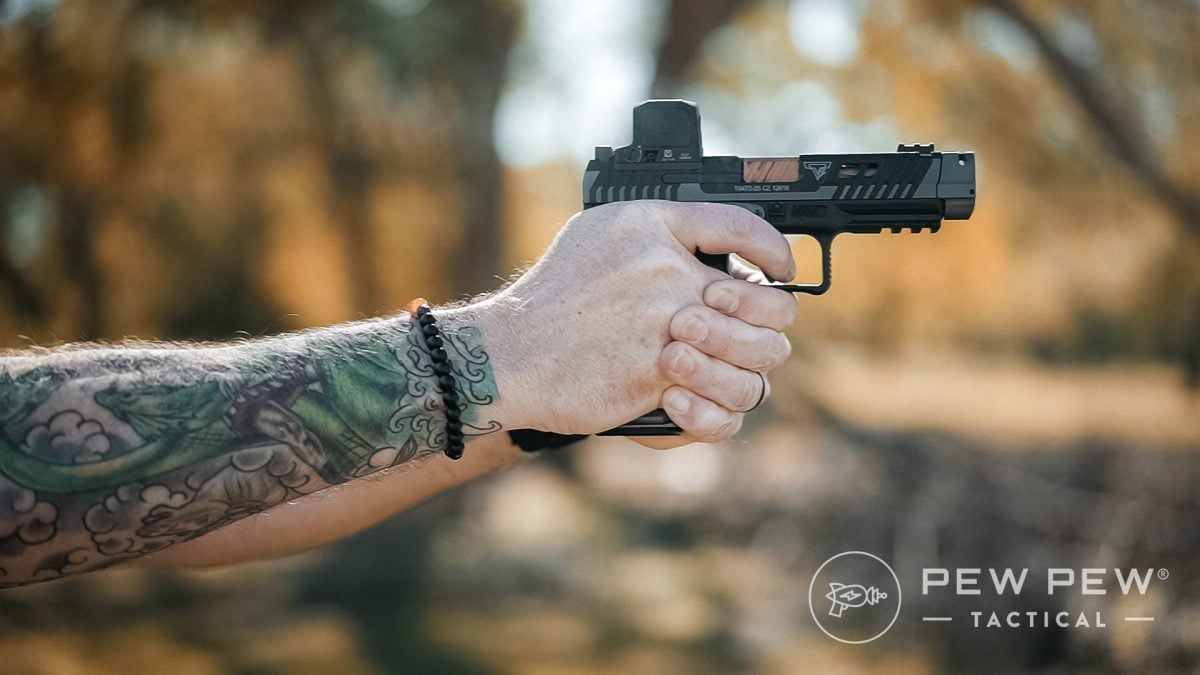
It’s a great pistol for a great price. Factor in everything else Canik throws in, and it’s a no-brainer.
The TTI Combat comes in a hard case with two 18-round magazines, one +3 basepad, a speed loader, three sizes of backstrap inserts, a holster, a cleaning kit, tools, and three optic plates. All you need is ammo, and you’re ready for your first range day.
We definitely felt the compensator working, even with 115-grain range loads. It’s fixed to the end of the barrel, which reduces reciprocating mass to soften felt recoil even more than it would with redirected gas alone.
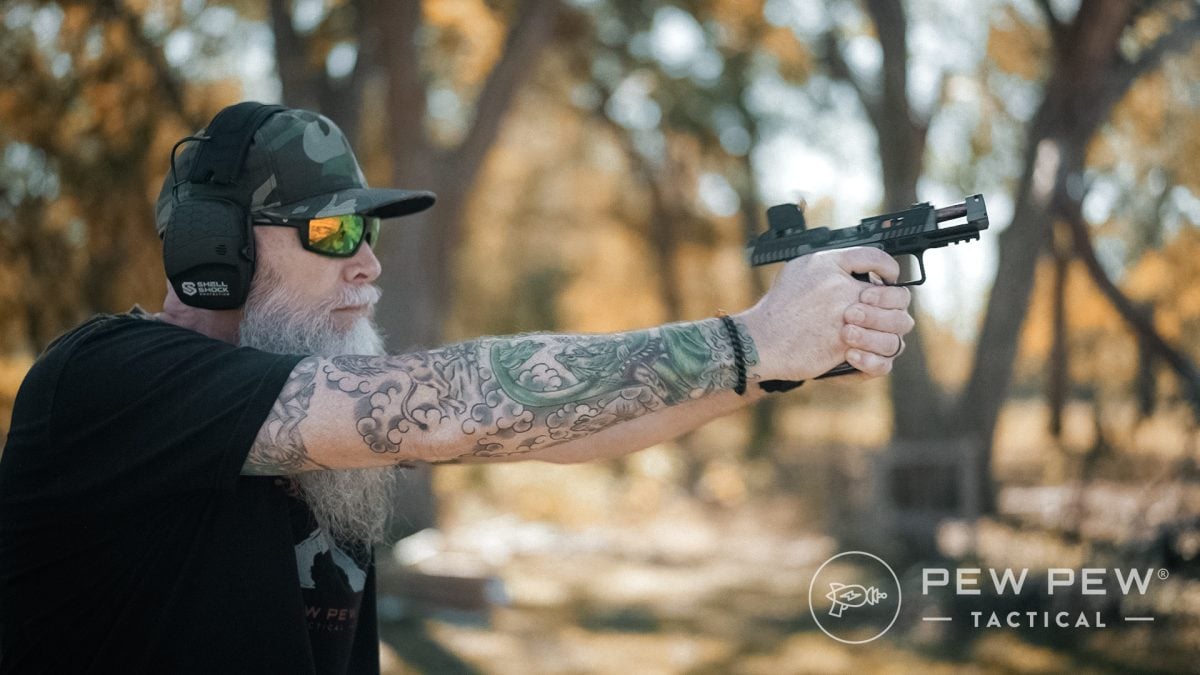
The more basic Caniks are great pistols. This one goes above and beyond to make a true race-bred competition gun attainable to the masses, and I love that about it. If you’re looking to go fast and keep some ammo money in your pocket, this is the pistol to have.
4. Staccato XC – Best Premium

Prices accurate at time of writing
Prices accurate at time of writing
-
25% off all OAKLEY products - OAKLEY25
Copied! Visit Merchant
Pros
- Excellent accuracy
- Reliable (for a race gun)
- Minimal felt recoil
Cons
- Doesn't leave much money for training ammo
- Large grip size might not be comfortable for small hands
The Bottom Line
Staccato's reputation for building outstanding pistols is well-deserved, and the XC is the fastest-shooting one of the bunch. This racehorse will shoot flat and punch ragged holes all day. All you have to do is point it at the target and keep it clean. Yes, it's expensive, but premium guns always are.
Specs
- Caliber: 9mm
- Action: Semi-automatic, single action
- Capacity: 17+1
- Optic Footprint: DeltaPoint Pro, RMR
- Barrel Length: 5”
- Overall Length: 8.7”
- Weight: 38 oz
- Country of Origin: USA
The Staccato XC has an interesting lineage. Staccato started out making competitive race guns, building upon the venerable 1911.
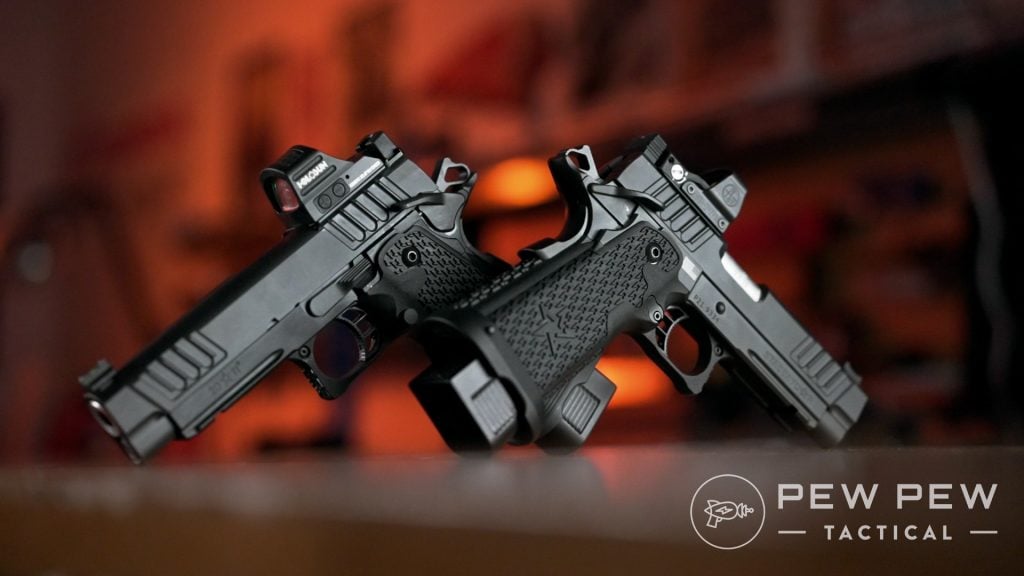
This company wisely addressed weaknesses in the platform, such as capacity and ammo sensitivity, while maintaining and enhancing favorable attributes like accuracy and amazing triggers.
Over time, STI became Staccato, and the company’s focus became more blended to welcome general shooting enthusiasts and law enforcement. A wider array of models at different price points were produced, and the XC is arguably a flagship model.
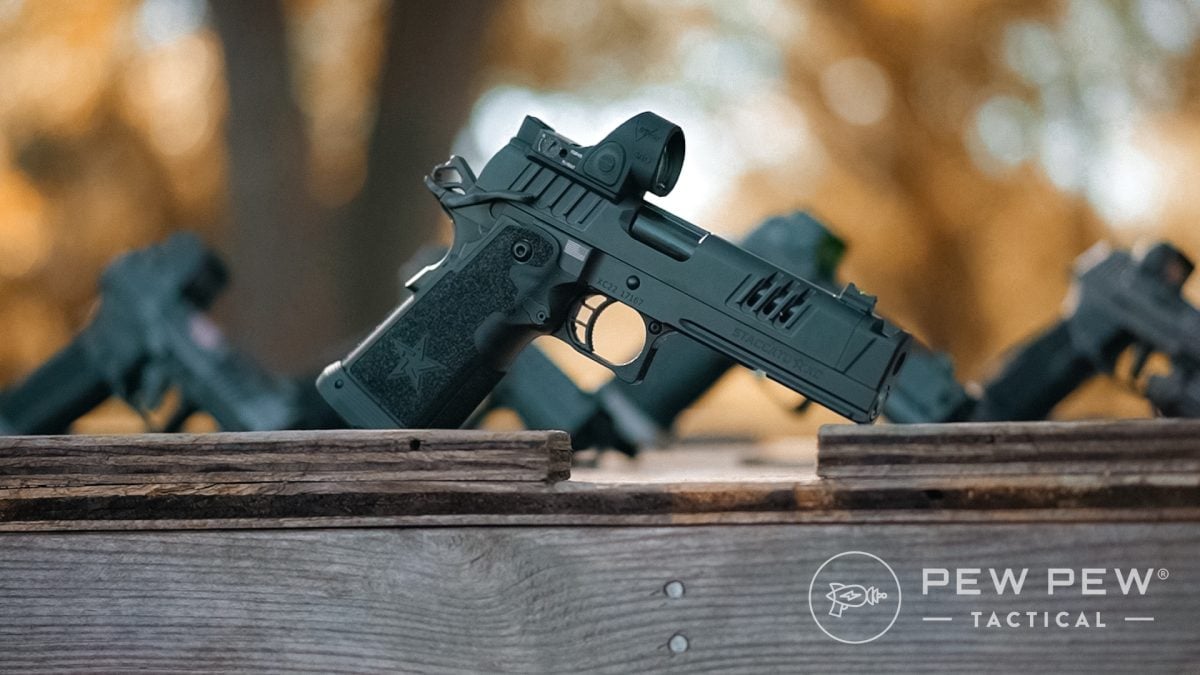
The XC is a full-sized, double-stack 1911 or — to use the trademarked term by Staccato — a 2011. Most notably, it also includes an integral compensator that greatly enhances its performance.
Capacity is solid. The gun comes with two 17-round magazines, but 20-round magazines are available.
Ergonomics are very good. The XC is on the larger side, so small-handed shooters may struggle or need to adapt techniques to run all the controls.
This is largely due to the wider grip accommodating for the wide magazines. The surface is covered with a sandpaper-like texture, which is easy to hang onto without abusing your hands.
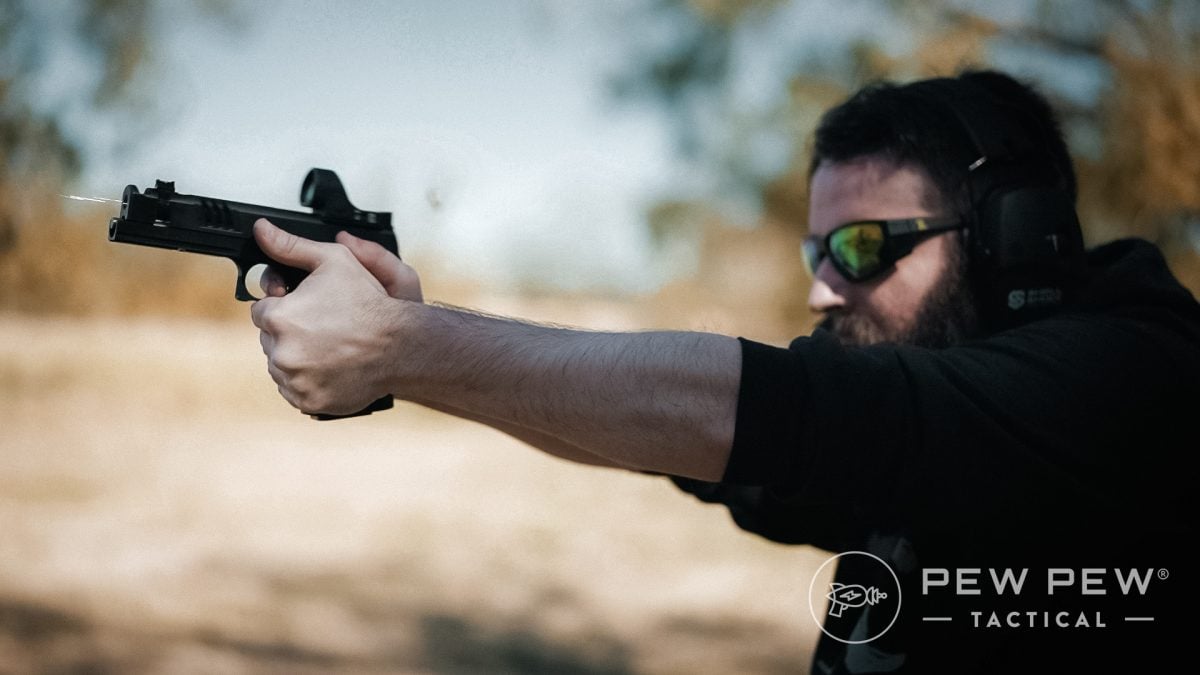
Staccato included an ample magwell to aid in those fast reloads. The slide features serrations front and rear, so all your manipulations are positive.
The sights are great, including a blacked-out rear with a fiber-optic front. The Dawson Precision optic-mounting system also works extremely well.
Not surprisingly, the trigger is outstanding. It is light, crisp, and resets solidly almost immediately upon release.

Staccatos already shoot extremely well, but the XC takes it to the next level in performance when compared to a standard P model. The compensator vents redirect gas up, countering muzzle flip to a large degree.
This causes your sights (or dot) to come back on line just a little bit quicker, meaning follow-up shots can happen sooner. Ultimately, it allows the shooter to put together impressive strings of accurate fire in rapid succession.
All in, the XC is accurate, reliable, and shoots very flat during rapid sustained fire. This performance is expensive, but — if you’re able to swing it — you’ll enjoy some incredible shooting.
5. Sig Sauer P211-GTO – Best Competition
Prices accurate at time of writing
Prices accurate at time of writing
-
25% off all OAKLEY products - OAKLEY25
Copied! Visit Merchant
Pros
- Phenomenal trigger
- Uses affordable P320 magazines
- Super soft shooting impulse
Cons
- Very competition-focused
- Will ruin other pistols for you
The Bottom Line
The Sig Sauer P211-GTO is the brand's first swing at the 2011 market, and it's a home run. The P211-GTO is one of the softest-shooting pistols we've ever reviewed, the drop-safe trigger is a delight to pull every time, and it uses P320 magazines that are way more affordable than the usual 2011 or double-stack 1911 mags. There are two recoil springs included, and they'll both spoil you.
Specs
- Caliber: 9mm
- Action: Semi-automatic, single action
- Capacity: 21+1, 23+1
- Optic Footprint: Sig-Loc Pro
- Barrel Length: 4.4”
- Overall Length: 8.5”
- Weight: 46 oz
- Country of Origin: USA
I’ll be honest, some of us were skeptical when I heard we were getting yet another 2011-type gun. Most 2011s feel very similar and share the same issues across the board — but that’s where the Sig Sauer P211-GTO surprised us.
So, what makes it better?
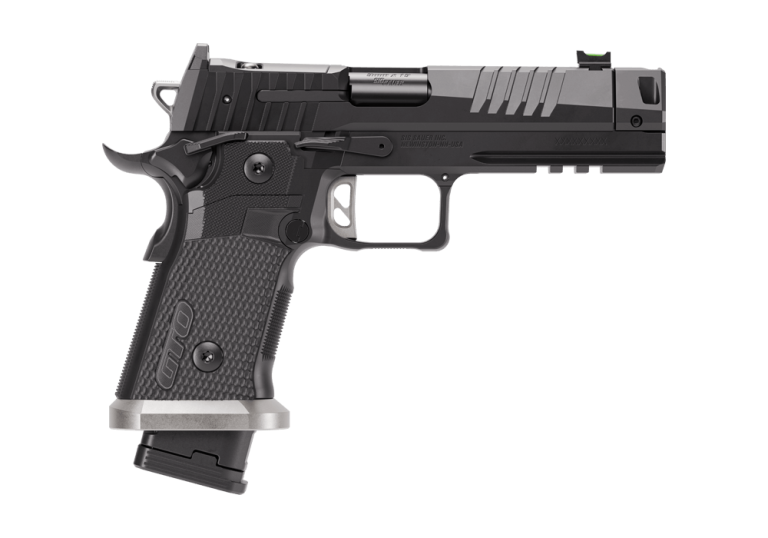
For starters, it uses standard Sig Sauer P320 magazines rather than finicky and expensive Staccato or Checkmate 2011 mags. Sig includes one 23-round magazine and two 21-round magazines.
This also means that the grip shape is not the same as a standard 2011, which Wyatt cited as a huge win for this pistol. Most 2011s have a really bad hotspot that chews up the base of his thumb during shooting, but the P320 has gentler and much more comfortable curves in this area.
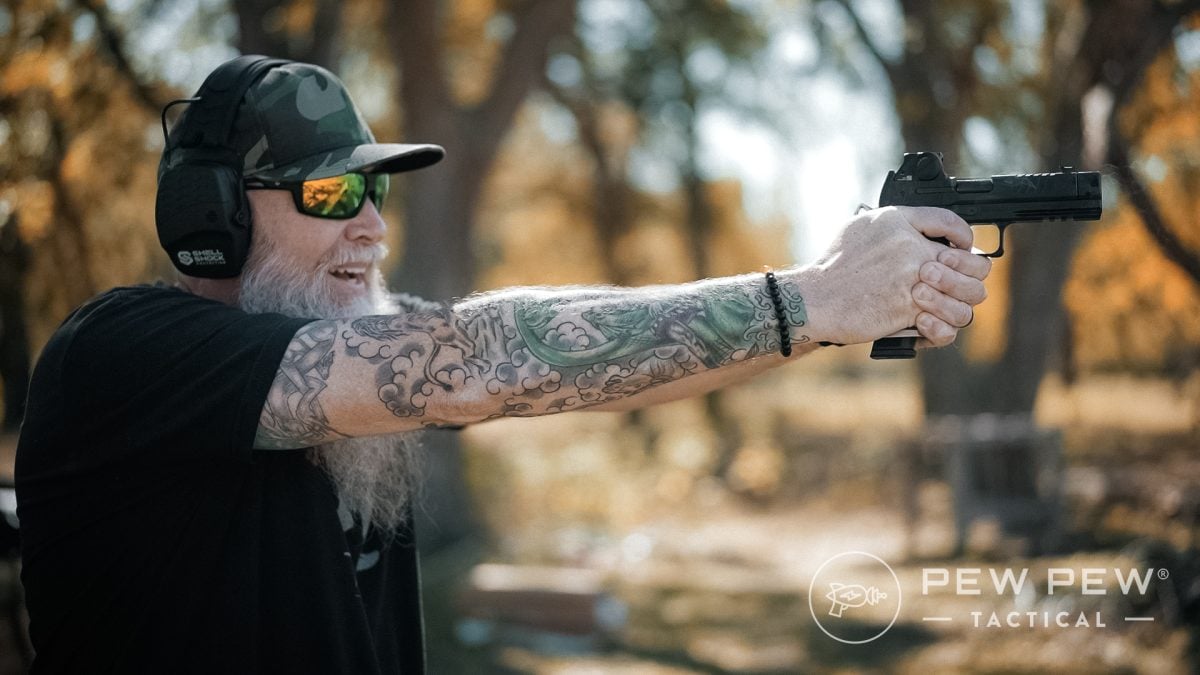
Unlike most 2011s, the P211-GTO is drop-safe thanks to its series-80 trigger and firing pin safety. Even with the firing pin safety, the trigger is still very crisp and breaks right at about 3.5 pounds. The P211-GTO features an ambidextrous thumb safety and slide release.
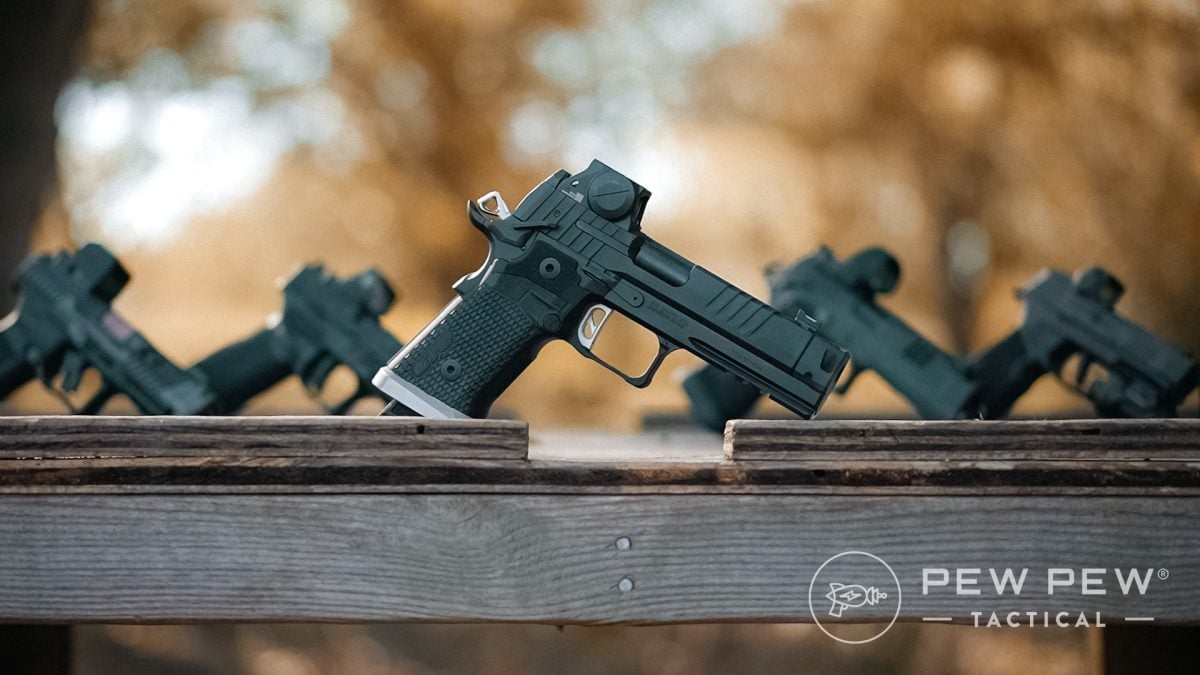
Sig went with a 3D-manufactured compensator mated to a 4.4-inch bull barrel, and wow… does it work. This is one of the softest-recoiling centerfire pistols any of us has ever shot.
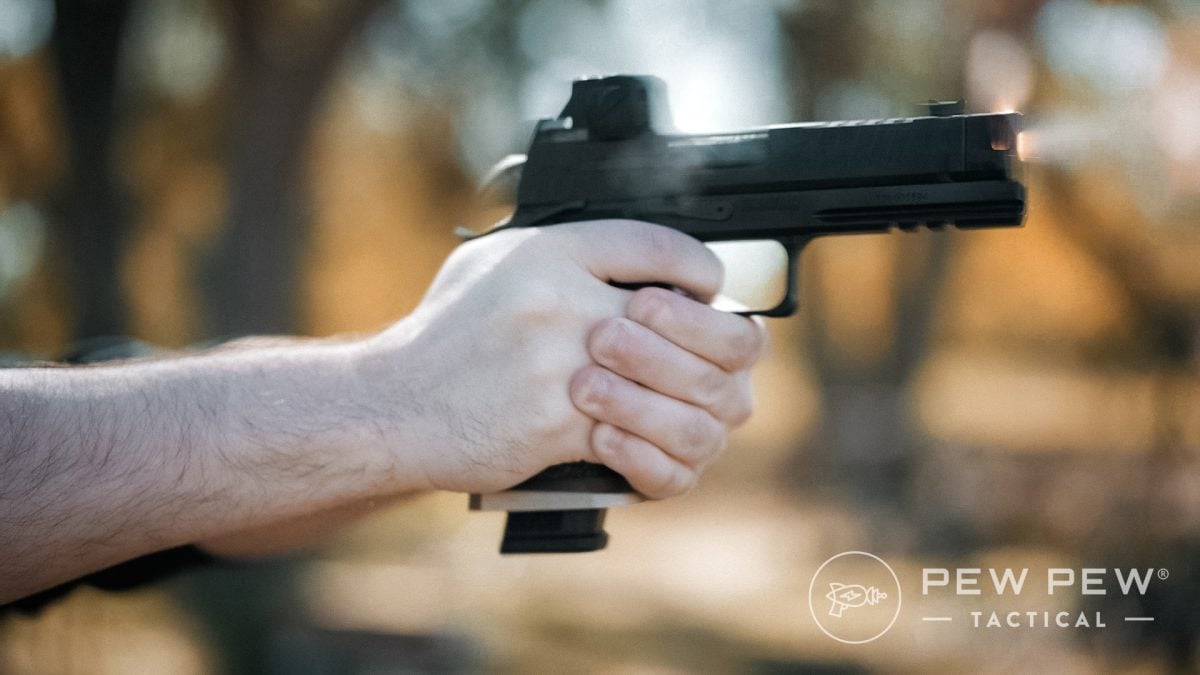
The slide is buttery smooth, the recoil impulse is almost non-existent, and the cavernous magwell makes mag changes a breeze.
Everything about this gun makes you want to go fast, and it rewards you for doing so because of how absurdly easy it is to shoot.
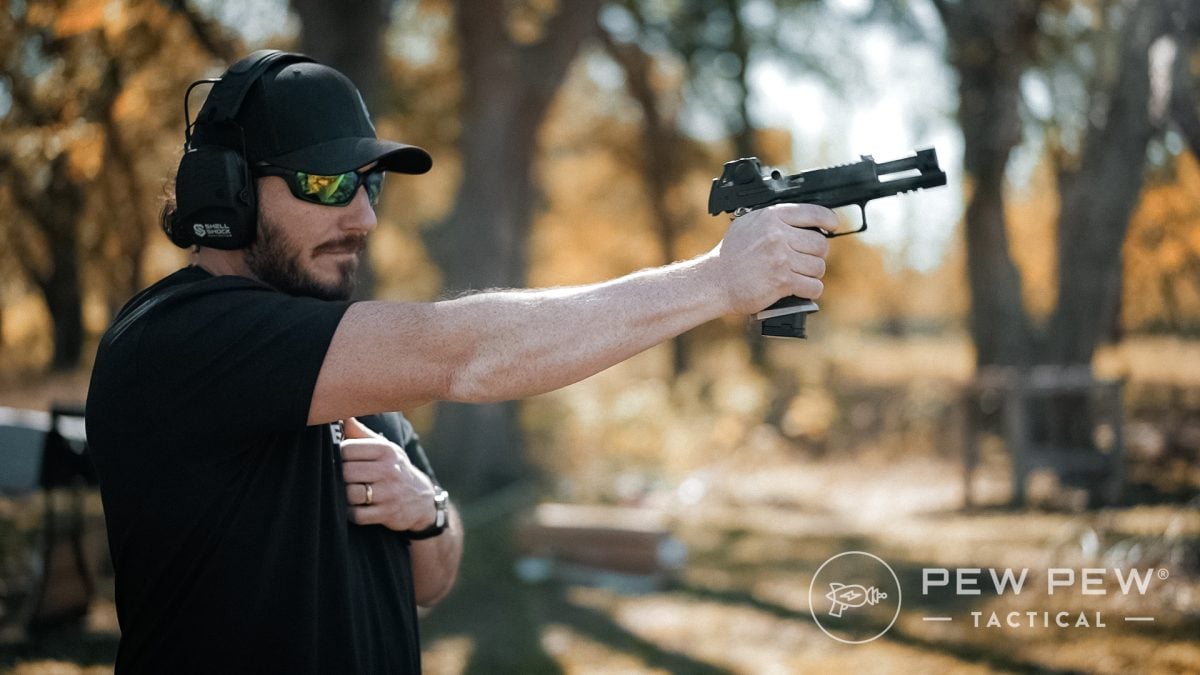
Wyatt and I preferred the P211-GTO over the Staccato XC — high praise. And while it may come down to personal preference between the two, at the end of the day, the P211 costs $2,399, and the Staccato XC will set you back $4,299.
The P211-GTO isn’t cheap by any means, but it still punches way above its price range and is one of the nicest shooting off-the-shelf pistols to come out in recent years.
6. Radian Afterburner + Ramjet – Best DIY
Prices accurate at time of writing
Prices accurate at time of writing
-
25% off all OAKLEY products - OAKLEY25
Copied! Visit Merchant
Pros
- Upgrade the pistol you already own
- Easy, drop-in installation
- Incredible combined effect on recoil reduction
Cons
- It might be cheaper to just buy a comped pistol
- Typical Glock trigger, sights, and ergonomics
The Bottom Line
Thanks to upgraded components from Kynshot and Radian, you can turn your old Glock, Shadow Systems, or Sig into a modern marvel. The compensator and hydraulic guide rod assembly dramatically reduce recoil and muzzle rise, helping our test Glock 19 shoot incredibly flat. The only downside is price; these cost more than some pistols.
Specs
- Supported Manufacturers: Glock, Shadow Systems, Sig Sauer
- Material: Hardened stainless steel
- Caliber: 9mm
- Colors: Black, bronze, gray (gray is not available for Shadow Systems)
- Country of Origin: USA
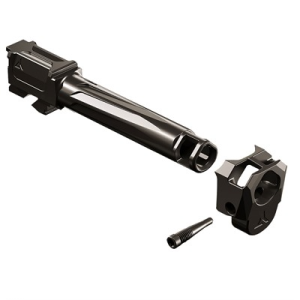
For those of you looking for a shortcut, there are a few aftermarket products that add compensators to your handguns. Radian’s Afterburner + Ramjet combo is a great option for plug-and-play.
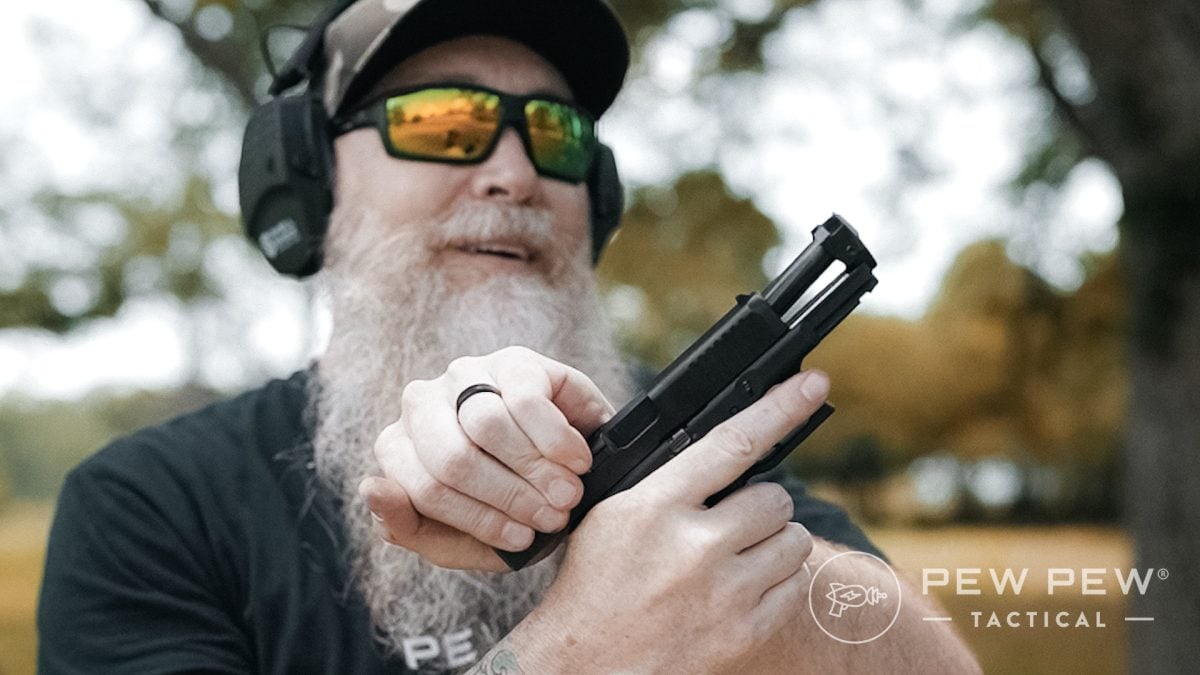
They are available for a number of different manufacturers, including Sig Sauer, Glock, and Shadow Systems. We installed one on a Gen5 G19 and tested it out for the better part of a year.
While the ergonomics and trigger were still not great, there was noted improvement in the amount of recoil and muzzle flip. After shooting, my dot snapped back into place noticeably quicker with the Afterburner Ramjet installed.
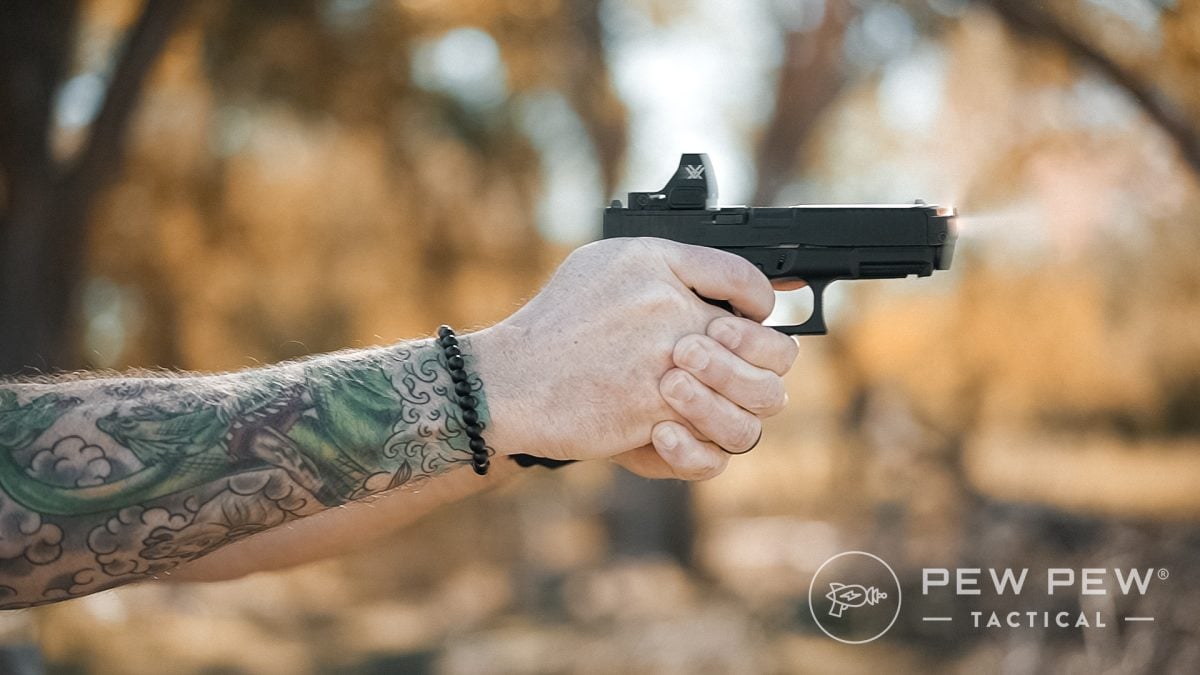
This product runs around $400, so you’ll have to decide if it’s worth it to upgrade, but there is a distinct improvement in performance. It doesn’t make you any more accurate, but you can shoot faster with more control.
The Afterburner is made from stainless steel, while the Ramjet utilizes 416R stainless. Both of them are coated with Radianite to decrease friction while adding durability.
Installation is a snap. You simply replace your stock barrel with the Ramjet, then bolt in the Afterburner.
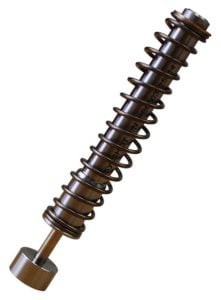
As an added benefit, we recently installed Kynshot’s new PB6003. This is a hydraulic guide rod that reduces total recoil motion by 70%.
Prices accurate at time of writing
Prices accurate at time of writing
-
25% off all OAKLEY products - OAKLEY25
Copied! Visit Merchant
I wasn’t sure if the guide rod would necessarily conflict with the Afterburner and Ramjet, but I decided to try it out. I’m so glad I did, because the combination is impressive.
The combined power of the Kynshot with Radian’s products makes this G19 shoot like a kitten now. I can put together ridiculously fast strings of fire while maintaining accuracy.
This is yet another add-on that increases performance and costs around $100 but this combo will have you looking at your Glock in a totally new light—cheat code activated.
How to Pick the Best Comped Pistols
So, compensators work on pistols, but which one should you buy? Let’s break this down into a few categories to help you make the best purchasing decision possible.
Concealed Carry
Compact pistols are usually very snappy, and a compensator can do a great job of taming that recoil.
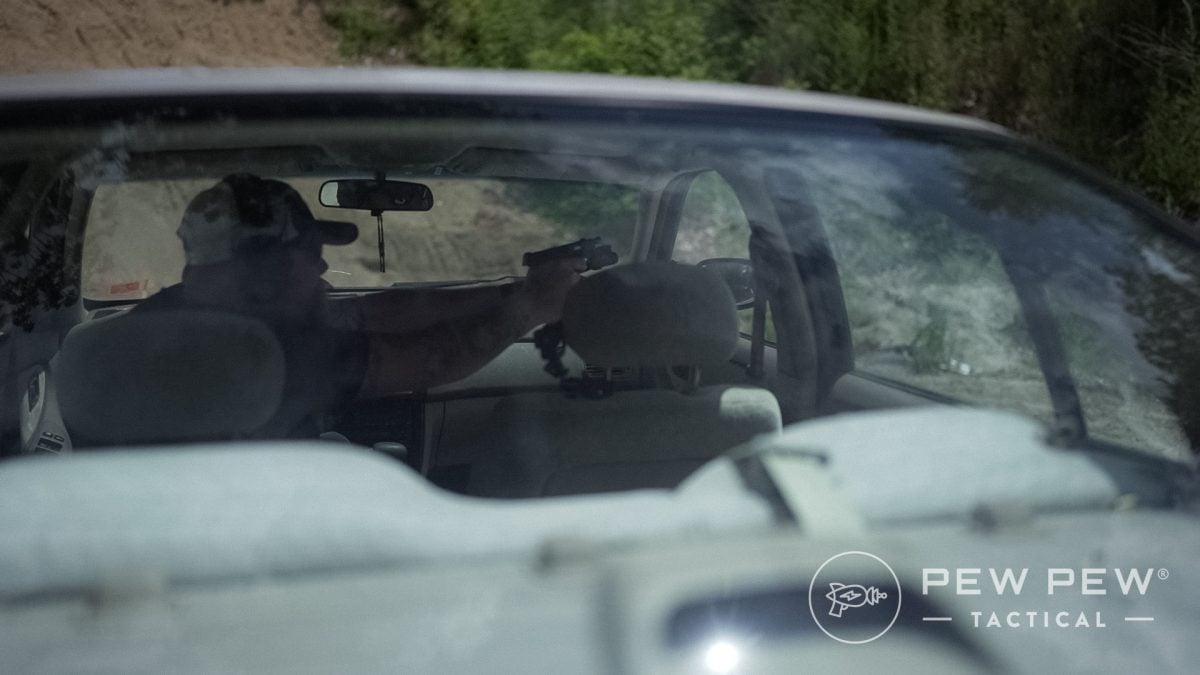
Several of our picks – namely the Glock 19, Sig Sauer P365-AXG Legion, and Springfield Echelon 4.0C Comp – are great examples of compact carry guns that shoot like a full-size pistol.
Another one you might want to look into is the Smith & Wesson M&P9 M2.0 Carry Comp. Check out our review for a deep dive with that one.
Some people don’t prefer compensated pistols for concealed carry because some of them are a little picky about ammunition. There are some valid concerns about clothing or other debris getting caught in a ported barrel and inducing a malfunction. You’ll have to make your own judgment call, there.
Duty & Home Defense
If you’re shopping for a duty or home-defense pistol, check out the full-size picks on this list.
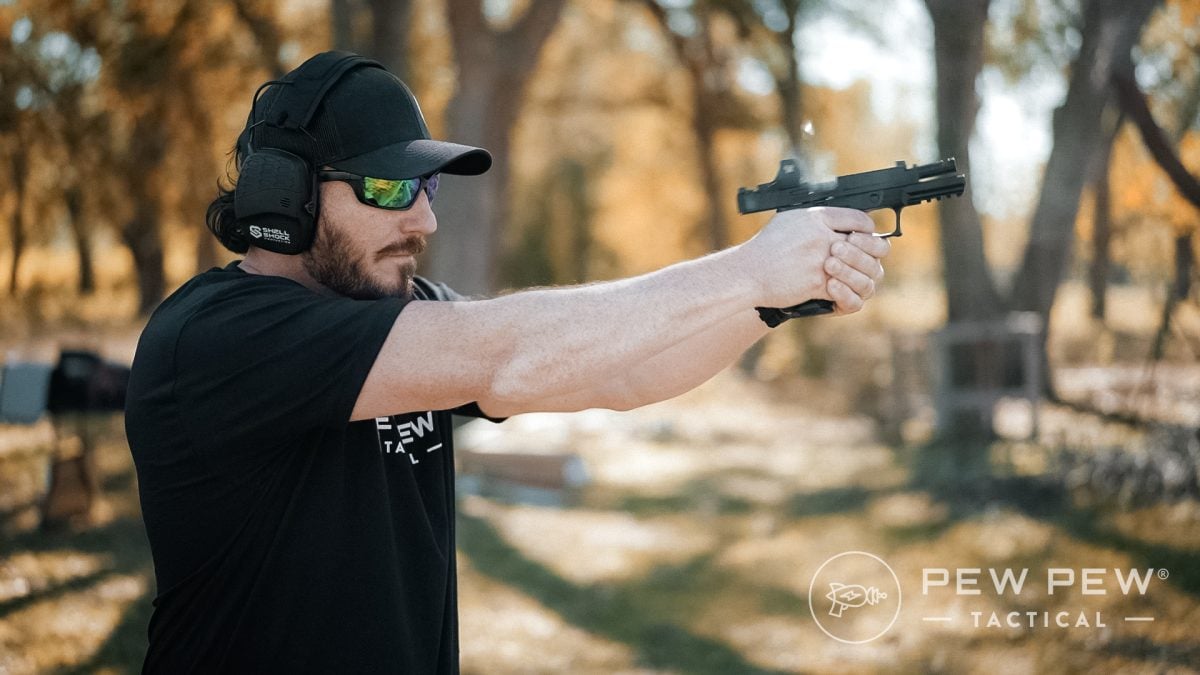
These pistols offer more grip area to hold onto, increased magazine capacity, and typically produce less recoil than a smaller concealed carry pistol.
The full-size Springfield Echelon is a great choice. If the Canik, Sig Sauer, and Staccato are too high-strung for your home-defense preferences, those brands also offer some great alternatives that are more duty-oriented; you just might have to forego the compensator.
Competition
Pistol compensators came from the world of competition shooting, where split times can mean the difference between taking home a trophy and just having a very expensive weekend at the range.
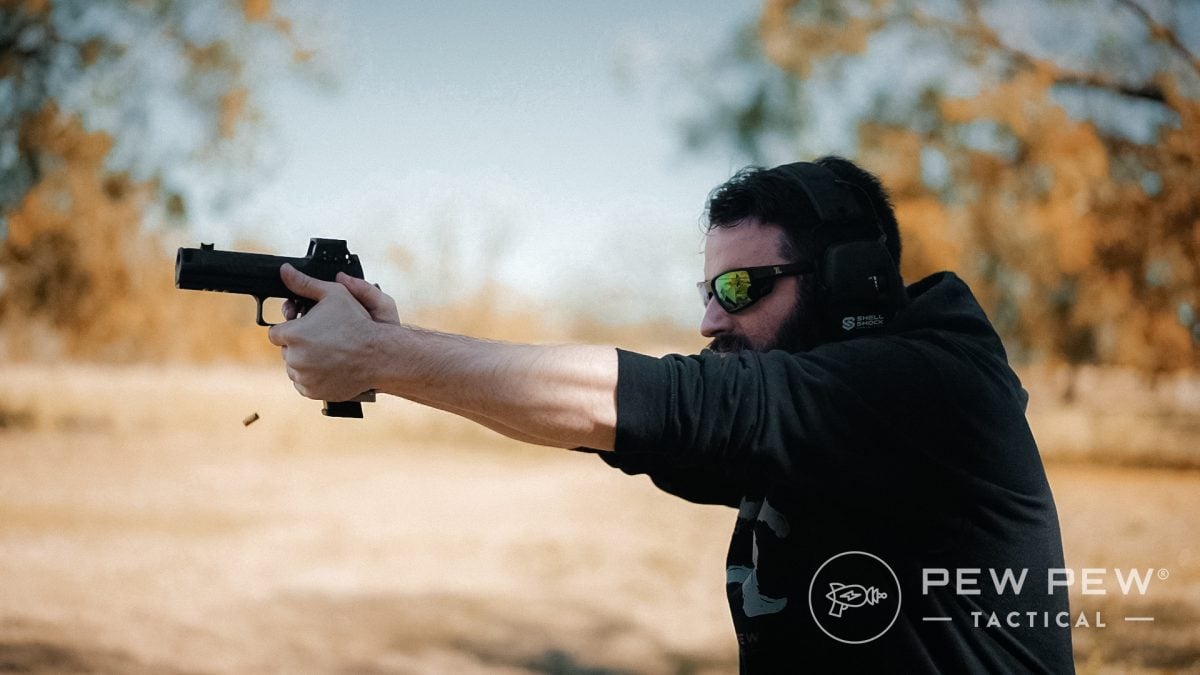
When you combine a comp with an excellent trigger, refined ergonomics, and a high-quality pistol red dot, the things you can accomplish are pretty amazing.
The Canik TTI Combat, Sig Sauer P211-GTO, and Staccato XC fill different roles at different prices, but they’re all excellent race guns that will elevate your shooting.
Final Thoughts
Comped pistols are the real deal. Each of these picks left us genuinely impressed.

While the performance gap between these pistols and their standard models isn’t wide enough to justify replacing something you already own, they’re definitely worth consideration if you’re in the market for something new.
In time, don’t be surprised if comped pistols become almost as common as red dots. Once you shoot with one, it might be hard to go back to shooting without one.
What’s your take on comped pistols? Sound off in the comments. Want something a little more conventional, but still high-end? Check out our guide to the Best Metal-Framed Semi-Auto Pistols!













2 Leave a Reply
Loud. Additional sound protection recommended with compensators.
I come from the competition side, 1970's to today. My comp gun, and that of the many competitors I've RO'd, require additional ear protection. Doubling up plugs and muff is a good start. My ear doctor told me I had bone transmitted hearing loss. Wish I had a full face shield for shooting.
Try high speed filming and you may see the waves of skin rippling up your arm and across your face from each blast.
Today, my AR's all have forward blast cans. I no longer shoot comps. And when RO'ing I stand directly behind competitors with comps, using their body to block the loudest part of the sound wave.
Hearing, once lost, is gone forever.
I really enjoy my heavier comped P365 AXG. My Fk Brno PSD-C is also very flat shooting and light recoil for 10mm, but instead of comp ports in the slide its comically big chin hides a huge disk in front of the recoil spring.