
9 Best LPVO Scopes: Low, Mid & High Power
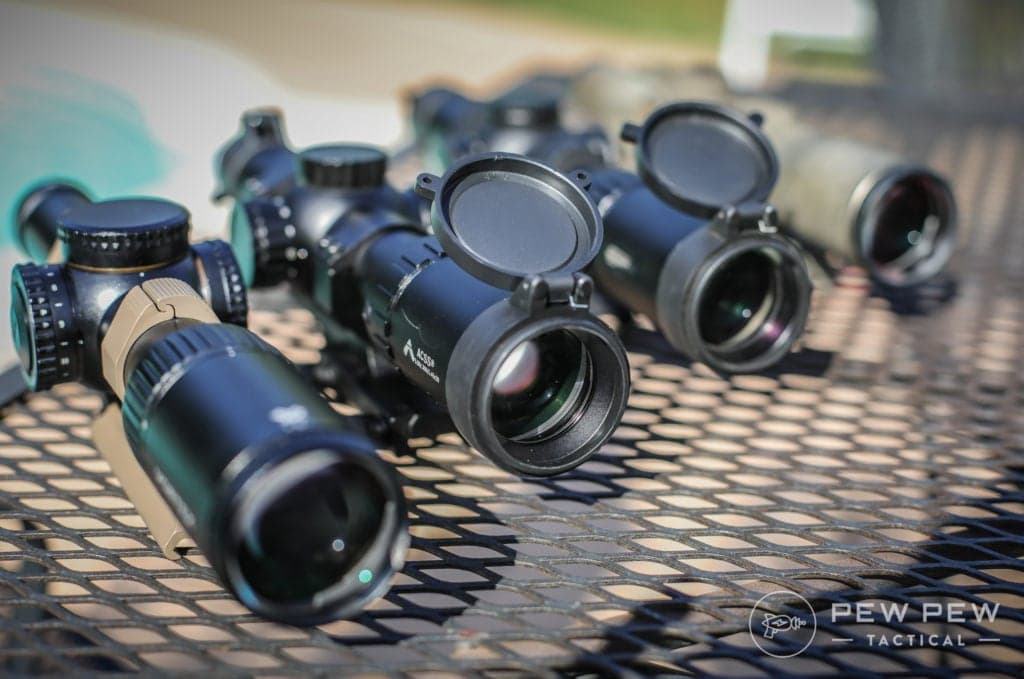
Interested in an LVPO scope but don't know what to buy? We got you covered with a rundown of our top recommended LVPOs!
We review products independently. When you buy through links on our site, we may earn a commission to help support our testing. Learn more.
Low-power variable optics (LPVOs) are all the rage. Even the U.S. military is switching from prism-style optics like the Trijicon ACOG and RCO to LPVOs.
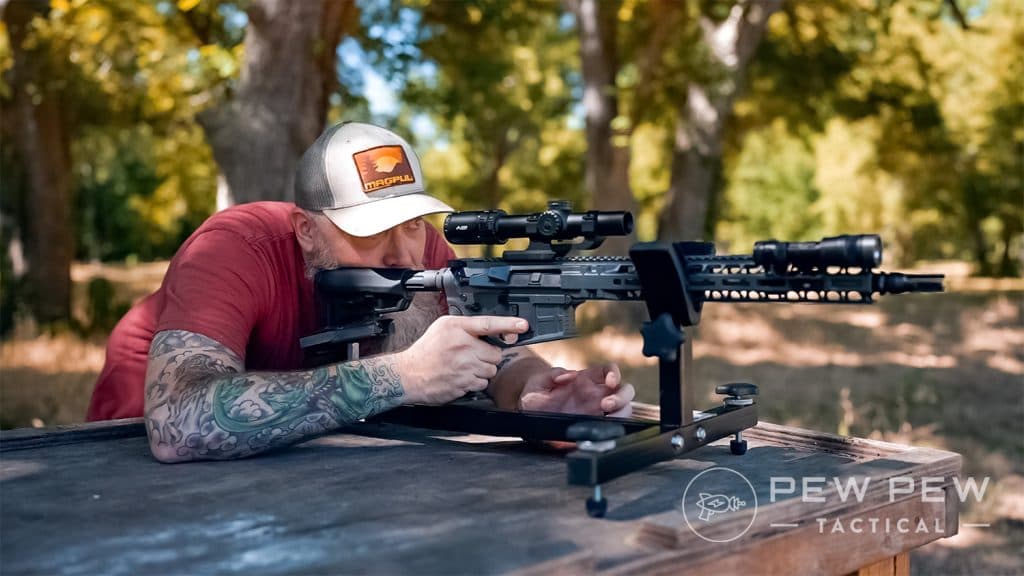
Their versatility makes them an extremely popular choice for civilian rifles and carbines, too. I even use one for hunting because it works perfectly in my environment.
The number of LPVOs available can be daunting, but never fear! We picked a few of our favorites to make life simple for you.
The Quick List
- Best Budget 1-6x: Primary Arms SLx 1-6x24 Gen IVJump to Details ↓
- Best Budget 1-8x: TRYBE Optics 1-8x24Jump to Details ↓
- Best Magnification: Vortex Razor HD Gen III 1-10x24 FFPJump to Details ↓
- Best Options: Sig Sauer TANGO6T 1-6x24Jump to Details ↓
- Best Overall: Nightforce ATACR 1-8x24 F1Jump to Details ↓
- Editor's Pick 1-8x: Primary Arms PLxC 1-8x24Jump to Details ↓
- Best Durability: Trijicon VCOG 1-8x24Jump to Details ↓
- Best Value: EOTECH Vudu 1-10x28 FFPJump to Details ↓
Table of Contents
Trending: Best AR-15s & CCW Guns Under $400
LPVO Comparison Chart
| Magnification | Focal Plane | Reticle | Objective Lens Diameter | Weight | Price | |
|---|---|---|---|---|---|---|
| Nightforce ATACR 1-8×24 F1 | 1-8x | FFP | FC-DMx | 24 mm | 21 oz | $2,800 |
| EOTECH Vudu 1-10×28 FFP | 1-10x | FFP | SR4 (MOA), SR5 (MRAD), LE5 (MRAD) | 28 mm | 21 oz | $1,749 |
| Primary Arms PLxC 1-8x | 1-8x | FFP | ACSS | 24 mm | 17 oz | $1,499 |
| Primary Arms SLx 1-6x Gen IV ACSS | 1-6x | SFP | ACSS | 24 mm | 18 oz | $349 |
| TRYBE Optics 1-8×24 | 1-8x | SFP | PCR-1 | 24 mm | 18 oz | $179 |
| Vortex Razor HD Gen III 1-10x | 1-10x | FFP | EBR-9 (MOA or MRAD) | 24 mm | 22 oz | $2,499 |
| Sig Sauer TANGO6T 1-6×24 | 1-6x | FFP, SFP | Hellfire MOA, DWLR6, 5.56/7.62 Horseshoe Dot, DWLR-556, FL-6 Hellfire | 24 mm | 21-22 oz | $1,499 |
| Trijicon VCOG 1-8X | 1-8x | FFP | MRAD Tree, MOA Crosshair Dot, MRAD Crosshair Dot | 28 mm | 32 oz | $2,059 |
| Steiner T5Xi 1-5X | 1-5x | SFP | 3TR | 24 mm | 19 oz | $1,720 |
Best LPVOs
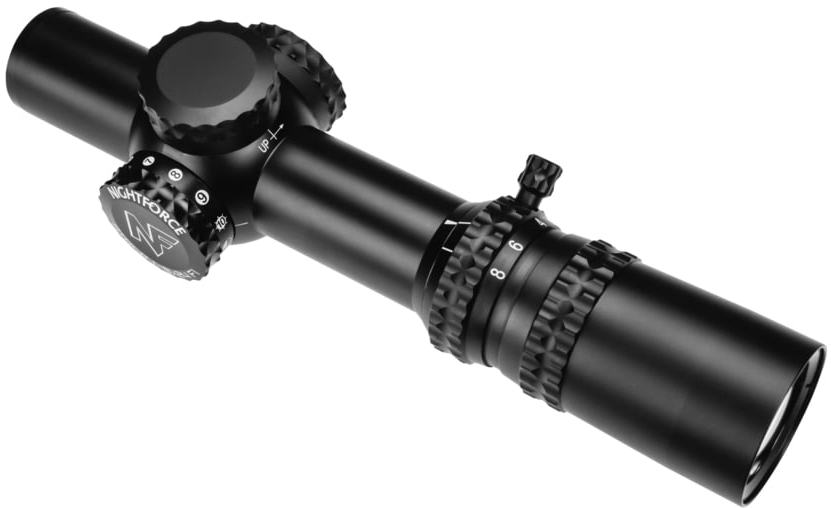
1. Nightforce ATACR 1-8x24 F1 - Best Overall
Pros
- SOCOM-approved
- Excellent clarity, color, and brightness
- Super durable
Cons
- Larger reticle can obscure view of target at times
- Hefty price tag
Specs
- Magnification: 1-8x
- Objective Lens Diameter: 24 mm
- Focal Plane: FFP
- Reticle: FC-DMx
- Click Value: 0.1 MRAD
- Tube Diameter: 34 mm
- Weight: 21 oz
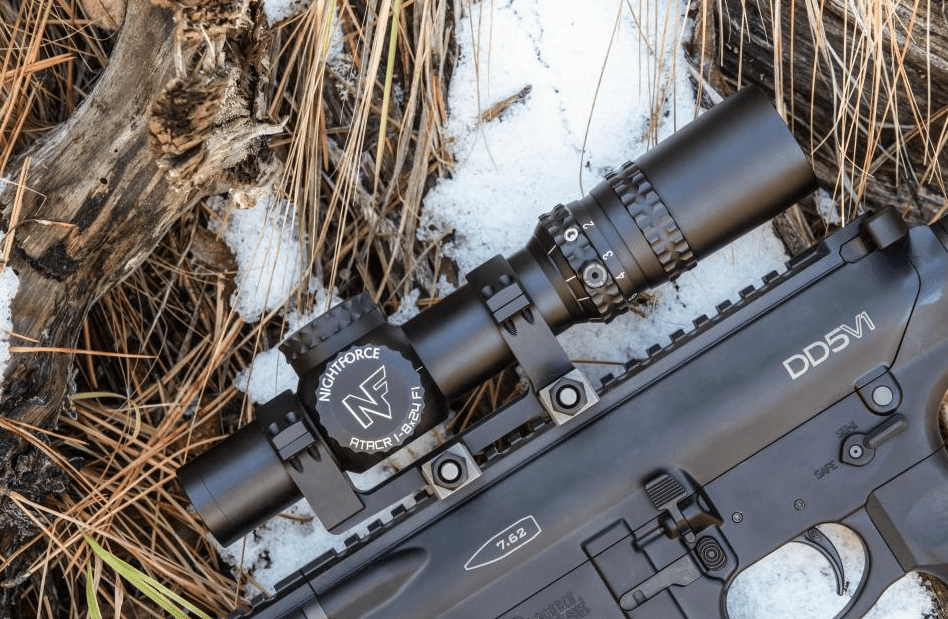
Nightforce makes some of the best rifle scopes on the planet. They are well known for their long-range marksmanship optics and have secured several high-profile contracts with military forces in the vein of sniper rifles.
The U.S. Special Operations Command chose the Nightforce ATACR 1-8x24 F1 as its squad day optic. If that's not a ringing endorsement, I don't know what is.
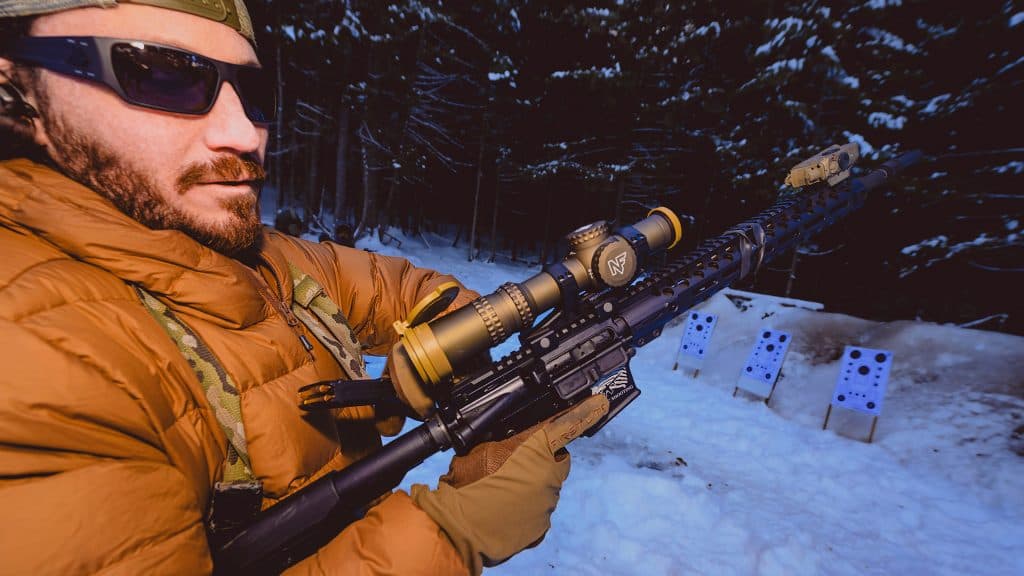
The ATACR 1-8x24 F1 is an amazing optic if you need something to sneak behind enemy lines or parachute in with. What I'm trying to say is it's unbeatably tough.
The glass is bright and perfectly clear. Nightforce made its bones from premium-grade optics, and its LPVO is no exception. It is easily good enough to make full use of the 8x magnification and nearly as fast as a red dot on 1x.
The FC-DMx reticle offers windage and elevation holds in a pyramid-style layout with a bright illuminated portion designed for close-quarter shooting at lower magnifications. This makes fast adjustments for range and wind a lot easier than they are on most LPVOs.
Since it's a first focal plane (FFP) reticle, those holds will stay usable across the magnification range.
Precision shooters, does this look familiar?
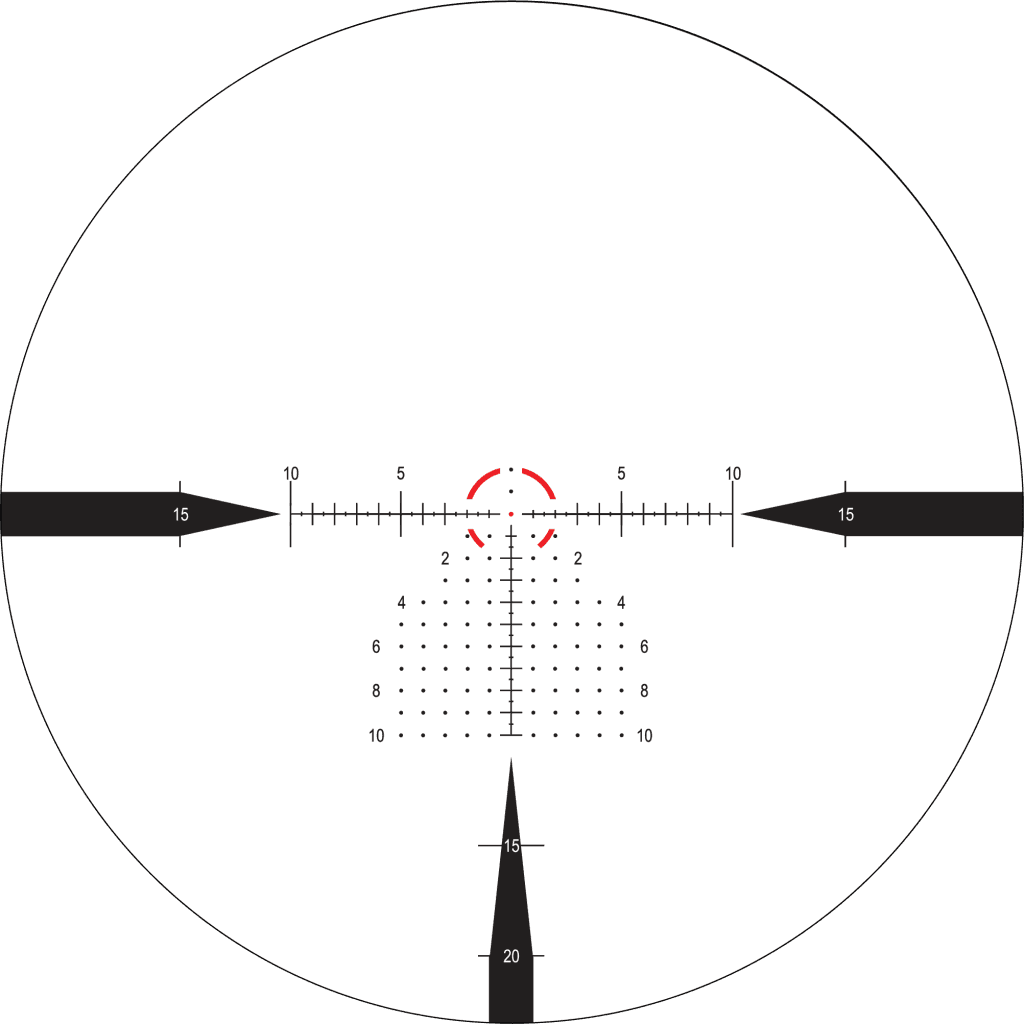
My problem with the ATACR comes down to this reticle, actually — mainly the larger illuminated portions. They tend to be quite large at 8x and can jumble your view right in the center, making it tough to see the target at times.
It's a nitpick, but one that frustrated me at longer distances. If you can get past that, the ATACR is ready to rock and roll in the worst environments with clear glass and fantastic features.
2. EOTECH Vudu 1-10x28 FFP - Best Value
Pros
- Plenty of magnification for longer shots
- Cost-effective compared to similar optics
- Three reticle options that include MOA and MRAD
Cons
- Illumintion on reticle is a little dim for some
Specs
- Magnification: 1-10x
- Objective Lens Diameter: 28 mm
- Focal Plane: FFP
- Reticle: SR4 (MOA), SR5 (MRAD), LE5 (MRAD)
- Click Value: 0.25 MOA, 0.1 MRAD
- Tube Diameter: 34 mm
- Weight: 21 oz
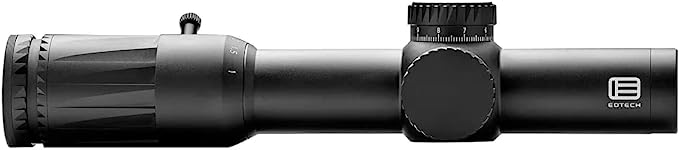
If you ask me, the EOTECH Vudu is criminally underrated.
The Vudu 1-10x28 provides a sleek, low-profile 1-10x LPVO with an attractive price. That's partly because it's a second focal plane (SFP) optic.
It's significantly less expensive than the Vortex Razor HD Gen III 1-10x24, which is an impressive feat. It's still an expensive premium optic, just a cost-effective premium option.
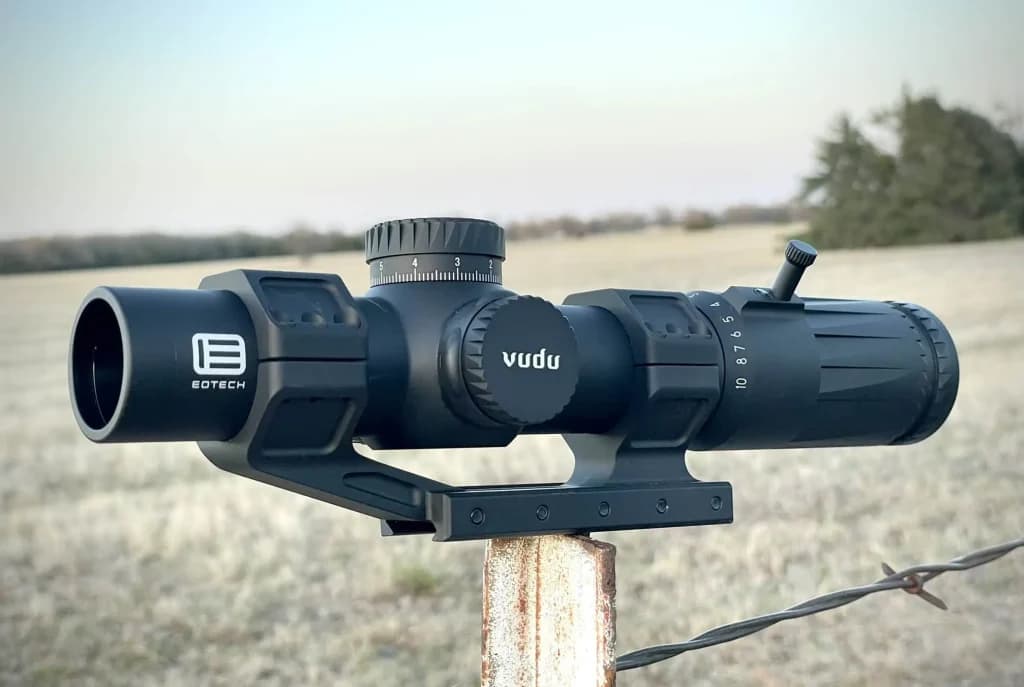
The view through the glass will impress you. You can see everything clearly with excellent color highlights. The shades of green from grass to trees and brush are apparent and visible, and none of the colors bleed together.
You have three reticles to choose from: two MRAD and one MOA. The MOA SR4 is simple, with holds for elevation and windage along the vertical and horizontal axes. The two MRAD options offer Christmas tree-style reticles for windage and elevation calls.
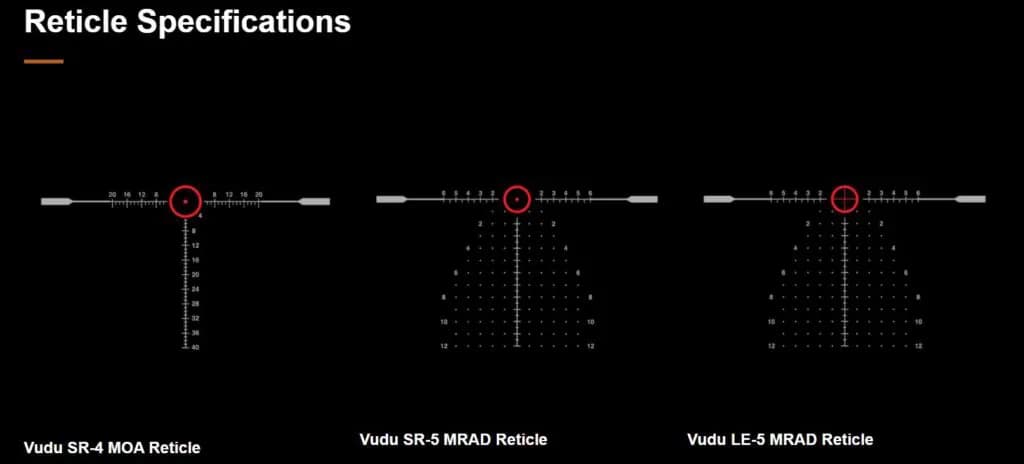
It's easily the best close-range option I've ever seen in an LPVO. They knocked it out of the park by combining close-range shooting and unobstructed long-range views. Sadly, the Vudu series is often overlooked, but they really deserve a top spot.
3. Primary Arms PLxC 1-8x - Editor's Pick 1-8x
Pros
- Tidy reticle
- Quality glass
- Wide field of view
Cons
- Limited reticle brightness
Specs
- Magnification: 1-8x
- Objective Lens Diameter: 24 mm
- Focal Plane: FFP
- Reticle: ACSS
- Click Value: 0.1 MRAD
- Tube Diameter: 30 mm
- Weight: 17 oz
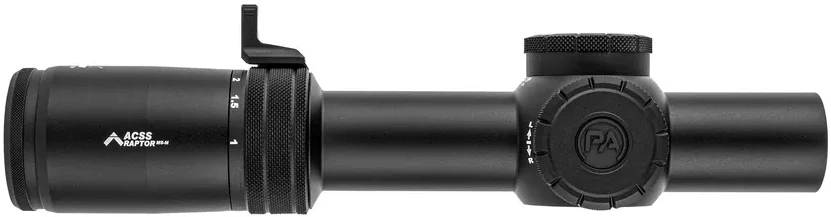
Primary Arms is a champion of budget optics, especially LPVOs. Their premium PLx lineup offers several nice features and still manages to undercut many similar optics.
At $1,300, it's still not cheap and is definitely not your average SLx.
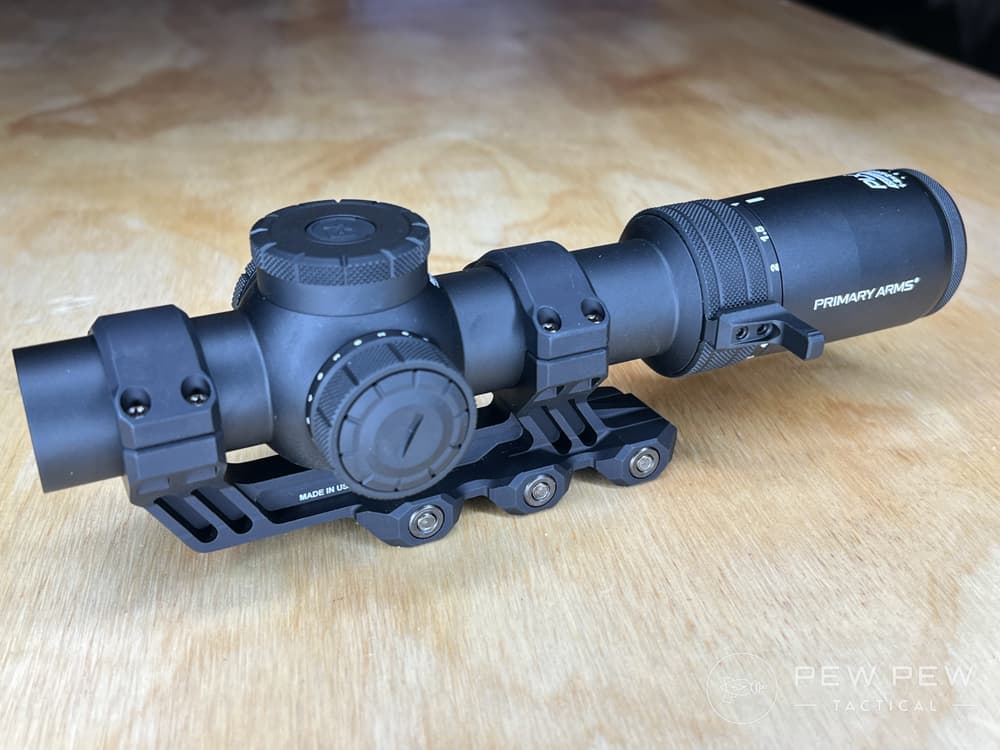
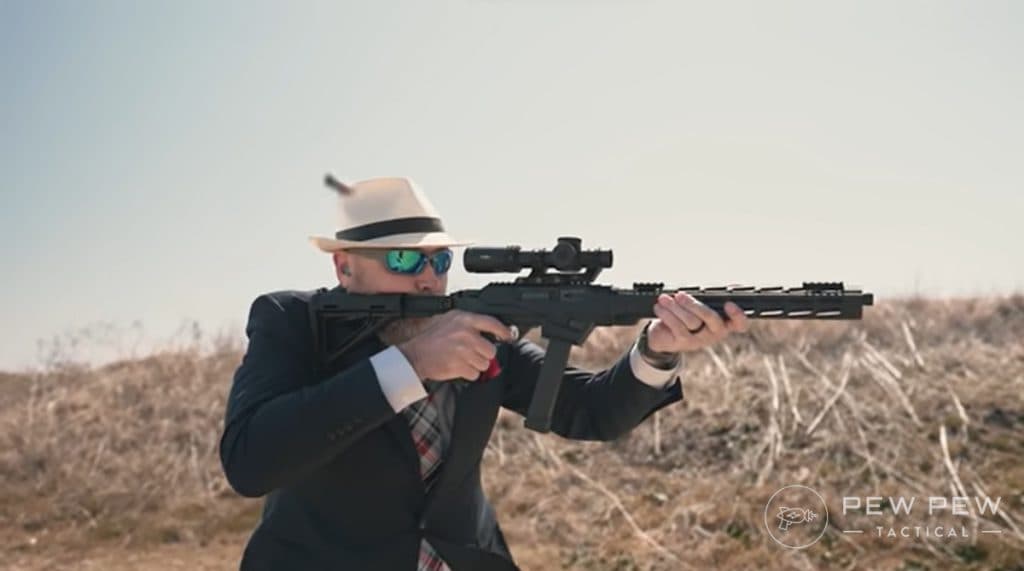
The PLxC series of LPVOs feature a 1-8x magnification range and are available with several of their awesome ACSS reticles (I am a huge fan of the Griffin) that have been slightly modified for higher magnification.
With the PLxC lineup, they use an illuminated center that looks small and uncluttered at 1X. By the time the PLxC reaches 8X, the various holds have come into view. This includes a ladder for elevation holds and a pyramid-style design for simultaneous windage and elevation holds.
Don't forget the range finder and the target leads, too. The ACSS really is the Swiss Army knife of reticles. To make the sight picture pop, Primary Arms uses Japanese high-dispersion glass that eliminates chromatic aberration and makes colors show.
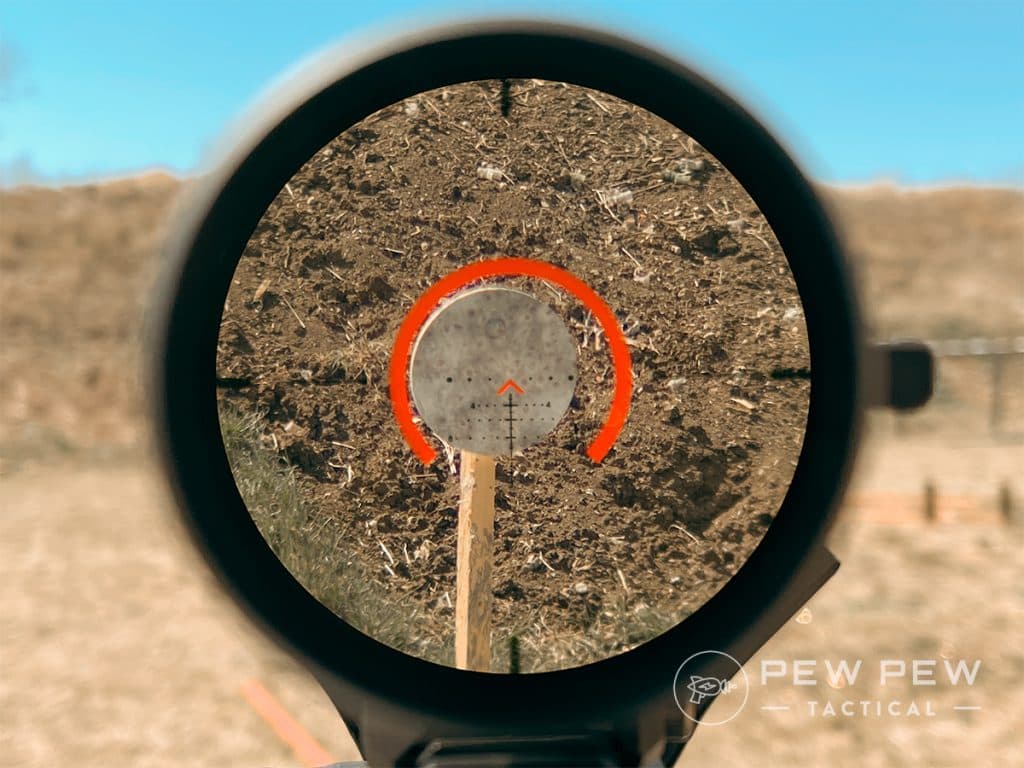
You also get a fairly wide field of view — an impressive 121 feet at 100 yards.
Our downside comes from the reticle brightness. It's typically daylight bright and, in most cases, won't be an issue. However, on really sunny days with a light backdrop, it can wash out a bit.
If you aren't shooting in Iraq or the bright snow-covered Alps, it won't be a problem, and you can enjoy an excellent optic at a fair price. Primary Arms is certainly stepping it up these days, and the PLxC proves they are more than budget optics.
4. Primary Arms SLx 1-6x Gen IV ACSS - Best Budget 1-6x
Pros
- Improved glass quality
- Survived several rounds of PPT testing
- Bright illuminated reticle
Cons
- Magnification dial feels stiff
Specs
- Magnification: 1-6x
- Objective Lens Diameter: 24 mm
- Focal Plane: SFP
- Reticle: ACSS
- Click Value: 0.1 MRAD
- Tube Diameter: 30 mm
- Weight: 18 oz
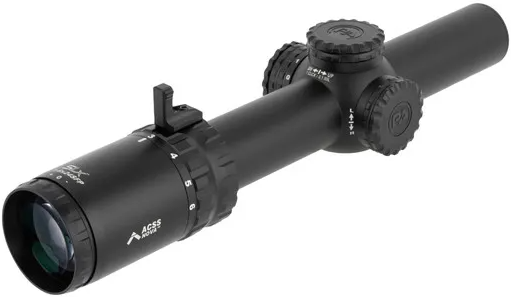
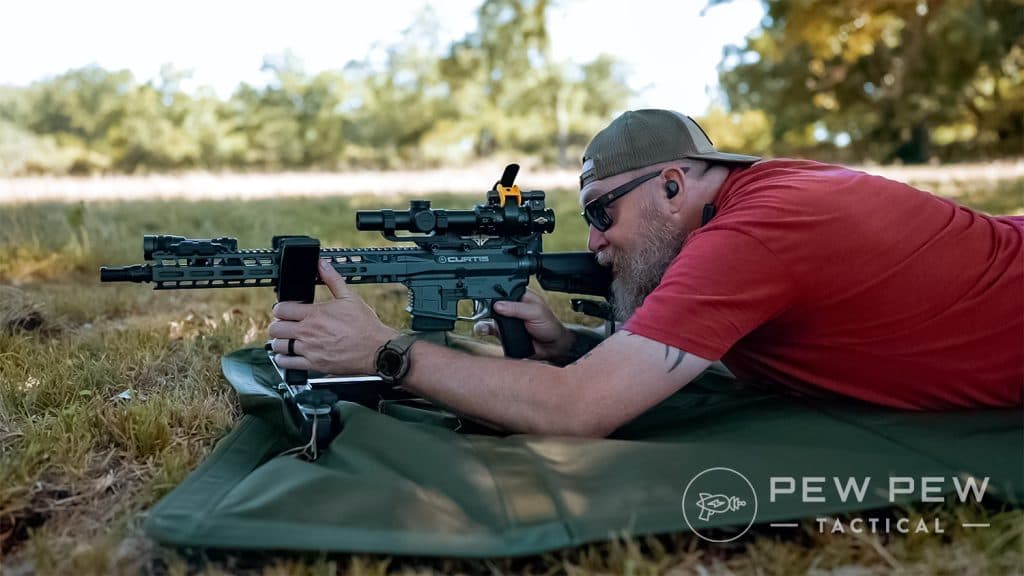
If you like PA's optics but don't want to drop $1K+ on one, the current Gen IV iteration of Primary Arms' SLx 1-6x is our Pew Pew Tactical editorial's favorite budget pick of the moment.
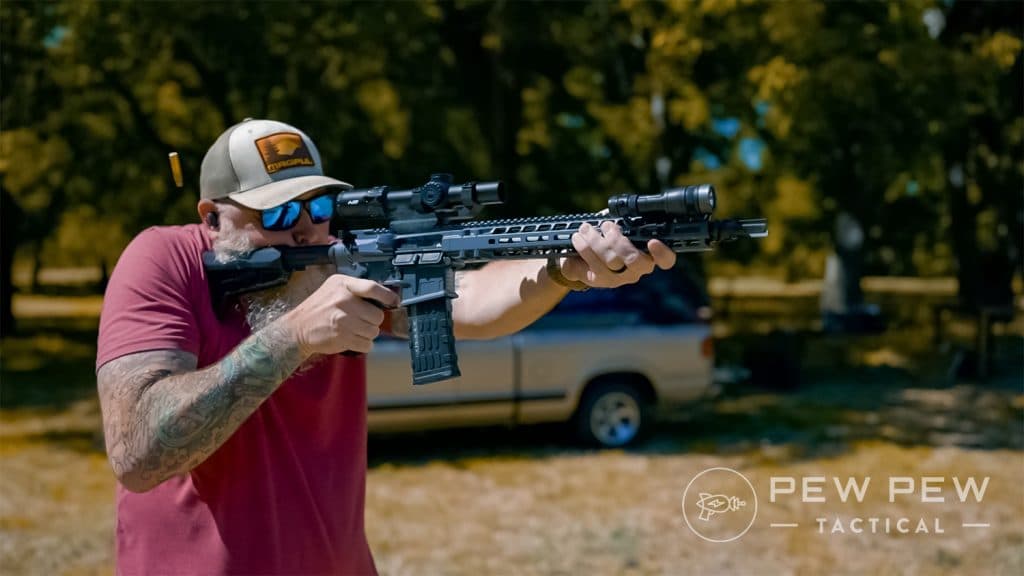
The previous Gen III model has been near the top of our optic rotation and has survived the CA desert and TX summers. Plus has kept zero while being taken on and off a variety of rifles.
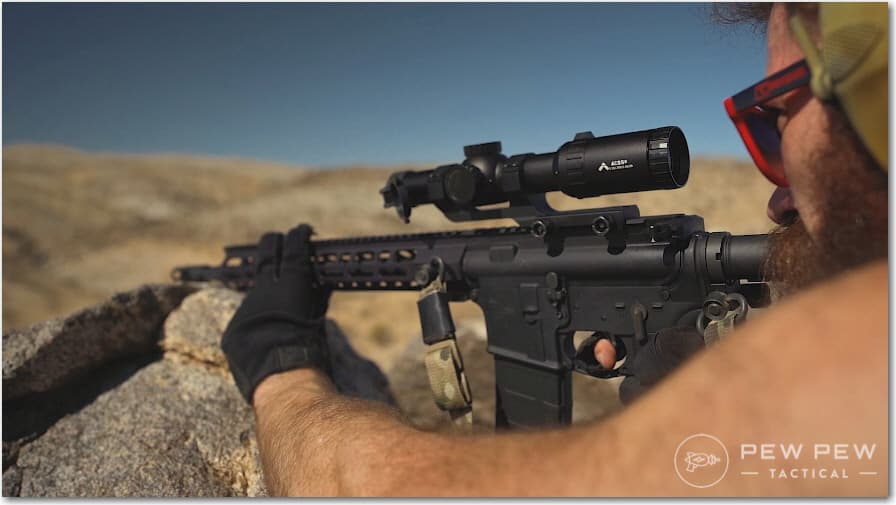
Glass is improved in the Gen IV model. Our favorite thing is that the ACSS reticle is now daylight-bright!
The 1-6x magnification dial is a little stiff, but it feels like it will loosen out a little with more use. Check out a quick video of us zooming in:
We also love the latest generation of ACSS reticle. It doesn't get in the way at 1x but allows for ranging and holding on longer shots.
Another goodie? You can get a free mount by using our link and going to one of the dropdowns!
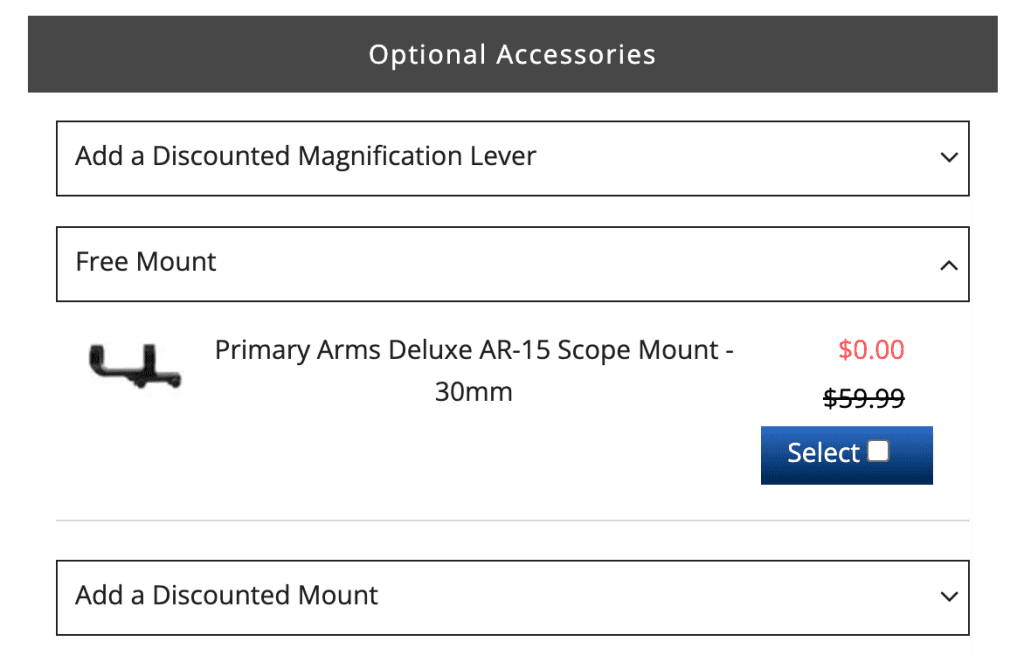
The Gen IV is totally worth it over the slight increase from the Gen III. Check out the full reviews and videos of the Gen III and the latest Gen IV versions of the SLx 1-6x.
5. TRYBE Optics 1-8x24 - Best Budget 1-8x
Pros
- Big magnification with a small price
- Simple and easy to use
- Available with the TRYBE DiMA ranging system
Cons
- Only suitable for dusk/dawn use - not daylight bright
Specs
- Magnification: 1-8x
- Objective Lens Diameter: 24 mm
- Focal Plane: SFP
- Reticle: PCR-1
- Click Value: 0.5 MOA
- Tube Diameter: 30 mm
- Weight: 18 oz
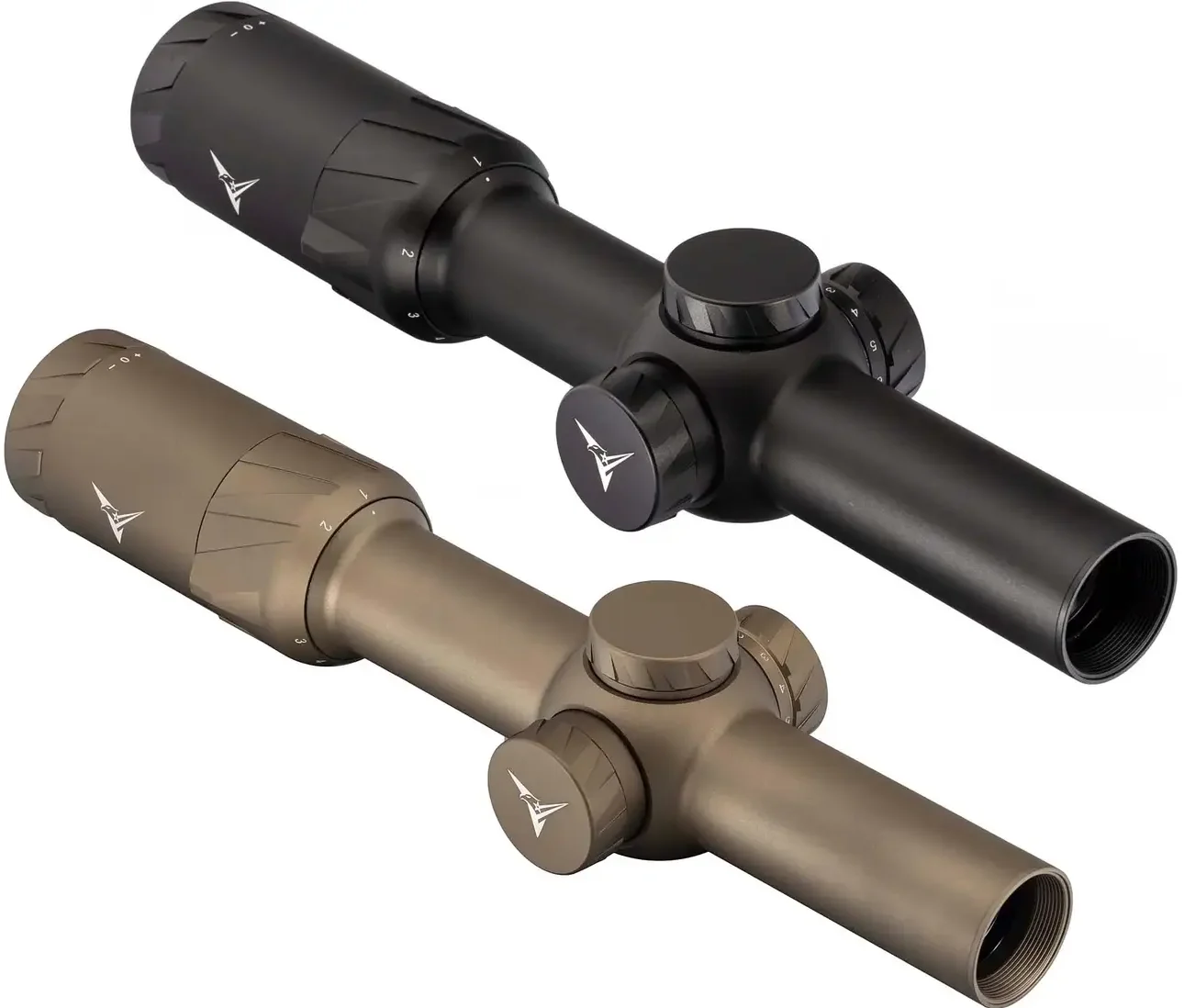
The TRYBE 1-8x24 LPVO bats above its price and gives new shooters a chance to experience 8x magnification.
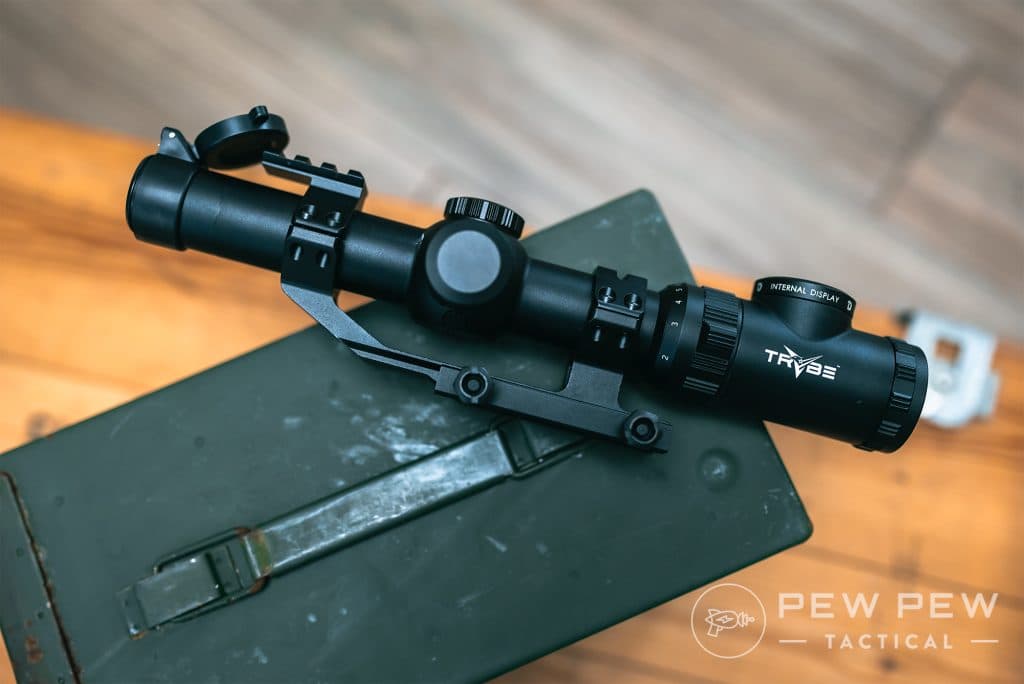
There are a few different versions of this scope but the glass remains the same. The one we have is the enhanced version that works with TRYBE's DiMA ranging system and can display at the top of the scope view.
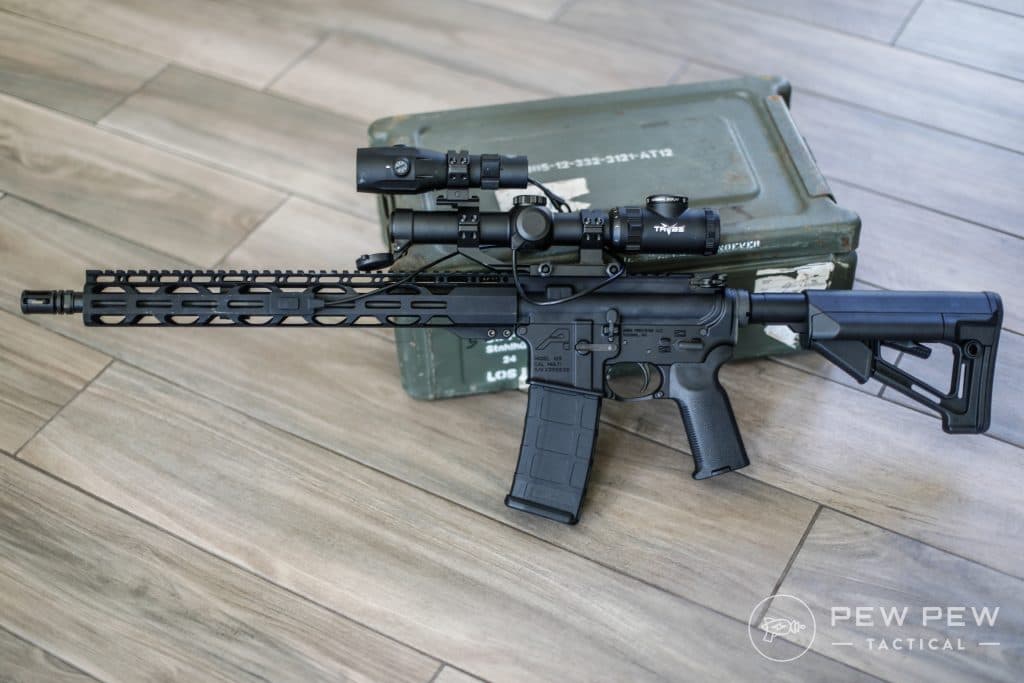
Looking at 1x is crisp with very minimal size distortion once you get the eyepiece focused. Photos taken with my phone are definitely worse than real life.
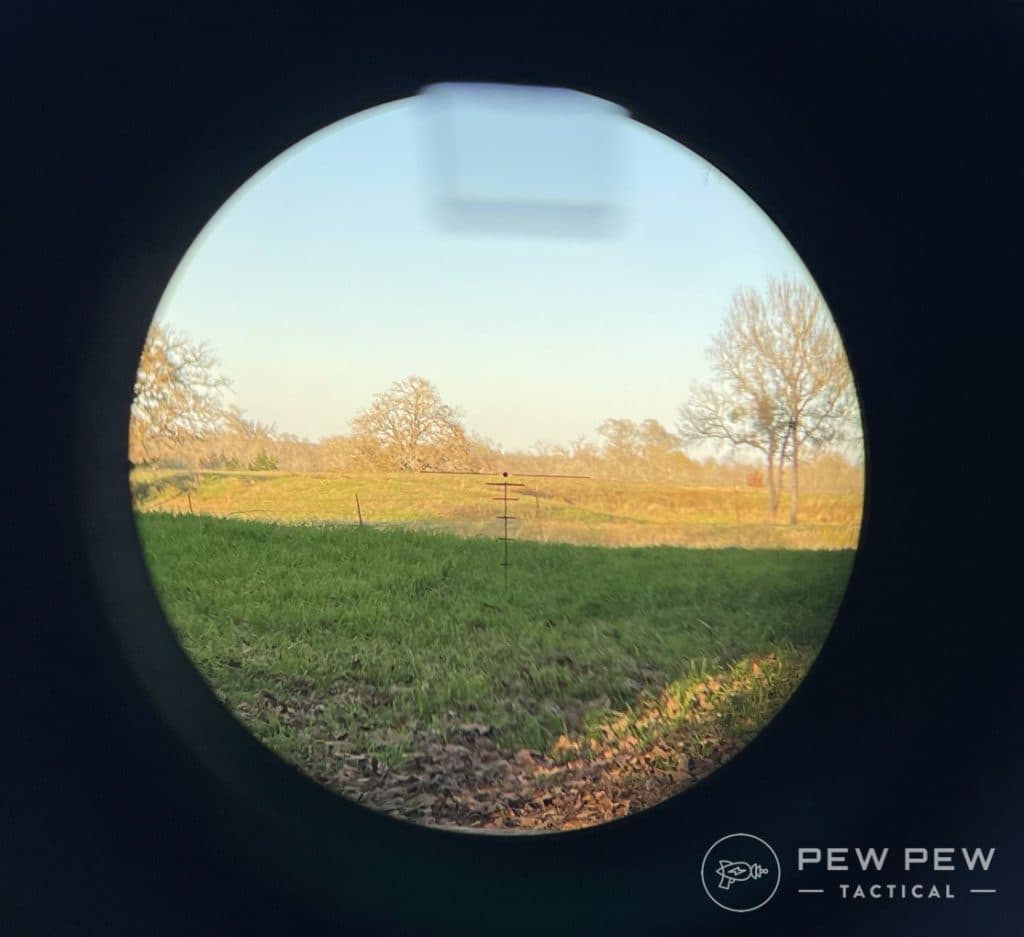
Higher magnifications reduce the eye-box, but even at 6x, I could see myself getting a quick acquisition. 8x was a little harder to get just the right placement.
The main knock I can give it is that the max reticle illumination is only suitable for dusk/dawn use. I wouldn't label it as daylight-bright.
However, with its glass, very usable magnification, and price, it's a decent buy.
6. Vortex Razor HD Gen III 1-10x - Best Magnification
Pros
- Beautiful glass quality
- Surprisingly compact
- Precision-ready reticles
Cons
- Not suited for entry level or casual shooters
Specs
- Magnification: 1-10x
- Objective Lens Diameter: 24 mm
- Focal Plane: FFP
- Reticle: EBR-9 (MOA or MRAD)
- Click Value: 0.25 MOA, 0.1 MRAD
- Tube Diameter: 34 mm
- Weight: 22 oz
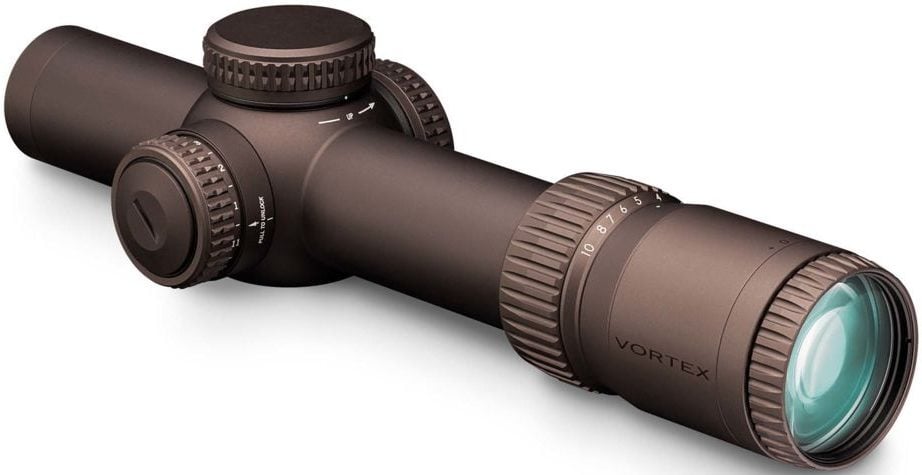
Vortex is a weird company. They make everything from budget red dots to the mighty Razor HD Gen III 1-10x24, which I'm calling the Razor 1-10x for brevity's sake.
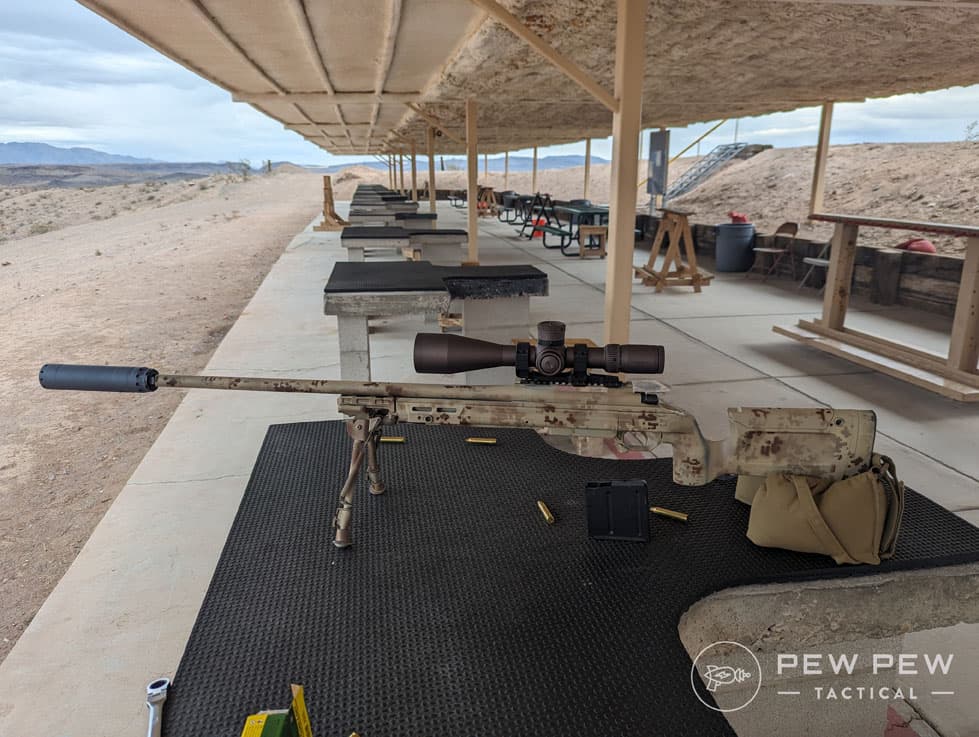
The Razor 1-10x was the first real LPVO in the 1-10x category that broke the mold. Mainly because it's almost the exact same size and weight as the Vortex Razor 1-6X.
I call it magic, but Vortex probably calls it engineering.
The Razor 1-10x brings a bit of designated marksman charm to the LPVO world. Looking at its rather complicated reticles, it's clear this is an optic made for shooters who need to make precision shots at anywhere from five feet to 800 yards — and beyond.
Vortex recently streamlined the reticle offerings for this LPVO. You'll be getting the cutting-edge EBR-9 reticle in your choice of MOA or MRAD.
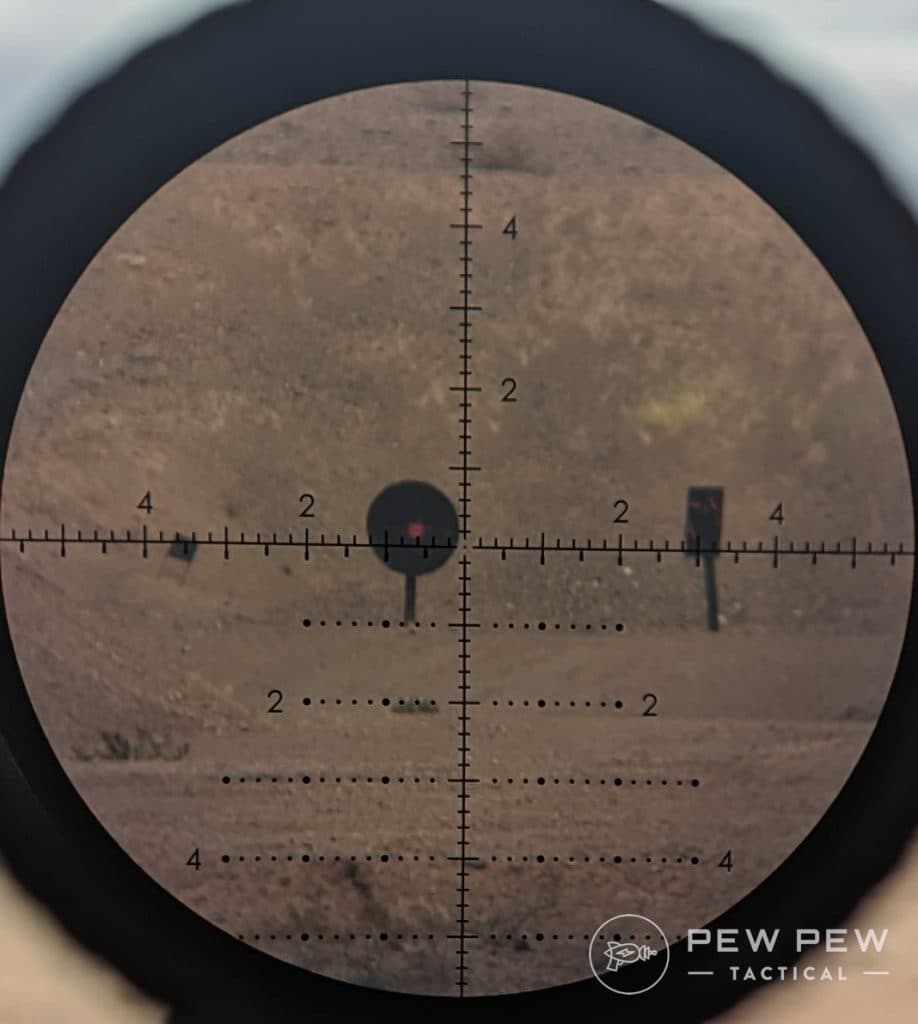
Vortex delivers in the glass department. It's amazingly clear. Even when ratcheted up to 10x, you aren't dealing with much noticeable dispersion. Edge-to-edge clarity is present, and excellent light transmission makes it easy to see that target way out there.
Vortex ensured the optic itself was fairly sleek with simple, with low-profile turrets and magnification adjustments. The optic is impressively streamlined for its magnification.
At more than $2,000, you have to really want to reach out and touch targets to justify buying this LPVO. However, optics exemplify the phrase, "You get what you pay for." With the Vortex Razor, you get a 1-10x shoved into the frame of a 1-6x optic with a great reticle and excellent glass.
7. Sig Sauer TANGO6T 1-6x24 - Best Options
Pros
- Army-approved
- Spec it out your way
- Forgiving eye box
Cons
- Requires a little more homework to find the right one
Specs
- Magnification: 1-6x
- Objective Lens Diameter: 24 mm
- Focal Plane: FFP, SFP
- Reticle: Hellfire MOA, DWLR6, 5.56/7.62 Horseshoe Dot, DWLR-556, FL-6 Hellfire
- Click Value: 0.5 MOA, 0.2 MRAD
- Tube Diameter: 30 mm
- Weight: 21-22 oz
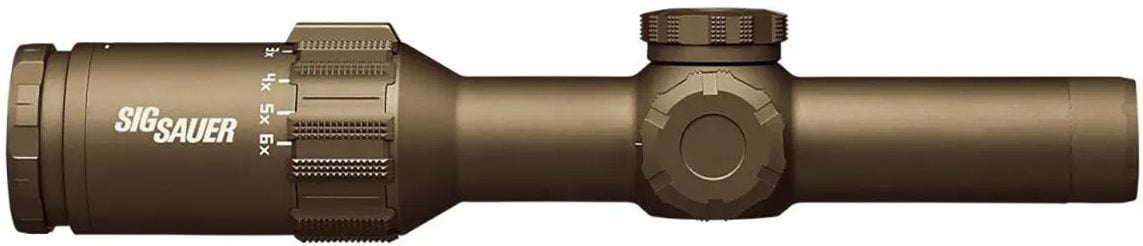
The Sig Sauer TANGO6T 1-6x24 gives you just about all the options you could want. With FFP, SFP, and five reticles on tap, you can find something that works for you.
Oh, and it's an Army optic.
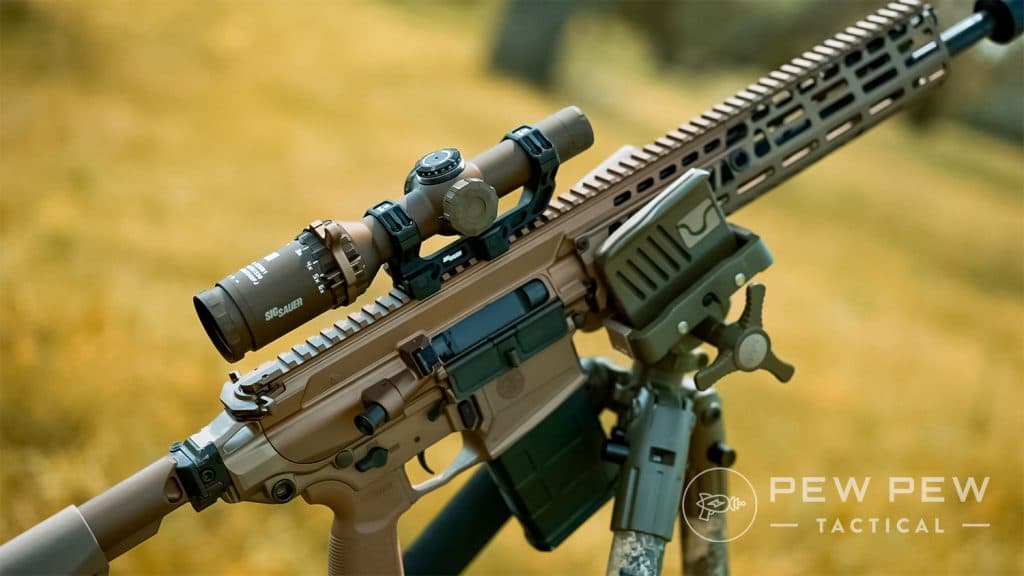
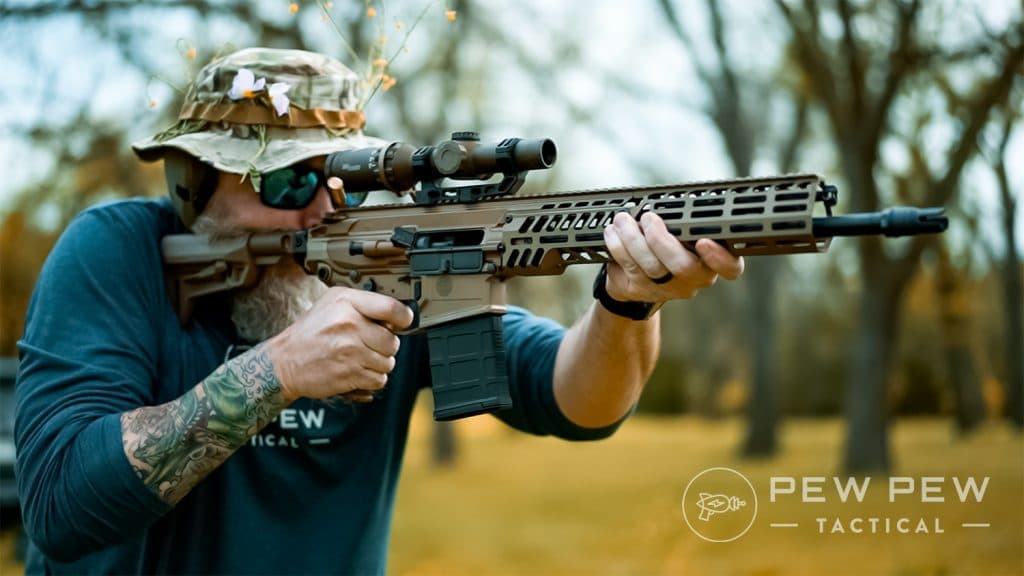
The U.S. Army chose the Sig Sauer TANGO6T 1-6x24 as their squad-designated marksman optic, and SOCOM adopted the optics as their SFP choice.
Most people might dislike an SFP scope, but they can be pretty useful, especially in the 1-6x range. The TANGO6T uses a simple reticle that benefits from remaining the same size.
The Army's DWLR6 reticle is a very simple Christmas tree-style reticle with holdovers for windage and elevation. It also has a big illuminated horseshoe in the middle to help with fast focus on near engagements.
Being SFP, the reticle holdovers are only accurate at 6x. But if you have to account for windage and elevation, you are probably using the optic at max magnification anyway.
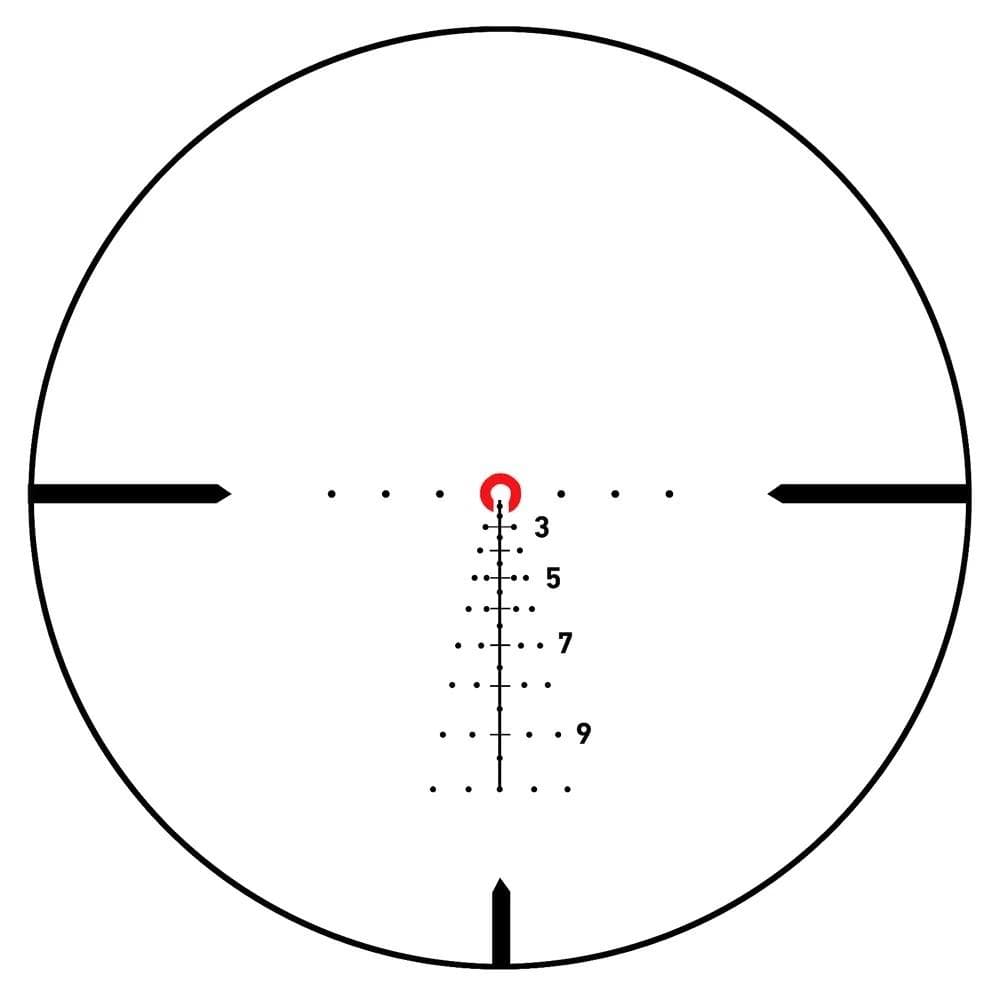
The lower-powered design provides a fast-focus eyepiece that makes it easy to get behind the optic and get on target. Generous eye relief makes it easy to use in odd positions and makes it quite versatile for rapidly changing environments.
The sight picture is fantastic. It's crystal clear, bright, and vivid. The reticle is uncluttered and daylight bright.
It's not only well-suited for Army grunts but is great for 3-gunners, hunters, and more. One of the main downsides is that some people won't appreciate spending around $1,500 for an SFP optic, and I get that.
8. Trijicon VCOG 1-8X - Best Durability
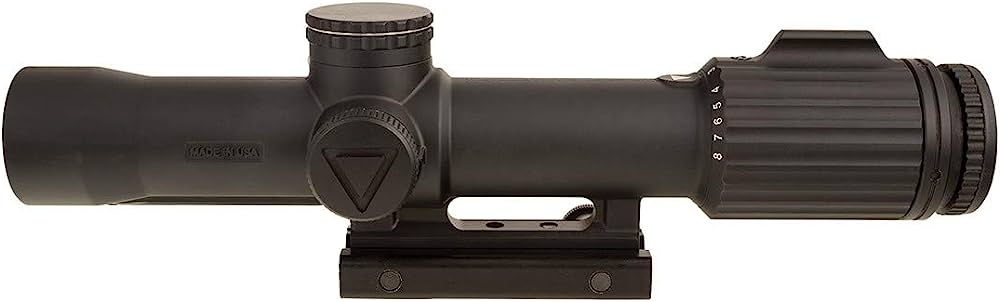
Pros
- Marine Corps-approved
- Unbelievably durable
- Integrated mounting system
Cons
- Heavy optic can weigh down lightweight rifle builds
Specs
- Magnification: 1-8x
- Objective Lens Diameter: 28 mm
- Focal Plane: FFP
- Reticle: MRAD Tree, MOA Crosshair Dot, MRAD Crosshair Dot
- Tube Diameter: 30 mm
- Weight: 32 oz
Moving on from the Army and SOCOM's choice, we arrive at the selection of the Marine Corps.
All grunts will be getting LPVOs, and the USMC is continuing its love affair with Trijicon by selecting the VCOG to replace the longstanding RCO ACOG.
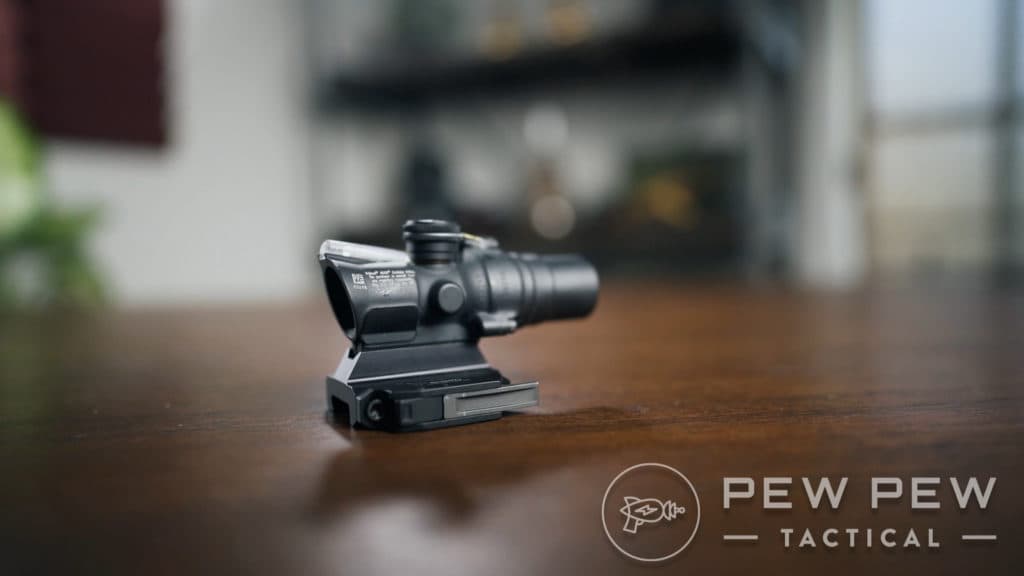
What does the average Marine grunt need? A bombproof scope that can suffer the abuse of the battlefield and the abuse an 18-year-old infantryman tosses at it. Additionally, they need a versatile tool for close-quarters combat and long-range precision.
The VCOG certainly does both. The magnification range matches the accuracy of the M27, and the versatile nature of the reticle makes long-range precision and close-range speed a reality.
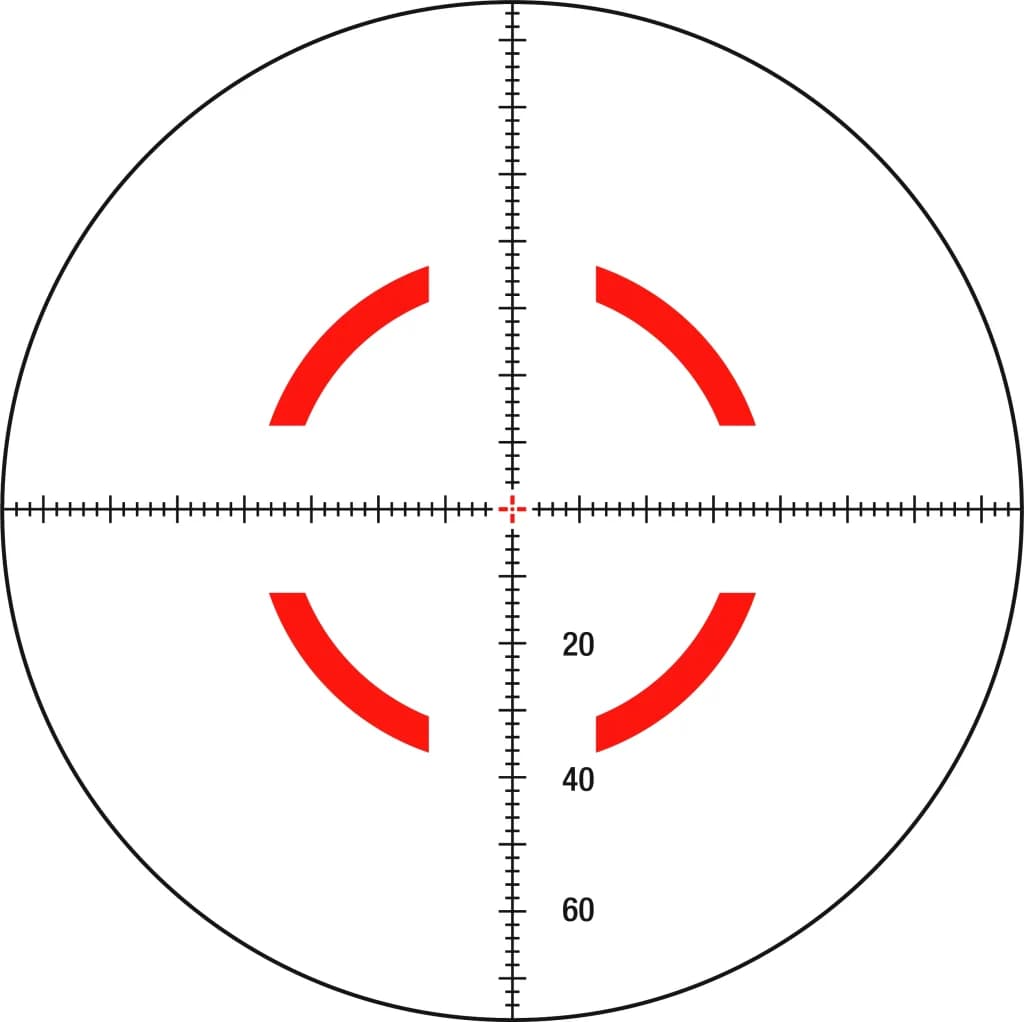
At long range, they have a crosshair system with elevation and windage markings from top to bottom and right to left. An MRAD Christmas tree-style reticle is also available now.
For close-quarters room-clearing fights, Marines get a segmented illuminated circle. Since it's an FFP scope, everything shrinks, and at 1X, that circle looks like nothing more than a red dot.
It's perfect for quick, instinctive shooting and gets daylight bright without issue. When we have the zoom cranked up, the circle doesn't clunk up the sight picture.
It's not compact or lightweight by any means (this hoss weighs 32 ounces), so hit the gym if you’re looking for the optic of the world's finest fighting force.
What do you think of the VCOG? Rate it below!
Readers’ Ratings
5.00/5 (1095 Votes)Your Rating
9. Steiner T5Xi 1-5X

Pros
- Simple and user-friendly
- Uncluttered reticle
- Great for beginners
Cons
- Lacks information for longer shots
Specs
- Magnification: 1-5x
- Objective Lens Diameter: 24 mm
- Focal Plane: SFP
- Reticle: 3TR
- Click Value: 0.1 MRAD
- Tube Diameter: 30 mm
- Weight: 19 oz
While most people have a “more is a better” idea regarding LPVOs and magnification, there is certainly a place for a lower-powered option.
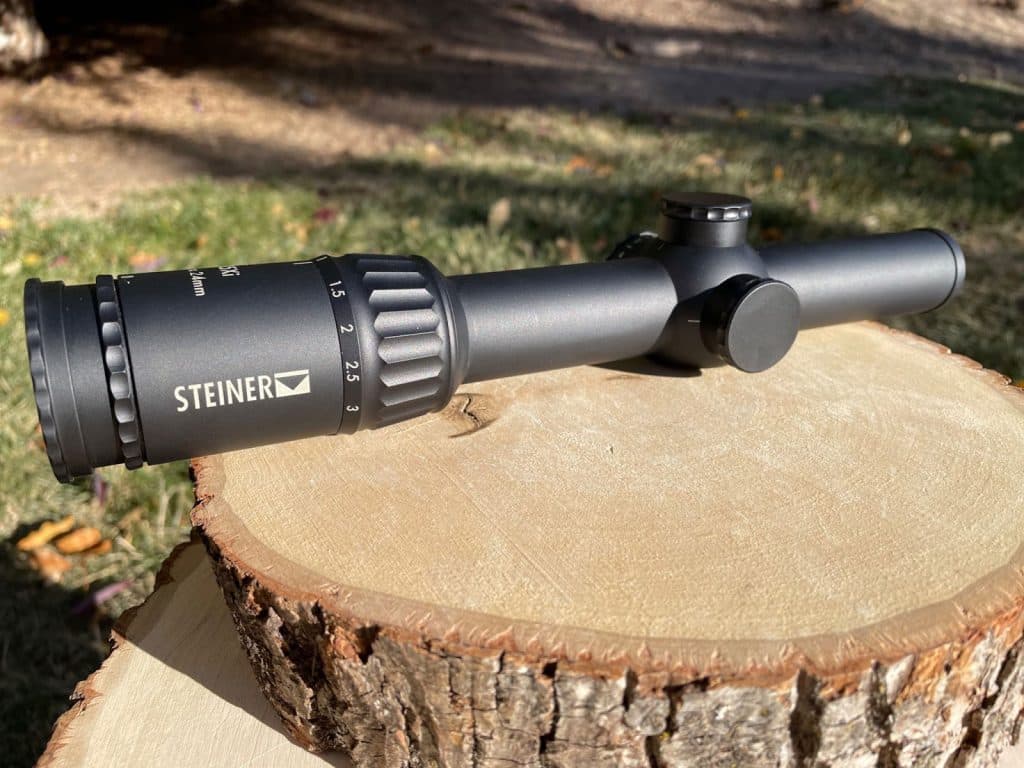
The Steiner T5Xi gives you a 1-5x option that's not as heavy or large as 1-8x or 1-10x. It offers a simpler optic for shooters who do not need a great deal of magnification.
The T5Xi gives us some very clear glass that provides a brilliant vibrance to your Sight picture. Everything pops in that high definition we expect from a premium-grade optic. You can see everything easily, making it quite nice for the range, for duty, or for target shooting.
Steiner markets this optic as a close-quarters option, and in close-quarters, you need a fast sight picture. The lower magnification of the T5Xi gives a more generous eye box and eye relief. You won't have issues getting behind the optic and quickly acquiring a good sight picture.
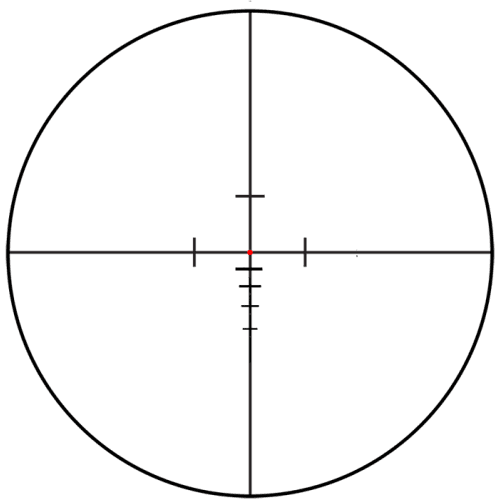
New shooter will appreciate the straightforward, uncluttered reticle. The center features a very bright dot that works as a red dot with the magnification at 1X.
The Steiner T5Xi's downside is the price when you consider you are only getting a 5X scope. On top of that, it's lighter and smaller than a 1-10X but heavier and longer than the average 1-6X.
If you can deal with those downsides, you'll get a fantastic optic for close- to moderate-range engagements. It's got great eye relief, excellent clarity, a simple, uncluttered reticle, and it's very durable.
How to Choose the Best LPVO
As always, what works for someone else might not be great for you. Choosing the best LPVO comes down to how you plan on using it and, of course, how much you want to spend.

If you want the absolute best, premium optics like the Nightforce ATACR 1-8x24 and Vortex Razor HD Gen III 1-10x24 are worth every penny.
If you're hard on gear or want to be prepared for the zombie apocalypse, trust the Marines and grab a Trijicon VCOG.
Then again, if money is tight, I'd rather you have an affordable LPVO than opt out of magnified optics altogether. There are lots of great value-forward options on this list.
How We Tested The Best LPVOs
Everyone on the Pew Pew Tactical editorial team spends a ton of time behind an LPVO. With the exception of red dots, these are probably the optics we use the most.
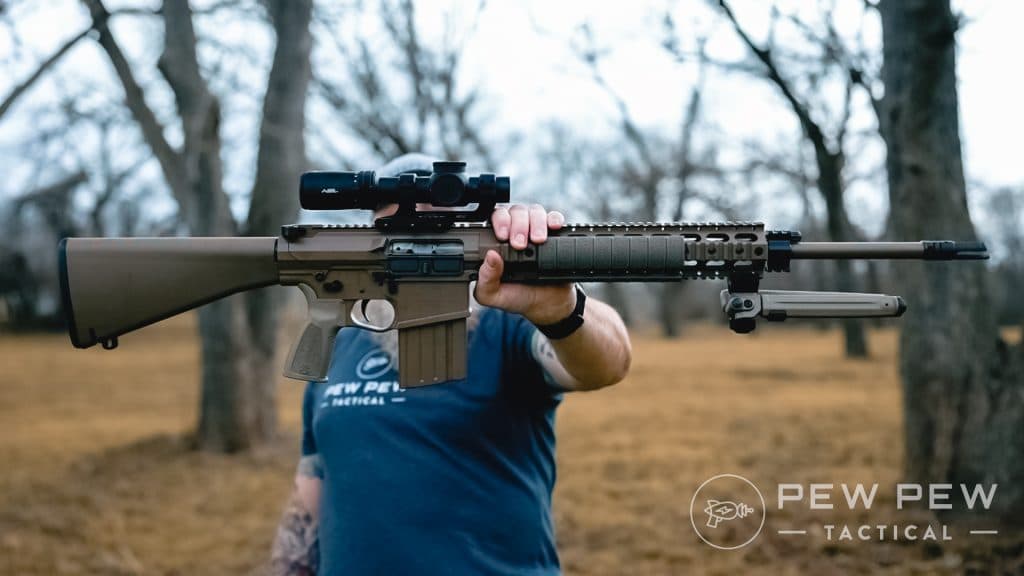
We have LPVOs on our personal firearms, use them at media events, and test new ones constantly. We also use them for training, target shooting, competitive shooting, and hunting.
To say we have a solid understanding of what works and what doesn't is an understatement.
We rolled all that hands-on experience into one article to give you a thorough run-down of the LPVOs we trust the most.
Meet the Experts
Taking the lead on this round-up is Travis Pike, a Marine Corps infantry veteran, NRA-certified instructor, and concealed carry instructor teaching CCW courses in Florida. Travis has been testing, researching, and writing about guns and optics for several years for several publications, including Pew Pew Tactical. Using his military background combined with his experience as a product reviewer, Travis evaluates all his recommendations using specific standards like clarity, ease of use, and value to determine which LPVOs made the cut.
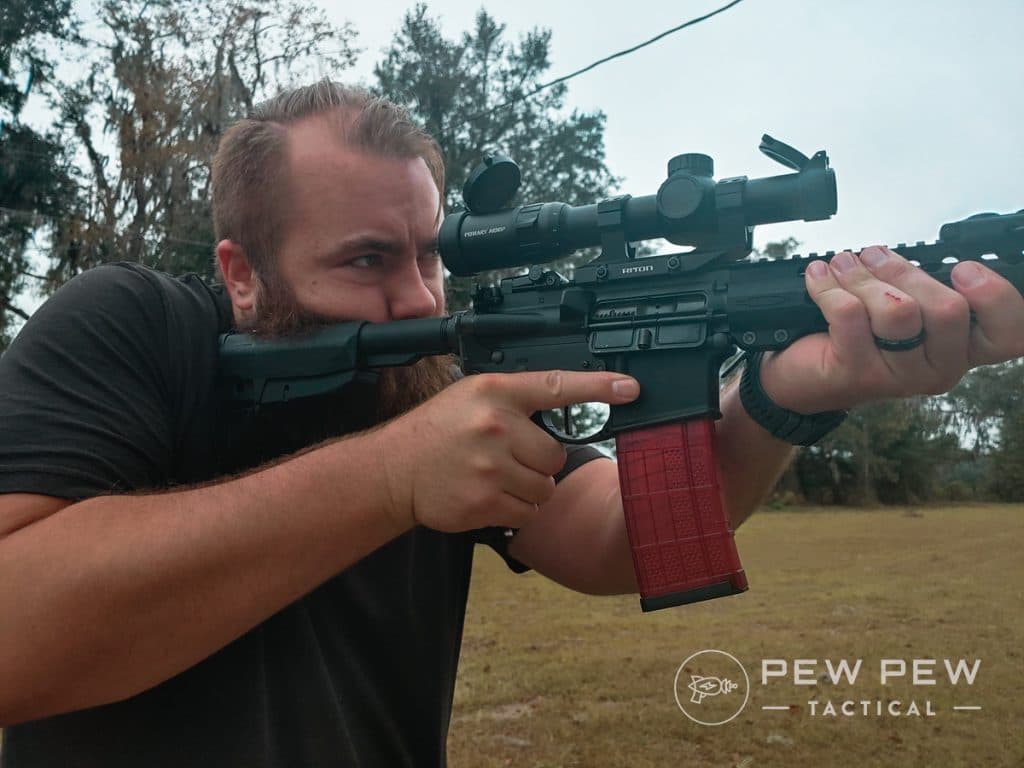
Editing this article is freelance editor Scott Murdock. Scott is a Marine Corps veteran who qualified as a rifle and pistol expert while in service. He has also completed the Vortex Edge Long-Range Pipeline. His expertise is in precision shooting and hunting, so he knows what to look for when it comes to riflescopes.
Our experienced staff of freelance writers and editors is run by Editor-in-Chief Jacki Billings. Jacki has a bachelor’s degree in mass communications and has worked as a media professional for close to 20 years, specializing in gun media for almost 10 years. She uses her professional journalism and editing experience to set testing protocols and editorial standards across Pew Pew Tactical.
FAQs
Final Thoughts
LPVOs are fantastic tools for modern rifles. They're versatile, effective, and easy to use.
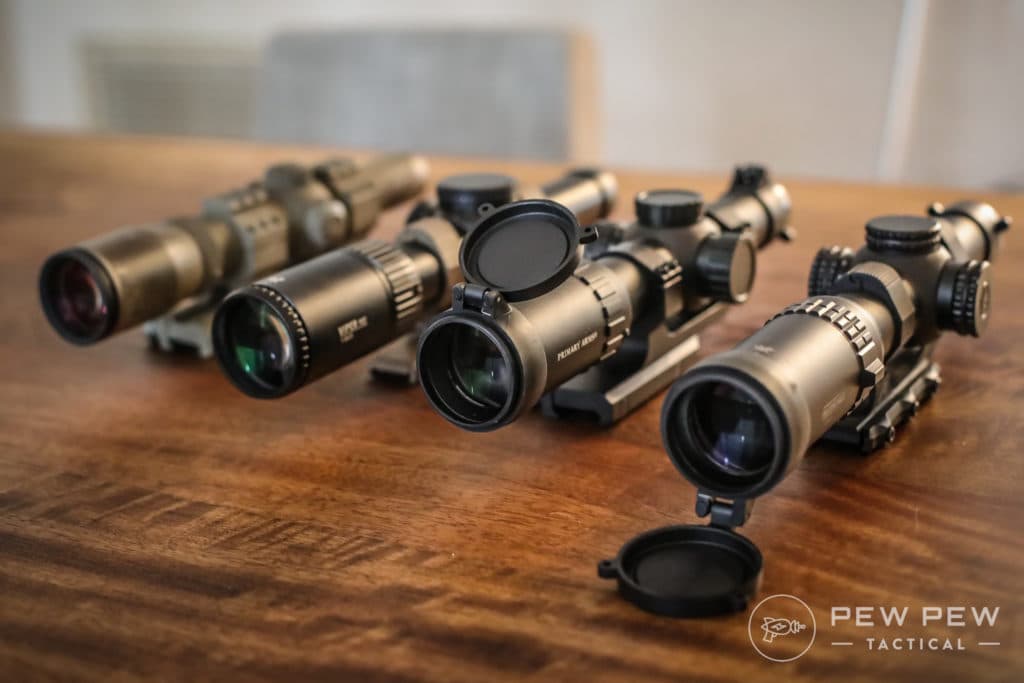
It's clear they are the future of rifle scopes for most modern rifles, and these are some of the best of the best.
Do you have any experience with any of these? Are there any options we missed? Let us know in the comments below! Not sure which type of optic is right for you? Take a look at our red dot with magnifier vs. prism vs. LPVO shootout!
Latest Updates
- September 2025: Added PA PLxC and Steiner to main picks.
- September 2024: Added more media and data to product selections.