
5 Guns From Big Companies We All Forgot
Sometimes, a company puts out a gun that completely flies under the radar before quietly fading away. So, let's explore guns we all forgot!
We review products independently. When you buy through links on our site, we may earn a commission to help support our testing. Learn more.
When a major gun company releases a successful gun, everyone loves it and talks about it.
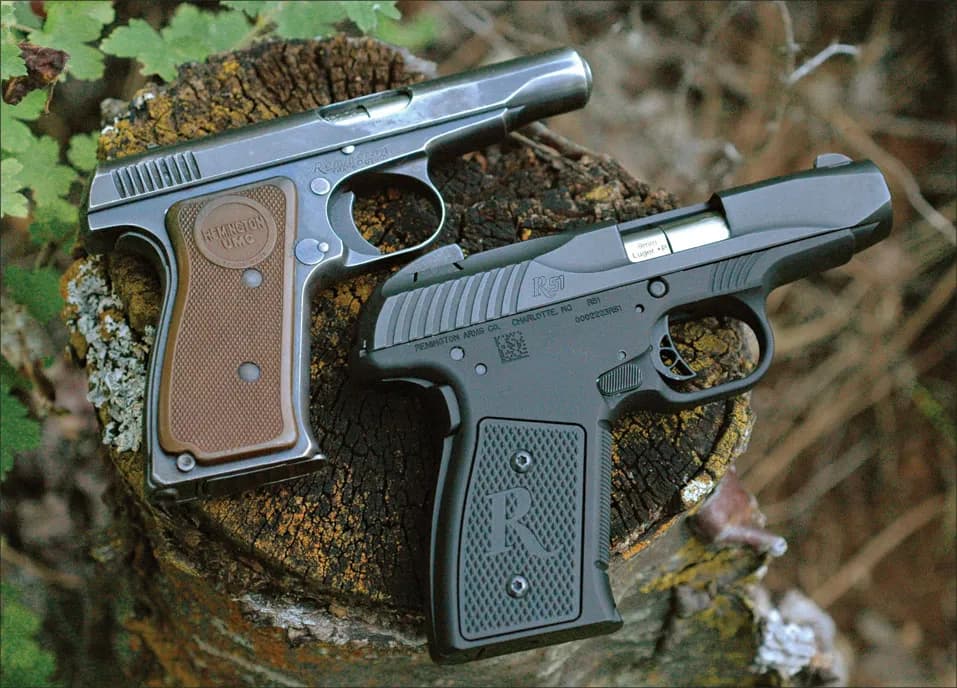
If they make a gun that fails spectacularly, then it often becomes infamous. And infamy often makes for an even more memorable gun, like the Remington R51.
But every so often, a company will put out a gun that completely flies under the radar before quietly fading away with very little fanfare.
That brings us to our topic of conversation today, guns from big companies that we all forgot. We are going to dig into five guns that were neither great nor terrible, but were forgotten by the mainstream public for one reason or another.
Table of Contents
Trending: Best AR-15s, Best Shooting Hearing Protection, & Ammo in Stock
Five Forgotten Firearms
1. Bushmaster BAR-10
It might be hard to remember, but there was an era when AR-15s weren’t everywhere. Basically, if you wanted an AR, you went to Colt. But then Bushmaster came along, offering their XM-15 and cementing their place as a true player in the AR market.
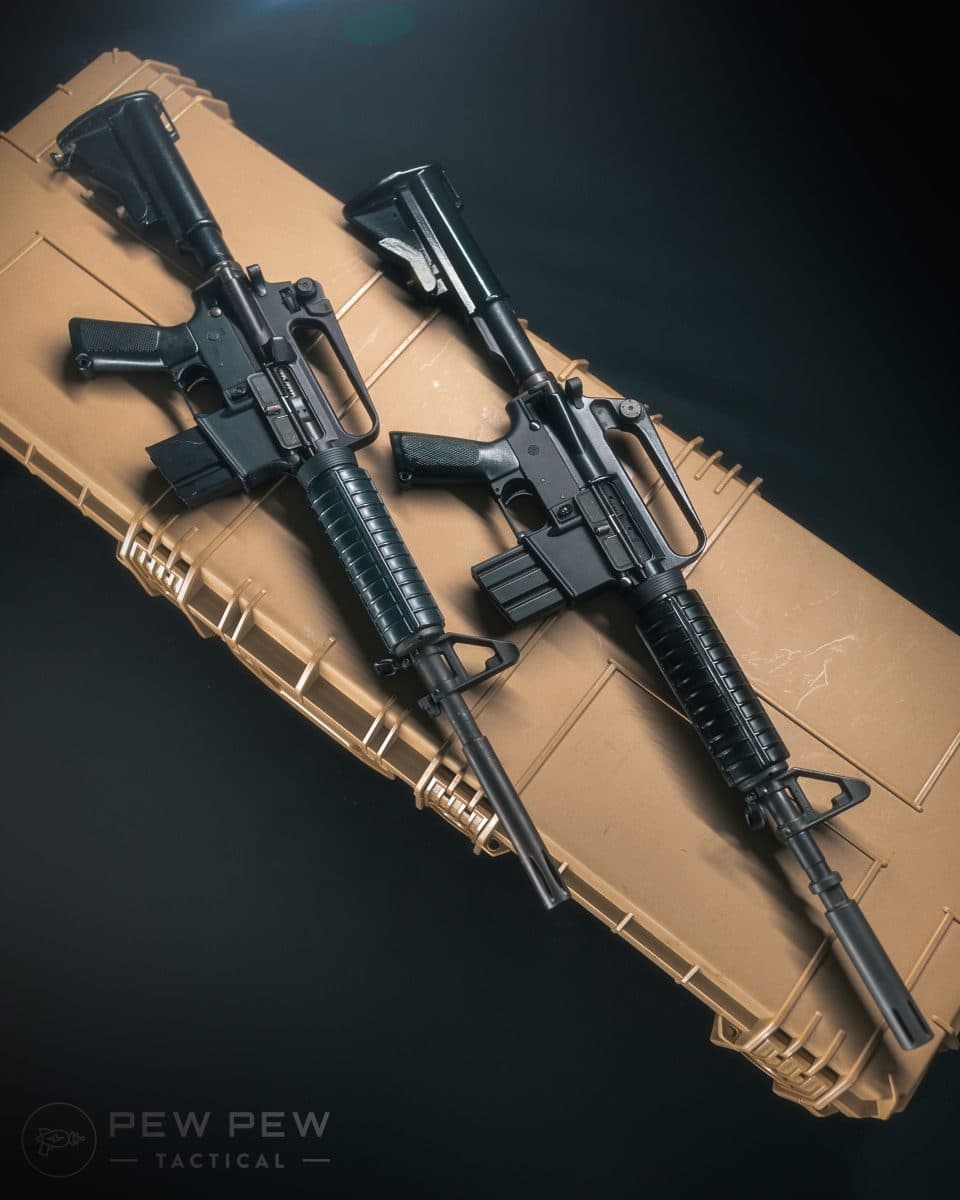
You can almost guess someone’s age by their opinion of Bushmaster. If they have a high opinion, they should schedule a colonoscopy because they are likely at that age. If they have a poor opinion, they are likely younger and only know the horror stories of the Freedom Group-era Bushmaster guns.
While Bushmaster is best known for their ARs, they also made some weird weapons, such as the Bushmaster Assault Rifle, Arm Pistol, and the M17S bullpup rifle.
But one of their most forgotten rifles is the BAR-10. These rifles were only produced for about 18 months from 2004 to 2005.
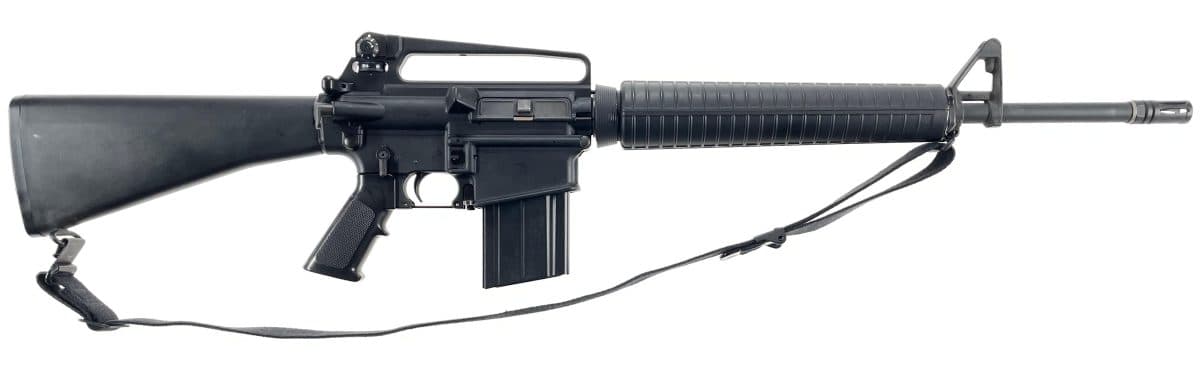
The BAR-10 is an AR-10-type rifle chambered in .308 Winchester that aimed to unseat the AR-10 by moving away from AR-10 mags, which were expensive at the time.
To get around the magazine issue, Bushmaster opted to use FAL magazines in the BAR-10. The magwell could accept both metric and inch-pattern FAL magazines.
Why FAL mags? Well, in 2004, FAL mags were super cheap. They were only a few bucks a piece, which sounds a lot more appealing than the $40-50 price of Armalite AR-10 mags.
There were also so few AR-10s at the time, and none of them were known for stellar reliability. Bushmaster figured that FAL magazines might help address some of the era's reliability issues.
In addition to the magazines, the BAR-10 uses a FAL bolt catch. While it looks odd on an AR-10 receiver, it is 100 percent functional. Outside of the FAL bolt catch, shooters got standard AR-style controls.
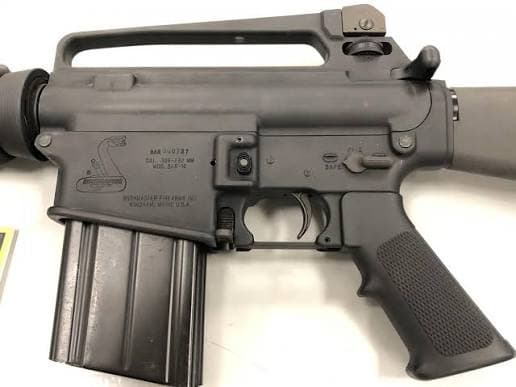
The BAR-10 was offered in a ton of configurations. There were M16A2-style rifles with fixed stocks, plastic handguards, and fixed carry handles. They also had carbine variants and stripped-down models with optic rails. Barrel lengths varied from 16 to 22 inches.
So why was the BAR-10 forgotten? That’s tough to say. It seemed popular and reliable, according to old forum posts.
The main reason is likely the fact that it was produced for a very short period of time. We also have to consider that the AR market in 2005 wasn’t nearly as big as it is today, and I’d imagine most people wanted AR-15s.
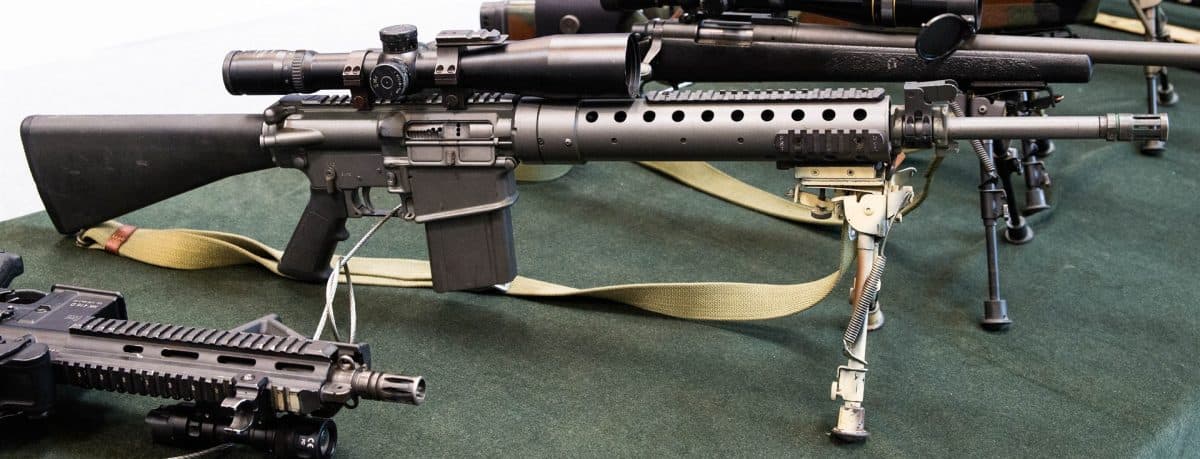
The go-to domestic .308-caliber semi-auto rifle in this era was the Springfield M1A. AR-10s just weren’t seen as a good, reliable option yet. Perhaps the BAR-10 just came out too early for its own good.
2. Mossberg 9200A1 “Jungle Gun”
In 1999, the Marine Corps led the charge to find a new joint-service shotgun for the United States military. They famously settled on the Benelli M4, which was designated the M1014.
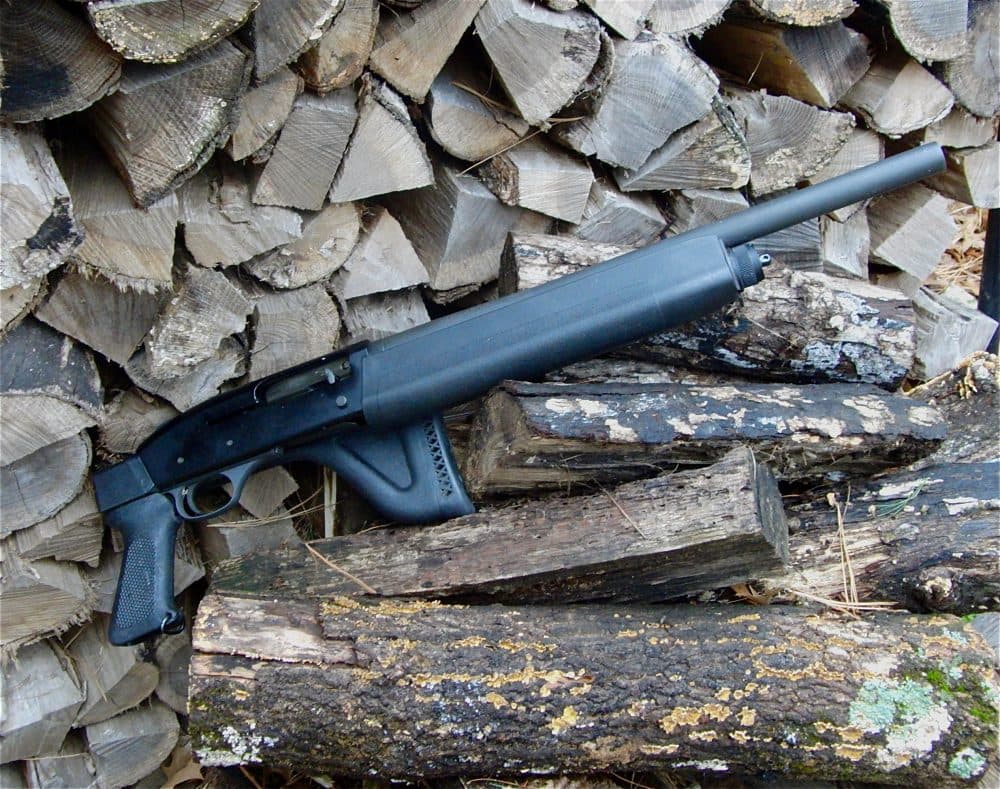
What’s often not spoken about are the various competitors from these trials, and one such competitor was the Mossberg 9200A1, also known as the Jungle Gun.
Mossberg is an awesome company. It’s been a family-owned arms manufacturer for well over a century. They are most famous for the 500 and 590 series of shotguns. Their 590A1 is still the pump-action shotgun of choice for the United States Marine Corps.
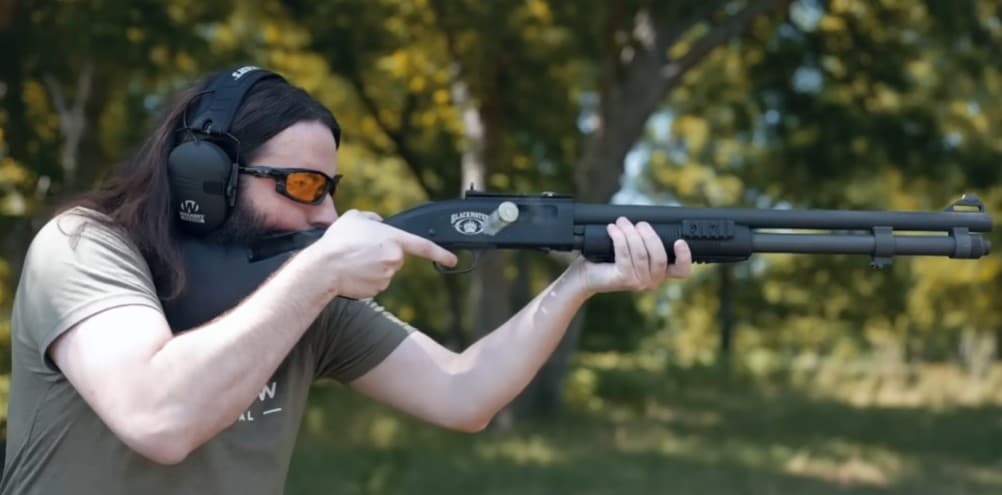
Seeing as Mossberg already had a shotgun contract with the government, they figured, why not aim for the joint-service shotgun contract?
They decided to use their existing 9200 shotgun, which had been around since the early 90s, as a building block for the Jungle gun. To ensure it met the contract specifications, they had to make some modifications.

The M9200A1 had a thicker, parkerized 18.5-inch barrel, a simple bead sight, and a four-round tubular magazine. Whereas the standard sporting 9200 had a 3-inch chamber, the M9200A1 only had a 2.75-inch chamber.
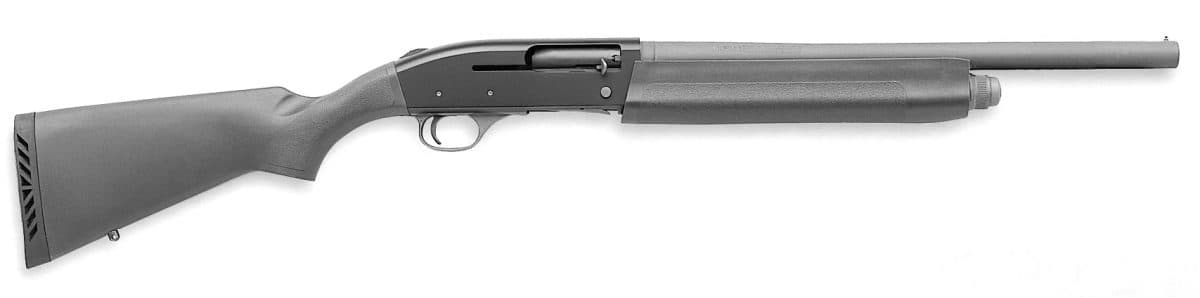
Mossberg produced both fixed stock and folding stock models. The “Jungle Gun” moniker originally applied only to the folding-stock model, but over time, it became synonymous with every tactical variant of the 9200A1.
The 9200A1 was reliable by all accounts and was a fine sporting gun, but made for a poor tactical shotgun.
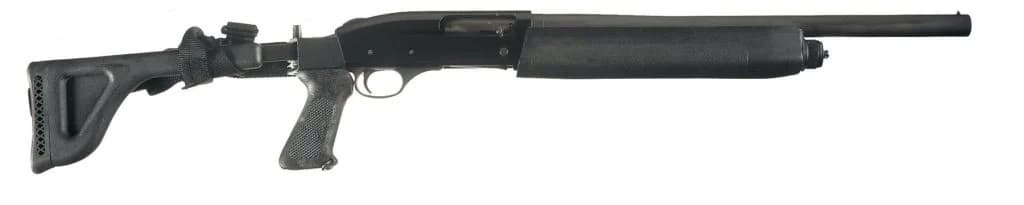
To load the gun, the shooter has to press the bolt release to load rounds; it cannot be held down. You have to press the release, load the round, press the release again, load the next round, and so on and so forth.
Imagine doing that in a fight at shotgun ranges, and you can see why it never took off.
While the DEA reportedly used the 9200A1, it didn’t see significant usage in any other capacity. Where the Benelli M4 has cemented its legacy as one of the greatest shotguns of all time, the 9200A1 Jungle Gun has faded into obscurity.
The Best Gun Deals, Coupons and Finds
Subscribe to Pew Pew Tactical's sales and deals email.
3. Smith and Wesson .38 Military and Police Airweight
Smith & Wesson needs almost no introduction. They have been around since 1852 and are best known for their high-quality revolvers, affordable AR-15s, and their excellent duty pistols.
Having produced the 1917 revolver during WW1, S&W was no stranger to military contracts. In the 1950s, both Colt and S&W were called once again to make a lightweight survival revolver for the US Air Force.
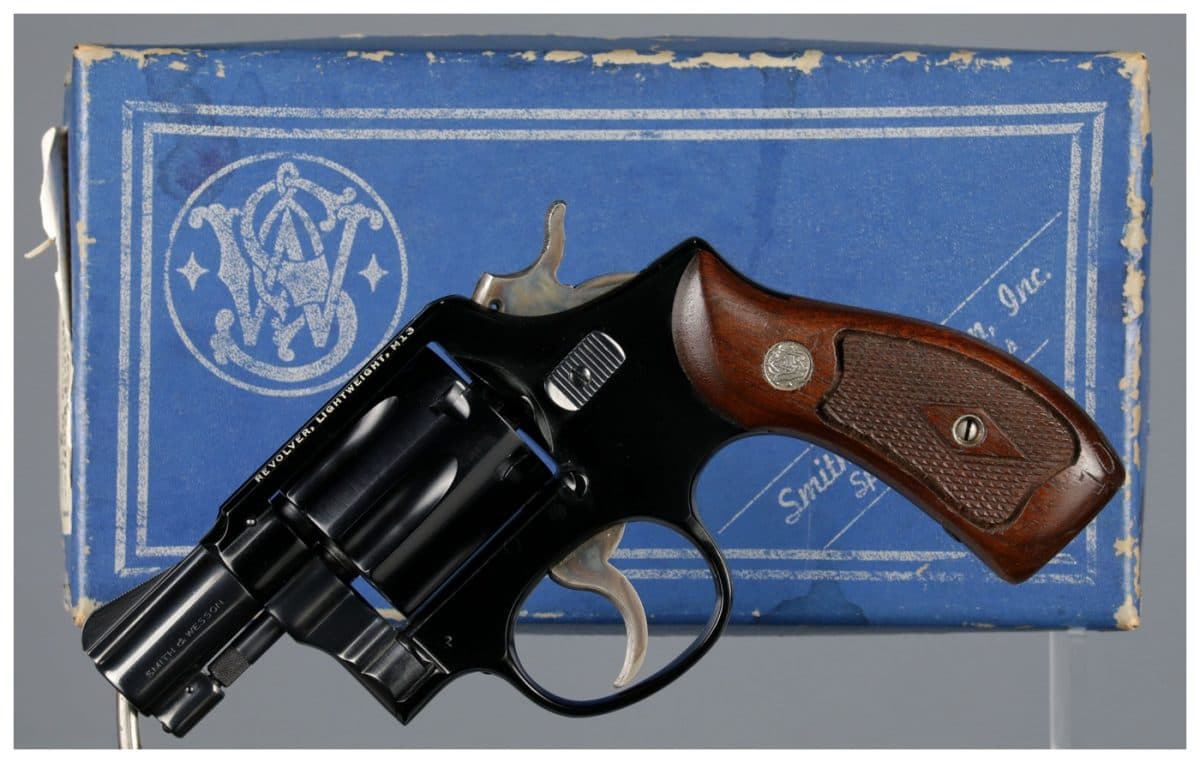
This revolver was known as the M13 Aircrewman, with Colt producing the first batch and S&W producing the second batch.
S&W elected to adapt their existing Model 10 medium-frame revolver to fulfill the contract. The extremely tight weight requirements of the Air Force meant S&W had to shave ounces wherever possible.
To do this, they made the cylinder and frame from aluminum, while the barrel remained steel. The result was a 6-shot revolver that weighed a mere 14.5 ounces.
In 1953, S&W released a civilian version of the M13, known as the Military & Police Airweight.
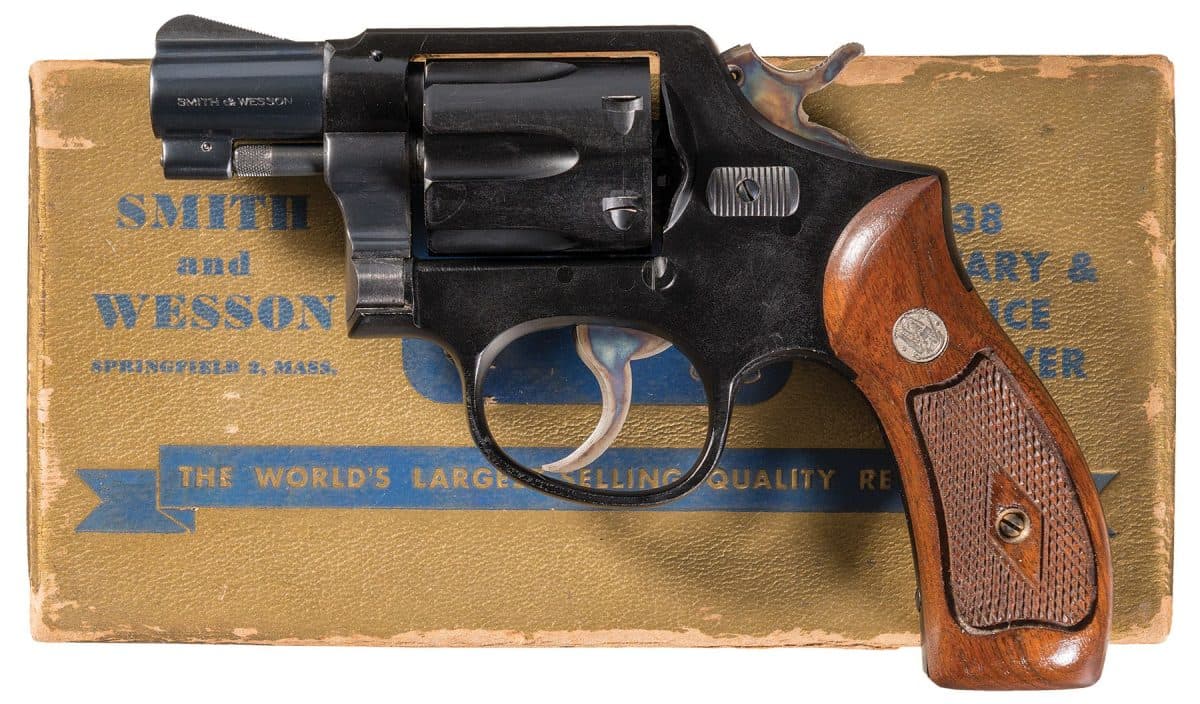
However, both the M13 and the Military & Police Airweight had a major issue. Namely, they tended to explode! Well, maybe not explode, but the aluminum cylinders would fracture.
The aluminum cylinders just weren’t strong enough to withstand continuous use with standard-pressure .38 Special rounds. Both the Colt Aircrewman and the S&W M13 were pulled from military service for this reason.
It didn’t take long for S&W to address the issue. In 1954, only a year later, they changed all new civilian-production Military & Police Airweights to stainless steel cylinders. This upped the weight a little over 18 ounces, but the guns were much more durable while remaining very lightweight.
In 1957, S&W officially renamed the Military & Police Airweight to the Model 12 Airweight, which remained in production until 1986.
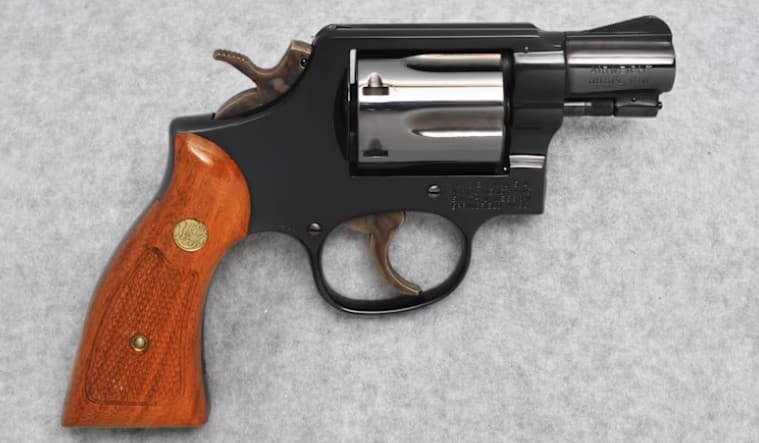
While the Model 12 became a fixture in Smith & Wesson’s lineup, the original civilian Military & Police Airweight disappeared as quickly as it came to be. No one wanted a handgun that would likely crack and break over an ever-so-slightly heavier version that would last you forever.
4. Beretta M3P
In the 1980s, we saw the rise of interesting and versatile shotguns.
Guns like the Benelli M3, the SPAS-12, and later the SPAS-15 all allowed shooters to easily switch between semi-auto and pump-action modes.
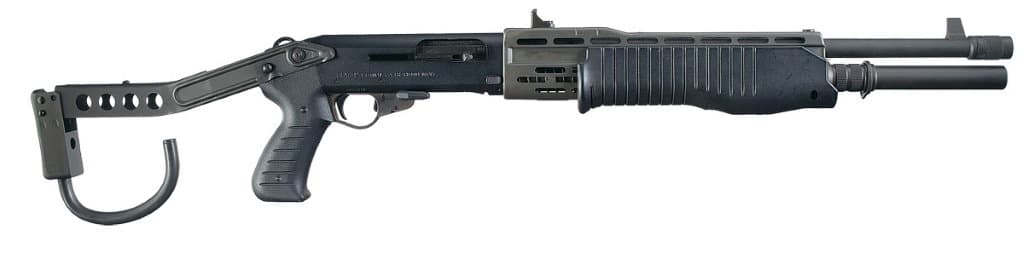
The idea was simple. Have a shotgun that could do it all. In a combat role, the gun could throw full-powered buckshot and slugs at higher rates of fire with less recoil. Then, when it was time to use specialty ammo, such as for breaching doors or less-than-lethal takedowns, you swap to pump-action to ensure the rounds will cycle properly.
These shotguns were more popular in Europe, with various police agencies and military forces seeking a true all-purpose duty shotgun.
Beretta, the oldest firearms manufacturer in existence, wanted to get in on a piece of the action. They threw their hat into the ring with the Beretta M3P.
Our Most Popular Posts

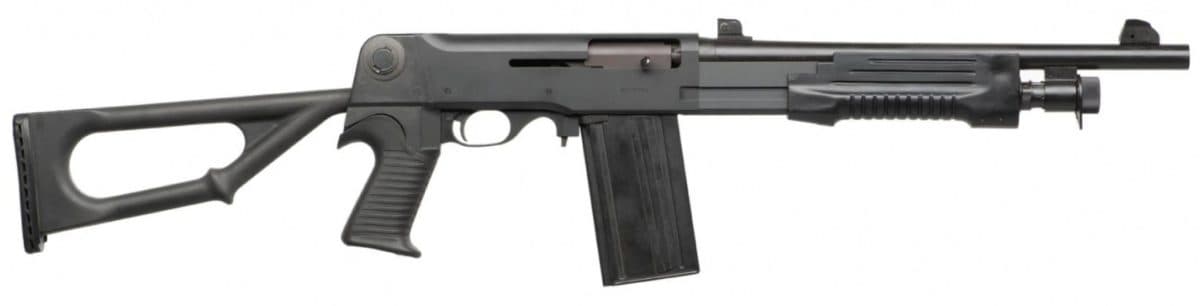
This shotgun used the dual-purpose pump-and-semi-auto design mentioned above and also featured a detachable box magazine.
These days, every other Turkish shotgun has a box magazine, but in the late '80s, box mags on shotguns just weren’t a thing.
But if you think about it, a box magazine starts to make more sense if your shotgun's purpose is to fulfill multiple roles.
You can easily swap the entire magazine in seconds to accommodate breaching rounds, buckshot, or non-lethal loads. Simply toss in a new magazine, turn the ring that converts it to pump or semi-auto, and you are good to go.
Beretta made both fixed stock and folding stock versions. The most common version features a stock that folds upward and over the top of the shotgun, doubling as a carry handle. Barrel lengths range from 15 to 24 inches.
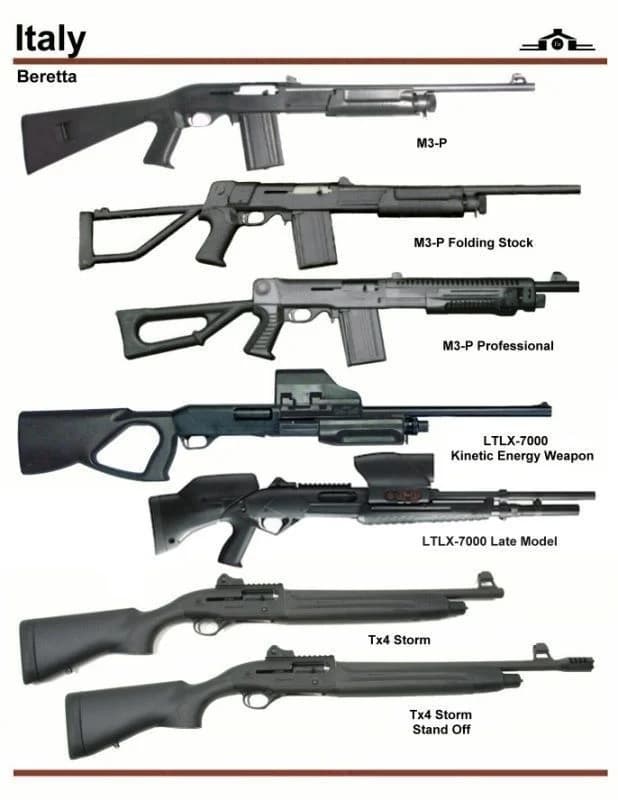
The M3-P seemed like a hot take on an already hot new platform. But sadly, it didn’t secure any contracts in its native Italy and barely secured any elsewhere. Its only notable usage came from the French RAID unit, which has a history of adopting odd shotguns.
With Beretta failing to secure many contracts, relatively few M3Ps were produced. They were only made during a few years in the 1980s, and the gun was officially dropped from Beretta's catalog in 1994.
Between the low production numbers and the lack of real importation into the United States, the M3P was swiftly forgotten.
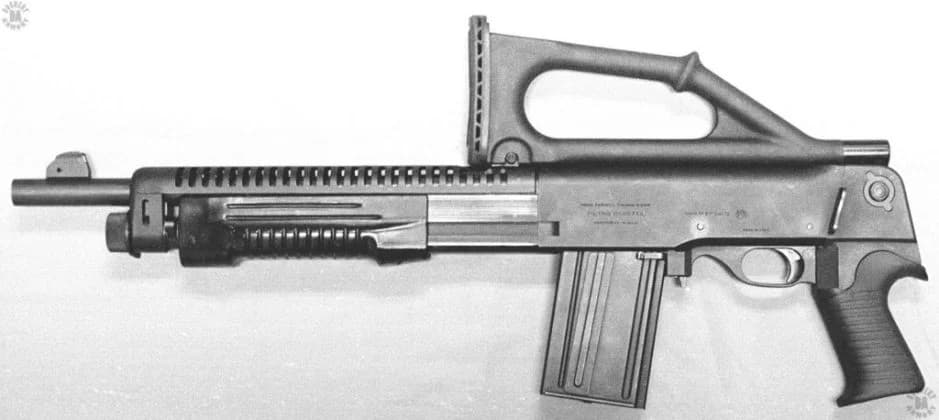
The Beretta M3P was seemingly ahead of its time, and unfortunately, the world just wasn’t ready for it.
5. FN 503
It was 2020, and I was at SHOT Show, walking around. I saw the FN booth and was immediately drawn in by the armored drone with a chain gun, the M240 machine guns, and the grenade launchers sitting there.
FN is an interesting company. They’ve had a steady focus on government contracts, including the M16A4, the SCAR, and numerous machine guns.
But among all these military- and government-only items were several commercial handguns, specifically the 509 series.
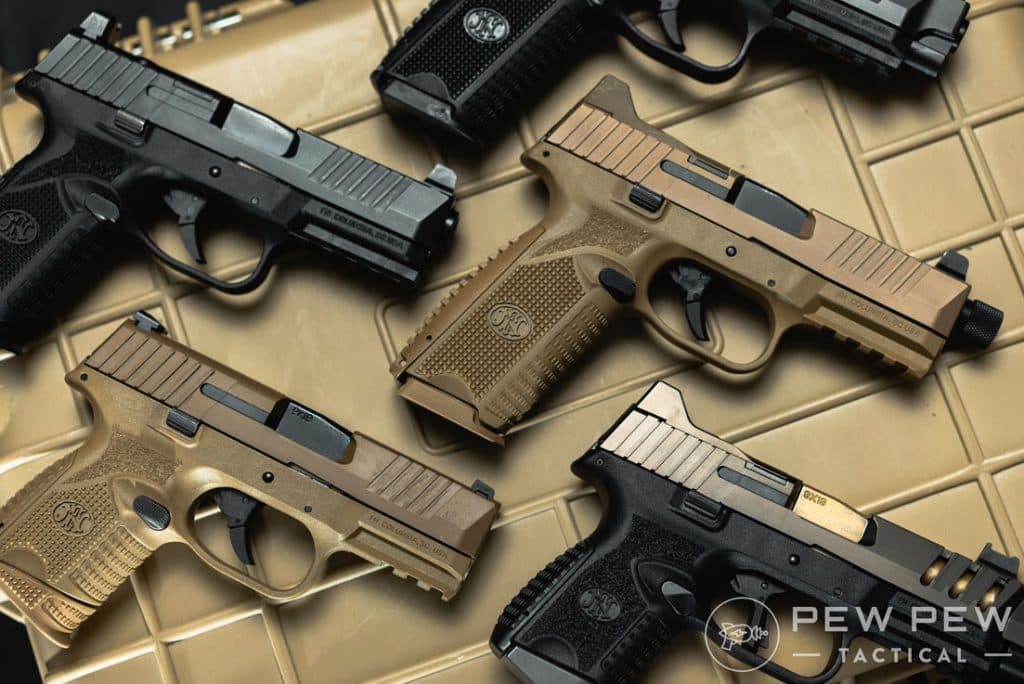
The 509 Series was submitted to the US military for their modular handgun trials, but eventually lost to the Sig P320. While the 509 was eventually adopted by the LAPD, Brinks, and a few other entities, FN shifted to marketing it to civilians.
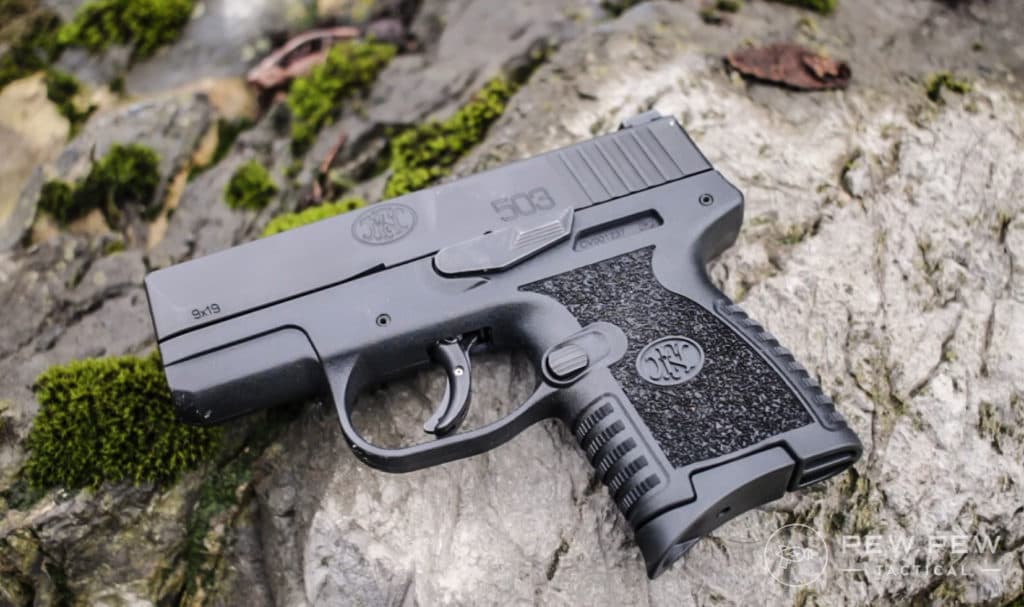
Looking to capitalize on the growing concealed carry market, FN debuted their new 9mm single-stack subcompact version of 509, dubbed the FN 503.
Coming in at 1.1 inches wide and sporting either a flush-fit 6-round magazine or an extended 8-round mag, all I could really say was a very polite “Neat.”
The Sig P365 had come out two years prior and absolutely killed the single-stack 9mm as a genre of firearms. By 2020, everyone was scrambling to produce a micro compact with a capacity of at least 10 rounds of capacity.
The FN 503 was thicker than guns like the Sig P365 and Springfield Hellcat, and carried far less ammo. It offered nothing new over existing, proven single stacks such as the Glock 43x and Walther PPS.
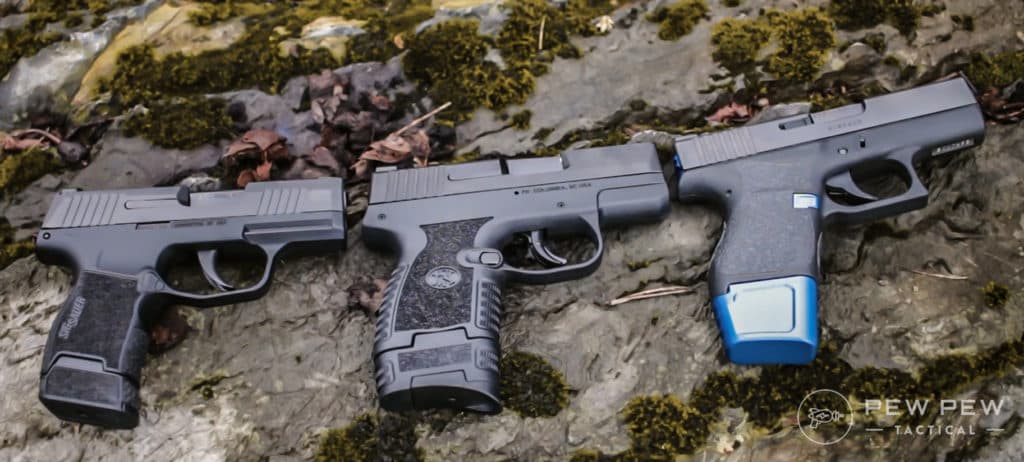
I’m betting most people reading this never even knew the gun existed, and it clearly didn't sell well. Despite being discontinued in August 2023, a few online vendors still have new-old-stock 503s, though I have never even seen one in person at a gun store.
The FN 503 was a day late and a dollar short, and as such, has been buried in the sea of mediocrity and wiped from memory.
Forgotten Forever
Whether they are too ahead of their time, too late to the game, or just oddities that aren’t quite odd enough, some guns are just bound to end up lost to time.
Do you have experience with any of these guns or other strange firearms? Any input on why they might have been forgotten? Share your knowledge in the comments below! Looking more oddities? Check out our article, 5 Weird Guns You've Probably Never Seen!