
BREAKING: ATF Drops NFA Registration for Suppressors, SBRs

The ATF just ended NFA approval and registration for SBRs, SBSs, suppressors, and AOWs. See what changes and what doesn't.
We review products independently. When you buy through links on our site, we may earn a commission to help support our testing. Learn more.
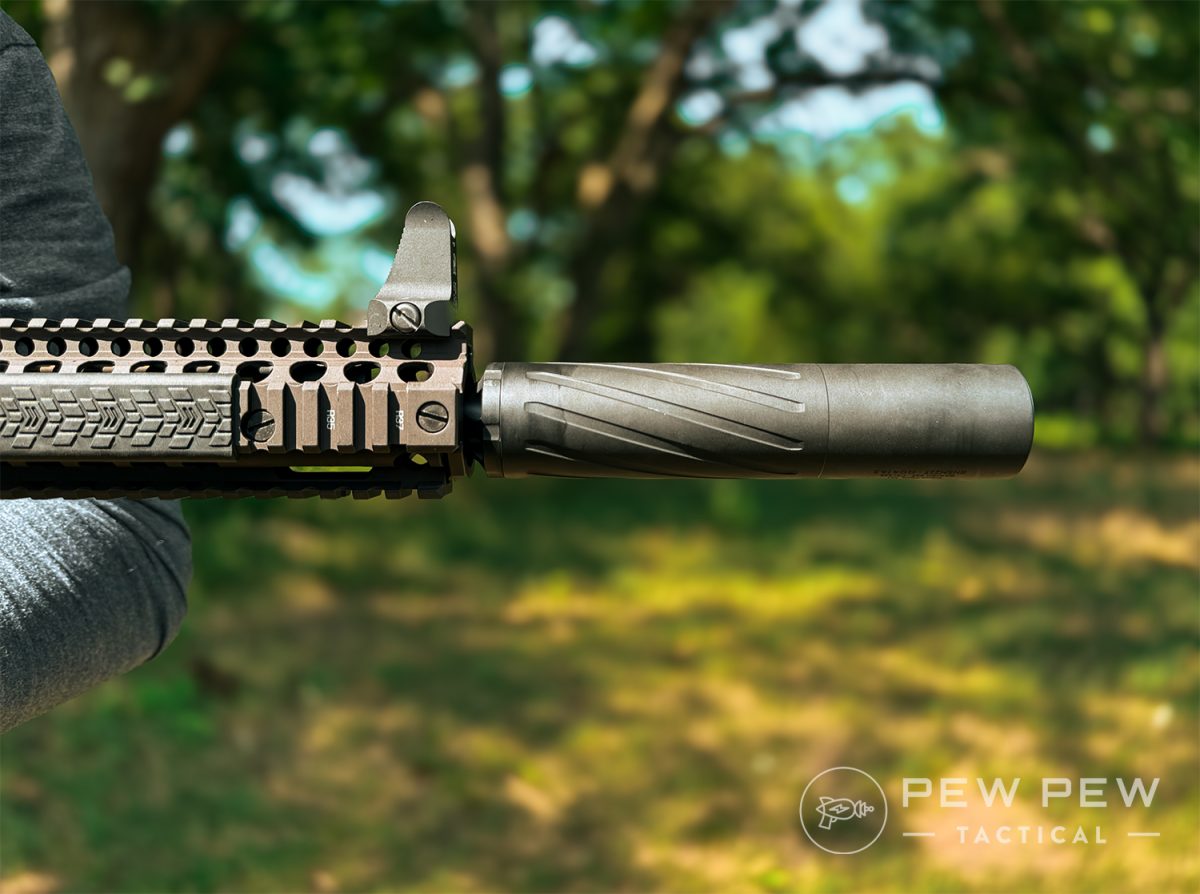
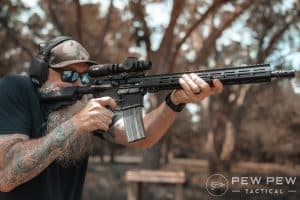
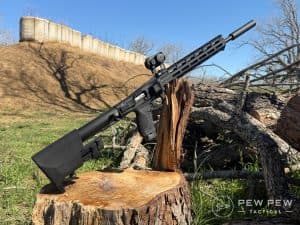
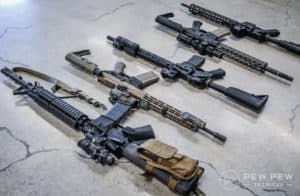
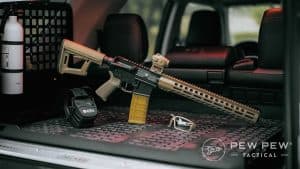
In a historic move, the ATF has officially stepped back from enforcing the approval and registration process for suppressors, short-barreled rifles, short-barreled shotguns, and Any Other Weapons (AOWs).
In an open letter to FFLs and the public, ATF Director Robert Cekada said that effective October 9, 2026, the agency will no longer require approval before making or transferring those items. It will also no longer require those items to be registered in the National Firearms Registration and Transfer Record.
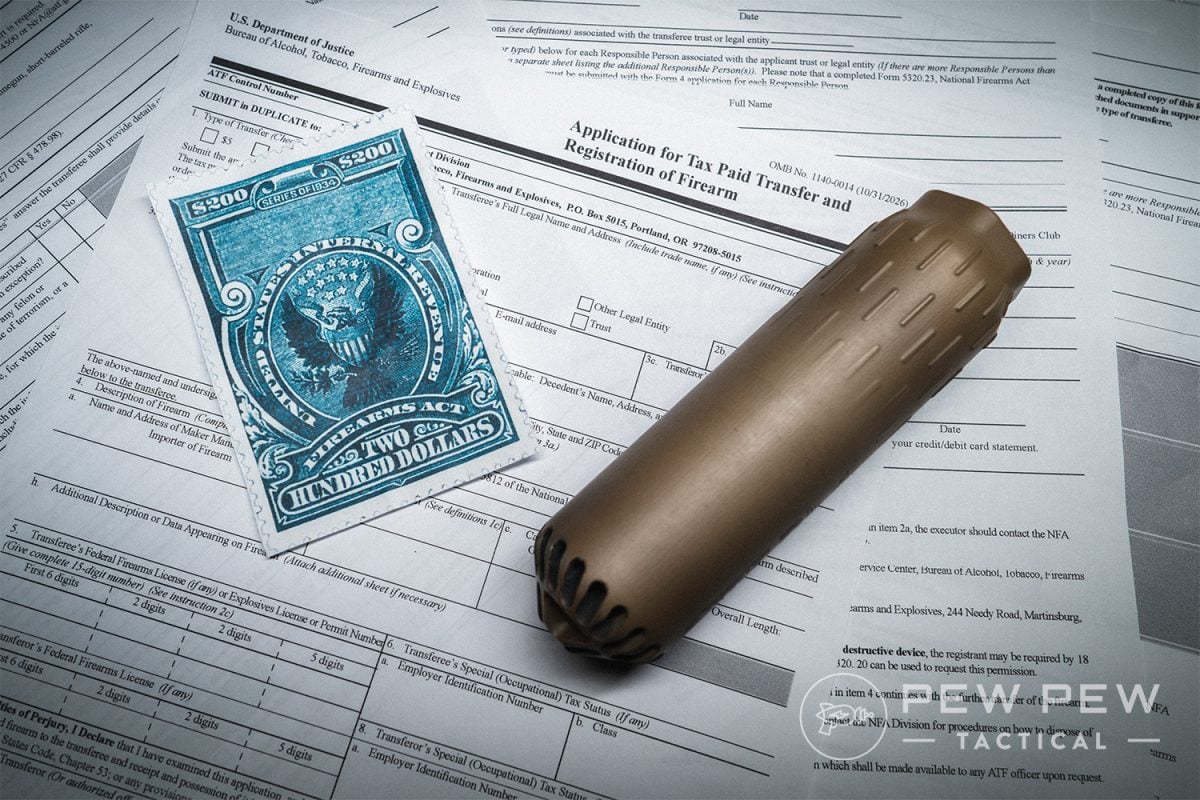
That means consumers no longer have to fill out a Form 1 or Form 4 and wait for ATF sign-off or registration. Note: Nothing changes for gun owners in states that prohibit NFA items. This policy change does not override state or local gun laws.

The Department of Justice said it determined to "exercise its enforcement discretion to create greater uniformity." The decision applies to everyone, not just the plaintiffs in Silencer Shop Foundation v. ATF.
Keep reading as we break down this big news!
Table of Contents
Trending: Best AR-15s, Best Pistol Caliber Carbines, & Best CCW Guns
What This Means for Gun Owners
What Changes
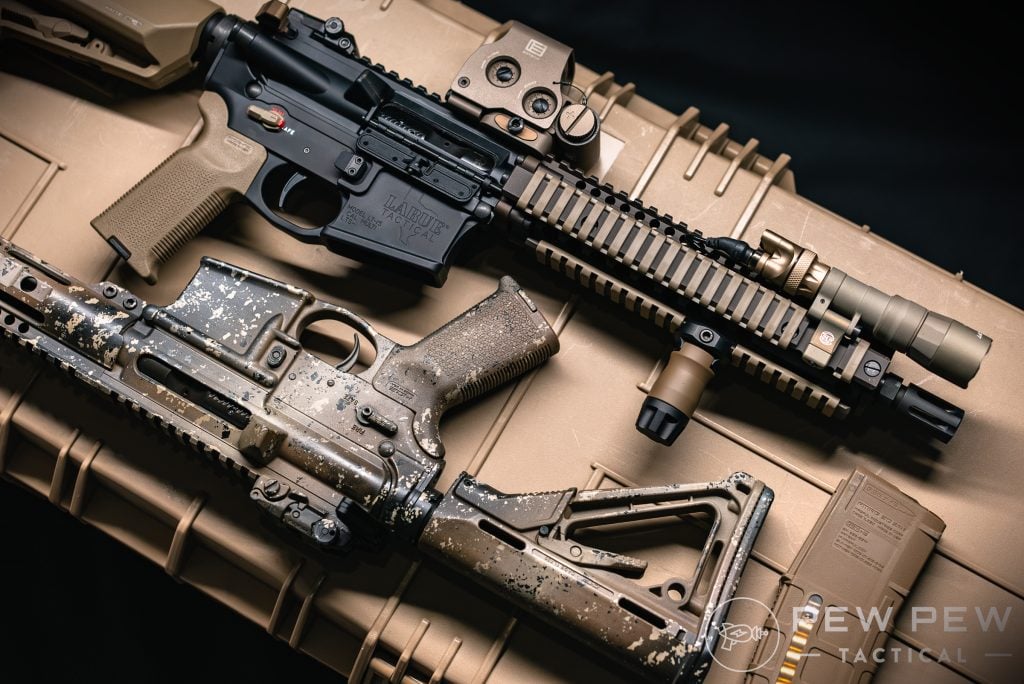
- No ATF approval is needed to make or transfer suppressors, SBRs, SBSs, or AOWs
- These items don't have to be registered
- ATF will still accept Forms 1, 3, and 4 on a voluntary basis if individuals wish to submit them. Manufacturers can report production on Form 2.
What Doesn't Change
- Background checks and prohibited persons: The Gun Control Act still treats these items as firearms, so the usual 4473 and NICS process applies, as does dealer recordkeeping. Prohibited person rules also remain in place.
- Machine guns and destructive devices: These are not impacted by the decision. The tax remains, as do all NFA provisions.
- Interstate transport of SBRs and SBSs: The ATF says you should still file a Form 20, even if the item is not registered. The agency is working with FFLs on new regulations for FFLs to transfer SBRs and SBSs, but won't enforce 18 U.S.C. § 922(b)(4) in the meantime.
- Dealer and manufacturer taxes: Anyone in the business of manufacturing, importing, or dealing in NFA firearms and devices still has to pay the special occupational tax.
- State and local laws: State and local laws remain the same. If a state has a ban on any of these items, FFLs can't transfer an item in violation of state or local law.
As always, check your state gun laws before heading to the store or purchasing online. If you live in a state that restricts NFA items like SBRs or suppressors, a policy change like this doesn't make them legal where you live. So, nothing changes.
Also worth noting is that some states require federal registration of these items, so consult with an attorney or local law enforcement prior to purchase.

Ready to buy? Check out our recommendations:
- Best 9mm & .45 ACP Suppressors
- Best Suppressors for .30 Caliber
- Best Suppressor Covers
- Best Suppressor-Ready Pistols
The ATF also warns that it's currently unclear how the federal safe harbor for interstate transport will protect an unregistered item through restrictive states, even if the start and end states allow those items. It's best to check with an attorney or local law enforcement before traveling.
The ATF says it will post an FAQ soon on its website, and questions can be submitted via email to its Firearms Industry Programs Branch at fipb@atf.gov.
Level up your gun knowledge
New reviews, guides and daily deals in your inbox.
Federal Judge Slapped Down NFA Regulations
A federal judge in Texas handed the 2A community a win in August, ruling that National Firearms Act regulations, without an associated tax, are unlawful.
U.S. District Court Judge James Wesley Hendrix issued the 66-page opinion on Wednesday on the combined cases of Silencer Shop Foundation v. ATF and Jensen v. ATF.
Gun advocates teamed up with manufacturers, gun rights groups, and 15 states to challenge the legality of the NFA after the One Big Beautiful Bill Act zeroed out the tax stamp fee.
The original filings pointed to a 1937 Supreme Court decision, Sonzinsky v. United States. In Sonzinsky, the High Court upheld the NFA’s constitutionality but also stated that a tax must “produce some revenue.”
Legal experts argued that without a tax, the government loses the authority to regulate.

Hendrix, presiding over the Northern District of Texas, agreed, issuing the injunction.
“Because today’s NFA does not generate any revenue from untaxed firearms, its regulatory provisions cannot be upheld under the taxing power,” Hendrix wrote.
“And there is no sign in the NFA’s text, structure, or statutory history that Congress invoked any other power in crafting the NFA provisions at issue. Thus, the regulatory provisions must be enjoined as unconstitutional because they exceed Congress’s enumerated powers.”
Though the court did not rule on any Second Amendment issues, instead focusing solely on the tax/enumerated powers angle, the decision thrilled gun rights advocates.
Our Most Popular Posts
The Second Amendment Foundation, who backed Jensen but was not a named plaintiff, called the injunction “a big win.”
“The basis for each lawsuit challenging the NFA registration scheme is the same – without the tax, the remaining requirements for the affected arms under the NFA have no constitutional basis,” Second Amendment Foundation Executive Director Adam Kraut said in a press release.
“And today the first court to rule on the issue has agreed with us. We’re eager to continue this fight and leave major portions of the NFA in the dustbin of history. A big win is a great way to kick things off.”
Gun Owners of America and Silencer Shop announced that some members had already purchased suppressors without a form to register the devices in mid-August after the decision, marking the first time since 1934 that a suppressor purchase was made without complying with the NFA.
Silencer Shop Foundation v. ATF and Jensen v. ATF

Silencer Shop Foundation v. ATF and Jensen v. ATF sit at the center of the fight. The Silencer Shop case saw a host of gun industry juggernauts (including Silencer Shop Foundation, B&T USA, Palmetto State Armory, and SilencerCo Weapons Research) team up with 15 states (Texas, Alaska, Georgia, Idaho, Indiana, Kansas, Louisiana, Montana, North Dakota, Oklahoma, South Carolina, South Dakota, Utah, West Virginia, and Wyoming) and the Gun Owners of America, Gun Owners Foundation, and the Firearms Regulatory Accountability Coalition.
Jensen started with Texas gun owners John Jensen, Jeremy Neusch, and David Lynn Smith with Hot Shots Custom, LLC, and the Texas State Rifle Association, FPC Action Foundation, and the Citizens Committee For The Right To Keep And Bear Arms supporting.
Both cases pushed back against the regulation requirements of the NFA and named Acting Attorney General Todd Blanche, the U.S Justice Department, and ATF Director Robert Cekada as defendants.
What are you grabbing first? Let us know in the comments below. Want to get a jump start on shopping? Check out our articles on the Best AR Suppressors, Best Rimfire Suppressors, and Best Handgun Suppressors.
Additional Resources
- ATF Open Letter
- CBS News
- Silencer Shop Foundation v. ATF
- Jensen v. ATF
- Sonzinsky v. United States
- Judge James Wesley Hendrix
- Second Amendment Foundation press release
- Advancing American Freedom
- NFA ATF
- Gun Owners of America Press Release