Hand-Picked Daily GUN DEALS

AR-15 Forward Assist: What It Does & Do You Need One?

Should your rifle have a forward assist? We walk you through what a forward assist does and tell you whether it's worth having on your AR-15.

We review products independently. When you buy through links on our site, we may earn a commission to help support our testing. Learn more.

Since its addition to the M16 rifle in 1969, the Forward Assist, or bolt-assist as it is sometimes known, has been a topic of much debate.

The original design for the AR-15 and M16 rifles did not include this feature, but the military insisted that Eugene Stoner include it.

AR-15 with Omega 36M

Why has such a small part caused such a huge debate? Is the forward assist necessary, or is it more harm than good?

As with almost everything, the answer is...“It depends.”

To understand why that is, we have to look at the history of the assist, when it is useful versus when it can cause issues, and how the design has evolved in recent years.

So, follow along as we jump into the world of forward assists and learn more about this design feature.

By the end of this article you'll have a better understanding of this part and, ultimately, know whether you want one on your AR-15 build.

History of the Forward Assist

To put it plainly, the forward assist is a relic of yesteryear.

As early as the beginning of the 20th century, semi-automatic rifles had a way of forcing the gun to go into battery.

This carried on throughout the mid part of the century, and it was something that the military was familiar with.
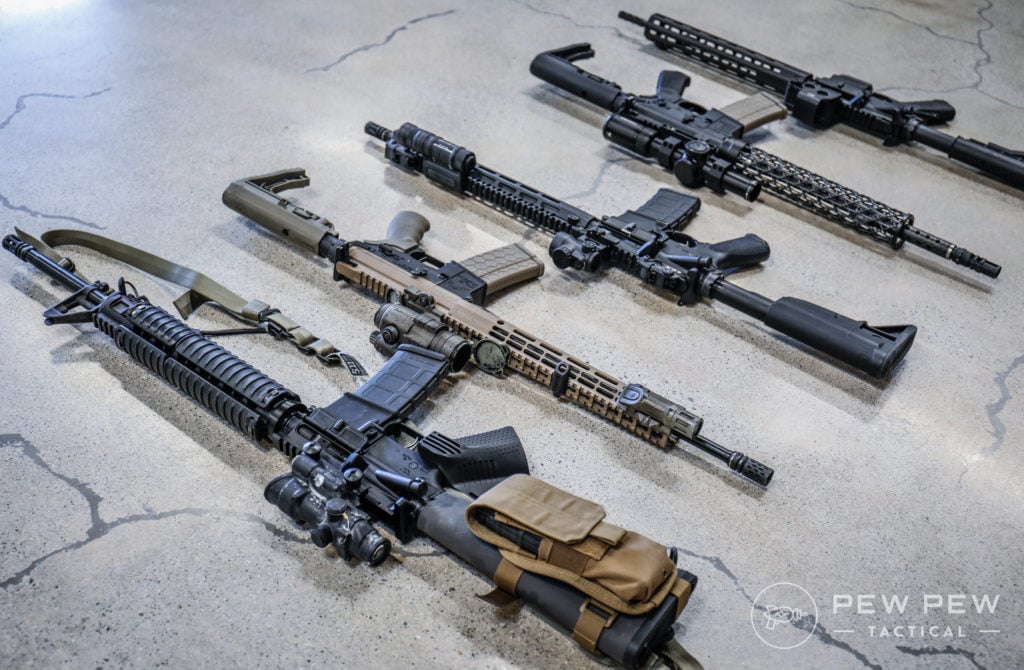
Modded AR-15s
AR-15s

The thought process was this: in the heat of battle, if your rifle suddenly wouldn’t feed or chamber a round, you could use the forward assist/bolt-assist to slam the gun into battery.

This sounds like a great idea in theory but wasn’t always the lifesaver that soldiers thought it would be.

In 1959, when Eugene Stoner and his corporation designed the first M16 (based on their AR-10 design), no forward assist existed on the gun.

Eugene Stoner
Eugene Stoner

Stoner believed it wasn’t necessary on his design. While the U.S. Airforce agreed, the Army, however, did not.

The Army insisted a bolt-assist be included on the M16 design to keep things familiar for soldiers and allow the forceful chambering of the gun.

Stoner conceded the point and included the forward assist on the M16A1. The rest, as they say, is history.
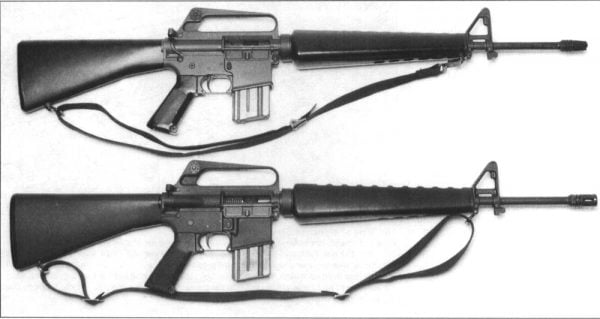
M16 and M16A1
M16, top, vs M16A1, bottom

Pros & Cons of the Forward Assist

There are two opposing schools of thought -- as well as a ton of people who couldn’t care one way or the other.

Neither is necessarily right or wrong. Usually, it comes down to training and preference.

The first camp feels the forward assist provides value.

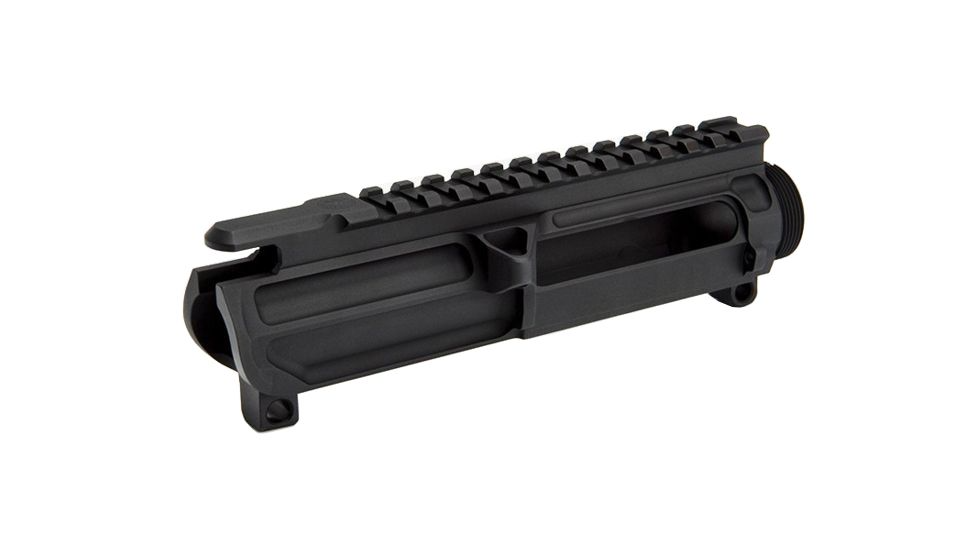
Aero Stripped AR-15 Upper Receiver
Some say the forward assist is handy.

Many of these folks served in the military or sought training by prior military. They like the security of being able to force the gun into battery if needed.

For instance, you can get a life-saving round into battery to fire the gun in an emergency, then fix whatever needs attention when you aren’t in a do-or-die situation.
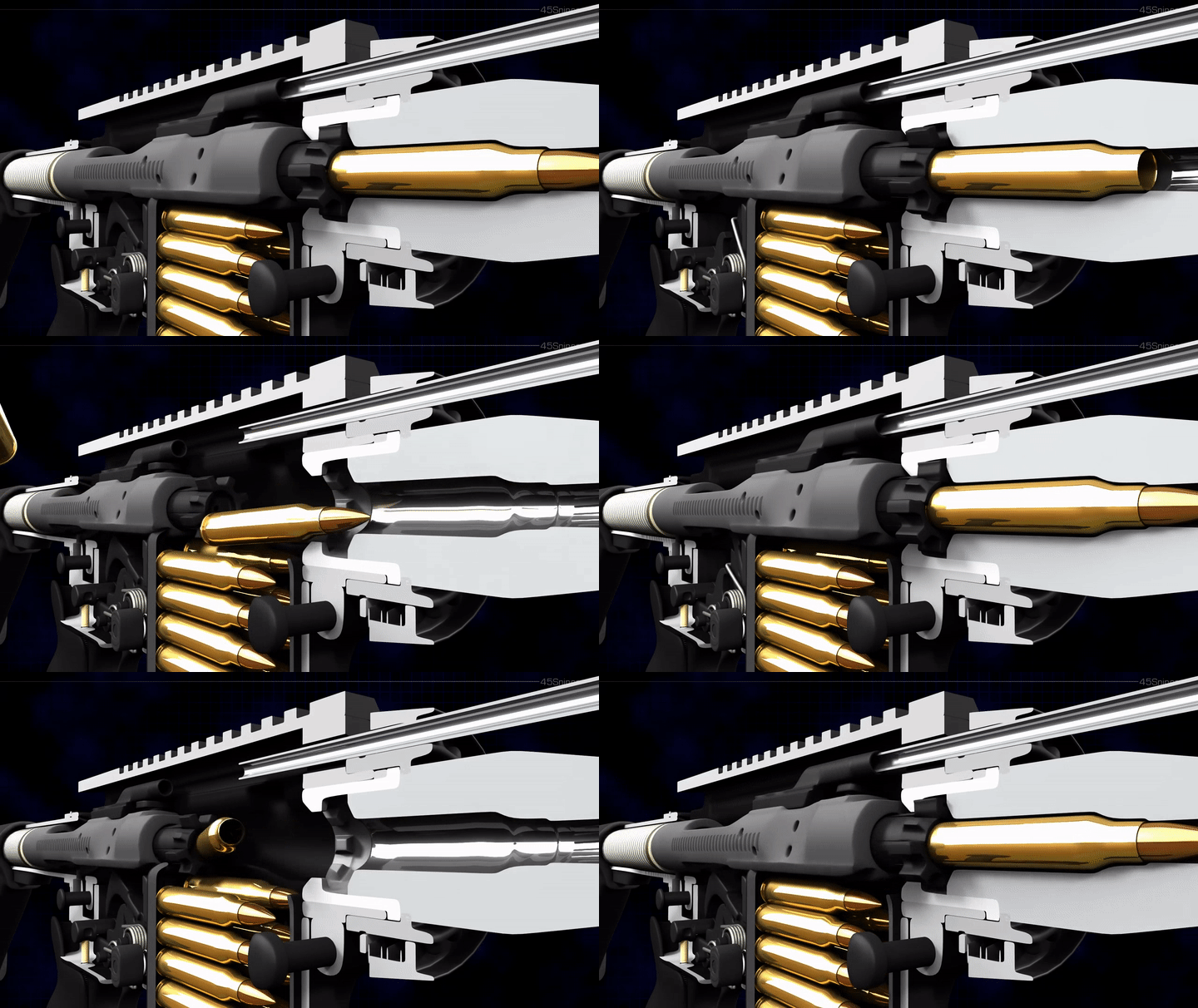
how an ar-15 rifle works
AR-15 operation

In a recent Sons of Liberty Gun Works armorer’s course, co-owner Mike Mihalksi offered another scenario.

When chambering the first round of his magazine, Mihalksi pulls back on the charging handle far enough to check that a round was chambered.

He then uses his forward assist to put the weapon into battery -- rather than slamming his charging handle forward or ejecting an unspent round and reloading it into his magazine.
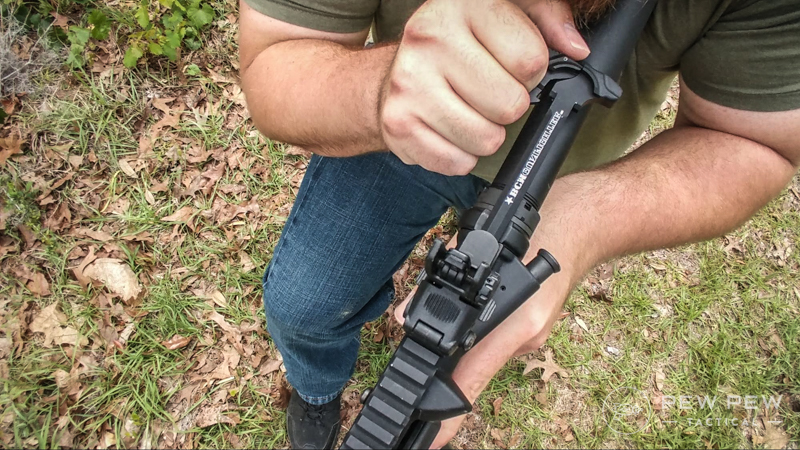

BCM Charging

The Best Gun Deals, Coupons and Finds

Subscribe to Pew Pew Tactical's sales and deals email.

On the other hand, the other school of thought is that forward assists cause more problems than solutions.

Do you want to force a round into your chamber that wouldn’t go in the first place?

 Is the round damaged or out of spec? What caused the hang-up?

That’s a concern for many folks against forward assists. Honestly, it stands as a valid concern -- especially in the case of a .300 Blackout round getting mixed into .223/5.56.

Size differences between 5.56 NATO, .300 BLK, and the 6.5 Grendel

Another concern is that the plunger inside (not the pawl you press) or its spring could break and get into the cycling action of your gun.

This could also cause some fairly major issues, the very least of which is interrupting the cycle of operation.
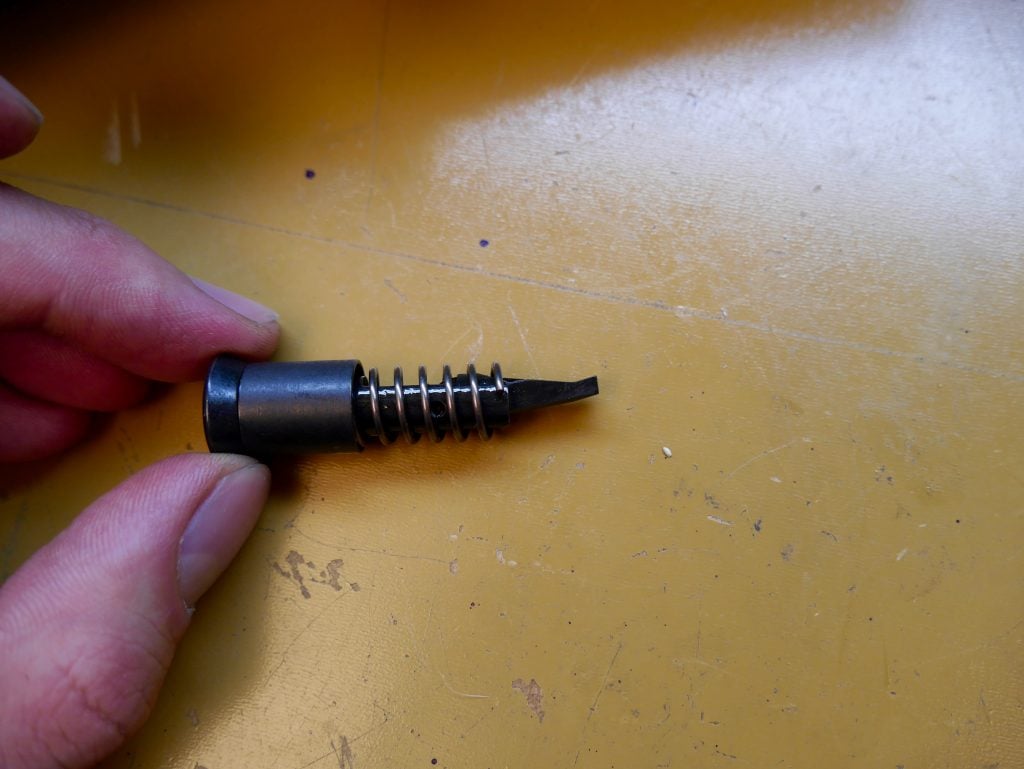
Forward Assist Direction
Forward Assist

To that extent, instructors like Brian Hartman of Progressive Force Concepts encourage students at their carbine courses to consider upper receivers that do not have forward assists.

And finally, plenty of rifle owners simply don’t care. If you ask the average AR-15 owner how many times they used their forward assist, you likely will get a shrug.

Shrug Don't Know

The indifference is often due to lack of information, lack of training, or the feeling of having it but not needing it being better than needing it and not having it.

I want to reiterate that none of these views is “correct.” Ultimately, it’s up to each user to decide what they prefer and why.

You get to decide

The key is basing that decision on actual information versus what someone told you.

Take all of the information and opinions you can and use them to guide yourself to what you need.

Changing Designs

It’s been just over 60 years since Stoner designed the AR platform, and, in that time, every part of the platform underwent evolution.

The forward assist is no different, evolving in a couple of different ways.
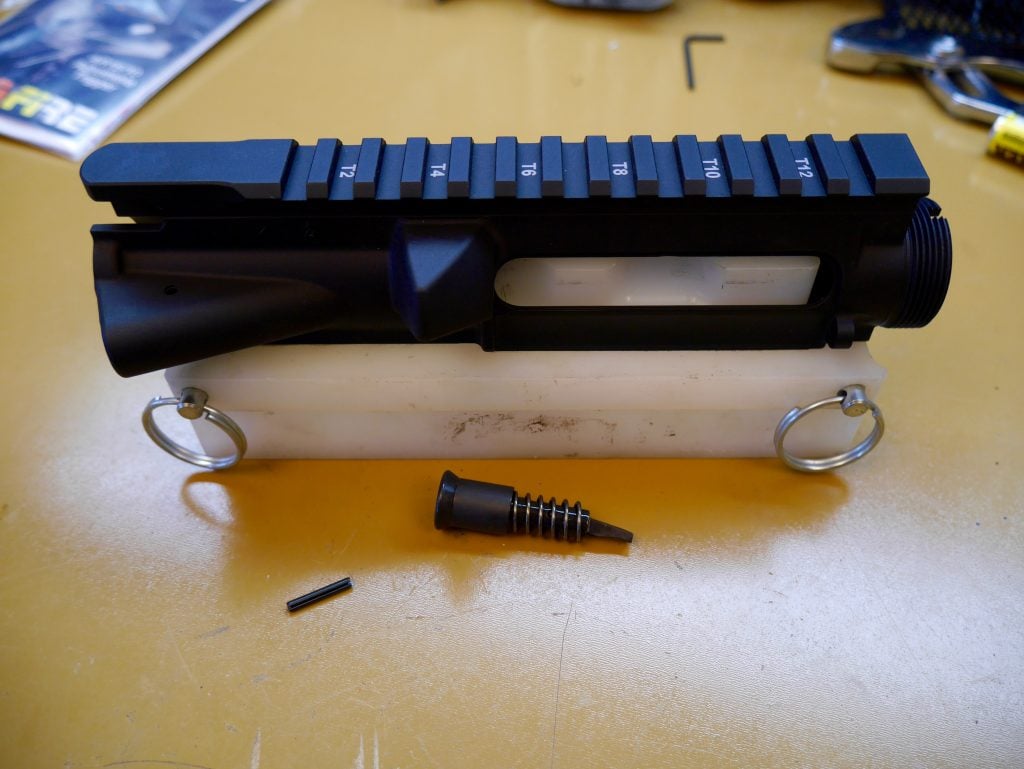
Stripped Upper Receiver and Forward Assist

First, some companies embraced the “no forward assist” thought, designing uppers without it.

These are sometimes referred to as slick side uppers and vary in terms of quality based on the companies that produce them.

Two standouts of consistently great quality -- Battle Arms Development and Vltor.

Both offer an upper receiver without a forward assist, are well-respected companies with a long history of quality, and redesigned the upper receiver. 

Our Most Popular Posts
Meanwhile, other companies kept the forward assist but altered it.

Two major standouts come from Forward Controls Design, one in collaboration with Hodge Defense.

LDFA by Forward Control Design

The focus of both variations of the forward assist from FCD involves reducing the pawl footprint in some fashion. Doing this means it’s less likely to snag or interfere with the manipulation of an ambidextrous charging handle.

FCD’s LDFA saw the rim of the pawl removed and the overall size of the pawl reduced. This limited the interference with the right latch of the charging handle without reducing the effectiveness of the forward assist itself.
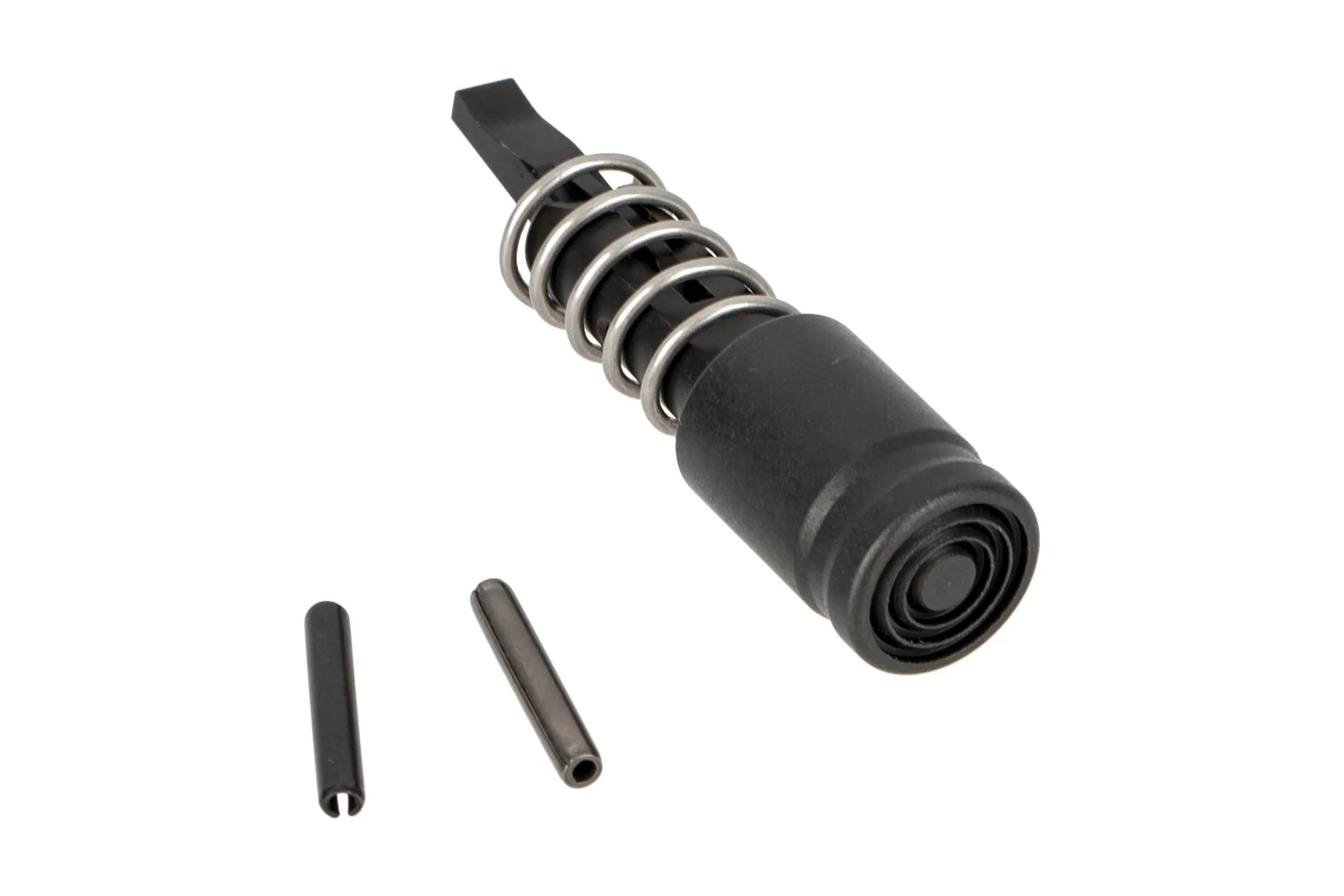
Forward Controls LDFA
Prices accurate at time of writing

The LSFA is a collaboration with Hodge Defense with a similar thought process. Removing the rim from the pawl helps prevent a user’s fingernail from snagging on the forward assist while manipulating the weapon.
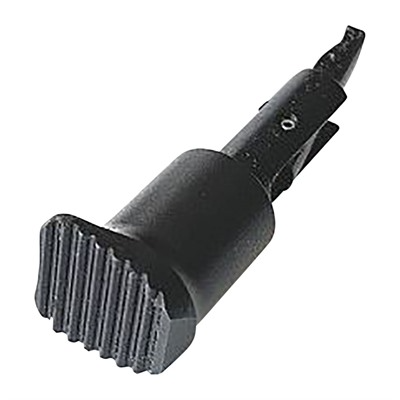
Forward Controls AR-15 LFSA Forward Assist
Prices accurate at time of writing

In addition, the shape of the pawl is changed to more of a teardrop, allowing more surface area. This allows for more confidence and less slippage when actuating the forward assist in a hurry or under less than ideal circumstances.

Conclusion

Whether you believe in a forward assist or not, they are present on most standard AR upper receivers and offer a way to force a rifle into battery.
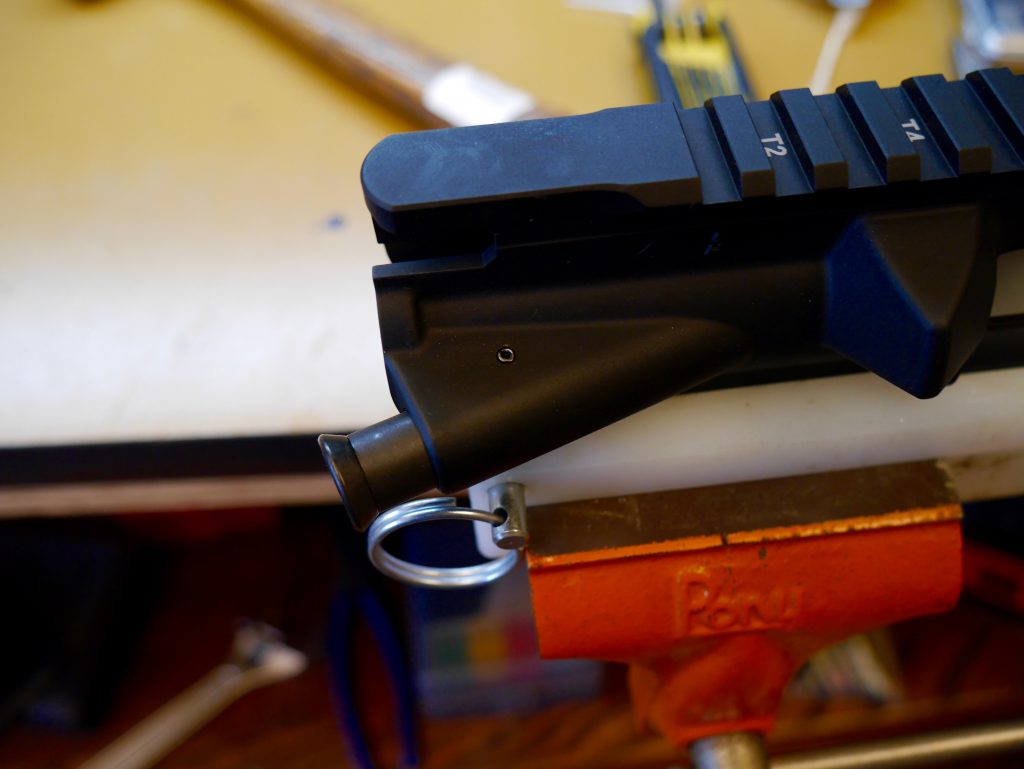
Forward Assist Installed

Again, it’s up to you to decide if this is necessary for your training or goals, but rest assured, there are some good brands out there if you are interested.

What are your thoughts on forward assist? Let us know in the comments below. Looking to get a new upper for your AR? Check out our list of the Best AR-15 Complete Upper Receivers & Stripped. 

Shop Products Mentioned

loading...

Written By

Todd Gimian
facebook Iconinstagram Iconlinkedin Icon
Todd is a Gunsmith and Range Officer based out of Las Vegas, Nevada. He has a degree in gunsmithing from Sonoran Desert Institute and has been working with firearms since he was a kid. Todd has a background in martial arts and enjoys training and teaching combatives whenever he has time.

WHY YOU CAN TRUST PEW PEW TACTICAL

Since 2016, the Pew Pew Tactical team has been dedicated to providing expert reviews and in-depth testing of guns and gear. All while keeping in mind that guns are fun and that readers come first.

Written by American gun enthusiasts, competitive shooters, former military/law enforcement personnel, and trained journalists, we use our extensive skill sets and knowledge to bring a well-rounded, researched approach to our content.

We pride ourselves on hands-on testing and real-world experience with all products we recommend. Further, we believe in objectivity and approaching all articles without bias – our few advertisers never influence our reviews or recommendations. We believe in giving our readers a comprehensive understanding of how and why a product is great – or isn’t. And if it’s good enough for us to use ourselves and recommend to loved ones.

Our content, analysis, and insights on firearms and gear are recognized across the web. We are proud to be cited by authoritative third-party platforms including Newsweek, Yahoo News, and Wikipedia, demonstrating our standing as a trusted resource in the firearms industry.

Conversation

32 Comments

Join the discussion

  • I have an Aero Precision Upper with NO FOA. What BCG can I use in a slick side upper. It is a 5.56 10.5” upper. Does serrations or slick side BCG’s have a different impact on functionality and use?
    ...
  • 3
    The only time I've really needed and used the forward assist was while in the US Army in combat in the sandbox, and in the field during an exercise or exercises (i.e. where one's rifle can't be kept 100% clean). I can still feel and hear the scrape of the bolt being forced home! As a civilian I have never needed to use it, but I also prefer the AK platform :)
    ...
  • 1
    One thing I learned from Clint Smith about the AR-15 is the bowl shape in the bolt carrier that is right above the ejection port of the AR was made like that so the shooter could take their thumb and push the bolt forward to ensure that it is all the way forward. Clint is adamantly opposed to using the forward assist and that's how I was taught. Only thing about it to me is would you put your finger on the bowl of the bolt as I'll call it to check if the bolt was seated if the rifle is red hot from firing. Food for thought.
    ...
  • I'd like to see a list of manufacturers who offer slick-side uppers. Besides BAD and Vltor, I've only seen them from Aero Precision (very occasionally) and Fulton Armory on their retro builds. Perhaps Harlan & Mike (formerly of Nodak Spud) will make some for their retro H&R clones at Palmetto State Armory. I wish they would sell a stripped slick-side upper. I'm not interested in a retro, I just want to lose the forward assist.
    ...
  • Just throwing this out there. SPORTS The tap comes after releasing the charging handle. Something went wrong and you are now attempting to get the bad out by first ejecting the bad round.
    ...
  • 1
    Apparently I'm I the only who noticed the author can't get his FA terminology correct? He keeps referring to the PLUNGER as the PAWL.

    When mentioning some companies that have introduced different replacement designs so as to reduce interference with the right side of the charging handle during operation he repeatedly said PAWL.

    Umm... the pawl is the hooked part that engages the BCG... there's no way to snag your fingernail or have interference with the charging handle. Why? Because that part is INSIDE the receiver. However the PLUNGER is part that sits outside of the receiver that one would use to push to operate the FA.

    Seriously, if you're going be a gunsite and write articles about something, at least maintain credibility and get your terminology correct. This isn't the first article from a bigger gunsite that I've seen this and I find it annoying.

    As far FA use, meh... I think I've used it once on my civilian firearm and never used it on my ARMY issued one for forcing the BCG into battery, only for a press check. Where I live and hunt I don't hunt deer with an AR type, that's what the Winchester Mod94 is for. For coyotes, meh, maybe as it goes with me but that job is mainly reserved for my .17HMR Marlin 917V... heavy woods and usually short range shots.
    ...
  • Whelp... I've actually used mine at least once because I limpwristed a charging handle rack. But I guess that falls under the "operator error" category.
    ...
  • I spent 22 months in 'Nam, U.S.Army. 2 months shy of 2 tours, back to back. Not one time did I need, the forward assist on my M16A1.
    ...
  • I stand with Eugene Stoner and Clint Smith on this: the forward assist is unnecessary and can cause more harm than good.
    ...
    • John

      Define "can cause more harm than good".

      Anything wrong with the rifle "can cause more harm than good". You can take any part of the rifle and apply that. A bent/broken firing pin, a "stuck" extractor, a heavily fouled bolt, foreign body ingress into the weapon, a blocked barrel, etc...

      What kind of "can cause more harm than good" can a forward assist that maybe, might maybe, once in a blue moon with a chance of happening somewhere between a snowball in hell and pigs flying - for the common AR-15 in use today please define for the forward assist the kind of "can cause more harm than good" .
      ...
      • Dave

        You point out that broken/defective/dirty parts or systems in the weapon can lead to bigger issues. No one disputes this. The point is that the forward assist, operating as designed, can be used by the user to force the weapon into an unsafe condition (out-of-spec/damaged round, foreign debris or wrong round forced into battery).
        ...
        • Nick

          You don't just push on it because the rifle doesn't fire, any more than you'd shove on the back of the slide of a semi-auto pistol in the same situation. If you didn't see a round eject and the weapon doesn't go into battery, you are not ready to go. You may have one of many possible problems that all require more attention before attempting to put it into battery, handgun and rifle, alike. I agree with the writer, it likely doesn't matter either way. Just buy the upper of your choice and have fun!
          ...
          • John

            You are correct, it doesn't matter. There is nothing inherent with the FA which causes an "unsafe condition", its nothing to fear. Get what you want, FA or not, and enjoy it - and always remember, the safe operation of your rifle is your responsibility.

            I think I'm going to invent what I will call ('cause I say so) an "out-of-spec/damaged round, foreign debris or wrong round" detector for the AR-15. I'll advertise it as "Correct the deficiency of the AR-15 Forward Assist with its many dangers of and detect these things before you can press that forward assist button. Get the worlds best detector now and shoot in safety. because we care about your safety we are offering a special discount price of $100.00 (regularly $160.00) because we think its important that all AR-15 owners with a forward assist be protected from the dangers of . So get yours today. (disclaimer : May not be available in your locale)".

            After all, it must be real and true 'cause a "company" (an entity) on the internet reinforced every fear there ever was about the forward assist by selling this thing. After all if all these bad dangers of the forward assist were not real then why would someone go to the trouble of inventing this thing, right?

            I'll come up with more complete advertising later.

            I'll bet I could make a fortune on it.
            ...
  • Just had the pawl on my new 300 BO pistol sheer off. Grand total of 12-15 rounds through it. With almost 45 years shooting this weapon platform, I’ve probably only used the FA 6 times total and none with the 300. The pawl jammed in between the BCG and the upper reciever causing a catastrophic malfunction. I wasn’t able to clear it until I got home and had a friend help.

    As far as making sure you have a round chambered, consider dropping the mag and checking for crossover of the top round.
    ...
  • The advantage of the forward assist for the average shottist is that it allows the operator to assure that their bolt is fully seated. I've been trained by knowledgeable teachers. When I holster my pistol, I pull on the magazine to be sure it's fully seated, even though I've seated it vigorously. Needful? Maybe not. Reassuring? Yep, it is. When I take up my rifle and put it into carrying condition, I pop the forward assist a couple of times. Needful? Maybe not. Reassuring? Yep, it is.
    ...
    • John Fitzgerald

      David I am with you on this. Also find it very convenient when it comes to silently chambering a round while hunting and making sure the bolt is in battery. Wouldn't do a build without it. A feature I rely on with my rifle. Guess just a carry over in habit from being trained on the M16A1.
      ...