
Taurus RPC Review: Best Budget PDW?
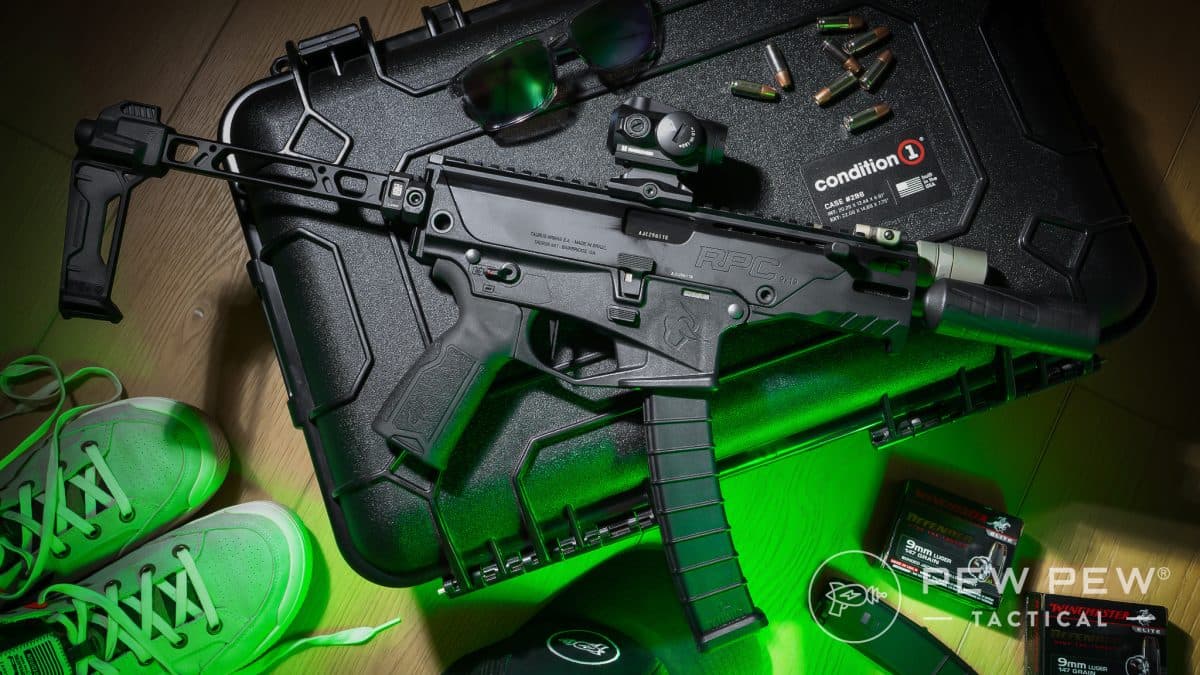
There’s a new, affordable PDW in town! Here’s everything we love and a few things we’d change about the new Taurus RPC.
We review products independently. When you buy through links on our site, we may earn a commission to help support our testing. Learn more.
The all-new Taurus RPC is making a splash because as what could be the best budget PDW you can buy. With a roller-delayed action, modular design, and sub-$1,000 MSRP, I can see what the chatter is all about.
This review is for all of you who want to get into the PDW game, but want to have money left over for a few accessories and a whole bunch of ammo.
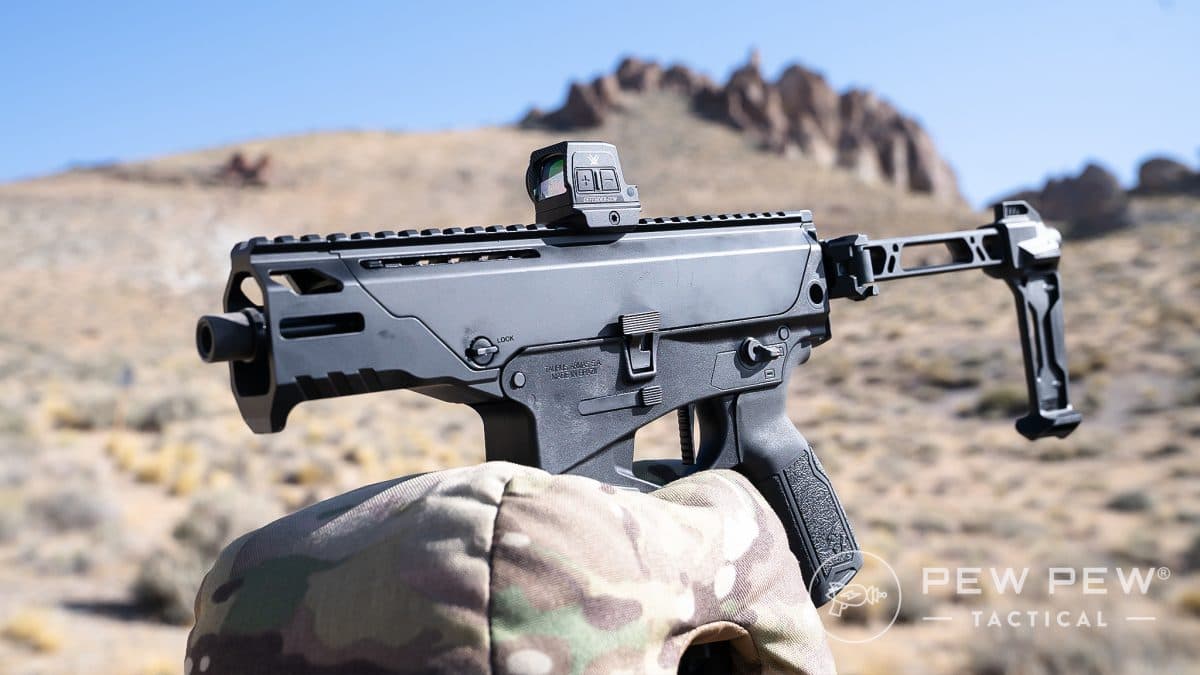
I gathered up 500 rounds of training and defensive ammo, a weapon light, a few red dots, and my experience testing pistols and rifles, and hit the range to see if the Taurus RPC is worth your money.
What mattered most to me was figuring out exactly who should buy this PDW and who should look elsewhere.
Table of Contents
Trending: Best AR-15s, Best Shooting Hearing Protection, & Ammo in Stock
By the Numbers
Reliability: 5/10
Frequent failures to feed really held the RPC back during testing.
Accuracy: 6/10
Most ammunition produced 25-yard groups on par with what I expect from a PDW. The RPC didn’t do as well with cheap training ammo, though.
Ergonomics: 8/10
Ambidextrous controls and a comfy pistol grip earn the RPC high marks for ergonomics. I just wish the safety didn’t poke into my shooting hand.
Customization: 8/10
Adding an optic, light, and sling to the RPC is easy. Depending on how many modular components Taurus releases, the sky could be the limit.
Value: 7/10
Taurus pretty clearly launched the RPC to undercut the value end of the PDW market. They succeeded in building a fun, affordable platform.
Overall: 6/10
The Taurus RPC is one of the most fun firearms I’ve shot recently, but it’s not ready to square off with the more expensive heavy hitters of the PDW segment until reliability and accuracy improve.
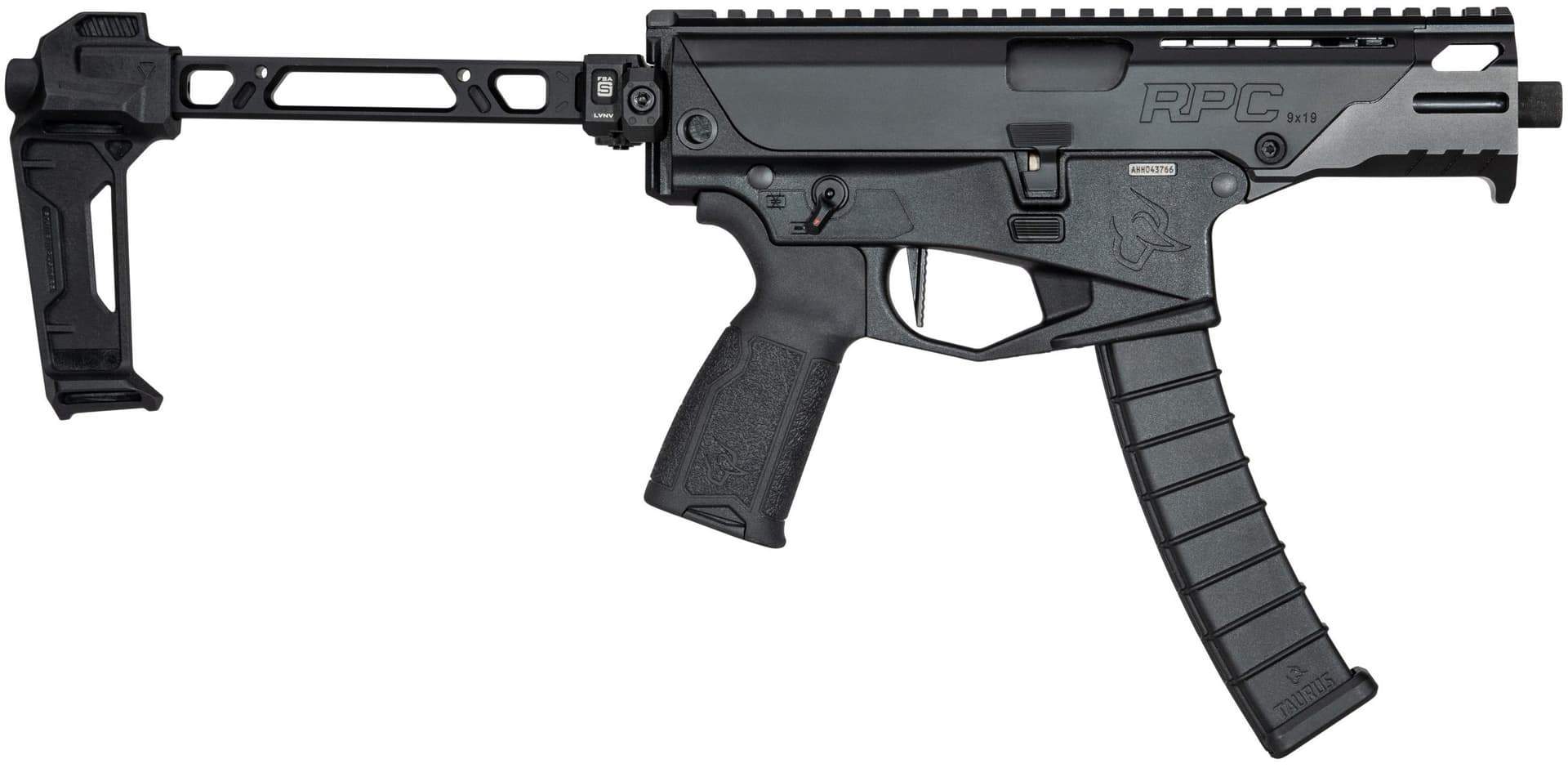
Taurus RPC Pros & Cons
Pros
- Great price for a roller-delayed PDW
- Fully ambidextrous out of the box
- Includes specific components for subsonic shooting
Cons
- Inconsistent reliability
- Proprietary magazines
Taurus RPC Specs & Features
Specs
- Caliber: 9mm
- Action: Semi-automatic, roller-delayed blowback
- Capacity: 32+1
- Barrel Length: 4.5”
- Overall Length: 12.2”
- Weight: 3.9 lbs
- Country of Origin: Brazil
- Comes With: Two magazines, 85-degree locking tip, 110-degree locking tip, cable lock, owner’s manual
Features
- Soft-shooting roller-delayed blowback action
- Separate locking tips for supersonic and subsonic ammo
- Fully ambidextrous controls (charging handle is reversible)
How I Tested the Taurus RPC
Round Count & Reliability Testing
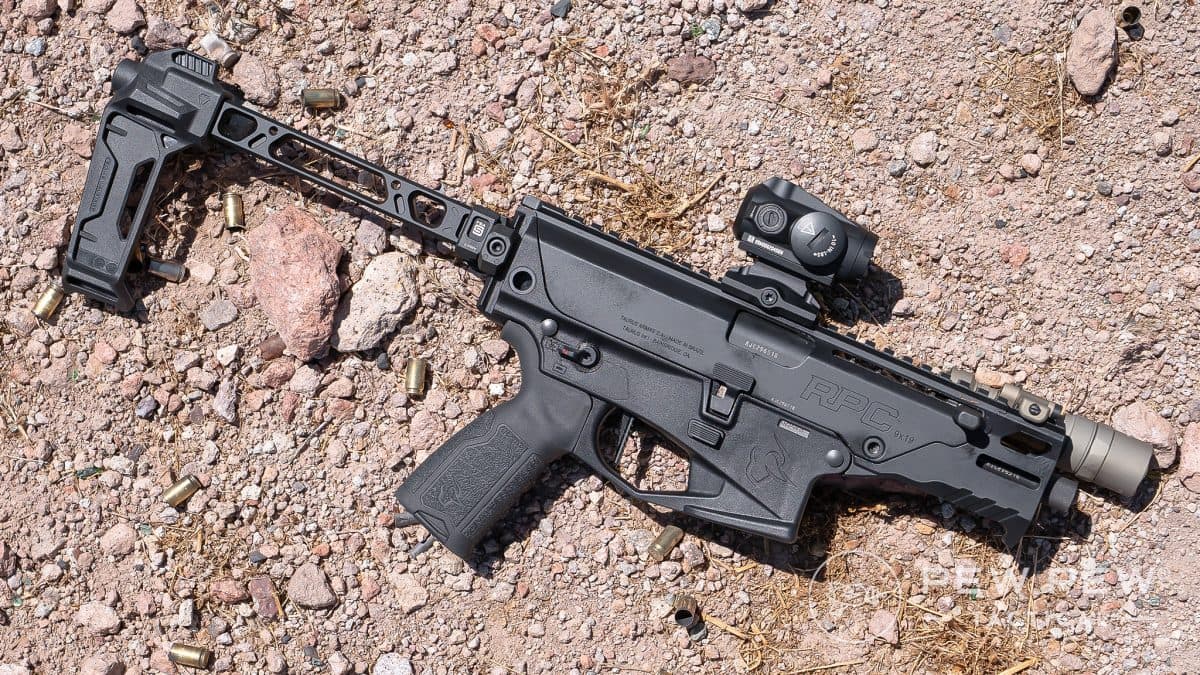
To really get to know the Taurus RPC, I burned well past the usual benchmark of 500 rounds.
- Supersonic training ammo: AAC 115gr FMJ
- Subsonic training ammo: Winchester Super Suppressed 147gr FMJ
- Supersonic defensive ammo: Speer Golt Dot +P 124gr JHP
- Subsonic defensive ammo: Winchester Defender 147gr JHP
The RPC uses proprietary magazines, so I didn't have the option to test it with aftermarket mags.
All of this revealed numerous but sporadic failures to feed. More on that later in the review.
Accuracy Testing
I evaluated the Taurus RPS's accuracy with all four ammunition types using five-shot groups from 25 yards with a rest, them measured the groups to determine its accuracy potential and preference for certain loads.
In addition to collecting accuracy and chronograph data, I ran a bunch of realistic drills. Bill Drills tested the RPC’s speed, transition drills tested its pointability, and I even worked around vehicles to take advantage of its maneuverability.
Accessories
Since nobody is going to leave their RPC stock, I also mounted up a few accessories. Various slings, optics, and lights all entered the rotation.
Taurus RPC: Accuracy & Reliability
I kicked things off with slow-fire accuracy testing from a rest at 25 yards while running a Garmin Xero C1 Pro for chronograph data.
| Average Muzzle Velocity | Standard Deviation | Extreme Spread | |
|---|---|---|---|
| AAC 115gr FMJ | 1,123 fps | 17 fps | 46 fps |
| Speer Gold Dot +P124gr JHP | 1,199 fps | 10 fps | 27 fps |
| Winchester Super Suppressed 147gr FMJ | 970 fps | 11 fps | 32 fps |
| Winchester Defender 147gr JHP | 1,020 fps | 17 fps | 48 fps |
The RPC consistently put five shots inside 2 inches at 25 yards with Speer Gold Dot and both Winchester loads.
Inexpensive AAC training ammo went all over the place. Sometimes I got three shots in a tidy, little group, and two strays five or six inches away. That didn’t interfere with my ability to land C-zone hits at 25 yards, but it frustrated me beyond that.
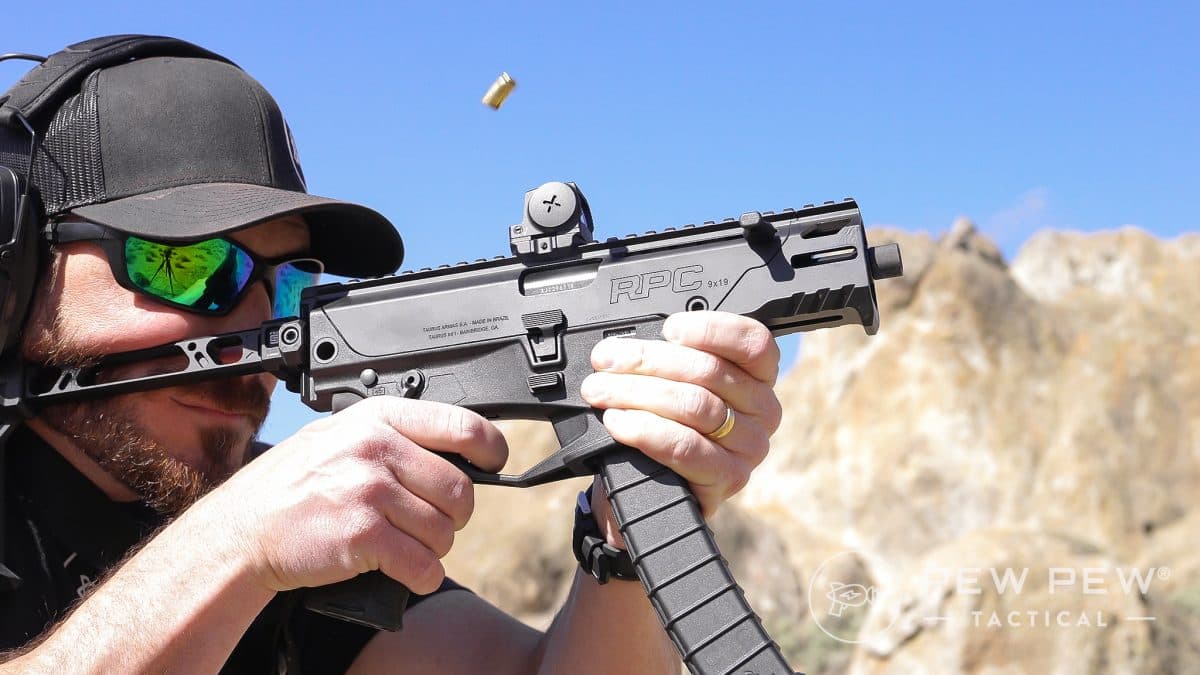
Next, I moved on to some drills that mimic how you might use the RPC in a defensive scenario. That included tactical and speed reloads, Bill Drills, transitions between multiple targets, engaging steel from 10 to 100 yards, and some dynamic training with vehicles, obstacles, and natural rests.
I have to say, the RPC is incredibly fun to shoot. It’s light, recoil is minimal, and the 32-round magazines always seemed to run dry before I was ready to stop shooting.
I ran the RPC with the 110-degree locking tip whenever I loaded supersonic ammo – that’s the configuration Taurus recommends. When I switched to subsonic rounds, I swapped it out for the 85-degree locking tip and screwed on a Silencer Central Banish 9K.
The locking tips were clearly marked and easy to install at the range once I got the hang of it.
Hang onto that firing pin spring!
After about 300 rounds of pure bliss, I started getting increasingly persistent failures to feed, presumably due to carbon buildup. One per mag, two per mag, then one every three to four rounds.
Word to the wise: this issue will crop up much earlier if you don’t hold the RPC nice and tight. Don’t let the lack of recoil lure you into complacency.
Malfunctions were far more common with flat-nosed subsonic ammo. Both 147-grain Winchester Super Suppressed and Winchester Defender induced frequent failures to feed, even when the RPC was squeaky clean and heavily lubed. That was annoying because they also exhibited some of the best accuracy.
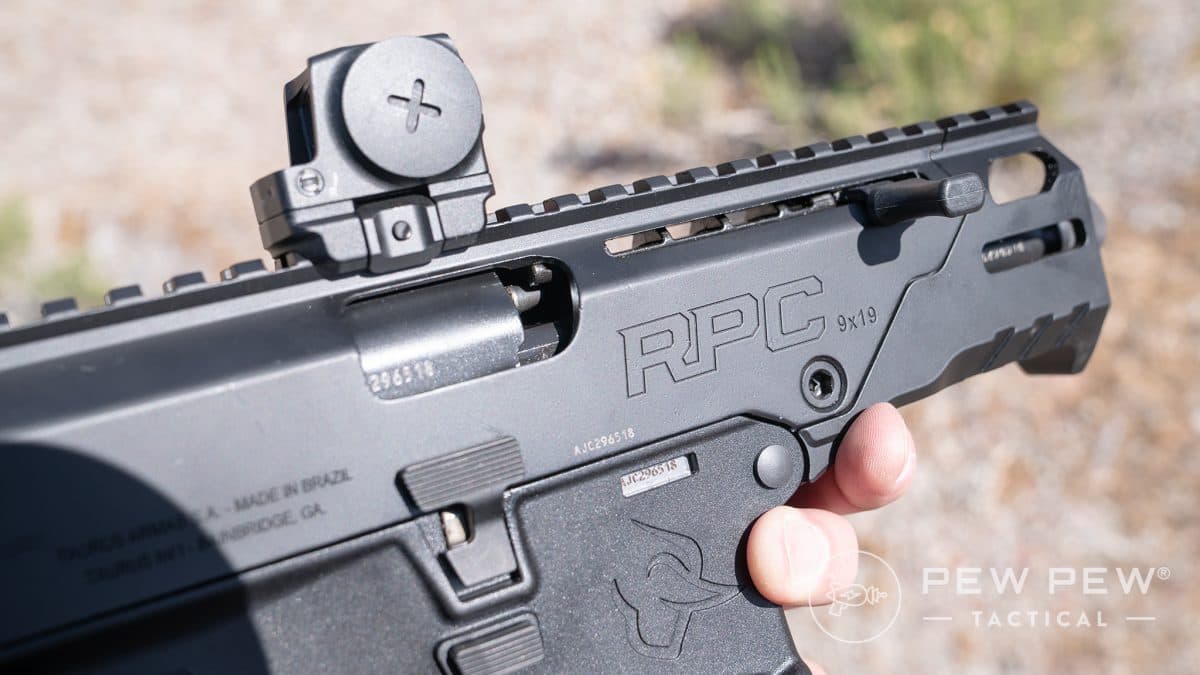
Normally, I’d execute immediate action – the old tap, rack, bang. With the RPC, there’s enough room in the action that tap, rack, bang became tap, rack, double feed. I had to move on to remedial action of locking the slide to the rear, dropping the magazine, shaking out the loose round, reinserting the mag, and sending the bolt home.
I ultimately determined that the RPC needs to be run with way more gun oil than I’m used to using. Soak this thing. Take it to the splash zone. Keep the internals sopping wet, and you’ll be in much better shape until it’s time to scrub it clean.
It also ran great with Speer Gold Dot +P. The extra pressure overcame more friction in the system than the light target loads.
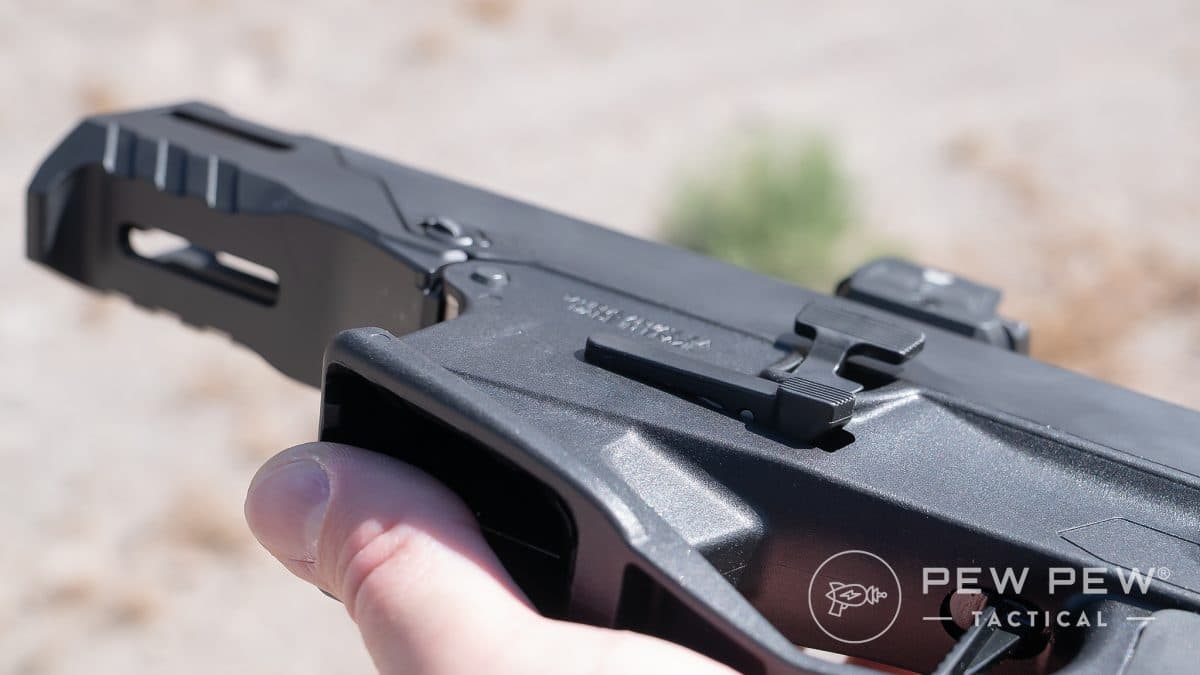
The only other issue I encountered was a sticky magazine release that remained in the open position during one particular mag change. To fix this, I just wiggled it back and forth a few times until whatever debris was caught in there worked its way out. No biggie.

The Best Gun Deals, Coupons and Finds
Subscribe to Pew Pew Tactical's sales and deals email.
Ergonomics: Fit & Feel
Out of the box, my test RPC was caked in what must have been at least thousand rounds of carbon and grime from previous reviewers. I got that sorted with a deep cleaning before taking it to the range.
Grip
Throughout testing, I really enjoyed the RPC's pistol grip. It filled my hand nicely, and the texture gave me a lot of confidence. There's even a little storage cubby (maybe you should pop a small bottle of oil in there).
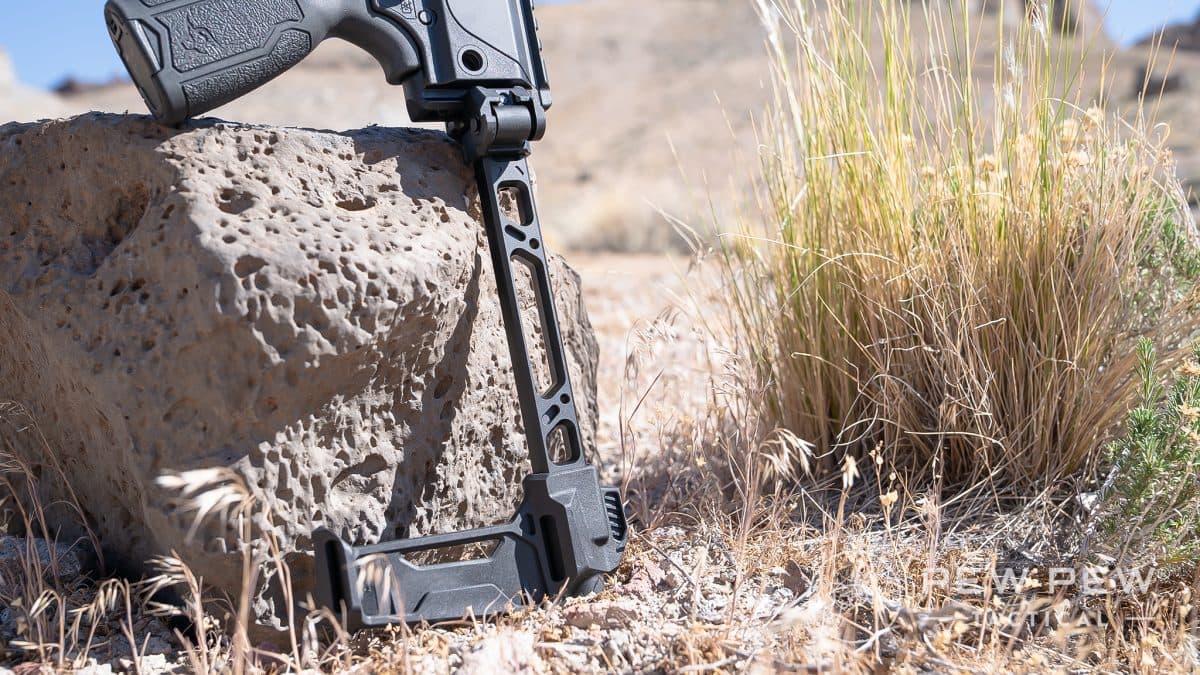
The brace felt nice and solid. It locked into the folded and deployed positions with confidence, and I appreciated the additional QD point on the end.
The blade-style shape doesn’t do much to soften recoil, but the roller-delayed RPC isn’t exactly a slugger to begin with.
Trigger
Taurus gave the RPC a snazzy-looking flat-faced trigger, but its feel was much more utilitarian. It felt kind of like a mil-spec AR-15 trigger, if you know what I mean.
The feel was firm but spongy, without much of a defined wall. Reset was more positive with an audible click.
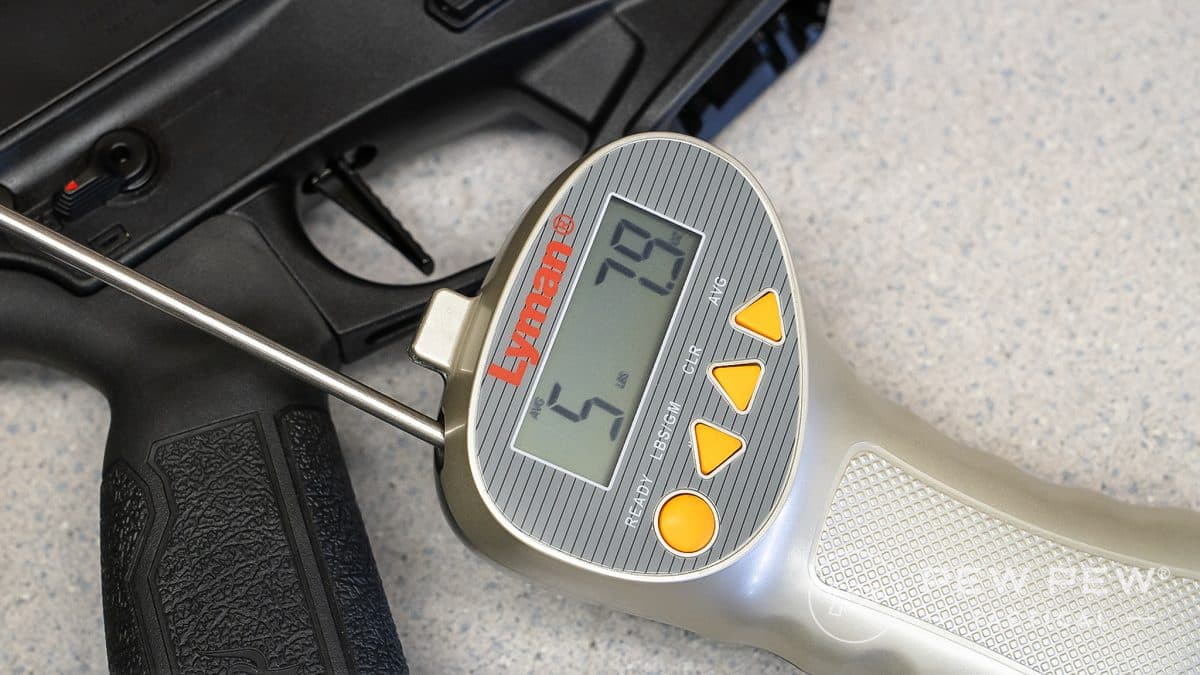
Five pulls of the trigger with a Lyman digital trigger gauge showed an average weight of 5.5 pounds.
Controls
All of the RPC’s controls are ambidextrous. The charging handle is reversible; switching it from left to right is a matter of depressing a single spring-loaded retaining pin inside the upper receiver and inserting the charging handle into the opposite side.
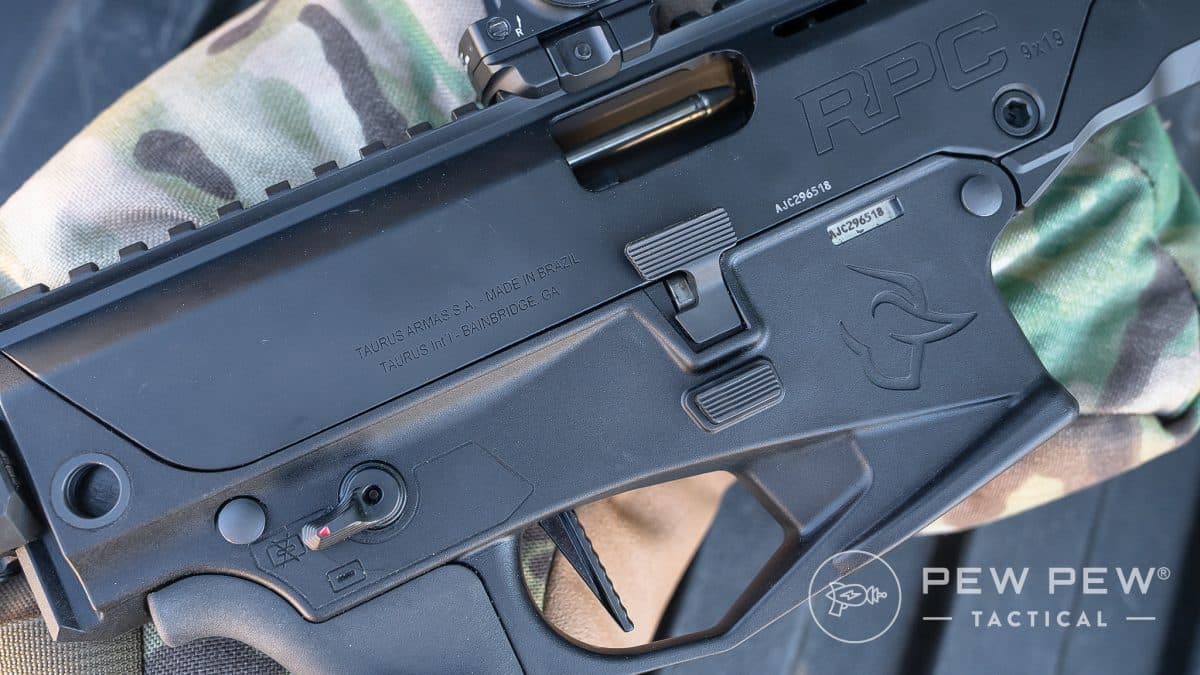
I preferred running it on the right side to maintain a slick surface against my body and avoid getting it snagged on gear or clothing.
Oversized bolt catch/release paddles were a welcome feature during live fire. Locking the bolt to the rear and releasing it with my trigger finger was no problem during testing; neither was hitting the opposite release with my support-hand thumb after a reload.
Taurus did a really nice job with these. And yes, the bolt did lock to the rear on an empty magazine.
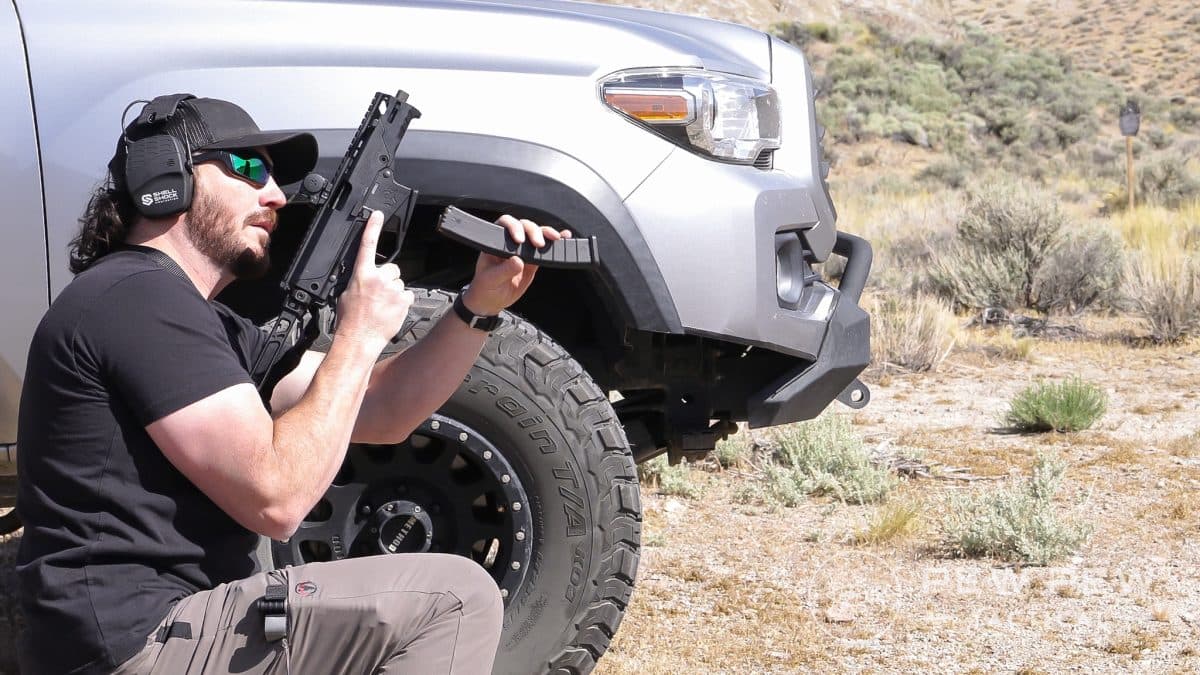
The ambidextrous magazine release is equally user-friendly. The buttons aren’t very big targets, but the system is intuitively placed and unlikely to get bumped accidentally.
If you've shot an AR-15, the ambi safety will feel familiar. Flick it down to fire, back up for safety. It’s easy to operate, but I actually wish it sat a little higher on the lower receiver. The right-side lever didn’t dig into my knuckle enough to ruin the fun, but it’s there.
Ease of Use
Between the ambidextrous design and the oversized controls, the RPC was very easy to get along with.

The proprietary nature limits customization in the sense of upgrading and modifying certain components, but accessorizing is a snap. I was able to add any optic I wanted, move the charging handle to the right side, add a weapon light to the left side, and thread on a suppressor in a matter of minutes.
Taurus RPC Downsides
The Taurus RPC offers an enticing value, but I have notes.
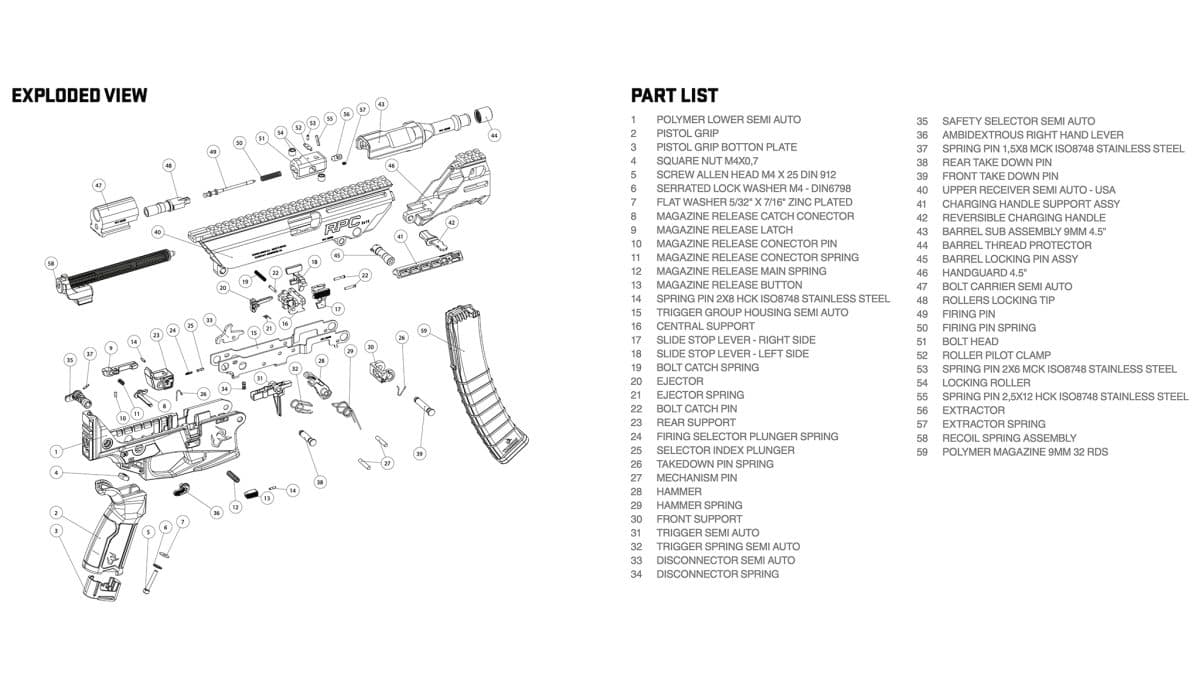
More than anything else, I want to see improvements in reliability. A gun that comes with subsonic-specific components should be able to get through a magazine of subs without malfunctioning.
Accuracy was respectable with subsonic training ammo, subsonic defensive ammo, and supersonic defensive ammo. Inexpensive training ammo cycled well, but groups got a little wild at times. I’d appreciate a little more consistency there.
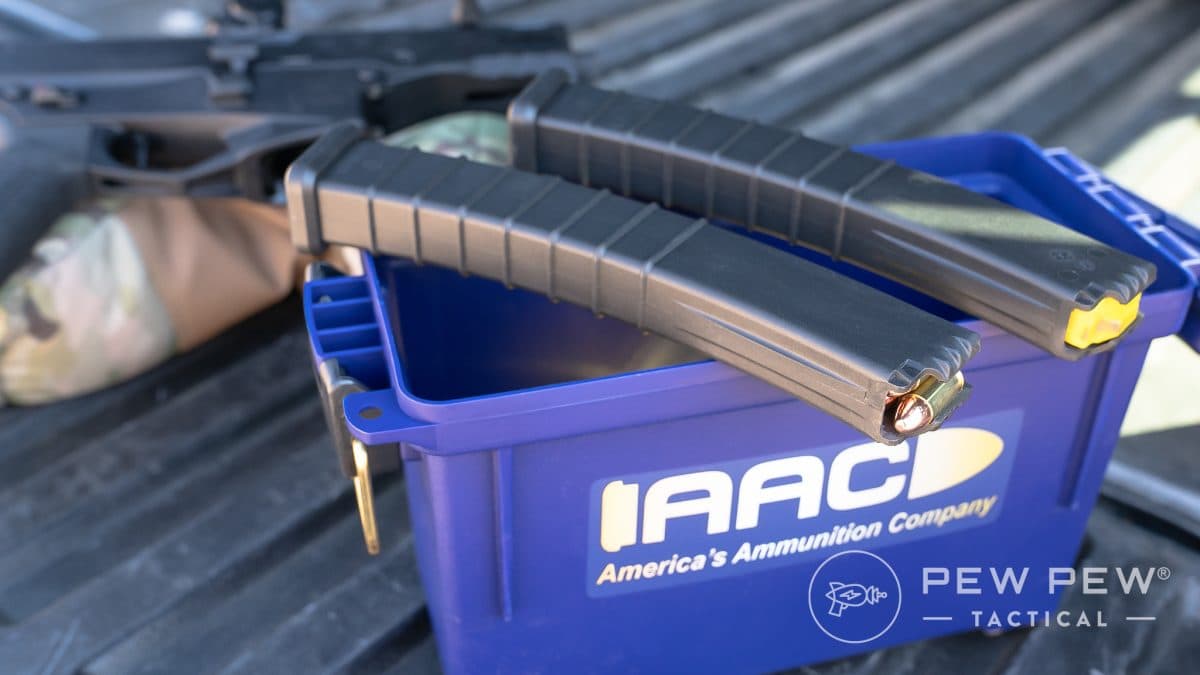
Finally, proprietary magazines were a little bit of a bummer. Many of us already have a stack of Glock, Scorpion, or Colt mags, and it would be nice if we could use them with the RPC or tap into the existing aftermarket.
Who Should Buy the Taurus RPC
The RPC is clearly aimed at the value segment of the PDW market. It’s not the cheapest, but it successfully got under that $1,000 mark. Should you jump on the deal?

And that’s where this gets complicated. As much as I like recommending PDWs for home defense or a little extra protection on the road, this particular one had too many feeding issues for me to recommend it for a life-saving role.
Some reviewers have reported burning through 500 rounds without a hiccup; others couldn’t get off more than two or three shots without a failure to feed. That sounds like early-production teething issues to me.
Not every gun has to be for self-defense, though. The RPC was wildly entertaining on the range. If that’s what you’re after, you don’t need to spend more money.
Our Most Popular Posts



Upgrades & Accessories for the Taurus RPC
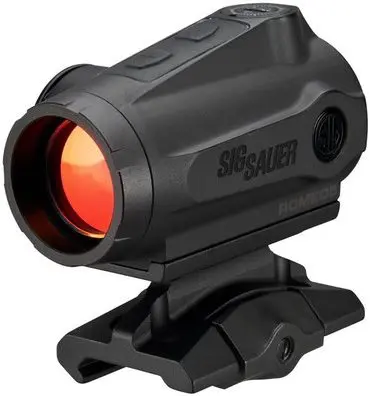
A lot of people opt for an enclosed-emitter pistol optic when they set up a PDW, but I preferred the Sig Sauer Romeo5 Gen II during this review.
The included riser aligned it much more naturally with my eyes, and I never felt that it was bulky or heavy. The price is definitely in line with a budget-friendly build.
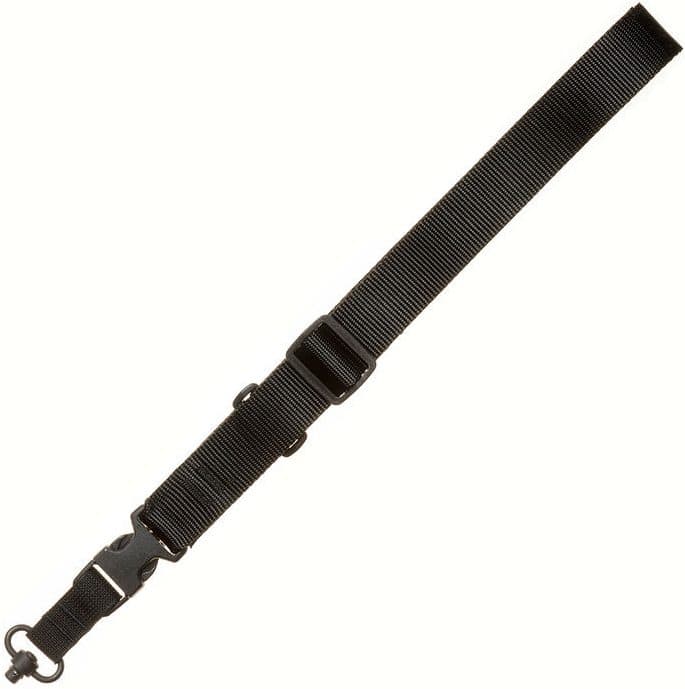
The Tac Shield CQB from my recent rifle sling roundup worked like a charm in this review.
The RPC has three QD points to choose from, and the single-point sling kept the overall package light and agile.
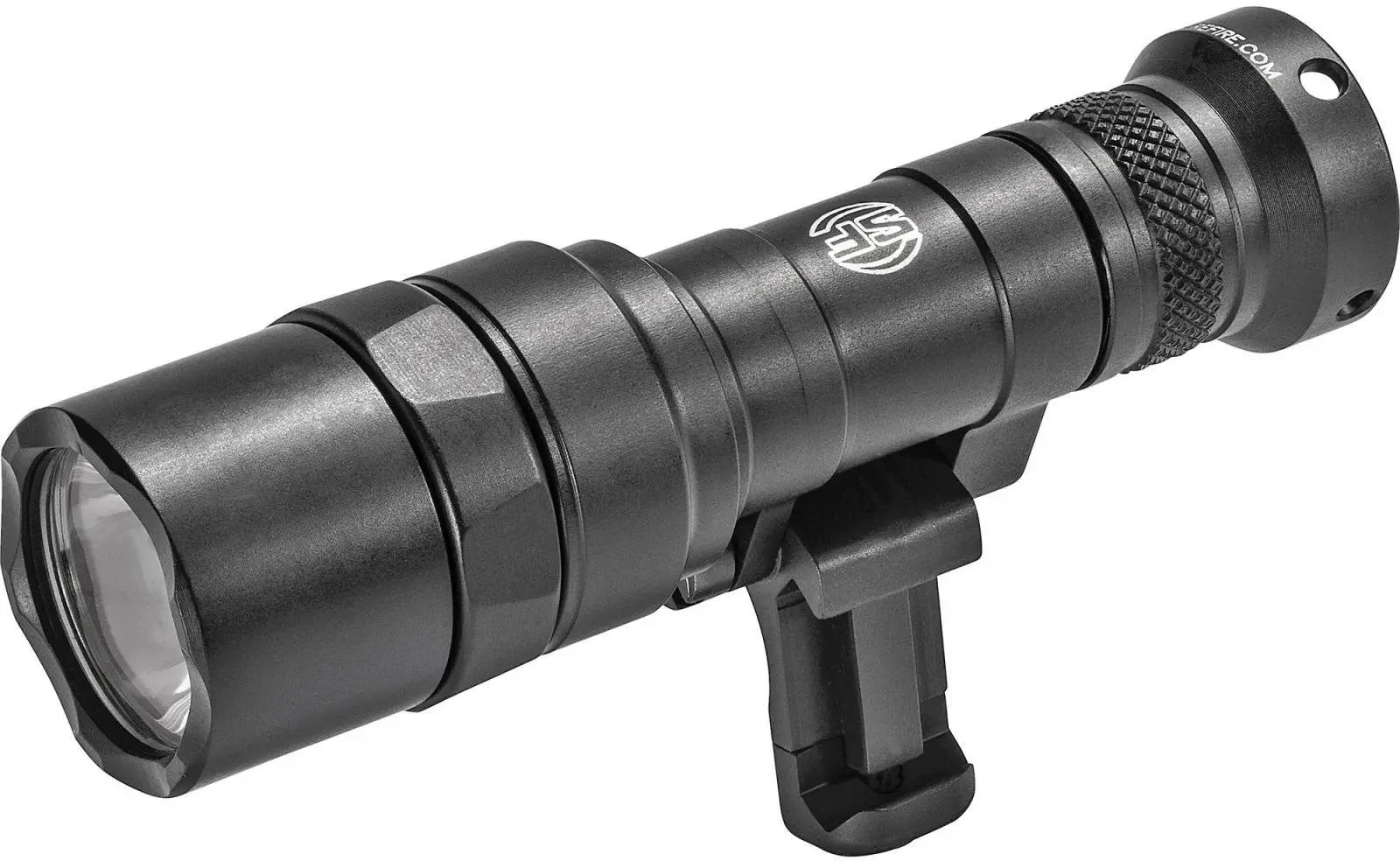
The SureFire Mini Scout Light Pro doesn’t fit my budget-friendly theme, but it worked better on the RPC than any other light in my collection. It’s small, lightweight, and doesn’t get in the way of a suppressor.
You can save a bundle with a more affordable, albeit bulky, weapon light from Streamlight or Fenix. Check out all my favorite picks in our guide to the Best AR-15 Flashlights to see them in action.
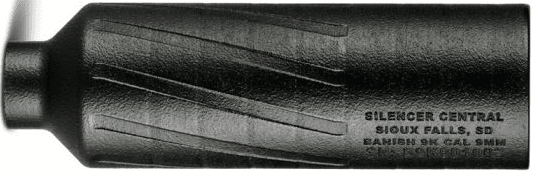
The RPC isn’t just asking for a suppressor; it deserves one. The Banish 9K from Silencer Central is my go-to 9mm suppressor because it’s light enough to use without a booster on handguns (a huge plus), delightfully compact, and reasonably quiet. It’s priced pretty competitively, too.
FAQs
Final Verdict
The Taurus RPC is arguably the most affordable mid-tier PDW, depending on where you draw that line. It’s fun to shoot, and I love that Taurus is taking a modular approach to the platform. Let’s keep our fingers crossed for new barrels, handguards, and receivers in the near future.
For now, I consider this a fun range gun and an inexpensive entry point into the PDW game. If Taurus sorts out a few snags, it could be a viable defensive option, too.
What do you think of the Taurus RPC? Let me know in the comments. Looking for more 9mm fun? Check out our guide to the Best Pistol Caliber Carbines!
Meet the Experts
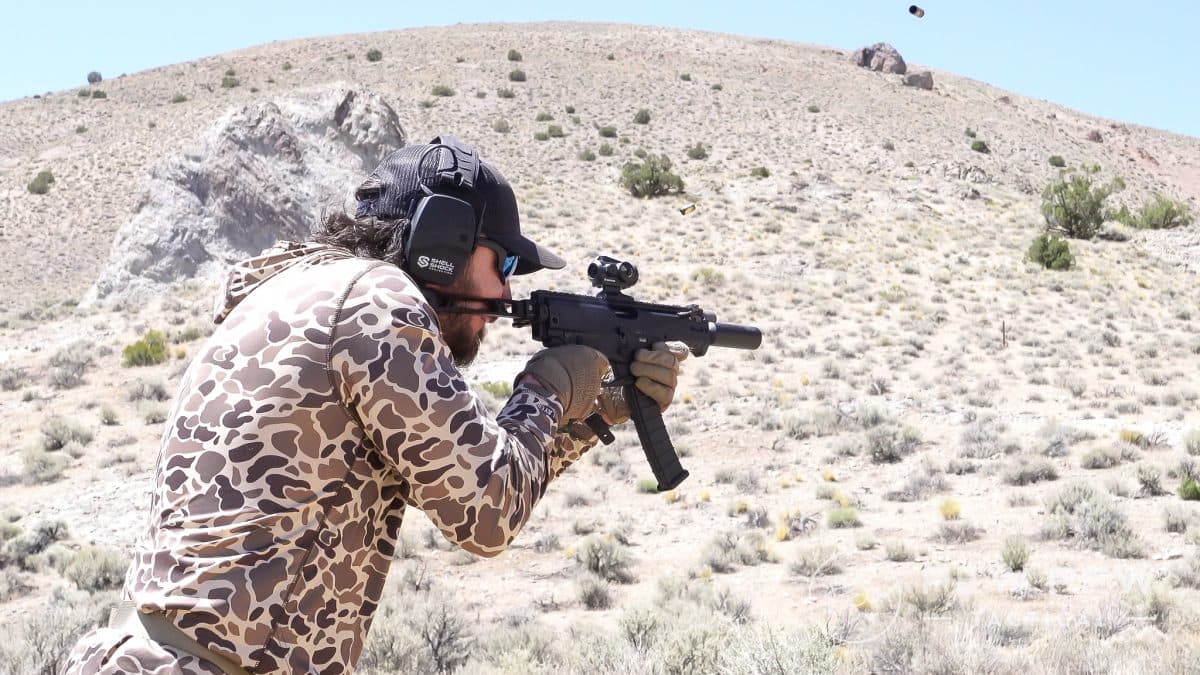
This article comes to you from Pew Pew Tactical Editor & Senior Review Analyst Scott Murdock. Scott has extensive experience reviewing concealed carry firearms, optics, and ammunition. This includes intensive ballistic gel testing of defensive ammunition, and hands-on reviews of CCW clothing, holsters, and bags. Prior to joining the Pew Pew Tactical team, Scott wrote for several other publications in the firearm industry and served in the Marine Corps.
Editor-in-Chief Jacki Billings runs our experienced team of reviewers and edited this review. She is an NRA-certified Basic Pistol Instructor as well as a member of the Society of Professional Journalists, ACES: Society for Editing, and the Professional Outdoor Media Association. Jacki has a bachelor’s degree in journalism and has worked as a media professional for close to 20 years, specializing in gun media for almost 10 years. With 2,000+ articles to her name, she uses her professional journalism and editing experience to set testing protocols and editorial standards for Pew Pew Tactical.