
Road to the M1911: What Led to the 1911?
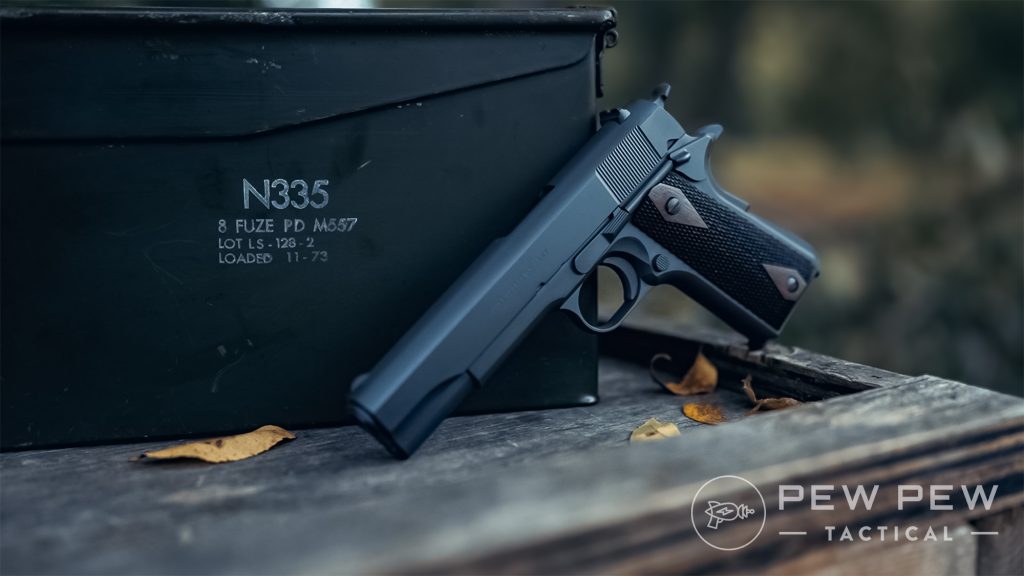
We take a look at the pistol designs that paved the way for Browning's successful M1911 design. Come get your learn on!
We review products independently. When you buy through links on our site, we may earn a commission to help support our testing. Learn more.
What's the most popular pistol that's been in production for over a century?
The M1911!
Not only has it remained in production since the year 1911, but it has also been a popular option since. The M1911 is a beloved American design widely used, appreciated, and produced.
Much like the AR-15, the M1911 is produced by various companies.
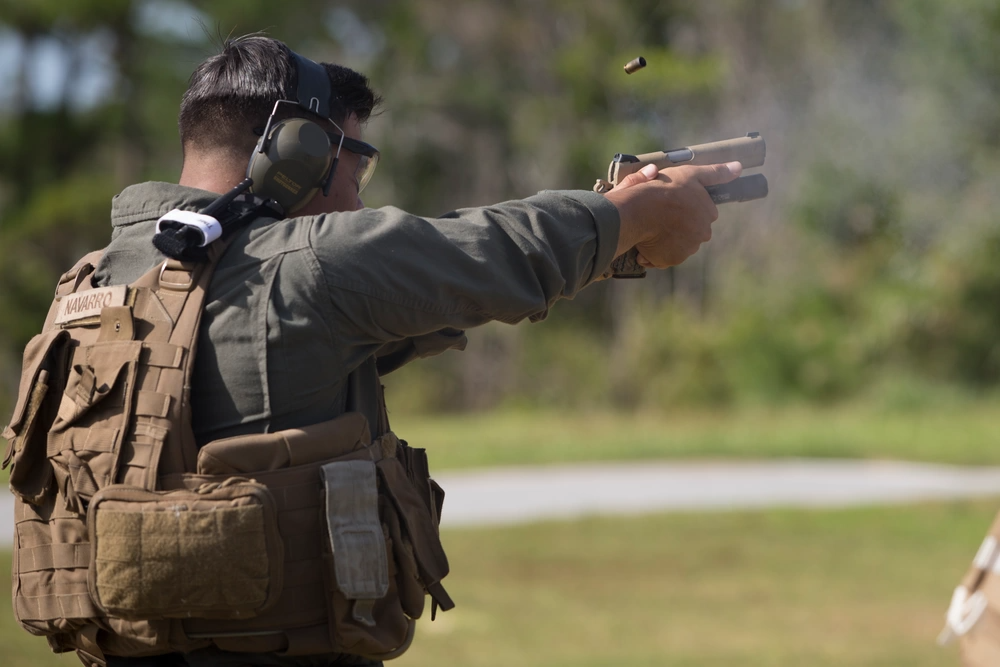
This pistol served the United States for over 70 years as the main sidearm and continued service in the Global War on Terror with Special Operations forces. It's been everywhere, and these days, it comes in a ton of configurations. This includes light and optics-ready models and guns designed in a wide variety of calibers.
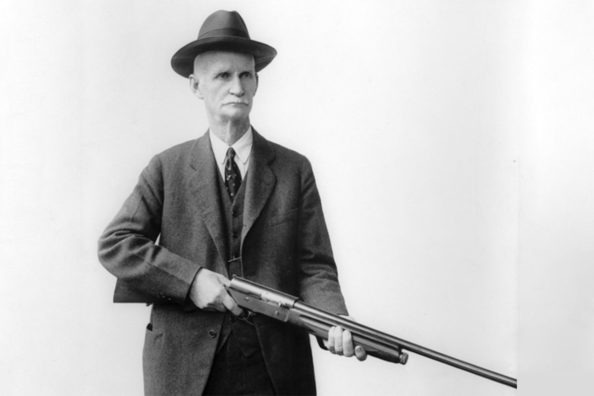
Today, we are going into the mind of John Browning and how he arrived at the M1911.
We will dive into his historical catalog and examine the pistols Browning designed prior to the M1911. In doing so, I believe we can create a map and see the road to the M1911.
Along the way, we can also see some fairly interesting handguns from the turn of the century.
Table of Contents
Trending: Best AR-15s, Best Shooting Hearing Protection, & Ammo in Stock
Browning's First Semi-Auto Handgun: FN M1899/1900
John Browning had designed several successful rifles and shotguns before his involvement in handguns. He was already a successful arms designer with a name to back it up. He worked with FN in Belgium and presented them with his first pistol in 1896.
For reference, the first semi-auto pistol, the Salvator Dormus, was produced in 1892. Four years isn't a bad turnaround for a man who had never designed a handgun. While initially produced as the M1899, it became the M1900 after a few changes were made.
Alongside the M1899/1900, Browning developed the .32 ACP cartridge. The M1899 used a simple blowback action and a single-stack magazine with seven rounds. The gun featured a 4-inch barrel with an overall length of 6.8 inches.
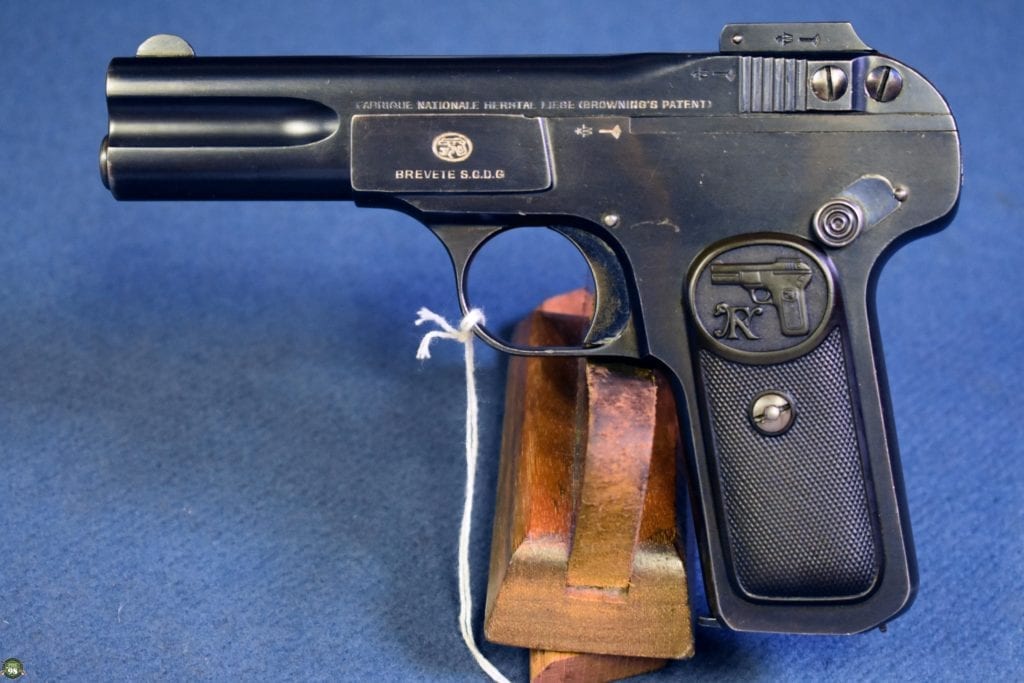
Theodore Roosevelt owned a rather fancy model with inscriptions and pearl grips. It was reportedly his everyday carry gun, and he once said, "They got McKinley. They are not going to get me without a fight." The Belgians adopted it as their military sidearm as well.
The M1899 is our first stop on the map to the M1911 for several reasons. Obviously, it's Browning's first automatic pistol, but beyond that, it shared a number of features with the M1911. Browning created the first pistol with a slide with the M1899/M1900, and slides became the standard.
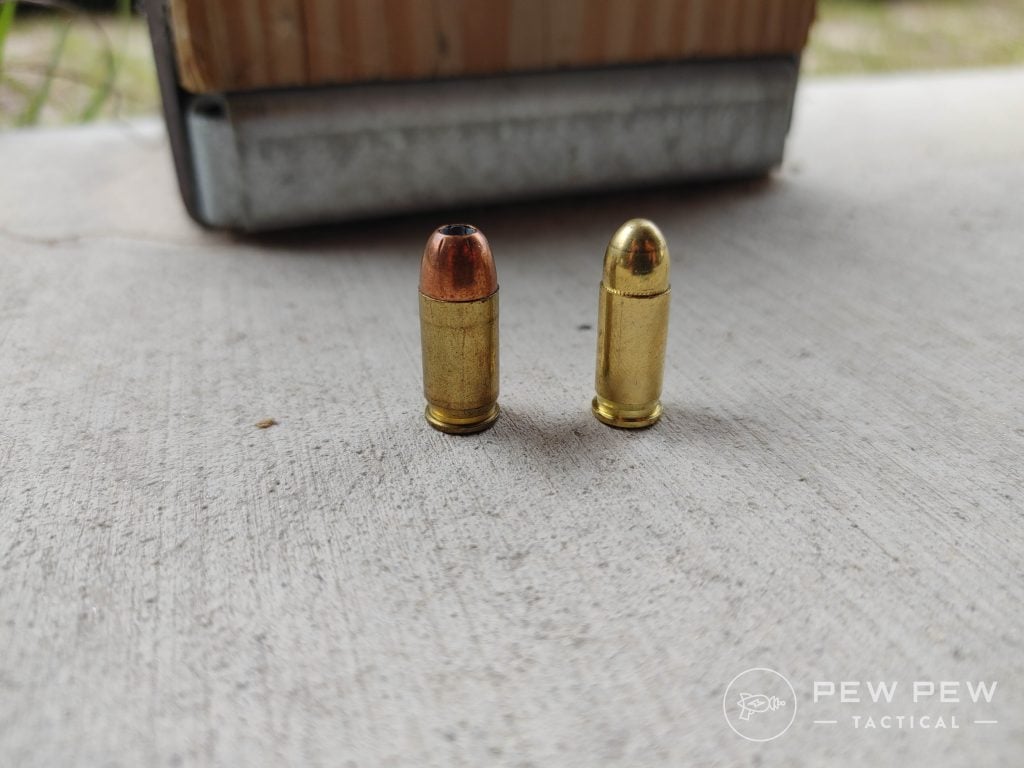
Browning created the .32 ACP, which helped establish him as a cartridge designer. This experience likely allowed him to design the .45 ACP a decade or so later.
A removable magazine wasn't novel, but it hadn't quite become the standard for semi-auto handguns at this time.
Colt M1900
Probably the most important stop on the M1911 road map is the M1900 from Colt and Browning.
Even a glance at the M1900 reveals that the M1911 descended from it. We'll get into that soon, but first, let's break down the M1900.
Browning designed the M1900 with a somewhat novel slide design. Unlike other early semi-auto pistols, the full-length slide covered the entire barrel length. The slide rode on rails in the frame and had an integrated bolt.
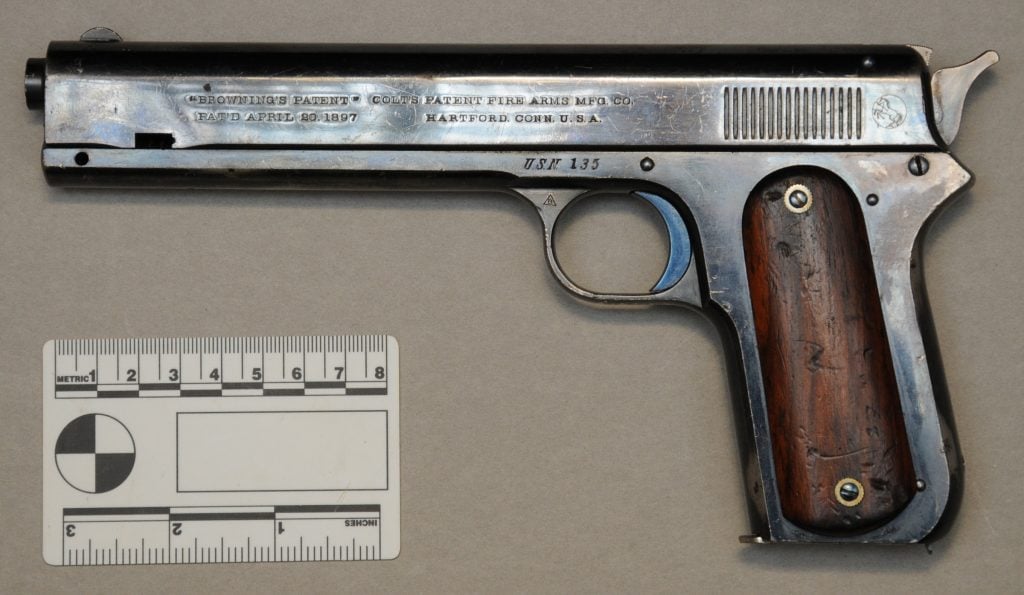
With the M1900, Browning created the first locked-breech semi-auto pistol that would use short recoil operation. Short recoil operation is currently the standard, and most designs are based on Browning's work. Browning designed the .38 ACP cartridge for the M1900, and the gun held seven rounds in a single stack magazine.
It bears mentioning they did produce a few .41 caliber weapons as prototypes, but they never got off the ground. This was a single-action-only gun with an exposed hammer. This is a big gun with a 6-inch barrel and an overall length of 8.9 inches.
Browning was creative, and the pistol used a novel safety system known as the safety sight. The rear sight was pressed downward and blocked the firing pin. This rendered the weapon safe. When the sight was pressed upwards, the weapon was ready to fire. In theory, this allowed a shooter to instantly know the condition of a weapon.
Colt ditched this feature fairly quickly. The weapon lacked any form of manual safety, and Colt was advised to carry it with an empty chamber, which was as ill-advised then as it is now. This lack of a safety was a big part of the weapon's unpopular nature.
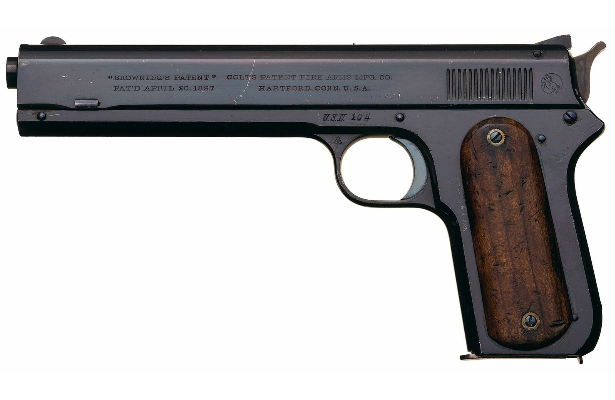
From the outset, it's easy to see some 1911-like features. The exposed hammer, full slide, single action-only design, and short recoil are all major parts of the M1911. Even the shape of the gun is very M1911-like.
The M1900 is also where we begin to see U.S. military interest. The Army purchased several M1900s and began testing the design. It passed most of its testing, and the Ordnance Board was impressed enough to continue the field tests.
Colt later developed the M1902 Sporting with hard rubber grips and either a round or high spur hammer. Following that, they developed the M1902 Military with the addition of a lanyard loop.
The Best Gun Deals, Coupons and Finds
Subscribe to Pew Pew Tactical's sales and deals email.
M1903 Pocket Hammer
In the M1900 family, the M1902 models are the unimportant siblings. Sorry, guys, but you don't matter much. The models that did matter were the M1903 Pocket Hammer and the M1905.
One of the Army's complaints about the M1900 and M1902 was that they were muzzle-heavy. Colt also knew that the .38 ACP round was going out of style.
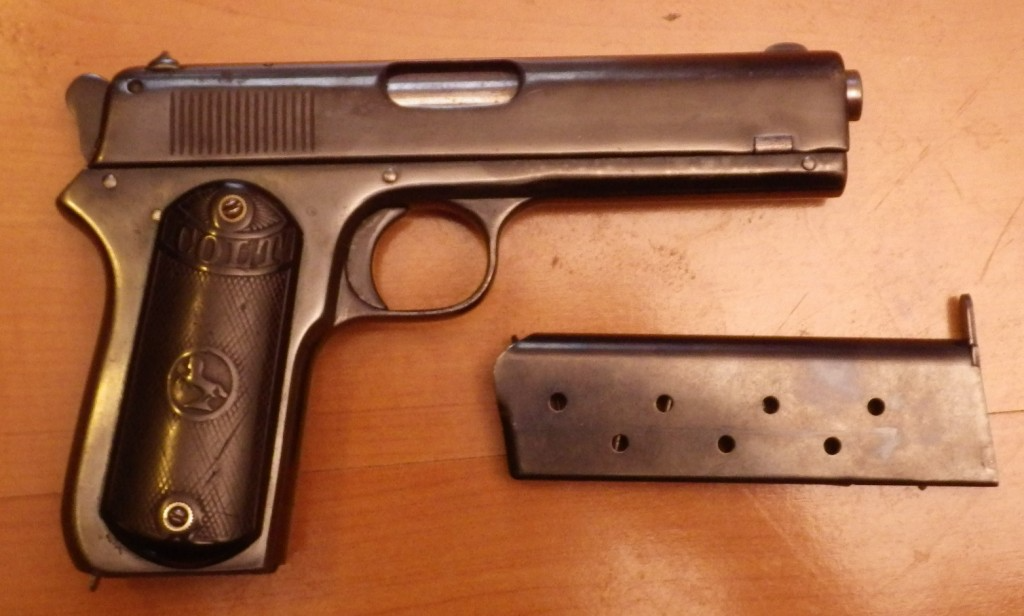
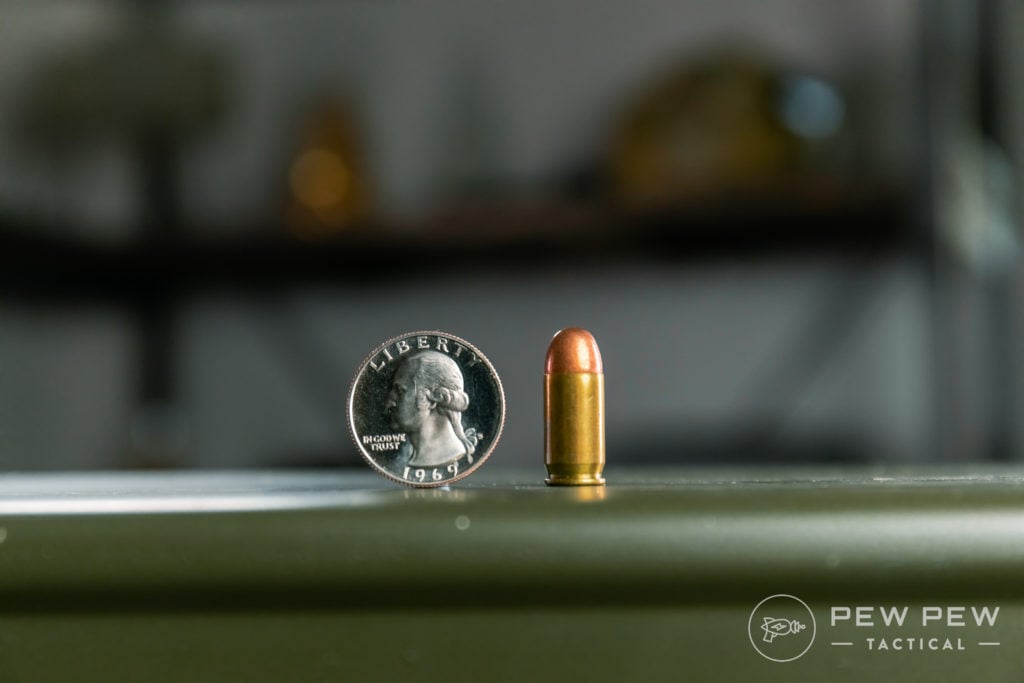
After a poor performance of .38 caliber rounds in the Philippine-American war, the Army was looking for bigger bullets. The M1903 Pocket Hammer trimmed the barrel. Models were available in both 3.75 and 4.5-inch barrels.
The gun was produced in .38 ACP, but Colt was experimenting more with their .41 caliber round. However, in 1904, the Thompson-LaGarde Tests declared the next round should be of .45 caliber.
The Pocket Hammer was identical in operation to the M1900 series, just a fair bit smaller and every bit as ugly. These guns were not adopted by the Army but were somewhat popular in the civilian sector.
Colt M1903/1908 Pocket Hammerless
Pocket Hammerless is a bit of a misnomer. There is a hammer, but it's enveloped by the slide and frame. The Pocket Hammerless allowed it to be distinguished from the Pocket Hammer, which was also produced in 1903.
The Pocket Hammerless was a very different pistol from the Pocket Hammer. The Pocket Hammerless was a smaller gun designed to be easy to carry. It came in Browning's own .32 ACP cartridge.
Later on, the M1908 models came in .380 ACP but were identical other than chambering.
These guns were extremely successful and, honestly, are great shooters. It's one of my favorite guns. The Colt M1903 Pocket Hammerless used a single stack magazine and multiple safeties. It was a very compact pistol for the time, although large by today's standards.
The U.S. military used the weapon during World War II as a General Officer's pistol. Additionally, the gun was used by the OSS and numerous foreign military forces.
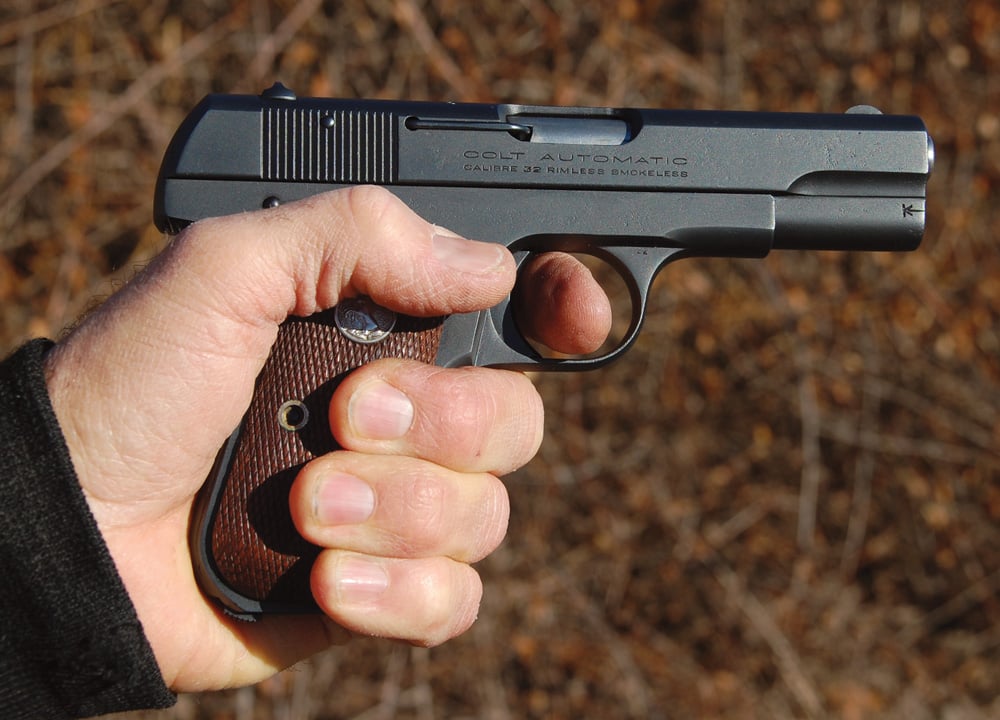
Its shape is clearly 1911-like. The M1903 Pocket Hammerless added a grip safety and a thumb safety mounted to the frame.
Both would become integral parts of the military's adoption of the M1911 and the M1911 design to this day. While the first generation lacked a magazine safety, the subsequent generations all used a magazine safety. This would be present on the Hi-Power but gone on the M1911.
FN Model 1903
We are going to take a slight break from Colt and move back to FN in the year 1903. John Browning was a busy man in 1903 between Colt and FN. While this gun also bears the 1903 title, it's different from the Pocket Hammer and Pocket Hammerless.
Browning designed the Pocket Hammerless and the FN 1903 simultaneously, which clearly shows at first glance. The FN 1903 is almost identical in appearance outside of some obvious size differences. It’s a full-sized duty-style firearm.
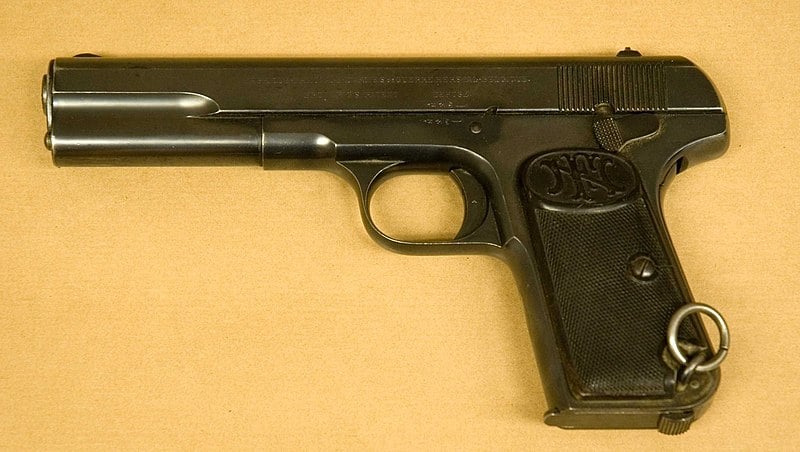
The FN 1903 chambered a new round known as the 9x20mmSR Browning Long. This cartridge was similar to the 9mm Parabellum at the time. It was quite hot compared to the .32 ACP that was fairly standard in European pistols then.
This did end up with the gun having some excessive recoil with its blowback operation. Even so, it became popular with military forces in Europe. Sweden adopted the weapon, as did Belgium and the Netherlands.
Like the Pocket Hammerless, the FN M1903 featured a grip and frame safety, much like the M1911. On top of that, the barrel bushing and trigger design are almost identical to that of an M1911.
The pistol also used a single-stack magazine and a 5-inch barrel, features the M1911 wears to this day.
Our Most Popular Posts


Colt Model 1905
In the M1905, we began to see the M1911 really taking shape. The gun was similar to the M1902 in most of its design, but there were some important differences. Where it differed was the 4 ⅞ inch barrel and the chambering of the new .45 ACP cartridge.
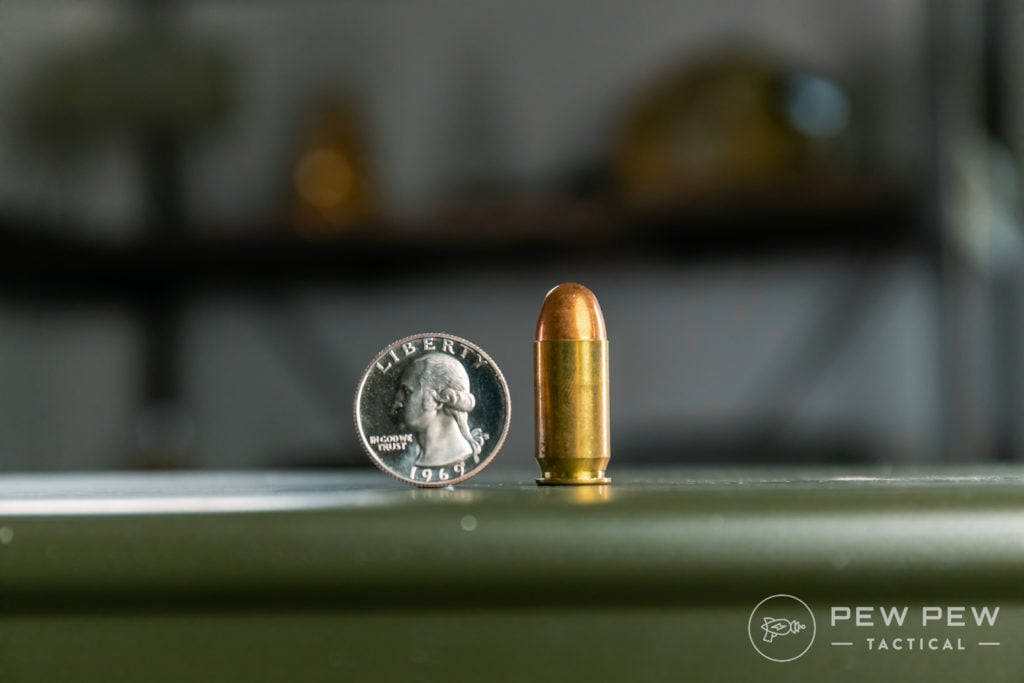
As we know, the M1911 is well-defined by its 5-inch barrel and .45 ACP chambering. With the Army still shopping for an automatic pistol, the M1905 looked quite nice. The Army placed an order for 200 of the pistols but asked for a grip safety device to be a part of the design.
Colt added a grip safety and loaded chamber indicator, becoming the M1907. In 1907, they produced 207 M1907s specifically for the 1907 US Pistol and Revolver Trials. They admittedly didn't do well. Numerous breakages as well as lots of failure to eject issues. Colt sent the guns to Springfield Armory for refinement.
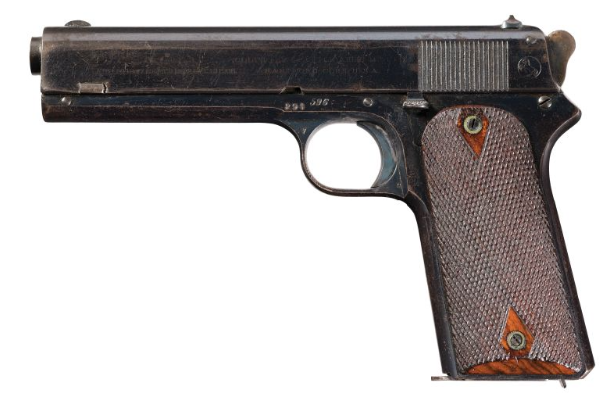
The refinement worked, and the reliability issues eased up. The M1907 never entered full production. Colt evolved the M1907 and its refinements into the M1909.
Colt and Browning sent the M1909 to General Thompson, and after a hearty review of the pistol and its performance, the gun was sent to Springfield Armory with Browning, where its testing was even more extensive.
From there, the cavalry tested the firearm and was also impressed. Yet, they felt it was unsafe and wanted a manual safety on top of the grip safety. This led to the Colt Model 1910.
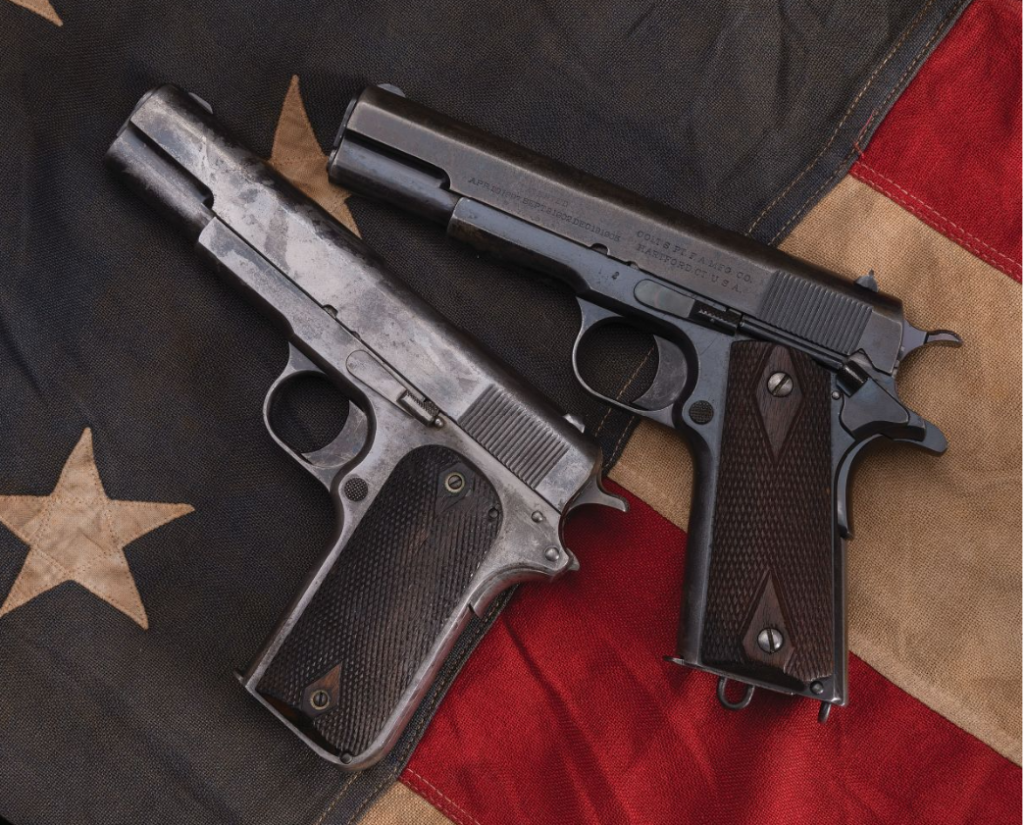
The Colt Model 1910 added retrofitted manual safety, but that's not all. The grip angle moved from 84 degrees to 74 degrees. This created the famed M1911 grip angle we all know and love. Colt also added an internal extractor.
The pistol had issues in its first exhibition to General Thompson, but after some repair, it performed admirably. The M1910 beat the Savage M1907 and would be approved for military service on March 29th, 1911.
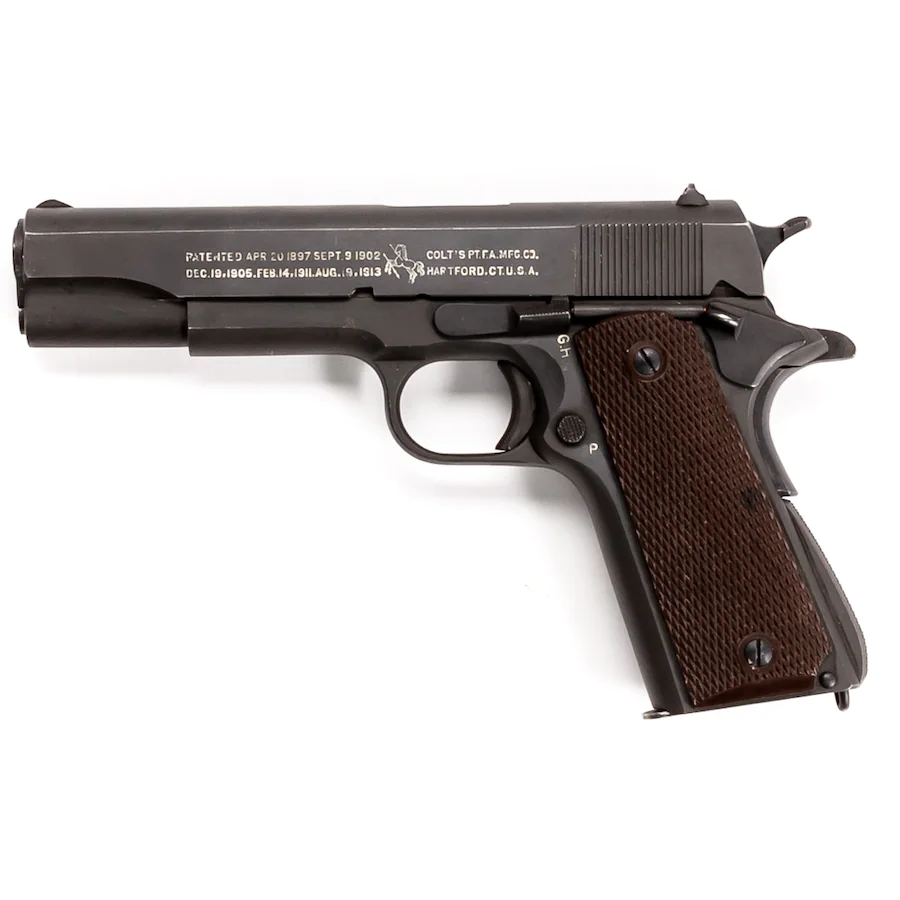
Thus, the pistol was designated the M1911.
Final Thoughts
There are lots of ways to tell a story. When it comes to guns, one of the best ways is to create a roadmap of the guns before it. The M1911 pistol is one of the few with a very visual and easy-to-track roadmap.
What do you think? Did I miss any important steps on the way to the M1911? If so, let me know below! For more 1911s, check out our guide to the Best 1911s.