
Gun Actions: How Guns Work
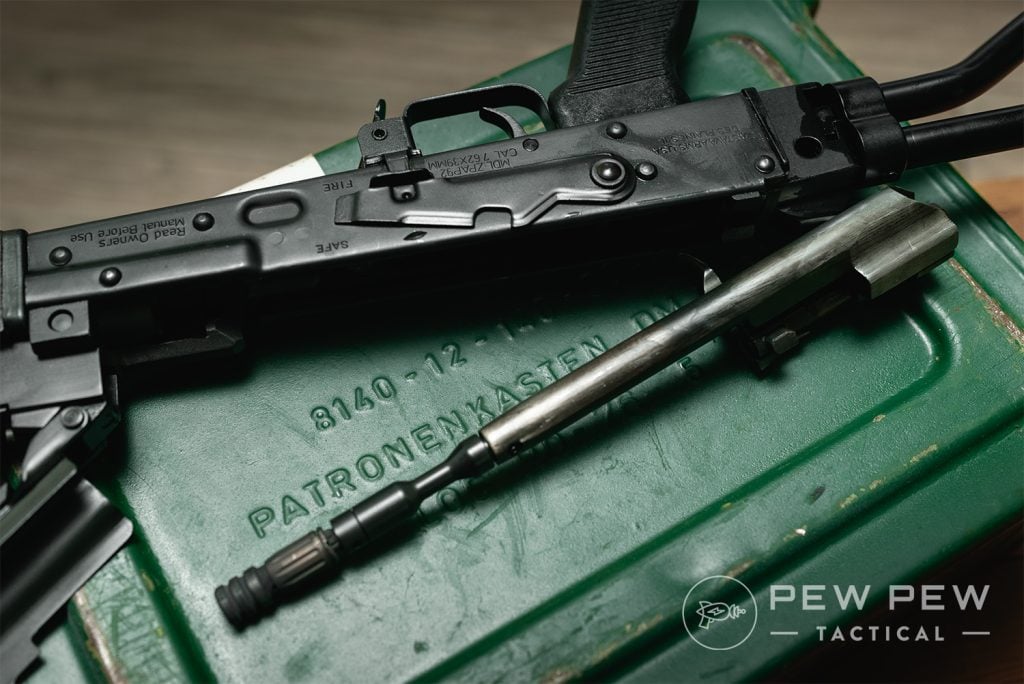
In this article, we dive into some of the most common firearms actions and go over the ins and outs of each different operating system.
We review products independently. When you buy through links on our site, we may earn a commission to help support our testing. Learn more.
Have you ever wondered what makes certain guns tick and how they operate? How does the next cartridge magically appear in the chamber of some guns?
We live in a world of wonder and science, where diverse firearms achieve the same end goal in different ways.
Which brings us to the topic of today's article — how do different actions work? What makes the gun actually cycle?
I am going to go over various types of both manual and semi-auto actions to explain how each type facilitates the loading, firing, extracting, ejecting, and loading the next cartridge in each gun.
I'll only be covering the most popular action options, as there have been so many one-off action designs for obscure firearms. I could spend hours covering actions you may never see in person.
So without further ado, let's jump in!
Table of Contents
Trending: Best AR-15s, Best Pistol Lights (Re-Test), & Ammo in Stock
Manual Actions
A manual action means the user must aid the weapon's action. This often involves working a device on the firearm to facilitate the cycle of operations. These weapons are not automatic loaders but are considered repeating firearms.
Bolt Action
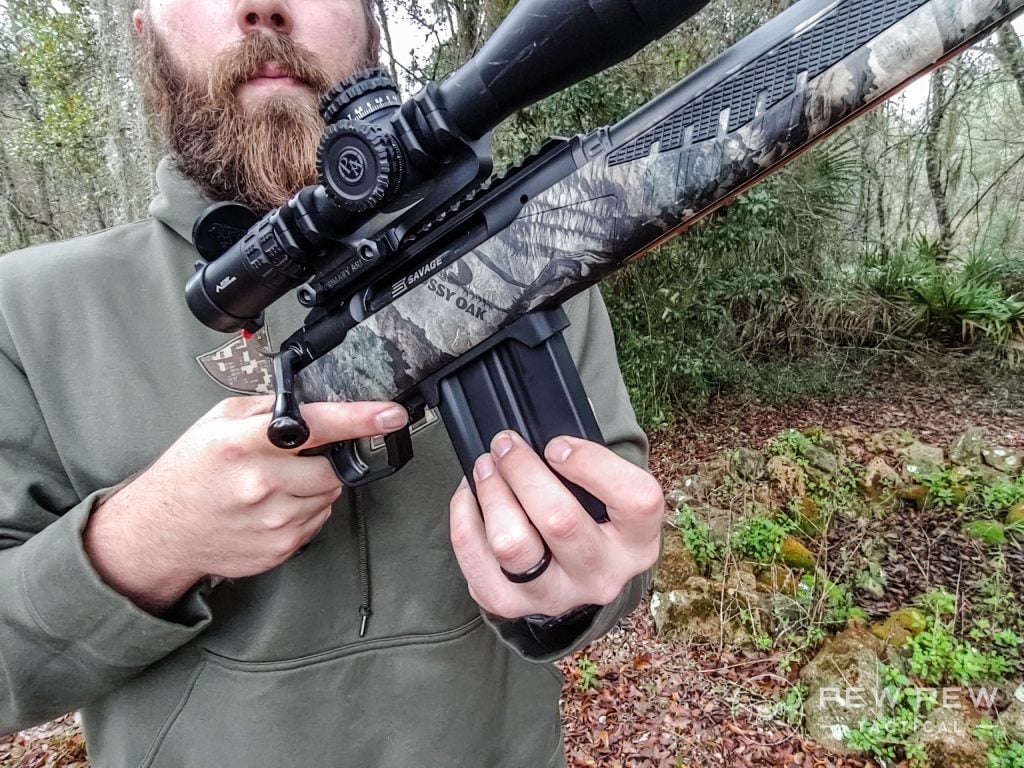
Bolt-action designs force the user to manipulate the rifle via a bolt and bolt handle, usually located near the rear of the gun.
To cycle a bolt-action gun, the user must unlock the bolt and then pull it rearward
When the user retracts the bolt, any round or spent casing in the chamber is extracted and ejected. The bolt is then pressed forward, picking up a new round from the magazine and loading it into the chamber. The bolt is then closed, and the weapon is ready to fire.
Most bolt actions require the user to first turn the bolt up to unlock it before pulling it back, and then turn it back down to lock it in position after it is pushed forward again.
However, some bolt actions have mechanisms that allow you to only have to pull the bolt straight back and push it straight forward again to eliminate the turning motion. These are referred to as “straight pull” actions.
Bolt actions are most commonly found on rifles. The designs are typically fairly simple but often allow for very strong actions that can also be easily scaled up to accommodate large, powerful cartridges. The simplicity of bolt actions also tends to lend itself to good accuracy.
In addition to rifles, you will occasionally see bolt-action shotguns and some niche bolt-action rifle caliber handguns.
Pump Action
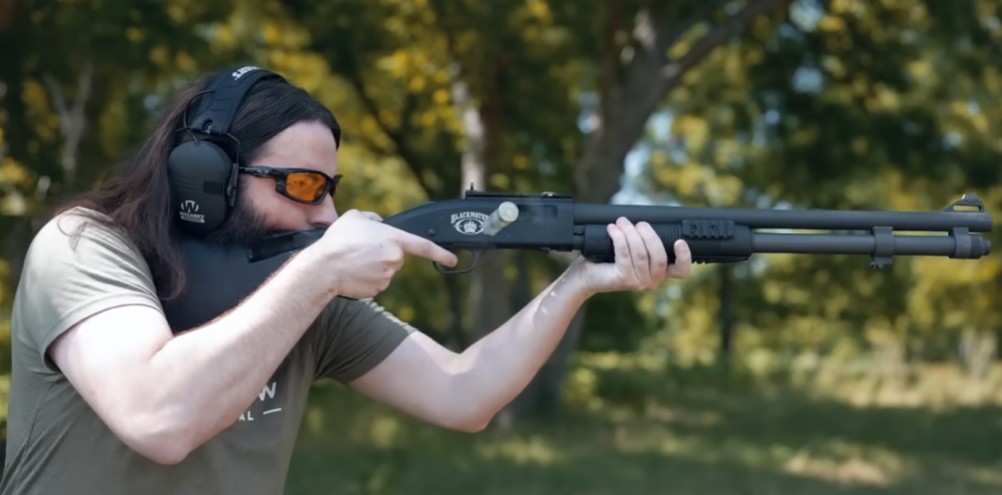
Pump action, also known as slide action, features a forward-mounted pump attached to the bottom of the gun.
The user's support hand grips the pump while utilizing the weapon. When the pump is retracted, the bolt also moves rearward, which extracts and ejects a cartridge as well as cocks the weapon.
On its forward movement, the bolt picks up a cartridge from the magazine and loads it into the chamber. The weapon is then ready to fire.
Shotguns are the most popular pump-action firearms. However, pump-action rifles also exist. Pump actions provide strong, positive extraction and ejection, which is especially important for large plastic shotgun hulls. It is also one of the faster manual actions.
Lever Action
Lever actions are a type of manual action that involves the use of a loop that the user puts their fingers through.
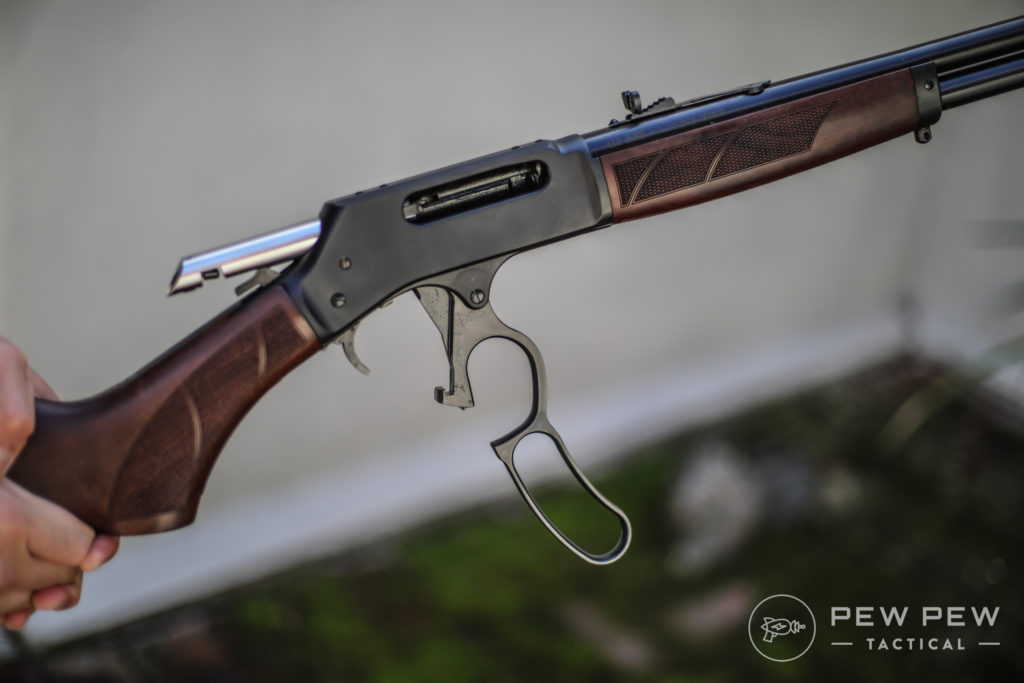
The user pushes the loop, also known as a lever, downward, which retracts the bolt, opens the action, and then extracts and ejects any cartridge or casing from the chamber. The hammer is also cocked at this by the rearward motion of the bolt.
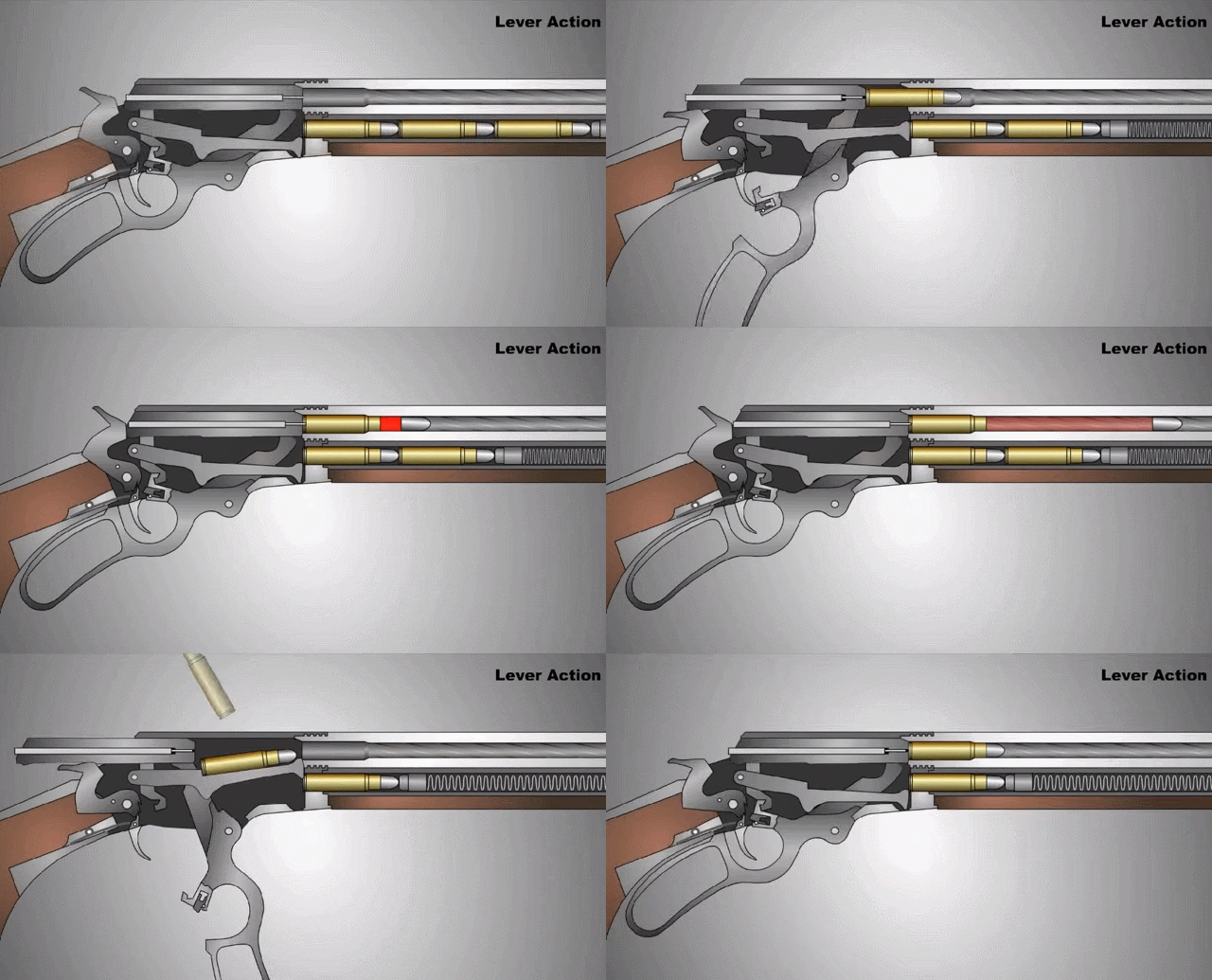
The lever is then moved upward, which moves the bolt forward, picking up the next cartridge from the magazine and loading it into the chamber.
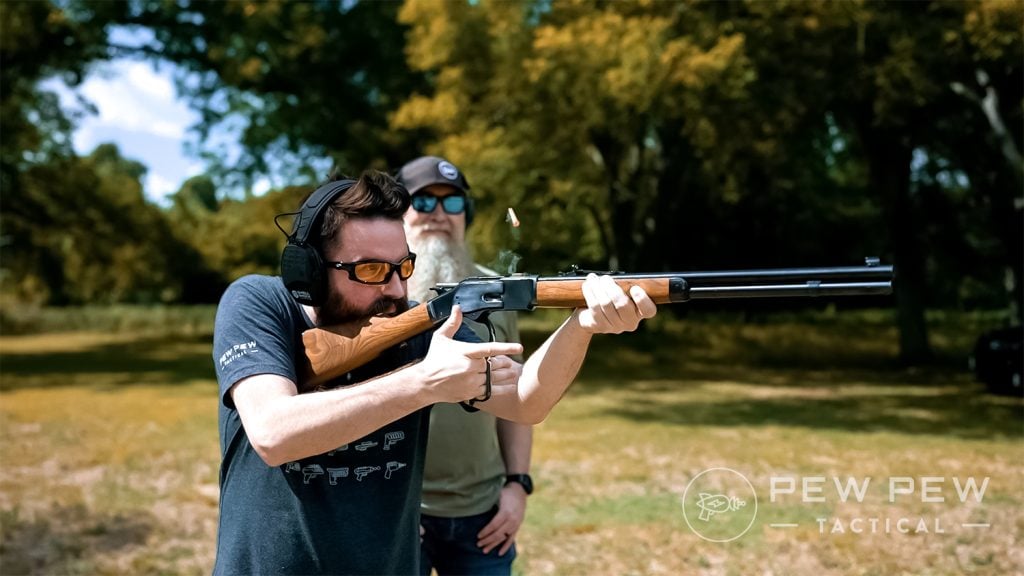
Lever actions are typically used on classic rifles, but both lever-action shotguns and handguns exist.
Because they use an ergonomic, quick down-and-up motion, lever actions allow the user to cycle the weapon more quickly than most other manual-action firearms.
Automatic Actions
Automatic actions don't necessarily refer to full-auto firearms. They refer to the process in which the next round is automatically loaded, meaning the user does not have to manually operate the gun beyond loading the first cartridge. An automatic action can be a semi-automatic or select-fire (full-auto) weapon.
Straight Blowback
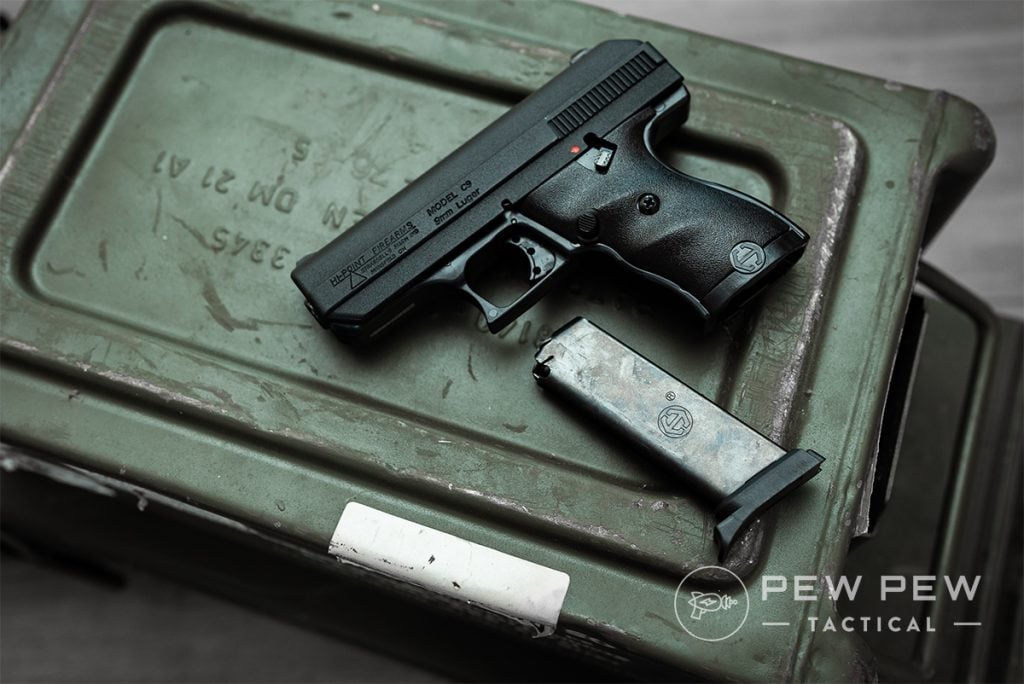
Straight blowback, also known as direct blowback, is one of the simplest forms of firearms operation.
When a cartridge is fired, it creates gas. That gas pushes the bullet forward, but it also pushes rearward on the case and, by extension, pushes on the breech face and bolt of the weapon.
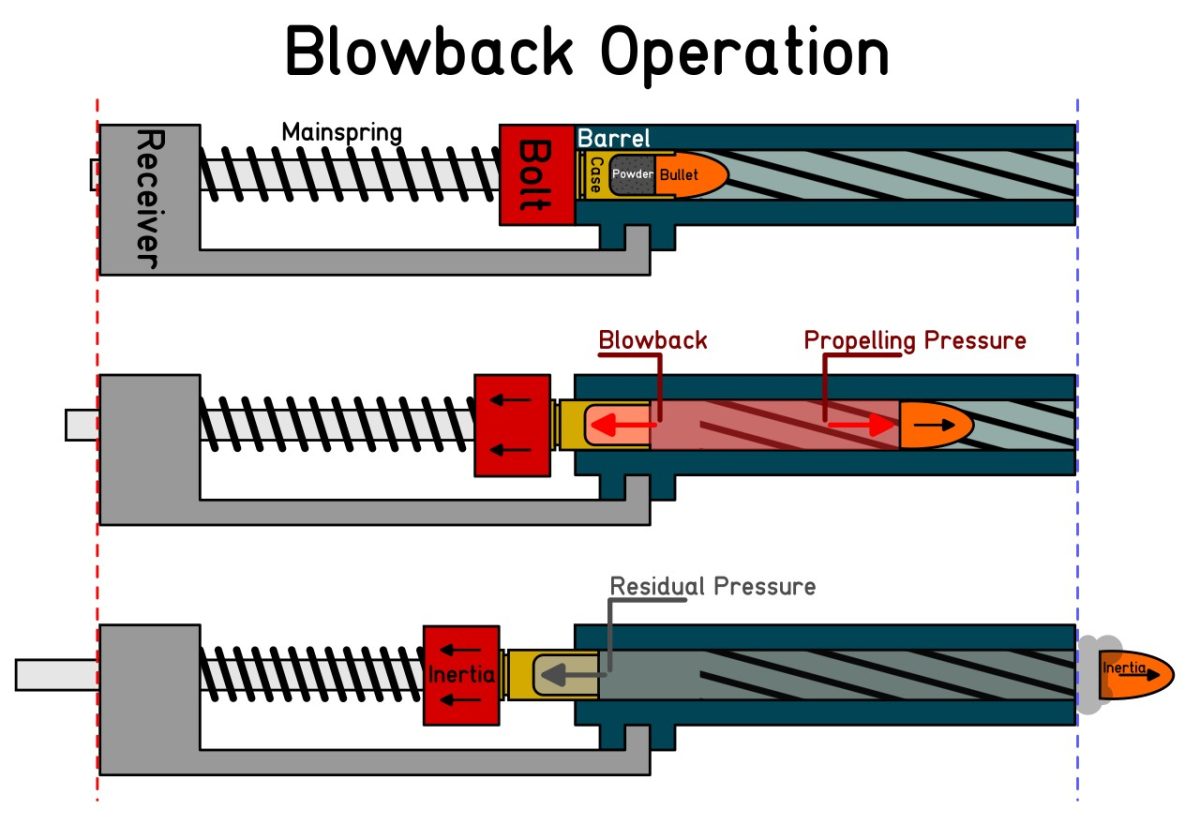
Straight blowback-operated weapons have unlocked breeches. This allows the gas from the fired round to push the bolt rearward, extracting and ejecting the round.
A recoil spring is used to dampen the rearward motion of the slide, and the spring's stored energy then allows the slide to slingshot back forward, picking up and chambering a new round in the process.
It is a super simple action design, but it has downsides. These systems require a heavy bolt or slide and stiff return springs to keep the action closed long enough for the bullet to exit the barrel.
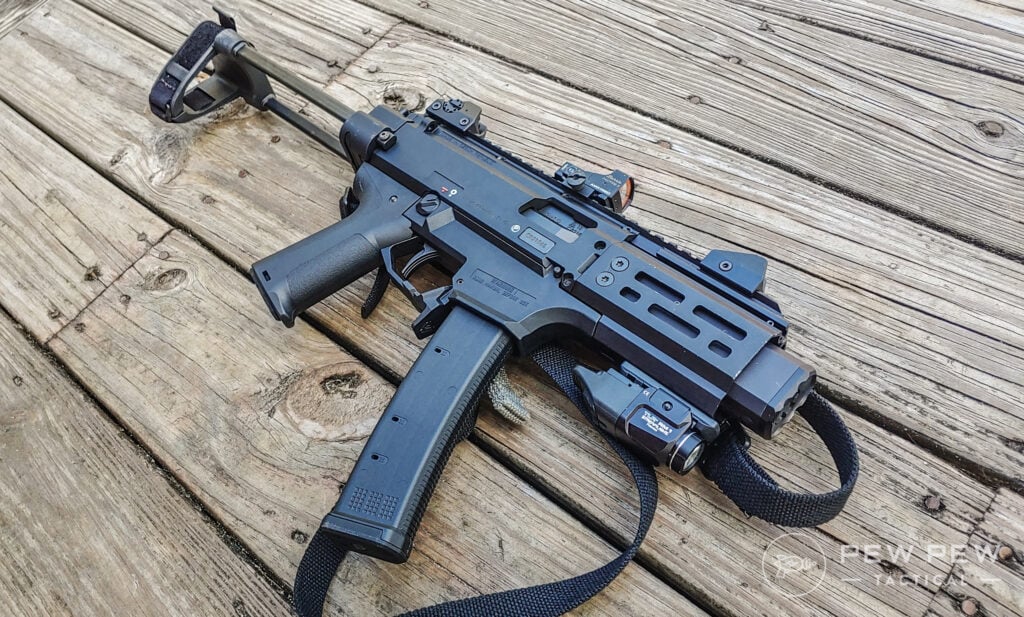
The size and weight of the slide or bolt increase relative to the power of the cartridge the gun is chambered in.
With handguns, anything beyond .380 ACP becomes somewhat obnoxious due to the absurdly large and heavy slides. For long guns and carbines, anything outside of pistol calibers is likely unsafe.
Blowback firearms tend to have more recoil than other options and are often heavier and bulkier than other guns.
The Best Gun Deals, Coupons and Finds
Subscribe to Pew Pew Tactical's sales and deals email.
Delayed Blowback
A delayed blowback design still works off the same principles as a straight blowback weapon, but uses a mechanism to lock the breech.
These guns delay the action by fractions of a second that are not perceptible to the shooter. This small delay ensures the bolt stays closed until the bullet leaves the barrel without the need for a heavy bolt or stiff return springs.
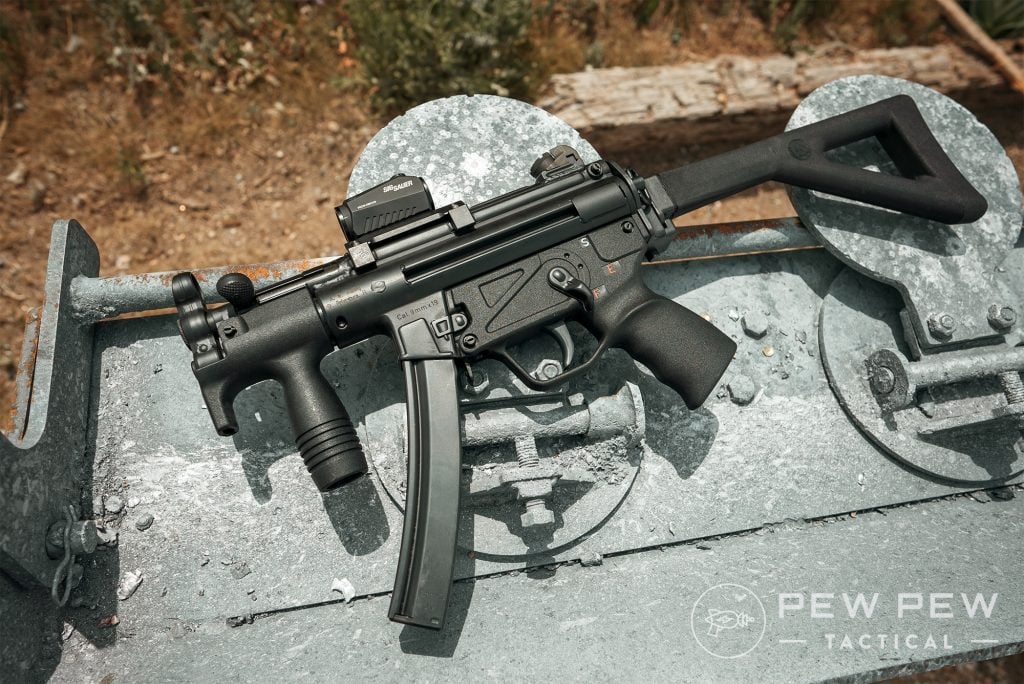
Delayed blowback systems allow for more powerful calibers, up to and including full-powered pistol, rifle, and shotgun rounds.
The mechanisms by which the action is delayed can vary widely from gun to gun. HK famously uses a roller-delayed blowback system in guns like the MP5 and G3. CMMG uses a radial-delayed system in its PCCs.
You can check out a highly detailed video below from YouTuber MouserGunner that shows the entire ins and outs of delayed blowback actions.
Delayed-blowback guns are more complicated to produce and, therefore, more expensive than their blowback counterparts. The delayed blowback action works well in rifles, pistols, submachine guns, PCCs, and even shotguns.
Recoil Operated
Recoil-operated actions are another type of locked-breech action for autoloading firearms.
When a cartridge is fired, it creates recoil. Recoil-operated systems capture that recoil and cycle the action regardless of the gas the weapon produces.
Recoil operation is one of the older types of autoloading actions, but it is still one of the most common, especially in shotguns and handguns.
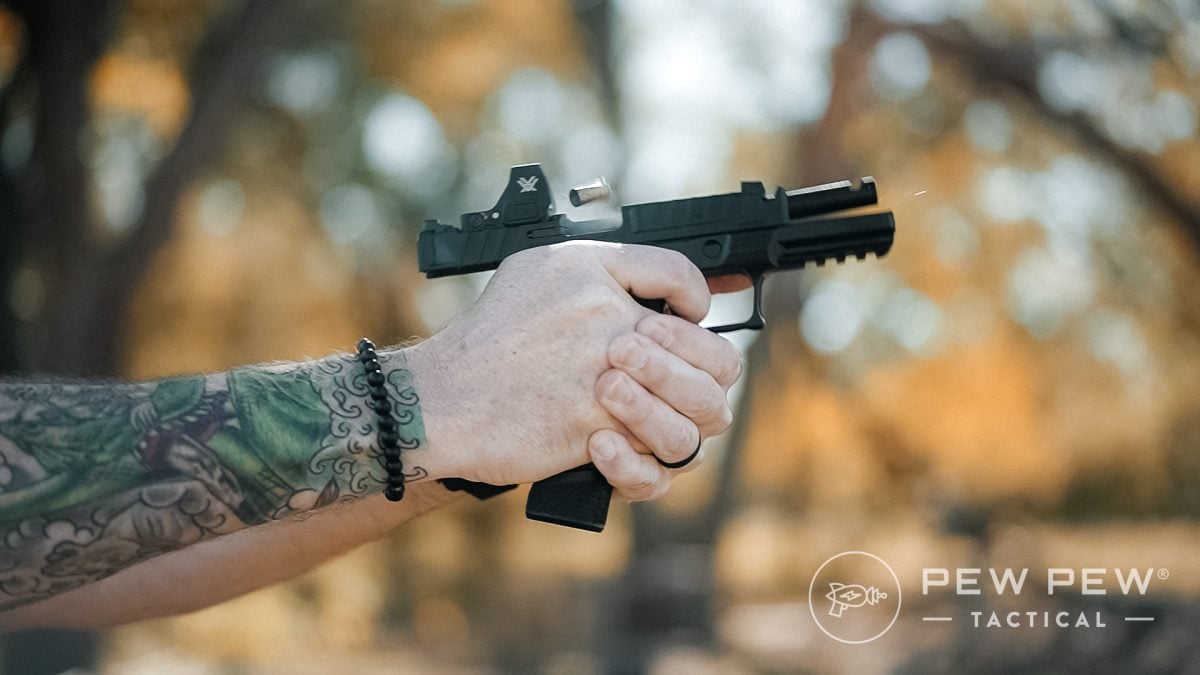
There are three types of recoil operation: short recoil, long recoil, and inertia.
With short and long recoil, the barrel moves with the bolt. The difference between short and long is how far the barrel moves with the bolt.
Long Recoil
In a long-recoil gun, the barrel and bolt stay together and move rearward against a set of recoil springs. Eventually, they reach the limit of rearward movement and are propelled forward by the recoil springs. This system was popular in the early days of semi-automatic shotguns.
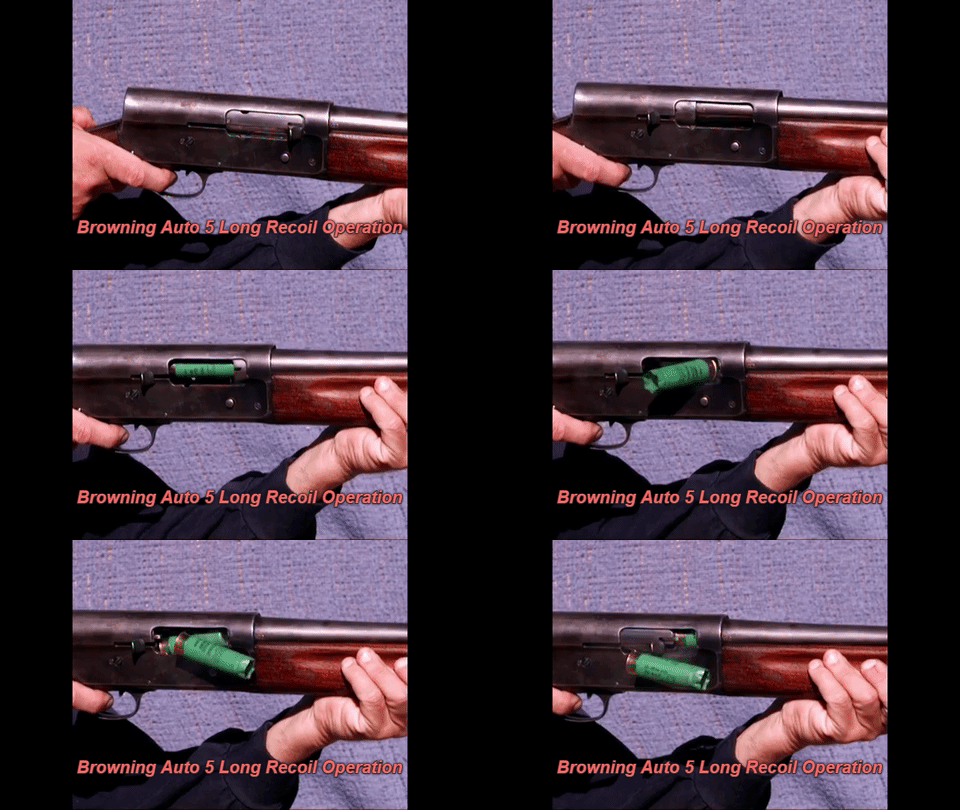
Long recoil has fallen out of favor, but so many long recoil-operated shotguns have been produced that you may still run into them.
Short Recoil
Short recoil operation involves the barrel and bolt moving together only a short distance. The barrel separates from the bolt, and the bolt continues rearward. When the bolt reaches its maximum rearward position, a recoil spring sends it forward, loading the next cartridge and readying the gun to fire.
This is by far and away the most common operating system for handguns. Some heavy machine guns also operate on short recoil.
Inertia-Driven
Inertia systems are a unique take on recoil operation that does not involve a moving barrel. Instead, these systems use a special bolt design.
Our Most Popular Posts
Between the bolt body and the bolt head sits a very stiff spring. When the weapon fires, the gun's recoil compresses the spring, but the bolt head remains locked and doesn't move. The bolt remains locked because it recoils rearward with the entire gun.
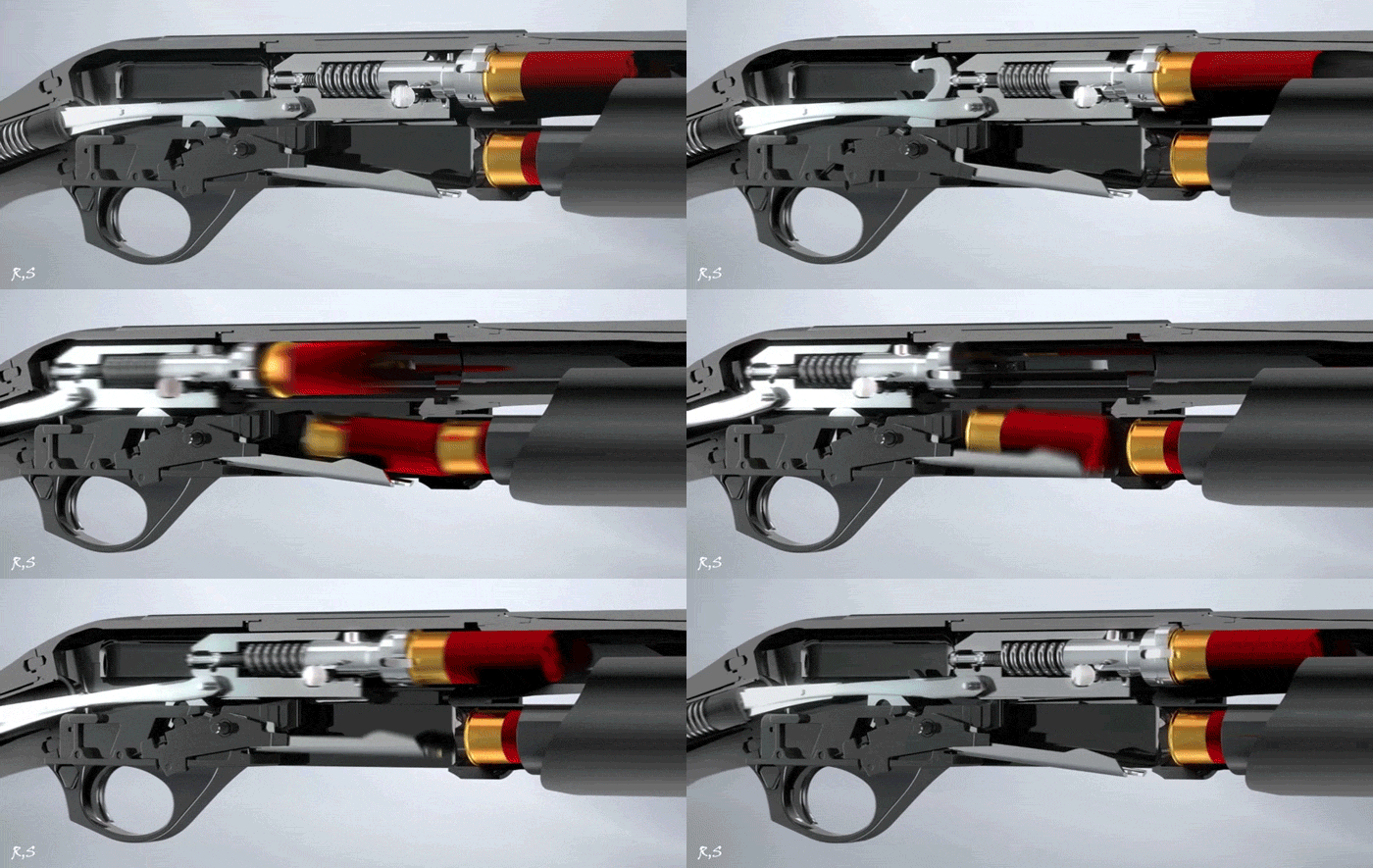
Once the spring reaches the maximum point of compression, it expands. As it expands, it throws the inertial mass rearward and transfers that momentum to the bolt. This unlocks the bolt and cycles the weapon.
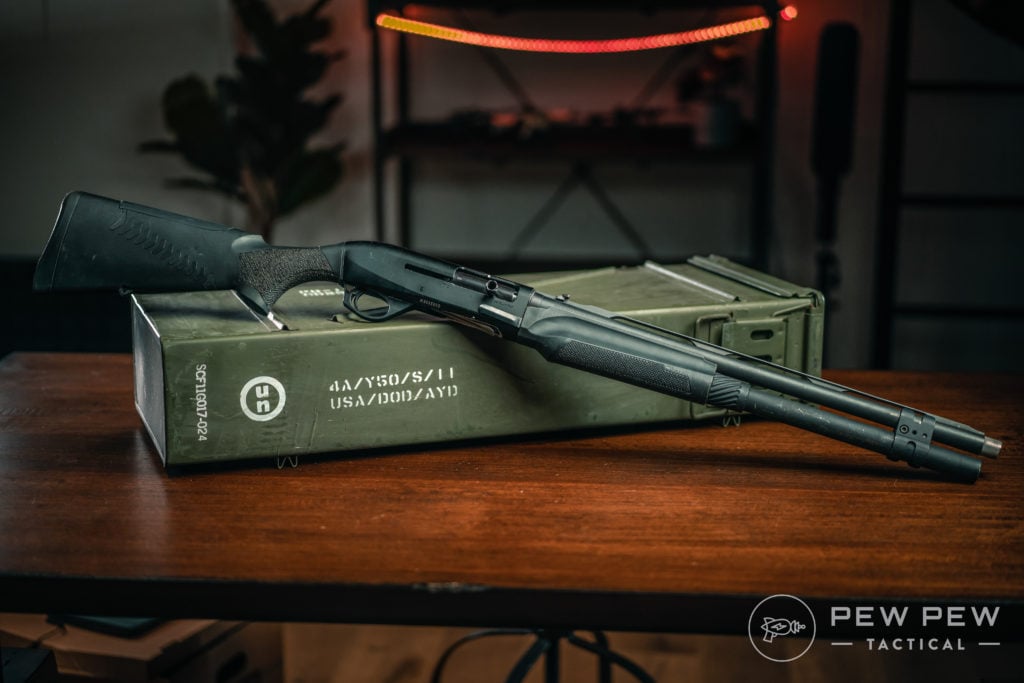
Almost all inertia-operated weapons are shotguns. Inertia guns also run very clean since almost no gas or carbon reaches inside the receiver. They also tend to be lighter since they lack the extra parts of a conventional gas system.
The main downside to inertia guns is that they are sensitive to ammo and require proper shooting form and resistance from the shooter’s shoulder to function correctly. They also have more recoil than gas-operated shotguns.
Gas Operated
Gas-operated firearms use the gas created by burning propellant to cycle the action.
This is achieved through a gas port that bleeds gas from the barrel to operate the weapon. Gas-operated guns are typically rifles and shotguns, but gas-operated handguns and PCCs exist as well.
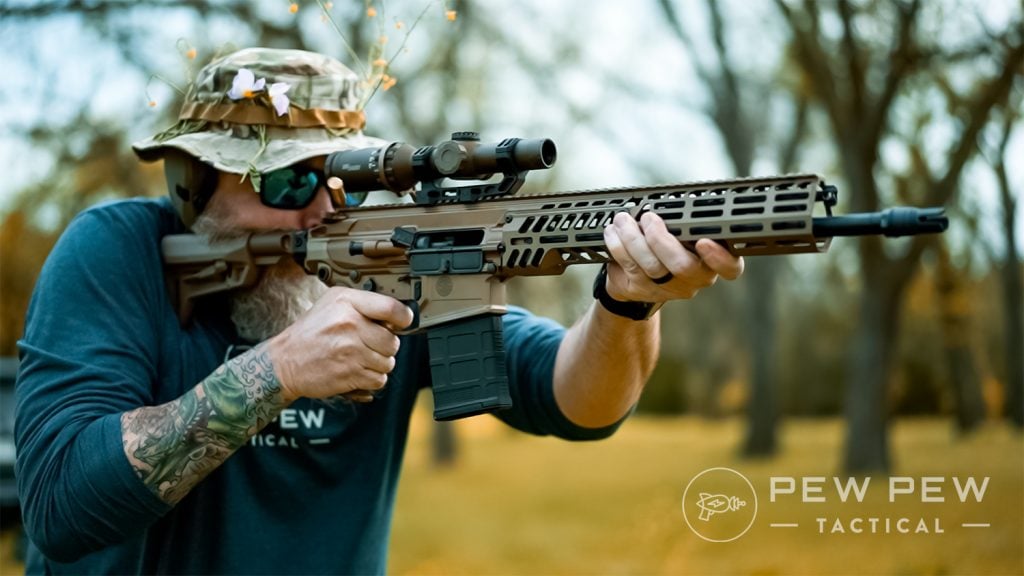
The three most common gas-operated systems are long-stroke piston, short-stroke piston, and direct impingement.
Long-Stroke Piston
Long-stroke guns use a gas piston that is directly connected to the bolt. When the weapon fires, the gas hits the pistol and drives the entire carrier system against a recoil spring. When pressure drops, the recoil spring moves the carrier group forward, completing the cycle of operations.
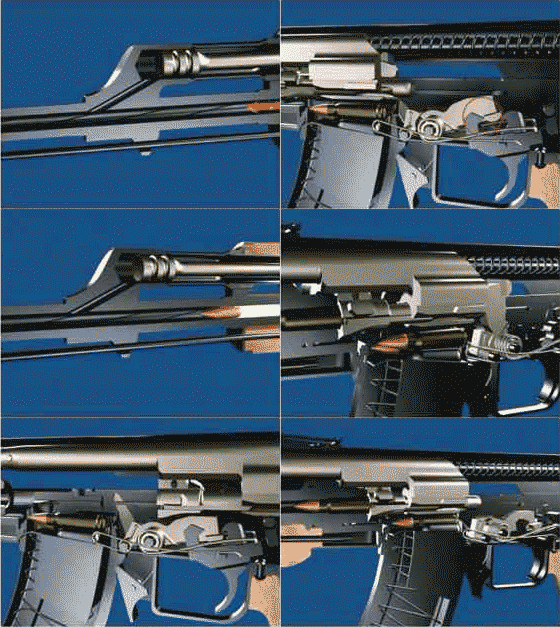
These guns tend to be very reliable, especially in cold environments. They are simple and often economical to produce at scale. However, long-stroke guns tend to have heavier actions. They can also sometimes cause the shooter to feel more movement due to the increased mass of the piston and bolt assembly moving together.
Short-Stroke Piston
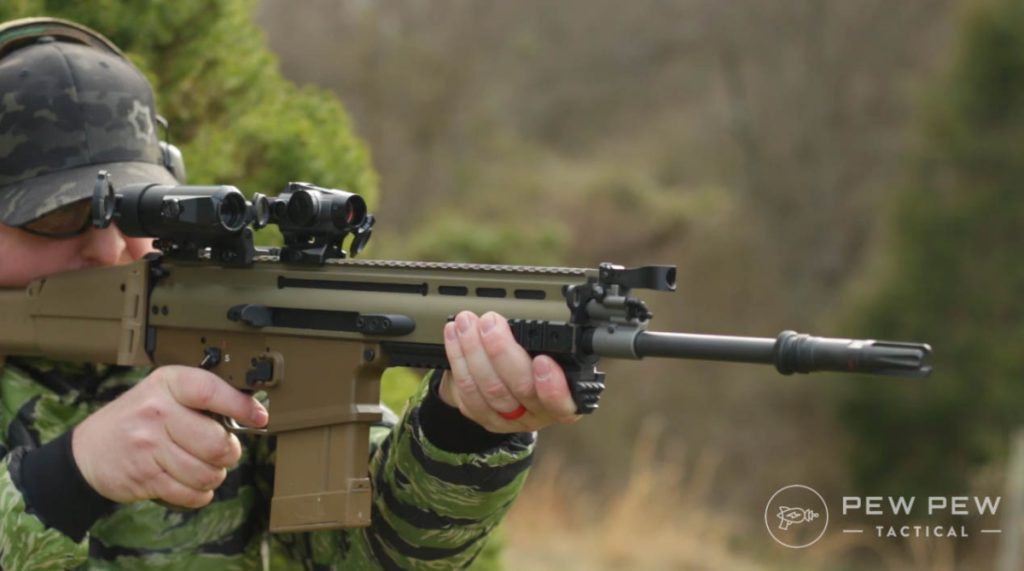
Short-stroke guns use a piston that moves separately from a bolt carrier group. When the weapon is fired, and the gas is bled, the piston strikes or presses against the bolt, sending it rearward. The bolt carrier group compresses against a recoil spring, and the recoil spring returns the bolt forward.
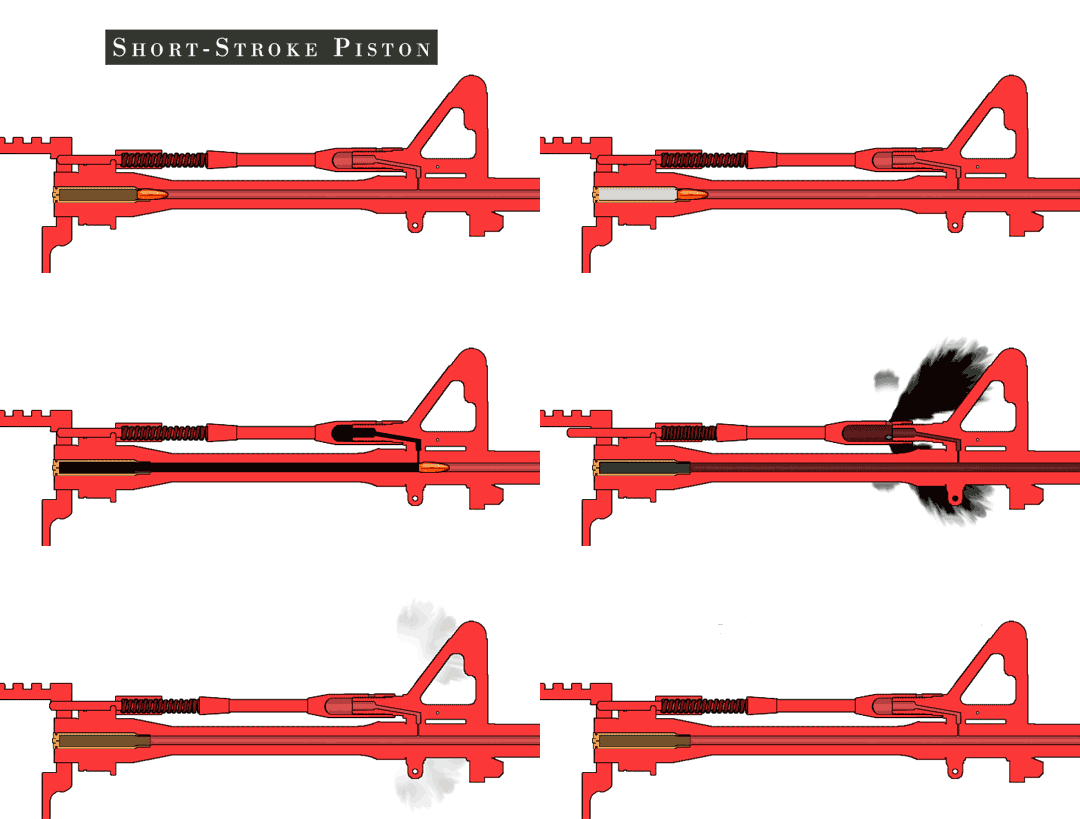
These guns tend to be lighter than long-stroke gas pistons. They are also capable of more accurate fire since there is less movement. They suppress very well and work well with short barrels.
While short-stroke gas pistons tend to be reliable, they are historically less reliable than long-stroke designs, especially at sub-zero temperatures.
Direct Impingement
Direct impingement designs use a gas tube that vents gas directly against the bolt carrier, without a piston. The bolt carrier compresses a recoil spring, pushing the carrier back forward and completing the cycle of operations.
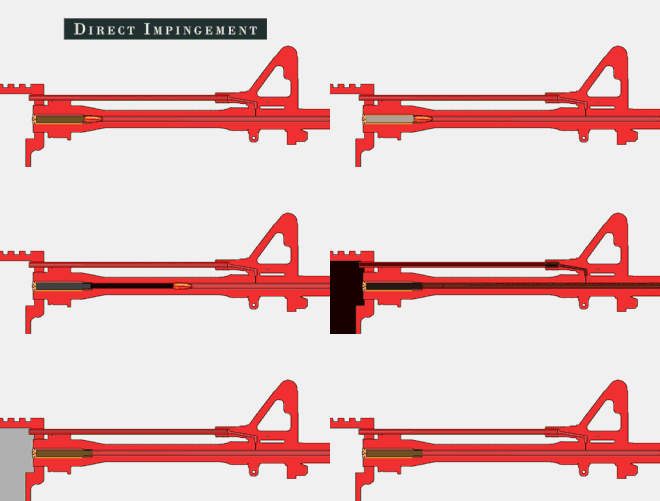
This has proven to be a reliable design, with the most famous direct-impingement gun being the AR-15. The lack of a piston system also allows the guns to be lighter and simpler. The downside is that gas and carbon are sprayed directly onto the bolt and into the receiver, which makes the weapon get dirtier quicker.
Final Thoughts
There you have it, an overview of the most common action types that you are likely to run into. Hopefully, you learned something new, and maybe next time we'll cover some of the more exotic and rare action types.
If you have questions or comments, sound off in the comments below! And if you are interested in learning more about how firearms operate, check out our article that covers the different types of trigger actions!