
Springfield Prodigy 3.5 AOS Review: Best Value Double-Stack 1911 For Concealed Carry?
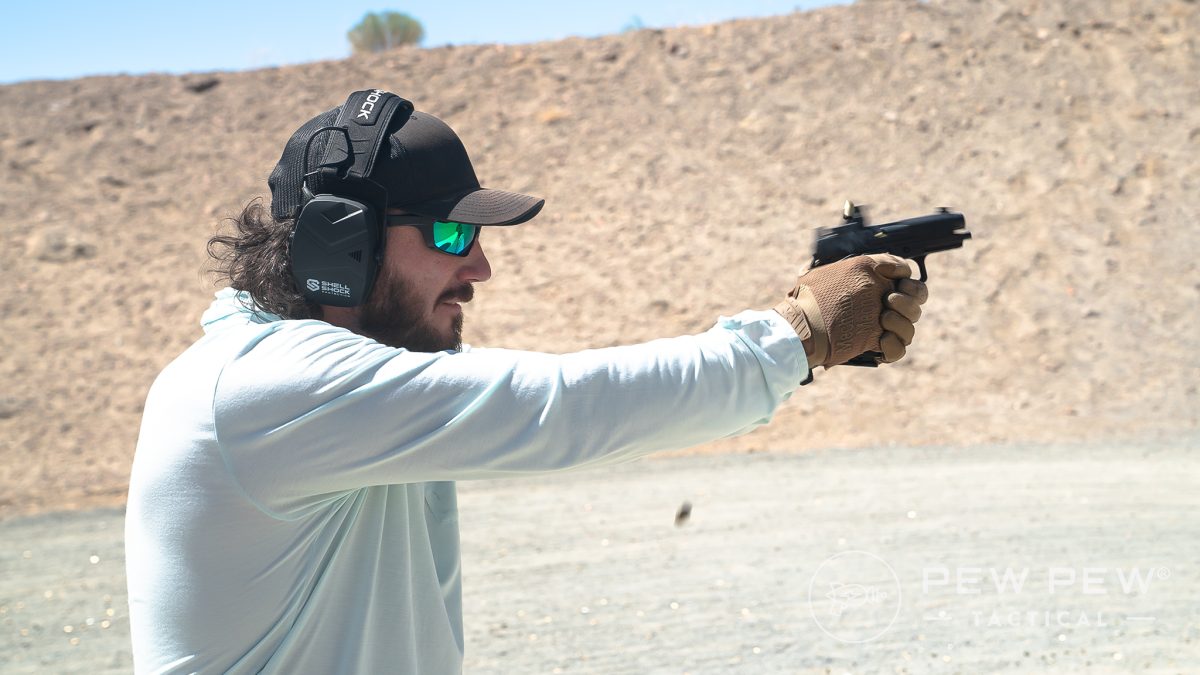
How do Springfield’s smallest double-stack 1911s stack up as concealed carry guns? Here’s my 500-round range report.
We review products independently. When you buy through links on our site, we may earn a commission to help support our testing. Learn more.
- By the Numbers
- Specs & Features
- How I Tested the Springfield Prodigy 3.5 AOS
- Springfield Prodigy 3.5 AOS: Accuracy & Reliability
- Ergonomics: Fit & Feel
- Springfield Prodigy 3.5 AOS Downsides
- Who Should Buy the Springfield Prodigy 3.5 AOS
- Upgrades & Accessories for the Springfield Prodigy 3.5 AOS
- Final Verdict on the Springfield Prodigy 3.5 AOS
- Meet the Experts
If polymer-framed, striker-fire guns are the pop stars of the concealed carry world, is there room on the airwaves for a metalhead like the Springfield Prodigy 3.5 AOS?
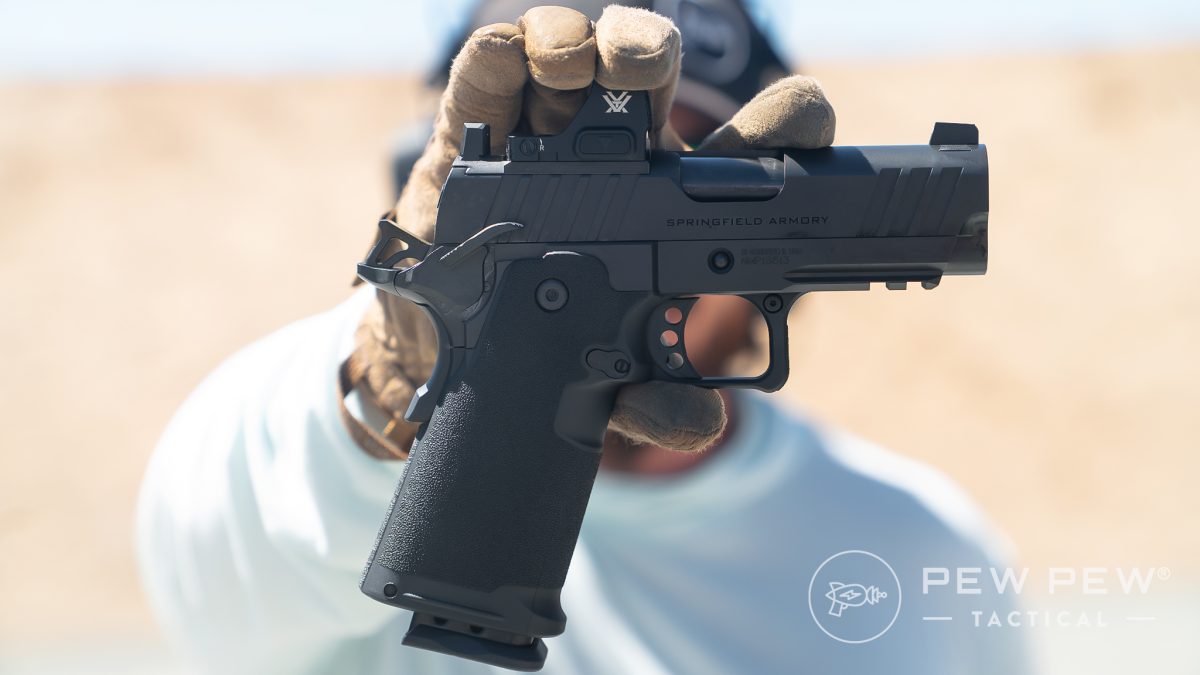
Like many of you, I wanted to try carrying a metal-framed pistol every day. I wanted to feel a single-action trigger and ride my thumb high on a manual safety. That’s why I grabbed two contenders, the original Prodigy 3.5 Compact AOS and the new Prodigy 3.5 AOS with a full-size grip, stacked up all kinds of ammo, and did just that.
This is my 500-round range report on the Springfield Prodigy 3.5 AOS. Accuracy, reliability, accessories – I covered it all. My goal was to help you decide if stepping outside of the mainstream with a pistol like this is worth the leap.
Table of Contents
- By the Numbers
- Specs & Features
- How I Tested the Springfield Prodigy 3.5 AOS
- Springfield Prodigy 3.5 AOS: Accuracy & Reliability
- Ergonomics: Fit & Feel
- Springfield Prodigy 3.5 AOS Downsides
- Who Should Buy the Springfield Prodigy 3.5 AOS
- Upgrades & Accessories for the Springfield Prodigy 3.5 AOS
- Final Verdict on the Springfield Prodigy 3.5 AOS
- Meet the Experts
Trending: Best AR-15s, Best Pistol Red Dots, & Ammo in Stock
By the Numbers
Reliability: 7
The biggest problem I experienced was caused by long optic screws. Aside from that, the only way to jam the Prodigy was to put too much thumb pressure on the slide or miss the grip safety.
Accuracy: 8
The Prodigy shoots very well for a pistol with a 3.5-inch barrel. At times I had to remind myself that it wasn’t a full-size pistol.
Ergonomics: 7
In general, this feels like most double-stack 1911s. I like Springfield’s grip texture and slide serrations, and the ambidextrous safety has a very clicky, tactile feel.
Customization: 6
Adding an optic and a light is easy. Various magazine sizes are available. Aside from that, I don’t think most owners will change much about the Prodigy 3.5 AOS.
Value: 8
The double-stack 1911 market has been getting pretty expensive lately. I’m happy to see a pistol that shoots this well and feels this nice at a relatively accessible price.
Overall: 7.35
Pros
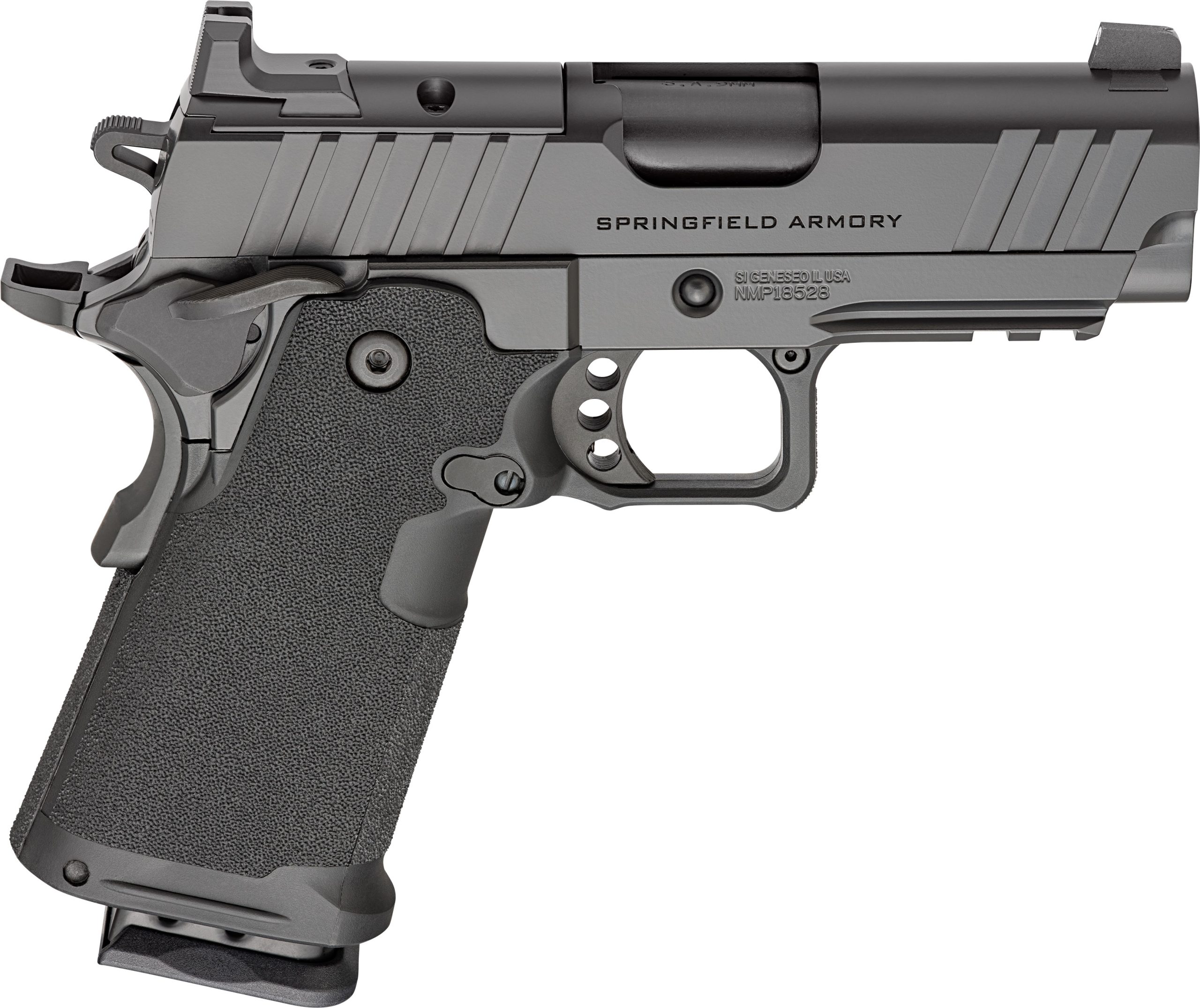
- Excellent trigger
- Silky smooth action
- Co-witness factory iron sights
- Agency Optic System for multiple red dot footprints
Cons
- Manual-safety carry guns aren’t for everyone
- Significantly heavier and more bulky than a polymer-framed pistol
Springfield Prodigy 3.5 AOS Specs & Features
Specs
- Caliber: 9mm
- Action: Semi-automatic, single action
- Capacity: 15+1 (compact frame), 18+1 (full-size frame)
- Optic Ready: Yes (Agency Optic System)
- Barrel Length: 3.5”
- Overall Length: 7”
- Weight: 26 oz (compact frame), 29 oz (full-size frame)
- Country of Origin: USA
Features
- Tritium front sight, AOS adapter plates
- Bull barrel
- Partially captured guide rod assembly
- Ambidextrous thumb safety
How I Tested the Springfield Prodigy 3.5 AOS
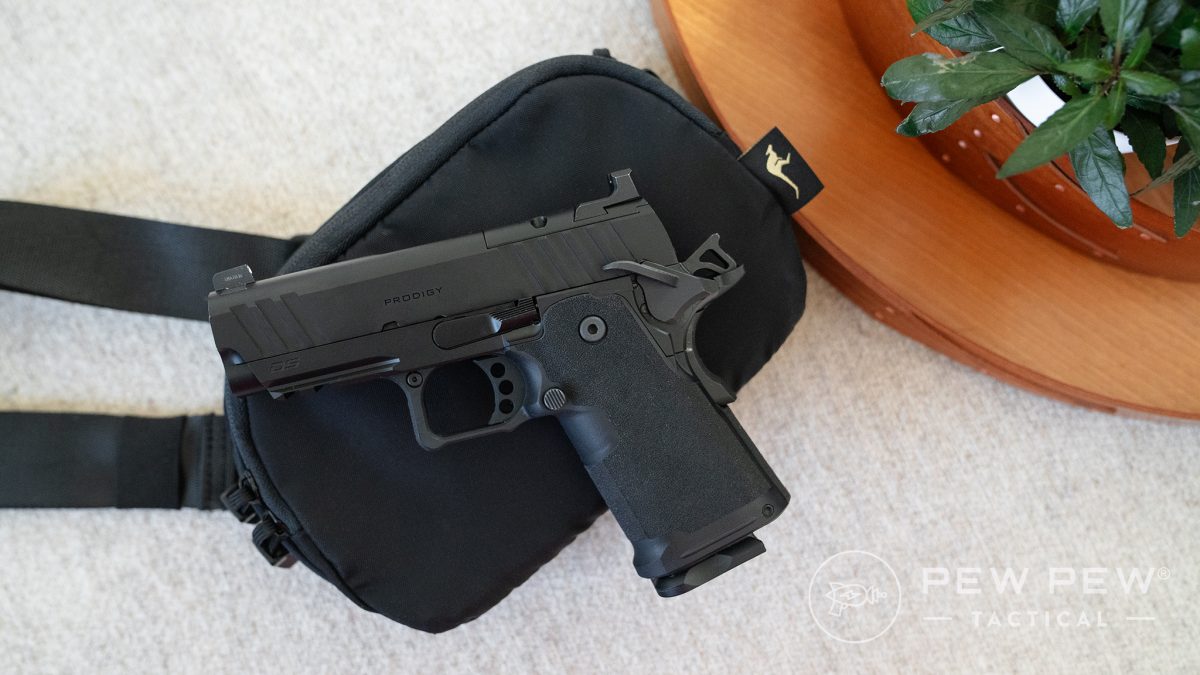
For this review, I focused on the experience of using the Prodigy 3.5 AOS and Prodigy 3.5 Compact AOS as carry guns. That meant working it into my rotation with an IWB holster and in an off-body carry bag for about a month in peak summer heat.
Over the course of several range days, I evaluated the pistol’s accuracy and reliability with training and defensive ammunition.
This was not a torture test, so there was no water submersion, no slathering the pistol in mud, and no spiking it off of concrete like Gronk in the end zone. I did make note of any reliability issues, though.
The overarching goal was simple: determine if the Springfield Prodigy 3.5 AOS deserves to be your next concealed carry pistol.
Round Count & Reliability Testing
I tested the Prodigy 3.5 AOS in both configurations with 500 rounds of training and defensive ammunition across a series of tests and drills. Most of this was conducted with the new, full-size grip.
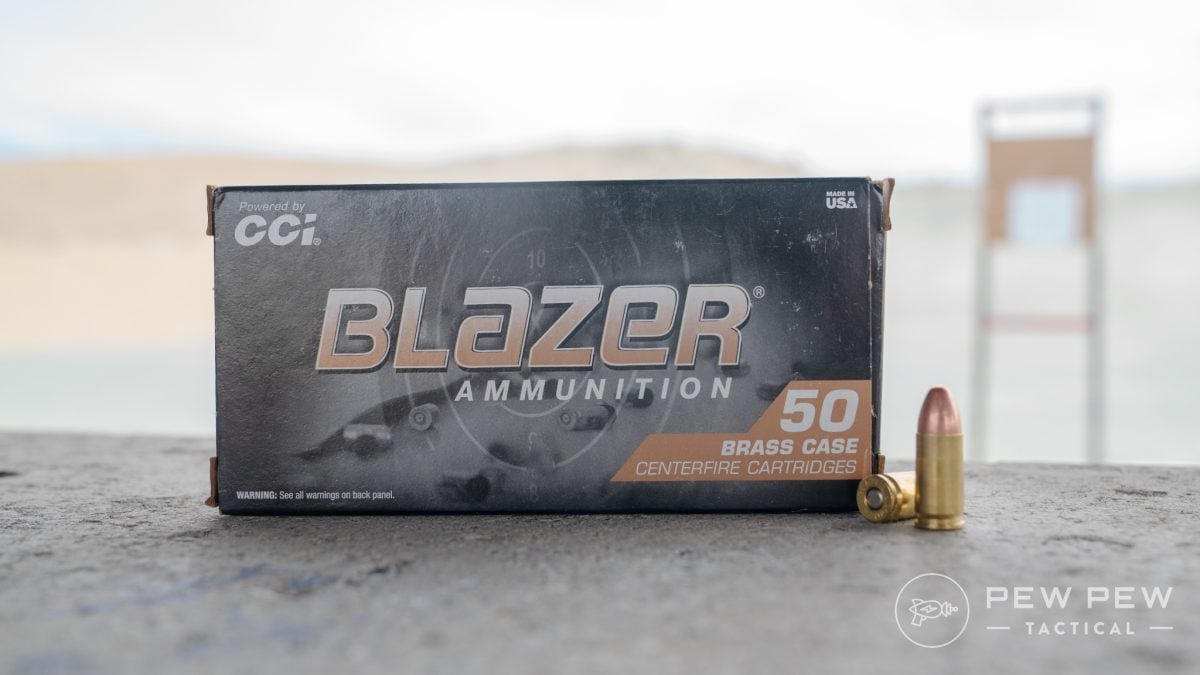
Here’s a basic rundown, and you can learn more about these in my roundup of the Best 9mm Ammo.
Accuracy Testing
To evaluate accuracy, I shot slow-fire groups of five shots from 7 to 25 yards.
To see how the pistols performed in a more practical setting, I ran a variety of drills. These included close-quarters speed work, like Bill Drills, and dynamic engagements on multiple targets at mixed distances.
Throughout this process, I made note of subjective impressions like ergonomics and ease of use.
Accessories
Unless you plan on carrying a bone-stock pistol in your pocket, you need to know which accessories it works best with.
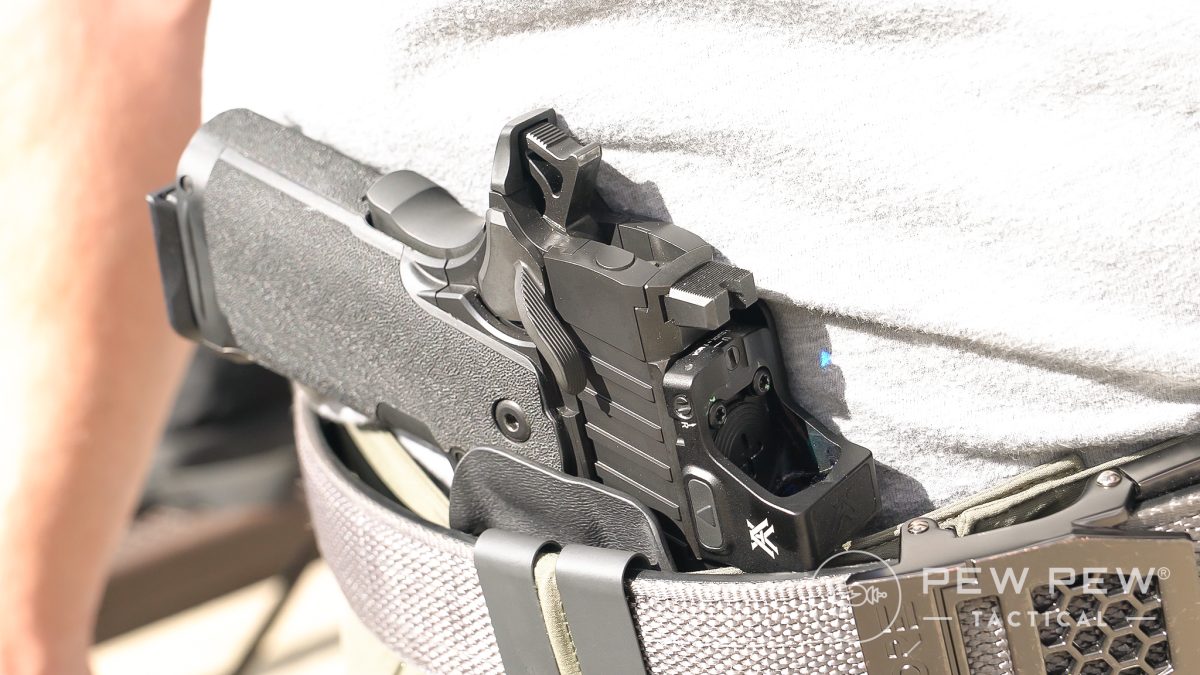
I tested the Prodigy 3.5 AOS with a Vortex Defender-CCW green dot and the new Tenicor Certum4 holster. I have a list of my favorite accessories and links where you can buy them at the end of this review.
Springfield Prodigy 3.5 AOS: Accuracy & Reliability
Shooting the Prodigy 3.5 AOS in either configuration alongside my Hellcat Pro illustrated why someone would tolerate the extra weight and cost of a double-stack 1911. These pistols are fantastic shooters!
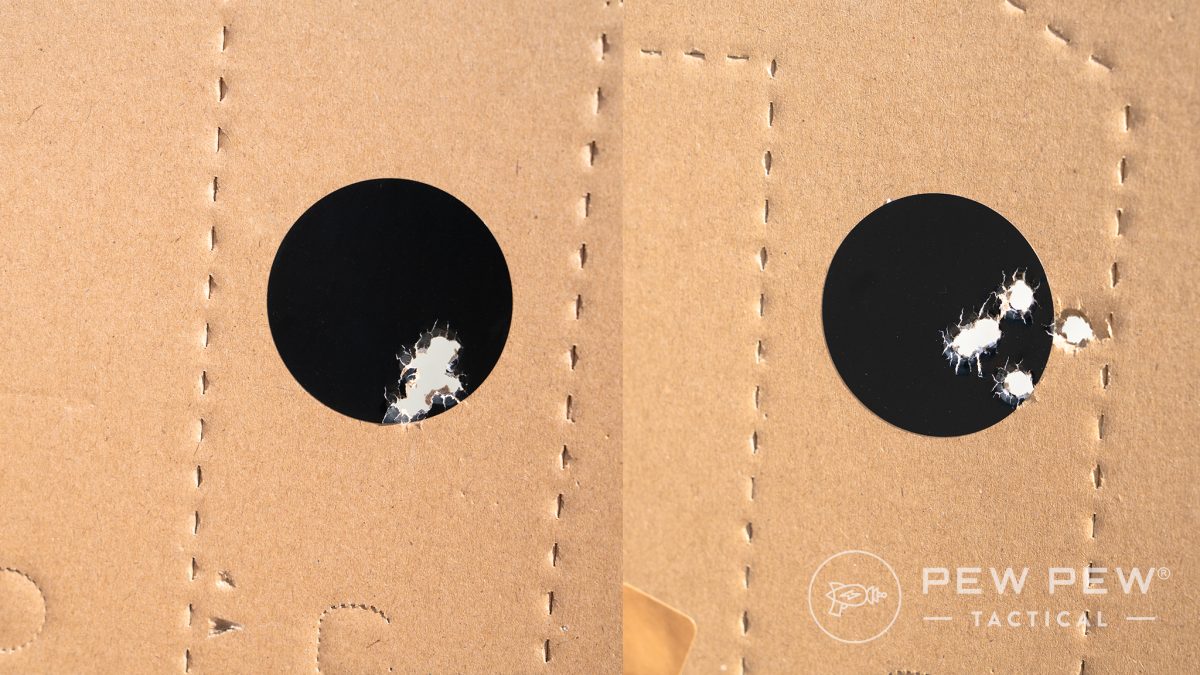
From ten yards and in, putting five shots through one ragged hole was totally doable. I did my best shooting with Blazer Brass 115gr FMJ, but the Prodigy had no trouble shooting five-shot groups in the one-inch ballpark with any type of ammunition. I was able to cycle through FMJ and hollow-points ranging from 115 grains to 147 grains without ammo-induced malfunctions.
Even at 25 yards, I was consistently able to pick up the pace and keep hits in the A-zone.
At one point, I set two steel TA Targets at about 15 and 25 yards 90 degrees from one another, and transitioned between the two with the Prodigy’s iron sights. It felt pointable and easy to control during this drill, even without an optic.
The only real problem I encountered was a feeding issue caused by specific optic screws (more on that in a minute). Once I sorted that out, both pistols earned a clean bill of health.
Bottom line: the Prodigy wasn’t unreliable, it just required a little more attention to set it up for success.
I was particularly happy with the recoil spring assembly. Many 2011-style pistols are under-sprung in the pursuit of softness, which often leads to reliability issues. The Prodigy 3.5 AOS is sprung like a carry gun, not a competition gun.
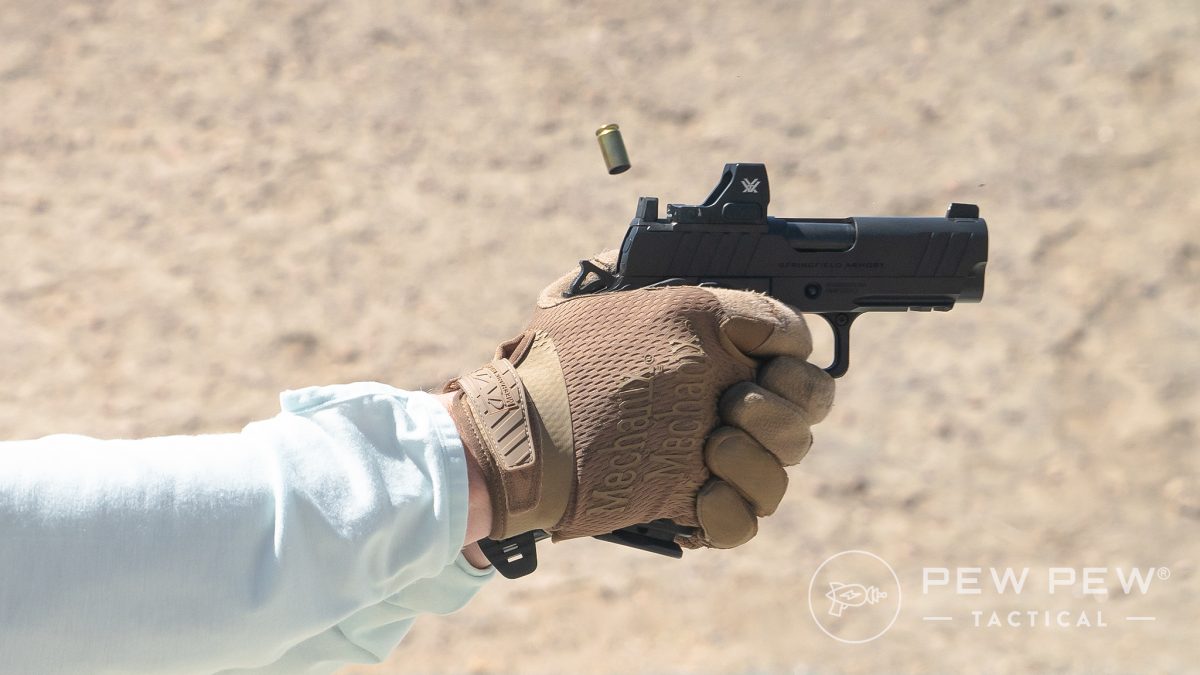
And boy, did it deliver. Between the full-size grip and the overall weight, the Prodigy 3.5 AOS felt and shot larger than it is.
The bull barrel and metal-on-metal interface made the Prodigy 3.5 AOS cycle like a sewing machine. I kept it oiled, and it delivered an incredibly satisfying recoil impulse. The predictable, rocking-chair motion got me back on target with minimal time between shots.
I consider the Prodigy 3.5 AOS more comfortable to shoot than a full-size polymer gun. It almost felt like a comped pistol. Running it fast wasn’t just easy, it felt mandatory.
Ergonomics: Fit & Feel
Overall the Springfield Prodigy 3.5 AOS feels like a high-end firearm. Some of that is a function of metal construction, some of it comes from specific features and components. Let's go one by one.
The Best Gun Deals, Coupons and Finds
Subscribe to Pew Pew Tactical's sales and deals email.
Grip
If you’ve ever held a 2011 or double-stack 1911 pistol, you know what to expect from the Prodigy 3.5 AOS. It’s a lot for smaller hands to wrap around, but the classic 1911 grip angle is super comfortable and natural to point.
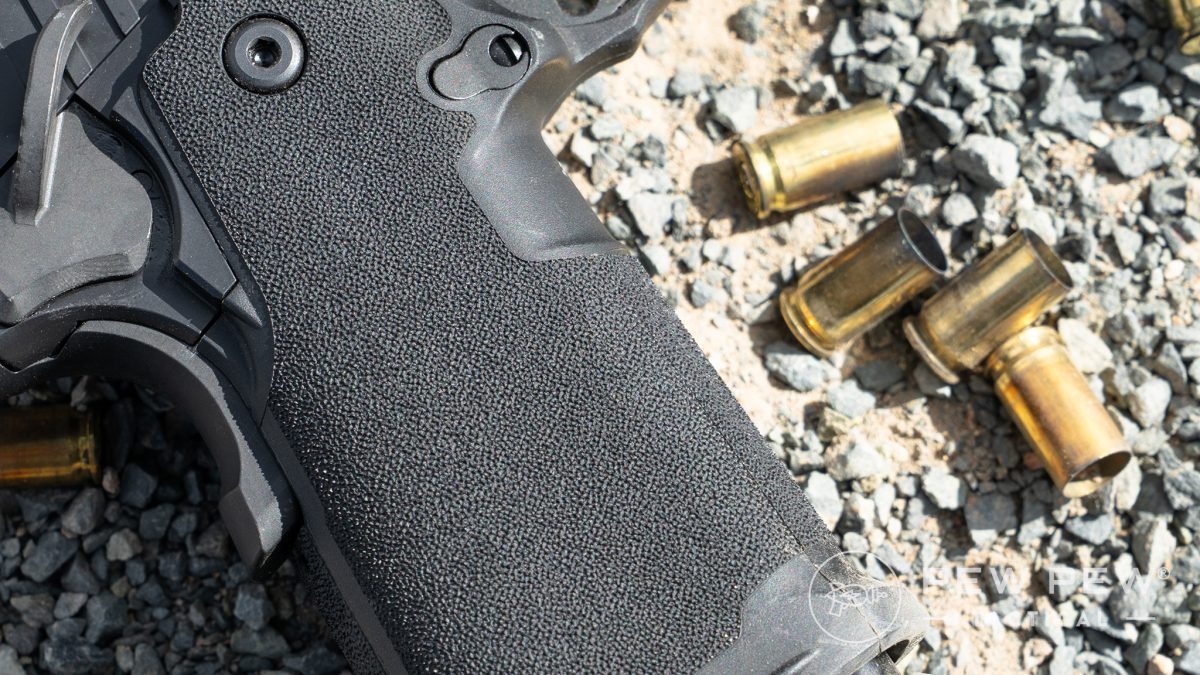
To me, the grip texture feels like skateboard tape (in a good way). It was gritty enough to hold my hands in place with or without gloves, but not so aggressive that it got uncomfortable against my skin in an IWB holster.
The Prodigy 3.5 Compact AOS has a shorter grip, with 15-round flush mags instead of 18-rounders, but it’s otherwise identical. My size medium hands had adequate room on both pistols – no dangling pinky.
Watch out for that grip safety! I’ve done enough 1911 shooting that it feels second nature, but I’ve seen more than one new shooter get a failure to fire because they weren’t depressing the grip safety. For what it’s worth, the grip safety on the Prodigy is very light.
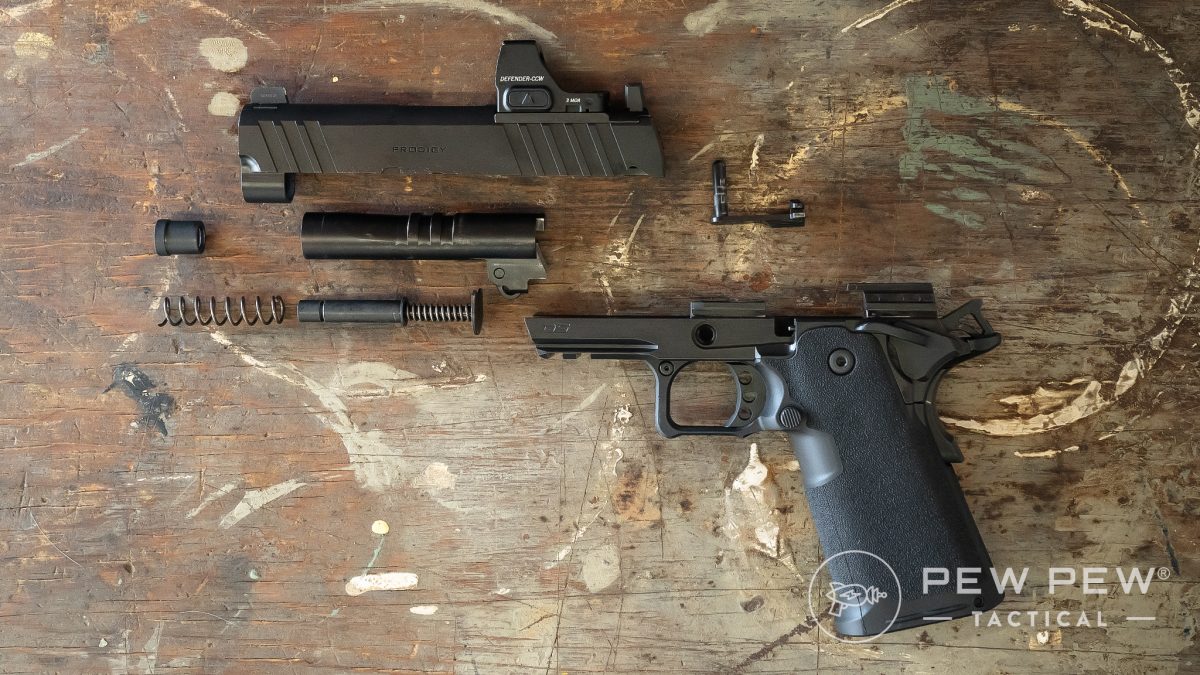
Springfield was very generous with the trigger guard undercut. That extra room allowed me to get a super high grip with my shooting hand, resulting in lots of recoil control when combined with my shooting-hand thumb on the safety for a pinching effect.
The front and rear serrations provided plenty of grip for racking the slide or press-checking with the forward portion of the slide. The machined edges felt refined and well executed; not too sharp or too round. The satin black finish looks fantastic.
Trigger
The Prodigy’s trigger weighed in at an average of 2.01 pounds by my digital trigger gauge – but that only tells part of the story.
Take-up slack was minimal. The break was as clean and sharp as I could ask for; on par with some pistols that cost a lot more. And that reset? Quick, audible, and tactile – if a little bit light.
This kind of trigger feel is one of the reasons 1911 architecture is relevant more than a century after it was introduced. If your experience is limited to striker-fire polymer pistols, you’re in for a real treat (after some mental recalibration, perhaps). Springfield’s gunsmiths certainly know their way around a single-action trigger.
Controls
Flicking the safety on and off was nearly as satisfying as dry-firing the trigger. All-metal construction delivered firm, snappy feedback that left no doubt as to what the condition of the pistol was without looking at it.
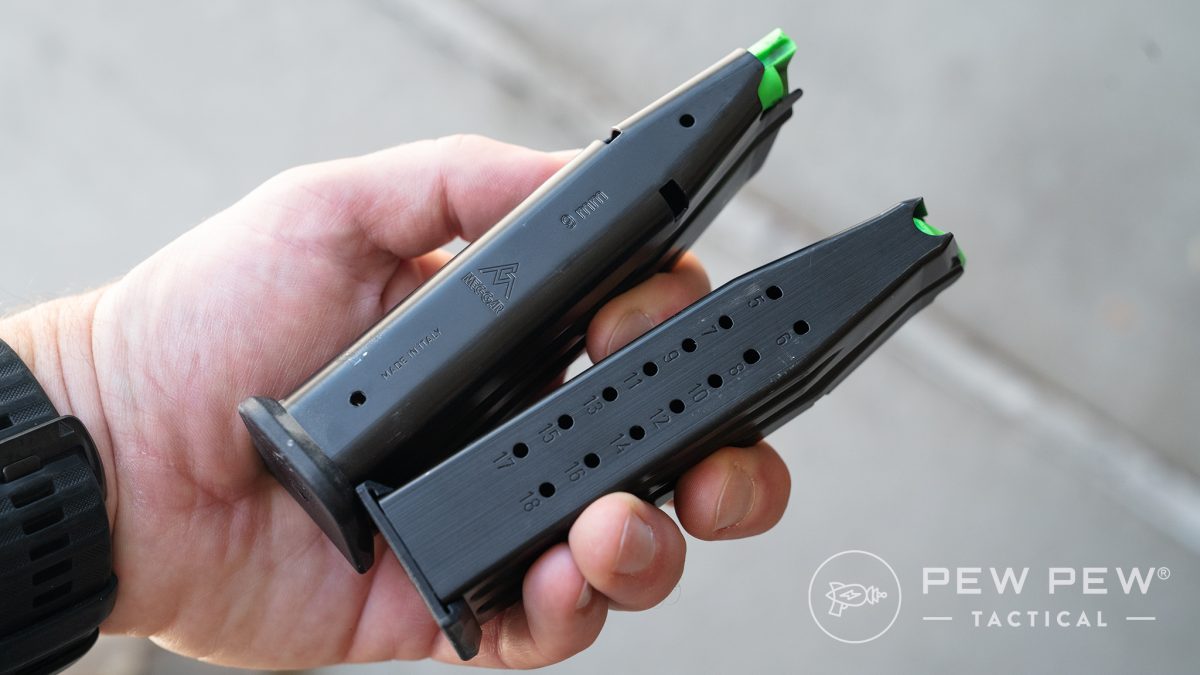
Both of the 2011-pattern Mec-Gar magazines that came with the Prodigy 3.5 AOS dropped free with a tap of the magazine release. Standard capacity is 18 rounds, but extended magazines are available from Springfield and aftermarket suppliers.
The Prodigy 3.5 Compact AOS comes with 15-round Springfield magazines. Again, no issues inserting or removing these.
Sights & Optics
I’m all for using a red dot on a pistol, but I still appreciate good factory irons. In that department, Springfield did better than most.
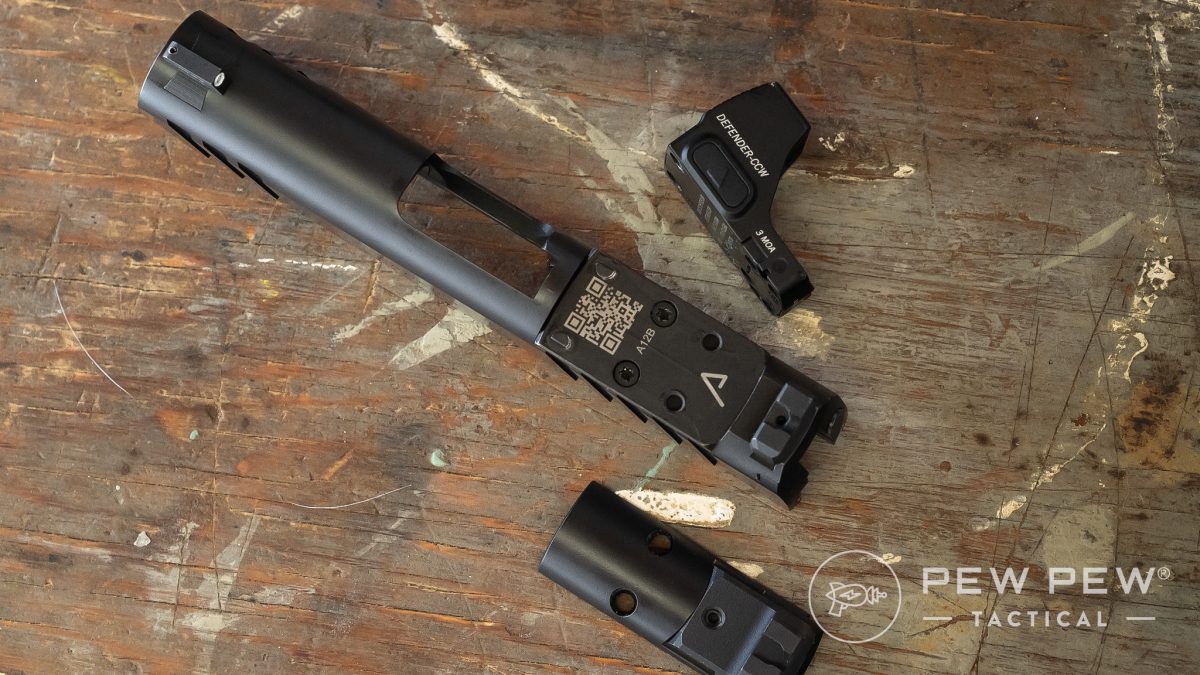
The front sight’s tritium vial lit up in the dark, and a white ring kept it prominent during the day. The rear sight was blacked out, likely as a cost-conscious measure. Installing an optic involves replacing the rear sight, so it wouldn’t make sense to put tritium sights on every adapter plate or the original sights that you’re likely to set aside.
You can mount your choice of optic with the Agency Optic System. During my testing, the AOS plate provided a solid interface between the Prodigy and the Vortex Defender-CCW. The quality of these plates is very good.
Better yet, the tall sights stayed visible with a red dot installed. I, for one, appreciate having backup sights anytime I run a red dot. They don’t fail often, but it’s a chance I’d rather not take.
Springfield Prodigy 3.5 AOS Downsides
Tight tolerances are part of what make more expensive pistols like the Prodigy feel so nice, but they also reduce the margin for error.
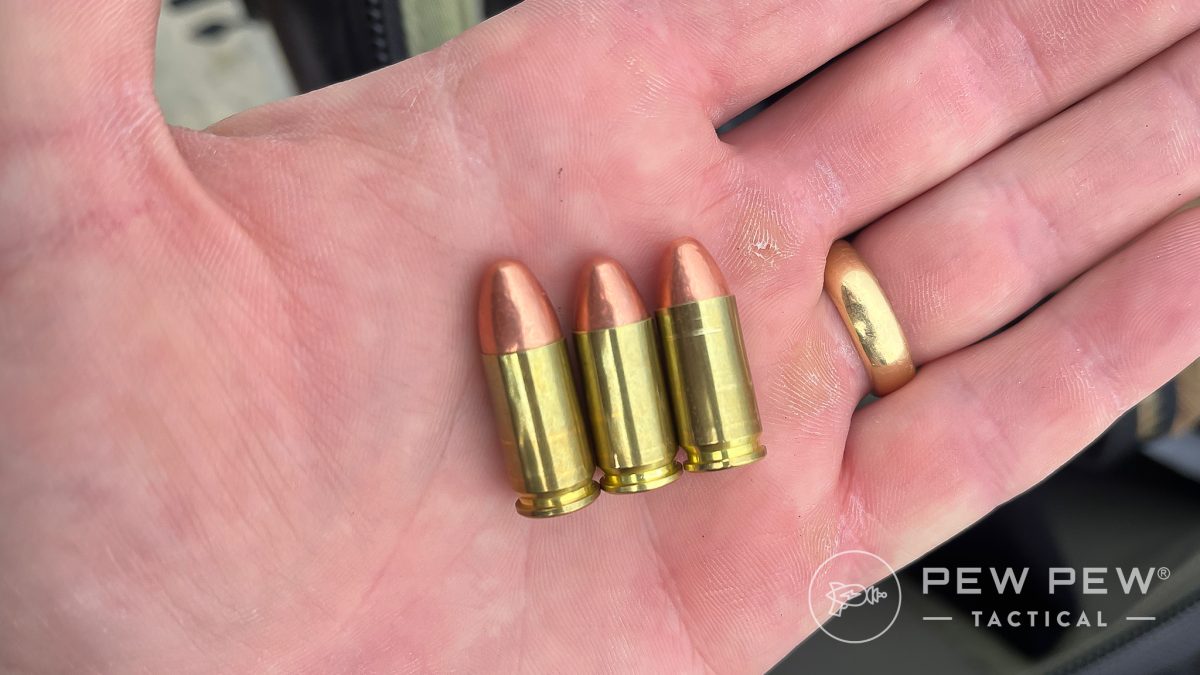
I experienced initial feeding issues when using a red dot because the screws I used to secure the AOS optic plate were impeding the extractor and, as a result, applying extra pressure on the case rim. I’ll take the blame for that one, but be extra mindful when installing an optic. I measured two sets of seemingly identical screws with a caliper and found that a 0.1-inch difference in length was all it took.
Once I resolved that, both pistols ran like scalded cats.
The main downsides I’d encourage you to consider are true of all 2011 and double-stack 1911 pistols: they’re heavy, expensive, and complicated to operate compared to a striker-fire pistol. It’s up to you if the high-end shooting experience is worth those tradeoffs.
Who Should Buy the Springfield Prodigy 3.5 AOS
There are a bunch of great polymer wonder-nines out there, and they cost a whole lot less than any Prodigy. At the same time, you can get a semi-custom gun like the Staccato CS for about double what Springfield charges.
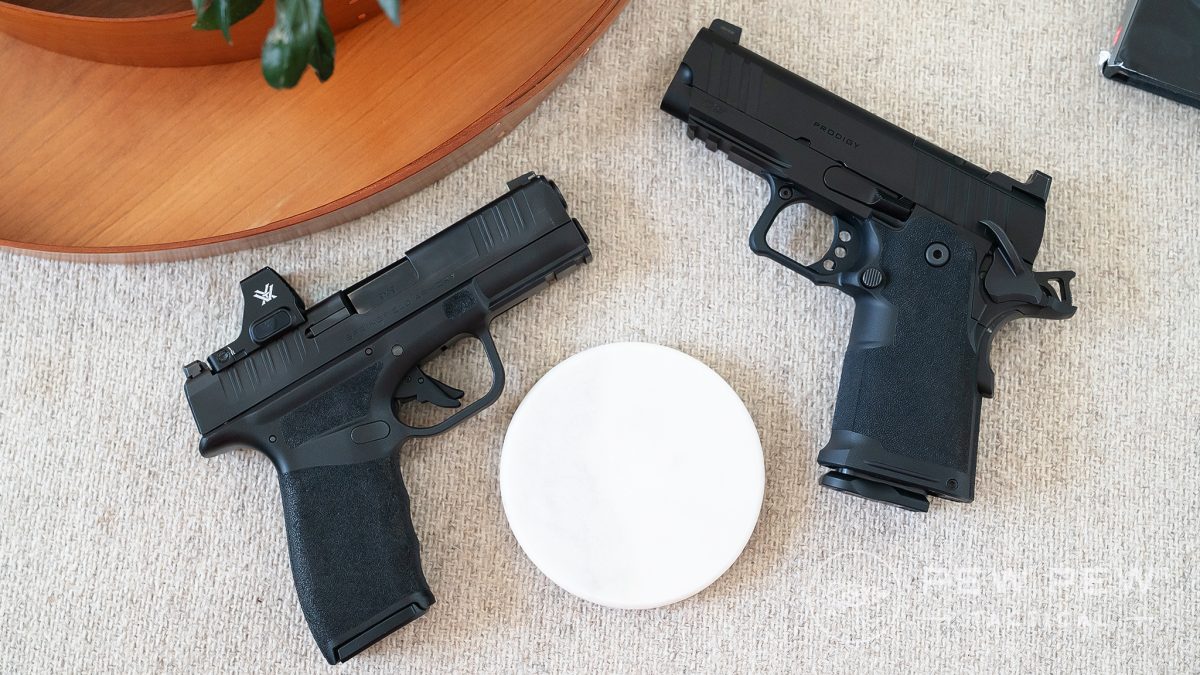
The Springfield Prodigy 3.5 AOS is for people who appreciate a refined, high-end carry gun, but don’t want to drop thousands upon thousands of dollars to buy it.
In some ways, this is a carry gun for shooters, by shooters. Cycling the slide is therapeutic. Breaking the trigger feels like telepathy. Sure, it’s heavy, but the shooting experience is so good that it made me schedule range day after range day just to get more time with it.
Our Most Popular Posts
Upgrades & Accessories for the Springfield Prodigy 3.5 AOS
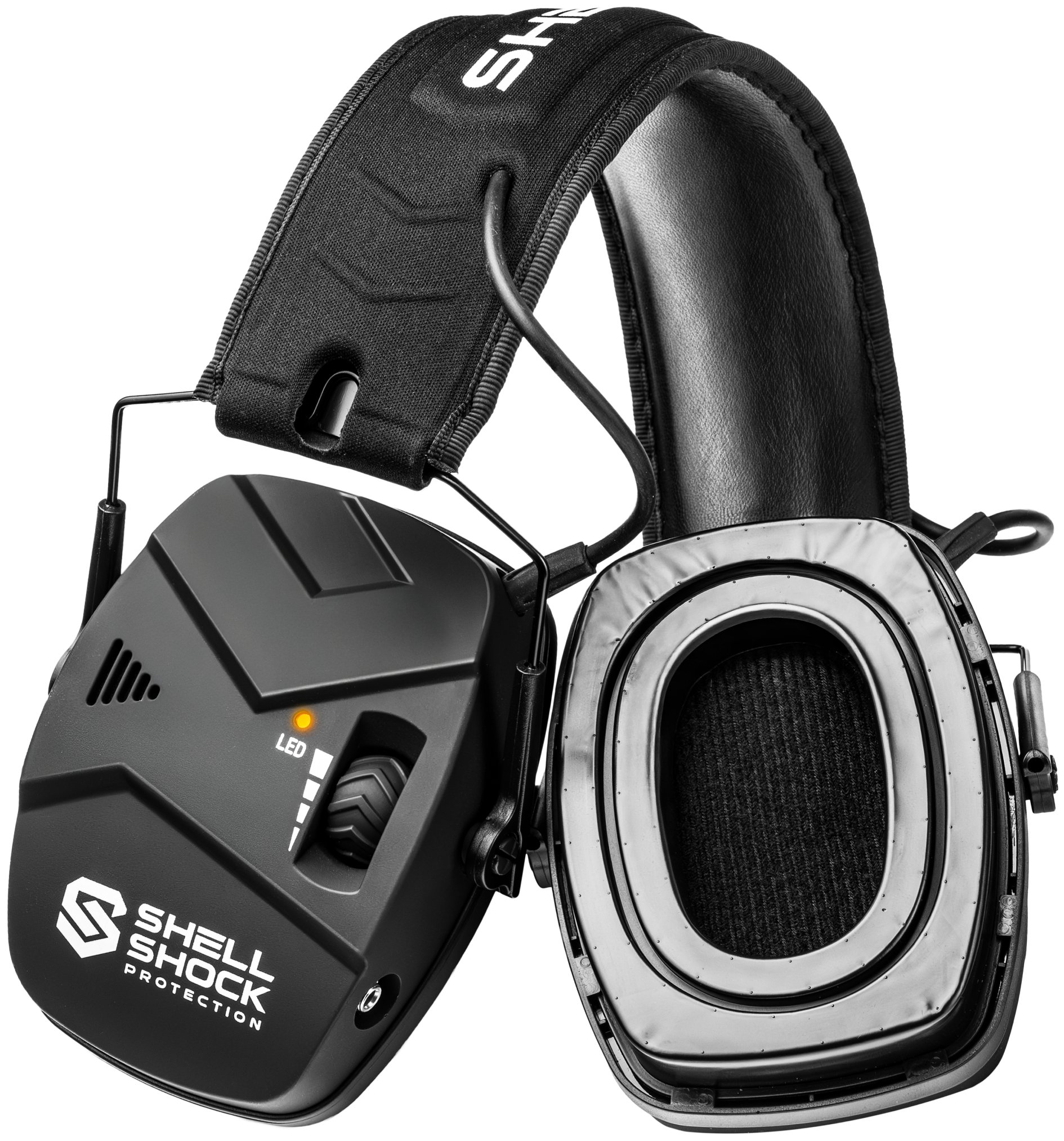
Training requires good personal protective equipment. Grab a set of the new SellShock EXO Pro Elite earmuffs before you hit the range with your new Prodigy.
These are my favorite because electronic hearing protection lets me talk to other shooters and hear little sounds around me. Bluetooth earmuffs are available too, if that’s in your budget.
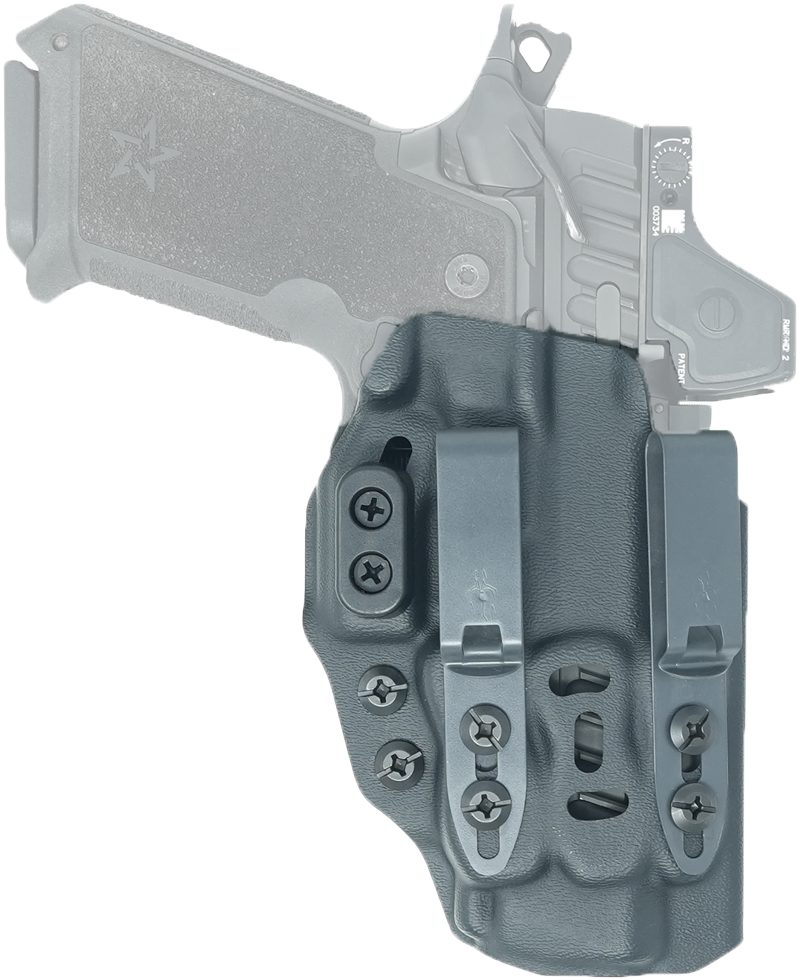
Tenicor is my go-to for concealed carry holsters, and the new Certum4 is the most versatile option yet. I set mine up for strong-side carry, but it can be configured for appendix carry and adjusted for ride height and cant, as well.
And I’ve said it before – the Discreet Carry Concepts belt clips it comes with are the best you can get.
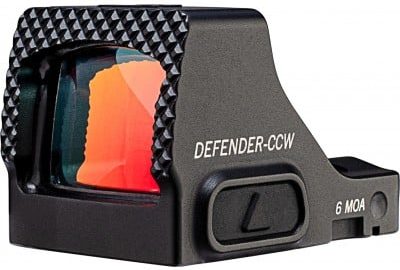
Springfield makes it easy to mount the optic of your choice with Agency Optic System adapter plates. This time, I opted for a Vortex Defender-CCW.
This micro red dot (or green dot, in this case) earned a place in our Best Pistol Red Dots comparison, and it suits the Prodigy’s slim slide profile. You can choose from a number of reticle colors and sizes.
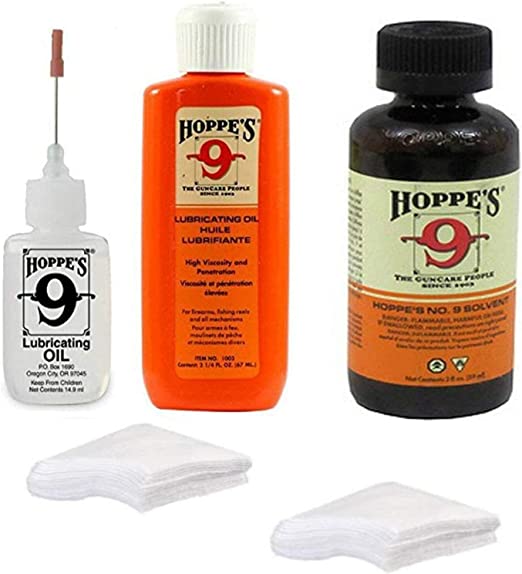
Like other pistols in this category, the Prodigy runs best when it’s clean and well lubricated. You’re going to want to stock up on Hoppe’s cleaning supplies.
I like to keep my cleaning kits supplied with consumables like Hoppe’s bore cleaner, gun oil, and patches.
FAQs
Final Verdict on the Springfield Prodigy 3.5 AOS
I’m really glad that pistols like the Springfield Prodigy exist. The Prodigy 3.5 AOS and Prodigy 3.5 Compact AOS deliver a high level of performance, refinement, and enjoyment at a comparatively reasonable price.
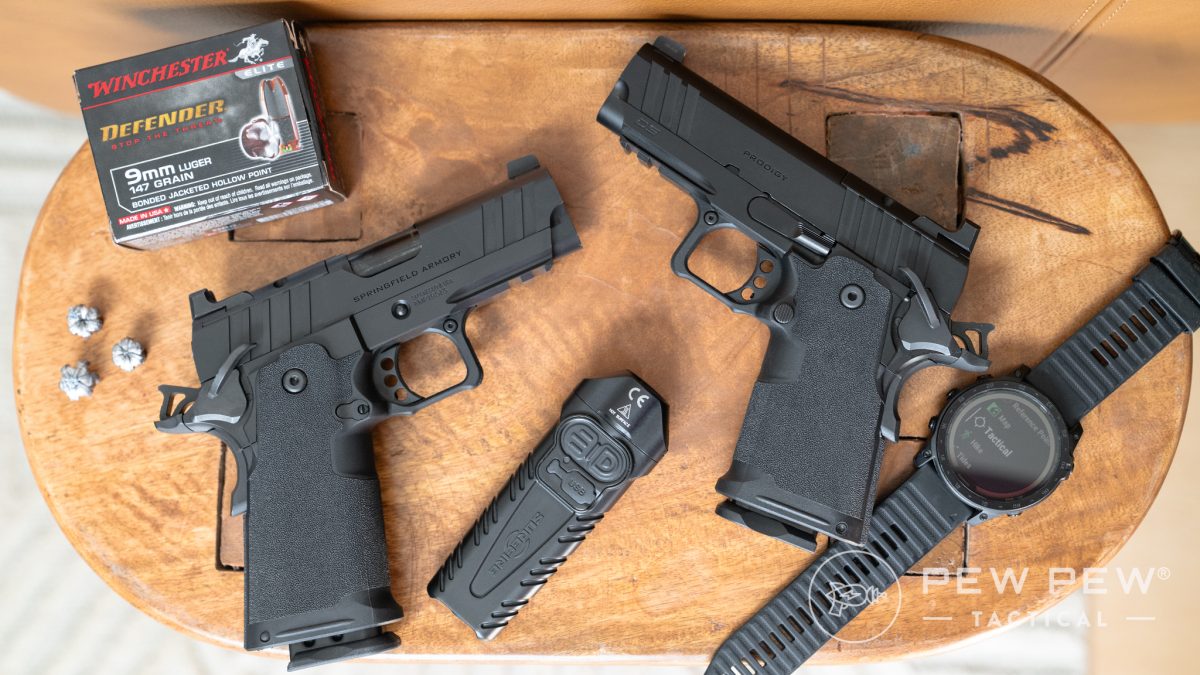
Should you consider carrying one? I think so.
There are places where I’d feel much better with a striker-fire pistol, loose tolerances, and no manual safeties. I also spend less time in those places than I like to imagine. Most of the time, I’m at home, in my car, or around town – all places where the drawbacks of a double-stack 1911 aren’t much of a concern, and the strengths really shine.
I do know this: if you shoot either one of these pistols, you’ll quickly start rationalizing why heavy metal should be part of your personality.
What do you think, would you EDC the Springfield Prodigy 3.5 AOS? Drop a comment to weigh in. Looking for more pistols in the heavyweight division? Check out our guide to the Best Metal-Framed Semi-Auto Pistols!
Meet the Experts
This article comes to you from Pew Pew Tactical Editor & Senior Review Analyst Scott Murdock. Scott has extensive experience testing and evaluating pistols for Pew Pew Tactical and several other leading publications. Prior to working as a writer, Scott qualified as a pistol expert in the Marine Corps and competed in the Western Division Matches. Following his time in the military, Scott has continued his firearms education with frequent courses and professional instruction.
Editor-in-Chief Jacki Billings runs our experienced team of reviewers and edited this review. She is an NRA-certified Basic Pistol Instructor as well as a member of the Society of Professional Journalists, ACES: Society for Editing, and the Professional Outdoor Media Association. Jacki has a bachelor’s degree in journalism and has worked as a media professional for close to 20 years, specializing in gun media for almost 10 years. With 2,000+ articles to her name, she uses her professional journalism and editing experience to set testing protocols and editorial standards for Pew Pew Tactical.