
Best .410 Guns & Ammo [2026]
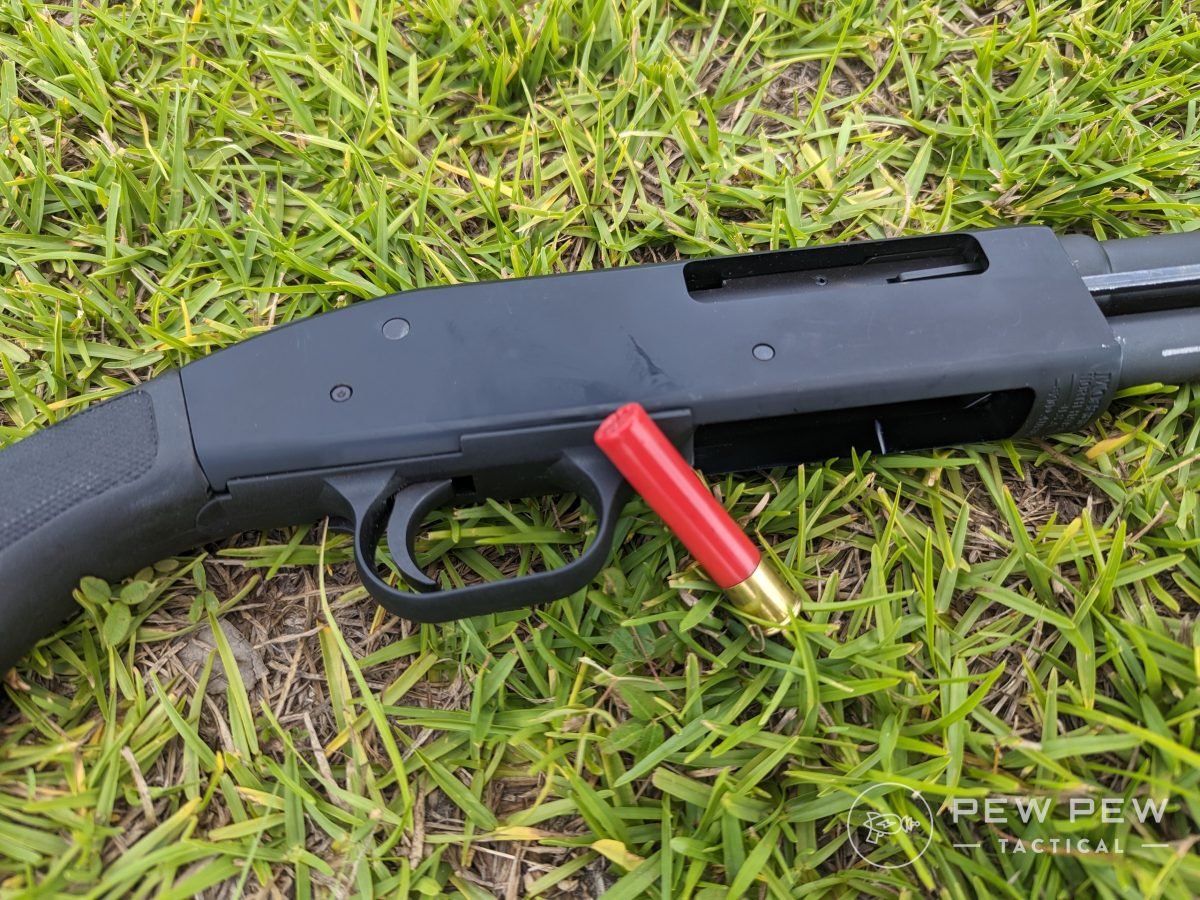
Do .410 guns have a place in this world? Here’s where they came from, what they’re good at, and why you should consider buying one.
We review products independently. When you buy through links on our site, we may earn a commission to help support our testing. Learn more.
The .410, a cartridge that's both mighty and wee, holds a unique position among shotgun ammunition. It's the smallest and often most misunderstood, boasting a distinct size, power, and design that sets it apart from its counterparts.
Even the naming moniker is different from other shotgun cartridges. Most shotguns use gauge, but .410 uses inches. The little .410 bore is equivalent to a 67 gauge; micro-sized compared to something like 12 gauge.
The little .410 shell has practical advantages and disadvantages. My goal is to educate you on the .410 and the shotguns that shoot it. We'll cover its performance, strengths, weaknesses, and why you might or might not consider buying a .410 shotgun.
The Quick List
- Best for Hunting: Mossberg 500 All-Purpose Field (.410)Jump to Details ↓
- Best for Survival: Savage Model 42 TakedownJump to Details ↓
- Best for Home Defense: Mossberg 590 (.410)Jump to Details ↓
- Best Handgun: Taurus Judge Home DefenderJump to Details ↓
Table of Contents
Trending: Best AR-15s, Best Pistol Lights (Re-Test), & Ammo in Stock
How We Tested the Best .410 Guns
For this round-up, we leaned on the expertise of our freelance writer, Travis, and editorial staff here at Pew Pew Tactical. Between us, we have hands-on experience with most guns on this list.
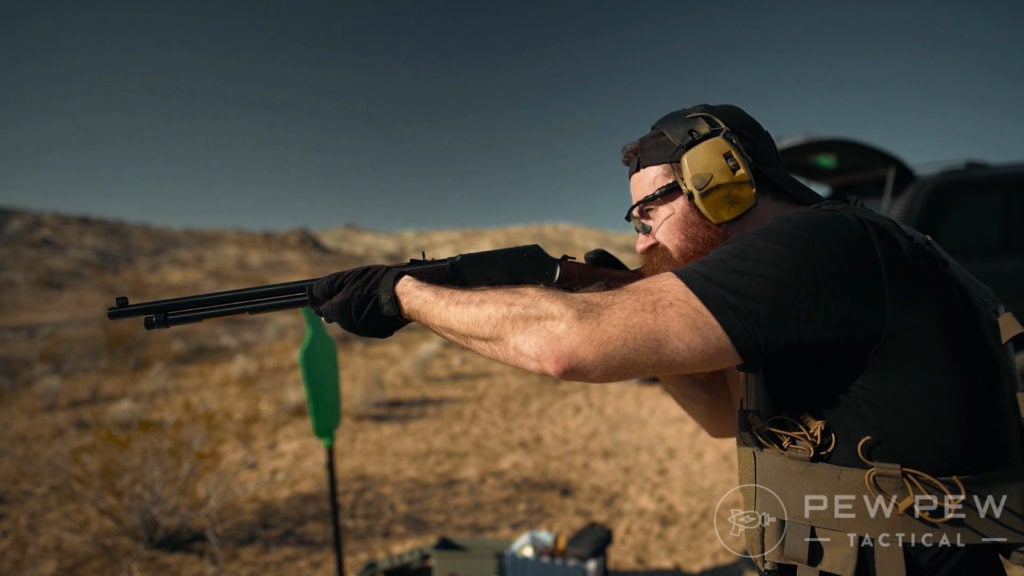
We have full reviews for a majority of the firearms you'll see listed below. Guns that have been reviewed undergo a strict testing procedure that requires a minimum of 250 rounds through each gun using a variety of ammo brands.
Our goal was to find a variety of .410 guns across budgets that offer solid accuracy and reliability paired with nice ergonomics and features at a decent price point.
Guns that have not undergone our full review process but appear on this list have been researched extensively, and we feel confident recommending them.
Best .410 Guns
1. Mossberg 500 - Best for Hunting

Pros
- Legendary reliability
- Classic-looking wood furniture
- Bantam youth versions available
Cons
- Limited power
- Doesn't pattern buckshot as well as larger-bore shotguns
Specs
- Gauge: .410 bore, 3”
- Action: Pump action
- Barrel Length: 24”
- Overall Length: 43.75”
- Weight: 6.25 lbs
- Country of Origin: USA
Why We Love It
One of the few high-quality American companies still producing repeating .410s is Mossberg. The Mossberg 500 series of shotguns is well-proven and immensely popular. The .410 variant gives you everything you love about the Mossy 500 in a smaller, lighter package.
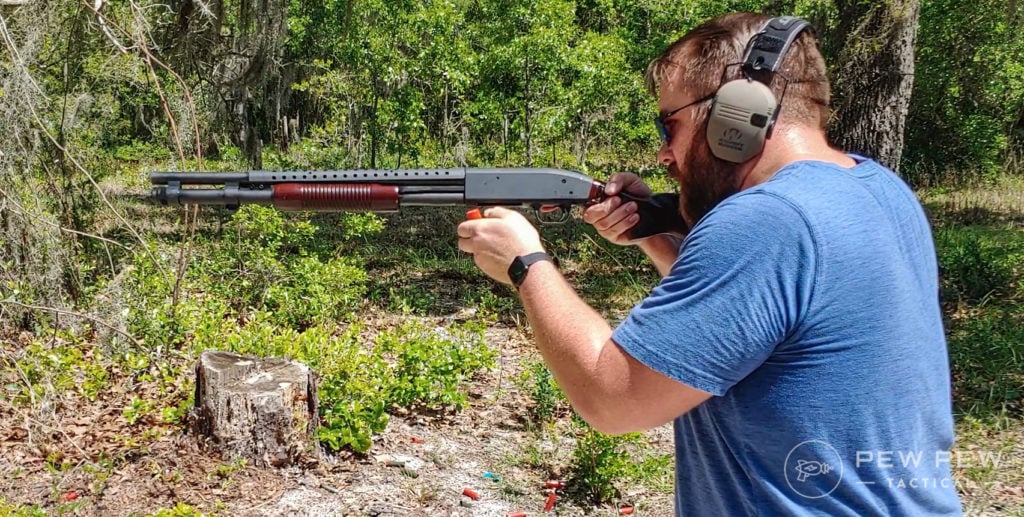
At 6.25 pounds, the gun won't weigh you down. If the gun is for an adult-sized shooter, the All Field Model is perfect. For smaller shooters, the Bantam variant offers a shorter length of pull that fits smaller shooters nicely.
The All Field Model gives you wood furniture that isn't fancy, but it works and gives you that classic hunting camp aesthetic.
This gun is perfect for hunting anything the .410 can hunt. It can handle 3-inch loads for buckshot and birdshot. The vent rib guarantees a good point of impact/point of aim for accurate hits.
A 24-inch barrel provides a decent sight radius, and the Mossberg 500 receiver is drilled and tapped for rails and optic mounts. A red dot can make this thing a Turkey slayer or more accurate slug gun.
The Mossberg 500 series are great guns and are well made. They are affordable American-made shotguns, and you can't go wrong with a Mossy.
What do you think of the Mossberg 500? Rate it below!
2. Savage Model 42 Takedown - Best for Survival

Pros
- Excellent for taking small game
- Breaks down for storage
- Combines a .410 bore shotgun and .22 LR rifle
Cons
- Very utilitarian trigger
- Limited range and power
- Slow follow-up shots
Specs
- Gauge: .410 bore, 3”
- Action: Break action
- Barrel Length: 20”
- Overall Length: 35.75”
- Weight: 6.1 lbs
- Country of Origin: USA
Why We Love It
This Savage Model 42 is a break-action, takedown firearm with separate barrels chambered for .410 and .22 LR. It splits in half and can be easily carried in a pack or ruck and stashed inside a vehicle, plane, or boat.
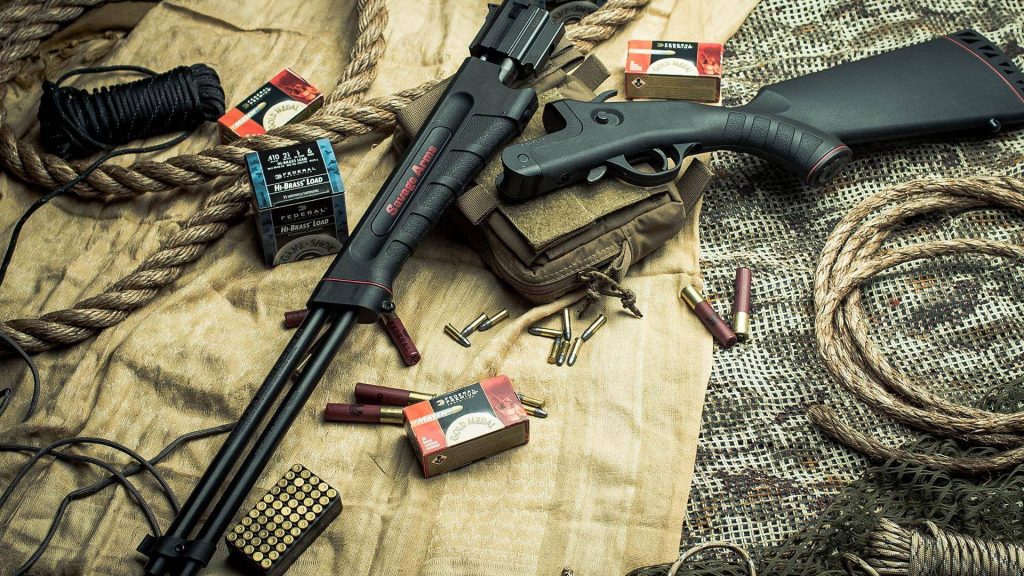
We've established that .410 shotguns can be very, very light. The ammo is also less bulky and lighter in weight than its alternatives. Factor in the versatility and capability of the .410, and we have a great shotgun for survival.
The small, lightweight firearm is perfect for taking small and medium game. It's tough to starve to death when you're carrying a Savage Model 42. The gun comes with adjustable sights, and you can install an optic if you choose.
There isn't a whole lot to the gun. The Model 42 could also be an interesting hunting shotgun if you don't need a repeater.
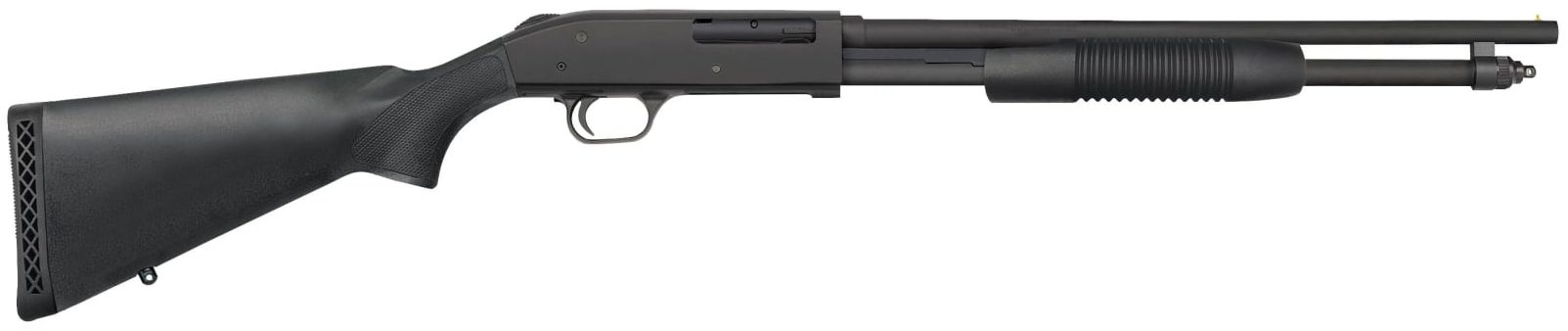
3. Mossberg 590 - Best for Home Defense
Pros
- Super affordable, but still reliable
- Less recoil than other tactical shotguns
- Light and maneuverable
Cons
- Limited stopping power
- Few mounting points for accessories
The Best Gun Deals, Coupons and Finds
Subscribe to Pew Pew Tactical's sales and deals email.
Specs
- Gauge: .410 bore, 3”
- Action: pump action
- Barrel Length: 18.5”
- Overall Length: 40”
- Weight: 7 lbs
- Country of Origin: USA
Why We Love It
See, I told you that you can't go wrong with a Mossy. Here, we turn to the Mossberg 590, the dedicated tactical series of Mossberg shotguns.
The standard 590 features an 18.5-inch barrel, and can hold six rounds of .410. The gun weighs only 5.6 pounds, making it super lightweight.
The 590's low weight and the .410's light recoil make it an excellent choice for smaller-framed or recoil-sensitive shooters. It's plenty capable of defensive use when loaded with a 3-inch, five-pellet buckshot load.
The 590 is arguably the most combat-proven pump-action shotgun out there. The .410 variant doesn't cut any corners, and is one of the few purpose-built defensive .410s on the market. I'd slap on a red dot and a shotgun light, and feel comfortable using the setup for home defense.

The other 590 I find to be a great defensive .410 is the Mossberg Shockwave. It's a pistol-grip-only firearm that's just a hair over 26 inches long. The low recoil .410 makes it a surprisingly viable option.
It lacks a stock, but it's much shorter than a shotgun. The Shockwave requires more practice, but shorter guns are easier to use indoors.
It still has the 590 reliability, red dot capability, and ease of use.
Learn more about this shotgun, its legality, and more in our Mossberg Shockwave review!
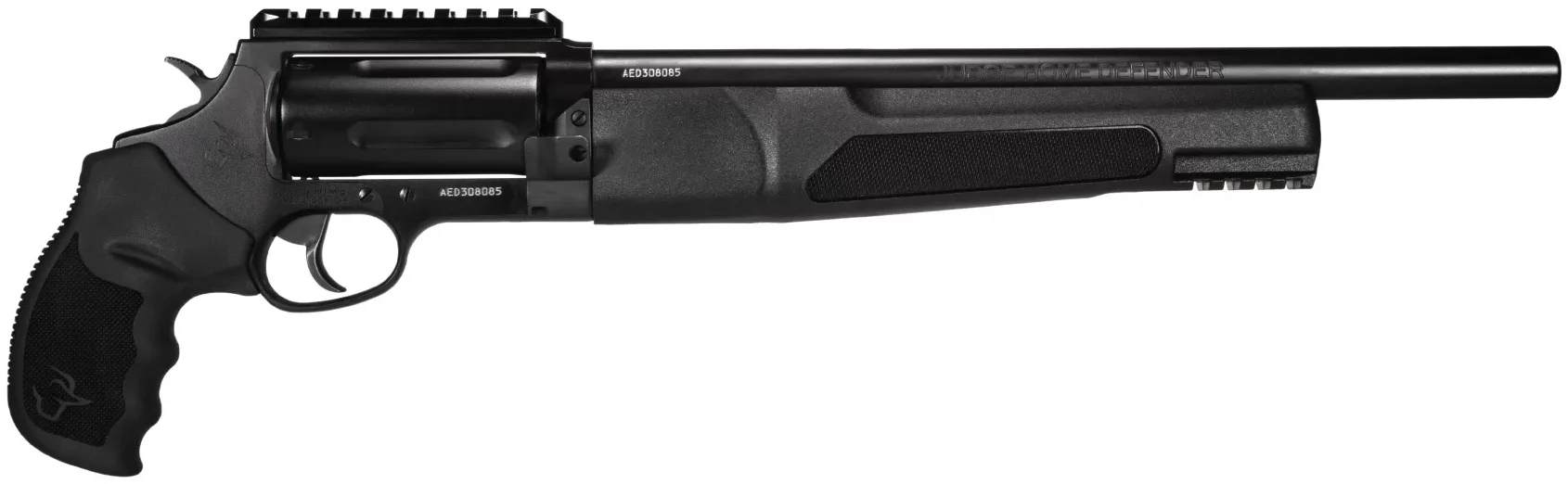
4. Taurus Judge - Best .410 Handgun
Specs
- Caliber: .410 Bore/ .45LC
- Capacity: 5 rounds
- Action: Double Action/Single Action
- Barrel Length: 13”
- Overall Length: 19.5"
- Weight: 58.6 Oz. (Unloaded)
- Country of Origin: Brazil
Why We Love It
The .410 revolvers from Rossi, Smith & Wesson, and Taurus deserve a mention.
I stay away from them for the most part. Their patterns are all over the place, their velocity is slow, and you have to use special .410 loads to get anything close to desirable performance.
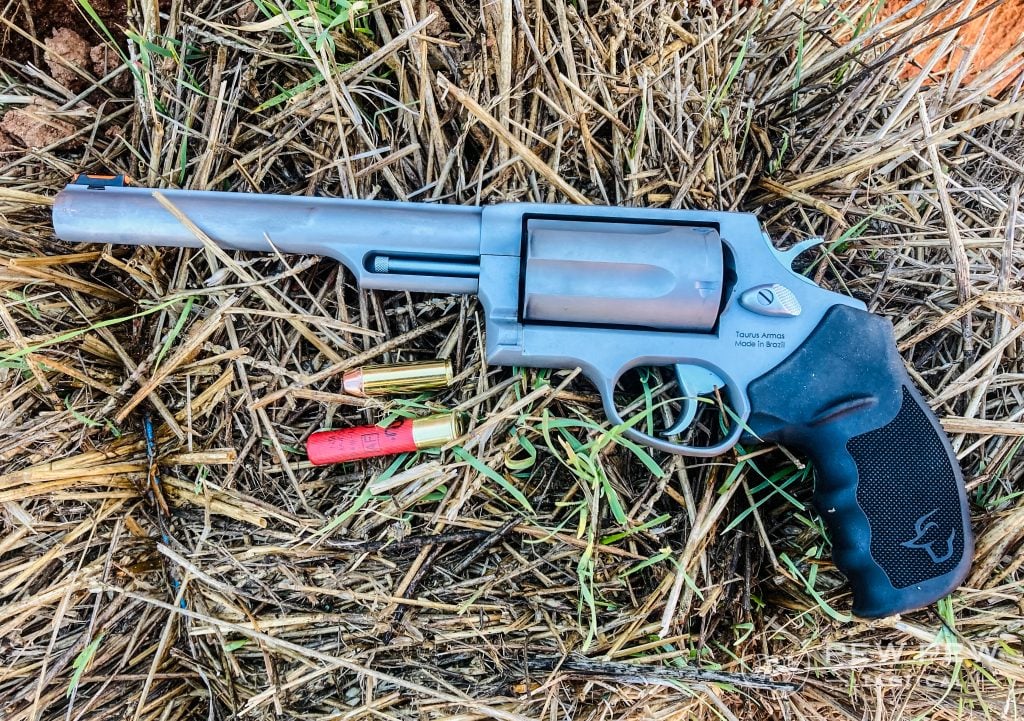
These guns also shoot .45 Colt, but the cylinder jump degrades the bullet’s accuracy. Still, if all I had was a Judge or Smith & Wesson Governor, I'd load it full of .45 Colt and call it a day.
There is one exception to this, and that is the Taurus Judge Home Defender.
I've been shooting one, and I'm shocked at how well the gun patterns work. Either the 13-inch barrel made a significant difference somehow, or Taurus changed something with the rifling. It patterns like a .410 should. It's the only .410 handgun I would ever suggest.
Read all about it in our Taurus Judge Home Defender review!
Best .410 Ammo
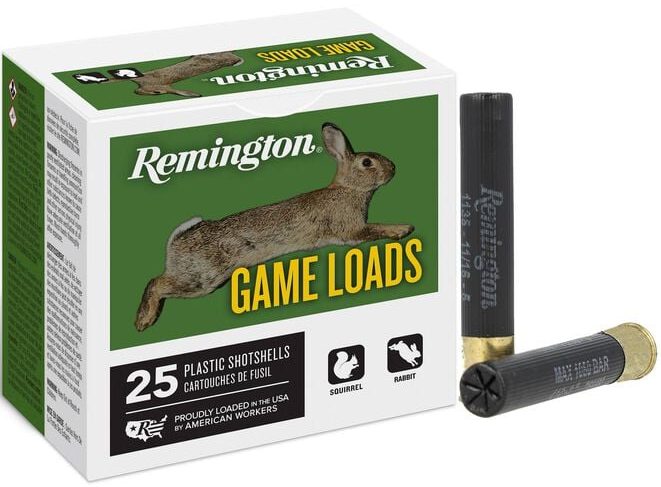
Remington Game Load with a dose of #6 shot is perfect for small game. It can take the small ground animals you'd chase with a .410. It's also cheap, common, and reliable.
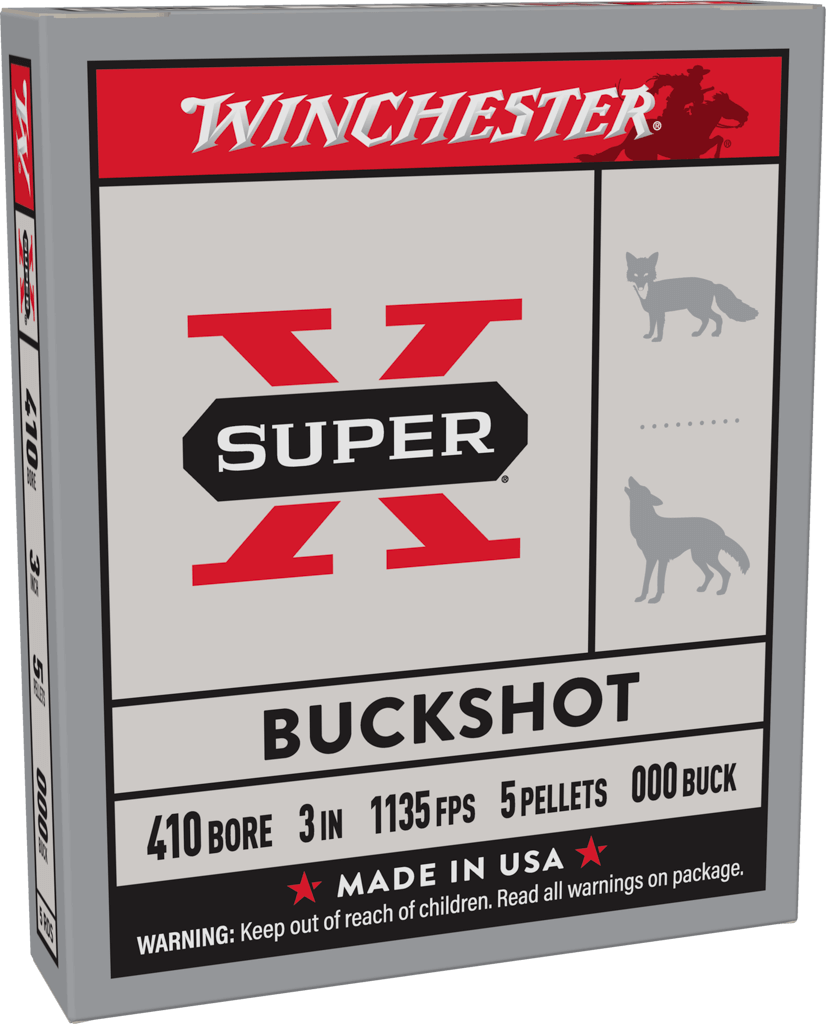
One of the most common .410 buckshot loads comes from Winchester. Winchester Super-X 3-inch .410 buckshot contains five 000 pellets. That's a decent payload, and it moves at 1,135 feet per second. It's suitable for deer, coyotes, and small hogs.
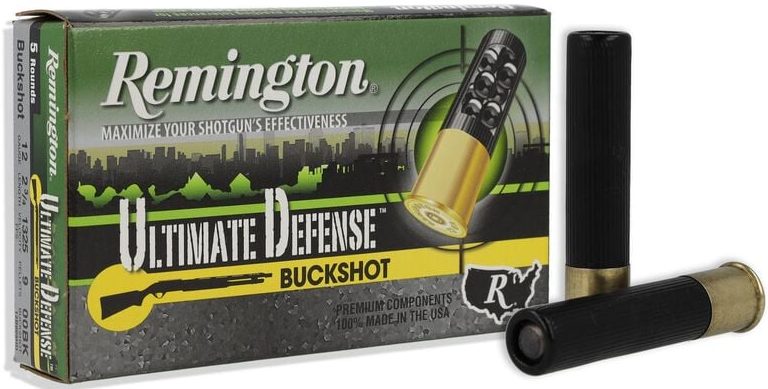
Remington Ultimate Defense is of the few dedicated .410 2.5-inch defensive loads. They deliver four 000 pellets per shell. This hefty load tends to pattern better than most .410 buckshot, and offers a decent amount of lead without a ton of recoil.
There is a 3-inch load with five 000 pellets, and it's fine, but it doesn't tend to pattern as tightly as the 2.5-inch load. I like a good tight pattern and am willing to sacrifice one pellet for that.
Our Most Popular Posts

Inside the .410 Shotgun Shell
The .410's origin dates back to 1857. Back then, it was a pinfire cartridge; it wasn't until 1874 that the Eley brothers introduced the modern centerfire .410. These early shells were two inches long, making them quite compact.
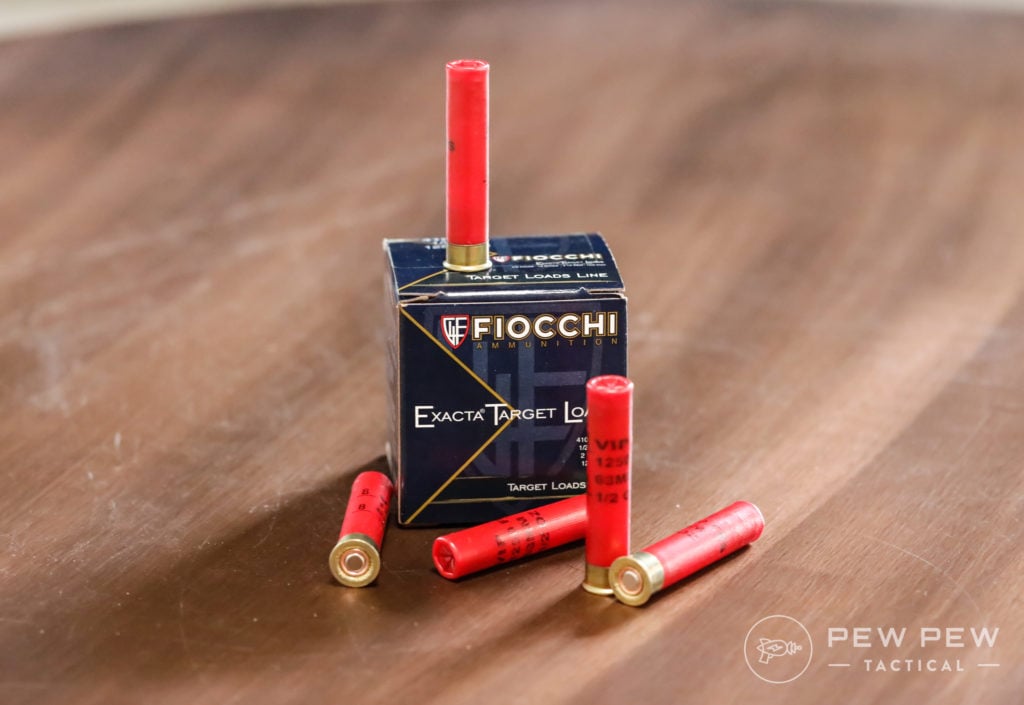
The .410's popularity came from its use as a garden-gun cartridge used to kill pests in the garden. A 2-inch .410 birdshot load could kill rats, snakes, fruit-eating birds, and other nuisance animals with a perceived short-range safety net and little noise.
Over the years, .410 has waned in popularity, kept alive by the occasional revival. The cartridge's most practical use is for small-game hunting and pest removal.
The .410 grew and evolved into the two standard lengths we use today: 2.5- and 3-inch shells.
Fans of .410 can choose from birdshot for small game, buckshot for medium game up close, and slugs for medium game at longer distances. A .410 shotgun can be a versatile tool as long as you understand its strengths and weaknesses (and by the end of this article, you will).
.410 Strengths & Weaknesses
The .410 gives shooters the smallest and lightest shotguns on the market; a single shot .410 weighs as little as five pounds! That makes it accessible and inclusive for smaller shooters, especially new or youth shooters.
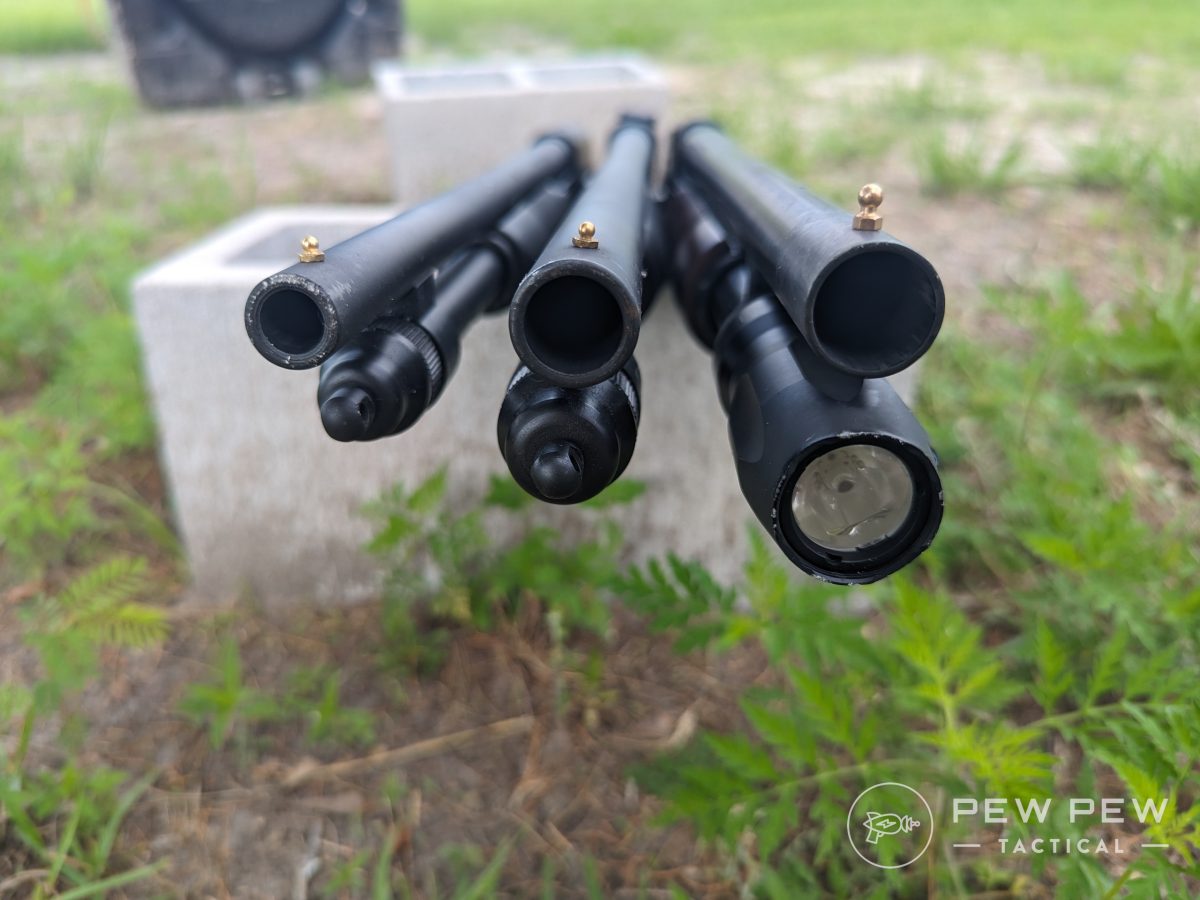
I like the .410 as my yard gun. The lightweight design makes it easy to carry and keep out of the way. Ammo tends to be lightweight and nowhere near as bulky as other shotgun cartridges.
Recoil from .410 is a pleasant push. Even the hottest .410 buckshot loads are easy to handle for most shooters. Light recoil makes it easy to fire multiple rounds quickly without losing control, which is a huge benefit for an inexperienced shooter.
Several handguns have been produced to support the cartridge: the Taurus Judge, the S&W Governor, the Rossi Brawler, and even Bond Derringers. Recoil becomes a little stiff in a handgun, so these aren’t great for new shooters.
While the .410 seems small – even meek – it's still a capable cartridge. It's a natural rabbit, squirrel, and even bird gun to some degree. With the right ammo, it can take white-tail deer, coyotes, and small hogs. This makes the .410 a versatile cartridge for hunting.
.410 Drawbacks
A shotgun's capability comes from its ability to put multiple pellets on a target per trigger pull. When you reduce the size of the shell, you reduce the payload. The .410 suffers from a much smaller payload than other cartridges. In fact, the shell is just wide enough to fit a single stack of most buckshot loads.
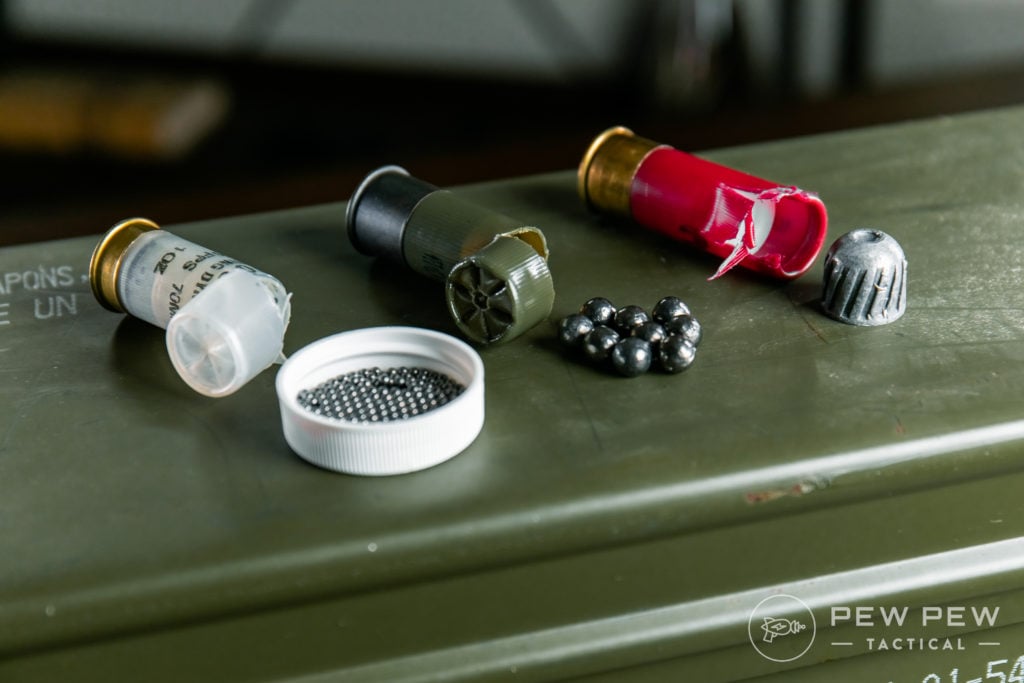
A 3-inch buckshot shell can hold five 000 pellets. A 12 gauge, 3-inch load will get you ten. When hunting or using the gun defensively, the pellets increase your margin of error and place multiple rounds on the target. As you decrease those pellets, you decrease that one-shot stop potential and margin of error.
Very skilled skeet and trap shooters often demonstrate their skill by using .410 shotguns, which offer fewer pellets than larger loads. This makes hitting moving targets, especially moving targets of the flying type, harder to hit.
Even the slugs from a .410 tend to be pitiful – I’m talking about handgun-like performance at best. Slugs from 12- and 20-gauge shotguns tend to be big and heavy, which makes up for their lack of speed. With .410, I would be cautious about taking anything larger than a coyote with slugs.
In a side-by-side comparison, I was just as fast (and sometimes faster) with a 20-gauge for rapid follow-up shots. I am a skilled shotgun shooter, and I think the 20 gauge is a better low-recoil option if you are willing to train.
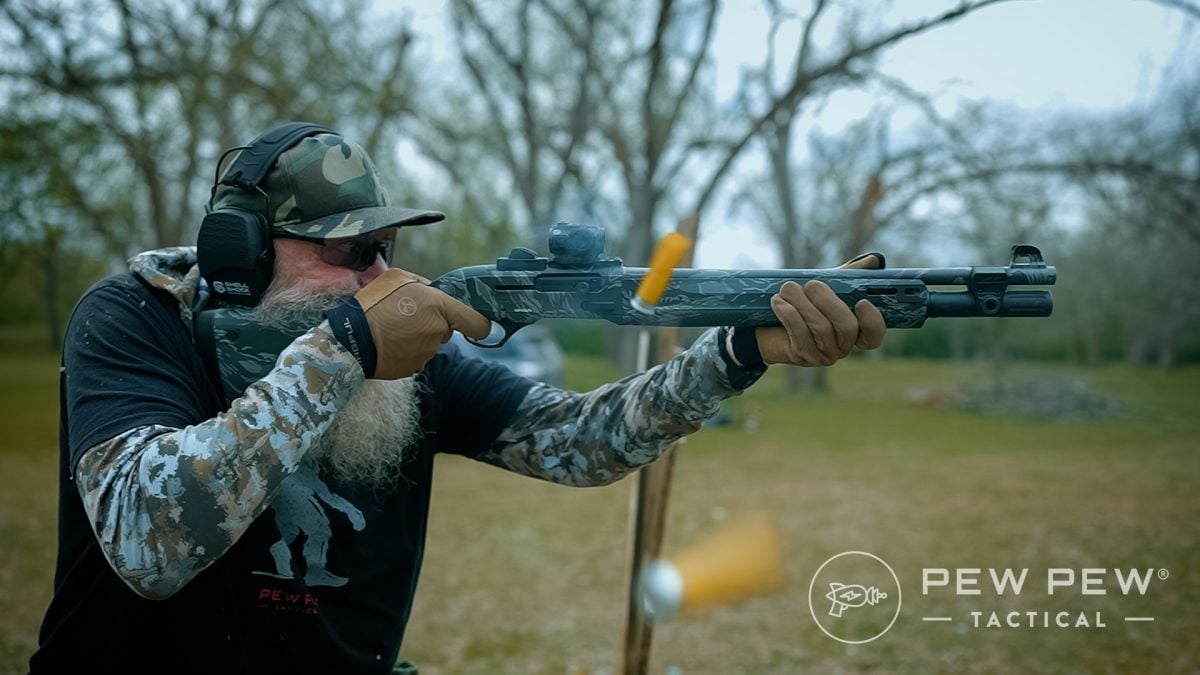
Want to learn more about that? Check out our Beretta A300 Ultima Patrol 20-Gauge review!
There aren't a ton of ammunition options, either. Ammo tends to be produced in batches and can be tough to find. Even though the shells are smaller than a 12 gauge, they are often more expensive.
In my experience, .410 buckshot loads tend to produce the worst patterns of any shotgun. They tend to be larger and less consistent than patterns from 12- and 20-gauge shotguns. The best-patterning buckshot seems to be 2.5-inch loads with three pellets. Expect wider, less consistent patterns when you step up to four or five pellets.
There aren't a lot of guns out there that utilize the cartridge. You can find some hunting-oriented guns, but dedicated defensive .410s aren't common. Semi-automatic .410s that run reliably are rare as hen's teeth.
Final Thoughts
I love the little .410. I appreciate lightweight, easy-handling guns, and that's where the .410 shines.

It's the smallest popular shotgun cartridge, but that doesn't mean it's not versatile and useful.
What’s your take on .410? Let us know below. Looking for something with a little more punch? Check out our guide to the Best Home-Defense Shotguns!
Meet the Experts
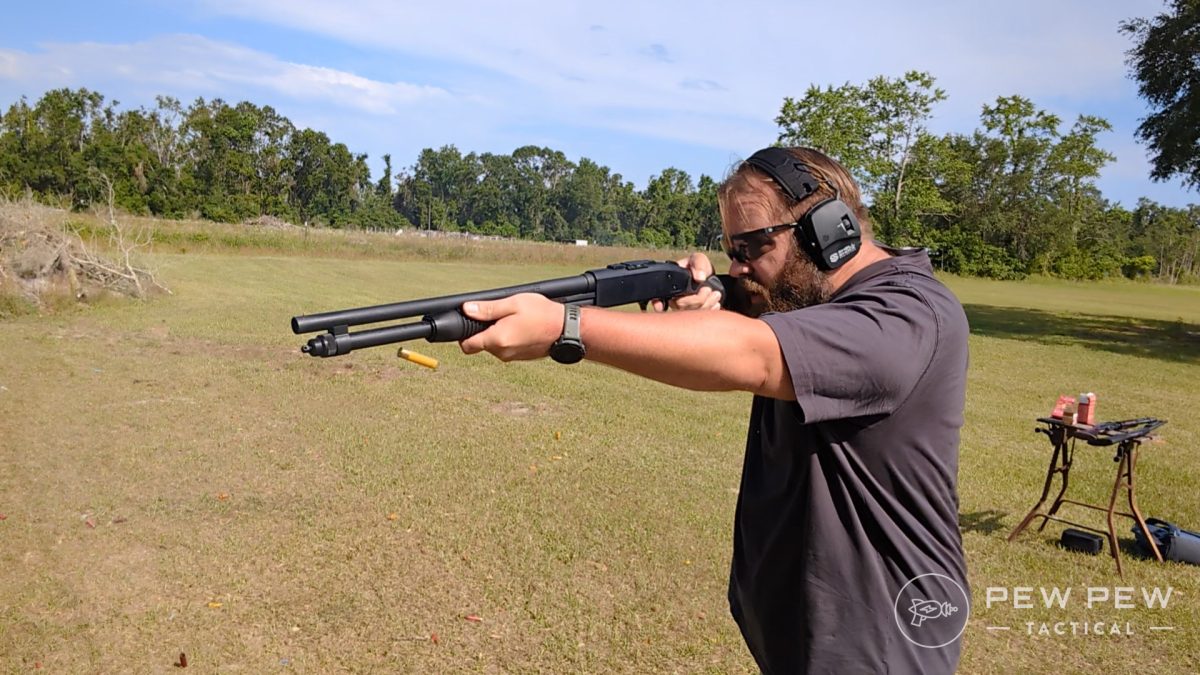
This article comes to you from Pew Pew Tactical author Travis Pike. His personal history with the .410 goes back 26 years, when he got his first gun – a Remington 870 in .410 that he still owns. That shotgun was a gift from my dad. The two of them went rabbit hunting shortly after, and it was a great day. Travis has been a fan of the .410 ever since. Travis served as a Marine infantryman, and is now a concealed carry instructor who writes for many firearm industry publications.
This article comes to you from Pew Pew Tactical Editor & Senior Review Analyst Scott Murdock. Following his Marine Corps experience, Scott has tested and reviewed firearms for many of the industry’s leading publications. His expertise includes evaluating accuracy, reliability, and intangible user experience that potential buyers need to know about. Hands-on testing and objective data collection are at the core of all his reviews.
Editor-in-Chief Jacki Billings runs our experienced team of reviewers and edited this review. She is an NRA-certified Basic Pistol Instructor as well as a member of the Society of Professional Journalists, ACES: Society for Editing, and the Professional Outdoor Media Association. Jacki has a bachelor’s degree in journalism and has worked as a media professional for close to 20 years, specializing in gun media for almost 10 years. With 2,000+ articles to her name, she uses her professional journalism and editing experience to set testing protocols and editorial standards for Pew Pew Tactical.