
Labradar LX Review: Better Than the Original?
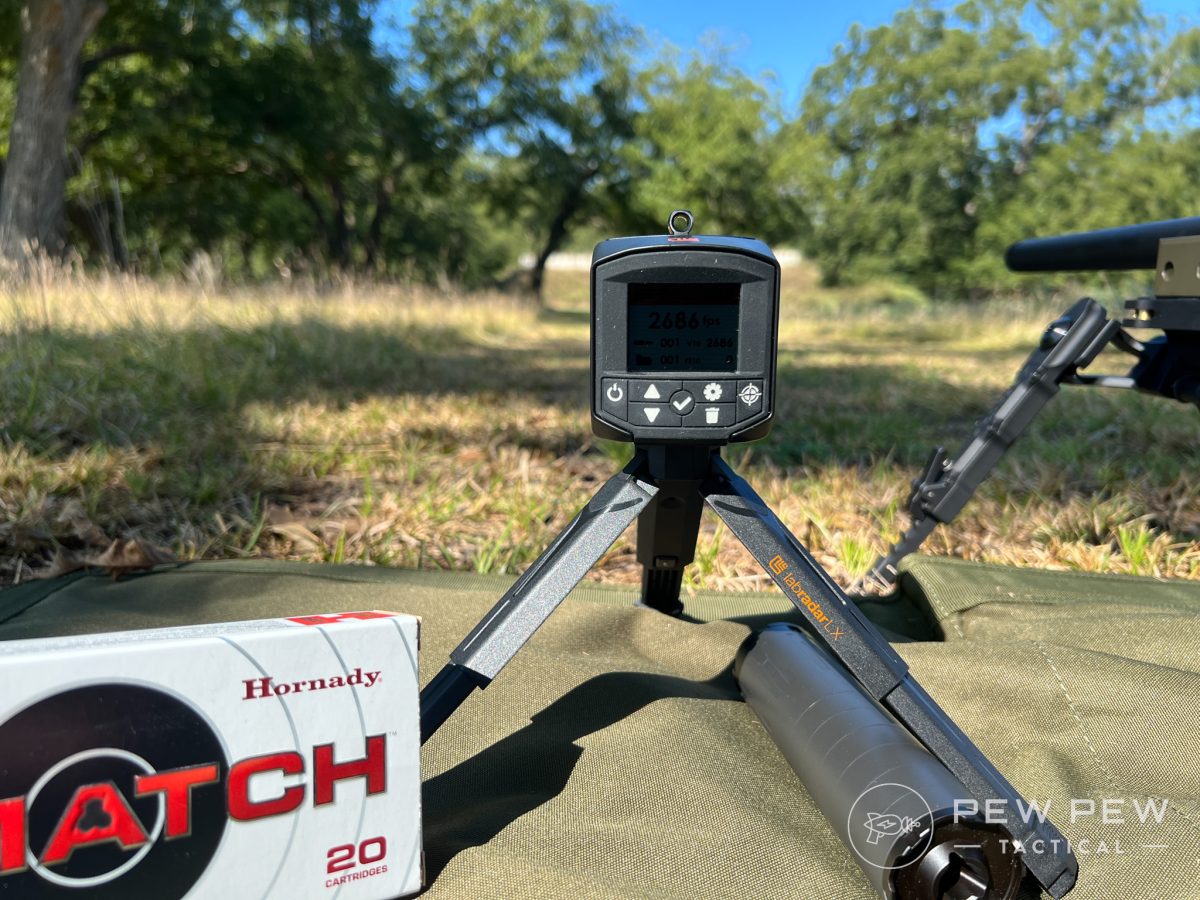
We tested the Labradar LX to see if this chronograph can measure up to other ones (ahem Garmin Xero C1 Pro) on the market.
We review products independently. When you buy through links on our site, we may earn a commission to help support our testing. Learn more.
Labradar LX Pros & Cons
Pros
- Easily portable
- Works in all lighting
- No apparatus to shoot through
Cons
- Expensive
The Bottom Line
The LX is a big improvement over previous Labradar products all in tiny package.
Chronographs are important tools that can provide valuable data about the various projectiles you use. Thankfully, over the years, they’ve gotten smaller, have more features, and are easier to use.
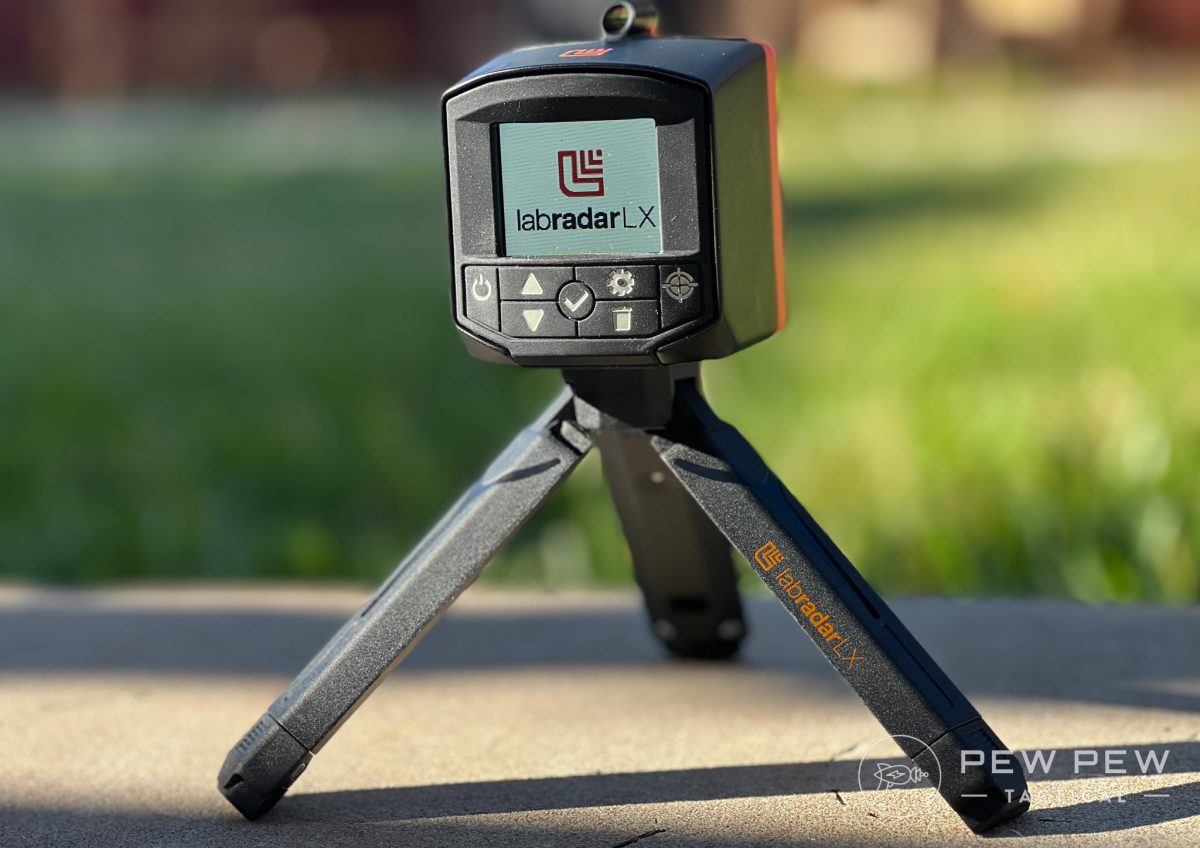
The Labradar LX is a perfect example of this evolution.
We took one to the range recently to try it out. We’ll share our findings with you below, so read on!
Table of Contents
Trending: Best AR-15s, Best Pistol Lights (Re-Test), & Ammo in Stock
How We Tested the Labradar LX
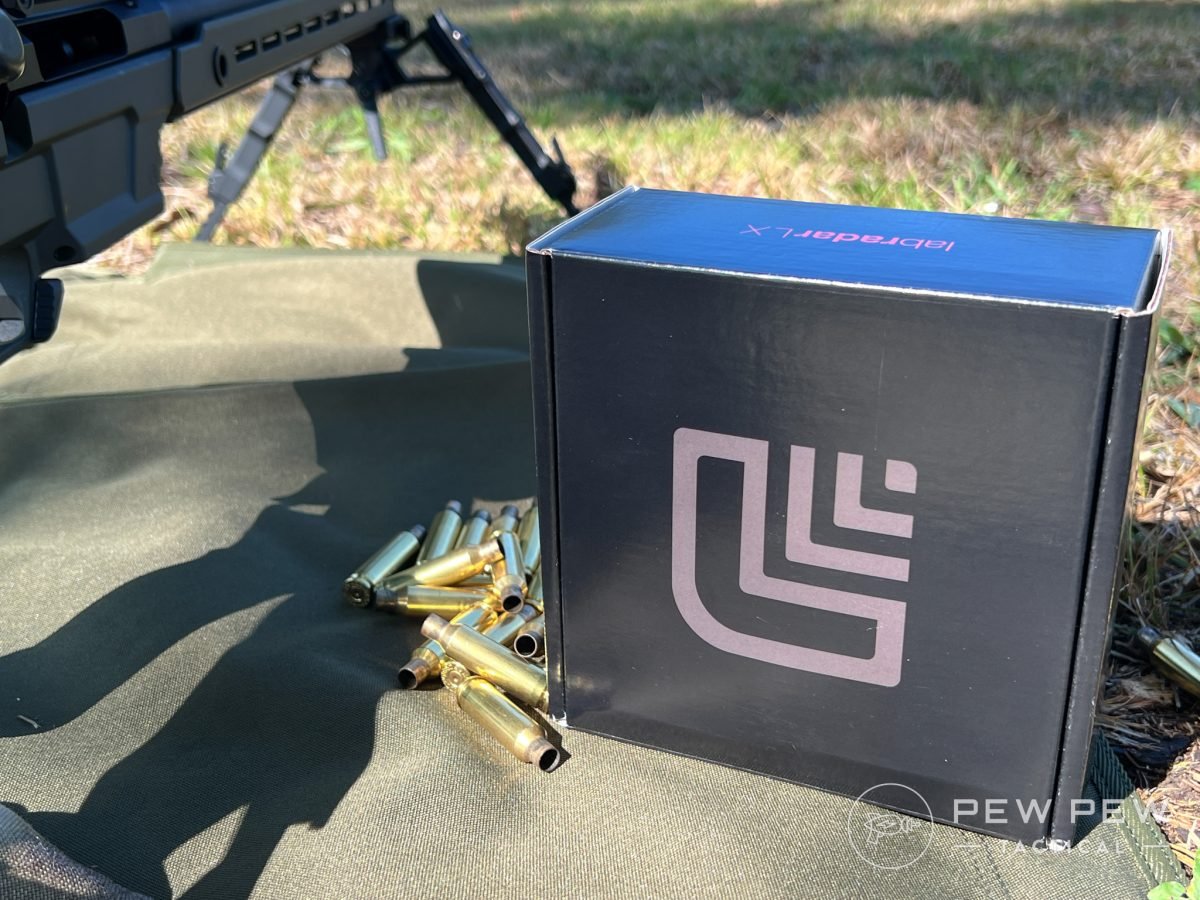
For this test, we used the Labradar LX while shooting 50 rounds of 6.5 Creedmoor, both Hornady Match and Nosler Match in 140gr.
In addition to rifle rounds, we fired approximately 200 rounds of 9mm consisting of AAC 115gr FMJ, Hornady Critical Duty 124gr +P, and Nosler 115gr JHP.
Why You Should Trust Pew Tactical
At the helm of this review was Pew Pew Tactical Content Producer Sean Curtis. Sean has been shooting since childhood but really began to delve into guns more during his law enforcement career. He spent over two decades in law enforcement, where he became a POST-certified handgun instructor and NLEFIA Red Dot Instructor and received CLEFIA Advanced Firearms Instructor Training and AR-15 armorer training. He has since attended a variety of training, including Tactical Performance Center Handgun Mastery & Carbine Mastery, and earned USCCA rifle instructor certification. Aside from training and prior to joining the Pew Pew Tactical team full-time, Sean wrote for several gun publications evaluating and testing guns and gear and has written hundreds of articles.

This review was edited by Editor-in-Chief Jacki Billings, who runs Pew Pew Tactical’s experienced team of reviewers. Jacki is a member of the Society of Professional Journalists, ACES: Society for Editing, and the Professional Outdoor Media Association and has her bachelor’s degree in Mass Communications. She has worked as a media professional for close to 20 years, specializing in gun media for almost 10 years, and has worked as an editor for five years. She uses her extensive professional journalism and editing experience to set testing protocols and editorial standards.
Labradar LX Specs & Features
Specs
- Weight: 21.16 oz. (with battery)
- Housing: Aluminum
- Battery: Internal rechargeable
- Frequency: 60GHz
- Price: $600
Features
- Records subsonic, transonic, and hypersonic
- Onboard memory
- Firmware updates
Who Is the Labradar LX For?
There are a few chronograph options out there, and some of them are not much more than $100, but they are BIG, occasionally won’t work under fluorescent lights, and/or you have to shoot through some apparatus.
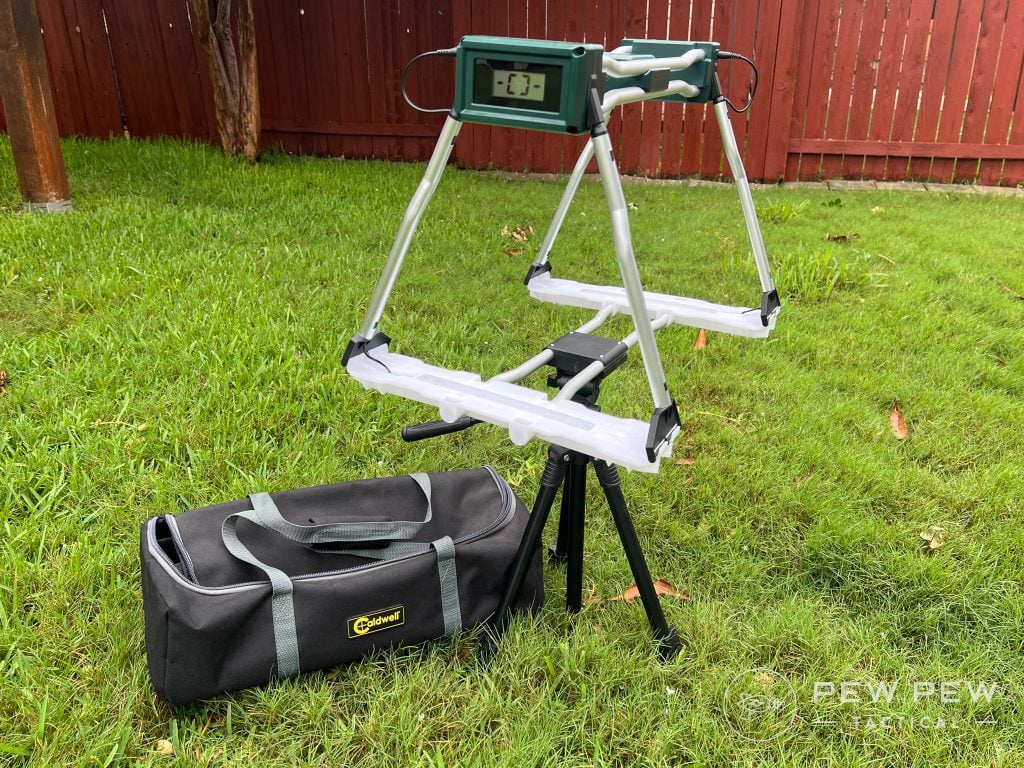
The LX is small and compact. That said, it costs a pretty penny. People who don’t mind paying for the convenience, as well as serious ballisticians, are going to enjoy this unit.
Fit & Feel
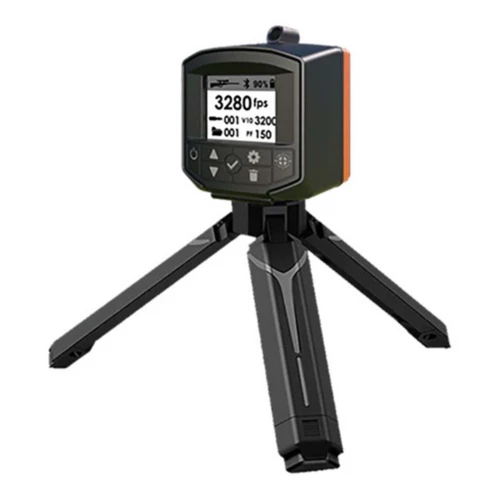
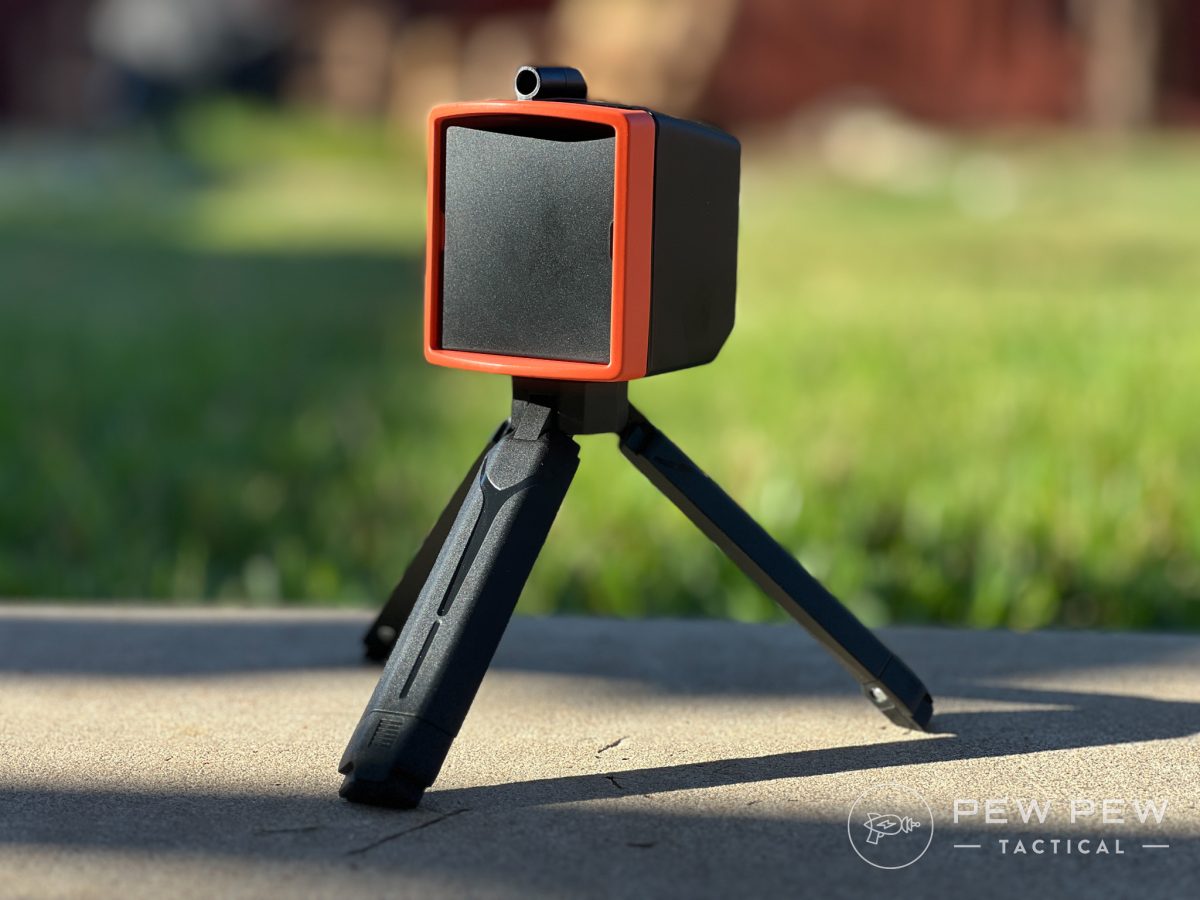
This unit is small, roughly 2.5-inch square, and feels weighty. An orange collar frames the front sending unit for the Doppler, and a 1.5 x 1.25-inch color LCD screen dominates the rear, with a suite of seven buttons below.
The buttons are rubberized and provide a tactile and audible click when you press them. Covered with recognizable icons, they are fairly intuitive to navigate the chronograph’s software.
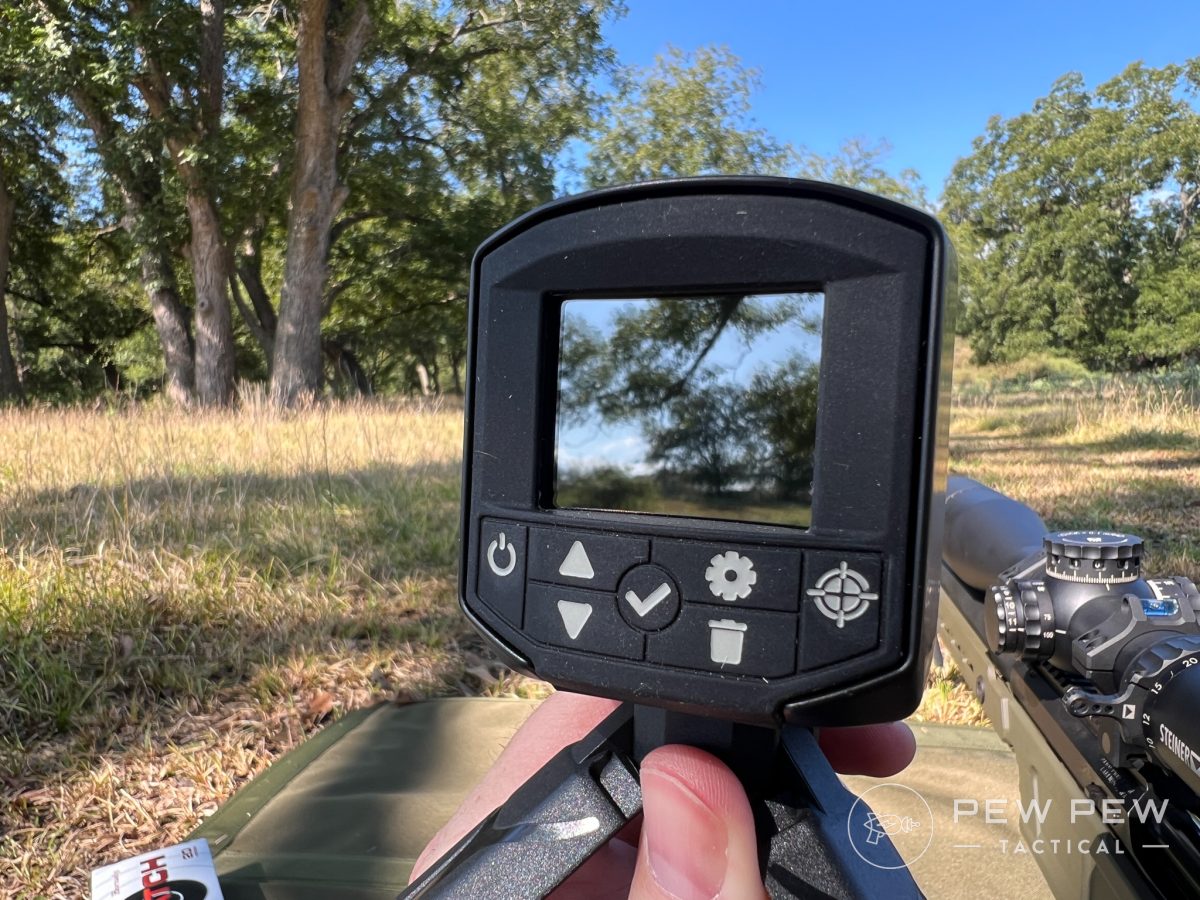
On top of the LX, there’s a handy peep sight that allows you to aim the mini radar in the direction of fire. The bottom of the unit features ¼-20 UNC threads for mounting on a tripod.
In addition, a rubber flap covers a couple of external ports. One, a USB-C, charges the internal battery, and the other is for external trigger input.
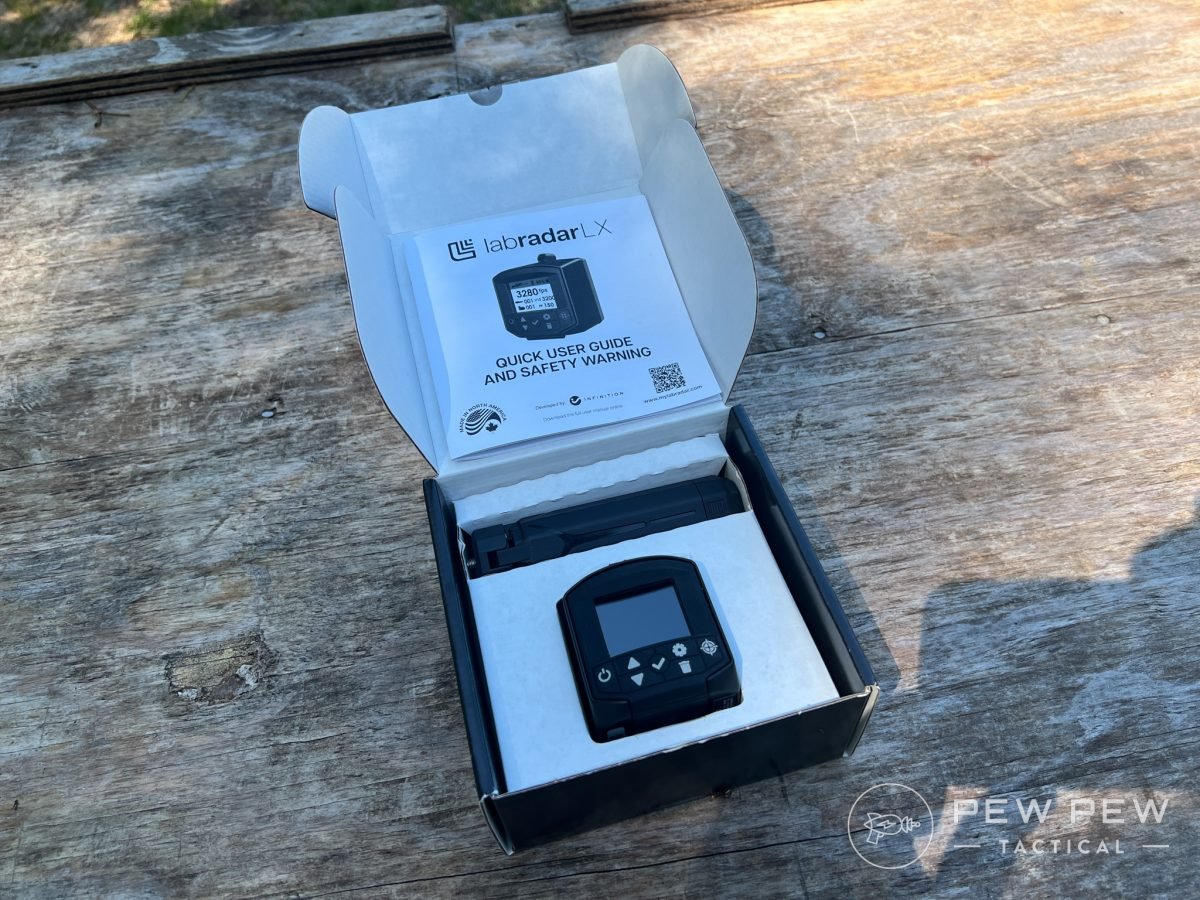
Included in the box with the LX is a well-designed, small tripod. At 5 inches long, the legs are held together with fairly strong magnets.
Only by pulling them apart can you deploy the three legs. Rubber bumpers cover the feet and provide traction and stability.
Pulling on the feet extends the legs even further with a telescoping addition, causing the legs to stretch from roughly 3.5 inches to 6.5 inches. Finally, a ¼-20 threaded screw tops the tripod for connecting to the LX.

The Best Gun Deals, Coupons and Finds
Subscribe to Pew Pew Tactical's sales and deals email.
How Does the Labradar LX Work?
Much smaller than the original Labradar, the LX still operates by sending out a Doppler signal and receiving reflections from objects within the beam that is 15x30 degrees wide. An onboard computer analyzes the reflection and displays the speed on the screen, similar to police radar units.
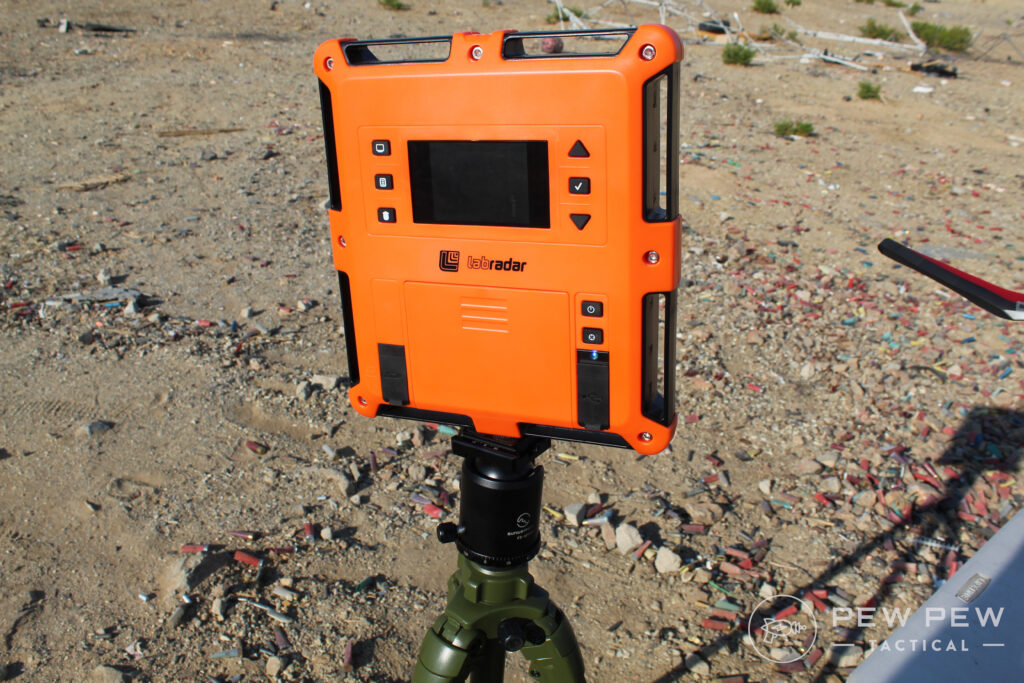
Interestingly, the LX operates at a much higher frequency range (60 GHz) than the competitor’s units. While I don’t pretend to understand all the science behind it, my research revealed that this higher range makes the LX more accurate. The manual lists the margin of error at +/—.1% under optimal settings.
Before heading out, I plugged it in with the included USB-C cable and noticed a red light on the bottom to confirm it was charging. This light never changed, but when I turned the unit on, the battery indicator was at 100%.
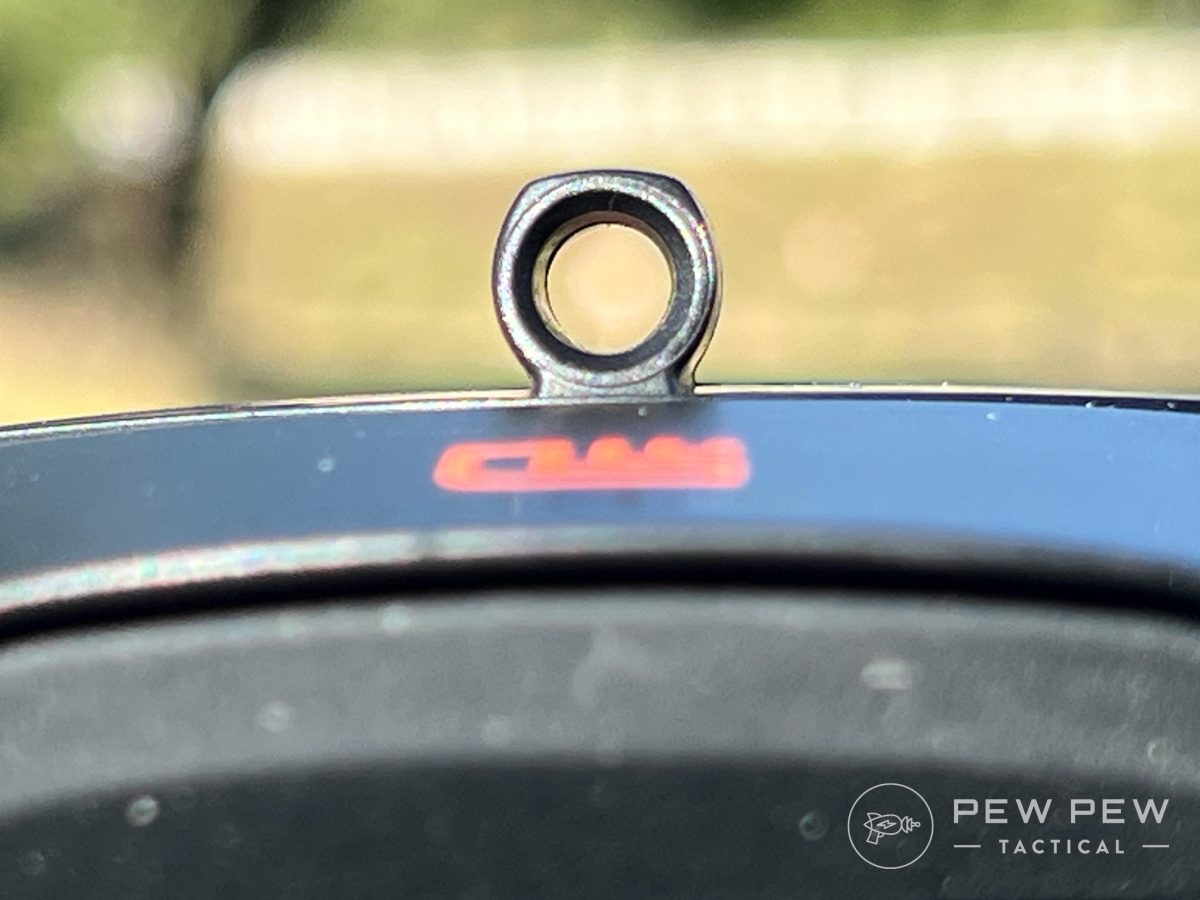
When it starts, the LX goes through a series of boot screens, much like a computer. It took almost exactly 20 seconds to fire up.
On an early fall day with clear skies and temperatures in the 90s, I took the LX to the range to measure rifle and pistol rounds. I started by loading up some Hornady Match ELD 140gr 6.5CM rounds into an Aero Precision Solus.
After turning the unit on I noticed it was defaulted to rifle testing. I later learned the unit looks for objects within one of three ranges: Archery (66 to 600 FPS), Handgun (600 to 1600 FPS), and Rifle (1,600 to 4,500 FPS).
If you’re in Rifle Mode and start plinking away with a pistol, it won’t read your shots. I specifically tried this, hoping for some form of automatic detection.
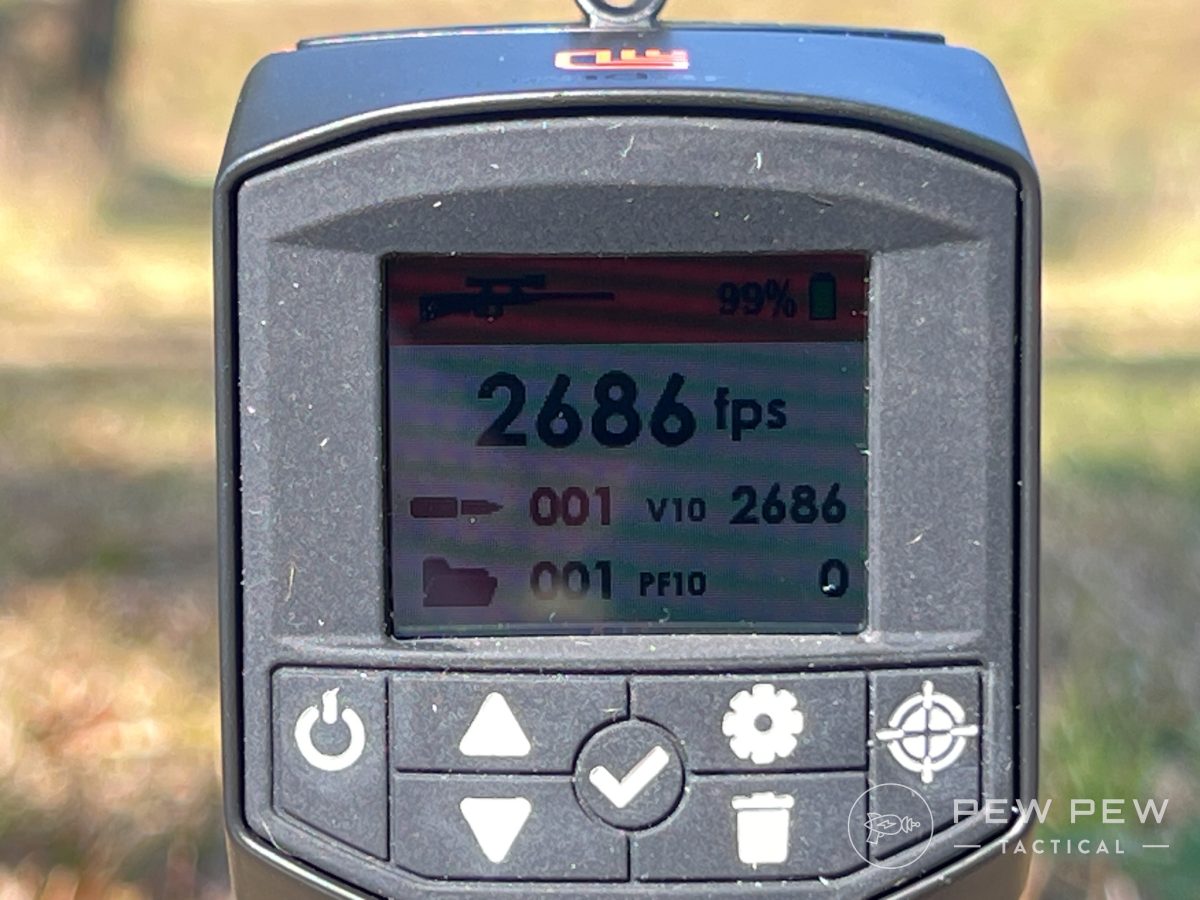
As I prepared to fire, I placed the unit on the ground near my rifle. The manual says the device should be between 4 and 20 inches to the side and between 4 and 20 inches back from the muzzle.
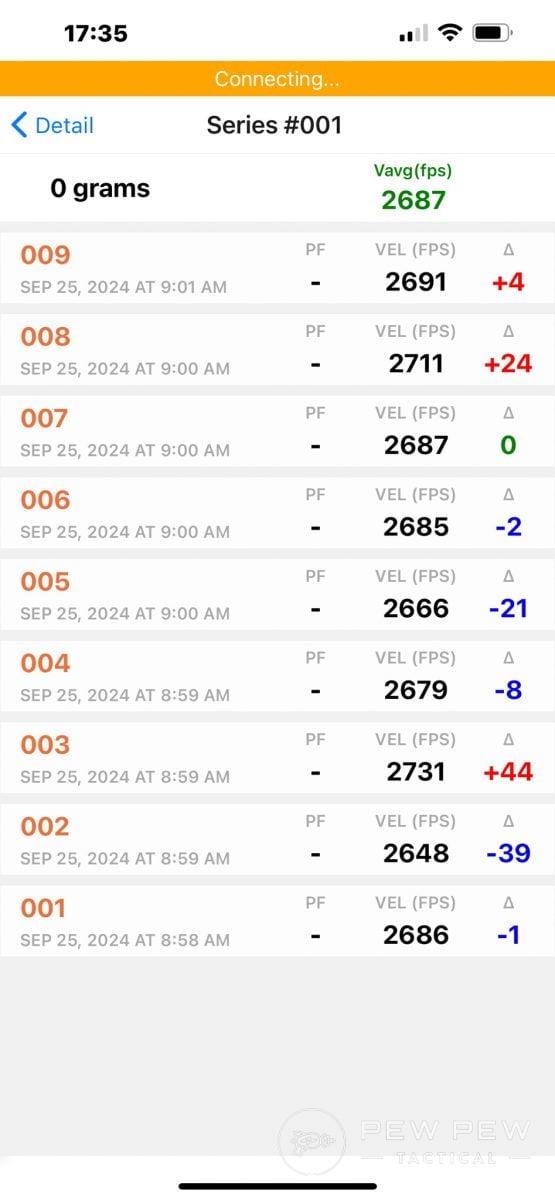
The listed velocity for the Hornady Match ELD is 2,710 at the muzzle, so I fired nine rounds to see how the LX would fare. The LCD screen dims down if you’re not using it for a bit but lights up again after each shot.
I was glad for this feature because, in the shade, I had a hard time seeing it. This screen saver is set for 10 seconds but can be adjusted in settings.
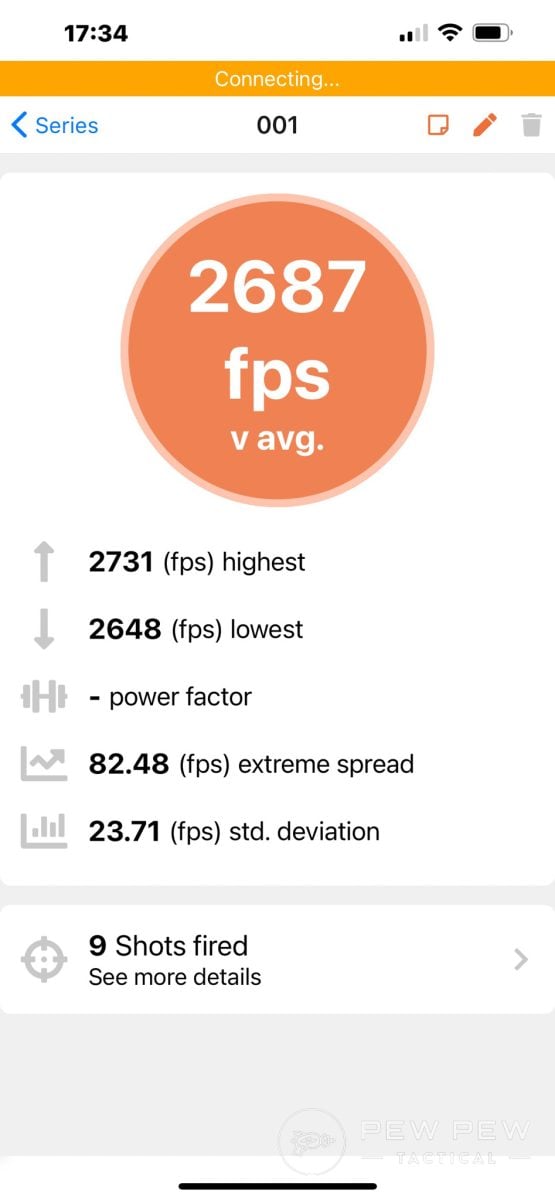
My first series averaged 2,687 FPS, with 2,731 FPS being the highest and 2,648 FPS being the lowest in the sample. The handy unit did my math for me, even giving me an extreme spread of 82.48 FPS and a standard deviation of 23.71 FPS.
I continued testing, and the results remained largely the same. After a while, I moved onto the pistol range to test some slower projectiles.
Our Most Popular Posts


It took me a while to figure out how to switch modes on the LX. Eventually, I saw you need to access the settings button (gear icon) and that allows you to make the change.
The guidelines for placing the LX on pistol testing are exactly the same: between 4 and 20 inches. I set the unit on a table roughly 3 feet tall.
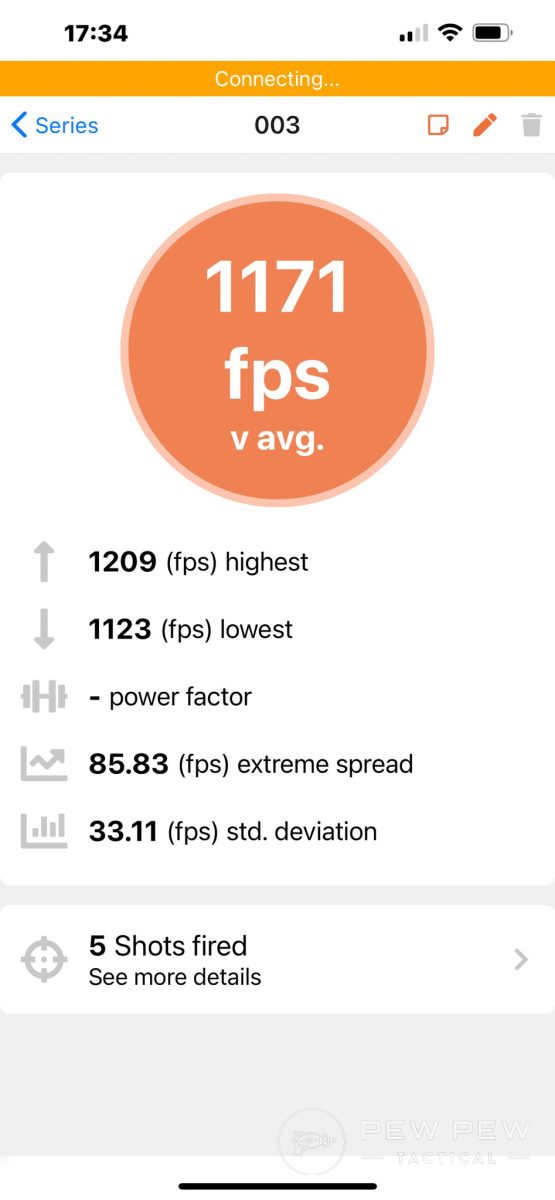
After loading up AAC 115gr 9mm FMJ, I fired a five-shot string through a Smith & Wesson SD9 to see how it would perform. The listed velocity for the AAC is 1,165 FPS.
When finished, the group averaged 1,171 FPS with a high of 1,209 FPS and a low of 1,123 FPS. The extreme spread was 85.83 FPS, and the standard deviation was 33.11 FPS.
Each time I fired, the unit would dutifully light up and display the number for the most recent shot. I was also able to navigate to other groups or start new strings by using the menu.
After using the unit for about an hour, I noticed that the battery indicator on the screen had dropped into the 70th percentile. The owner’s manual indicates that battery life is five hours if the unit is armed and 8 to 10 hours unarmed.
Arming tells the LX to send the signal, whereas disarming it leaves the unit on but does not send a signal. This saves significant battery life for obvious reasons.
One great feature I appreciated about the LX was its ability to pair with the Labradar App on my phone. With the app, I was able to completely control the unit remotely without touching it.
This allowed me to access the groups I had created, look through the individual shots, and even set up different units of measurement in the settings menu.
By the Numbers
Reliability: 5/5
As long as the battery was charged and the unit was pointing in the direction of fire, I consistently received readings.
Accuracy: 5/5
I found the velocities I encountered through various rounds and calibers to be consistent with expectations. They were also similar to readings I’d received with a Garmin C1 Chronograph.
Ease of Use: 4/5
The controls were very easy and the software navigation was pretty intuitive though I had to look up some functions in the manual.
Ergonomics: 5/5
Between the stand, visibility of the display, and buttons, the ergonomics are great.
Value: 4/5
The LX is expensive at $600, though it is comparable to the Garmin Xero C1 and has a color screen.
Overall: 4.5/5
Final Verdict
The new LX from Labradar is quite an improvement over their previous model and represents exciting advancements in this field for end users. There’s no more shooting through antenna, no more light sensitivity; they’re small, portable, connect to apps, and give you a ton of data.
The LX's accuracy appears to be spot on. While I never tested the original Labradar, I found this unit to not be finicky as long as I placed it within the suggested guidelines.
While a $600 price tag is steep for many folks, the LX’s firmware is updateable, so it should provide years of service.
Will you be picking up a Labradar LX? Let us know in the comments below. For more info, be sure to check out Best Shooting Chronographs [Hand-On Tested]!
Latest Updates
December 2024 - Roughly a month after we tested the LX, a firmware update (Version 1.2.1) came out. The update includes a host of benefits like new ballistic coefficient capability (G1 and G7), bug fixes, more language support, and an enhanced display that provides even more information than before.