
Are Flow-Through Suppressors Worth It?
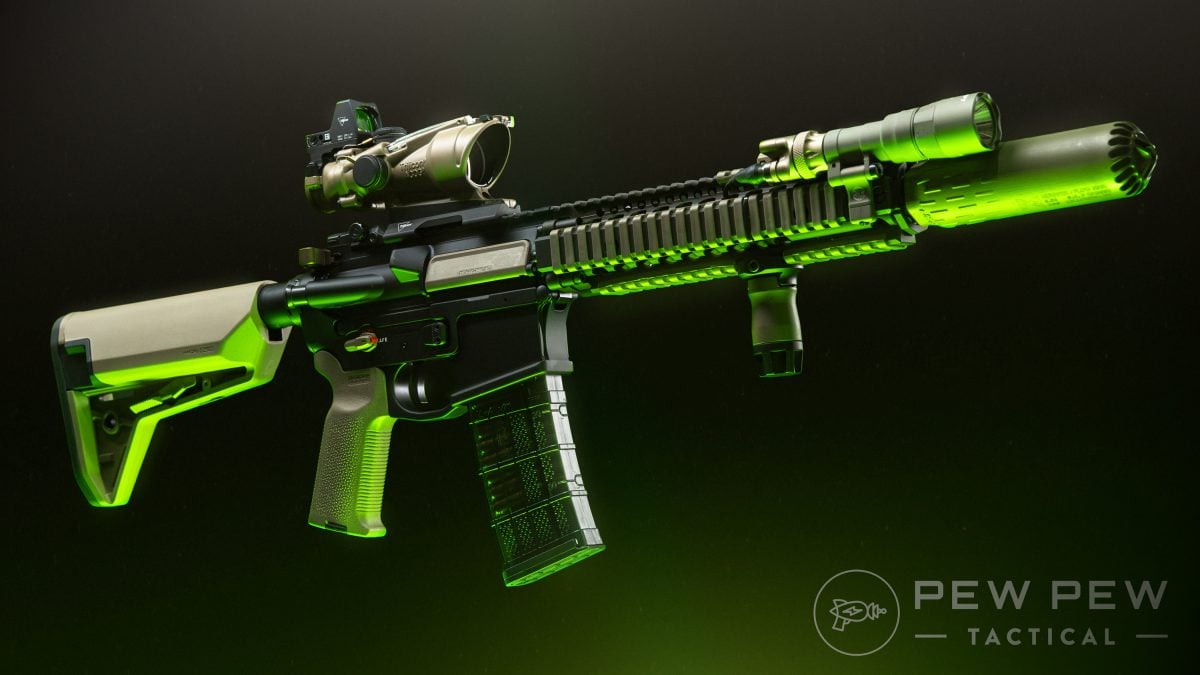
Not all suppressors are built the same. See how flow-through suppressors stack up against traditional baffles — and if the trade-offs are right for you.
We review products independently. When you buy through links on our site, we may earn a commission to help support our testing. Learn more.
For a very long time, suppressor technology remained largely unchanged...that is, except for the introduction of flow-through suppressors.
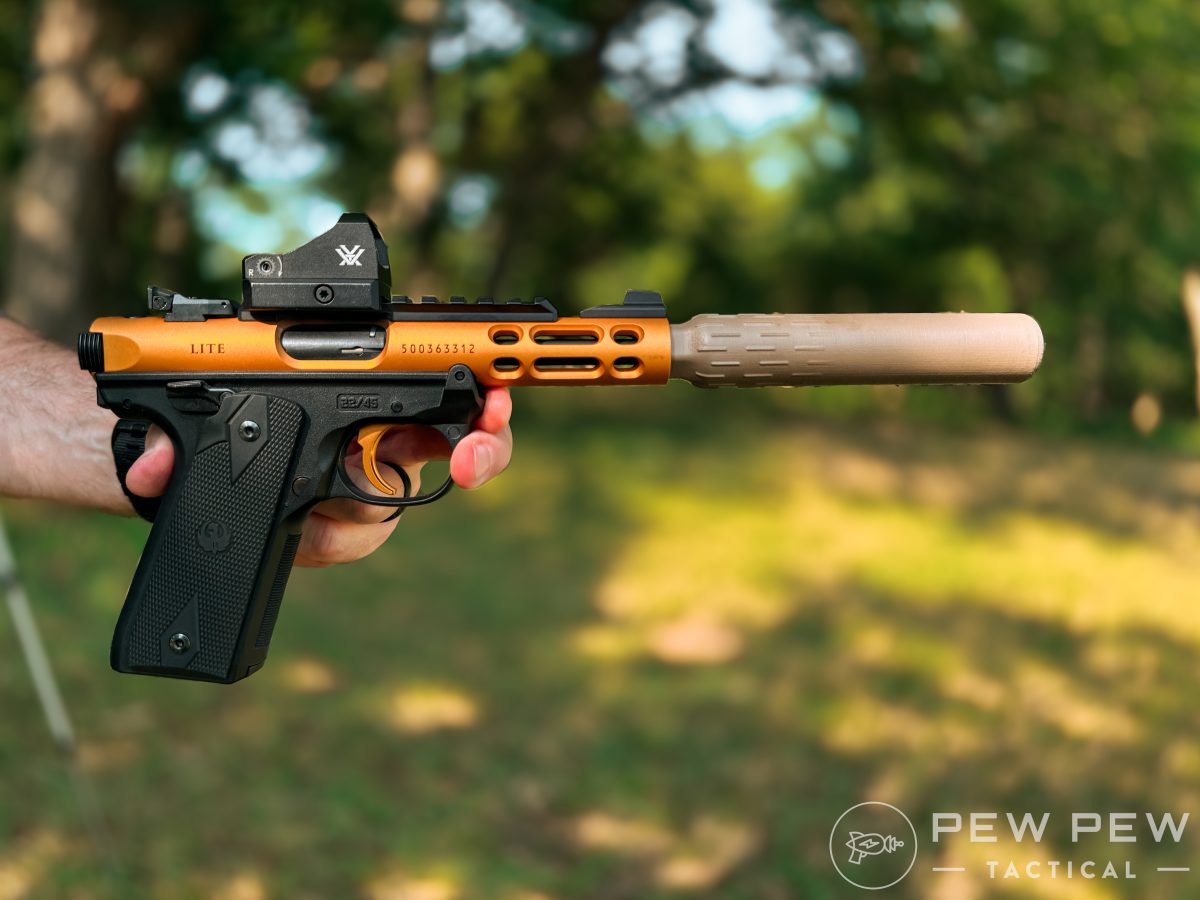
Flow-through suppressors have taken off in the last few years, but what are the benefits of this newer design?
Today, we'll explore what flow-through suppressors are and what sets them apart from traditional baffle suppressors. We'll also dig into the pros and cons to help you decide if flow-throughs are worth the upgrade.
Keep reading!
Table of Contents
Trending: Best AR-15s, Best Pistol Red Dots, & Ammo in Stock
Flow-Through Suppressors vs. Baffle Suppressors
Traditional suppressors use a series of baffles that look like a series of coins with holes in a line. The baffles trap gas, slowing it down and allowing it to cool. This, in turn, reduces noise.
As the gas slams into the baffles, it has to go somewhere. Some gases make their way to the end of the suppressor towards the target, but a lot of gas is shoved rearward into the gun.

This produces backpressure and gas blowback. On some firearms, particularly ARs, that blowback ends up in the shooter’s face.
That’s not a pleasant feeling. The gas is hot, and if you shoot a lot, it can start to choke you and make your eyes water.

What’s a flow-through suppressor, then?
Flow-through suppressors offer a different experience.
Instead of using baffles, the inside of a flow-through suppressor looks like a maze. It uses a series of chambers inside, so the gas isn’t slammed into anything. The gas flows through the chambers and pathways (the name starts to make sense), circling inside the suppressor until it exits the front of the can.
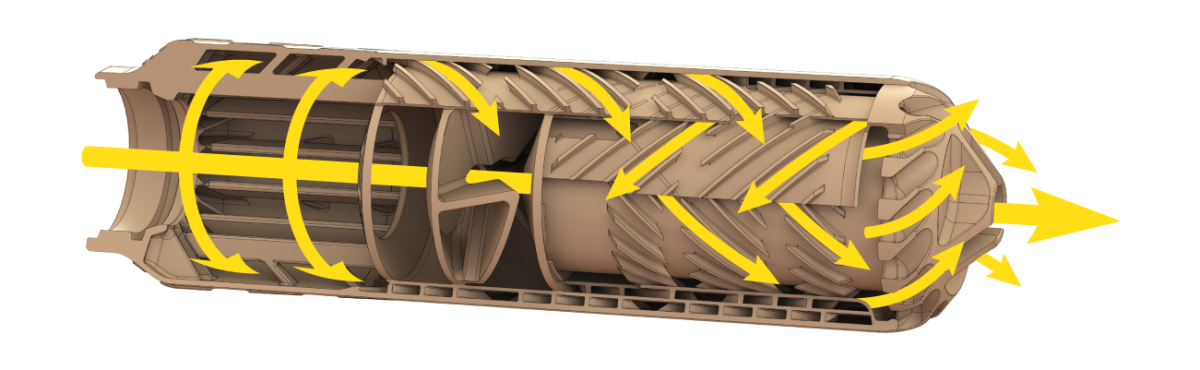
As the gas flows through the internal passageways, it slows and cools down. This reduces the sound signature like any other can, but without blowback to the face.
Many companies use high-tech 3D printing technology for flow-through suppressors, which also means some really interesting designs can be achieved.
Flow-Through Suppressor Benefits
The first and most noticeable benefit as a shooter is no gas to the face. Not only is that a lot more comfortable, but it’s going to be better for your long-term health.
You also don’t have to tune flow-through cans or mitigate issues you see with traditional suppressors through parts like adjustable gas blocks, buffer weights, charging handles, etc. No tinkering is required.
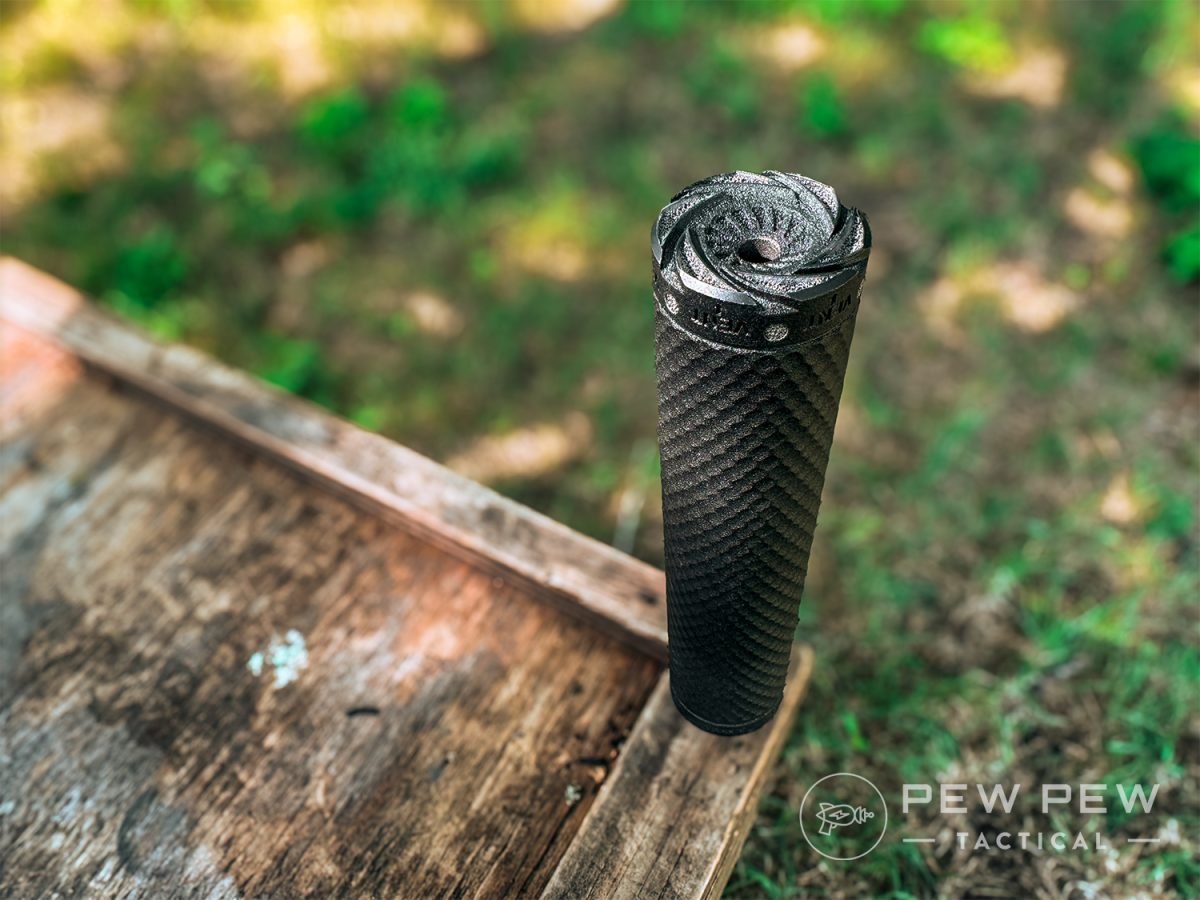
As a fan of plug-and-play, flow-through suppressors are the easiest option. It can be tossed on an over-gassed carbine without worry about parts wear on the gun, weird ejection patterns, or reliability issues.

Level up your gun knowledge
New reviews, guides and daily deals in your inbox.
Flow-through cans also maintain reliability with most firearms, bringing a cleaner, cooler operation to firearms — especially AR platforms. You get the same advantages of a piston gun without a piston. Since flow-through suppressors eliminate backpressure, they also tend to be a better option on blowback-sensitive guns. I’m looking at you, SCAR series.
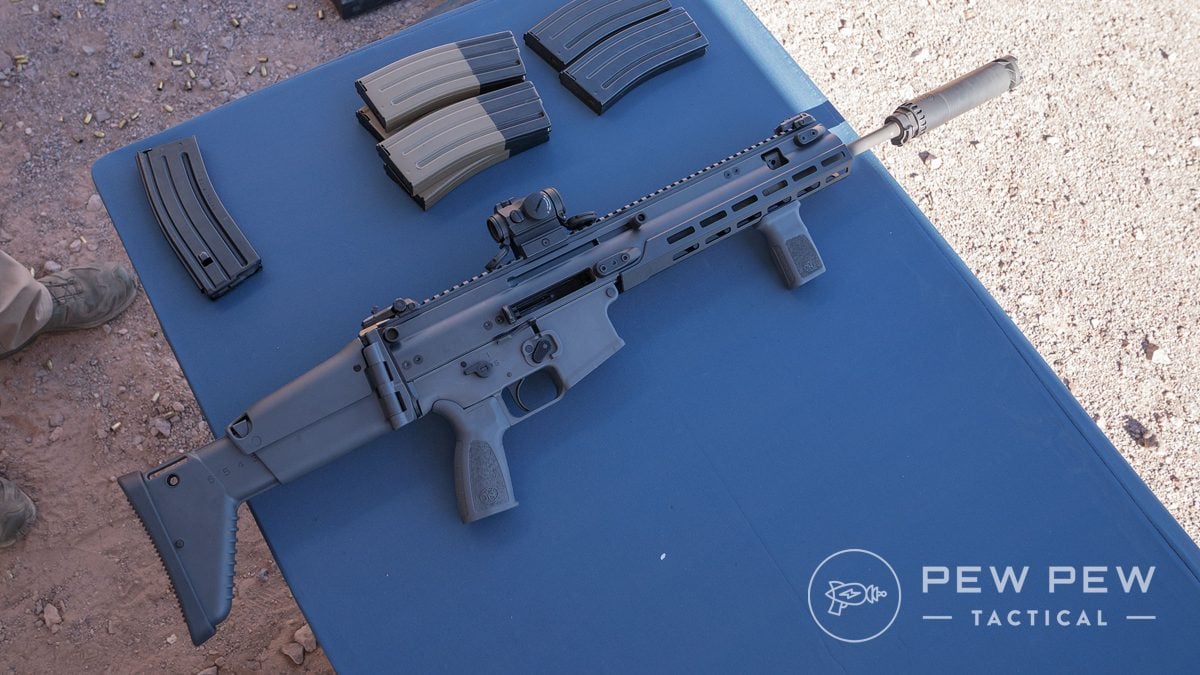
There also tends to be less port pop... the noise backpressure can create when it flows through the ejection port.
TL;DR: the flow-through suppressor design allows us to shoot suppressed without any effect on the rifle. That’s likely the biggest overall benefit, but the most noticeable will still be comfort.
Downsides of Flow-Through Suppressors
The purpose of a suppressor is to reduce noise, and flow-through suppressors tend to be slightly louder than baffle suppressors.
Depending on the caliber and platform, this can range from noticeable to "I need a piece of equipment to tell the difference." I personally don’t notice a difference as a shooter, and I don’t think others will notice a difference at the shooter level.
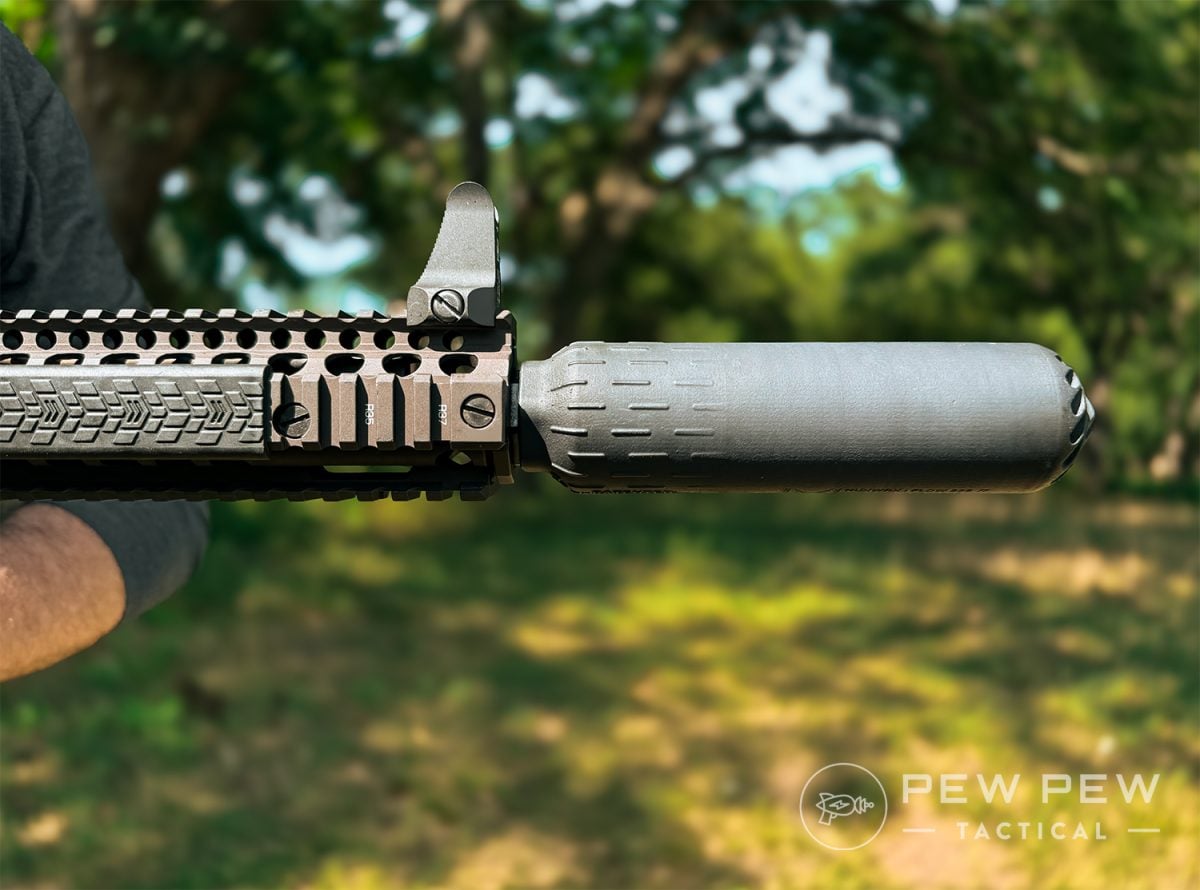
The higher decibel level will occur at the muzzle since the suppressor is acting a bit like an in-line compensator. At the muzzle, it’s louder, and for some observers, it’s likely to be louder depending on their position.
That said, Pew Science, the leading authority for suppressor testing, shows that a lot of modern flow-through suppressors are as quiet as standard baffle suppressors.
Flow-through suppressors can sometimes experience more muzzle flash since the gas is exiting the front of the suppressor. It’s still less than that of an unsuppressed gun, and some companies are going so far as to introduce flash can front caps to completely eliminate this issue.
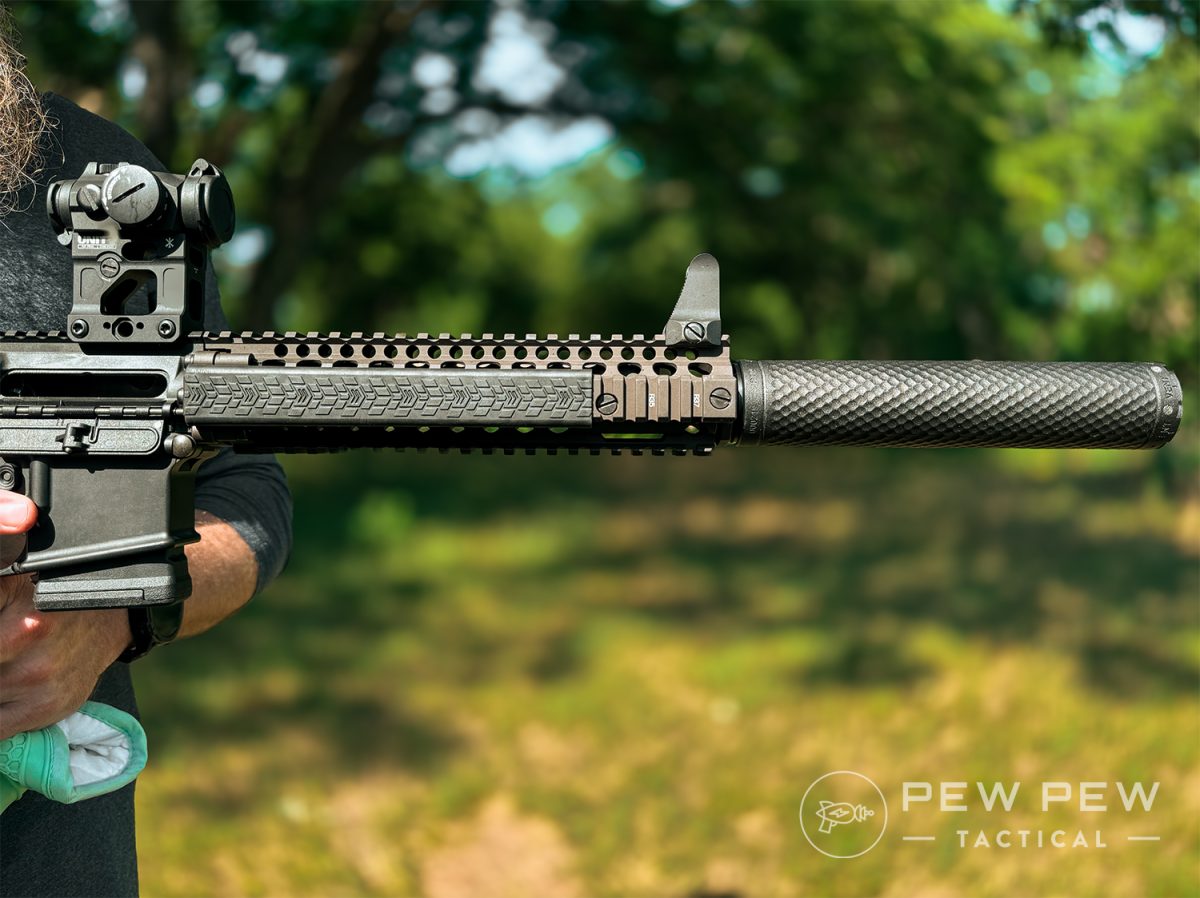
Additionally, flow-through cans cannot be disassembled, which makes them more challenged to clean and maintain. Small passageways provide carbon with numerous places to hide.
How do you clean a flow-through suppressor? Soaking it in solvent...and that’s about it.
Since you can’t disassemble a flow-through can, many of them are near impossible to repair. If it breaks, it’s broken.

Some companies have made strategic decisions to help with this. SilencerCo’s Velos series
Our Most Popular Posts


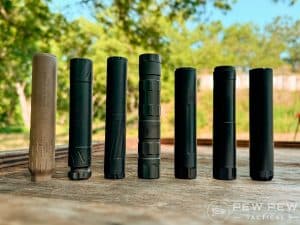
Some companies have made strategic designs. The Velos series from SilencerCo features a serialized expansion chamber that can be replaced in the event of damage, while HUXWRX can repair its flow-through cans.
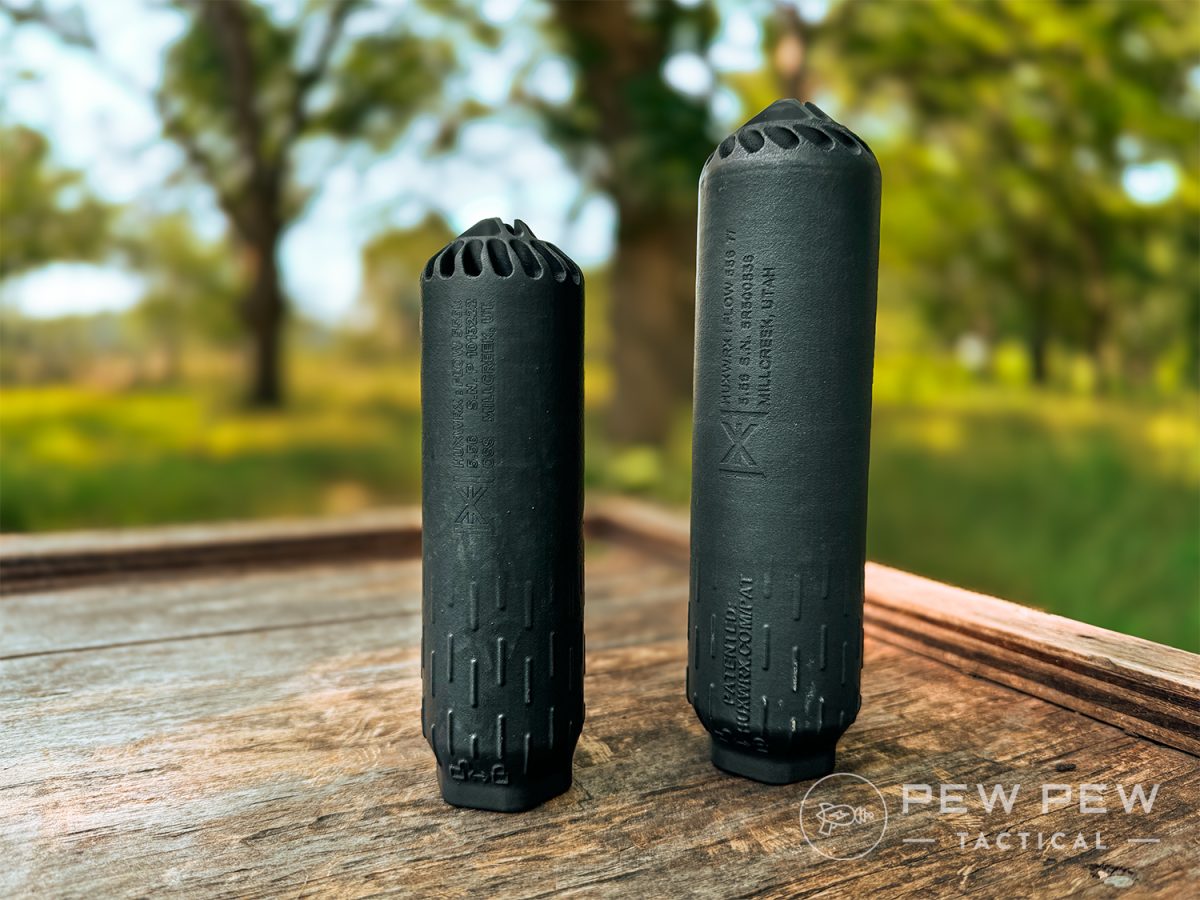
In general, there won’t be major reliability issues with most guns, but where you might run into a problem is with something like .300 Blackout, designed to shoot supersonics and subsonics. The gas system with subs usually depends on a standard suppressor’s additional backpressure to cycle the rifle. If you throw a flow-through can on the gun, you won’t get the backpressure to reliably cycle those subsonics.
From a purchase perspective, a flow-through suppressor is more expensive.

A combination of new technology and more complicated manufacturing drives the price of these devices sky-high. Though 3D-printing could lower the price eventually, right now, most flow-through suppressors cost more than standard suppressors.
Are Flow-Through Suppressors For You?
Like a lot of things, it depends on what you’re shooting.
If you’re using a supersonic caliber through a semi-auto rifle, a flow-through can works best. For example, with a 5.56 AR, I prefer a flow-through can. I like the plug-and-play design, I like less gas to my face, and I don’t mind a little extra volume.
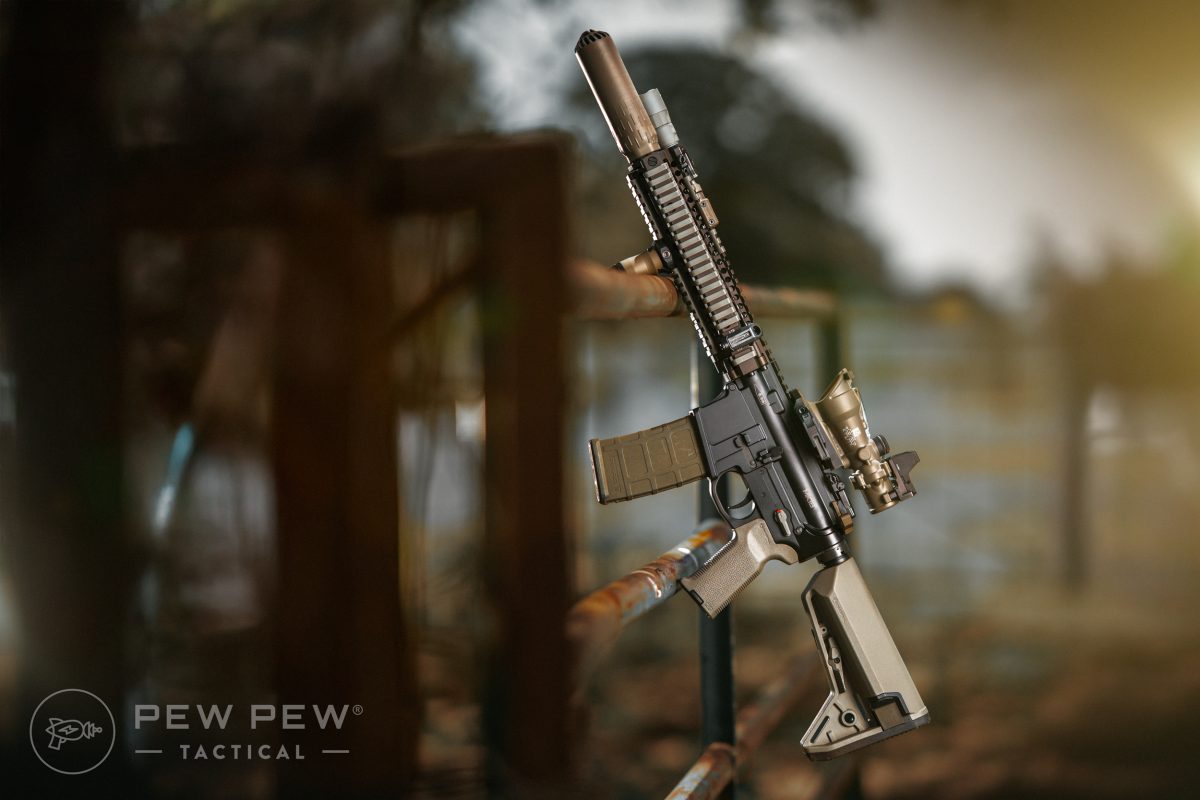
But shooting a blowback 9mm, a flow-through can is not always necessary. It’s more of a preference.
For a lever-action rifle or a bolt-action rifle, I’m not going to deal with a lot of gas blowback from a manually operated rifle, so I’d stick to a standard can.
Final Thoughts
Flow-through suppressors are the hot, new thing to hit the suppressor market.
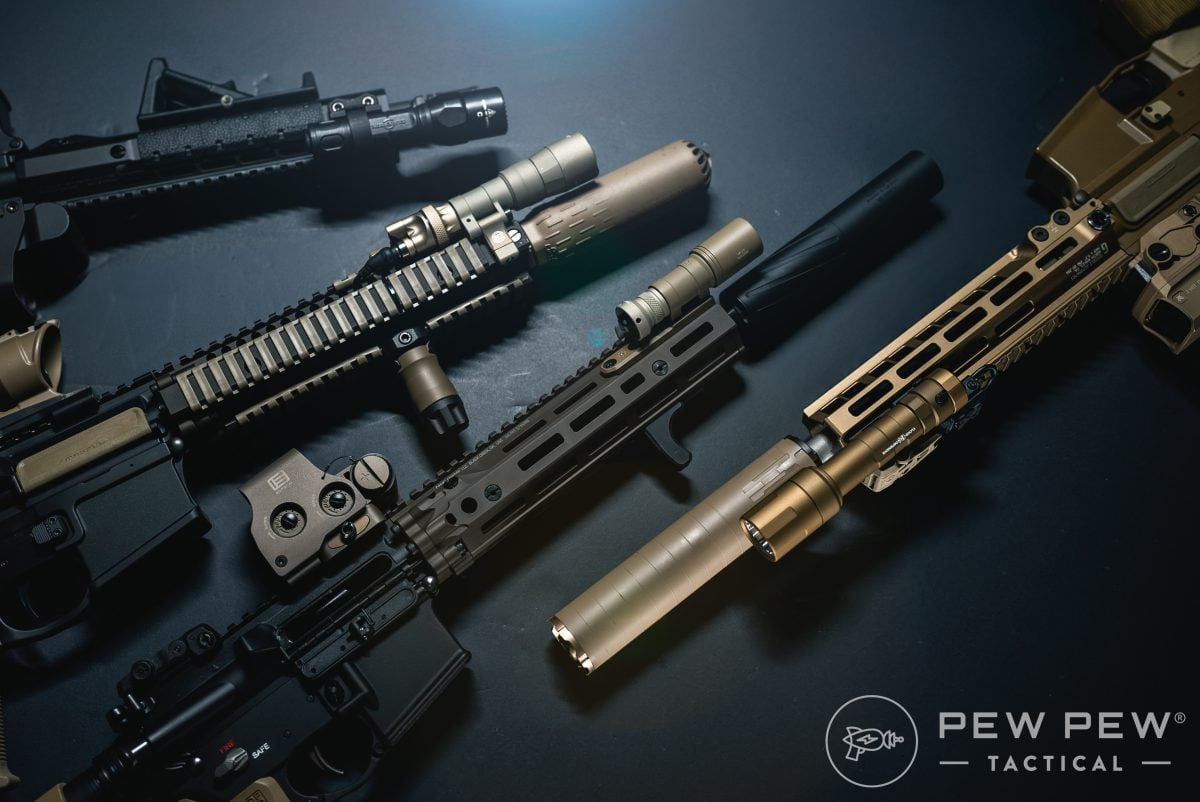
While they certainly provide a more pleasurable shooting experience with less gas to the face, they do come with a higher price tag. Ultimately, it’s up to you to decide if the cost is worth a better time at the range.
With that in mind, let me know below what you think of flow-through cans and how they function. Is the juice worth the squeeze? Want to see what we recommend? Check out the Best 9mm & .45 ACP Suppressors and the Best 5.56 Suppressors.