
[Hands-On] Sig Sauer Oscar 3 and Oscar 8 Spotting Scopes Review

Looking for some sweet spotting scopes? We hands-on review the Sig Sauer Oscar 3 and 8 with tons of view-through pics. Are they worth it?
We review products independently. When you buy through links on our site, we may earn a commission to help support our testing. Learn more.
Everyone can agree that a quality scope is critical, but spotting scopes always seem to be the red-headed stepchild of the optics world.
Just like scopes they can run from almost Walmart cheap to crazy expensive.
Sig Sauer makes some awesome scopes though -- so we wanted to find out how their spotting scopes stacked up.
Glass quality, durability, usefulness, and a lot more -- I’m going to give you the complete rundown on the Sig Sauer Oscar 3 and Oscar 8 spotting scopes are right for you.
Table of Contents
Trending: Best AR-15s, Best Pistol Red Dots, & Best Shooting Hearing Protection
Specs And Stats
I’ve always enjoyed the Sig Sauer scopes I’ve taken a look at, so I was pretty excited that Sig agreed to send out these spotting scopes for testing.
I was even more excited once I read about them.
Sig currently produces two spotting scopes, the Oscar 3 and Oscar 8.

While the Oscar 8 is what you might expect from a high-end spotting scope, the Oscar 3 is some really interesting tech.
Oscar 3
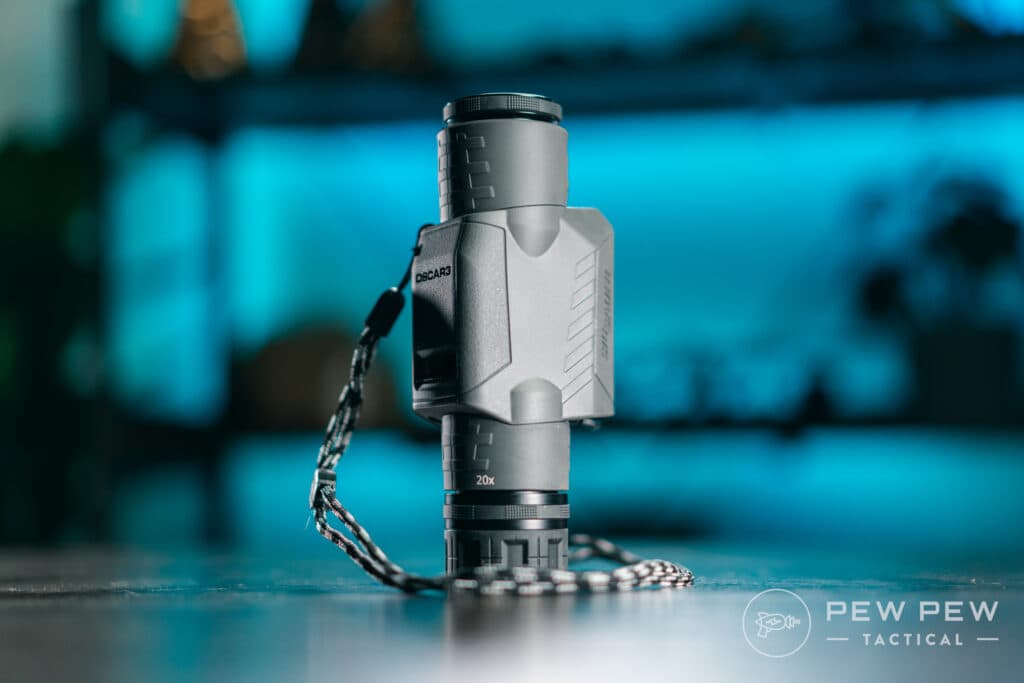
First off -- the Oscar 3 is technically a “mini” spotting scope. At just 10-20x30mm glass, you might assume that this is a weakass spotting scope. You would be wrong.
What sets the Oscar 3 apart is the electronic image-stabilization tech inside the spotting scope. Since this is a “mini” scope, this is purely designed to be handheld.
If you’ve ever tried to use a spotting scope just holding it -- you know this is a lot harder said than done.

Even at 10x, getting a steady view of something can be hard but at 20x it’s basically impossible.
The electronic image-stabilization is designed to reduce movement and jitters in your image.
Often this is done by turning the image digital and giving you a screen to watch instead of the optics itself -- this is a cheaper and semi-effective way of doing it, but image quality suffers a LOT.
Sig doesn’t do that. Sig physically stabilizes the optics themselves inside of the scope. This gives you better light transmission, better quality, and a great image.
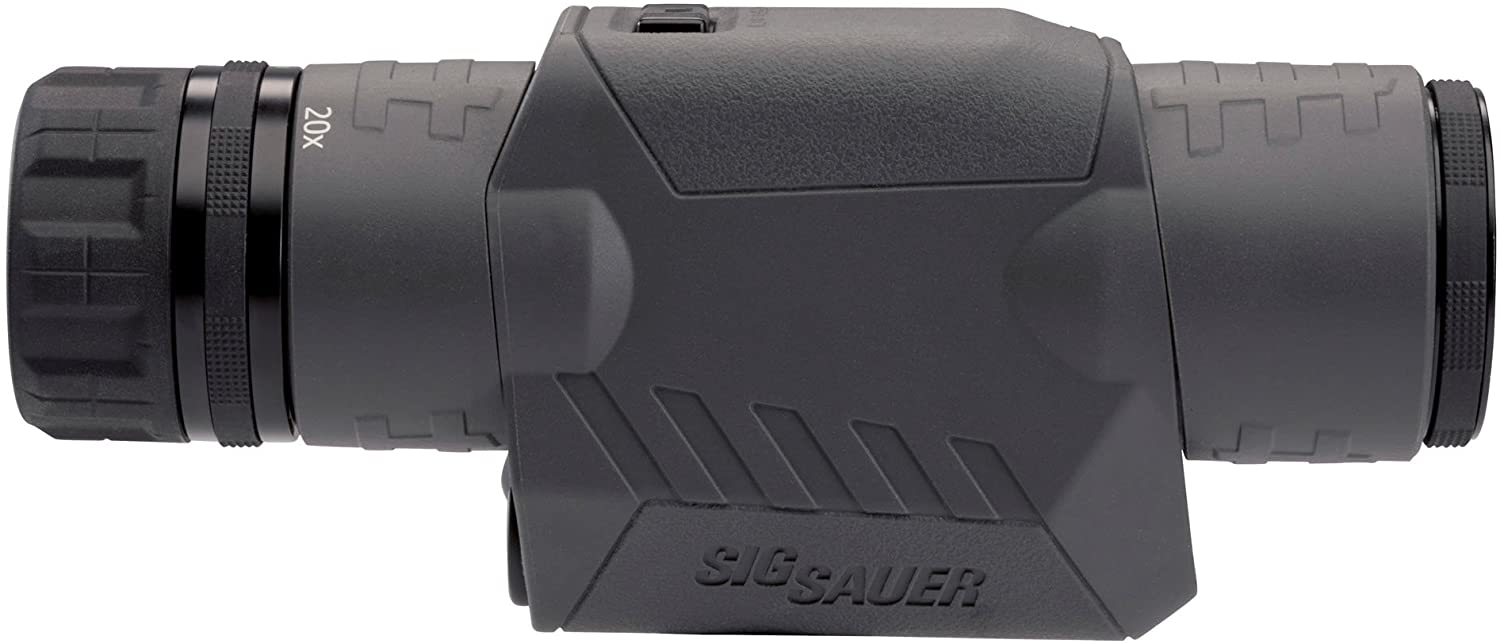 Sig Sauer Oscar 3 Spotting Scope Stabilized 10-20X30mm
Oscar 8
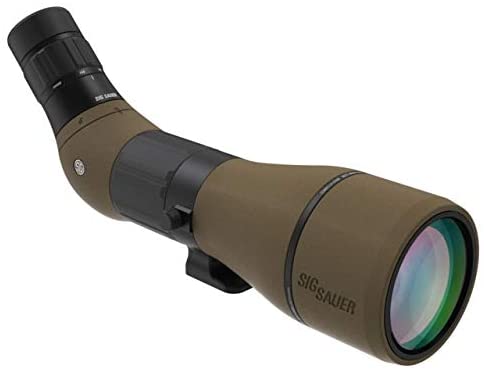
A far more normal spotting scope, the Oscar 8 is basically what you would expect.
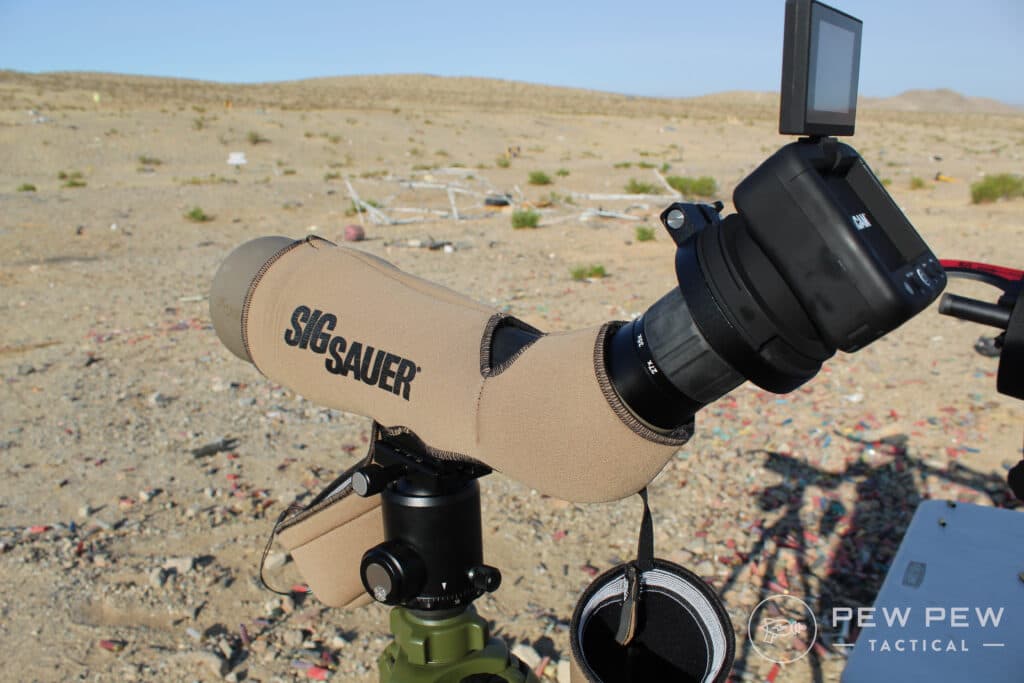
27-55x80mm, designed for use on a tripod, and uses Sig’s HDX optics with both ED and HT glass. It also includes proprietary coatings, Schmidt-Pechan prism, and an eyepiece that can be removed.
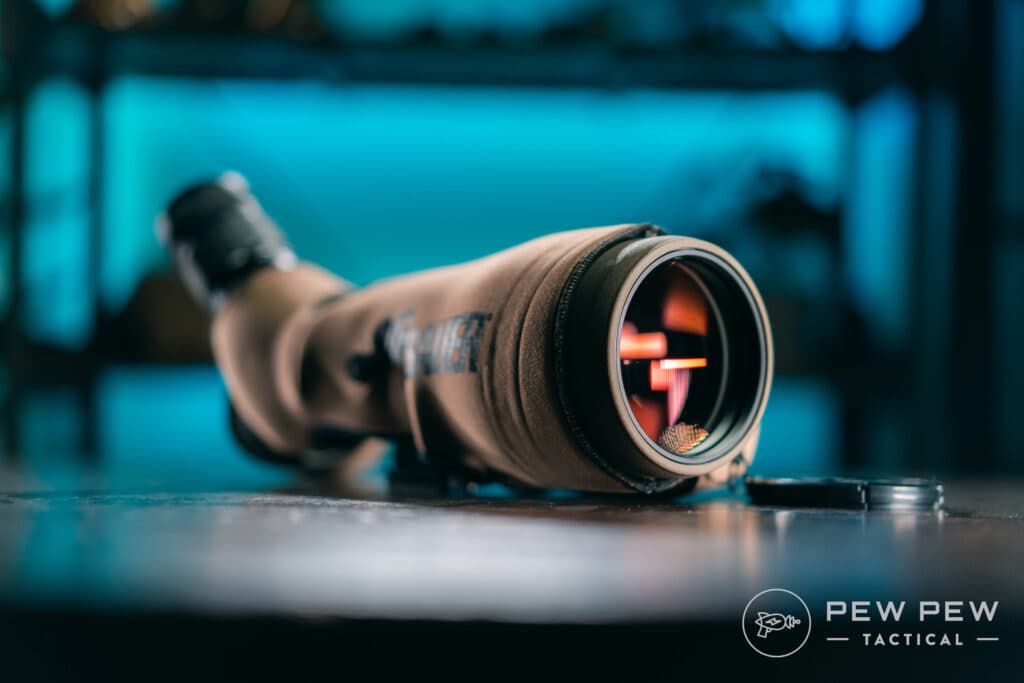
The removable eyepiece gives you a wide range of aftermarket options if you want to get fancy with it.
It’s a bit heavy at 4.25lbs, but that’s more or less what you should expect from a high quality spotting scope.
It also comes waterproof, fog proof, and Sig even throws in a fitted neoprene cover.
Plus -- it’s assembled in the USA.
Field Testing
The California desert is a hellish place that I never recommend to anyone, but it’s great for testing optics. So once again -- I dragged myself out to the hellscape to put these through the wringer.
At least summer is over.
Oscar 3
As cool as the tech in this little guy is, it first must be judged as a spotting scope. All of the electronics in the world is for naught if the glass quality sucks.
Thankfully, I really dig the glass in the Oscar 3.

10-20x30mm isn’t the most powerful of spotting scopes -- this really is more designed for close-ish spotting and stalking.
Hunting, scouting, or just enjoying nature, all fall within the design goals.
That said -- it really delivers within that space. The glass quality is great and you get a very sharp image at all ranges.
Here is a 34”x24” piece of metal in the hell desert at 250 yards:

Nice, right? This wouldn’t be my first choice for calling hits and misses on paper or steel, but it’s definitely able to do it.
Now let’s talk tech! Since it passed the most basic requirements, we need to look at the image-stabilization to see if it actually works.
IT DOES!
It’s actually pretty cool being able to hit the switch and your image become more stable. It does have its limits though.
If you're rolling along in a car, this isn’t going to work like a steady-cam.
This provides more stability than holding it freehand, it reduces or removes the jitteriness from you holding it. But it is not a replacement for simply being stable.
It isn’t as stable as having a spotting scope locked into a tripod and ball head mount, but it massively beats out just trying to freehand it.
The Best Gun Deals, Coupons and Finds
Subscribe to Pew Pew Tactical's sales and deals email.
Oscar 8
Holy good image quality. The Oscar 3 is good, but the Oscar 8 is a whole new tier. And that makes sense considering the price point and the design goal.
For a long range spotting scope -- the Oscar 8 is a solid win. Finding targets at very long distances is made a LOT easier with this kind of glass helping out you.
At just 250 yards, it’s great.
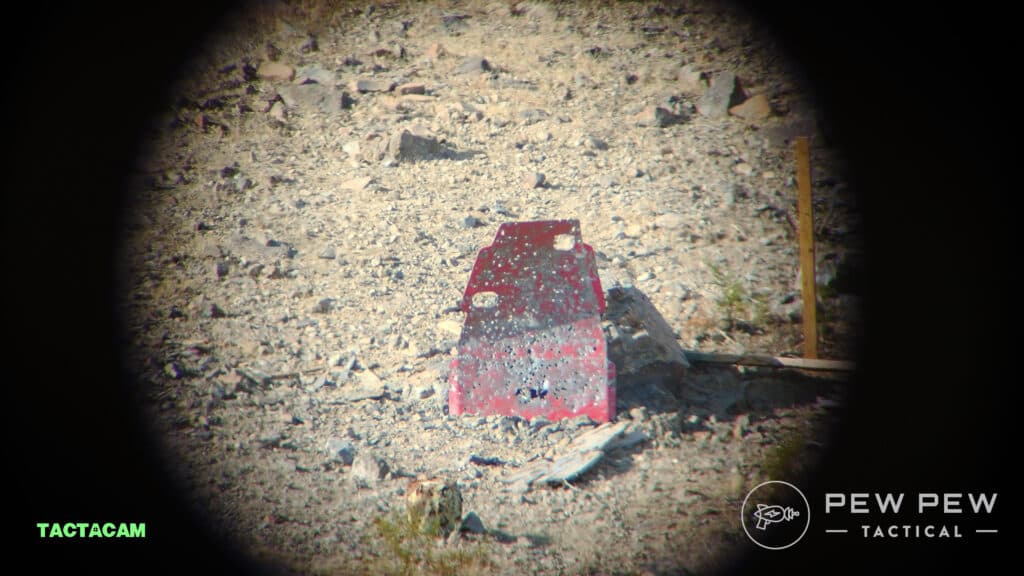
At 650 yards, it’s impressive as hell.
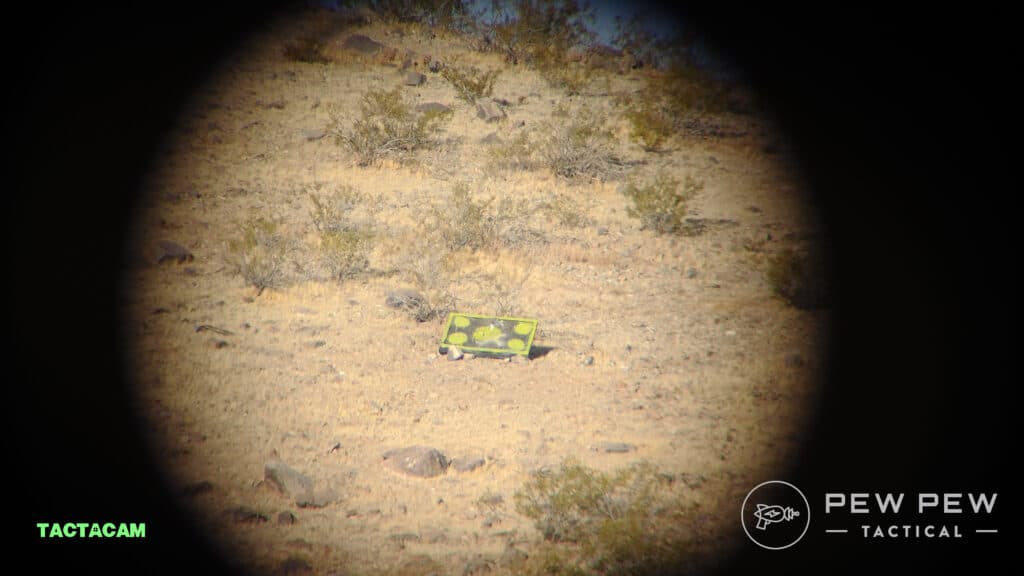
For the price range that it is in, you would and should expect some amazing glass quality. Sig really brings that to the table with the Oscar 8.
All of the controls are great too. The focus is easy and roller bearings on glass smooth, the extra cover is a nice plus, and it feels beefy and strong in your hand.
Tactacam Spotter LR
Something worth mentioning is how most of these images and video were taken, it was with the Spotter LR from Tactacam.
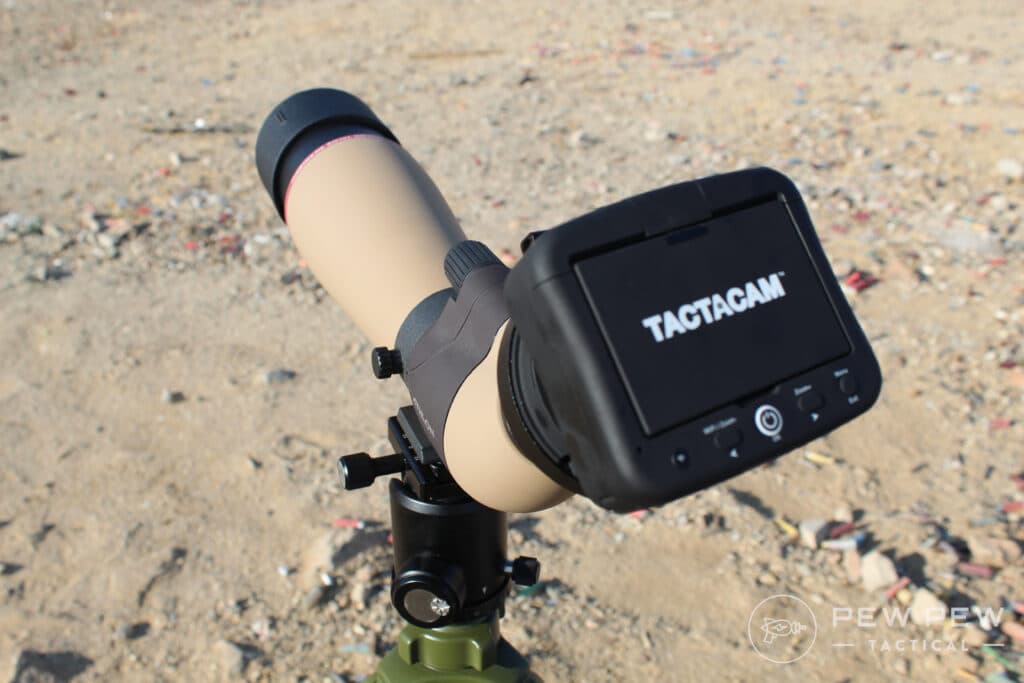
You can take a look at the full review -- but the short version is… short.
Basically, it’s a camera that quick attaches to the eyepiece of a spotting scope. It’s pretty dope recording in 4k at 30fps or 1080p at 60fps.
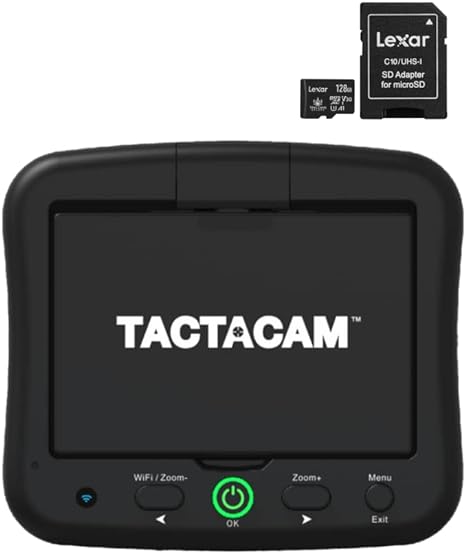
To really get the most out of it though you need to pair it with some highend glass. The Oscar 8 is a great host for it and really helps the image quality come out!
Check out some video from it:
Who Is It For?
The Oscar 3 should have some really broad appeal -- this is just a cool piece of tech.
Anything that you want mobility or flexibility, while also needing to put glass on things, the Oscar 3 is going to be great.
If you have the luxury of sitting in one place and can set up a tripod, you probably won’t need the Oscar 3’s image stabilization. And really, that bit of tech is the entire reason for getting and using the Oscar 3.
Personally, I found I really liked it for bench shooting when I didn’t want to set up big spotting scope or I was doing something that required me to stand up a lot. Just being able to freehand the Oscar 3 is convenient and just handy.
If you want some big boy glass though, the Oscar 8 is an option you need to consider. I found the glass to be a little clearer than the Vortex Razor HD while also coming in at a slightly better price -- depending on where you find it.
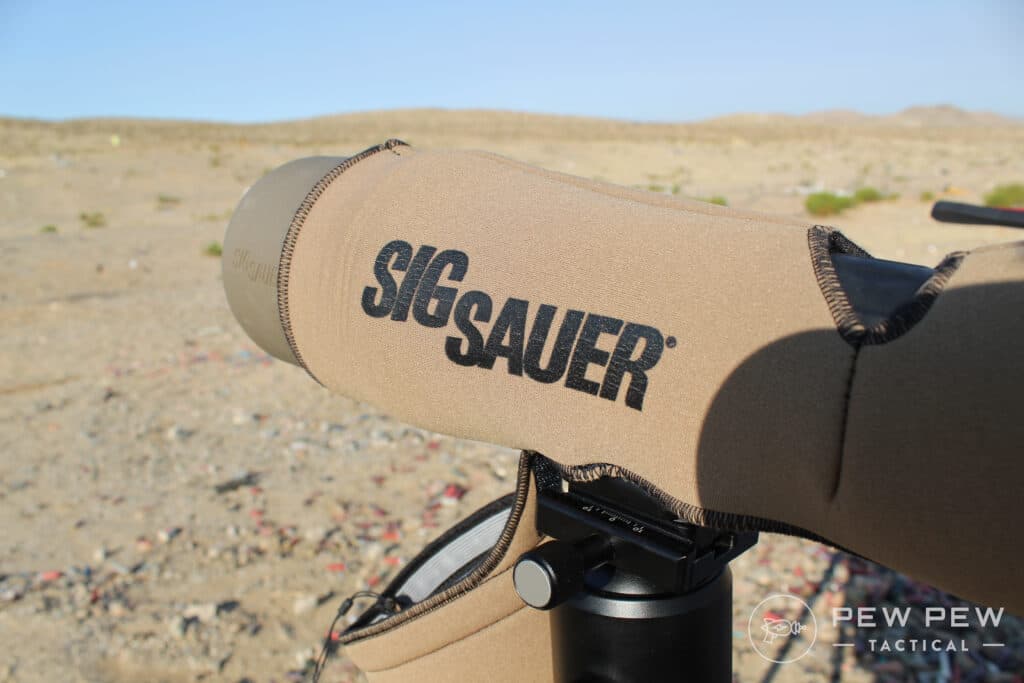
Coming with a neoprene cover is a nice touch, but I would really have liked to get some kind of carrying case with it also. Even a craptastic 99cent grocery bag would have been better than nothing.
That said, you should probably look into a better carry and storage option for something you’re going to throw 15 bennies on.
Long range precision shooting is what I’m going to use the Oscar for the most. The glass is freaky clear, the light transmission is amazing, and it is a really robust unit.
Our Most Popular Posts

By The Numbers
Aesthetics: Oscar 3 -- 5/5, Oscar 8 -- 5/5
I really like the look and color of the Oscar 8, FDE is a little overdone these days but it still works.
Grey and sharp, the Oscar 3 has a battleship feel that I dig.
Clarity: Oscar 3 -- 4/5, Oscar 8 -- 5/5
Granted, the Oscar 3 is a smaller tube and a handheld unit -- so for the size and design, the image is great!
The Oscar 8 is just killer. Absolutely one of the clearest I’ve had the pleasure of using.
Usability: Oscar 3 -- 4/5, Oscar 8 -- 5/5
Oscar 8 functions exactly like you would expect and are super simple.
The Oscar 3 though is a little wonky at first. Since it’s totally new tech, I get why it’s odd but still.
I’m really not a fan of the focus ring being in front of the ocular lens, it kind of makes it a two-handed affair to focus at first.
Once you get it dialed in, you’re good to go. But it would have been nice to be able to do 100% of the functions 1 handed.
Durability: Oscar 3 -- 5/5, Oscar 8 -- 5/5
Both units are really built solid. Even though it's a lot smaller, the Oscar 3 is clearly designed and built to last you.
I really like the Oscar 8 comes with a separate cover, that is always a nice plus that gives me some extra comfort.
Value: Oscar 3 -- 5/5, Oscar 8 -- 5/5
Both spotting scopes deliver a ton of value. The Oscar 3 is surprisingly well priced AND it came with two Energizer Lithium-ion batteries.
Sig Sauer Oscar 3 Spotting Scope Stabilized 10-20X30mmI absolutely love that Sig includes two name brand, high-quality batteries with their product. This is something that more brands need to do.
The Oscar 8… well, that’s just the price range you have to expect for great glass.
If you want a long range spotting scope that has the build quality to really reach out, $1,400-$1,800 is the price range you have to look at. Since the Oscar 8 comes in at the low end of that range, it makes it a great value.
Overall: Oscar 3 -- 5/5, Oscar 8 -- 5/5
Even with the Oscar 3’s little quirks, I just love the little dude. I had high expectations for the Oscar 8 and it managed to surpass every one of them.
Conclusion
Working in the firearms industry, I get to use great spotting scopes fairly often.
But I’ve never actually owned one, I’ve just made do with the ~$150ish one I’ve had for years because there are too many other cool things I want to spend money on.
After spending this much time with two GREAT spotting scopes, I’ve seen the light (literally) and been converted.
While it might not seem like dropping this much money on a spotting scope is the coolest use of your money, it is definitely an incredibly useful tool that you will get a lifetime of use from.
A great spotting scope is a buy once, cry once purchase and I highly recommend the Sig Sauer Oscar 8.
Got a tool that isn't sexy-sounding but you can't do without? Let us know in the comments! Don't forget to take a look at all of the Best Spotting Scopes!