
How Neurological Shooting Training Can Make You A Better Shooter
Here’s what you need to know to improve your shooting with science and dry fire instead of range days and live rounds.
We review products independently. When you buy through links on our site, we may earn a commission to help support our testing. Learn more.
The idea for neurological shooting training hit me because I coach second-grade basketball.
Isn’t it odd how we come up with ideas?
When I was researching how to train kids, I stumbled into neurological sports training. It dawned on me that shooters could benefit from the same sports-style training.
Strap in, because I’m going to break down all the theory, scientific journals, and training methods so you can improve your shooting with a neuro shooting plan.
Table of Contents
Trending: Best AR-15s Under $1000 & Best Pistol Lights
The Science Behind Neurological Shooting Training
Shooting is a physical task that requires a lot of brainwork. As I got into this neurological aspect of shooting, it was a bit easier since my wife is working on a PhD with a neurological focus. She acted as a great springboard for ideas, and translated high-level concepts into grunt-speak.
I’m always cautious about putting up any kind of training device that’s a little outside my wheelhouse. I feel like I’m selling something, even though you don’t see a "Buy It Now!" sticker anywhere.
With that said, this isn’t the way; it’s a way.
Clearly, it’s proven that consistent training and practice will make you a better shooter. The point of this neurological shooting plan is to increase efficiency for shooters. My plan does not have to be followed exactly to work for you.
Why I Built My Neuro Shooting Plan
In the past, I’ve been able to get my draw down to less than a second with a shot inside an IPSC target’s A-zone. It took a lot of reps to get it, and even more to maintain it.
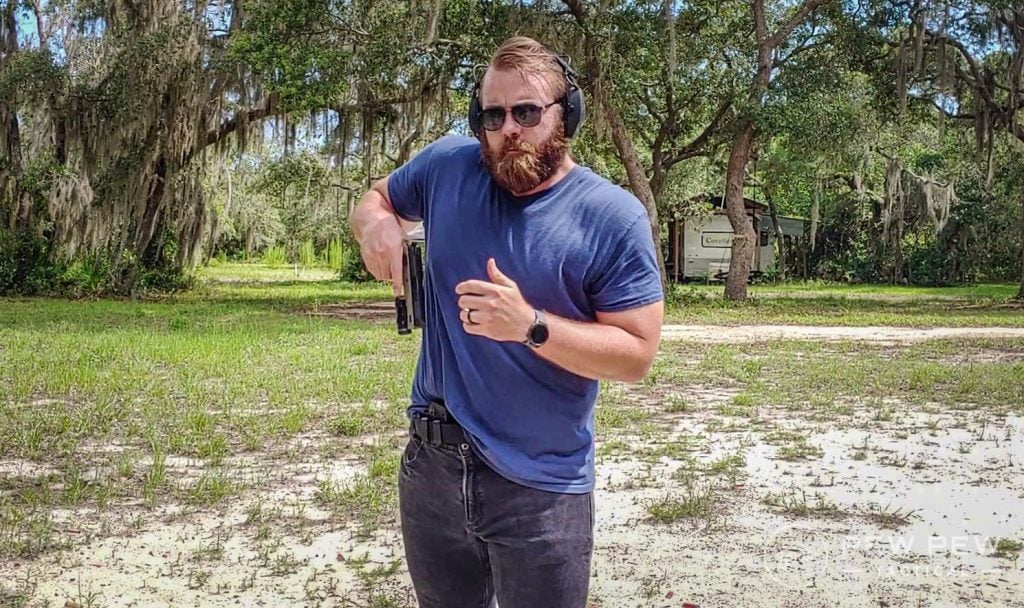
If I get sick or too busy to train, I see that consistent sub-second draw disappear quickly.
My goal was to create a consistent draw that led to an accurate A-zone shot, and a proper grip and stance critical to making a follow-up shot in 1.2 seconds.
I decided to use a Safariland Level 3 holster during this plan. While I’ve used one a fair bit, it’s different from the appendix holster I used in the past to obtain a sub-second draw.
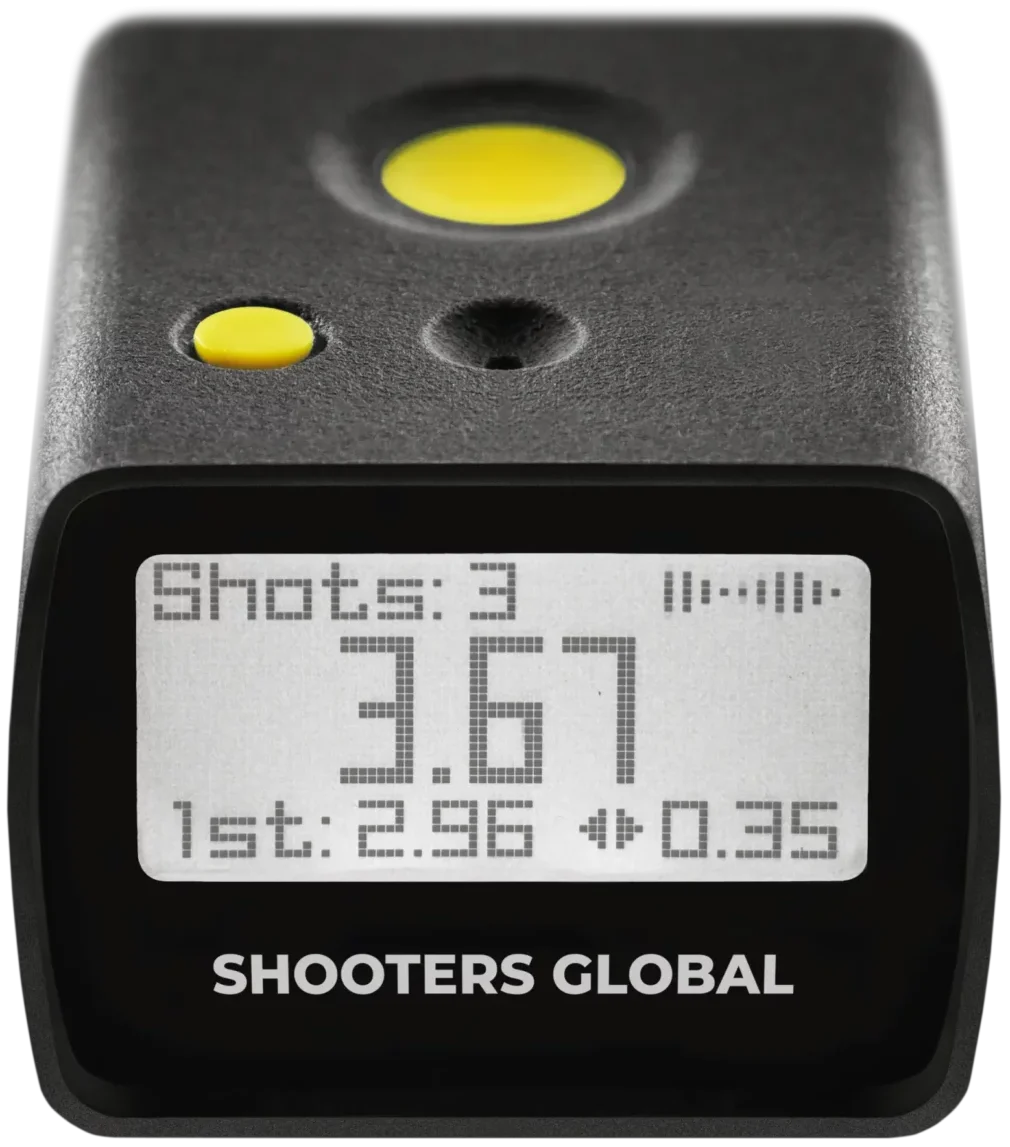
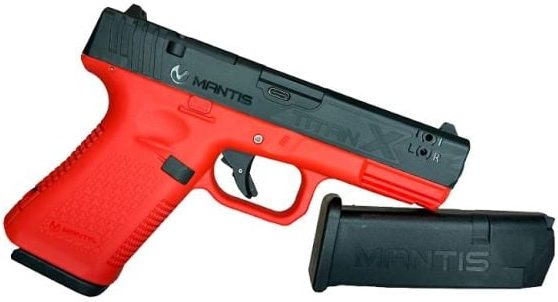
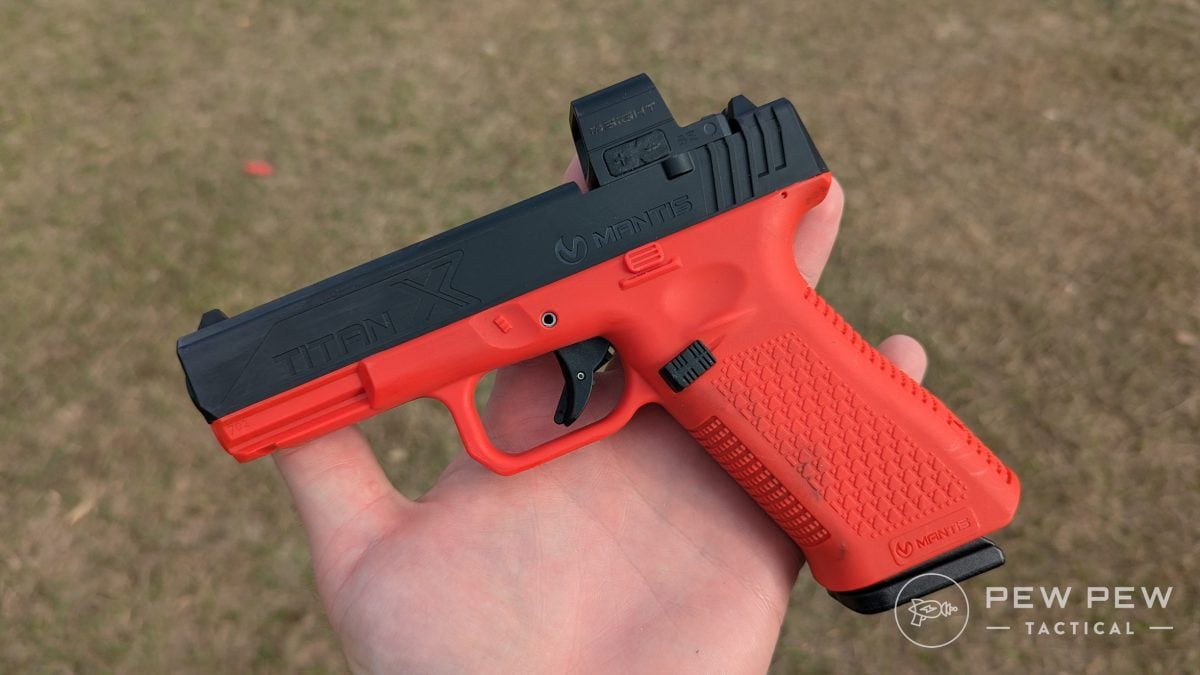
I started with a 1.7-second draw to the first shot. To save ammo and time, I used a Mantis TitanX for the entirety of my training. As Ben Stoeger says, dry fire is the training, live fire is the test.
On the third training session, I met my 1.2-second goal. In five training days, I was consistently right around one second, with several draws under one second. On day five, I was able to make 1.2-second draws cold. That’s the performance on demand I wanted to see.
This is one person attempting to achieve one task – a task I’m fairly familiar with. If I just did regular dry fire, could I have accomplished the same thing? Sure, but it might have taken more sessions.
I do believe taking the neurological route improved the efficiency of my training. Using the Mantis TitanX was also a game changer, and the Mantis app was extremely helpful.
For portions of the training, I also used the SwitchedOn app. SwitchedOn is all about sports neuro performance, and I’ll detail how I used the app in my training as part of the neurological shooting plan.
My Neurological Shooting Plan
Okay, let’s get to the plan. This is both a physical and mental plan designed to increase the efficiency of your training. It takes roughly 45 minutes to work through, but it can be shorter or longer based on your goals.
Safety Reminder: Keep all safety practices in place during dry fire. Unload, show clear, and inspect your firearm both visually and physically. Store ammunition separately from the training area. Using the TitanX guarantees safety, unless your cat attacks the laser.
Phase 1: Generating Brain-Derived Neurotrophic Factor
Brain-derived neurotrophic factor, or BDNF, has been described as Miracle Gro for the brain. To generate BDNF, you have to elevate your heart rate and keep it high. This calls for a short workout before any dry-fire training.
This step isn’t critical for progress, but according to Neurobiology of Learning and Memory (2024), exercise before and after motor practice can enhance memory consolidation by roughly 10%.
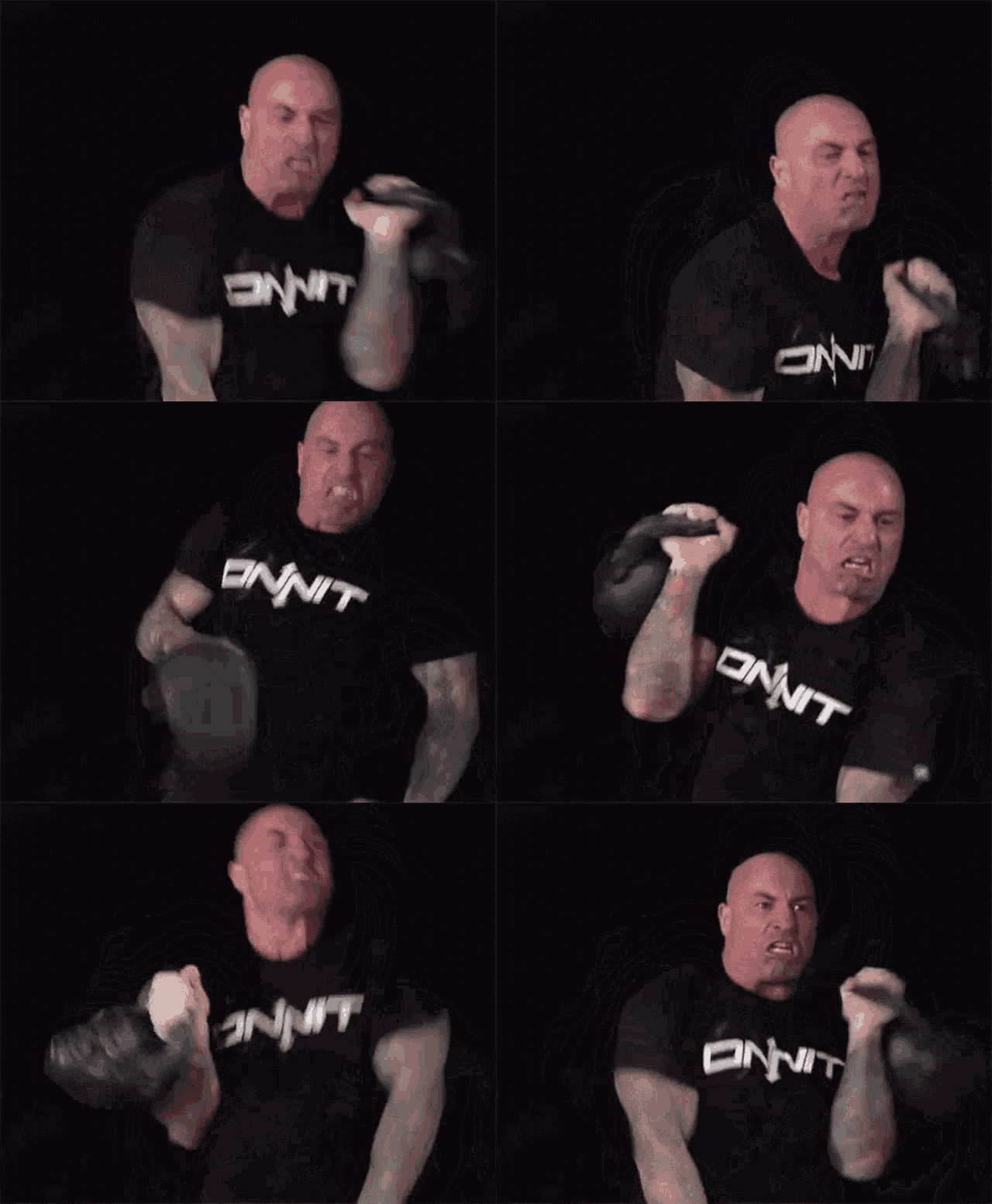
I got my heart rate up to 75% of my max, and kept it there for about six minutes. I did kettlebell exercises, but any high-intensity exercise will do the trick. (As always, consult your doctor before engaging in any strenuous activity.)
The exercise should leave you breathing hard, but not shaky or physically drained. Once you’ve accomplished that, the BDNF is flowing.
The Best Gun Deals, Coupons and Finds
Subscribe to Pew Pew Tactical's sales and deals email.
Phase 2: Blocked Practice
When you practice one task repeatedly, this is referred to as blocked practice. This is our blueprint and foundation of skill building. Blocked practice benefits from two things: being slow and perfect, and pushing to failure.

For me, the skill was drawing my handgun from the holster. I practiced the 10-10-10-5 rule to get excellent reps and push to failure.
- 10 reps slow and perfect.
- 10 reps faster, but still comfortable.
- 10 reps as fast as you can without making a mistake.
- 5 reps as fast as you can possibly go, pushing to failure – I call this redline.
In this case, failure means a missed shot or a poor grip. This is frustrating, but frustration is good. It leads to error-related negativity when your brain recognizes that you made a mistake.
Your job is to fix it.
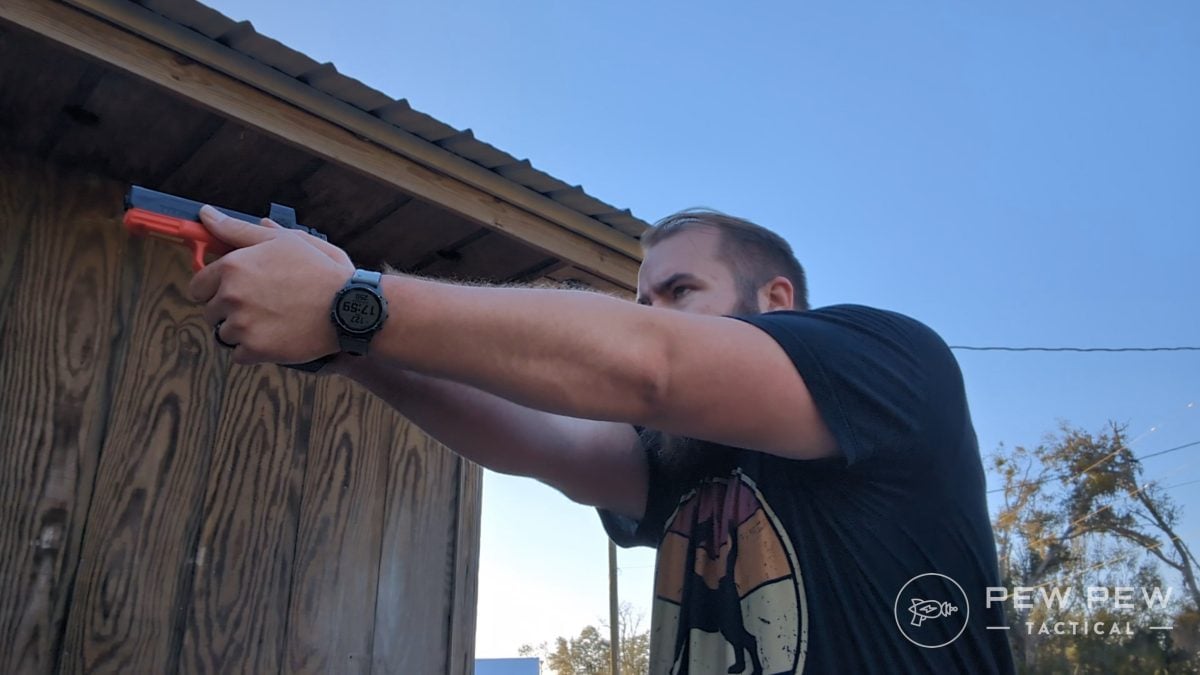
If you aren’t failing at least some of those five redline reps, you aren't actually learning; you’re just rehearsing what you already know. If you succeed on one out of five attempts, a sweet dopamine release will reinforce your learning. If you pass more than you fail, that’s your signal to go faster.
You generally want to practice to failure for 15% of your total training reps, and the 10-10-10-5 method gets us close to that.
According to The Effects Of Practice Schedules On The Process Of Motor Adaptation (2018), blocked practice leads to faster skill acquisition, but decreased ability to retain and generalize to new situations days after practice.
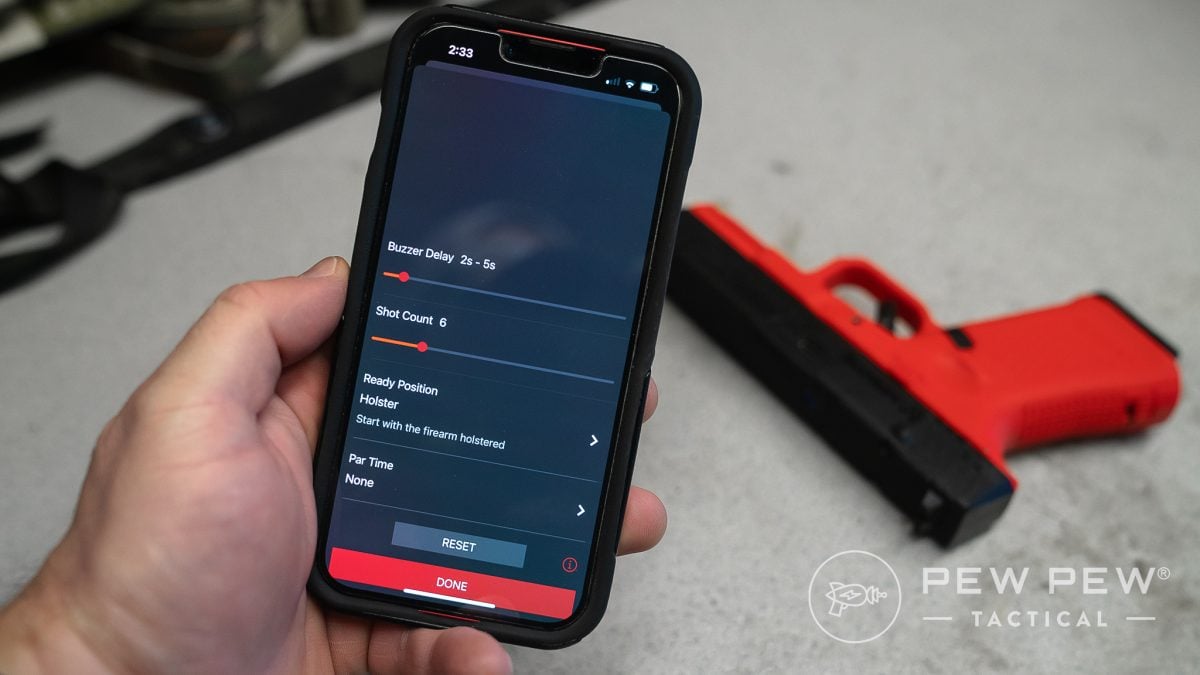
The Mantis app includes a draw analysis exercise, which I used to time and analyse my drills. It makes it extremely efficient and easy to track time and reps.
Phase 3: Random Practice
Random Practice is where you practice a variety of training methods related to one specific skill. It complements our blocked practice. This creates contextual interference that makes learning harder, but improves long-term skill retention.
To make my draw practice random, I chose three different drills.
- Bill Drill: Draw and fire 6 shots into the A-zone.
- Lateral Movement and Draw: Step to the right or left while drawing, and fire 1 shot.
- Draw, Shoot, Reload, Shoot: Draw, fire 2 shots, reload, and fire 2 more shots.
The SwitchedOn app allowed me to create a randomized exercise using different colors. The app displayed the colors randomly, forcing me to react. I used green for the Bill Drill, yellow for Lateral Movement and Draw, and red for Draw, Shoot, Reload, Shoot.
I did this for 30 total reps. This forced my brain to reload the motor program from deep storage every time. This kind of brain activation increases our long-term retention.
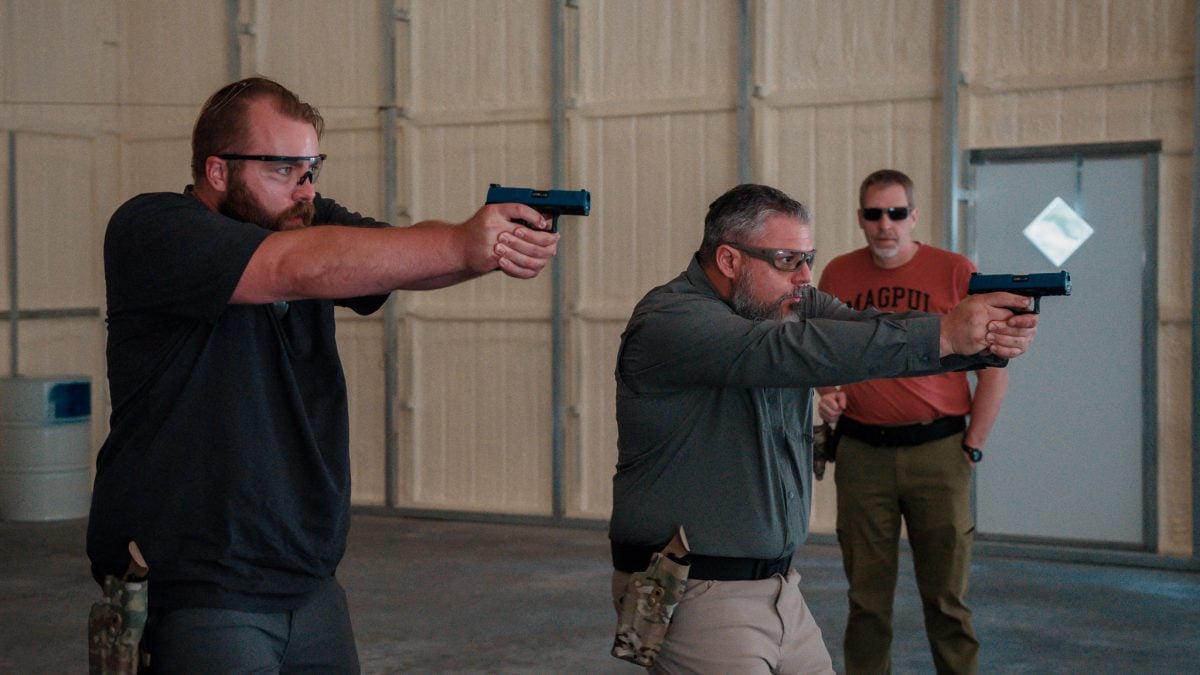
Let’s again refer to The Effects Of Practice Schedules On The Process Of Motor Adaptation (2018), which states that random practice leads to an increased ability to retain and generalize, but is linked with slower skill acquisition.
Mixing random and blocked practice gives us our best results. Depending on your skill level, you may want to do more of one than the other.
- Beginners: 80% blocked, 20% random
- Intermediate: 50% blocked, 50% random
- Advanced: 20% blocked, 80% random
Phase 4: Inhibitory Control
Next, I targeted two specific parts of my brain, the right inferior front gyrus and the prefrontal cortex, with a shoot/no-shoot drill.
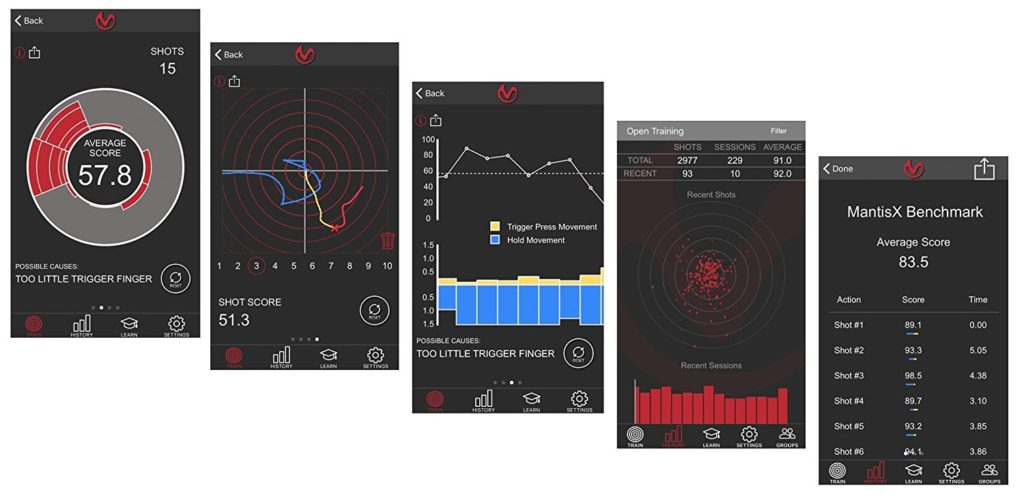
Using the Mantis app’s Decision Drills menu, I was able to pick from colors, shapes, dice, and addition to create different scenarios.
The addition mode is particularly challenging because it makes you solve a simple equation to figure out if you should shoot or not.
I also used SwitchedOn for this type of training, with red indicating no shoot, yellow indicating draw to low ready, and green indicating draw and shoot.
Shoot/no shoot training prevents us from running on autopilot, and forces our brain to positively identify a shoot-worthy scenario. Inhibitory control is something we often ignore during training for defensive environments, but we shouldn’t. There is critical value in restraint.

But if my goal is to get a faster draw, how did this help me? I received some drawing practice, but from a neurological perspective, inhibitory control relies on neural circuits and can promote brain plasticity.
People with high inhibitory control tend to learn faster. However, there is not much research on whether inhibitory control can be trained like working memory.
Our Most Popular Posts

Phase 5: Time to Sweat
I got my heart rate up the first time I trained, but phase five brought the sweat. I started fairly easy, sticking to 60% of my maximum heart rate for 15 to 20 minutes. A light jog, weightlifting session, or a casual sport like pickleball or basketball will do the trick. Jogging seemed to work best for me.

Recent research published in Neurobiology of Learning and Memory reports a study from Denmark: Acute Exercise Performed Before & After Motor Practice Enhances the Positive Effects on Motor Memory Consolidation. The title says it well.
Exercise before and after learning a task helps you remember it. Much like before, this isn’t going to make or break your training, but a little exercise can go a long way for your physical health and ability to learn.
Phase 6: Hitting The Save Button
Finally, after all my training and exercise, I aimed to lower my cortisol levels to facilitate the formation of new memories.
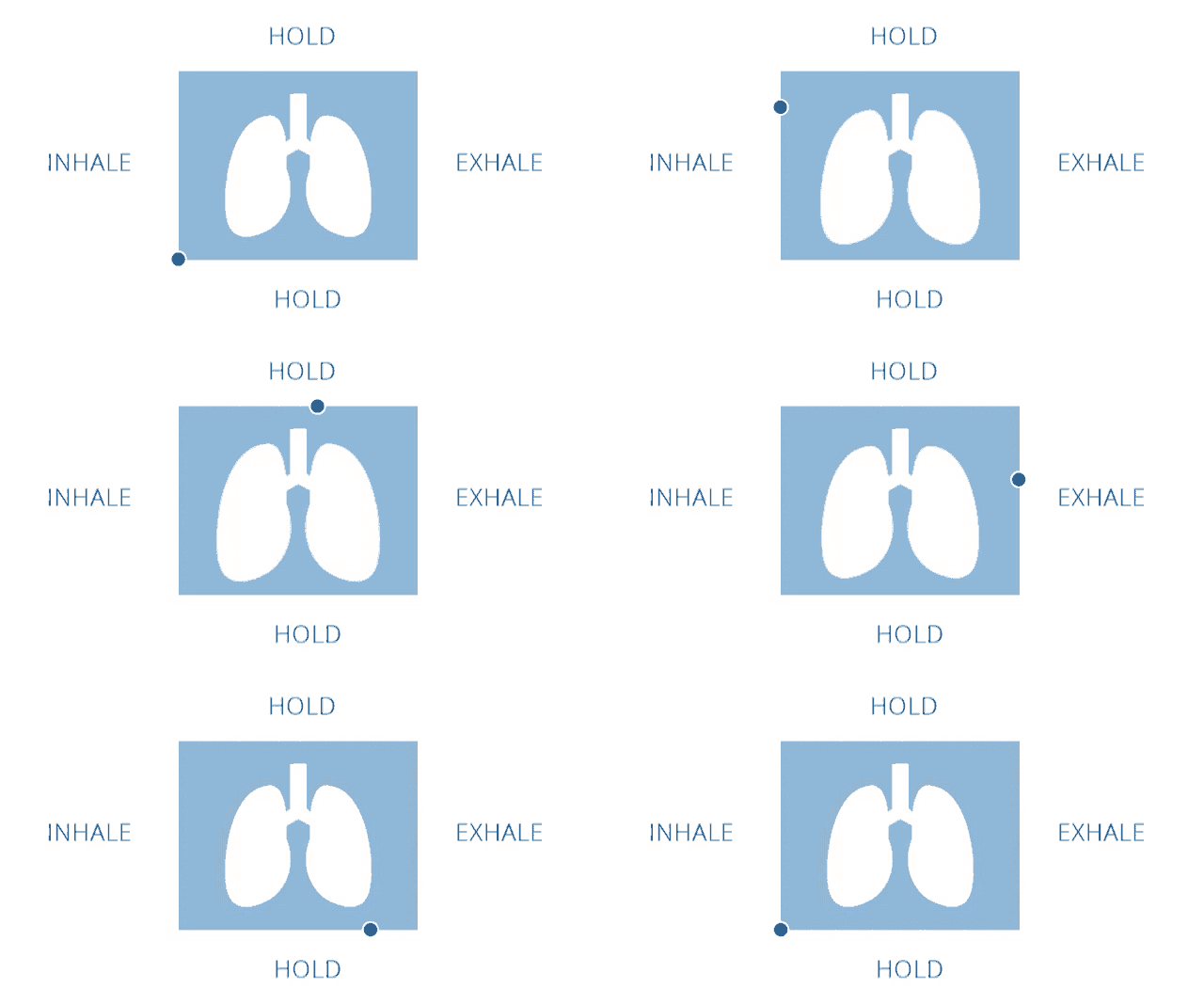
This required a dedicated session of breathing and relaxing. I used box breathing while sitting in a quiet room.
- Four second inhale.
- Four second hold.
- Four second exhale.
- Four second hold.
Five minutes of box breathing is enough to release acetylcholine, a neurotransmitter that hits the save button on the motor pathways you just trained. This works best if you’re already getting good sleep.
The Role of Sleep
Believe it or not, sleep is the most critical phase of this training. Phases one through four create the skill, phases five and six save the skill, and sleep is what installs the program in your brain.
Without good sleep, you will see diminishing returns on your training. You should aim to sleep about six hours after you train. Most motor learning occurs in the last two hours of an eight-hour sleep cycle.
Get plenty of quality sleep to cement your training.
Final Thoughts
As I followed this plan, I realized this was basically what I always did while playing sports. I warmed up, worked on block skills, did random skill-building, and closed practice with some weight training.
This idea of training seems fairly consistent across sports, even if it’s not intentional.
This is my plan for the next year of training. I’m working on draws now, but will likely introduce other skills and platforms to my program. I’ve already seen meaningful gains.
Admittedly, sometimes two exercise sessions and box breathing can strain my schedule, so I do it when I can. One thing I always ensure I do is train and get good sleep.
Now, I never got around to researching how to train second graders to play basketball. If you’ll excuse me, I need to get back to coaching.
What do you think of incorporating a neuro shooting plan into your training? Let us know below! Looking for more ways to improve at home? Check out our guide to Safe & Effective Dry Fire Training!
Meet the Experts
Pew Pew Tactical author Travis Pike conducted the research and developed the neurological shooting plan behind this article. His experience is based on a lifetime of shooting, both as a kid and an infantryman in the Marine Corps. He has written thousands of articles with a variety of the shooting industries leading publications, including Pew Pew Tactical. In addition to a long history of testing and reviewing guns and gear, Travis is also a concealed carry instructor.