
Weekly Wrap: Surgeon General Campaigns for Warnings Labels on Guns
The U.S. Surgeon General calls for warning labels on guns, Sig loses a $2.5M court case against the P320, and SCOTUS upholds DV law.

PPT Editor-in-Chief. Professional journalist 15+ years. NRA & BLS instructor. 2000+ articles
We review products independently. When you buy through links on our site, we may earn a commission to help support our testing. Learn more.
Welcome to a weekly series here on Pew Pew Tactical dedicated to the gun news you need to know.

So, keep reading for this week’s notable news headlines…
Table of Contents
Surgeon General Campaigns for Warnings on Guns
The U.S. Surgeon General put out an advisory this week against firearms, calling them a “public health crisis” and campaigning for warning labels on guns.

Surgeon General Vivek Murthy said so-called gun violence is a public health crisis and should be handled as one – as opposed to a political issue. Murthy’s advisory suggested using public health campaigns to address guns, much like the U.S. did with cigarettes.
Claiming that guns are now the leading cause of death in children, Murthy urged Americans to take the issue of gun violence seriously.
“I want people to know this is a profound public health crisis, but it is a solvable public health crisis,” he said to USA Today. “As a nation, we are not powerless. We can do something about it.”
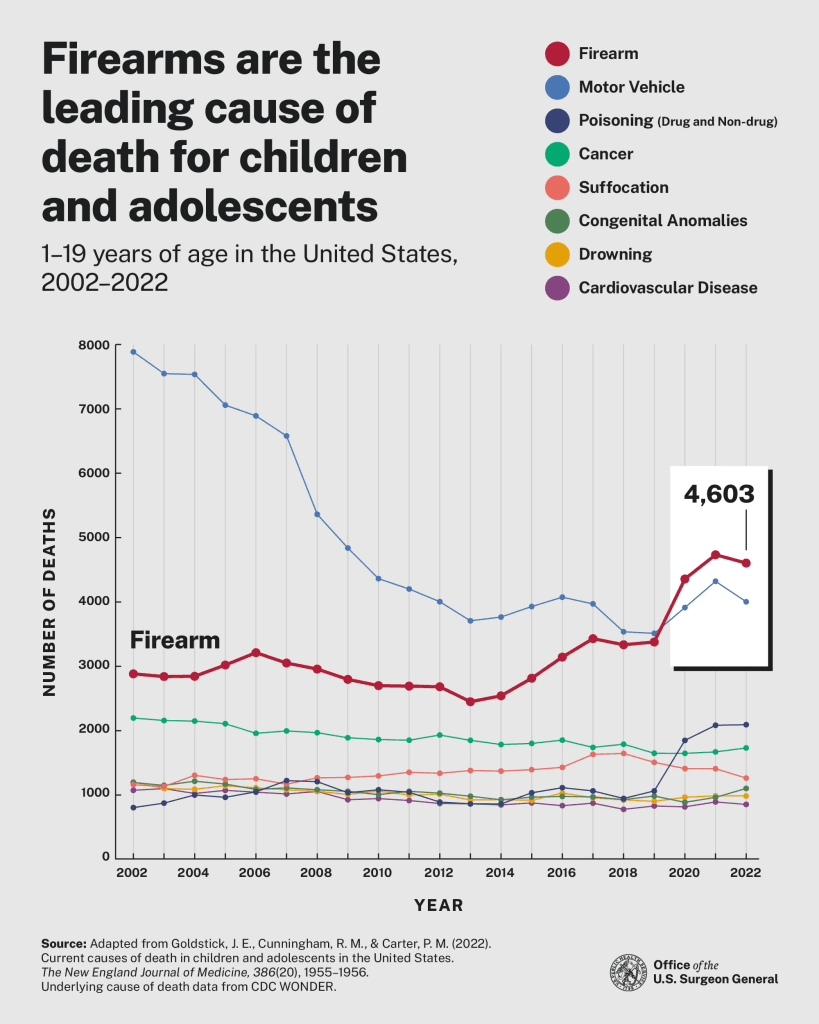
In addition to urging for warning labels on guns – much like the ones seen on cigarettes -- Murthy said he also wanted to see a reinstatement of the assault weapons ban and laws mandating safe storage of firearms.
A Surgeon General advisory is a public statement that attempts to garner attention from the American public to an issue that presents an urgent public health crisis.
The U.S. has used Surgeon General advisories in the past to address health problems like smoking. In 1964, Surgeon General Luther Terry advocated against cigarettes and issued an advisory citing the hazards related to smoking.
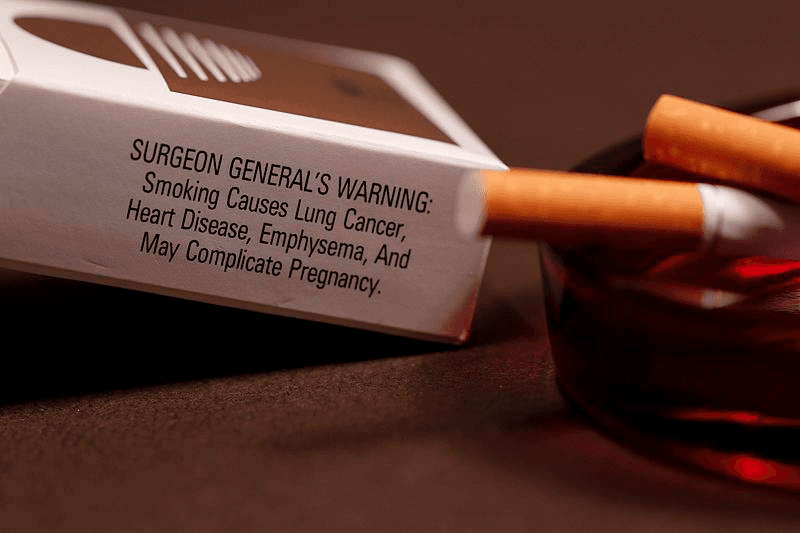
Eventually, this initiative led Congress to enact a law requiring warning labels on cigarette products. According to the Centers for Disease Control and Prevention, tobacco use dropped after the introduction of warning labels.
But pro-gun groups say the advisory is unnecessary and not in the realm of public health – arguing that the Surgeon General's data is skewed and, more or less, a political stunt in an election year.
“Surgeon General Murthy has a history of conflating health care with criminal law enforcement. The two roles are different and as much as he’d like to say lawful gun ownership is tantamount to a public health crisis, the truth is – it isn’t,” Joe Bartozzi, President and CEO of the National Shooting Sports Foundation, said in a statement.
“Surgeon General Murthy is complaining about lawful gun ownership by confusing the American public with data concerning the criminal misuse of firearms and suicides.”
If Congress were to act on the advisory, the Surgeon General would suggest guns be treated like the U.S. does other consumer products like food and motor vehicles – requiring safety standards and testing.
No word yet on whether lawmakers intend to do anything with the advisory.
Supreme Court Sides with Domestic Violence Gun Restrictions
The Supreme Court upheld a federal law last week preventing those under a domestic violence restraining order from possessing guns.
In an 8-1 ruling, the High Court sided with the Biden Administration – who defended the case.
For its part, the Biden Administration applauded the decision, with U.S. Attorney General Merrick Garland claiming the law “protects victims by keeping firearms out of the hands of dangerous individuals who pose a threat to their intimate partners and children."
The challenge to the federal law came from Zackey Rahimi. Rahimi had a civil protective order brought against him by the state of Texas for allegedly dragging his then-girlfriend back to his car after a disagreement, pushing her against the car, and causing her to hit her head. He also fired a gun at a witness nearby.
After the incident, a civil protective order was placed against Rahimi, prohibiting him from possessing a firearm. Several months later, Rahimi became the focus of a series of shootings, and after police obtained a search warrant, a rifle and pistol were found in his home. This discovery resulted in prosecutors charging with violating the federal law.
But Rahimi argued that the law violated his Second Amendment rights and leaned on the Court’s ruling in New York State Rifle & Pistol Association v. Bruen as support.
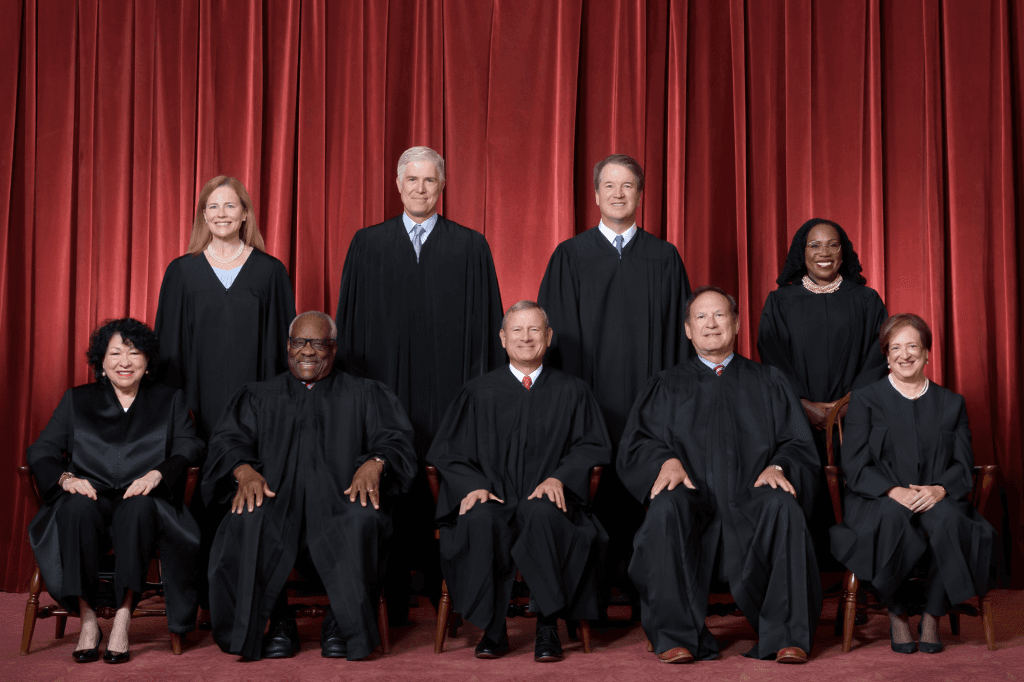
Chief Justice John Roberts wrote the majority opinion, saying that the right to bear arms is not without some limitations, especially if there is a credible threat to the physical safety of another. Roberts said that since its founding, "our nation's firearm laws have included provisions preventing individuals who threaten physical harm to others from misusing firearms."
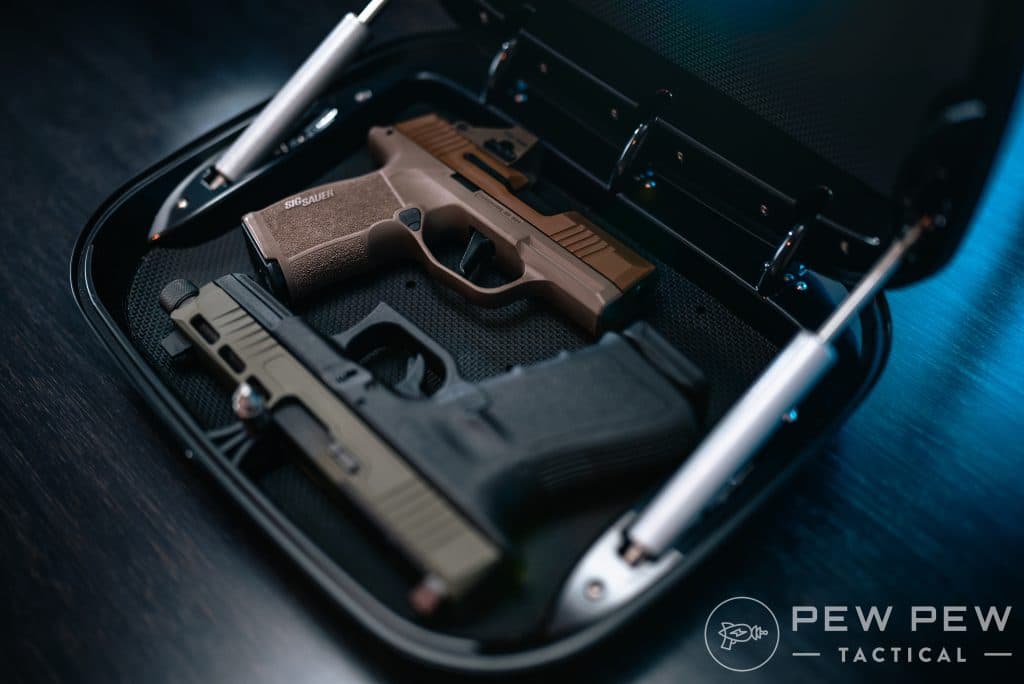
The lone dissenter, Justice Clarence Thomas, disagreed.
“After New York State Rifle & Pistol Assn., Inc. v. Bruen, this Court’s directive was clear: A firearm regulation that falls within the Second Amendment’s plain text is unconstitutional unless it is consistent with the Nation’s historical tradition of firearm regulation,” Thomas wrote in his dissent. “Not a single historical regulation justifies the statute at issue.”
The decision comes just a week after SCOTUS ruled on another gun case, overturning a Trump-era ban on bump stocks.
Sig Sauer Loses P320-Related Shooting Case
Gunmaker Sig Sauer lost its case in a shooting involving the company’s P320 pistol, with the jury awarding the plaintiff $2.35 million in damages.

In one of a dozen lawsuits against the company’s P320 model guns, the Georgia jury unanimously determined the pistol was defectively designed. Further, the jury concluded that Sig had not warned customers about the risks.
According to an investigation by The Trace and The Washington Post, more than 100 people have alleged the Sig Sauer P320 has unintentionally discharged without the trigger being pulled – at least 80 people have been injured as a result.
Sig Sauer holds firm that the shootings were not related to the P320’s design but rather unsafe gun handling practices.
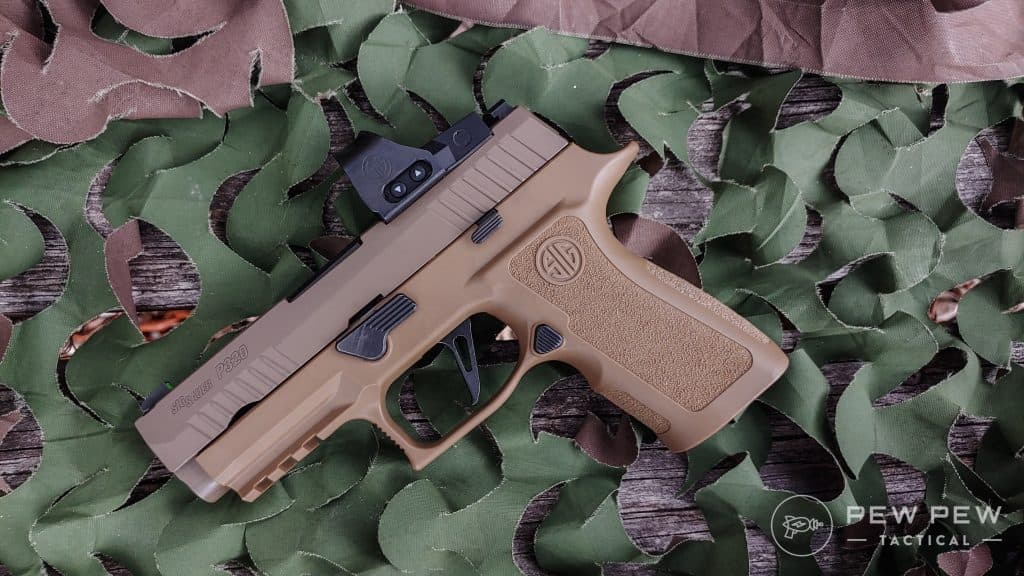
“The design of the SIG SAUER P320 model pistol is truly innovative and safe, with numerous related patents, including several relating to safety mechanisms,” Sig Sauer said in a statement after the verdict.
“It is among the most tested, proven, and successful handguns in recent history, with versions being selected as the official sidearm of the U.S., Canadian, Australian, and Danish militaries, among many other military and law enforcement organizations worldwide.”
The case centers on Robert Lang of Rosewell, Georgia, who carried the P320 pistol – notably, the version released after Sig tweaked the design in 2017. Lang says he was removing the holstered gun from his belt when it fired. Lang says his hand was around the grip and nowhere near the trigger when the gun discharged.

The bullet from the P320 entered Lang’s thigh and exited just above his kneecap. As a result of the shooting, Lang says he suffers from nerve pain and post-traumatic stress.
“I just hope that my verdict will be the tip of the spear,” Lang told The Trace. “I hope that SIG will finally do what’s right and make sure no one dies from this defect.”
But Sig says Lang’s counsel didn’t meet the burden of proof, so the company intends to appeal the verdict.
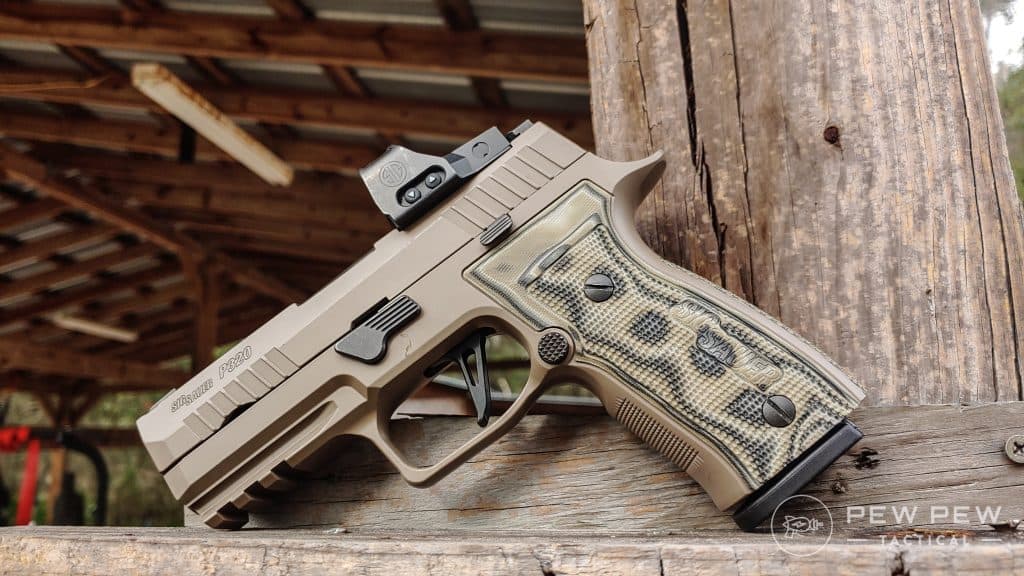
“SIG SAUER does not believe that Plaintiff has met his burden to prove the P320 model pistol was designed defectively or negligently as claimed. There are no facts on the record to support that Mr. Lang’s discharge claim was the result of anything other than his own negligent handling causing him to pull the trigger on the P320 pistol,” the company said in a statement.
“SIG SAUER strongly disagrees with the verdict in the case of Lang v. Sig Sauer, Inc. and will be appealing the decision on multiple grounds.”